Why it matters
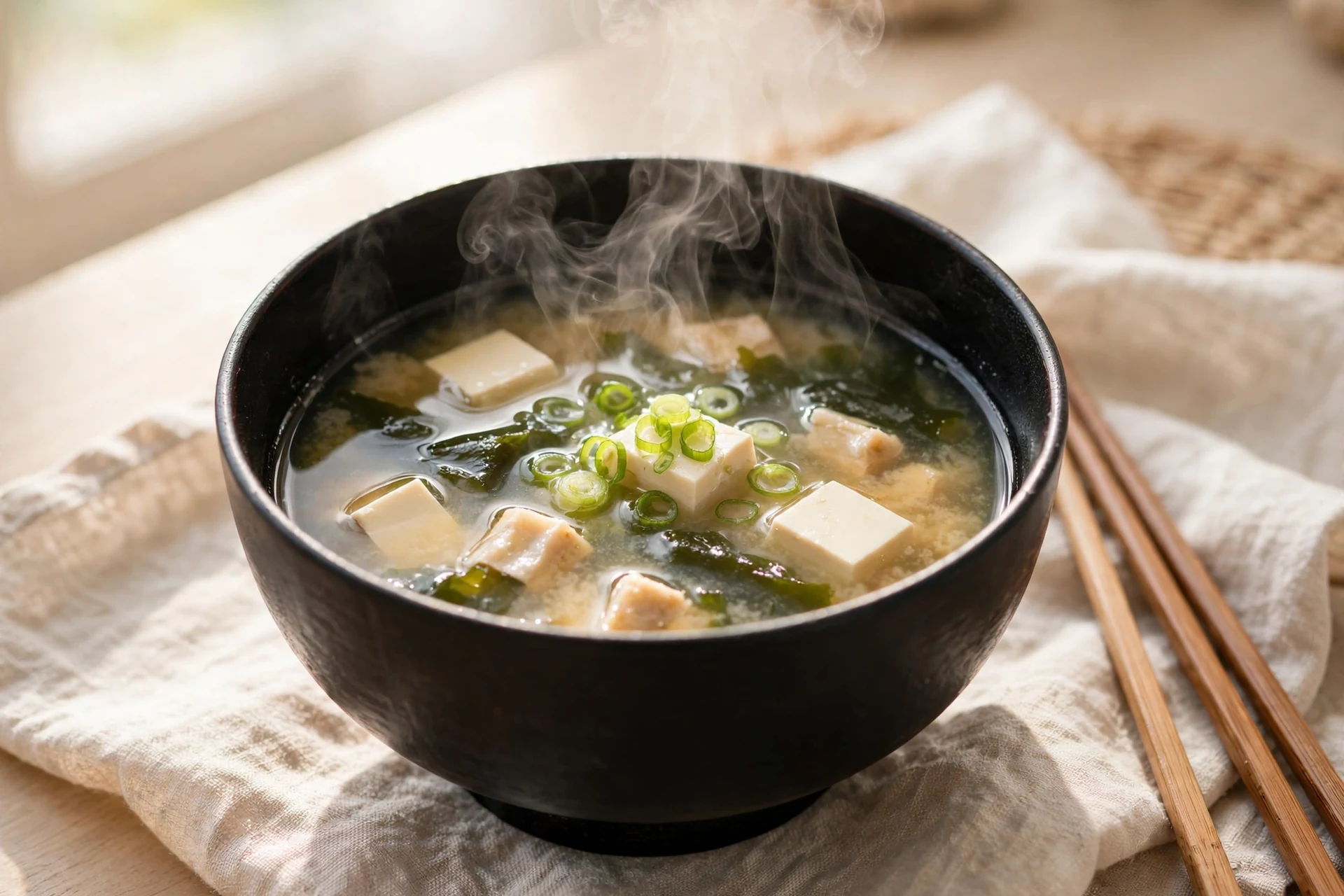
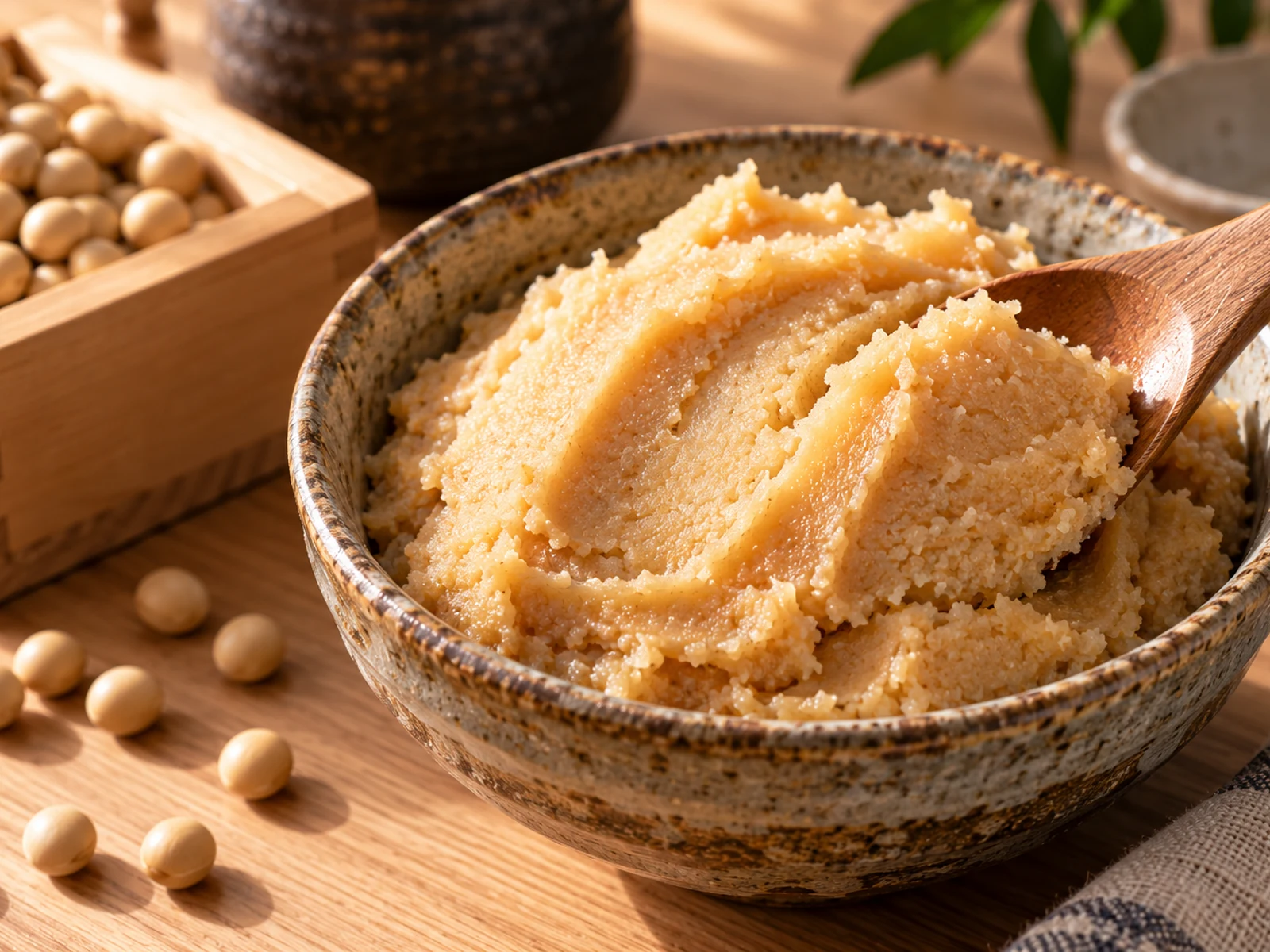
Miso is made by fermenting soybeans with koji and salt. White styles generally sit at the sweeter, paler end of the miso spectrum; in Ember & Equator it connects directly to miso soup, where the paste seasons dashi without needing prolonged boiling.
Place & tradition
Japan has many regional miso traditions shaped by koji choice, salt level and maturation.White miso is particularly associated with parts of Kansai and appears in regional New Year soups such as shiro miso zoni.
In the kitchen
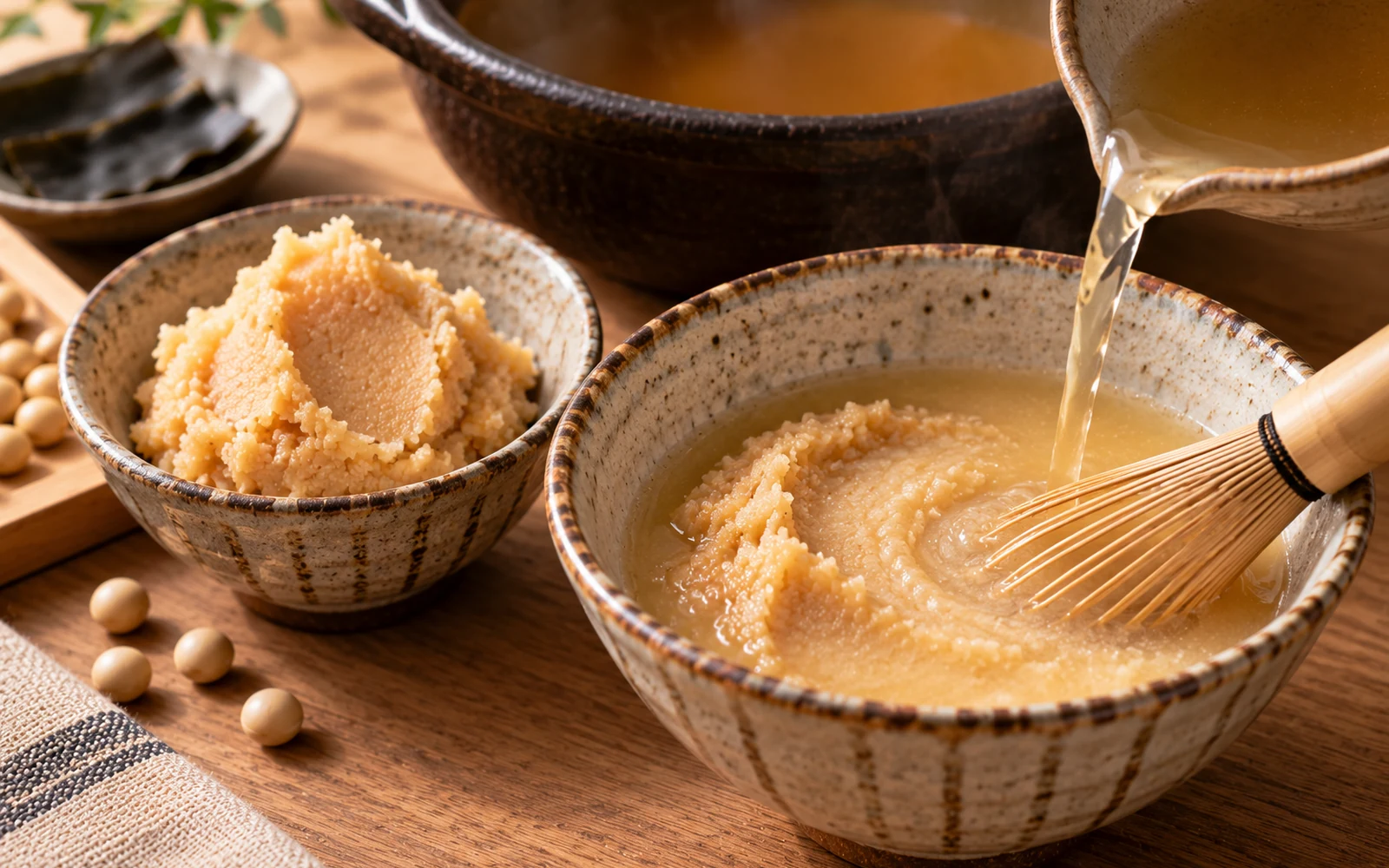
Dissolve miso into hot liquid rather than treating it like a dry spice; whisking a little broth into the paste first helps it disperse evenly.
Taste before adding extra salt: miso contributes both salinity and savoury depth.
For soup, add miso near the end so its aroma remains clear and fresh.