
Japan · breakfast · lunch · dinner · soup
Miso Soup
A bowl with a deeper sense of place.
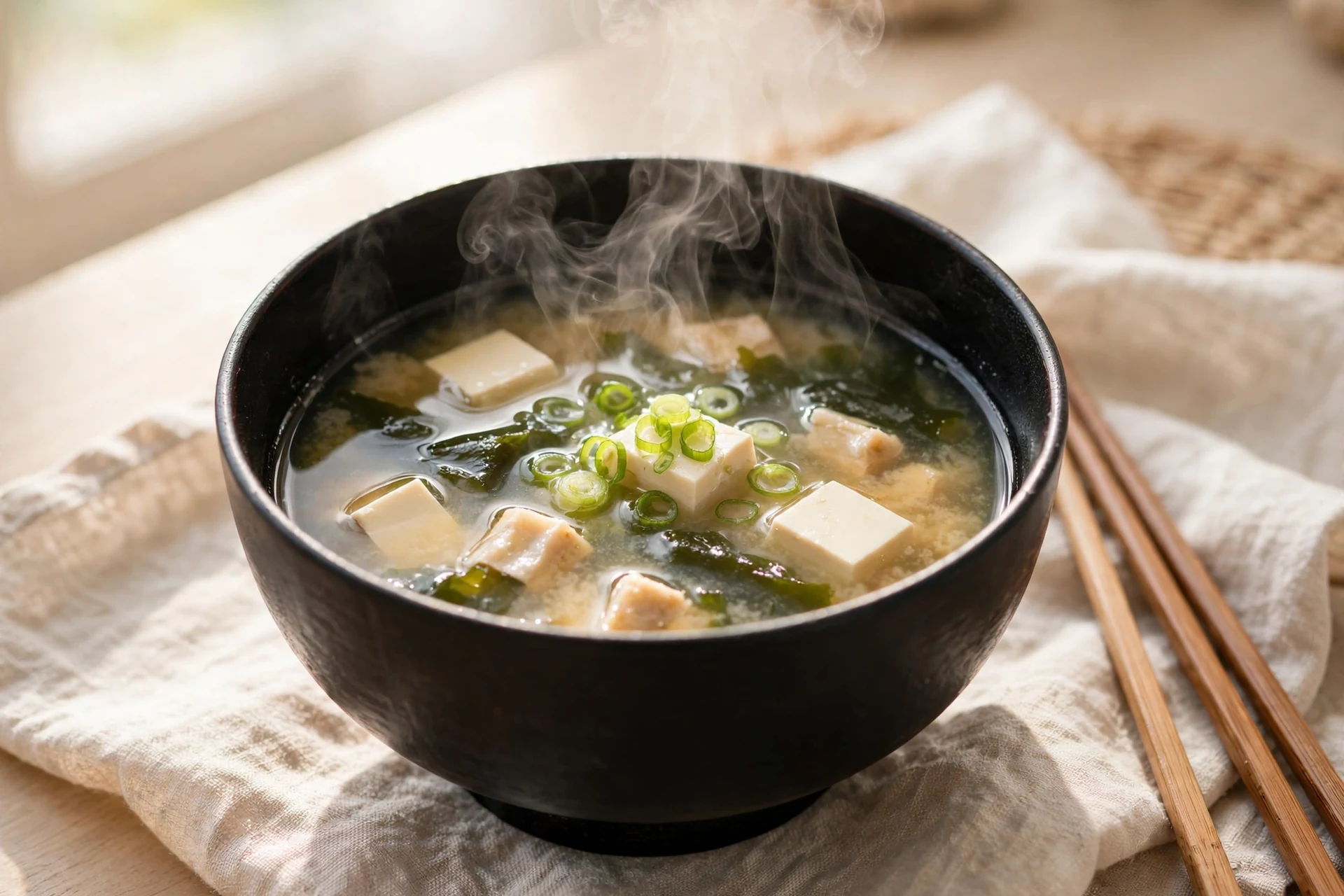
Japanese miso soup is a light, savoury broth built on dashi and miso, with silken tofu, wakame and spring onion added gently so each ingredient keeps its character.
- Total
- 15 min
- Difficulty
- Easy
- Serves
- 4
- Steps
- 6
The dish
A bowl shaped by habit and place.
Miso soup is part of everyday Japanese cooking, but there is no single universal formula. The miso, dashi and added ingredients vary by household, season and region. Ember & Equator presents a simple tofu-and-wakame version while keeping that wider diversity visible.
Explore JapanAt a glance
Origin
Japan
Region
Japan — nationwide, with strong household and regional variation
Method
fermented · simmered
Meal
breakfast · lunch · dinner · soup
Guided steps
6
Dish
Miso Soup
Cuisine
Japanese cuisine
Food type
Breakfast · Lunch · Dinner
Cook the recipe
In the kitchen
Start with the ingredients, then follow the Method in order. Open cooking tips only when you need extra help; the story and references can wait until you are ready.
- Total
- 15 min
- Serves
- 4
- Level
- Easy
- Visual cues
- 6
Ingredients
Serves 4- 4 cupsdashi stockprepared awase dashi preferred; good-quality Japanese instant dashi is also suitable
- 4 tbspwhite miso pastestart here and adjust to taste; awase miso also works well, while red miso gives a stronger bowl
- 150 gramssilken tofudrained gently and cut into about 1–1.5 cm cubes; do not press
- 1 tbspdried wakame seaweedrehydrate in cool water for about 5 minutes, then drain thoroughly
- 2 stalksspring onionsthinly sliced; add after the heat is turned off
Optional
- as neededdashi powderoptional convenience substitute; prepare according to the package dilution instructions
Everything ready? Continue straight into the cooking steps.
Start methodMethod
6 steps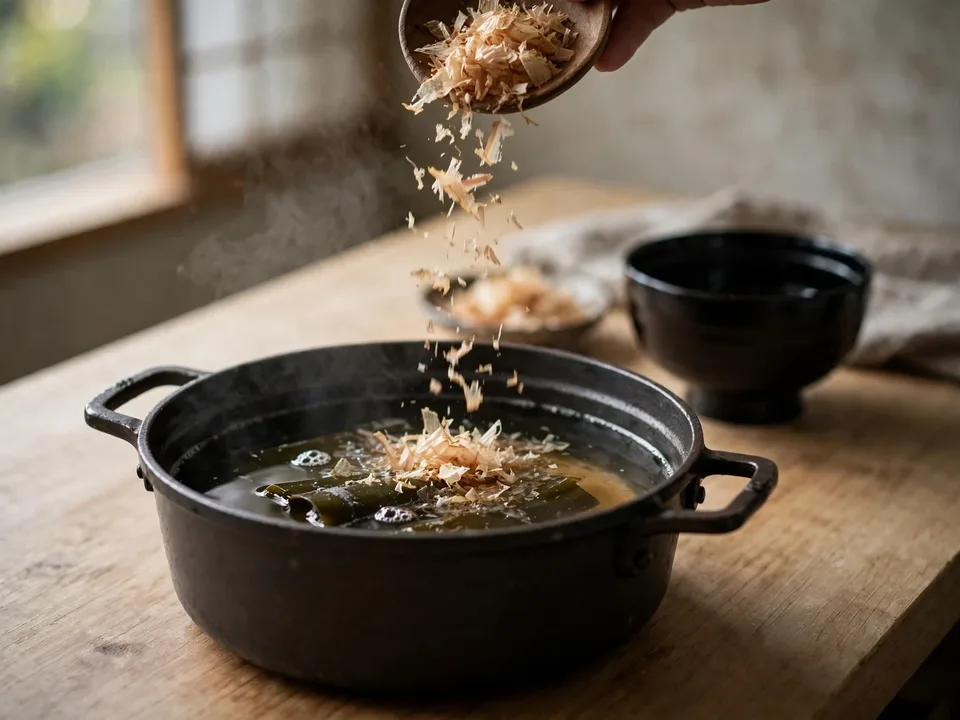 Step 01
Prepare the dashi
2 min
Prepare or measure a clean, savoury dashi before building the soup.
Have 4 cups of prepared dashi ready before building the soup. For a classic bowl, use awase dashi made with kombu and katsuobushi; if you make it from scratch, prepare and strain it first. Good-quality Japanese instant dashi is also suitable when mixed according to its package instructions. Taste the dashi before adding miso: it should already taste clean, savoury and lightly aromatic rather than flat or aggressively salty.
Look for
The prepared dashi should be clear to lightly golden, clean-smelling and savoury, without a harsh boiled-seaweed aroma.
Kitchen note
Dashi is the foundation of the soup. If the broth tastes flat, adding extra miso later will mostly increase saltiness rather than create the missing depth.
 Step 02
Rehydrate the wakame and prep the additions
5 min
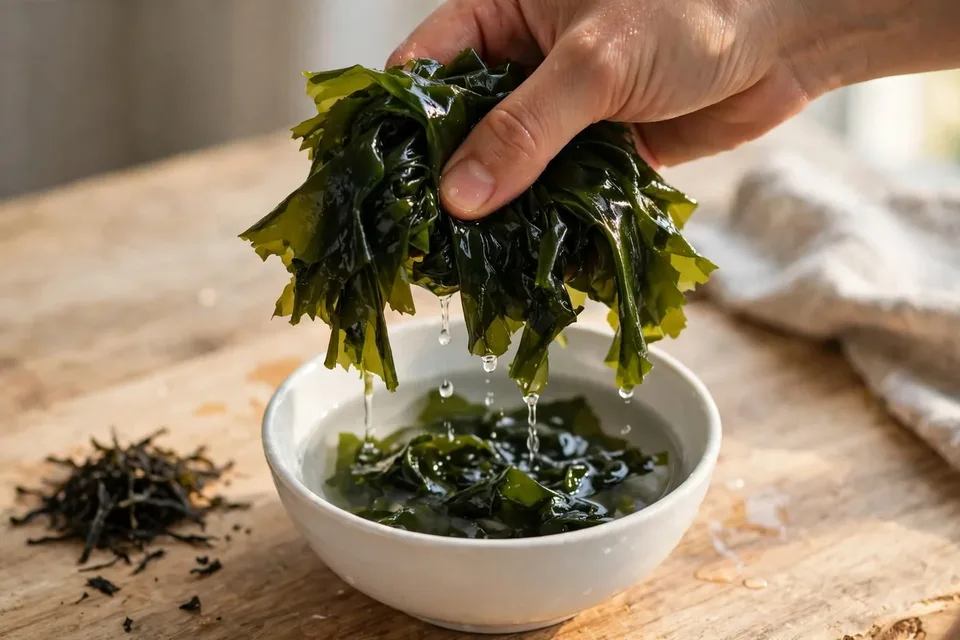
Rehydrate and drain the wakame, cube the tofu and thinly slice the spring onion.
Place the dried wakame in a small bowl and cover it with cool or room-temperature water. Soak for about 5 minutes, until fully softened and expanded, then drain thoroughly; cut very large pieces into bite-sized lengths if needed. While it soaks, gently drain the silken tofu, cut it into small cubes without pressing it, and thinly slice the spring onions.
Look for
The wakame should be fully softened and expanded, the tofu should be in clean intact cubes, and the spring onion should be thinly sliced.
Kitchen note
Dried wakame expands dramatically, so use it sparingly. Silken tofu should be drained but not pressed, which can make its delicate curds crumble.
 Step 03
Warm the dashi gently
3 min
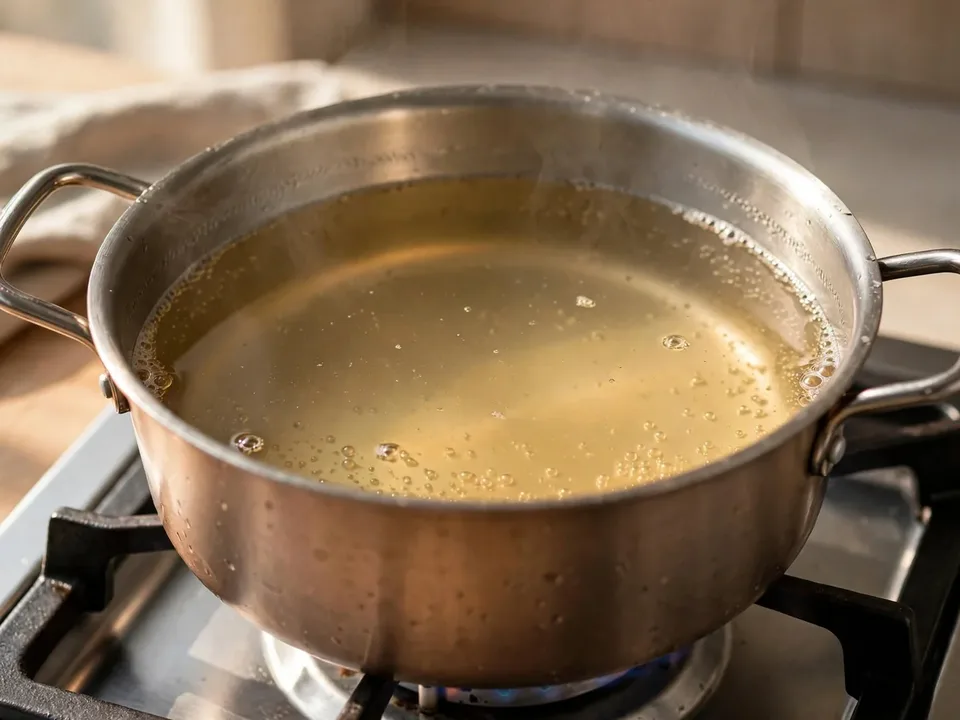
Warm the dashi to a gentle simmer with small bubbles rather than a rolling boil.
Pour the prepared dashi into a medium saucepan and warm it over medium heat until it reaches a gentle simmer. You want steam and small bubbles appearing around the edges with only occasional movement at the surface, not a rolling boil. Once hot, lower the heat so the broth stays calm before the miso is added.
Look for
Look for fine steam and small, restrained bubbles at the edges while most of the surface remains calm.
Kitchen note
A gentle simmer is enough. Vigorous boiling is unnecessary for this delicate soup and makes it harder to control the final texture and aroma.
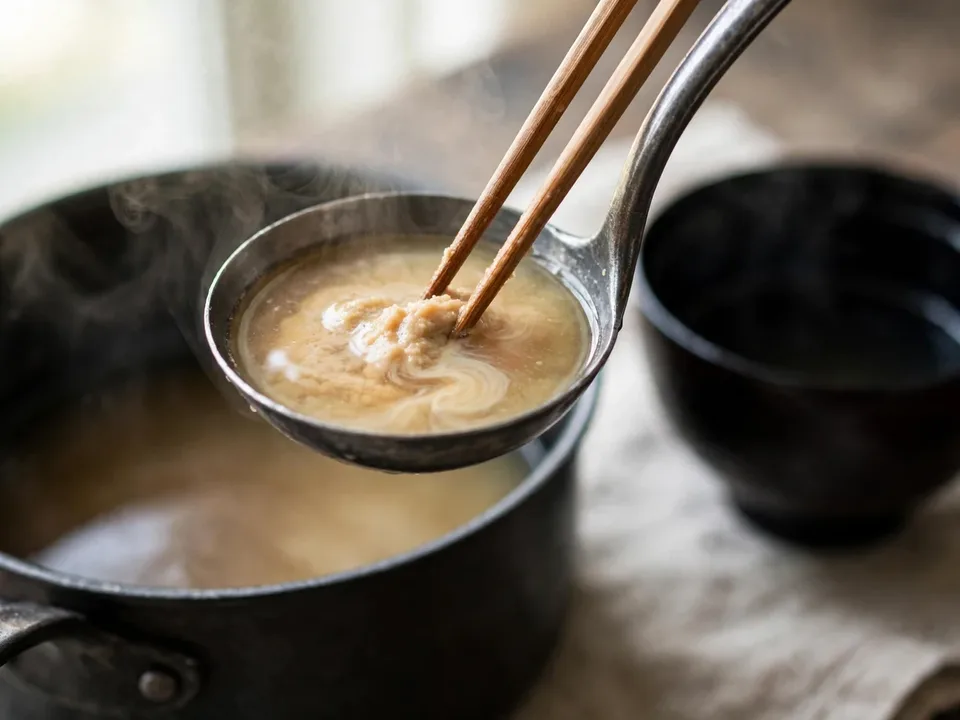 Step 04
Dissolve the miso and season gradually
2 min
Loosen the miso with hot dashi, stir it in gradually and taste before adding more.
Reduce the heat to low, or briefly lift the pan off the heat. Put about 4 tablespoons of miso into a small bowl or ladle, add several tablespoons of hot dashi and whisk or stir until completely smooth. Stir the loosened miso gently back into the saucepan, then taste. If the soup needs more seasoning, dissolve another small amount of miso with hot dashi before adding it. Once the miso is incorporated, keep the soup hot but avoid bringing it to a vigorous or prolonged boil.
Look for
The miso should be fully dissolved with no dense lumps; the broth should look evenly seasoned and remain steaming without hard rolling bubbles.
Kitchen note
Miso varies widely in saltiness, sweetness and intensity. Start with less, taste, and add more in small dissolved portions rather than relying on one fixed amount.
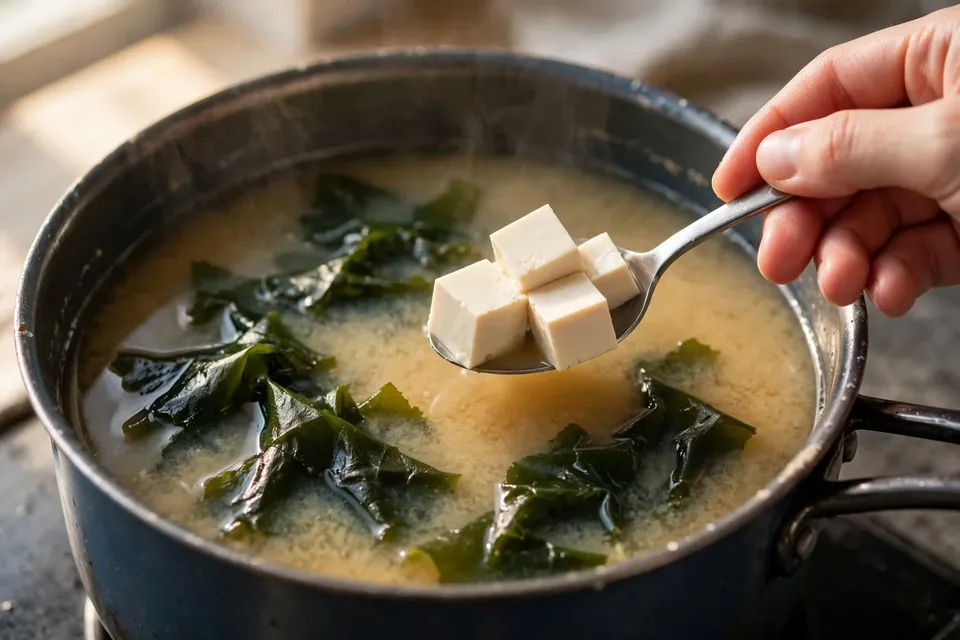 Step 05
Add the tofu and wakame
2 min
Add the tofu and wakame gently, warm them through and make the final seasoning adjustment.
Gently lower the tofu cubes and drained wakame into the seasoned dashi. Warm them over low heat for about 1–2 minutes, moving the ingredients as little as possible so the tofu stays intact. Taste once more. If the soup is too weak, add a little more separately dissolved miso; if it is too salty or too strong, loosen it with unsalted dashi or a small amount of water. If it tastes flat despite enough salt, improve the dashi rather than automatically adding more miso.
Look for
The tofu should be hot but intact, the wakame tender, and the broth savoury and balanced rather than simply salty.
Kitchen note
Silken tofu needs warming, not hard cooking. Stir minimally; rough movement can break the cubes and make the soup look cloudy and ragged.
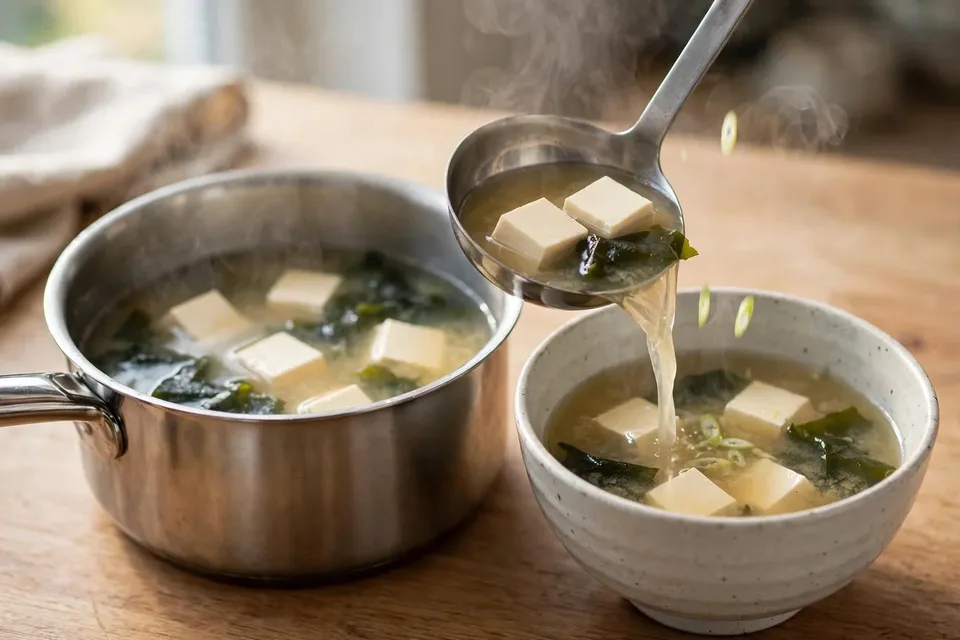 Step 06
Finish with spring onion and serve
1 min
Turn off the heat, add spring onion and serve while the soup is hot and aromatic.
Turn off the heat and add the thinly sliced spring onions so the residual heat softens them without dulling their fresh flavour. Ladle the soup into small bowls and serve immediately while hot and aromatic. Miso soup is best freshly made, but leftovers can be refrigerated in a covered container for up to about 2 days and reheated gently over low to medium heat without bringing the soup to a vigorous boil.
Look for
Serve while the broth is steaming, the tofu cubes are intact and the spring onion still looks bright and fresh.
Kitchen note
Add the spring onion after the heat is off so it stays fresh and bright. Reheat leftovers gently rather than repeatedly boiling the soup.
After cooking
Explore the dish beyond the method.
Story, place and references are here for discovery, so they stay out of the way while you cook.
Culture & tradition
The story behind the dish
Origins, evolution and everyday life—read together as part of the recipe's culinary record.
Origins
Miso and related fermented soybean seasonings have a long history in Japan, but the path from earlier fermented pastes to today's many forms of miso soup developed over centuries rather than from one fixed recipe or inventor.
How it evolved
Regional miso production developed with different raw materials, koji choices, salt levels, maturation periods and local tastes. Those differences shaped soups that can range from pale and gently sweet to dark, robust and deeply savoury.
Its place today
Miso soup remains a familiar part of home meals and set meals across Japan, commonly served with rice and other dishes. Scratch-made dashi, prepared dashi and convenient instant products all appear in modern home cooking.
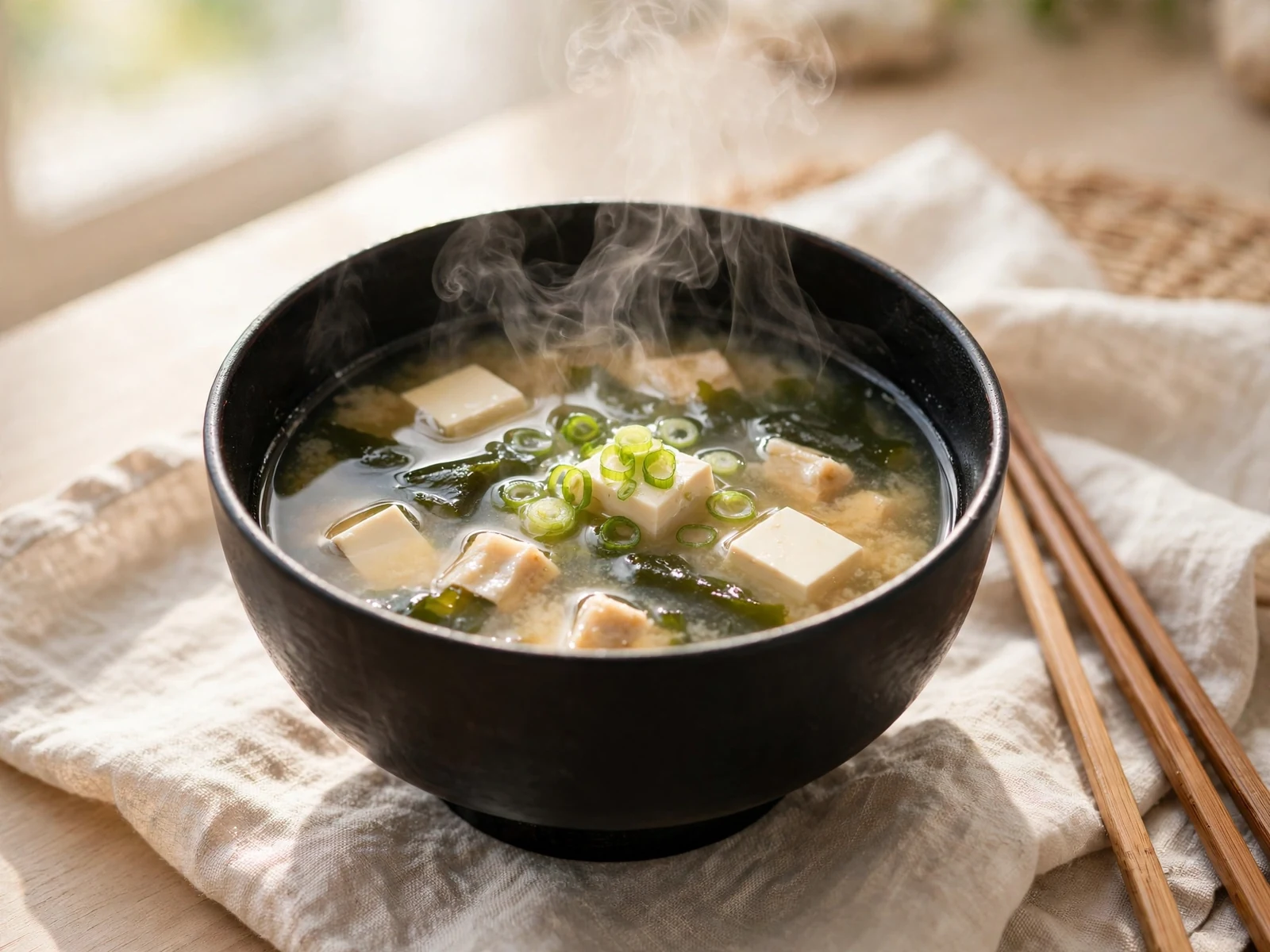
Visual archive · plate 01
Miso Soup
An editorial view of the finished dish, kept compact so the story continues without an oversized image break.
Primary region
Japan — nationwide, with strong household and regional variation
Country
Japan
Regional influence
Japan's regional climates, local ingredients, koji traditions and maturation practices helped produce many distinct styles of miso. The soup changes accordingly: the miso, dashi and seasonal additions are not identical from one region or household to another.
Related food systems
- Washoku (traditional Japanese dietary culture)
- Ichiju-sansai (one soup and three sides meal structure)
- Regional miso traditions
- Japanese dashi culture
Culinary record
- Era
- Long-established Japanese fermented-food tradition; modern household forms developed over centuries
- Sub-region
- East Asia — Pacific Archipelago
- Climate
- Temperate Maritime
- Cooking methods
- fermented · simmered
- Trade-route influence
- Maritime Silk Road · Nanban trade (16th c. Portuguese)
Traditional & modern
Dashi-and-miso soups vary by household and region. Kombu-katsuobushi dashi is common, while kombu- or mushroom-based dashi supports vegetarian and vegan versions.
Regional adaptations
- Different regions use distinct rice, barley, soybean and blended miso traditions
- Soup ingredients change with local products and season
- Household bowls range from pale and gently sweet to darker and more robust
Sources & further reading
Follow the reference trail.
Ember & Equator links outward when an institution or primary reference helps support the culinary record.
- 01Washoku, traditional dietary cultures of the JapaneseExternal ↗
UNESCO Intangible Cultural Heritage · reference
Supports: Japanese culinary context
Ember & Equator source review · 2026-09-01
- 02Soy sauce, miso, other seasoningsExternal ↗
Ministry of Agriculture, Forestry and Fisheries of Japan · government
Supports: miso classification · regional miso diversity · culinary context
Ember & Equator source review · 2026-09-09
- 03Miso soupExternal ↗
Ministry of Agriculture, Forestry and Fisheries of Japan · government
Supports: dish identity · miso-to-dashi structure · tofu and wakame · finish with miso and green onion
Ember & Equator source review · 2026-09-16
- 04Homemade Miso SoupExternal ↗
Just One Cookbook / Namiko Hirasawa Chen · reference
Supports: dashi technique · miso dilution · miso added near serving · avoid boiling · tofu and wakame handling
Ember & Equator source review · 2026-09-16
Ingredient guides
Learn about the ingredients behind the dish.
These are reference guides, not a second ingredient list. Follow an ingredient when you want to understand its role, use and wider culinary context.
Ingredient
dashi stock
Understand what it contributes, how to use it, and the dishes that reveal it best.
Explore ingredient →
Ingredient
white miso paste
Understand what it contributes, how to use it, and the dishes that reveal it best.
Explore ingredient →
Ingredient
silken tofu
Understand what it contributes, how to use it, and the dishes that reveal it best.
Ingredient
dried wakame seaweed
Understand what it contributes, how to use it, and the dishes that reveal it best.
Ingredient
spring onions
Understand what it contributes, how to use it, and the dishes that reveal it best.
Ingredient
dashi powder
Understand what it contributes, how to use it, and the dishes that reveal it best.
Keep wandering
Where will this dish take you next?
Stay with the place, follow an ingredient or technique, or cross into another food culture. Each path begins with something already present in this dish.
Stay with the place
01
Japan
Tamagoyaki
Stay in the same food culture and follow dashi stock into another recipe.
Shared thread · dashi stock · Breakfast · Lunch
Follow the method or pantry
02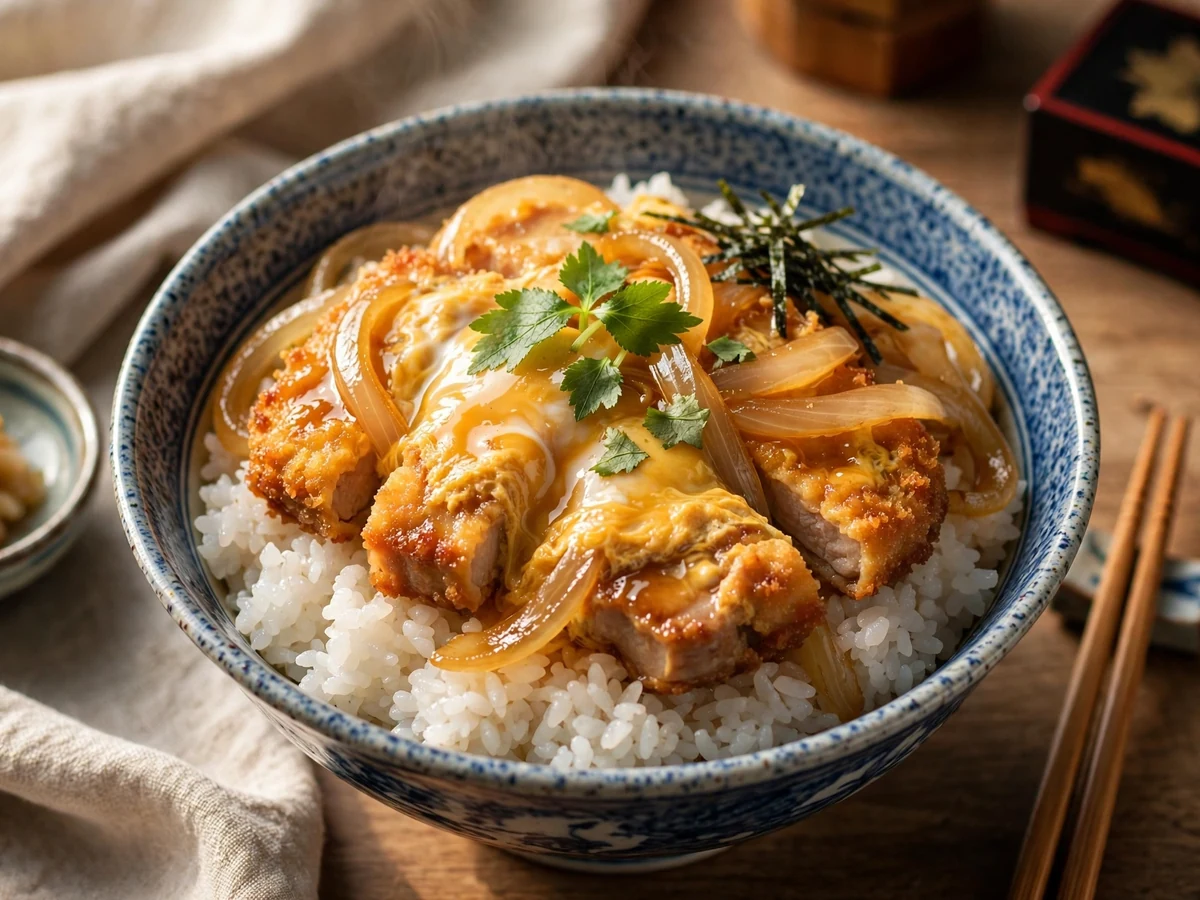
Japan
Katsudon
Follow the pantry: both dishes connect through dashi stock.
Shared thread · dashi stock · Lunch · Dinner
Cross a culinary border
03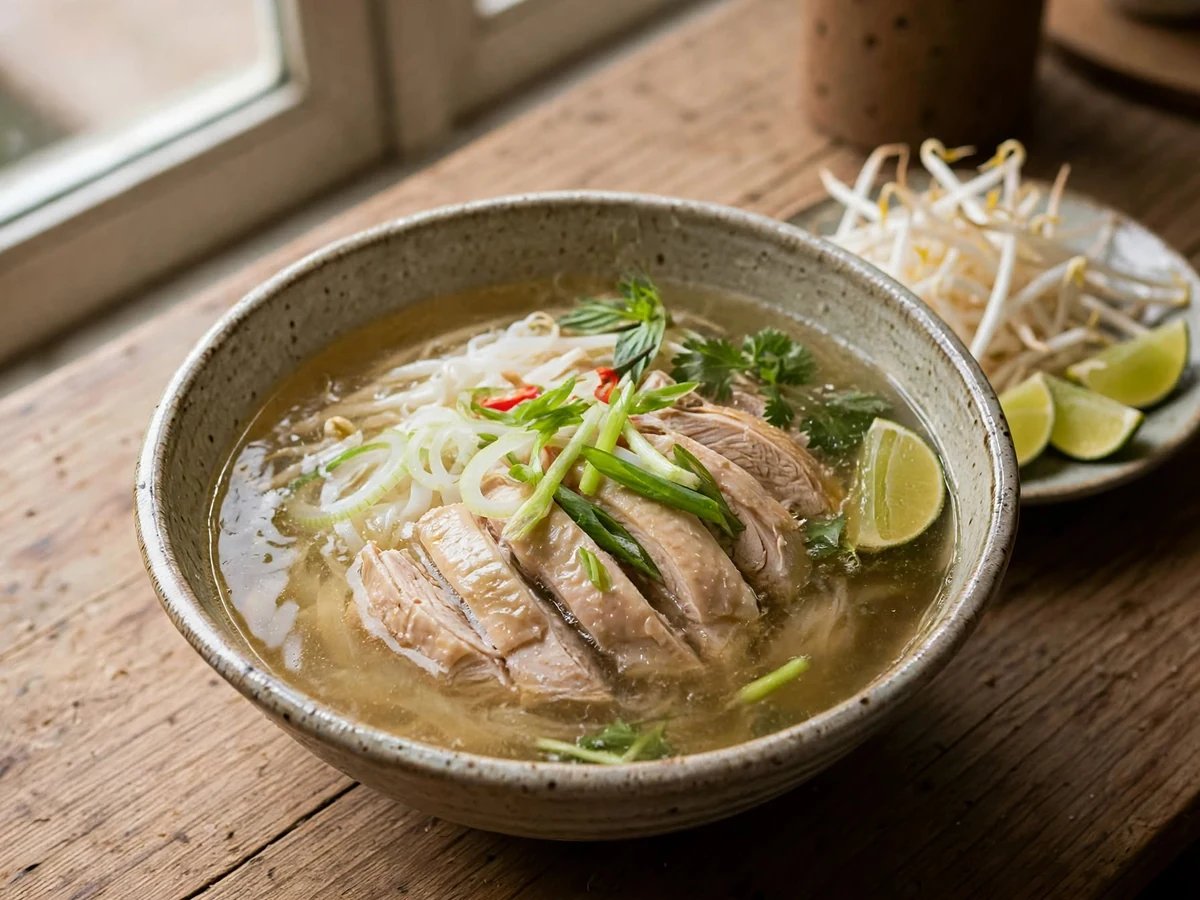
Vietnam
Phở Gà
Cross borders and see how another cuisine handles spring onions.
Shared thread · spring onions · Breakfast · Lunch
Go one layer deeper
One small detail can open an entirely different part of food.
Continue in Ember & Equator