
Techniques · Indonesia
Rendang, reduction and time
What begins as a coconut-rich braise becomes something darker, drier and more concentrated through patience.
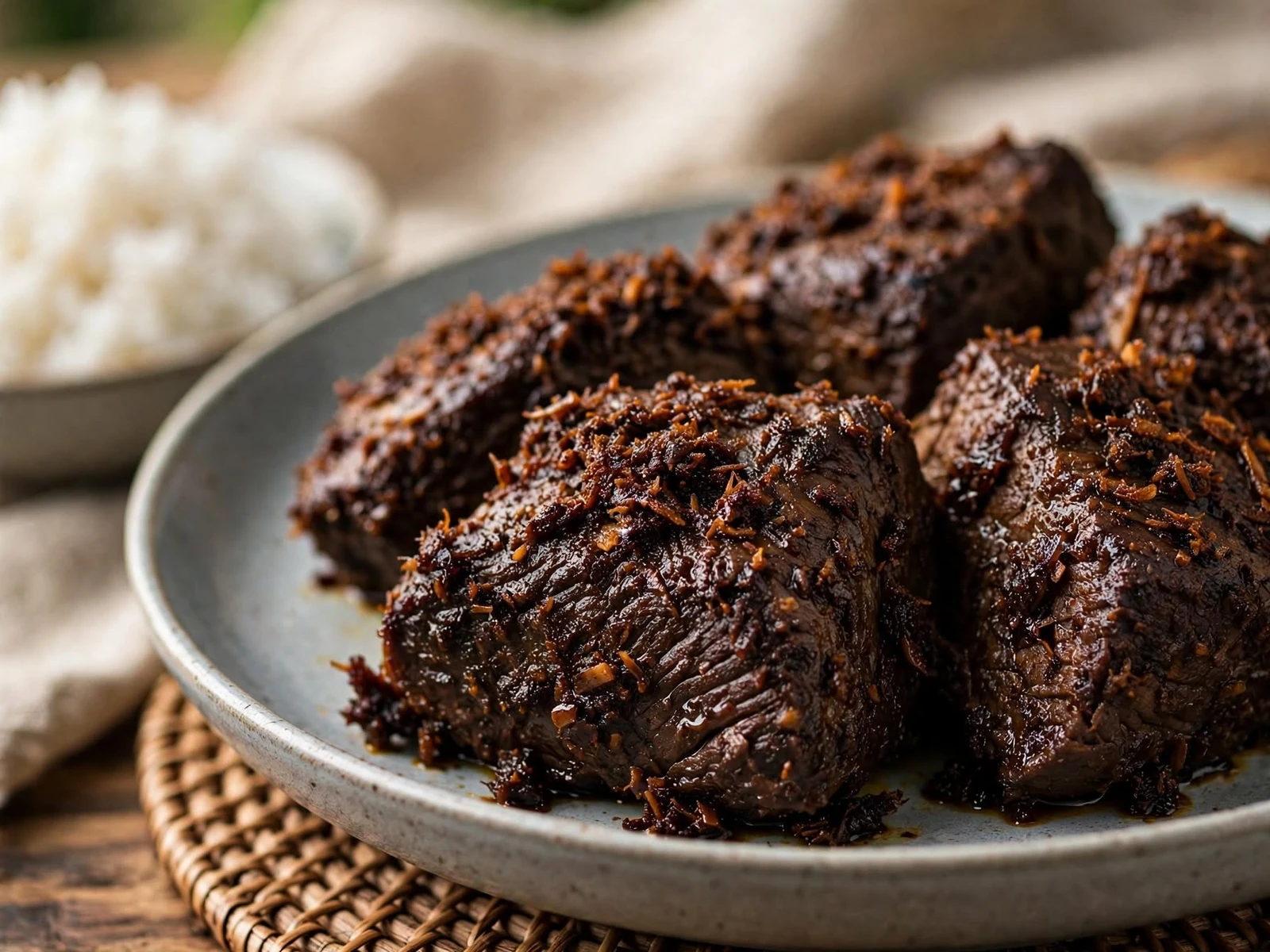
Rendang · Indonesia. A dish understood through the table around it, not only the recipe.
Rendang is strongly associated with Minangkabau culture in West Sumatra. Indonesia’s tourism ministry emphasises the defining transformation through gulai, kalio and dry rendang rather than treating it as a generic coconut curry. The selected Ember & Equator version follows that progression and uses the aromatic profile highlighted in official Indonesian sources.
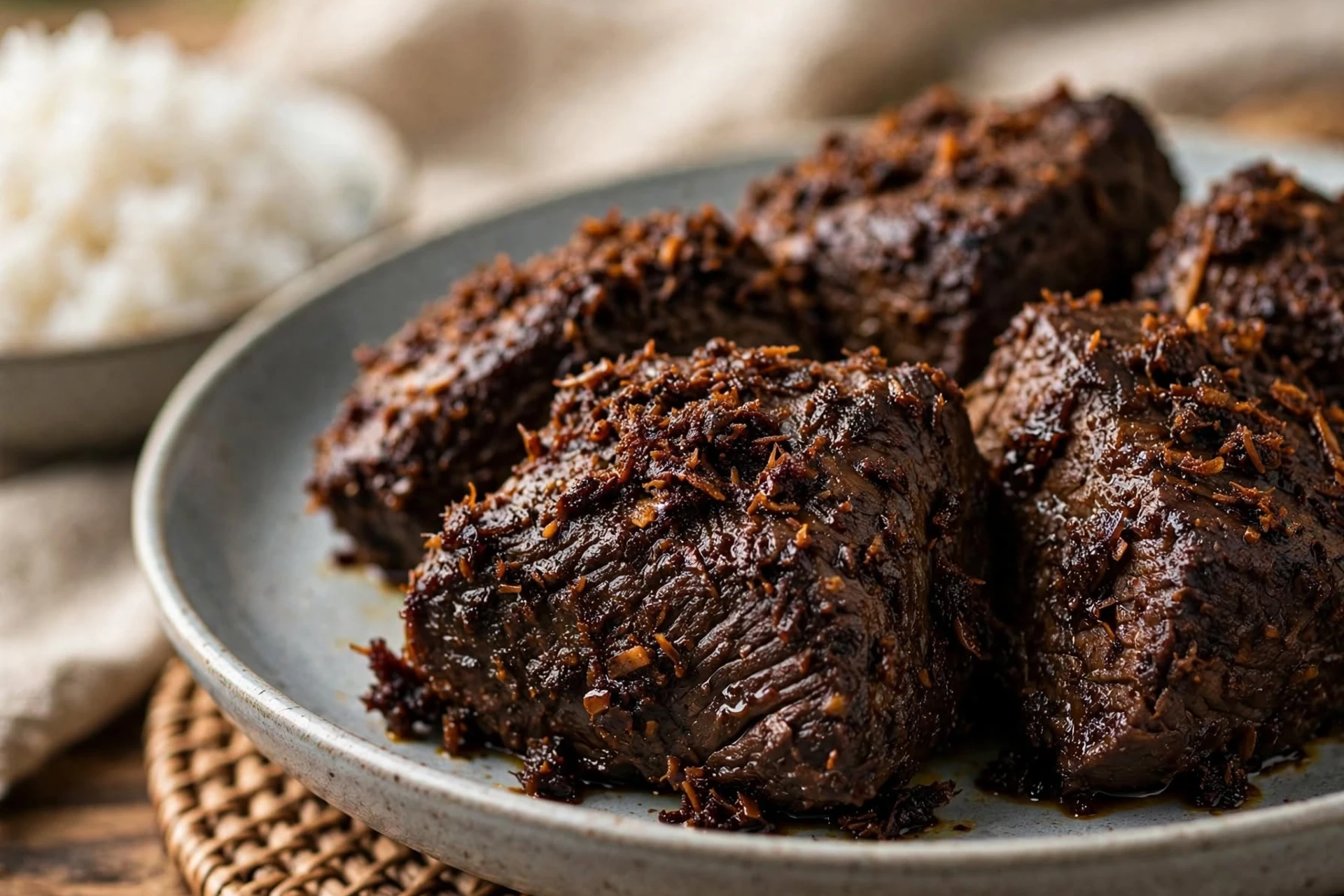
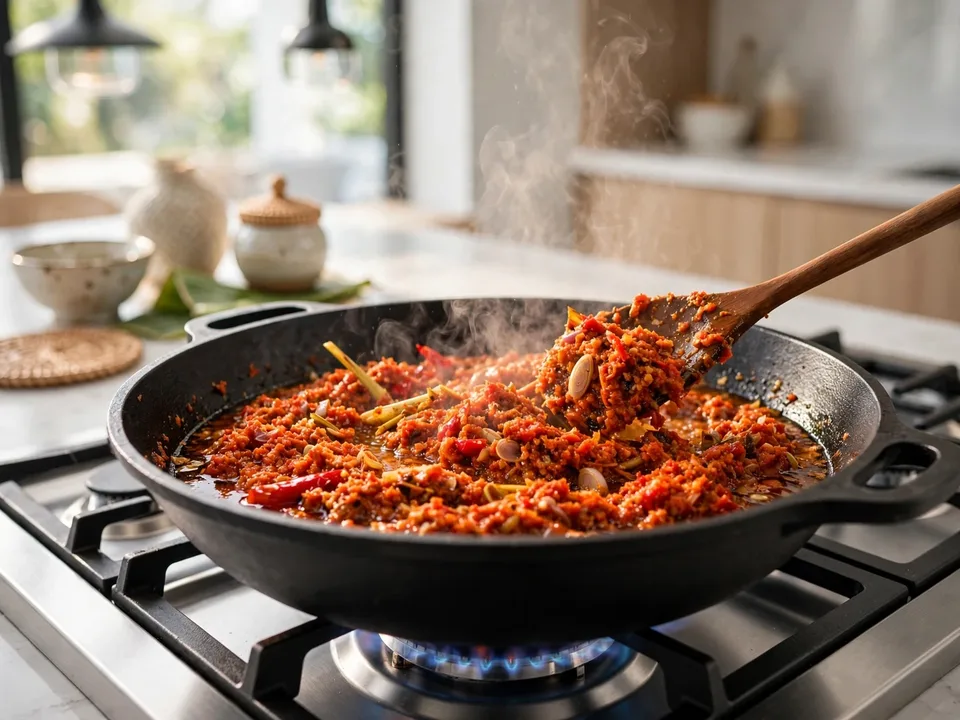
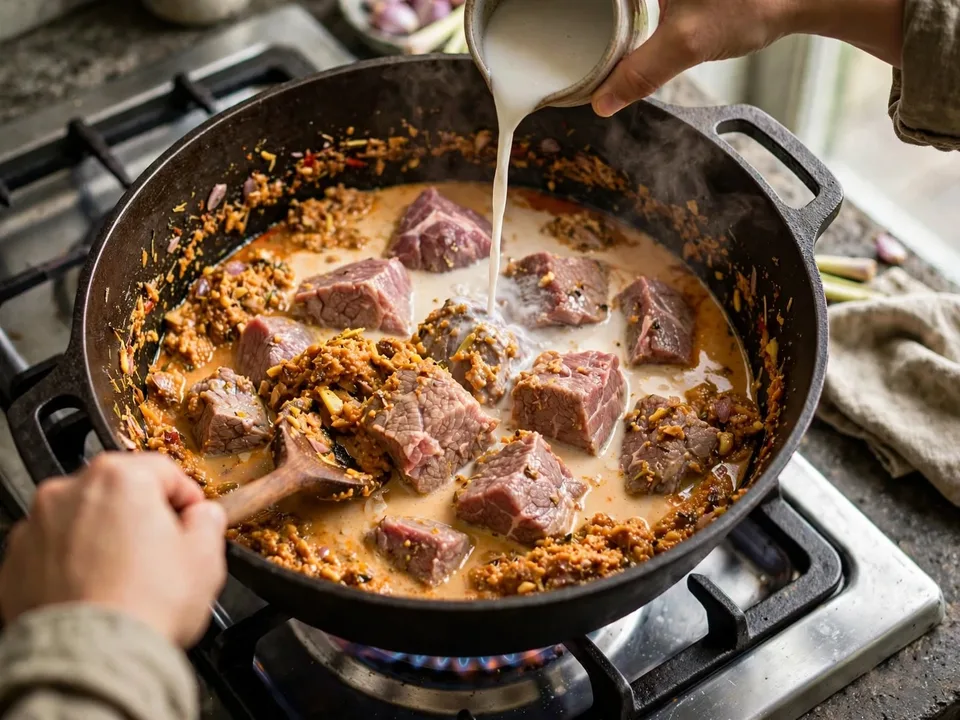
Minangkabau beef rendang is a long, patient reduction of beef, thick coconut milk and a fresh chile-aromatic bumbu. The mixture passes visibly from liquid gulai to oily kalio and finally to dark, almost-dry rendang as coconut fat separates and the concentrated solids fry around the meat. In the Journal, the useful question is not simply what goes into the pot, but what the dish reveals when ingredients, method and the way it is served are read together.
01 · ORIGINS
A tradition bigger than one recipe.
The Indonesian tourism ministry identifies rendang with Minangkabau culinary tradition in West Sumatra and describes its long reduction as central to the preparation.
A sense of place
West Sumatra / Minangkabau. The dish reflects the ingredients and cooking patterns associated with West Sumatra / Minangkabau, while household and regional versions vary.
02 · THE KITCHEN
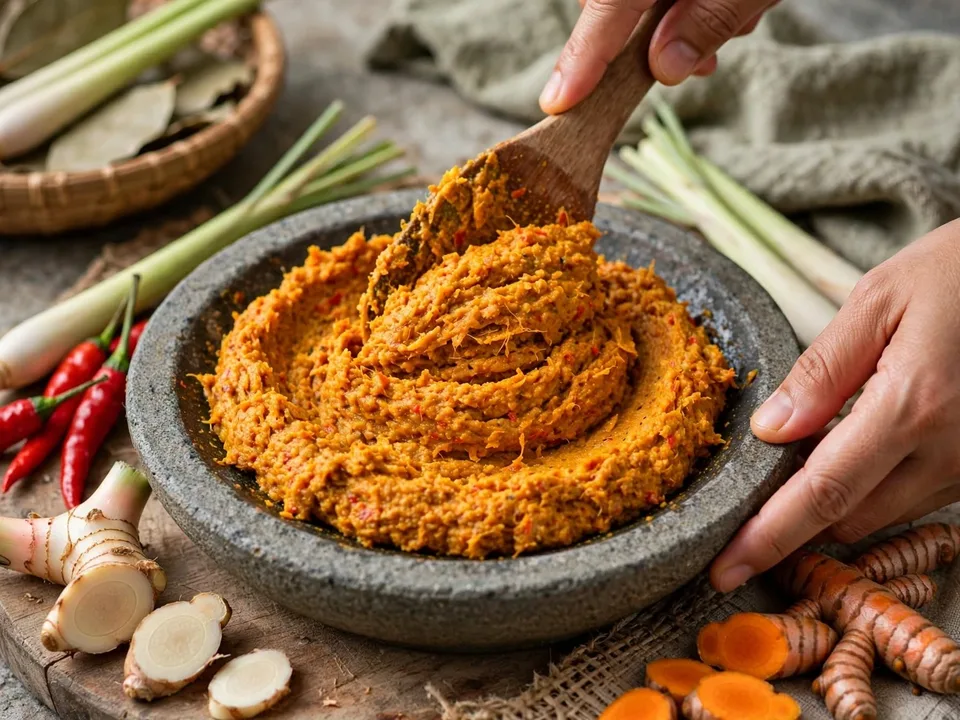
Flavour is built in stages.
Regional and household rendang varies in meat, spice balance and final moisture; the defining idea is sustained cooking and reduction rather than a quick coconut curry.
The flavour map
What carries the dish.
Part of a wider table: West Sumatra / Minangkabau home cooking · Market and street-food traditions · Regional pantry and seasonal cooking.
03 · AT THE TABLE
The point is the sharing.
Rendang is served in homes, restaurants and celebrations and has become one of the most internationally recognized Indonesian dishes.
The method gives the dish its structure; the table gives it context. That is why Ember & Equator keeps the recipe and the story connected, but lets each do a different job.
Return to the kitchen
Now cook Rendang.
Take the story with you. The canonical recipe has the measured ingredients, visual cues and step-by-step method.
Keep reading
Another table, another story.
Ethiopia · At the Table
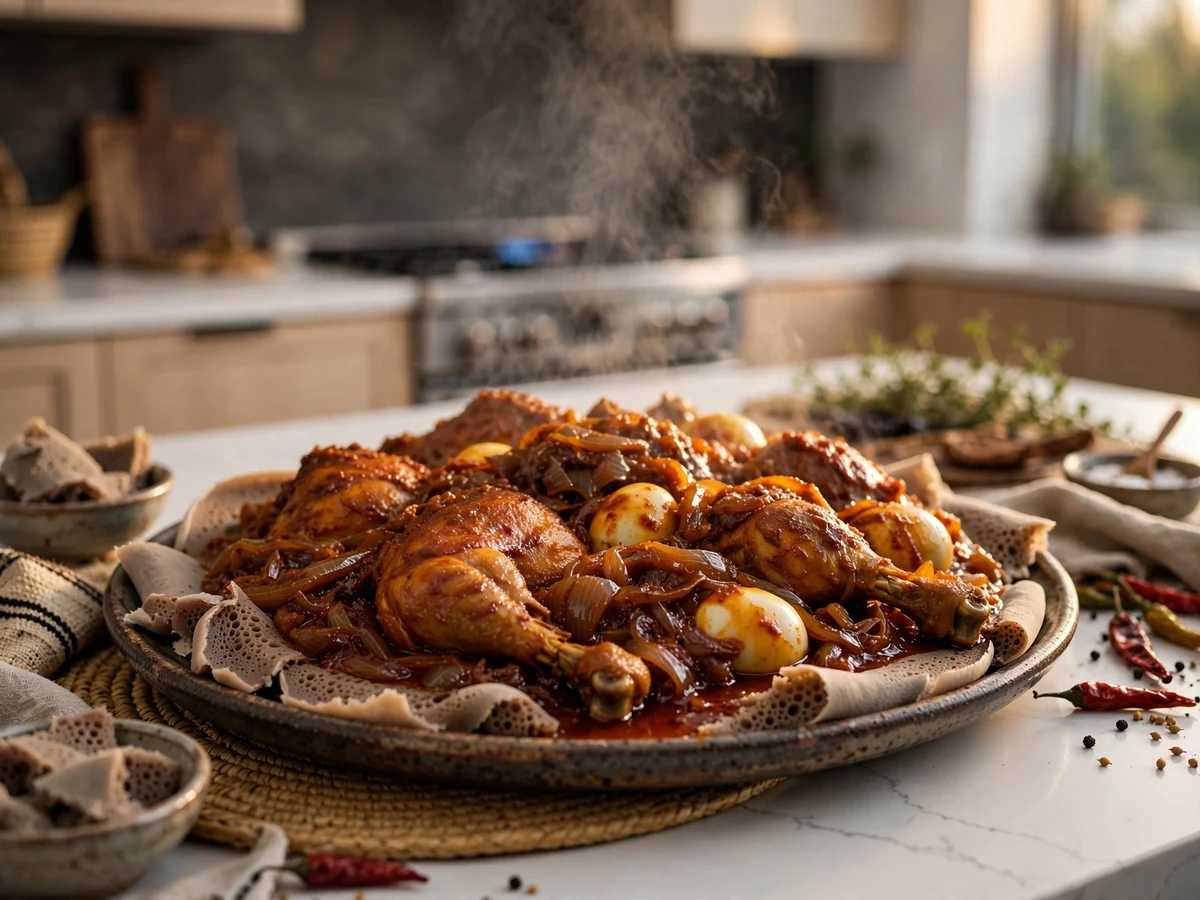
Doro Wat and the patience of a shared table
A slow-built stew, a shared injera table and the rituals that make a dish larger than its recipe.
Japan · Origins
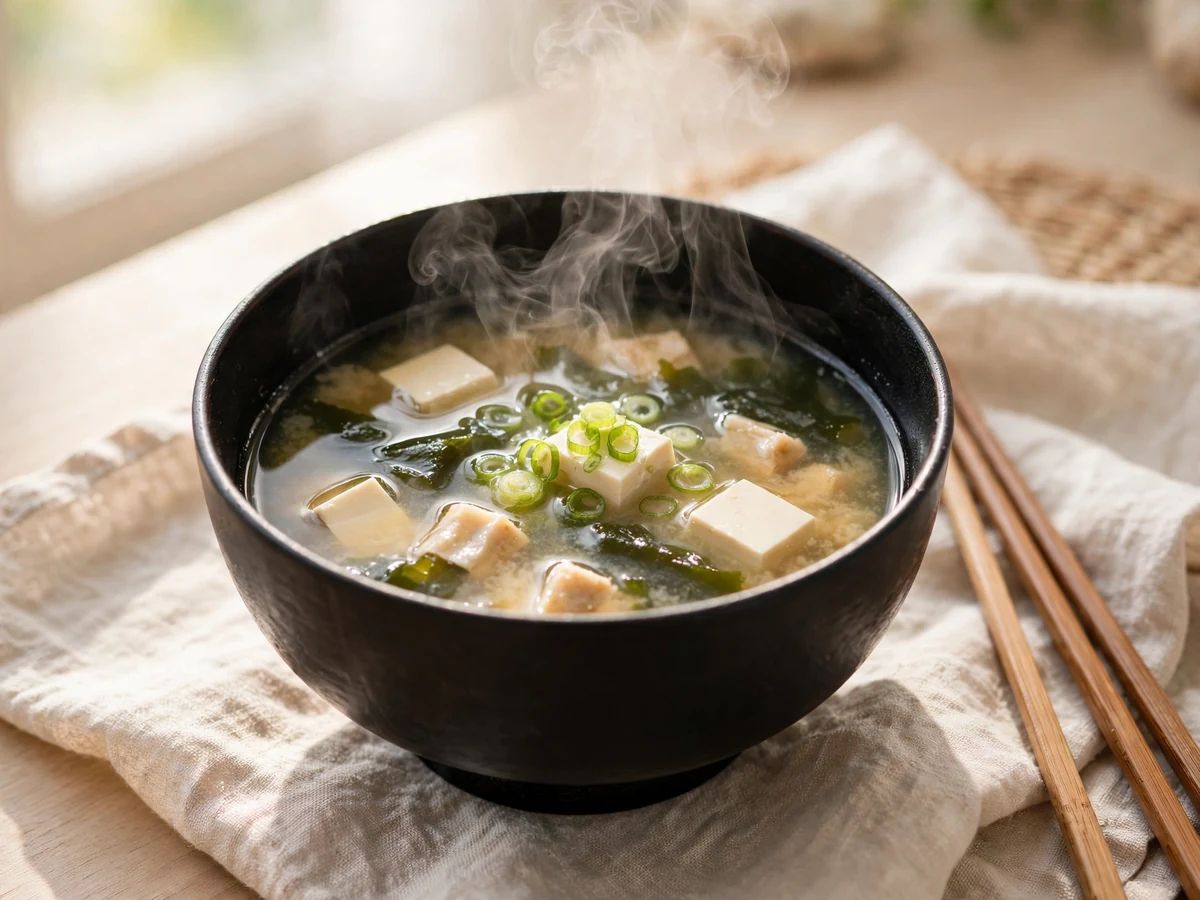
A quiet bowl with a long memory
Miso soup looks simple. Its everyday place in Japanese cooking reveals a deeper relationship between dashi, fermentation and season.
Mexico · At the Table
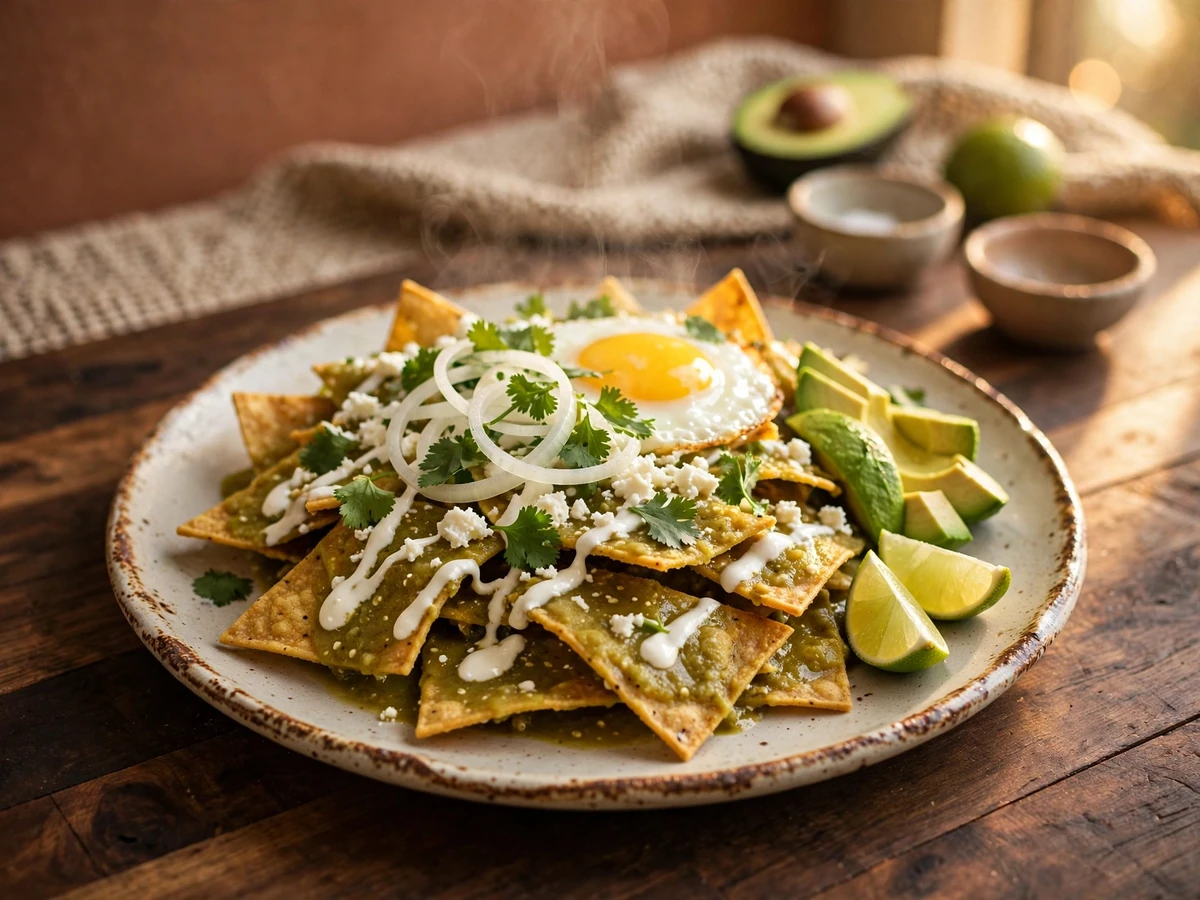
Morning in green: the logic of chilaquiles
Crisp tortillas, bright salsa and a breakfast built around contrast, immediacy and appetite.