
Indonesia · dinner
Rendang
Indonesia through one enduring dish.
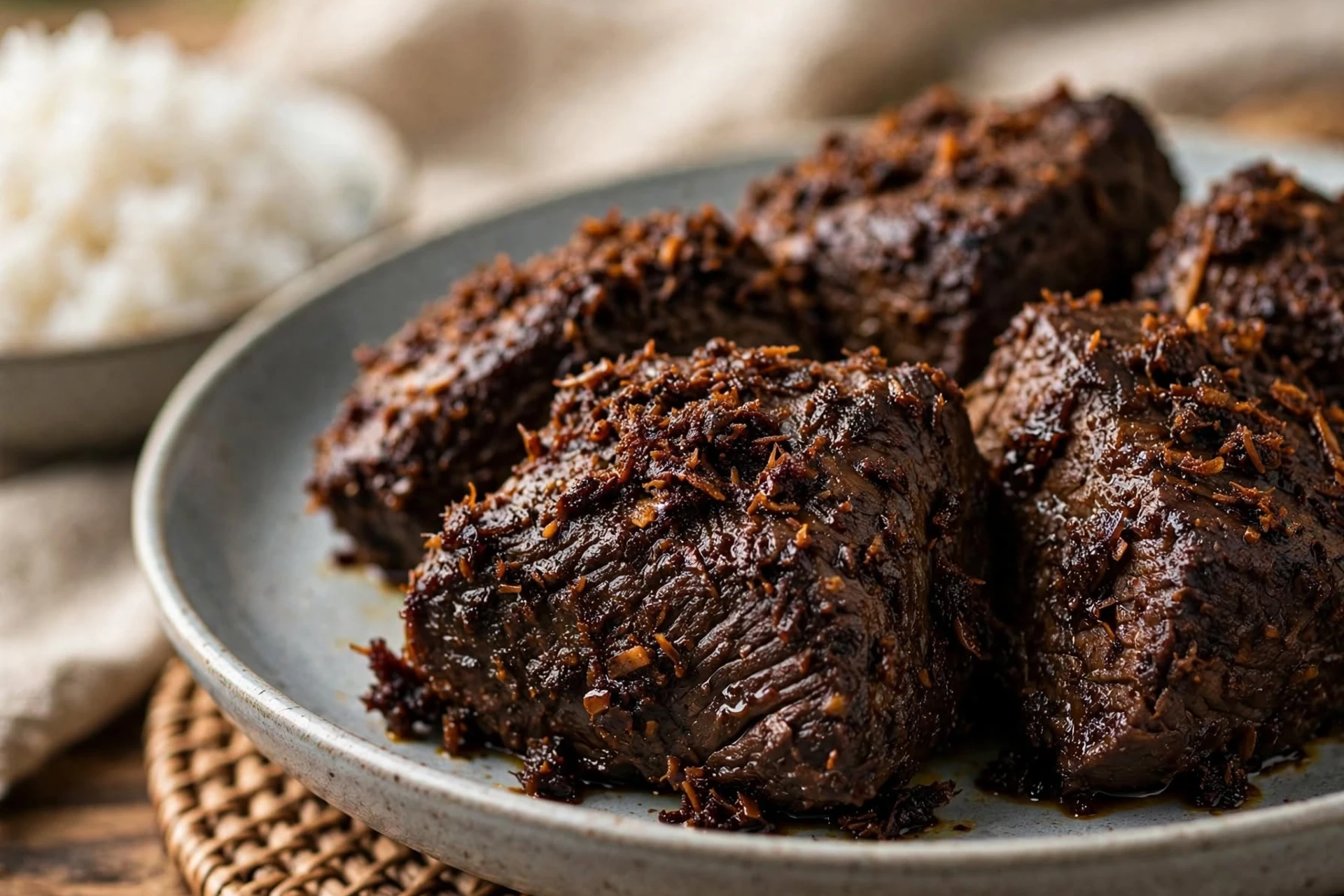
Minangkabau beef rendang is a long, patient reduction of beef, thick coconut milk and a fresh chile-aromatic bumbu. The mixture passes visibly from liquid gulai to oily kalio and finally to dark, almost-dry rendang as coconut fat separates and the concentrated solids fry around the meat.
- Total
- 310 min
- Difficulty
- Hard
- Serves
- 6
- Steps
- 7
The dish
Place first. Then the plate.
Rendang is strongly associated with Minangkabau culture in West Sumatra. Indonesia’s tourism ministry emphasises the defining transformation through gulai, kalio and dry rendang rather than treating it as a generic coconut curry. The selected Ember & Equator version follows that progression and uses the aromatic profile highlighted in official Indonesian sources.
Explore IndonesiaAt a glance
Origin
Indonesia
Region
West Sumatra / Minangkabau
Meal
dinner
Guided steps
7
Dish
Rendang
Cuisine
Indonesian cuisines
Food type
Stew · Celebration food
Technique
Slow cook · Sauté · Simmer
Cook the recipe
In the kitchen
Start with the ingredients, then follow the Method in order. Open cooking tips only when you need extra help; the story and references can wait until you are ready.
- Total
- 310 min
- Serves
- 6
- Level
- Hard
- Visual cues
- 7
Ingredients
Serves 6- 1 kgbeefchuck, brisket or another collagen-rich braising cut, in 5 cm chunks
- 1.5 Lthick coconut milkfull-fat; do not dilute with water
- 240 gshallotsroughly chopped for the spice paste
- 40 ggarlicroughly chopped
- 200 gred chiliesdeseeded partly or fully to control heat
- 20 ggingerroughly chopped
- 60 ggalangalroughly chopped
- 40 gcandlenutsor macadamias if unavailable, noting the flavour differs
- 3 stalkslemongrassbruised and tied if practical
- 6makrut lime leavestorn
- 25 gtamarindpulp or paste, to balance the coconut richness
- 2 tspsaltstart with less and adjust late as the sauce concentrates
Optional
- 1turmeric leafknotted; optional if unavailable
Everything ready? Continue straight into the cooking steps.
Start methodMethod
7 steps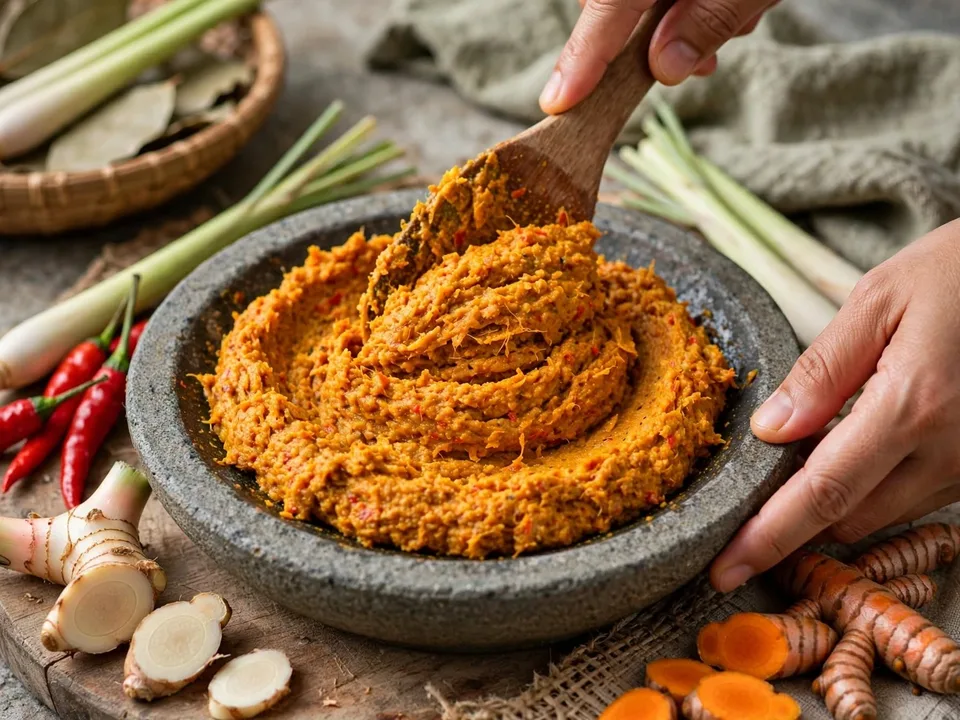 Step 01
Blend a smooth fresh bumbu
12 min
Blend the shallots, garlic, red chillies, ginger, galangal and candlenuts to a fine paste, adding only a spoonful of coconut milk if the blender needs help.
Blend the shallots, garlic, red chillies, ginger, galangal and candlenuts to a fine paste, adding only a spoonful of coconut milk if the blender needs help. Bruise the lemongrass and prepare the lime leaves, turmeric leaf and tamarind separately.
Look for
The paste is thick, cohesive and finely ground with no large fibrous pieces.
Kitchen note
A smooth bumbu distributes evenly and prevents coarse raw chunks surviving into the final almost-dry coating. Avoid thinning it with lots of water.
 Step 02
Cook the bumbu with the aromatic leaves until fragrant
12 min
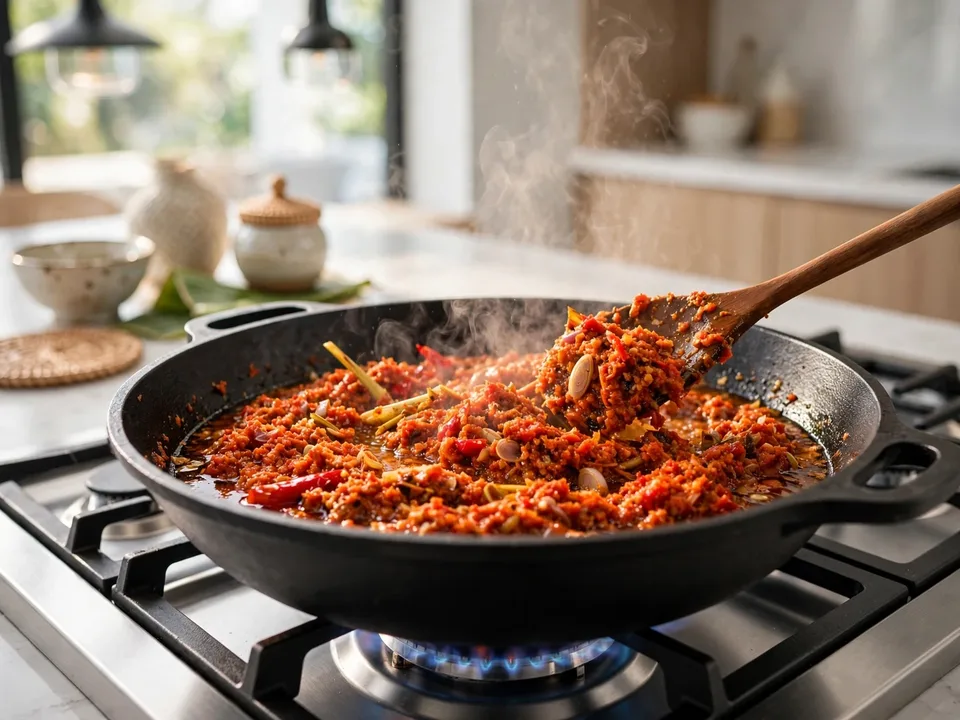
Put the bumbu, lemongrass, lime leaves, turmeric leaf if using and tamarind into a wide heavy pot.
Put the bumbu, lemongrass, lime leaves, turmeric leaf if using and tamarind into a wide heavy pot. Add a portion of the coconut milk and cook over medium heat, stirring frequently, until the raw onion-chilli aroma softens and the mixture smells rounded and aromatic.
Look for
The paste has darkened slightly, smells fragrant rather than raw and moves as a cohesive mass through the coconut milk.
Kitchen note
This first stage should smell cooked before the beef goes in. If the paste catches, lower the heat rather than adding water.
 Step 03
Add the beef and remaining coconut milk
8 min
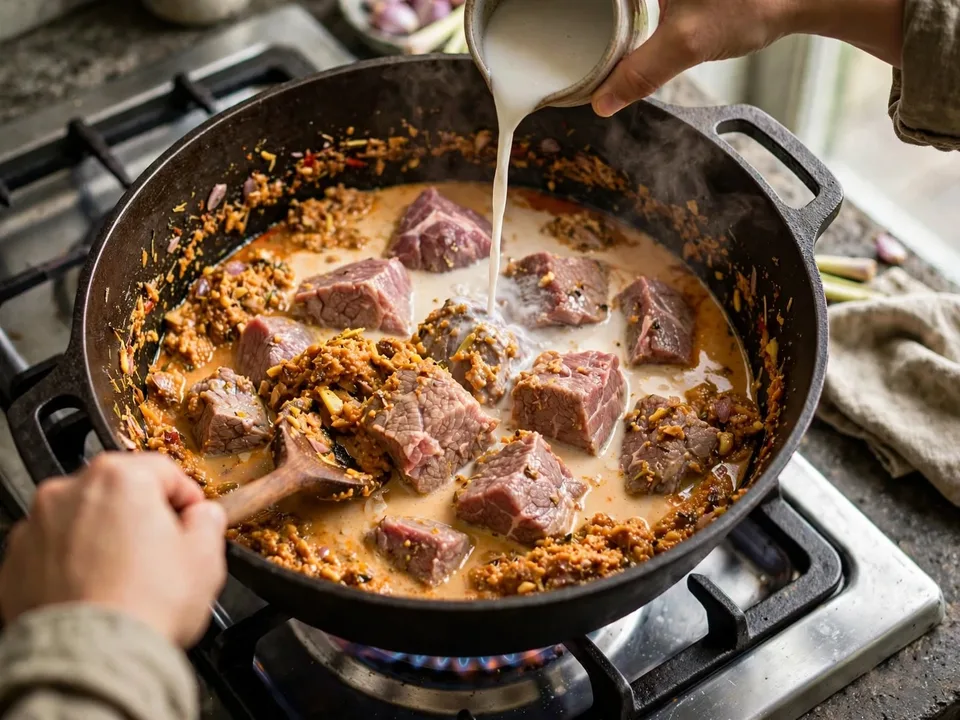
Add the beef and turn it through the aromatic paste until coated.
Add the beef and turn it through the aromatic paste until coated. Pour in the remaining coconut milk and season lightly with salt. Bring slowly to a simmer, stirring from the bottom so the coconut milk does not scorch.
Look for
The beef is fully surrounded by a pale-red aromatic coconut liquid with no paste stuck in dry clumps.
Kitchen note
Do not over-salt at this stage. Rendang reduces enormously, so seasoning that tastes mild now becomes concentrated later.
 Step 04
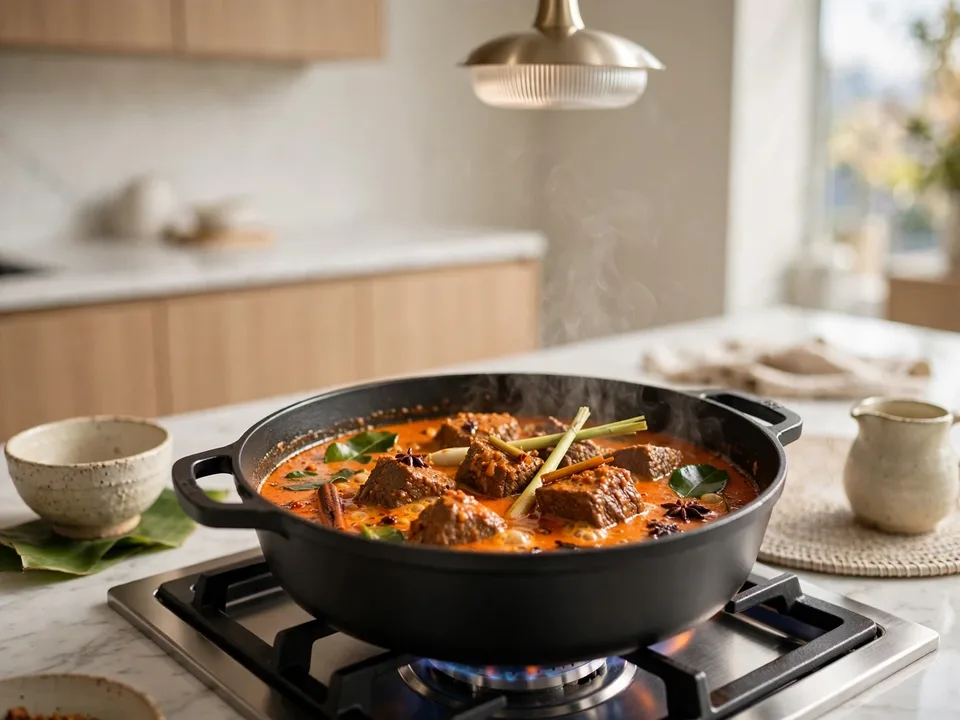
Slow-cook through the liquid gulai stage until the beef is tender
150 min
Lower the heat and cook at a steady gentle simmer for 2–3 hours, uncovered or partly covered depending on evaporation.
Lower the heat and cook at a steady gentle simmer for 2–3 hours, uncovered or partly covered depending on evaporation. Stir every 15–20 minutes at first and more often as the mixture thickens. The beef should become fully tender while there is still ample sauce.
Look for
The beef yields easily to a spoon and the sauce has reduced substantially but is still loose enough to bubble around the meat.
Kitchen note
This is the gulai-to-kalio journey, not a rapid curry reduction. If the meat is still firm when liquid gets low, lower the heat and add a little more coconut milk rather than rushing the fire.
 Step 05
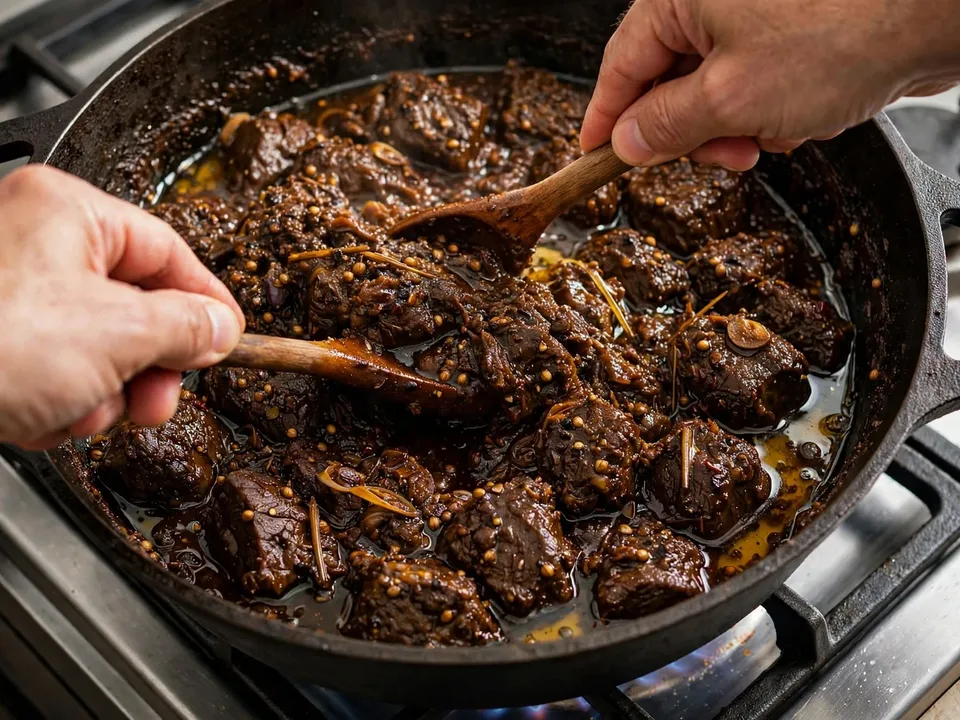
Reduce into the oily kalio stage
60 min
Continue cooking uncovered, now stirring every few minutes.
Continue cooking uncovered, now stirring every few minutes. As water evaporates, the coconut sauce will become thick and glossy and orange-brown coconut oil will begin to separate around the edges. Keep scraping the bottom and turning the meat gently.
Look for
The sauce is thick enough to cling heavily to the beef and visible oil beads or pools separate from the concentrated solids.
Kitchen note
Oil separation is a milestone, not a mistake. It means the coconut emulsion has reduced enough for the final frying stage to begin.
 Step 06
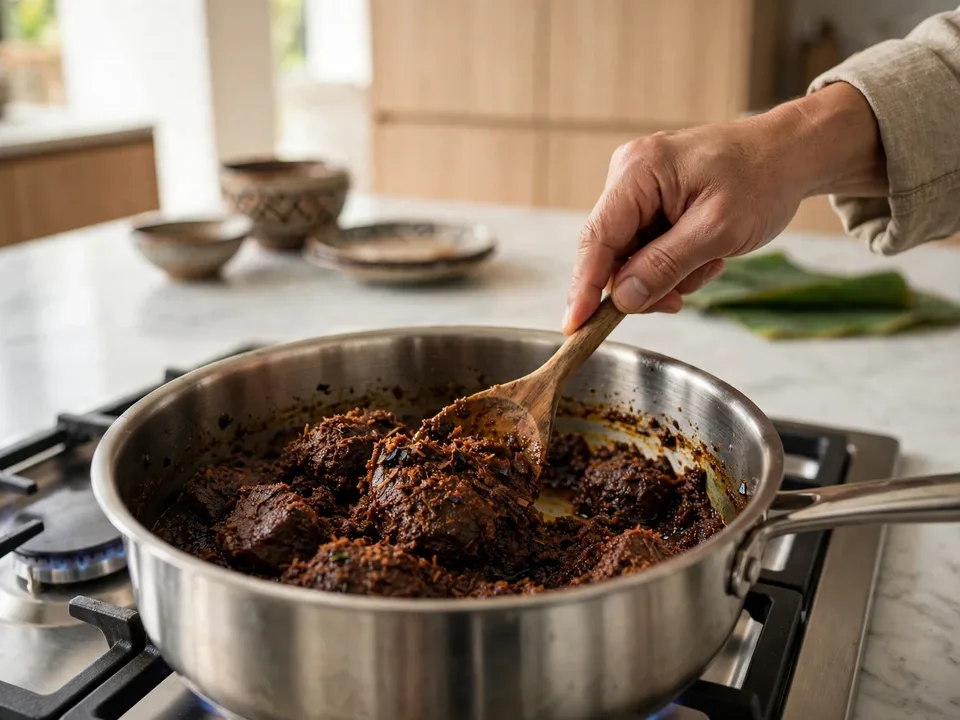
Fry the beef in the reduced coconut solids
35 min
Lower the heat to medium-low and keep turning and scraping as the separated coconut oil fries the concentrated spice-and-coconut solids.
Lower the heat to medium-low and keep turning and scraping as the separated coconut oil fries the concentrated spice-and-coconut solids. The colour will deepen from brown to dark chestnut and the coating will become drier and more granular.
Look for
The coating is dark brown, visibly oily rather than watery and clings in textured flakes around the beef.
Kitchen note
From this point onward, constant attention matters. The same concentration that creates rendang’s deep flavour can scorch quickly on the bottom of the pot.
 Step 07
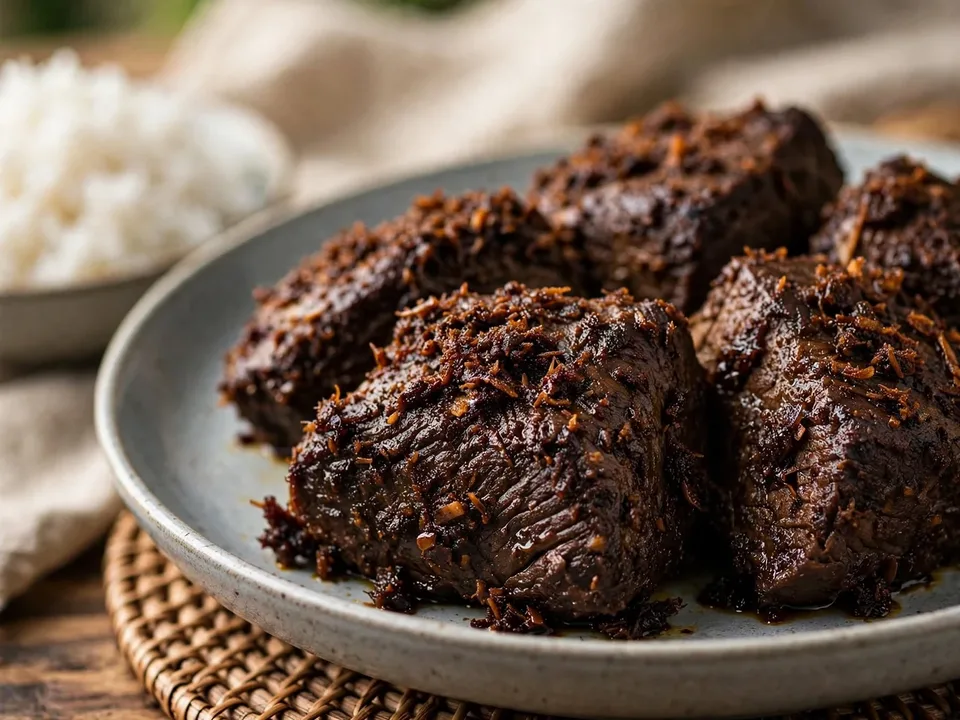
Finish as dark, almost-dry rendang and rest before serving
20 min
Continue over low heat until very little free liquid remains and the beef is coated in dark brown, intensely aromatic coconut-spice solids.
Continue over low heat until very little free liquid remains and the beef is coated in dark brown, intensely aromatic coconut-spice solids. Taste for salt only now. Remove the lemongrass and large leaves, rest for at least 15 minutes and serve with rice.
Look for
There is no watery sauce, the meat is very tender and dark brown, and the coating looks moist with coconut oil while clinging tightly to each piece.
Kitchen note
Do not confuse kalio with finished dry rendang. The final stage is darker, drier and more concentrated, but it should still look moist from rendered coconut oil rather than burnt or dusty.
After cooking
Explore the dish beyond the method.
Story, place and references are here for discovery, so they stay out of the way while you cook.
Culture & tradition
The story behind the dish
Origins, evolution and everyday life—read together as part of the recipe's culinary record.
Origins
The Indonesian tourism ministry identifies rendang with Minangkabau culinary tradition in West Sumatra and describes its long reduction as central to the preparation.
How it evolved
Regional and household rendang varies in meat, spice balance and final moisture; the defining idea is sustained cooking and reduction rather than a quick coconut curry.
Its place today
Rendang is served in homes, restaurants and celebrations and has become one of the most internationally recognized Indonesian dishes.
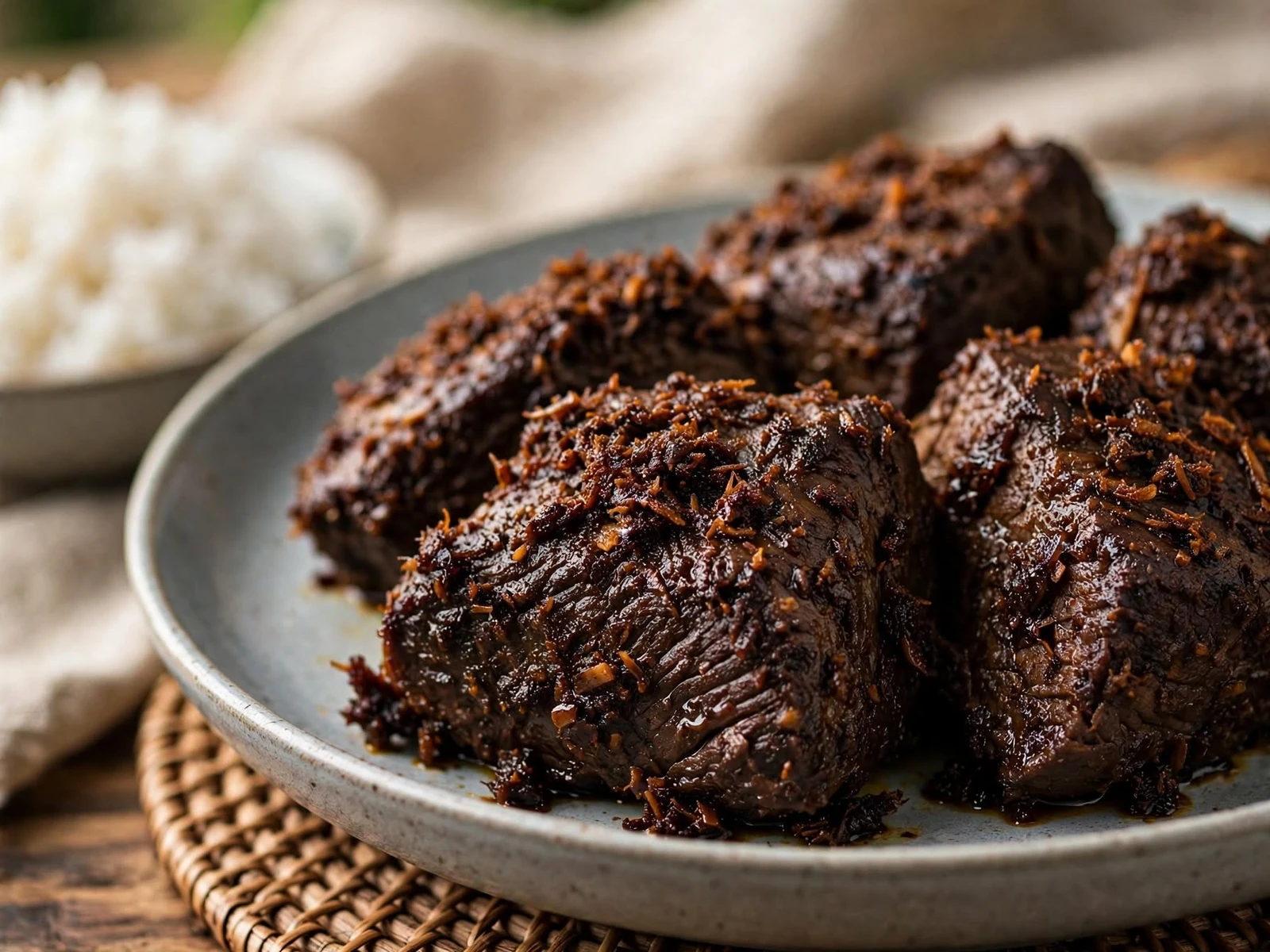
Visual archive · plate 01
Rendang
An editorial view of the finished dish, kept compact so the story continues without an oversized image break.
Primary region
West Sumatra / Minangkabau
Country
Indonesia
Regional influence
The dish reflects the ingredients and cooking patterns associated with West Sumatra / Minangkabau, while household and regional versions vary.
Related food systems
- West Sumatra / Minangkabau home cooking
- Market and street-food traditions
- Regional pantry and seasonal cooking
Sources & further reading
Follow the reference trail.
Ember & Equator links outward when an institution or primary reference helps support the culinary record.
- 01Rendang Minangkabau: One of the World’s Best FoodsExternal ↗
Ministry of Tourism, Republic of Indonesia · government
Supports: Minangkabau identity · gulali-kalio-rendang progression · thick coconut milk · fresh spice composition · long reduction
Ember & Equator source review · 2026-09-17
- 02Rendang: The Legendary Dish from West SumatraExternal ↗
Ministry of Tourism, Republic of Indonesia · government
Supports: West Sumatran identity · slow cooking · coconut milk reduction · lemongrass galangal turmeric leaf and lime leaf aromatics
Ember & Equator source review · 2026-09-17
Ingredient guides
Learn about the ingredients behind the dish.
These are reference guides, not a second ingredient list. Follow an ingredient when you want to understand its role, use and wider culinary context.
Ingredient
beef
Understand what it contributes, how to use it, and the dishes that reveal it best.
Ingredient
coconut milk
Understand what it contributes, how to use it, and the dishes that reveal it best.
Ingredient
shallots
Understand what it contributes, how to use it, and the dishes that reveal it best.
Ingredient
garlic
Understand what it contributes, how to use it, and the dishes that reveal it best.
Ingredient
red chilies
Understand what it contributes, how to use it, and the dishes that reveal it best.
Ingredient
ginger
Understand what it contributes, how to use it, and the dishes that reveal it best.
Keep wandering
Where will this dish take you next?
Stay with the place, follow an ingredient or technique, or cross into another food culture. Each path begins with something already present in this dish.
Stay with the place
01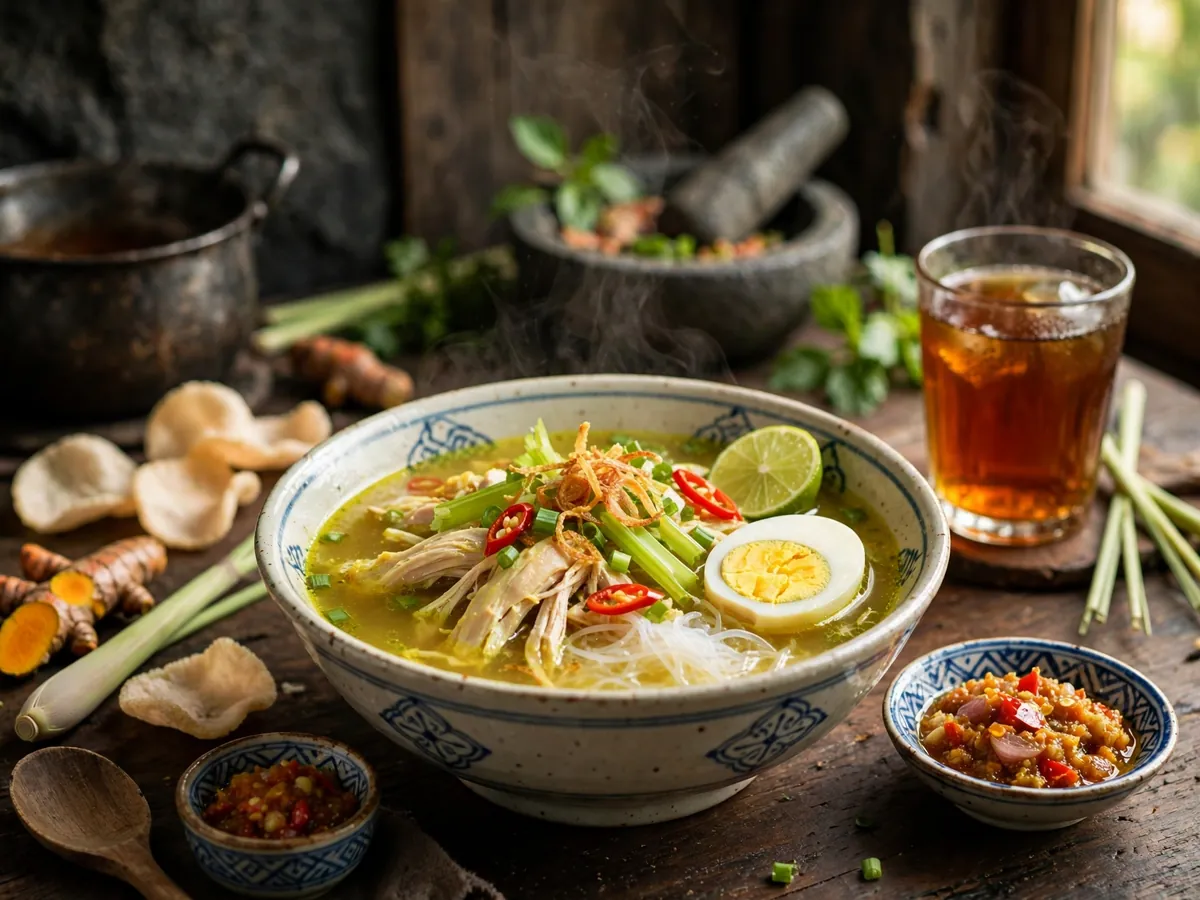
Indonesia
Soto Ayam
Stay in the same food culture and notice how simmer appears in another dish.
Shared thread · Simmer · shallots · garlic
Follow the method or pantry
02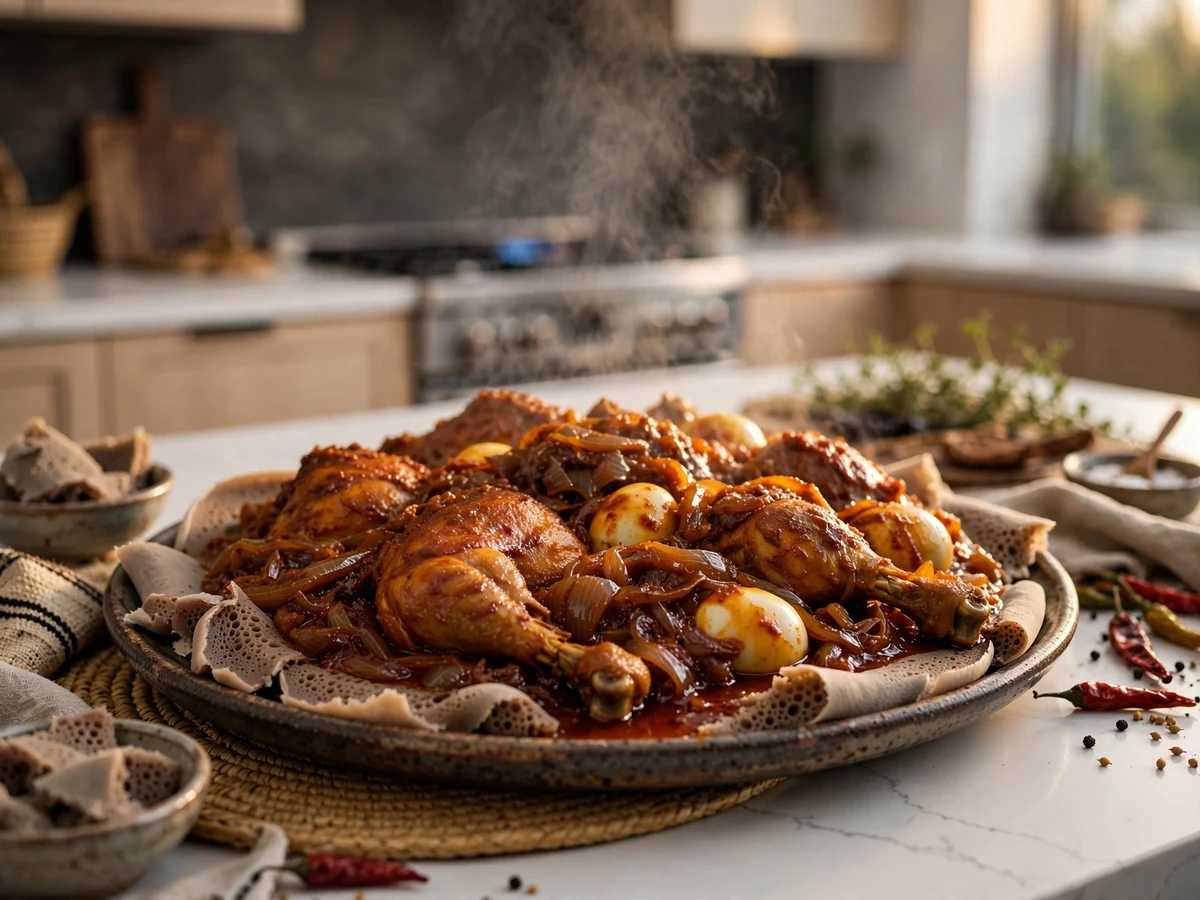
Ethiopia
Doro Wat
Follow the cooking method: both dishes connect through slow cook.
Shared thread · Slow cook · Sauté · Simmer
Cross a culinary border
03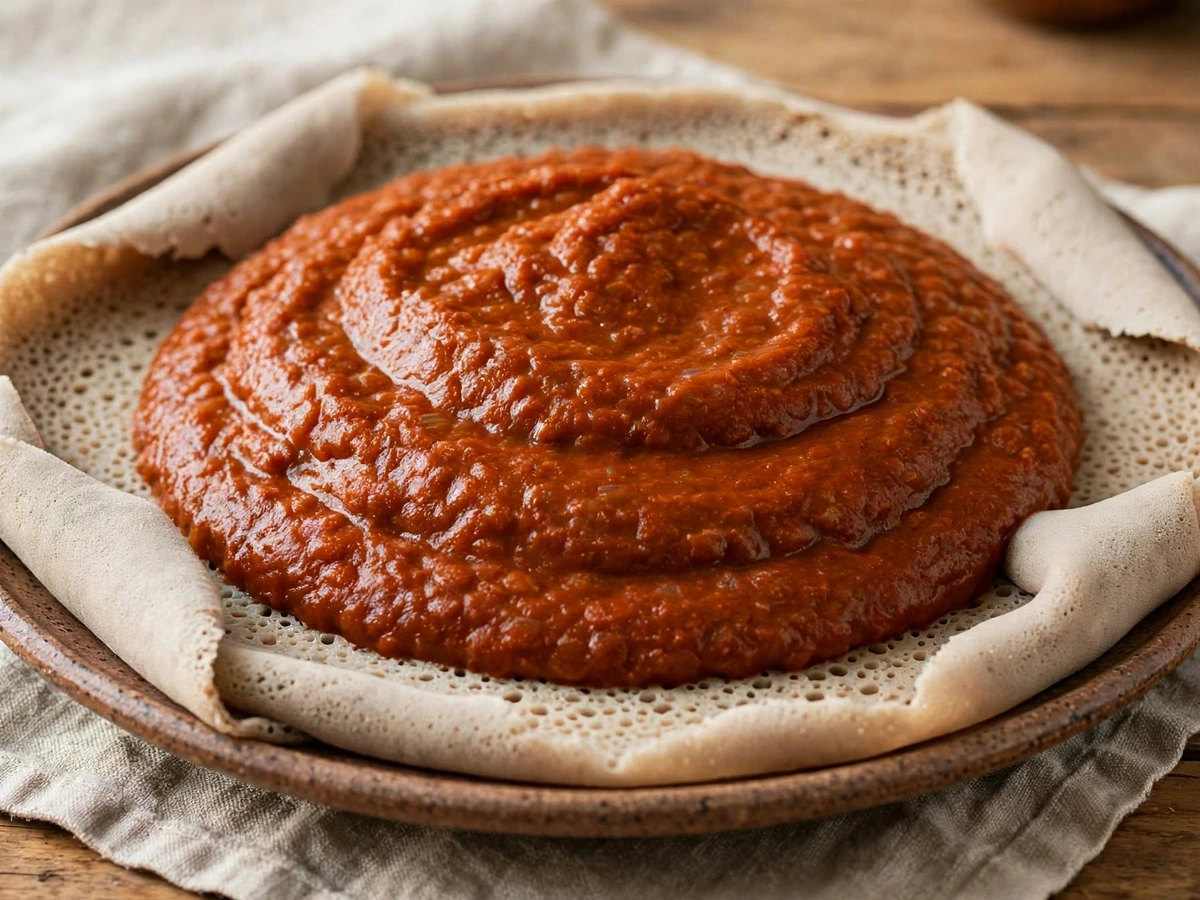
Ethiopia
Misir Wat
Cross borders while keeping slow cook as the common thread.
Shared thread · Slow cook · Sauté · Simmer
Go one layer deeper
One small detail can open an entirely different part of food.
Continue in Ember & Equator