
Ethiopia · lunch · dinner
Misir Wat
Ethiopia through one enduring dish.
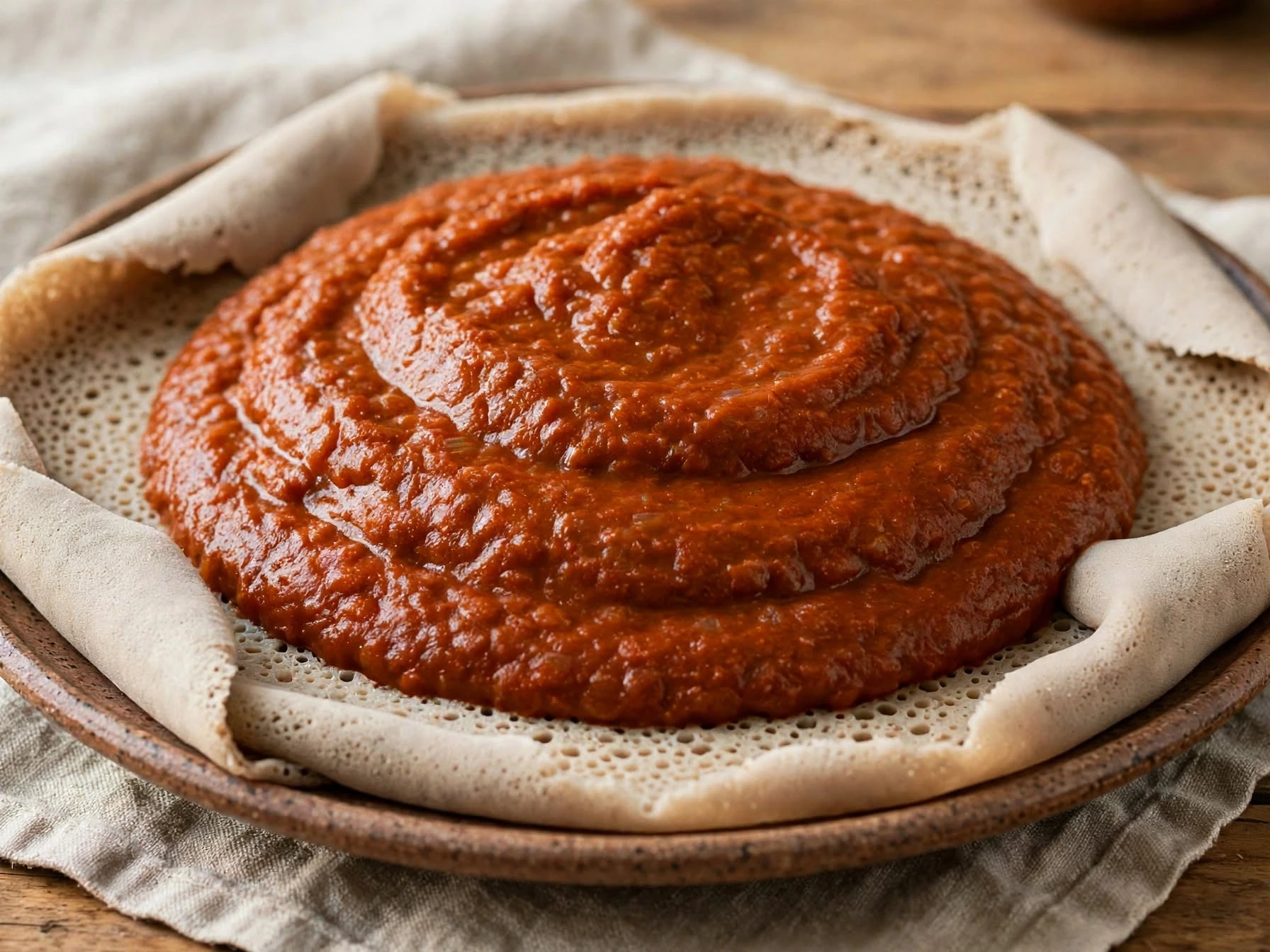
Misir wat is an Ethiopian red-lentil stew in which a concentrated onion, garlic, ginger and berbere base is simmered with lentils until thick, cohesive and spoonable, commonly served with injera.
- Total
- 70 min
- Difficulty
- Easy
- Serves
- 4
- Steps
- 6
The dish
A bowl shaped by habit and place.
Misir wat belongs to Ethiopia’s wider injera-and-wot meal system and is especially compatible with plant-based fasting tables when prepared with vegetable oil. The selected Ember & Equator version keeps the ingredient list deliberately lean so the lentils, onion and berbere remain the focus.
Explore EthiopiaAt a glance
Origin
Ethiopia
Region
Across Ethiopian highland and urban food traditions
Meal
lunch · dinner
Guided steps
6
Dish
Misir Wat
Cuisine
Ethiopian cuisine
Food type
Stew · Legume dish · Dinner
Technique
Slow cook · Sauté · Simmer
Cook the recipe
In the kitchen
Start with the ingredients, then follow the Method in order. Open cooking tips only when you need extra help; the story and references can wait until you are ready.
- Total
- 70 min
- Serves
- 4
- Level
- Easy
- Visual cues
- 6
Ingredients
Serves 4- 1.5 cupsred lentilsrinse until the water is mostly clear
- 2 mediumonionsvery finely chopped
- 2 tbspberbereadjust to the heat of your blend
- 3 tbspolive oilor another mild plant oil for a fasting-friendly version
- 3 clovesgarlicfinely minced
- 1 tbspgingerfinely grated
- 4 cupswaterplus a little hot water if needed late in cooking
- 1 tspsaltplus more to taste; account for salt in the berbere
Everything ready? Continue straight into the cooking steps.
Start methodMethod
6 steps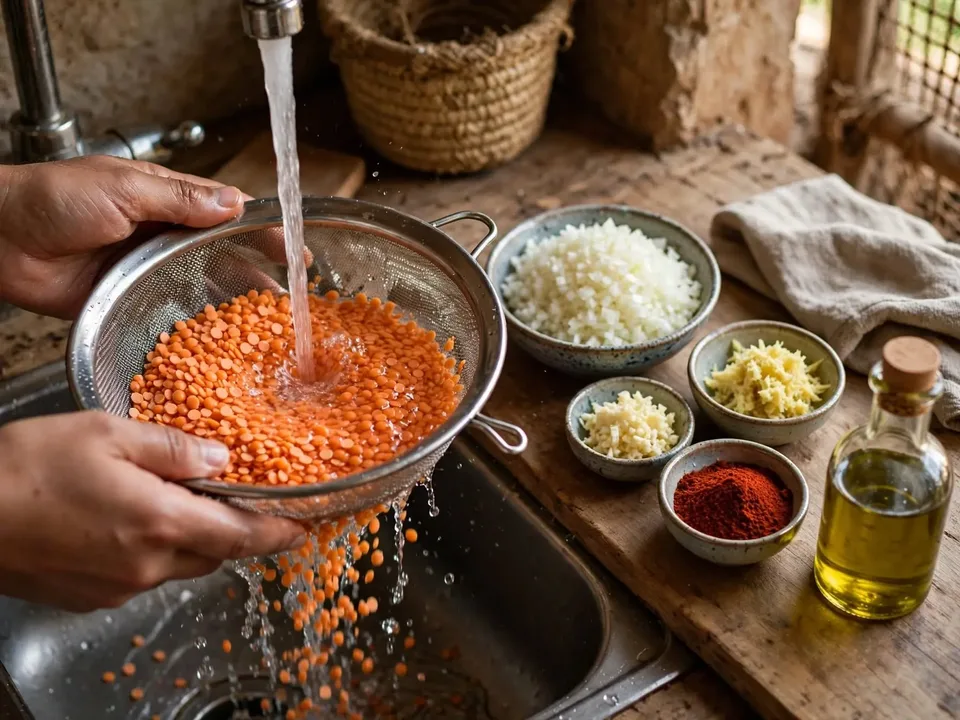 Step 01
Rinse the lentils and prepare the aromatics
8 min
Rinse the red lentils in several changes of cool water until most loose starch and dust are gone, then drain well.
Rinse the red lentils in several changes of cool water until most loose starch and dust are gone, then drain well. Finely chop the onions, mince the garlic, grate the ginger and measure the berbere, oil, salt and water before the pot goes on the heat.
Look for
The lentils are clean and evenly drained and every aromatic is ready before onion cooking begins.
Kitchen note
Red lentils soften quickly, so complete the aromatic prep first. Do not soak them for hours; rinsing and draining is enough for this stew.
 Step 02
Concentrate the onions until soft and reduced
15 min
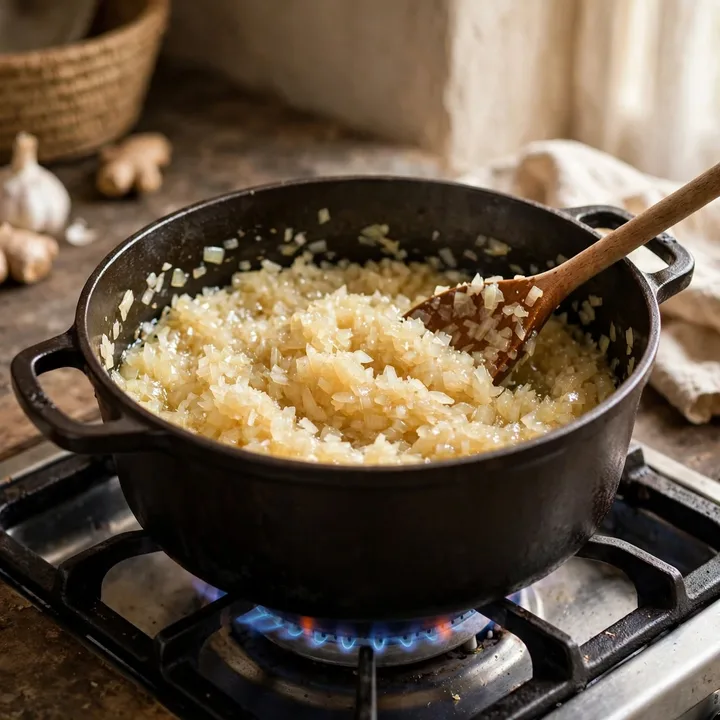
Cook the onions in a heavy pot over medium-low heat for 12–18 minutes, stirring often.
Cook the onions in a heavy pot over medium-low heat for 12–18 minutes, stirring often. Let their volume collapse and the raw aroma disappear. If they threaten to catch before softening, use a tablespoon of water rather than increasing the oil immediately.
Look for
The onions are soft, reduced and moist with little free water and no raw onion smell.
Kitchen note
A concentrated onion base gives the wat sweetness and body. Pale but raw onion leaves the finished stew harsh; blackened onion makes it bitter.
 Step 03
Cook the garlic, ginger and berbere in the oil
5 min
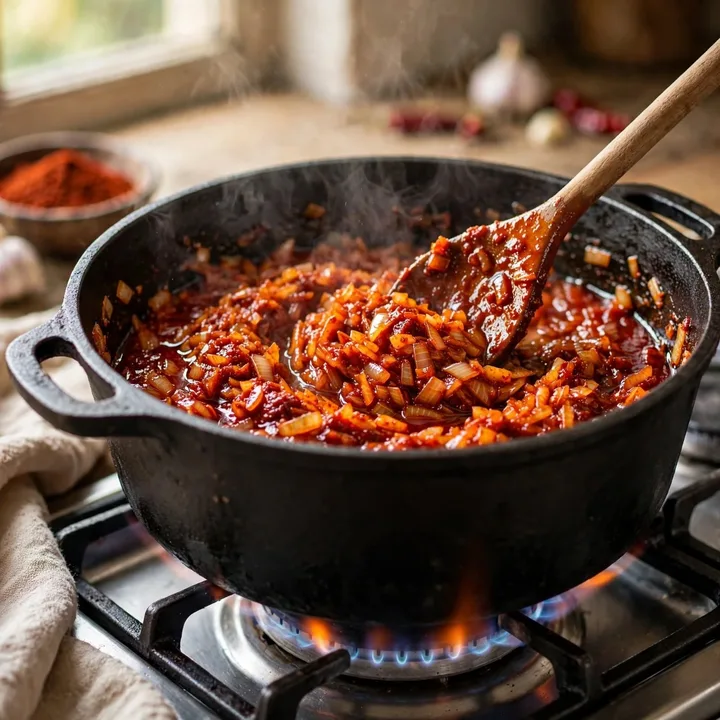
Stir in the oil, garlic and ginger and cook for about 1 minute.
Stir in the oil, garlic and ginger and cook for about 1 minute. Add the berbere and cook for another 3–5 minutes over medium-low heat, stirring constantly and adding a small splash of water if the spice begins to catch.
Look for
The base should be red, glossy and aromatic with no dusty spice pockets or scorched black flecks.
Kitchen note
Cook the berbere until glossy and fragrant before adding the lentils. Dumping lentils and water onto raw berbere produces heat without the same rounded depth.
 Step 04
Add the lentils and water and bring to a calm simmer
5 min
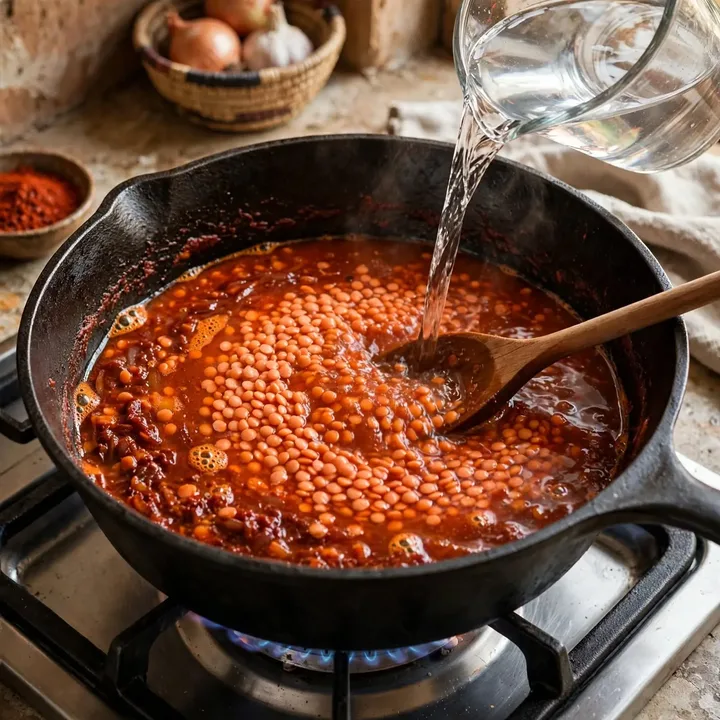
Stir the drained lentils through the spice base, then add about 3 cups of the water and the salt.
Stir the drained lentils through the spice base, then add about 3 cups of the water and the salt. Scrape the bottom of the pot thoroughly, bring to a simmer, then reduce the heat so the surface bubbles steadily without boiling hard.
Look for
The lentils are evenly suspended in a red-orange liquid and nothing is sticking to the bottom of the pot.
Kitchen note
Reserve some water instead of adding all of it at once. Lentils and pots vary, and it is easier to loosen a thick wat than to recover flavour from one diluted too early.
 Step 05
Simmer until the lentils are completely tender
30 min
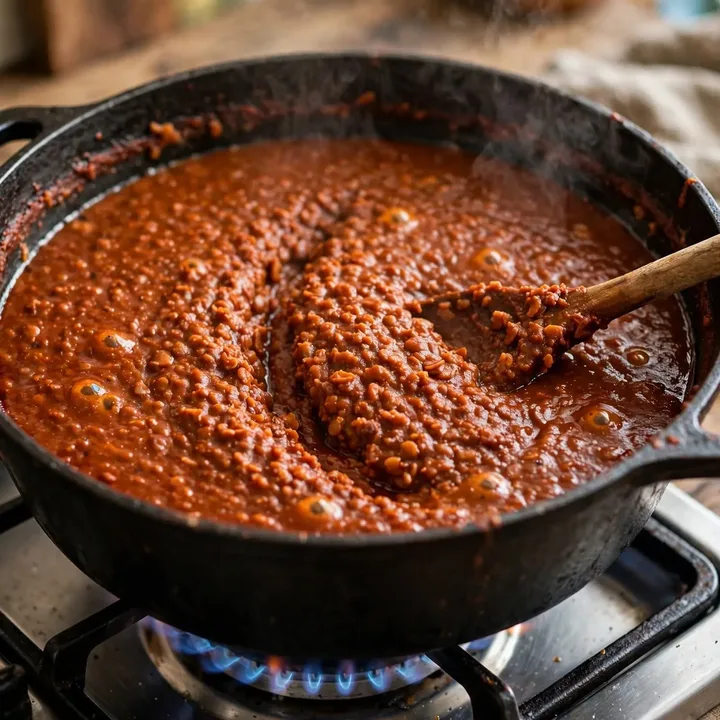
Simmer partly covered for 25–35 minutes, stirring more frequently as the mixture thickens.
Simmer partly covered for 25–35 minutes, stirring more frequently as the mixture thickens. Add the reserved hot water a little at a time only if the lentils are still firm before the stew reaches the correct body. The lentils should soften and partly break down into the sauce.
Look for
The lentils are fully soft and the stew falls from the spoon in a thick mound that relaxes slowly rather than pouring like soup.
Kitchen note
Late in cooking, scrape the base of the pot every few minutes. Red lentils settle easily once thick and can scorch even when the surface looks calm.
 Step 06
Set the final consistency, season and serve with injera
8 min
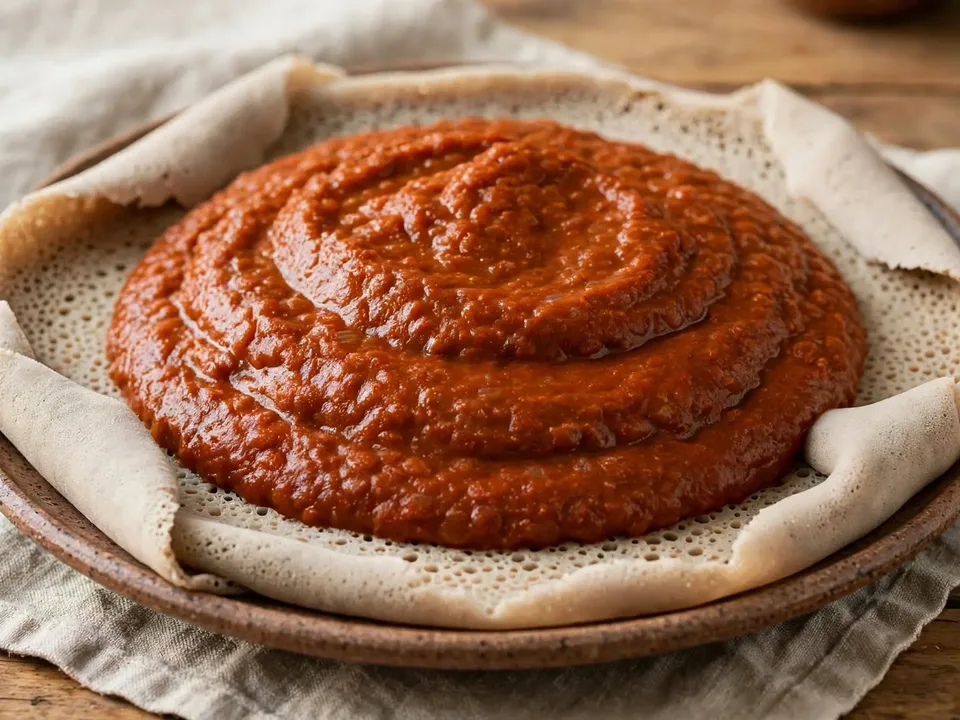
Uncover and simmer for a few minutes if the wat is loose, or stir in a little hot water if it has become stiff.
Uncover and simmer for a few minutes if the wat is loose, or stir in a little hot water if it has become stiff. Taste for salt and berbere balance. Rest for 5 minutes off the heat, then serve warm with injera as part of a shared platter or as a main stew.
Look for
The finished wat is cohesive and spoonable, holds a soft mound on injera and has no watery liquid separating around the edges.
Kitchen note
Misir wat thickens as it stands. Stop when it is slightly looser than your final target, especially if it will wait before service or be reheated later.
After cooking
Explore the dish beyond the method.
Story, place and references are here for discovery, so they stay out of the way while you cook.
Culture & tradition
The story behind the dish
Origins, evolution and everyday life—read together as part of the recipe's culinary record.
Origins
An Ethiopian pulse wot within the broader injera-and-stew tradition.
How it evolved
Spice strength, tomato use, fat choice and final thickness vary among households; the common thread is lentils cooked into a concentrated red berbere base.
Its place today
A widely served plant-based stew and a familiar component of shared injera platters.
Visual archive · plate 01
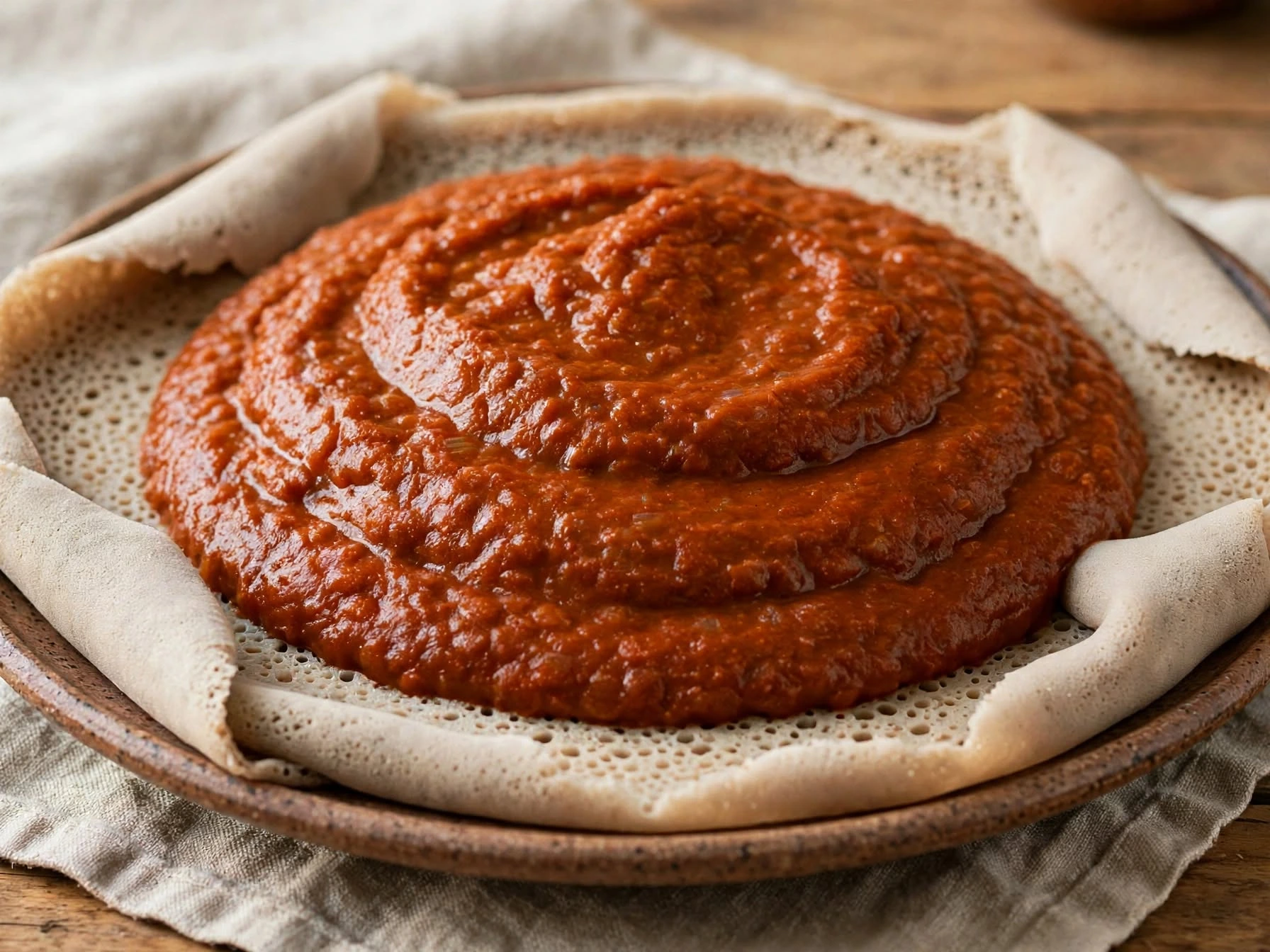
Misir Wat
An editorial view of the finished dish, kept compact so the story continues without an oversized image break.
Primary region
Across Ethiopian highland and urban food traditions
Country
Ethiopia
Regional influence
Shelf-stable pulses and dried spice blends support deeply flavoured stews built with long-cooked onions and modest pantry ingredients.
Related food systems
- Injera and wot meals
- Pulse cookery
- Ethiopian fasting food traditions
Sources & further reading
Follow the reference trail.
Ember & Equator links outward when an institution or primary reference helps support the culinary record.
- 01Federal Democratic Republic of Ethiopia — Nutrition Country ProfileExternal ↗
FAO · reference
Supports: injera · wot · Ethiopian food patterns · shared meals
Ember & Equator source review · 2026-09-17
- 02Lentils: A Recent Review on Global Trade and Popular Regional CuisinesExternal ↗
Legume Science / Wiley · academic
Supports: misir wat · red lentils · berbere · injera service
Ember & Equator source review · 2026-09-17
- 03Berbere & Mitmita: Liking It HotExternal ↗
Ethiopian Food — Mesob Across America · specialist publication
Supports: berbere in Ethiopian wot · misir wat within red-wot cookery
Ember & Equator source review · 2026-09-17
Ingredient guides
Learn about the ingredients behind the dish.
These are reference guides, not a second ingredient list. Follow an ingredient when you want to understand its role, use and wider culinary context.
Ingredient
red lentils
Understand what it contributes, how to use it, and the dishes that reveal it best.
Ingredient
onion
Understand what it contributes, how to use it, and the dishes that reveal it best.
Ingredient
berbere
Understand what it contributes, how to use it, and the dishes that reveal it best.
Explore ingredient →
Ingredient
olive oil
Understand what it contributes, how to use it, and the dishes that reveal it best.
Ingredient
garlic
Understand what it contributes, how to use it, and the dishes that reveal it best.
Ingredient
ginger
Understand what it contributes, how to use it, and the dishes that reveal it best.
Keep wandering
Where will this dish take you next?
Stay with the place, follow an ingredient or technique, or cross into another food culture. Each path begins with something already present in this dish.
Stay with the place
01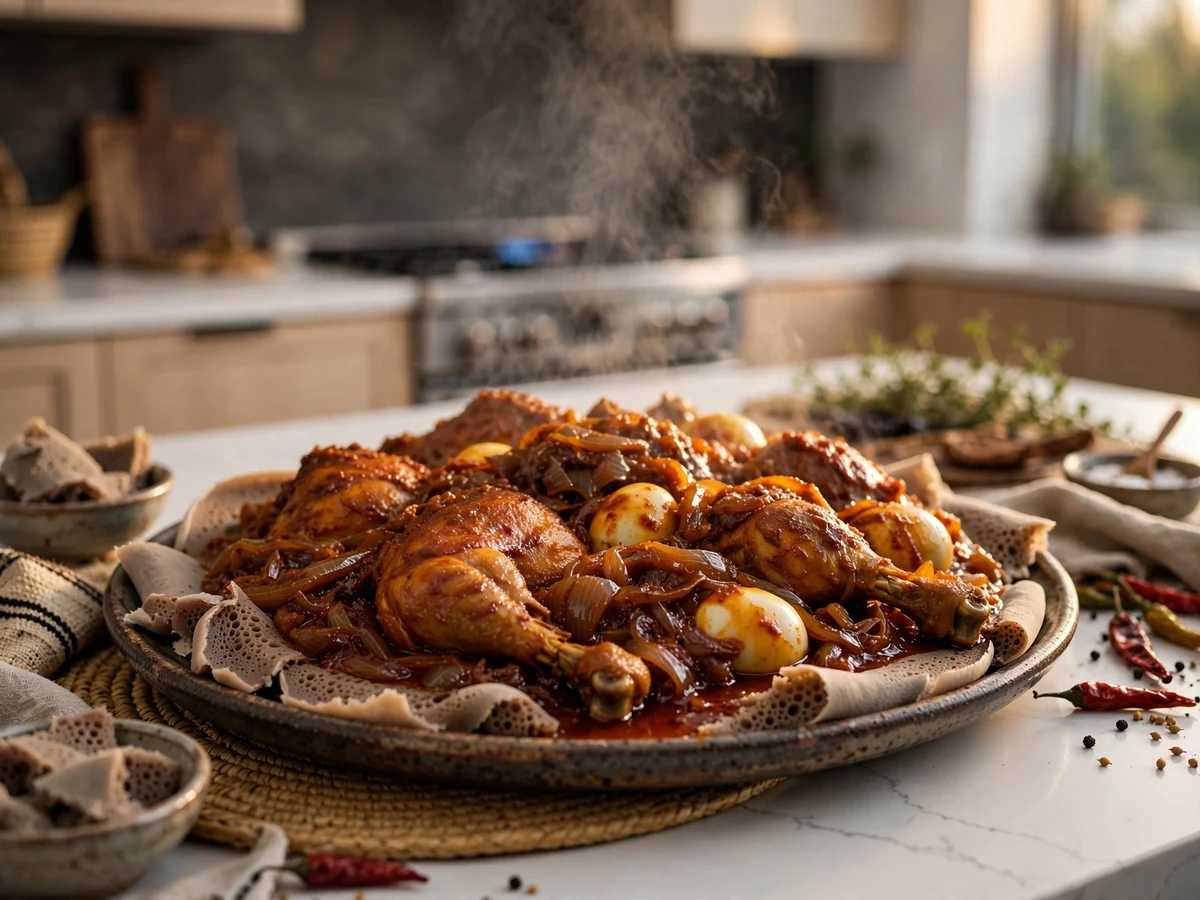
Ethiopia
Doro Wat
Stay in the same food culture and notice how slow cook appears in another dish.
Shared thread · Slow cook · Sauté · Simmer
Follow the method or pantry
02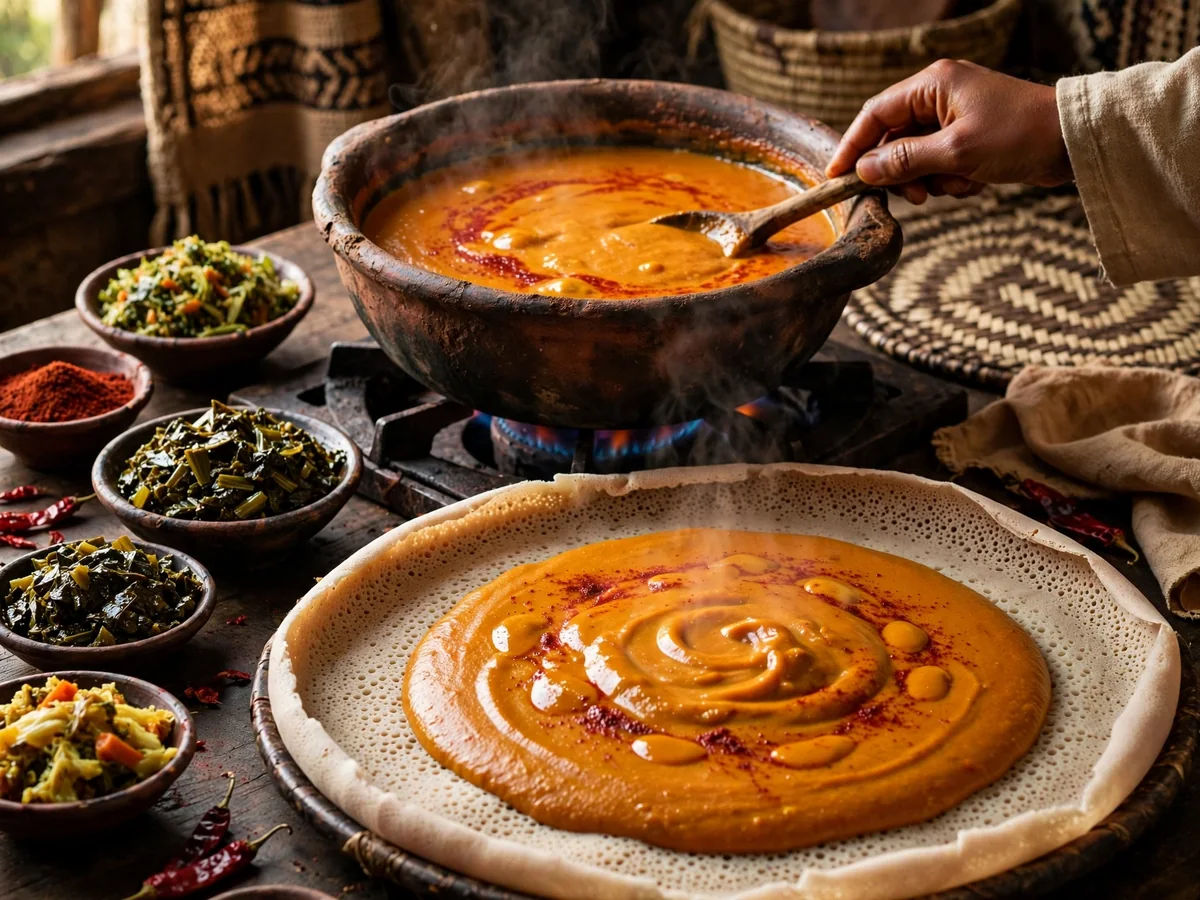
Ethiopia
Shiro Wat
Follow the cooking method: both dishes connect through sauté.
Shared thread · Sauté · Simmer · onion
Cross a culinary border
03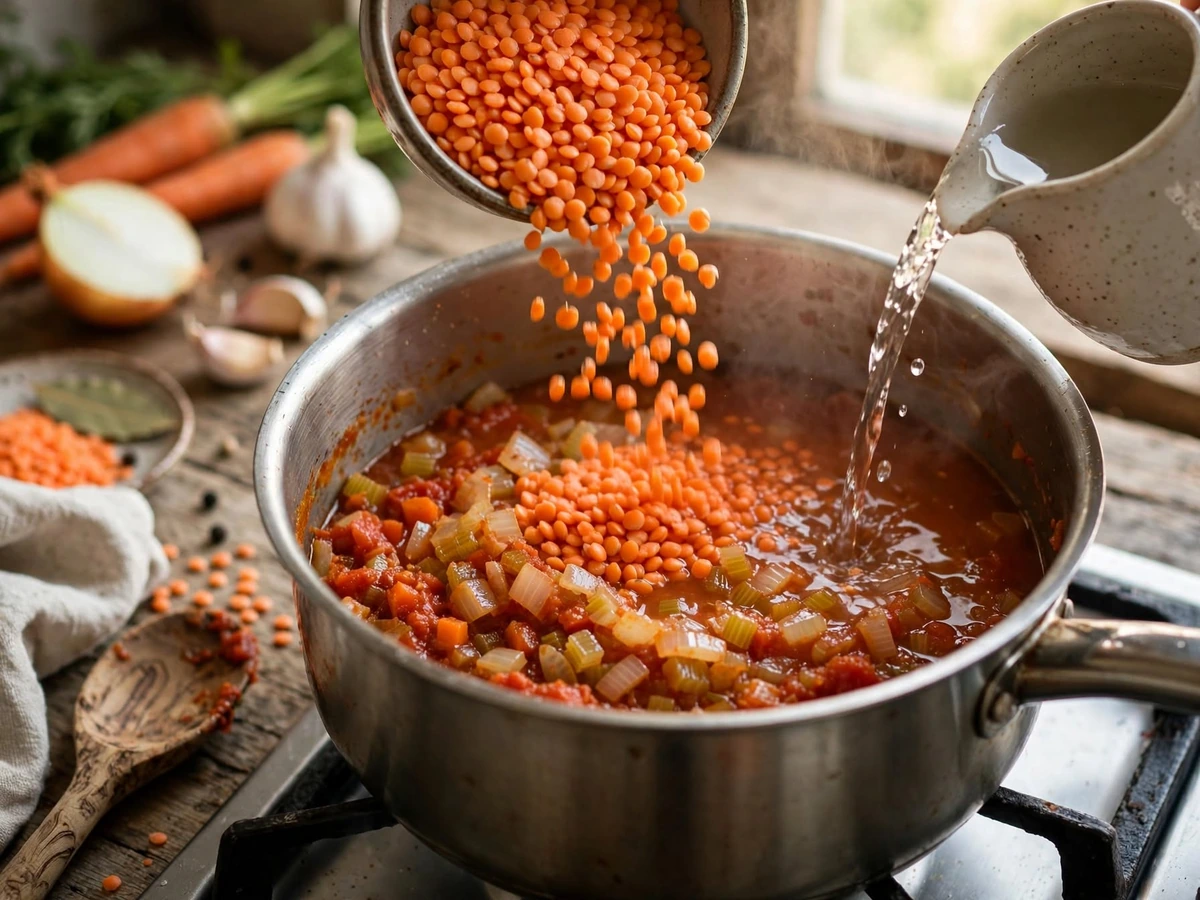
Türkiye
Mercimek Çorbası
Cross borders while keeping sauté as the common thread.
Shared thread · Sauté · Simmer · red lentils
Go one layer deeper
One small detail can open an entirely different part of food.
Continue in Ember & Equator