
Ethiopia · dinner
Doro Wat
Ethiopia through one enduring dish.
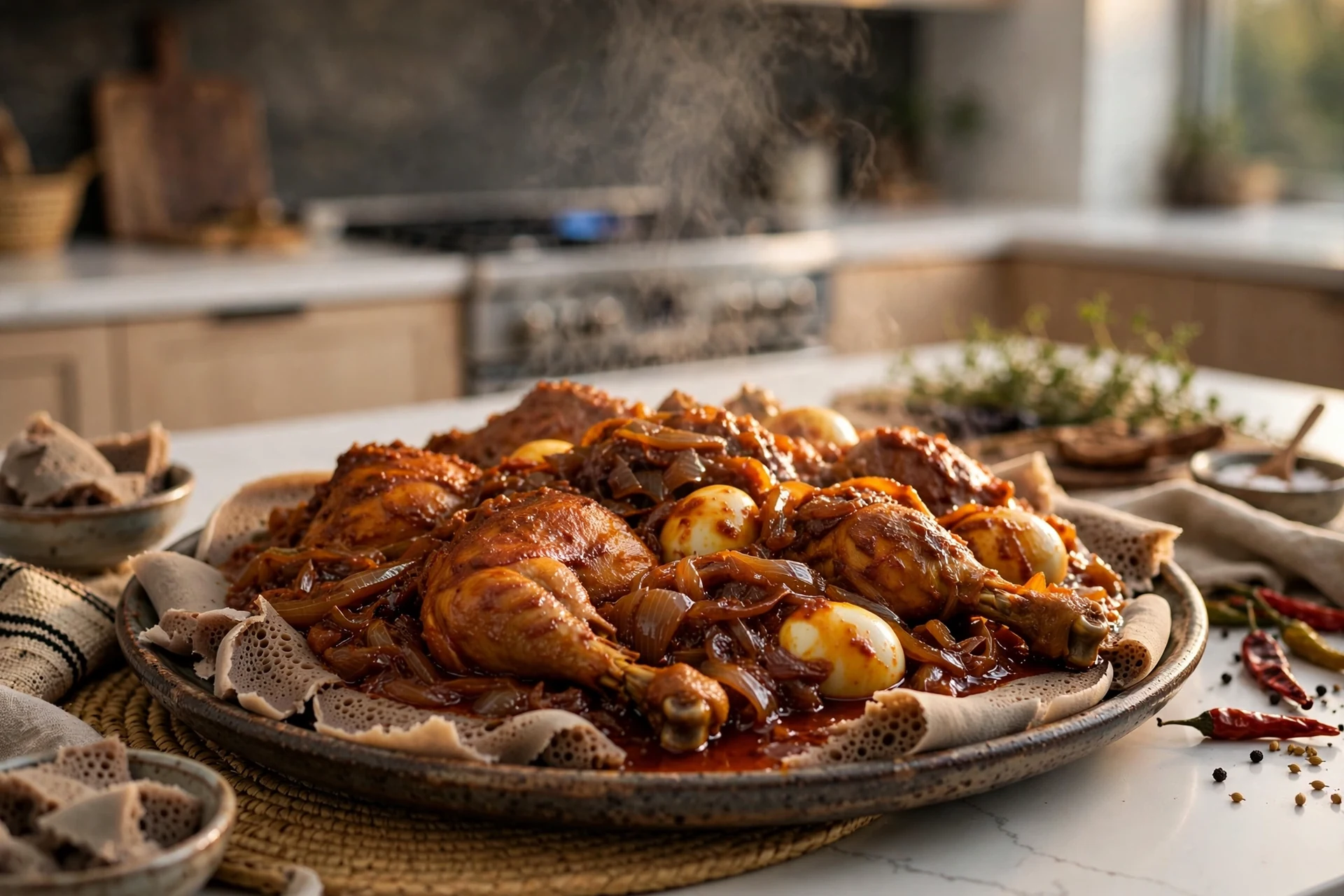
Doro wat is an Ethiopian chicken stew built from slowly concentrated onions, niter kibbeh, berbere, garlic and ginger, with tender chicken and hard-boiled eggs served alongside injera.
- Total
- 120 min
- Difficulty
- Medium
- Serves
- 4
- Steps
- 6
The dish
A bowl shaped by habit and place.
Doro wat is strongly associated with Ethiopian shared and celebratory meals. The selected Ember & Equator version follows the familiar red-wot structure of a deeply cooked onion base, niter kibbeh, berbere, chicken and eggs while acknowledging household variation in chicken cutting, spice strength and finishing seasonings.
Explore EthiopiaAt a glance
Origin
Ethiopia
Region
Across Ethiopian highland and urban food traditions
Meal
dinner
Guided steps
6
Dish
Doro Wat
Cuisine
Ethiopian cuisine
Food type
Stew · Dinner · Celebration food
Technique
Slow cook · Sauté · Simmer
Cook the recipe
In the kitchen
Start with the ingredients, then follow the Method in order. Open cooking tips only when you need extra help; the story and references can wait until you are ready.
- Total
- 120 min
- Serves
- 4
- Level
- Medium
- Visual cues
- 6
Ingredients
Serves 4- 1.2 kgchicken piecesbone-in pieces; pat dry before cooking
- 5 mediumonionsvery finely chopped
- 3 tbspberbereadjust to the heat and salt level of your blend
- 3 tbspniter kibbehEthiopian spiced clarified butter
- 4 clovesgarlicfinely minced
- 1 tbspgingerfinely grated
- 4 wholeeggshard-boiled and peeled
- 2 cupswateradd gradually as the kulet develops
- 1.5 tspsaltplus more to taste; reduce if the berbere is salty
Everything ready? Continue straight into the cooking steps.
Start methodMethod
6 steps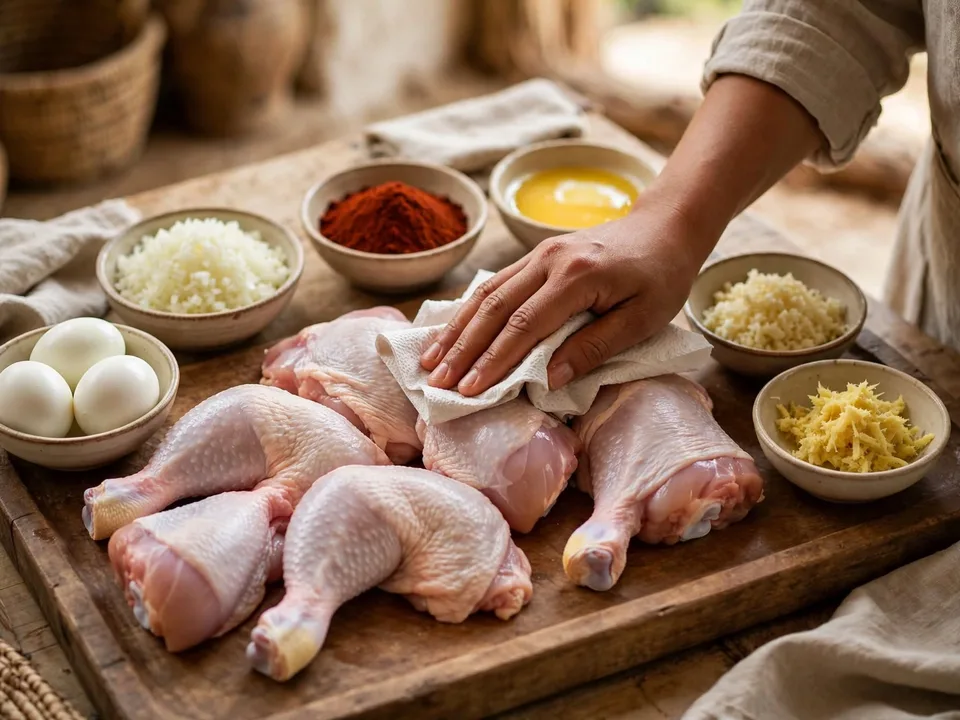 Step 01
Prepare the chicken, eggs and aromatics
15 min
Pat the chicken dry and season lightly with some of the salt.
Pat the chicken dry and season lightly with some of the salt. Hard-boil and peel the eggs if they are not already prepared. Finely chop the onions, mince the garlic, grate the ginger and measure the berbere, niter kibbeh and water before the pot goes on the heat.
Look for
The chicken surface is dry, the eggs are peeled and the onion and spice ingredients are completely ready to add without stopping the cook.
Kitchen note
The onion and spice stages need attention, so complete the mise en place first. Dry chicken browns and braises more cleanly than pieces carrying surface water.
 Step 02
Cook the onions until deeply concentrated
22 min
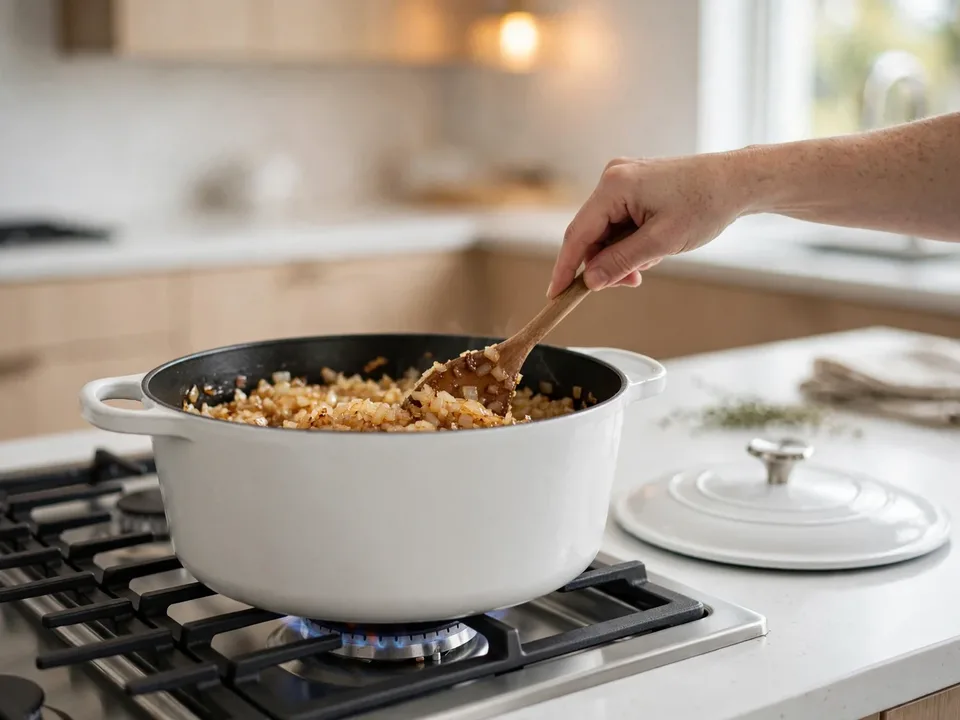
Put the finely chopped onions in a wide heavy pot over medium-low heat.
Put the finely chopped onions in a wide heavy pot over medium-low heat. Cook slowly, stirring and scraping often, until they collapse dramatically, lose their raw smell and become a dense moist paste, about 18–25 minutes. Add a spoonful of water only if the base begins to scorch before the onions soften.
Look for
The onions should be very soft and greatly reduced in volume with little free moisture, but no blackened or bitter patches.
Kitchen note
Do not rush this stage with high heat or flood it with oil. The long onion reduction creates much of the body and sweetness that distinguishes the finished wat. Do not rush this stage by raising the heat. If the onions start colouring at the edges before becoming uniformly soft and reduced, lower the heat and add a spoonful of water.
 Step 03
Add niter kibbeh, garlic, ginger and bloom the berbere
8 min
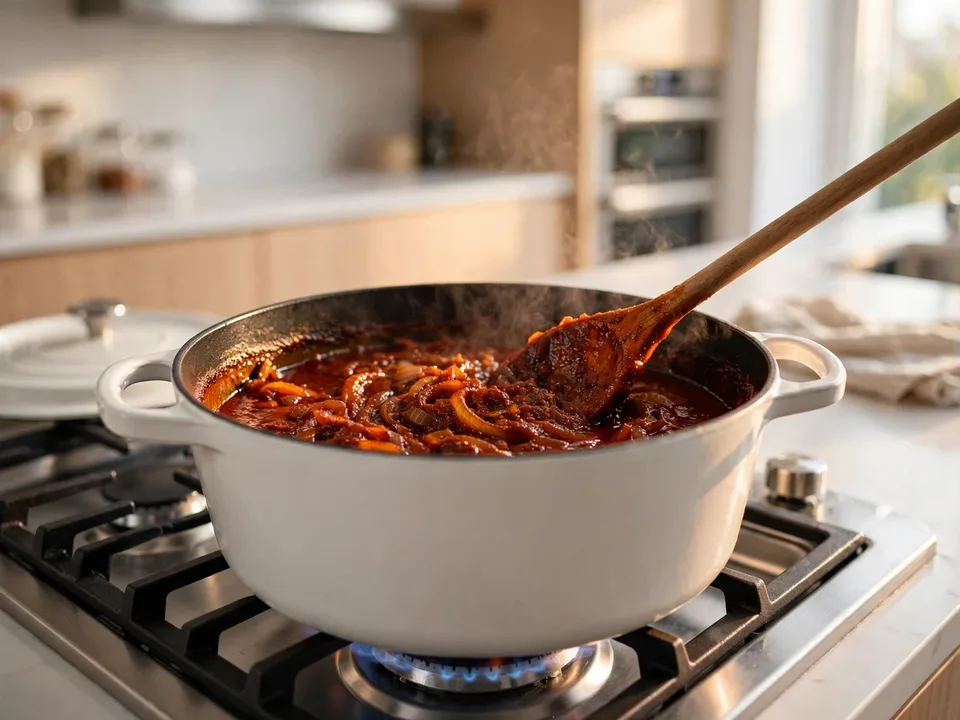
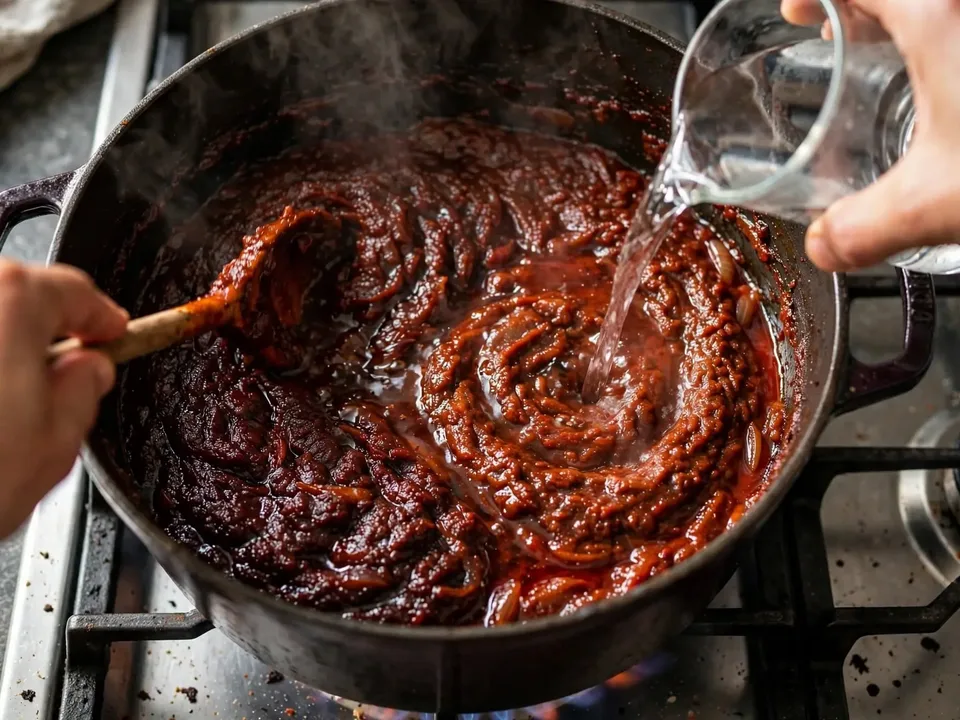
Stir the niter kibbeh into the concentrated onions, then add the garlic and ginger and cook for about 1 minute.
Stir the niter kibbeh into the concentrated onions, then add the garlic and ginger and cook for about 1 minute. Add the berbere and cook over medium-low heat for 5–8 minutes, stirring constantly and adding small splashes of water as needed so the spice cooks into the fat and onion without scorching.
Look for
The base is glossy brick-red and intensely aromatic, with no dusty raw-spice smell and no scorched flecks.
Kitchen note
Berbere should be cooked, not merely stirred in at the end. If the mixture turns dry and dusty, lower the heat and add a splash of water rather than allowing the chile and aromatics to burn. Berbere is sufficiently cooked when the raw dusty smell is gone and the fat begins to look integrated and glossy around the paste; if it darkens rapidly, lower the heat immediately.
 Step 04
Develop the kulet before adding the chicken
12 min
Add about half the water in several additions, stirring each addition into the onion-spice base.
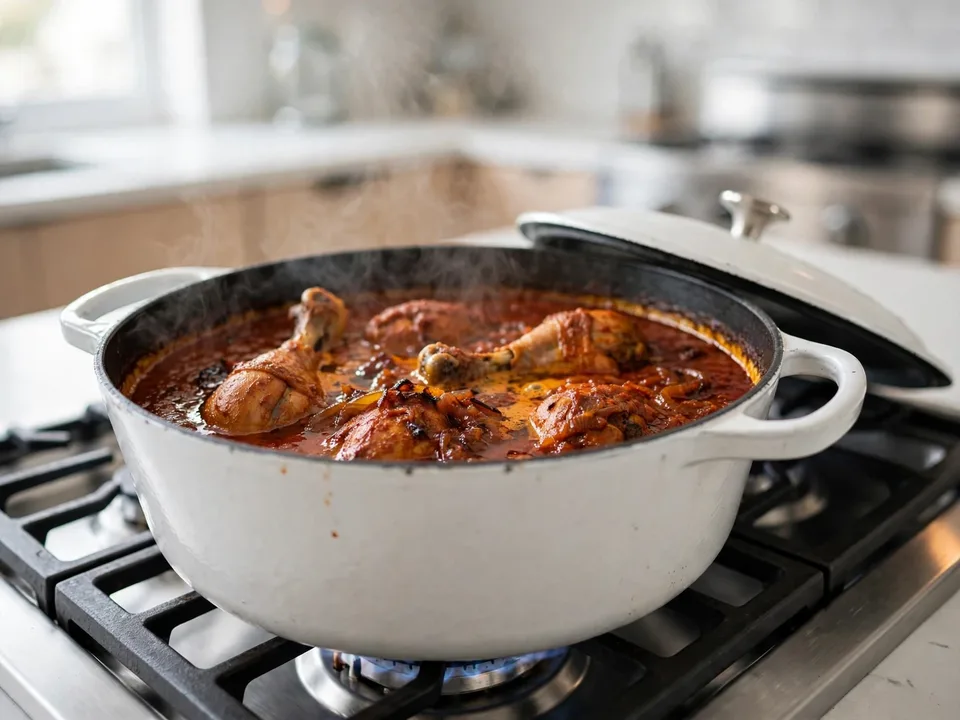
Add about half the water in several additions, stirring each addition into the onion-spice base. Bring to a gentle simmer and cook for 10–15 minutes, scraping the pot and adding only enough extra water to keep the sauce moving. Taste and adjust the salt before the chicken goes in.
Look for
The sauce should be smooth, red-brown and spoon-coating; a spoon dragged through it should briefly expose the bottom before the sauce flows back.
Kitchen note
This is a sauce-development stage, not a shortcut to soup. Add liquid gradually so the onion, fat and berbere remain integrated and concentrated.
 Step 05
Braise the chicken gently until tender
40 min
Nestle the chicken pieces into the kulet and turn them to coat.
Nestle the chicken pieces into the kulet and turn them to coat. Add enough of the remaining water to maintain a thick braising sauce, cover partly and simmer gently for 35–45 minutes, turning the pieces a few times. The chicken must be cooked through and tender; verify the thickest pieces reach at least 74°C / 165°F.
Look for
The chicken is fully cooked and tender, the joints move easily and the sauce clings to the pieces instead of looking watery.
Kitchen note
Keep the simmer controlled. Vigorous boiling can tighten the chicken before the sauce has time to become glossy and concentrated.
 Step 06
Add the eggs, reduce to a glossy finish and serve
10 min
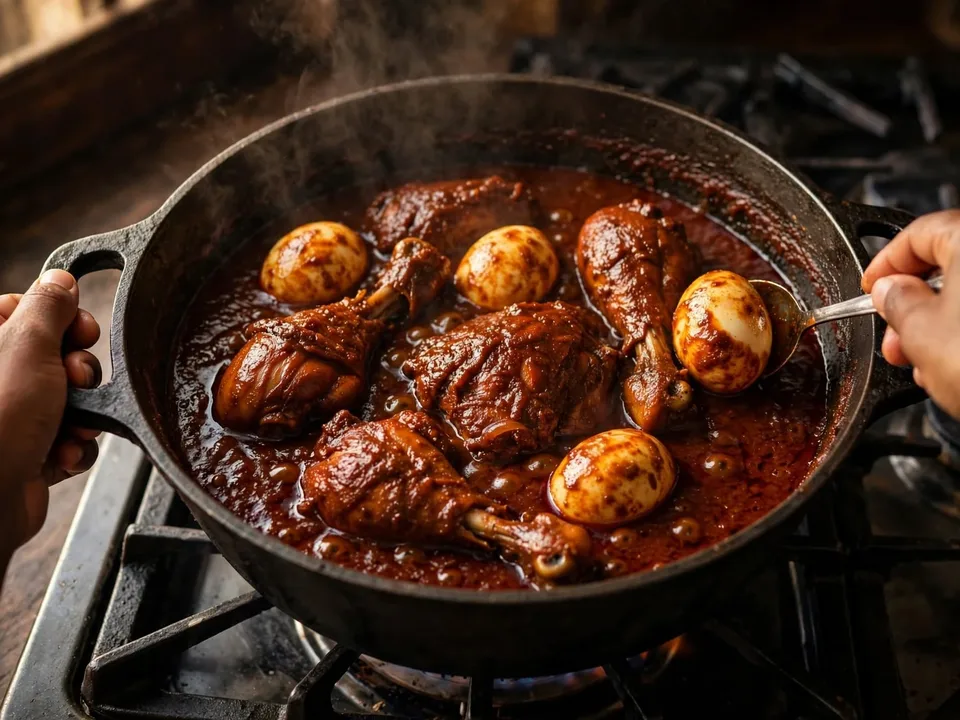
Add the peeled hard-boiled eggs for the final 8–12 minutes so they warm through and become coated with the sauce.
Add the peeled hard-boiled eggs for the final 8–12 minutes so they warm through and become coated with the sauce. Simmer uncovered as needed until the wat is thick and glossy. Taste for salt and berbere balance, then serve hot with injera, giving each diner chicken, sauce and egg.
Look for
The sauce sits thickly on the chicken and eggs with a glossy surface and no watery ring around the pot.
Kitchen note
Add the eggs near the end rather than boiling them in the stew for the whole braise. If the wat tightens too far while you wait to serve, loosen it with a spoonful of hot water rather than leaving it dry.
After cooking
Explore the dish beyond the method.
Story, place and references are here for discovery, so they stay out of the way while you cook.
Culture & tradition
The story behind the dish
Origins, evolution and everyday life—read together as part of the recipe's culinary record.
Origins
An Ethiopian chicken wot within the broader injera-and-wot food system; Ember & Equator does not reduce its long development to a single origin anecdote.
How it evolved
Red-chile berbere, spiced butter and household spice practices shaped the modern form, while the exact balance and chicken preparation continue to vary among cooks.
Its place today
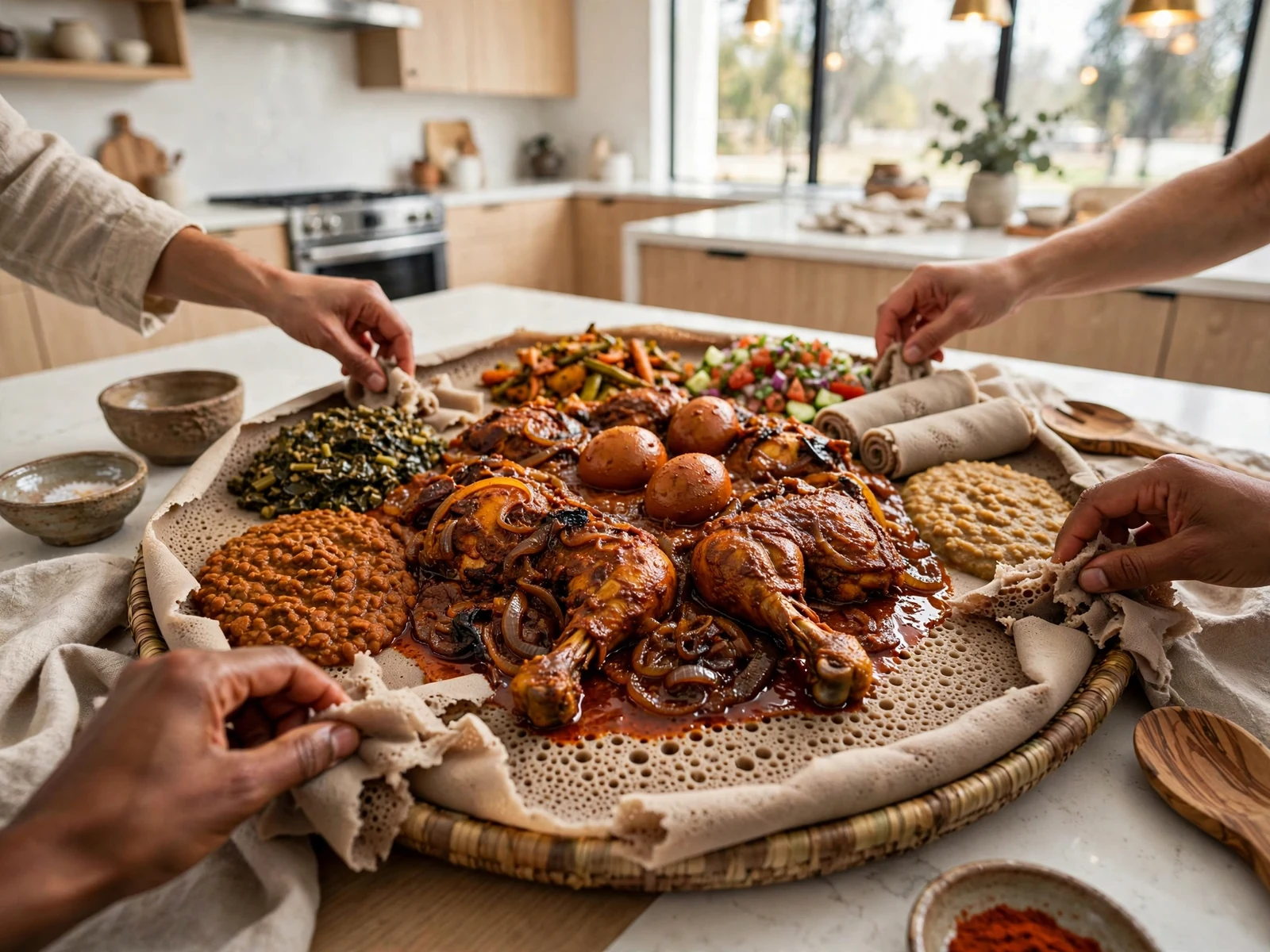
A substantial shared stew commonly associated with holidays, guests and special meals, usually eaten with injera.
Visual archive · plate 01
Doro Wat
An editorial view of the finished dish, kept compact so the story continues without an oversized image break.
Primary region
Across Ethiopian highland and urban food traditions
Country
Ethiopia
Regional influence
Long onion cooking, dried chile-spice blends and clarified spiced butter create a concentrated stew suited to communal injera meals.
Related food systems
- Injera and wot meals
- Berbere-spiced stews
- Celebratory chicken dishes
Sources & further reading
Follow the reference trail.
Ember & Equator links outward when an institution or primary reference helps support the culinary record.
- 01Federal Democratic Republic of Ethiopia — Nutrition Country ProfileExternal ↗
FAO · reference
Supports: injera · wot · Ethiopian food patterns · shared meals
Ember & Equator source review · 2026-09-17
- 02Exploring Doro WotExternal ↗
Ethiopian Food — Mesob Across America · specialist publication
Supports: doro wat cultural context · chicken and egg tradition · injera service · household and regional variation
Ember & Equator source review · 2026-09-17
- 03Berbere & Mitmita: Liking It HotExternal ↗
Ethiopian Food — Mesob Across America · specialist publication
Supports: berbere in red wot · niter kibbeh · onion-berbere sauce structure
Ember & Equator source review · 2026-09-17
Ingredient guides
Learn about the ingredients behind the dish.
These are reference guides, not a second ingredient list. Follow an ingredient when you want to understand its role, use and wider culinary context.
Ingredient
chicken pieces
Understand what it contributes, how to use it, and the dishes that reveal it best.
Ingredient
onion
Understand what it contributes, how to use it, and the dishes that reveal it best.
Ingredient
berbere
Understand what it contributes, how to use it, and the dishes that reveal it best.
Explore ingredient →
Ingredient
niter kibbeh
Understand what it contributes, how to use it, and the dishes that reveal it best.
Ingredient
garlic
Understand what it contributes, how to use it, and the dishes that reveal it best.
Ingredient
ginger
Understand what it contributes, how to use it, and the dishes that reveal it best.
Keep wandering
Where will this dish take you next?
Stay with the place, follow an ingredient or technique, or cross into another food culture. Each path begins with something already present in this dish.
Stay with the place
01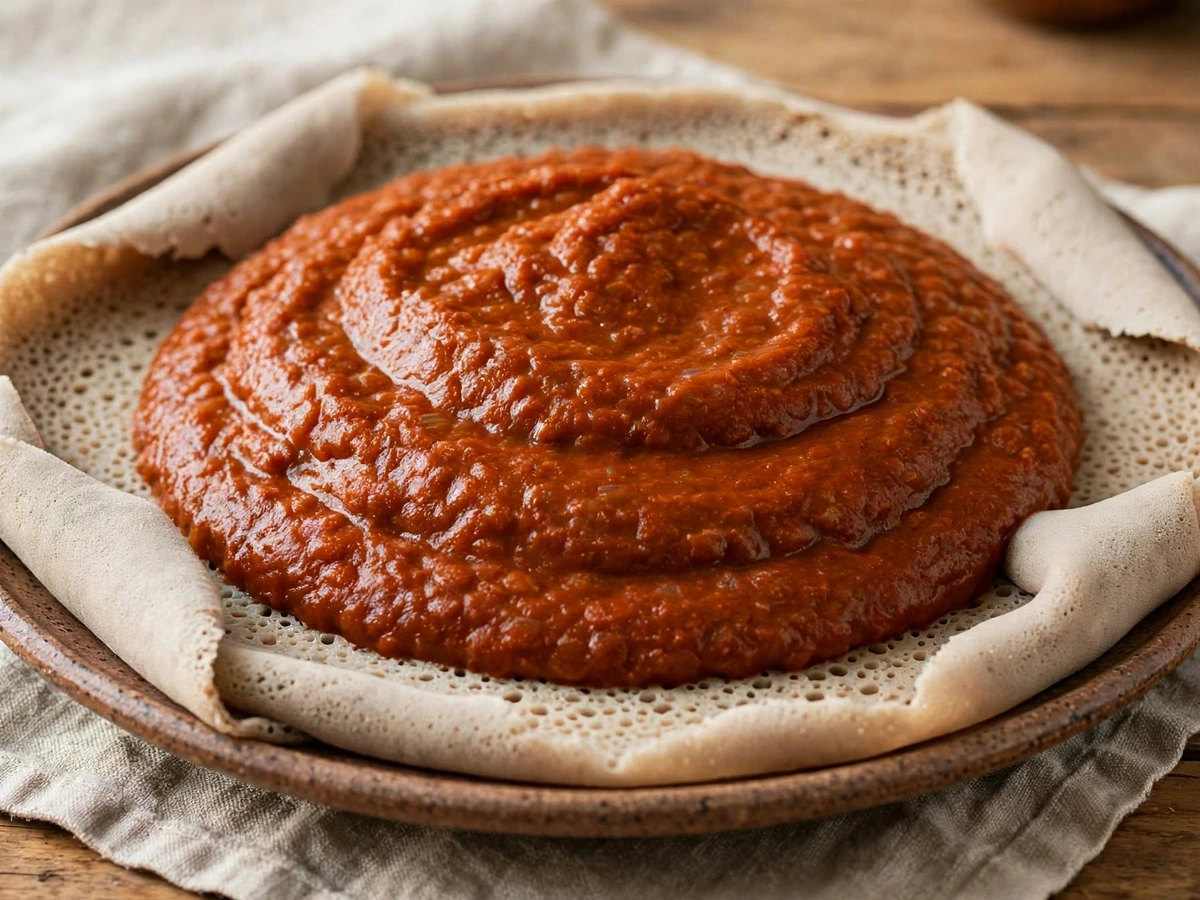
Ethiopia
Misir Wat
Stay in the same food culture and notice how slow cook appears in another dish.
Shared thread · Slow cook · Sauté · Simmer
Follow the method or pantry
02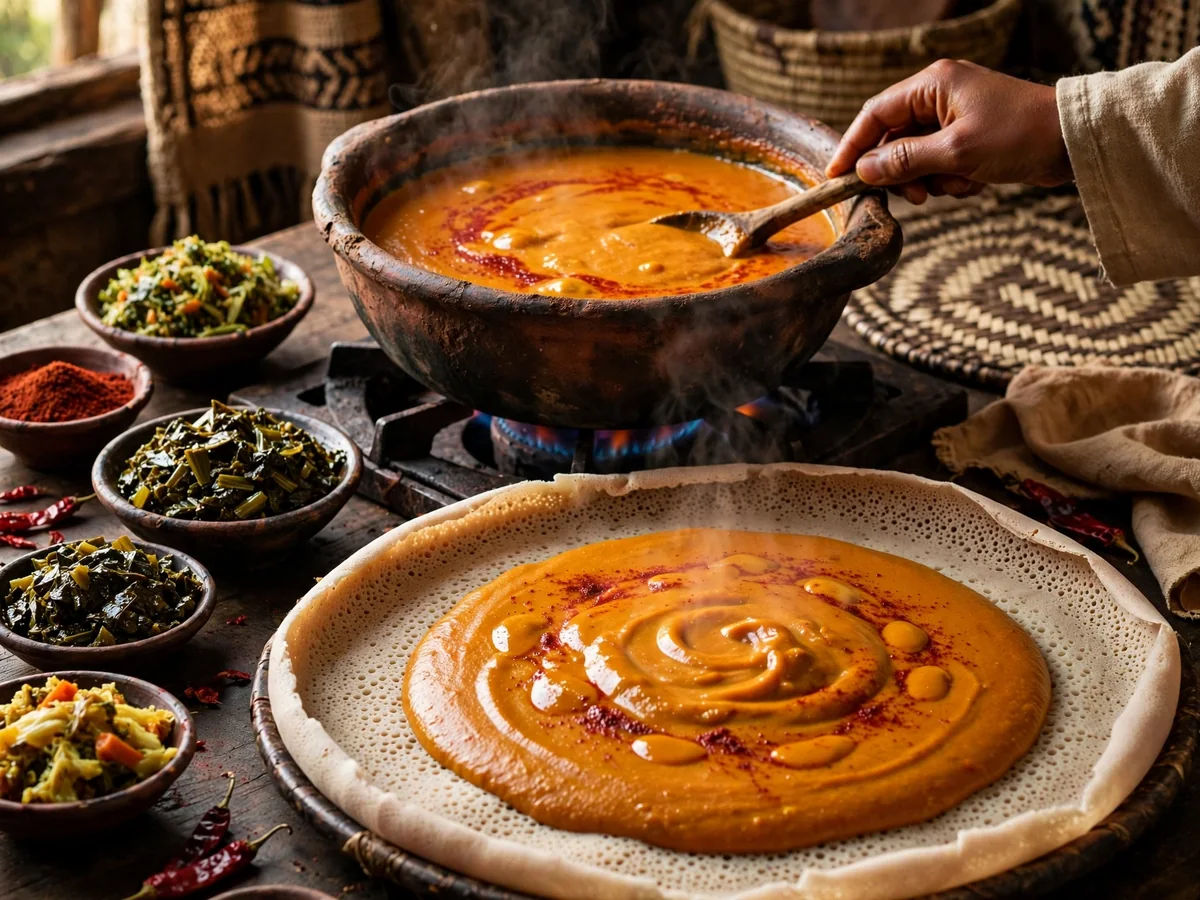
Ethiopia
Shiro Wat
Follow the cooking method: both dishes connect through sauté.
Shared thread · Sauté · Simmer · onion
Cross a culinary border
03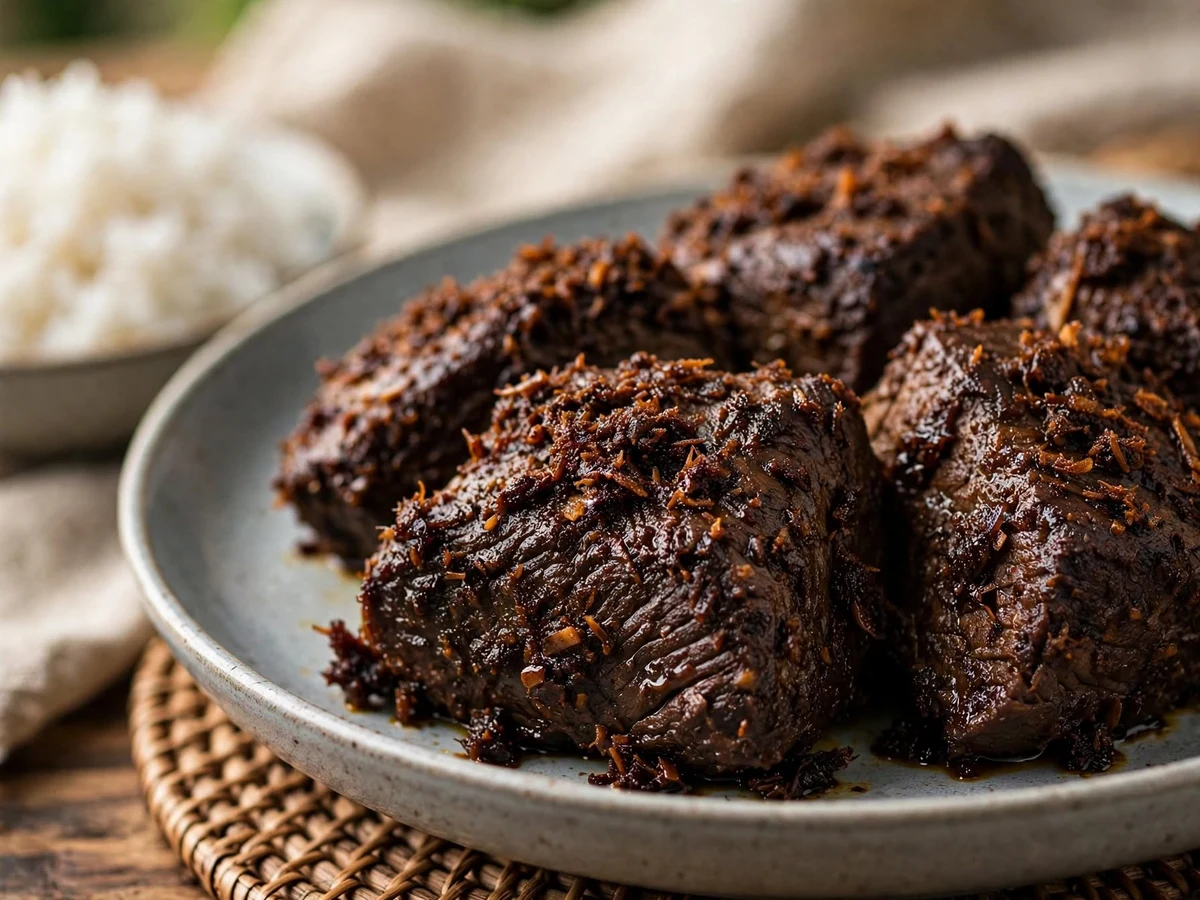
Indonesia
Rendang
Cross borders while keeping slow cook as the common thread.
Shared thread · Slow cook · Sauté · Simmer
Go one layer deeper
One small detail can open an entirely different part of food.
Continue in Ember & Equator