
Ethiopia · lunch · dinner
Shiro Wat
Ethiopia through one enduring dish.
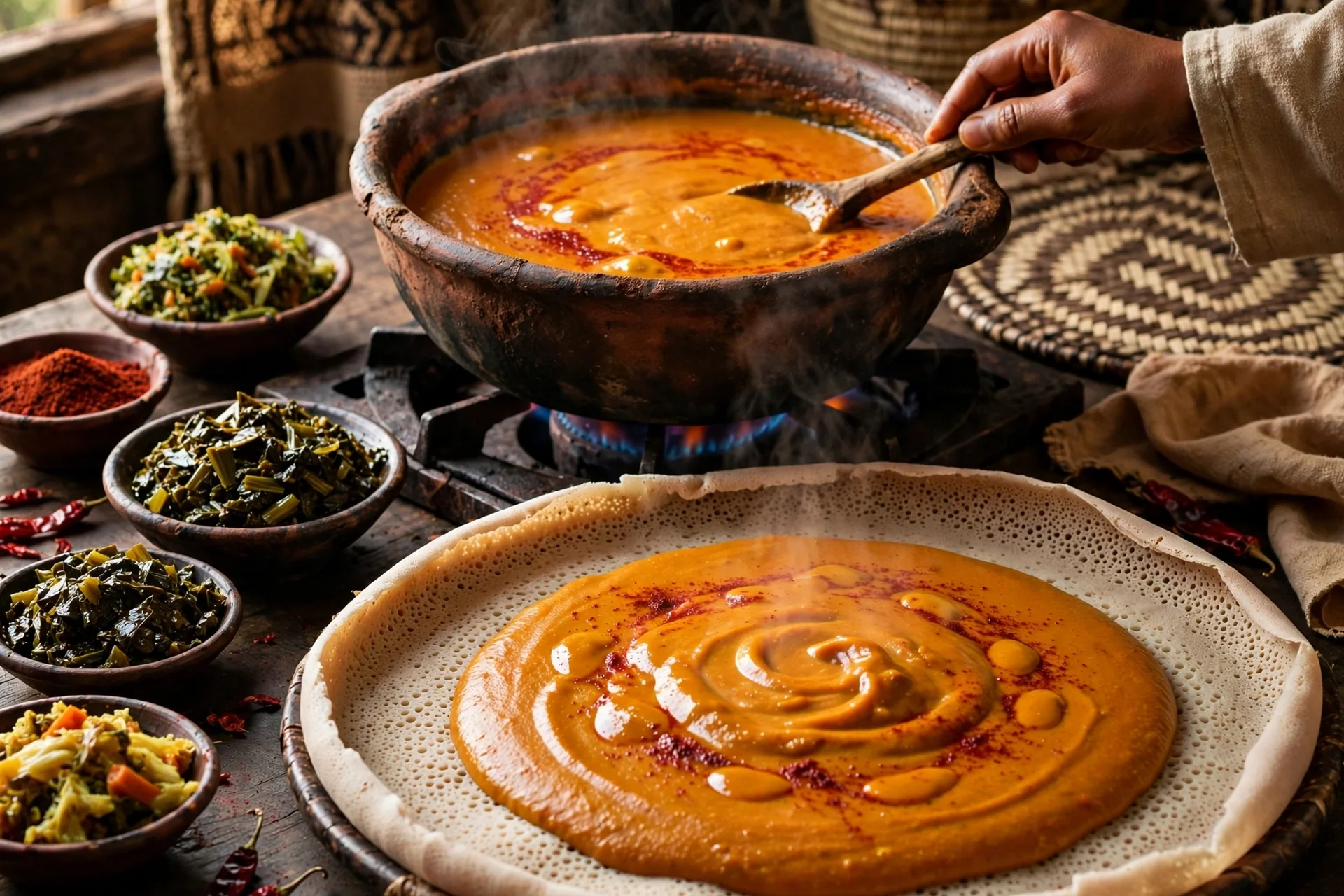
Shiro wat is an Ethiopian pulse-flour stew, commonly made from roasted chickpea-based shiro flour, simmered with aromatics and water until smooth, silky and spoonable for eating with injera.
- Total
- 40 min
- Difficulty
- Easy
- Serves
- 4
- Steps
- 6
The dish
A bowl shaped by habit and place.
Shiro is a widely eaten Ethiopian staple and an important fasting food when prepared with plant oil. Shiro flour itself is a prepared pulse-and-spice product whose legume base and seasoning vary; chickpea, field pea and fava-bean forms all occur, so Ember & Equator names the selected chickpea-based blend without treating it as the only authentic form.
Explore EthiopiaAt a glance
Origin
Ethiopia
Region
Across rural and urban Ethiopia
Meal
lunch · dinner
Guided steps
6
Dish
Shiro Wat
Cuisine
Ethiopian cuisine
Food type
Stew · Legume dish · Comfort food
Technique
Sauté · Simmer
Cook the recipe
In the kitchen
Start with the ingredients, then follow the Method in order. Open cooking tips only when you need extra help; the story and references can wait until you are ready.
- Total
- 40 min
- Serves
- 4
- Level
- Easy
- Visual cues
- 6
Ingredients
Serves 4- 1 cupshiro flourseasoned chickpea-based shiro blend; check whether your blend already contains salt or berbere
- 1 mediumonionvery finely chopped or grated
- 2 clovesgarlicfinely minced
- 2 tbspolive oilor another mild plant oil for a fasting-friendly version
- 3.5 cupswaterdivided; add more hot water if needed to loosen
Optional
- 1 tspberbereoptional; use only if your shiro blend needs additional heat
- 0.5 tspsaltoptional to taste depending on the shiro blend
Everything ready? Continue straight into the cooking steps.
Start methodMethod
6 steps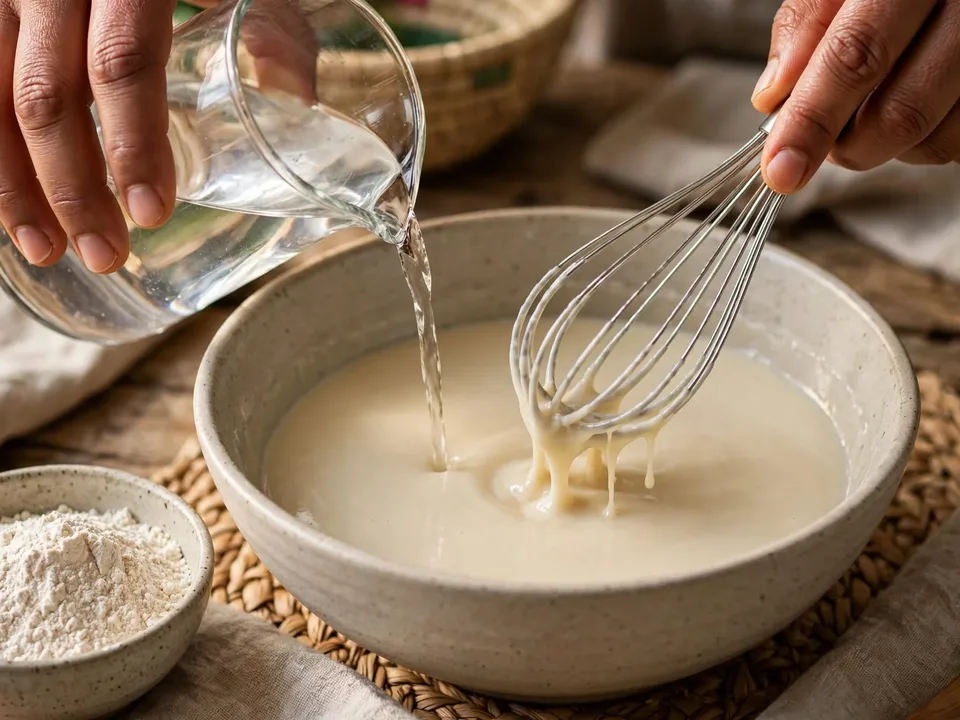 Step 01
Whisk the shiro flour into a smooth cool slurry
4 min
Whisk the shiro flour with about 1 cup of the cool water until completely smooth and pourable.
Whisk the shiro flour with about 1 cup of the cool water until completely smooth and pourable. Break up every dry pocket before it reaches the hot pot; if the blend is already heavily seasoned, taste a tiny cooked sample later before adding extra salt or berbere.
Look for
The slurry is fluid and homogeneous with no visible dry flour islands or hard lumps.
Kitchen note
A cool slurry is the easiest home-cook insurance against stubborn lumps. The mixture should pour freely, not sit as a stiff paste.
 Step 02
Soften the onion and garlic gently in oil
10 min
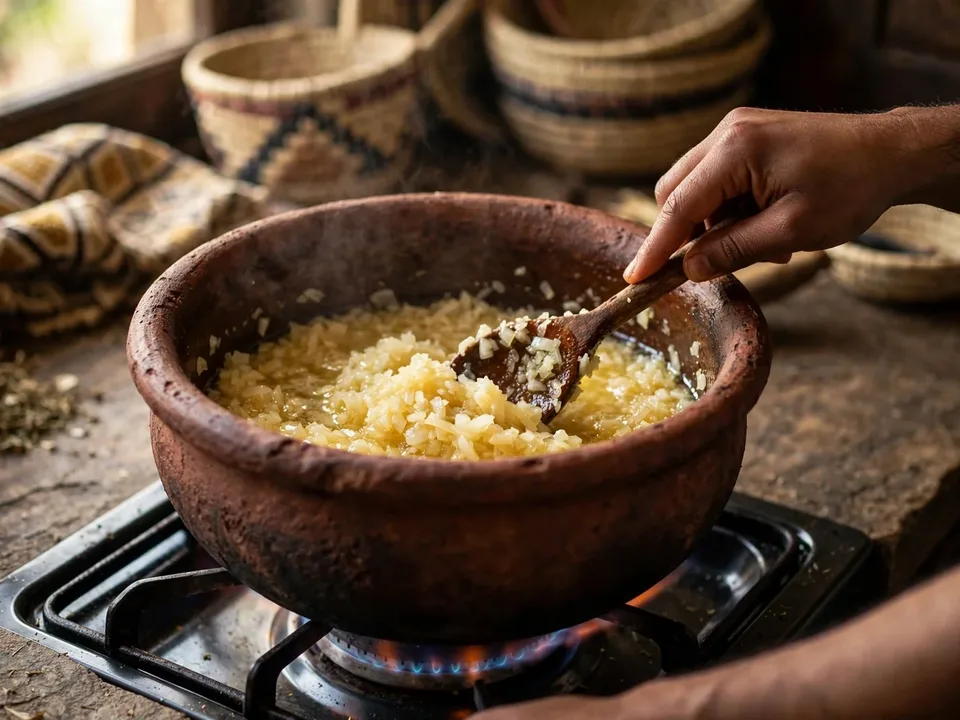
Heat the oil in a heavy saucepan over medium-low heat.
Heat the oil in a heavy saucepan over medium-low heat. Add the onion and cook for 7–10 minutes until very soft and sweet-smelling, then add the garlic for about 1 minute. If using extra berbere, stir it in now and cook briefly without scorching.
Look for
The onion is soft and translucent with no raw bite, and any added berbere smells fragrant rather than dusty.
Kitchen note
The shiro powder may already contain garlic, ginger, chile and other seasoning. Build the aromatic base deliberately rather than assuming every commercial or homemade blend needs the same additions.
 Step 03
Add the remaining water and bring it to a gentle simmer
5 min
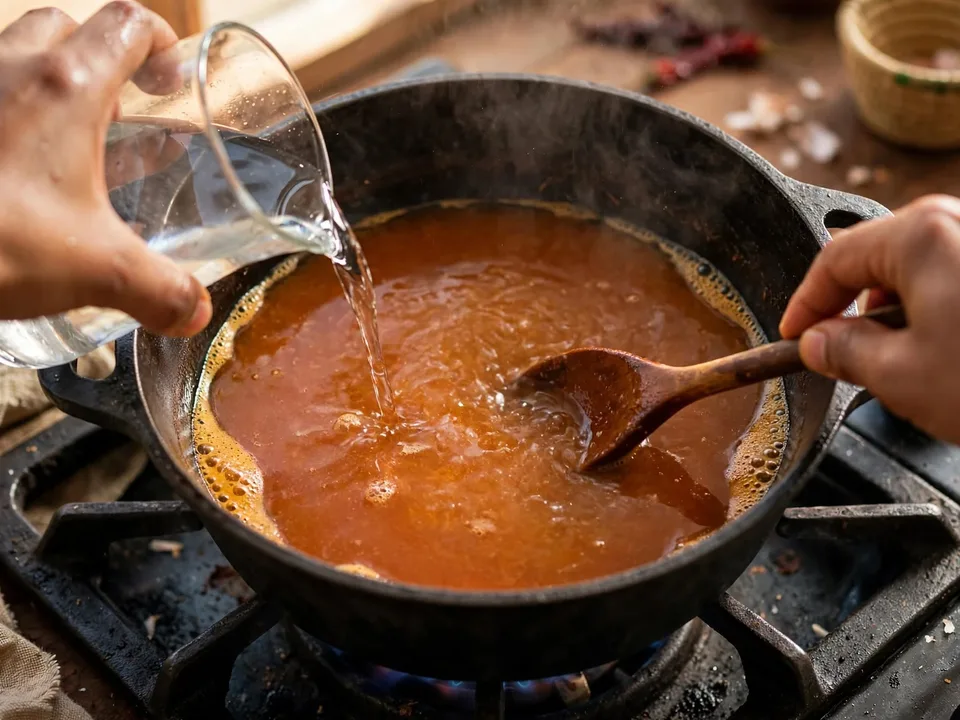
Add the remaining 2½ cups water to the aromatic base, scraping the bottom of the pot.
Add the remaining 2½ cups water to the aromatic base, scraping the bottom of the pot. Bring to a gentle simmer, then lower the heat so the surface bubbles steadily but does not boil violently.
Look for
The liquid is evenly seasoned, gently bubbling and free of scorched bits on the bottom.
Kitchen note
Shiro expands and thickens quickly once the flour goes in. Leave generous headroom in the pot and establish a calm simmer before adding the slurry.
 Step 04
Whisk in the shiro gradually
3 min
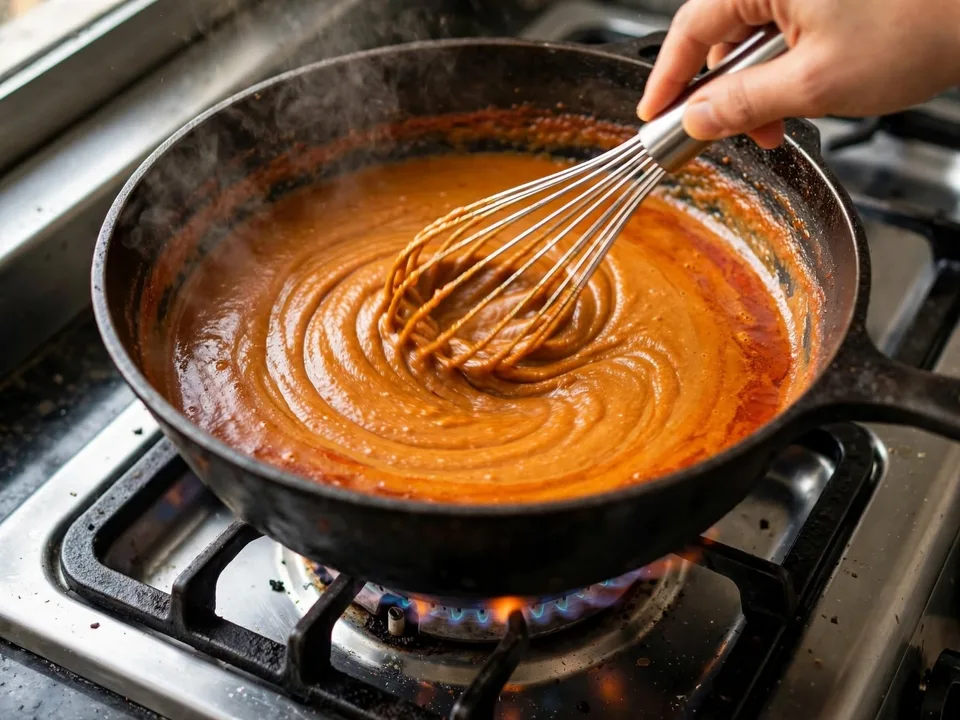
Whisk the slurry again, then pour it into the simmering liquid in a thin stream while whisking continuously.
Whisk the slurry again, then pour it into the simmering liquid in a thin stream while whisking continuously. Keep the heat low to medium-low. Continue whisking for 2–3 minutes as the mixture begins to thicken evenly.
Look for
The stew thickens evenly with a smooth surface and no pale floury lumps.
Kitchen note
Do not dump the slurry in all at once. A steady stream plus constant whisking prevents pockets of uncooked flour and gives you time to control the thickening. If small lumps appear, take the pot briefly off the heat and whisk firmly before continuing; for stubborn lumps, press the stew through a coarse sieve rather than adding more flour.
 Step 05
Simmer slowly until silky and fully cooked
15 min
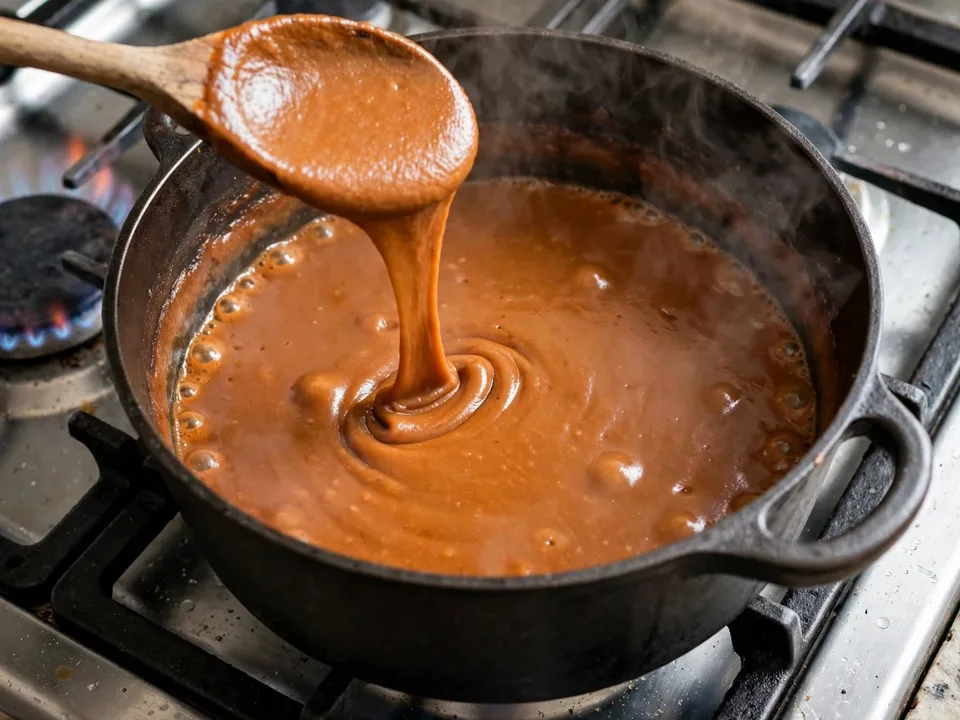
Reduce the heat to low and simmer for 12–18 minutes, stirring and scraping the bottom frequently.
Reduce the heat to low and simmer for 12–18 minutes, stirring and scraping the bottom frequently. The raw flour taste should disappear and the shiro should become glossy and silky. Add hot water a little at a time if it thickens before the flour tastes fully cooked.
Look for
The shiro falls in a thick ribbon, looks glossy and smooth and tastes cooked rather than chalky or floury.
Kitchen note
Patience matters more than adding extra flour. Shiro continues to thicken during cooking and again as it stands, so stop before it becomes a stiff paste. If it becomes too thick before the raw flour taste disappears, whisk in hot water a little at a time and continue the gentle simmer until both flavour and texture are right.
 Step 06
Adjust the flow, season carefully and serve hot
5 min
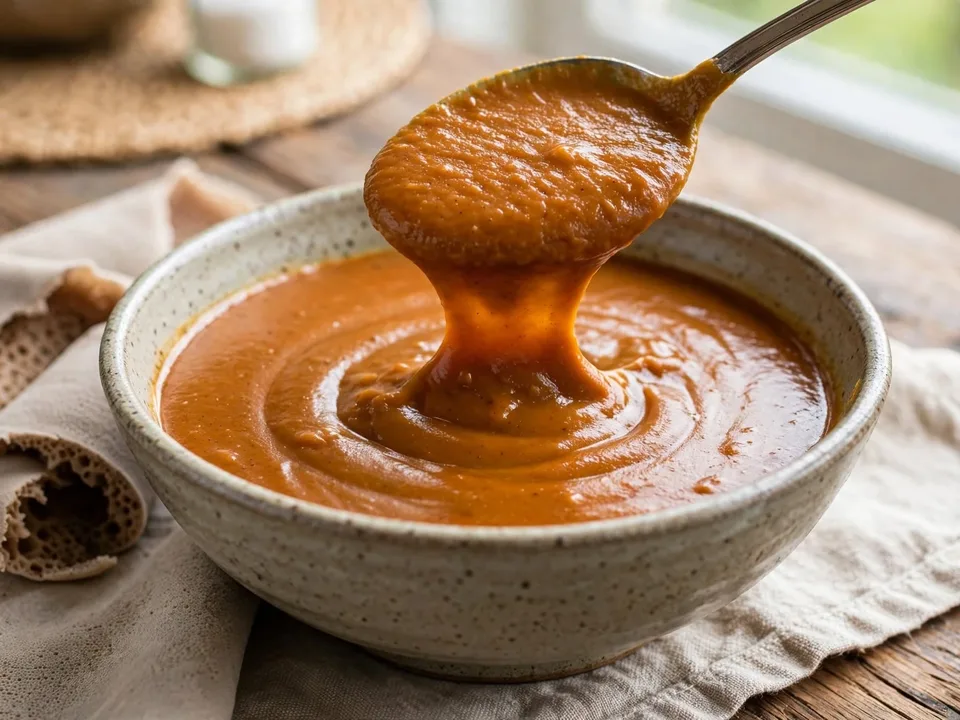
Taste the finished shiro and add salt or extra berbere only if the blend needs it.
Taste the finished shiro and add salt or extra berbere only if the blend needs it. Adjust with hot water until it is thick but flowing, then serve immediately with injera. If it waits, keep a little hot water ready because the stew tightens quickly as it cools.
Look for
The finished shiro is smooth, glossy and flowing enough to spoon over injera without watery separation or stiff clumps.
Kitchen note
Different shiro styles legitimately range from flowing to very thick. For this Ember & Equator version, aim for a creamy spoonable stew that spreads over injera without running like soup.
After cooking
Explore the dish beyond the method.
Story, place and references are here for discovery, so they stay out of the way while you cook.
Culture & tradition
The story behind the dish
Origins, evolution and everyday life—read together as part of the recipe's culinary record.
Origins
An Ethiopian pulse-flour preparation within the broader injera-and-wot food system.
How it evolved
Households and producers vary the pulse base, spice mix, fat and final thickness, producing everything from flowing shiro to very thick styles.
Its place today
An everyday, economical and deeply familiar stew, especially prominent on plant-based fasting tables and communal injera platters.
Visual archive · plate 01
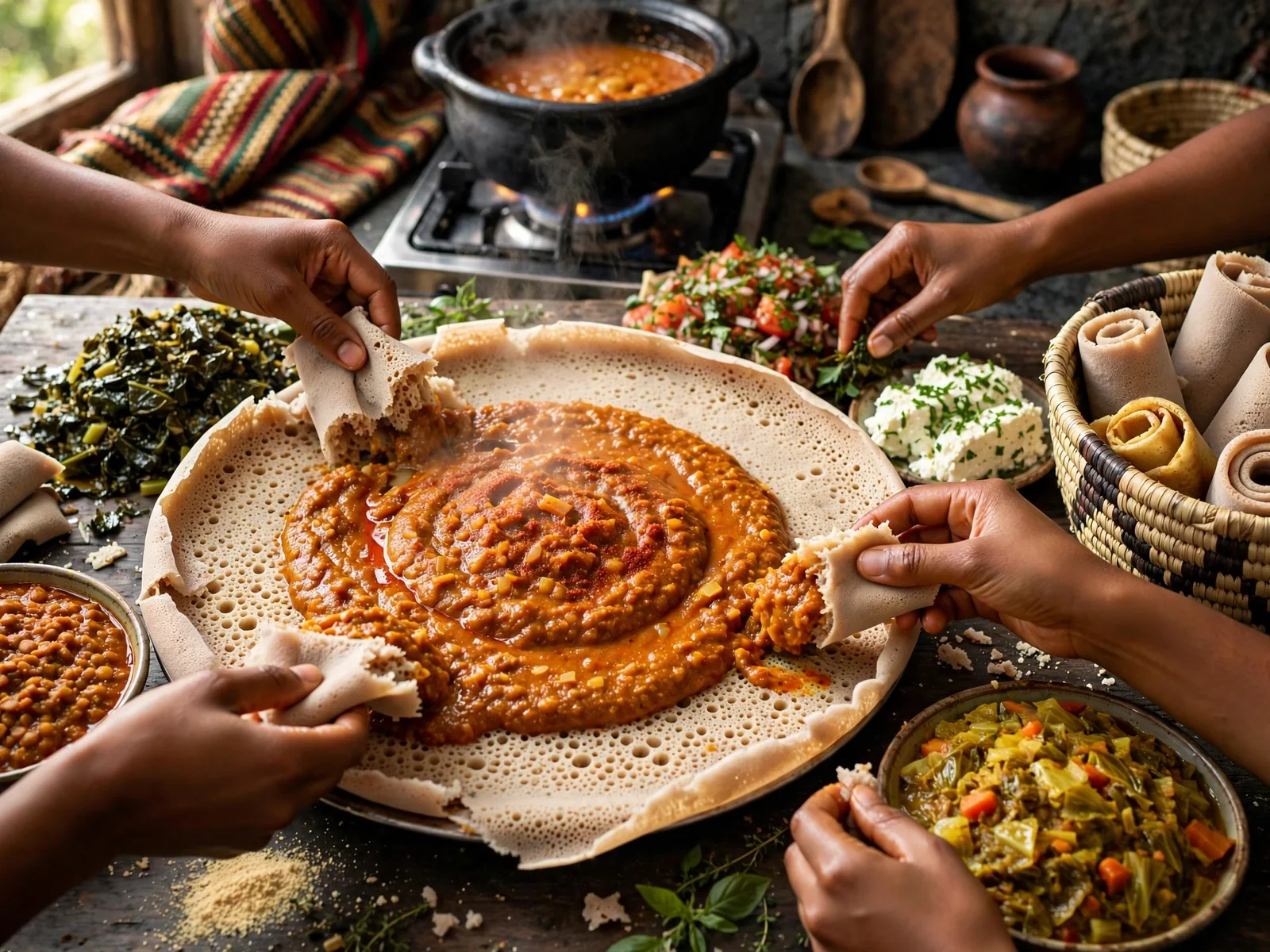
Shiro Wat
An editorial view of the finished dish, kept compact so the story continues without an oversized image break.
Primary region
Across rural and urban Ethiopia
Country
Ethiopia
Regional influence
Roasted milled pulses and dried spice blends create a shelf-stable base that can be turned quickly into a hot stew with water, aromatics and fat.
Related food systems
- Injera and wot meals
- Pulse-flour cookery
- Ethiopian fasting food traditions
Sources & further reading
Follow the reference trail.
Ember & Equator links outward when an institution or primary reference helps support the culinary record.
- 01Federal Democratic Republic of Ethiopia — Nutrition Country ProfileExternal ↗
FAO · reference
Supports: injera · wot · Ethiopian food patterns · shared meals
Ember & Equator source review · 2026-09-17
- 02Nutritional Composition, Antinutritional Factors, and Utilization Trends of Ethiopian Chickpea (Cicer arietinum L.)External ↗
Nutrients / PubMed Central · academic
Supports: shiro flour preparation · shiro-wot · chickpea use · injera service
Ember & Equator source review · 2026-09-17
- 03Optimization of processing parameters for chickpea shiro flour using response surface methodologyExternal ↗
Food Production, Processing and Nutrition · academic
Supports: shiro flour · roasted chickpea flour · shiro-wot preparation · injera service
Ember & Equator source review · 2026-09-17
- 04Sure As ShiroExternal ↗
Ethiopian Food — Mesob Across America · specialist publication
Supports: shiro cultural context · pulse variation · slow simmering · consistency variation
Ember & Equator source review · 2026-09-17
Ingredient guides
Learn about the ingredients behind the dish.
These are reference guides, not a second ingredient list. Follow an ingredient when you want to understand its role, use and wider culinary context.
Ingredient
shiro flour
Understand what it contributes, how to use it, and the dishes that reveal it best.
Ingredient
onion
Understand what it contributes, how to use it, and the dishes that reveal it best.
Ingredient
garlic
Understand what it contributes, how to use it, and the dishes that reveal it best.
Ingredient
olive oil
Understand what it contributes, how to use it, and the dishes that reveal it best.
Ingredient
water
Understand what it contributes, how to use it, and the dishes that reveal it best.
Ingredient
berbere
Understand what it contributes, how to use it, and the dishes that reveal it best.
Explore ingredient →
Keep wandering
Where will this dish take you next?
Stay with the place, follow an ingredient or technique, or cross into another food culture. Each path begins with something already present in this dish.
Stay with the place
01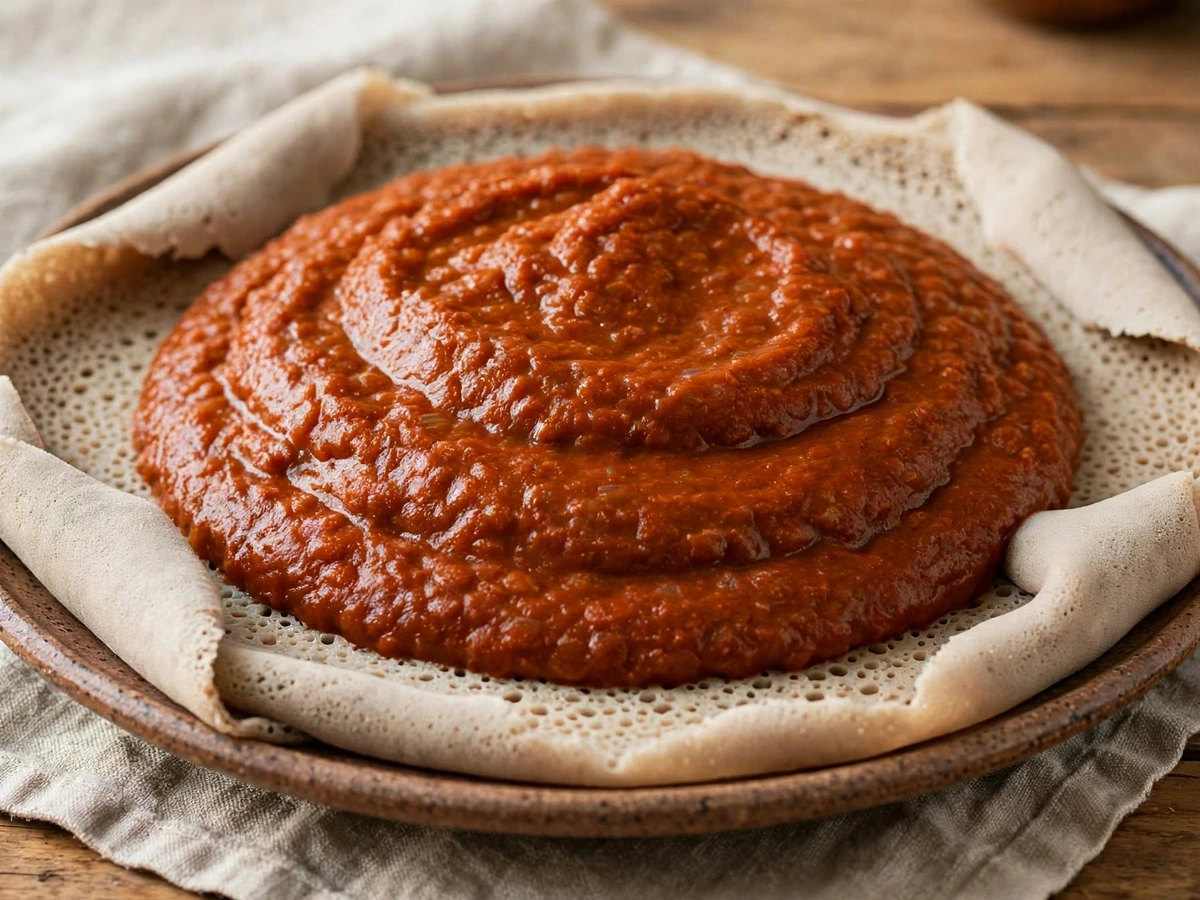
Ethiopia
Misir Wat
Stay in the same food culture and notice how sauté appears in another dish.
Shared thread · Sauté · Simmer · onion
Follow the method or pantry
02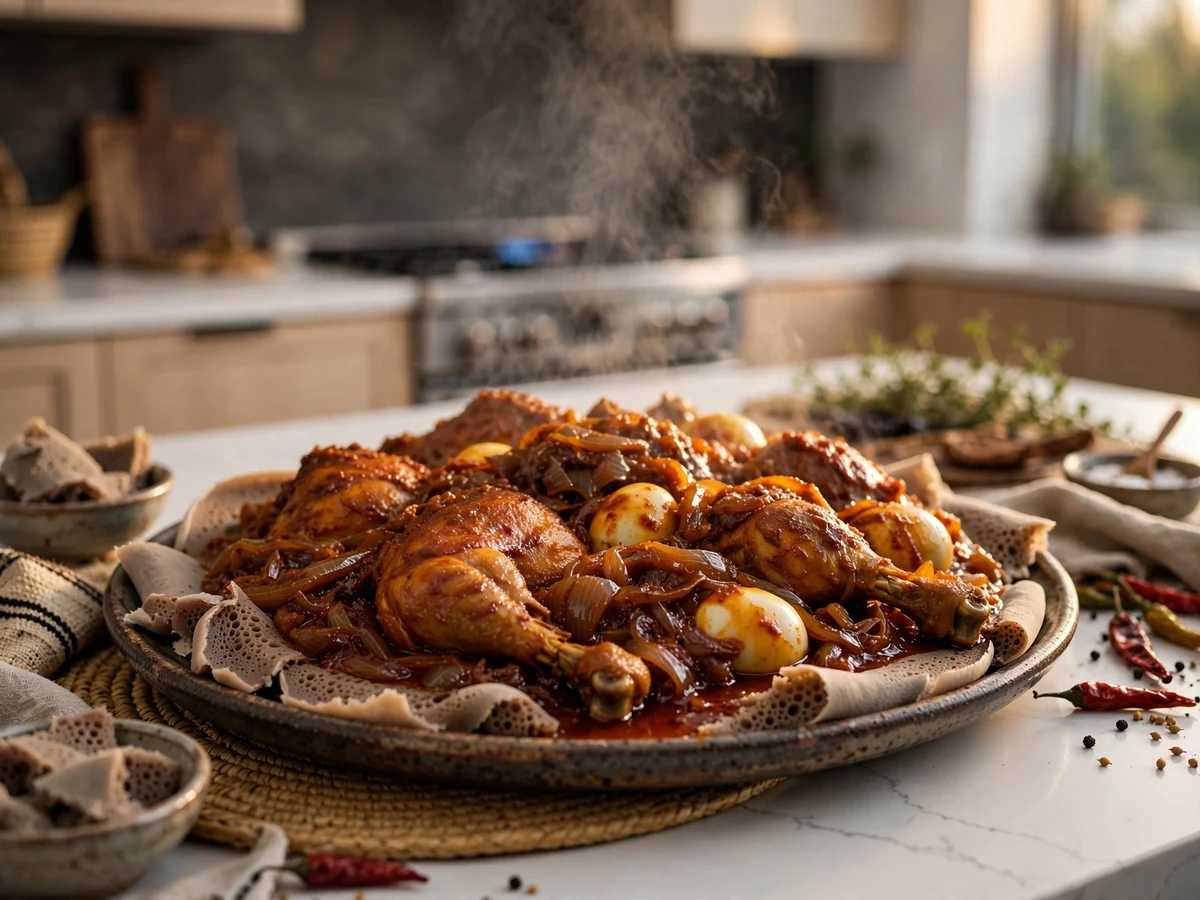
Ethiopia
Doro Wat
Follow the cooking method: both dishes connect through sauté.
Shared thread · Sauté · Simmer · onion
Cross a culinary border
03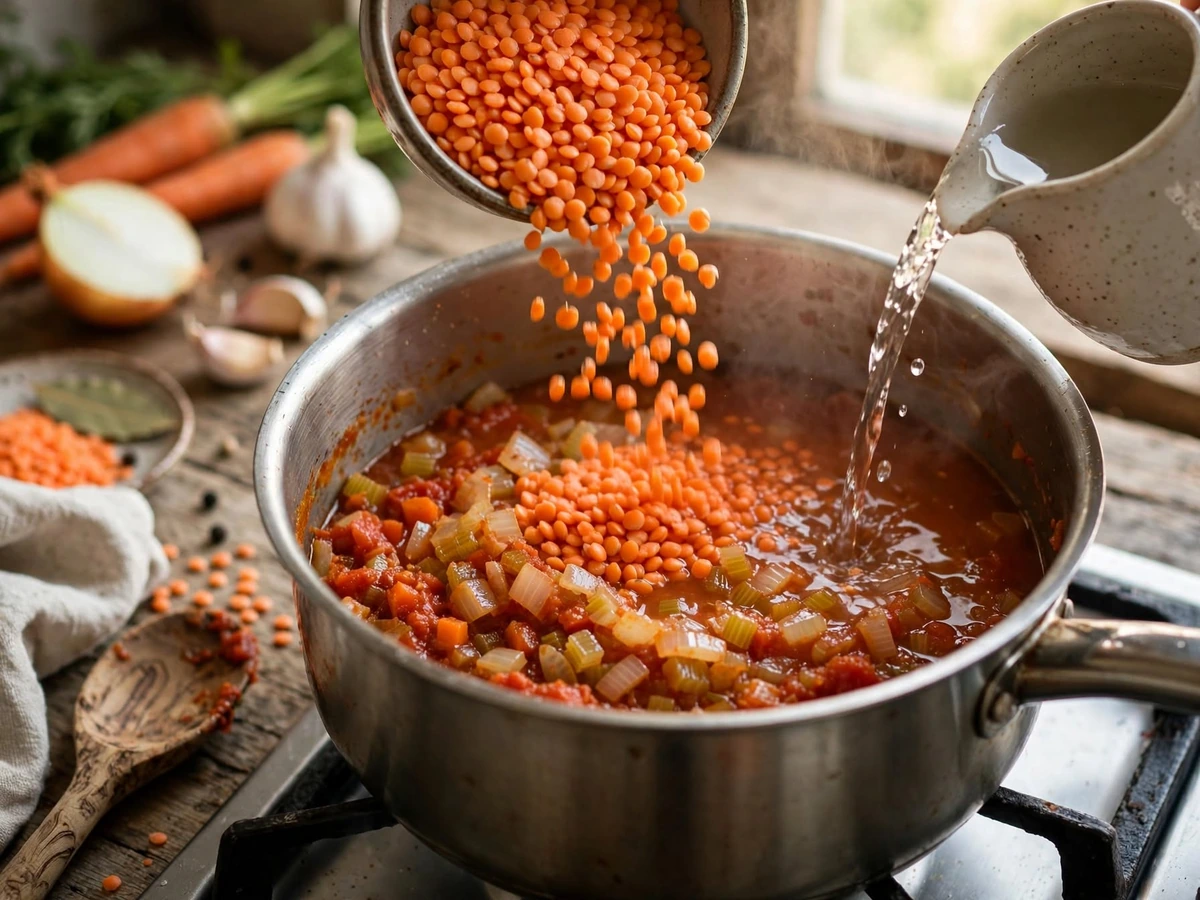
Türkiye
Mercimek Çorbası
Cross borders while keeping sauté as the common thread.
Shared thread · Sauté · Simmer · onion
Go one layer deeper
One small detail can open an entirely different part of food.
Continue in Ember & Equator