
Nigeria · lunch · dinner
Egusi Soup
A bowl with a deeper sense of place.
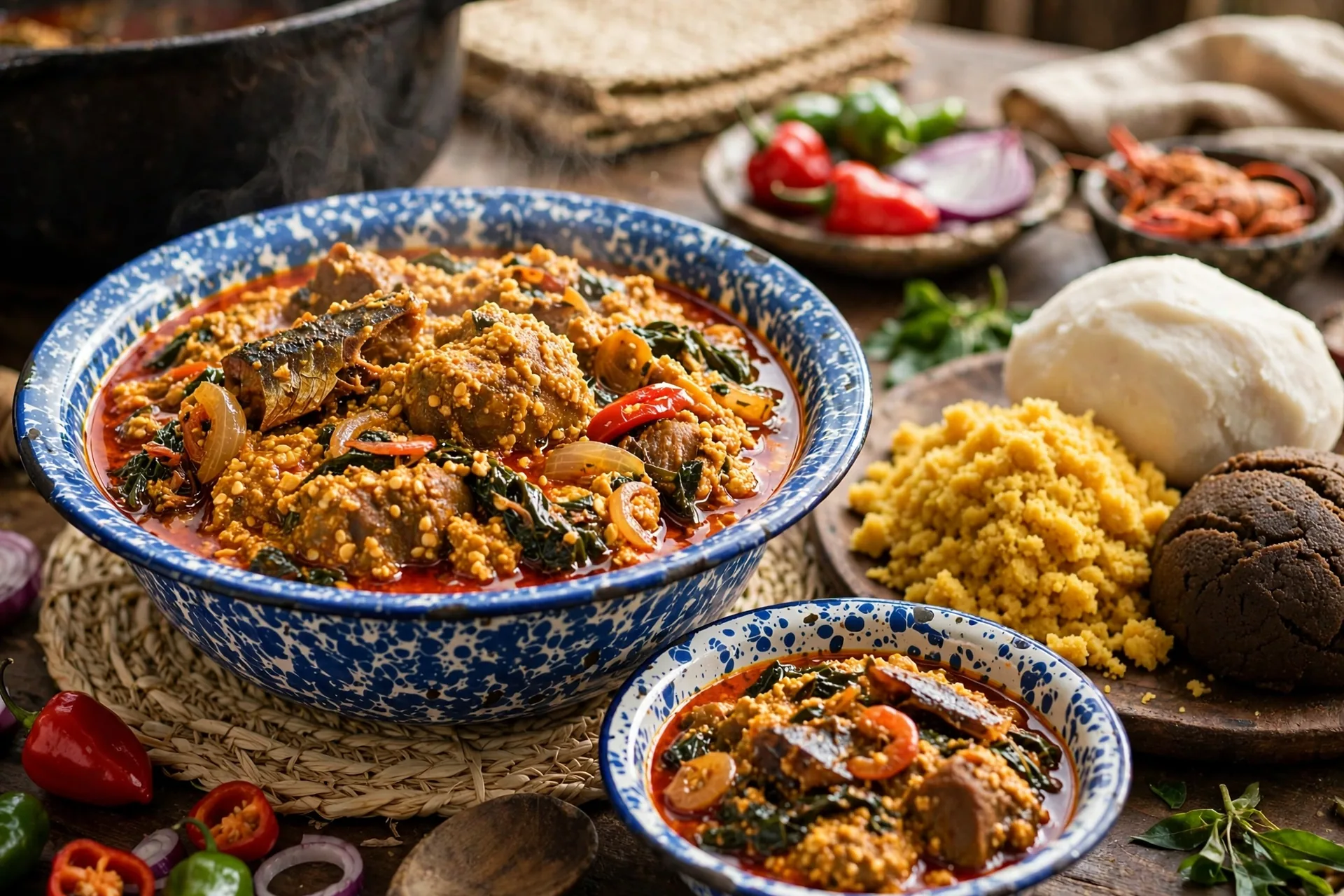
This Nigerian Egusi Soup uses the fried method: ground egusi melon seed is cooked in red palm oil with a pepper-onion base, then loosened with stock and finished with beef, crayfish and leafy greens for a thick, savoury soup served with swallow.
- Total
- 118 min
- Difficulty
- Medium
- Serves
- 6
- Steps
- 8
The dish
A bowl shaped by habit and place.
Egusi Soup is prepared across Nigeria in many legitimate forms and is known by different names and methods in different communities. This Ember & Equator version deliberately selects the fried method rather than implying there is one universal Nigerian recipe. Ground egusi, palm oil, pepper, savoury stock, proteins, crayfish and greens are built in stages until the melon seed is fully cooked and the soup becomes thick enough to cling to a swallow.
Explore NigeriaAt a glance
Origin
Nigeria
Region
Nigeria / multiple regions
Meal
lunch · dinner
Guided steps
8
Dish
Egusi Soup
Cuisine
Nigerian cuisines
Food type
Soup · Celebration food
Technique
Sauté · Simmer
Cook the recipe
In the kitchen
Start with the ingredients, then follow the Method in order. Open cooking tips only when you need extra help; the story and references can wait until you are ready.
- Total
- 118 min
- Serves
- 6
- Level
- Medium
- Visual cues
- 8
Ingredients
Serves 6- 250 gground egusi seedsfinely ground melon seed
- 120 mlpalm oilred palm oil
- 600 gbeefstewing beef in bite-size pieces
- 900 mlwaterapproximately, for cooking the beef and forming stock
- 1red bell pepperroughly chopped for the pepper base
- 1-2scotch bonnet peppersto taste
- 2onionsdivided
- 3 tbspground crayfisha major savoury seasoning
- 300 gugu (Nigerian pumpkin leaves) or spinachwashed, chopped and drained very well
- 1 1/2 tspsaltplus more to taste
Optional
- 150 gsmoked or dried fishoptional; cleaned and deboned
- 1 tbsplocust beans (iru)optional but useful for deeper savoury flavour
- 1-2bouillon or seasoning cubeoptional; adjust salt if using
Everything ready? Continue straight into the cooking steps.
Start methodMethod
8 steps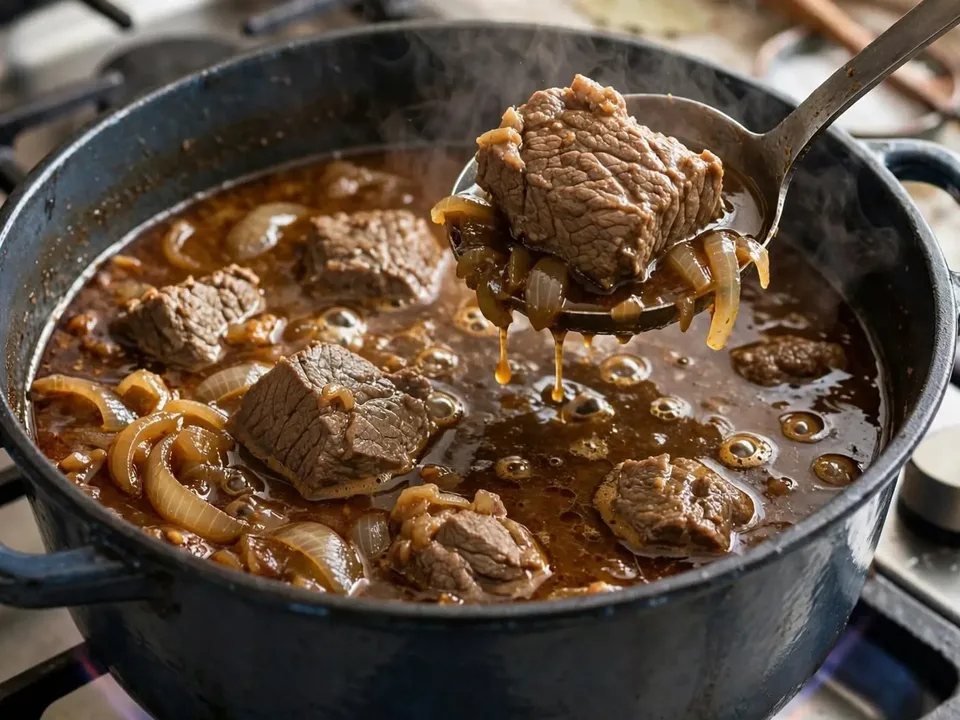 Step 01
Cook the beef until tender and reserve a concentrated stock
35 min
Put the beef in a pot with half an onion, a little salt, optional bouillon and enough water to cook it.
Put the beef in a pot with half an onion, a little salt, optional bouillon and enough water to cook it. Simmer until the beef is tender. Remove the meat and reserve it. Strain the cooking liquid and reduce it if necessary so you have a flavourful stock rather than a large volume of weak water.
Look for
The beef yields easily to a fork and the reserved stock tastes savoury and concentrated rather than watery.
Kitchen note
Finish tenderising the meat before the egusi thickens the soup. Tough beef is much harder to correct once the pot becomes dense with ground melon seed.
 Step 02
Blend the pepper-onion base and prepare the greens
8 min
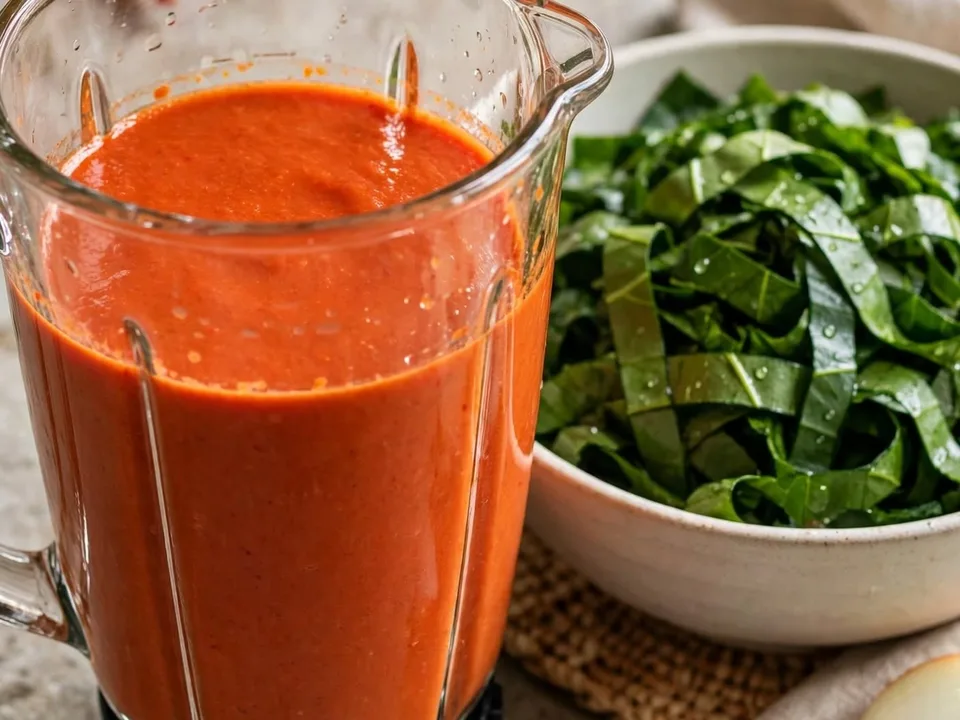
Blend the red bell pepper, Scotch bonnet and remaining onion to a fairly smooth puree.
Blend the red bell pepper, Scotch bonnet and remaining onion to a fairly smooth puree. Chop the ugu or spinach. If using spinach, especially frozen spinach, squeeze or drain away excess water so it will not thin the finished soup.
Look for
The pepper puree is smooth enough to cook evenly and the chopped greens look dry rather than dripping water.
Kitchen note
Spinach carries much more water than ugu. Drain it aggressively or the final soup can lose the thick texture that makes egusi satisfying with swallow.
 Step 03
Cook the pepper base in palm oil until its raw edge is gone
10 min
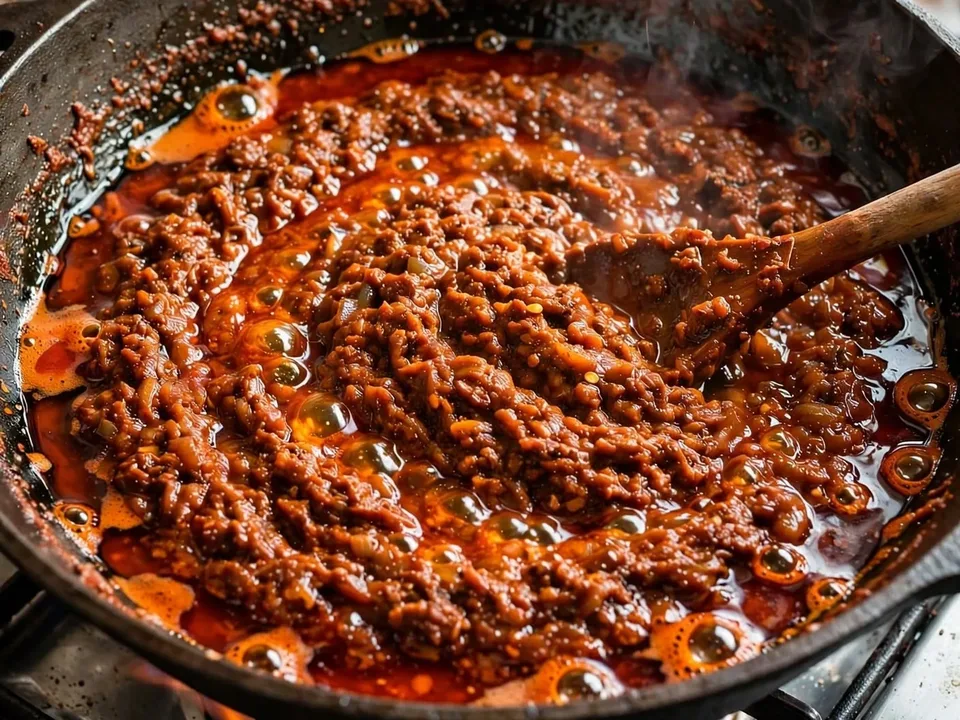
Warm the palm oil over medium heat until fluid and shimmering but not smoking.
Warm the palm oil over medium heat until fluid and shimmering but not smoking. Add the pepper-onion puree and optional locust beans. Cook, stirring regularly, until the mixture smells sweet and savoury rather than raw and the oil begins showing around the edges.
Look for
The puree has darkened slightly, smells cooked and shows small beads of red-orange oil at the edge.
Kitchen note
Palm oil does not need to be smoked to taste good. Moderate heat preserves its flavour and keeps the pepper base from scorching.
 Step 04
Fry the ground egusi through the hot base
10 min
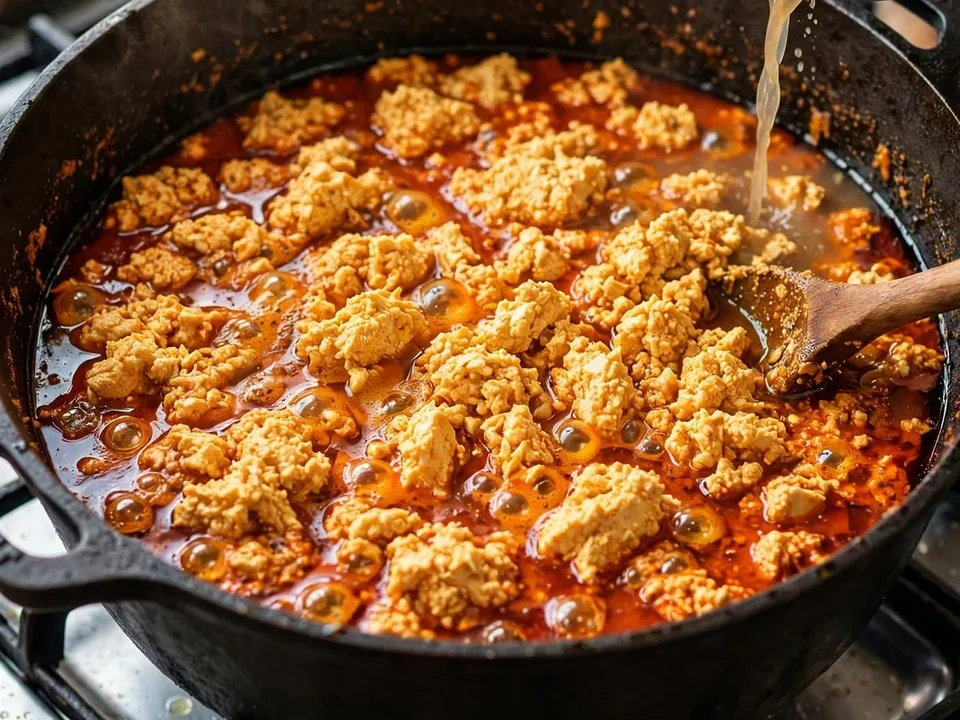
Add the ground egusi and stir so every grain is coated with palm oil.
Add the ground egusi and stir so every grain is coated with palm oil. Cook over low to medium heat for about 8–10 minutes, stirring often. The mixture will thicken and may form soft clumps or curds; keep it moving enough to prevent scorching.
Look for
The egusi smells nutty rather than raw, turns deeper yellow-orange and begins forming soft curds with oil visible around them.
Kitchen note
Ground egusi needs real cooking time. If it is only stirred in and immediately diluted, the soup can taste raw, floury and flat.
 Step 05
Add stock gradually and cook the egusi until oil separates
20 min
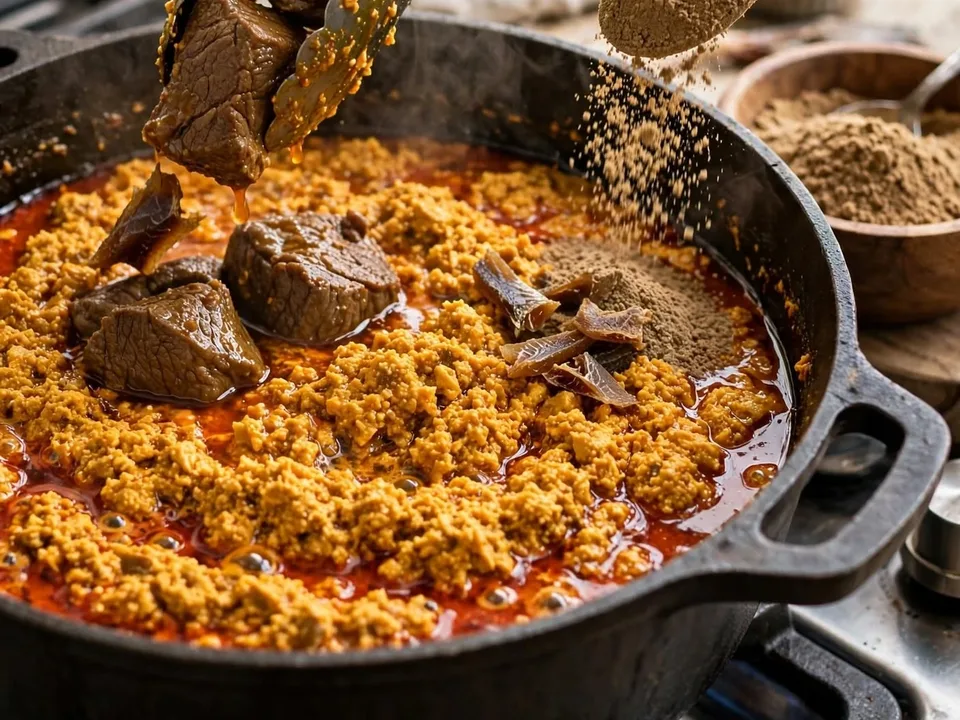
Add the reserved beef stock in several additions, stirring between each one so the egusi loosens without becoming thin.
Add the reserved beef stock in several additions, stirring between each one so the egusi loosens without becoming thin. Simmer gently for 15–20 minutes, stirring from the bottom at intervals. Add a little hot water only if the pot becomes too thick before the egusi is fully cooked.
Look for
The soup is thick and cohesive, the egusi tastes fully cooked and small pools or beads of clear reddish oil appear on the surface.
Kitchen note
Use the appearance of the fat as a doneness cue. Properly cooked egusi develops clearer oil at the surface and loses its raw seed flavour.
 Step 06
Return the beef and add crayfish and optional fish
7 min
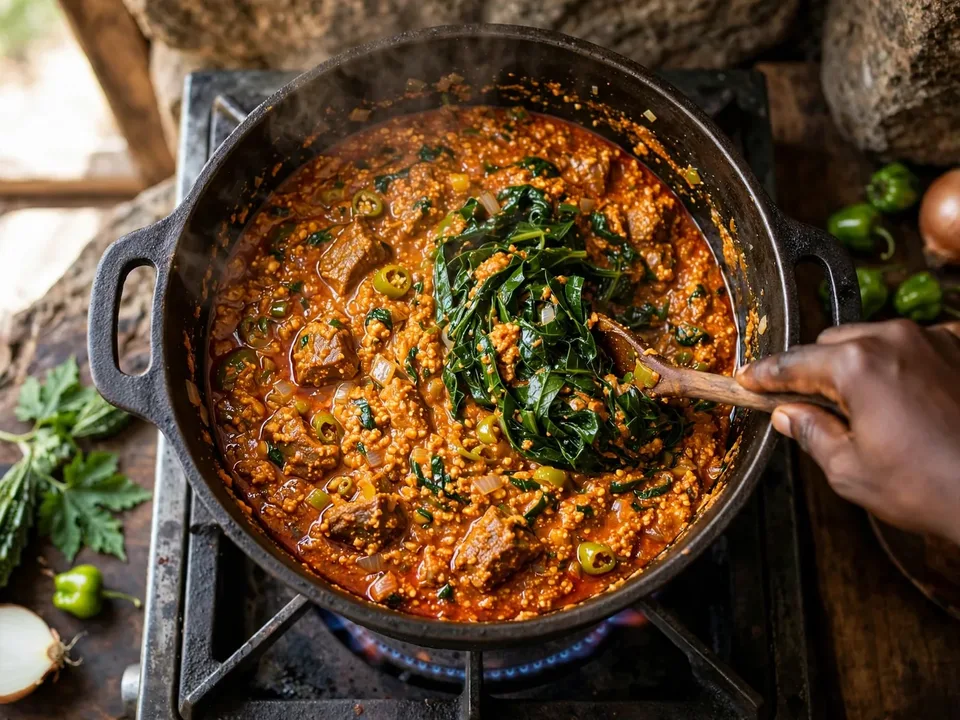
Stir in the tender beef, ground crayfish and optional smoked or dried fish.
Stir in the tender beef, ground crayfish and optional smoked or dried fish. Simmer gently for 5–8 minutes so the proteins absorb the soup and the crayfish seasons the whole pot. Taste before adding extra salt, especially if bouillon or smoked fish was used.
Look for
The proteins are hot through and coated in the soup, with no raw crayfish aroma and no watery stock separating from the egusi.
Kitchen note
Crayfish and smoked fish can add significant salt and savoury depth. Season only after they have simmered into the soup.
 Step 07
Fold in the greens briefly so they stay vivid
3 min
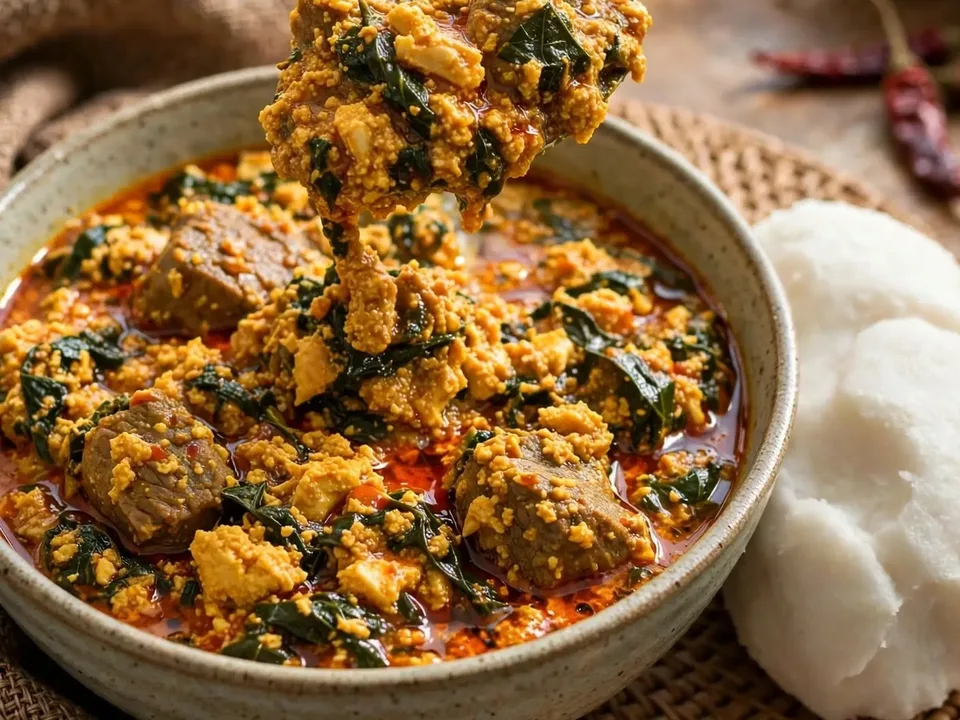
Add the well-drained ugu or spinach and fold it through the hot soup.
Add the well-drained ugu or spinach and fold it through the hot soup. Cook only until the leaves are wilted and tender, usually 2–4 minutes depending on the green. Do not boil them for a long time.
Look for
The greens are wilted and vivid, distributed through the soup without turning grey or releasing a watery layer.
Kitchen note
Greens should freshen the finished soup rather than dilute it. Add them late and avoid letting spinach release a large volume of water.
 Step 08
Adjust the thickness, rest briefly and serve with swallow
5 min
Taste and adjust salt and pepper.
Taste and adjust salt and pepper. If the soup is too thick, loosen it with a small amount of hot stock or water; if too loose, simmer uncovered for a few minutes. Rest off heat for about 5 minutes before serving with pounded yam, eba, amala, fufu or another preferred swallow.
Look for
The soup is thick and spoonable, the meat is tender, the greens are vivid and a small amount of palm oil is visible without the pot looking greasy or watery.
Kitchen note
Egusi Soup should be substantial enough to cling to a scoop of swallow. Do not thin it into broth simply because oil appears at the top; that separation is normal once the seed is properly cooked.
After cooking
Explore the dish beyond the method.
Story, place and references are here for discovery, so they stay out of the way while you cook.
Culture & tradition
The story behind the dish
Origins, evolution and everyday life—read together as part of the recipe's culinary record.
Origins
Egusi soups are widespread in Nigeria and neighbouring West African food traditions, with significant regional and household variation.
How it evolved
Nigerian cooks use multiple accepted methods, including fried/oil-first and caking/egusi-first approaches, with different meats, fish, fermented seasonings and greens.
Its place today
Egusi Soup remains a major accompaniment to swallows such as pounded yam, eba, amala and fufu and is also served in many Nigerian households and restaurants abroad.
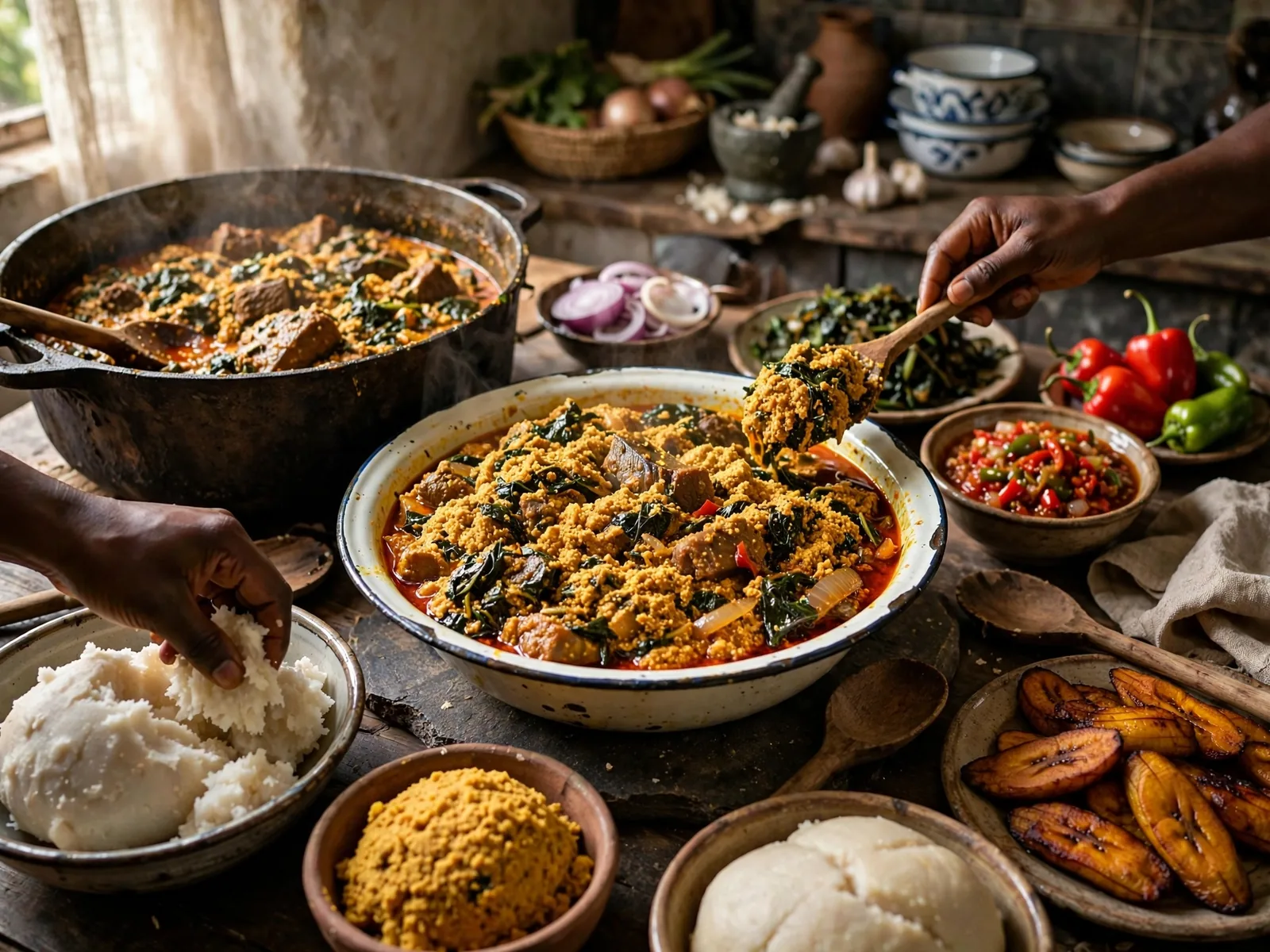
Visual archive · plate 01
Egusi Soup
An editorial view of the finished dish, kept compact so the story continues without an oversized image break.
Primary region
Nigeria / multiple regions
Country
Nigeria
Regional influence
The dish reflects the ingredients and cooking patterns associated with Nigeria / multiple regions, while household and regional versions vary.
Related food systems
- Nigeria / multiple regions home cooking
- Market and street-food traditions
- Regional pantry and seasonal cooking
Sources & further reading
Follow the reference trail.
Ember & Equator links outward when an institution or primary reference helps support the culinary record.
- 01Cuisines in NigeriaExternal ↗
National Institute for Cultural Orientation, Nigeria · government
Supports: regional Nigerian cuisines · egusi as part of Nigerian food traditions
Ember & Equator source review · 2026-09-17
- 02Nigerian Egusi Soup (Fried Method)External ↗
All Nigerian Recipes · reference
Supports: oil-before-egusi method · ground egusi, palm oil, meat and fish · crayfish · ugu, spinach or bitter leaf · long enough cooking for oil separation
Ember & Equator source review · 2026-09-17
- 03Best Egusi SoupExternal ↗
Chef Lola’s Kitchen · reference
Supports: egusi melon, palm oil and crayfish · beef and fish · pepper mix · spinach and other leafy-green variations · beef stock
Ember & Equator source review · 2026-09-17
Ingredient guides
Learn about the ingredients behind the dish.
These are reference guides, not a second ingredient list. Follow an ingredient when you want to understand its role, use and wider culinary context.
Ingredient
ground egusi seeds
Understand what it contributes, how to use it, and the dishes that reveal it best.
Ingredient
palm oil
Understand what it contributes, how to use it, and the dishes that reveal it best.
Ingredient
beef
Understand what it contributes, how to use it, and the dishes that reveal it best.
Ingredient
water
Understand what it contributes, how to use it, and the dishes that reveal it best.
Ingredient
red bell peppers
Understand what it contributes, how to use it, and the dishes that reveal it best.
Ingredient
scotch bonnet peppers
Understand what it contributes, how to use it, and the dishes that reveal it best.
Keep wandering
Where will this dish take you next?
Stay with the place, follow an ingredient or technique, or cross into another food culture. Each path begins with something already present in this dish.
Stay with the place
01
Nigeria
Nigerian Jollof Rice
Stay in the same food culture and notice how sauté appears in another dish.
Shared thread · Sauté · Simmer · red bell peppers
Follow the method or pantry
02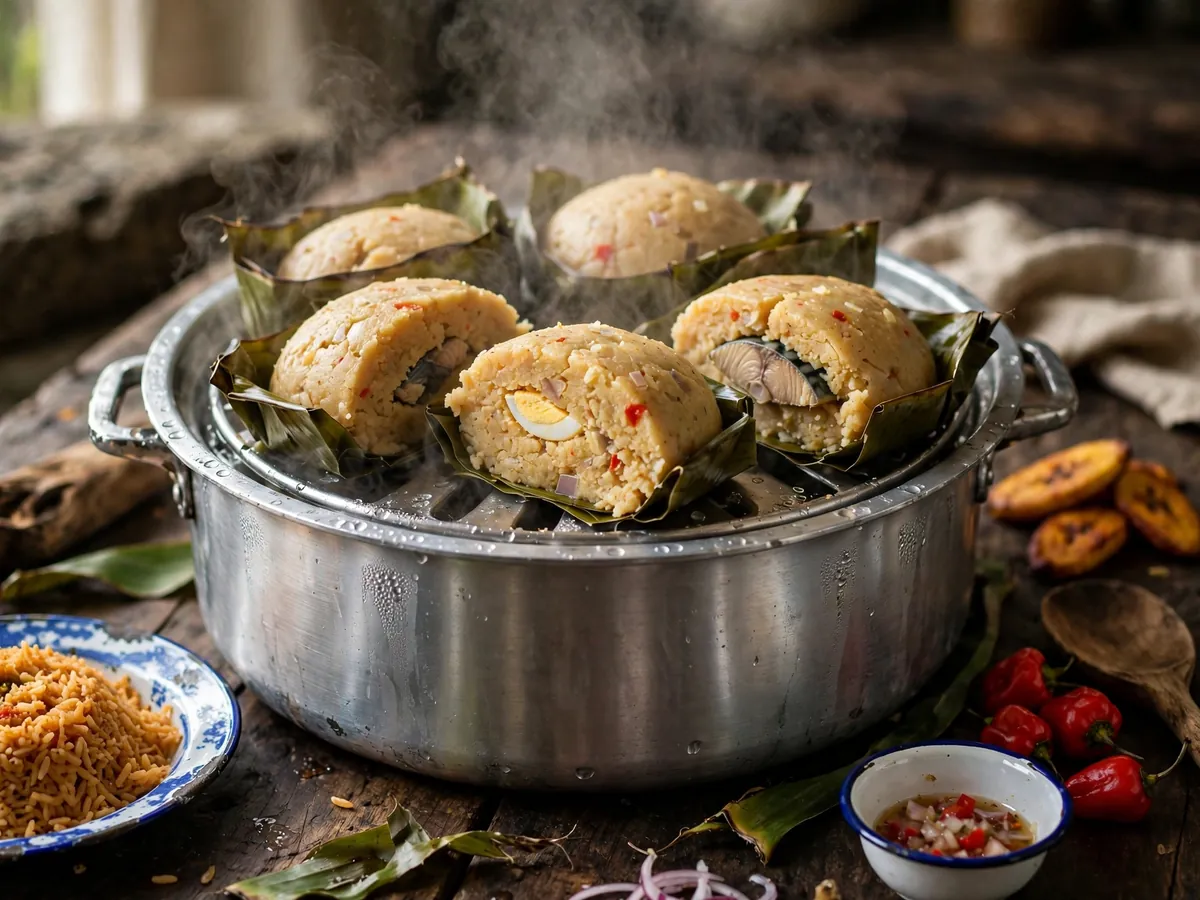
Nigeria
Moi Moi
Follow the pantry: both dishes connect through water.
Shared thread · water · red bell peppers · scotch bonnet peppers
Cross a culinary border
03
Türkiye
Mercimek Çorbası
Cross borders while keeping sauté as the common thread.
Shared thread · Sauté · Simmer · water
Go one layer deeper
One small detail can open an entirely different part of food.
Continue in Ember & Equator