
Nigeria · lunch · dinner
Nigerian Jollof Rice
Grain, technique and memory on one plate.
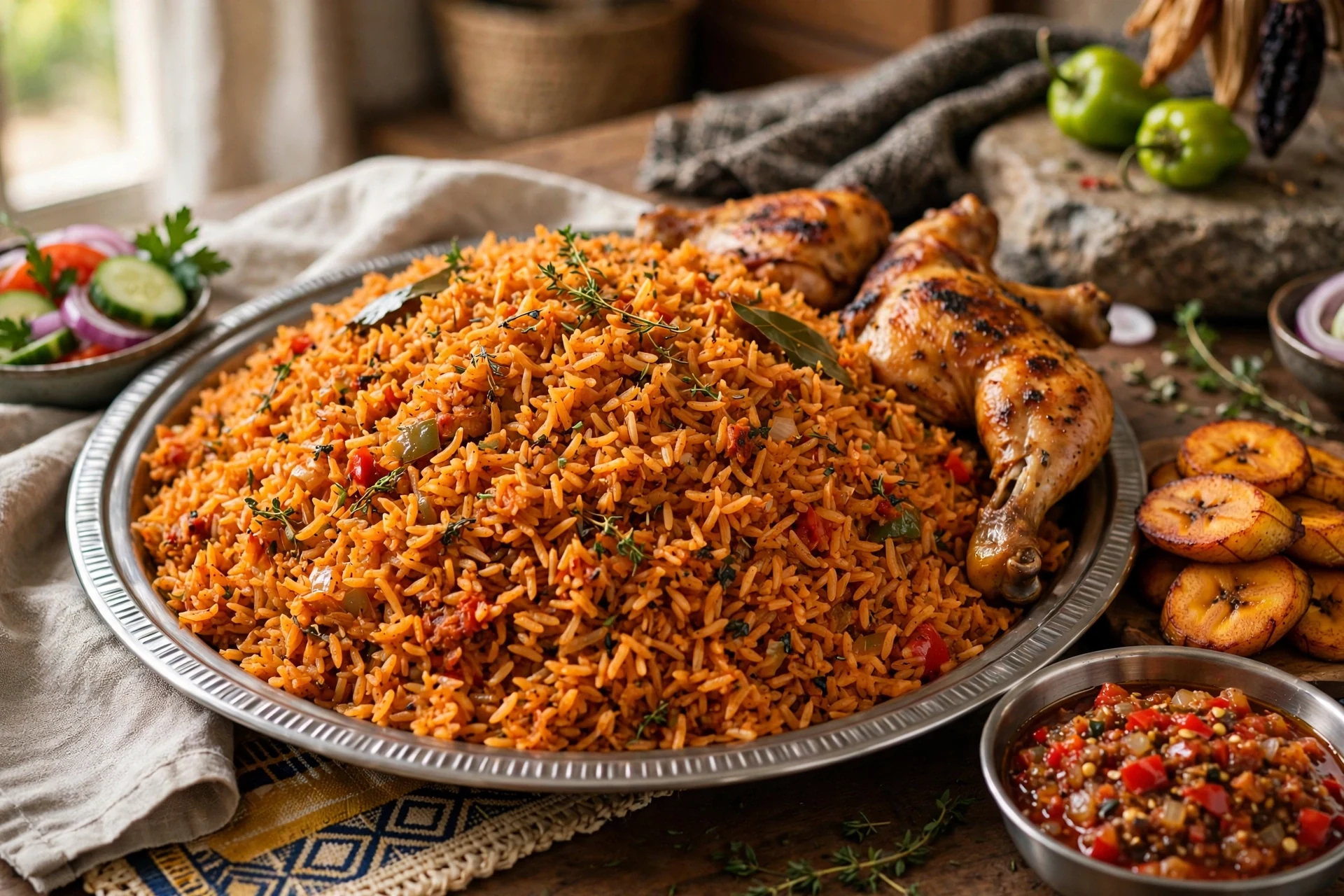
Nigerian Jollof Rice is long-grain rice cooked in a deeply reduced tomato-and-red-pepper stew with onion, chilli, stock and Nigerian-style seasonings until the grains are red-orange, savoury and separate rather than wet.
- Total
- 103 min
- Difficulty
- Medium
- Serves
- 6
- Steps
- 8
The dish
The grain tells part of the story.
Jollof rice is shared across West Africa, with strongly identified national and household styles. This Ember & Equator version is specifically Nigerian and follows a classic party/home logic: long-grain parboiled rice, a tomato-pepper stew base, onion, chilli, thyme and Nigerian curry powder, then controlled low-heat steaming. It does not claim that one formula represents every Nigerian pot; smoky party jollof, basmati versions and other household variations are legitimate.
Explore NigeriaAt a glance
Origin
Nigeria
Region
Nigeria / West Africa
Meal
lunch · dinner
Guided steps
8
Dish
Nigerian Jollof Rice
Cuisine
Nigerian cuisines
Food type
Rice dish · Celebration food
Technique
Sauté · Simmer · Steam
Cook the recipe
In the kitchen
Start with the ingredients, then follow the Method in order. Open cooking tips only when you need extra help; the story and references can wait until you are ready.
- Total
- 103 min
- Serves
- 6
- Level
- Medium
- Visual cues
- 8
Ingredients
Serves 6- 500 glong-grain parboiled riceclassic firm Nigerian jollof rice choice; rinse and precook as directed
- 6ripe tomatoesroughly chopped for blending
- 3red bell peppersseeded and roughly chopped
- 1-2scotch bonnet peppersto taste
- 2onionsone for blending, one for frying
- 3 tbsptomato pastefor depth and colour
- 100 mlvegetable oilneutral-tasting
- 650 mlchicken stockapproximately; use only as much as the rice needs
- 2 tspNigerian curry powderuse a mild savoury Nigerian-style blend
- 1 tspdried thyme
- 2bay leaves
- 1/2 tspblack pepperfreshly ground
- 1 1/2 tspsaltplus more to taste
Optional
- 1-2bouillon or seasoning cubeoptional; adjust salt if using
Everything ready? Continue straight into the cooking steps.
Start methodMethod
8 steps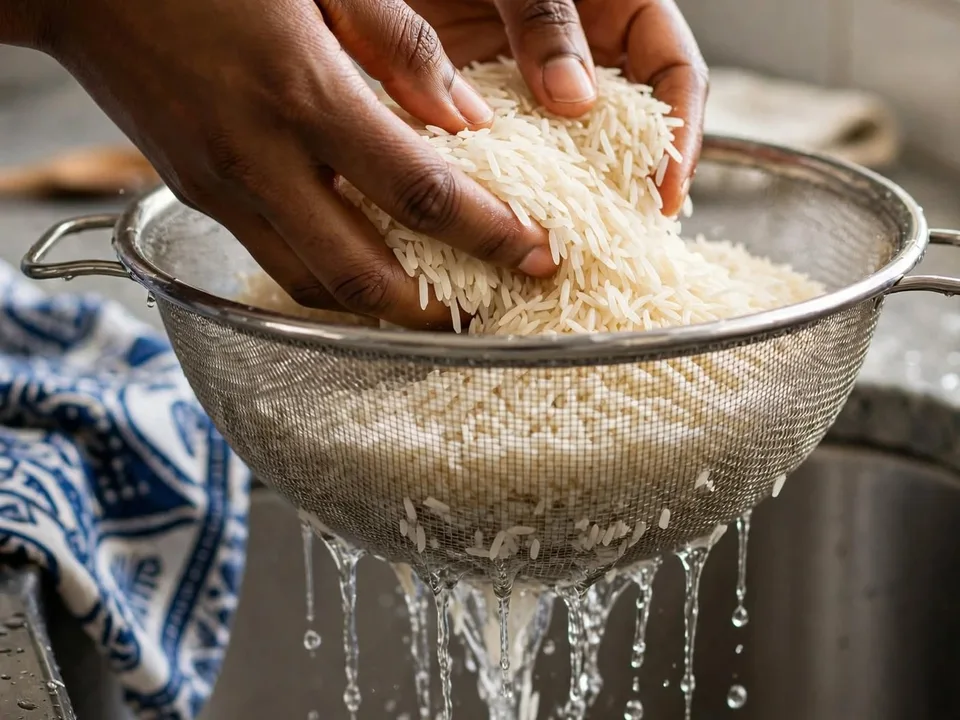 Step 01
Precook, rinse and drain the parboiled rice without making it soft
10 min
Rinse the long-grain parboiled rice, then boil it in plenty of water only until the grain loses its hard chalky centre but is still distinctly undercooked and firm.
Rinse the long-grain parboiled rice, then boil it in plenty of water only until the grain loses its hard chalky centre but is still distinctly undercooked and firm. Drain into a sieve, rinse briefly with cool water to stop the cooking and leave it to drain very thoroughly.
Look for
A grain is flexible enough to bite but still firm in the centre, and the drained rice carries no pooled rinse water.
Kitchen note
This selected Nigerian method gives the rice a head start so it can finish in a controlled amount of stew without becoming soggy. Do not precook until tender.
 Step 02
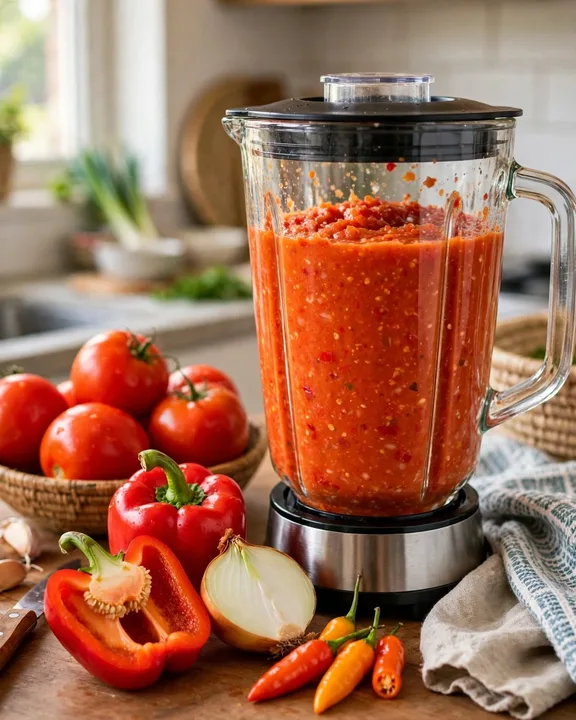
Blend the tomato-pepper base until smooth
12 min
Blend the tomatoes, red bell peppers, Scotch bonnet and about half of one onion until smooth.
Blend the tomatoes, red bell peppers, Scotch bonnet and about half of one onion until smooth. Pour into a saucepan and boil uncovered until much of the excess water evaporates and the puree looks noticeably thicker.
Look for
The puree has thickened, bubbles more slowly and no longer looks like thin fresh juice.
Kitchen note
Reducing the blended peppers before they hit the main pot shortens the frying stage and helps remove the watery raw-vegetable taste.
 Step 03
Fry the onion and tomato paste until the paste loses its raw edge
7 min
Heat the vegetable oil over medium heat.
Heat the vegetable oil over medium heat. Slice the remaining onion and cook until softened. Add the tomato paste and fry, stirring, until it darkens slightly, turns glossy and smells sweet-savory rather than raw or metallic.
Look for
The paste has deepened in colour, the oil is red-orange and there is no raw metallic tomato-paste smell.
Kitchen note
Tomato paste needs its own frying time before the wetter pepper blend goes in; otherwise the finished rice can retain a sharp uncooked paste flavour.
 Step 04
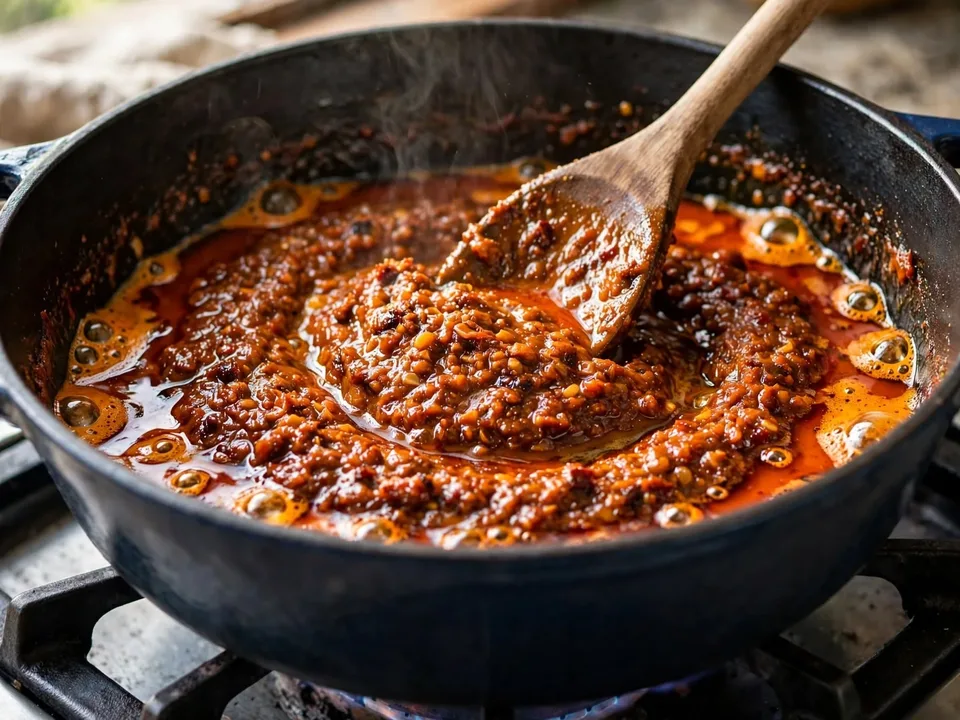
Cook the pepper stew until concentrated and the oil begins to separate
15 min
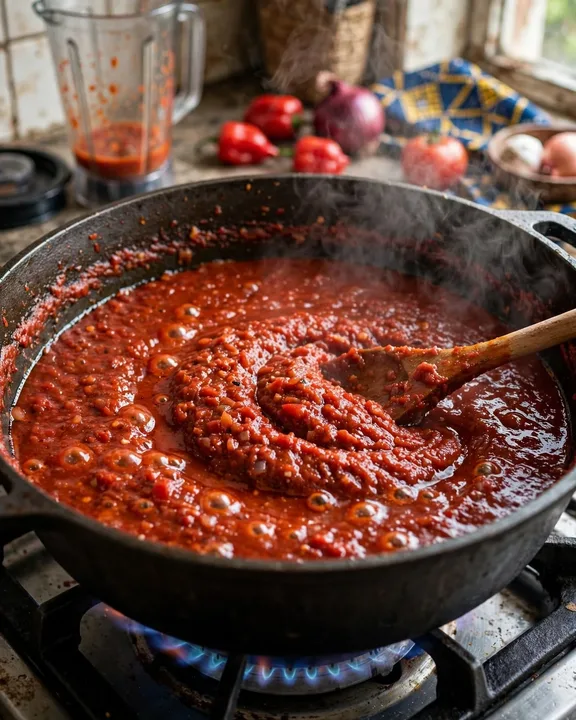
Add the reduced blended pepper mixture to the fried paste.
Add the reduced blended pepper mixture to the fried paste. Stir in the curry powder, thyme, bay leaves, black pepper and optional bouillon. Cook uncovered over medium heat, stirring often, until the stew is thick, darker and shows small beads of oil at the edges.
Look for
A spoon dragged through the pot leaves a trail for a moment and red-orange oil is visible around the edge of the reduced stew.
Kitchen note
This reduction is the flavour engine of Nigerian jollof. Rushing it leaves a raw tomato-pepper taste that no amount of later steaming will fix.
 Step 05
Add stock and balance the cooking liquid before the rice goes in
5 min
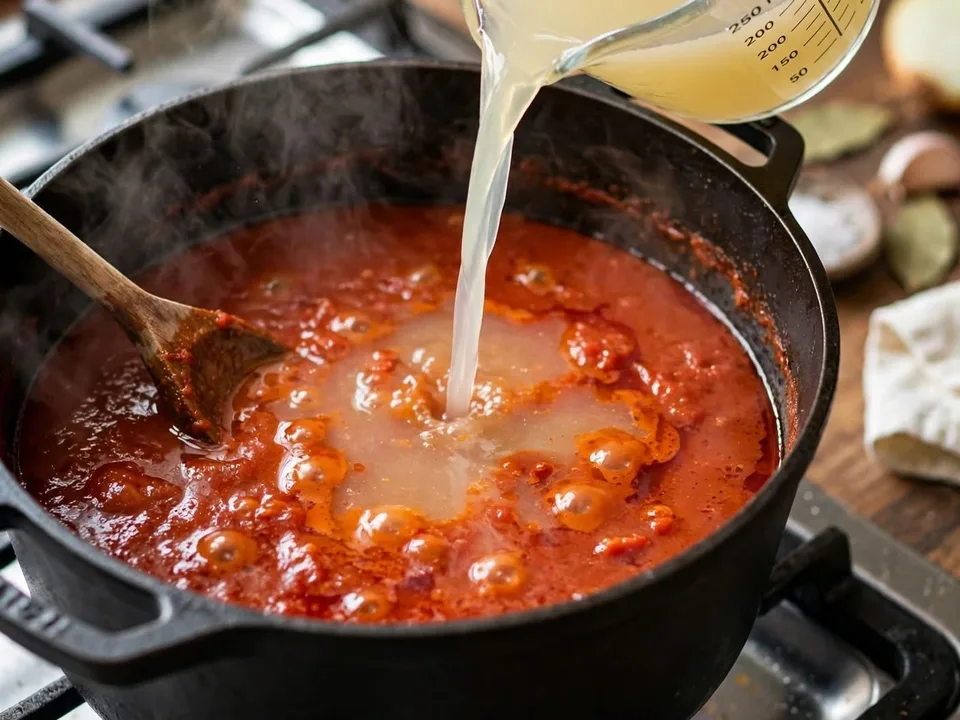
Add enough chicken stock to loosen the concentrated stew into a strongly seasoned cooking liquid.
Add enough chicken stock to loosen the concentrated stew into a strongly seasoned cooking liquid. Bring it to a simmer and taste. It should be savoury and slightly more seasoned than you want the finished rice because the rice will absorb the seasoning.
Look for
The liquid is smooth, brick-red and strongly seasoned, with no raw tomato smell and no excess watery layer.
Kitchen note
Do not automatically pour in all the stock. The final liquid level matters more than the measuring jug; extra liquid is the easiest way to make jollof wet and soft.
 Step 06
Add the drained rice and seal the pot tightly
4 min
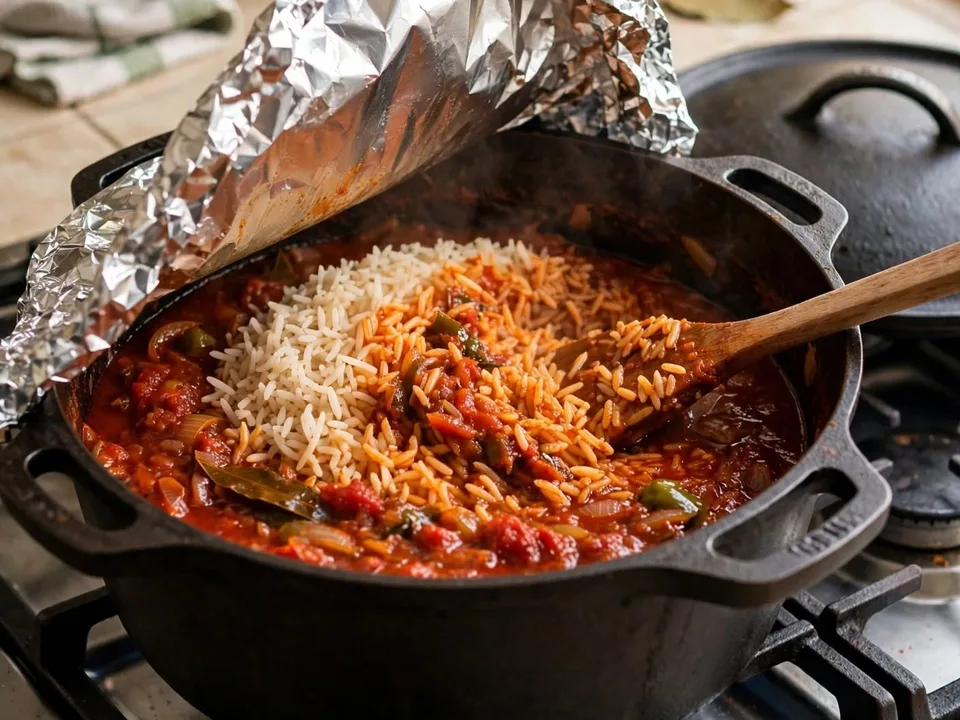
Fold the thoroughly drained rice into the simmering stew until every grain is coated.
Fold the thoroughly drained rice into the simmering stew until every grain is coated. The liquid should sit approximately level with the rice, not several centimetres above it. Cover the pot tightly—foil under the lid is useful if the lid leaks steam—and reduce the heat to low.
Look for
Every grain is stained red-orange, the liquid is roughly level with the rice and the lid can close tightly without a rolling boil.
Kitchen note
Once the rice goes in, avoid aggressive stirring. You want distinct grains absorbing seasoned steam, not starch released into a wet sauce.
 Step 07
Steam gently until the rice is tender and the pot is dry
25 min
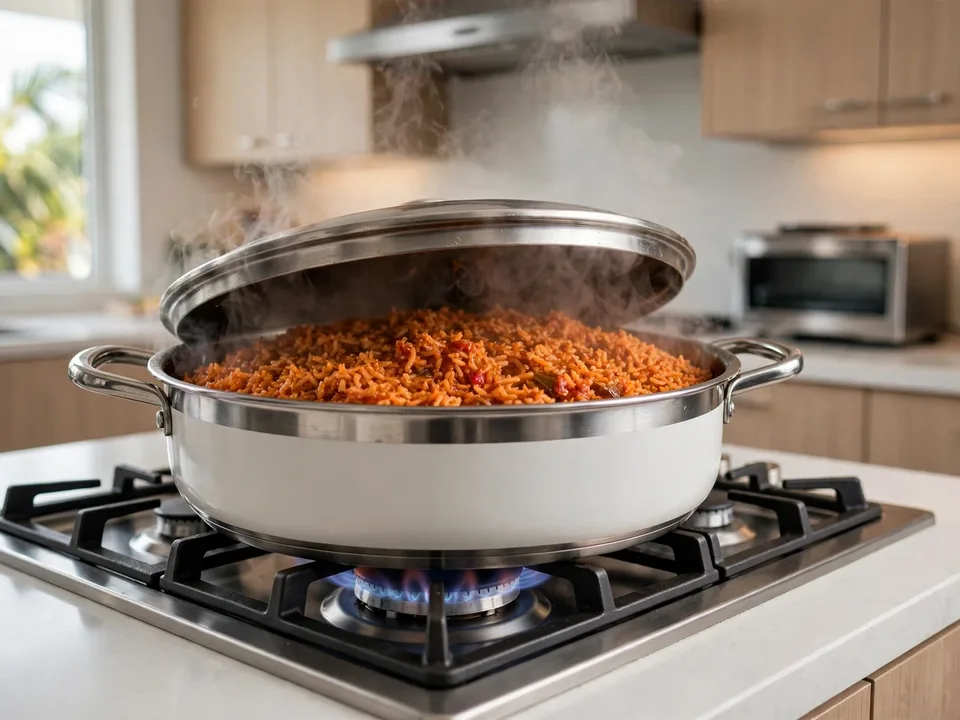
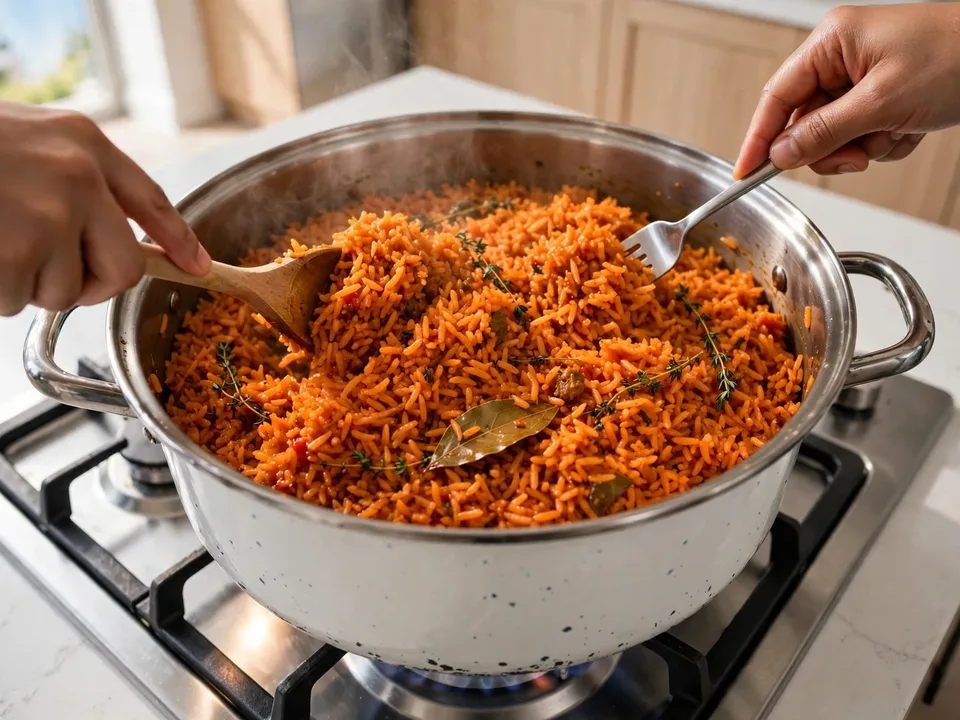
Cook over low to medium-low heat without repeatedly opening the lid.
Cook over low to medium-low heat without repeatedly opening the lid. Check near the end: the grains should be tender and separate, and there should be no free liquid at the bottom. If the rice is still firm, add only a small splash of hot stock or water, reseal and continue steaming.
Look for
The grains are tender and separate, the pot shows no free liquid and the rice smells toasted and savoury rather than burnt.
Kitchen note
A little bottom catching can contribute the characteristic party-jollof smokiness, but deliberate burning is not the technique. Control the heat and stop before the flavour turns bitter.
 Step 08
Rest covered, then fluff gently from the edges
10 min
Turn off the heat and leave the pot covered for 10 minutes.
Turn off the heat and leave the pot covered for 10 minutes. Remove the bay leaves, then fluff the rice gently from the edges toward the centre with a fork or wide spoon. Serve hot with the accompaniments you prefer, such as fried plantain, grilled chicken, moi moi, salad or coleslaw.
Look for
The rice is fluffy and red-orange with distinct grains, no wet sauce between them and no hard chalky centres.
Kitchen note
Resting lets residual steam finish any slightly firm grains without adding more liquid. Fluff once, gently, rather than repeatedly stirring the pot.
After cooking
Explore the dish beyond the method.
Story, place and references are here for discovery, so they stay out of the way while you cook.
Culture & tradition
The story behind the dish
Origins, evolution and everyday life—read together as part of the recipe's culinary record.
Origins
Jollof belongs to a wider West African rice tradition and has many national and regional forms.
How it evolved
Nigerian cooks developed numerous home and party versions using tomato stew, peppers, stock, curry-style seasoning and different rice varieties.
Its place today
It is a major celebration and everyday dish in Nigeria and a prominent expression of Nigerian food culture abroad.
Visual archive · plate 01
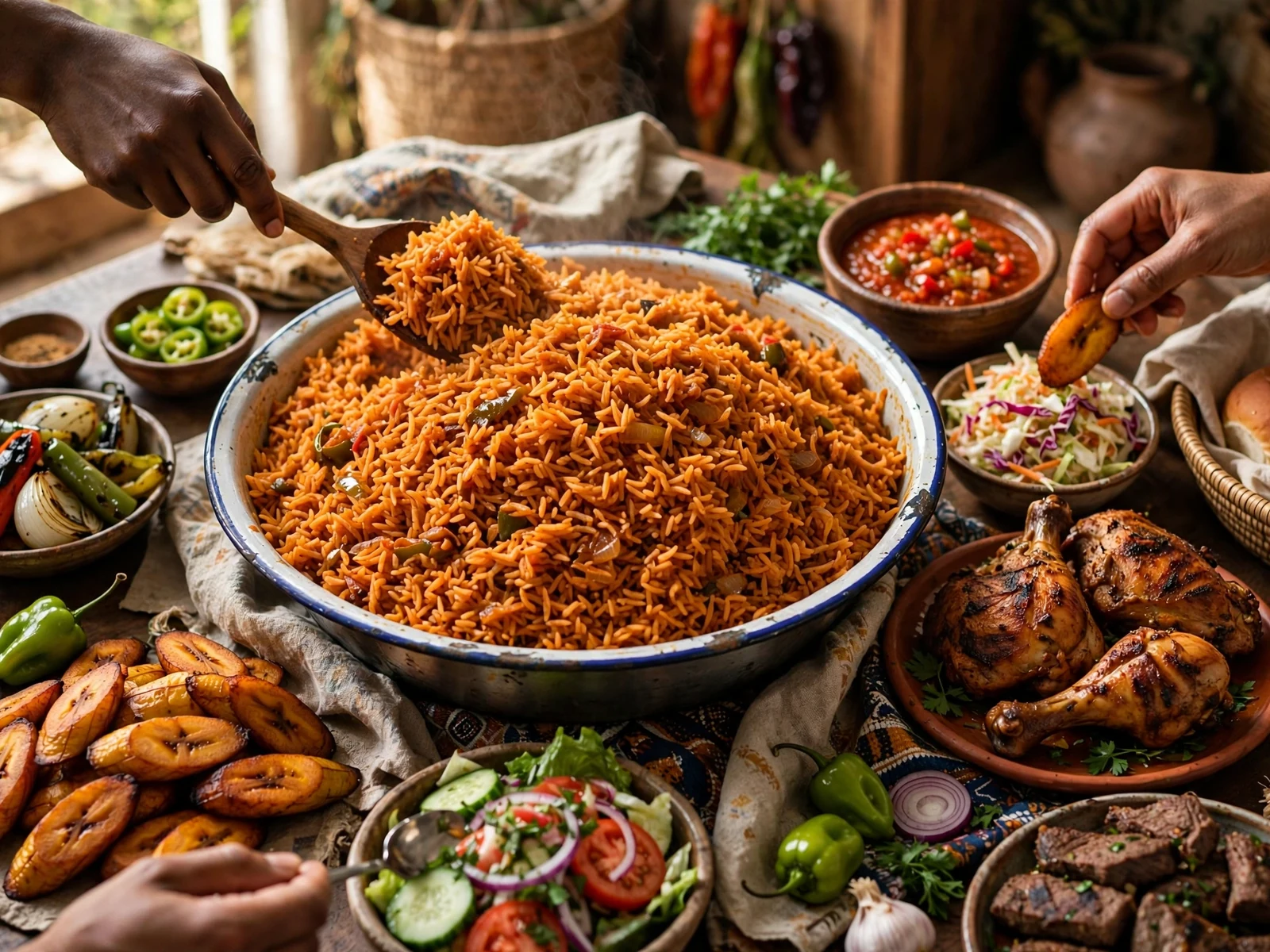
Nigerian Jollof Rice
An editorial view of the finished dish, kept compact so the story continues without an oversized image break.
Primary region
Nigeria / West Africa
Country
Nigeria
Regional influence
The dish reflects the ingredients and cooking patterns associated with Nigeria / West Africa, while household and regional versions vary.
Related food systems
- Nigeria / West Africa home cooking
- Market and street-food traditions
- Regional pantry and seasonal cooking
Sources & further reading
Follow the reference trail.
Ember & Equator links outward when an institution or primary reference helps support the culinary record.
- 01Cuisine — Nigerian Cuisine and GastronomyExternal ↗
Federal Ministry of Information and National Orientation, Nigeria · government
Supports: Nigerian culinary diversity and national food context
Ember & Equator source review · 2026-09-17
- 02How to cook Nigerian Jollof RiceExternal ↗
All Nigerian Recipes · reference
Supports: long-grain parboiled rice · tomato stew base · onion, curry powder and thyme · controlled liquid level · low-to-medium covered cooking
Ember & Equator source review · 2026-09-17
Ingredient guides
Learn about the ingredients behind the dish.
These are reference guides, not a second ingredient list. Follow an ingredient when you want to understand its role, use and wider culinary context.
Ingredient
long-grain rice
Understand what it contributes, how to use it, and the dishes that reveal it best.
Ingredient
tomatoes
Understand what it contributes, how to use it, and the dishes that reveal it best.
Ingredient
red bell peppers
Understand what it contributes, how to use it, and the dishes that reveal it best.
Ingredient
scotch bonnet peppers
Understand what it contributes, how to use it, and the dishes that reveal it best.
Ingredient
onion
Understand what it contributes, how to use it, and the dishes that reveal it best.
Ingredient
tomato paste
Understand what it contributes, how to use it, and the dishes that reveal it best.
Keep wandering
Where will this dish take you next?
Stay with the place, follow an ingredient or technique, or cross into another food culture. Each path begins with something already present in this dish.
Stay with the place
01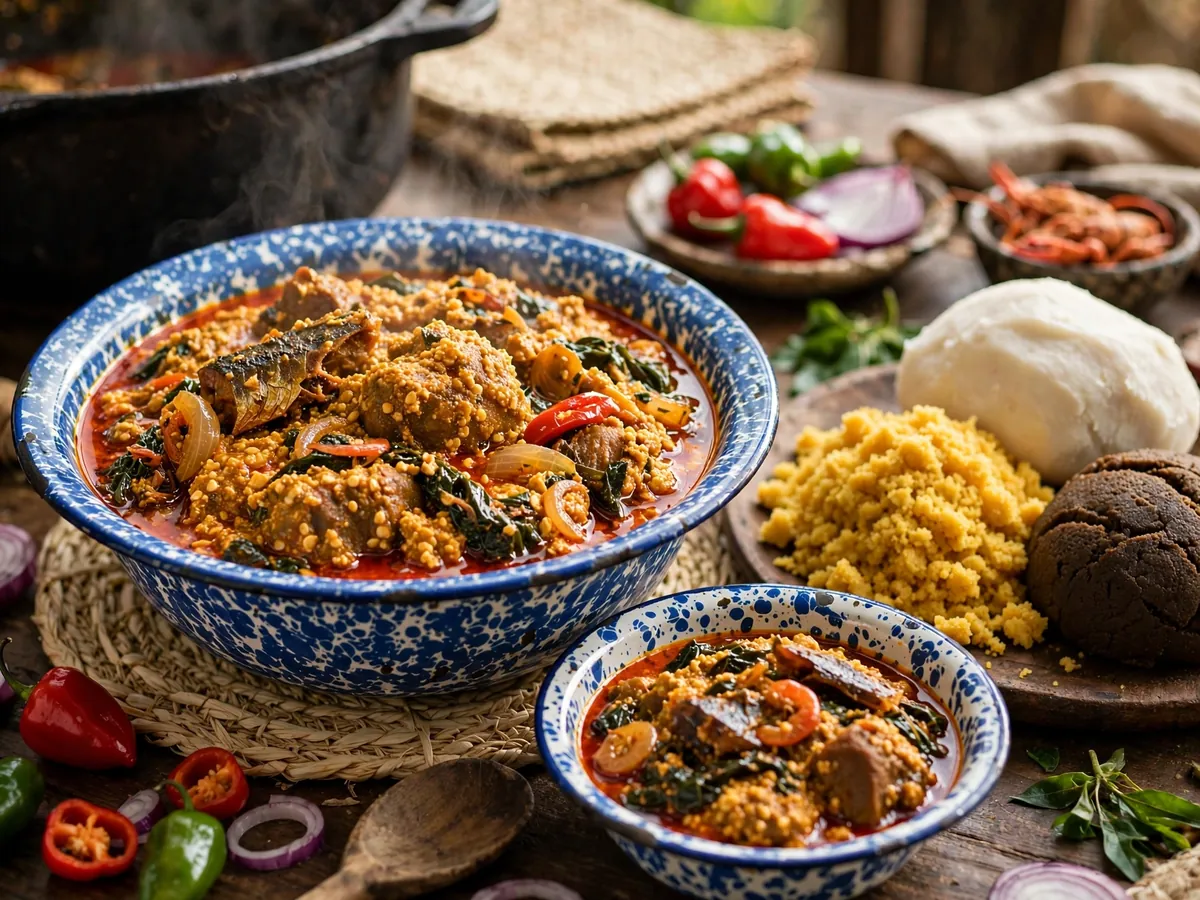
Nigeria
Egusi Soup
Stay in the same food culture and notice how sauté appears in another dish.
Shared thread · Sauté · Simmer · red bell peppers
Follow the method or pantry
02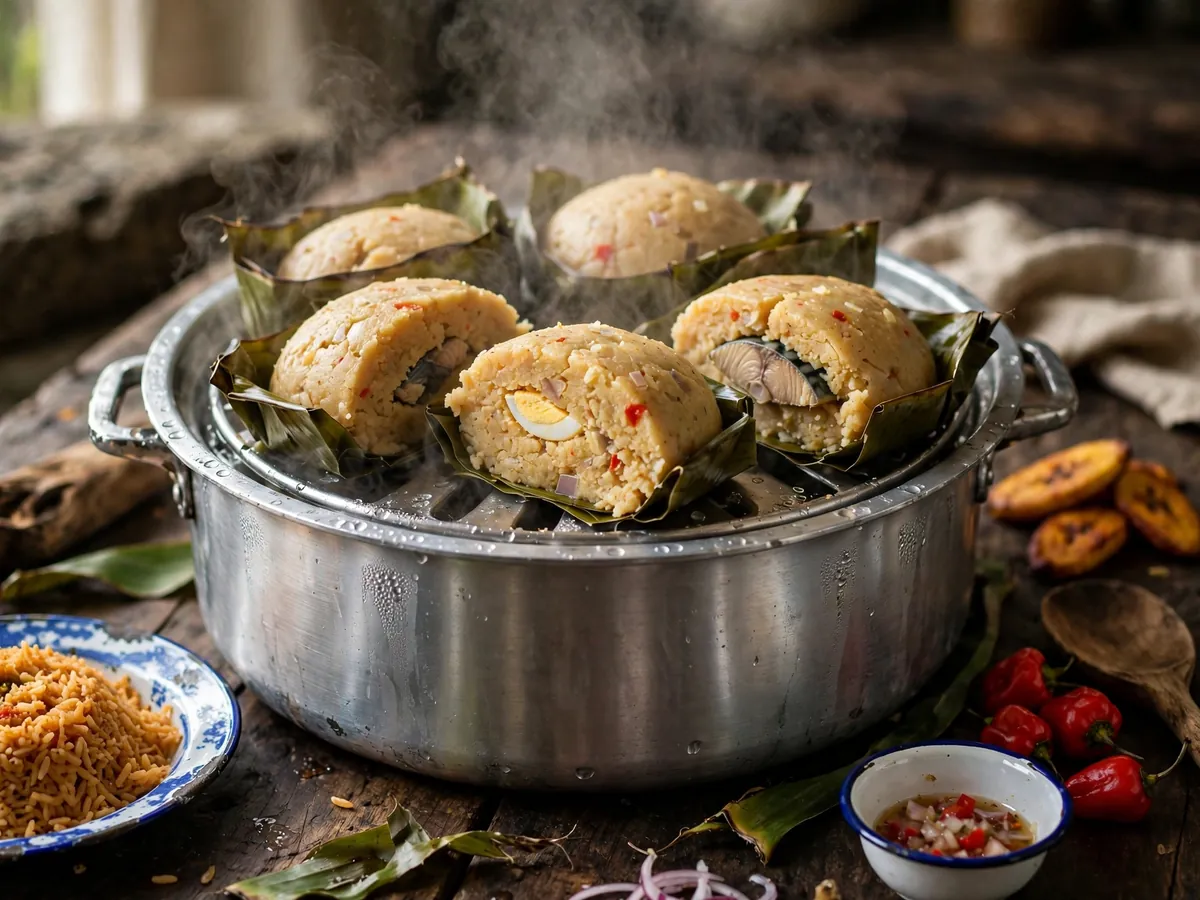
Nigeria
Moi Moi
Follow the cooking method: both dishes connect through steam.
Shared thread · Steam · red bell peppers · scotch bonnet peppers
Cross a culinary border
03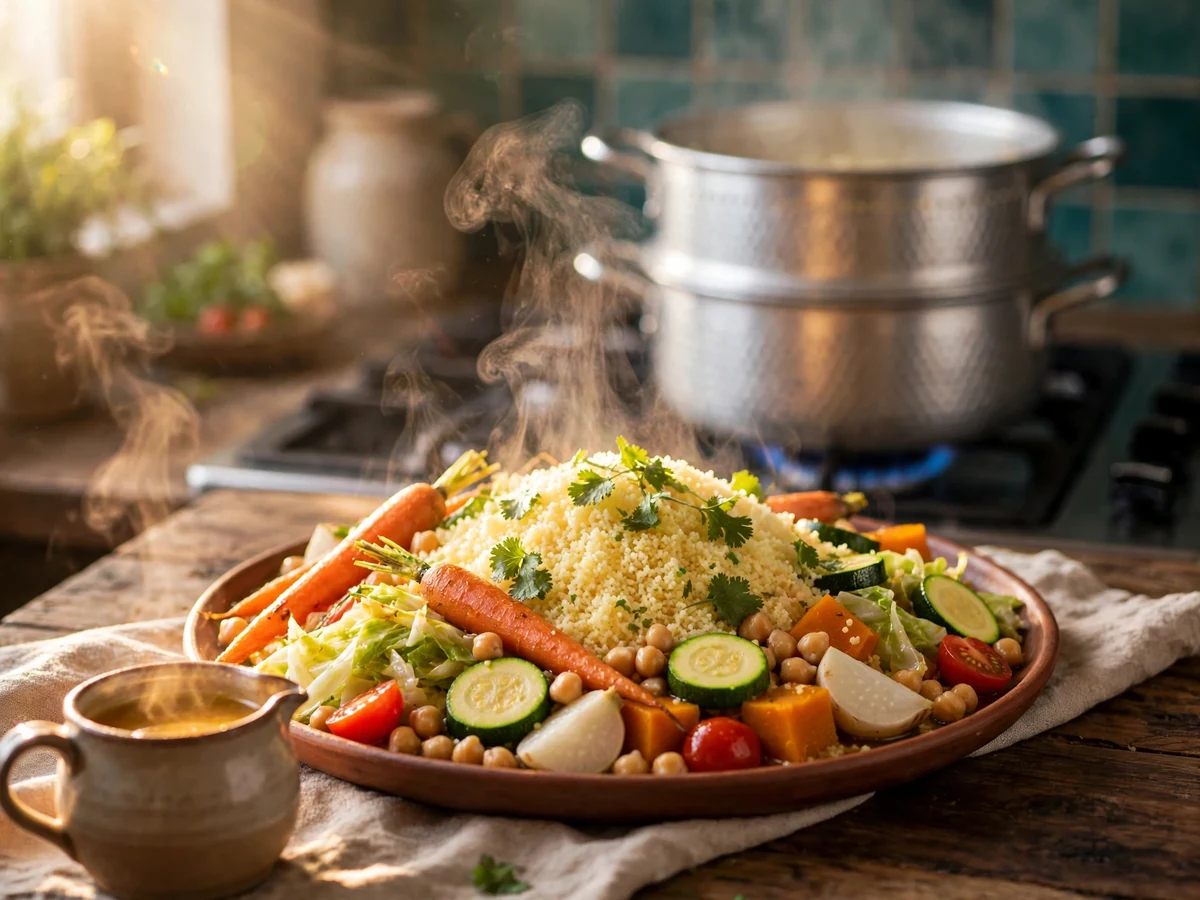
Morocco
Moroccan Couscous with Seven Vegetables
Cross borders while keeping sauté as the common thread.
Shared thread · Sauté · Simmer · Steam
Go one layer deeper
One small detail can open an entirely different part of food.
Continue in Ember & Equator