
Nigeria · breakfast · lunch · dinner
Moi Moi
Nigeria through one enduring dish.
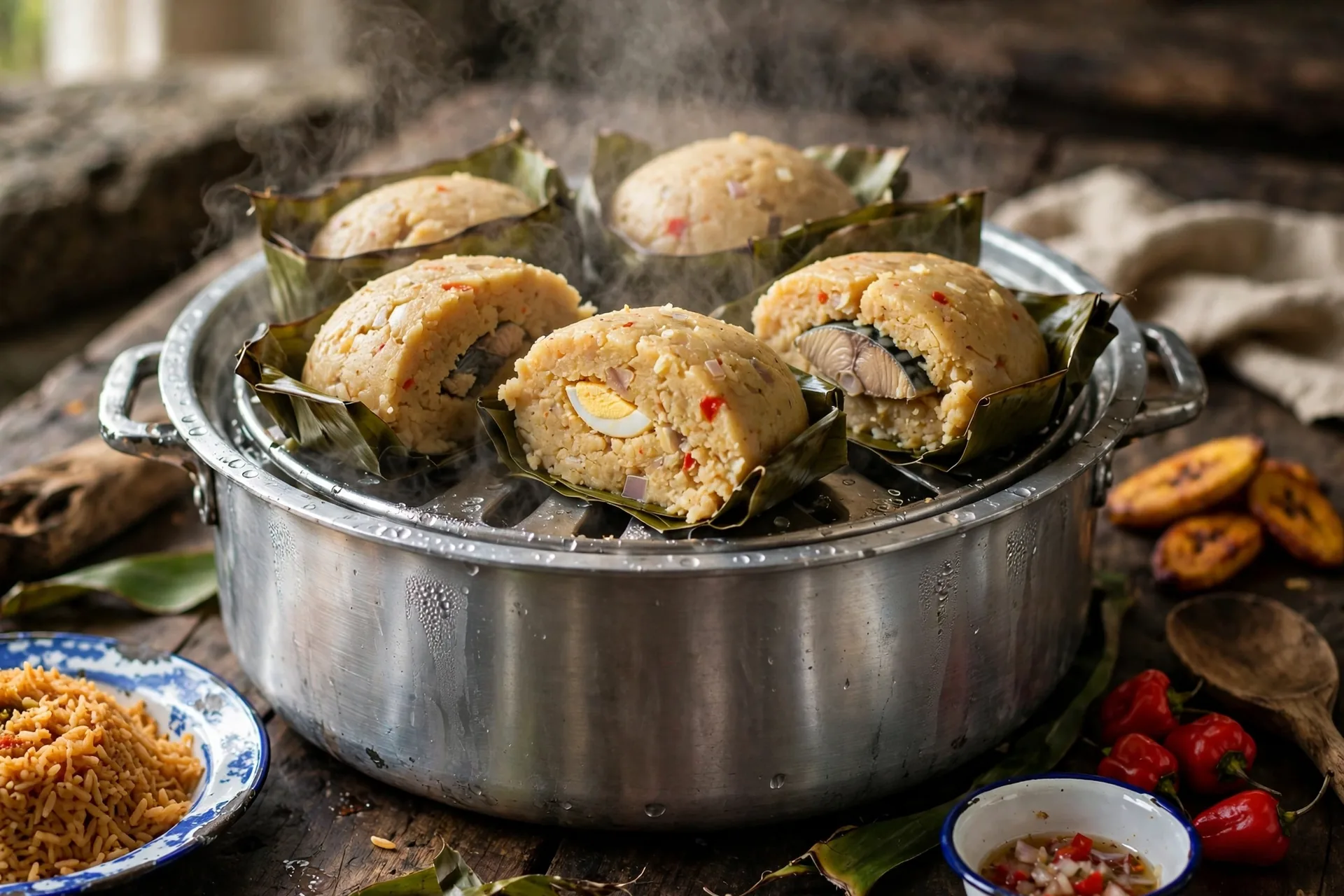
Moi Moi (Moin Moin) is a Nigerian steamed bean pudding made from thoroughly peeled cowpeas blended completely smooth with peppers, onion and seasonings, enriched with neutral oil and steamed in leaves or heatproof containers until tender and fully set.
- Total
- 110 min
- Difficulty
- Medium
- Serves
- 6
- Steps
- 8
The dish
Place first. Then the plate.
Moi Moi appears in several Nigerian regional food traditions and is eaten at home, at celebrations and alongside dishes such as jollof rice, fried plantain, custard and pap. The foundational technique is to remove the bean skins, make an exceptionally smooth cold batter, season it fully before cooking, then steam it until set. Wrapping and enrichment vary by household: uma leaves, banana leaves, foil or tins are all used, and additions such as egg, corned beef, fish or bone marrow are legitimate options rather than mandatory parts of every batch.
Explore NigeriaAt a glance
Origin
Nigeria
Region
Southern Nigeria / nationwide
Meal
breakfast · lunch · dinner
Guided steps
8
Dish
Moi Moi
Cuisine
Nigerian cuisines
Food type
Legume dish · Celebration food
Technique
Steam · Blend batter · Emulsify
Cook the recipe
In the kitchen
Start with the ingredients, then follow the Method in order. Open cooking tips only when you need extra help; the story and references can wait until you are ready.
- Total
- 110 min
- Serves
- 6
- Level
- Medium
- Visual cues
- 8
Ingredients
Serves 6- 400 gblack-eyed peasdry beans; brown beans are also used; soak and remove the skins
- 1 largered bell peppersor Nigerian tatashe; seeded and chopped
- 1scotch bonnet peppersor to taste
- 1 largeonionsroughly chopped
- 1/2 tspground nutmegsmall amount for the characteristic aroma
- 100 mlvegetable oilneutral-tasting; do not use strongly flavoured olive oil
- 1 1/2 tspsaltplus more to taste before steaming
- 900 mlcool or warm waterapproximately total for blending and consistency; add gradually
Optional
- 2 tbspground crayfishclassic savoury seasoning; omit for a shellfish-free variation
- 1seasoning cubeoptional; crumble finely and reduce salt if using
- 2hard-boiled eggsquartered; optional filling
Everything ready? Continue straight into the cooking steps.
Start methodMethod
8 steps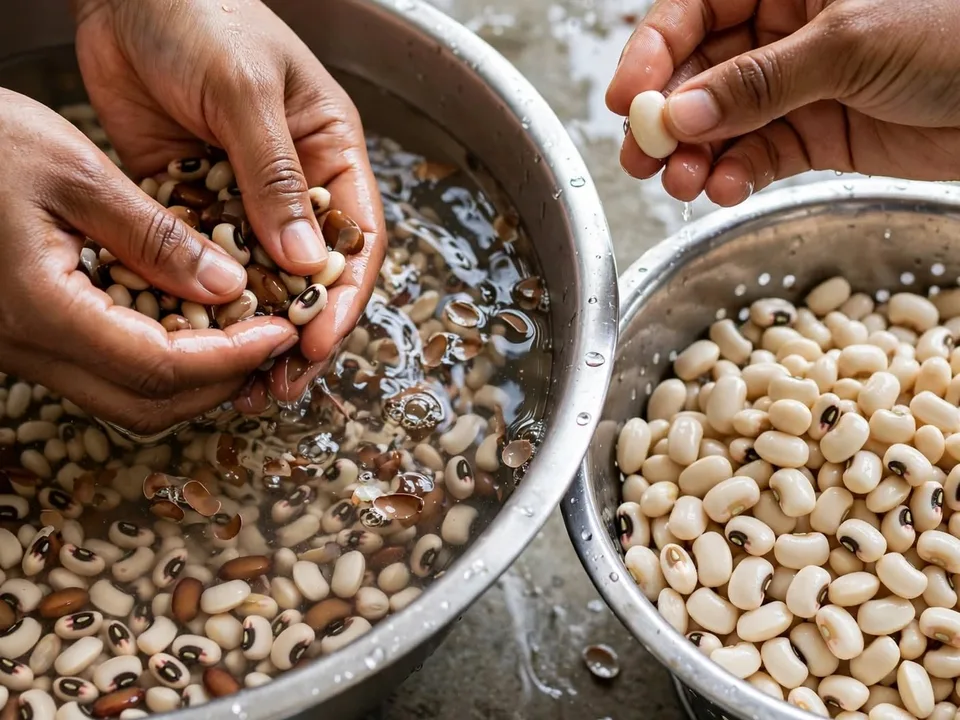 Step 01
Soak, dehull and hydrate the beans thoroughly
35 min
Cover the black-eyed peas with water until the skins loosen, then rub the beans between your palms and rinse away the floating skins repeatedly.
Cover the black-eyed peas with water until the skins loosen, then rub the beans between your palms and rinse away the floating skins repeatedly. Continue until the beans are almost completely dehulled. Cover the peeled beans with fresh water and let them hydrate until a bean seed feels tender when pinched, then drain well.
Look for
The beans are swollen and pale, with very few brown or translucent skins remaining and the seeds tender enough to pinch.
Kitchen note
Do not treat peeling as a cosmetic step. The skins make the steamed pudding coarse; a silky moi moi starts with very thoroughly dehulled beans.
 Step 02
Prepare the leaves or containers and the steaming pot before mixing the batter
10 min
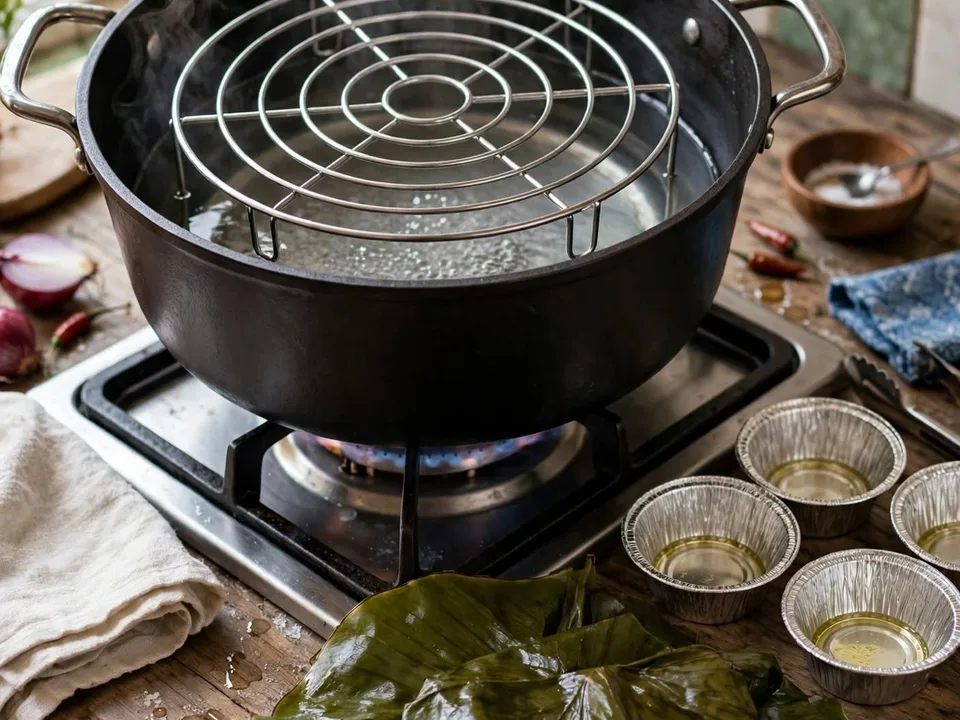
Wash and soften uma or banana leaves if using them, or lightly oil heatproof ramekins, tins or foil containers.
Wash and soften uma or banana leaves if using them, or lightly oil heatproof ramekins, tins or foil containers. Pad or rack the base of a deep pot so the portions are not sitting directly on the hottest metal. Add a shallow layer of water, cover and bring the steaming setup toward a steady simmer.
Look for
The containers are stable and ready to fill, and the pot has only a shallow steaming-water level rather than enough water to flood the portions.
Kitchen note
Once the batter is seasoned you want to portion and steam without delay. Preparing the containers first prevents the bean mixture from sitting while you improvise a steamer.
 Step 03
Blend the beans, pepper, onion and seasonings until completely silky
8 min
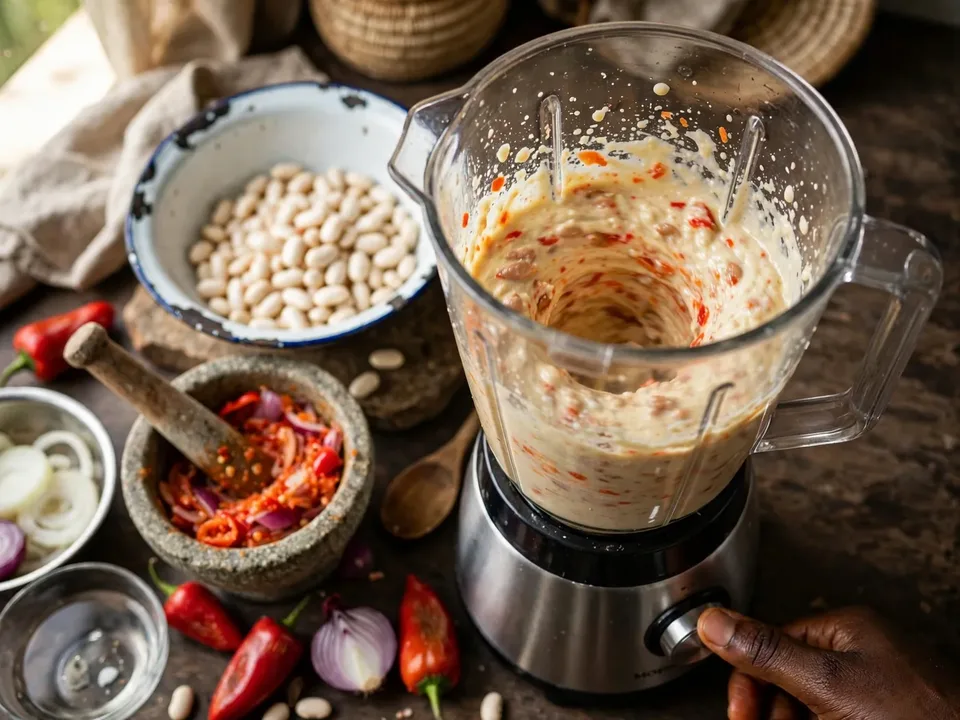
Blend the drained peeled beans with the red pepper, Scotch bonnet, onion, optional crayfish and nutmeg, using only enough of the measured cool or warm water to keep the blender moving.
Blend the drained peeled beans with the red pepper, Scotch bonnet, onion, optional crayfish and nutmeg, using only enough of the measured cool or warm water to keep the blender moving. Work in batches if necessary and blend longer than for an ordinary bean puree.
Look for
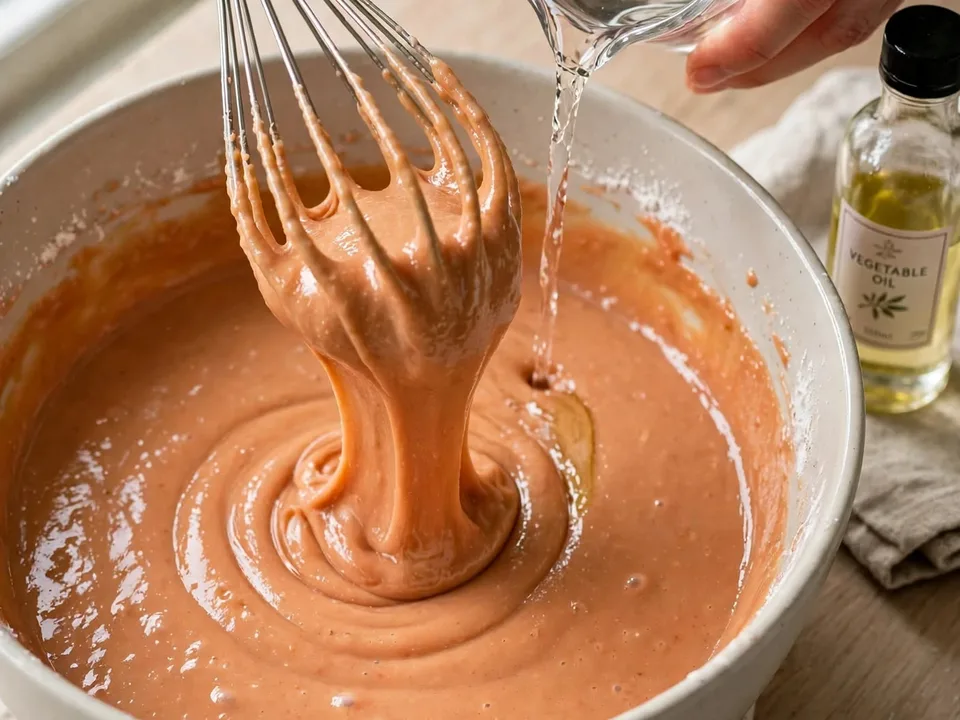
The batter is uniformly peach-coloured and feels smooth between the fingers with no obvious pieces of bean or pepper.
Kitchen note
Rub a little batter between two fingers. If you can feel obvious bean grit, keep blending; steaming will not make a coarse batter suddenly silky.
 Step 04
Beat in the oil, salt and water until the batter is thick but pourable
7 min
Transfer the blended bean mixture to a large bowl.
Transfer the blended bean mixture to a large bowl. Beat in the vegetable oil, optional crumbled seasoning cube and salt. Add the remaining water gradually while stirring vigorously until the batter pours in a thick continuous ribbon. Taste and correct the seasoning now, before steaming starts.
Look for
The batter is glossy and cohesive, falls in a thick ribbon and levels slowly in the bowl without looking watery or separated.
Kitchen note
Moi Moi is mixed cold: after the portions go into the steamer, you cannot fix weak seasoning or poor consistency. Add liquid in small amounts rather than committing the entire measured amount at once.
 Step 05
Portion evenly and add any chosen filling
8 min
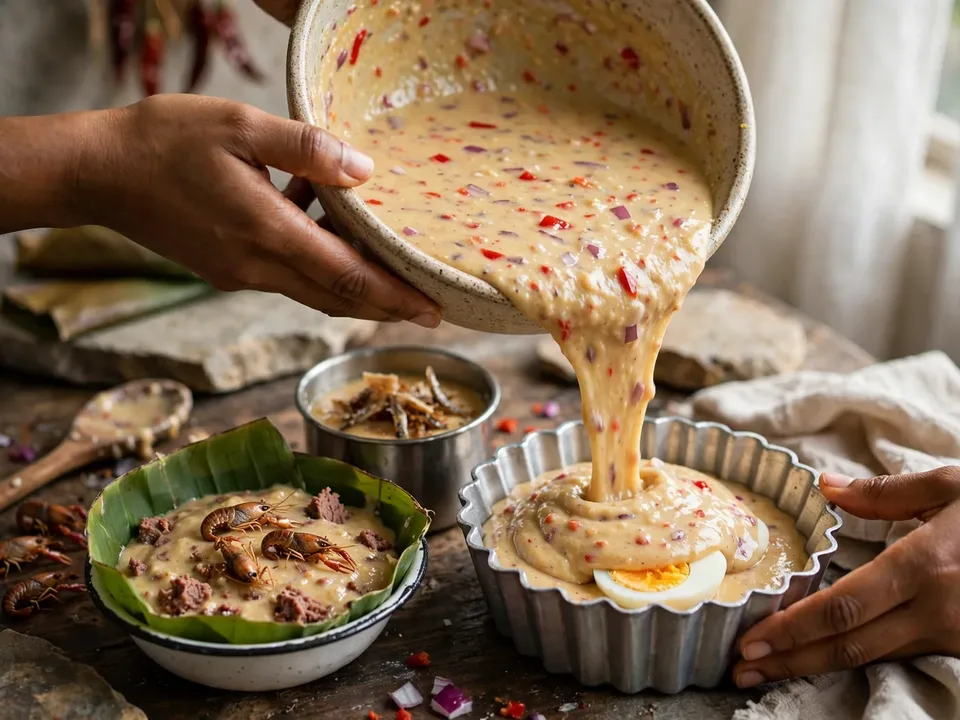
Ladle the batter into the prepared leaves or containers, filling them about two-thirds to three-quarters full so there is room for expansion.
Ladle the batter into the prepared leaves or containers, filling them about two-thirds to three-quarters full so there is room for expansion. Add a piece of hard-boiled egg if using, then fold, seal or cover each portion securely.
Look for
Each portion has similar headspace and the batter surface is level, with any optional filling tucked inside rather than piled above the batter.
Kitchen note
Keep the portions similar in size so they finish together. Large deep containers need much longer steaming than shallow leaf parcels or small ramekins.
 Step 06
Arrange the portions above shallow water and establish steady steam
5 min
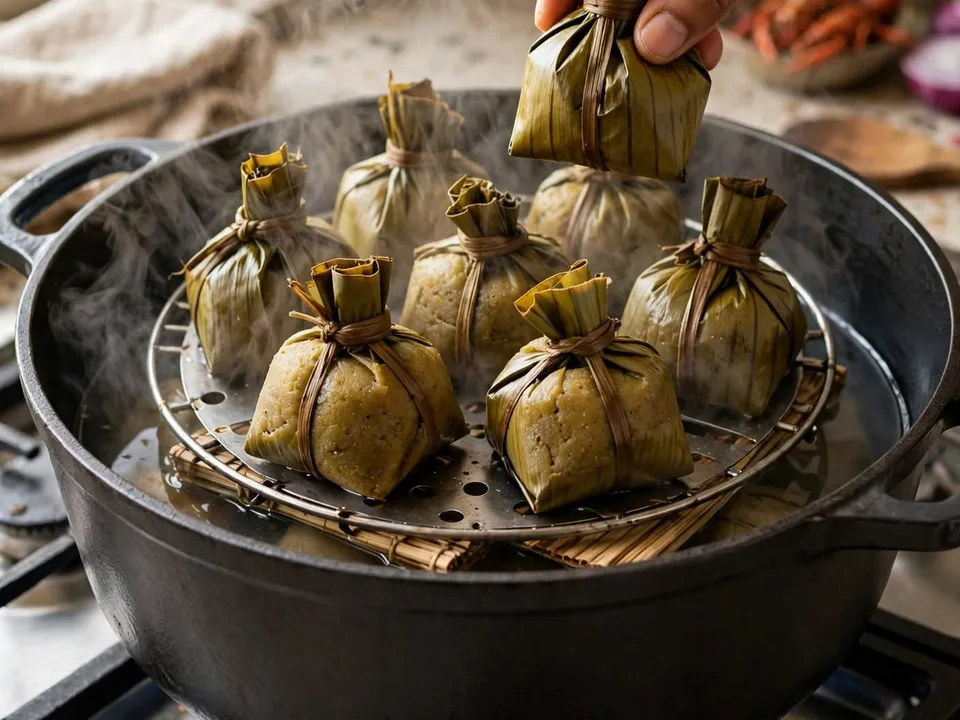
Place the sealed portions in the prepared pot so steam can circulate around them.
Place the sealed portions in the prepared pot so steam can circulate around them. The water should stay shallow and should not pour into the containers. Cover the pot tightly and bring it to a steady steam over medium heat.
Look for
Steam is building steadily around stable containers, while no water is sloshing into or over the bean batter.
Kitchen note
Do not submerge the portions like boiled dumplings. The moi moi should set from steam, and any replacement water added later should be hot so the pot does not lose momentum.
 Step 07
Steam until the centre is completely set, topping up with hot water as needed
55 min
Steam over steady medium heat until the centre of the largest portion is firm and cooked through, usually 45–60 minutes for small portions and longer for a crowded pot or deep containers.
Steam over steady medium heat until the centre of the largest portion is firm and cooked through, usually 45–60 minutes for small portions and longer for a crowded pot or deep containers. Check the water level occasionally and add small amounts of boiling water around the containers if needed. Test a portion with a thin knife or skewer.
Look for
A tester comes out clean or with only a slight cooked smear, and a cut centre is set and tender rather than wet with raw bean batter.
Kitchen note
Cooking time depends heavily on the wrapper and portion size. Use doneness cues rather than removing every portion at an arbitrary minute mark.
 Step 08
Rest briefly before unwrapping or unmoulding, then serve warm
10 min
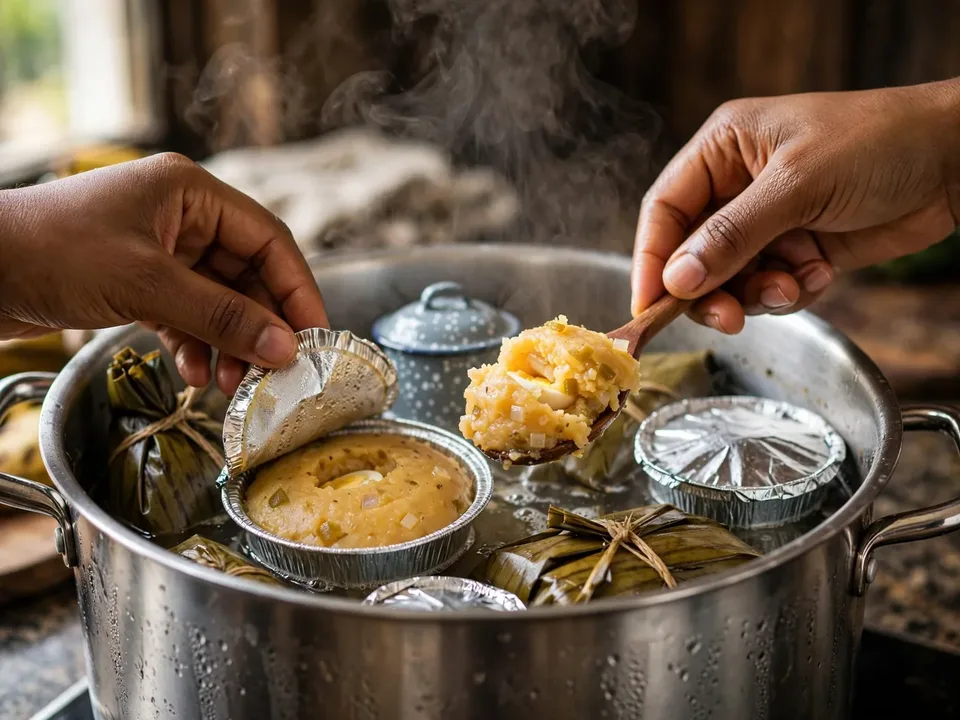
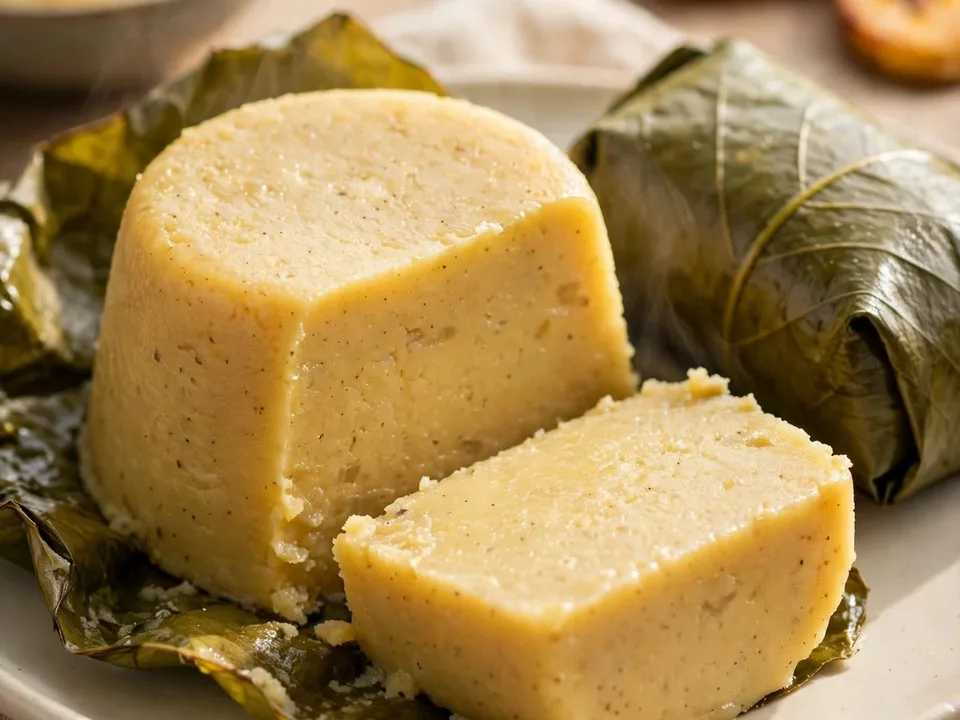
Remove the cooked portions from the pot and let them stand for 8–10 minutes so the delicate bean pudding settles.
Remove the cooked portions from the pot and let them stand for 8–10 minutes so the delicate bean pudding settles. Open the leaves or loosen the edges of the containers carefully. Serve warm on its own or with jollof rice, fried rice, fried plantain, custard or pap.
Look for
The portion holds together when lifted or sliced, with a moist smooth interior and no wet uncooked batter at the centre.
Kitchen note
The pudding is softest the moment it leaves the steamer. A short rest makes unmoulding cleaner without sacrificing the moist tender interior.
After cooking
Explore the dish beyond the method.
Story, place and references are here for discovery, so they stay out of the way while you cook.
Culture & tradition
The story behind the dish
Origins, evolution and everyday life—read together as part of the recipe's culinary record.
Origins
Nigerian cultural records document moinmoin or moi moi across multiple regions, reflecting the broad importance of cowpea-based foods.
How it evolved
Cooks use different peppers, seasonings, add-ins and containers, from traditional leaves to tins or foil, while preserving the peeled-bean batter and steaming technique.
Its place today
Moi Moi is served as breakfast, a snack, a party food and a side dish, especially with jollof rice, fried rice, fried plantain, custard or pap.
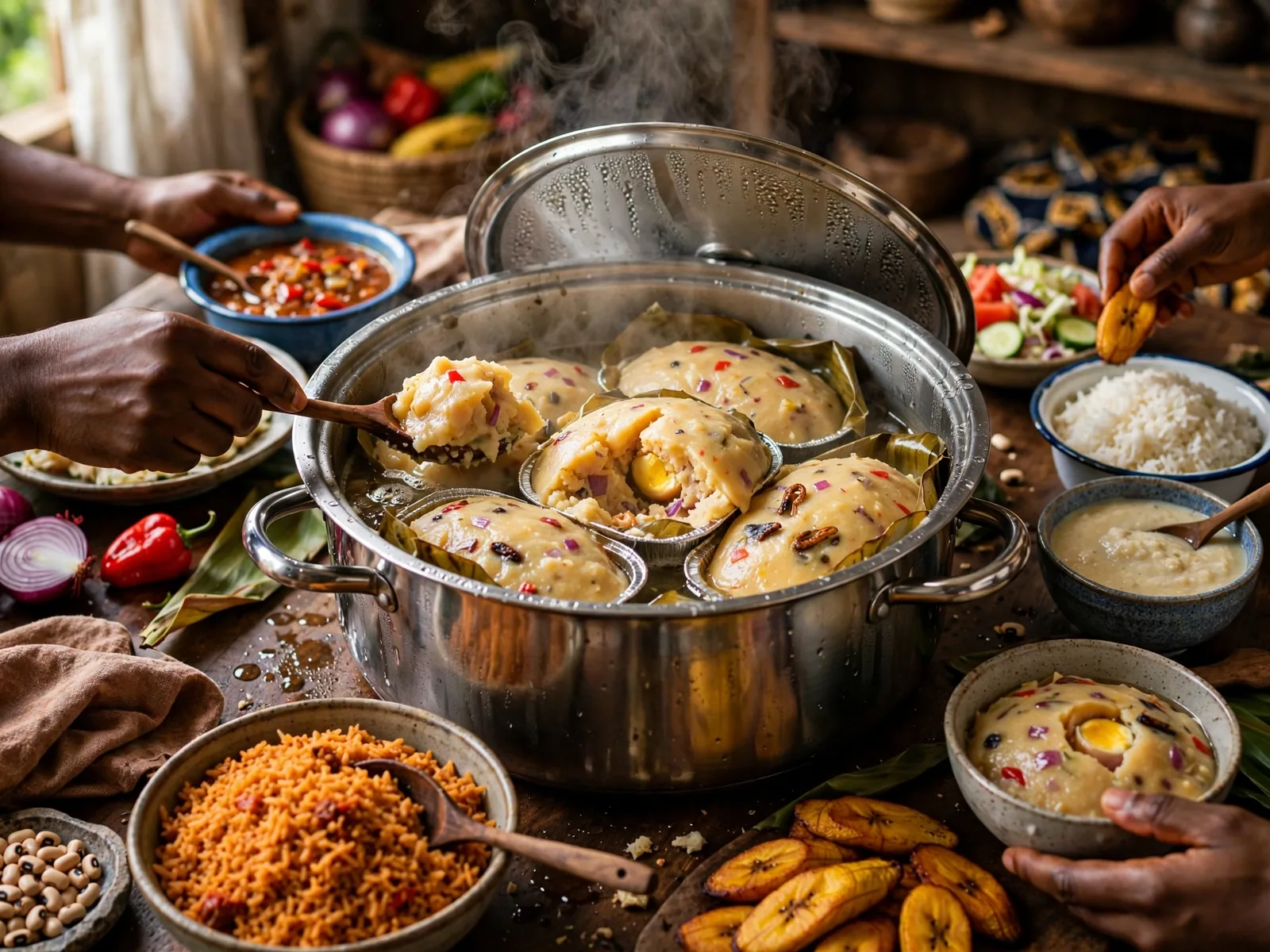
Visual archive · plate 01
Moi Moi
An editorial view of the finished dish, kept compact so the story continues without an oversized image break.
Primary region
Southern Nigeria / nationwide
Country
Nigeria
Regional influence
The dish reflects the ingredients and cooking patterns associated with Southern Nigeria / nationwide, while household and regional versions vary.
Related food systems
- Southern Nigeria / nationwide home cooking
- Market and street-food traditions
- Regional pantry and seasonal cooking
Sources & further reading
Follow the reference trail.
Ember & Equator links outward when an institution or primary reference helps support the culinary record.
- 01Cuisines in NigeriaExternal ↗
National Institute for Cultural Orientation, Nigeria · government
Supports: moinmoin/moi moi across multiple Nigerian regional cuisines · cowpea-based Nigerian food traditions
Ember & Equator source review · 2026-09-17
- 02Nigerian Moi MoiExternal ↗
All Nigerian Recipes · reference
Supports: dehulling and soaking beans · tatashe, onion, pepper, crayfish and nutmeg · neutral vegetable oil and gradual water · cold seasoning before cooking · leaf, foil and container variations · 45–60+ minute steaming and doneness checks · jollof rice, plantain, custard and pap service
Ember & Equator source review · 2026-09-17
Ingredient guides
Learn about the ingredients behind the dish.
These are reference guides, not a second ingredient list. Follow an ingredient when you want to understand its role, use and wider culinary context.
Ingredient
black-eyed peas
Understand what it contributes, how to use it, and the dishes that reveal it best.
Ingredient
red bell peppers
Understand what it contributes, how to use it, and the dishes that reveal it best.
Ingredient
scotch bonnet peppers
Understand what it contributes, how to use it, and the dishes that reveal it best.
Ingredient
onion
Understand what it contributes, how to use it, and the dishes that reveal it best.
Ingredient
vegetable oil
Understand what it contributes, how to use it, and the dishes that reveal it best.
Ingredient
salt
Understand what it contributes, how to use it, and the dishes that reveal it best.
Keep wandering
Where will this dish take you next?
Stay with the place, follow an ingredient or technique, or cross into another food culture. Each path begins with something already present in this dish.
Stay with the place
01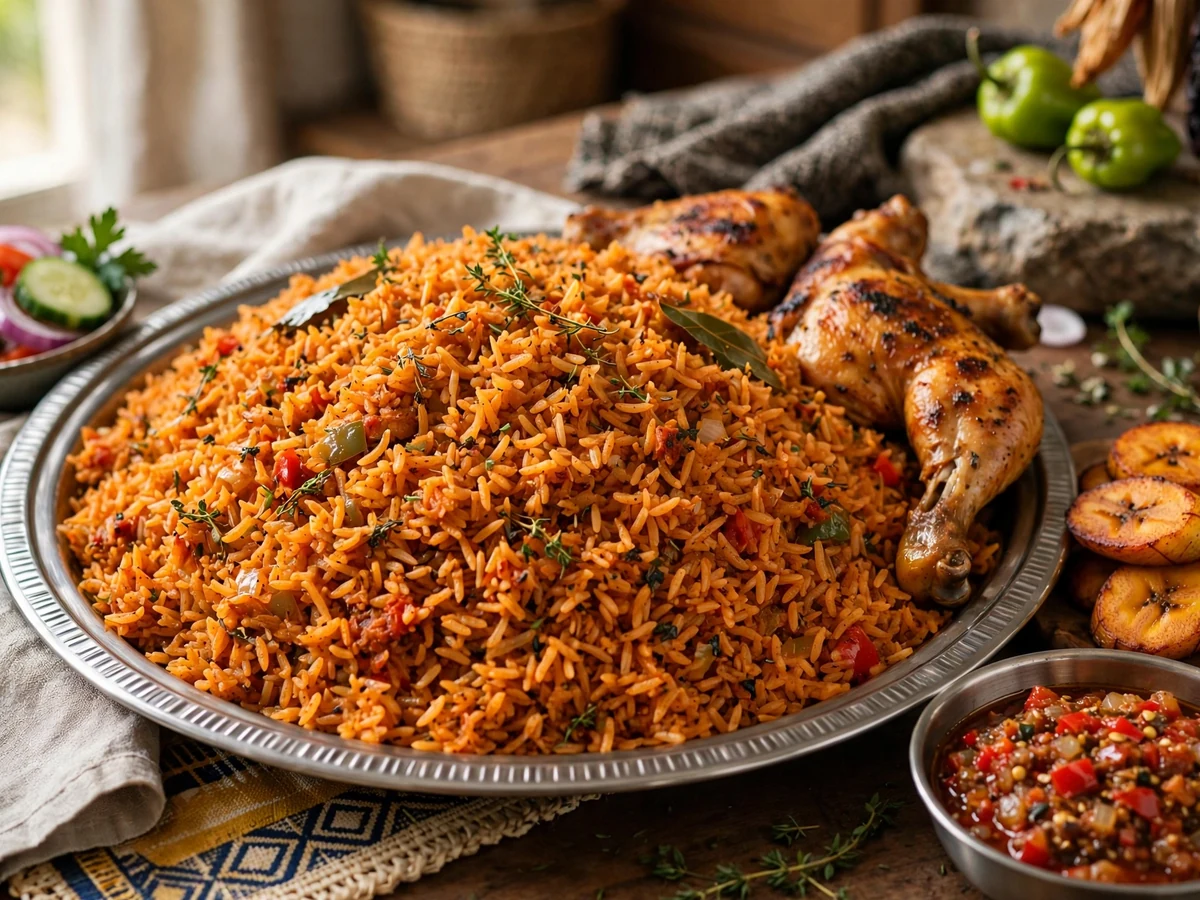
Nigeria
Nigerian Jollof Rice
Stay in the same food culture and notice how steam appears in another dish.
Shared thread · Steam · red bell peppers · scotch bonnet peppers
Follow the method or pantry
02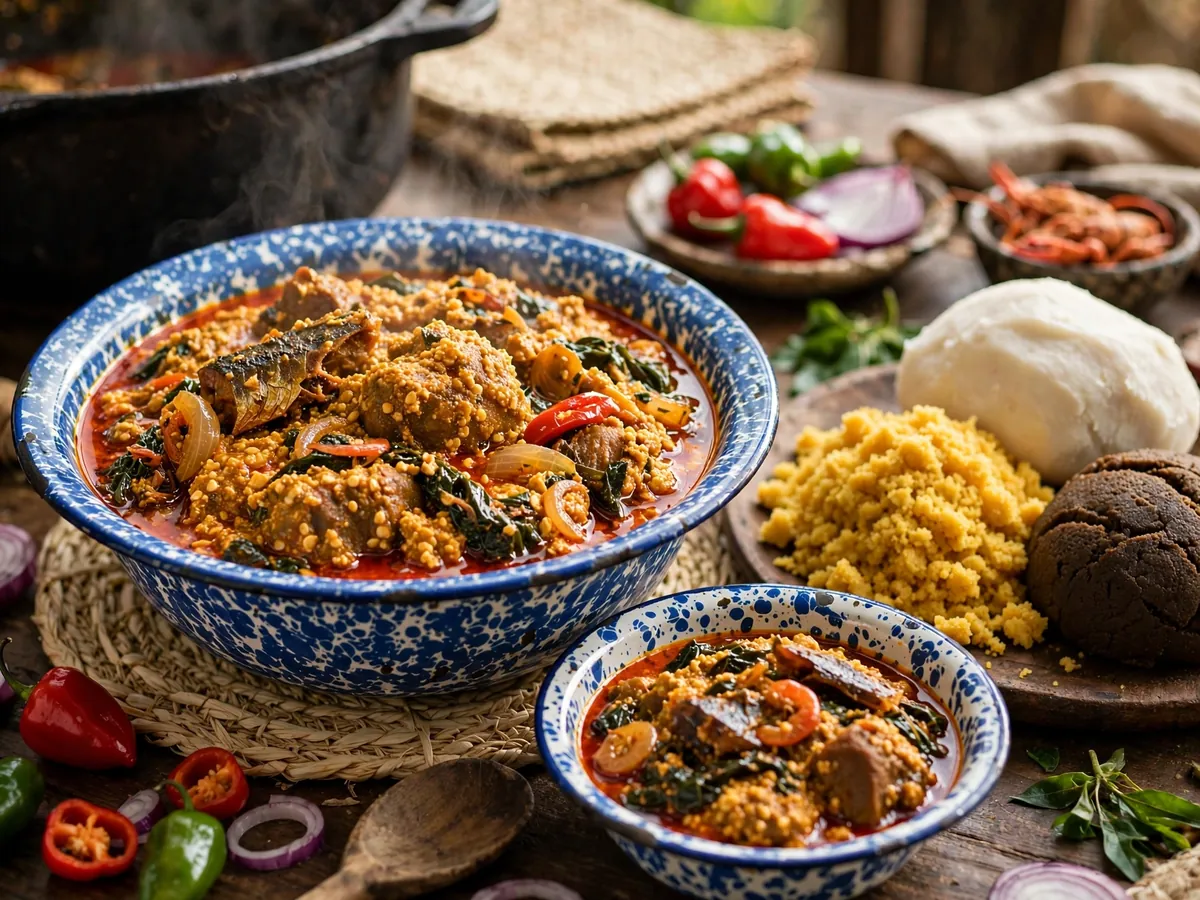
Nigeria
Egusi Soup
Follow the pantry: both dishes connect through red bell peppers.
Shared thread · red bell peppers · scotch bonnet peppers · onion
Cross a culinary border
03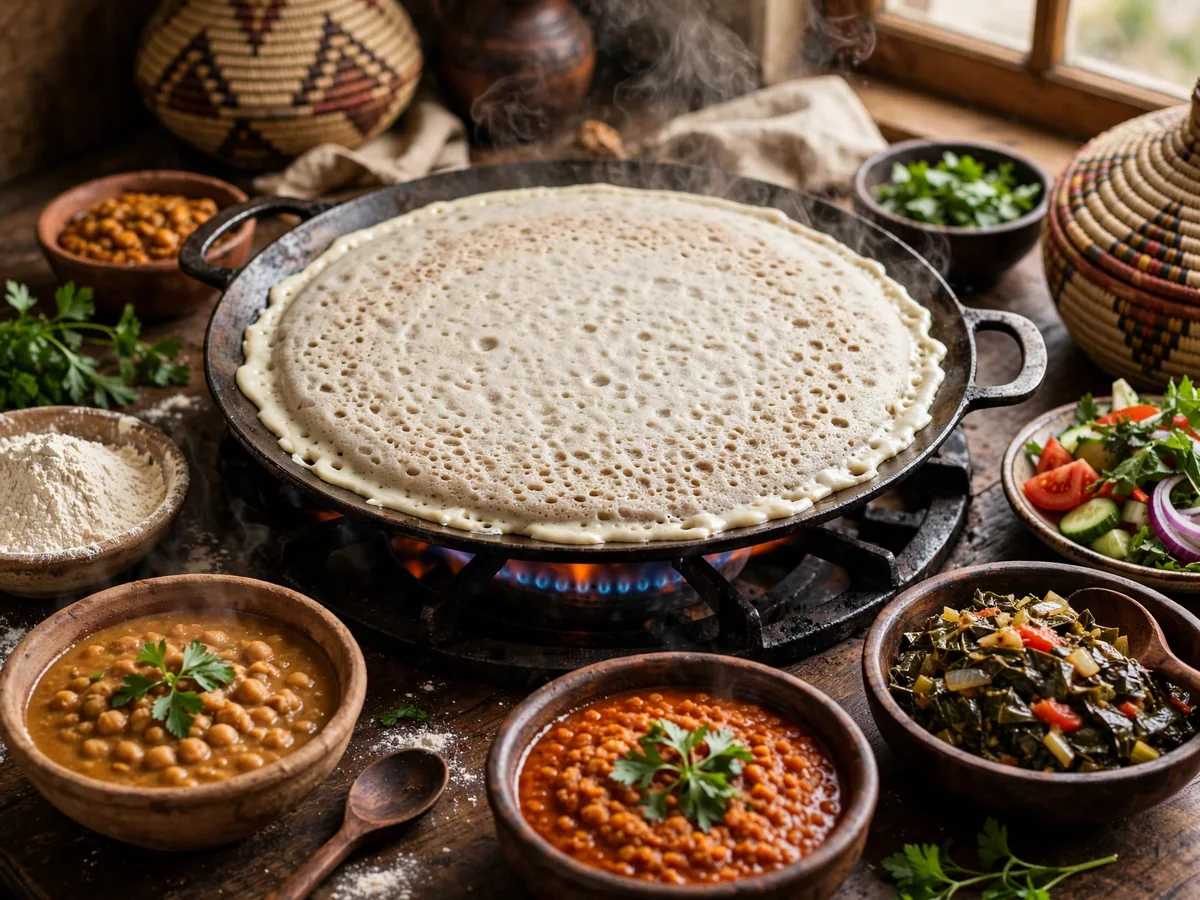
Ethiopia
Injera
Cross borders while keeping steam as the common thread.
Shared thread · Steam · Blend batter · water
Go one layer deeper
One small detail can open an entirely different part of food.
Continue in Ember & Equator