
Peru · lunch
Papa a la Huancaína
Peru through one enduring dish.
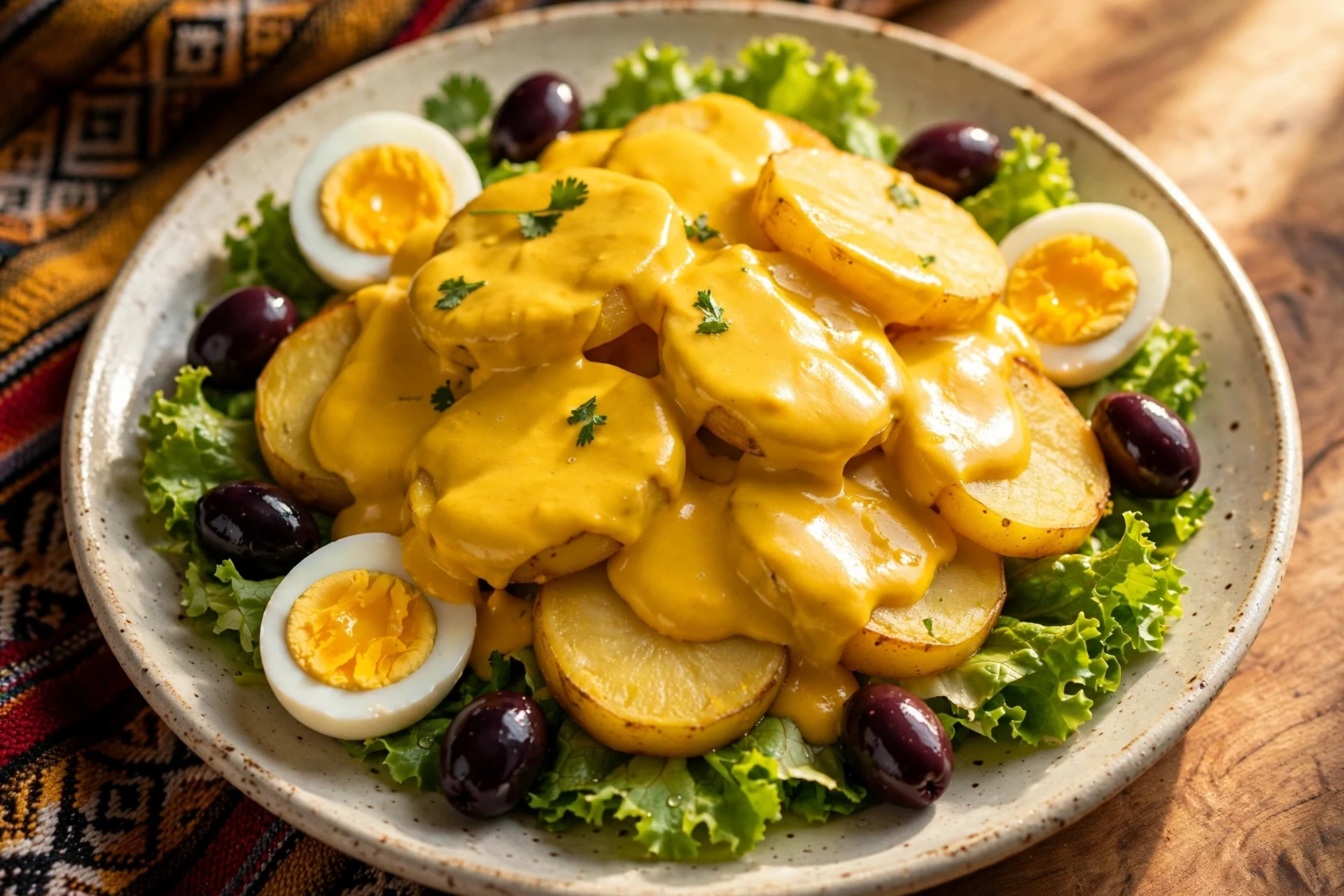
Papa a la huancaína pairs tender potatoes with a smooth ají amarillo and fresh-cheese sauce, finished with classic Peruvian accompaniments such as egg, black olives, corn and lettuce.
- Total
- 50 min
- Difficulty
- Easy
- Serves
- 4
- Steps
- 4
The dish
Place first. Then the plate.
Papa a la huancaína is a widely served Peruvian cold starter whose name links it with Huancayo and the central Andes. Peru Travel presents a sauce of fresh Serrano cheese, ají amarillo, milk and oil over potatoes with egg, black olives, corn and lettuce. Household versions vary in potato type, dairy and thickener, so Ember & Equator treats the official fresh-cheese version as one well-supported form rather than the only legitimate formula.
Explore PeruAt a glance
Origin
Peru
Region
Central Andes / Huancayo association; now nationwide in Peru
Meal
lunch
Guided steps
4
Dish
Papa a la Huancaína
Cuisine
Peruvian cuisine
Food type
Lunch · Vegetable dish
Technique
Sauté · Emulsify · Simmer
Cook the recipe
In the kitchen
Start with the ingredients, then follow the Method in order. Open cooking tips only when you need extra help; the story and references can wait until you are ready.
- Total
- 50 min
- Serves
- 4
- Level
- Easy
- Visual cues
- 4
Ingredients
Serves 4- 800 gyellow potatoesscrubbed; use a waxy or all-purpose potato that holds its shape when sliced
- 0.5 wholeonioncut into thick julienne
- 200 gfresh cheesequeso fresco or fresh Serrano-style cheese
- 3 wholeají amarillostems, veins and seeds removed
- 0.5 cupmilkwhole milk; add gradually to control sauce thickness
- 0.25 cupneutral oilplus 1 tsp for sautéing the onion and ají
- 0.5 wholelemonjuice, added to taste after blending
- 2 wholehard-boiled eggspeeled and quartered
- 4 wholeblack olivesPeruvian botija-style if available
- 0.5 cupcorncooked kernels or choclo
- 4 wholelettuce leaveswashed and dried
- 0.75 tspsaltplus more for the potato water and final sauce balance
Everything ready? Continue straight into the cooking steps.
Start methodMethod
4 steps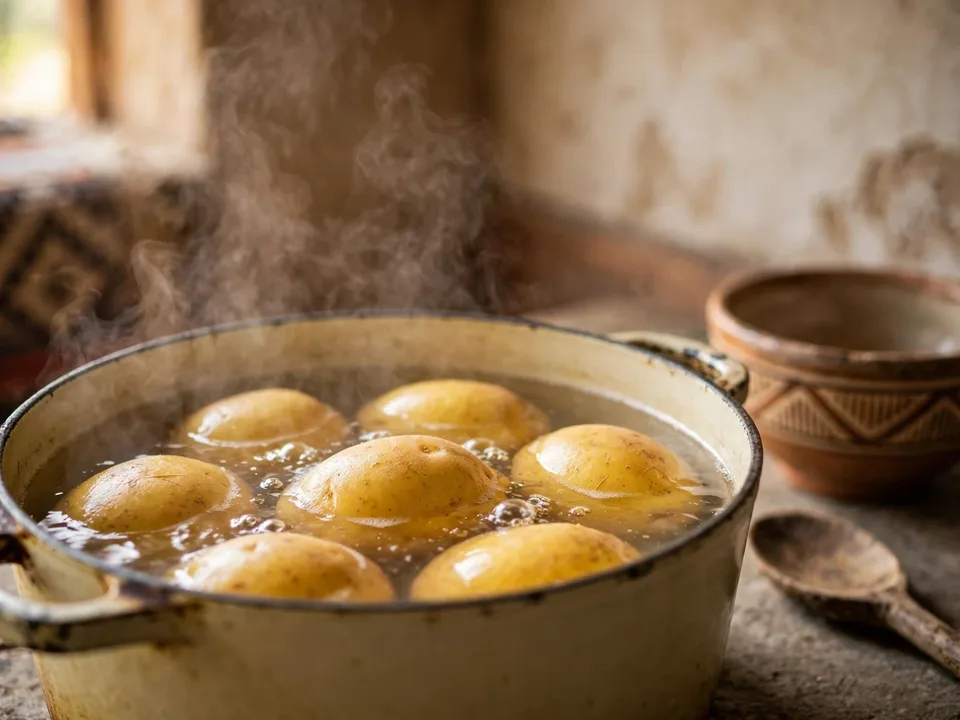 Step 01
Cook the potatoes and prepare the classic accompaniments
25 min
Put the potatoes in a saucepan, cover with cold salted water and bring to a gentle boil.
Put the potatoes in a saucepan, cover with cold salted water and bring to a gentle boil. Cook until a thin knife enters the centre with little resistance but the potatoes still hold together, about 18–25 minutes depending on size. Drain and cool just enough to handle, then peel if desired and cut into thick slices. While they cook, have the hard-boiled eggs, cooked corn and dry lettuce ready for plating.
Look for
A knife should slide into the potato centre easily, while each thick slice keeps a clean edge instead of breaking apart.
Kitchen note
Start the potatoes in cold water so the outside and centre cook more evenly. Do not cook until the skins split and the flesh crumbles; the finished slices need enough structure to carry the sauce.
 Step 02
Sauté the onion and ají amarillo until aromatic
6 min
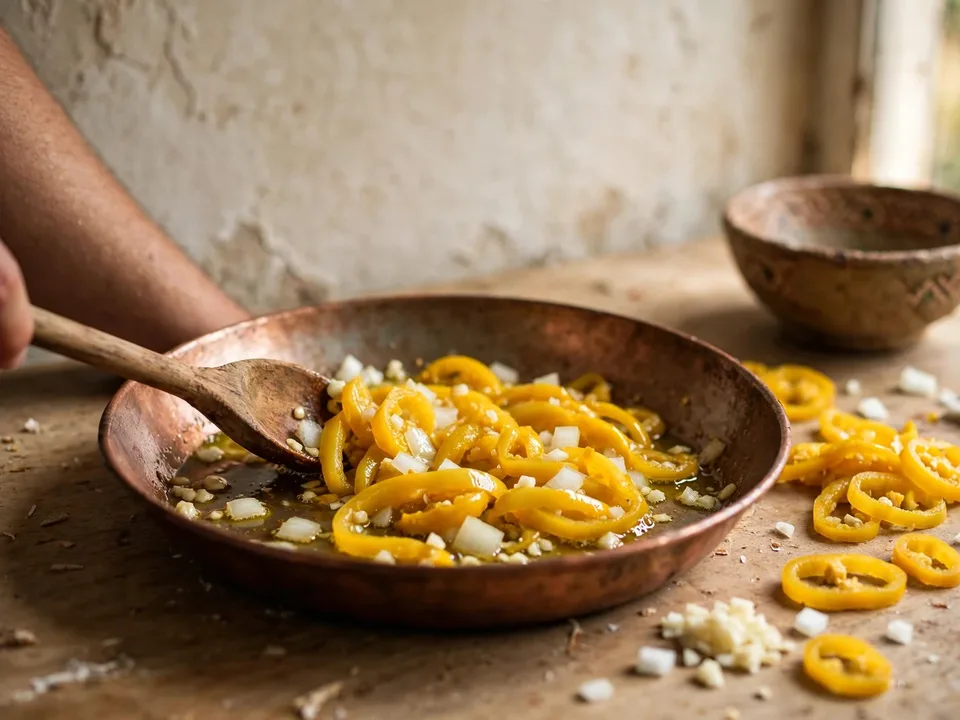
Heat about 1 teaspoon of the oil in a small skillet over medium heat.
Heat about 1 teaspoon of the oil in a small skillet over medium heat. Add the onion and prepared ají amarillo and sauté for 4–6 minutes, stirring often, until the onion softens and takes light golden colour and the chile loses its harsh raw aroma. Do not blacken the ají; remove from the heat and let the mixture cool for a few minutes before blending.
Look for
The onion should be soft with light golden edges and the ají should smell fruity and cooked rather than grassy or raw.
Kitchen note
Removing the veins and seeds moderates heat while preserving ají amarillo’s fruity character. If your fresh chiles are very hot, blanching once before sautéing is a practical household adjustment, not a requirement of every version.
 Step 03
Blend the huancaína sauce until smooth and spoonable
5 min
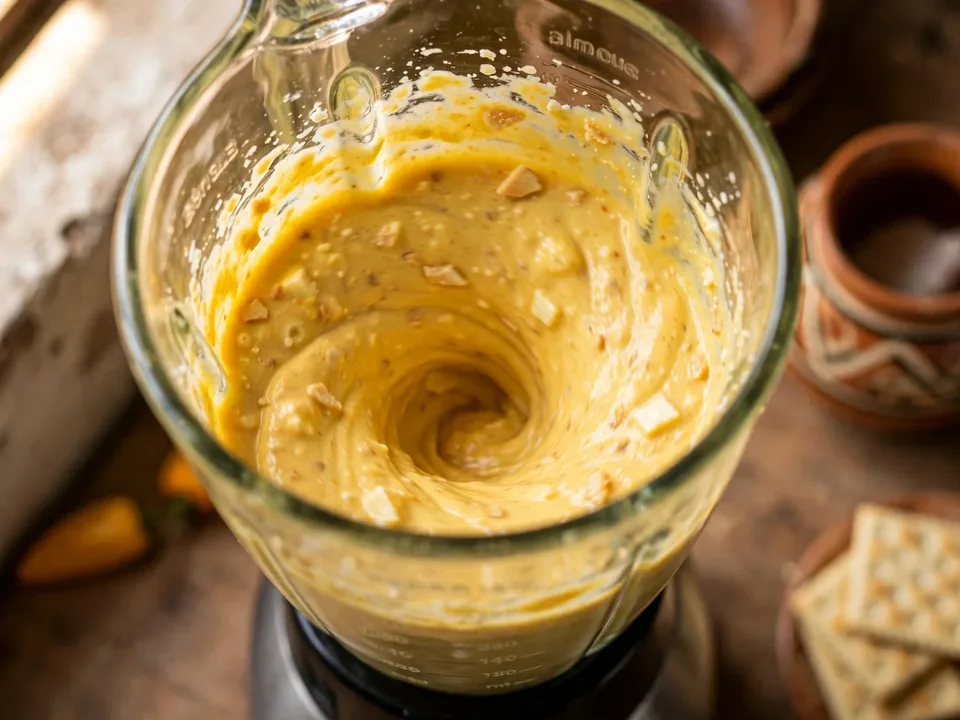
Blend the sautéed onion and ají with the fresh cheese, most of the milk, the remaining oil and salt until completely smooth.
Blend the sautéed onion and ají with the fresh cheese, most of the milk, the remaining oil and salt until completely smooth. Scrape down the blender, then add extra milk a tablespoon at a time only if needed. Blend again until the sauce is creamy, glossy and thick enough to coat a potato slice. Add lemon juice gradually, tasting after each addition.
Look for
The sauce should be uniform and glossy, falling from a spoon in a thick ribbon that settles slowly rather than running like milk or standing like paste.
Kitchen note
Fresh cheeses vary greatly in salt and moisture. Set the texture before adding extra salt, and avoid dumping in all the milk at once; an overly thin sauce is much harder to correct than a thick one.
 Step 04
Season, plate and serve at cool room temperature
5 min
Taste the sauce once more for salt, acidity and chile balance.
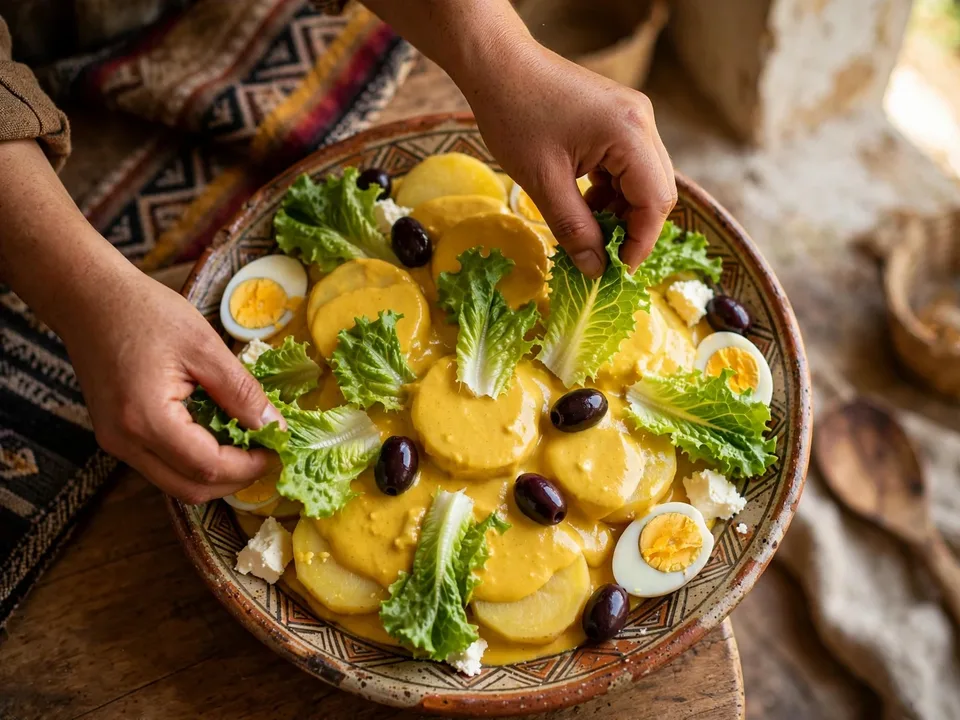
Taste the sauce once more for salt, acidity and chile balance. Arrange lettuce on the plates, overlap the potato slices and spoon the huancaína sauce generously over them. Finish with hard-boiled egg, black olives and cooked corn. Serve cool or at room temperature rather than fridge-cold so the cheese and ají aromas remain clear.
Look for
The potatoes should be generously coated but still visible as distinct slices, with a creamy sauce that holds on the surface instead of pooling thinly around the plate.
Kitchen note
If the sauce firms while standing, loosen it with a small splash of milk and stir until smooth. Keep the potatoes and sauce separate for longer storage so the potato surfaces do not become waterlogged.
After cooking
Explore the dish beyond the method.
Story, place and references are here for discovery, so they stay out of the way while you cook.
Culture & tradition
The story behind the dish
Origins, evolution and everyday life—read together as part of the recipe's culinary record.
Origins
Associated by name and culinary tradition with Huancayo and Peru’s central Andes; exact origin stories vary and are not presented here as settled fact.
How it evolved
The dish became a national restaurant and home-cooking staple, with sauce formulas varying around fresh cheese, ají amarillo, milk or evaporated milk and, in some households, crackers or bread.
Its place today
Commonly served cool or at room temperature as an entrée, starter or side, especially with potatoes and the familiar egg-olive-lettuce garnish.
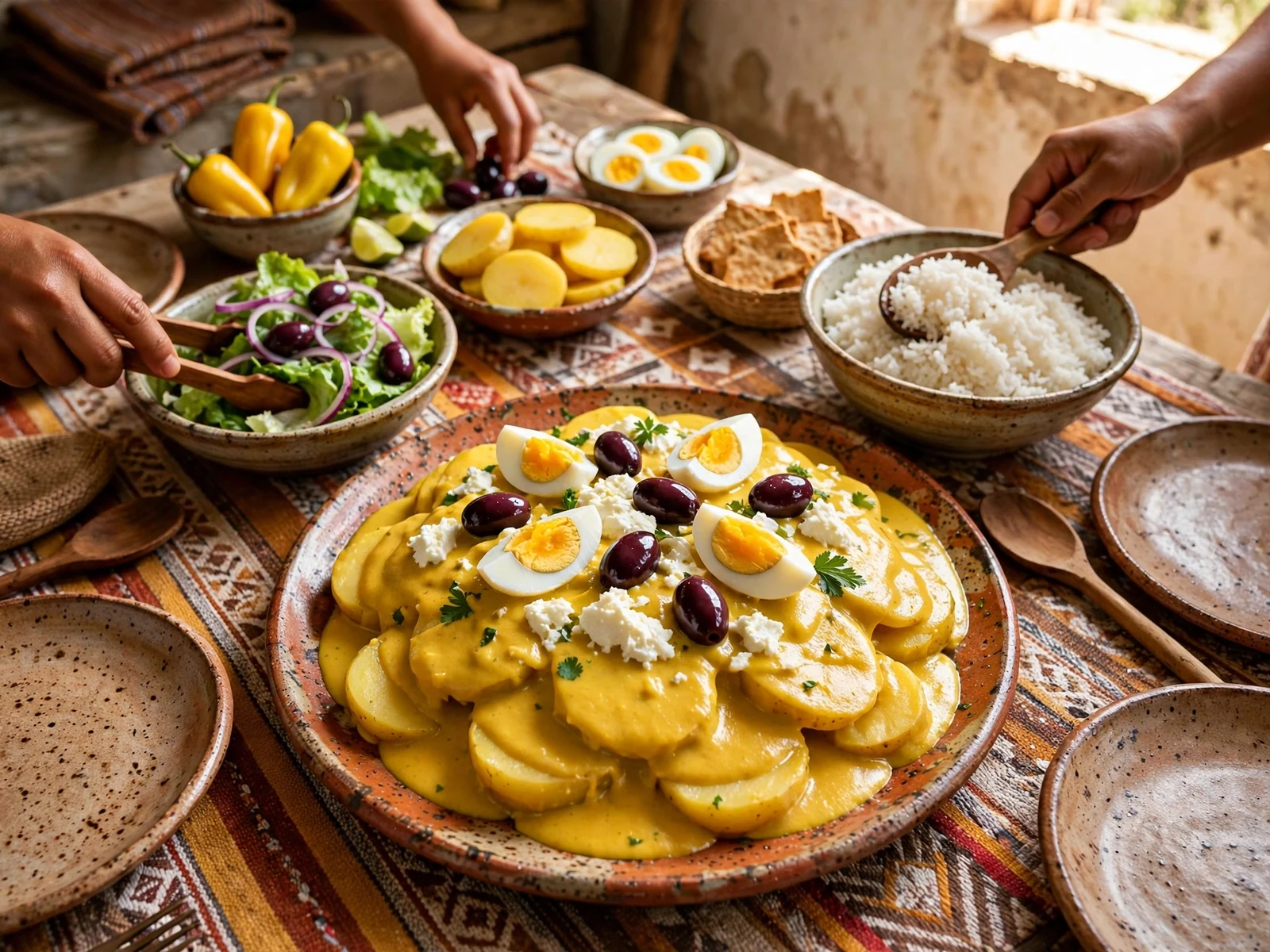
Visual archive · plate 01
Papa a la Huancaína
An editorial view of the finished dish, kept compact so the story continues without an oversized image break.
Primary region
Central Andes / Huancayo association; now nationwide in Peru
Country
Peru
Regional influence
Andean potato and ají traditions meet dairy ingredients in a sauce designed to coat boiled potatoes rather than cook with them.
Related food systems
- Andean potato traditions
- Peruvian ají amarillo traditions
- Peruvian cold starters
Sources & further reading
Follow the reference trail.
Ember & Equator links outward when an institution or primary reference helps support the culinary record.
- 01Papa a la HuancaínaExternal ↗
Peru Travel / PROMPERÚ · government
Supports: potatoes · onion · fresh Serrano cheese · ají amarillo · milk and oil sauce · lemon seasoning · egg olive corn and lettuce service
Ember & Equator source review · 2026-09-17
- 02Cinco recetas peruanas ideales para cualquier momentoExternal ↗
Peru Travel / PROMPERÚ · government
Supports: yellow ají handling · fresh cheese sauce · potato and egg service · national culinary framing
Ember & Equator source review · 2026-09-17
Ingredient guides
Learn about the ingredients behind the dish.
These are reference guides, not a second ingredient list. Follow an ingredient when you want to understand its role, use and wider culinary context.
Ingredient
yellow potatoes
Understand what it contributes, how to use it, and the dishes that reveal it best.
Ingredient
onion
Understand what it contributes, how to use it, and the dishes that reveal it best.
Ingredient
fresh cheese
Understand what it contributes, how to use it, and the dishes that reveal it best.
Ingredient
ají amarillo
Understand what it contributes, how to use it, and the dishes that reveal it best.
Ingredient
milk
Understand what it contributes, how to use it, and the dishes that reveal it best.
Ingredient
neutral oil
Understand what it contributes, how to use it, and the dishes that reveal it best.
Keep wandering
Where will this dish take you next?
Stay with the place, follow an ingredient or technique, or cross into another food culture. Each path begins with something already present in this dish.
Stay with the place
01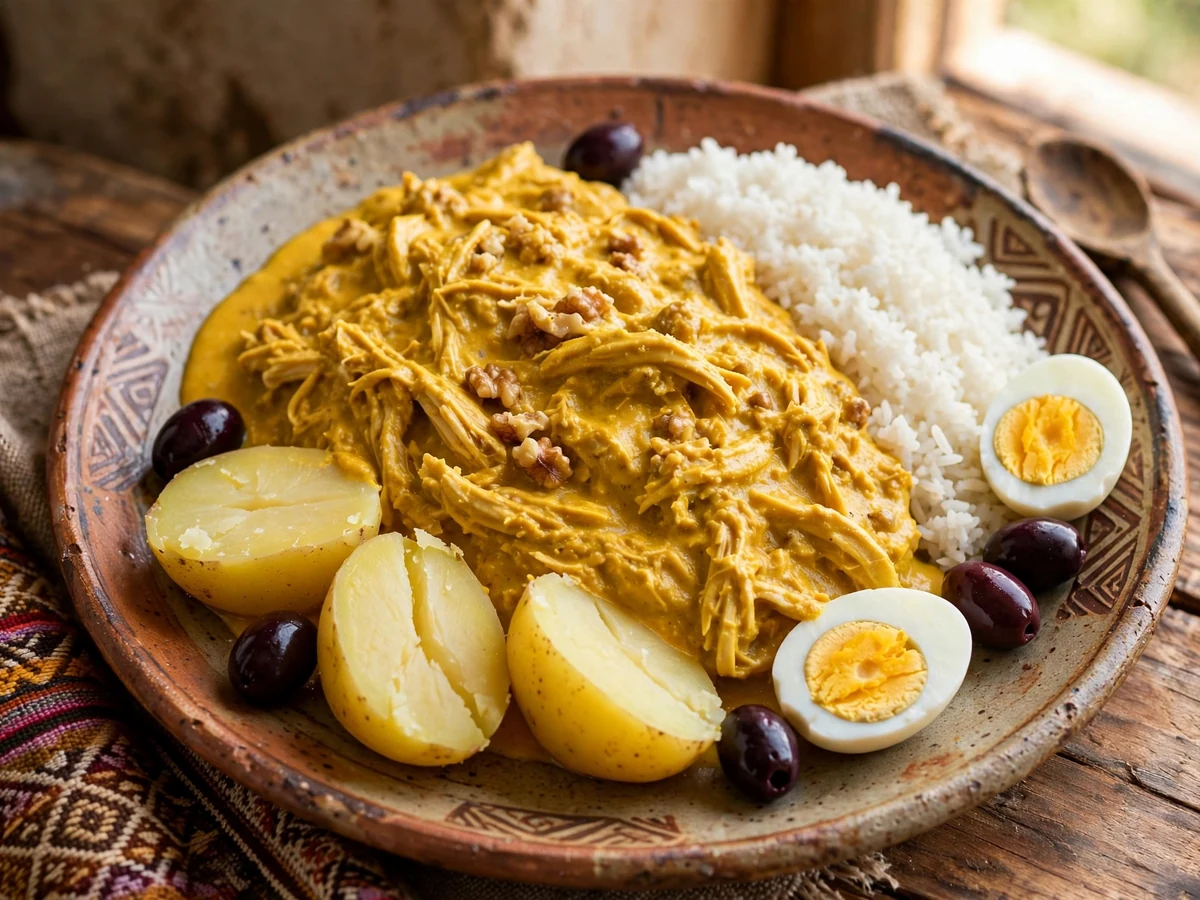
Peru
Ají de Gallina
Stay in the same food culture and notice how sauté appears in another dish.
Shared thread · Sauté · Simmer · milk
Follow the method or pantry
02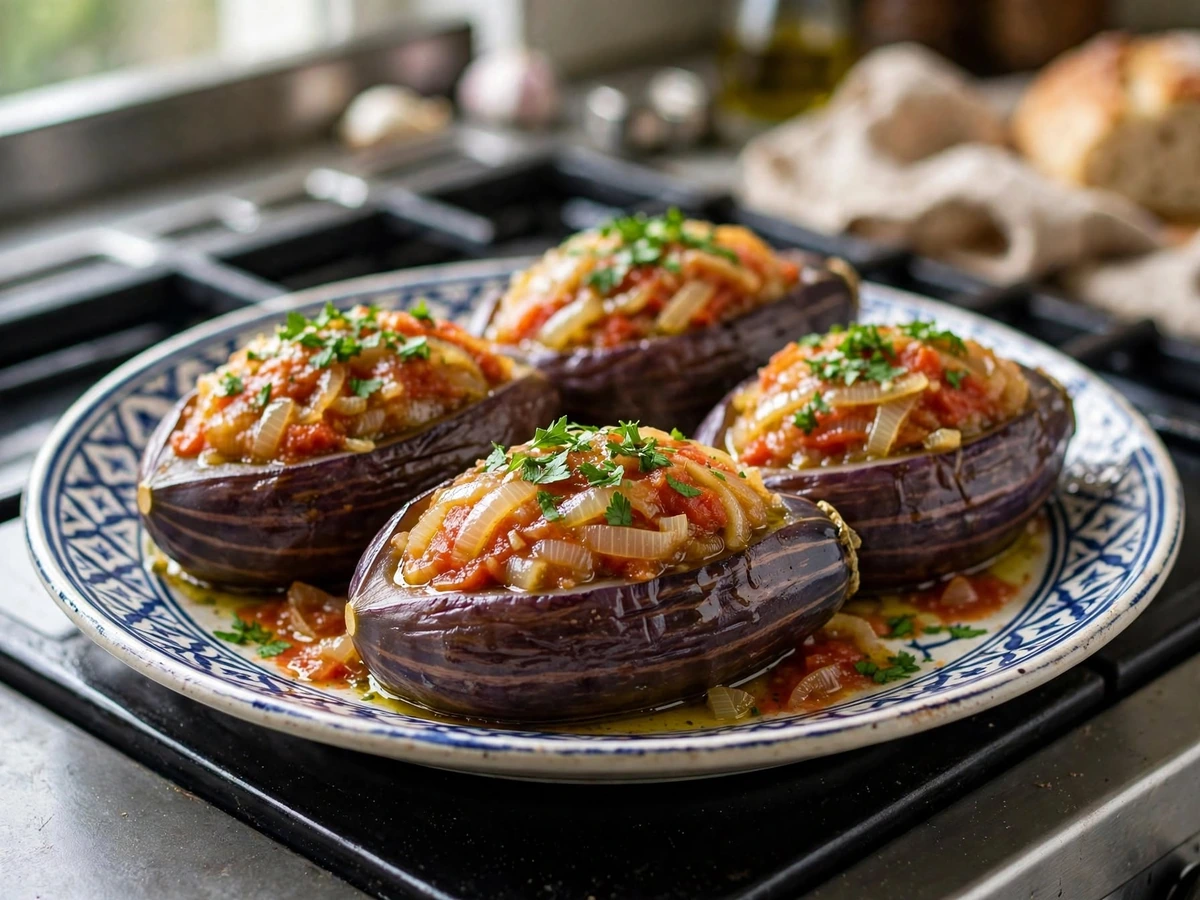
Türkiye
İmam Bayıldı
Follow the cooking method: both dishes connect through sauté.
Shared thread · Sauté · Simmer · onion
Cross a culinary border
03
Türkiye
Mercimek Çorbası
Cross borders while keeping sauté as the common thread.
Shared thread · Sauté · Simmer · onion
Go one layer deeper
One small detail can open an entirely different part of food.
Continue in Ember & Equator