
Peru · lunch · dinner · comfort-food
Ají de Gallina
Peru through one enduring dish.
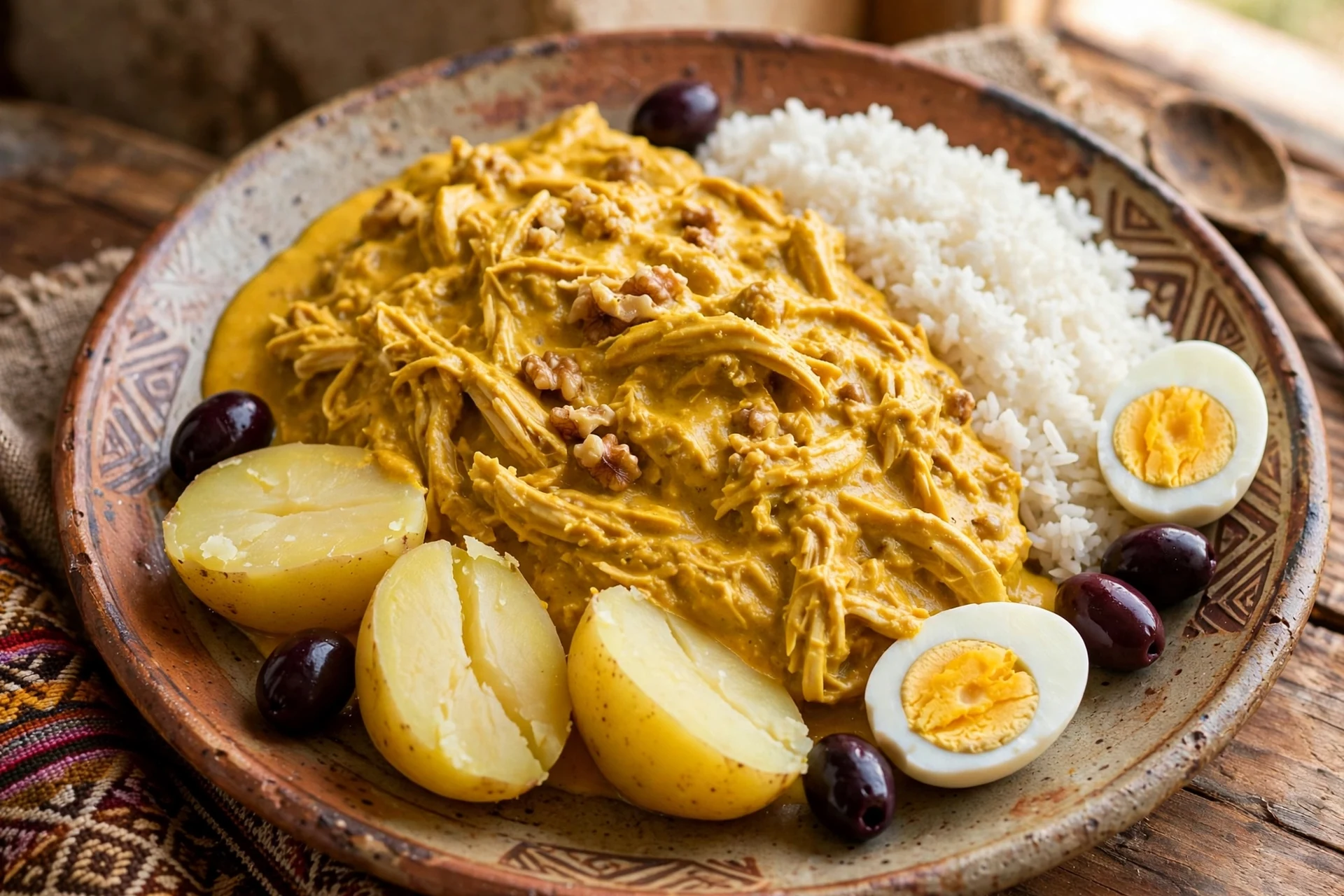
Ají de gallina is a Lima creole chicken dish in a velvety yellow ají sauce thickened with bread and enriched with dairy, traditionally served with potatoes, rice and garnishes.
- Total
- 75 min
- Difficulty
- Medium
- Serves
- 4
- Steps
- 7
The dish
Place first. Then the plate.
The dish belongs to Lima’s creole repertoire, where Andean ingredients such as ají amarillo and potatoes sit alongside ingredients and techniques introduced through colonial and later urban foodways. Its defining character is the balance between chile fragrance, gentle heat and a thick, creamy sauce rather than aggressive spiciness.
Explore PeruAt a glance
Origin
Peru
Region
Lima
Meal
lunch · dinner · comfort-food
Guided steps
7
Dish
Ají de Gallina
Cuisine
Peruvian cuisine
Food type
Lunch · Dinner · Comfort food
Technique
Sauté · Simmer · Fold
Cook the recipe
In the kitchen
Start with the ingredients, then follow the Method in order. Open cooking tips only when you need extra help; the story and references can wait until you are ready.
- Total
- 75 min
- Serves
- 4
- Level
- Medium
- Visual cues
- 7
Ingredients
Serves 4- 600 gchicken breastor cooked hen/chicken breast; bone-in gives a more flavourful poaching broth
- 1 wholebay leavesfor poaching
- 1.5 litreswaterfor poaching; reserve the resulting broth
- 4 sliceswhite breadcrusts removed and torn
- 1.5 cupsmilkdivided
- 5 tbspvegetable oilfor the aderezo
- 1 mediumwhite onionfinely diced
- 3 clovesgarlicminced
- 5 tbspají amarillo pastesmooth paste; adjust heat to the brand or homemade paste
- 0.25 tspground cumin
- 0.25 cupwalnutstoasted and finely ground; pecans are another common choice
- 0.33 cupparmesan cheesefinely grated
- 4 mediumpotatoesboiled and sliced, to serve
- 3 cupscooked white ricehot, to serve
- 2 wholehard-boiled eggsquartered, to serve
- 8 wholeblack olivesbotija-style if available, to serve
- 1 tspsaltplus more to taste
- 0.5 tspblack pepperfreshly ground, to taste
Everything ready? Continue straight into the cooking steps.
Start methodMethod
7 steps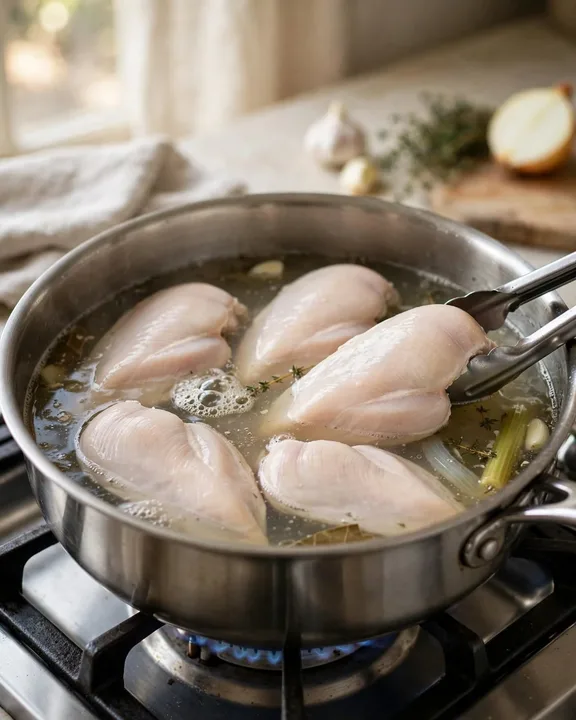 Step 01
Poach the chicken gently and reserve the broth
18 min
Put the chicken, bay leaf and water in a saucepan with a light seasoning of salt.
Put the chicken, bay leaf and water in a saucepan with a light seasoning of salt. Bring only to a gentle simmer and cook until the thickest part of the chicken reaches 74°C / 165°F and is just cooked through. Lift out the chicken, strain the broth and reserve at least 2 cups.
Look for
The chicken is opaque and juicy rather than dry, and the reserved broth is light and savoury.
Kitchen note
A hard boil makes chicken breast stringy and clouds the broth. Keep the liquid barely simmering and remove the chicken as soon as it is safely cooked.
 Step 02
Shred the chicken and make the bread-milk base
8 min
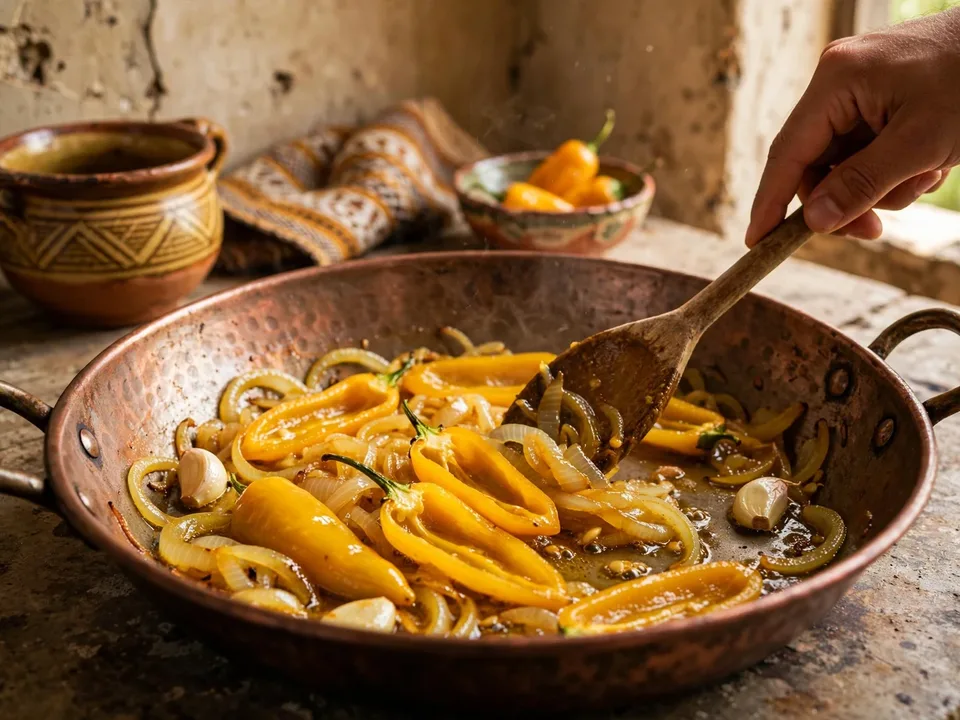
When the chicken is cool enough to handle, shred it into medium strands rather than tiny fibres.
When the chicken is cool enough to handle, shred it into medium strands rather than tiny fibres. Soak the torn bread in about 1 cup of the milk for 5 minutes, then blend or mash to a smooth, pourable paste. Keep the remaining milk for the final consistency adjustment.
Look for
The chicken forms moist medium strands and the soaked bread has become a smooth thick slurry with no dry crumbs.
Kitchen note
Do not puree the chicken. Distinct moist shreds should remain visible in the finished sauce, while the bread must be smooth enough not to leave lumps.
 Step 03
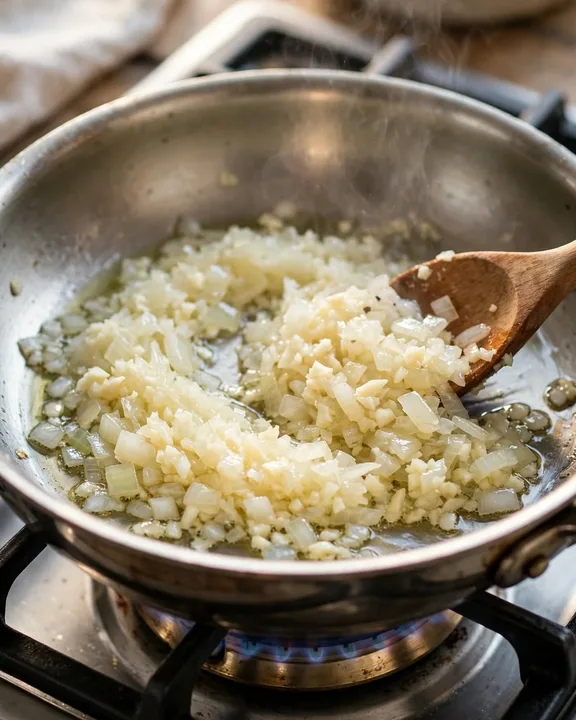
Soften the onion and garlic without browning
9 min
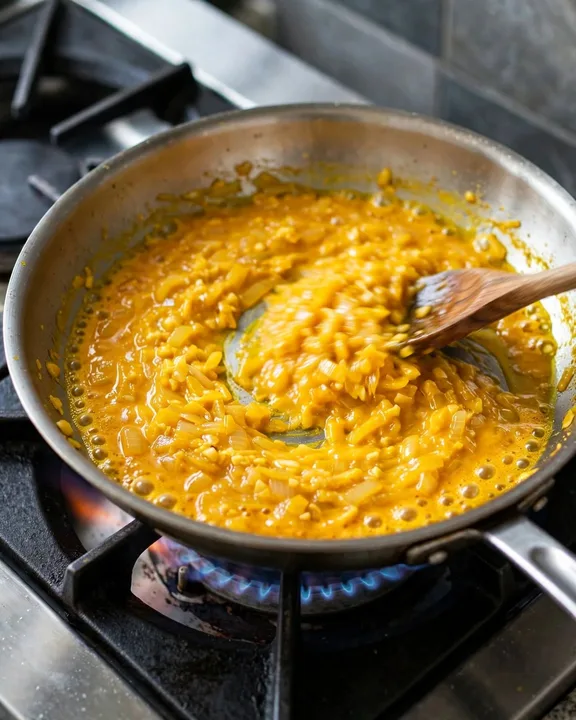
Heat the vegetable oil in a wide saucepan over medium-low heat.
Heat the vegetable oil in a wide saucepan over medium-low heat. Add the onion with a pinch of salt and cook for 7–10 minutes until very soft and translucent. Add the garlic and cumin and cook for about 30 seconds more.
Look for
The onion is completely soft and translucent with no raw crunch; the garlic smells fragrant but has not browned.
Kitchen note
This is the foundation of the aderezo. Dark browning makes the sweet yellow-chile sauce taste heavier and can muddy its colour.
 Step 04
Cook the ají amarillo aderezo until glossy
6 min
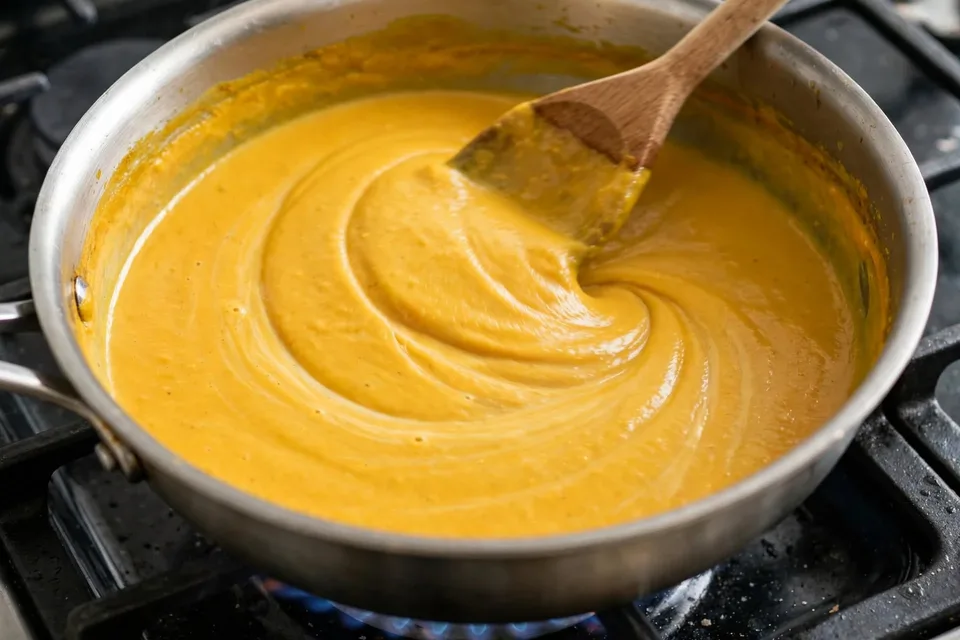
Stir in the ají amarillo paste and cook over medium-low heat for 5–8 minutes, stirring often.
Stir in the ají amarillo paste and cook over medium-low heat for 5–8 minutes, stirring often. Add a spoonful of reserved chicken broth if the paste threatens to catch. The aim is to cook away the raw chile sharpness while concentrating its fruity aroma.
Look for
The yellow-orange paste looks glossy, smells sweet and fruity rather than raw, and a light sheen of oil begins to appear around the edges.
Kitchen note
Do not rush this stage. Raw ají paste can taste harsh and grassy; properly cooked paste becomes rounder, glossier and may show the first hint of oil separating at the edges.
 Step 05
Cook in the bread base and broth until smooth
10 min
Add the bread-milk mixture and about 1 cup of reserved broth to the aderezo.
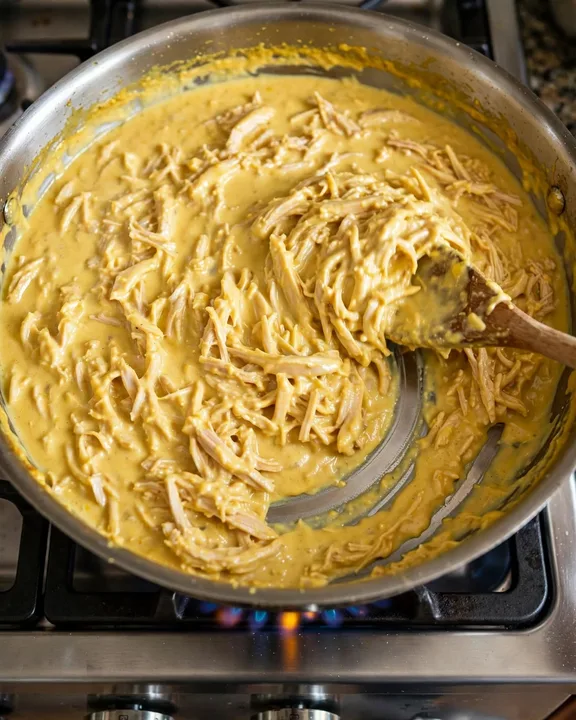
Add the bread-milk mixture and about 1 cup of reserved broth to the aderezo. Stir constantly over low heat for 8–12 minutes, adding more broth a little at a time as the bread thickens. The sauce should become smooth and velvety, not gluey or dry.
Look for
A spoon drawn across the pan leaves a brief trail that closes slowly; the sauce is creamy and lump-free but still flows.
Kitchen note
Bread thickens more as it cooks and again as it cools. Keep the sauce slightly looser than the final texture you want and use broth, not extra bread, to correct an over-thick pot.
 Step 06
Fold in the chicken, nuts and Parmesan and set the final texture
5 min
Add the shredded chicken, ground walnuts and Parmesan.
Add the shredded chicken, ground walnuts and Parmesan. Warm gently for 4–6 minutes, then loosen with the remaining milk or a little broth until the sauce coats the chicken generously but still falls from the spoon. Taste and adjust salt and black pepper.
Look for
The chicken is evenly coated in a velvety golden-yellow sauce, with visible strands and no dry clumps or separated oil pools.
Kitchen note
Keep the heat low after the cheese goes in. Boiling hard can make the dairy-heavy sauce greasy and tight, while gentle heat preserves a smooth coating texture.
 Step 07
Plate over potatoes with rice, egg and black olives
2 min
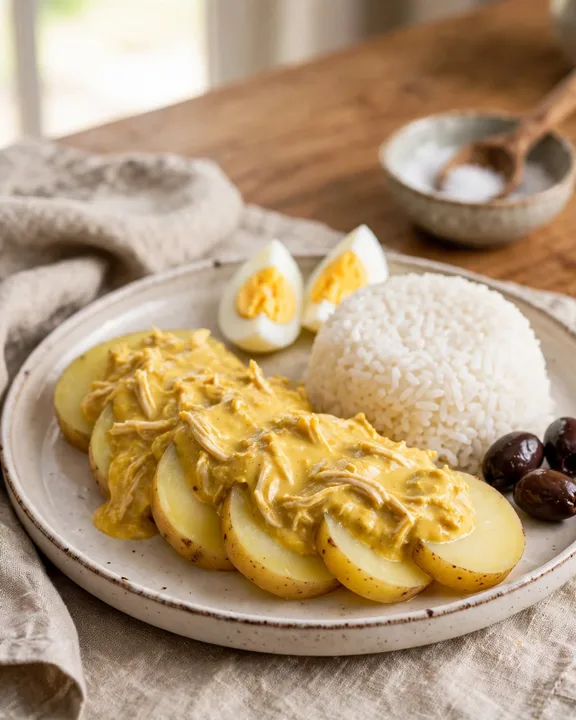
Arrange the boiled potato slices on warm plates and spoon the ají de gallina over them.
Arrange the boiled potato slices on warm plates and spoon the ají de gallina over them. Add hot white rice, hard-boiled egg quarters and black olives. Serve promptly while the sauce is loose and creamy; it thickens noticeably as it stands.
Look for
The finished sauce pools softly over the potatoes rather than sitting as a stiff paste, with rice, egg and olives clearly presented alongside.
Kitchen note
If the sauce has tightened before serving, loosen it over low heat with a spoonful of broth or milk. Do not compensate by simply adding more oil.
After cooking
Explore the dish beyond the method.
Story, place and references are here for discovery, so they stay out of the way while you cook.
Culture & tradition
The story behind the dish
Origins, evolution and everyday life—read together as part of the recipe's culinary record.
Origins
Lima and coastal Peruvian creole cooking.
How it evolved
Ají de gallina is often discussed in relation to older shredded-meat preparations that changed as poultry, bread, dairy and Peru’s yellow ají came together in Lima kitchens. Exact origin stories vary, so Ember & Equator treats it as an evolved creole dish rather than assigning a single inventor.
Its place today
It is a familiar home and restaurant dish in Peru, commonly plated with rice and potatoes and recognized by its yellow sauce and shredded chicken.
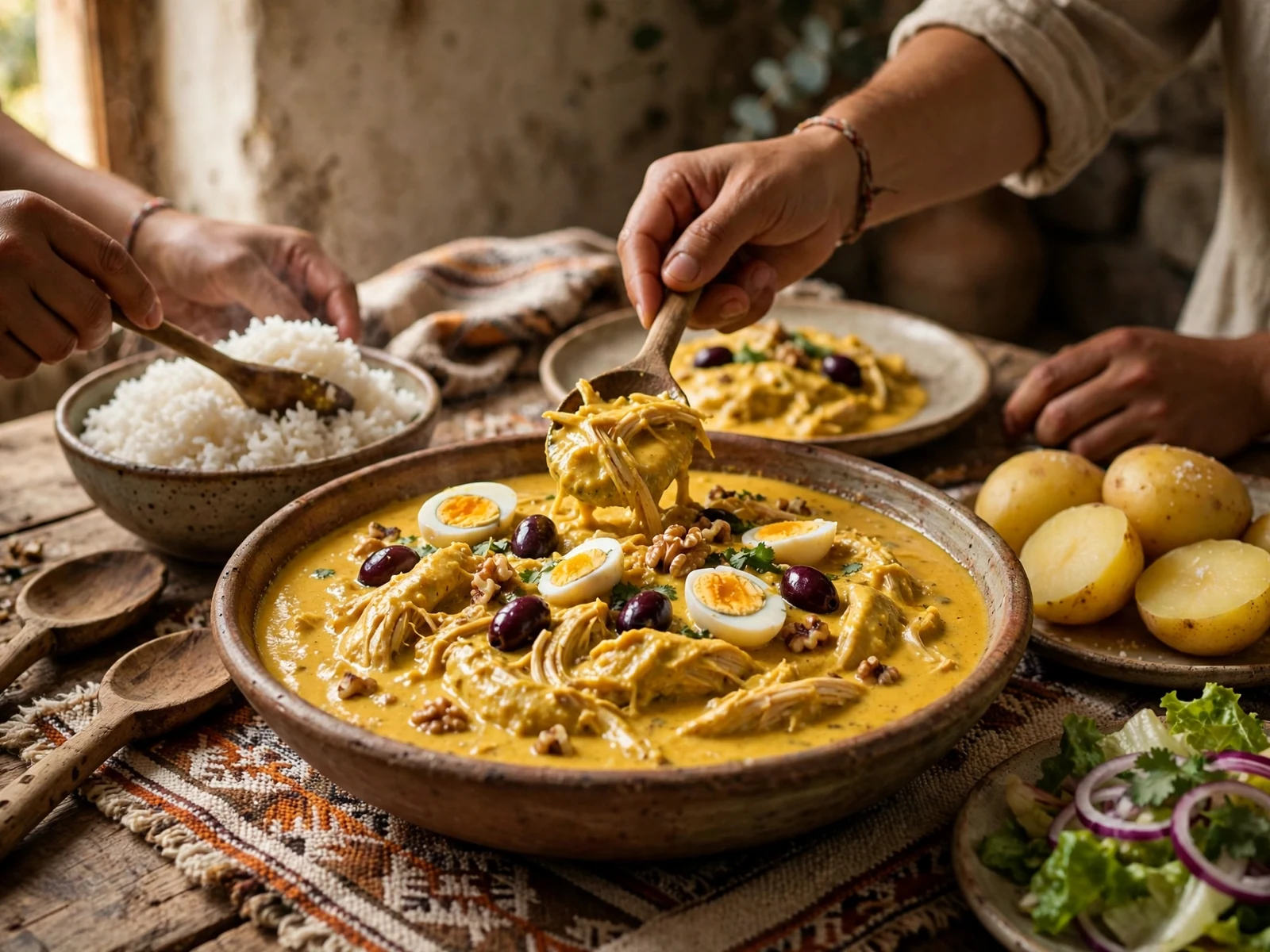
Visual archive · plate 01
Ají de Gallina
An editorial view of the finished dish, kept compact so the story continues without an oversized image break.
Primary region
Lima
Country
Peru
Regional influence
Coastal urban cooking brought together Andean ají and potatoes with introduced dairy, bread and poultry.
Related food systems
- Lima creole cooking
- Andean ají traditions
Sources & further reading
Follow the reference trail.
Ember & Equator links outward when an institution or primary reference helps support the culinary record.
- 01Cuisine of LimaExternal ↗
Peru Travel · government
Supports: Lima cuisine · lomo saltado · ají de gallina
Ember & Equator source review · 2026-09-03
- 02Ají de GallinaExternal ↗
Peru Travel / PROMPERÚ · government
Supports: poached chicken and reserved broth · bread and milk thickening · ají amarillo aderezo · nuts and Parmesan · potato egg and olive service
Ember & Equator source review · 2026-09-17
Ingredient guides
Learn about the ingredients behind the dish.
These are reference guides, not a second ingredient list. Follow an ingredient when you want to understand its role, use and wider culinary context.
Ingredient
chicken breast
Understand what it contributes, how to use it, and the dishes that reveal it best.
Ingredient
bay leaves
Understand what it contributes, how to use it, and the dishes that reveal it best.
Ingredient
water
Understand what it contributes, how to use it, and the dishes that reveal it best.
Ingredient
white bread
Understand what it contributes, how to use it, and the dishes that reveal it best.
Ingredient
milk
Understand what it contributes, how to use it, and the dishes that reveal it best.
Ingredient
vegetable oil
Understand what it contributes, how to use it, and the dishes that reveal it best.
Keep wandering
Where will this dish take you next?
Stay with the place, follow an ingredient or technique, or cross into another food culture. Each path begins with something already present in this dish.
Stay with the place
01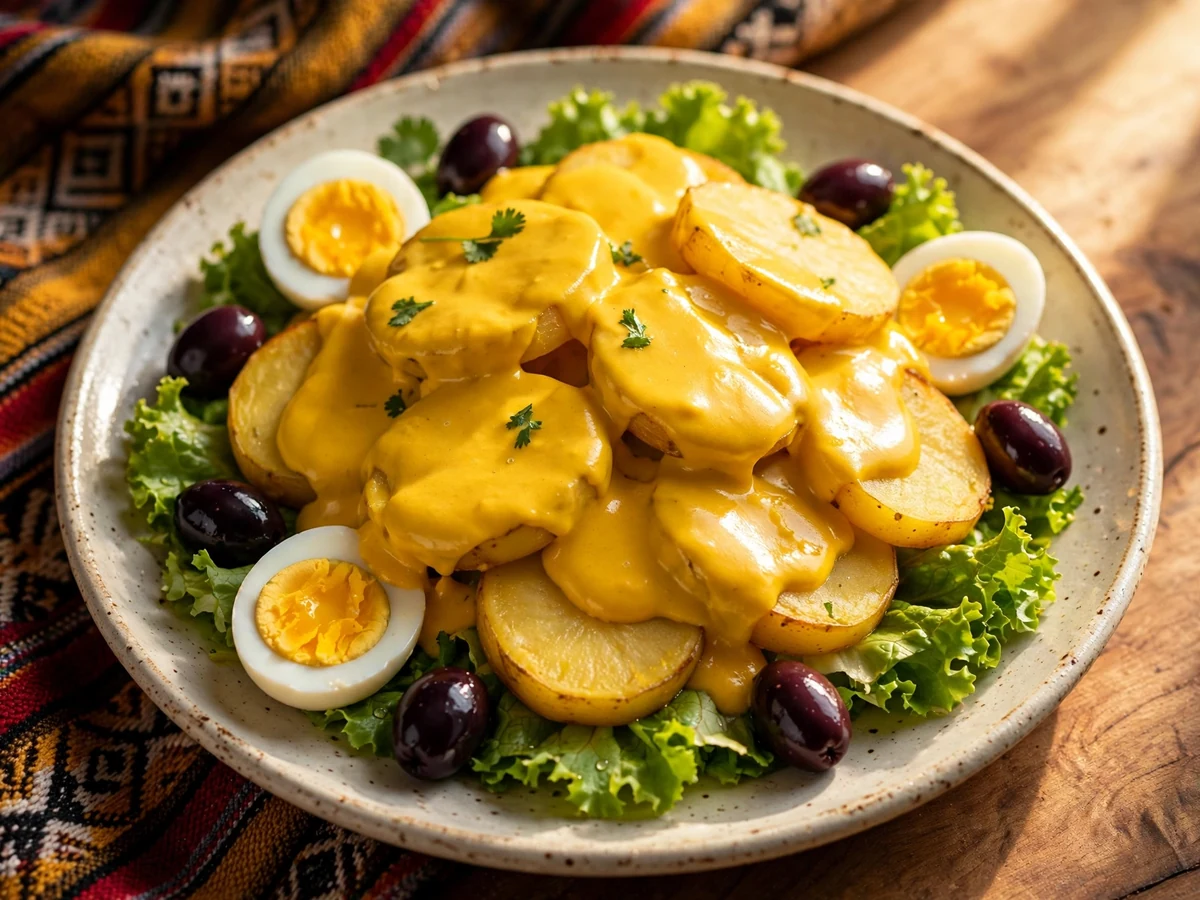
Peru
Papa a la Huancaína
Stay in the same food culture and notice how sauté appears in another dish.
Shared thread · Sauté · Simmer · milk
Follow the method or pantry
02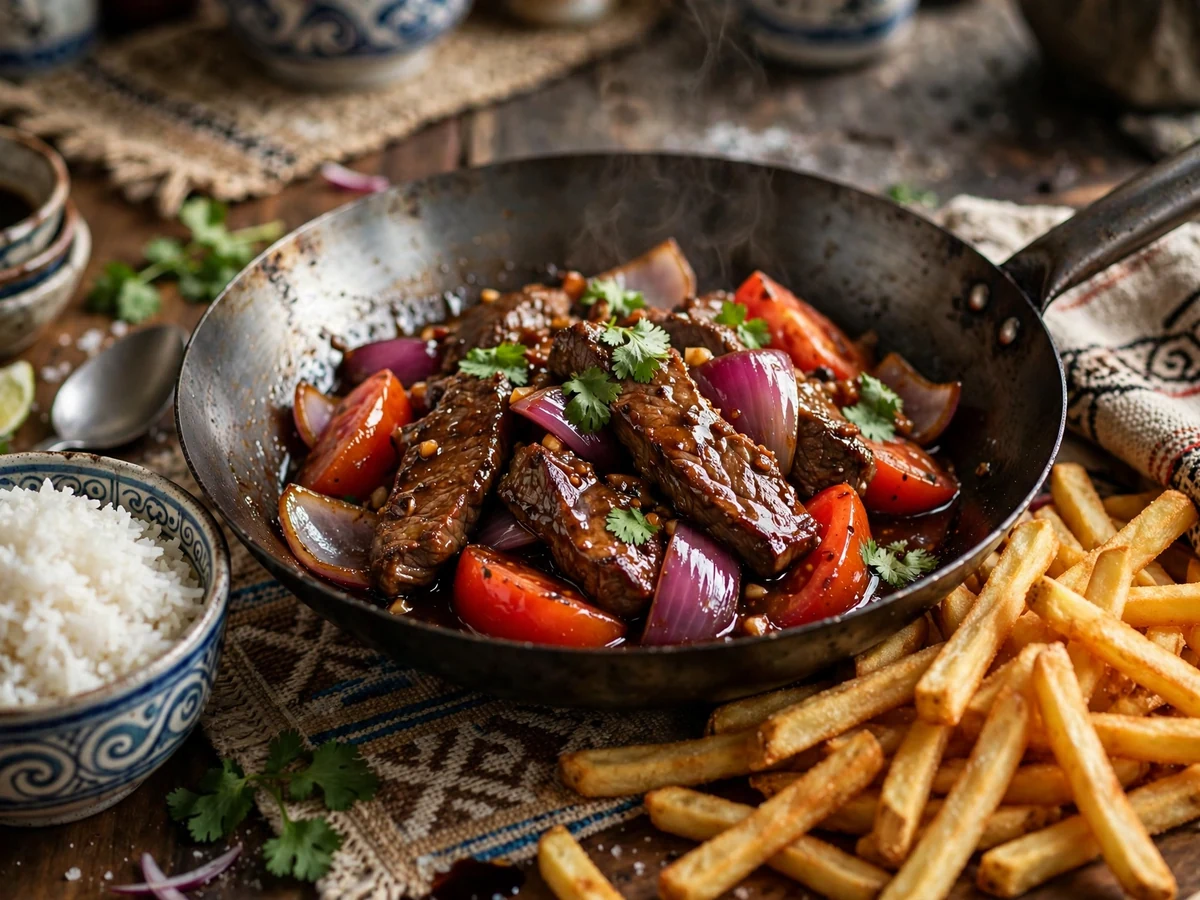
Peru
Lomo Saltado
Follow the pantry: both dishes connect through garlic.
Shared thread · garlic · potatoes · cooked white rice
Cross a culinary border
03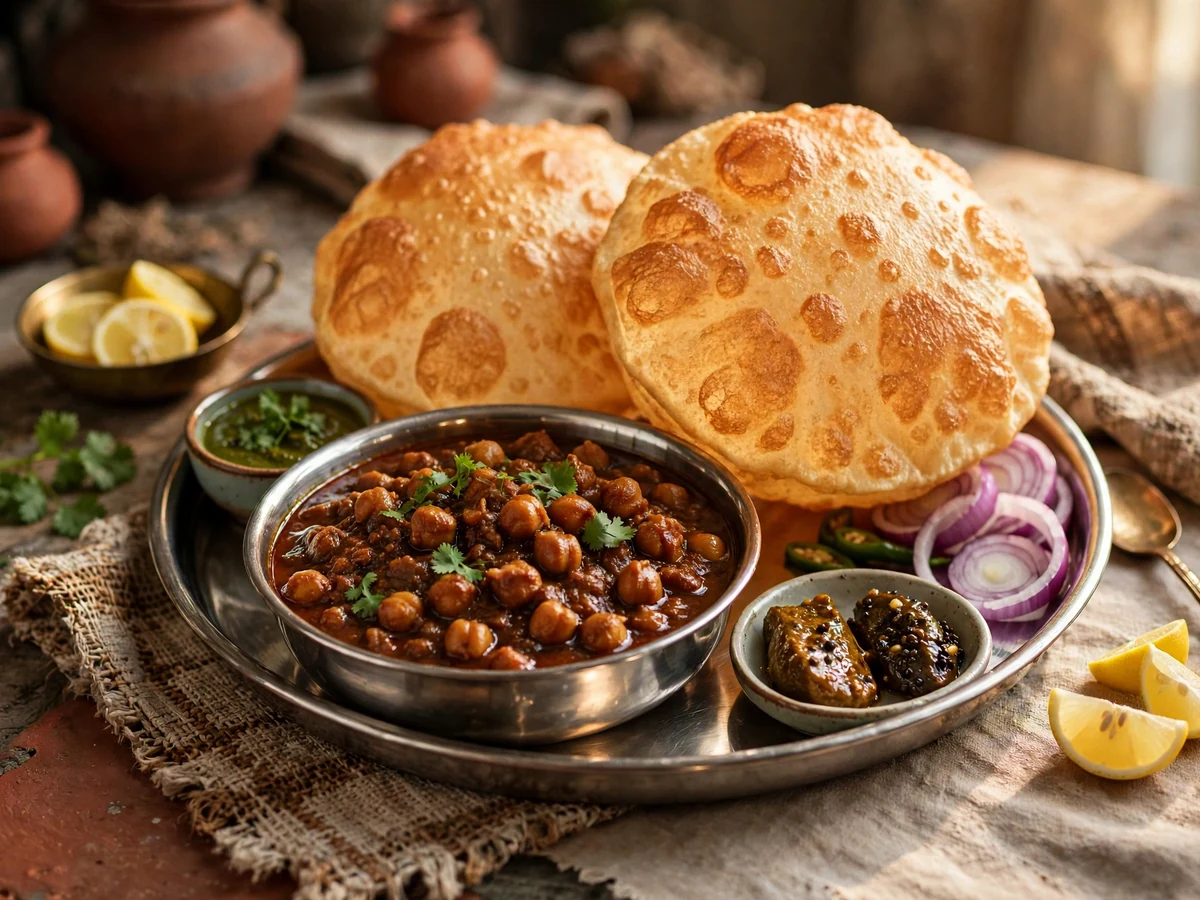
India
Chole Bhature
Cross borders while keeping sauté as the common thread.
Shared thread · Sauté · Simmer · bay leaves
Go one layer deeper
One small detail can open an entirely different part of food.
Continue in Ember & Equator