
Türkiye · lunch · dinner
İmam Bayıldı
Türkiye through one enduring dish.
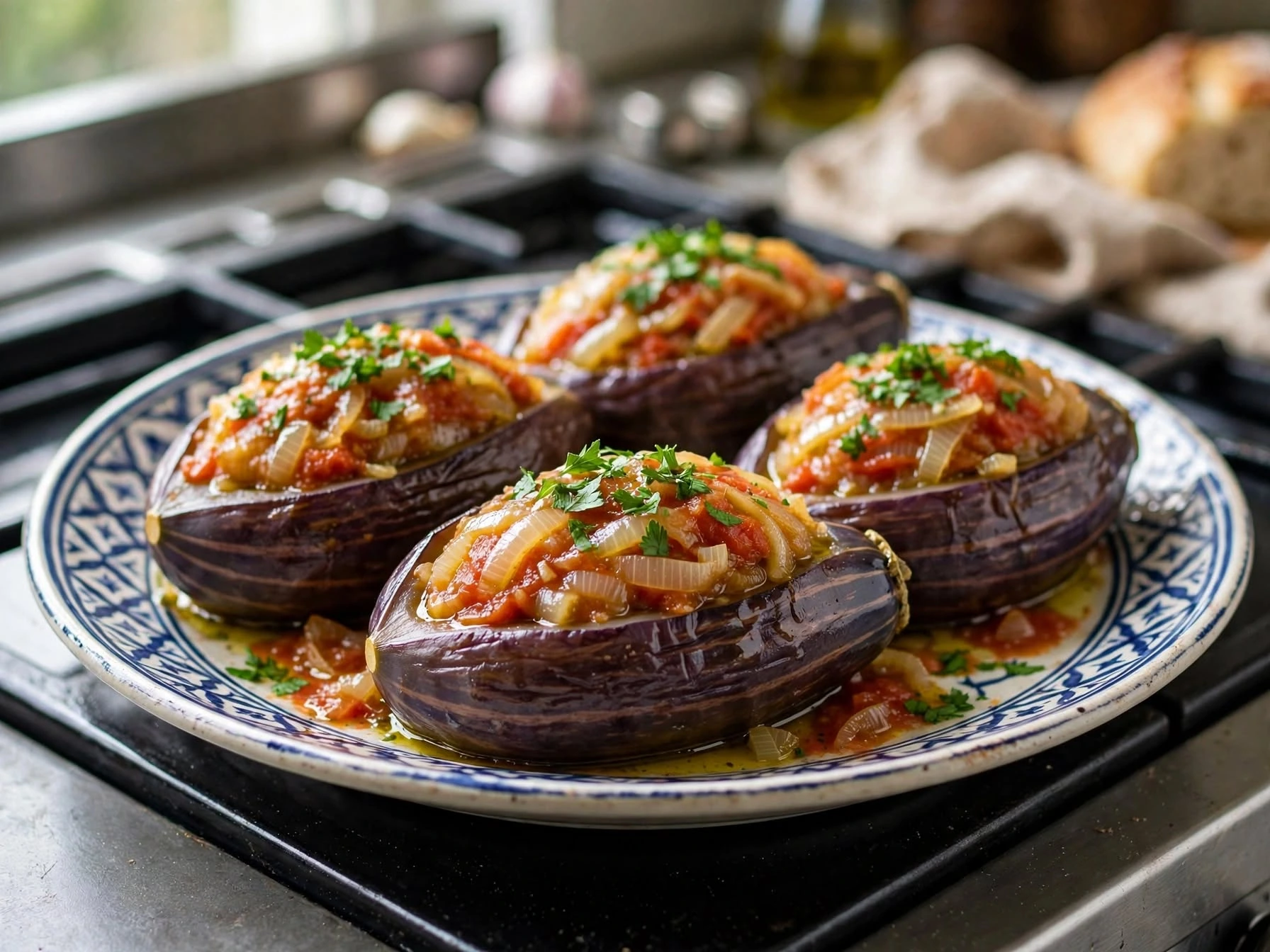
İmam bayıldı is an olive-oil-rich Turkish aubergine dish filled with slowly softened onion, tomato and garlic and traditionally served at room temperature or cool.
- Total
- 75 min
- Difficulty
- Medium
- Serves
- 4
- Steps
- 7
The dish
Place first. Then the plate.
It belongs to the Turkish zeytinyağlı family of vegetable dishes cooked generously with olive oil.
Explore TürkiyeAt a glance
Origin
Türkiye
Region
Türkiye, especially Aegean and urban Ottoman-influenced traditions
Meal
lunch · dinner
Guided steps
7
Dish
İmam Bayıldı
Cuisine
Turkish cuisine
Food type
Vegetable dish · Lunch · Dinner
Technique
Sauté · Simmer
Cook the recipe
In the kitchen
Start with the ingredients, then follow the Method in order. Open cooking tips only when you need extra help; the story and references can wait until you are ready.
- Total
- 75 min
- Serves
- 4
- Level
- Medium
- Visual cues
- 7
Ingredients
Serves 4- 4 mediumauberginespreferably small or slender and similar in size
- 2 mediumonionsthinly sliced
- 3 mediumripe tomatoesfinely chopped
- 4 clovesgarlicthinly sliced or finely chopped
- 0.5 cupextra virgin olive oilplus a little more if needed to soften the aubergines
- 0.25 cupparsleyfinely chopped, plus extra to serve
- 2 tbsplemon juiceplus lemon wedges to serve
- 0.5 cupwaterfor the final covered poach
- to tastesalt
- to tasteblack pepperfreshly ground
Optional
- 1 tspsugaroptional; traditional zeytinyağlı-style balance varies by household
Everything ready? Continue straight into the cooking steps.
Start methodMethod
7 steps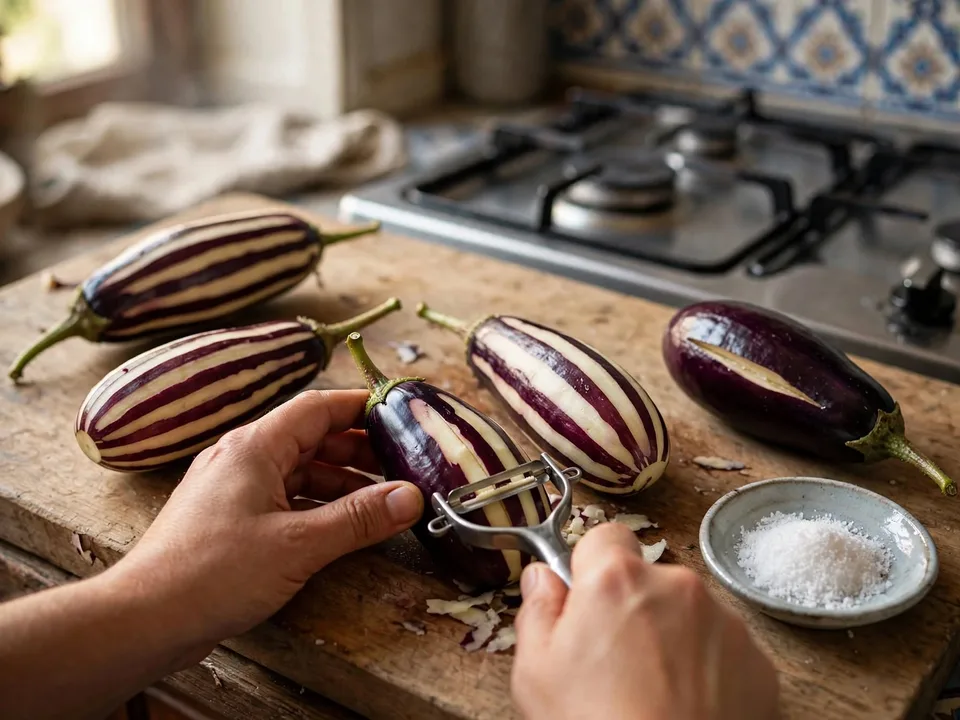 Step 01
Stripe, slit and salt the aubergines
20 min
Peel each aubergine lengthwise in alternating stripes, leaving bands of purple skin to help it hold together.
Peel each aubergine lengthwise in alternating stripes, leaving bands of purple skin to help it hold together. Cut a deep lengthwise slit in one peeled stripe without cutting through the bottom or the ends. Sprinkle lightly with salt and leave for 10–15 minutes, then blot thoroughly dry.
Look for
Each aubergine should remain whole with a neat central pocket and a dry surface, while the striped skin still provides structure.
Kitchen note
Salting is useful for moisture control but is not a test of authenticity; modern aubergines may not need bitterness removal. The important part is drying the surface before it meets hot oil.
 Step 02
Soften the aubergines without collapsing them
8 min
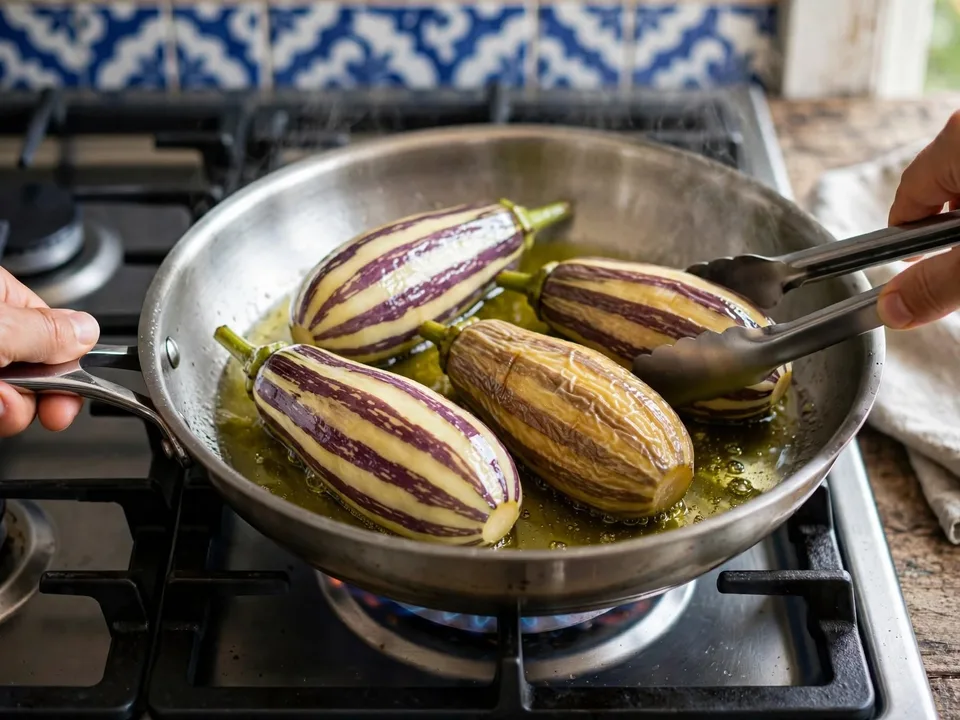
Heat a generous layer of olive oil in a wide pan over medium heat.
Heat a generous layer of olive oil in a wide pan over medium heat. Add the dried aubergines and cook for about 6–8 minutes, turning carefully, until the skin is glossy and the flesh has softened enough for the slit to open, but the aubergines still hold their shape. Transfer to a tray.
Look for
The aubergines should show light golden patches and yield to gentle pressure, while the skin and stem end still hold the fruit together.
Kitchen note
The aubergines must be pliable enough to receive filling but not fully cooked yet. If they sag or split when lifted, they have gone too far for neat stuffing.
 Step 03
Cook the onions and garlic until silky
12 min
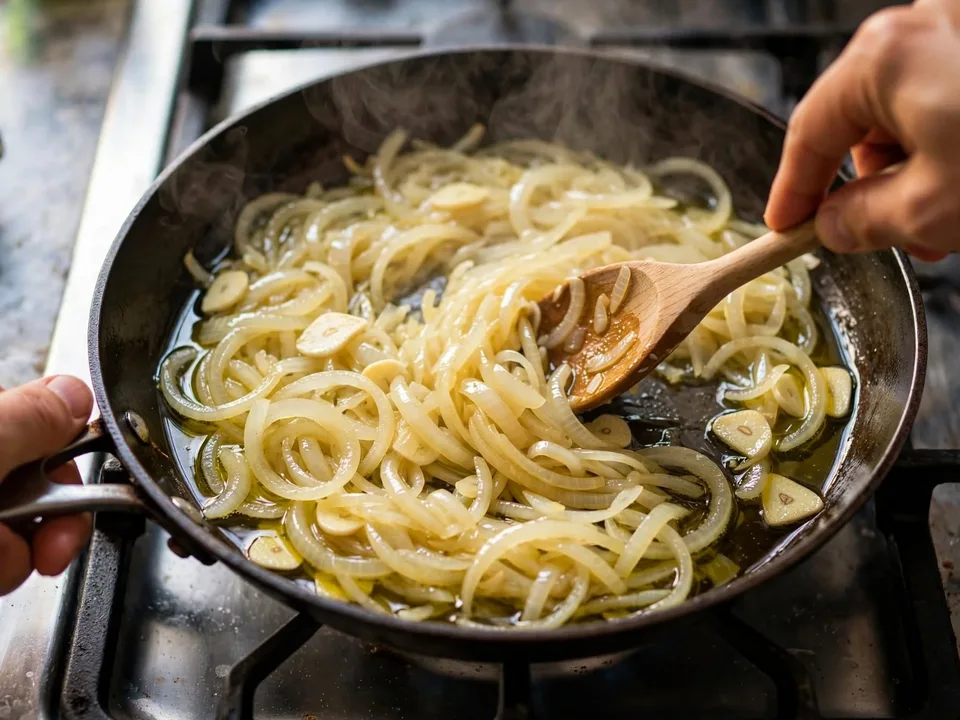
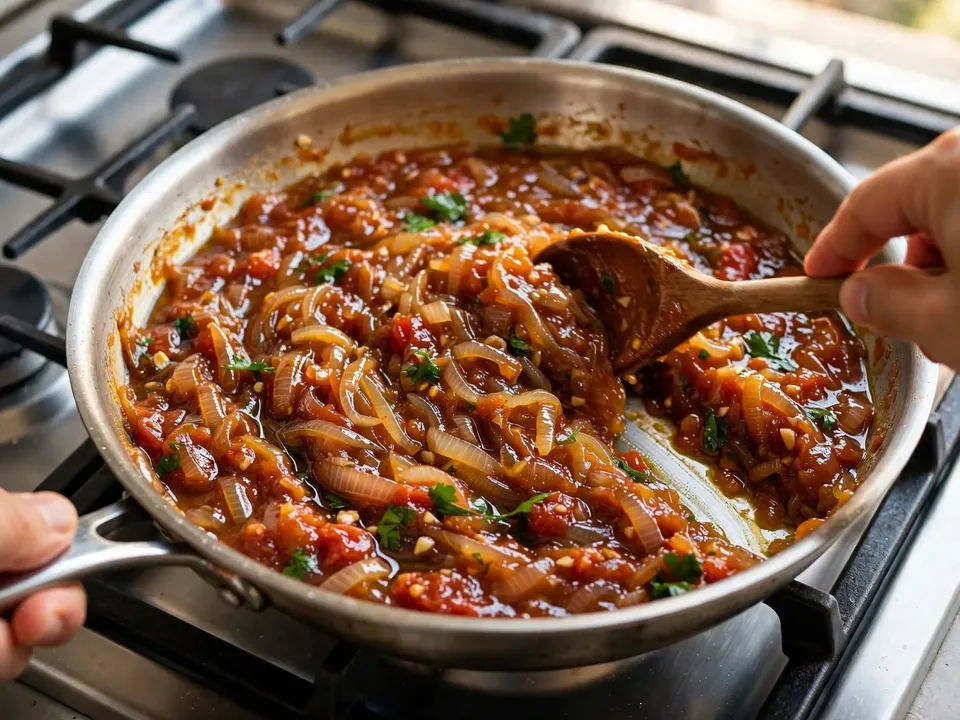
Pour off excess frying oil if necessary, leaving enough to coat the pan.
Pour off excess frying oil if necessary, leaving enough to coat the pan. Add the onions and garlic with a pinch of salt and cook over medium-low heat for 10–12 minutes, stirring often, until the onions are completely soft, glossy and sweet but not deeply browned.
Look for
The onion slices should collapse into soft glossy ribbons with no raw white centres; the garlic should be fragrant without dark edges.
Kitchen note
This filling depends on a large volume of softened onion. High heat shortens the clock but gives browned, dry onions rather than the silky zeytinyağlı texture the dish needs.
 Step 04
Add the tomatoes and reduce the filling
8 min
Add the tomatoes, black pepper and half the parsley.
Add the tomatoes, black pepper and half the parsley. Cook over medium heat for 7–9 minutes until the tomatoes soften and the mixture becomes juicy but spoonable. Let obvious free water evaporate, then taste and adjust the salt.
Look for
The filling should be glossy and jammy enough to mound, with softened tomato pieces and no watery pool at the bottom of the pan.
Kitchen note
A wet filling leaks into the final poaching liquid and weakens the aubergine structure. Reduce until the onions and tomatoes hold together on a spoon while still looking lush with olive oil.
 Step 05
Open and fill the aubergines generously
5 min
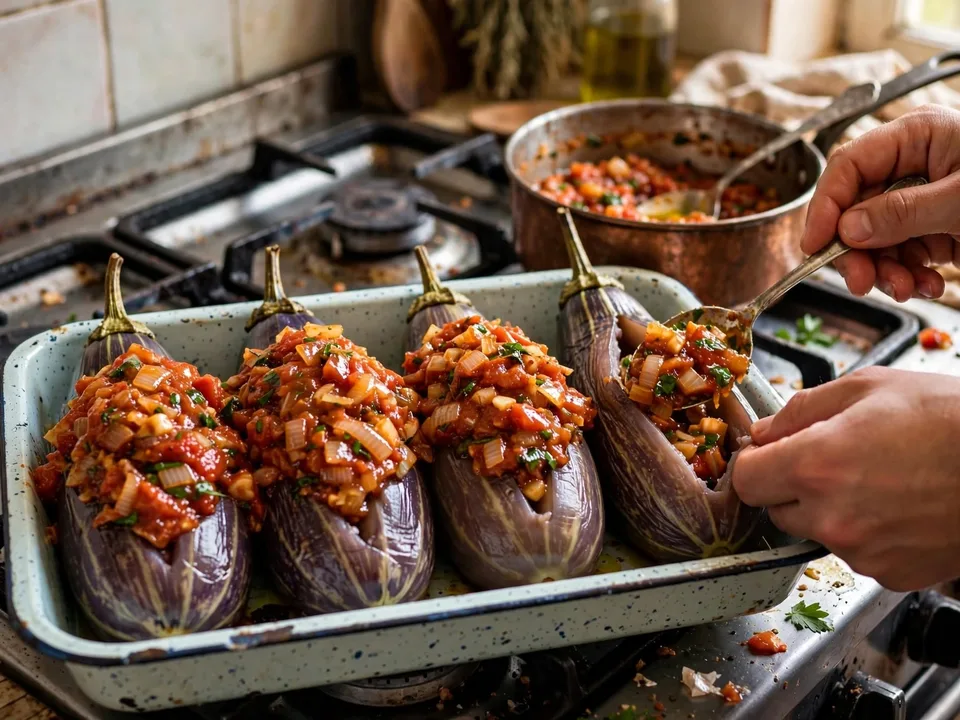
Arrange the softened aubergines snugly in a wide heavy pan, slit-side up.
Arrange the softened aubergines snugly in a wide heavy pan, slit-side up. Gently open each pocket with two spoons and divide the onion-tomato filling among them. Let the filling sit generously above the opening rather than forcing it down so hard that the aubergine splits.
Look for
Each aubergine should hold a distinct mound of onion and tomato while remaining intact from stem to tip.
Kitchen note
Use the pan you intend to finish the dish in so the fragile filled aubergines do not need another transfer. Any leftover filling can cook alongside them.
 Step 06
Poach gently with olive oil, lemon and a little water
45 min
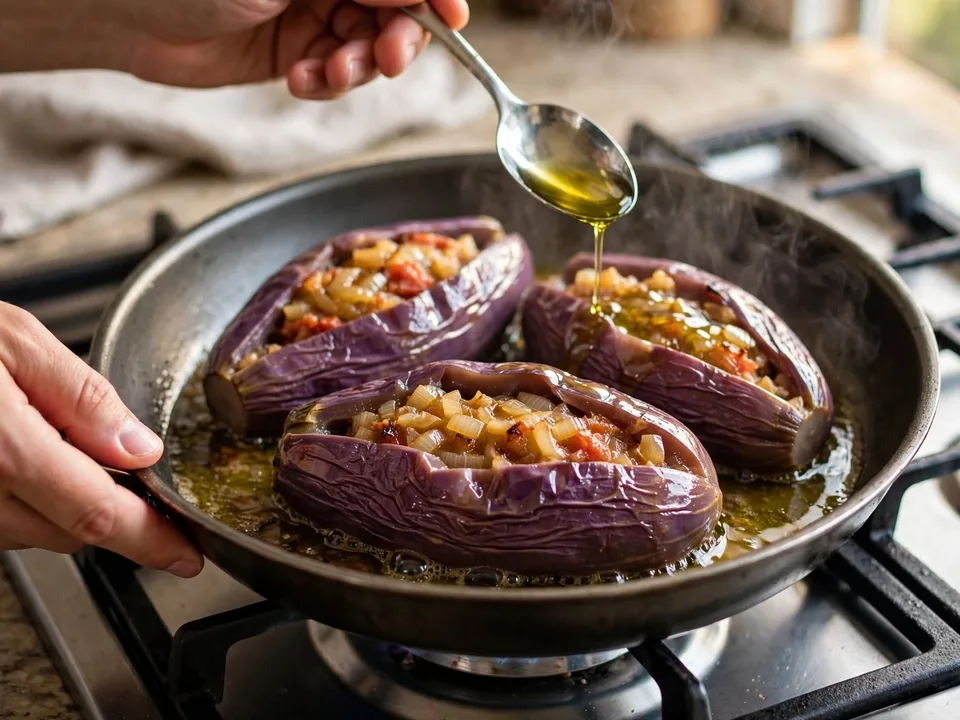
Mix the water, lemon juice, optional sugar and remaining olive oil and pour it around and over the filled aubergines.
Mix the water, lemon juice, optional sugar and remaining olive oil and pour it around and over the filled aubergines. Cover and bring the liquid just to a gentle simmer over medium heat, then lower the heat and cook for about 40–50 minutes until the aubergines are meltingly tender. Keep the simmer calm and add a splash of hot water only if the pan threatens to dry out.
Look for
A spoon should slide into the aubergine flesh with almost no resistance, while the skins remain intact and only a small amount of glossy cooking liquid remains.
Kitchen note
İmam bayıldı belongs to the zeytinyağlı family, so the final cook is gentle and oil-rich rather than a hard fry. Baked versions also exist; this Ember & Equator version uses a classic covered stovetop poach.
 Step 07
Cool in the pan and serve at room temperature
30 min
Turn off the heat and let the aubergines cool in their cooking liquid for at least 30 minutes so they absorb flavour and become easier to lift intact.
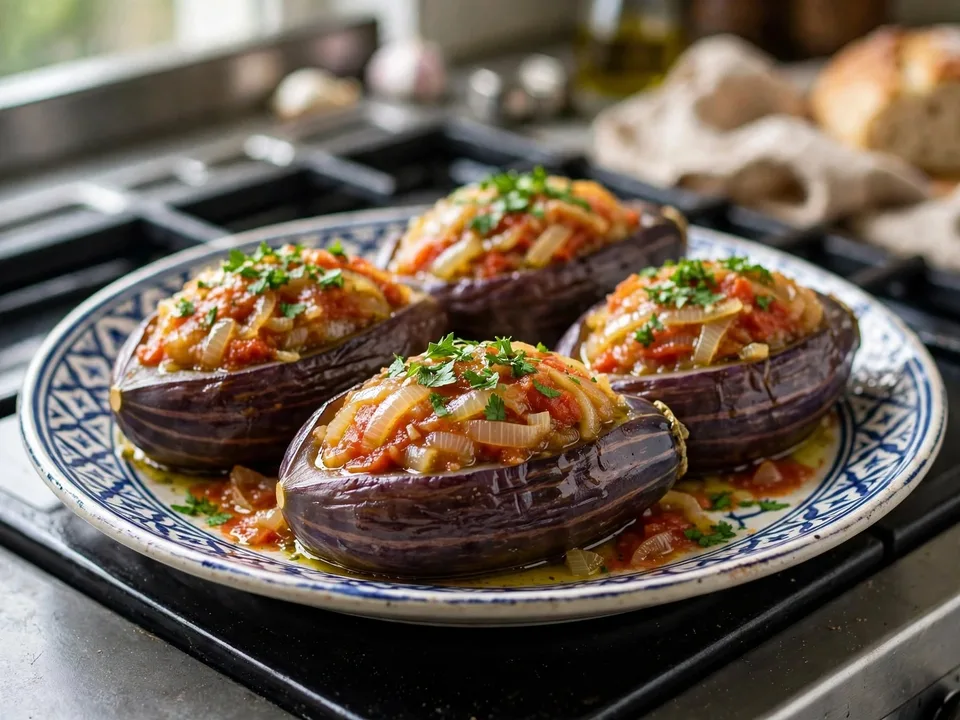
Turn off the heat and let the aubergines cool in their cooking liquid for at least 30 minutes so they absorb flavour and become easier to lift intact. Transfer carefully to a serving dish, spoon a little of the olive oil and juices over them, scatter with the remaining parsley and serve at room temperature or cool with lemon wedges.
Look for
The finished aubergines should look glossy and plump with filling, cut easily with a spoon and sit in only a shallow sheen of seasoned olive oil.
Kitchen note
The rest is part of the technique, not dead time. Serving piping hot hides the settled olive-oil flavour and makes the fragile aubergines harder to move cleanly.
After cooking
Explore the dish beyond the method.
Story, place and references are here for discovery, so they stay out of the way while you cook.
Culture & tradition
The story behind the dish
Origins, evolution and everyday life—read together as part of the recipe's culinary record.
Origins
GoTürkiye places the dish in an Ottoman-era tradition while treating the famous story behind its name as legend.
How it evolved
Recipes vary in whether aubergines are fried, baked or softened by another method before filling.
Its place today
A vegetable main, meze or part of a larger shared spread.
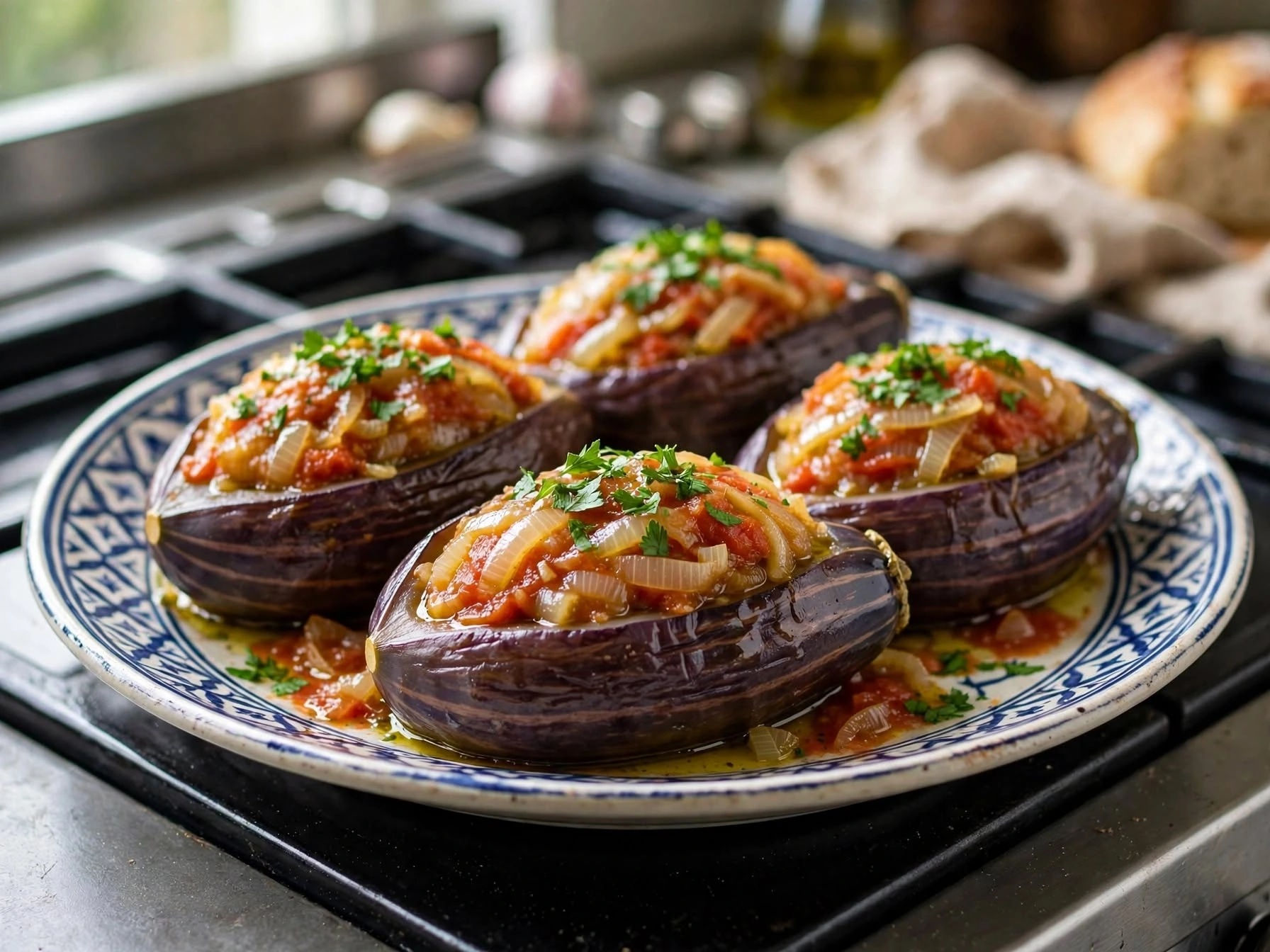
Visual archive · plate 01
İmam Bayıldı
An editorial view of the finished dish, kept compact so the story continues without an oversized image break.
Primary region
Türkiye, especially Aegean and urban Ottoman-influenced traditions
Country
Türkiye
Regional influence
Local agriculture, pantry traditions and household practice shape the dish more than a single fixed formula.
Related food systems
- Zeytinyağlı olive-oil dishes
- Aubergine cookery
Sources & further reading
Follow the reference trail.
Ember & Equator links outward when an institution or primary reference helps support the culinary record.
- 01Top Turkish Olive Oil DishesExternal ↗
GoTürkiye · government
Supports: imam bayildi · olive oil dishes
Ember & Equator source review · 2026-09-03
- 02Turkish CuisineExternal ↗
GoTürkiye · government
Supports: Turkish cuisine · culinary traditions
Ember & Equator source review · 2026-09-03
- 03Turkish Olive Oil Dishes Guide — İmam BayıldıExternal ↗
GoTürkiye · government
Supports: imam bayıldı identity · aubergine · onion garlic tomato filling · olive-oil tradition
Ember & Equator source review · 2026-09-17
- 04Aubergines stuffed with onion, garlic and tomatoes in olive oil; Imam BayildiExternal ↗
Ozlem's Turkish Table · specialist publication
Supports: striped slit aubergines · onion garlic tomato filling · olive oil water lemon poach · room-temperature service
Ember & Equator source review · 2026-09-17
Ingredient guides
Learn about the ingredients behind the dish.
These are reference guides, not a second ingredient list. Follow an ingredient when you want to understand its role, use and wider culinary context.
Ingredient
aubergines
Understand what it contributes, how to use it, and the dishes that reveal it best.
Ingredient
onion
Understand what it contributes, how to use it, and the dishes that reveal it best.
Ingredient
ripe tomato
Understand what it contributes, how to use it, and the dishes that reveal it best.
Ingredient
garlic
Understand what it contributes, how to use it, and the dishes that reveal it best.
Ingredient
extra virgin olive oil
Understand what it contributes, how to use it, and the dishes that reveal it best.
Explore ingredient →
Ingredient
parsley
Understand what it contributes, how to use it, and the dishes that reveal it best.
Keep wandering
Where will this dish take you next?
Stay with the place, follow an ingredient or technique, or cross into another food culture. Each path begins with something already present in this dish.
Stay with the place
01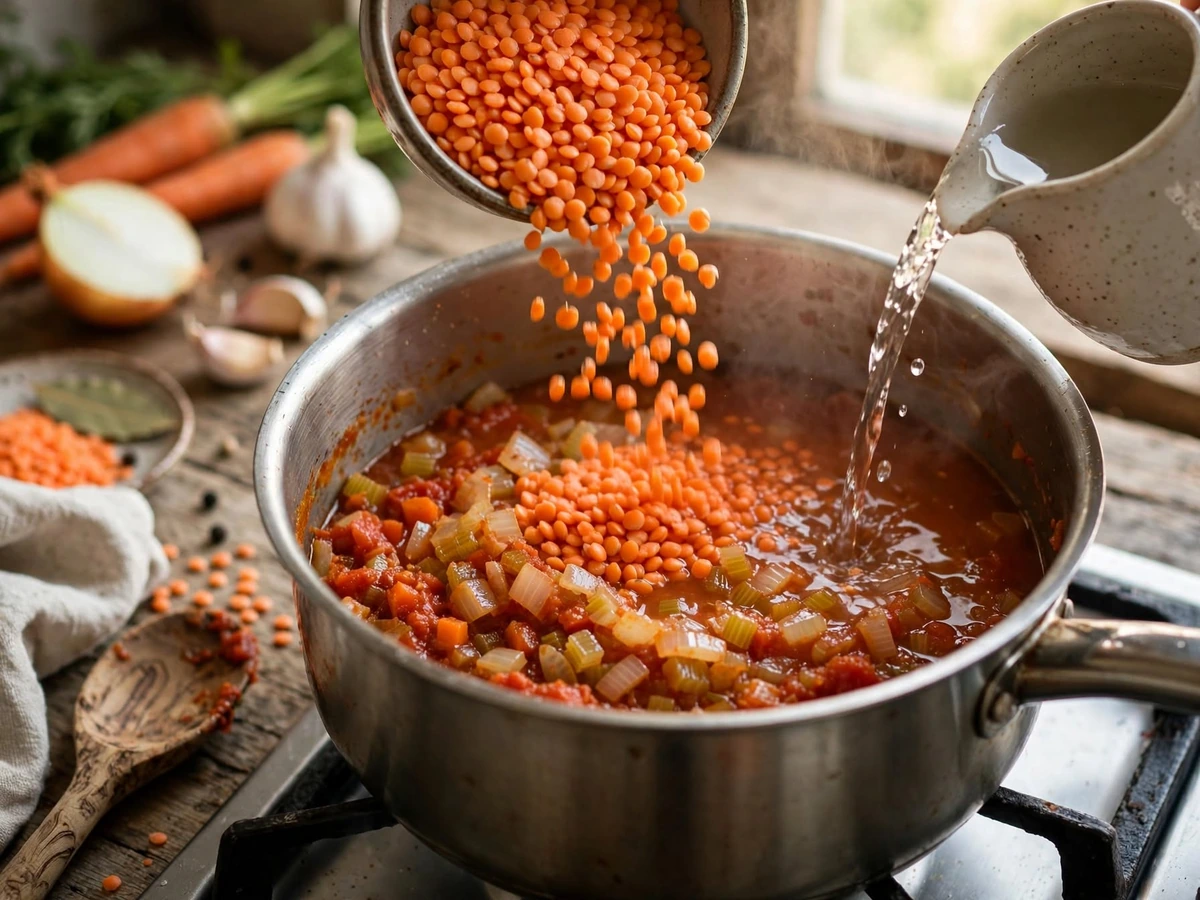
Türkiye
Mercimek Çorbası
Stay in the same food culture and notice how sauté appears in another dish.
Shared thread · Sauté · Simmer · onion
Follow the method or pantry
02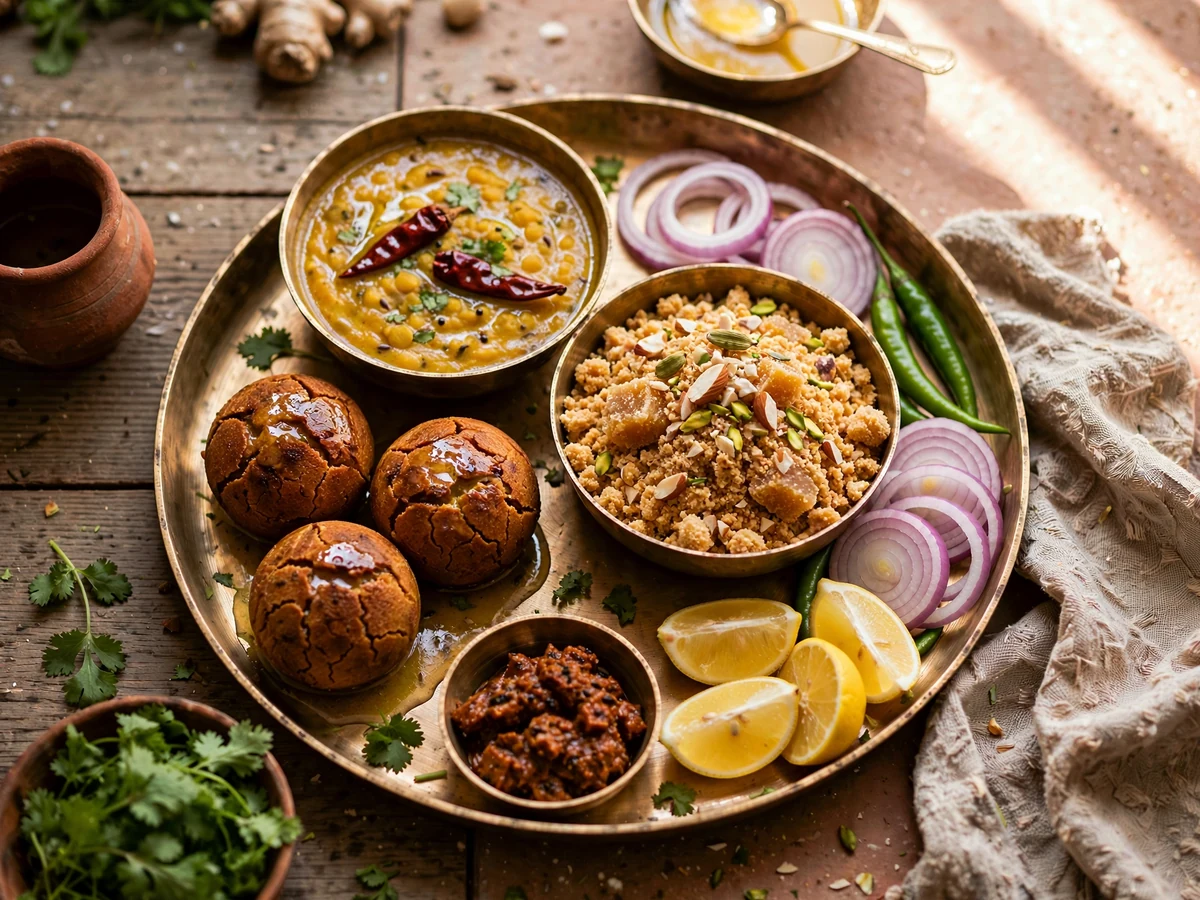
India
Dal Baati Churma
Follow the cooking method: both dishes connect through sauté.
Shared thread · Sauté · Simmer · garlic
Cross a culinary border
03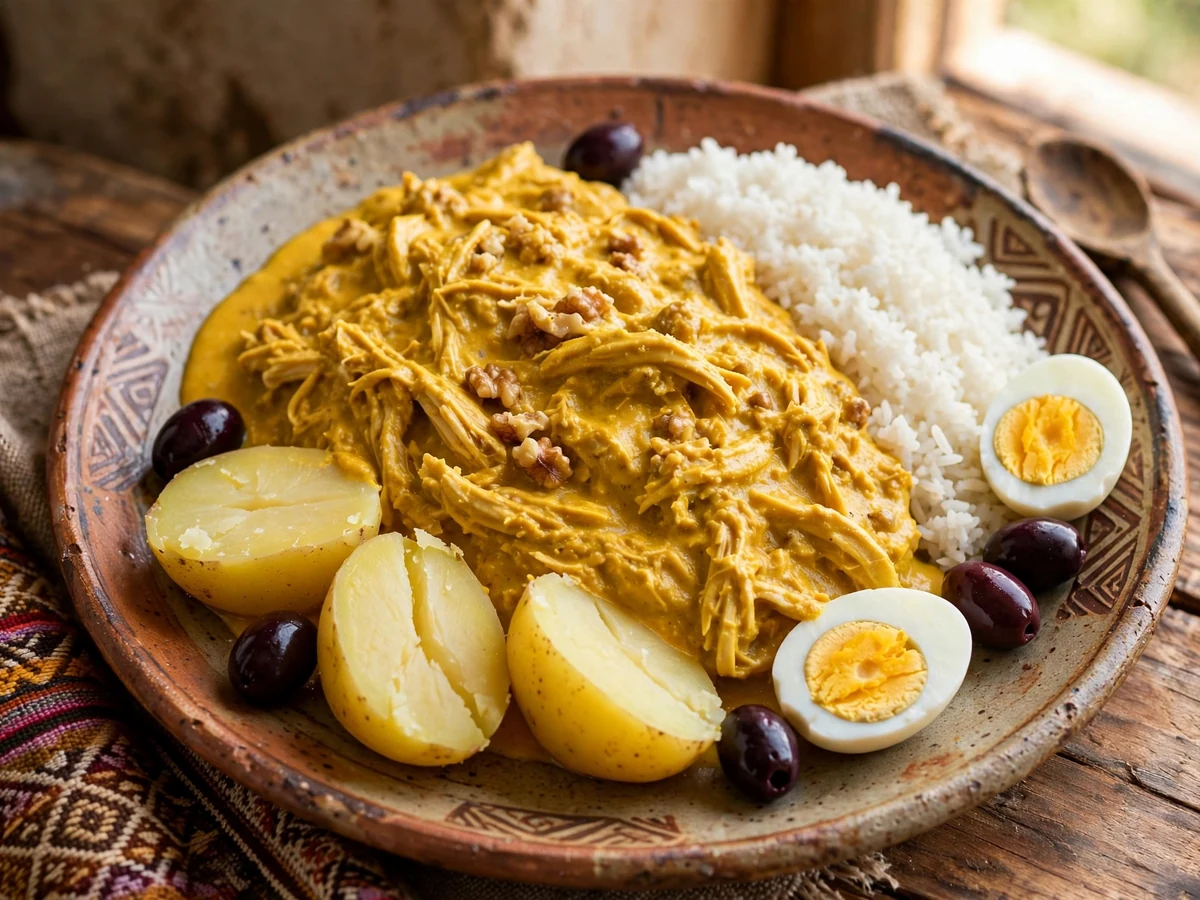
Peru
Ají de Gallina
Cross borders while keeping sauté as the common thread.
Shared thread · Sauté · Simmer · garlic
Go one layer deeper
One small detail can open an entirely different part of food.
Continue in Ember & Equator