
Türkiye · dinner
Mantı
Türkiye through one enduring dish.
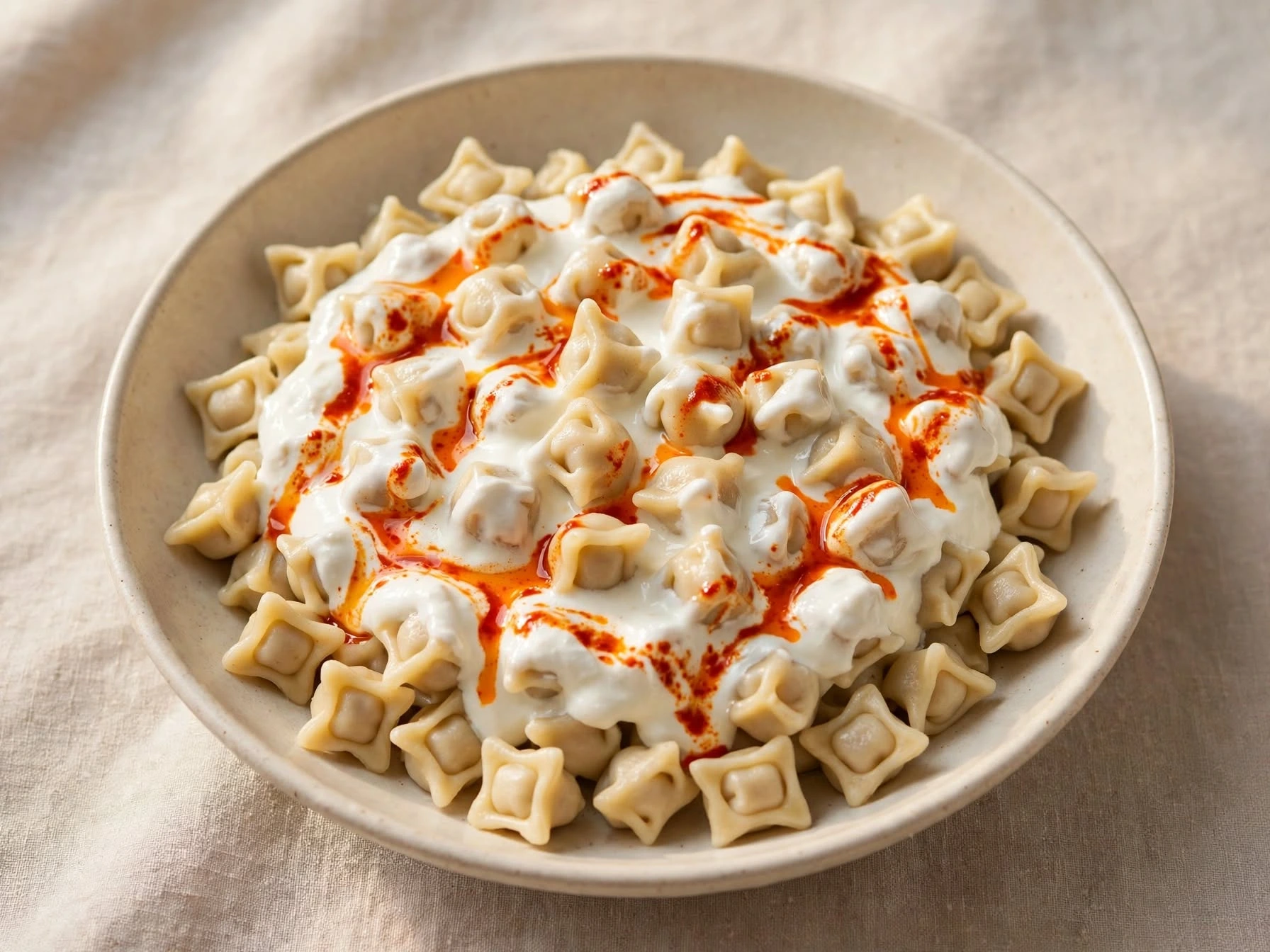
Turkish mantı are small filled dumplings, especially associated with Central Anatolia, served with garlicky yogurt and a warm butter-and-spice finish.
- Total
- 65 min
- Difficulty
- Hard
- Serves
- 4
- Steps
- 8
The dish
Place first. Then the plate.
Mantı is a family of dumpling traditions rather than one universal Turkish shape. Kayseri is particularly famous for very small mantı, while other regions use different sizes, fillings and presentations. Making and folding the dumplings can be communal work, turning technique and repetition into part of the dish’s social meaning.
Explore TürkiyeAt a glance
Origin
Türkiye
Region
Central Anatolia and regional traditions across Türkiye
Meal
dinner
Guided steps
8
Dish
Mantı
Cuisine
Turkish cuisine
Food type
Dinner · Comfort food
Technique
Knead dough
Cook the recipe
In the kitchen
Start with the ingredients, then follow the Method in order. Open cooking tips only when you need extra help; the story and references can wait until you are ready.
- Total
- 65 min
- Serves
- 4
- Level
- Hard
- Visual cues
- 8
Ingredients
Serves 4- 2.5 cupsplain flourplus extra for rolling
- 1 wholeegglightly beaten
- 0.5 cupwateradd gradually; the dough should stay firm
- 1 tbspolive oilfor the dough
- 1.5 tspsaltdivided between dough, filling and yoghurt
- 250 gminced beef or lambcold; not overly fatty
- 1 smallonionvery finely grated or minced
- 0.5 tspblack pepperfreshly ground
- 1.5 cupsyoghurtthick plain yoghurt, brought toward room temperature before serving
- 2 clovesgarliccrushed to a paste
- 3 tbspbutterfor the hot finishing sauce
- 1 tsppaprika or pul biberuse pul biber when available; adjust heat to taste
Optional
- 1 tspdried mintoptional finishing garnish
- 1 tspsumacoptional finishing garnish
Everything ready? Continue straight into the cooking steps.
Start methodMethod
8 steps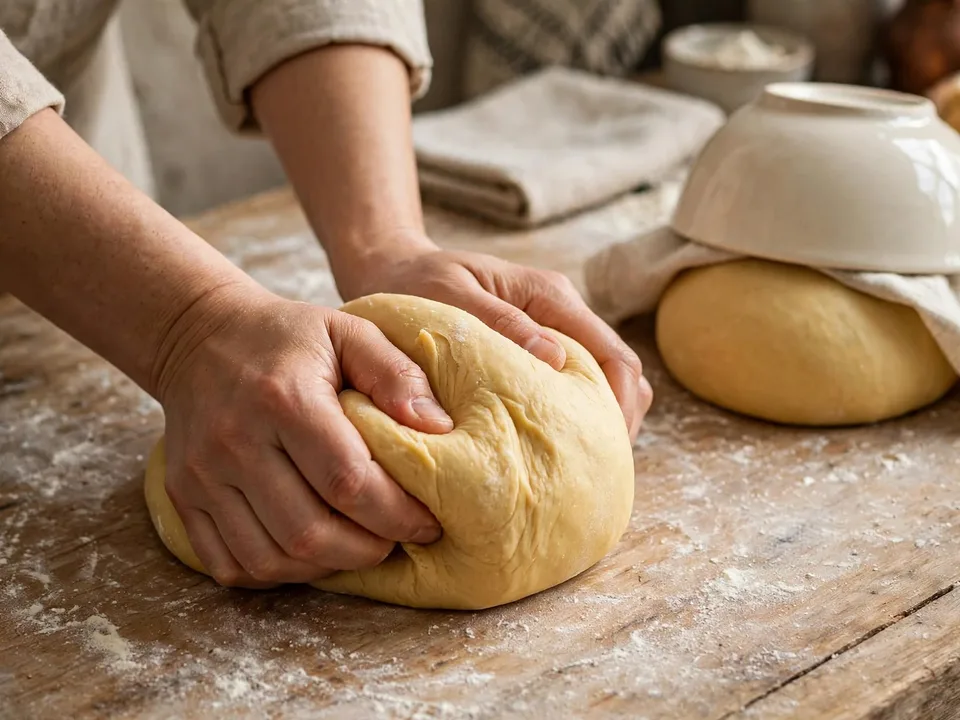 Step 01
Knead a firm dough and let it rest
38 min
Mix the flour with about 1 teaspoon of the salt.
Mix the flour with about 1 teaspoon of the salt. Make a well, add the beaten egg, olive oil and most of the water, then work into a firm dough, adding only enough remaining water to bring it together. Knead for 7–8 minutes until smooth and elastic. Cover tightly and rest for 30 minutes in a cool place.
Look for
The finished dough should be smooth, dense and elastic; a finger indentation should spring back slowly and the surface should not cling to your hands.
Kitchen note
Mantı dough should feel noticeably firmer than bread dough. A soft sticky dough is easy to roll but difficult to cut into tiny squares and prone to opening during boiling.
 Step 02
Mix the cold meat and onion filling
5 min
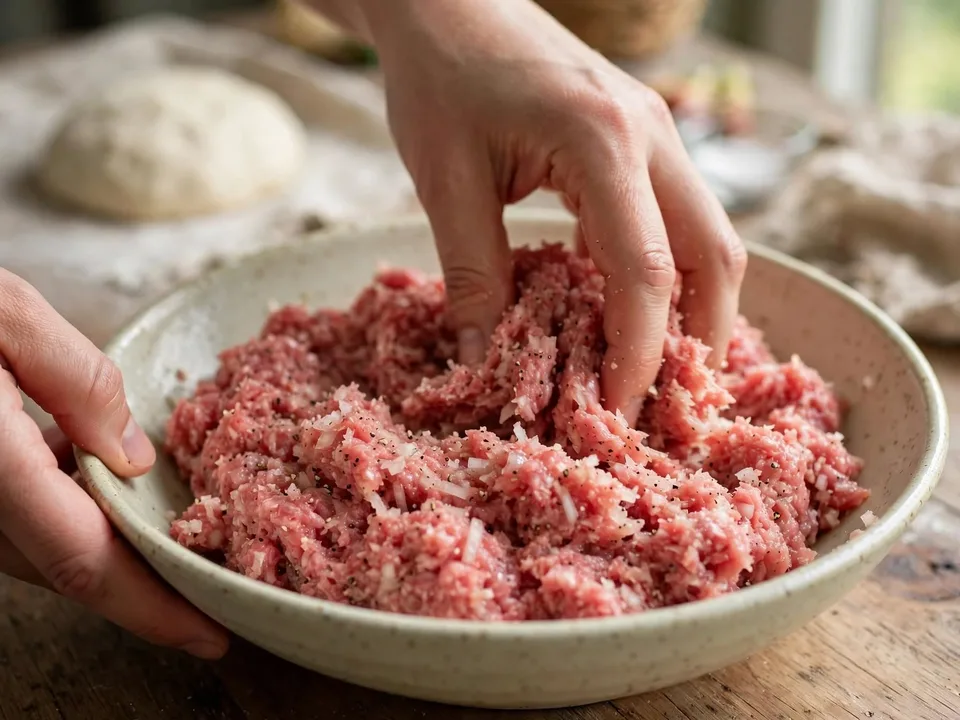
While the dough rests, combine the minced beef or lamb with the very finely grated onion, black pepper and about 1/4 teaspoon salt.
While the dough rests, combine the minced beef or lamb with the very finely grated onion, black pepper and about 1/4 teaspoon salt. Mix only until evenly distributed, then refrigerate the filling until needed.
Look for
The mixture should look evenly flecked with onion, stay loose rather than paste-like, and feel cold when you begin filling.
Kitchen note
Keep the filling cold and finely textured. Large onion pieces tear tiny wrappers, while warm fatty filling smears across the sealing edges and makes them difficult to pinch closed.
 Step 03
Roll the dough very thin and cut small squares
15 min
Divide the rested dough into 3 or 4 pieces.
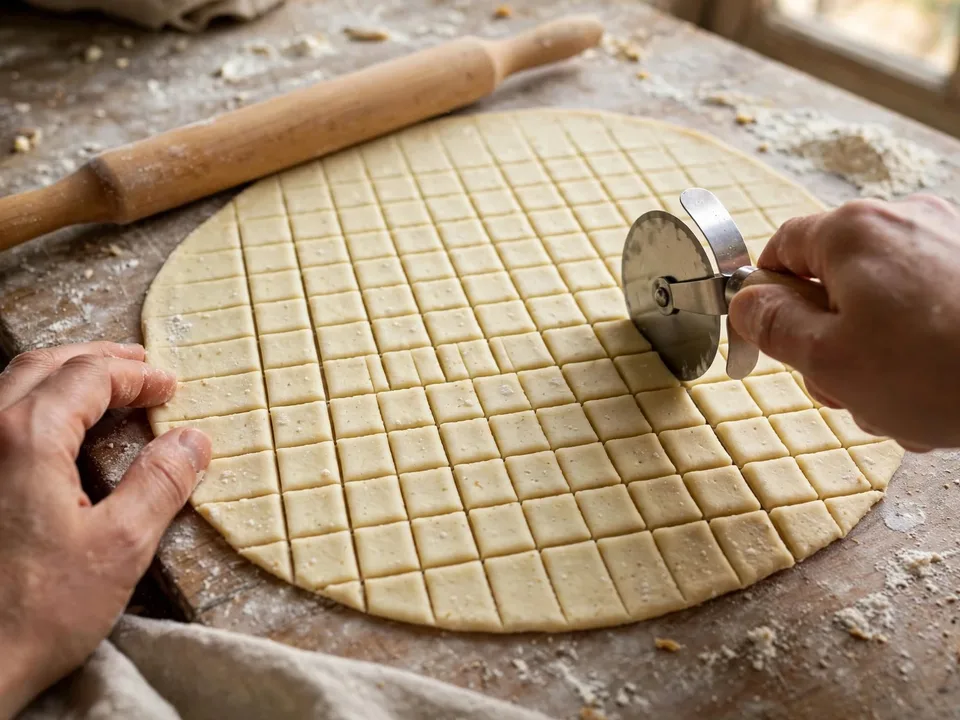
Divide the rested dough into 3 or 4 pieces. Keep all but one piece covered. On a lightly floured surface, roll the working piece as thinly and evenly as you can, about 1 mm where practical. Cut into small squares, roughly 2.5–3 cm / 1–1 1/4 inches for a manageable home version. Work promptly so the exposed dough does not crust over.
Look for
The sheet should be thin enough that your fingers are faintly visible through it, and the squares should have clean moist edges without dry cracking.
Kitchen note
Kayseri mantı is famously much smaller, but forcing restaurant-level miniature size is not necessary for a successful home version. Thin, even dough and clean sealing matter more than winning a size contest. Work with one portion of dough at a time and keep the rest covered; exposed dough dries quickly, which makes the tiny squares crack instead of sealing.
 Step 04
Portion tiny amounts of filling
10 min
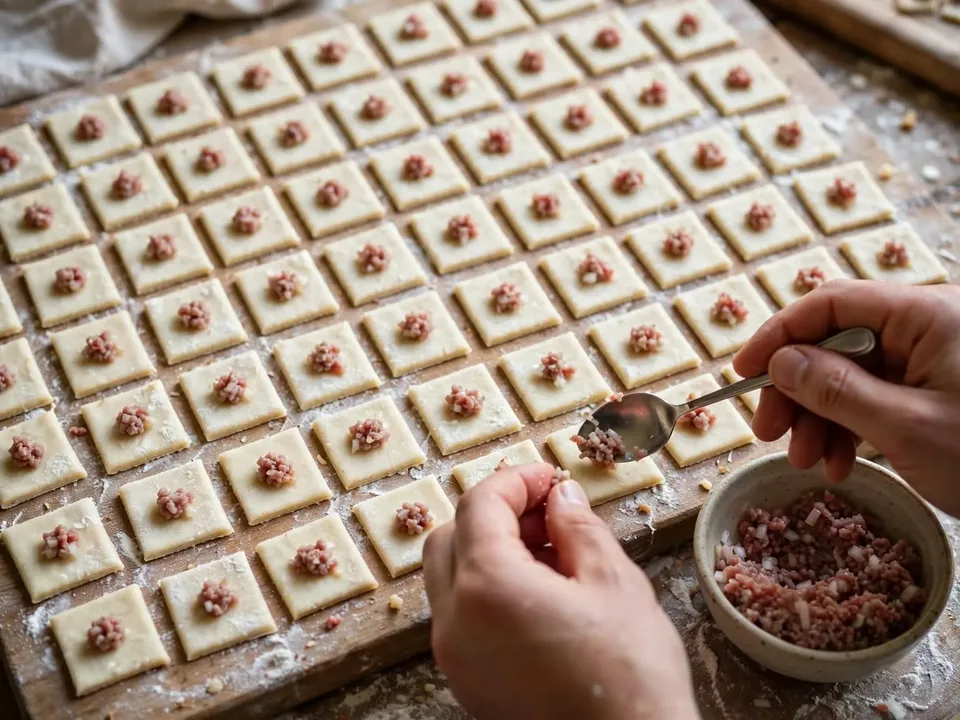
Place a small piece of the cold filling in the centre of each dough square, about half a chickpea for small mantı.
Place a small piece of the cold filling in the centre of each dough square, about half a chickpea for small mantı. Leave a clear border on every side. Fill only as many squares as you can fold before their edges start drying.
Look for
Each square should have a compact central mound with a clean flour-free border wide enough to pinch securely.
Kitchen note
Overfilling is the fastest way to make mantı burst. It is better to see more dough around a tiny meat centre than to push filling into the seams.
 Step 05
Pinch and fold each mantı securely
20 min
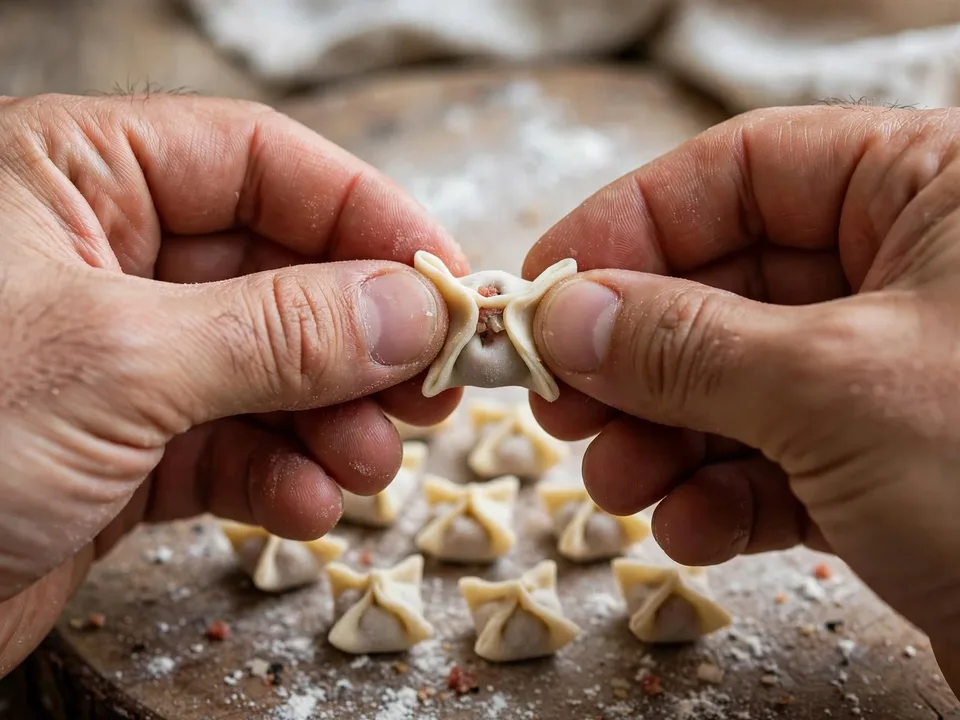
Bring opposite corners of each square together and pinch, then close the remaining corners and seams to form a small parcel.
Bring opposite corners of each square together and pinch, then close the remaining corners and seams to form a small parcel. The exact regional shape can vary; what matters is a sealed dumpling with no meat exposed. Set finished pieces on a lightly floured tray in a single layer and keep the remaining dough covered.
Look for
The seams should stay closed when the dumpling is lifted, with the filling fully enclosed and each parcel remaining distinct from the next.
Kitchen note
If the edges have dried and resist sealing, touch them with the tiniest amount of water rather than wetting the whole dumpling. Excess water makes neighbouring mantı stick together. Set finished mantı in a single layer on a lightly floured tray and keep them separated until boiling; piling raw dumplings encourages them to stick and tear.
 Step 06
Boil the mantı until the dough and filling are cooked
9 min
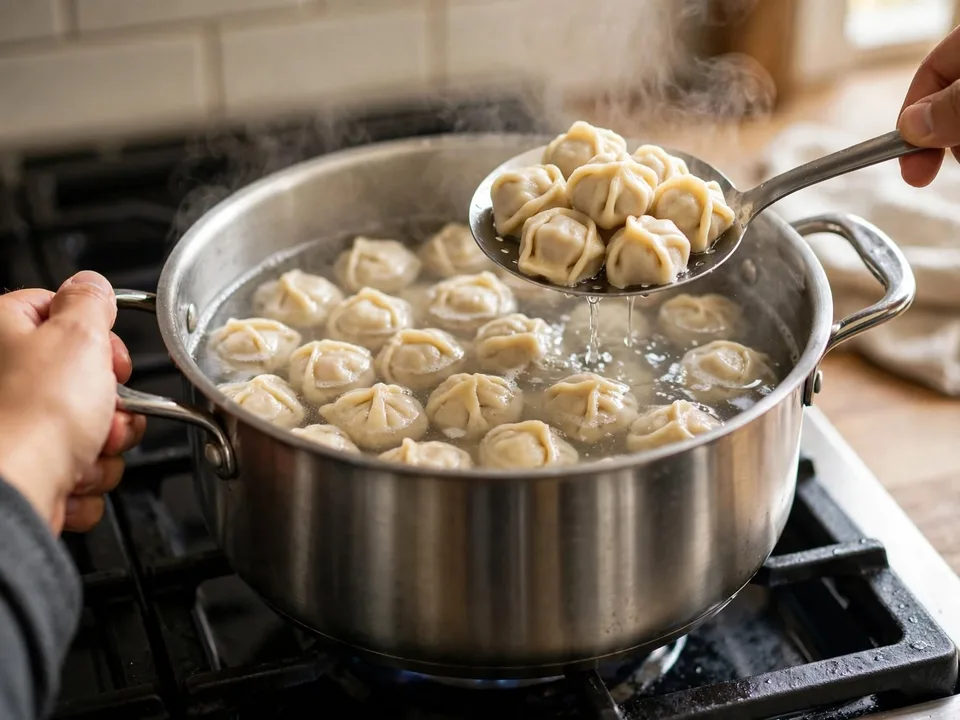
Bring a large pot of well-salted water to a lively simmer.
Bring a large pot of well-salted water to a lively simmer. Add the mantı in batches if necessary and stir gently once to prevent sticking. Cook for about 7–10 minutes, depending on size and dough thickness, until the wrappers are tender and the meat filling is fully cooked. Cut one open to check the first batch before draining carefully.
Look for
The wrappers should be tender with no raw floury core, the dumplings should remain sealed, and a cut test piece should show cooked meat throughout.
Kitchen note
Do not crowd the pot or boil so violently that the seams tear. A steady simmer gives the dough time to cook through while keeping the small parcels intact.
 Step 07
Make the garlic yoghurt and warm pepper butter
5 min
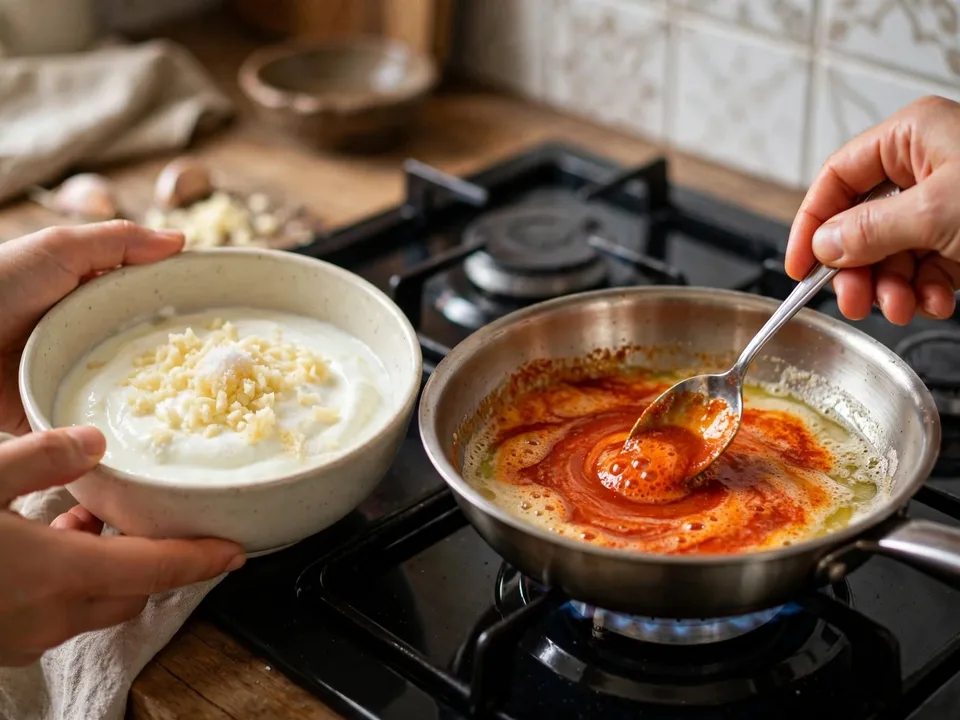
Stir the yoghurt with the crushed garlic and remaining salt until smooth; let it lose the refrigerator chill while the mantı cooks.
Stir the yoghurt with the crushed garlic and remaining salt until smooth; let it lose the refrigerator chill while the mantı cooks. In a small pan, melt the butter over low heat, add the paprika or pul biber and swirl for 20–30 seconds until fragrant and red, then remove from the heat before the pepper darkens.
Look for
The yoghurt should be smooth and spoonable, while the butter should be clear red-orange with aromatic pepper and no blackened specks.
Kitchen note
Do not pour very hot butter directly onto ice-cold yoghurt in the bowl. Let the yoghurt come closer to room temperature, and bloom the pepper gently so the butter tastes fragrant rather than burnt.
 Step 08
Plate with yoghurt, pepper butter and optional herbs
2 min
Drain the cooked mantı well and divide among warm bowls.
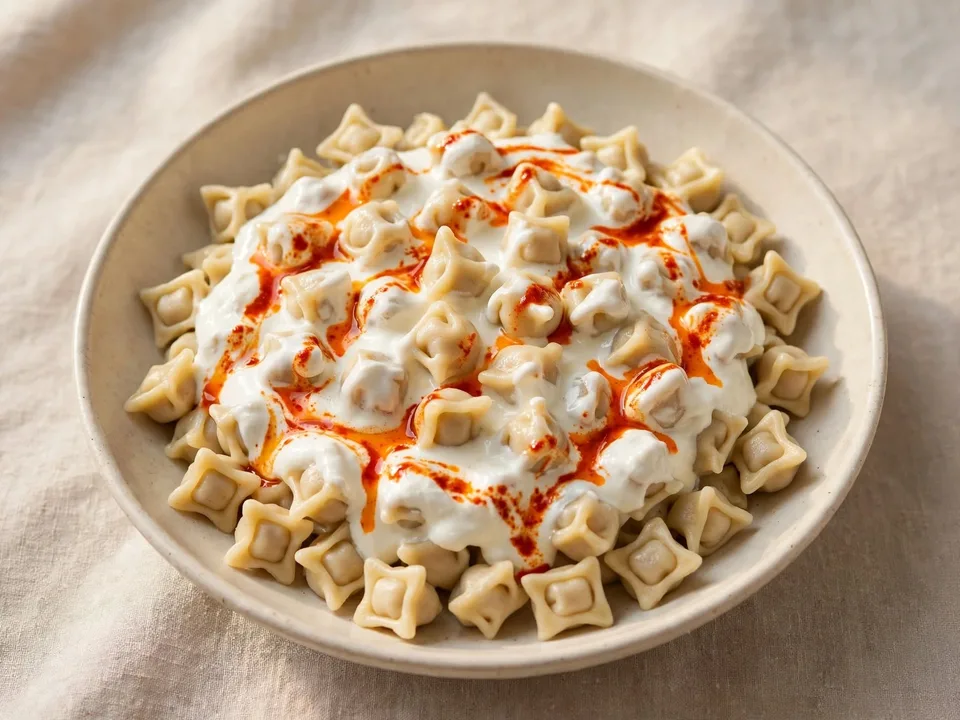
Drain the cooked mantı well and divide among warm bowls. Spoon the garlic yoghurt over the dumplings, drizzle with the warm pepper butter and finish with dried mint and/or sumac if using. Serve immediately while the dumplings are hot and the yoghurt remains cool and creamy.
Look for
The dumplings should remain visible and intact beneath a generous but not drowning layer of yoghurt, with bright red butter streaks on the surface.
Kitchen note
Layer the sauces rather than stirring everything into one pink mixture before serving. The contrast between hot dumplings, tangy garlic yoghurt and warm spiced butter is part of the pleasure of the dish.
After cooking
Explore the dish beyond the method.
Story, place and references are here for discovery, so they stay out of the way while you cook.
Culture & tradition
The story behind the dish
Origins, evolution and everyday life—read together as part of the recipe's culinary record.
Origins
Central Anatolia is especially associated with mantı, with important regional forms across Türkiye.
How it evolved
Dumpling traditions moved and changed across Central and West Asia over centuries. In Anatolia they developed regional identities in dough size, filling, cooking method and sauces; Kayseri-style mantı became especially emblematic.
Its place today
Mantı remains both home cooking and restaurant food, typically recognized by the contrast of tender filled pasta, cool garlicky yogurt and fragrant butter or oil seasoned with spices.
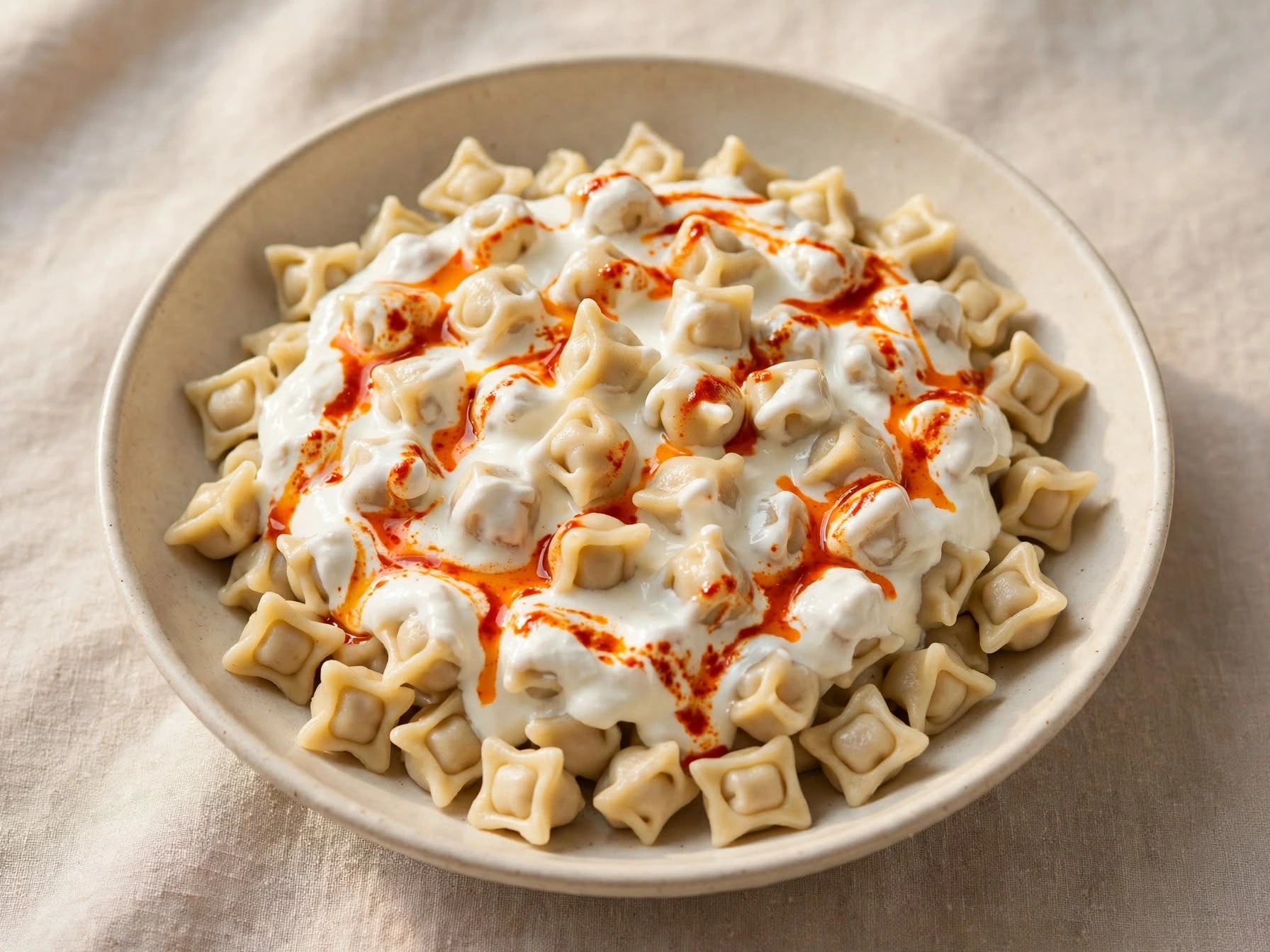
Visual archive · plate 01
Mantı
An editorial view of the finished dish, kept compact so the story continues without an oversized image break.
Primary region
Central Anatolia and regional traditions across Türkiye
Country
Türkiye
Regional influence
Local agriculture, pantry traditions and household practice shape the dish more than a single fixed formula.
Related food systems
- Turkish dumpling traditions
- Yoghurt-based sauces
- Shared family preparation
Sources & further reading
Follow the reference trail.
Ember & Equator links outward when an institution or primary reference helps support the culinary record.
- 01Mantı: Traditions, Rituals, and Regional VariationsExternal ↗
GoTürkiye · government
Supports: manti · regional variations · family preparation
Ember & Equator source review · 2026-09-03
- 02Turkish CuisineExternal ↗
GoTürkiye · government
Supports: Turkish cuisine · culinary traditions
Ember & Equator source review · 2026-09-03
- 03Taste the Flavors of Central Türkiye — Mantı in KayseriExternal ↗
GoTürkiye · government
Supports: Kayseri association · small cut dough · spiced ground meat and onion filling · garlic yoghurt sauce
Ember & Equator source review · 2026-09-17
- 04Taste Kayseri — Kayseri MantıExternal ↗
GoTürkiye · government
Supports: flour water egg salt dough · small squares · minced meat filling · Kayseri regional identity
Ember & Equator source review · 2026-09-17
- 05Manti, Turkish dumplings with ground meat, onion and spicesExternal ↗
Ozlem's Turkish Table · specialist publication
Supports: firm rested dough · meat and onion filling · small squares and folding · garlic yoghurt · red pepper and mint finishing sauce
Ember & Equator source review · 2026-09-17
Ingredient guides
Learn about the ingredients behind the dish.
These are reference guides, not a second ingredient list. Follow an ingredient when you want to understand its role, use and wider culinary context.
Ingredient
plain flour
Understand what it contributes, how to use it, and the dishes that reveal it best.
Ingredient
egg
Understand what it contributes, how to use it, and the dishes that reveal it best.
Ingredient
water
Understand what it contributes, how to use it, and the dishes that reveal it best.
Ingredient
olive oil
Understand what it contributes, how to use it, and the dishes that reveal it best.
Ingredient
salt
Understand what it contributes, how to use it, and the dishes that reveal it best.
Ingredient
minced beef
Understand what it contributes, how to use it, and the dishes that reveal it best.
Keep wandering
Where will this dish take you next?
Stay with the place, follow an ingredient or technique, or cross into another food culture. Each path begins with something already present in this dish.
Stay with the place
01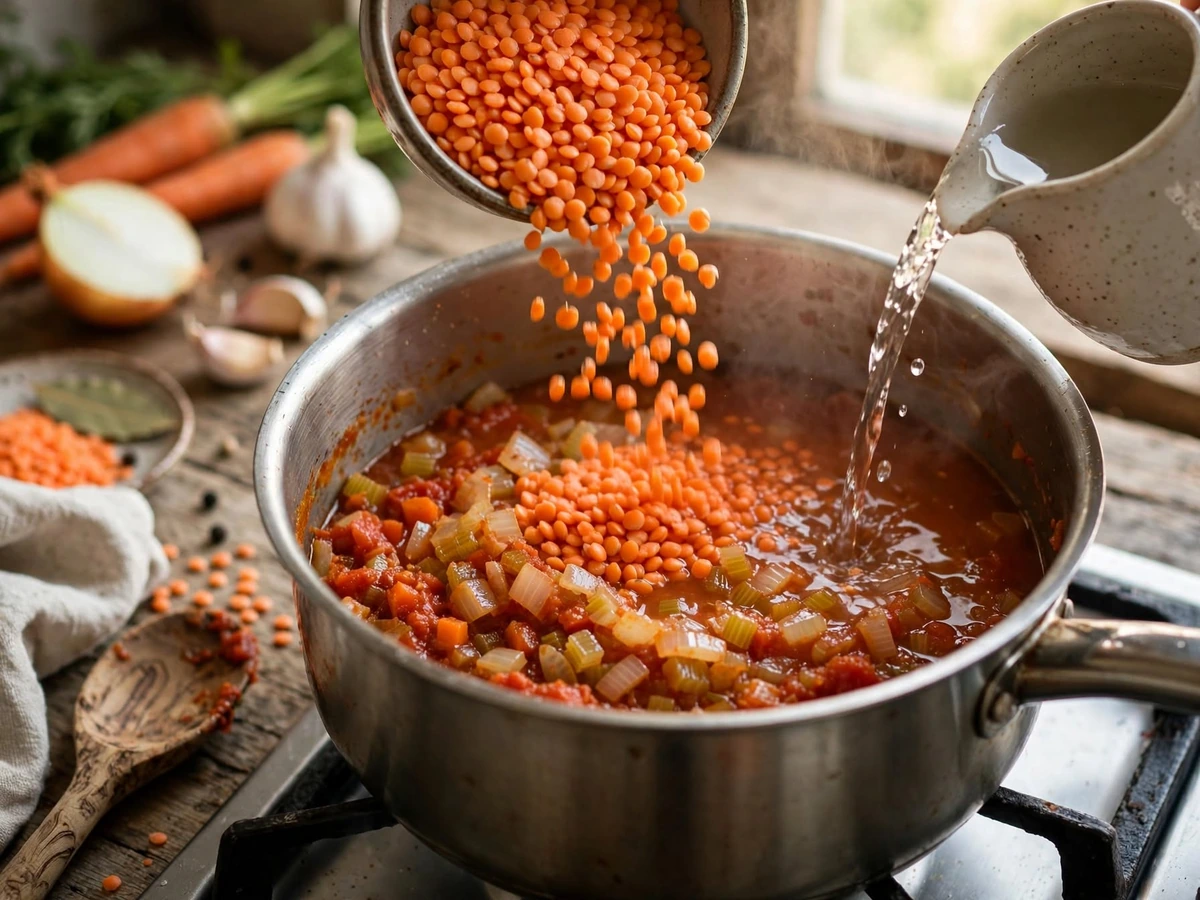
Türkiye
Mercimek Çorbası
Stay in the same food culture and follow water into another recipe.
Shared thread · water · olive oil · salt
Follow the method or pantry
02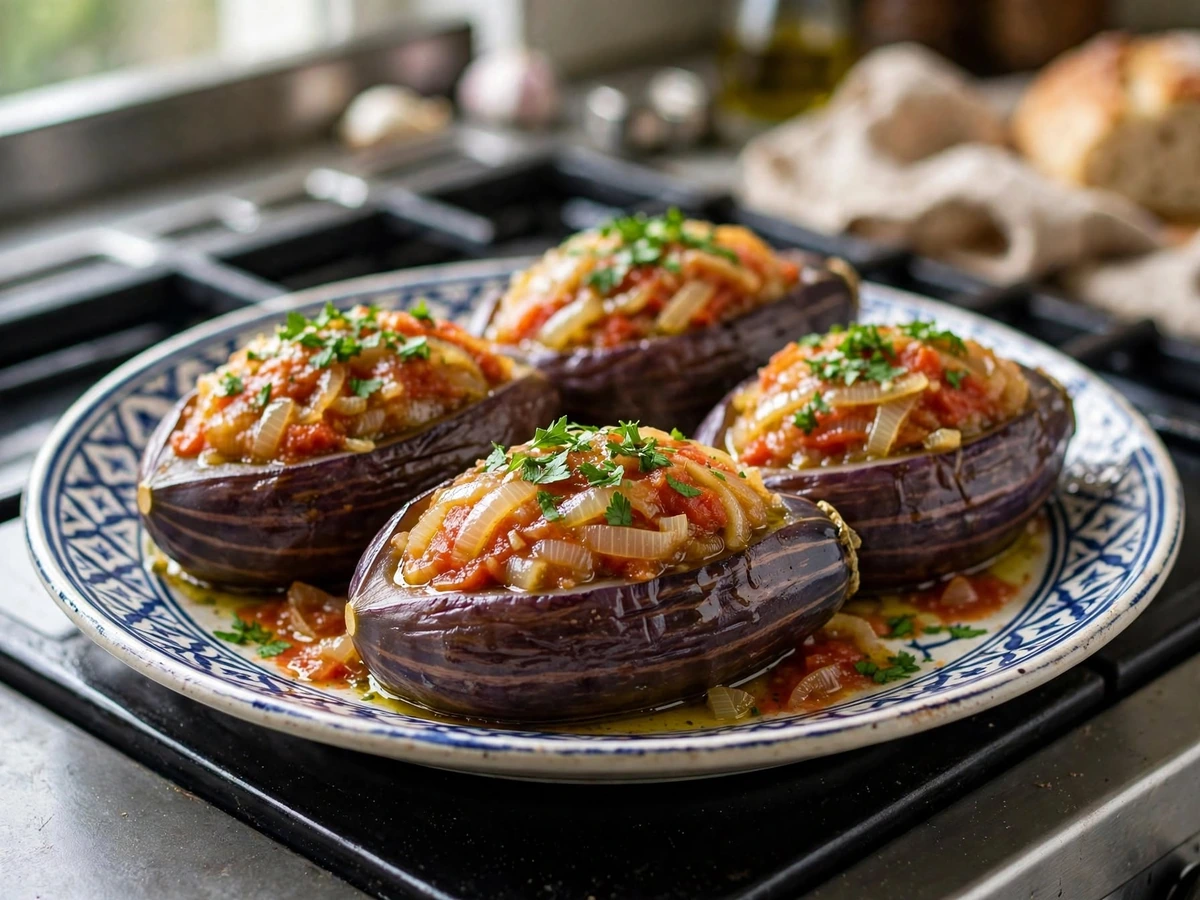
Türkiye
İmam Bayıldı
Follow the pantry: both dishes connect through water.
Shared thread · water · salt · onion
Cross a culinary border
03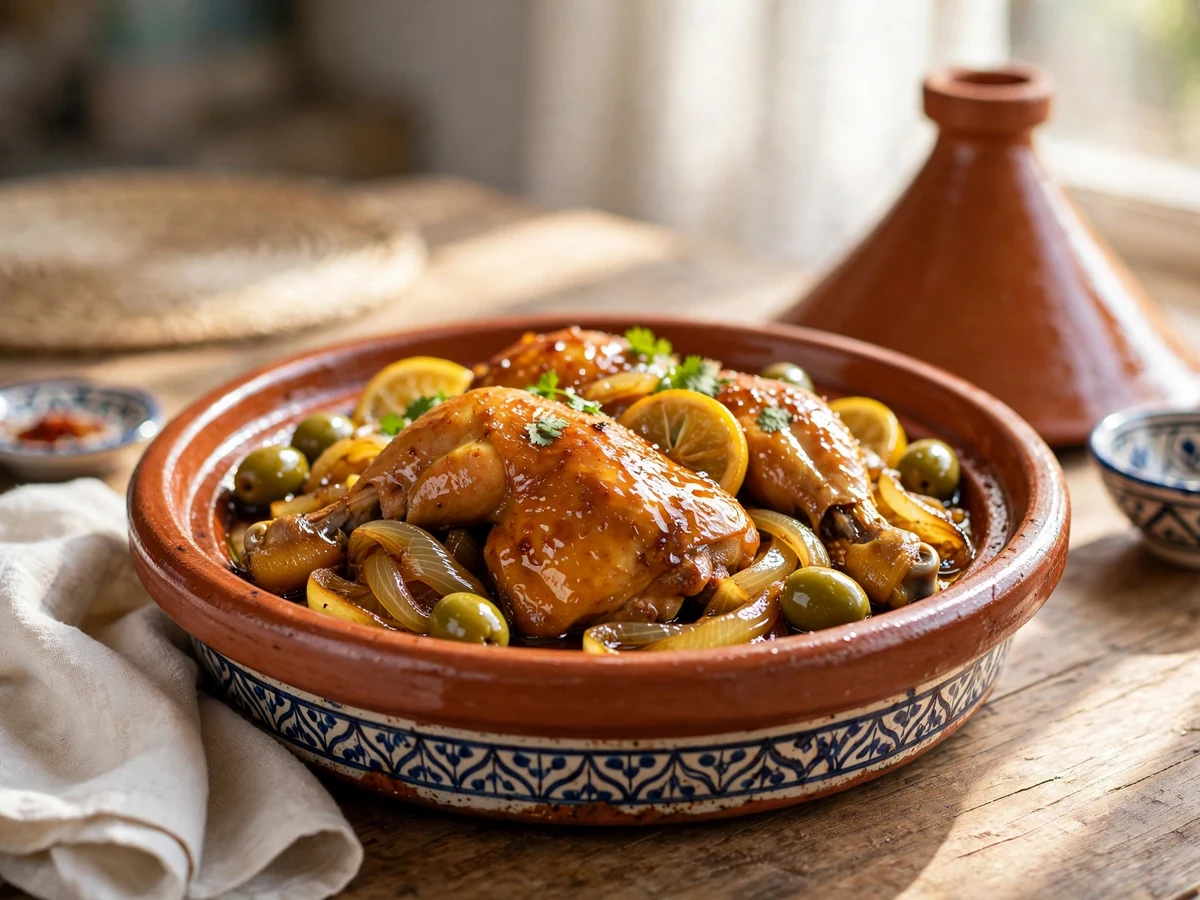
Morocco
Moroccan Chicken Tagine with Preserved Lemon and Olives
Cross borders and see how another cuisine handles water.
Shared thread · water · olive oil · salt
Continue in Ember & Equator