
Morocco · dinner · stew · comfort-food
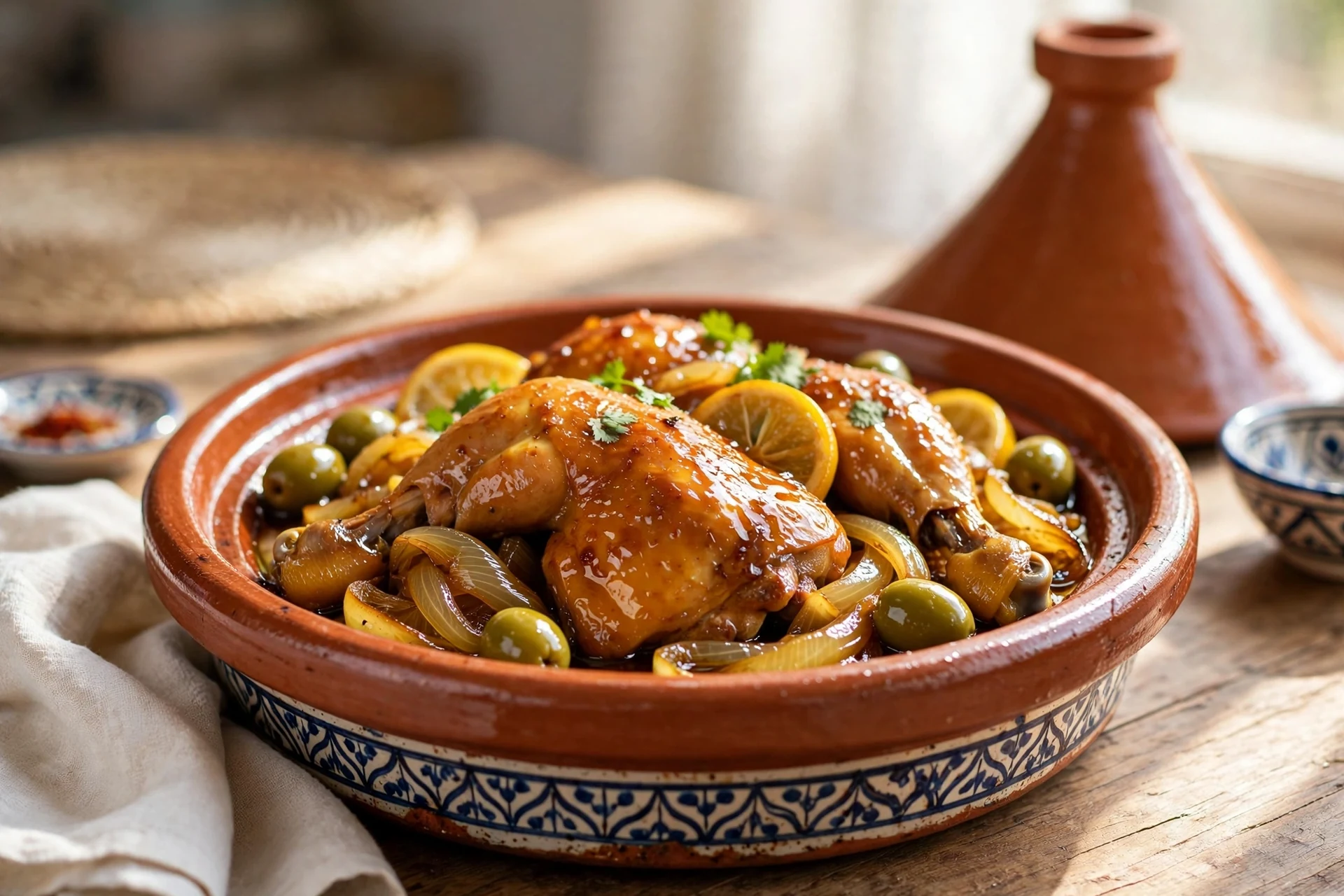
Moroccan Chicken Tagine with Preserved Lemon and Olives
Morocco through one enduring dish.
Tender chicken, silky slowly softened onions, briny green olives and fragrant preserved lemon come together in this classic Moroccan preparation. Gentle cooking over a deeply seasoned onion base creates a rich, concentrated sauce without flour, cream or unnecessary stock.
- Total
- 120 min
- Difficulty
- Medium
- Serves
- 4
- Steps
- 6
The dish
Place first. Then the plate.
Tagine refers both to a North African cooking vessel and to dishes associated with slow, moist cooking. Moroccan versions vary by region and household. Preserved lemon and olives are established ingredients in Moroccan cooking, but Ember & Equator avoids presenting this combination as a single universal national recipe.
Explore MoroccoAt a glance
Origin
Morocco
Region
Fez, Marrakech, and the broader Moroccan interior
Meal
dinner · stew · comfort-food
Guided steps
6
Dish
Chicken Tagine with Preserved Lemon and Olives
Cuisine
Moroccan cuisine
Food type
Dinner · Stew · Comfort food
Cook the recipe
In the kitchen
Start with the ingredients, then follow the Method in order. Open cooking tips only when you need extra help; the story and references can wait until you are ready.
- Total
- 120 min
- Serves
- 4
- Level
- Medium
- Visual cues
- 6
Ingredients
Serves 4- 1 wholewhole chickenabout 3½–4 lb (1.6–1.8 kg), cut into 8 bone-in pieces
- 2 largeyellow onionvery finely chopped
- 4 clovesgarlicfinely minced
- 1 tspground ginger
- 1 tspground turmeric
- 0.5 tspground cumin
- 0.5 tspblack pepperfreshly ground
- 0.25 tspsaffron threadslightly crushed
- 1 tspkosher saltplus more only after tasting the finished sauce
- 3 tbspolive oilextra-virgin
- 0.75 cupwater180 ml; add only a small splash more if the vessel becomes dry during cooking
- 1 wholepreserved lemonrinsed briefly only if very salty; rind sliced into thin strips, with most soft pulp removed if desired
- 1 cupgreen olivesMoroccan-style brined green olives preferred; pitted if desired
- 1 small handfulfresh coriandercilantro; stems and leaves, plus 1–2 tbsp chopped leaves for serving
- 1 small handfulfresh parsleystems and leaves
Optional
- 1 tbspfresh lemon juiceoptional, only if the finished sauce needs extra brightness
Everything ready? Continue straight into the cooking steps.
Start methodMethod
6 steps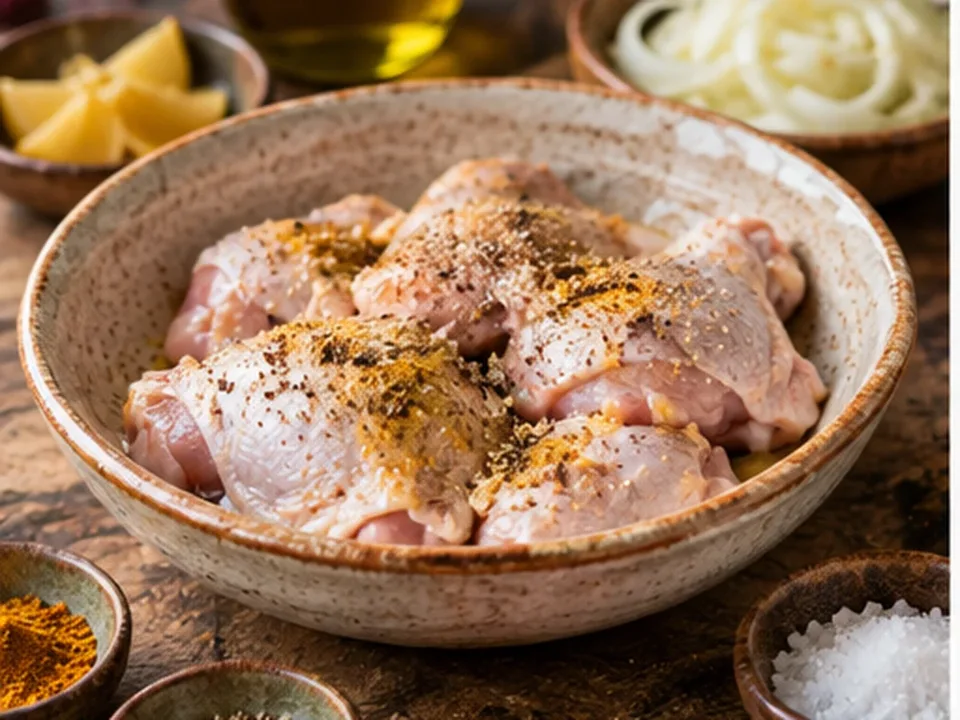 Step 01
Season the chicken
10 min
Mix the ground ginger, turmeric, cumin, black pepper, crushed saffron and salt.
Mix the ground ginger, turmeric, cumin, black pepper, crushed saffron and salt. Pat the chicken dry, then rub the seasoning over every piece, including around the joints and exposed flesh. Cover and refrigerate for at least 2 hours for deeper seasoning, or overnight if convenient; the chicken can also be cooked immediately. Remove it from the refrigerator 20–30 minutes before cooking so the pieces lose their refrigerator chill.
Look for
The chicken should be evenly coated with a thin yellow-gold layer of spice, with no large pockets of dry seasoning left in the bowl.
Kitchen note
Drying the chicken first helps the seasoning cling. Marinating improves seasoning depth, but it is not mandatory; do not delay dinner simply because an overnight marinade was not possible.
 Step 02
Slowly soften the onions
15 min
Set a tagine base or heavy-bottomed Dutch oven over low to medium-low heat.
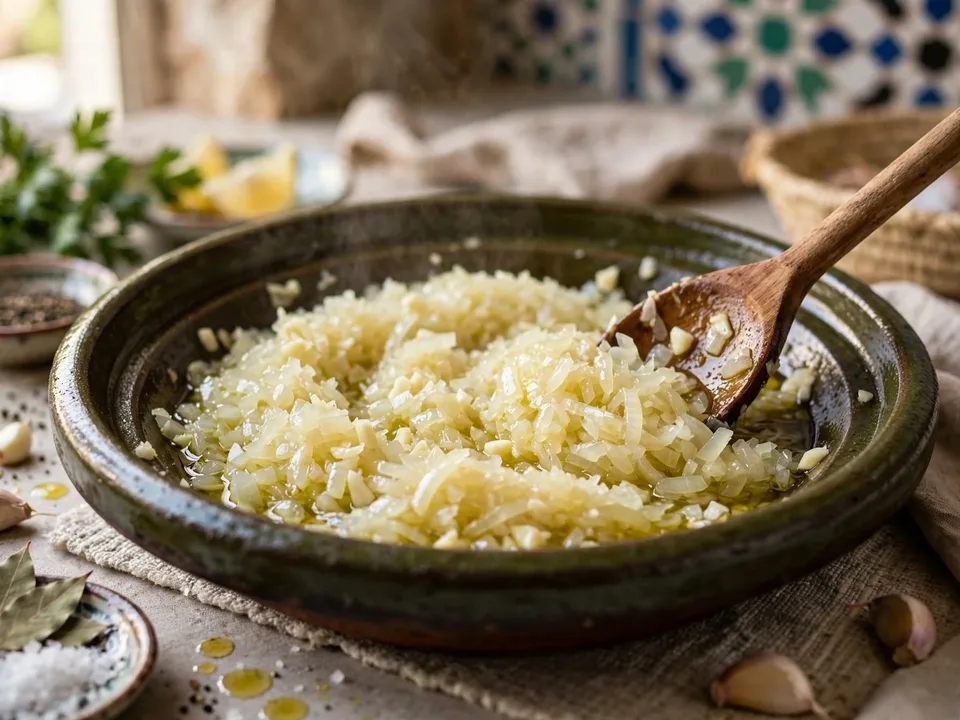
Set a tagine base or heavy-bottomed Dutch oven over low to medium-low heat. Add the olive oil and finely chopped onions and cook for 10–15 minutes, stirring frequently, until very soft, translucent and beginning to collapse without taking on deep brown colour. Add the garlic and cook for 30–60 seconds, just until fragrant.
Look for
The onions should look glossy, pale and very soft; a spoon should pass through them easily, but they should not be deeply caramelized.
Kitchen note
The onions are becoming part of the sauce, not a browned garnish. If their edges colour quickly or they begin sticking, lower the heat and add a tablespoon of water rather than increasing the oil.
 Step 03
Arrange the chicken and begin the gentle braise
55 min
Arrange the chicken pieces over the softened onions, placing the thicker breast and thigh pieces toward the steadier heat at the centre of the vessel.
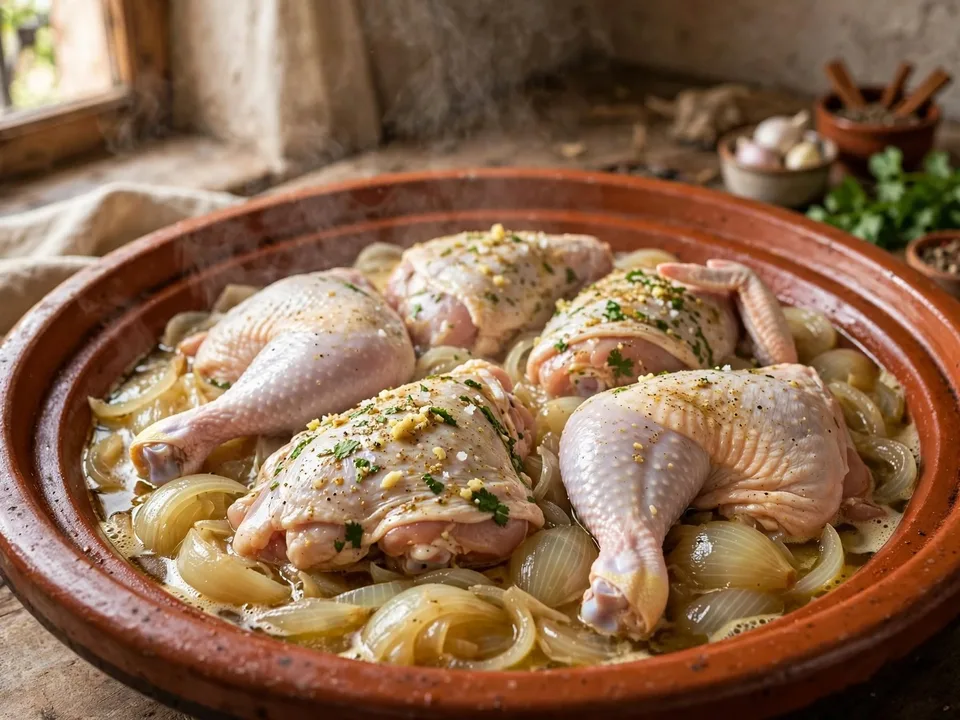
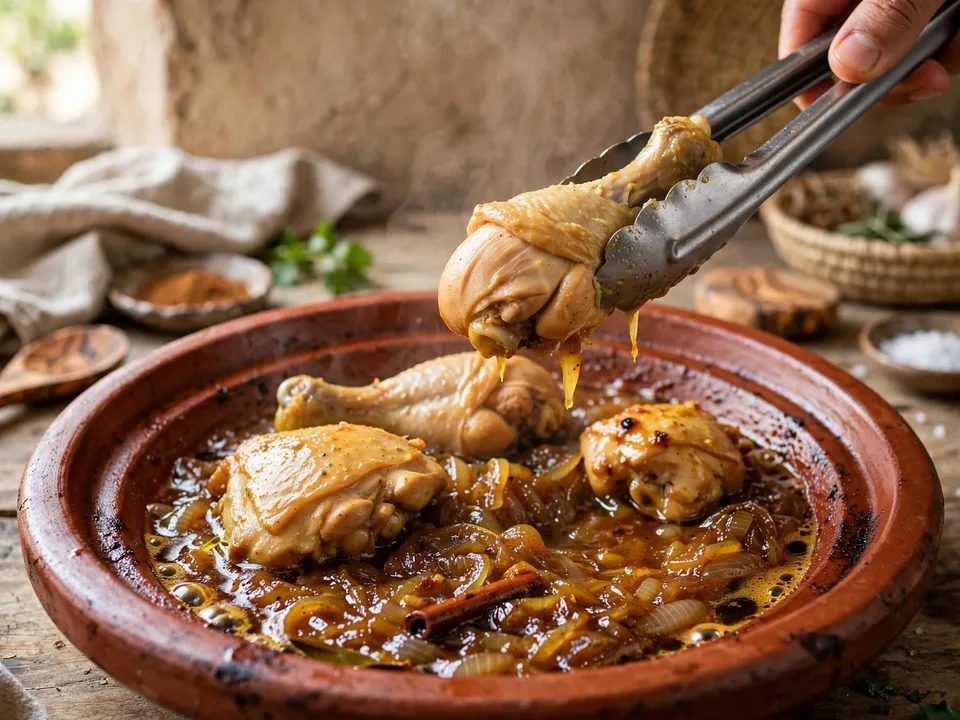
Arrange the chicken pieces over the softened onions, placing the thicker breast and thigh pieces toward the steadier heat at the centre of the vessel. Pour in ¾ cup (180 ml) water around, rather than directly over, the chicken so the spice coating stays in place. Tuck the parsley and coriander around the pieces. Cover tightly, bring the liquid only to a gentle simmer, then keep the heat low. Cook for about 45 minutes in a Dutch oven or begin checking a traditional tagine at about 55–60 minutes, turning the chicken once or twice if needed for even cooking.
Look for
Steam should escape gently and the liquid should show only occasional small bubbles. By the end of this stage the onions will have collapsed further and the thickest chicken pieces should be nearly or fully cooked through.
Kitchen note
Keep the simmer quiet. A few small bubbles are enough; vigorous boiling evaporates the limited liquid too quickly and can tighten the chicken before the connective tissue has softened.
 Step 04
Check the chicken and concentrate the onion sauce
10 min
Check the thickest chicken pieces for doneness and tenderness.
Check the thickest chicken pieces for doneness and tenderness. The meat should be cooked through at the bone and the leg joints should yield readily when moved. Remove the herb stems. If the chicken is tender but the sauce is still loose, transfer the chicken to a warm plate and simmer the onion mixture uncovered over medium-low heat for several minutes, stirring as needed, until concentrated. Return the chicken once the sauce has reached the right consistency.
Look for
The sauce should no longer look like broth. Drag a spoon through it: the bottom of the vessel should appear briefly before the softened onion mixture slowly flows back.
Kitchen note
Reduce the sauce only after the chicken is tender. Reducing too early can leave too little moisture for the chicken to finish gently. If using a thermometer, check the thickest part without touching bone and follow current food-safety guidance for poultry.
 Step 05
Add the preserved lemon and olives
15 min
Taste a small piece of preserved lemon first.
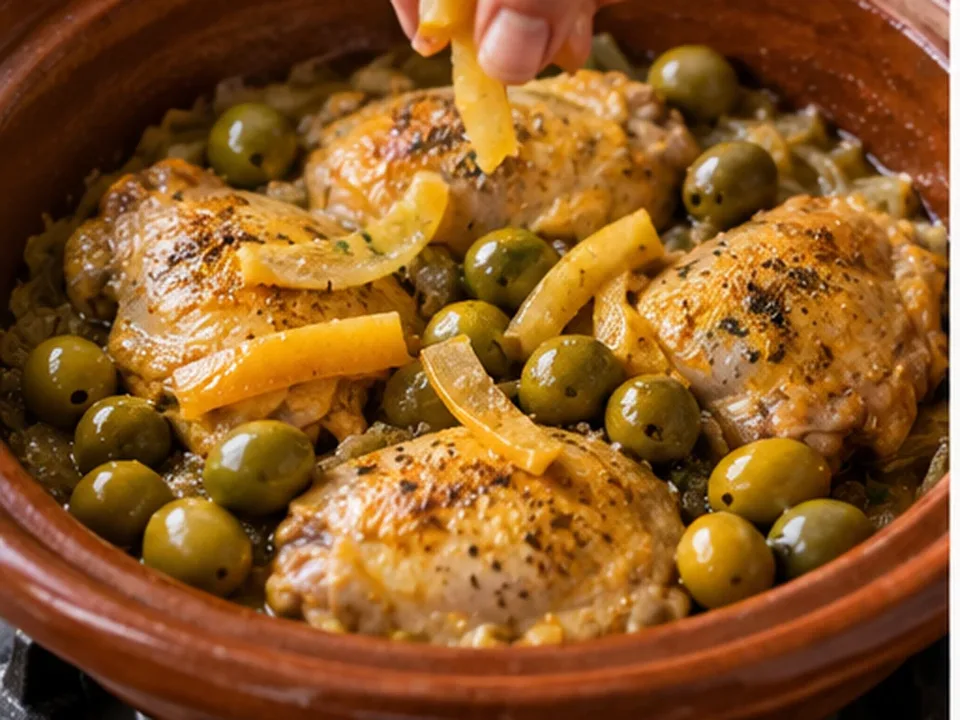
Taste a small piece of preserved lemon first. Rinse it briefly if exceptionally salty. Quarter it, remove most of the soft pulp if you prefer a cleaner, less salty finish, and slice the rind into thin strips. Add the preserved-lemon rind and green olives to the chicken and sauce. Cover and cook at a gentle simmer for another 10–15 minutes so their briny, citrusy flavour seasons the sauce without cooking the rind to a paste.
Look for
The chicken should be tender, the olives still distinct and the preserved-lemon strips visible, while the onion-rich sauce clings loosely to the chicken instead of pooling like thin broth.
Kitchen note
Preserved lemon and olives behave like seasonings as well as ingredients. Their salt levels vary enormously, so do not add more salt until after this final simmer.
 Step 06
Taste, balance and serve
5 min
Taste the sauce before adding any salt.
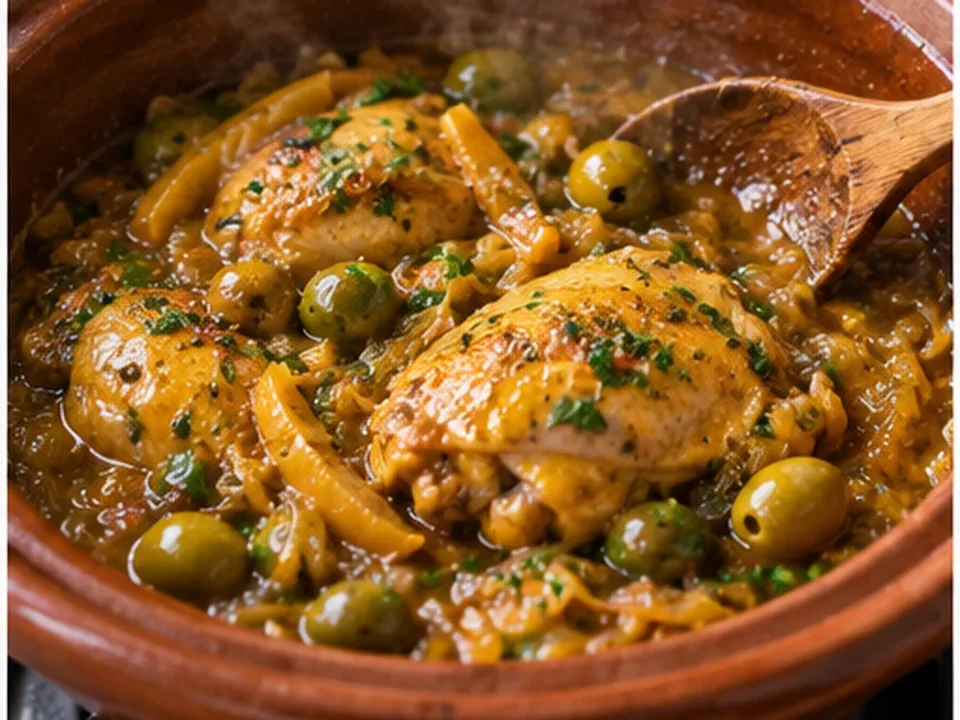
Taste the sauce before adding any salt. If it needs brightness rather than salt, stir in a small amount of fresh lemon juice. Scatter over the chopped fresh coriander and serve hot, ideally from the cooking vessel, with warm Moroccan bread (khobz) for scooping up the chicken, olives, preserved lemon and concentrated onion sauce.
Look for
The finished tagine should be glossy and spoonable, with a concentrated savoury sauce, distinct olives and preserved-lemon strips, and chicken that yields easily without falling into dry shreds.
Kitchen note
Let the final taste decide the seasoning. If the sauce has become too concentrated or salty, loosen it with a spoonful or two of hot water rather than adding more lemon or salt.
After cooking
Explore the dish beyond the method.
Story, place and references are here for discovery, so they stay out of the way while you cook.
Culture & tradition
The story behind the dish
Origins, evolution and everyday life—read together as part of the recipe's culinary record.
Origins
Earthenware cooking vessels and slow-cooked stews have long histories across North Africa. The precise origin of the modern Moroccan tagine cannot responsibly be reduced to one people, century or migration event.
How it evolved
Moroccan tagines developed through regional ingredients, household practice and centuries of cultural exchange. Spice combinations, proteins, vegetables and preserved ingredients differ considerably from one preparation to another.
Its place today
Chicken with preserved lemon and olives is a well-known Moroccan tagine style served in homes and restaurants. It is one expression within a much broader family of Moroccan tagines rather than a single national standard.
Visual archive · plate 01
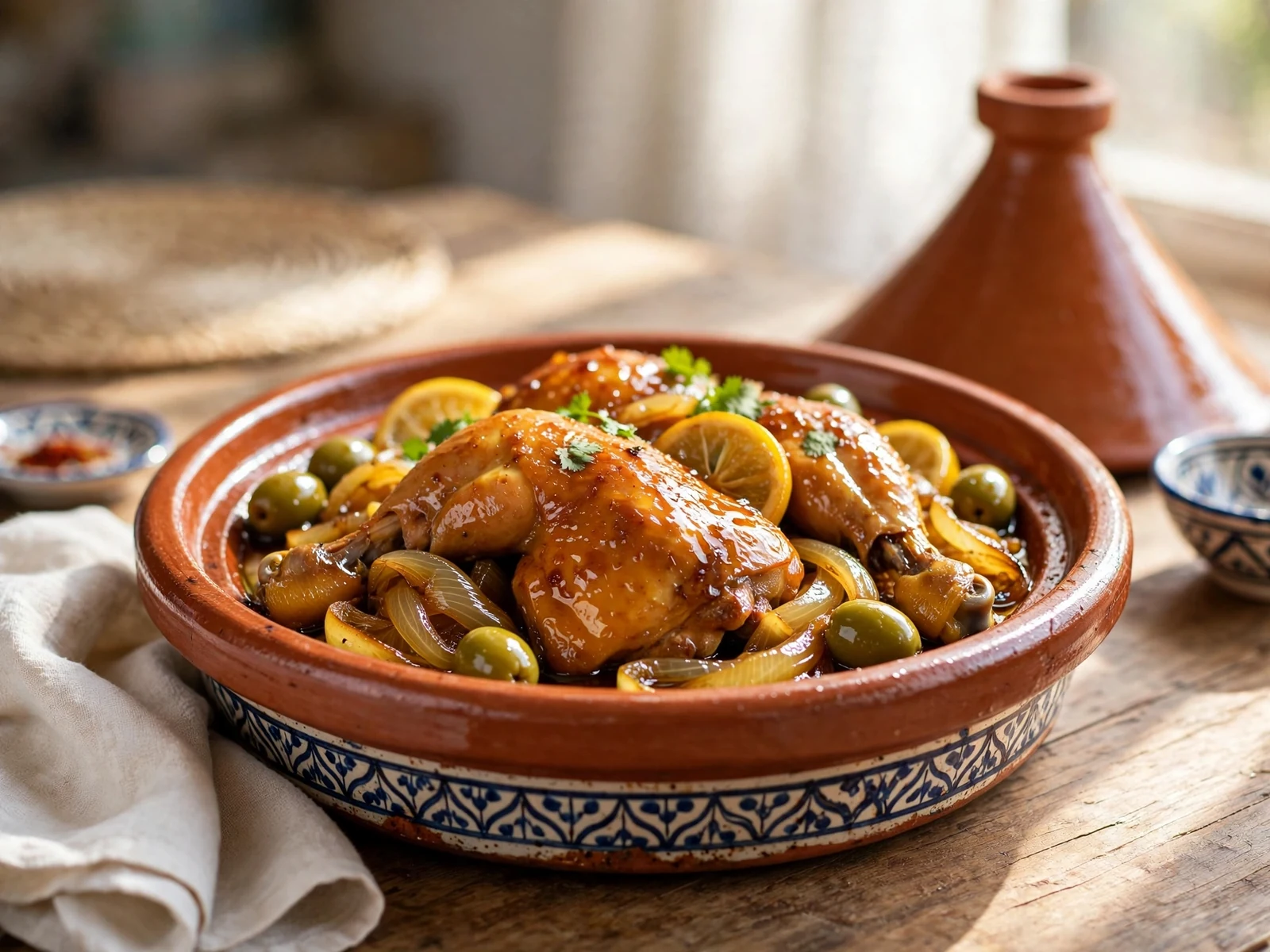
Moroccan Chicken Tagine with Preserved Lemon and Olives
An editorial view of the finished dish, kept compact so the story continues without an oversized image break.
Primary region
Fez, Marrakech, and the broader Moroccan interior
Country
Morocco
Regional influence
Morocco's dry, hot interior climate made preservation essential. Preserved lemons, salt-cured olives, and dried spices are all products of a food culture that learned to concentrate and extend ingredients across long dry seasons. Slow cooking over low heat conserved fuel in wood-scarce environments.
Related food systems
- Berber indigenous North African cuisine
- Andalusian Moorish culinary tradition
- Maghrebi Arab cooking
- Ottoman spice trade influence
Sources & further reading
Follow the reference trail.
Ember & Equator links outward when an institution or primary reference helps support the culinary record.
- 01The welcoming Moroccan gastronomyExternal ↗
Moroccan National Tourist Office · government
Supports: culinary context · hospitality · Ramadan context
Ember & Equator source review · 2026-09-01
- 02Tagine of Chicken with Preserved Lemon and OlivesExternal ↗
Epicurious / Claudia Roden · reference
Supports: ingredient structure · gentle chicken braise · preserved lemon and olive finish · sauce reduction
Ember & Equator source review · 2026-09-16
- 03Chicken Tagine with Olives and Preserved LemonsExternal ↗
Food Network / Boujemaa Mars, La Mamounia Marrakech · reference
Supports: Moroccan chef variation · spice variation · preserved lemon and olive combination · tagine technique
Ember & Equator source review · 2026-09-16
Ingredient guides
Learn about the ingredients behind the dish.
These are reference guides, not a second ingredient list. Follow an ingredient when you want to understand its role, use and wider culinary context.
Ingredient
whole chicken
Understand what it contributes, how to use it, and the dishes that reveal it best.
Ingredient
yellow onion
Understand what it contributes, how to use it, and the dishes that reveal it best.
Ingredient
garlic
Understand what it contributes, how to use it, and the dishes that reveal it best.
Ingredient
ground ginger
Understand what it contributes, how to use it, and the dishes that reveal it best.
Ingredient
ground turmeric
Understand what it contributes, how to use it, and the dishes that reveal it best.
Ingredient
ground cumin
Understand what it contributes, how to use it, and the dishes that reveal it best.
Keep wandering
Where will this dish take you next?
Stay with the place, follow an ingredient or technique, or cross into another food culture. Each path begins with something already present in this dish.
Stay with the place
01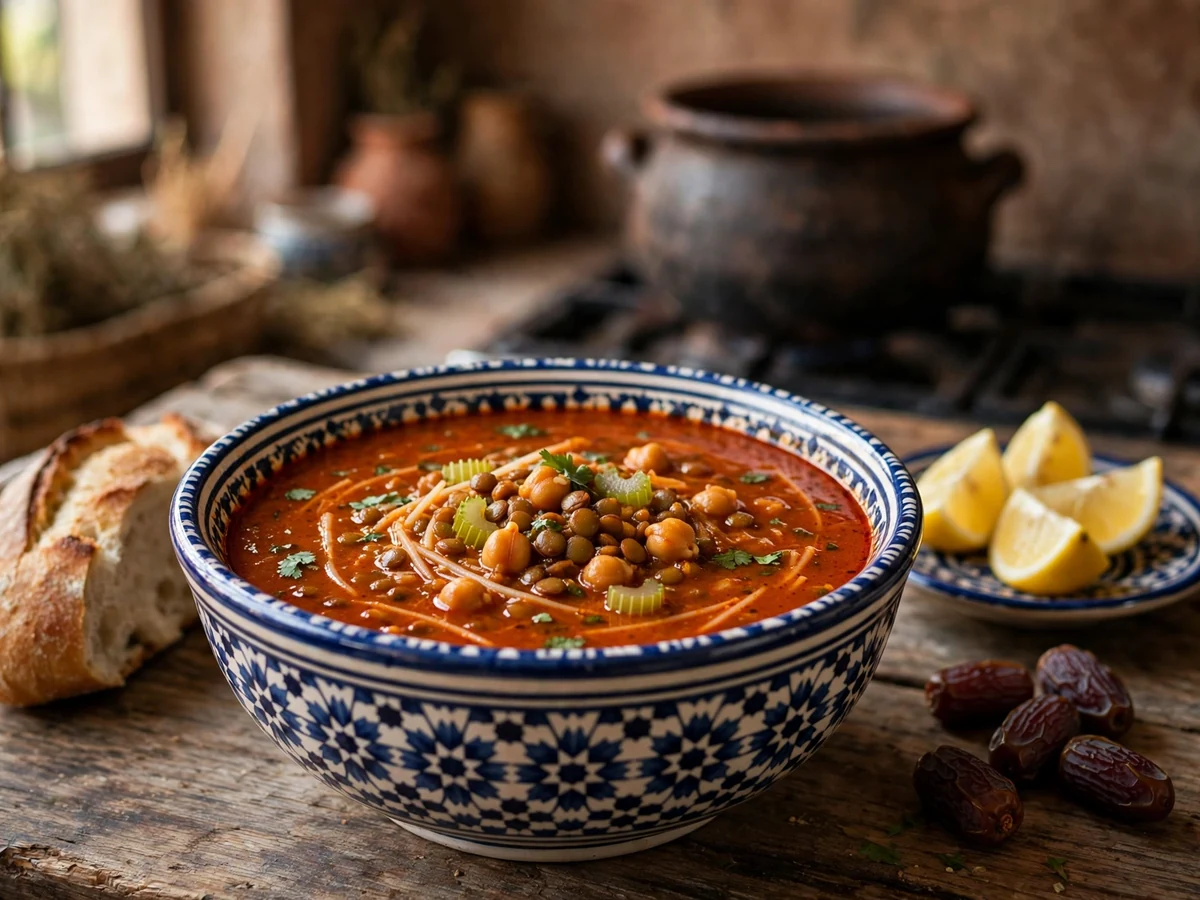
Morocco
Harira
Stay in the same food culture and follow yellow onion into another recipe.
Shared thread · yellow onion · garlic · ground ginger
Follow the method or pantry
02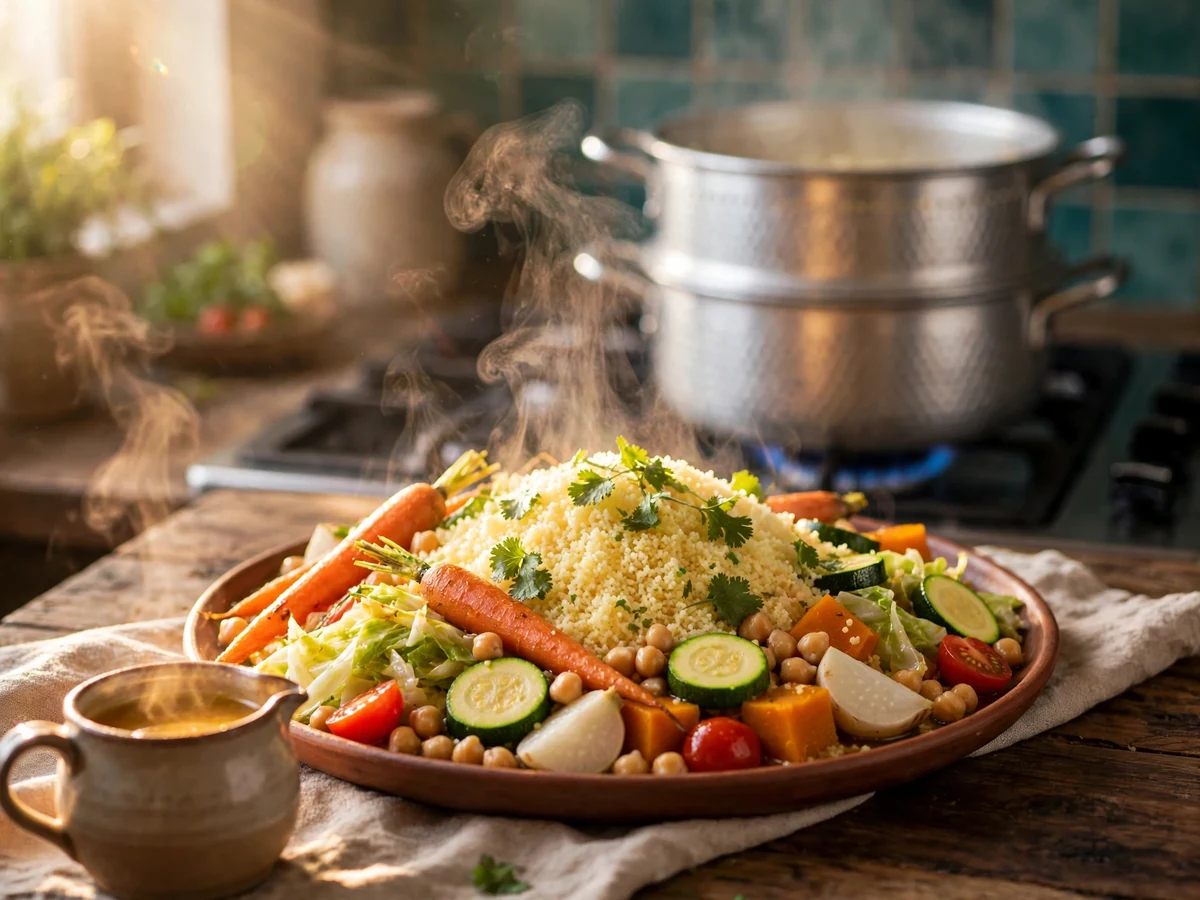
Morocco
Moroccan Couscous with Seven Vegetables
Follow the pantry: both dishes connect through ground ginger.
Shared thread · ground ginger · ground turmeric · black pepper
Cross a culinary border
03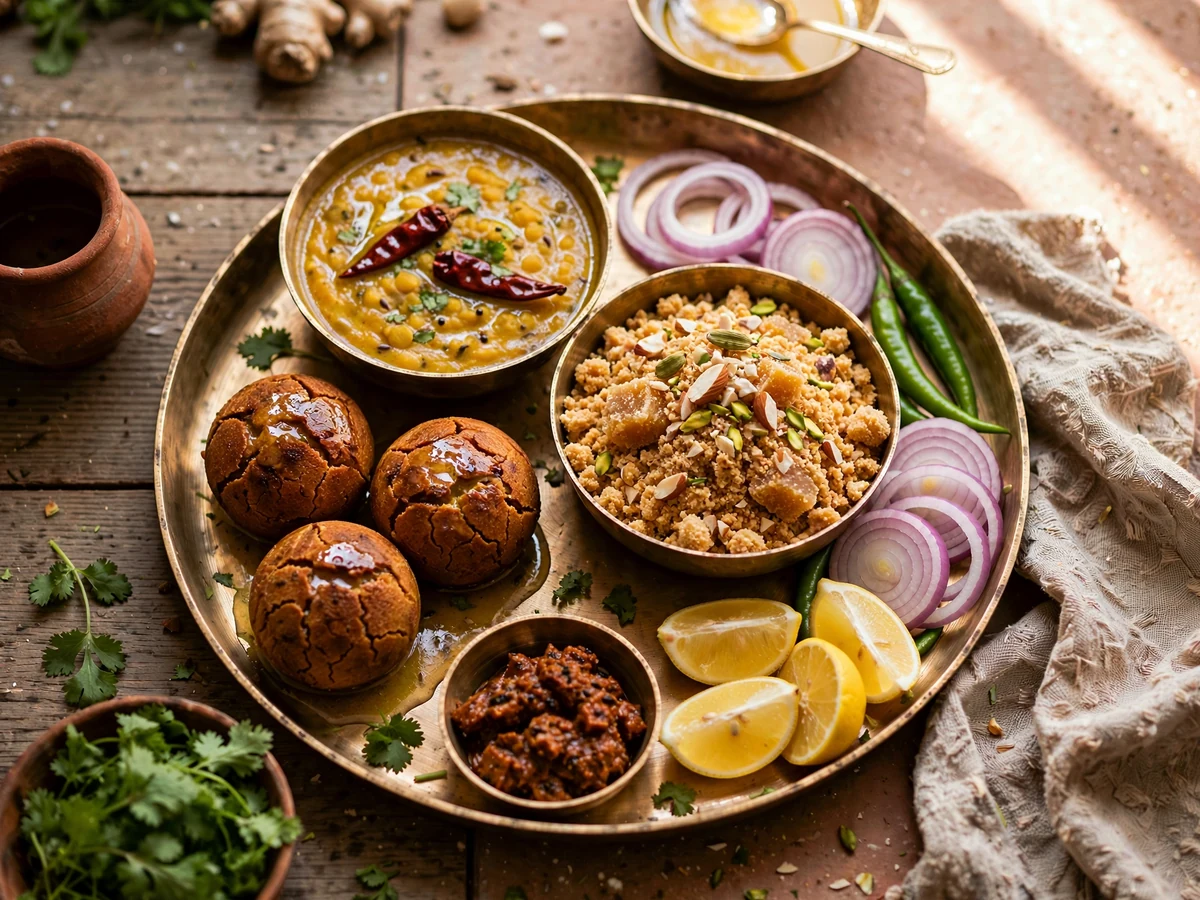
India
Dal Baati Churma
Cross borders and see how another cuisine handles yellow onion.
Shared thread · yellow onion · garlic · ground turmeric
Go one layer deeper
One small detail can open an entirely different part of food.
Continue in Ember & Equator