
China · lunch · dinner
Char Siu
China through one enduring dish.
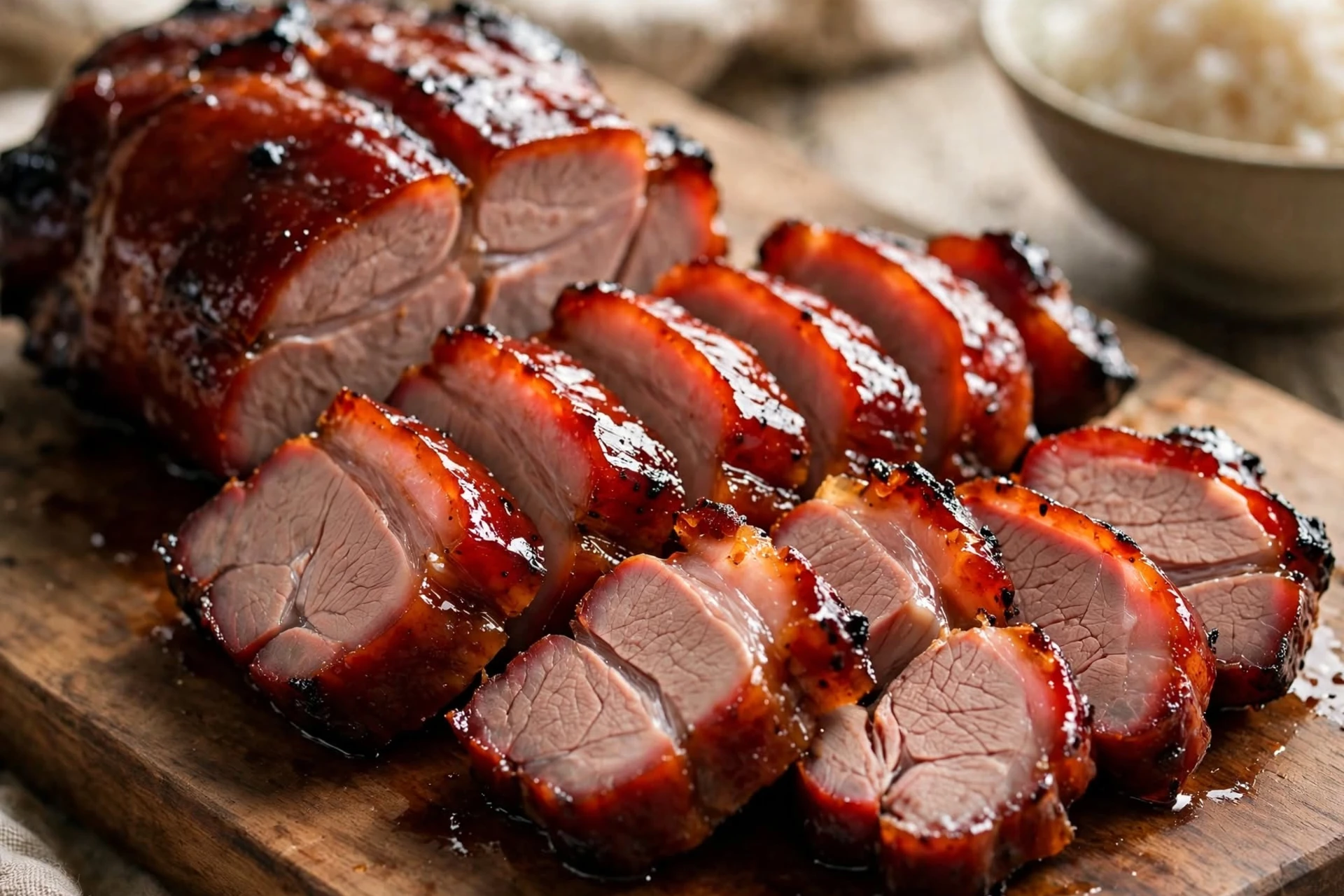
Char siu is Cantonese roast pork cut into long strips, marinated deeply, roasted above its drippings and repeatedly lacquered until the surface is glossy, caramelised and lightly charred while the centre stays juicy.
- Total
- 80 min
- Difficulty
- Medium
- Serves
- 6
- Steps
- 7
The dish
Place first. Then the plate.
Char siu belongs to the Cantonese siu mei roast-meat tradition. Commercial roast shops use specialised ovens and hanging techniques; this Ember & Equator version translates the same marinate-roast-lacquer logic to a home oven without treating bright red food colouring as a requirement.
Explore ChinaAt a glance
Origin
China
Region
Guangdong and Cantonese-speaking southern China
Meal
lunch · dinner
Guided steps
7
Dish
Char Siu
Cuisine
Chinese cuisines
Food type
Dinner · Comfort food
Technique
Marinate · Roast or bake · Balance a sweet-sour-salty sauce
Cook the recipe
In the kitchen
Start with the ingredients, then follow the Method in order. Open cooking tips only when you need extra help; the story and references can wait until you are ready.
- Total
- 80 min
- Serves
- 6
- Level
- Medium
- Visual cues
- 7
Ingredients
Serves 6- 900 gpork shoulderboneless, with some marbling; cut into long 5–7 cm thick strips
- 2 tbsphoisin sauce
- 1.5 tbsplight soy sauce
- 1 tbspShaoxing wine
- 2 tbspsugar
- 2 tbsphoneymaltose may be used instead for a more traditional sticky lacquer
- 0.5 tspfive-spice powder
- 0.5 tspsesame oil
- 3 clovesgarlicfinely minced
- 0.5 tspsaltadjust to the saltiness of the soy and hoisin
Everything ready? Continue straight into the cooking steps.
Start methodMethod
7 steps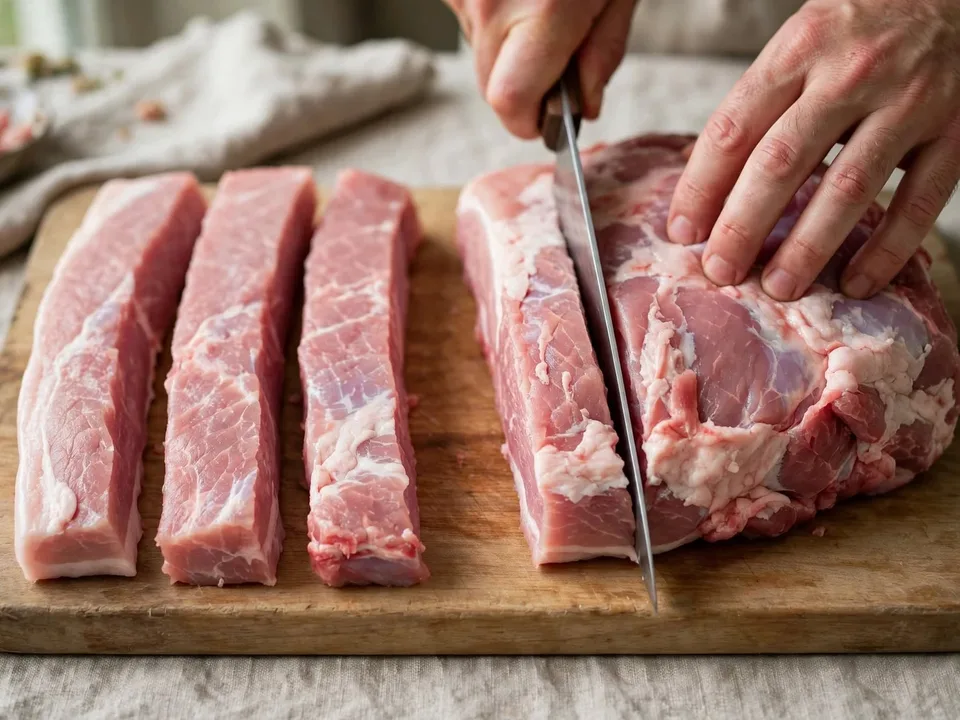 Step 01
Cut the pork into long even roasting strips
8 min
Cut the pork shoulder into long strips about 5–7 cm thick, following the natural seams where practical.
Cut the pork shoulder into long strips about 5–7 cm thick, following the natural seams where practical. Leave some marbling and exterior fat because it protects the meat during high-heat roasting. Pat the strips dry.
Look for
The strips are similar in thickness with broad exposed surfaces and enough marbling to remain juicy during roasting.
Kitchen note
Avoid very thin tapered pieces: they burn before the centre of the thicker strips reaches the same doneness.
 Step 02
Mix the marinade and reserve a clean portion
5 min
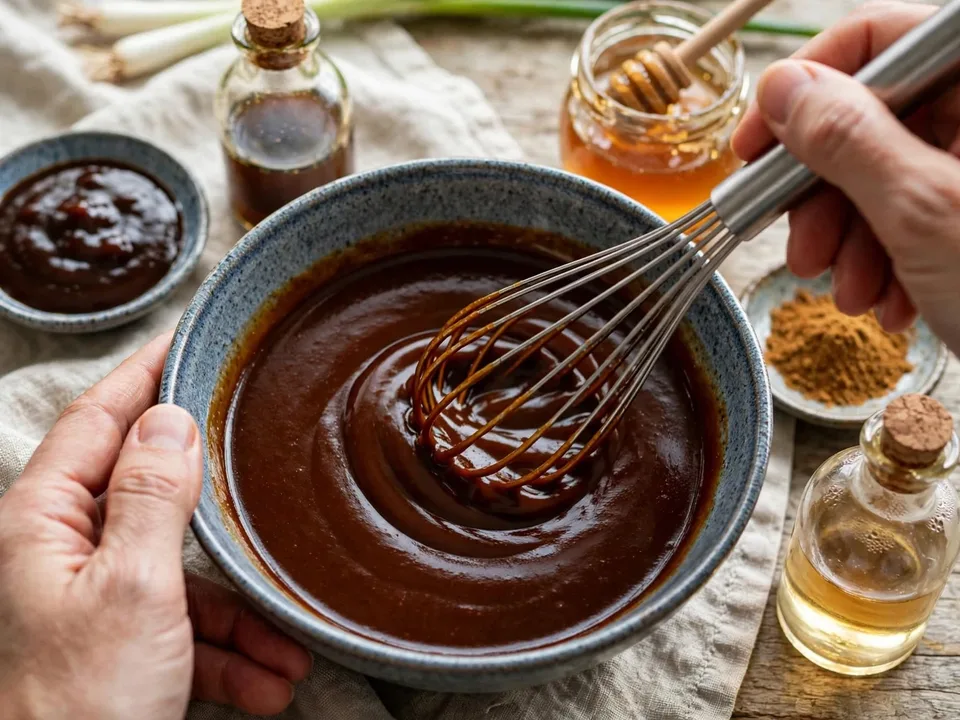
Whisk the hoisin, soy, Shaoxing wine, sugar, 1 tablespoon honey, five-spice, sesame oil, garlic and salt until the sugar is mostly dissolved.
Whisk the hoisin, soy, Shaoxing wine, sugar, 1 tablespoon honey, five-spice, sesame oil, garlic and salt until the sugar is mostly dissolved. Before the marinade touches raw pork, reserve 2–3 tablespoons in a separate covered container for the later lacquer.
Look for
The marinade is uniform and glossy and a clearly separate clean portion has been set aside for finishing.
Kitchen note
Reserve finishing marinade before raw meat contact. Never brush cooked pork with liquid that has been sitting with raw pork unless that liquid has first been brought to a safe boil.
 Step 03
Marinate the pork thoroughly
480 min
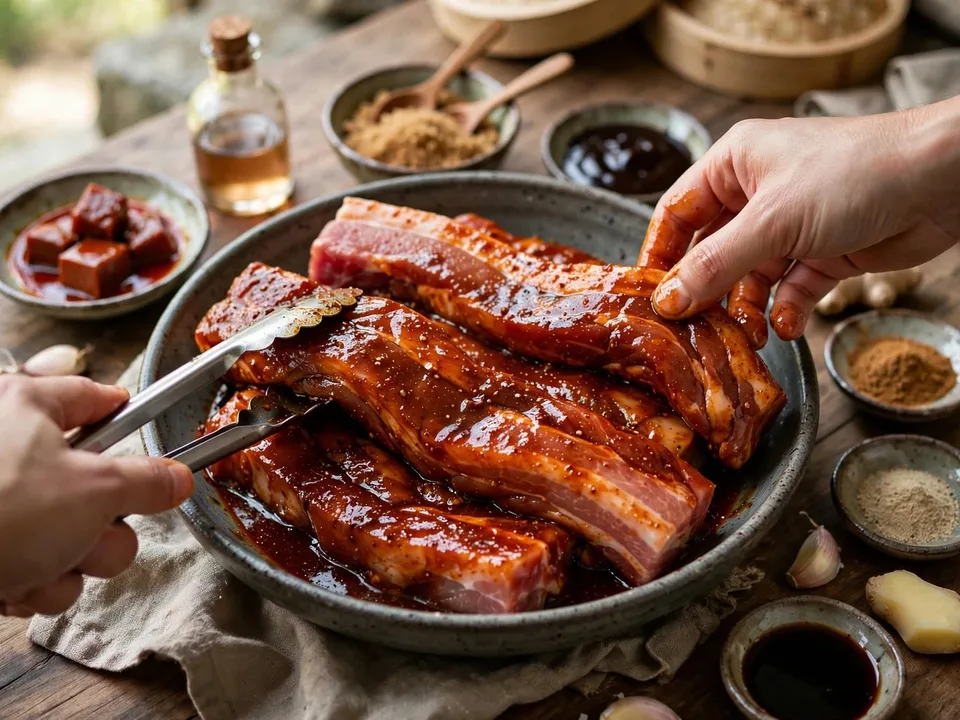
Coat every surface of the pork with the remaining marinade, cover and refrigerate for at least 8 hours and preferably overnight.
Coat every surface of the pork with the remaining marinade, cover and refrigerate for at least 8 hours and preferably overnight. Turn the strips once if they are sitting in a shallow dish so the narrow edges are seasoned too.
Look for
Every surface is evenly coated and the pork has had enough refrigerated time for the seasoning to penetrate.
Kitchen note
The long marinade is where most of the internal seasoning happens. A quick 20-minute coating can colour the surface but does not produce the same depth.
 Step 04
Set up a rack above a lined tray
10 min
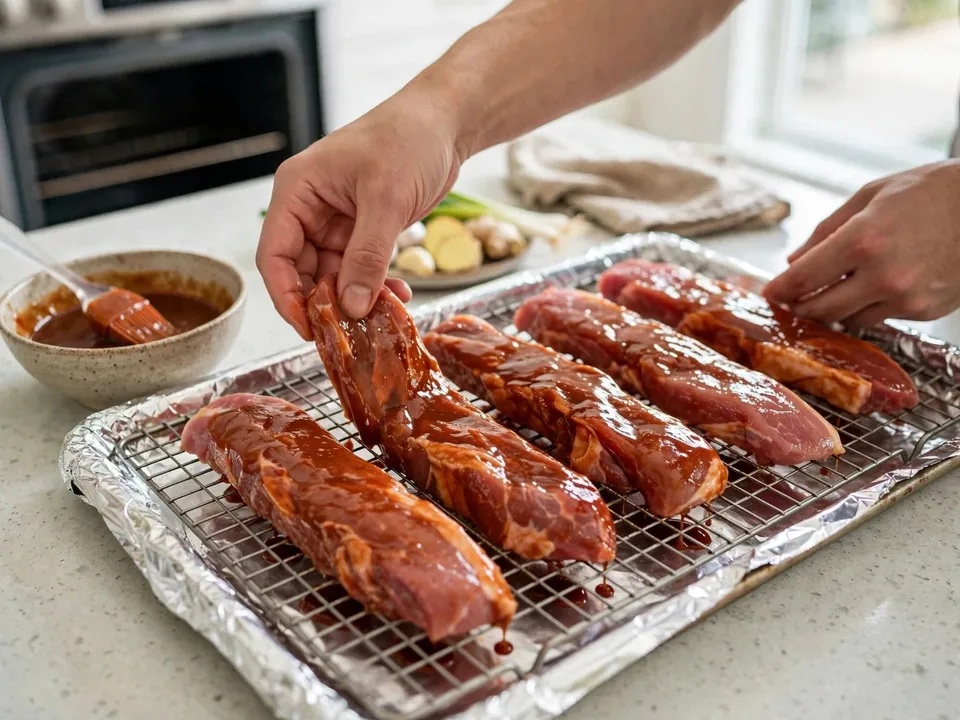
Heat the oven to 230°C / 450°F with a rack in the upper third.
Heat the oven to 230°C / 450°F with a rack in the upper third. Line a tray with foil, place a metal rack on top and add about 1 cup water to the tray below the rack so sugary drippings do not burn. Arrange the pork strips with space between them.
Look for
The pork is elevated above the tray, the strips do not touch and the drip pan contains water without wetting the meat.
Kitchen note
The water belongs under the rack, not around the pork. It catches drips and limits smoke while the elevated meat can still roast and caramelise.
 Step 05
Roast, turn and manage the heat
35 min
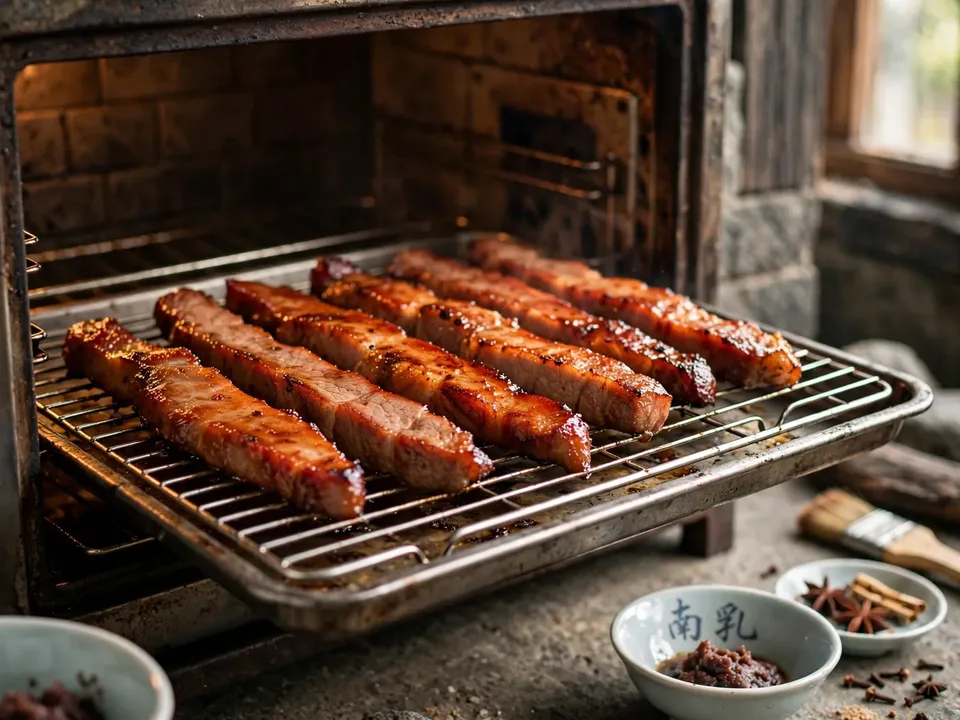
Roast for 12–15 minutes at 230°C / 450°F, then reduce the oven to about 190°C / 375°F.
Roast for 12–15 minutes at 230°C / 450°F, then reduce the oven to about 190°C / 375°F. Continue roasting for another 20–25 minutes, turning the strips once and rotating the tray for even colour. Add more water to the drip pan if it dries out.
Look for
The pork is nearly cooked through with a deep reddish-brown surface but still lacks the final sticky lacquer and charred edges.
Kitchen note
Check every 10 minutes once the sugar begins to colour. If the surface darkens too fast, lower the heat rather than waiting for the thinner edges to burn.
 Step 06
Build the sticky lacquer in thin layers
10 min
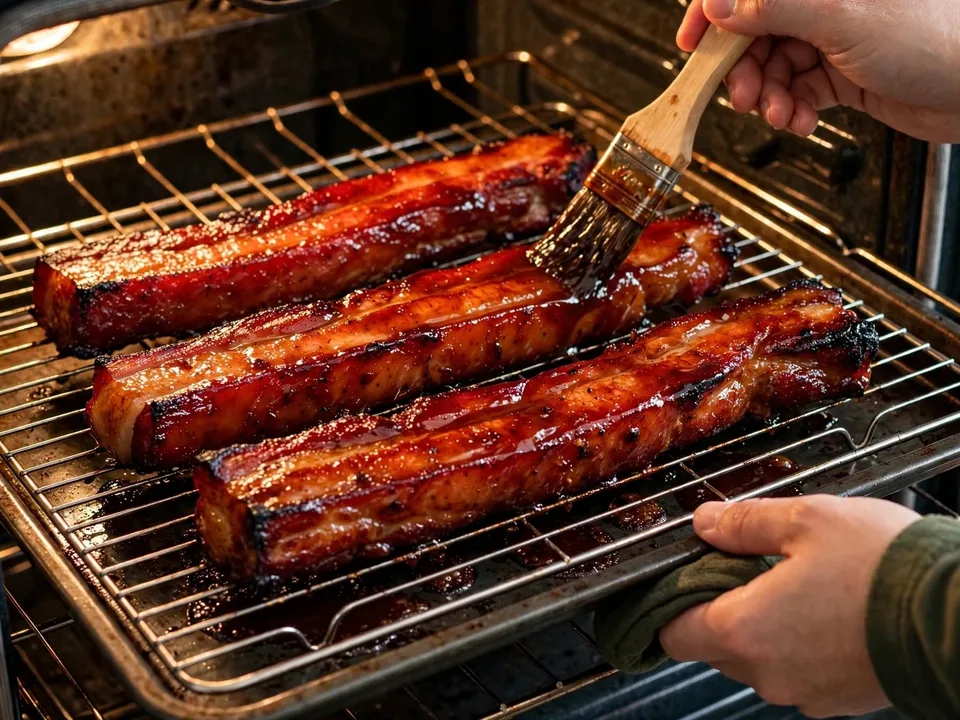
Warm the clean reserved marinade with the remaining 1 tablespoon honey and a tablespoon of hot water.
Warm the clean reserved marinade with the remaining 1 tablespoon honey and a tablespoon of hot water. Brush a thin layer over the pork, turn and brush the other side, then roast for about 8–10 minutes more. Repeat once if needed. Use a brief broil only if extra caramelisation is required, watching constantly.
Look for
The exterior is shiny and tacky with caramelised edges and a few charred spots, but no broad black burnt patches.
Kitchen note
Thin glaze layers caramelise more evenly than one heavy sugary coat. The goal is lacquered mahogany edges, not blackened sugar.
 Step 07
Verify doneness, rest and slice across the grain
10 min
Check the thickest strip is safely cooked; pork is safe at 63°C / 145°F followed by at least a 3-minute rest, though char siu may finish slightly higher depending on the cut.
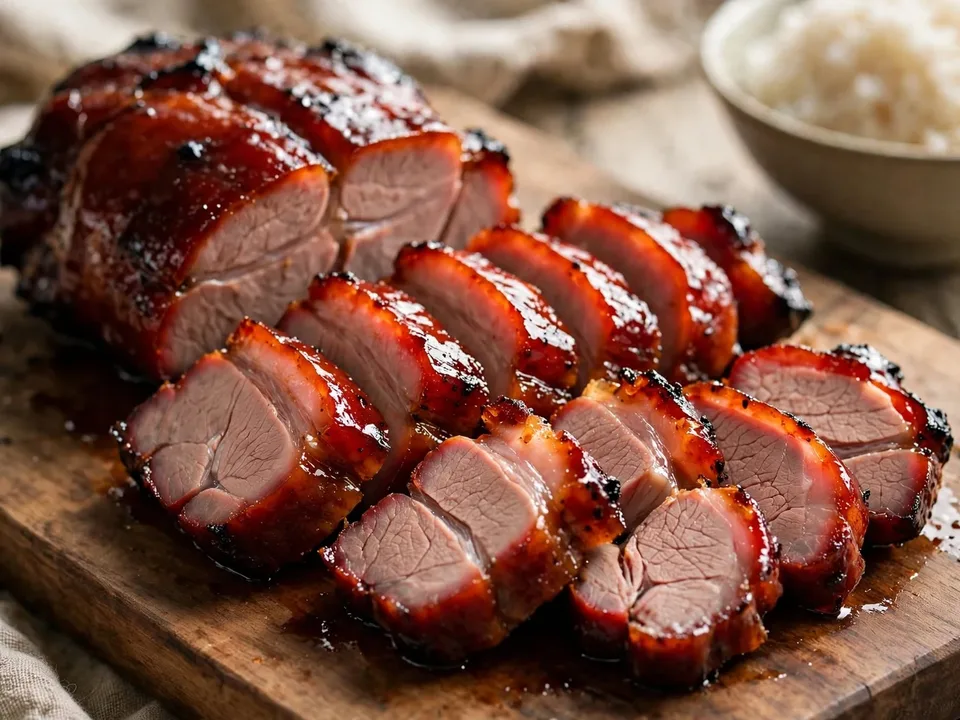
Check the thickest strip is safely cooked; pork is safe at 63°C / 145°F followed by at least a 3-minute rest, though char siu may finish slightly higher depending on the cut. Brush with any remaining clean hot glaze, rest 8–10 minutes, then slice across the grain and serve with rice and greens.
Look for
The pork is safely cooked, rested and juicy inside with a distinct lacquered crust that slices cleanly instead of shedding burnt sugar.
Kitchen note
Rest before slicing so the juices stay in the meat. If the glaze is perfect before the centre is done, lower the oven rather than continuing to darken the outside.
After cooking
Explore the dish beyond the method.
Story, place and references are here for discovery, so they stay out of the way while you cook.
Culture & tradition
The story behind the dish
Origins, evolution and everyday life—read together as part of the recipe's culinary record.
Origins
A Cantonese roast-meat preparation within the wider siu mei tradition.
How it evolved
Professional shops roast hanging cuts in high-heat ovens, while home recipes commonly adapt the method to racks and sheet pans and use maltose or honey for the final lacquer.
Its place today
Served sliced with rice and greens, added to noodle dishes and fried rice, or used as a filling for char siu bao and pastries.
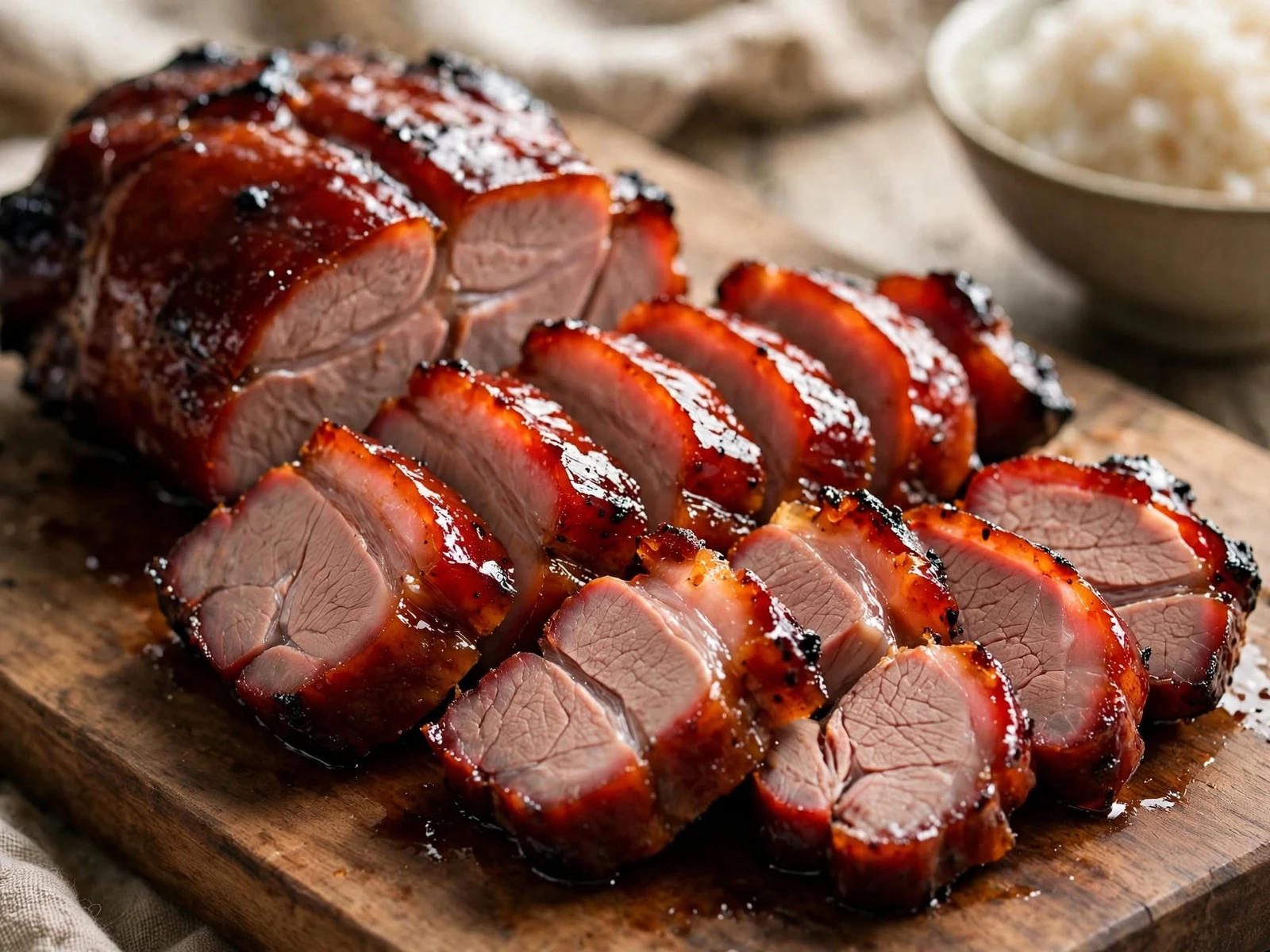
Visual archive · plate 01
Char Siu
An editorial view of the finished dish, kept compact so the story continues without an oversized image break.
Primary region
Guangdong and Cantonese-speaking southern China
Country
China
Regional influence
Roast-shop cookery concentrates sweet-savoury marinades on relatively small cuts of pork, producing highly flavoured meats suited to rice and noodle meals.
Related food systems
- Cantonese siu mei roast meats
- Rice and noodle toppings
- Char siu bao fillings
Sources & further reading
Follow the reference trail.
Ember & Equator links outward when an institution or primary reference helps support the culinary record.
- 01Eight major cuisines of ChinaExternal ↗
State Council Information Office of China · reference
Supports: regional Chinese cuisines · Sichuan cuisine · Cantonese cuisine · Jiangsu cuisine · culinary diversity
Ember & Equator source review · 2026-09-03
- 02Welcome to China — Chinese CuisineExternal ↗
National Immigration Administration of China · reference
Supports: Eight Major Cuisines · Sichuan cuisine · Cantonese cuisine · Mapo Tofu · Kung Pao Chicken
Ember & Equator source review · 2026-09-03
- 03China’s four major cuisinesExternal ↗
The State Council of the People’s Republic of China / National Tourism Administration · reference
Supports: Sichuan cuisine · Cantonese cuisine · regional Chinese cooking
Ember & Equator source review · 2026-09-03
- 04Char Siu (Chinese BBQ Pork), Restaurant-StyleExternal ↗
The Woks of Life · specialist publication
Supports: pork shoulder · overnight marinade · rack roasting · water under rack · turning · maltose or honey glaze · resting
Ember & Equator source review · 2026-09-17
Ingredient guides
Learn about the ingredients behind the dish.
These are reference guides, not a second ingredient list. Follow an ingredient when you want to understand its role, use and wider culinary context.
Ingredient
pork shoulder
Understand what it contributes, how to use it, and the dishes that reveal it best.
Ingredient
hoisin sauce
Understand what it contributes, how to use it, and the dishes that reveal it best.
Ingredient
light soy sauce
Understand what it contributes, how to use it, and the dishes that reveal it best.
Ingredient
Shaoxing wine
Understand what it contributes, how to use it, and the dishes that reveal it best.
Ingredient
sugar
Understand what it contributes, how to use it, and the dishes that reveal it best.
Ingredient
honey
Understand what it contributes, how to use it, and the dishes that reveal it best.
Keep wandering
Where will this dish take you next?
Stay with the place, follow an ingredient or technique, or cross into another food culture. Each path begins with something already present in this dish.
Stay with the place
01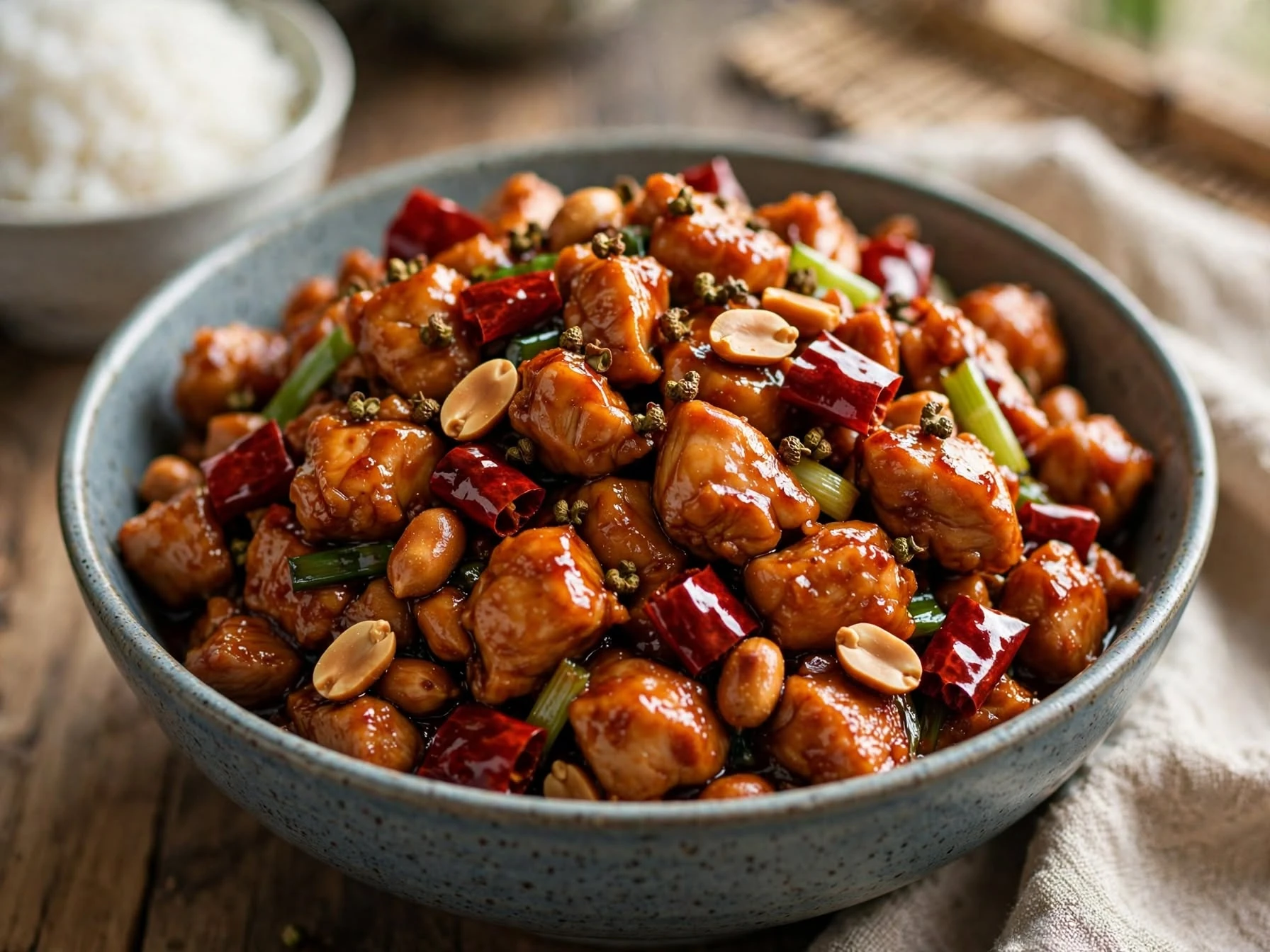
China
Kung Pao Chicken
Stay in the same food culture and notice how marinate appears in another dish.
Shared thread · Marinate · Balance a sweet-sour-salty sauce · light soy sauce
Follow the method or pantry
02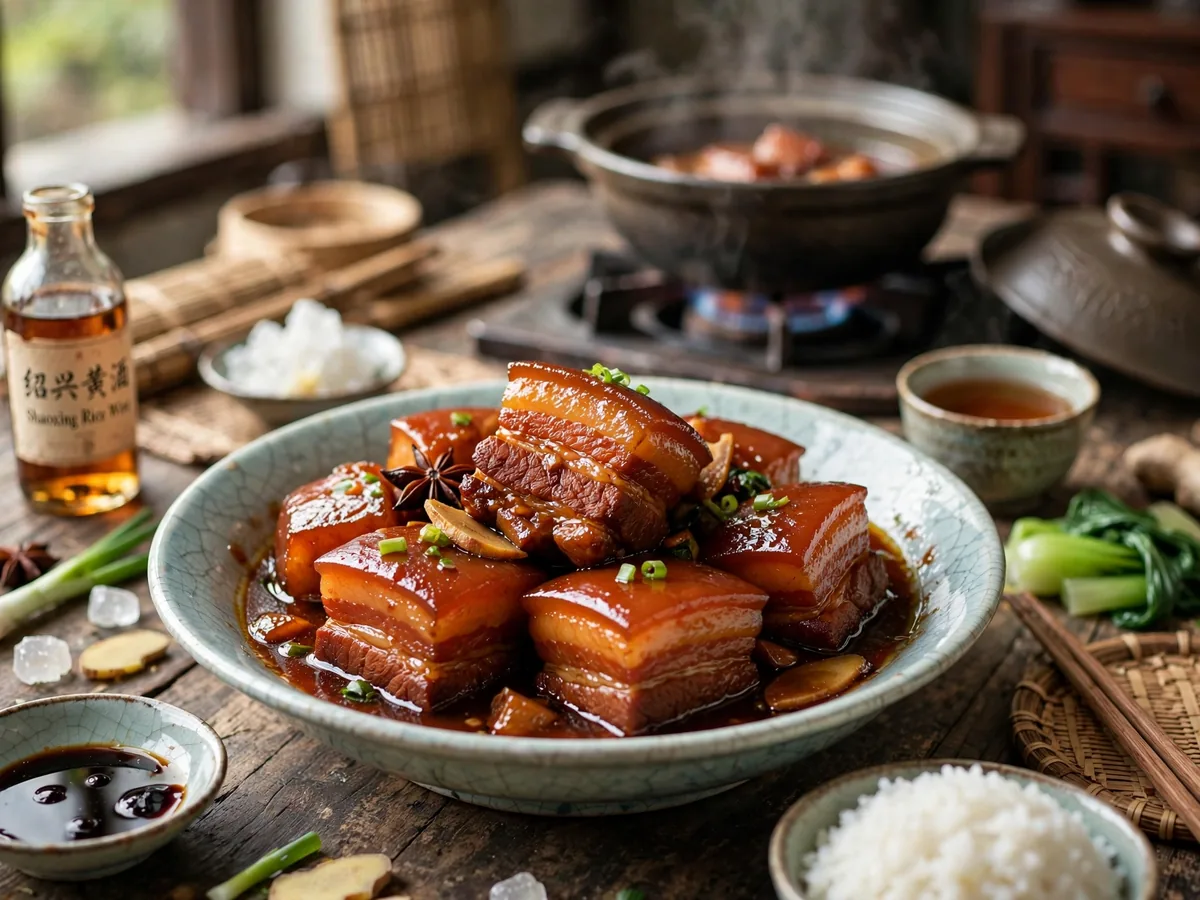
China
Shanghai-Style Red-Braised Pork
Follow the cooking method: both dishes connect through balance a sweet-sour-salty sauce.
Shared thread · Balance a sweet-sour-salty sauce · light soy sauce · Shaoxing wine
Cross a culinary border
03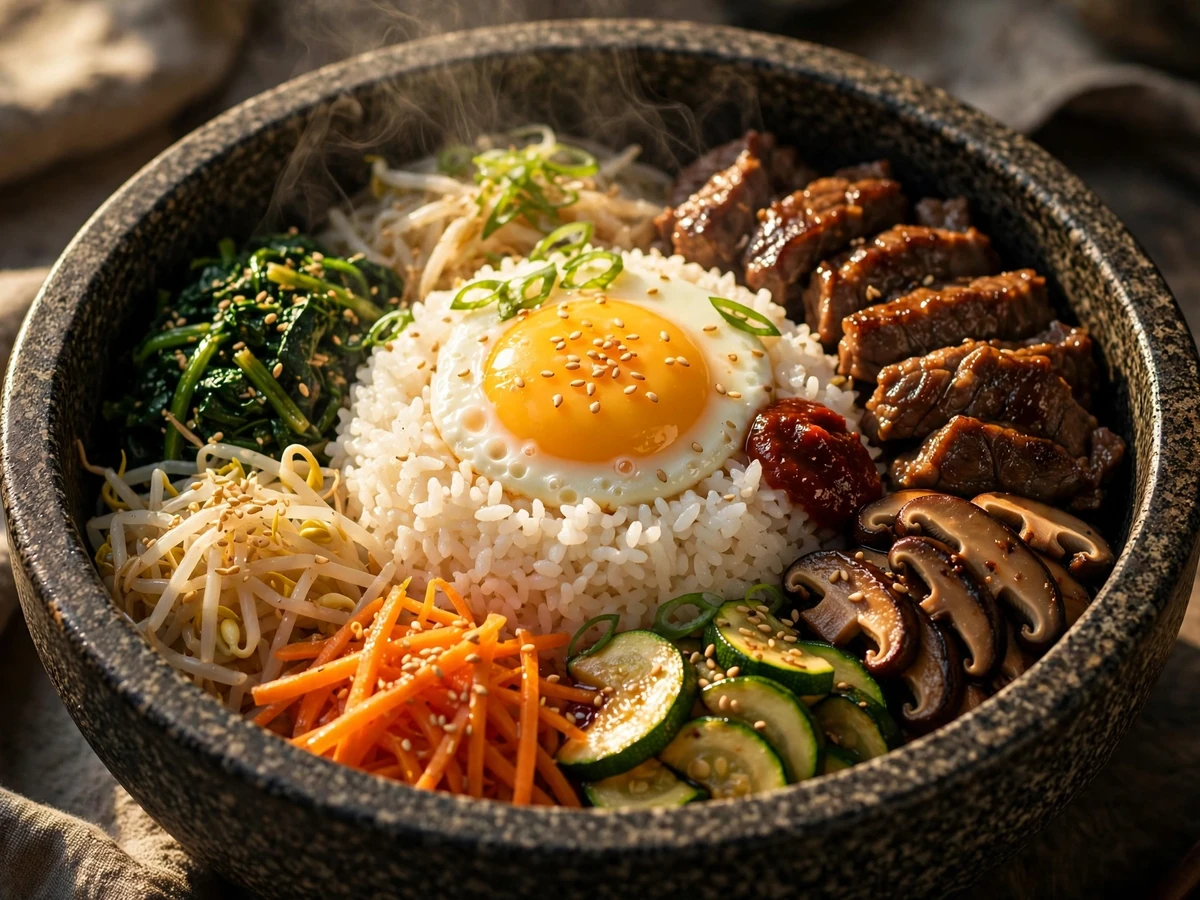
South Korea
Bibimbap
Cross borders while keeping marinate as the common thread.
Shared thread · Marinate · sugar · sesame oil
Go one layer deeper
One small detail can open an entirely different part of food.
Continue in Ember & Equator