
South Korea · lunch · dinner · rice-dish
Bibimbap
South Korea through one enduring dish.
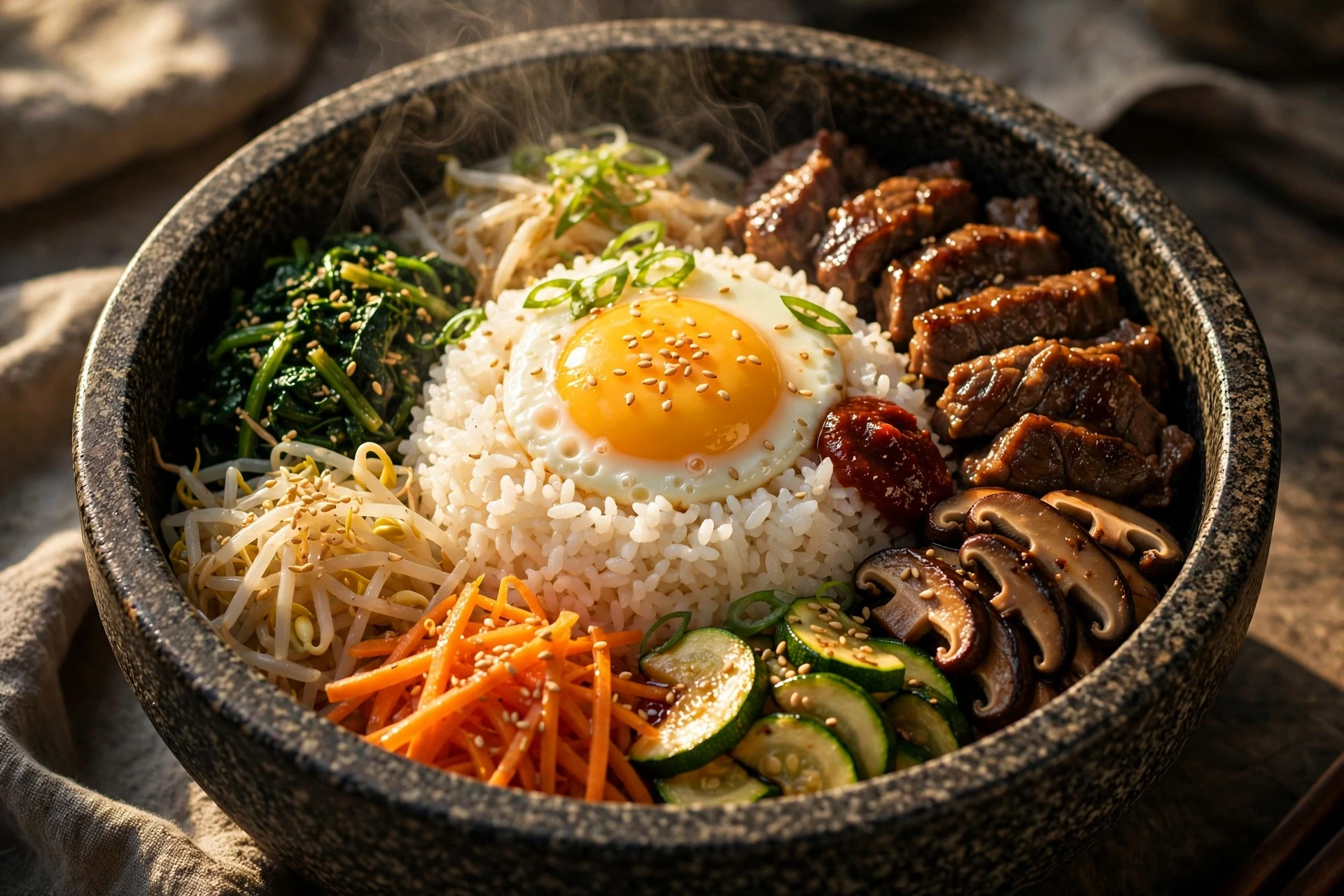
Bibimbap is Korean mixed rice built from hot short-grain rice, individually prepared vegetables, seasoned beef, egg and gochujang. The toppings are arranged for contrast, then mixed thoroughly at the table.
- Total
- 85 min
- Difficulty
- Medium
- Serves
- 4
- Steps
- 10
The dish
Place first. Then the plate.
Bibimbap literally means “mixed rice.” Korea.net describes it as one of Korea’s best-known dishes and emphasizes that regional and household versions vary widely; Jeonju is especially associated with elaborate bibimbap. This Ember & Equator version is a practical home-style beef bibimbap using common namul-style vegetables, a fried egg and a simple gochujang sauce rather than presenting one topping set as the only authentic formula.
Explore South KoreaAt a glance
Origin
South Korea
Region
Across South Korea; Jeonju in North Jeolla Province is especially associated with bibimbap
Meal
lunch · dinner · rice-dish
Guided steps
10
Dish
Bibimbap
Cuisine
Korean cuisine
Food type
Lunch · Dinner · Rice dish
Technique
Steam · Sauté · Marinate
Cook the recipe
In the kitchen
Start with the ingredients, then follow the Method in order. Open cooking tips only when you need extra help; the story and references can wait until you are ready.
- Total
- 85 min
- Serves
- 4
- Level
- Medium
- Visual cues
- 10
Ingredients
Serves 4- 2 cupsshort-grain riceuncooked; rinse well and cook slightly firmer than ordinary table rice
- 200 gspinachwashed and trimmed
- 200 gbean sproutssoybean sprouts are especially common in Korea; mung bean sprouts also work
- 1 largecarrotcut into fine matchsticks
- 1 mediumzucchinihalved lengthwise and thinly sliced or cut into matchsticks
- 150 gshiitake mushroomsstems removed if tough; caps thinly sliced
- 250 gbeef sirlointhinly sliced across the grain into bite-size strips
- 4 clovesgarlicfinely minced; divided between vegetables and beef
- 3 wholescallionsfinely chopped; divided
- 2 tbspsoy saucemostly for the beef marinade
- 4 tspsugardivided between beef marinade and gochujang sauce
- 4 tbspsesame oildivided between vegetables, beef, sauce and finishing
- 2 tbspsesame seedstoasted; divided
- 4 tbspgochujangadjust to brand strength and preferred heat
- 1 tbspwaterfor loosening the gochujang sauce; add a little more only if needed
- 3 tbspneutral oilfor sautéing vegetables, searing beef and frying eggs
- 4 wholeeggsfried sunny-side up or to your preferred doneness
- 1 1/2 tspsaltdivided; season the individual vegetable components lightly
- 1/4 tspblack pepperfor the beef
Everything ready? Continue straight into the cooking steps.
Start methodMethod
10 steps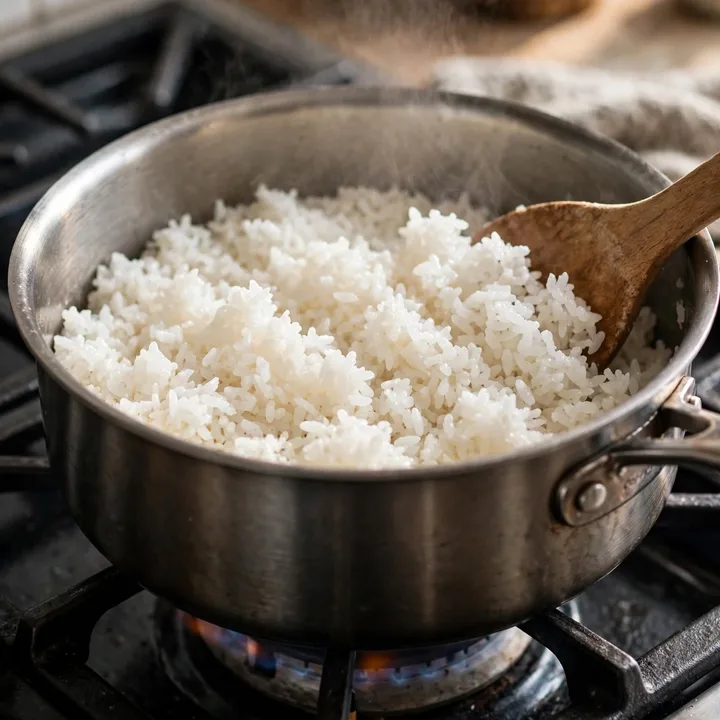 Step 01
Cook slightly firm short-grain rice
30 min
Rinse the short-grain rice until the water is mostly clear, then cook it in a rice cooker or heavy saucepan with slightly less water than you would use for soft table rice.
Rinse the short-grain rice until the water is mostly clear, then cook it in a rice cooker or heavy saucepan with slightly less water than you would use for soft table rice. Rest the cooked rice covered for about 10 minutes, then fluff gently and keep it hot for assembly. Bibimbap needs cohesive Korean rice, but the surface should not be wet because the toppings, sesame oil and gochujang will add moisture when mixed.
Look for
The rice should be tender and glossy with distinct grains that cling lightly together but show no puddled surface moisture.
Kitchen note
Aim for fully cooked grains with a slightly drier finish than ordinary table rice. Wet, over-soft rice turns heavy and pasty once the sauce and vegetable moisture are mixed through it. A practical order is rice first, then the blanched vegetables, then sautéed vegetables and sauce; cook the beef and eggs last so the hot components reach the bowl hot.
 Step 02
Blanch and season the bean sprouts
5 min
Bring a pot of water to a boil.
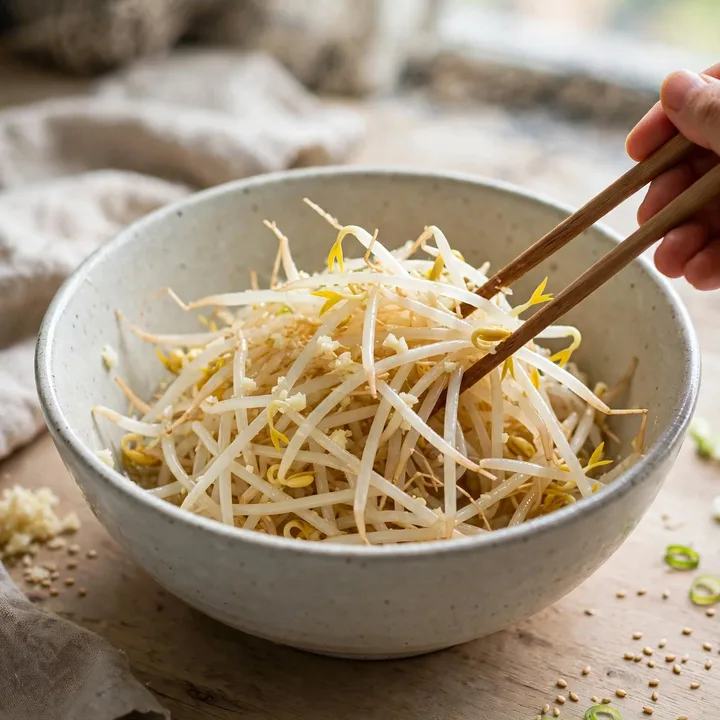
Bring a pot of water to a boil. Add the bean sprouts and cook just until the raw grassy edge softens while the stems stay crisp, about 1 minute for mung bean sprouts or a little longer for thicker soybean sprouts. Drain immediately and cool quickly. Drain very well, then season lightly with a little garlic, scallion, sesame oil, sesame seeds and salt.
Look for
The sprouts should remain pale, juicy and crisp, with no raw beany harshness and no pool of water in the seasoning bowl.
Kitchen note
Do not let the sprouts sit in hot water after cooking. Bibimbap depends on contrast, and the sprouts should bring a clean snap rather than soft watery bulk.
 Step 03
Blanch, squeeze and season the spinach
5 min
Using fresh boiling water, blanch the spinach for only 30–40 seconds until just wilted.
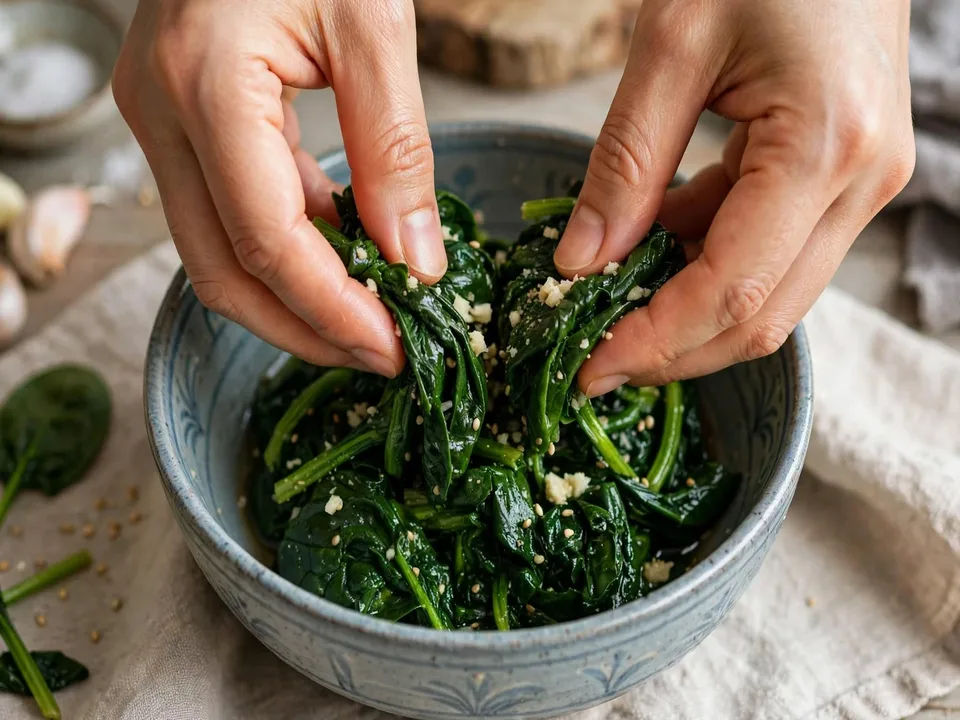
Using fresh boiling water, blanch the spinach for only 30–40 seconds until just wilted. Transfer immediately to cold water, drain, then squeeze firmly in handfuls to remove excess moisture. Cut into easy-to-eat lengths and season lightly with garlic, scallion, sesame oil, sesame seeds and salt.
Look for
The spinach should be vivid green, tender and compact after squeezing, moist but not dripping when lifted.
Kitchen note
Water control is as important as seasoning. Spinach that is not squeezed thoroughly dilutes the sesame seasoning and later makes the rice underneath soggy.
 Step 04
Sauté the carrot, zucchini and mushrooms separately
10 min
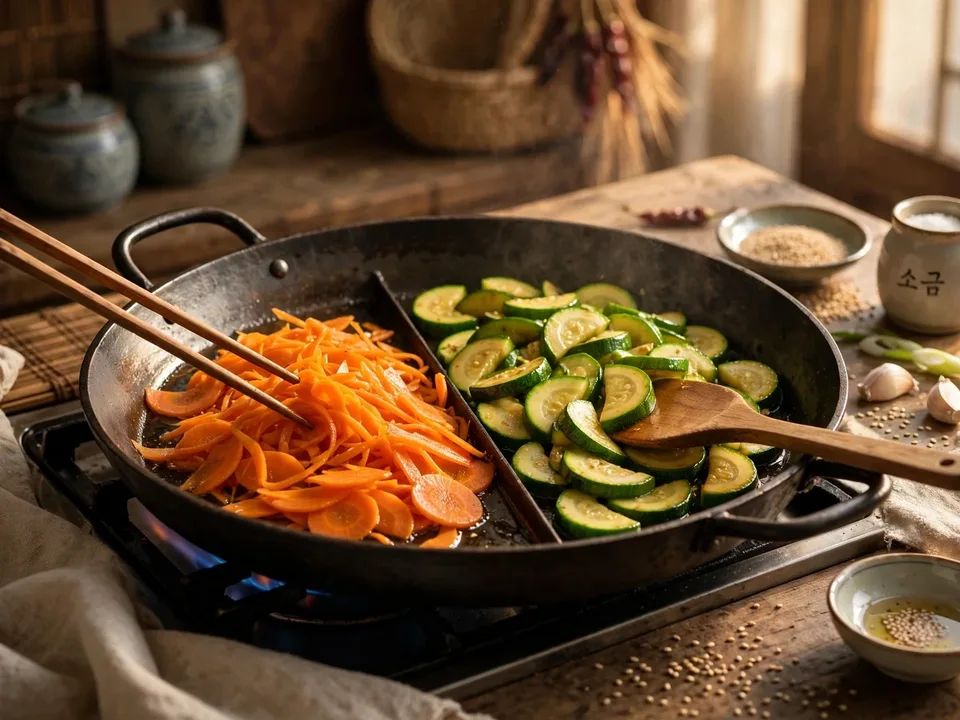
Heat a wide skillet over medium-high heat with only a thin film of neutral oil.
Heat a wide skillet over medium-high heat with only a thin film of neutral oil. Sauté the carrot first until bright and just flexible, about 1–2 minutes; transfer to a plate. Cook the zucchini separately until just tender and no longer watery, about 2 minutes; remove. Finally sauté the sliced shiitake until tender and lightly browned. Season each batch lightly rather than heavily because the entire bowl will later receive gochujang sauce.
Look for
The carrot should still have bite, the zucchini should be tender without collapsing, and the mushrooms should look savoury and lightly browned rather than wet.
Kitchen note
Keep the vegetables separate. Cooking them together traps moisture and erases the different textures and colours that make bibimbap work before it is mixed at the table.
 Step 05
Marinate the beef briefly
20 min
Slice the beef thinly across the grain into bite-size strips.
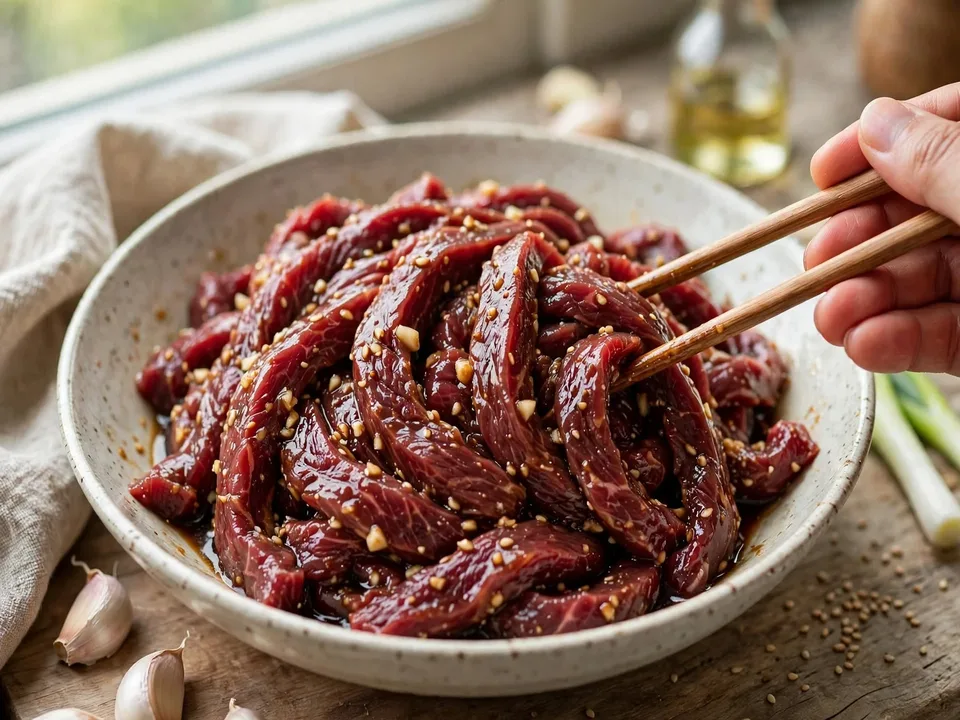
Slice the beef thinly across the grain into bite-size strips. Mix with the soy sauce, about half of the sugar allocated to the beef, a portion of the minced garlic and scallion, sesame oil, sesame seeds and black pepper. Toss thoroughly and refrigerate for 15–20 minutes while the other toppings are finished. A brief marinade is enough for thin beef; it does not need hours.
Look for
Every strip should be lightly glossy with marinade but there should be little or no free liquid pooled at the bottom of the bowl.
Kitchen note
Slice across the grain and keep the strips thin. The marinade should coat rather than drown the beef—too much liquid prevents fast browning in the next stage.
 Step 06
Sear the beef hot and fast
4 min
Wipe the skillet clean and heat it over high heat until properly hot.
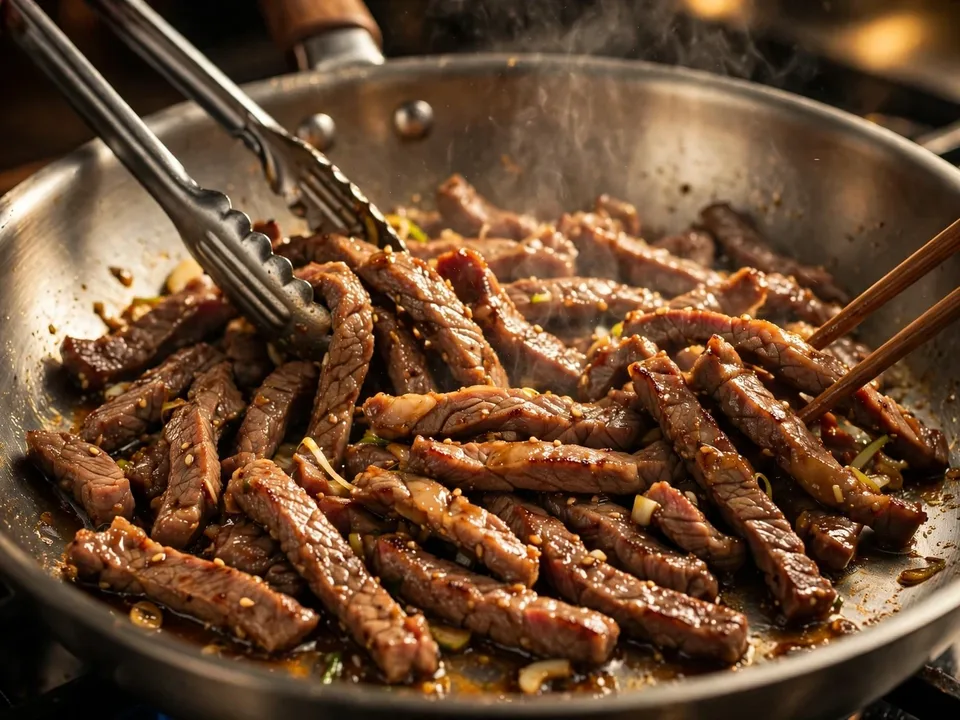
Wipe the skillet clean and heat it over high heat until properly hot. Add a small amount of neutral oil, then spread the marinated beef in one uncrowded layer. Sear for about 2–3 minutes, turning once or twice, until browned at the edges and just cooked through. Work in two batches if necessary rather than crowding the pan.
Look for
The beef should have caramelised brown edges, a savoury sheen and no raw surface, while the strips remain supple rather than dry.
Kitchen note
High heat and space are the difference between seared beef and grey steamed beef. Remove it as soon as it is cooked; thin sirloin becomes chewy when left on the heat unnecessarily.
 Step 07
Mix a loose gochujang sauce
3 min
Stir the gochujang with the remaining sugar, a little sesame oil and the measured water until smooth and spoonable.
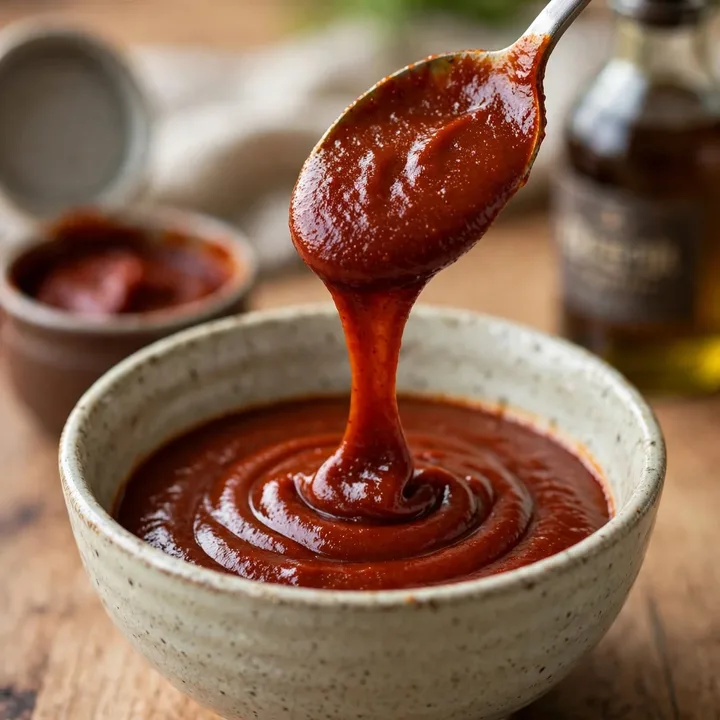
Stir the gochujang with the remaining sugar, a little sesame oil and the measured water until smooth and spoonable. Taste and adjust to the specific paste you are using: brands vary in heat, salt and sweetness. Add only enough water to make the sauce easy to distribute through the rice; it should not become thin or watery.
Look for
The sauce should be glossy, smooth and thickly pourable from a spoon, with no dry lumps of gochujang and no watery separation.
Kitchen note
Do not assume every gochujang has the same strength. Make the sauce adjustable and serve extra on the side so each diner can control the final heat and seasoning.
 Step 08
Fry the eggs just before assembly
5 min
Heat a lightly oiled skillet over medium heat and fry the eggs sunny-side up, or to the doneness you prefer.
Heat a lightly oiled skillet over medium heat and fry the eggs sunny-side up, or to the doneness you prefer. Keep the yolks soft if everyone eating is comfortable with that style, because the yolk enriches the rice when mixed. If you prefer fully cooked eggs, cook them through; the dish does not depend on a runny yolk.
Look for
For sunny-side eggs, the whites should be fully set with clean edges while the yolks remain glossy and rounded; for fully cooked eggs, the yolks should be set without scorched whites.
Kitchen note
Cook the eggs last so they reach the table hot. A regular bowl with a fried egg is one common home style; dolsot versions and raw-yolk presentations are legitimate variations rather than requirements.
 Step 09
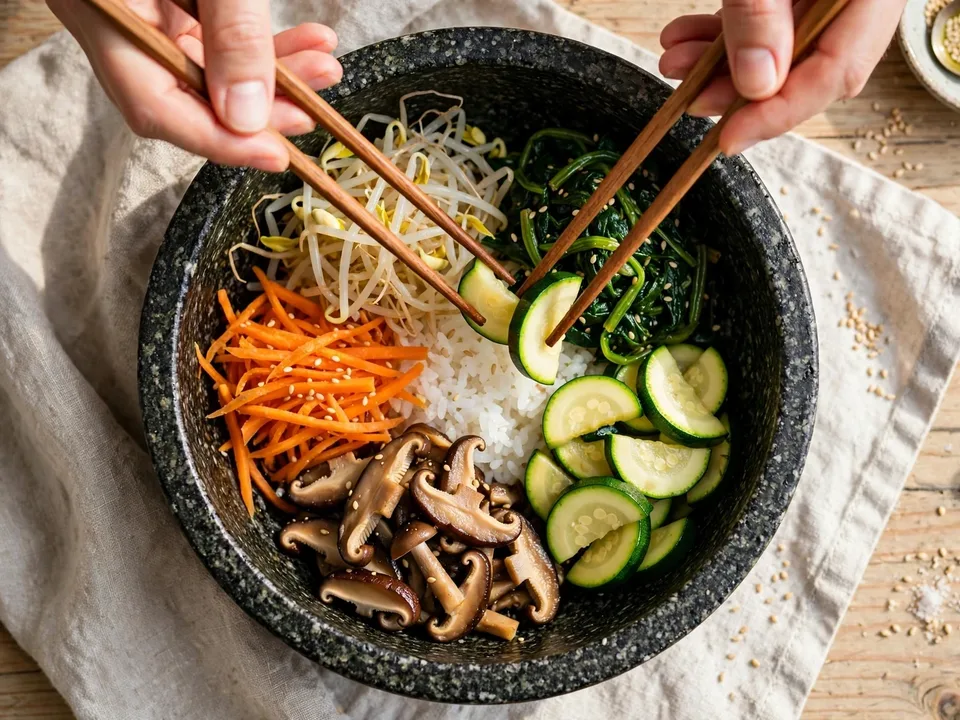
Arrange the hot rice and toppings in distinct sections
5 min
Divide the hot rice among four wide bowls.
Divide the hot rice among four wide bowls. Arrange the sprouts, spinach, carrot, zucchini and mushrooms in separate sections over the rice, keeping the colours and textures distinct. Add the seared beef as another section rather than stirring anything together yet. Drizzle only a very small amount of sesame oil over the rice if desired. If components finish at different times, keep them separate rather than mixing them together to hold; room-temperature seasoned vegetables are normal, while the rice, beef and egg should be warm at assembly.
Look for
The bowl should show clearly separated bands or piles of vegetables and beef over hot rice, with no watery liquid pooling at the bottom.
Kitchen note
The neat arrangement is not just decorative: it keeps each topping distinct until the diner decides how much sauce to add and begins mixing. Do not pre-mix the vegetables in the kitchen.
 Step 10
Add egg and gochujang, then mix at the table
2 min
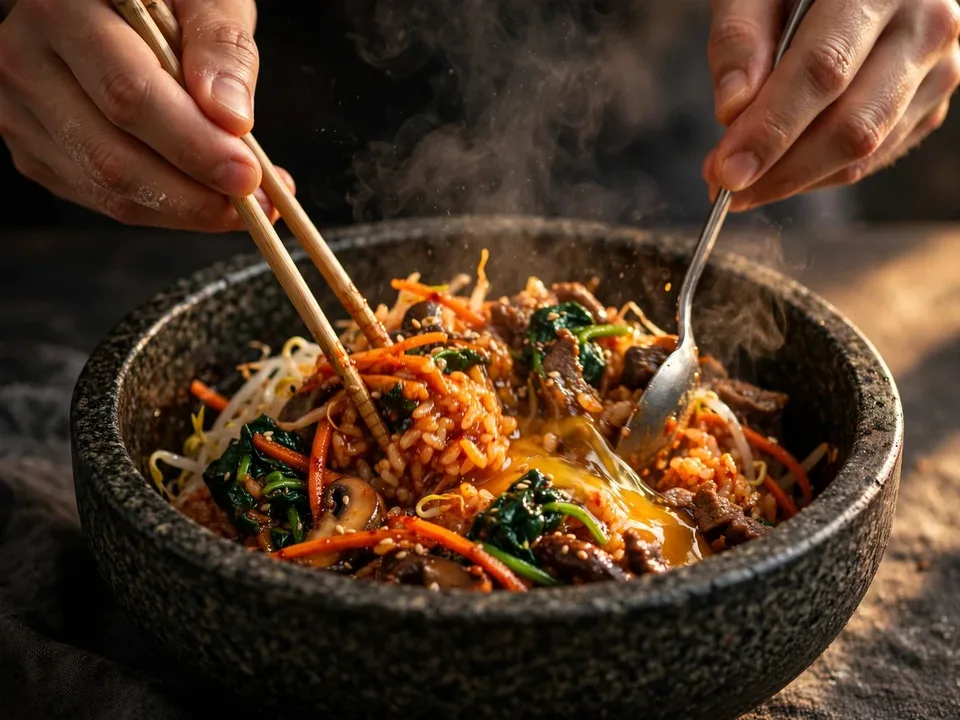
Set one fried egg on each bowl and add a spoonful of gochujang sauce, serving extra sauce on the side.
Set one fried egg on each bowl and add a spoonful of gochujang sauce, serving extra sauce on the side. Sprinkle with sesame seeds. At the table, break the yolk and mix from the bottom upward until the rice, vegetables, beef and sauce are evenly distributed. Add more sauce only after tasting; the goal is integrated flavour while the individual vegetable textures still remain noticeable.
Look for
After mixing, the rice should be evenly streaked red-gold from gochujang and egg, with visible pieces of vegetables and beef throughout rather than a homogeneous mush.
Kitchen note
Bibimbap means mixed rice: the beautiful separated presentation is temporary. Mix thoroughly enough that every spoonful contains rice and several toppings, but do not crush the vegetables into a paste.
After cooking
Explore the dish beyond the method.
Story, place and references are here for discovery, so they stay out of the way while you cook.
Culture & tradition
The story behind the dish
Origins, evolution and everyday life—read together as part of the recipe's culinary record.
Origins
Mixed-rice preparations have longstanding roots in Korean food culture, and Ember & Equator avoids reducing the dish to one disputed origin story.
How it evolved
Bibimbap developed into many regional, seasonal and household forms using different vegetables, proteins, sauces and serving vessels; Jeonju became particularly famous for elaborate versions.
Its place today
Today bibimbap ranges from simple home bowls built from prepared side dishes to restaurant and dolsot versions, while the defining act remains mixing rice and toppings together before eating.
Visual archive · plate 01
Bibimbap
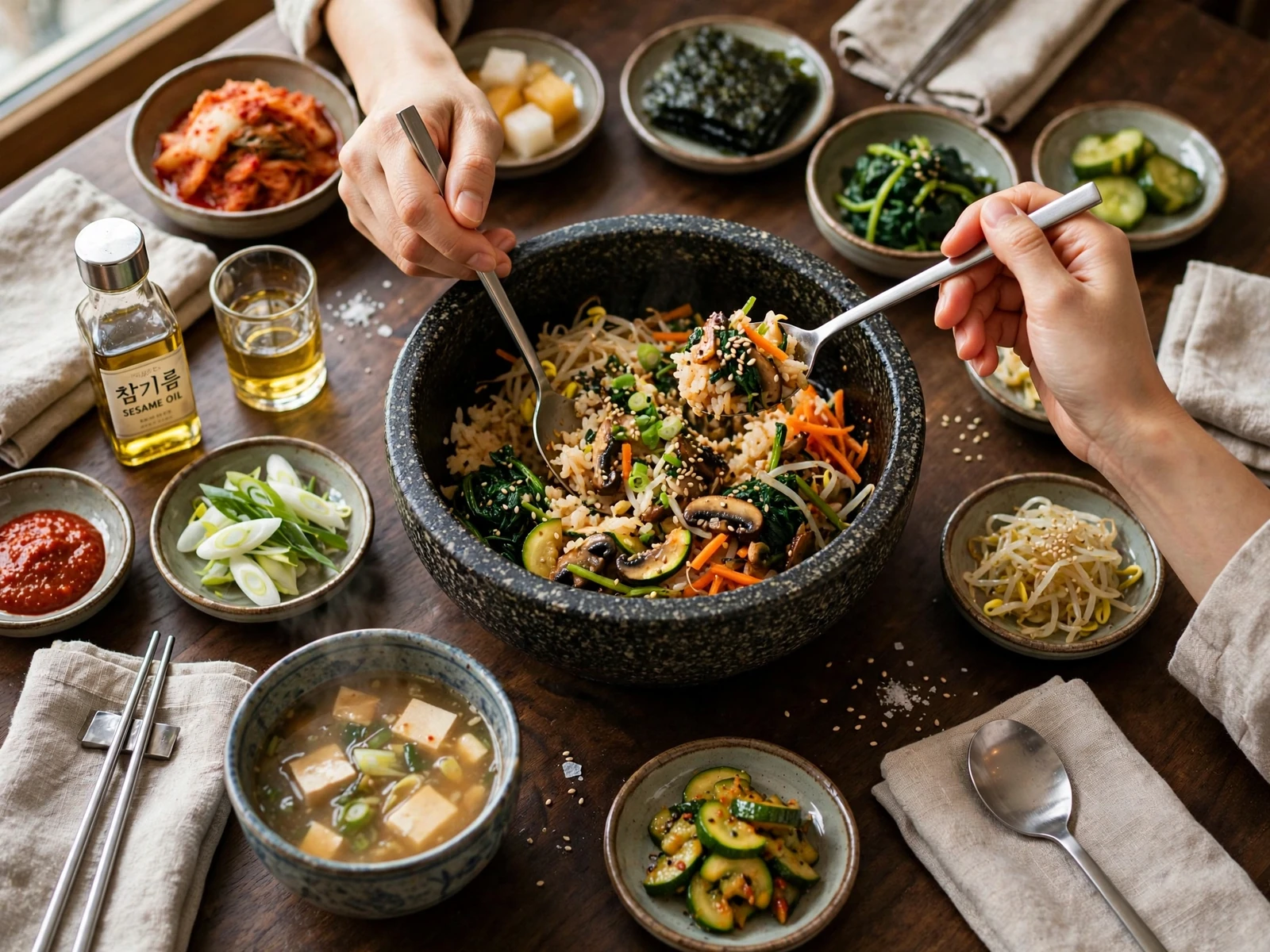
An editorial view of the finished dish, kept compact so the story continues without an oversized image break.
Primary region
Across South Korea; Jeonju in North Jeolla Province is especially associated with bibimbap
Country
South Korea
Regional influence
Rice, seasonal vegetables and fermented jang seasonings allow bibimbap to adapt to what is available across Korea’s seasons and regions.
Related food systems
- Korean rice culture
- Namul and banchan traditions
- Jang fermentation traditions
- Jeolla-do regional cuisine
Sources & further reading
Follow the reference trail.
Ember & Equator links outward when an institution or primary reference helps support the culinary record.
- 01Korean recipes: Goldongban bibimbap (비빔밥)External ↗
Korea.net · government
Supports: bibimbap cultural history · rice plus separately cooked toppings · beef, egg and red-pepper-paste pattern · regional and household variation
Ember & Equator source review · 2026-09-16
- 02BibimbapExternal ↗
Korean Bapsang · specialist publication
Supports: slightly drier short-grain rice · separate namul preparation · brief beef marinade and high-heat cooking · fried egg · simple gochujang sauce · home-style variation
Ember & Equator source review · 2026-09-12
- 03Leftovers and Food SafetyExternal ↗
USDA Food Safety and Inspection Service · government
Supports: two-hour refrigeration rule · 3–4 day refrigerated leftover window
Ember & Equator source review · 2026-09-12
- 04Bibimbap (Mixed rice with vegetables)External ↗
Maangchi · specialist publication
Supports: bibimbap meaning and table mixing · separate preparation of toppings · short-grain rice · gochujang and sesame seasoning · regular-bowl and dolsot variations
Ember & Equator source review · 2026-09-16
Ingredient guides
Learn about the ingredients behind the dish.
These are reference guides, not a second ingredient list. Follow an ingredient when you want to understand its role, use and wider culinary context.
Ingredient
short-grain rice
Understand what it contributes, how to use it, and the dishes that reveal it best.
Ingredient
spinach
Understand what it contributes, how to use it, and the dishes that reveal it best.
Ingredient
bean sprouts
Understand what it contributes, how to use it, and the dishes that reveal it best.
Ingredient
carrot
Understand what it contributes, how to use it, and the dishes that reveal it best.
Ingredient
zucchini
Understand what it contributes, how to use it, and the dishes that reveal it best.
Ingredient
shiitake mushrooms
Understand what it contributes, how to use it, and the dishes that reveal it best.
Technique
Sauté
See why this cooking idea matters and where else it appears.
Learn the technique →
Technique
Marinate
See why this cooking idea matters and where else it appears.
Learn the technique →
Place
South Korea
See the food culture, pantry and dishes surrounding this recipe.
Travel through South Korea →
Keep wandering
Where will this dish take you next?
Stay with the place, follow an ingredient or technique, or cross into another food culture. Each path begins with something already present in this dish.
Stay with the place
01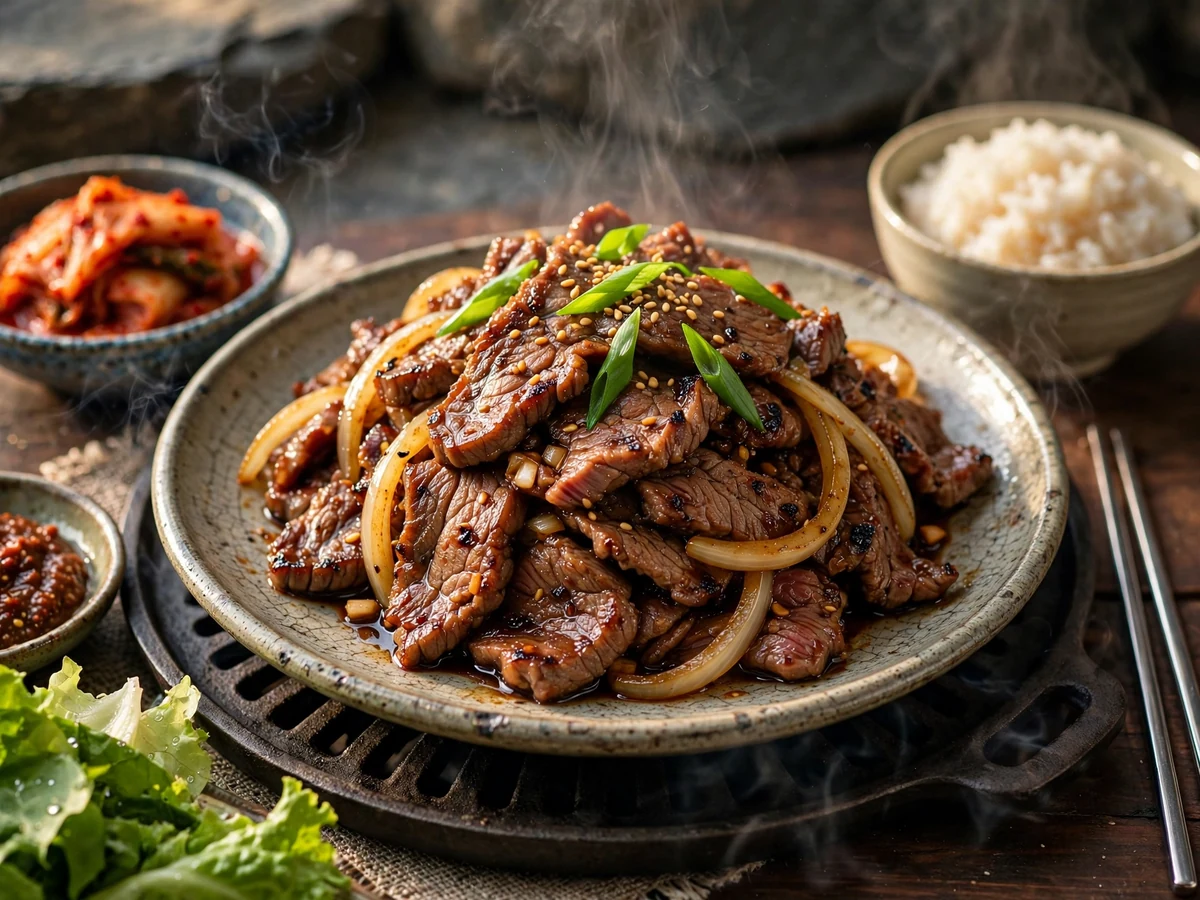
South Korea
Bulgogi
Stay in the same food culture and notice how marinate appears in another dish.
Shared thread · Marinate · Sear · carrot
Follow the method or pantry
02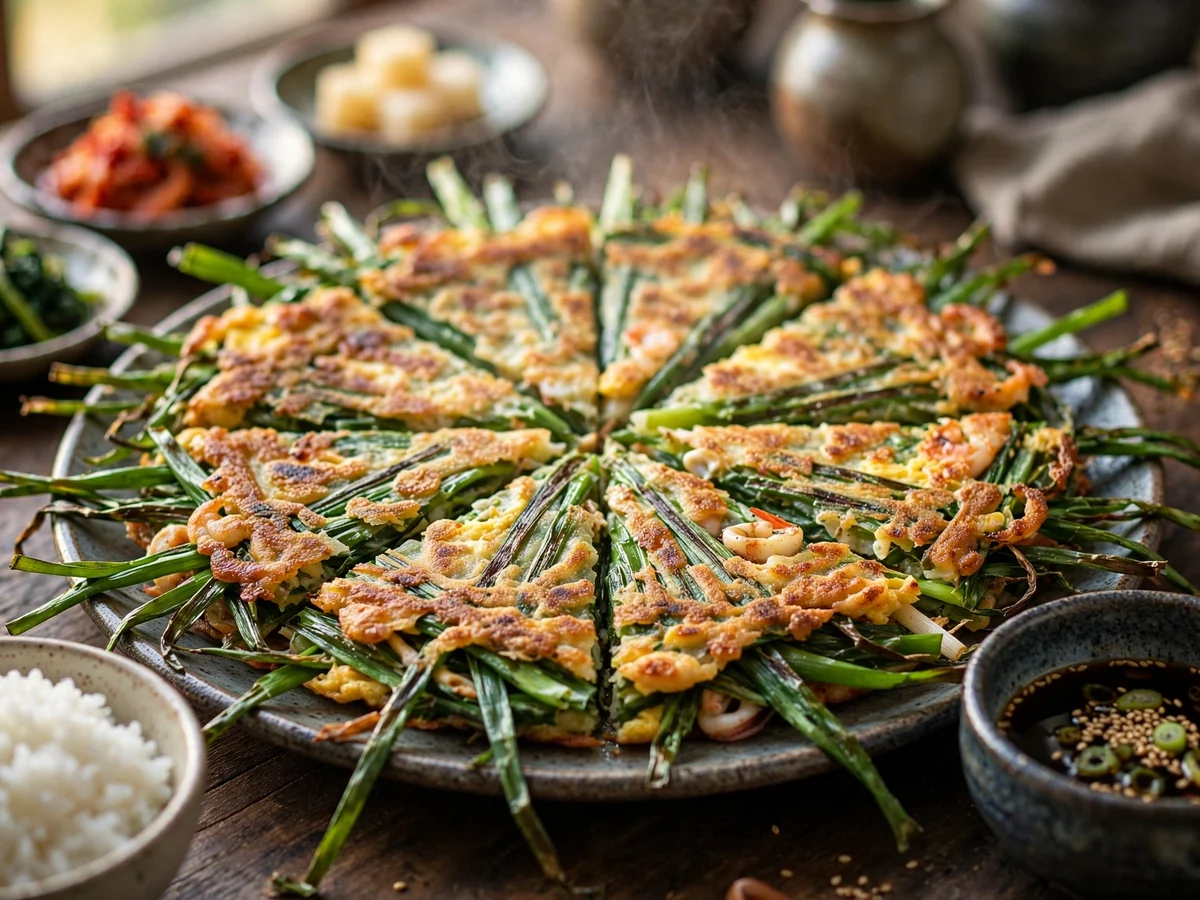
South Korea
Pajeon
Follow the cooking method: both dishes connect through fry.
Shared thread · Fry · carrot · soy sauce
Cross a culinary border
03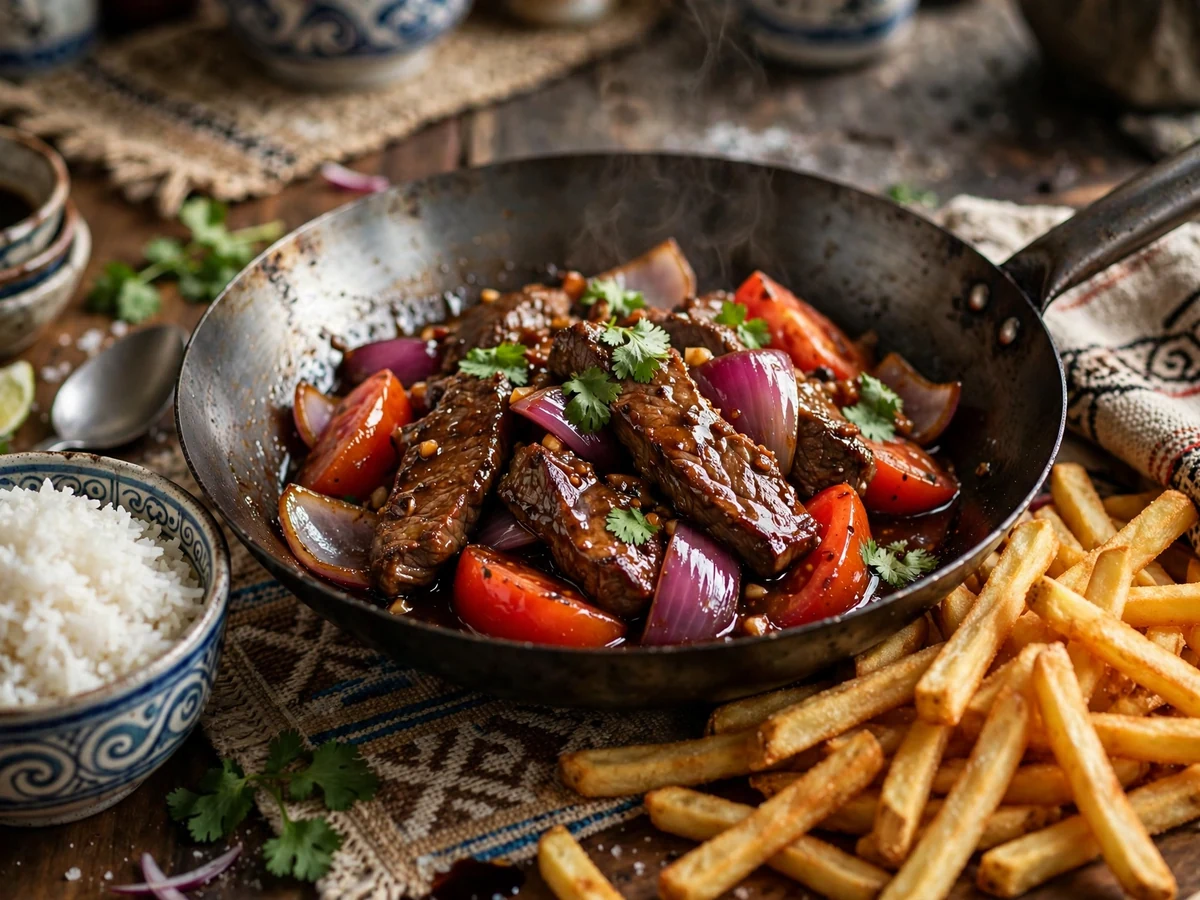
Peru
Lomo Saltado
Cross borders while keeping sear as the common thread.
Shared thread · Sear · Fry · beef sirloin
Go one layer deeper
One small detail can open an entirely different part of food.
Continue in Ember & Equator