
China · lunch · dinner
Kung Pao Chicken
China through one enduring dish.
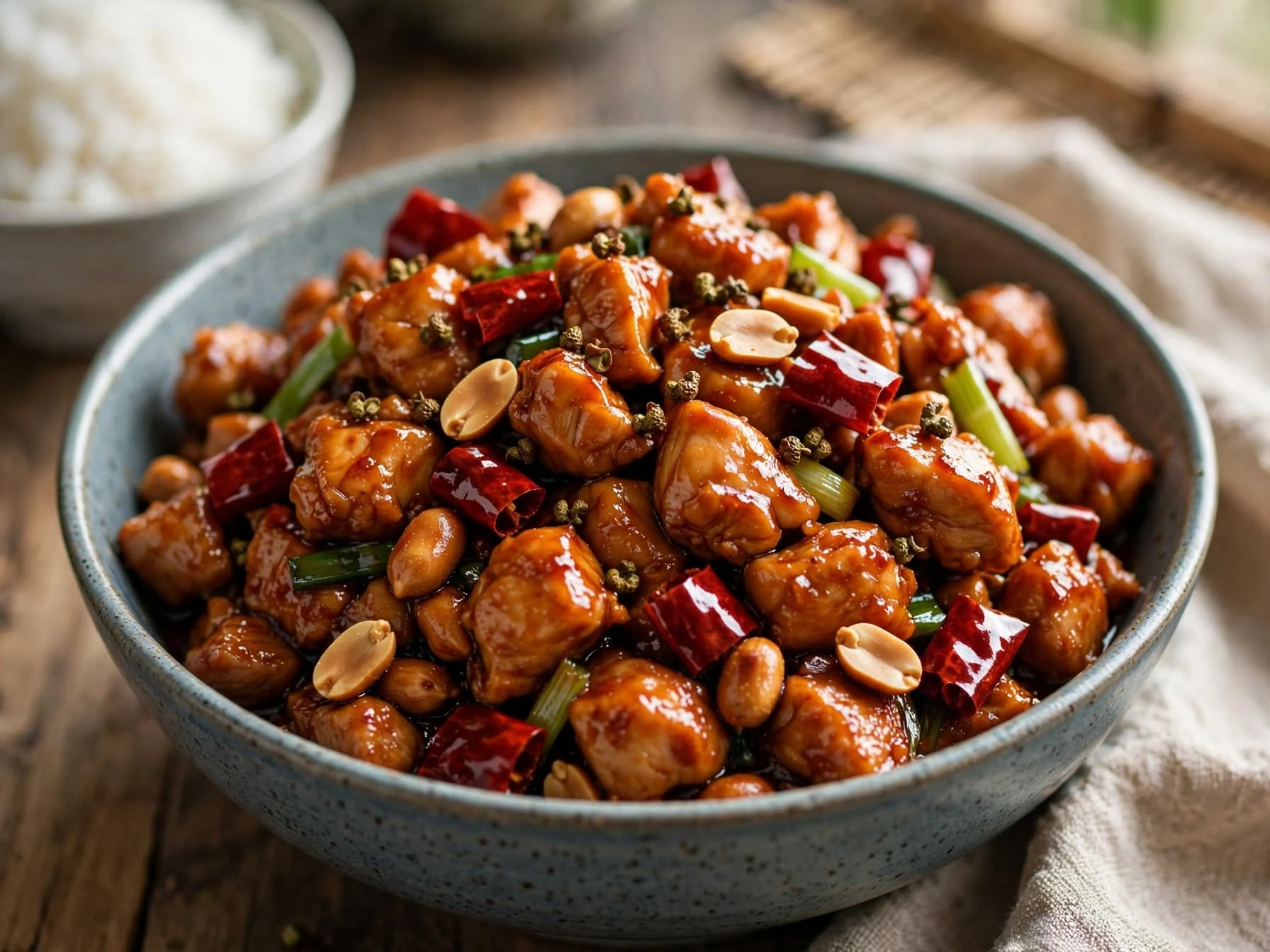
Kung Pao chicken (gong bao ji ding) is a Sichuan stir-fry of small chicken cubes, dried chiles, Sichuan pepper and peanuts in a glossy sweet-sour-savory sauce built around black vinegar, soy and Shaoxing wine.
- Total
- 40 min
- Difficulty
- Medium
- Serves
- 4
- Steps
- 6
The dish
Place first. Then the plate.
The Sichuan dish depends on contrast rather than a thick sugary coating: tender chicken, fragrant dried chile, tingling peppercorn, aromatic vinegar and crisp peanuts. Western takeout versions can be much sweeter and saucier; Ember & Equator keeps the selected version closer to the Sichuan wok profile.
Explore ChinaAt a glance
Origin
China
Region
Sichuan, China
Meal
lunch · dinner
Guided steps
6
Dish
Kung Pao Chicken
Cuisine
Chinese cuisines
Food type
Dinner
Technique
Marinate · Wok stir-fry · Sear
Cook the recipe
In the kitchen
Start with the ingredients, then follow the Method in order. Open cooking tips only when you need extra help; the story and references can wait until you are ready.
- Total
- 40 min
- Serves
- 4
- Level
- Medium
- Visual cues
- 6
Ingredients
Serves 4- 500 gchicken thighsboneless, skinless, cut into 1.5–2 cm cubes
- 0.5 cuproasted peanutsunsalted
- 8dried red chiliescut into short sections, seeds shaken out if preferred
- 1 tspSichuan peppercorns
- 2 tbsplight soy saucedivided between marinade and sauce
- 1.5 tbspblack vinegar
- 1 tbspShaoxing winedivided between marinade and sauce
- 2 tspcornstarchdivided between marinade and sauce
- 2 tbspneutral oilfor wok cooking
- 2 clovesgarlicfinely minced
- 1 tbspgingerfinely minced
- 3scallionscut into short sections; whites and greens separated
- 2 tspsugar
- 3 tbspwaterfor the finishing sauce
Everything ready? Continue straight into the cooking steps.
Start methodMethod
6 steps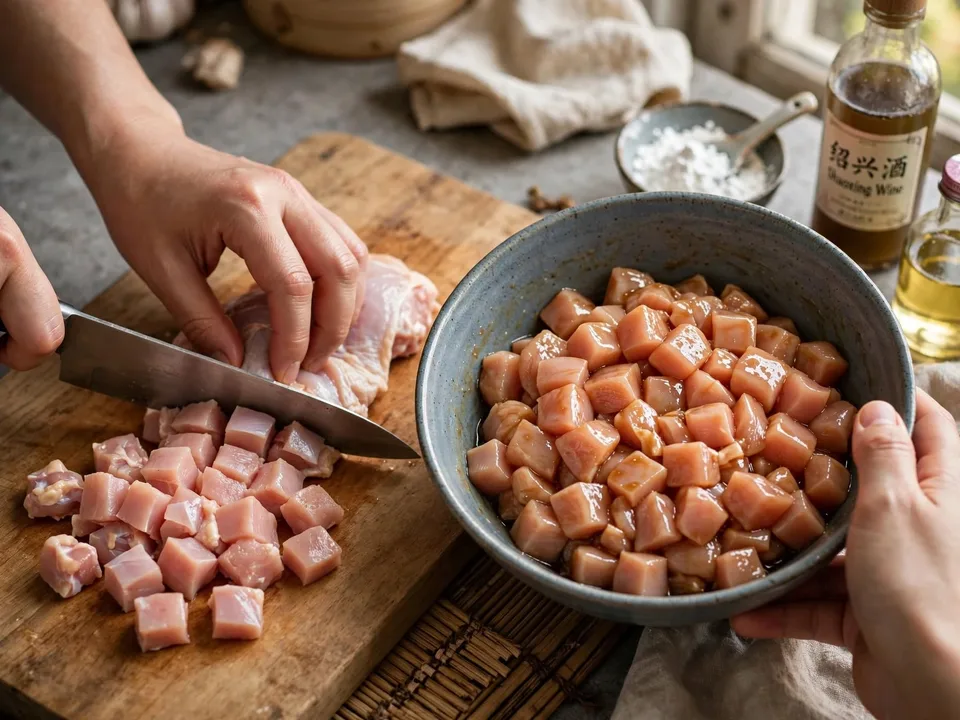 Step 01
Dice and lightly marinate the chicken
20 min
Cut the chicken into even 1.5–2 cm cubes.
Cut the chicken into even 1.5–2 cm cubes. Toss with about 1 teaspoon soy sauce, 1 teaspoon Shaoxing wine, 1 teaspoon cornstarch and a teaspoon of the oil until each piece has a thin coating. Let it stand for 15–20 minutes while you prepare the sauce and aromatics.
Look for
The chicken cubes are uniform and lightly glossy with no puddle of marinade at the bottom of the bowl.
Kitchen note
A light marinade seasons and protects the chicken; a bowl full of wet marinade makes the pieces steam instead of sear.
 Step 02
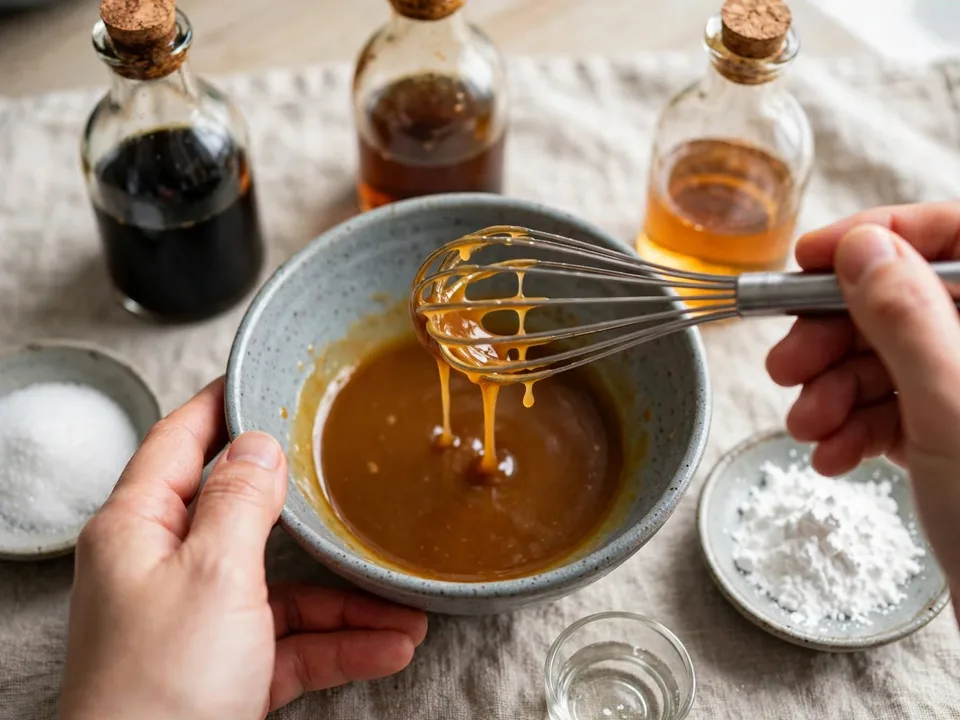
Mix the black-vinegar finishing sauce
3 min
Whisk the remaining soy sauce, black vinegar, Shaoxing wine, sugar, water and remaining cornstarch until smooth.
Whisk the remaining soy sauce, black vinegar, Shaoxing wine, sugar, water and remaining cornstarch until smooth. Keep it beside the stove and stir it again immediately before it enters the wok because the starch settles quickly.
Look for
The sauce is completely smooth with dissolved sugar and no cornstarch lumps settled on the bottom.
Kitchen note
The sauce must be ready before the wok gets hot. Once the chile and peppercorn are fragrant, there is no spare time to measure vinegar or starch.
 Step 03
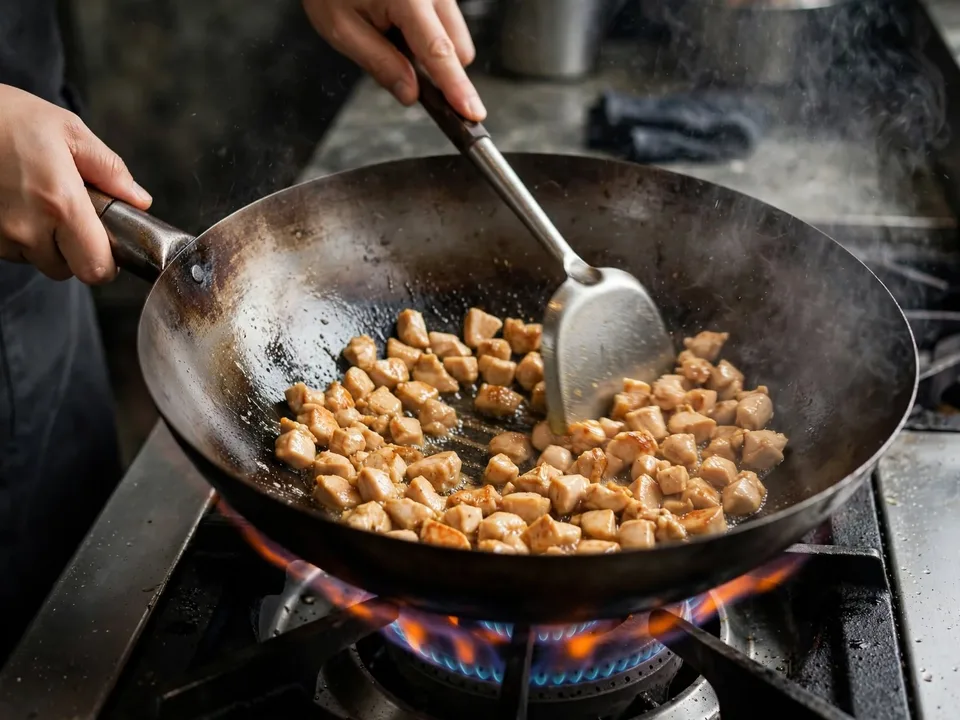
Sear the chicken quickly over strong heat
4 min
Heat the wok until very hot, add enough neutral oil to coat it and spread the chicken in a single layer.
Heat the wok until very hot, add enough neutral oil to coat it and spread the chicken in a single layer. Leave it briefly to colour, then toss just until the cubes are about 80–90% cooked. Work in two batches if necessary and remove the chicken before it dries out.
Look for
The chicken has light browned edges and an opaque exterior but still looks juicy rather than dry.
Kitchen note
Do not cook the chicken fully in this first pass. It finishes when it returns with the sauce, so early removal protects juiciness.
 Step 04
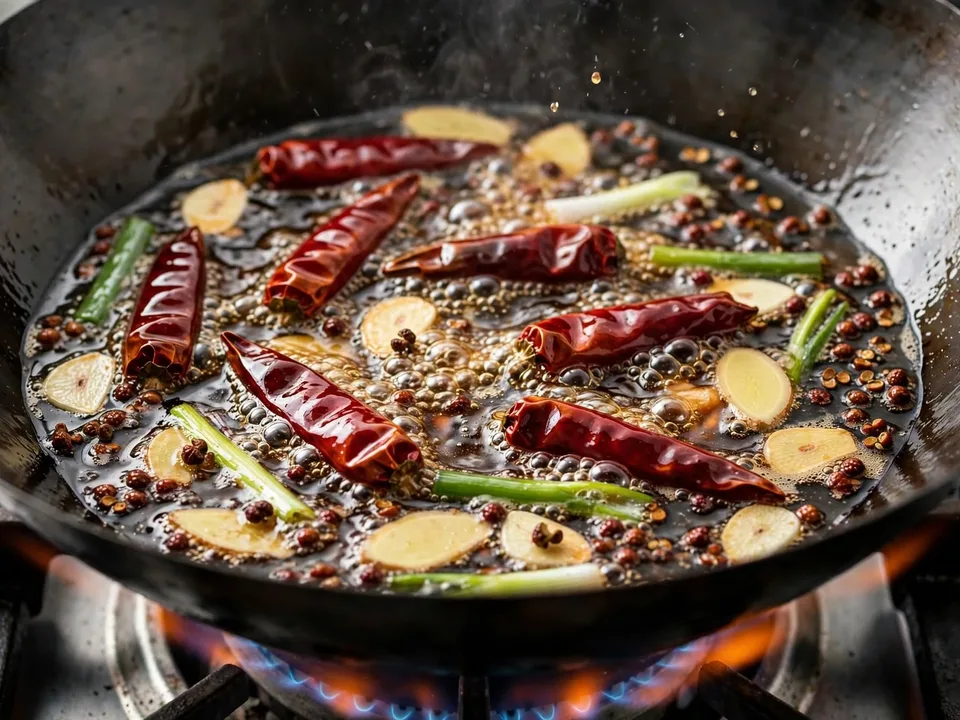
Bloom the dried chiles and Sichuan pepper
1 min
Lower the heat to medium.
Lower the heat to medium. Add the dried chile sections and Sichuan peppercorns to the remaining oil and stir only until fragrant and slightly darkened, 15–30 seconds. Add garlic, ginger and scallion whites and stir for another 15 seconds.
Look for
The chiles deepen to a glossy dark red and the peppercorn smells floral and citrusy; neither is black or smoking heavily.
Kitchen note
This is a perfume stage measured in seconds. Blackened chiles or peppercorns make the finished dish bitter, so have the chicken and sauce within reach.
 Step 05
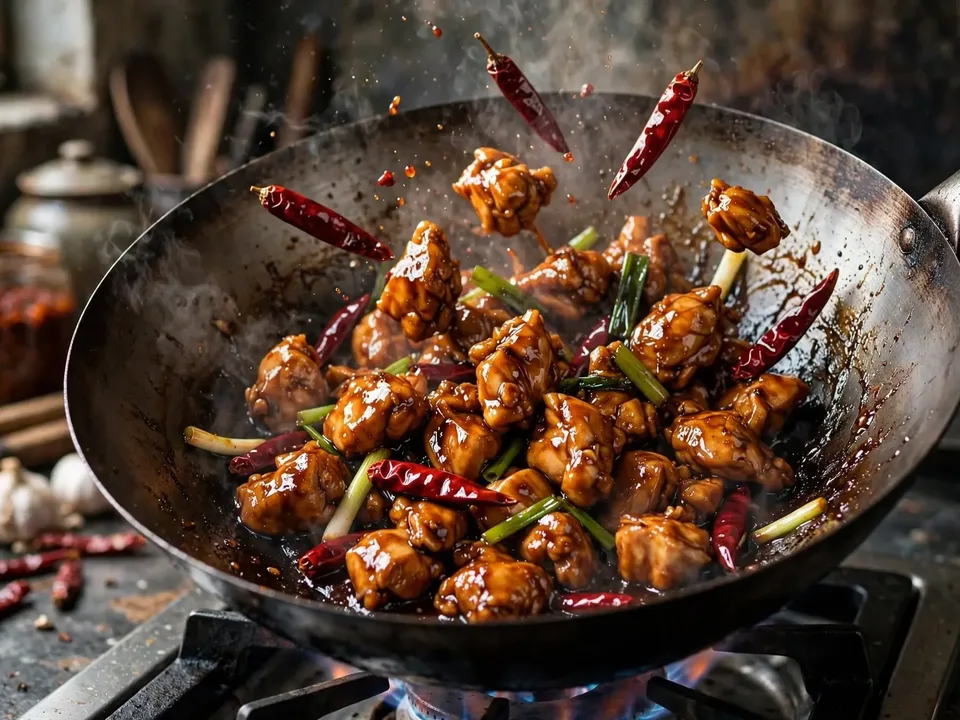
Return the chicken and glaze rapidly
2 min
Return the chicken and toss through the aromatic oil.
Return the chicken and toss through the aromatic oil. Stir the sauce again, pour it around the hot wok and toss over high heat for 30–60 seconds until the starch cooks and the sauce reduces to a thin glossy coating. Do not add the peanuts yet.
Look for
The sauce bubbles hard and coats the chicken in a shiny film with no large watery puddle in the bottom of the wok.
Kitchen note
The sauce should cling, not pool. If the wok is crowded or cool, the glaze turns watery; increase heat briefly rather than continuing to cook the chicken for several minutes.
 Step 06
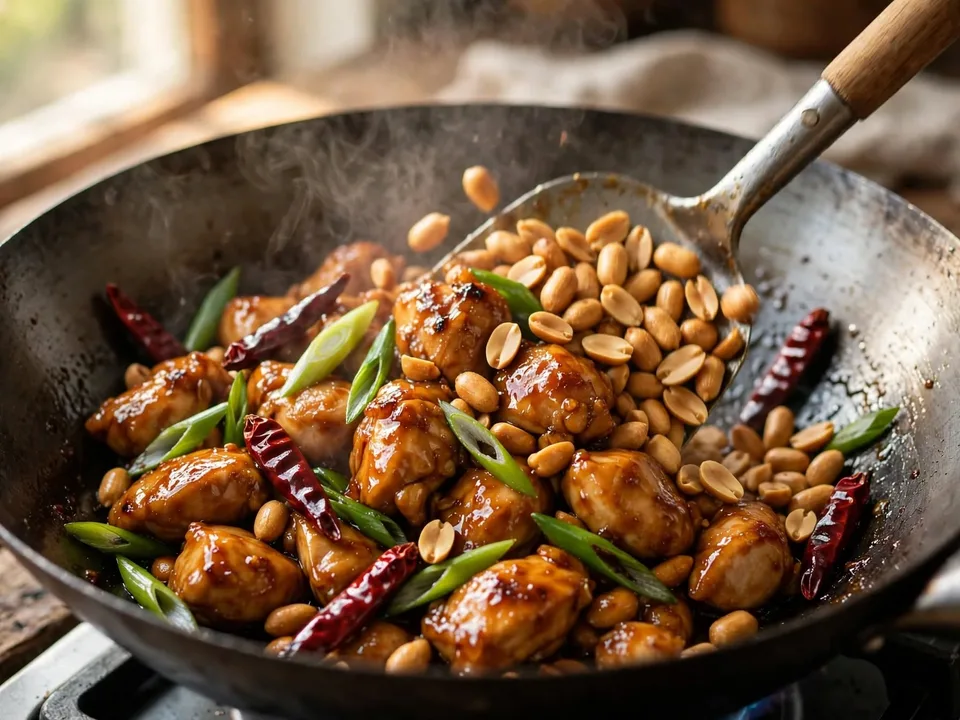
Fold in the peanuts and serve at once
1 min
Turn off the strongest heat and fold in the roasted peanuts and scallion greens.
Turn off the strongest heat and fold in the roasted peanuts and scallion greens. Toss only long enough to distribute them, then transfer immediately to a serving dish with rice.
Look for
The peanuts remain crisp-looking, the chicken is glossy rather than swimming in sauce and the dried chiles remain visible throughout the dish.
Kitchen note
Peanuts go in last so they stay crisp. Letting them simmer in the sauce turns one of the dish’s defining texture contrasts soft.
After cooking
Explore the dish beyond the method.
Story, place and references are here for discovery, so they stay out of the way while you cook.
Culture & tradition
The story behind the dish
Origins, evolution and everyday life—read together as part of the recipe's culinary record.
Origins
A Sichuan chicken dish commonly linked to the title gongbao; Ember & Equator treats colourful individual-origin stories cautiously while preserving the established Sichuan culinary identity.
How it evolved
Restaurant and overseas versions have altered sweetness, vegetables and sauce volume, while the Sichuan form remains a fast wok dish centred on diced chicken, dried chiles, peppercorn and peanuts.
Its place today
A globally recognised Sichuan stir-fry served with rice and valued for its balance of aroma, heat, acidity, sweetness and crunch.
Visual archive · plate 01
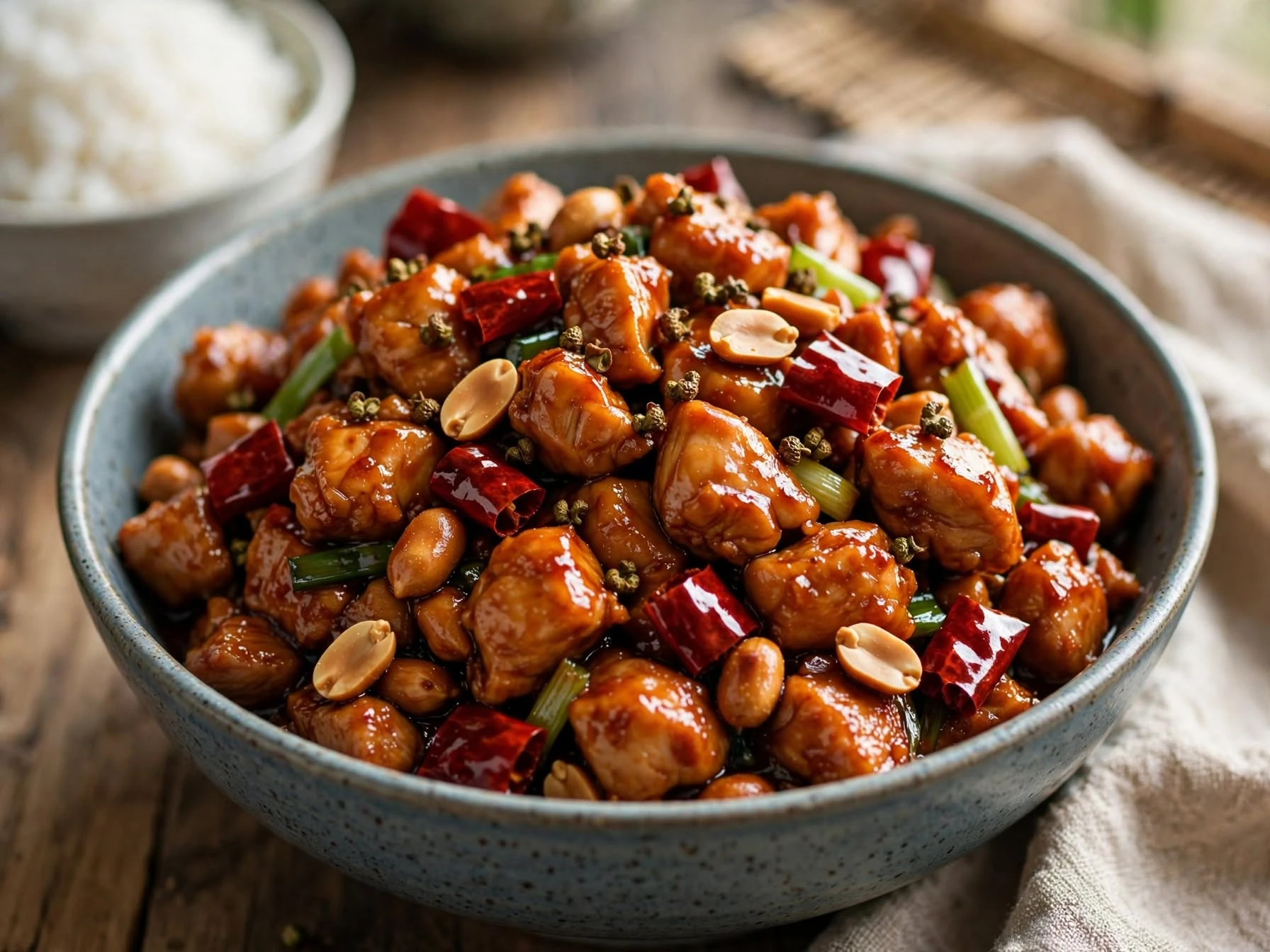
Kung Pao Chicken
An editorial view of the finished dish, kept compact so the story continues without an oversized image break.
Primary region
Sichuan, China
Country
China
Regional influence
Dried chiles, Sichuan pepper, vinegar and preserved seasonings create a concentrated sauce suited to fast high-heat wok cooking.
Related food systems
- Sichuan gongbao flavour profile
- High-heat wok cookery
- Rice-centred shared meals
Sources & further reading
Follow the reference trail.
Ember & Equator links outward when an institution or primary reference helps support the culinary record.
- 01Welcome to China — Chinese CuisineExternal ↗
National Immigration Administration of China · reference
Supports: Eight Major Cuisines · Sichuan cuisine · Cantonese cuisine · Mapo Tofu · Kung Pao Chicken
Ember & Equator source review · 2026-09-03
- 02Chengdu — Creative Cities NetworkExternal ↗
UNESCO · reference
Supports: Chengdu gastronomy · Sichuan cuisine · regional flavor traditions
Ember & Equator source review · 2026-09-03
- 03China’s four major cuisinesExternal ↗
The State Council of the People’s Republic of China / National Tourism Administration · reference
Supports: Sichuan cuisine · Cantonese cuisine · regional Chinese cooking
Ember & Equator source review · 2026-09-03
- 04Kung Pao Chicken: An Authentic Chinese RecipeExternal ↗
The Woks of Life · specialist publication
Supports: diced chicken · light marinade · black-vinegar sauce · dried chiles · Sichuan pepper · peanuts
Ember & Equator source review · 2026-09-17
Ingredient guides
Learn about the ingredients behind the dish.
These are reference guides, not a second ingredient list. Follow an ingredient when you want to understand its role, use and wider culinary context.
Ingredient
chicken thighs
Understand what it contributes, how to use it, and the dishes that reveal it best.
Ingredient
roasted peanuts
Understand what it contributes, how to use it, and the dishes that reveal it best.
Ingredient
dried red chilies
Understand what it contributes, how to use it, and the dishes that reveal it best.
Ingredient
Sichuan peppercorns
Understand what it contributes, how to use it, and the dishes that reveal it best.
Explore ingredient →
Ingredient
light soy sauce
Understand what it contributes, how to use it, and the dishes that reveal it best.
Ingredient
black vinegar
Understand what it contributes, how to use it, and the dishes that reveal it best.
Keep wandering
Where will this dish take you next?
Stay with the place, follow an ingredient or technique, or cross into another food culture. Each path begins with something already present in this dish.
Stay with the place
01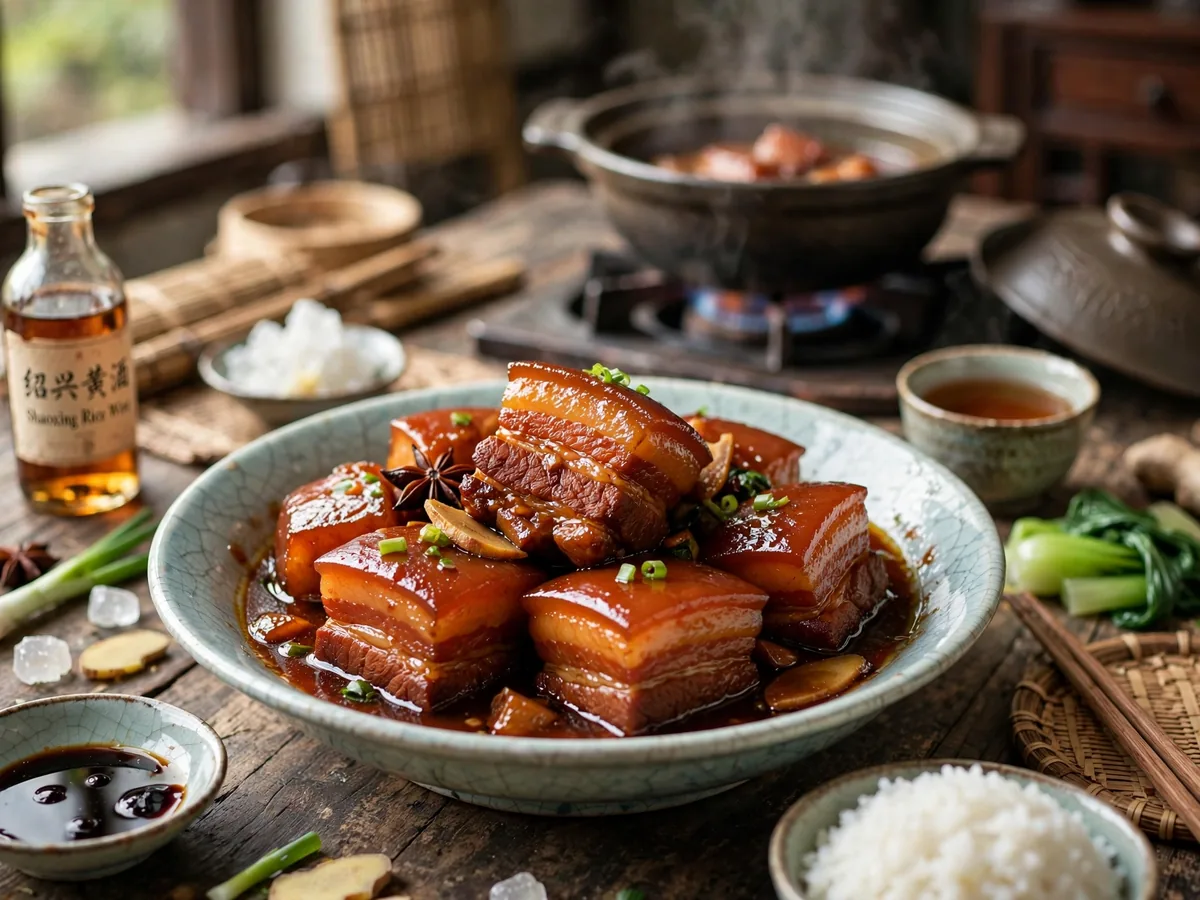
China
Shanghai-Style Red-Braised Pork
Stay in the same food culture and notice how sear appears in another dish.
Shared thread · Sear · Balance a sweet-sour-salty sauce · light soy sauce
Follow the method or pantry
02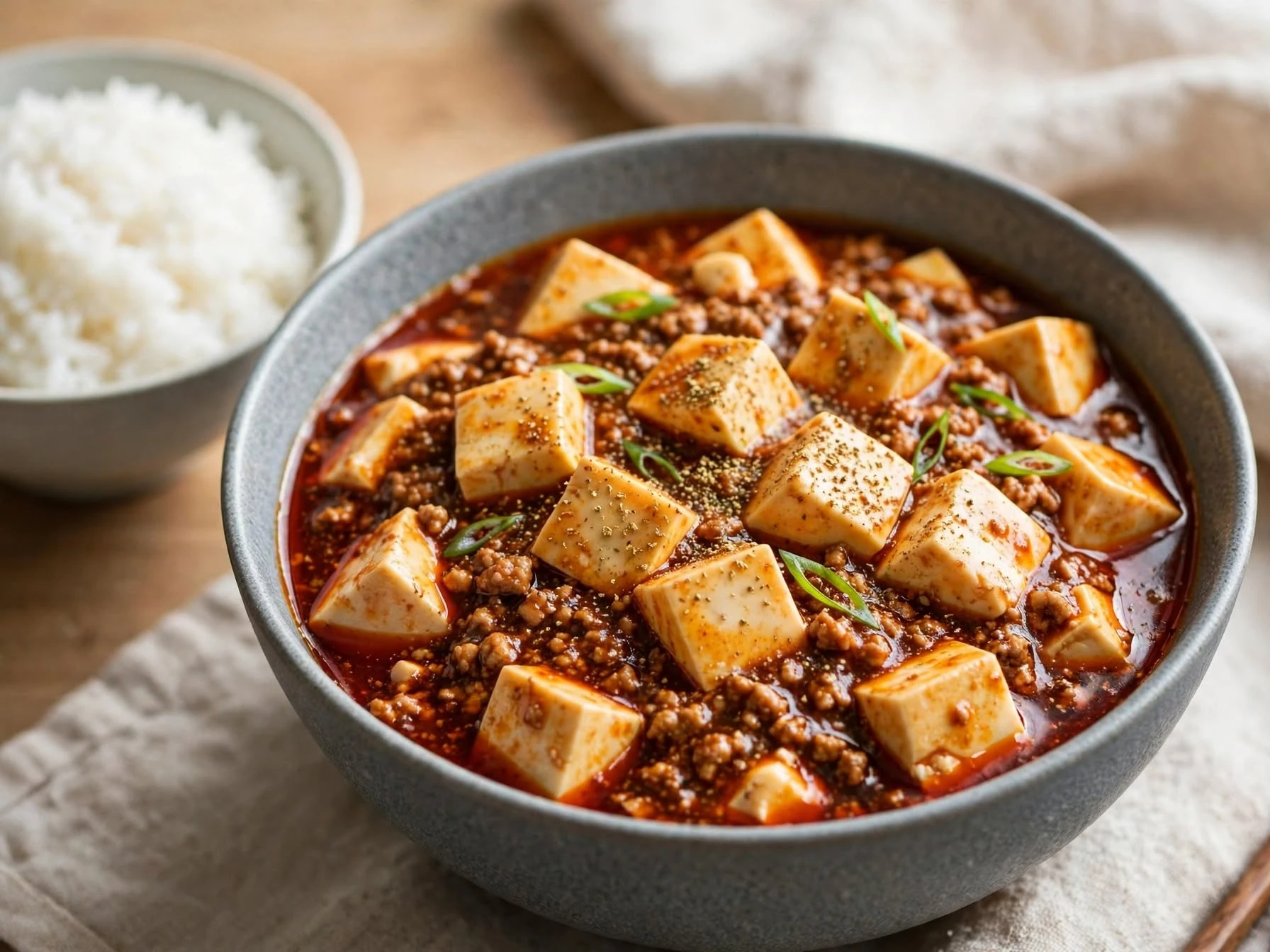
China
Mapo Tofu
Follow the cooking method: both dishes connect through wok stir-fry.
Shared thread · Wok stir-fry · Sichuan peppercorns · cornstarch
Cross a culinary border
03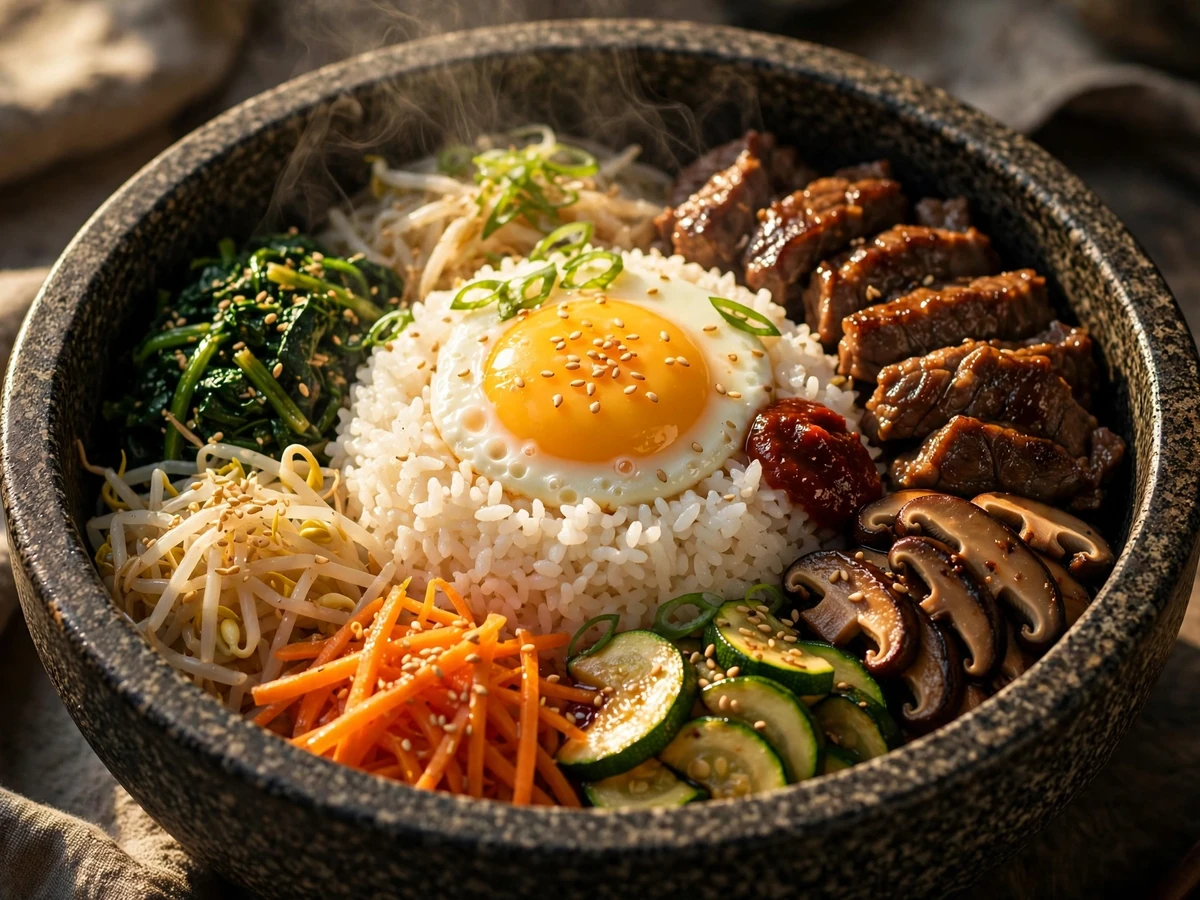
South Korea
Bibimbap
Cross borders while keeping marinate as the common thread.
Shared thread · Marinate · Sear · neutral oil
Go one layer deeper
One small detail can open an entirely different part of food.
Continue in Ember & Equator