
China · lunch · dinner
Shanghai-Style Red-Braised Pork
China through one enduring dish.
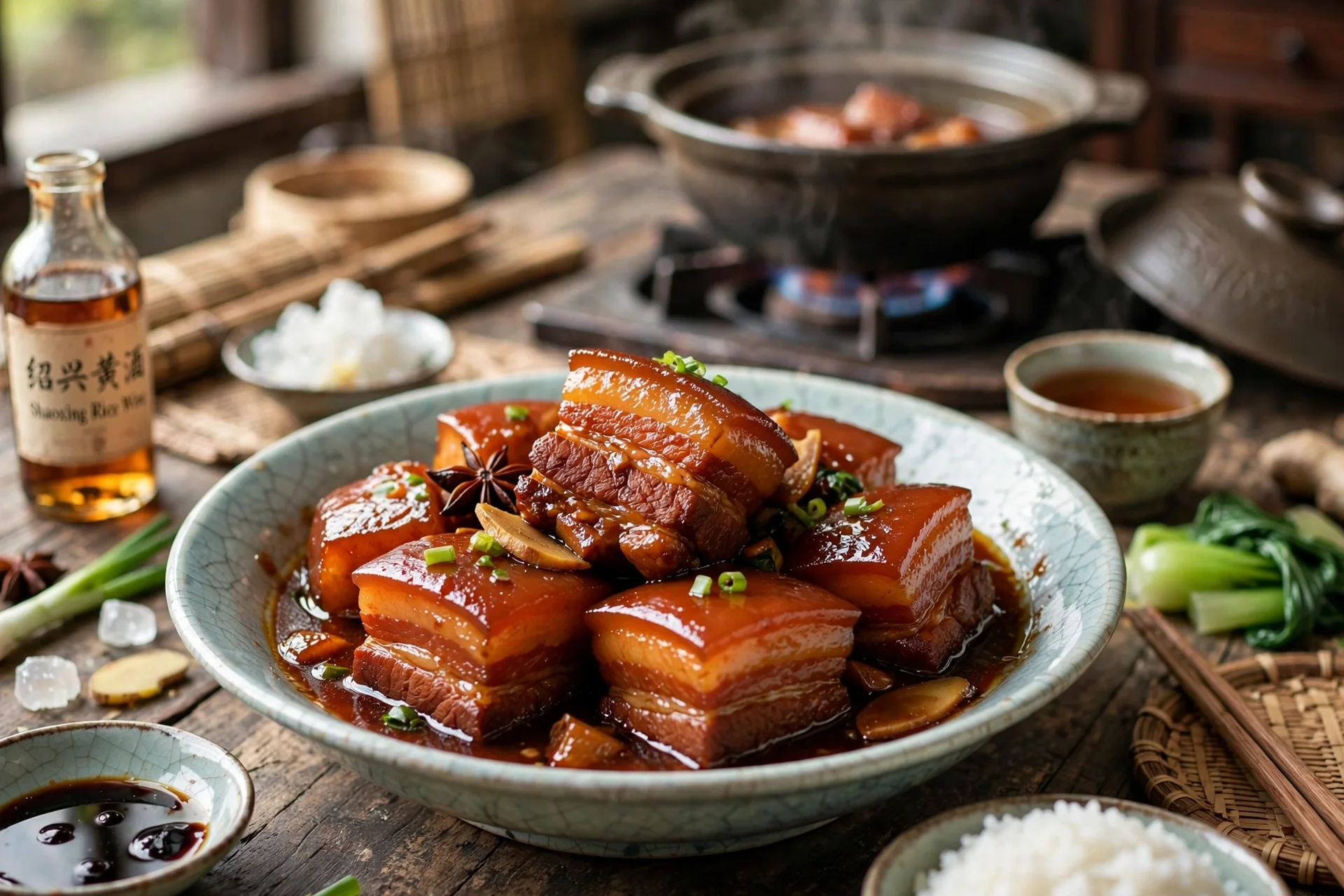
Shanghai-style hong shao rou transforms layered pork belly into tender, intact cubes coated in a glossy amber-red soy, Shaoxing-wine and sugar glaze. The Shanghai expression is rounded and sweet-savory, with richness controlled through blanching, rendering, a long gentle braise and a final reduction.
- Total
- 155 min
- Difficulty
- Medium
- Serves
- 4
- Steps
- 5
The dish
Place first. Then the plate.
Hong shao rou belongs to the broader Chinese family of red-braised dishes, but Shanghai has a particularly strong local association with the pork-belly version. The city’s official food guide describes it as both family comfort food and restaurant fare, recognisable by deep amber-red cubes whose skin, fat and lean layers remain distinct.
Explore ChinaAt a glance
Origin
China
Region
Shanghai / Jiangnan, lower Yangtze region
Meal
lunch · dinner
Guided steps
5
Dish
Shanghai-Style Red-Braised Pork
Cuisine
Chinese cuisines
Food type
Comfort food · Dinner
Technique
Sear · Simmer · Slow cook
Cook the recipe
In the kitchen
Start with the ingredients, then follow the Method in order. Open cooking tips only when you need extra help; the story and references can wait until you are ready.
- Total
- 155 min
- Serves
- 4
- Level
- Medium
- Visual cues
- 5
Ingredients
Serves 4- 800 gpork bellyskin-on if available; choose an even slab with distinct layers
- 3 tbspShaoxing wineChinese rice wine
- 2 tbsplight soy sauce
- 1 tbspdark soy saucemainly for colour and depth
- 45 grock sugaradd during the final reduction for a clean glossy sweetness
- 25 ggingersliced
- 2scallionsone tied into a knot if practical
- 1 tsprice vinegara small amount to sharpen the braising liquid, not make it sour
- 1 tbspneutral oilonly if the pan needs help before the pork begins rendering
- 700 mlhot waterapproximately; enough to just cover the pork during the braise
Everything ready? Continue straight into the cooking steps.
Start methodMethod
5 steps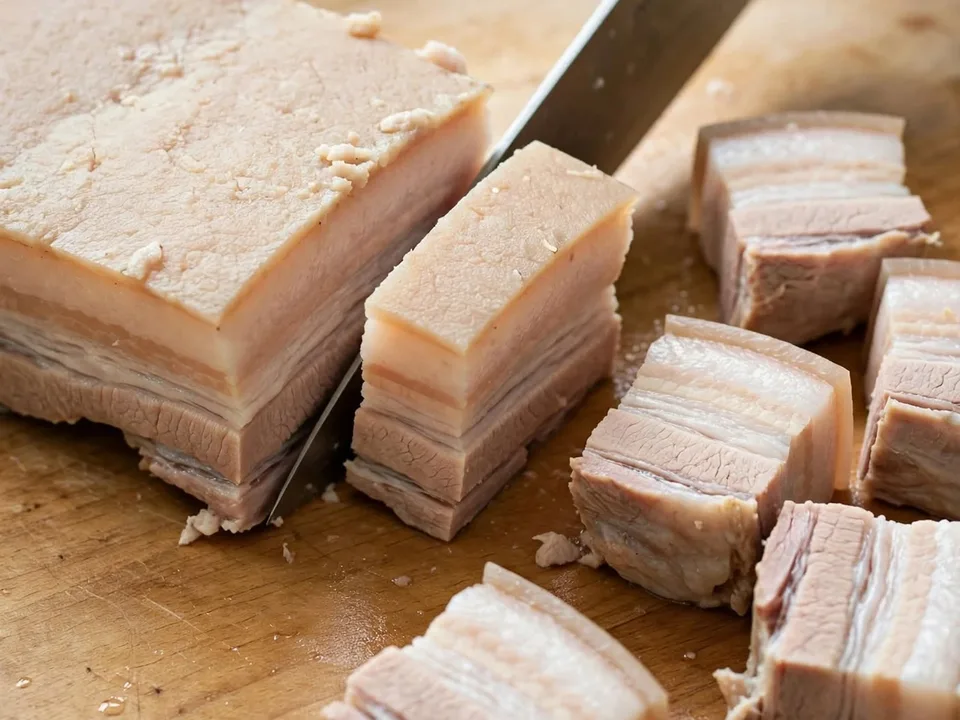 Step 01
Blanch, cool and cut the pork into even cubes
15 min
Place the pork belly slab in a pot of cold water and bring it slowly to a boil.
Place the pork belly slab in a pot of cold water and bring it slowly to a boil. Reduce to a gentle simmer and cook just until the exterior is set, about 8–10 minutes. Let the pork cool briefly in the liquid, remove it, pat dry and cut into even 3–4 cm cubes so the skin, fat and lean layers stay aligned.
Look for
The cubes are firm, evenly sized and clearly show separate skin, fat and lean layers.
Kitchen note
This is a preparation blanch, not the tenderising cook. Do not boil the belly until soft or the cubes will lose definition during the long braise.
 Step 02
Render and lightly brown the pork
10 min
Heat a heavy wok or casserole over medium heat.
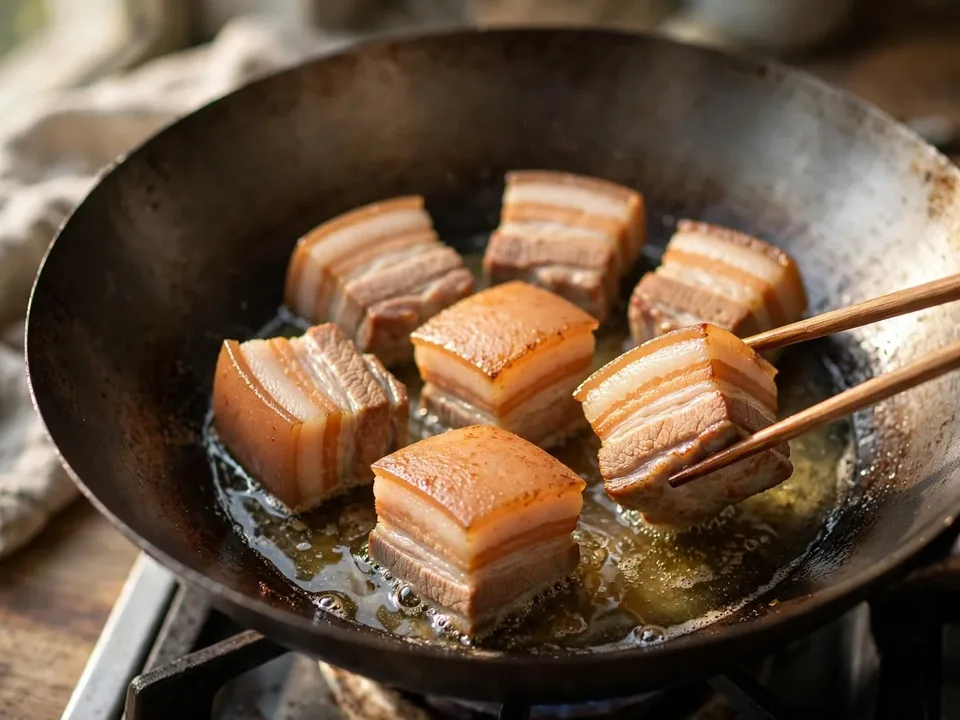
Heat a heavy wok or casserole over medium heat. Add the pork cubes and cook, turning patiently, until some fat renders and the broad sides become lightly golden. Spoon off excess rendered fat, leaving only enough to carry the aromatics and seasoning.
Look for
The cubes have pale-golden edges, a little rendered fat surrounds them and the surfaces are not burnt or crusty.
Kitchen note
Aim for light golden colour, not a dark hard sear. Too much browning makes the exterior chewy and can push the braise away from the supple Shanghai texture.
 Step 03
Build the soy, wine and aromatic braising liquid
6 min
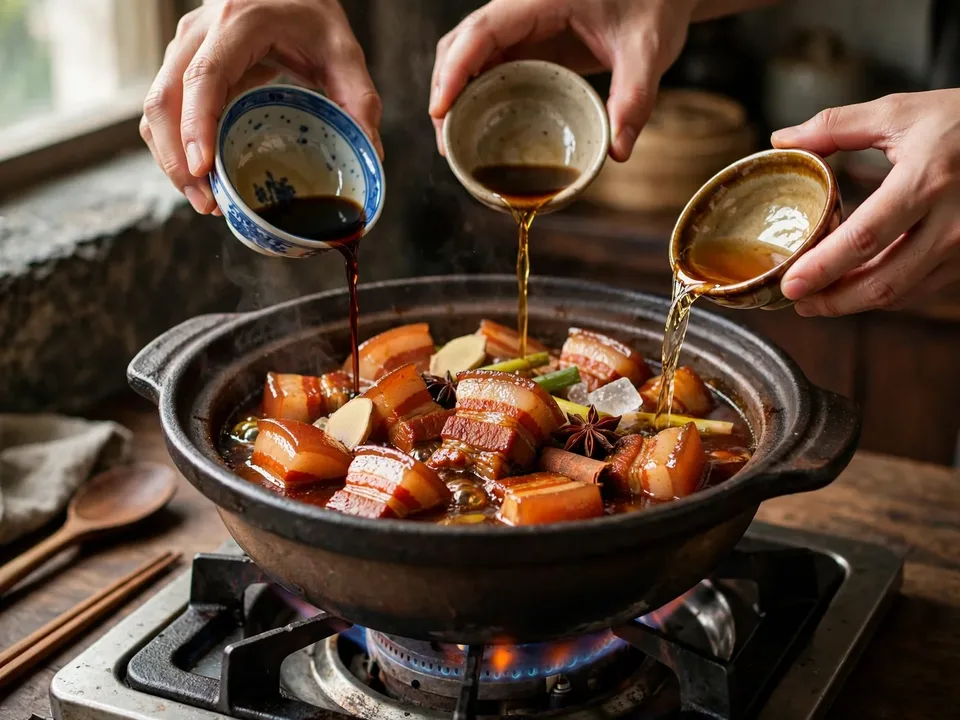
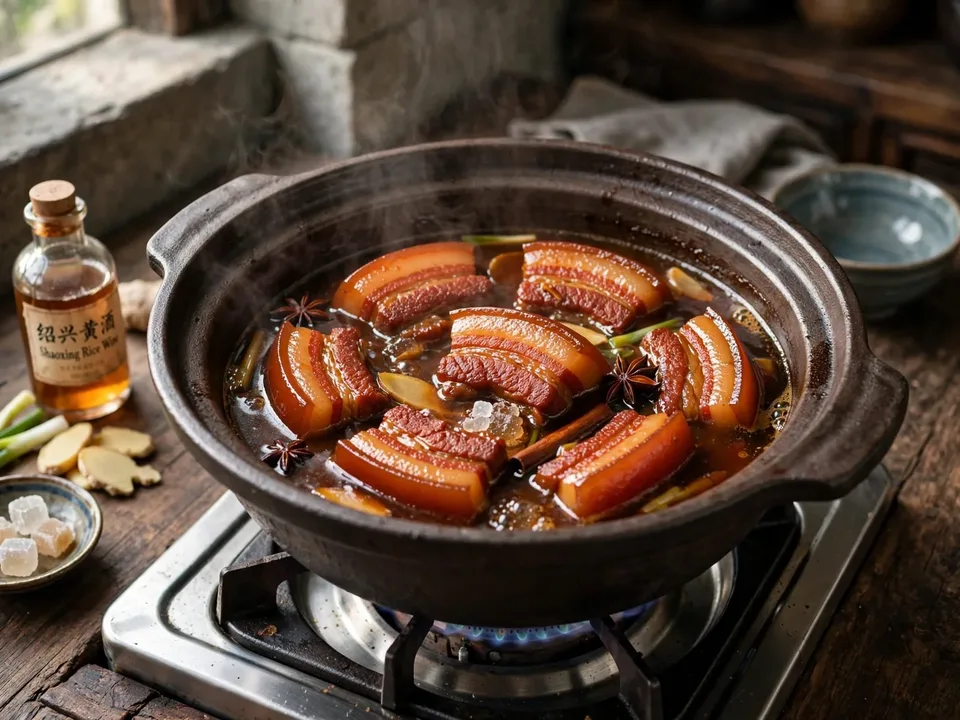
Add Shaoxing wine and the rice vinegar and let them hiss briefly.
Add Shaoxing wine and the rice vinegar and let them hiss briefly. Add ginger and scallion, then the light and dark soy sauces. Pour in enough hot water to come just to the top of the pork and bring the liquid to a boil. Do not add the rock sugar yet.
Look for
The braising liquid is clear mahogany-brown, aromatic with wine and ginger, and reaches roughly the top of the pork cubes.
Kitchen note
Adding hot rather than cold water keeps the braise moving efficiently. The dark soy should deepen colour without becoming the dominant salty flavour.
 Step 04
Braise gently until the pork is yielding but intact
105 min
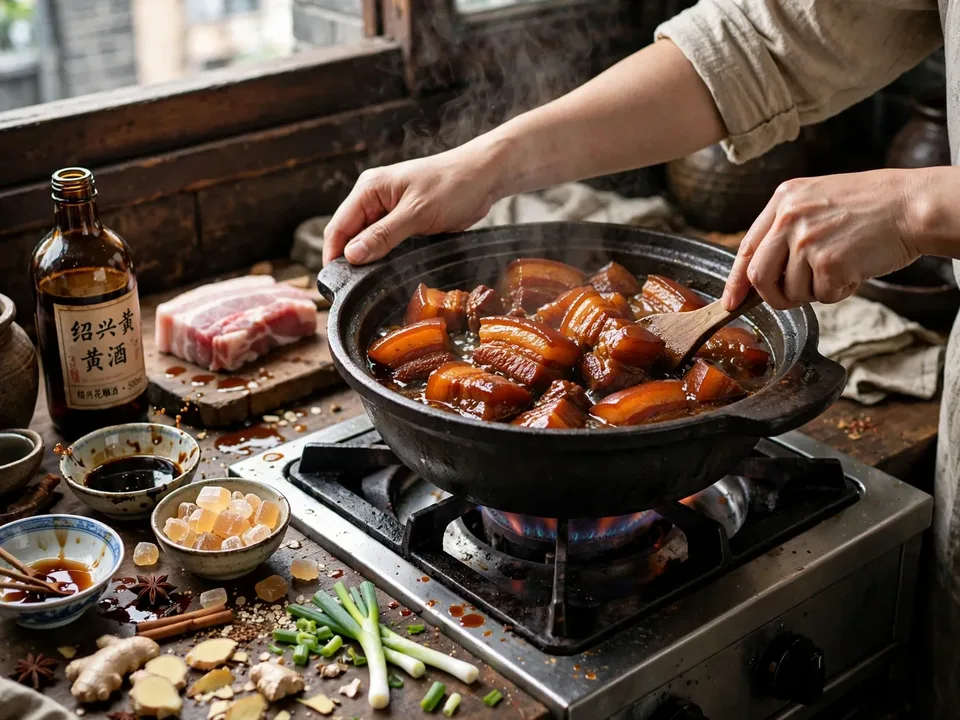
Cover, lower the heat to maintain a quiet simmer and braise for about 1½–2 hours.
Cover, lower the heat to maintain a quiet simmer and braise for about 1½–2 hours. Turn the cubes once or twice if needed for even seasoning. Add a splash of hot water only if the liquid falls too low before the pork is tender.
Look for
A chopstick or skewer enters the lean portion with little resistance, but the cubes still hold a neat layered shape.
Kitchen note
A hard boil can split the fat layers and toughen the lean meat. Keep the surface at a lazy bubble and use tenderness, not a fixed clock, as the endpoint.
 Step 05
Add rock sugar and reduce to the signature glossy glaze
12 min
Uncover, add the rock sugar and raise the heat to medium.
Uncover, add the rock sugar and raise the heat to medium. Turn the pork gently as the braising liquid reduces. Stop when the sauce has become syrupy enough to lacquer the cubes but before it catches or turns sticky-hard. Remove spent ginger and scallion and serve hot with plain rice or other simple dishes.
Look for
Each cube is shiny and red-brown, the glaze clings in a thin lacquer and only a small amount of sauce remains in the pan.
Kitchen note
The final reduction moves quickly. Once large shiny bubbles replace the thin simmer, stay at the pan and turn the cubes gently so the sugar-rich glaze does not scorch.
After cooking
Explore the dish beyond the method.
Story, place and references are here for discovery, so they stay out of the way while you cook.
Culture & tradition
The story behind the dish
Origins, evolution and everyday life—read together as part of the recipe's culinary record.
Origins
Red-braising belongs to a broader Chinese family of soy-colored braises, so Ember & Equator does not claim Shanghai invented the technique. The Shanghai version is situated within Jiangnan home cooking, where pork belly, soy, wine and sugar are brought together into the characteristically glossy, sweet-savory style now strongly associated with the city.
How it evolved
Household and restaurant versions vary in sugar level, aromatics, soy ratios, preliminary blanching or browning, and the length of the braise. The constant is the transformation: layered pork belly becomes tender while the cooking liquid reduces from a braise into a concentrated coating.
Its place today
Hong shao rou remains a recognizable Shanghai comfort dish served at family tables and in restaurants. It also offers a useful lesson in Jiangnan flavor structure: sweetness is not dessert-like but works with soy, wine and rendered pork fat to produce depth and sheen.
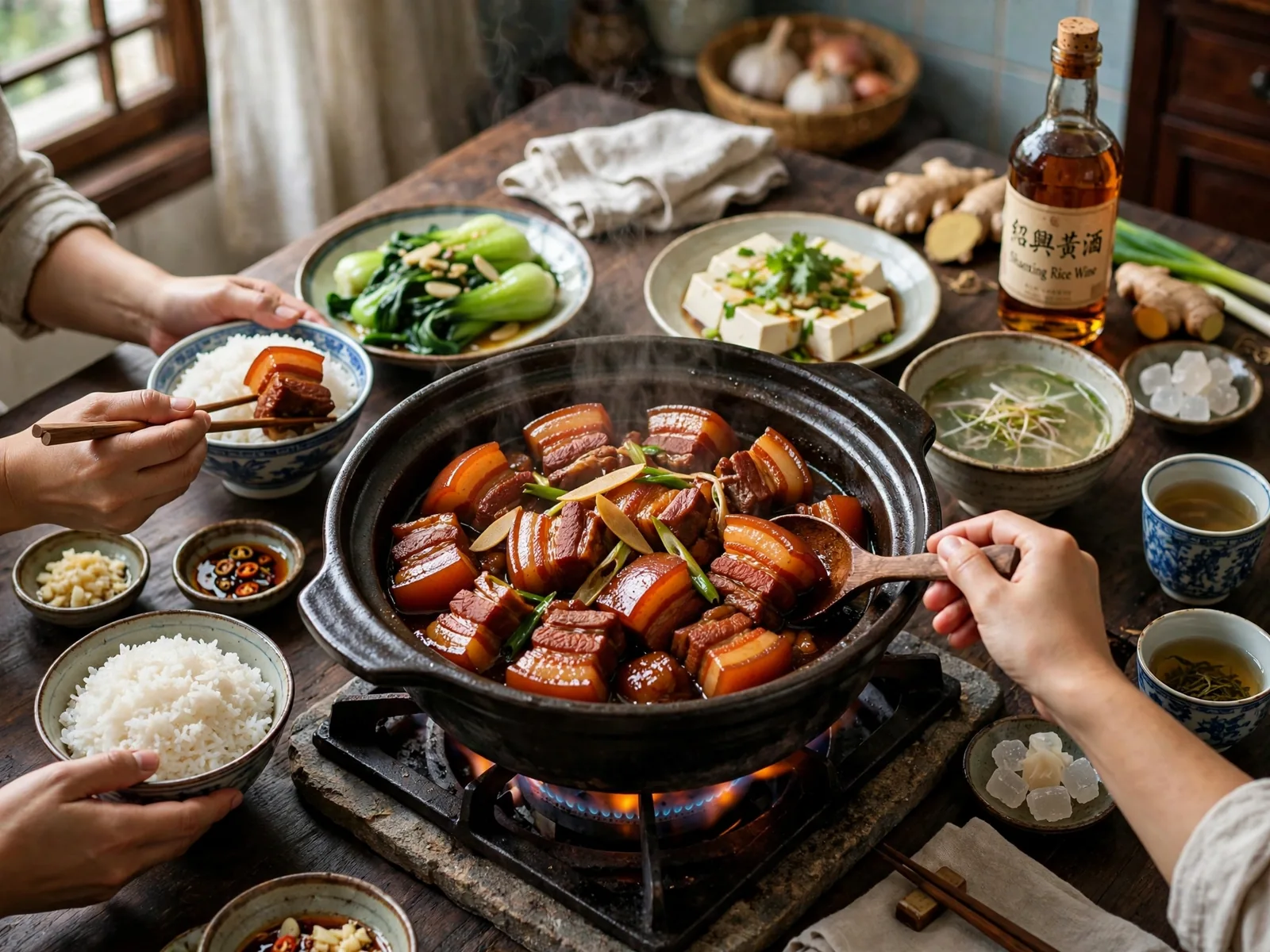
Visual archive · plate 01
Shanghai-Style Red-Braised Pork
An editorial view of the finished dish, kept compact so the story continues without an oversized image break.
Primary region
Shanghai / Jiangnan, lower Yangtze region
Country
China
Regional influence
The dish reflects the Jiangnan pantry and urban household tradition more than a direct climatic rule. Soy sauces, Shaoxing-style rice wine, sugar and pork are combined through moist cooking and reduction, producing the glossy sweet-savory profile widely associated with Shanghainese red-braising.
Related food systems
- Jiangnan red-braising traditions
- Soy and rice-wine seasoning systems
- Shanghai family-style pork dishes
Sources & further reading
Follow the reference trail.
Ember & Equator links outward when an institution or primary reference helps support the culinary record.
- 01Red-braised pork bellyExternal ↗
Shanghai Municipal Government · government
Supports: Shanghai identity · short preliminary simmer · light browning · soy and Shaoxing braise · long gentle braise · late rock-sugar reduction
Ember & Equator source review · 2026-09-17
- 02Eight major cuisines of ChinaExternal ↗
State Council Information Office of China · government
Supports: regional Chinese culinary diversity
Ember & Equator source review · 2026-09-17
Ingredient guides
Learn about the ingredients behind the dish.
These are reference guides, not a second ingredient list. Follow an ingredient when you want to understand its role, use and wider culinary context.
Ingredient
pork belly
Understand what it contributes, how to use it, and the dishes that reveal it best.
Ingredient
Shaoxing wine
Understand what it contributes, how to use it, and the dishes that reveal it best.
Ingredient
light soy sauce
Understand what it contributes, how to use it, and the dishes that reveal it best.
Ingredient
dark soy sauce
Understand what it contributes, how to use it, and the dishes that reveal it best.
Ingredient
rock sugar
Understand what it contributes, how to use it, and the dishes that reveal it best.
Ingredient
ginger
Understand what it contributes, how to use it, and the dishes that reveal it best.
Keep wandering
Where will this dish take you next?
Stay with the place, follow an ingredient or technique, or cross into another food culture. Each path begins with something already present in this dish.
Stay with the place
01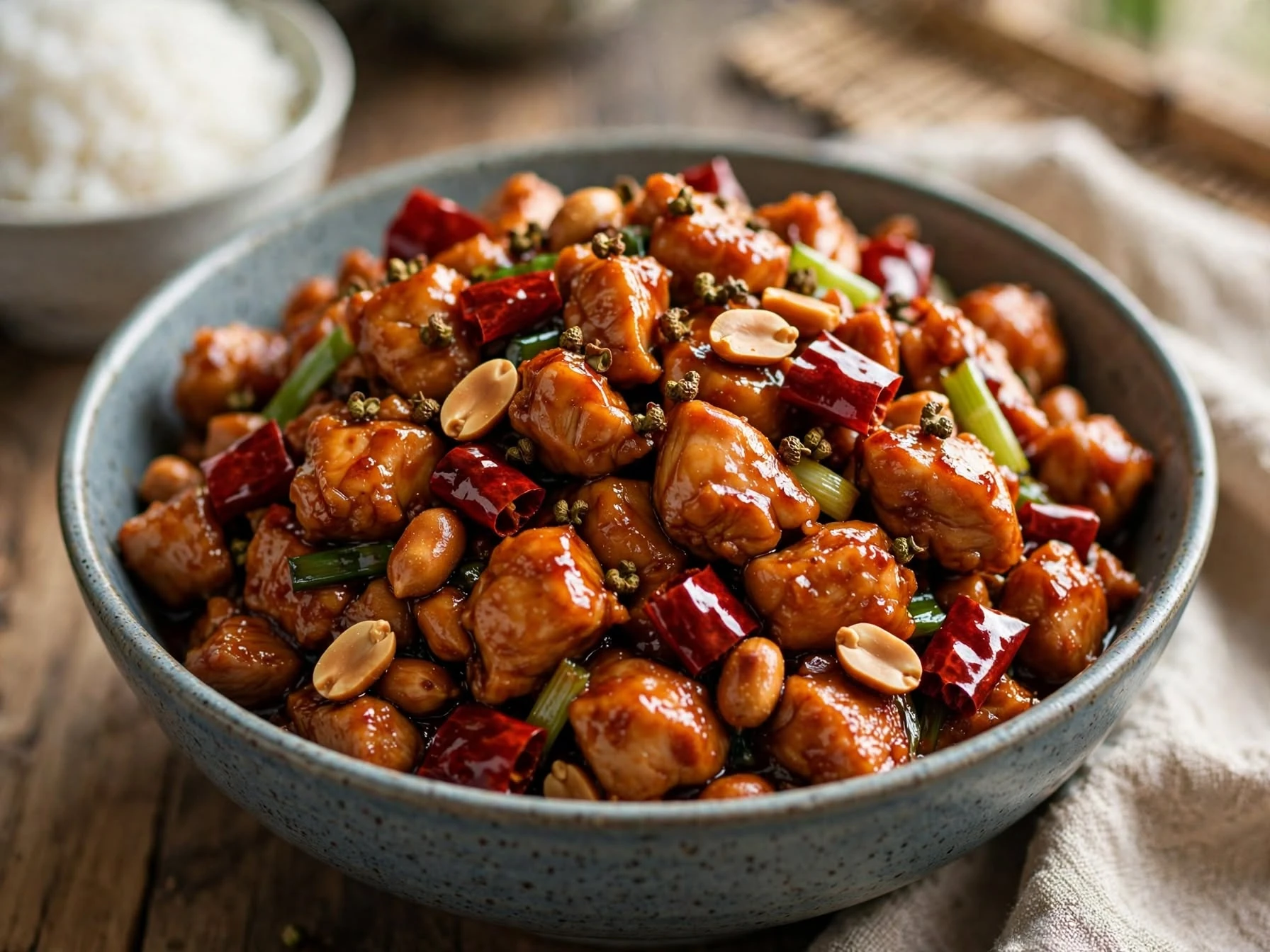
China
Kung Pao Chicken
Stay in the same food culture and notice how sear appears in another dish.
Shared thread · Sear · Balance a sweet-sour-salty sauce · Shaoxing wine
Follow the method or pantry
02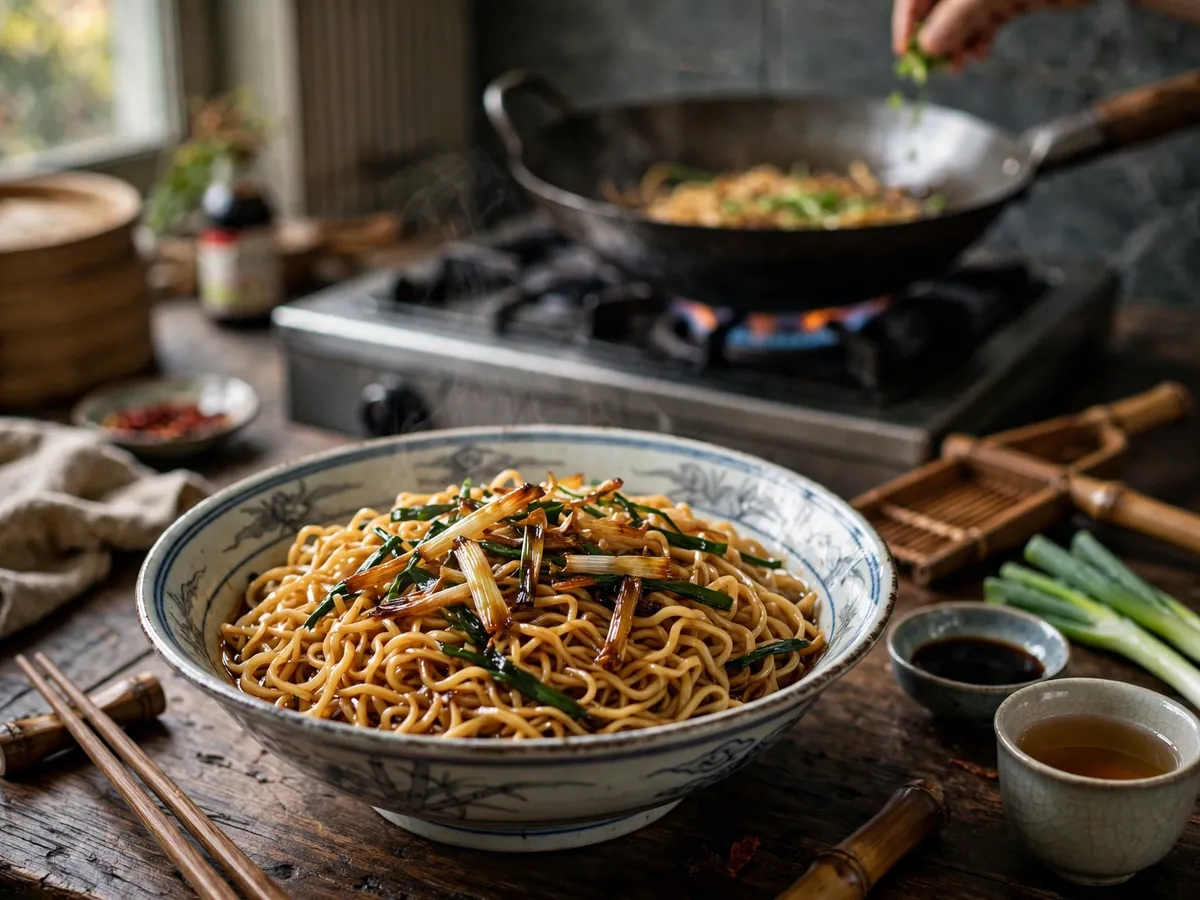
China
Scallion Oil Noodles
Follow the cooking method: both dishes connect through balance a sweet-sour-salty sauce.
Shared thread · Balance a sweet-sour-salty sauce · light soy sauce · dark soy sauce
Cross a culinary border
03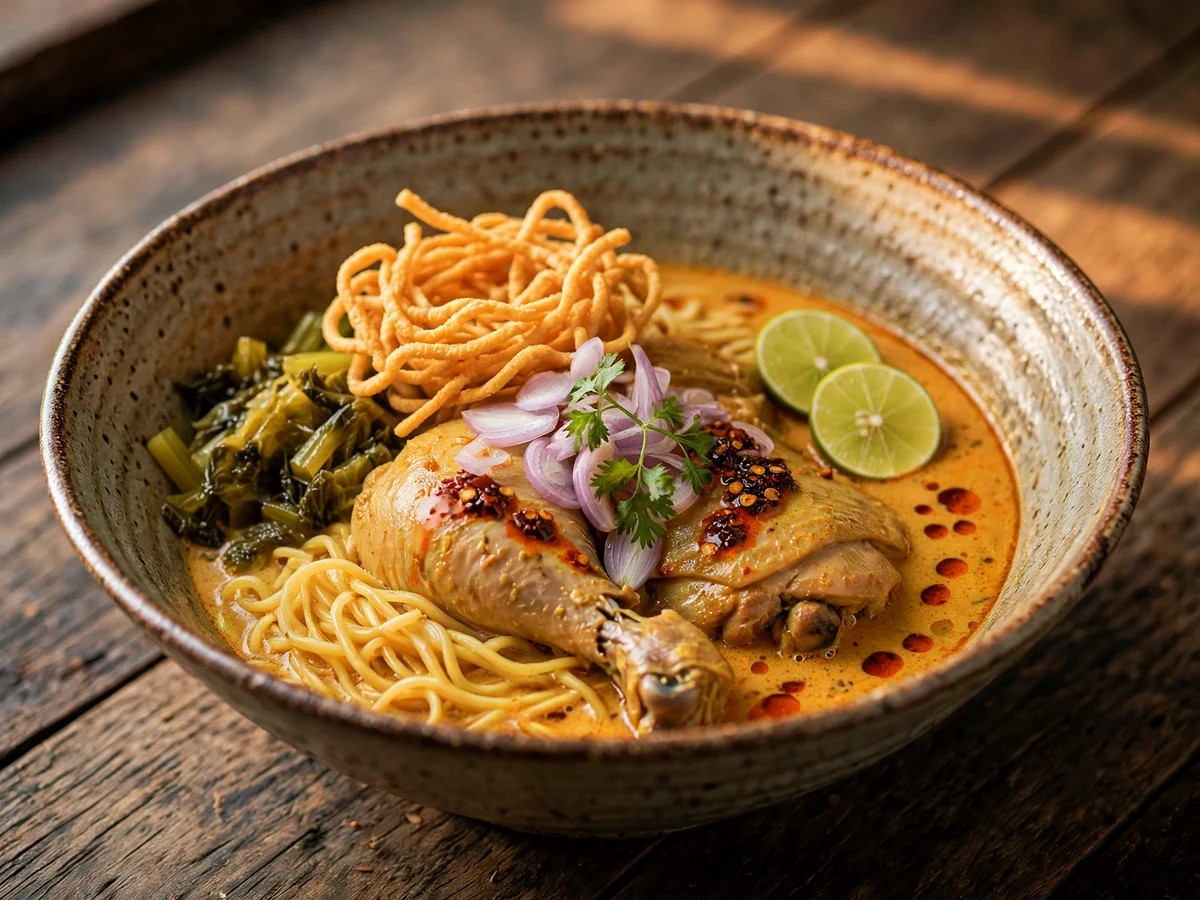
Thailand
Khao Soi
Cross borders while keeping simmer as the common thread.
Shared thread · Simmer · Balance a sweet-sour-salty sauce · dark soy sauce
Go one layer deeper
One small detail can open an entirely different part of food.
Continue in Ember & Equator