
China · lunch · dinner
Mapo Tofu
China through one enduring dish.
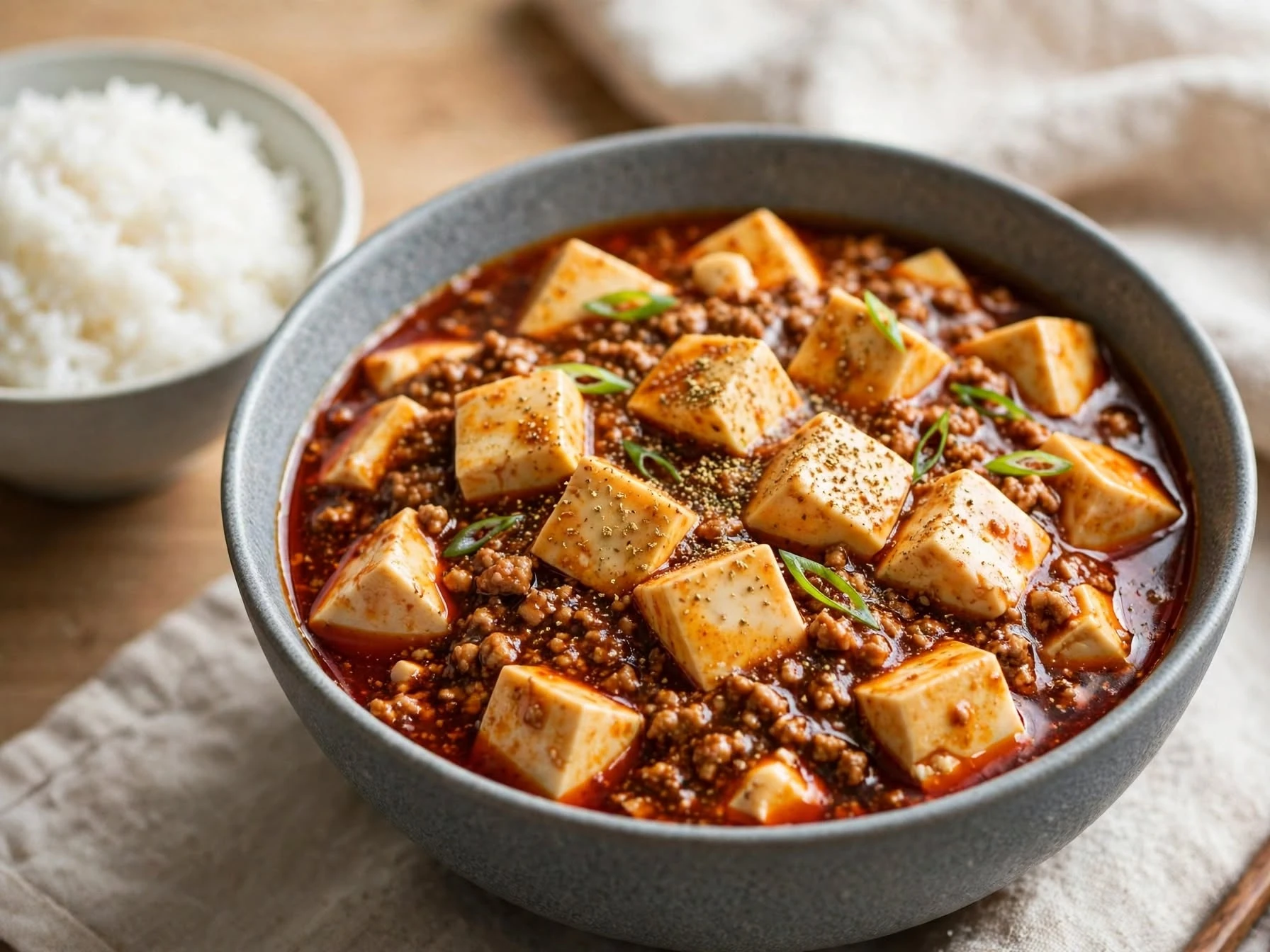
Mapo tofu is a Chengdu/Sichuan dish of tender tofu in a glossy chile-bean sauce with minced meat, doubanjiang, fermented black beans and the fragrant numbing character of Sichuan pepper.
- Total
- 35 min
- Difficulty
- Medium
- Serves
- 4
- Steps
- 6
The dish
Place first. Then the plate.
Mapo tofu is a classic Sichuan dish whose identity comes from layered málà seasoning rather than heat alone. The selected Ember & Equator version uses soft tofu, pork, Pixian-style doubanjiang, douchi and freshly ground Sichuan pepper; beef and other household variations also exist.
Explore ChinaAt a glance
Origin
China
Region
Chengdu and Sichuan, China
Meal
lunch · dinner
Guided steps
6
Dish
Mapo Tofu
Cuisine
Chinese cuisines
Food type
Comfort food · Dinner
Technique
Wok stir-fry · Simmer
Cook the recipe
In the kitchen
Start with the ingredients, then follow the Method in order. Open cooking tips only when you need extra help; the story and references can wait until you are ready.
- Total
- 35 min
- Serves
- 4
- Level
- Medium
- Visual cues
- 6
Ingredients
Serves 4- 450 gsilken tofuuse a soft or medium tofu that can hold cubes; drain gently
- 150 gground porkbeef is a documented variation
- 2 tbspneutral oilfor frying the meat and chile-bean paste
- 2 tbspdoubanjiangpreferably Pixian-style; chop if very coarse
- 1 tbspdouchifermented black beans, rinsed briefly if very salty and roughly chopped
- 2 clovesgarlicfinely minced
- 1 tbspgingerfinely minced
- 3scallionswhites and greens separated
- 1.5 tspSichuan peppercornstoast lightly and grind; reserve some for finishing
- 240 mlchicken stockor water
- 1 tbspcornstarchmixed with 2 tbsp cold water; add gradually
Everything ready? Continue straight into the cooking steps.
Start methodMethod
6 steps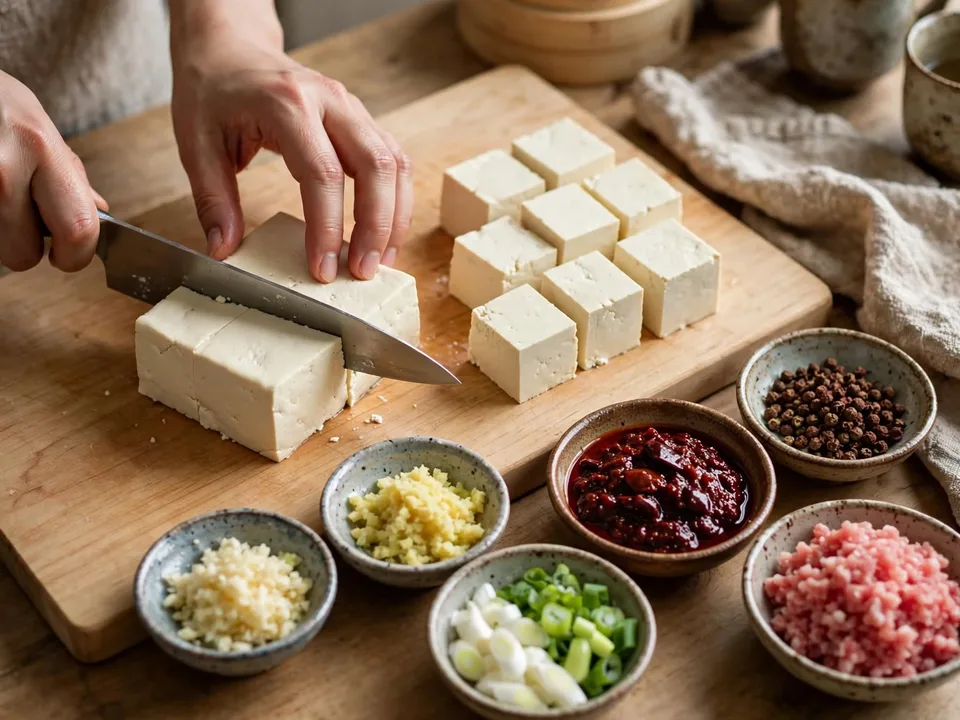 Step 01
Blanch the tofu and complete the mise en place
8 min
Cut the tofu into even 2 cm cubes.
Cut the tofu into even 2 cm cubes. Bring a saucepan of lightly salted water to a bare simmer, slide in the tofu and warm it for about 1 minute, then drain gently. At the same time, mince the garlic and ginger, separate the scallion whites and greens, chop the douchi and measure the doubanjiang, stock and slurry.
Look for
The tofu is hot through and still intact; all aromatics, sauces and slurry are ready before the wok is heated.
Kitchen note
The brief salted-water blanch is useful for very soft tofu: it warms the cubes, removes some raw-bean aroma and helps them handle the later simmer without turning rubbery.
 Step 02
Brown the pork and fry the doubanjiang and douchi
5 min
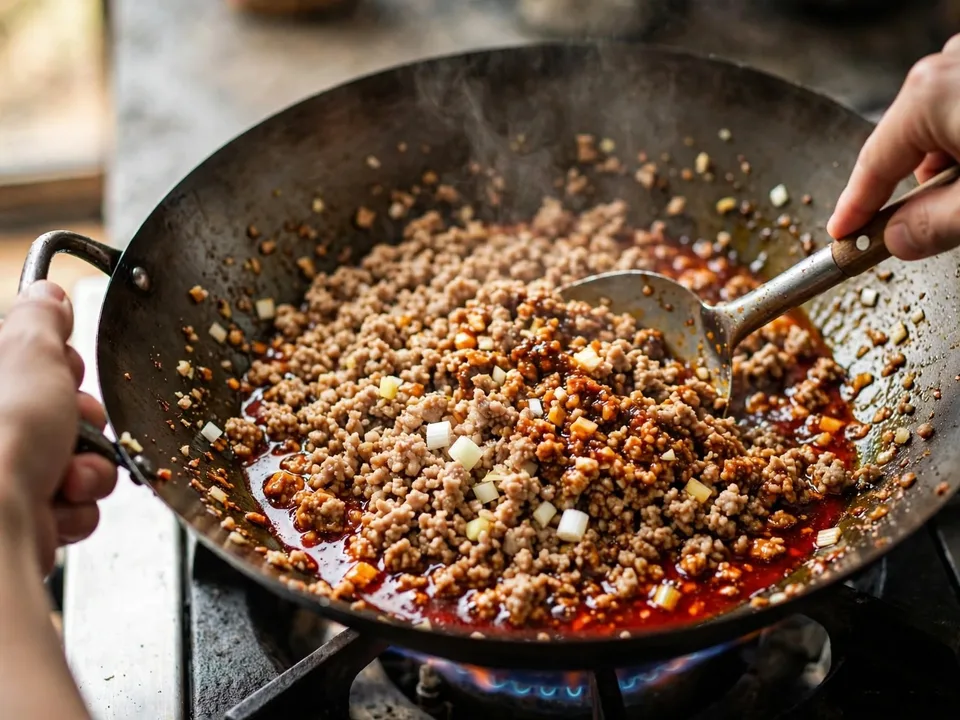
Heat the wok over medium-high heat, add the oil and stir-fry the pork until the granules lose their raw colour and begin to brown.
Heat the wok over medium-high heat, add the oil and stir-fry the pork until the granules lose their raw colour and begin to brown. Lower the heat slightly, add the doubanjiang and douchi and fry for about 1 minute until the oil turns red. Add garlic, ginger and scallion whites for another 20–30 seconds.
Look for
The pork is browned into small granules and the oil is glossy red with an intensely savoury fermented-bean aroma, but no scorched black flecks.
Kitchen note
Fry the fermented pastes in the oil instead of simply dissolving them in liquid. That develops the red oil and deeper savoury aroma that define the sauce.
 Step 03
Build the sauce and season its intensity
3 min
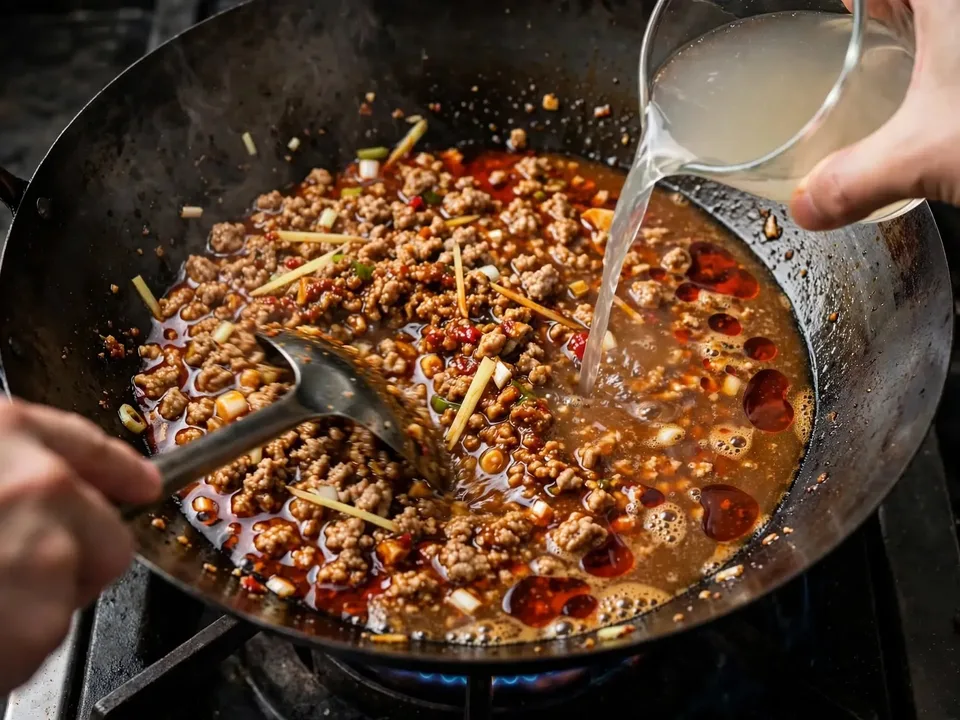
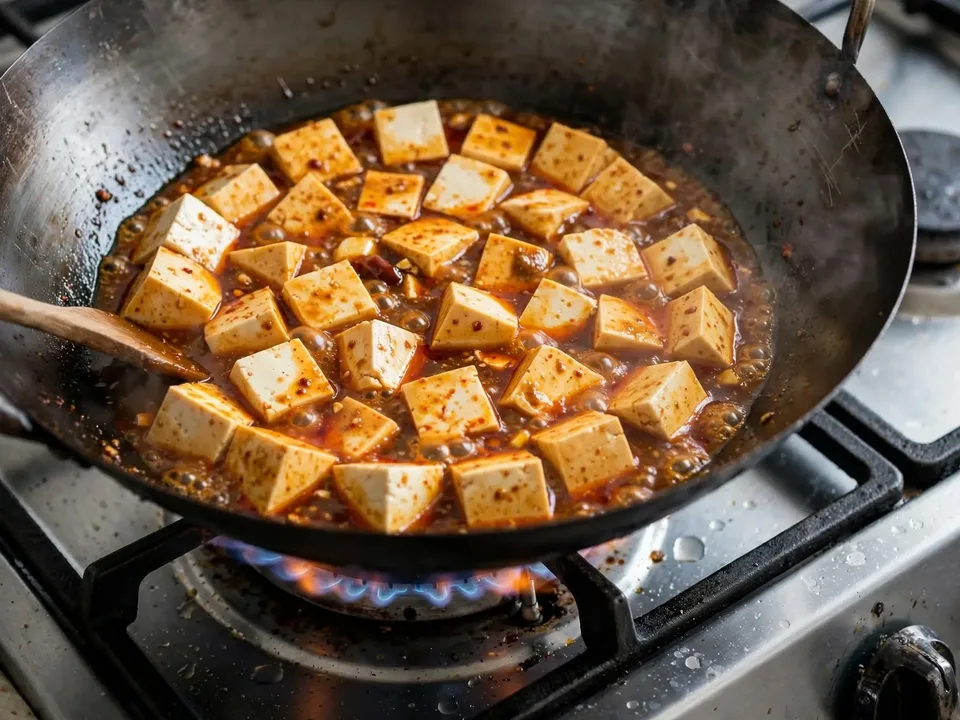
Pour in the stock and scrape the wok so the fried bean paste disperses evenly.
Pour in the stock and scrape the wok so the fried bean paste disperses evenly. Bring to a lively simmer for 2–3 minutes. Taste the liquid before adding any extra seasoning: doubanjiang and douchi vary substantially in salt, so the sauce may already be sufficiently seasoned.
Look for
The sauce is evenly red-brown with small beads of red oil and no separate clumps of bean paste.
Kitchen note
Judge salt only after the fermented condiments have fully dispersed. It is easy to add salt later and difficult to rescue an over-salted sauce.
 Step 04
Simmer the tofu without breaking the cubes
5 min
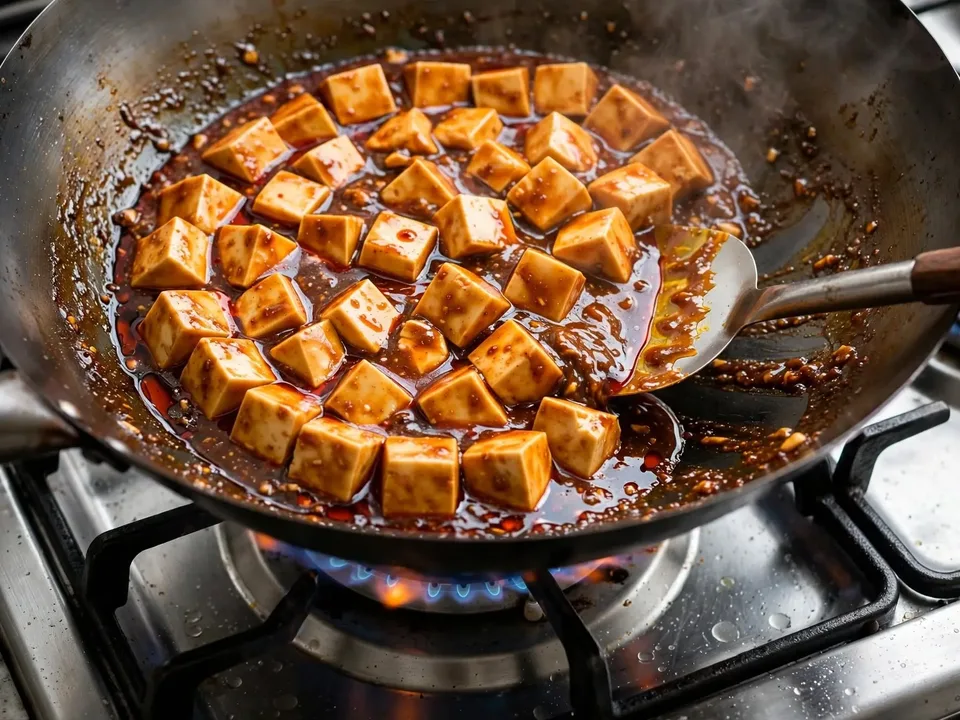
Slide the drained tofu into the sauce.
Slide the drained tofu into the sauce. Keep the heat at a gentle simmer for 4–5 minutes, nudging the wok or moving sauce around the cubes with a broad spoon rather than stirring aggressively. Let the sauce season the tofu while the cubes stay whole.
Look for
The tofu cubes remain largely whole, are hot through and have taken on a light red sheen from the sauce.
Kitchen note
Mapo tofu should look abundant and saucy, not like dry stir-fried tofu. Gentle simmering seasons the tofu without shredding its soft texture.
 Step 05
Thicken gradually to a glossy spoon-coating sauce
2 min
Stir the cornstarch slurry again.
Stir the cornstarch slurry again. Add roughly half while gently swirling the wok, let it simmer for 20–30 seconds, then add more only if needed. Stop when the sauce is glossy and clings lightly to the tofu and pork while still flowing around the cubes.
Look for
The sauce lightly coats a spoon and the tofu, with a glossy surface and enough movement to pool softly on the serving plate.
Kitchen note
A measured, staged slurry addition gives better control than pouring it all in at once. The sauce should coat, not set into a gel.
 Step 06
Finish with fresh Sichuan pepper and scallion greens
2 min
Turn off the heat.
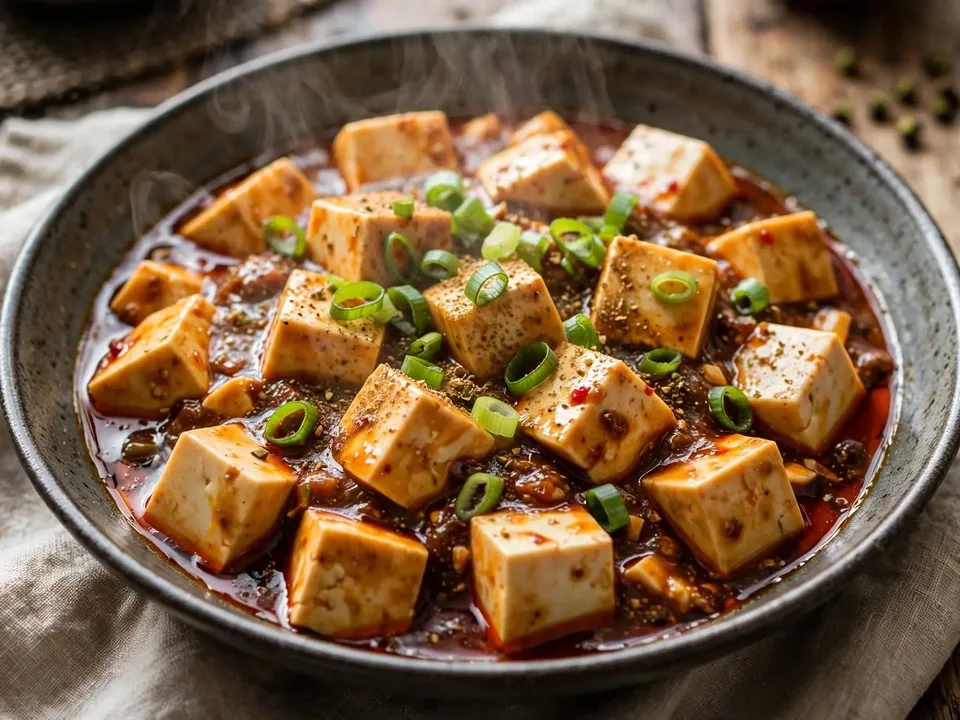
Turn off the heat. Sprinkle over the freshly ground Sichuan pepper and scallion greens, taste once more and serve immediately with steamed rice. Add the pepper at the end so its citrusy fragrance and numbing sensation remain vivid rather than cooking away.
Look for
The finished dish is glossy, saucy and aromatic with intact tofu, a visible red-oil sheen and fresh green scallions.
Kitchen note
Freshly ground Sichuan pepper is a finishing spice here, not a substitute for chile heat. Its value is the floral-citrusy aroma and tingling má sensation.
After cooking
Explore the dish beyond the method.
Story, place and references are here for discovery, so they stay out of the way while you cook.
Culture & tradition
The story behind the dish
Origins, evolution and everyday life—read together as part of the recipe's culinary record.
Origins
Associated with Chengdu and Sichuan cuisine; Ember & Equator avoids presenting later popular origin anecdotes as more certain than the documentary evidence supports.
How it evolved
Modern home and restaurant versions vary in meat choice, tofu firmness and chile level, but doubanjiang, Sichuan pepper and a glossy sauce remain central reference points.
Its place today
A widely recognised Sichuan rice dish served from home kitchens to restaurants in China and abroad.
Visual archive · plate 01
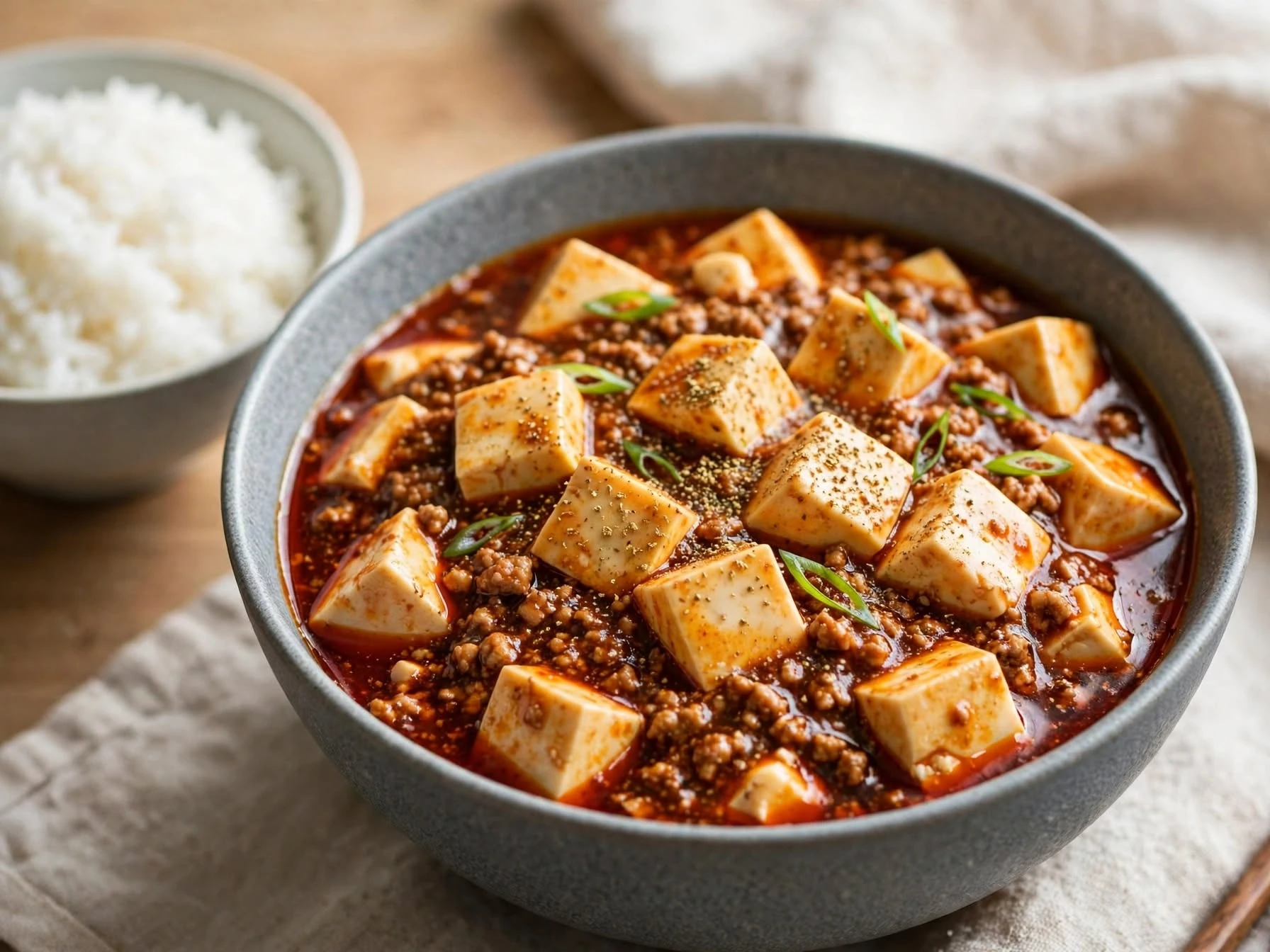
Mapo Tofu
An editorial view of the finished dish, kept compact so the story continues without an oversized image break.
Primary region
Chengdu and Sichuan, China
Country
China
Regional influence
Fermented broad-bean chile paste, preserved black beans and dried Sichuan pepper create concentrated seasoning that pairs naturally with fresh tofu and rice.
Related food systems
- Sichuan málà seasoning
- Fermented bean condiments
- Rice-centred shared meals
Sources & further reading
Follow the reference trail.
Ember & Equator links outward when an institution or primary reference helps support the culinary record.
- 01Welcome to China — Chinese CuisineExternal ↗
National Immigration Administration of China · reference
Supports: Eight Major Cuisines · Sichuan cuisine · Cantonese cuisine · Mapo Tofu · Kung Pao Chicken
Ember & Equator source review · 2026-09-03
- 02Chengdu — Creative Cities NetworkExternal ↗
UNESCO · reference
Supports: Chengdu gastronomy · Sichuan cuisine · regional flavor traditions
Ember & Equator source review · 2026-09-03
- 03China’s four major cuisinesExternal ↗
The State Council of the People’s Republic of China / National Tourism Administration · reference
Supports: Sichuan cuisine · Cantonese cuisine · regional Chinese cooking
Ember & Equator source review · 2026-09-03
- 04Mapo Tofu Recipe — Ma Po TofuExternal ↗
China Sichuan Food · specialist publication
Supports: soft tofu blanching · doubanjiang · douchi · ground meat · Sichuan pepper · starch thickening
Ember & Equator source review · 2026-09-17
Ingredient guides
Learn about the ingredients behind the dish.
These are reference guides, not a second ingredient list. Follow an ingredient when you want to understand its role, use and wider culinary context.
Ingredient
silken tofu
Understand what it contributes, how to use it, and the dishes that reveal it best.
Ingredient
ground pork
Understand what it contributes, how to use it, and the dishes that reveal it best.
Ingredient
neutral oil
Understand what it contributes, how to use it, and the dishes that reveal it best.
Ingredient
doubanjiang
Understand what it contributes, how to use it, and the dishes that reveal it best.
Explore ingredient →
Ingredient
garlic
Understand what it contributes, how to use it, and the dishes that reveal it best.
Ingredient
ginger
Understand what it contributes, how to use it, and the dishes that reveal it best.
Keep wandering
Where will this dish take you next?
Stay with the place, follow an ingredient or technique, or cross into another food culture. Each path begins with something already present in this dish.
Stay with the place
01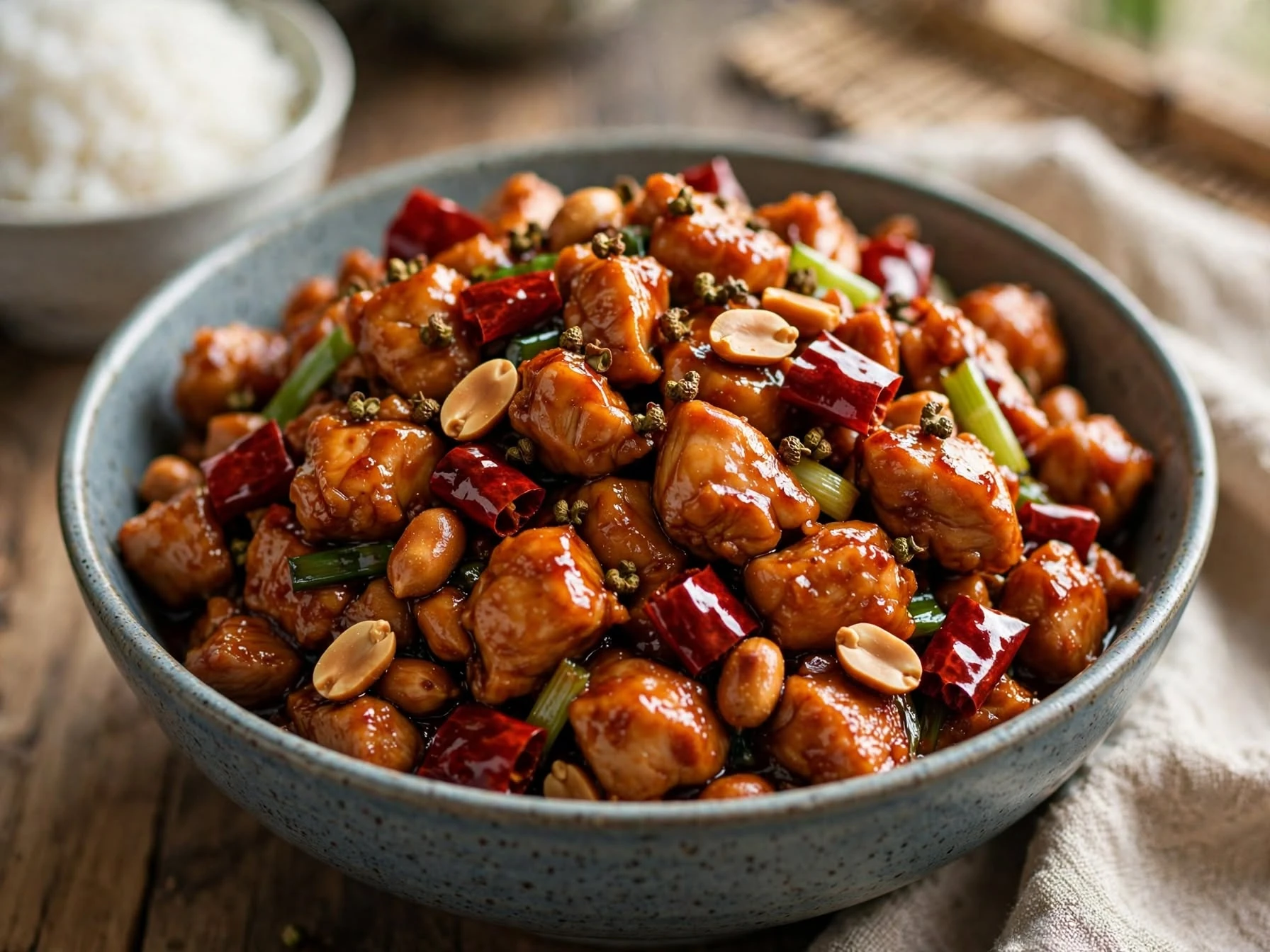
China
Kung Pao Chicken
Stay in the same food culture and notice how wok stir-fry appears in another dish.
Shared thread · Wok stir-fry · neutral oil · garlic
Follow the method or pantry
02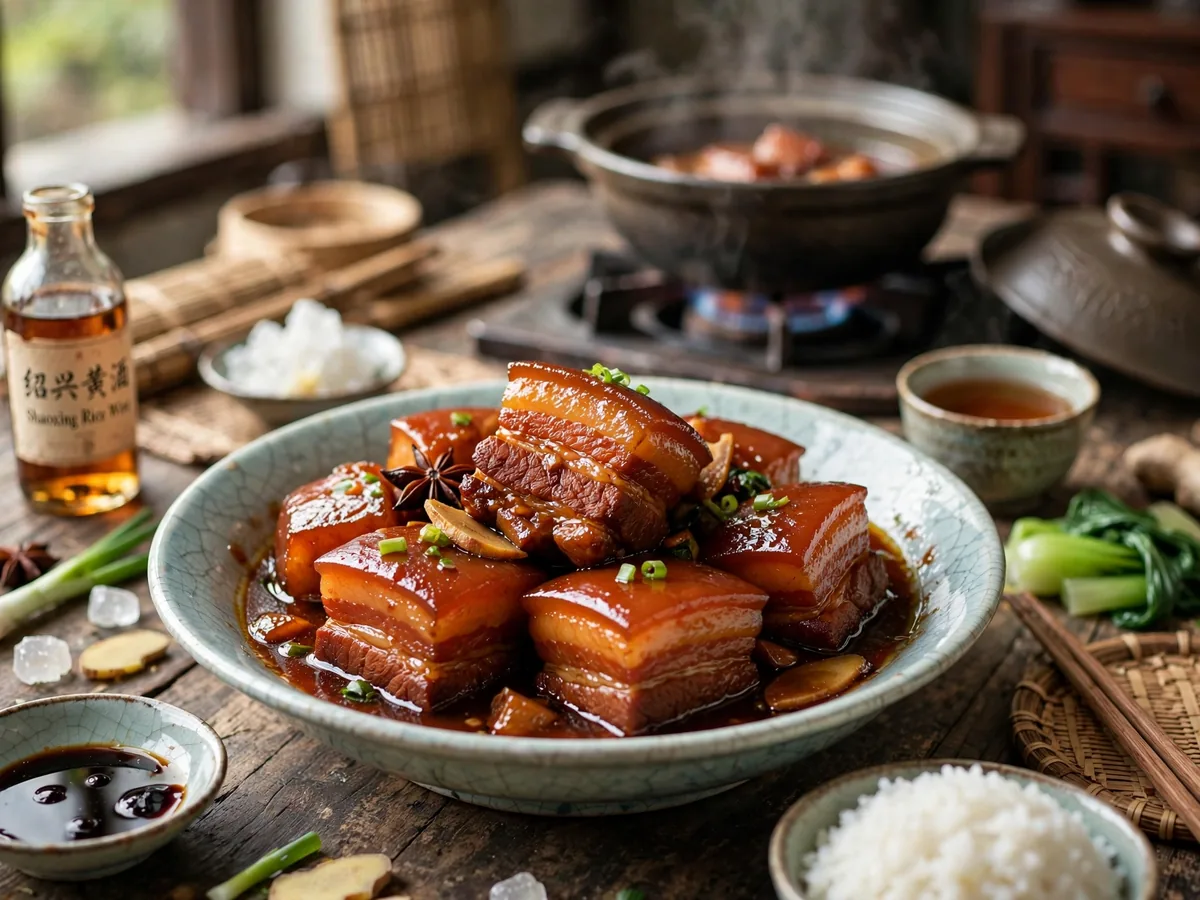
China
Shanghai-Style Red-Braised Pork
Follow the cooking method: both dishes connect through simmer.
Shared thread · Simmer · neutral oil · ginger
Cross a culinary border
03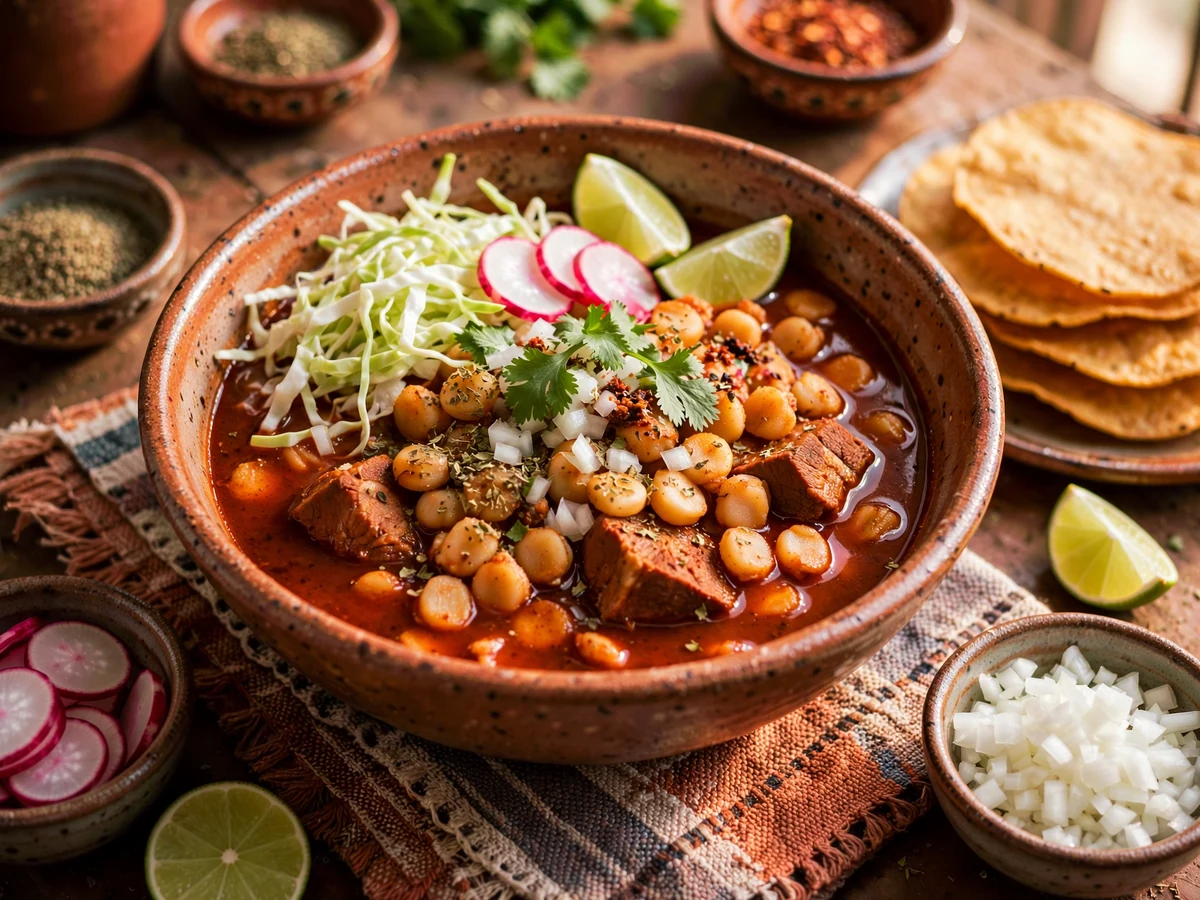
Mexico
Pozole Rojo
Cross borders while keeping simmer as the common thread.
Shared thread · Simmer · neutral oil · garlic
Go one layer deeper
One small detail can open an entirely different part of food.
technique
Simmer
See why simmer matters here, then notice the same idea in other dishes.
ingredient
doubanjiang
See what doubanjiang contributes to Mapo Tofu, then follow it into other dishes.
ingredient
Sichuan peppercorns
See what sichuan peppercorns contributes to Mapo Tofu, then follow it into other dishes.
Continue in Ember & Equator