
Mexico · lunch · dinner · comfort-food · stew
Pozole Rojo
Mexico through one enduring dish.
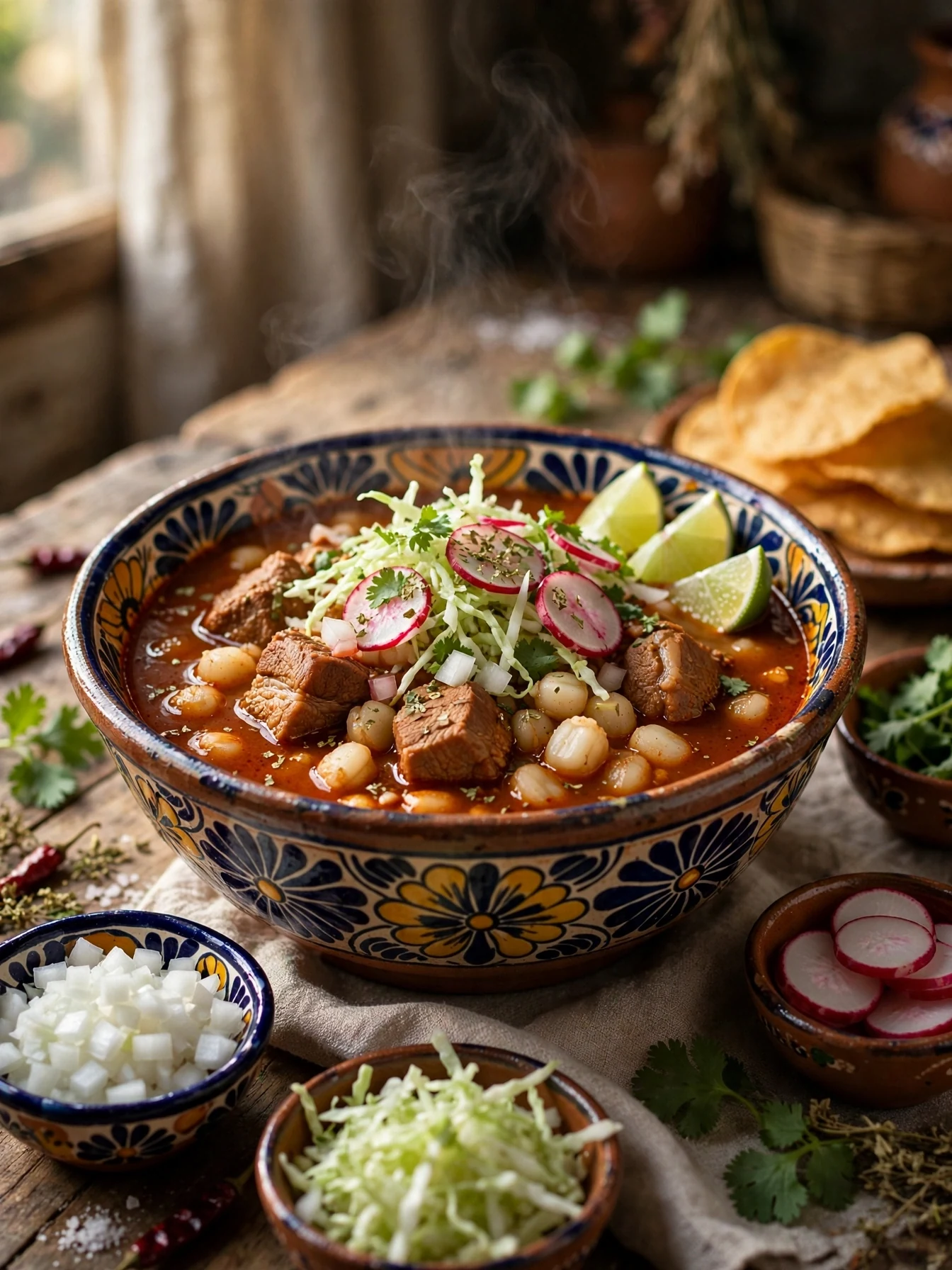
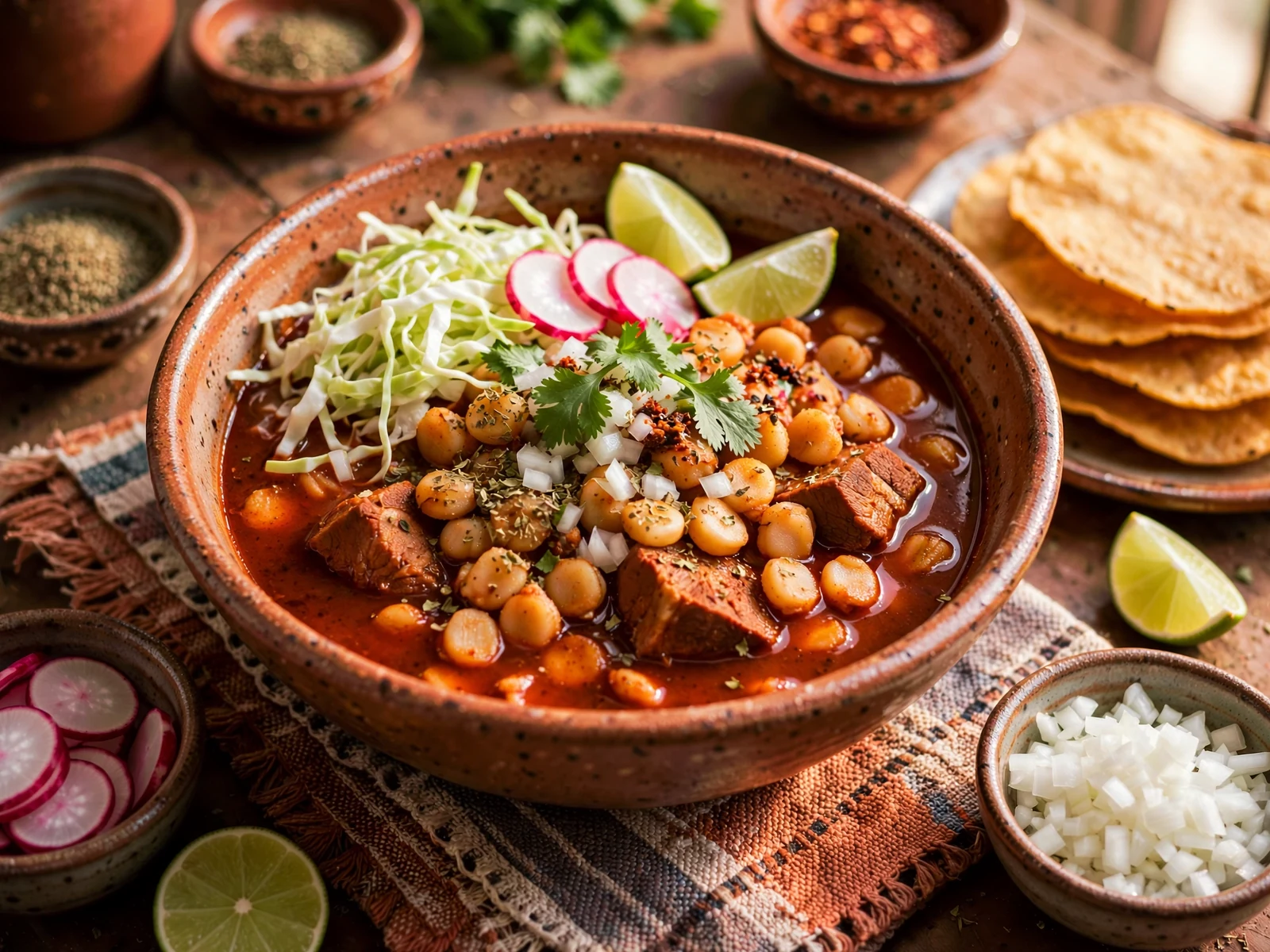
Pozole rojo is a classic Mexican hominy-and-pork soup built on a clean, long-simmered pork broth and a deeply flavoured guajillo-ancho chile sauce. The finished bowl should be brick red, brothy rather than thick, with tender pork, plump hominy and crisp garnishes added at the table.
- Total
- 220 min
- Difficulty
- Medium
- Serves
- 8
- Steps
- 14
The dish
Place first. Then the plate.
Pozole has many regional forms across Mexico. Mexico’s Secretaría de Agricultura identifies red pozole with Jalisco and Michoacán and notes ancho and guajillo chiles as defining ingredients in common red versions. Ember & Equator presents a pork-shoulder, cooked-hominy version designed for a home kitchen while keeping the broth, chile and table-garnish structure central.
Explore MexicoAt a glance
Origin
Mexico
Region
Western and central Mexico, especially Jalisco and Michoacán for red pozole
Meal
lunch · dinner · comfort-food · stew
Guided steps
14
Dish
Pozole Rojo
Cuisine
Mexican cuisine
Food type
Lunch · Dinner · Comfort food
Technique
Simmer · Toast spices
Cook the recipe
In the kitchen
Start with the ingredients, then follow the Method in order. Open cooking tips only when you need extra help; the story and references can wait until you are ready.
- Total
- 220 min
- Serves
- 8
- Level
- Medium
- Visual cues
- 14
Ingredients
Serves 8- 1 kgpork shouldercut into large chunks
- 500 gpork ribs or neck bonesbone-in, for a deeper broth
- 1.2 kgcooked white hominycanned, drained and rinsed; or equivalent fully cooked prepared pozole corn
- 1 largewhite onionhalved for the pork broth
- 6 clovesgarlicfor the pork broth
- 2 leavesbay leavesfor the pork broth
- 1 tspdried Mexican oreganofor the broth, plus more for serving
- fine saltto taste; season the broth gradually
- 3 literswaterabout 12 cups, plus more if needed
- 6 wholedried guajillo chilesstemmed and seeded
- 2 wholedried ancho chilesstemmed and seeded
- 3 clovesgarlicfor the red chile sauce
- ½ smallwhite onionfor the red chile sauce
- 1 tspdried Mexican oreganofor the red chile sauce
- ½ tspground cuminfor the red chile sauce
- ½ tspblack pepperfreshly ground
- 1 tbspneutral oil or rendered pork fatfor frying the chile puree
- 3 cupsshredded green cabbage or lettucefinely shredded for serving
- 1 smallwhite onionthinly sliced or finely diced for serving
- 8 smallradishesthinly sliced
- 1 small bunchfresh cilantroroughly chopped for serving
- 4 wholelimecut into wedges; squeeze into individual bowls
- 8 wholecorn tostadasfor serving alongside
Optional
- 2–3 wholedried árbol chilesoptional, for extra heat
- 1 wholeavocadosliced, optional garnish
Everything ready? Continue straight into the cooking steps.
Start methodMethod
14 stepsMethod at a glance
 Step 01
Prepare the pork
10 min
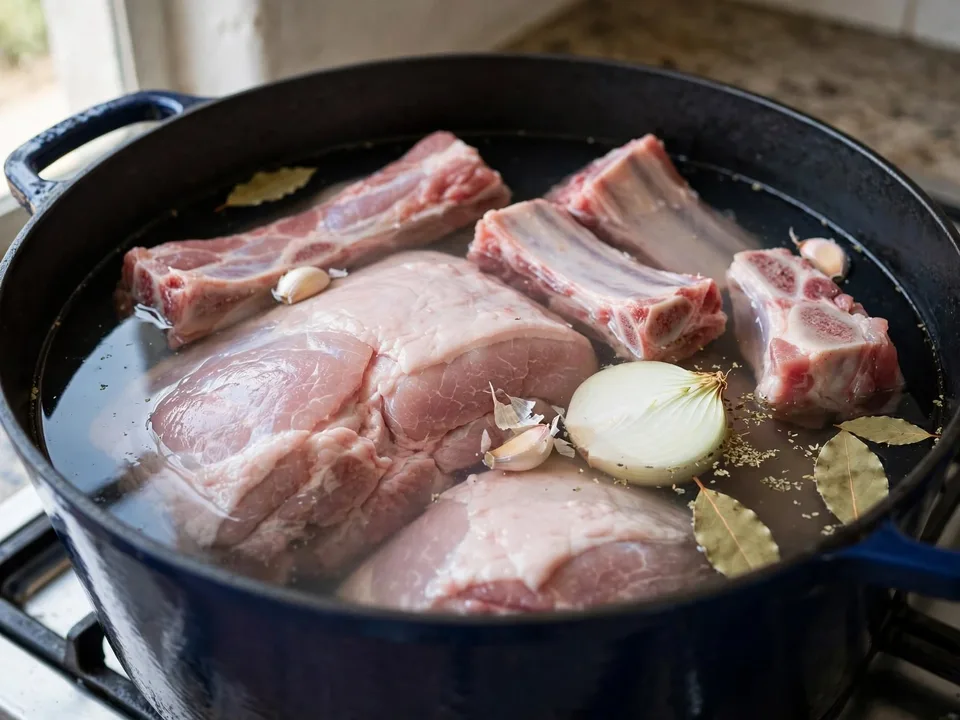
Put the pork shoulder and pork ribs or neck bones in a large heavy pot.
Put the pork shoulder and pork ribs or neck bones in a large heavy pot. Add the halved onion, garlic, bay leaves, Mexican oregano and a generous initial seasoning of salt. Cover with about 3 litres of cold water so the meat is comfortably submerged. Starting cold helps the broth extract flavour gradually and gives you time to remove impurities before the liquid reaches a full simmer.
Look for
The pot should contain large pork pieces fully covered by clear cold water with onion, garlic and bay visible around them.
Kitchen note
Starting with a mix of meaty shoulder and collagen-rich bone-in pork produces a fuller broth than shoulder alone. Do not cut the pork into small pieces; large chunks stay juicier through the long simmer.
 Step 02
Cook the pork and skim the broth
110 min
Bring the pot slowly toward a simmer over medium heat.
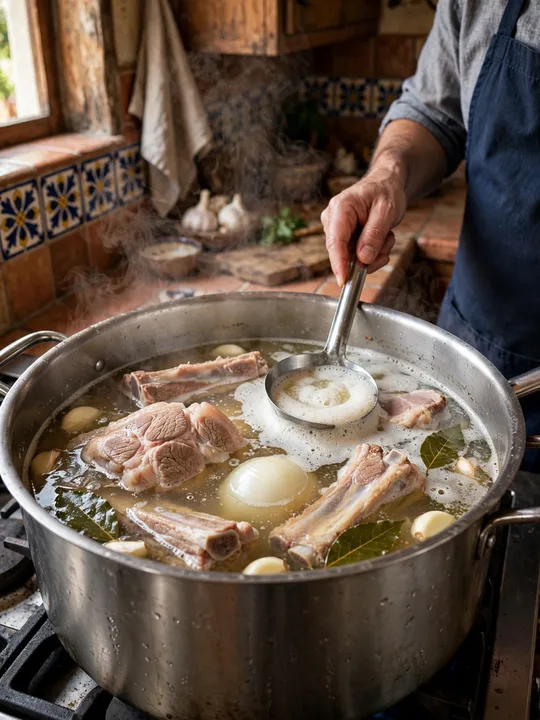
Bring the pot slowly toward a simmer over medium heat. During the first 15–20 minutes, skim away the grey foam and impurities that collect on the surface. Once the broth looks cleaner, partially cover and maintain a quiet simmer for about 1½–2 hours, or until the pork is extremely tender. Avoid a hard boil. Remove loose bones and the large onion/bay pieces; keep the pork in generous chunks or pull it apart only lightly.
Look for
The broth should look relatively clear beneath the fat, and a fork should slide into the pork with almost no resistance.
Kitchen note
Skimming is not cosmetic. It helps the finished red broth taste cleaner and look more polished. Add hot water during cooking if needed to keep the pork mostly submerged. Use the pork simmering time to toast, soak, blend and strain the chile sauce; this parallel workflow shortens the total cook without rushing either component.
 Step 03
Prepare the dried chiles
5 min
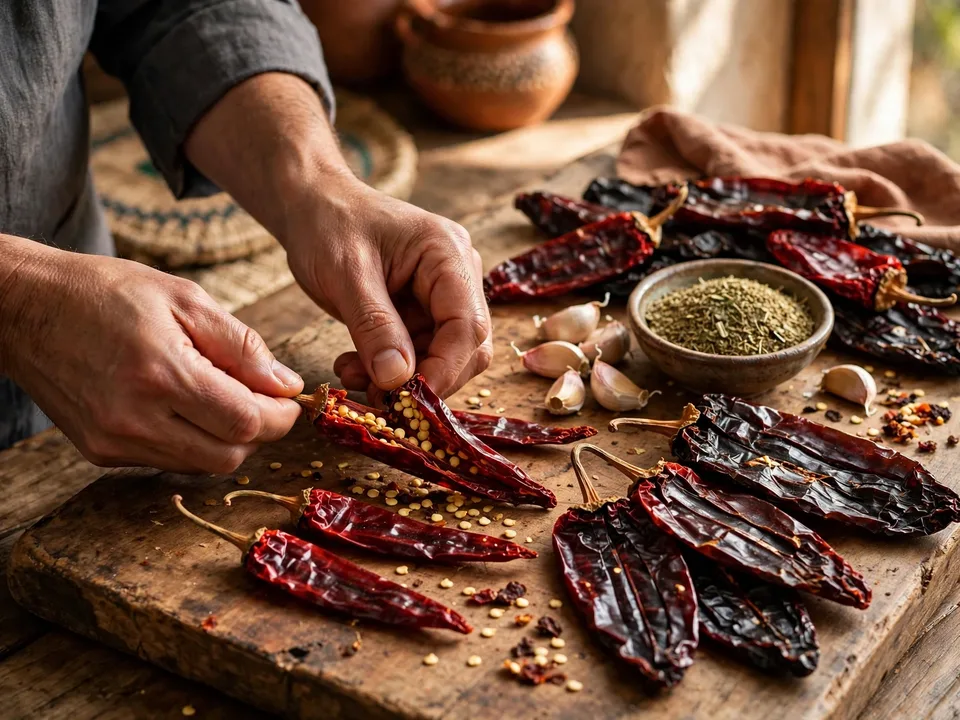
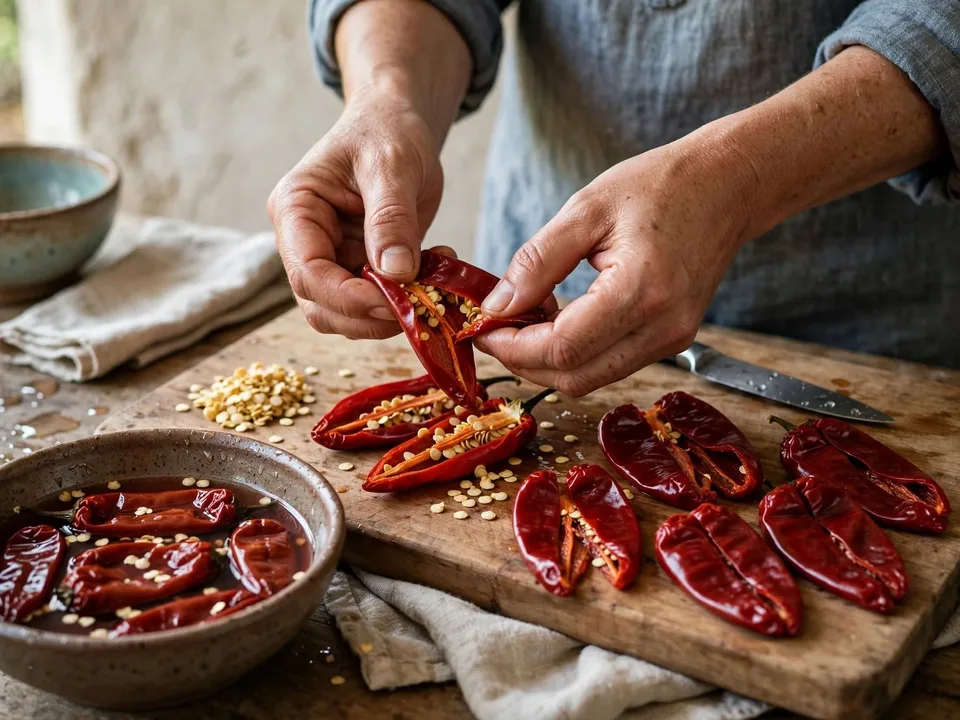
Stem the guajillo and ancho chiles, open them and shake or scrape out most of the seeds and loose veins.
Stem the guajillo and ancho chiles, open them and shake or scrape out most of the seeds and loose veins. Add 2–3 árbol chiles only if you want more heat. Wipe away any dust so it does not end up in the sauce.
Look for
The chiles should be clean, flexible enough to open, and free of most loose seeds before toasting.
Kitchen note
Removing most seeds gives you cleaner chile flavour without unnecessary bitterness. Gloves are useful if your skin is sensitive, especially when handling árbol chiles.
 Step 04
Toast and soak the chiles
18 min
Warm a dry skillet over medium heat.
Warm a dry skillet over medium heat. Toast the guajillo and ancho chiles very briefly, pressing and turning them just until fragrant and slightly more pliable—usually only seconds per side. Do not let them blacken. Transfer immediately to a bowl, cover with very hot water and soak for 15–20 minutes until completely softened.
Look for
The soaked chiles should be soft and bend easily, with deepened colour but no burnt black patches.
Kitchen note
Fragrant is good; blackened is bitter. If a chile develops large scorched patches or smells acrid, discard it rather than blending bitterness into the whole pot.
 Step 05
Blend the red chile sauce
4 min
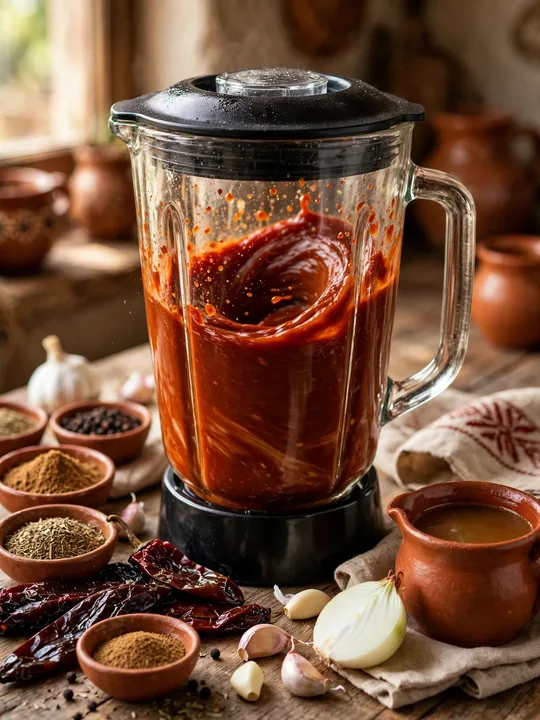
Drain the softened chiles and place them in a blender with the garlic, half onion, Mexican oregano, cumin, black pepper and about 1 cup of warm pork broth.
Drain the softened chiles and place them in a blender with the garlic, half onion, Mexican oregano, cumin, black pepper and about 1 cup of warm pork broth. Blend until completely smooth, adding a little more broth only as needed to keep the blades moving. The puree should remain concentrated rather than watery.
Look for
The puree should be deep red, smooth and thick enough to coat a spoon rather than run like water.
Kitchen note
Use broth instead of plain soaking water so the red base stays savoury. A high-powered blender helps, but even then the next straining step gives a cleaner finished broth.
 Step 06
Strain the chile sauce
4 min
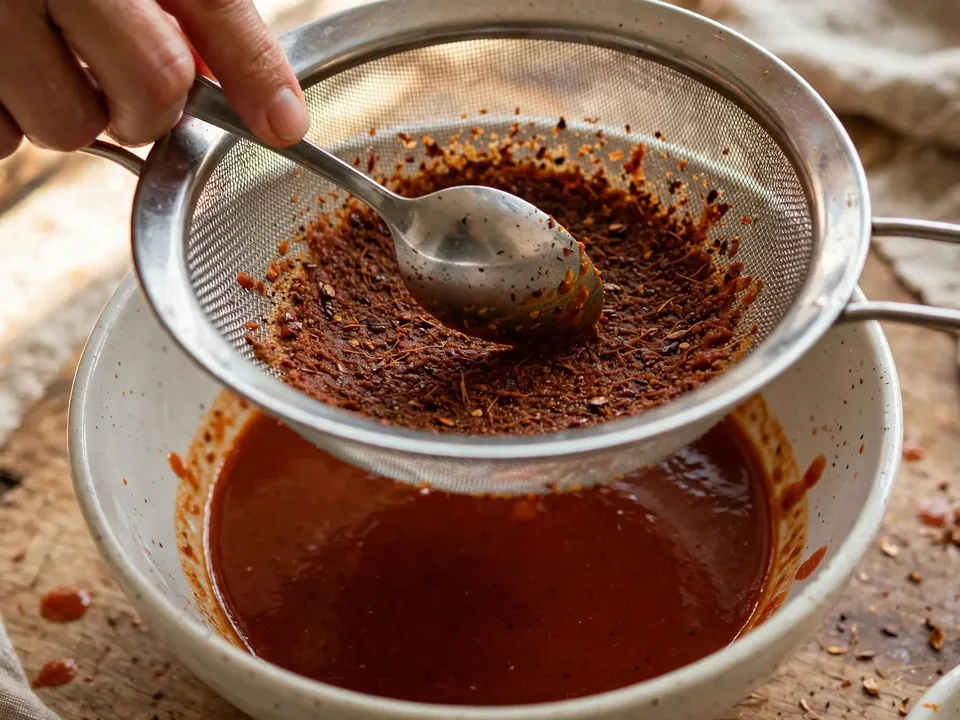
Press the blended chile mixture through a fine-mesh sieve into a bowl, scraping and pressing with the back of a spoon.
Press the blended chile mixture through a fine-mesh sieve into a bowl, scraping and pressing with the back of a spoon. Discard the leathery skins and coarse solids left in the sieve.
Look for
The strained sauce should look silky and brick red, with the coarse skins left behind in the sieve.
Kitchen note
Straining is optional for a very rustic pot, but it noticeably improves the broth by removing tough chile skins and any remaining seed fragments.
 Step 07
Fry the chile sauce
7 min
Heat the neutral oil or a spoonful of rendered pork fat in a saucepan over medium heat.
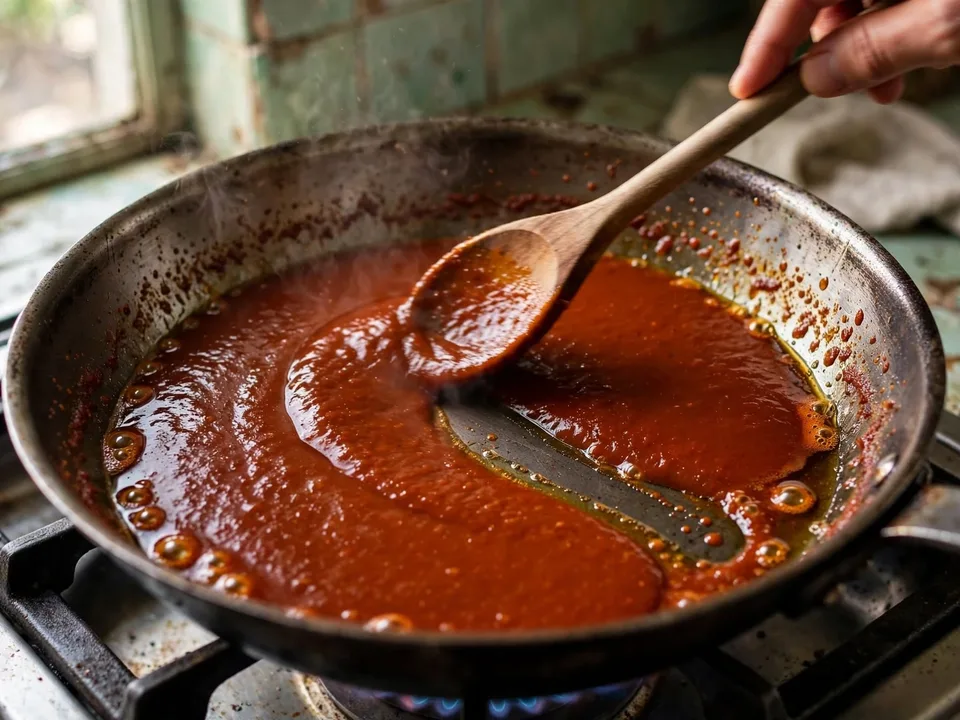
Heat the neutral oil or a spoonful of rendered pork fat in a saucepan over medium heat. Carefully pour in the strained chile puree—it can splatter—and cook for 5–8 minutes, stirring frequently. Let it darken slightly, become glossier and lose the sharp raw-chile aroma.
Look for
The sauce should look glossy and a little darker, and the aroma should shift from sharp/raw to warm, savoury and rounded.
Kitchen note
Do not skip this separate cooking stage. Frying the puree rounds out the dried-chile flavour so it tastes integrated rather than raw when added to the broth. The chile sauce is ready to join the pot when it smells rounded and savoury rather than raw or dusty; if it catches, lower the heat and loosen with a spoonful of broth.
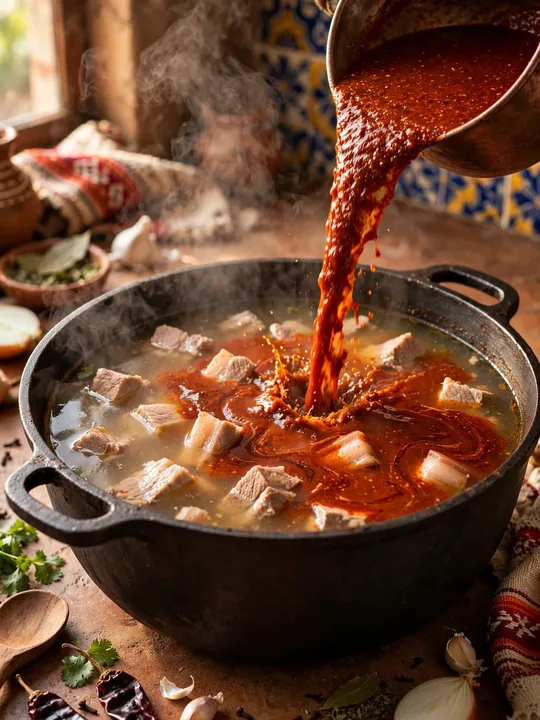 Step 08
Combine the broth and red sauce
5 min
Stir the cooked chile sauce into the pork broth.
Stir the cooked chile sauce into the pork broth. Return any pork that was removed, then stir gently until the broth is evenly coloured. Bring it back to a quiet simmer and taste for salt.
Look for
The liquid should be evenly brick red with no streaks of raw puree floating separately.
Kitchen note
Add the red sauce gradually if you are sensitive to chile intensity, but the finished broth should still be recognisably deep brick red.
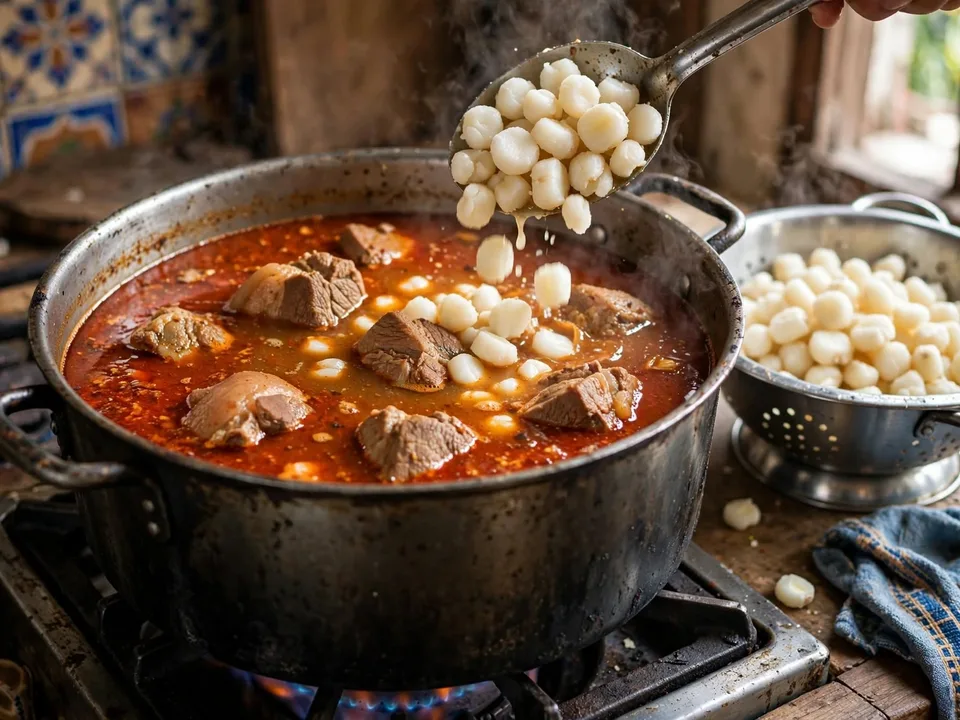 Step 09
Add the hominy
3 min
Add the drained and rinsed cooked hominy to the red broth with the tender pork.
Add the drained and rinsed cooked hominy to the red broth with the tender pork. Stir gently so the kernels distribute throughout the pot without breaking the meat apart too aggressively.
Look for
The hominy should look plump and intact, suspended freely in plenty of red broth rather than packed into a thick stew.
Kitchen note
Use fully cooked hominy. If starting with dried prepared pozole corn, cook it separately until the kernels are tender and opened or “flowered” before this stage.
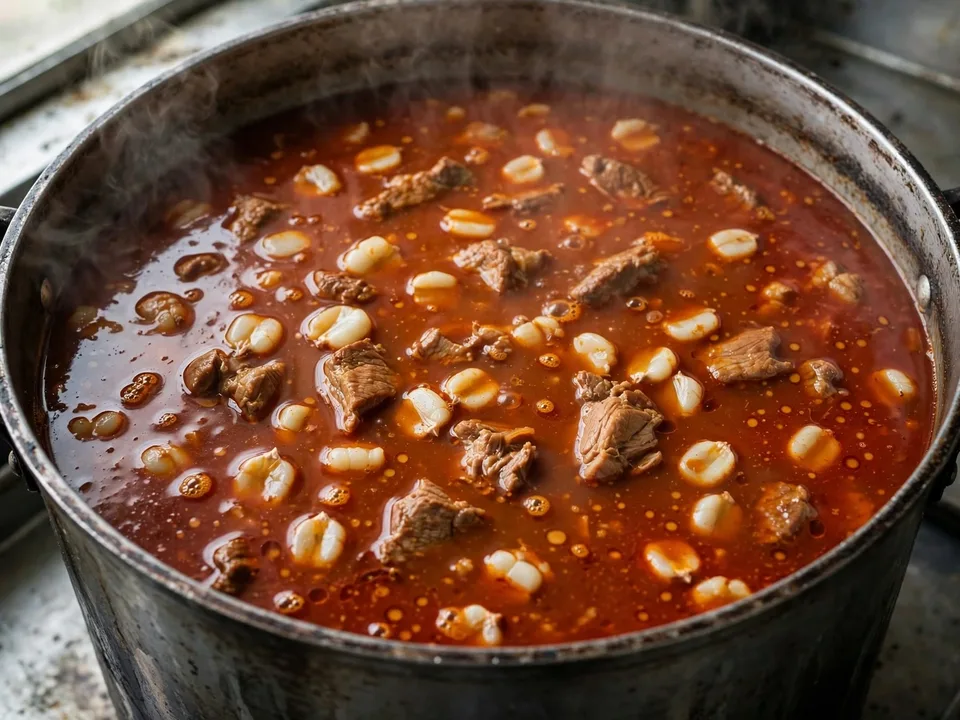 Step 10
Simmer the finished pozole
35 min
Simmer the pork, hominy and chile broth gently for another 30–45 minutes.
Simmer the pork, hominy and chile broth gently for another 30–45 minutes. Keep the pot partially covered and stir occasionally. This final simmer lets the hominy absorb the chile-rich broth and lets the pork and red sauce taste like one integrated soup.
Look for
The hominy should be plump, tender and slightly chewy; the pork should stay succulent and the broth should remain fluid and deeply red.
Kitchen note
Pozole should remain brothy. If the liquid reduces too far, add a little hot water and recheck the salt rather than letting it become thick like a stew.
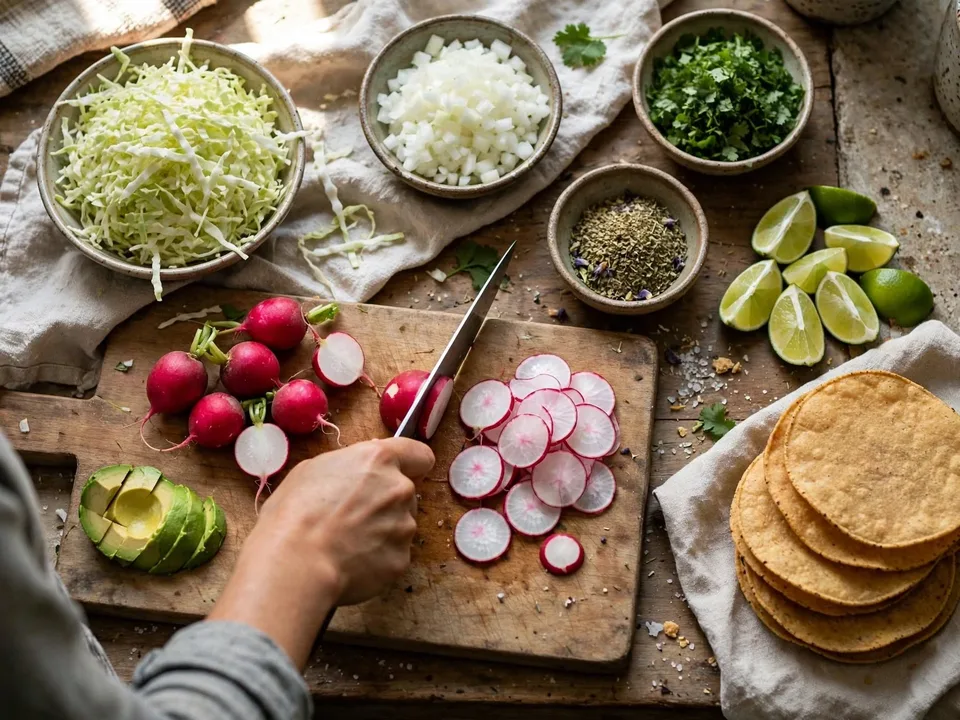 Step 11
Prepare the garnishes
10 min
While the pozole finishes, prepare the garnishes and keep them in separate bowls: finely shredded cabbage or lettuce, sliced or diced white onion, radishes, cilantro, lime wedges, Mexican oregano, tostadas and any optional avocado or extra dried chile.
While the pozole finishes, prepare the garnishes and keep them in separate bowls: finely shredded cabbage or lettuce, sliced or diced white onion, radishes, cilantro, lime wedges, Mexican oregano, tostadas and any optional avocado or extra dried chile.
Look for
The garnishes should look fresh, crisp and dry, ready to add individually at the table.
Kitchen note
The crisp garnishes are part of the dish, not decoration. Prepare them close to serving so they stay cold, crunchy and aromatic against the hot long-cooked broth.
 Step 12
Adjust and finish the pot
5 min
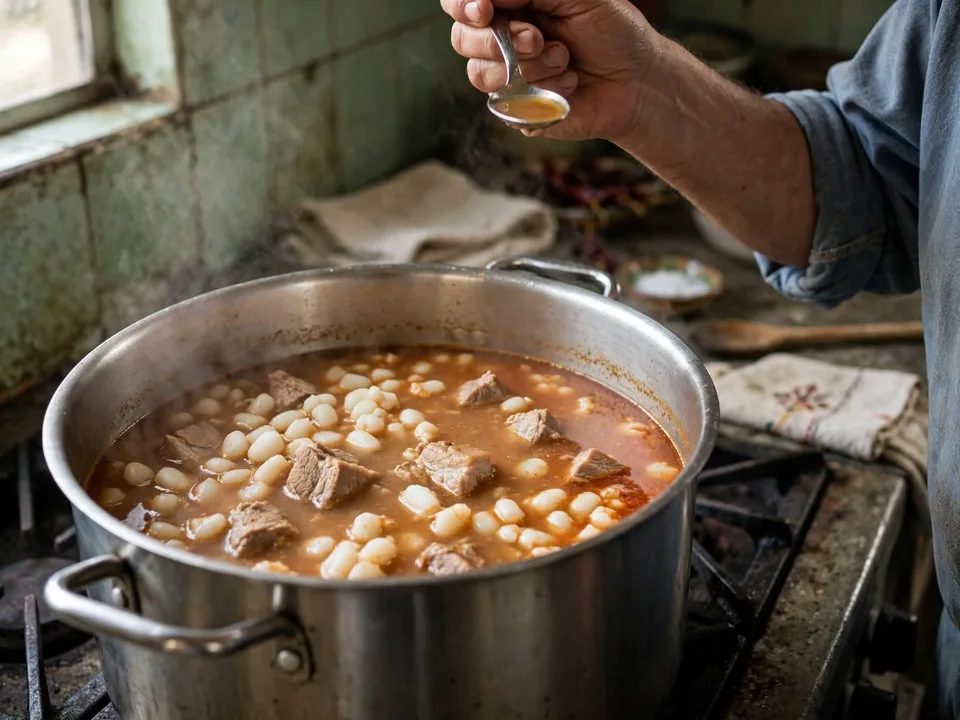
Taste the pozole one last time and adjust the salt.
Taste the pozole one last time and adjust the salt. Add a little more Mexican oregano or chile only if the broth needs it. Do not squeeze lime into the whole pot; acidity belongs in each individual bowl so every diner can control the balance. If time permits, let the pot rest off heat for 10–15 minutes before serving.
Look for
The finished broth should taste savoury, earthy and chile-rich with gentle heat, but not harsh, greasy or overly thick.
Kitchen note
Pozole often tastes even better after a longer rest or overnight refrigeration. Reheat gently and skim excess hardened fat if you prefer a cleaner broth.
 Step 13
Ladle into deep bowls
3 min
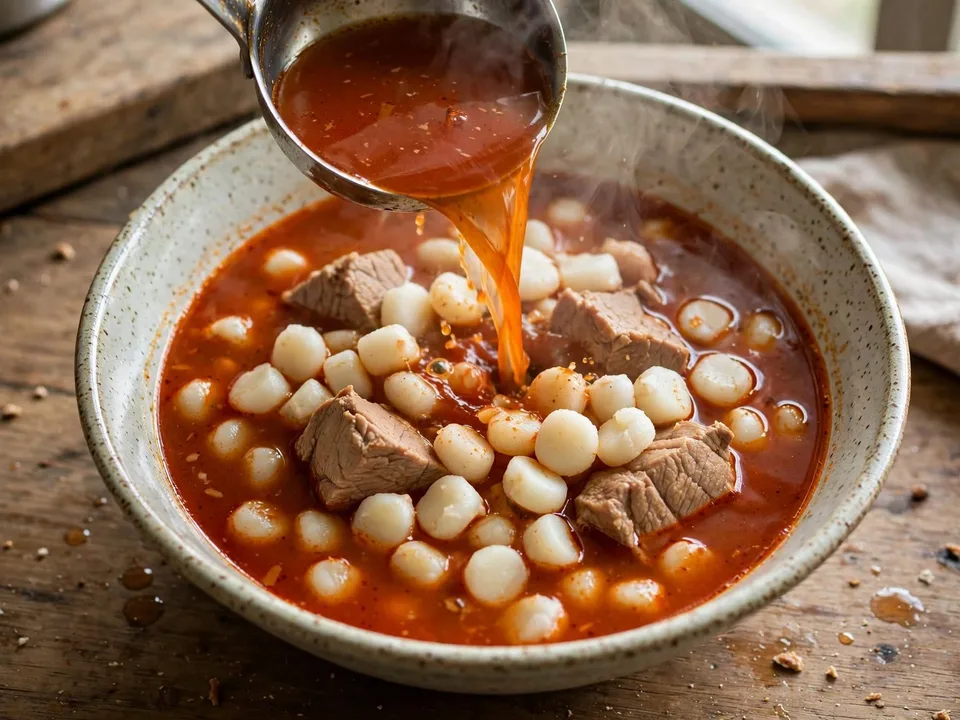
Divide generous portions of pork and hominy among deep bowls, then ladle over enough brick-red broth to surround everything comfortably.
Divide generous portions of pork and hominy among deep bowls, then ladle over enough brick-red broth to surround everything comfortably. Make sure each serving gets both meat and hominy rather than mostly liquid.
Look for
Each bowl should contain tender pork and plump hominy surrounded by plenty of steaming red broth.
Kitchen note
Warm bowls are helpful because pozole is best served very hot before the cool garnishes are added.
 Step 14
Garnish and serve
2 min
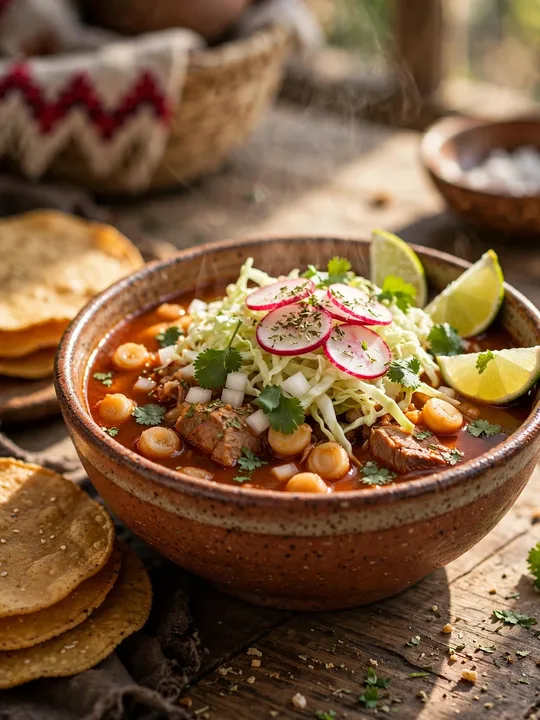
Let everyone finish their own bowl with shredded cabbage, onion, radish, cilantro, Mexican oregano and fresh lime.
Let everyone finish their own bowl with shredded cabbage, onion, radish, cilantro, Mexican oregano and fresh lime. Add avocado or extra chile if desired and serve crisp tostadas alongside. Eat immediately while the contrast between the hot broth and the fresh crunchy garnishes is strongest.
Look for
The final bowl should be generous and colourful, with fresh garnishes sitting visibly on top rather than wilted into the soup.
Kitchen note
The chef’s test is contrast: succulent pork, tender hominy and a deeply savoury broth should meet cool cabbage, crisp radish, sharp onion and bright lime in the same bite.
After cooking
Explore the dish beyond the method.
Story, place and references are here for discovery, so they stay out of the way while you cook.
Culture & tradition
The story behind the dish
Origins, evolution and everyday life—read together as part of the recipe's culinary record.
Origins
Pozole is rooted in the culinary importance of nixtamalized maize in Mexico and developed into many regional celebratory forms.
How it evolved
White, red and green pozoles became associated with different regions and chile traditions, while meat choices and garnishes vary widely.
Its place today
Today pozole is strongly associated with gatherings and national celebrations as well as weekend family meals and specialist pozolerías.
Visual archive · plate 01
Pozole Rojo
An editorial view of the finished dish, kept compact so the story continues without an oversized image break.
Primary region
Western and central Mexico, especially Jalisco and Michoacán for red pozole
Country
Mexico
Regional influence
Maize agriculture and dried chile preservation make a long-cooked stew possible across seasons.
Related food systems
- Nixtamalized maize
- Mexican chile cookery
- Celebration foods
Culinary record
- Sub-region
- Mesoamerica
- Climate
- Subtropical
- Trade-route influence
- Manila Galleon · Columbian Exchange · Lebanese diaspora (19–20th c.)
Sources & further reading
Follow the reference trail.
Ember & Equator links outward when an institution or primary reference helps support the culinary record.
- 01Pozole, un platillo delicioso y nutritivo para celebrar a MéxicoExternal ↗
Secretaría de Agricultura y Desarrollo Rural, Gobierno de México · government
Supports: pozole varieties · red pozole regional context · traditional garnishes
Ember & Equator source review · 2026-09-16
- 02How to Make Red Pozole (Pozole Rojo)External ↗
Mexico in My Kitchen — Mely Martínez · specialist publication
Supports: pork broth handling · guajillo-ancho chile sauce · cooking the chile puree · hominy and table garnishes
Ember & Equator source review · 2026-09-16
Ingredient guides
Learn about the ingredients behind the dish.
These are reference guides, not a second ingredient list. Follow an ingredient when you want to understand its role, use and wider culinary context.
Ingredient
pork shoulder
Understand what it contributes, how to use it, and the dishes that reveal it best.
Ingredient
cooked white hominy
Understand what it contributes, how to use it, and the dishes that reveal it best.
Ingredient
white onion
Understand what it contributes, how to use it, and the dishes that reveal it best.
Ingredient
garlic
Understand what it contributes, how to use it, and the dishes that reveal it best.
Ingredient
bay leaves
Understand what it contributes, how to use it, and the dishes that reveal it best.
Ingredient
dried Mexican oregano
Understand what it contributes, how to use it, and the dishes that reveal it best.
Keep wandering
Where will this dish take you next?
Stay with the place, follow an ingredient or technique, or cross into another food culture. Each path begins with something already present in this dish.
Stay with the place
01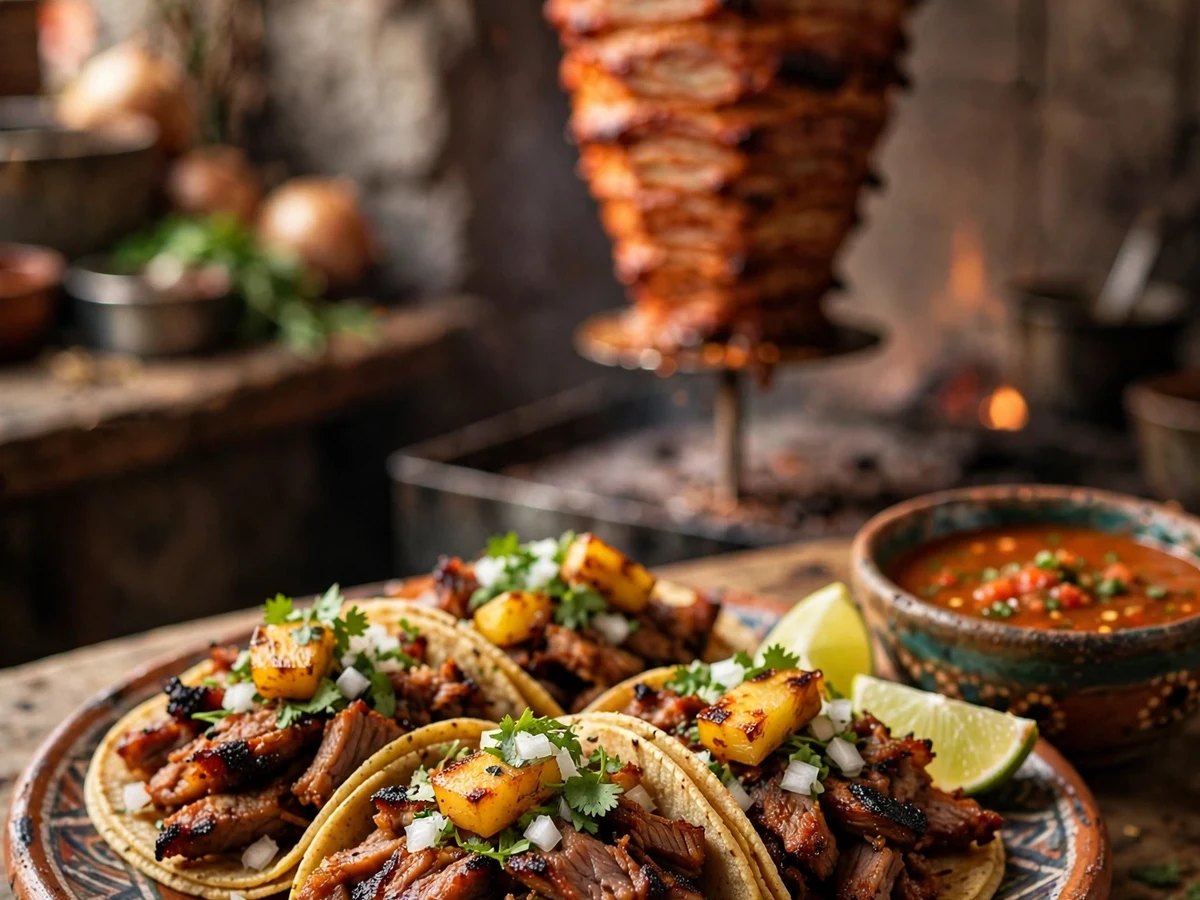
Mexico
Tacos al Pastor
Stay in the same food culture and follow white onion into another recipe.
Shared thread · white onion · garlic · dried Mexican oregano
Follow the method or pantry
02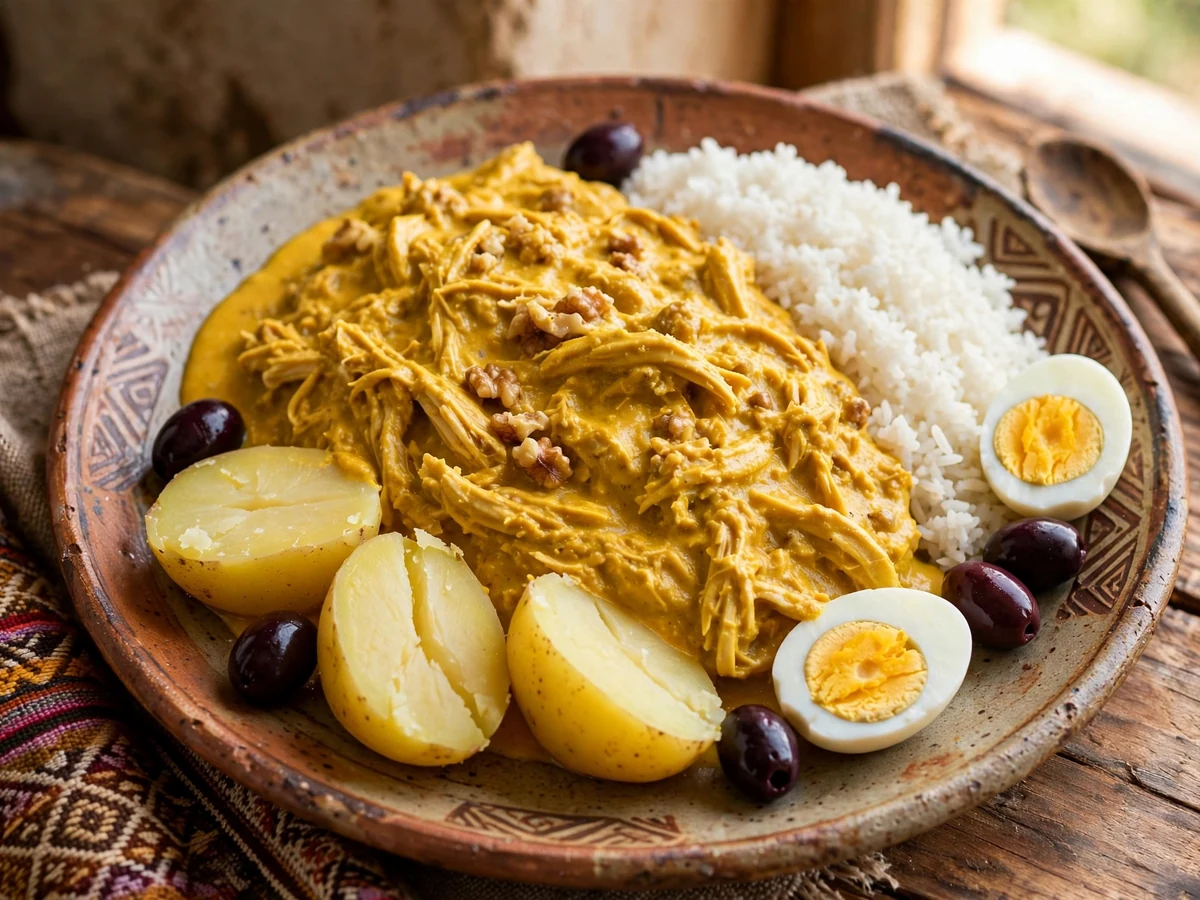
Peru
Ají de Gallina
Follow the cooking method: both dishes connect through simmer.
Shared thread · Simmer · white onion · garlic
Cross a culinary border
03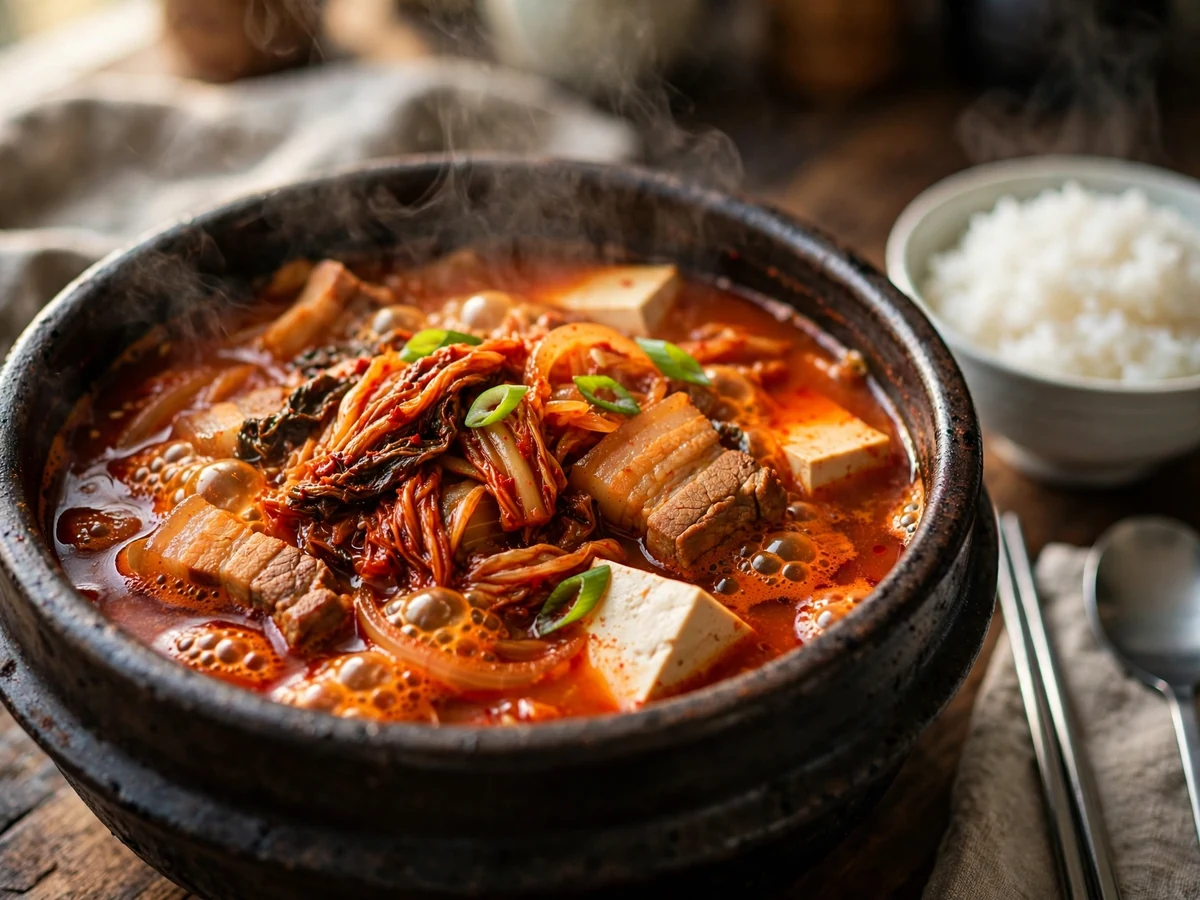
South Korea
Kimchi Jjigae
Cross borders while keeping simmer as the common thread.
Shared thread · Simmer · pork shoulder · garlic
Go one layer deeper
One small detail can open an entirely different part of food.
Continue in Ember & Equator