
Thailand · lunch · dinner · comfort-food
Khao Soi
Thailand through one enduring dish.
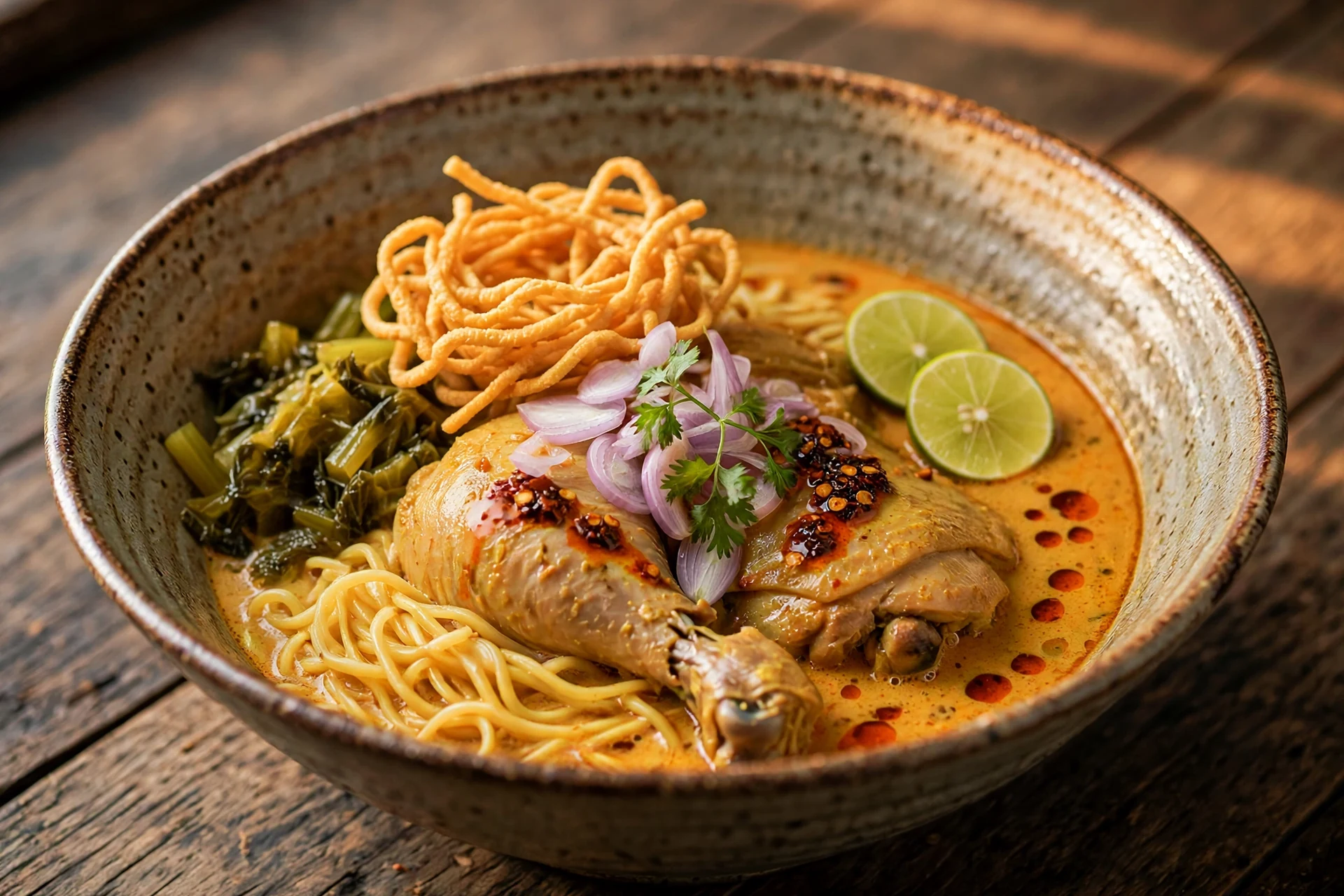
Khao Soi is a northern Thai curry-noodle dish built around wheat-based egg noodles, a fragrant coconut curry broth, tender chicken and a crisp fried-noodle crown. Pickled mustard greens, shallot, lime and optional chilli are not decorative extras: they provide the acidity, crunch and freshness that keep the rich bowl balanced.
- Total
- 80 min
- Difficulty
- Medium
- Serves
- 4
- Steps
- 7
The dish
Place first. Then the plate.
Khao Soi is strongly associated with Chiang Mai and northern Thailand. It belongs to a regional noodle landscape shaped by overland movement, Muslim communities and northern Thai curry traditions.
Explore ThailandAt a glance
Origin
Chiang Mai
Region
Chiang Mai and northern Thailand
Method
simmered · fried
Meal
lunch · dinner · comfort-food
Guided steps
7
Dish
Khao Soi
Cuisine
Thai cuisine
Food type
Noodle dish · Curry · Comfort food
Technique
Sauté · Simmer · Fry
Cook the recipe
In the kitchen
Start with the ingredients, then follow the Method in order. Open cooking tips only when you need extra help; the story and references can wait until you are ready.
- Total
- 80 min
- Serves
- 4
- Level
- Medium
- Visual cues
- 7
Ingredients
Serves 4- 20 gmild dried red chilesseeded; large Thai dried chiles are ideal, guajillo is an accessible mild substitute
- 1.5 tbspcoriander seeds
- 20 gfresh gingerthinly sliced
- 5 gfresh turmericor 1 tsp ground turmeric
- 1/2 cupshallotssliced, for curry paste
- 1 tspcoarse saltfor pounding the curry paste
- 400 mlcoconut milkfull-fat; do not shake the can if you can scoop thick cream from the top
- 4 wholechicken drumsticksor about 700 g bone-in chicken thighs
- 750 mlchicken stockor water for a lighter broth
- 2 tbspsoy sauce
- 1 tbsppalm sugarfinely chopped or grated
- 400 gfresh egg noodlesflat wheat-based egg/wonton noodles; reserve about 80–100 g for frying
- as neededneutral oilfor frying the crisp noodle garnish
- 100 gpickled mustard greensrinsed if very salty, drained and chopped
- 2 wholeshallotsthinly sliced for serving
- 2 wholelimecut into wedges
Optional
- 2 podsblack cardamomseeds only; optional but distinctive
- 1 tspdark soy sauceoptional, mainly for deeper colour
- 1–2 tspfish saucefor final seasoning
- 1 small handfulcilantro or scallionschopped, optional garnish
- to tastefried chilli flakesoptional table condiment
Everything ready? Continue straight into the cooking steps.
Start methodMethod
7 steps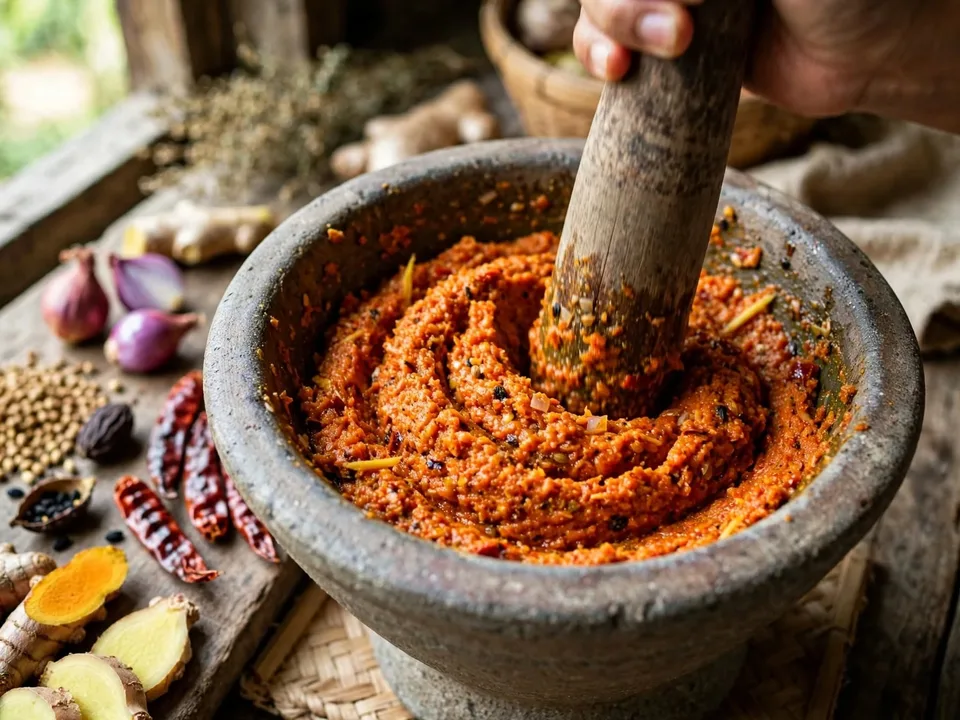 Step 01
Make the northern curry paste
12 min
Open the black cardamom pods, if using, and keep only the seeds.
Open the black cardamom pods, if using, and keep only the seeds. Briefly toast the coriander seeds and cardamom seeds in a dry pan until fragrant, then let them cool. Toast the dried chiles only until pliable and aromatic—do not blacken them. Grind the toasted spices and chiles, then pound or blend them with ginger, turmeric, shallots and coarse salt until you have a cohesive red-orange paste with no large fibrous pieces.
Look for
The paste should be thick, intensely aromatic and evenly red-orange, with the raw shallot smell mostly integrated.
Kitchen note
The paste does not need to be perfectly silky, but coarse woody pieces of ginger, turmeric or chile skin will make the broth feel rough. If using a blender, add only the minimum liquid needed to move the blades.
 Step 02
Fry the curry paste in coconut cream
6 min
Scoop about 120 ml (1/2 cup) of the thickest coconut milk into a heavy pot and bring it to a lively simmer over medium heat.
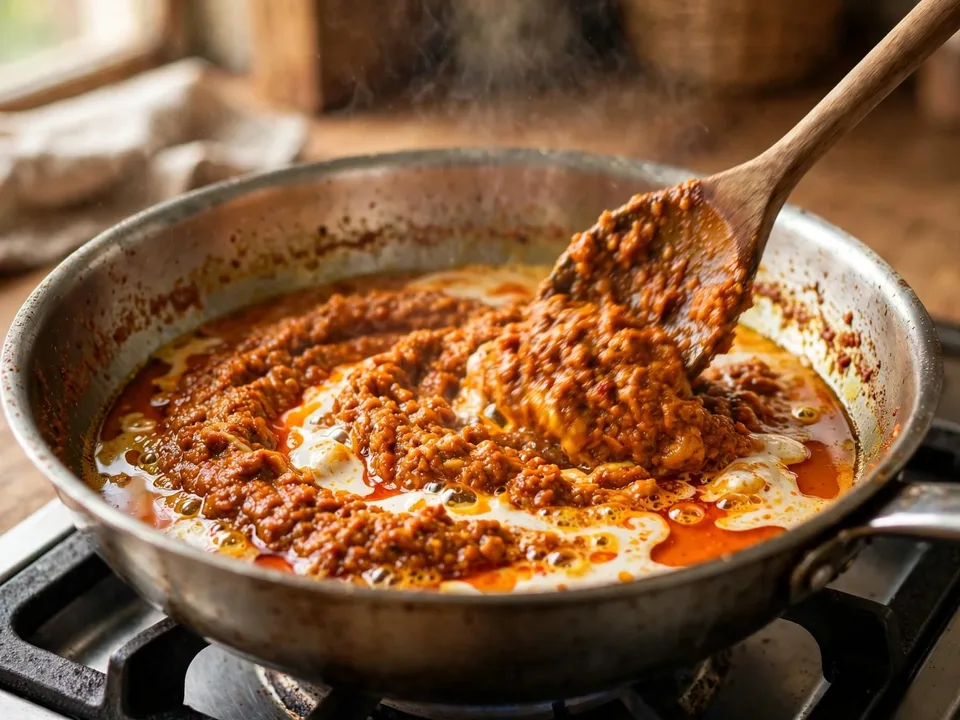
Scoop about 120 ml (1/2 cup) of the thickest coconut milk into a heavy pot and bring it to a lively simmer over medium heat. Add the curry paste and cook, stirring frequently, until the mixture becomes very thick and glossy and the coconut oil begins to sizzle at the edges. If your coconut milk is homogenised and does not visibly split, judge readiness by the paste becoming darker, glossy and noticeably less raw-smelling.
Look for
The paste should look glossy and concentrated, smell rounded rather than raw, and may show small beads of coconut oil around the edges.
Kitchen note
Do not rush this stage. Properly frying the curry paste rounds off the raw aromatics and gives the broth a deeper flavour than simply dissolving uncooked paste into coconut milk.
 Step 03
Build the broth and simmer the chicken
40 min
Stir in the remaining coconut milk, then add the chicken stock, soy sauce, optional dark soy and palm sugar.
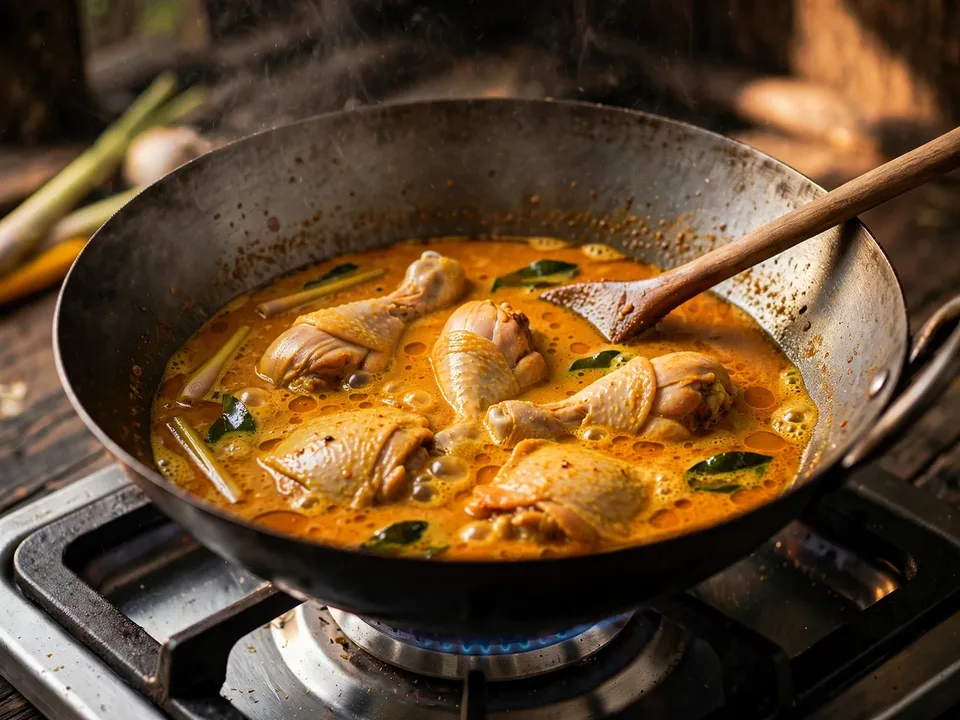
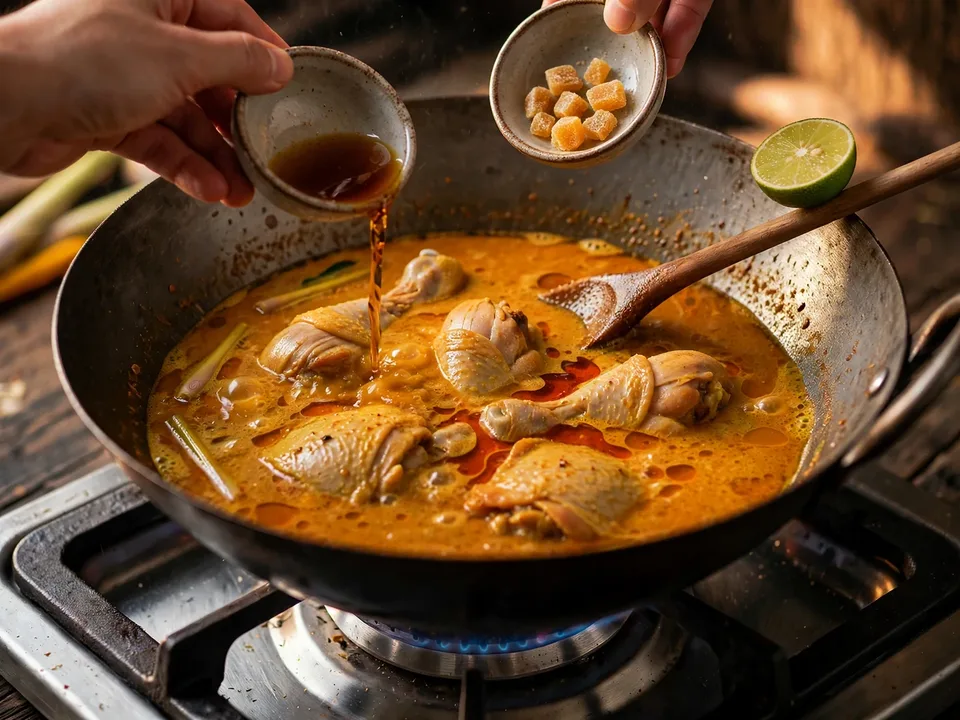
Stir in the remaining coconut milk, then add the chicken stock, soy sauce, optional dark soy and palm sugar. Add the chicken and bring the pot just to a simmer. Lower the heat and cook gently, partially uncovered, for about 35–45 minutes, turning the chicken once or twice, until it is fork-tender. If checking with a thermometer, the thickest part of the chicken should reach at least 74°C / 165°F without the probe touching bone. Keep the simmer calm so the coconut broth does not reduce into a heavy sauce.
Look for
The broth should remain fluid and golden-orange, while the chicken should yield easily when pierced near the joint; for safety, poultry should reach at least 74°C / 165°F in the thickest part.
Kitchen note
Bone-in chicken contributes more body to the broth and is harder to dry out than small boneless pieces. If the liquid level drops substantially, add a little hot water or stock rather than allowing the curry to become overly salty and thick. Use the broth-simmer time to prepare the condiments and crisp noodle crown so the soft serving noodles can be boiled last and reach the bowl fresh.
 Step 04
Balance the broth and prepare the condiments
5 min
Taste the broth once the chicken is tender.
Taste the broth once the chicken is tender. Adjust with fish sauce or a little more soy for salt, and a small amount of palm sugar only if the curry needs rounding. The broth should taste slightly more assertive than you want by itself because the plain noodles will soften the seasoning. At the same time, chop the pickled mustard greens, slice the shallots, cut the lime wedges and prepare fried chilli flakes if using.
Look for
The broth should taste savoury, warmly spiced and gently sweet, with enough intensity to remain balanced after noodles are added.
Kitchen note
Pickled mustard greens, raw shallot and lime are structural to the eating experience because they cut through the coconut richness. Do not season the entire pot with lime; let each diner sharpen their own bowl at the table.
 Step 05
Fry the crisp noodle crown
8 min
Loosen about 80–100 g of the fresh noodles and shake off excess flour.
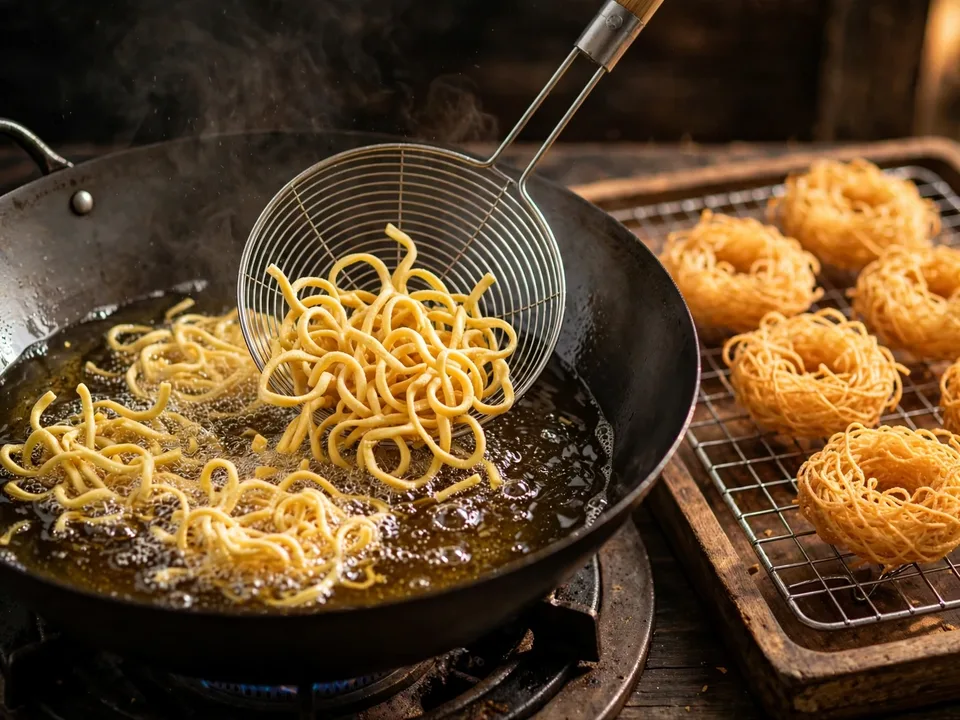
Loosen about 80–100 g of the fresh noodles and shake off excess flour. Cut them into shorter lengths so they are easier to fry and eat. Heat 5 cm (2 in) of neutral oil to about 175°C / 350°F. Fry very small handfuls at a time, pressing them gently under the oil so they cook evenly, until golden and crisp. Drain well on a rack or paper towel.
Look for
The fried noodles should be evenly golden, dry-looking and brittle-crisp, with the vigorous bubbling nearly finished.
Kitchen note
Fresh egg noodles expand dramatically in hot oil. Small batches keep the oil temperature stable and prevent a tangled mass. The bubbling should slow almost to a stop before the noodles come out—that is a good sign that they are crisp rather than leathery inside.
 Step 06
Boil the noodles for the bowls
4 min
Bring a large pot of water to a full boil.
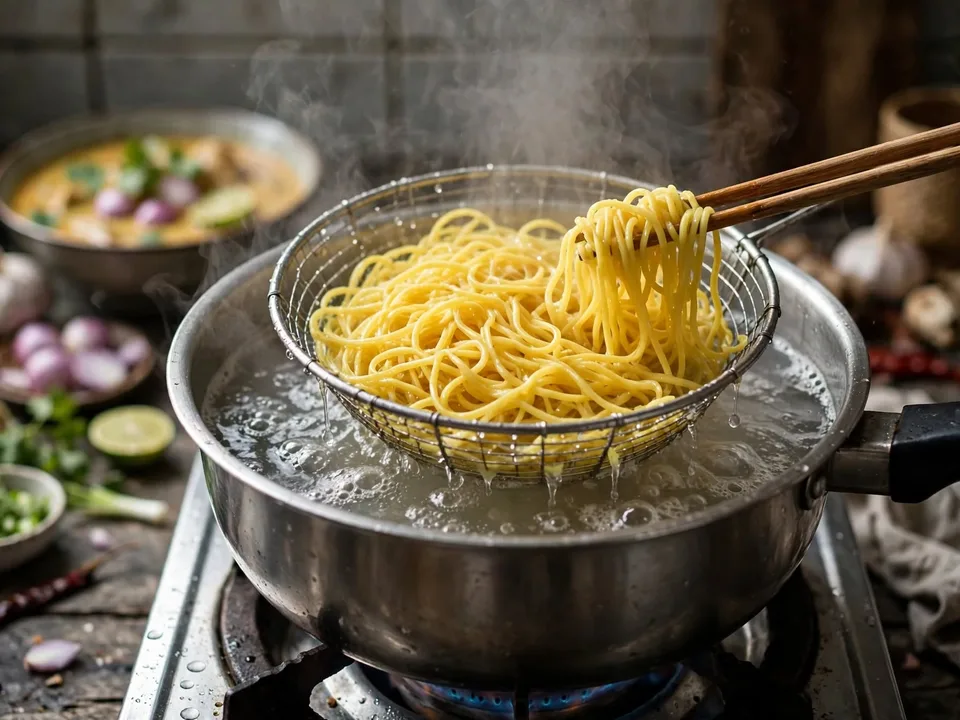
Bring a large pot of water to a full boil. Loosen the remaining fresh egg noodles and shake off any heavy flour. Boil until just fully cooked and springy—the exact timing varies by brand and thickness, often around 2–4 minutes. Drain thoroughly. If making several bowls at once, toss the drained noodles with only a few drops of neutral oil so they do not clump while you portion them.
Look for
The noodles should be tender all the way through but still springy and distinct, not soft enough to break when lifted.
Kitchen note
Do not use the curry broth to cook the main noodles. Boiling them separately prevents excess flour and starch from muddying the broth and gives you better control over noodle texture. Boil the serving noodles only when the curry and garnishes are ready; holding cooked noodles too long makes them clump and continue softening.
 Step 07
Assemble and serve immediately
3 min
Divide the hot boiled noodles among deep bowls and place a chicken drumstick or portion of chicken on top.
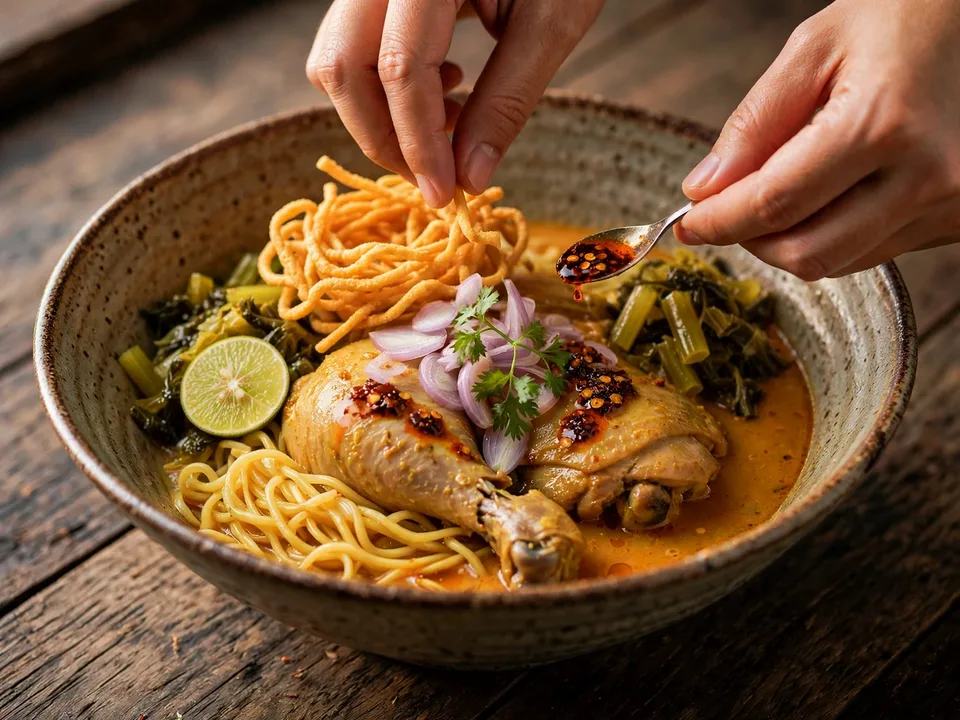
Divide the hot boiled noodles among deep bowls and place a chicken drumstick or portion of chicken on top. Ladle over enough hot curry broth to generously coat and surround the noodles without drowning the bowl. Crown each serving with crisp fried noodles and serve with pickled mustard greens, sliced shallots, lime wedges and fried chilli flakes at the table. Add chopped cilantro or scallions if desired.
Look for
The finished bowl should show a fluid golden-orange curry, distinct soft noodles, tender chicken and a dry crisp noodle crown with fresh sharp condiments alongside.
Kitchen note
The bowl should be eaten as soon as it is assembled. The pleasure of khao soi is the contrast between springy noodles, tender chicken, rich curry, brittle fried noodles and sharp condiments before those textures blur together.
After cooking
Explore the dish beyond the method.
Story, place and references are here for discovery, so they stay out of the way while you cook.
Culture & tradition
The story behind the dish
Origins, evolution and everyday life—read together as part of the recipe's culinary record.
Origins
The dish developed in northern Thailand within a wider cross-border noodle and curry environment; exact single-origin stories vary, so Ember & Equator treats it as a regional tradition rather than attributing it to one inventor.
How it evolved
Different northern cooks vary the curry paste, protein and richness, but the contrast between curry broth, noodles and sharp condiments remains characteristic.
Its place today
Khao Soi is now one of Chiang Mai’s most recognizable food experiences and a major ambassador for northern Thai cuisine.
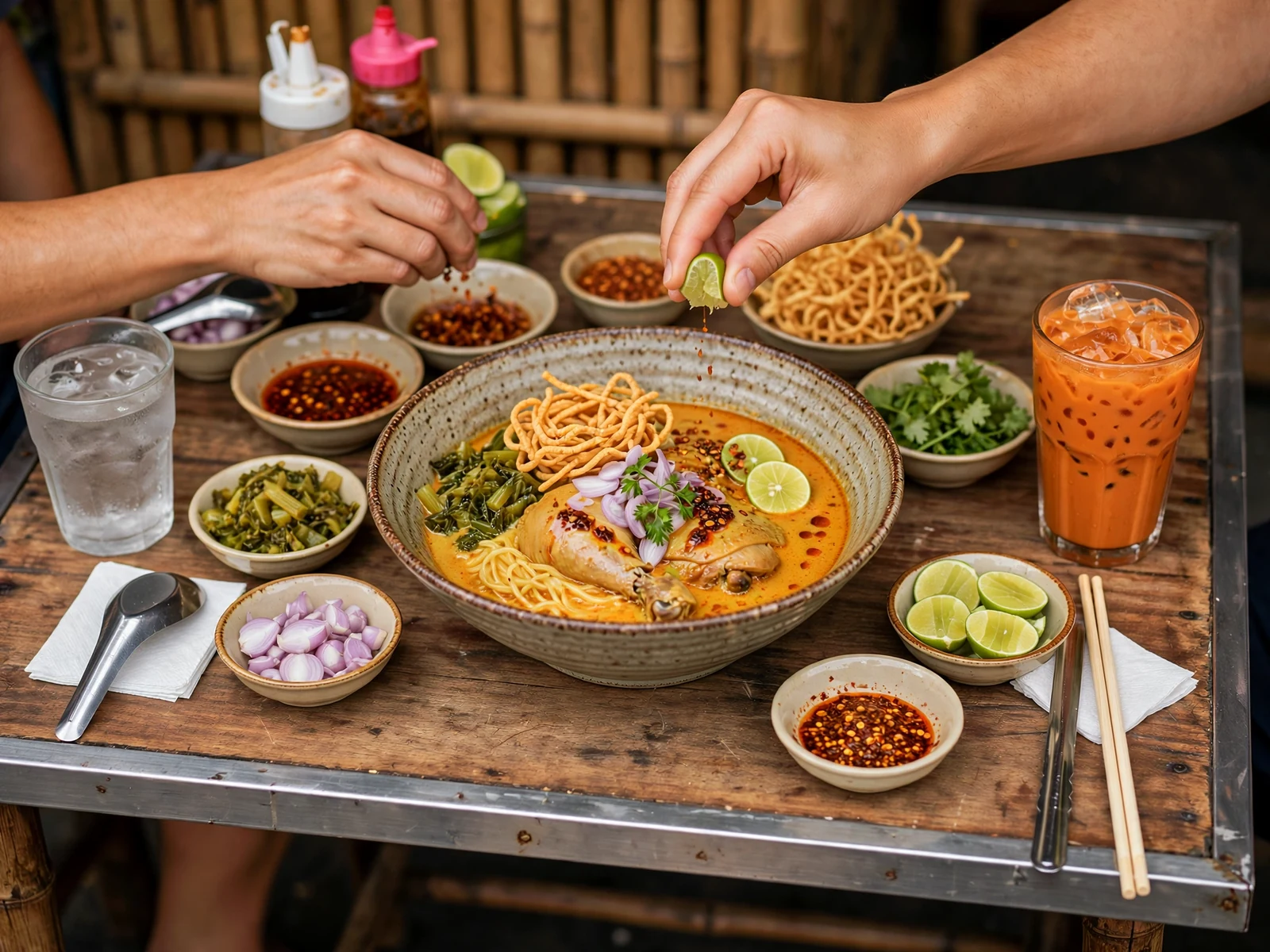
Visual archive · plate 01
Khao Soi
An editorial view of the finished dish, kept compact so the story continues without an oversized image break.
Primary region
Chiang Mai and northern Thailand
Country
Thailand
Regional influence
Northern Thailand’s cooler uplands, livestock traditions and historic overland trade distinguish its curry and noodle culture from the central plains and southern peninsula.
Related food systems
- Northern Thai/Lanna food traditions
- Cross-border noodle traditions
- Muslim culinary influence in northern Thailand
Culinary record
- Origin
- Chiang Mai
- Era
- Established northern Thai regional tradition
- Sub-region
- Southeast Asia — Mainland Southeast Asia
- Climate
- Tropical
- Cooking methods
- simmered · fried
- Trade-route influence
- Indian Ocean trade · Chinese migration and trade · Mainland Southeast Asian exchange
Traditional & modern
Northern versions vary by curry paste and protein while retaining curry broth, noodles and sharp condiments.
Regional adaptations
- Northern Thai household and restaurant variations
Sources & further reading
Follow the reference trail.
Ember & Equator links outward when an institution or primary reference helps support the culinary record.
- 01Thailand Green Tourism — Khao Soi Mae ManeeExternal ↗
Tourism Authority of Thailand · government
Supports: Khao soi · Chiang Mai food culture · coconut curry broth · pickled greens and shallot balance
Ember & Equator source review · 2026-09-10
- 02Khao Soi: Northern Thai Curry Noodle SoupExternal ↗
Hot Thai Kitchen · specialist publication
Supports: northern Thai khao soi technique · wheat egg noodles · curry paste · coconut broth · fried noodle garnish · pickled mustard greens · shallots · lime
Ember & Equator source review · 2026-09-11
- 03Chicken from Farm to TableExternal ↗
USDA Food Safety and Inspection Service · government
Supports: poultry minimum internal temperature · leftover reheating temperature · cooked chicken refrigerator storage guidance
Ember & Equator source review · 2026-09-11
Ingredient guides
Learn about the ingredients behind the dish.
These are reference guides, not a second ingredient list. Follow an ingredient when you want to understand its role, use and wider culinary context.
Ingredient
coriander seeds
Understand what it contributes, how to use it, and the dishes that reveal it best.
Ingredient
fresh ginger
Understand what it contributes, how to use it, and the dishes that reveal it best.
Ingredient
shallots
Understand what it contributes, how to use it, and the dishes that reveal it best.
Ingredient
coconut milk
Understand what it contributes, how to use it, and the dishes that reveal it best.
Ingredient
chicken stock
Understand what it contributes, how to use it, and the dishes that reveal it best.
Ingredient
soy sauce
Understand what it contributes, how to use it, and the dishes that reveal it best.
Explore ingredient →
Keep wandering
Where will this dish take you next?
Stay with the place, follow an ingredient or technique, or cross into another food culture. Each path begins with something already present in this dish.
Stay with the place
01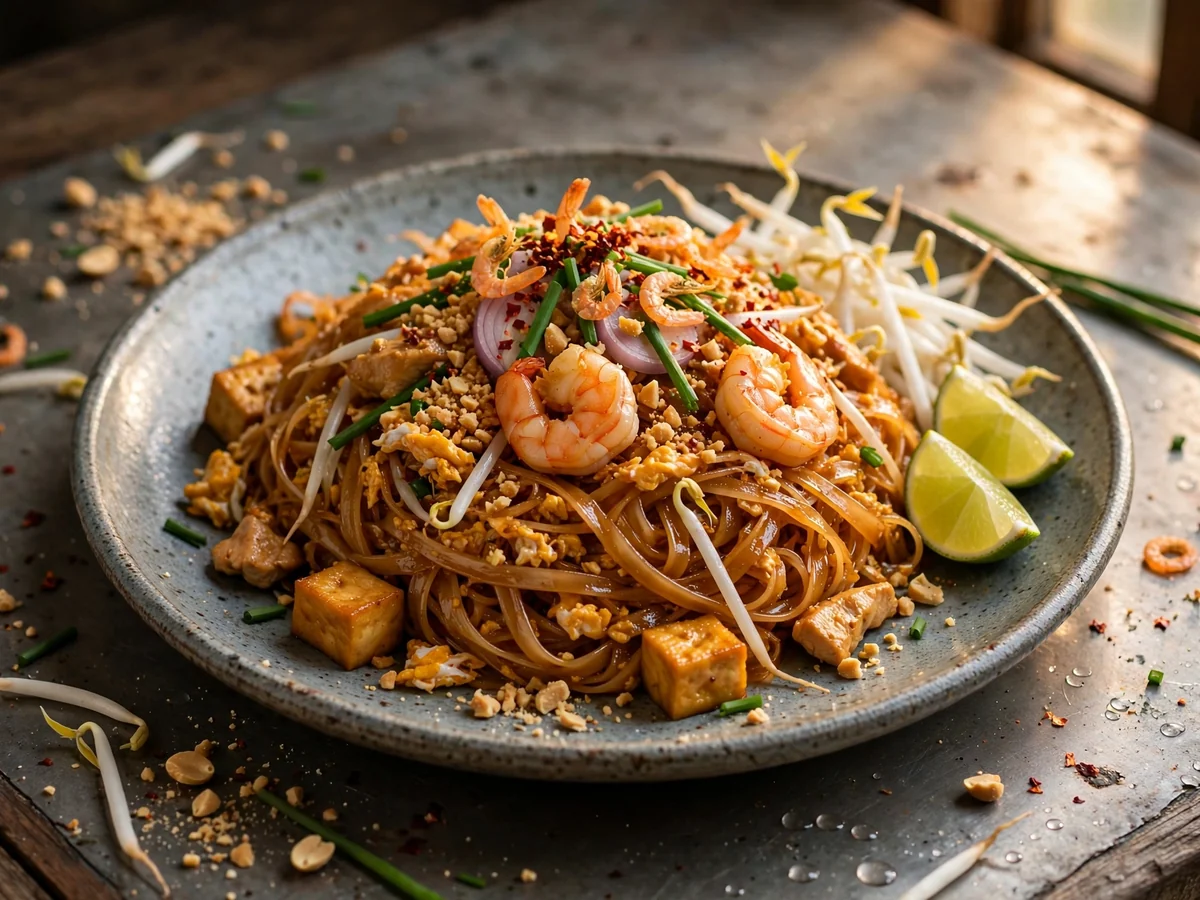
Thailand
Pad Thai
Stay in the same food culture and notice how balance a sweet-sour-salty sauce appears in another dish.
Shared thread · Balance a sweet-sour-salty sauce · shallots · palm sugar
Follow the method or pantry
02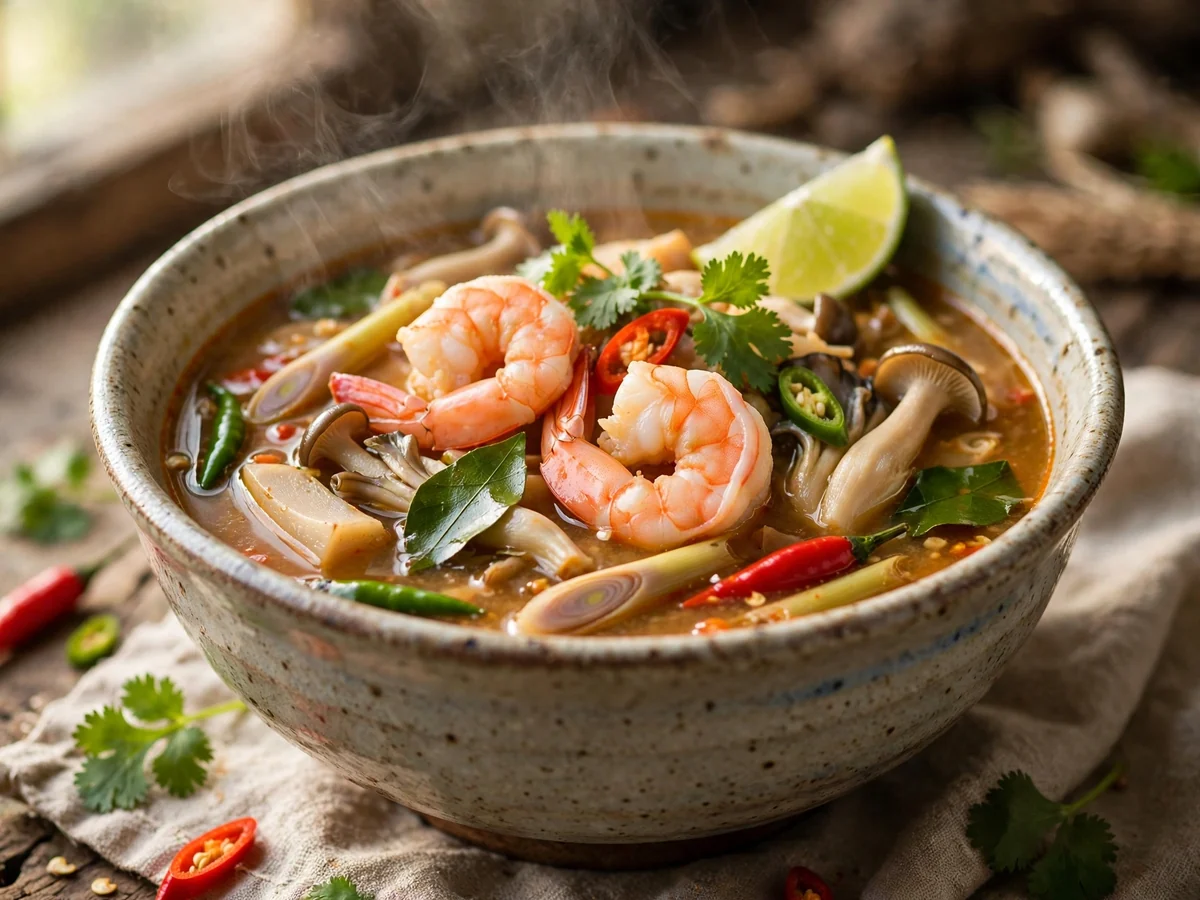
Thailand
Tom Yum Kung
Follow the cooking method: both dishes connect through simmer.
Shared thread · Simmer · Balance a sweet-sour-salty sauce · shallots
Cross a culinary border
03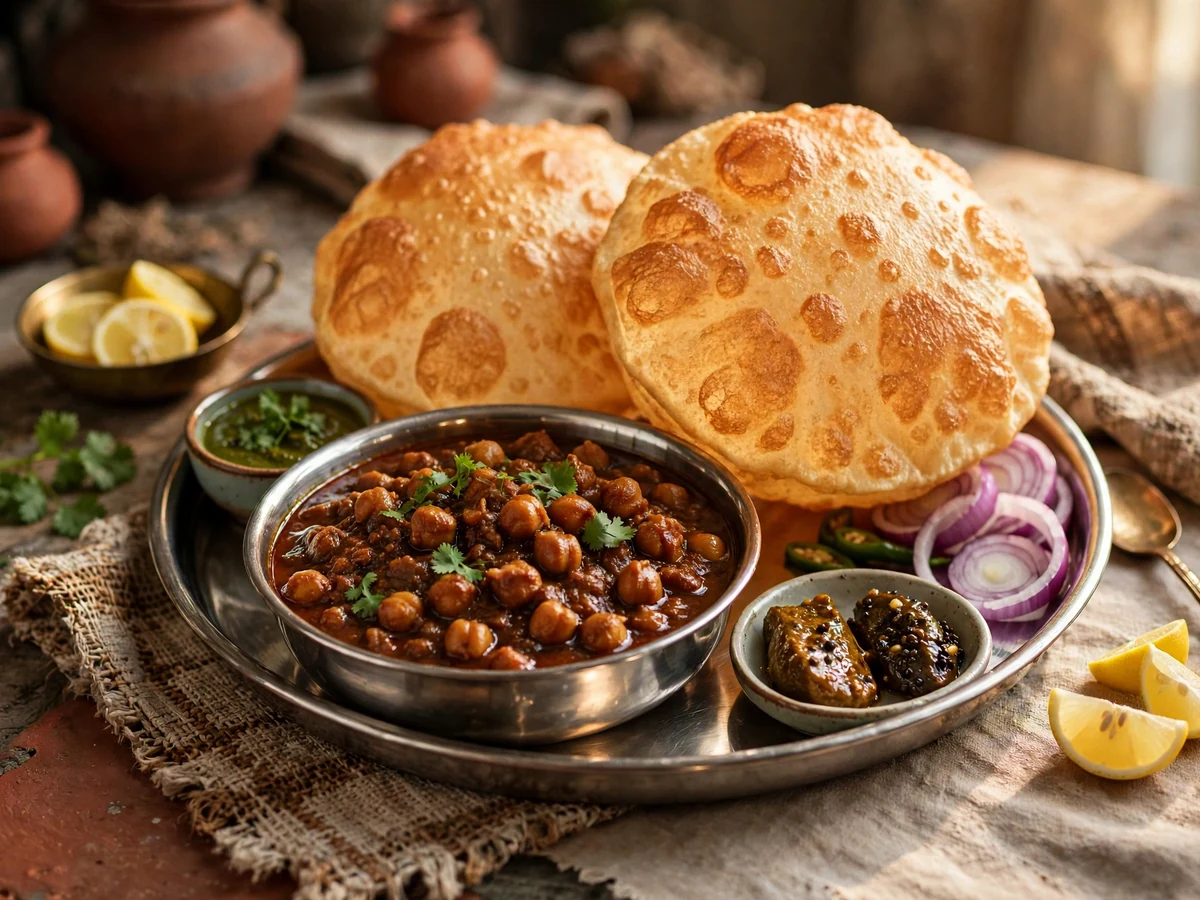
India
Chole Bhature
Cross borders while keeping sauté as the common thread.
Shared thread · Sauté · Simmer · Fry
Go one layer deeper
One small detail can open an entirely different part of food.
Continue in Ember & Equator