
Ethiopia · breakfast · lunch · dinner
Injera
Everyday food, carrying a place with it.
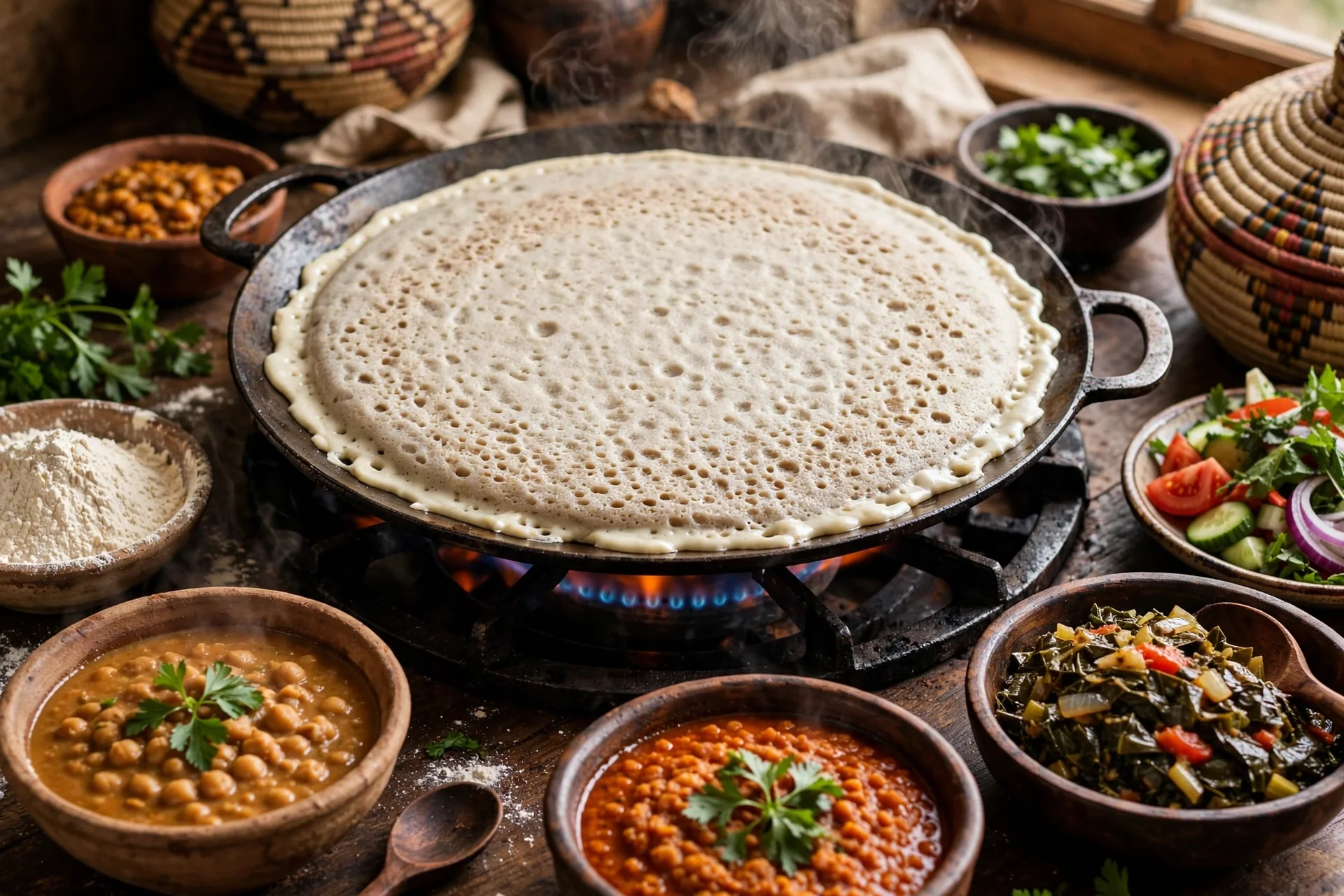
Injera is Ethiopia’s fermented teff flatbread: a naturally leavened batter undergoes primary fermentation, an absit step and secondary fermentation before it is poured onto a hot mitad or griddle and cooked on one side until a network of eyes opens across the surface.
- Total
- 70 min
- Difficulty
- Hard
- Serves
- 6
- Steps
- 7
The dish
Place first. Then the plate.
Injera is both staple bread and serving surface in Ethiopian meals, carrying wot, vegetables and other dishes at the centre of shared eating. Teff injera is especially prized, although other cereals are also used. The selected Ember & Equator method restores the traditional two-fermentation logic and absit step that the earlier four-card version had compressed away.
Explore EthiopiaAt a glance
Origin
Ethiopia
Region
Across Ethiopia, with teff especially associated with the highlands
Meal
breakfast · lunch · dinner
Guided steps
7
Dish
Injera
Cuisine
Ethiopian cuisine
Food type
Grain dish · Breakfast · Lunch
Technique
Blend batter · Simmer · Grill or griddle
Cook the recipe
In the kitchen
Start with the ingredients, then follow the Method in order. Open cooking tips only when you need extra help; the story and references can wait until you are ready.
- Total
- 70 min
- Serves
- 6
- Level
- Hard
- Visual cues
- 7
Ingredients
Serves 6- 3 cupsteff flourpreferably finely milled; whole-teff flour colour may vary
- 4 cupswaterplus more as needed for absit and final batter consistency
- 0.5 cupersho starteractive back-slopped injera starter
Everything ready? Continue straight into the cooking steps.
Start methodMethod
7 steps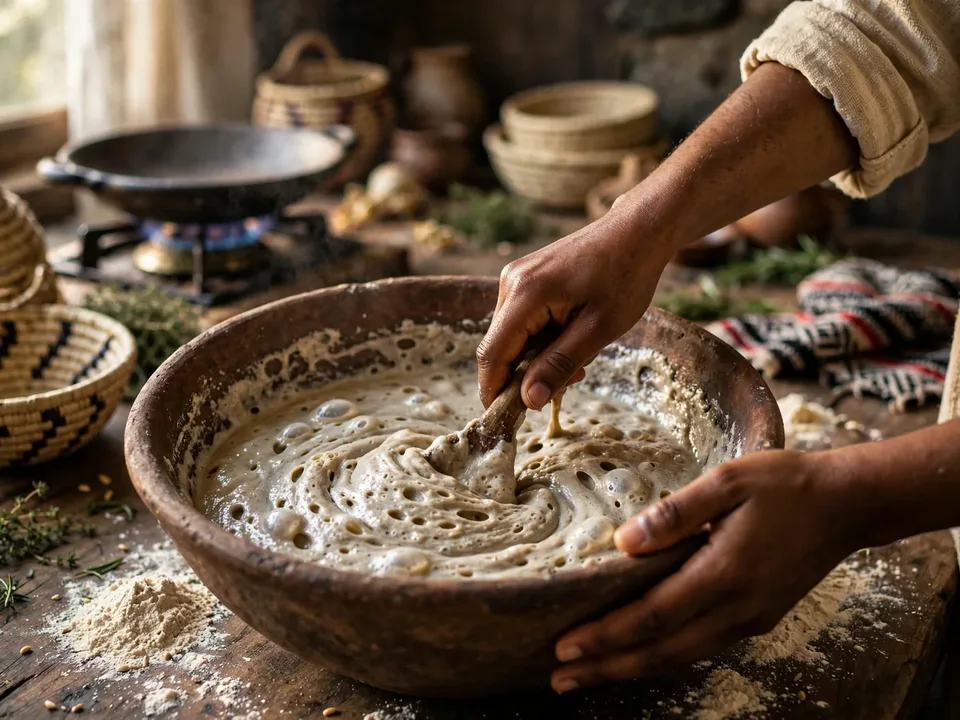 Step 01
Mix the teff, water and ersho into a thick fermentation batter
10 min
Combine the teff flour with about 2½ cups of the water and the active ersho.
Combine the teff flour with about 2½ cups of the water and the active ersho. Mix thoroughly by hand or with a sturdy spoon until there are no dry flour pockets and the batter is thick, cohesive and evenly hydrated. Transfer to a clean non-reactive container with generous headroom and cover loosely so fermentation gases can escape.
Look for
The mixture is uniformly hydrated and thick enough to hold soft ridges, with no dry flour pockets at the bottom or sides.
Kitchen note
Do not chase a final pouring consistency yet. Traditional primary fermentation starts from a thicker mixture; the batter is adjusted later after absit and secondary fermentation.
 Step 02
Ferment until sour, active and visibly separated
2880 min
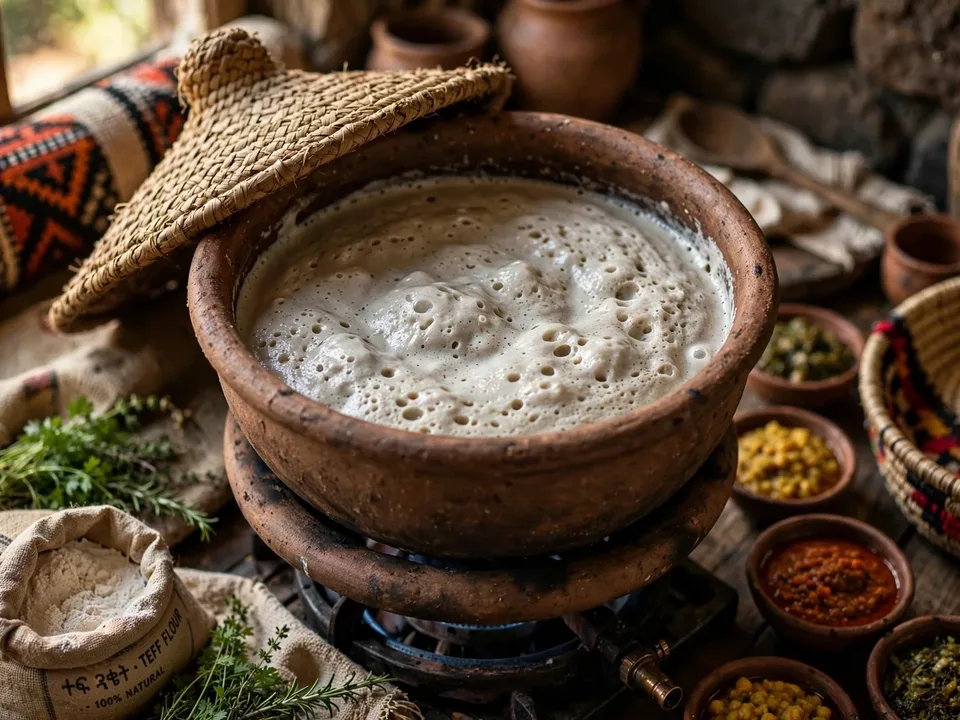
Leave the covered batter at room temperature for about 48–72 hours, depending on ambient temperature and starter strength.
Leave the covered batter at room temperature for about 48–72 hours, depending on ambient temperature and starter strength. Do not stir it repeatedly. By the end of primary fermentation the batter should smell cleanly sour, show gas activity and commonly develop a layer of liquid at the top.
Look for
The batter smells pleasantly sour rather than rotten, shows clear fermentation activity and has visible gas bubbles and/or a separated surface liquid.
Kitchen note
Fermentation time is a range, not a promise. A cool kitchen may need longer; a very warm one may move faster. Judge aroma, bubbles and separation together rather than using the clock alone.
 Step 03
Prepare the absit from a portion of the fermented batter
10 min
Carefully pour off any excessive surface liquid without disturbing the fermented batter more than necessary.
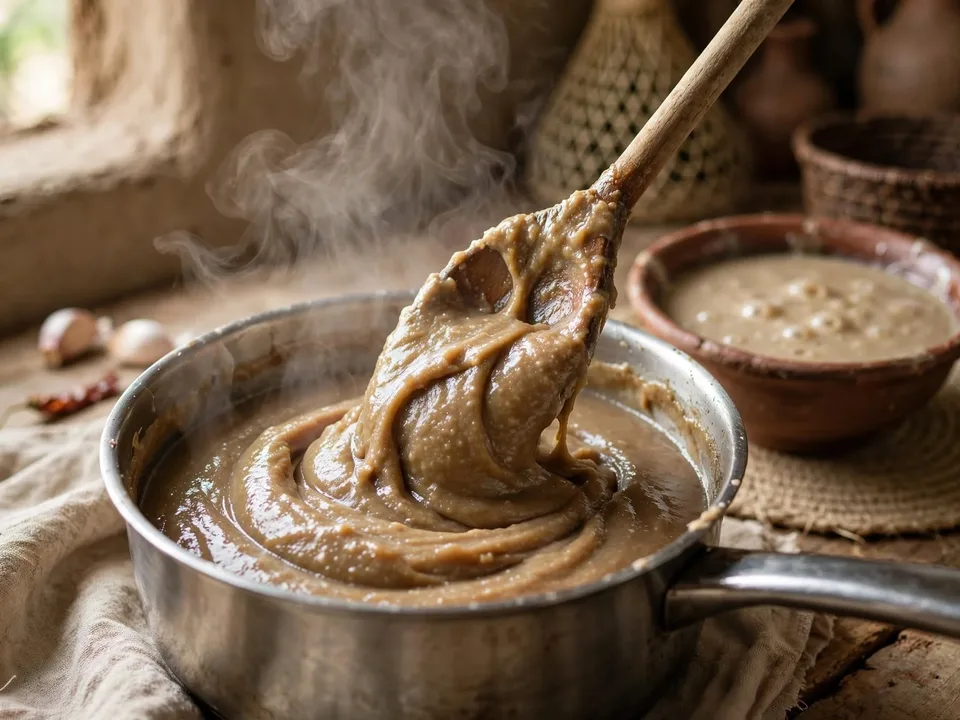
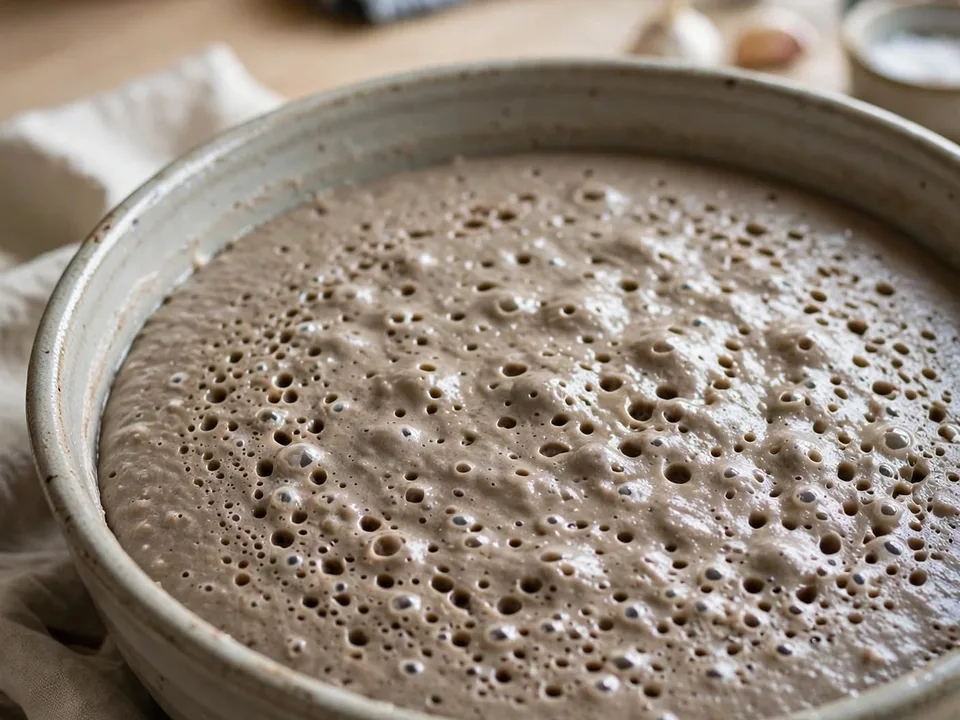
Carefully pour off any excessive surface liquid without disturbing the fermented batter more than necessary. Scoop about 1 cup of the fermented mixture into a small saucepan and whisk it with about 1 cup water. Cook over medium heat for roughly 5–10 minutes, stirring constantly, until the starch gelatinizes into a smooth thick porridge-like absit.
Look for
The absit is smooth, glossy and thickened with no raw flour taste or scorched layer on the bottom.
Kitchen note
Absit is not optional busywork in this traditional method: cooking a small portion gelatinizes starch and helps the final batter rise, flow and form the characteristic eyes.
 Step 04
Cool the absit, mix it back and allow secondary fermentation
180 min
Cool the absit until warm rather than hot, then mix it thoroughly back into the main fermented batter.
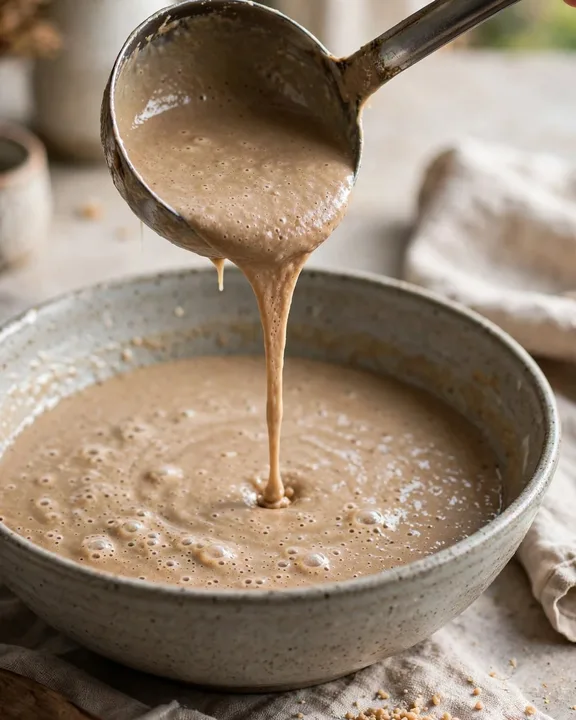
Cool the absit until warm rather than hot, then mix it thoroughly back into the main fermented batter. Cover loosely again and leave for about 2–4 hours. The batter should become lively and aerated as secondary fermentation develops.
Look for
The recombined batter looks aerated and active after resting, with small bubbles rising and a clean sour aroma.
Kitchen note
Hot absit can shock the ferment. Let it cool before mixing, then give the batter enough time to become active again instead of rushing straight to the griddle.
 Step 05
Adjust the final batter to a flowing pourable consistency
15 min
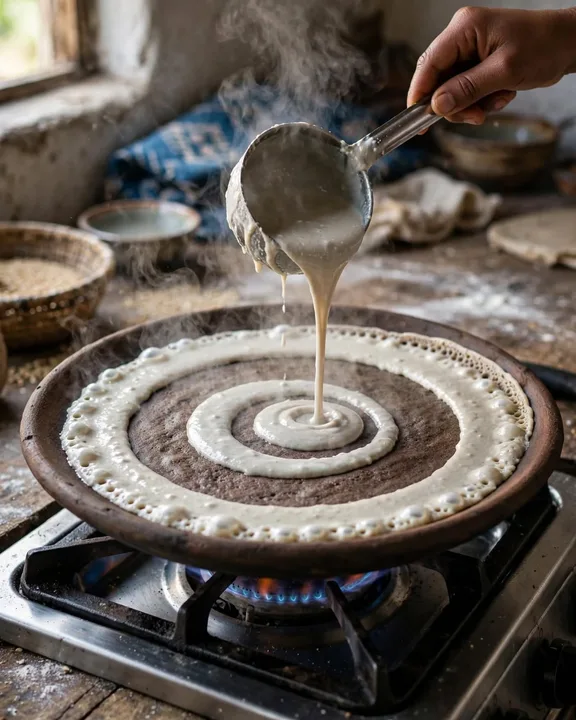
Gently stir the fermented batter and add water a little at a time until it pours in a steady ribbon.
Gently stir the fermented batter and add water a little at a time until it pours in a steady ribbon. It should be thinner than pancake batter but not watery. Let it settle for 10–15 minutes while the mitad or griddle heats so bubbles can re-form without aggressive mixing.
Look for
The batter pours continuously, spreads under its own momentum and still has enough body to hold fine bubbles.
Kitchen note
Add water incrementally. A batter that is too thick produces heavy bread with poor eyes; a batter that is too thin spreads weakly and can tear.
 Step 06
Heat the mitad or griddle evenly and pour one injera
3 min
Heat a clean mitad or wide non-stick griddle thoroughly over medium to medium-high heat.
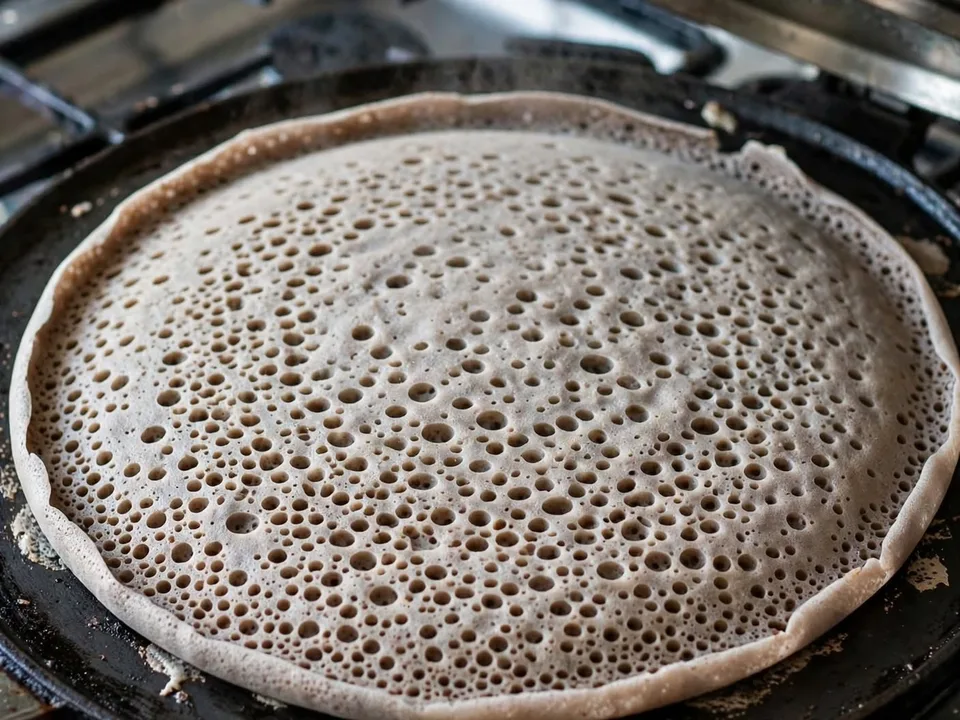
Heat a clean mitad or wide non-stick griddle thoroughly over medium to medium-high heat. Pour the batter in a controlled spiral from the outside toward the centre, moving continuously so the round is even and not repeatedly over-poured. Work quickly before the first section sets.
Look for
The batter spreads into an even thin round and the first tiny eyes begin opening shortly after it hits the hot surface.
Kitchen note
An evenly heated surface matters more than maximum heat. If one area sets instantly while another stays raw, reduce the heat and allow the griddle to stabilize before the next injera. Treat the first injera as a calibration round: if it sets before you can complete the spiral, reduce the heat; if it spreads weakly and stays pale, let the surface recover heat before the next pour.
 Step 07
Cover and bake one side until the eyes open and the surface sets
3 min
Once eyes begin opening across the surface, cover the griddle so steam finishes the top.
Once eyes begin opening across the surface, cover the griddle so steam finishes the top. Cook for about 2–3 minutes total without flipping. The top should lose its wet shine, the edges should release and the injera should lift without tearing. Transfer to a clean cloth or basket to cool before stacking so trapped steam does not make the breads gummy. Repeat Steps 6–7 with the remaining batter, allowing the griddle to return to an even temperature between rounds. Cool each injera separately before stacking; once cool, stack and cover so the breads stay supple for serving.
Look for
Eyes are open across most of the surface, the top is set and matte rather than wet, and the edges release cleanly from the griddle.
Kitchen note
Do not flip injera like a pancake. The combination of bottom heat and trapped steam cooks the top while preserving the porous surface. Let each injera cool before stacking the next one on top. If an injera sticks or tears, wait until the top is fully matte and the edges have released before lifting. For the next one, check that the griddle is evenly hot and lightly clean rather than adding a heavy layer of oil.
After cooking
Explore the dish beyond the method.
Story, place and references are here for discovery, so they stay out of the way while you cook.
Culture & tradition
The story behind the dish
Origins, evolution and everyday life—read together as part of the recipe's culinary record.
Origins
Ethiopia, where fermented flatbreads made from teff and other cereals have long formed the base of shared meals.
How it evolved
Household practice varies in flour mix, starter strength, fermentation time, absit proportion and baking surface; modern electric mitad and export-focused methods coexist with older clay-griddle practice.
Its place today
Daily staple, communal plate and edible utensil for wot and other dishes, with the porous eyes valued for texture and sauce absorption.
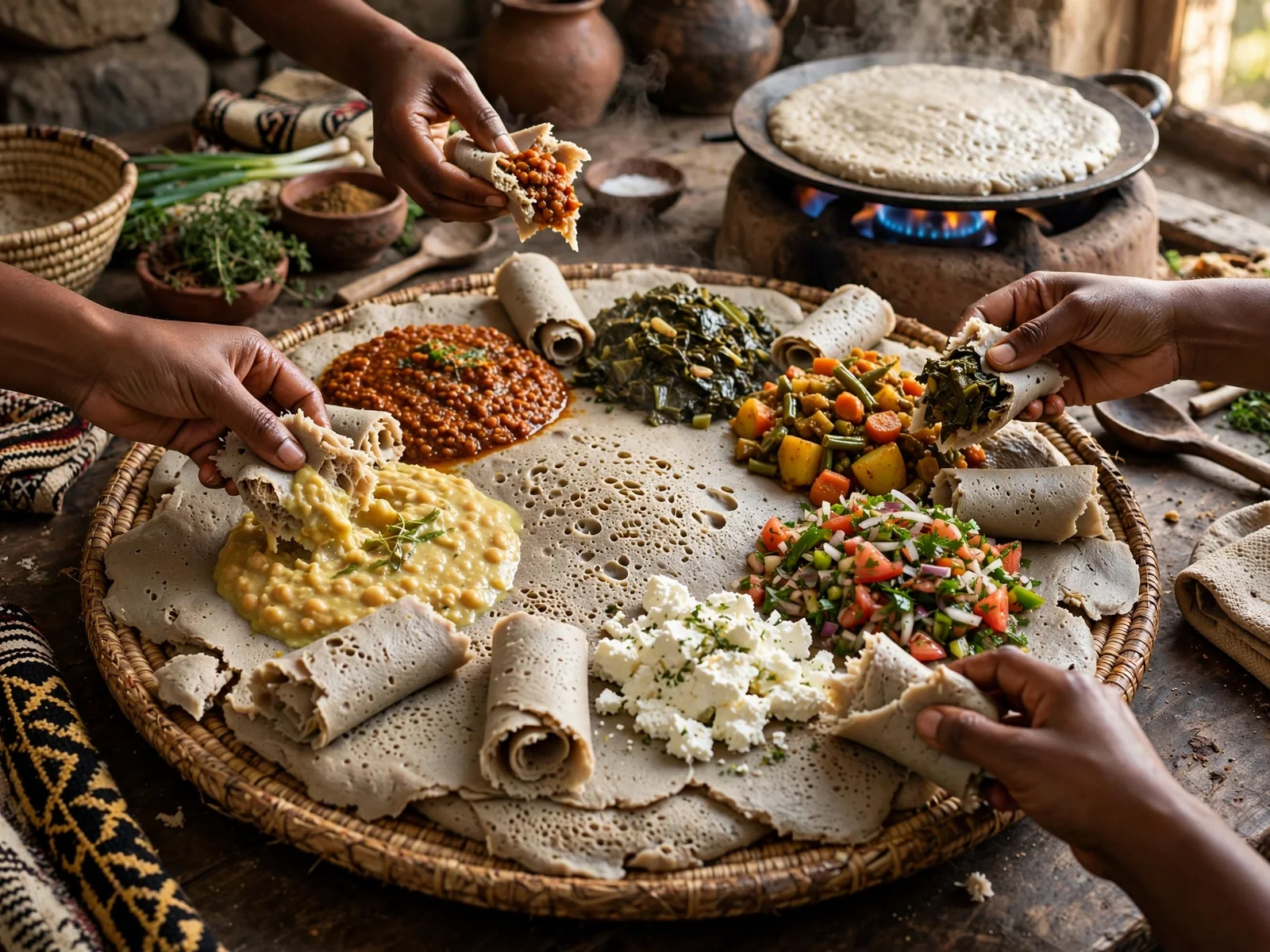
Visual archive · plate 01
Injera
An editorial view of the finished dish, kept compact so the story continues without an oversized image break.
Primary region
Across Ethiopia, with teff especially associated with the highlands
Country
Ethiopia
Regional influence
Fermentation speed responds strongly to ambient temperature and starter activity, while teff and other locally used grains shape colour, sourness and texture.
Related food systems
- Teff agriculture
- Fermented cereal foods
- Injera and wot communal meals
Sources & further reading
Follow the reference trail.
Ember & Equator links outward when an institution or primary reference helps support the culinary record.
- 01Traditional fermented food and beverages for improved livelihoodsExternal ↗
FAO · reference
Supports: injera · fermentation · traditional preparation
Ember & Equator source review · 2026-09-17
- 02Compendium of forgotten foods — TeffExternal ↗
FAO · reference
Supports: teff · injera · Ethiopian culinary use
Ember & Equator source review · 2026-09-17
- 03A Review on Factors Influencing the Fermentation Process of Teff and Other Cereal-Based Ethiopian InjeraExternal ↗
International Journal of Food Science / Wiley · academic
Supports: primary fermentation · ersho · absit · secondary fermentation · one-sided injera baking
Ember & Equator source review · 2026-09-17
- 04Standardization of teff (Eragrostis teff) injera making process conditions for better physicochemical and sensory qualityExternal ↗
Food Science & Nutrition / PubMed Central · academic
Supports: primary fermentation time and temperature · absit · secondary fermentation · baking temperature and time
Ember & Equator source review · 2026-09-17
- 05Injera (An Ethnic, Traditional Staple Food of Ethiopia): A review on Traditional Practice to Scientific DevelopmentsExternal ↗
Journal of Ethnic Foods · academic
Supports: traditional teff fermentation · ersho · absit · secondary fermentation · injera cultural role
Ember & Equator source review · 2026-09-17
Ingredient guides
Learn about the ingredients behind the dish.
These are reference guides, not a second ingredient list. Follow an ingredient when you want to understand its role, use and wider culinary context.
Ingredient
teff flour
Understand what it contributes, how to use it, and the dishes that reveal it best.
Explore ingredient →
Ingredient
water
Understand what it contributes, how to use it, and the dishes that reveal it best.
Ingredient
ersho starter
Understand what it contributes, how to use it, and the dishes that reveal it best.
Keep wandering
Where will this dish take you next?
Stay with the place, follow an ingredient or technique, or cross into another food culture. Each path begins with something already present in this dish.
Stay with the place
01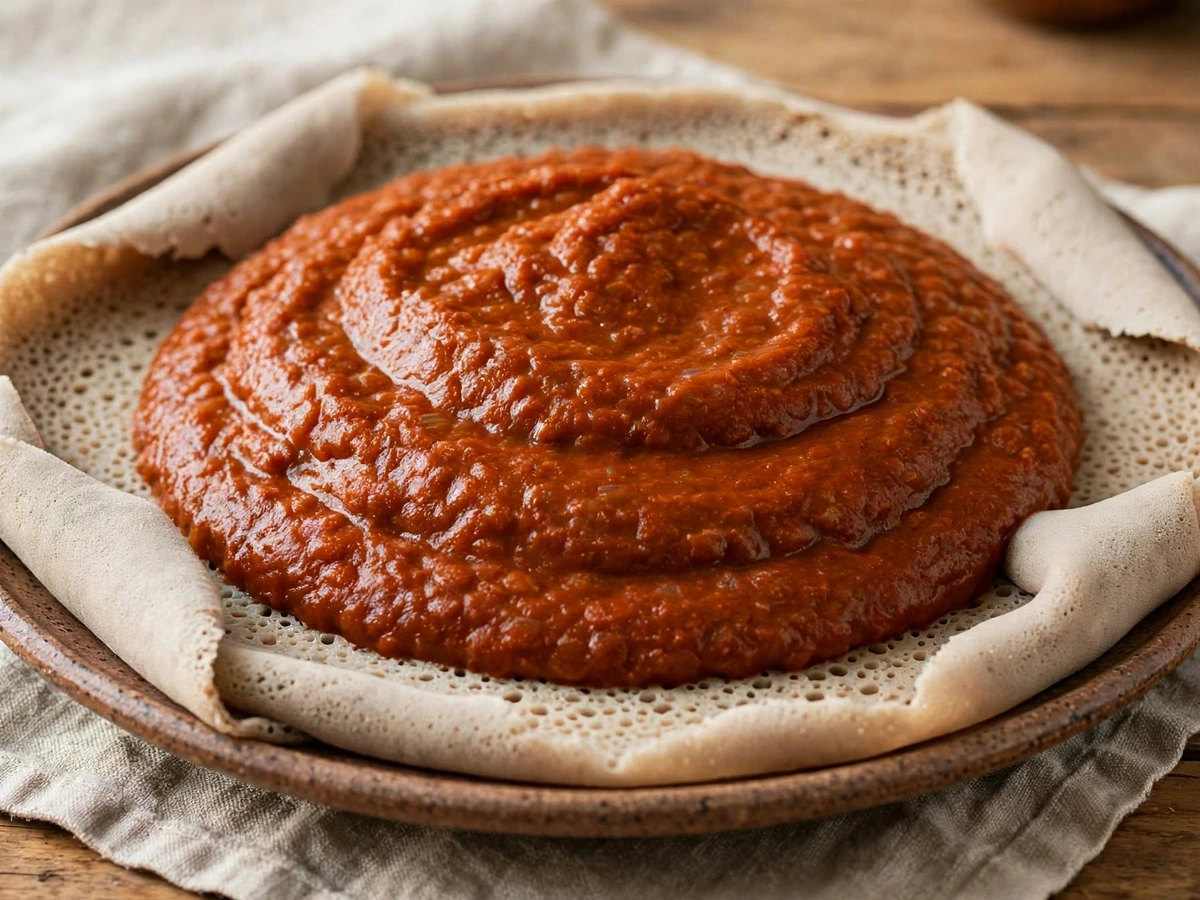
Ethiopia
Misir Wat
Stay in the same food culture and notice how simmer appears in another dish.
Shared thread · Simmer · water · Dinner
Follow the method or pantry
02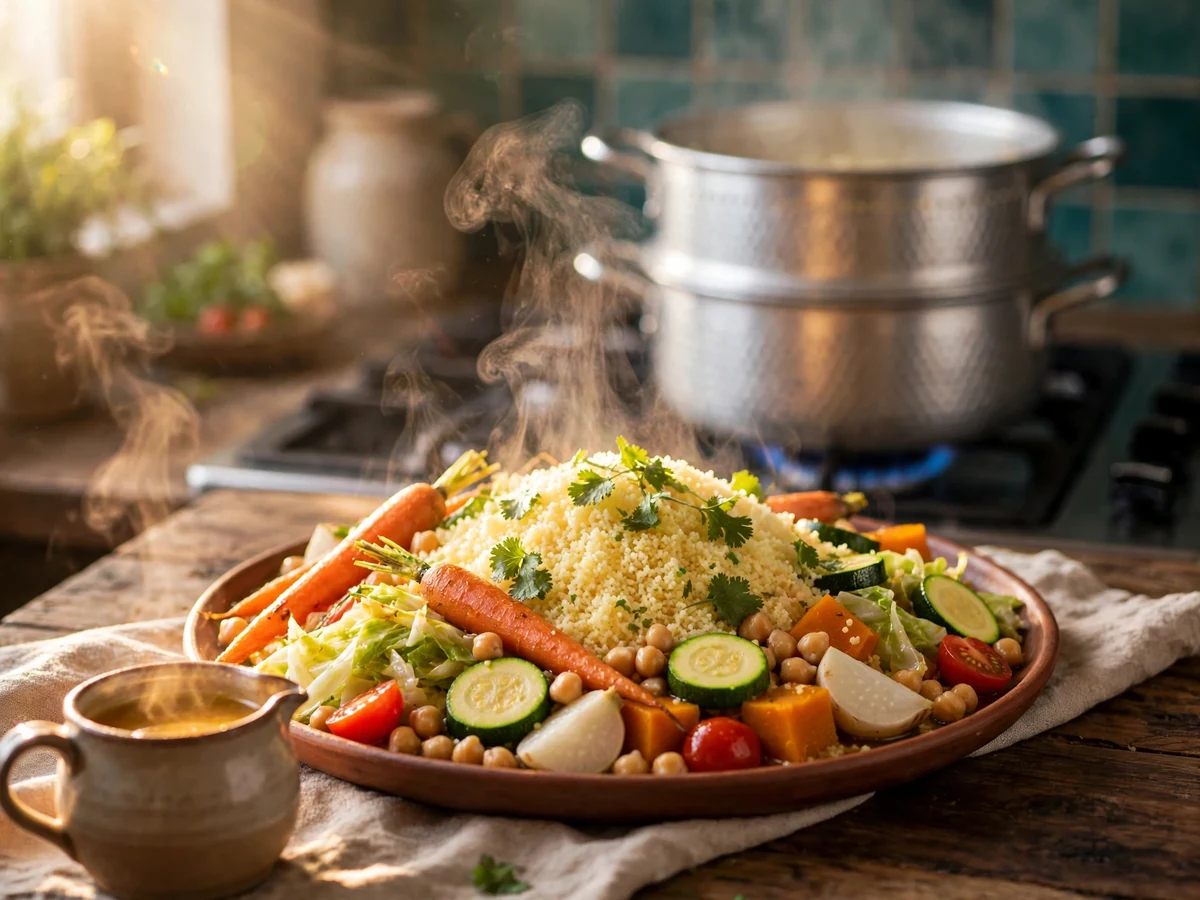
Morocco
Moroccan Couscous with Seven Vegetables
Follow the cooking method: both dishes connect through simmer.
Shared thread · Simmer · Steam · water
Cross a culinary border
03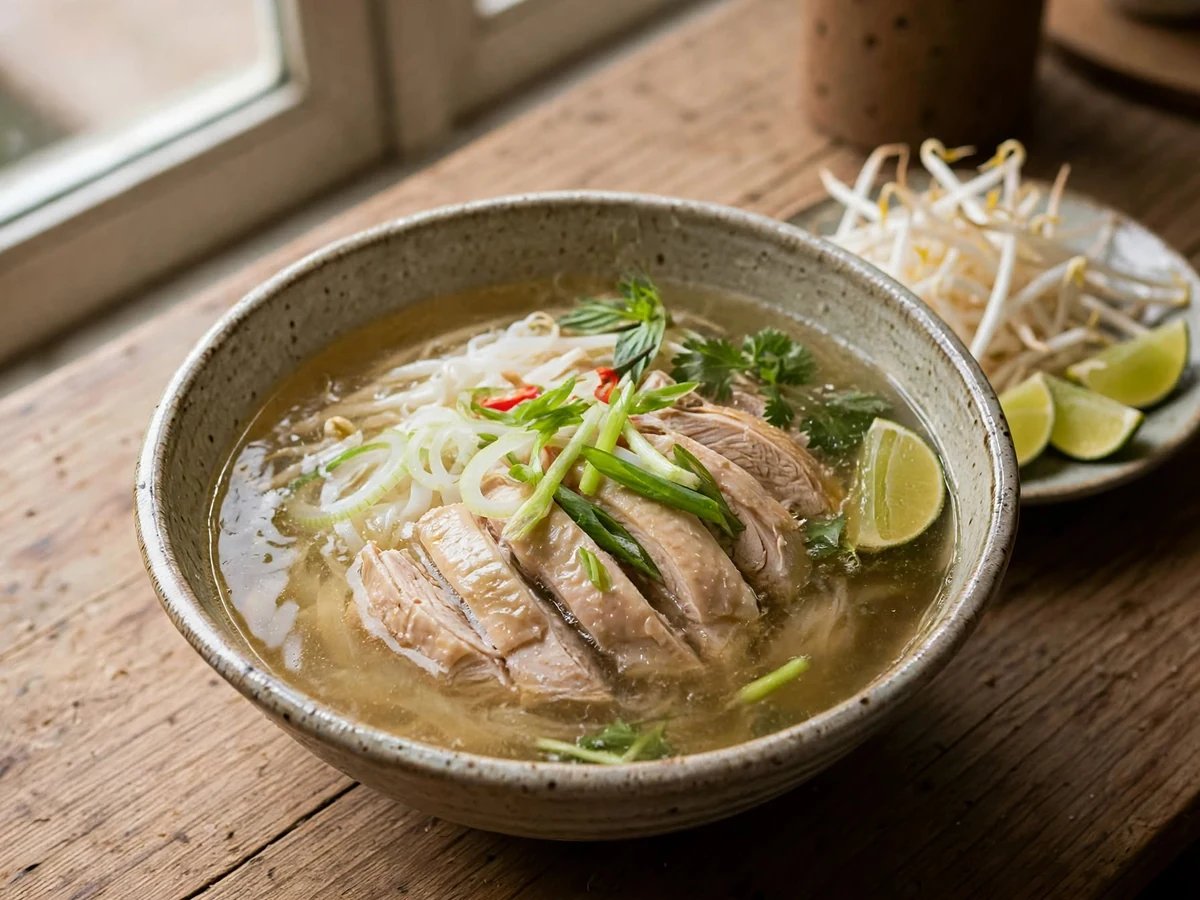
Vietnam
Phở Gà
Cross borders while keeping simmer as the common thread.
Shared thread · Simmer · water · Breakfast
Go one layer deeper
One small detail can open an entirely different part of food.
Continue in Ember & Equator