
Vietnam · breakfast · lunch · dinner · soup
Phở Gà
A bowl with a deeper sense of place.
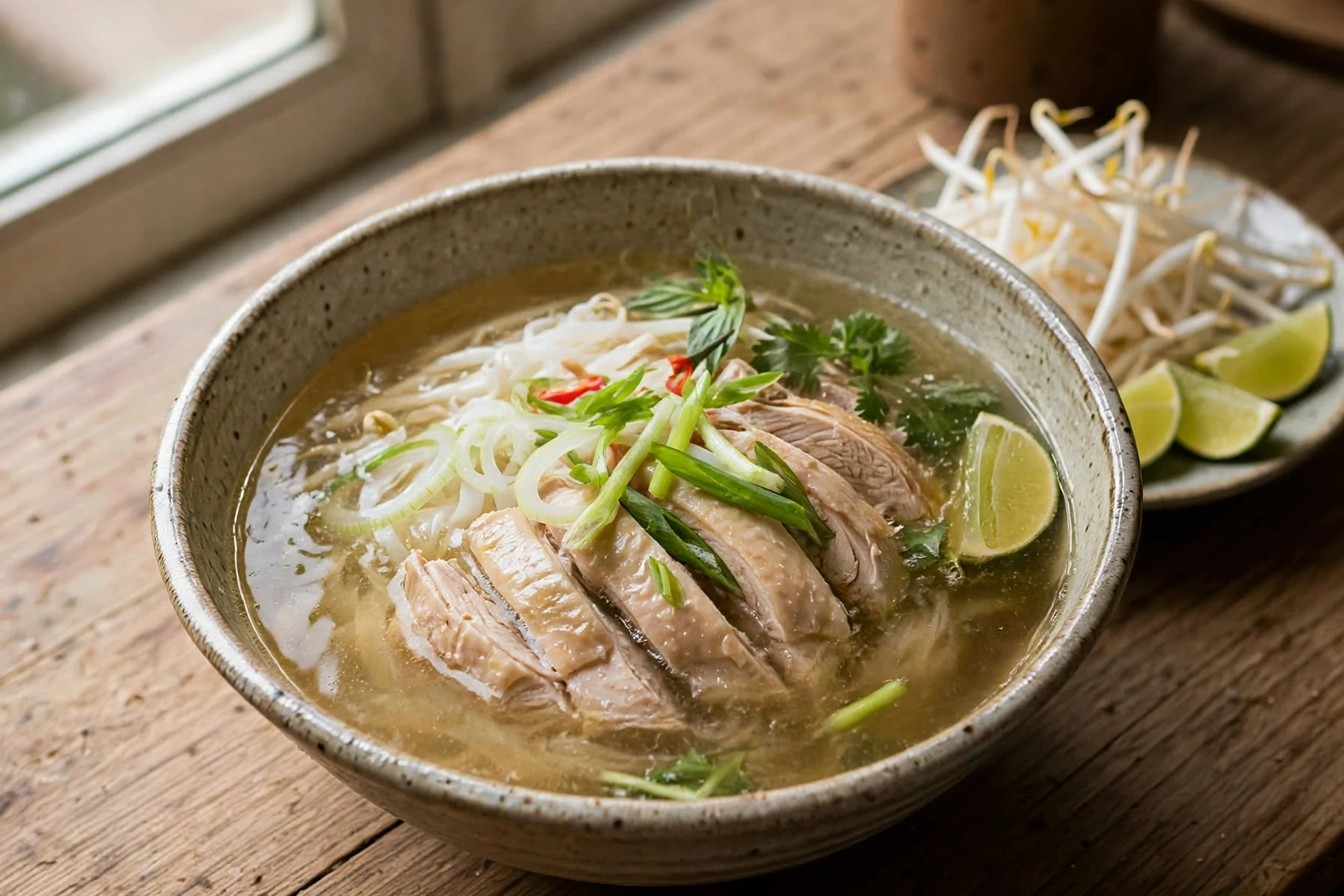
Phở Gà is Vietnamese chicken noodle soup built around a clear, aromatic chicken broth, flat rice noodles, tender chicken and fresh herbs. This northern-leaning home version keeps the spice profile restrained so chicken, charred onion, ginger and fish sauce remain the dominant flavours.
- Total
- 180 min
- Difficulty
- Medium
- Serves
- 6
- Steps
- 10
The dish
A bowl shaped by habit and place.
Phở is one of Vietnam’s defining noodle dishes and is especially associated with Hanoi and northern Vietnam. Chicken phở became an established branch of the tradition in the twentieth century. Northern bowls are typically more restrained in garnish than many southern versions.
Explore VietnamAt a glance
Origin
Northern Vietnam / Hanoi
Region
Northern Vietnam / Hanoi
Method
simmered
Meal
breakfast · lunch · dinner · soup
Guided steps
10
Dish
Phở Gà
Cuisine
Vietnamese cuisine
Food type
Soup · Noodle dish · Breakfast
Technique
Char aromatics · Simmer · Strain broth
Cook the recipe
In the kitchen
Start with the ingredients, then follow the Method in order. Open cooking tips only when you need extra help; the story and references can wait until you are ready.
- Total
- 180 min
- Serves
- 6
- Level
- Medium
- Visual cues
- 10
Ingredients
Serves 6- 1 wholewhole chickenabout 1.6–1.8 kg; preferably good-quality/free-range
- 4 litreswaterplus a little extra if needed
- 2 wholeyellow onionshalved, skins left on for charring
- 80 gfresh gingersplit lengthwise
- 2 tbspcoriander seedslightly toasted
- 4 wholewhole cloves
- 1 small bunchfresh cilantro stemsstems tied together; leafy tops reserved for bowls
- 1.5 tbspfine sea saltplus more to taste
- 3 tbspfish sauceplus more to taste
- 25 gyellow rock sugaror about 1 tablespoon regular sugar
- 500 gflat rice noodles (bánh phở)dried; use fresh if available
- 1 smallyellow onionsliced paper-thin; soak in cold water 20–30 minutes and drain
- 4 wholespring onionsthinly sliced
- 25 gfresh cilantroleafy tops, chopped
- freshly ground black pepperfor serving
Optional
- 600 gchicken backs, necks or wingsoptional but recommended for a fuller broth
- 1 smallcinnamon stickoptional; use lightly
- 1 wholestar aniseoptional; use lightly
- 200 gbean sproutsoptional, more common with southern-style garnish sets
- 1 small bunchThai basil or culantrooptional
- 2 wholefresh chilesthinly sliced, optional
- 2 wholelimecut into wedges; optional for serving
Everything ready? Continue straight into the cooking steps.
Start methodMethod
10 steps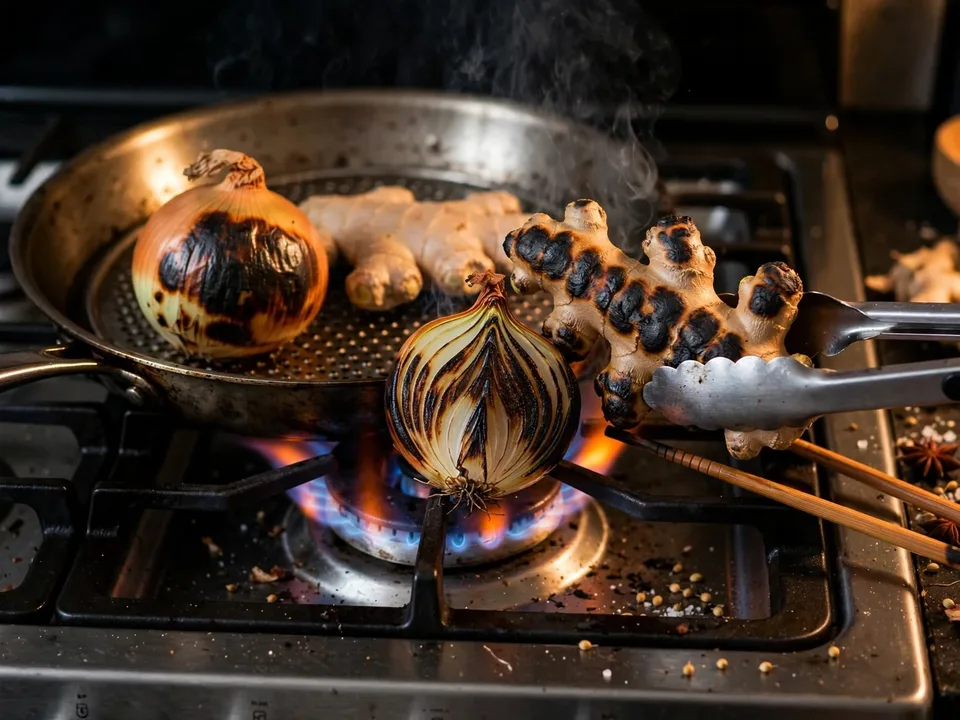 Step 01
Char the onion and ginger; toast the spices
12 min
Set the halved onions and split ginger cut-side down over a gas flame, under a very hot grill, or in a dry heavy pan.
Set the halved onions and split ginger cut-side down over a gas flame, under a very hot grill, or in a dry heavy pan. Turn until the surfaces are deeply blistered in patches and fragrant, 8–12 minutes. Toast the coriander seeds and cloves for 60–90 seconds in a dry pan; if using the optional cinnamon and star anise, toast them only until fragrant. Cool the onion and ginger briefly, then rub away loose ash and trim any fully burnt root ends. Lightly bruise the ginger before it goes into the broth.
Look for
The onion and ginger should have blackened patches over softened golden flesh, while the toasted spices smell fragrant without looking scorched.
Kitchen note
Chicken phở should smell of chicken, onion and ginger first. Char for sweetness and depth, but remove loose ash and keep cinnamon/star anise restrained so the broth does not drift toward a beef-phở spice profile.
 Step 02
Parboil optional extra bones for a cleaner broth
5 min
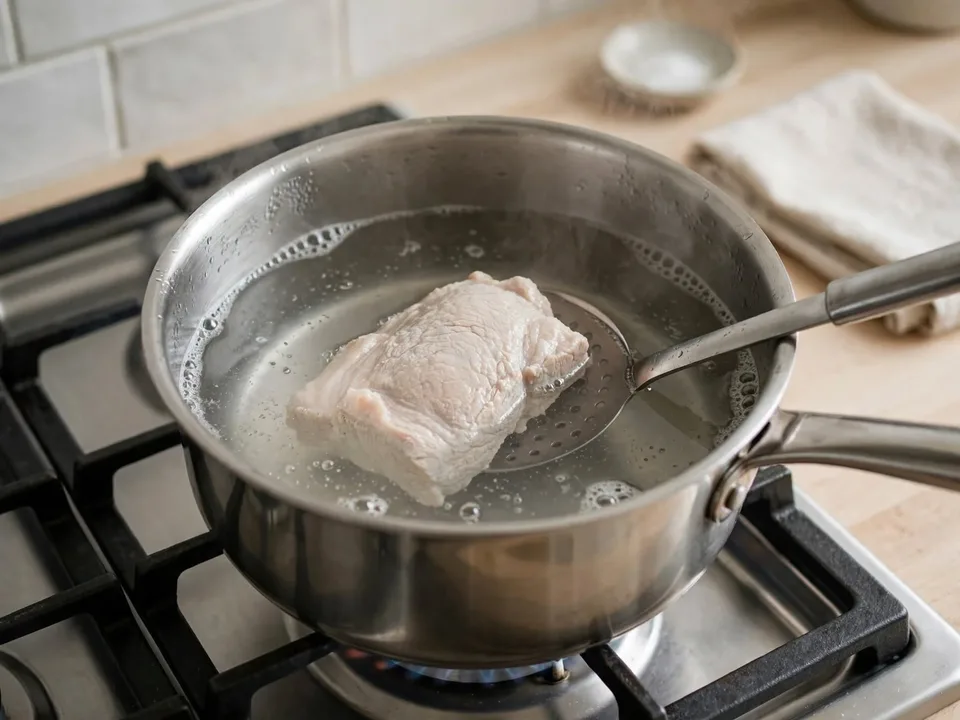
If using the optional backs, necks or wings, put only those bony pieces in a pot, cover with cold water and bring to a strong boil for 2–3 minutes.
If using the optional backs, necks or wings, put only those bony pieces in a pot, cover with cold water and bring to a strong boil for 2–3 minutes. Drain, rinse the bones and wash away any grey foam from the pot. Refill with the measured fresh water. Skip this stage entirely if you are using only the whole serving chicken.
Look for
The rinsed bones should look clean with loose grey scum removed; the fresh broth water should start clear rather than murky.
Kitchen note
This cleaning boil is for optional extra bones, not the whole chicken you plan to serve. It removes surface blood and proteins before the real broth begins without cooking the serving meat twice.
 Step 03
Poach the whole chicken at a bare simmer
40 min
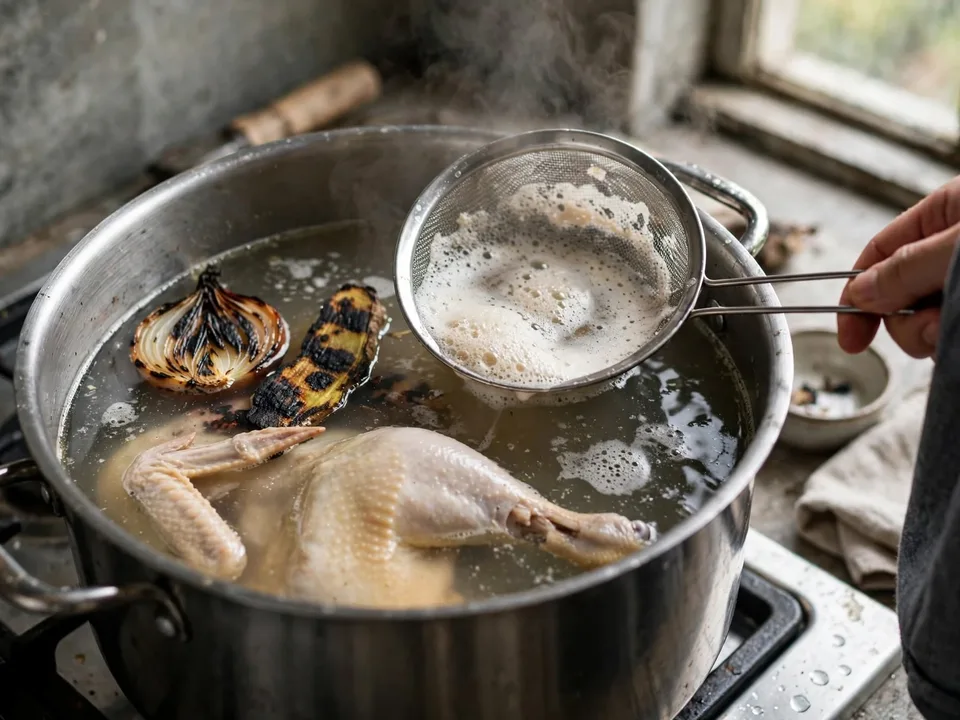
Add the whole chicken to the clean water with the charred onion, ginger, toasted coriander, cloves, tied cilantro stems and any optional light spices.
Add the whole chicken to the clean water with the charred onion, ginger, toasted coriander, cloves, tied cilantro stems and any optional light spices. Bring the pot slowly toward a simmer over medium heat, skimming foam as it rises. As soon as the surface becomes active, reduce the heat to maintain only small lazy bubbles. Poach gently until the thickest part of the thigh is fully cooked and reaches at least 74°C / 165°F; for a 1.6–1.8 kg chicken this is commonly around 35–45 minutes, but check doneness rather than relying on the clock.
Look for
The broth should remain pale-gold and relatively clear with small bubbles, while the chicken is fully cooked at the thigh joint and the juices no longer look raw.
Kitchen note
Do not boil the broth hard. A rolling boil disperses fat and proteins into the liquid and can make the stock cloudy while also tightening the chicken breast.
 Step 04
Rest, carve and reserve the chicken meat
15 min
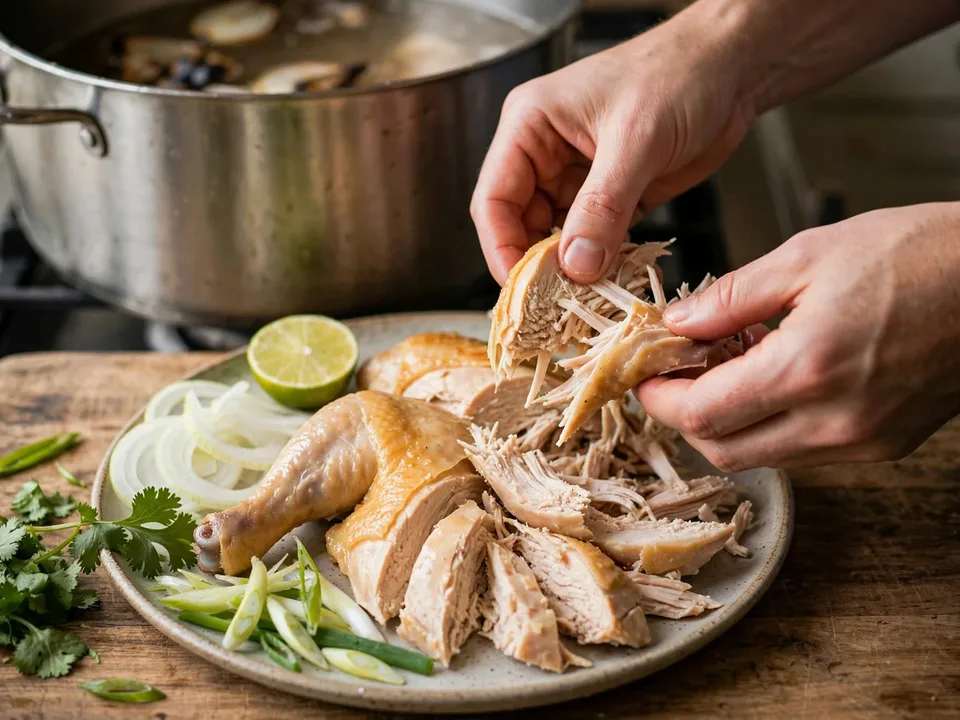
Lift the chicken from the pot as soon as it is cooked and let it rest until cool enough to handle, about 10–15 minutes.
Lift the chicken from the pot as soon as it is cooked and let it rest until cool enough to handle, about 10–15 minutes. Remove the breast and leg meat in large pieces, keeping the skin if you enjoy it, and slice or tear the meat into neat bite-size pieces. Cover the serving meat lightly so it does not dry out. Reserve the carcass, wing tips and other bones for the next stage.
Look for
The reserved chicken should look moist and opaque throughout, with clean slices or shreds rather than dry, fibrous fragments.
Kitchen note
The serving chicken and the broth need different cooking times. Removing the meat promptly keeps it juicy; the stripped bones can continue giving body to the broth without overcooking the slices destined for the bowls. Start checking the chicken before the broth is completely finished; remove it as soon as the thickest part is safely cooked so the meat stays juicy while the bones and broth can continue developing if needed.
 Step 05
Return the carcass and deepen the broth
50 min
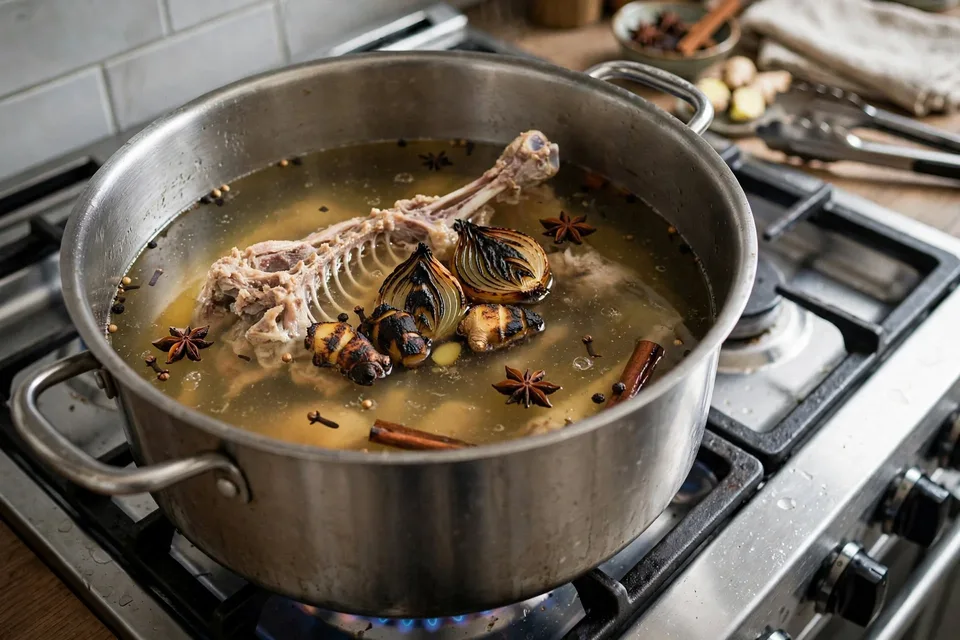
Return the stripped carcass and any reserved cooked bones to the pot.
Return the stripped carcass and any reserved cooked bones to the pot. Keep the onion, ginger and spices in the broth and maintain a bare simmer for another 45–60 minutes, skimming only when necessary. Add a little hot water if evaporation exposes the bones, but avoid repeatedly diluting the stock. This second extraction builds chicken body while the serving meat stays safely out of the pot.
Look for
The broth should deepen to a clear golden colour and smell distinctly of chicken and charred aromatics while remaining free of vigorous rolling bubbles.
Kitchen note
Keep this stage quiet and patient. Hard boiling will not extract flavour “faster”; it mainly emulsifies fat, breaks up solids and makes the broth harder to clarify.
 Step 06
Strain and degrease the finished broth
10 min
Lift out the large bones and aromatics, then strain the broth through a fine sieve into a clean pot.
Lift out the large bones and aromatics, then strain the broth through a fine sieve into a clean pot. Let it settle briefly and skim away heavy pools of fat, but leave a light sheen of clear golden chicken fat for aroma and body. Do not press or mash the spent solids through the sieve.
Look for
The strained broth should be clear to lightly translucent, golden and clean-looking, with only a thin aromatic sheen of fat on the surface.
Kitchen note
Pressing spent onion, ginger and bones forces fine particles into the broth. Let gravity do the work; clarity comes from gentle simmering and gentle straining together.
 Step 07
Balance fish sauce, salt and rock sugar
5 min
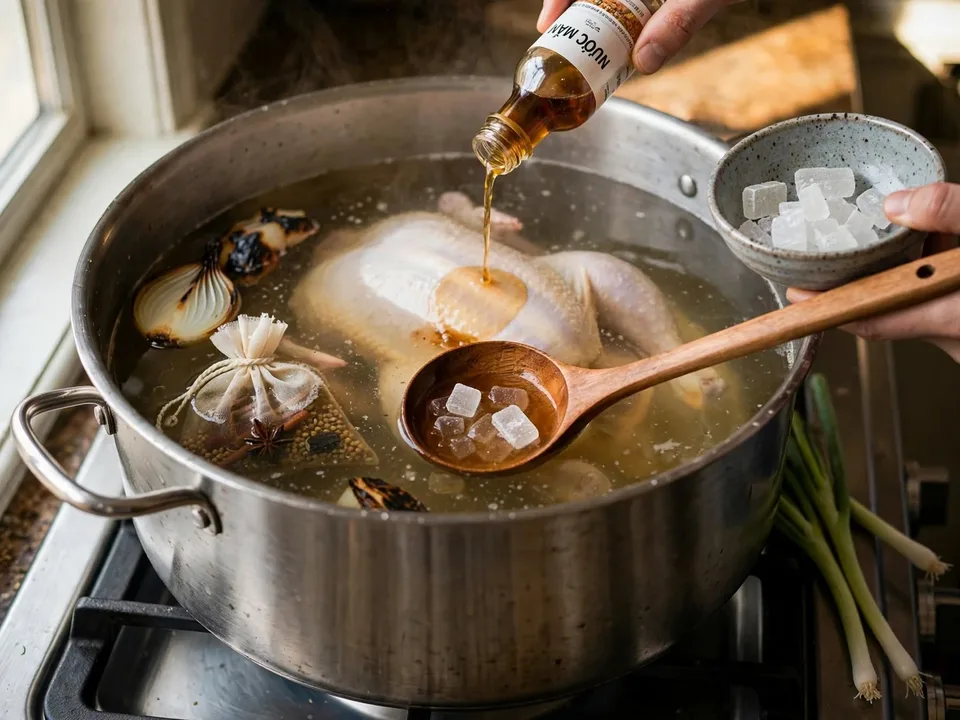
Bring the strained broth back to a gentle simmer.
Bring the strained broth back to a gentle simmer. Add the fish sauce, most of the salt and the rock sugar. Stir until dissolved, taste, then adjust in small increments. The broth should taste clean and chicken-forward, savoury and slightly rounded rather than sweet. Season it a touch more assertively than a broth served alone because noodles and unsalted chicken will soften the final bowl.
Look for
The broth should taste complete on its own but still clearly of chicken, with no single note of fish sauce, salt or sweetness dominating.
Kitchen note
Fish sauce, salt and sugar do different jobs. Use fish sauce for savoury depth, salt for definition and only enough sugar to round sharp edges; do not use sweetness to hide a weak stock.
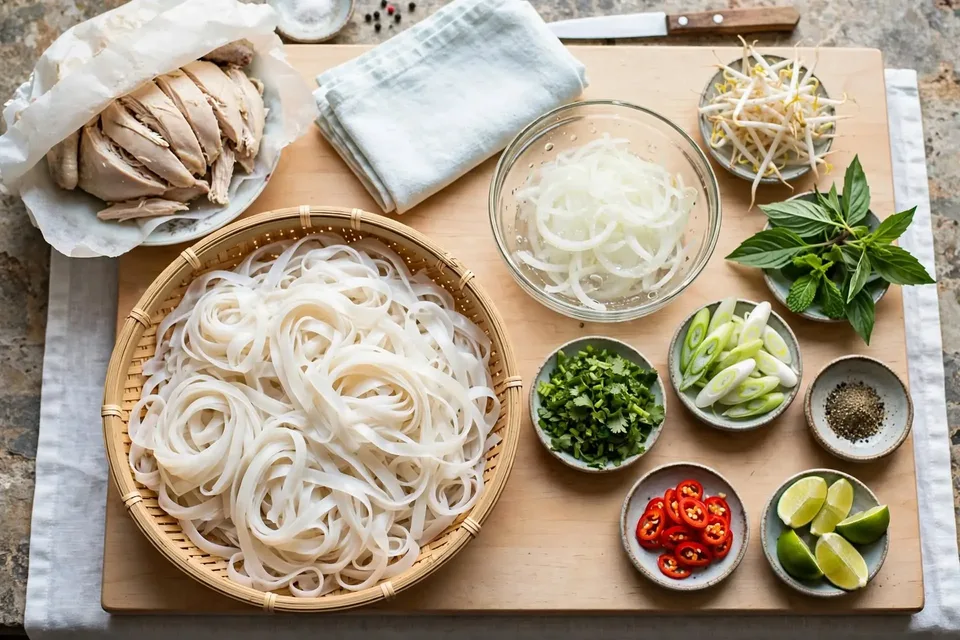 Step 08
Prepare the bánh phở and fresh garnishes
15 min
While the broth is finishing, soak dried bánh phở in cool or lukewarm water according to their thickness until flexible but not soft.
While the broth is finishing, soak dried bánh phở in cool or lukewarm water according to their thickness until flexible but not soft. Drain well. Slice the small onion paper-thin, drain it after its cold-water soak, and prepare the spring onion, cilantro, black pepper and any optional bean sprouts, herbs, chile and lime. Keep the chicken covered and ready beside the bowls.
Look for
The soaked noodles should bend without snapping but still feel slightly firm; all garnishes should be clean, dry and ready to add immediately.
Kitchen note
Rice noodles go from firm to over-soft quickly. Soak only until pliable; the final hot-water blanch and boiling broth will finish them. Have every garnish ready before the noodles are blanched.
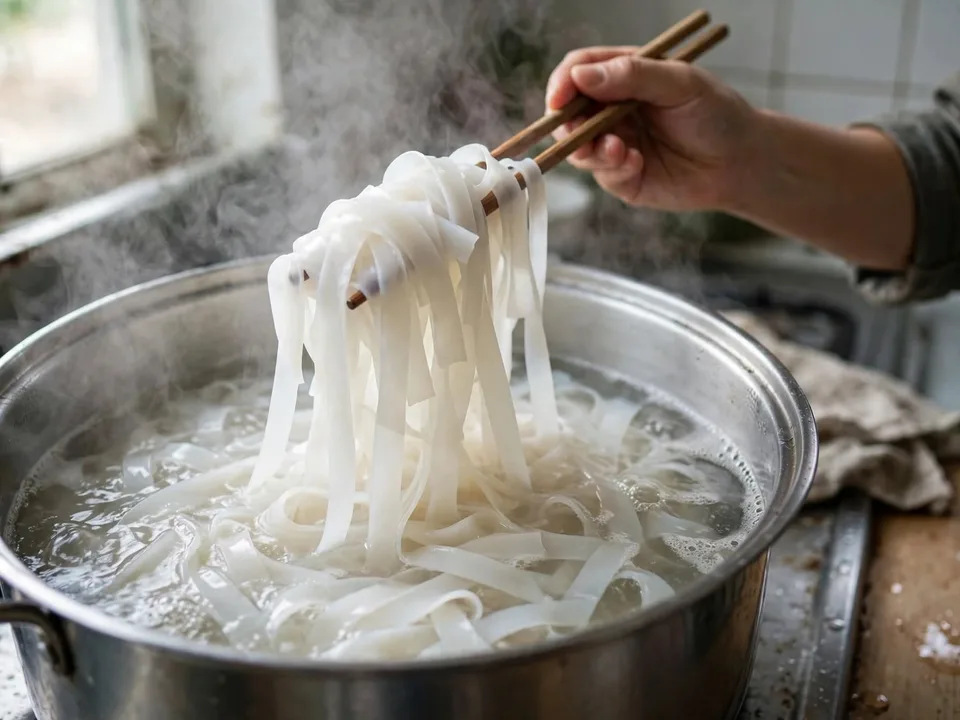 Step 09
Blanch the noodles and build the bowl bases
5 min
Bring a separate pot of water to a full boil.
Bring a separate pot of water to a full boil. Blanch one portion of soaked noodles at a time for roughly 10–30 seconds, depending on thickness, just until tender and silky. Drain very thoroughly and transfer straight to a warmed serving bowl. Arrange sliced chicken over the noodles, followed by thin onion, spring onion, cilantro and black pepper. Repeat quickly for the remaining bowls.
Look for
The noodles should be silky and tender but still distinct, with no chalky core and no broken, mushy strands; the chicken should sit neatly on top ready for the broth.
Kitchen note
Work bowl by bowl so the noodles do not sit wet in a colander. Thorough draining matters: excess blanching water dilutes the broth and makes rice noodles sticky. Have herbs, sliced chicken and hot broth ready before cooking or reheating the noodles. The final bowl should be assembled immediately so the noodles do not sit and swell.
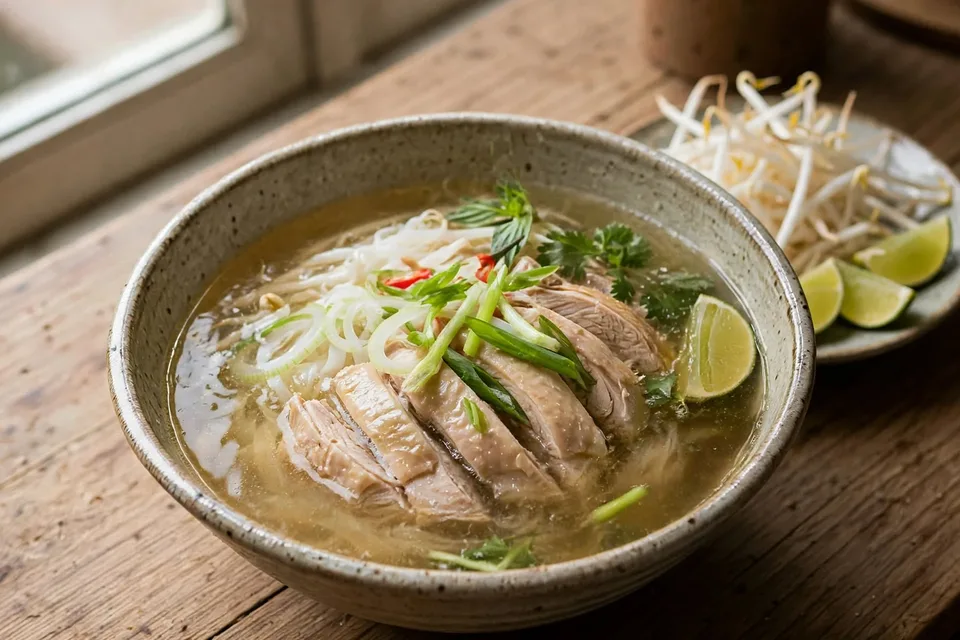 Step 10
Pour over boiling broth and serve immediately
2 min
Bring the seasoned broth to a full boil only for the final service.
Bring the seasoned broth to a full boil only for the final service. Ladle it generously over each prepared bowl so the chicken, noodles and aromatics heat through at once. Serve immediately. Offer lime, fresh chile and optional bean sprouts or herbs according to the style you want; a northern-leaning bowl can remain more restrained.
Look for
The finished bowl should be steaming, with clear golden broth, silky noodles, moist chicken and fresh green aromatics still bright at the surface.
Kitchen note
The final broth must be genuinely hot. Assemble only when everyone is ready to eat—phở loses its best texture as the noodles continue absorbing broth and the fresh aromatics wilt.
After cooking
Explore the dish beyond the method.
Story, place and references are here for discovery, so they stay out of the way while you cook.
Culture & tradition
The story behind the dish
Origins, evolution and everyday life—read together as part of the recipe's culinary record.
Origins
Phở developed in northern Vietnam and became closely associated with Hanoi and the Red River Delta.
How it evolved
Chicken phở emerged as an established alternative to beef phở and is generally lighter, with a clear poultry broth and a more restrained spice profile.
Its place today
Today phở gà is eaten throughout Vietnam and abroad, especially at breakfast but also as an all-day noodle soup.
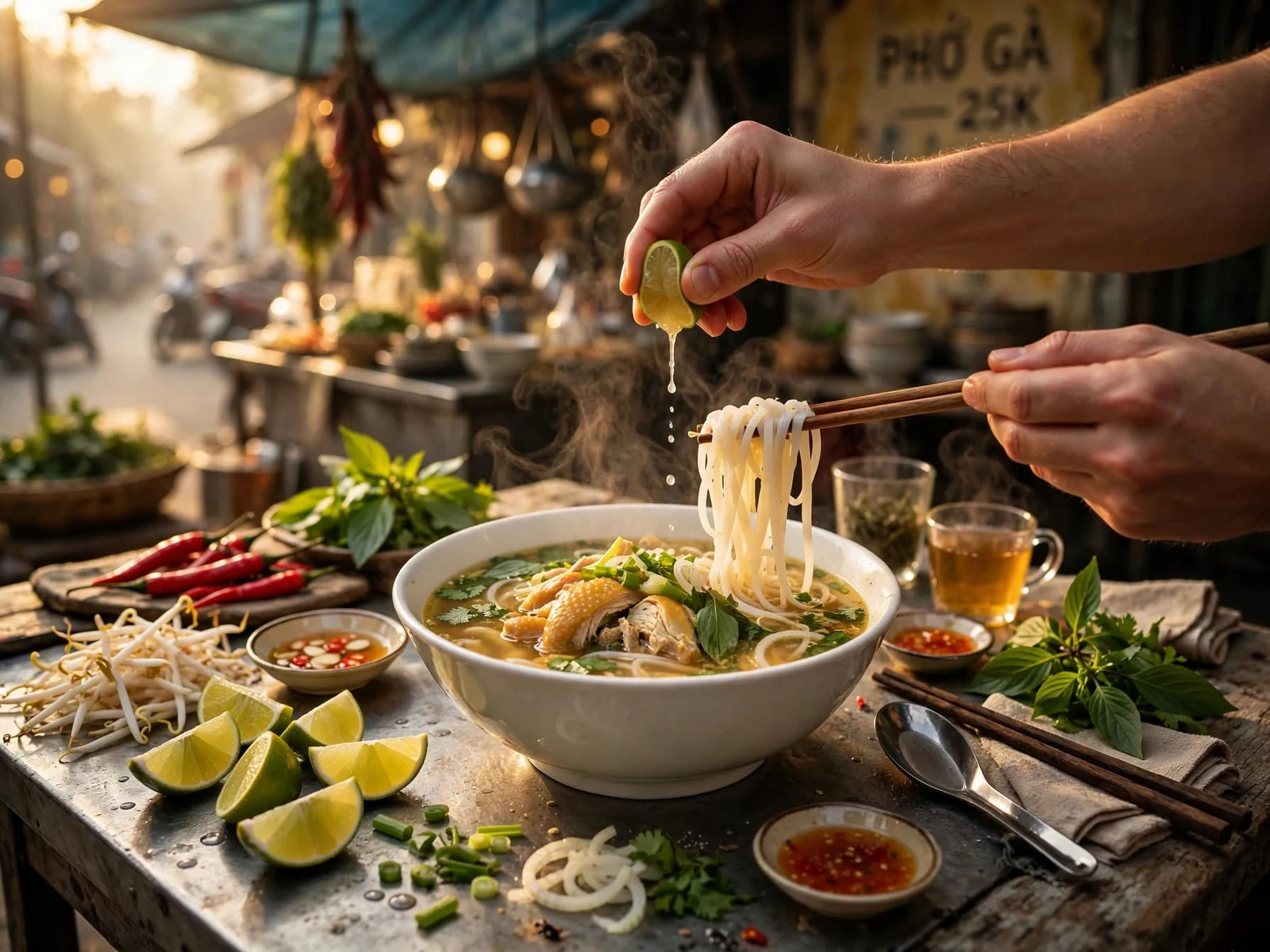
Visual archive · plate 01
Phở Gà
An editorial view of the finished dish, kept compact so the story continues without an oversized image break.
Primary region
Northern Vietnam / Hanoi
Country
Vietnam
Regional influence
The Red River Delta’s rice culture underpins the flat bánh phở noodles, while poultry, herbs and aromatic spices form a clear hot broth suited to everyday street and home cooking.
Related food systems
- Northern Vietnamese noodle culture
- Rice-based food systems
- Hanoi street-food traditions
Culinary record
- Origin
- Northern Vietnam / Hanoi
- Era
- Modern Vietnamese noodle-soup tradition
- Sub-region
- Southeast Asia — Mainland Southeast Asia
- Climate
- Monsoon
- Cooking methods
- simmered
- Trade-route influence
- Red River trade · Mekong exchange · South China Sea routes
Traditional & modern
Chicken pho keeps the clear broth-and-rice-noodle structure while garnish sets and sweetness vary by region.
Regional adaptations
- Northern and southern garnish traditions
Sources & further reading
Follow the reference trail.
Ember & Equator links outward when an institution or primary reference helps support the culinary record.
- 01The story of Vietnamese phoExternal ↗
Vietnam Tourism · government
Supports: Phở history · Hanoi breakfast culture · chicken phở · regional garnish differences
Ember & Equator source review · 2026-09-10
- 02Must-try noodles in VietnamExternal ↗
Vietnam Tourism · government
Supports: Phở · rice noodles · clear chicken broth · fresh herbs
Ember & Equator source review · 2026-09-10
- 03Chicken Pho Noodle Soup Recipe (Pho Ga)External ↗
Viet World Kitchen — Andrea Nguyen · specialist publication
Supports: chicken phở technique · charred onion and ginger · clear broth · gentle poaching · bone simmering · rice-noodle blanching · bowl assembly
Ember & Equator source review · 2026-09-10
- 04Vietnamese Chicken Noodle Soup (Phở Gà)External ↗
Vicky Pham · specialist publication
Supports: whole-chicken and chicken-bone broth · charred aromatics · restrained spice profile · gentle simmer · rice noodles and fresh garnish assembly
Ember & Equator source review · 2026-09-16
Ingredient guides
Learn about the ingredients behind the dish.
These are reference guides, not a second ingredient list. Follow an ingredient when you want to understand its role, use and wider culinary context.
Ingredient
whole chicken
Understand what it contributes, how to use it, and the dishes that reveal it best.
Ingredient
bone-in chicken
Understand what it contributes, how to use it, and the dishes that reveal it best.
Ingredient
water
Understand what it contributes, how to use it, and the dishes that reveal it best.
Ingredient
yellow onion
Understand what it contributes, how to use it, and the dishes that reveal it best.
Ingredient
fresh ginger
Understand what it contributes, how to use it, and the dishes that reveal it best.
Ingredient
coriander seeds
Understand what it contributes, how to use it, and the dishes that reveal it best.
Keep wandering
Where will this dish take you next?
Stay with the place, follow an ingredient or technique, or cross into another food culture. Each path begins with something already present in this dish.
Stay with the place
01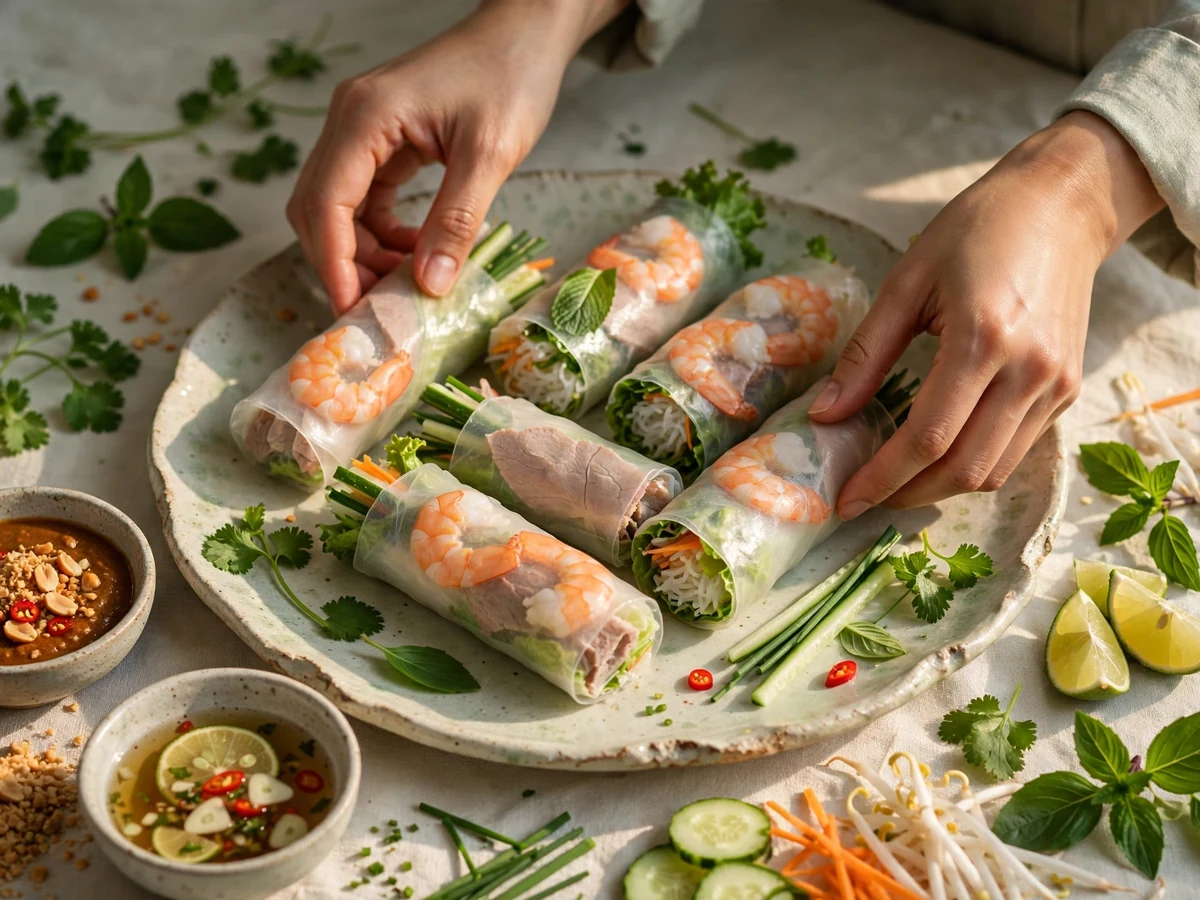
Vietnam
Gỏi Cuốn
Stay in the same food culture and notice how simmer appears in another dish.
Shared thread · Simmer · fresh coriander · fresh coriander
Follow the method or pantry
02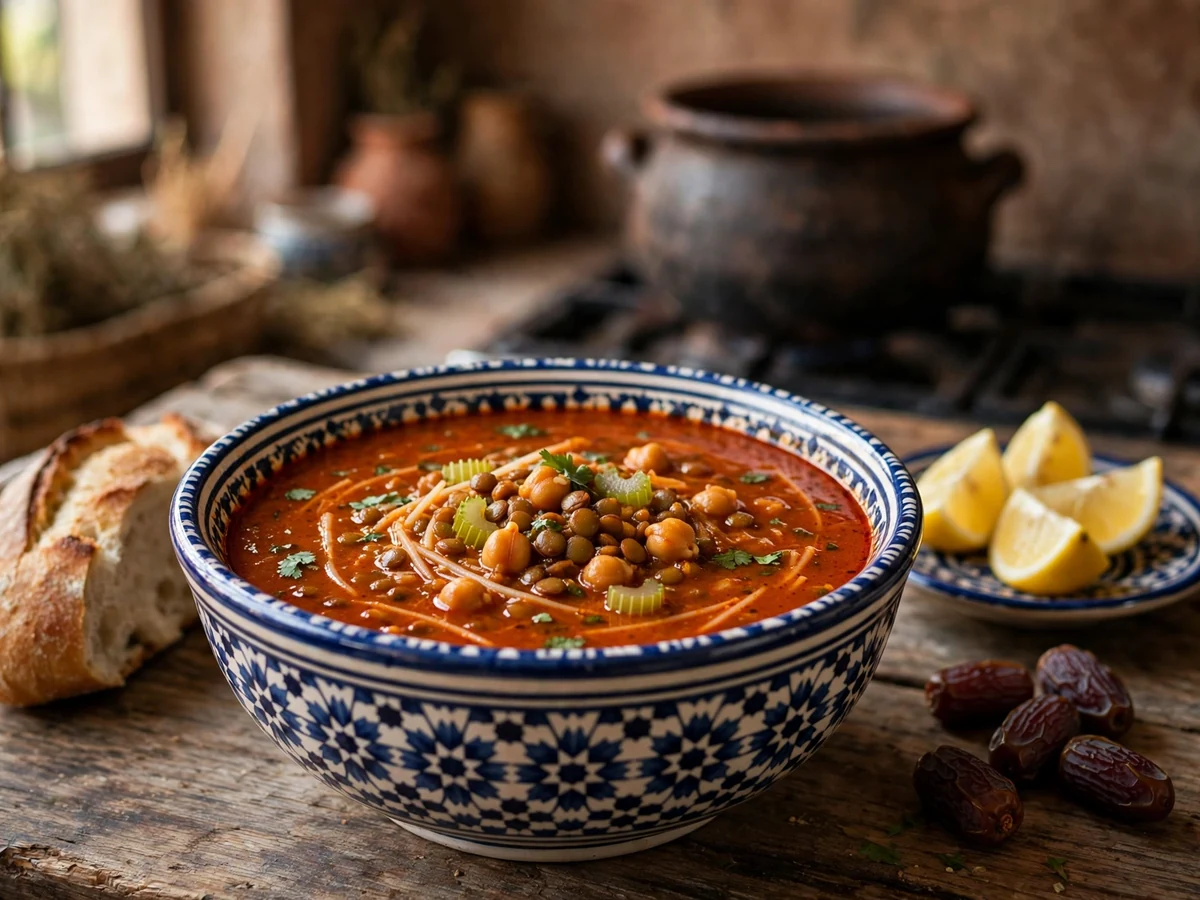
Morocco
Harira
Follow the cooking method: both dishes connect through simmer.
Shared thread · Simmer · Toast spices · yellow onion
Cross a culinary border
03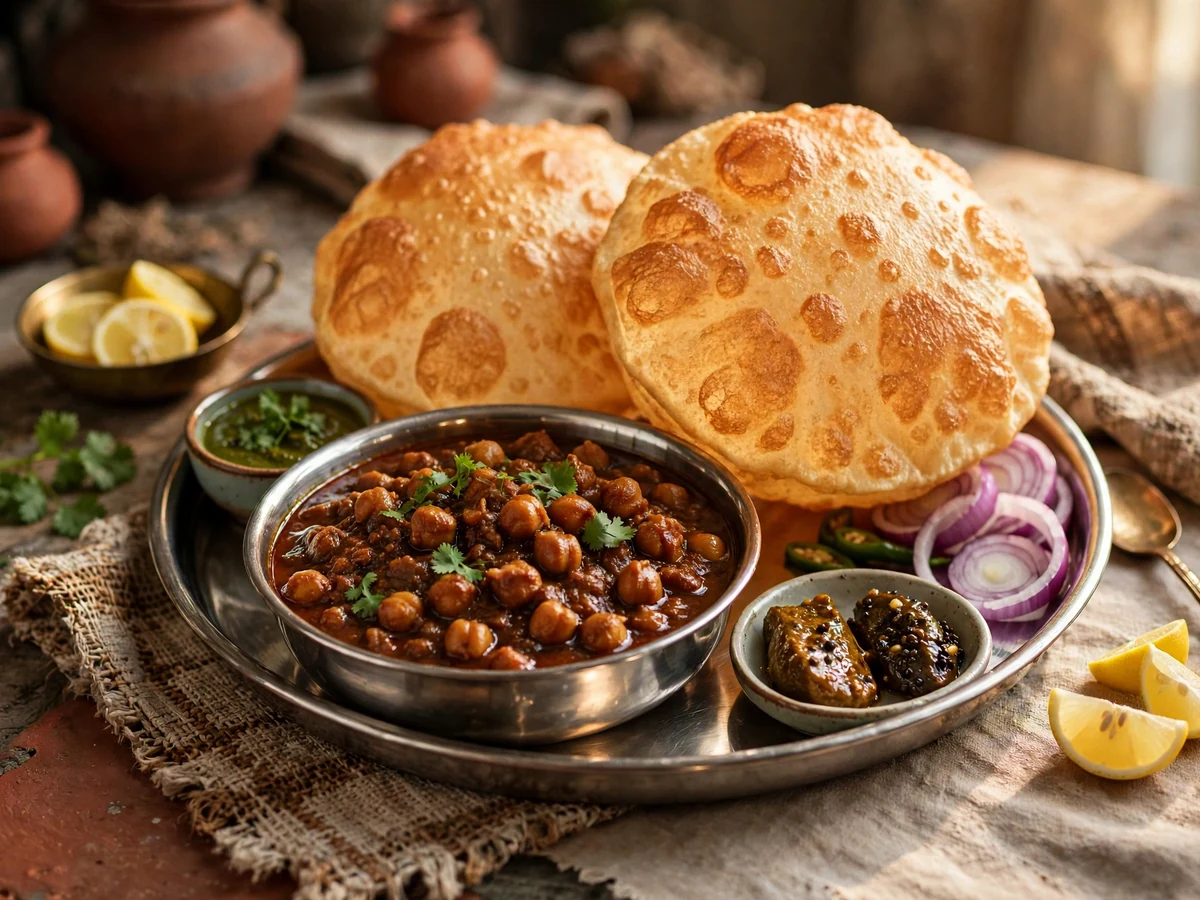
India
Chole Bhature
Cross borders while keeping simmer as the common thread.
Shared thread · Simmer · Toast spices · yellow onion
Go one layer deeper
One small detail can open an entirely different part of food.
Continue in Ember & Equator