
Morocco · lunch · dinner · comfort-food
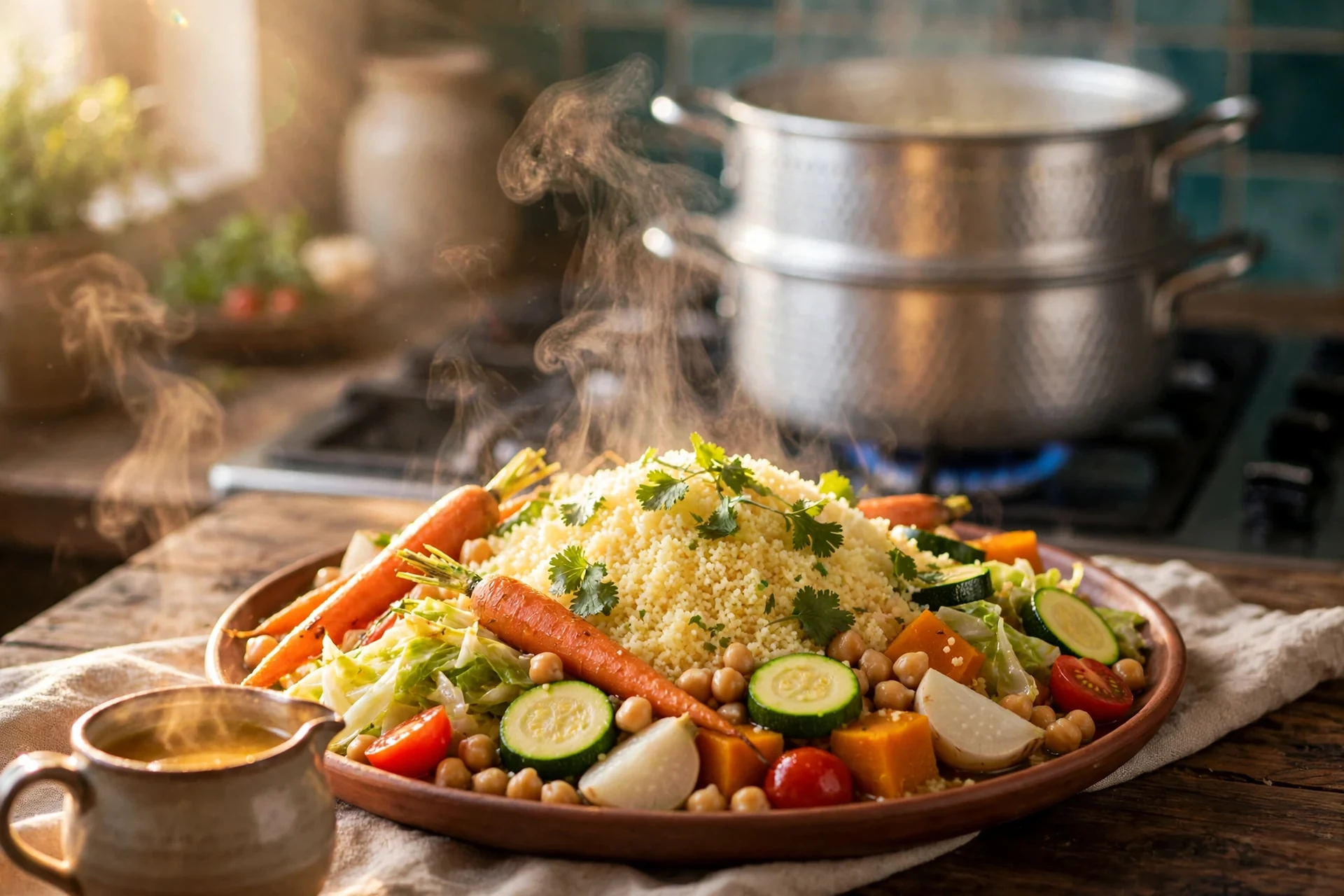
Moroccan Couscous with Seven Vegetables
Morocco through one enduring dish.
A Moroccan seven-vegetable couscous built around hand-worked semolina grains steamed three times over an aromatic vegetable-and-chickpea broth. This Ember & Equator version is meatless, but follows the same layered steaming, staged vegetable cooking and communal serving logic used in Moroccan couscous cookery.
- Total
- 150 min
- Difficulty
- Hard
- Serves
- 6
- Steps
- 10
The dish
Place first. Then the plate.
Couscous is a staple of Moroccan food culture and is traditionally associated with Friday meals and communal eating. UNESCO recognizes the knowledge and practices of producing and consuming couscous across Morocco, Algeria, Mauritania and Tunisia. Seven-vegetable versions vary by household, season and region; meat or chicken is common, but meatless versions are also prepared. This recipe focuses on the vegetable-and-chickpea form while preserving the defining Moroccan technique of repeated steaming rather than instant rehydration.
Explore MoroccoAt a glance
Origin
Morocco
Region
Morocco — nationwide, with strong regional and household variation
Meal
lunch · dinner · comfort-food
Guided steps
10
Dish
Moroccan Couscous with Seven Vegetables
Cuisine
Moroccan cuisine
Food type
Lunch · Dinner · Comfort food
Technique
Sauté · Steam · Simmer
Cook the recipe
In the kitchen
Start with the ingredients, then follow the Method in order. Open cooking tips only when you need extra help; the story and references can wait until you are ready.
- Total
- 150 min
- Serves
- 6
- Level
- Hard
- Visual cues
- 10
Ingredients
Serves 6- 500 gramsmedium couscousnon-instant if possible; traditional medium-grain couscous gives the best steamed texture
- 4 tbspolive oil2 tbsp for the broth and about 2 tbsp for working into the couscous
- 2 tbspbuttersoftened; worked into the couscous after the final steaming
- 1 largeonioncoarsely chopped or sliced
- 3 mediumtomatoespeeled if desired and coarsely grated or chopped
- 120 gramsdried chickpeassoaked overnight and drained; use about 250 g cooked chickpeas only if necessary
- 4 mediumcarrotspeeled; halve lengthwise only if large or woody-cored
- 2 mediumturnipspeeled and halved or quartered
- 1/4 headgreen cabbagecut into 2–3 sturdy wedges
- 400 gramspumpkinpeeled and cut into large chunks
- 2 mediumzucchinitrimmed and cut into thick pieces
- 1 1/2 tspground ginger
- 1 tspground turmeric
- 1 tspblack pepperfreshly ground if possible
- 2 1/2 tspfine saltdivided, plus more to taste
- 2 1/2 litreswaterapproximately; keep extra hot water nearby to maintain the broth and moisten the couscous
- 1 small bunchparsley and cilantrotied together as a bouquet
Optional
- 1 pinchsaffron threadsoptional
Everything ready? Continue straight into the cooking steps.
Start methodMethod
10 steps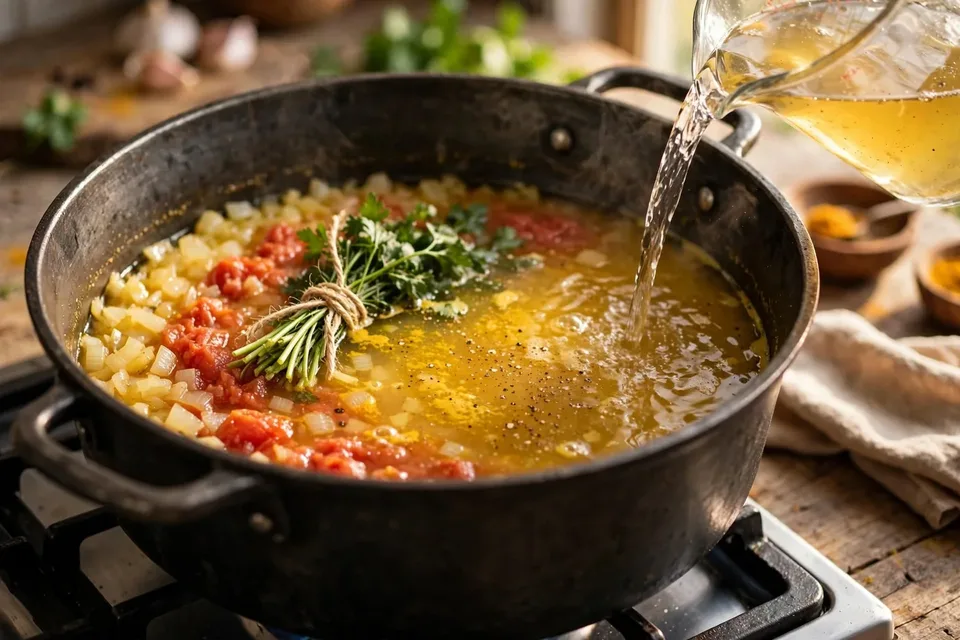 Step 01
Build the aromatic broth and start the chickpeas
45 min
Heat 2 tablespoons olive oil in the base of a couscoussier or a large heavy pot over medium heat.
Heat 2 tablespoons olive oil in the base of a couscoussier or a large heavy pot over medium heat. Add the onion, tomatoes, ginger, turmeric, black pepper, saffron if using, about 1½ teaspoons salt and the tied parsley-cilantro bouquet. Cook uncovered for 10–15 minutes, stirring regularly, until the onion and tomato collapse into a thick glossy base with no raw tomato smell. Add the soaked, drained chickpeas and about 2 litres of water. Bring to a boil, then reduce to a steady simmer, cover and cook about 30 minutes while you prepare the couscous.
Look for
Before water is added, the onion and tomato should look thick and glossy; after simmering, the broth should smell aromatic and the soaked chickpeas should be beginning to soften.
Kitchen note
The broth is the seasoning reservoir for both the vegetables and the grains. Develop the tomato-onion base before adding water, then keep tasting as the pot cooks because the couscous will absorb a surprising amount of flavour.
 Step 02
Oil and hydrate the couscous for the first steaming
8 min
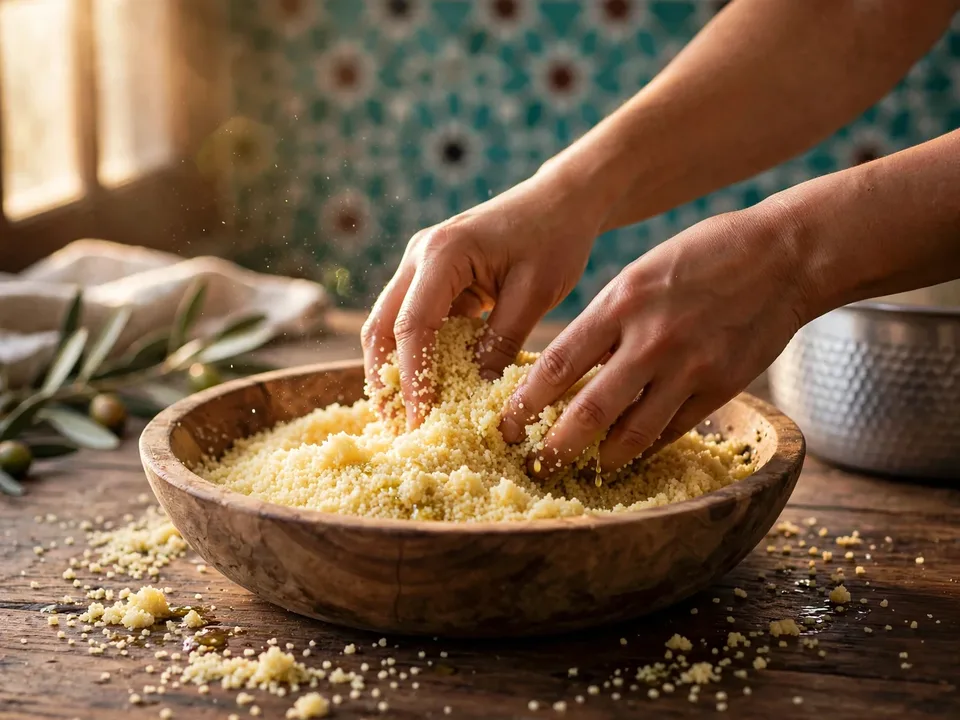
Spread the dry medium couscous in a very wide shallow bowl or gsaa.
Spread the dry medium couscous in a very wide shallow bowl or gsaa. Drizzle over the remaining 2 tablespoons olive oil. Rub, toss and roll the grains between your palms for about a minute so the oil coats them evenly and every clump breaks apart. Sprinkle in about 120 ml water in several additions, tossing and rubbing after each addition rather than pouring it in all at once. Lightly oil the steamer basket, then transfer the couscous loosely without pressing it down.
Look for
The grains should be lightly damp, separate and free-flowing, with no wet paste or compact clumps.
Kitchen note
This is not instant couscous. Gradual hydration plus steaming is what gives Moroccan couscous its separate, fluffy texture. If the grains form wet balls, stop adding water and separate them before steaming.
 Step 03
Complete the first steaming
20 min
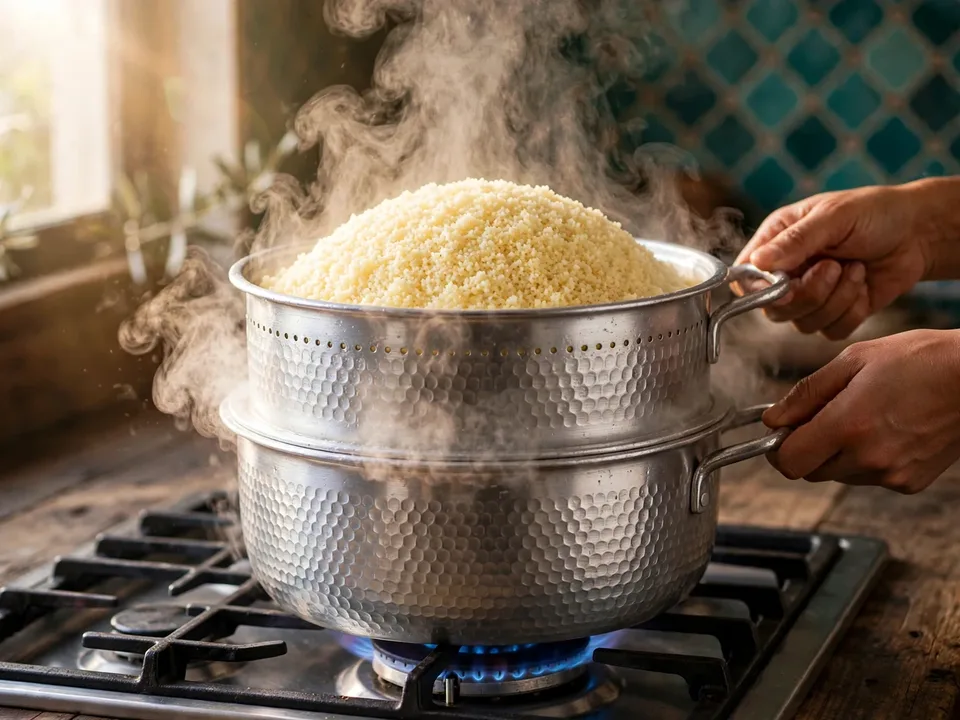
Set the filled steamer basket over the simmering broth.
Set the filled steamer basket over the simmering broth. Check the joint between the pot and steamer: if steam is escaping heavily around the rim, seal the gap with a safe heatproof method so the vapor travels through the couscous. Wait until steam is clearly rising through the top of the grains, then start the clock and steam for 15–20 minutes. Do not count from the moment the basket first goes onto the pot.
Look for
Steam should rise evenly through the surface and the grains should look swollen and hot but still somewhat firm after the first cycle.
Kitchen note
Timing begins when steam visibly emerges through the couscous. That detail matters because a cold or leaky steamer can otherwise leave the grains under-steamed even if the timer says 20 minutes. While the couscous steams, use the broth pot for the vegetable schedule rather than treating the grain and vegetables as separate recipes; the aim is for the final steaming and tender vegetables to finish close together.
 Step 04
Break up, season and rehydrate after the first steam
8 min
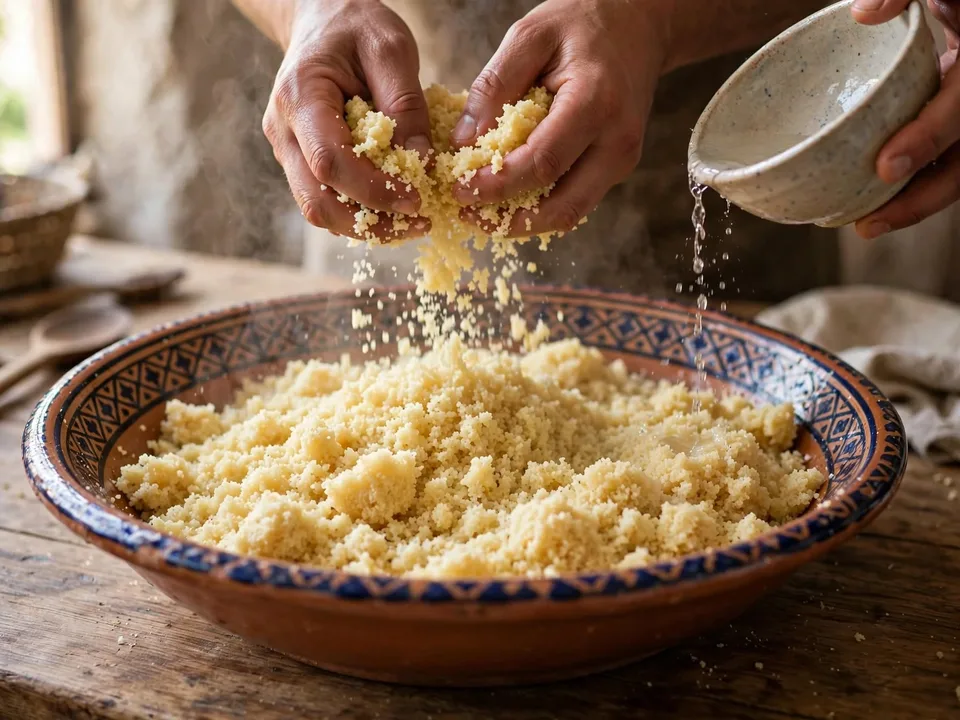
Turn the hot couscous back into the wide bowl and spread it out for 2–3 minutes so it is safe to handle.
Turn the hot couscous back into the wide bowl and spread it out for 2–3 minutes so it is safe to handle. Use a wooden spoon at first if necessary, then your hands. Sprinkle over about 120–150 ml water and ½ teaspoon salt in small additions, lifting, rubbing and rolling the grains until every clump disappears. The couscous should absorb the moisture rather than sitting in a wet layer at the bottom of the bowl.
Look for
After rehydrating, the grains should be more swollen than before yet still separate, with no dense wet lumps.
Kitchen note
Do not pour a measured quantity blindly. Humidity, grain size and brand change how much water the couscous needs. Add only enough to make the grains plumper while they still fall loosely through your fingers.
 Step 05
Add the cabbage and complete the second steaming
20 min
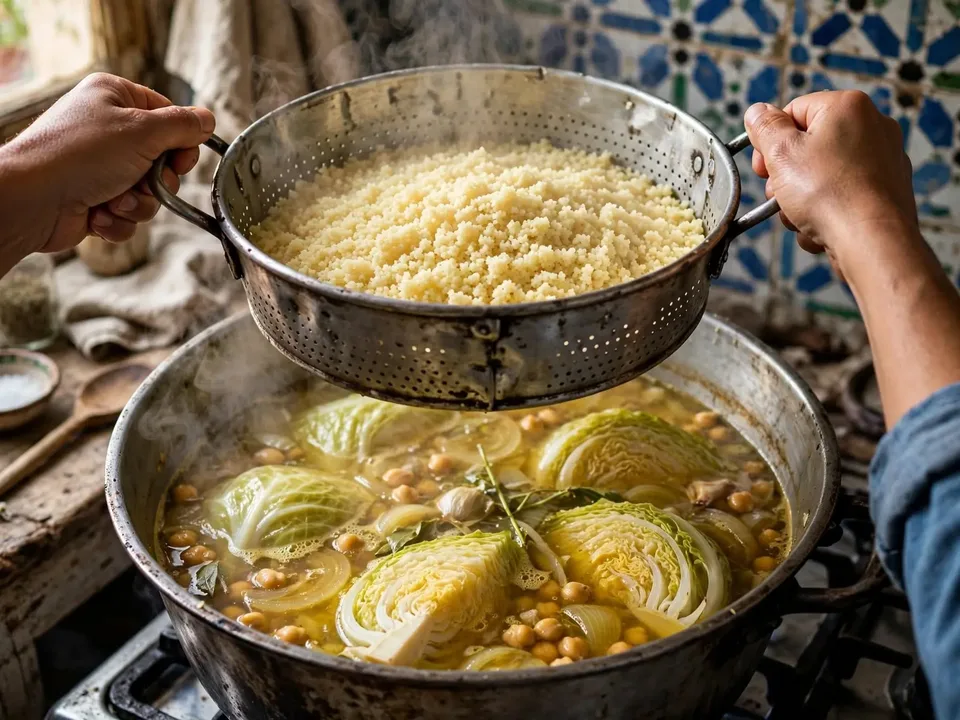
Add the cabbage wedges to the broth below.
Add the cabbage wedges to the broth below. Return the rehydrated couscous loosely to the steamer basket and set it back over the pot. Again wait until steam is visibly rising through the grains, then steam for 15–20 minutes. Keep the broth at a lively simmer rather than a violent boil and top up with hot water if the liquid level drops too far.
Look for
After the second steaming, the couscous should be visibly fuller and easier to separate, but still retain a slight bite rather than being fully soft.
Kitchen note
Cabbage can cook through a longer simmer without falling apart, so it belongs in the pot before the more fragile pumpkin and zucchini. Keep enough broth in the base for both the vegetables and serving later.
 Step 06
Give carrots and turnips a head start
15 min
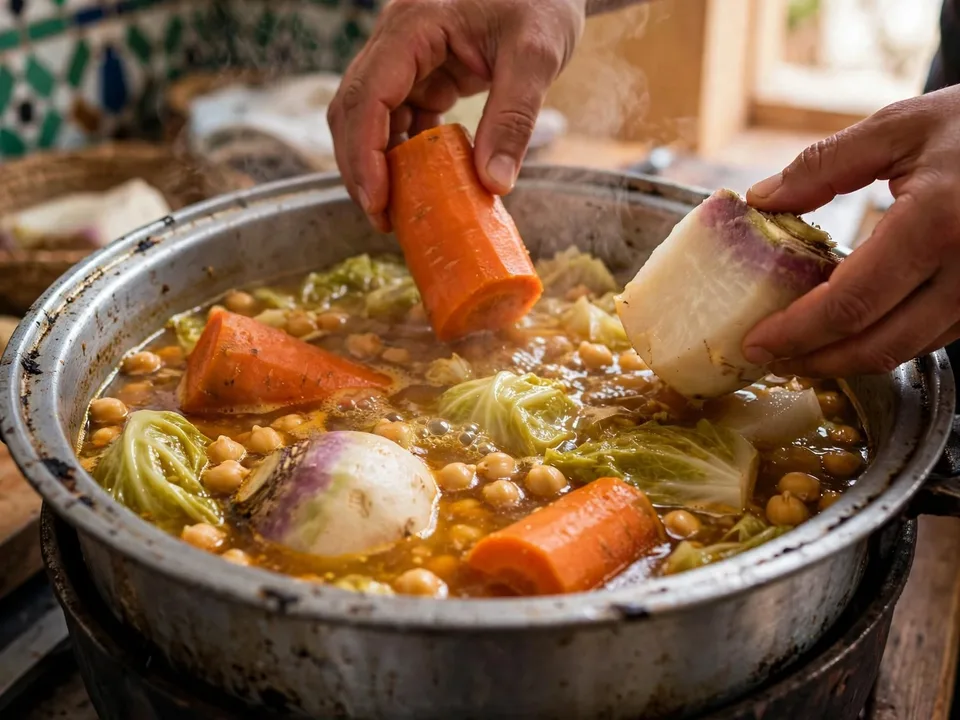
Turn the couscous out again.
Turn the couscous out again. Add the carrots and turnips to the simmering broth and cover the pot for about 15 minutes while you prepare the grains for their final steaming. Keep the vegetables in large pieces so they can become tender without disintegrating. If the broth no longer reaches well around the vegetables, add a little hot water rather than cold water so the simmer is not interrupted.
Look for
The carrots and turnips should have started to soften around the edges but still resist a knife at the centre when the final vegetables are ready to go in.
Kitchen note
Vegetable sequencing is part of the technique. Firm roots need a substantial head start; adding everything at once almost guarantees either hard carrots or collapsed zucchini and pumpkin.
 Step 07
Rehydrate once more, add tender vegetables and complete the third steaming
20 min
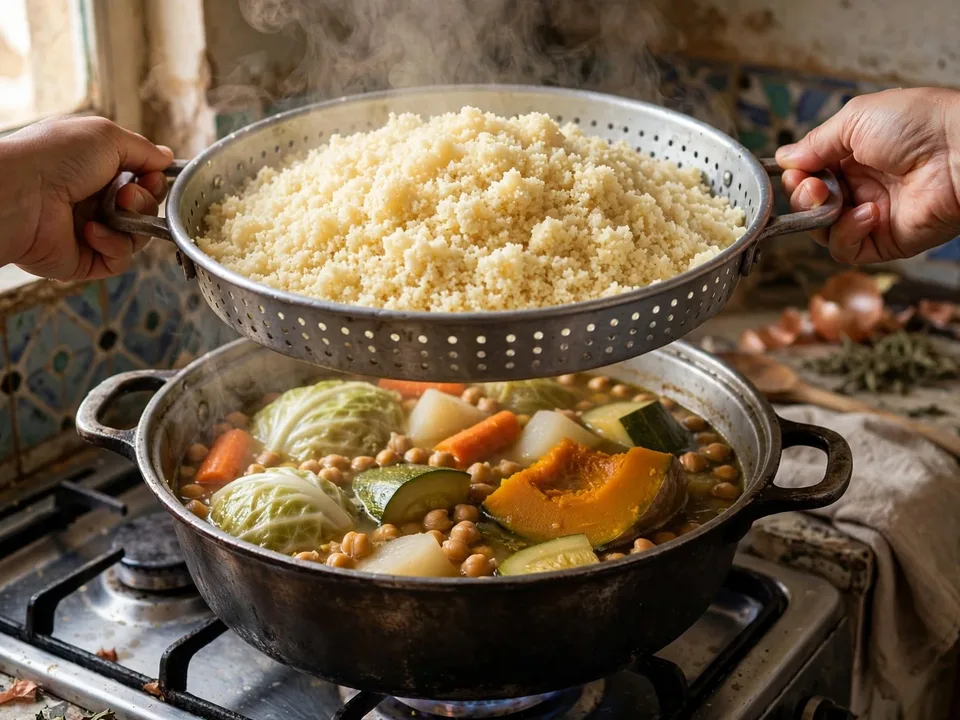
While the roots cook, gradually work another 200–250 ml water into the couscous, tasting a few grains as you go; use only as much liquid as needed to make them nearly tender and add a little more salt if required.
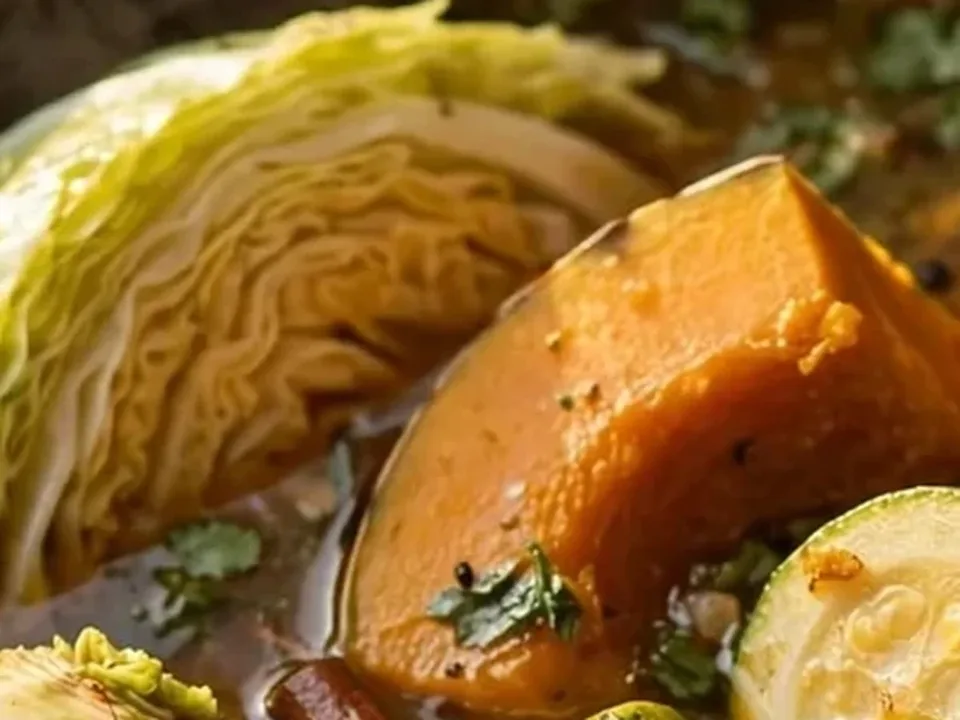
While the roots cook, gradually work another 200–250 ml water into the couscous, tasting a few grains as you go; use only as much liquid as needed to make them nearly tender and add a little more salt if required. Add the pumpkin and zucchini to the broth below. Return the couscous loosely to the steamer and complete the third and final steaming for 10–15 minutes from the moment steam rises through the grains. The final vegetables and the couscous should finish at roughly the same time.
Look for
The couscous should be light, fluffy and tender with a slight pleasant bite; pumpkin and zucchini should be cooked through but still hold their shapes.
Kitchen note
The third steaming should finish the grains, not turn them mushy. Pumpkin and zucchini go in at this late stage specifically so they stay intact enough to arrange beautifully on the platter. If the roots are still firm when the tender vegetables are ready, remove the tender pieces and continue the roots in the broth rather than overcooking everything to one timer.
 Step 08
Check the vegetables and balance the broth
5 min
Test the vegetables individually because they may not all finish at the same moment.
Test the vegetables individually because they may not all finish at the same moment. A knife should slide into the carrots and turnips with gentle resistance, while pumpkin and zucchini should be tender without breaking apart. Remove any vegetable that is ready before the others. Remove the herb bouquet, then taste the broth and adjust salt and pepper. It should be deeply aromatic, generous and slightly assertive because it will be spooned over relatively mild couscous.
Look for
The broth should remain fluid and plentiful, and each vegetable should be tender but recognisably intact rather than collapsing into a stew.
Kitchen note
Do not sacrifice every vegetable to a single timer. Pull a tender piece out if necessary and return it for serving; intact vegetables are part of the characteristic presentation.
 Step 09
Finish the couscous with butter and a little broth
8 min
Turn the couscous into the wide bowl for the final time.
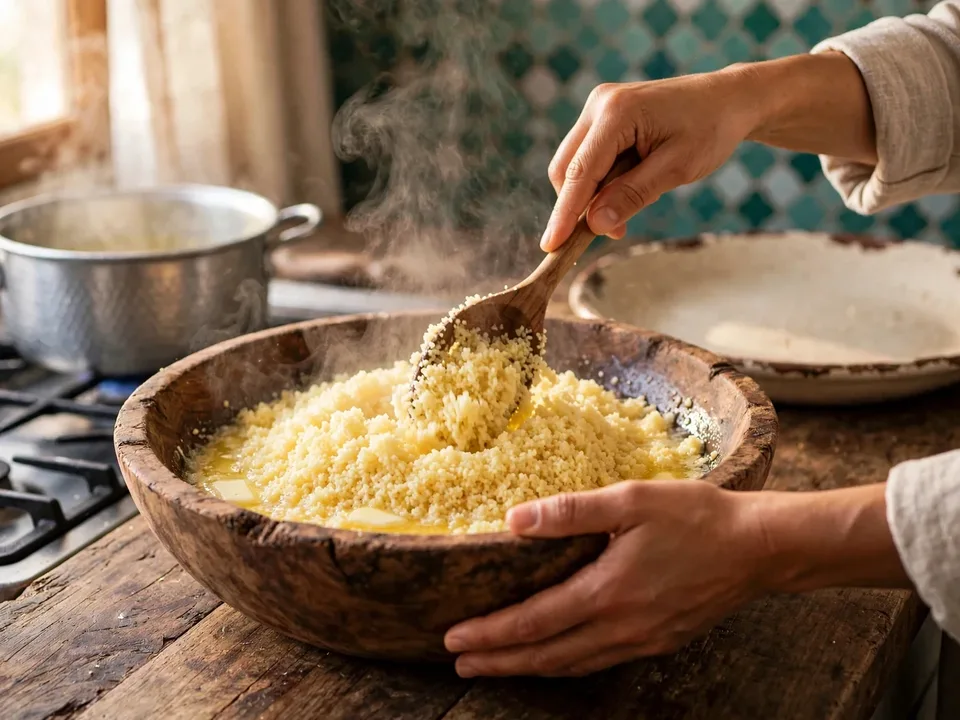
Turn the couscous into the wide bowl for the final time. Break up any remaining clumps, then work in the softened butter. Add about 180–240 ml hot broth a little at a time while tossing and lifting the grains. Stop as soon as the couscous tastes savory and supple; it should absorb the broth without becoming wet or compact.
Look for
The grains should be tender, separate and moist, with no hard centres and no sticky or porridge-like patches.
Kitchen note
Broth is a finishing seasoning, not a soaking bath. Proper couscous should remain light enough to fall from a spoon in separate grains after it is moistened.
 Step 10
Build the communal platter and serve extra broth alongside
6 min
Mound the couscous on a large shallow serving platter and make a shallow well in the centre.
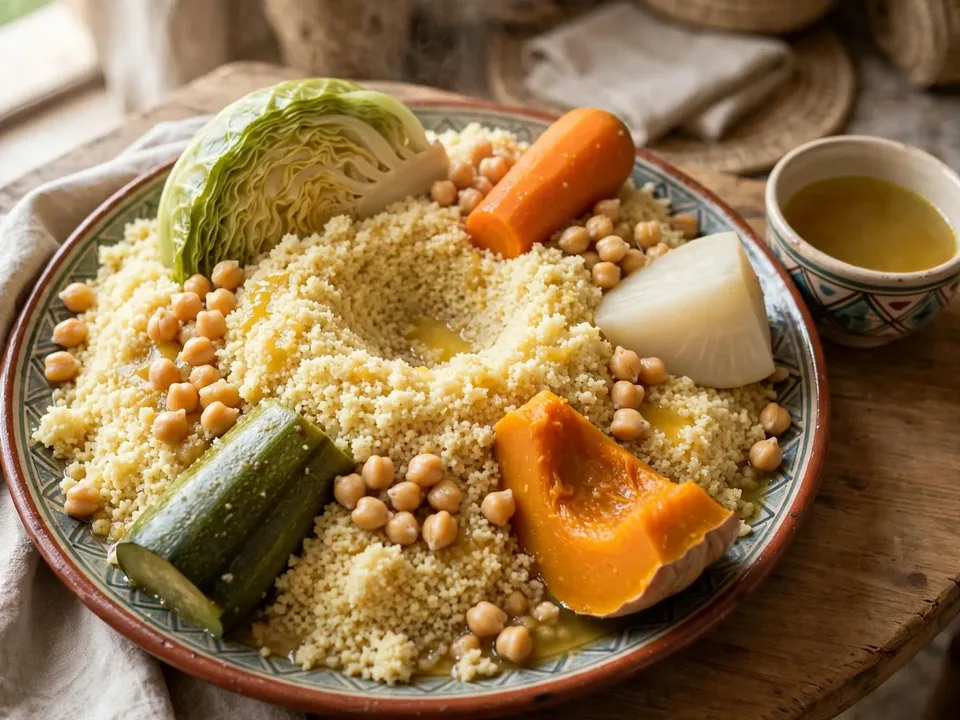
Mound the couscous on a large shallow serving platter and make a shallow well in the centre. Arrange the cabbage, carrots, turnips, pumpkin and zucchini over and around the grains so their shapes remain visible, then scatter the chickpeas through the vegetables. Spoon enough hot broth over the platter to moisten it generously without flooding the base. Bring the remaining broth to the table in a separate bowl or jug and serve immediately.
Look for
Distinct fluffy couscous should remain visible beneath intact vegetables, with enough broth for gloss and moisture but no deep pool around the platter.
Kitchen note
The final platter should look abundant but structured, not mixed together like a stew. Extra broth at the table lets each diner decide how juicy they want the couscous while preserving the fluffy texture at serving time.
After cooking
Explore the dish beyond the method.
Story, place and references are here for discovery, so they stay out of the way while you cook.
Culture & tradition
The story behind the dish
Origins, evolution and everyday life—read together as part of the recipe's culinary record.
Origins
Couscous belongs to a long Maghrebi semolina tradition in which grains are hand-worked, steamed and served with broth, vegetables and, depending on the household or occasion, meat or poultry.
How it evolved
Moroccan cooks developed many regional and household variations. Couscous with seven vegetables is especially associated with generous family-style presentation, staged vegetable cooking and ample broth.
Its place today
It remains both everyday comfort food and a shared Friday or gathering meal, with technique passed through families, restaurants and professional kitchens.
Visual archive · plate 01
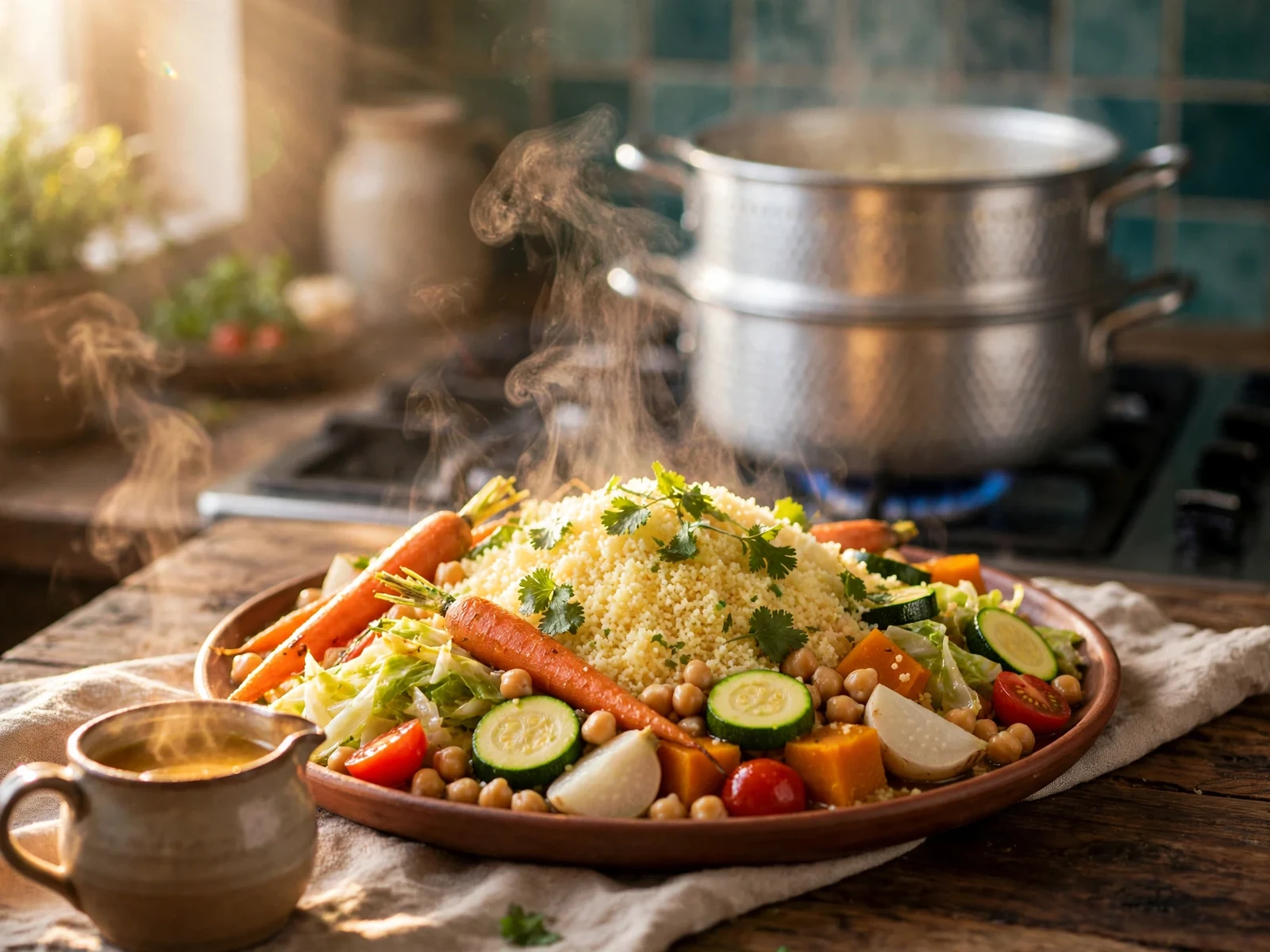
Moroccan Couscous with Seven Vegetables
An editorial view of the finished dish, kept compact so the story continues without an oversized image break.
Primary region
Morocco — nationwide, with strong regional and household variation
Country
Morocco
Regional influence
Durum-wheat semolina, chickpeas, root vegetables, squash, cabbage and aromatic spices reflect the cereal, pulse and seasonal vegetable traditions of the Maghreb.
Related food systems
- Amazigh food traditions
- Maghrebi cereal cookery
- Communal Friday meals
Sources & further reading
Follow the reference trail.
Ember & Equator links outward when an institution or primary reference helps support the culinary record.
- 01Moroccan Food & DrinkExternal ↗
Moroccan National Tourist Office · government
Supports: Moroccan starters · zaâlouk · couscous · Moroccan meal culture
Ember & Equator source review · 2026-09-16
- 02Knowledge, know-how and practices pertaining to the production and consumption of couscousExternal ↗
UNESCO Intangible Cultural Heritage · reference
Supports: couscous heritage · preparation practices · shared Maghrebi food culture
Ember & Equator source review · 2026-09-16
- 03Moroccan Couscous with Seven Vegetables – Couscous BidaouiExternal ↗
Taste of Maroc — Christine Benlafquih · specialist publication
Supports: three-stage couscous steaming · staged vegetable timing · traditional vegetable set · dried chickpeas · communal serving with broth
Ember & Equator source review · 2026-09-16
Ingredient guides
Learn about the ingredients behind the dish.
These are reference guides, not a second ingredient list. Follow an ingredient when you want to understand its role, use and wider culinary context.
Ingredient
medium couscous
Understand what it contributes, how to use it, and the dishes that reveal it best.
Ingredient
olive oil
Understand what it contributes, how to use it, and the dishes that reveal it best.
Ingredient
butter
Understand what it contributes, how to use it, and the dishes that reveal it best.
Ingredient
onion
Understand what it contributes, how to use it, and the dishes that reveal it best.
Ingredient
tomatoes
Understand what it contributes, how to use it, and the dishes that reveal it best.
Ingredient
dried chickpeas
Understand what it contributes, how to use it, and the dishes that reveal it best.
Keep wandering
Where will this dish take you next?
Stay with the place, follow an ingredient or technique, or cross into another food culture. Each path begins with something already present in this dish.
Stay with the place
01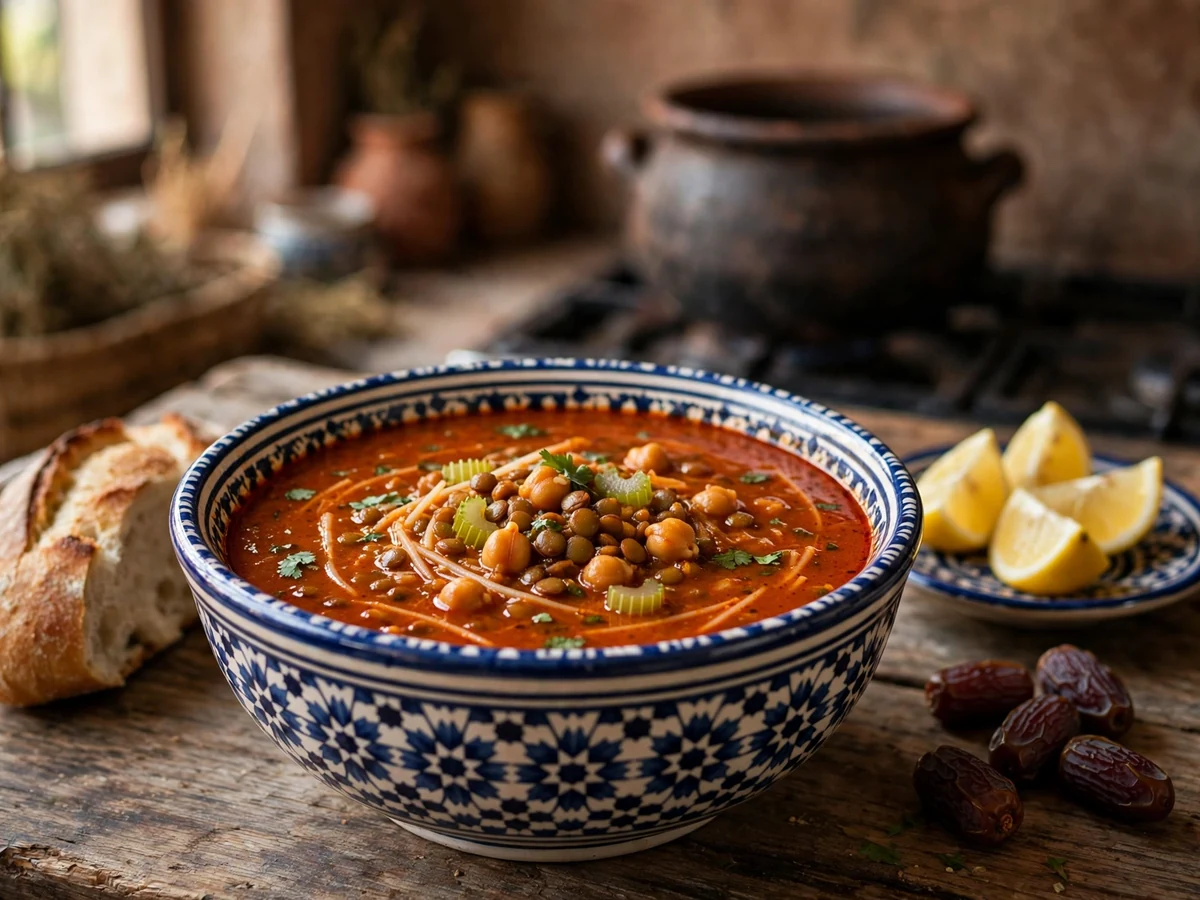
Morocco
Harira
Stay in the same food culture and notice how sauté appears in another dish.
Shared thread · Sauté · Simmer · olive oil
Follow the method or pantry
02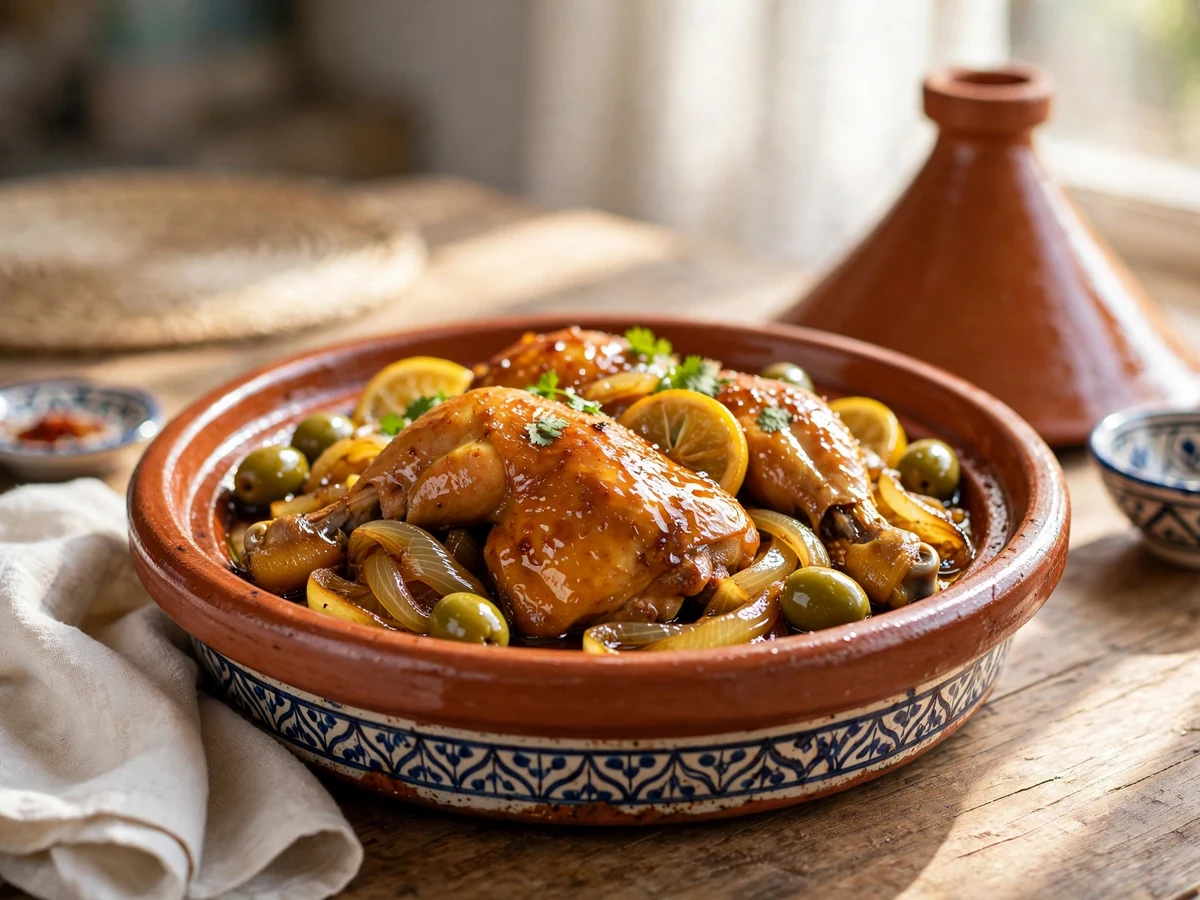
Morocco
Moroccan Chicken Tagine with Preserved Lemon and Olives
Follow the pantry: both dishes connect through olive oil.
Shared thread · olive oil · ground ginger · ground turmeric
Cross a culinary border
03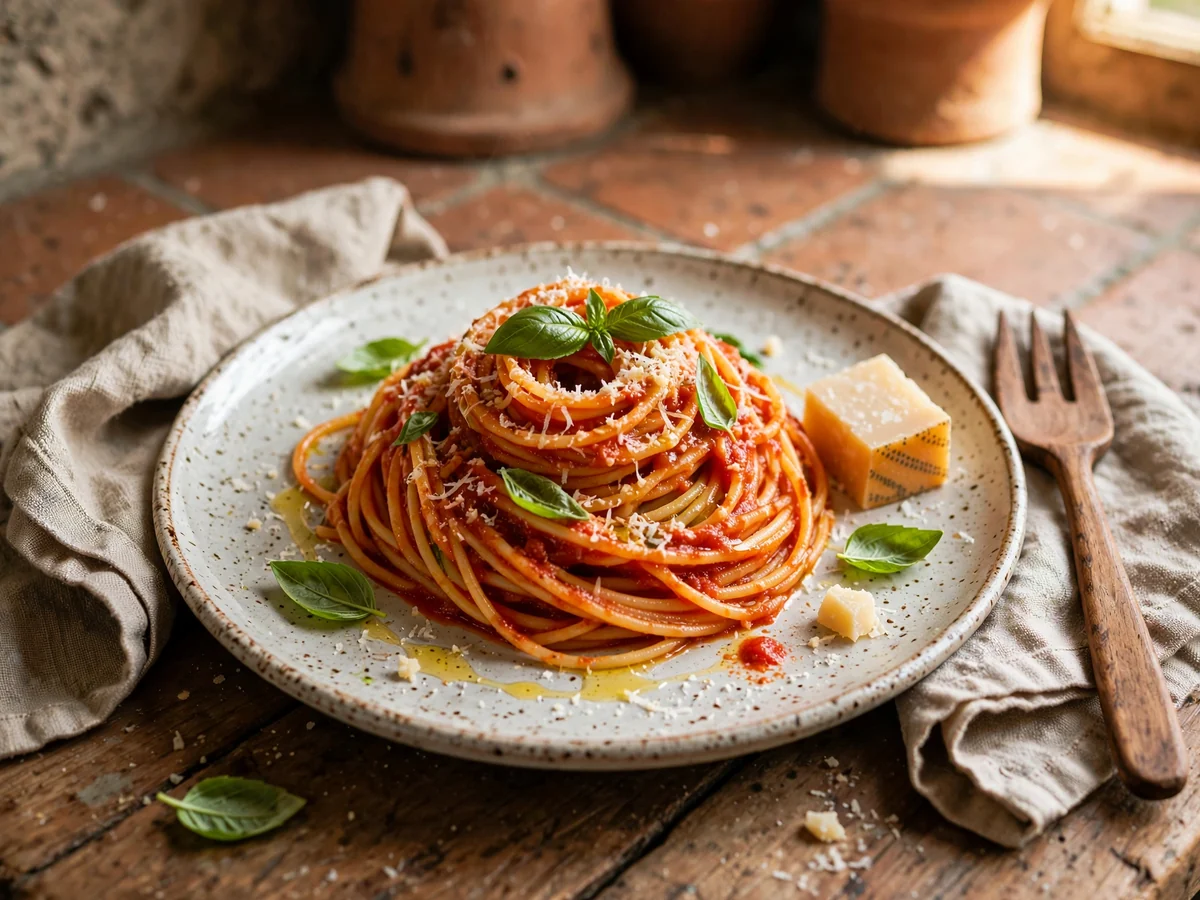
Italy
Spaghetti al Pomodoro
Cross borders while keeping sauté as the common thread.
Shared thread · Sauté · Simmer · tomatoes
Go one layer deeper
One small detail can open an entirely different part of food.
technique
Sauté
See why sauté matters here, then notice the same idea in other dishes.
technique
Simmer
See why simmer matters here, then notice the same idea in other dishes.
ingredient
saffron threads
See what saffron threads contributes to Moroccan Couscous with Seven Vegetables, then follow it into other dishes.
Continue in Ember & Equator