
India · lunch · dinner · street-food · comfort-food
Chole Bhature
India through one enduring dish.
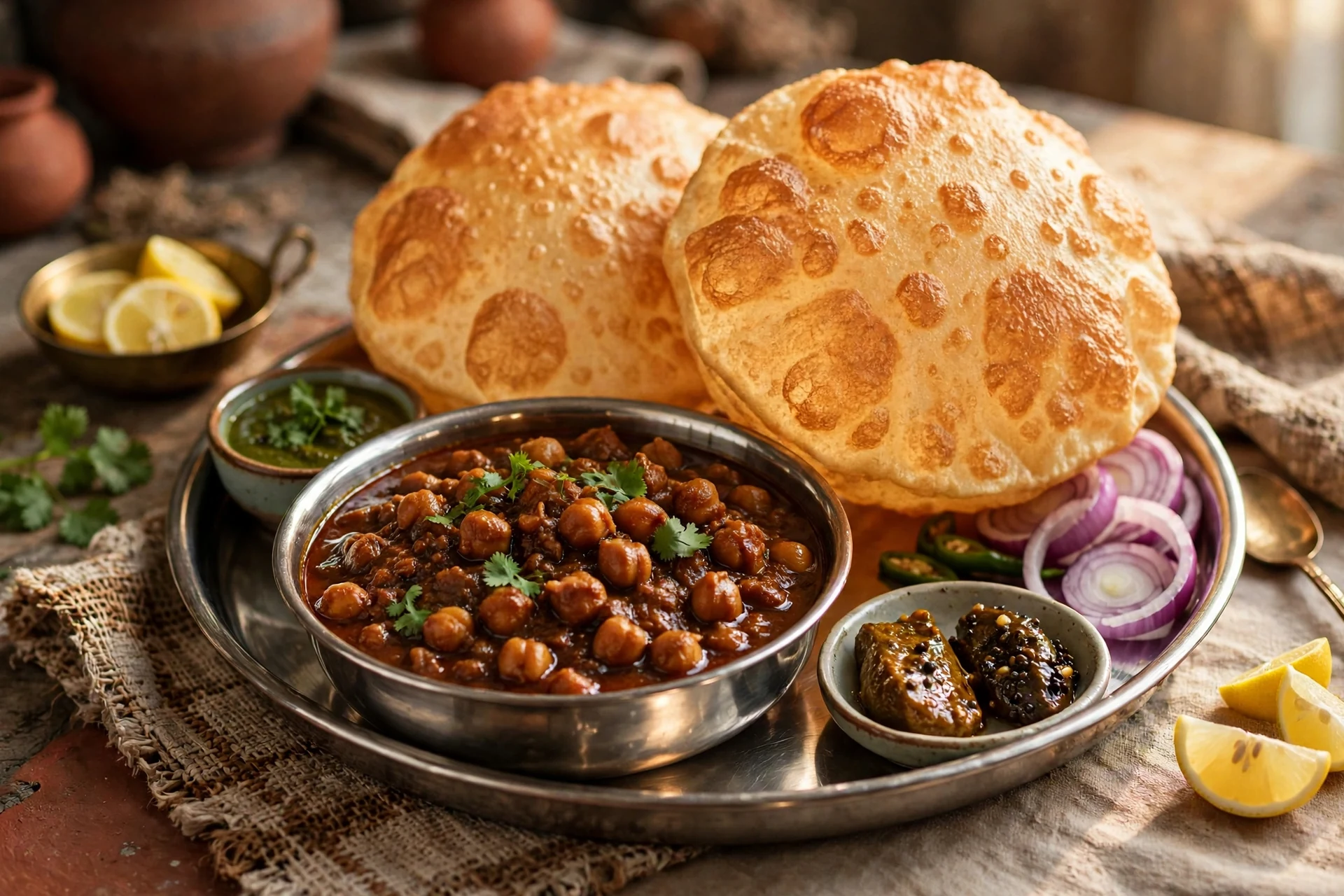
Chole bhature pairs deeply spiced Punjabi-style chickpeas with large, soft, puffed fried breads. The chole should be earthy, tangy and thick enough to cling to the chickpeas, while the bhature should be airy inside, lightly crisp outside and served straight from the fryer.
- Total
- 90 min
- Difficulty
- Medium
- Serves
- 4
- Steps
- 10
The dish
Place first. Then the plate.
Chole bhature is strongly associated with Punjabi and broader North Indian eating, especially as a substantial breakfast, street-food or restaurant meal. Recipes vary in spice blends, souring agents, chickpea-darkening methods and bhatura fermentation, so Ember & Equator presents one well-tested Punjabi-style approach rather than claiming a single universal formula.
Explore IndiaAt a glance
Origin
India
Region
Punjab and North India
Meal
lunch · dinner · street-food · comfort-food
Guided steps
10
Dish
Chole Bhature
Cuisine
Indian cuisine
Food type
Lunch · Dinner · Street food
Technique
Sauté · Simmer · Knead dough
Cook the recipe
In the kitchen
Start with the ingredients, then follow the Method in order. Open cooking tips only when you need extra help; the story and references can wait until you are ready.
- Total
- 90 min
- Serves
- 4
- Level
- Medium
- Visual cues
- 10
Ingredients
Serves 4- 2 cupsdried chickpeaskabuli chana; rinse and soak 8–12 hours
- 2bay leavesfor pressure-cooking the chickpeas
- 1 podblack cardamomfor pressure-cooking the chickpeas
- 3–4 podswhole green cardamomlightly crushed
- 1 small stickcinnamon stickabout 5 cm / 2 in
- 4–5black peppercornswhole
- 1 tspcumin seedswhole
- 2 mediumyellow onionsfinely chopped
- 1 tbspginger-garlic paste
- 2green chilliesslit lengthwise; adjust to heat preference
- 2 mediumtomatoesfinely chopped or puréed
- 2 tbspneutral oil or gheefor the chole masala
- 1 tspground cumin
- 1½ tspground coriander
- 1 tspKashmiri chilli powderfor colour and moderate heat
- ½ tspground turmeric
- 1½–2 tspchole masalaplus a little more at the finish only if needed
- 1½–2 tspamchur powderdried mango powder; add toward the end
- ½ tspgaram masalaadd toward the end
- ½ cupfresh corianderroughly chopped, for finishing and serving
- 3 cupsplain flourmaida / all-purpose flour, for bhature
- ½ cupplain yogurtfor the bhature dough
- 1 tspsugarfor the bhature dough
- ½ tspbaking powderfor this yogurt-leavened bhatura version
- 1/4 tspbaking soda
- to tastesaltuse in both chole and bhature dough
- 1 tbsp + enough for deep-fryingneutral oil1 tablespoon goes into the bhature dough; use additional fresh oil for frying
Optional
- 1 bagblack tea bagoptional; used for a darker chickpea colour, not for a noticeable tea flavour
- 1–2 tsplemon juiceoptional; use only after tasting the amchur balance
- ½ cupsemolinasooji; optional but useful for a little structure and texture
Everything ready? Continue straight into the cooking steps.
Start methodMethod
10 steps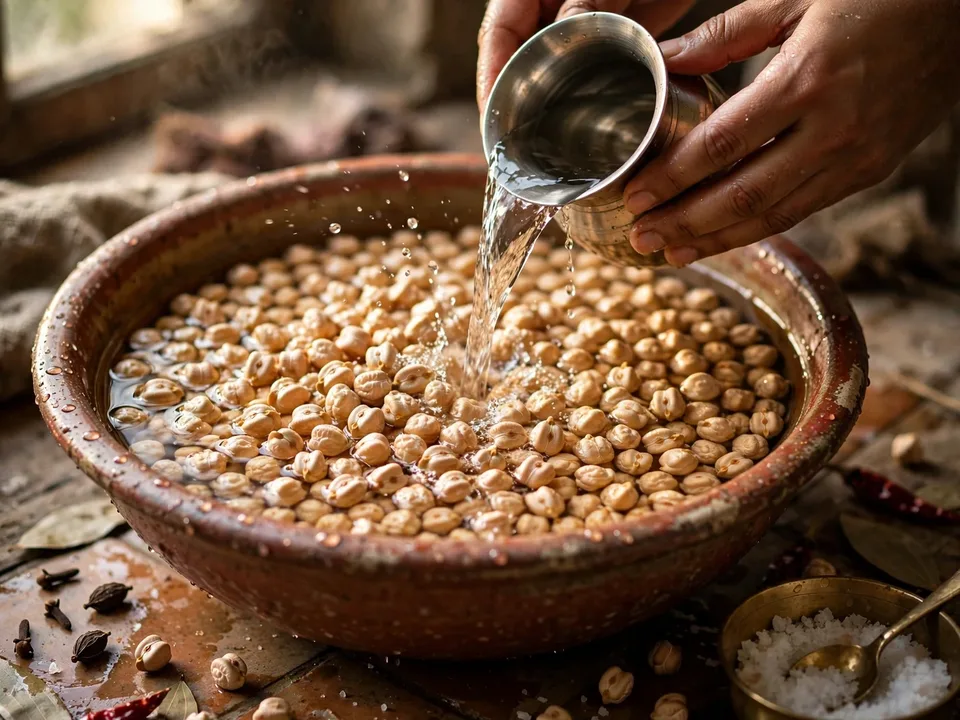 Step 01
Soak the chickpeas for 8–12 hours
5 min
Rinse the dried chickpeas thoroughly, then cover them with at least three times their volume of cool water.
Rinse the dried chickpeas thoroughly, then cover them with at least three times their volume of cool water. Soak for 8–12 hours or overnight. Drain and rinse again before cooking. If the room is very warm, soak in the refrigerator so the water stays fresh.
Look for
After soaking, the chickpeas should look noticeably plumper and more evenly hydrated, with fewer deep wrinkles than when dry.
Kitchen note
The 5 minutes here is active prep; the chickpeas still need the full 8–12 hour soak. Proper hydration helps the centres cook creamy at the same time the skins become tender instead of splitting while the inside stays firm.
 Step 02
Pressure-cook the chickpeas until creamy
30 min
Transfer the soaked chickpeas to a pressure cooker and cover generously with fresh water.
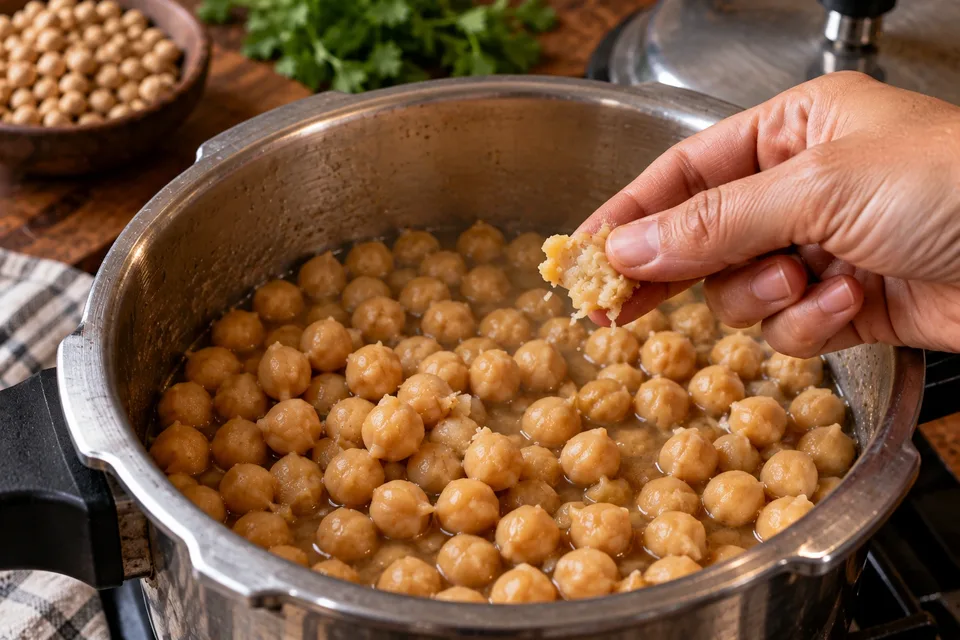
Transfer the soaked chickpeas to a pressure cooker and cover generously with fresh water. Add the tea bag if using, bay leaves, black cardamom, green cardamom, cinnamon, peppercorns and enough salt to lightly season the cooking liquid. Pressure-cook until the chickpeas are completely tender; depending on the cooker and the age of the chickpeas, this commonly takes about 20–30 minutes at pressure after an overnight soak. Follow your cooker’s safety instructions and allow pressure to release safely. Remove the tea bag and whole spices, then reserve 1½–2 cups of the cooking liquid.
Look for
A chickpea should crush smoothly between finger and thumb with almost no resistance, while most chickpeas still hold their shape in the pot.
Kitchen note
Do not move on because a timer says so. Older chickpeas can take longer. If a chickpea still feels chalky or resists crushing, cook it longer before building the curry.
 Step 03
Brown the onions and build the aromatic base
15 min
Heat the oil or ghee in a heavy pan over medium heat.
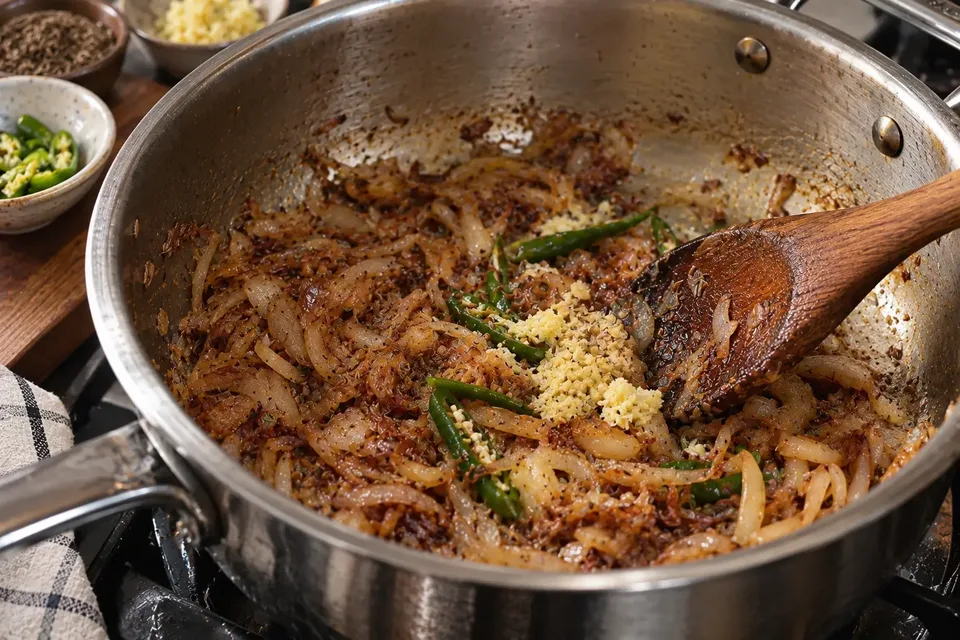
Heat the oil or ghee in a heavy pan over medium heat. Add the cumin seeds and let them sizzle for 20–30 seconds, then add the finely chopped onions. Cook patiently for about 10–15 minutes, stirring regularly, until the onions are a deep even golden brown rather than merely translucent. Add the ginger-garlic paste and slit green chillies and cook for another 1–2 minutes, until the raw ginger-garlic smell disappears.
Look for
The onions should be deep golden and reduced in volume, with no pale raw centres and no blackened bitter patches.
Kitchen note
This is one of the main flavour-building stages. If the onion edges start turning dark while the rest is still pale, lower the heat and add a spoonful of water instead of letting the base burn.
 Step 04
Cook the tomato and spice masala until concentrated
10 min
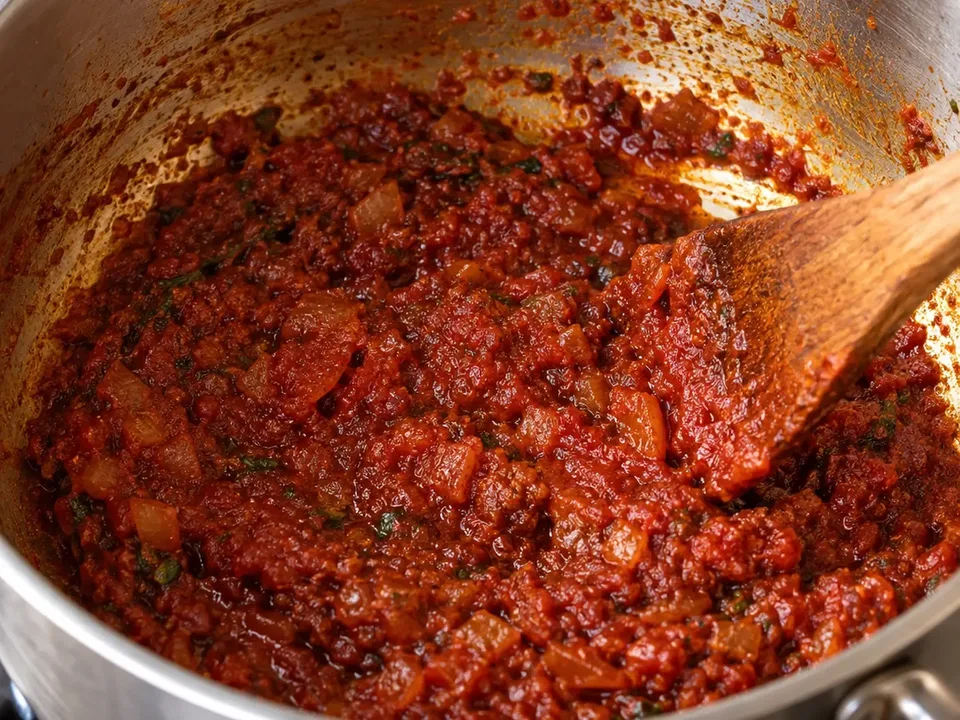
Add the tomatoes and cook over medium heat until they collapse into the onions and most of their free water has evaporated.
Add the tomatoes and cook over medium heat until they collapse into the onions and most of their free water has evaporated. Stir in the turmeric, ground coriander, ground cumin, Kashmiri chilli powder, 1½ teaspoons chole masala and a small amount of salt. Continue cooking for about 6–10 minutes, stirring and scraping the base as needed, until the masala looks thick, cohesive and glossy and small beads of oil begin appearing around the edges.
Look for
The masala should hold together when pushed with the spoon, look deeper red-brown than when the tomato went in, and show a little oil separating at the edges.
Kitchen note
Do not add the chickpeas while the tomato still looks watery or smells raw. If the spices begin catching before the tomato is cooked down, add a tablespoon of water and lower the heat rather than adding lots of oil.
 Step 05
Add the chickpeas and simmer the gravy
20 min
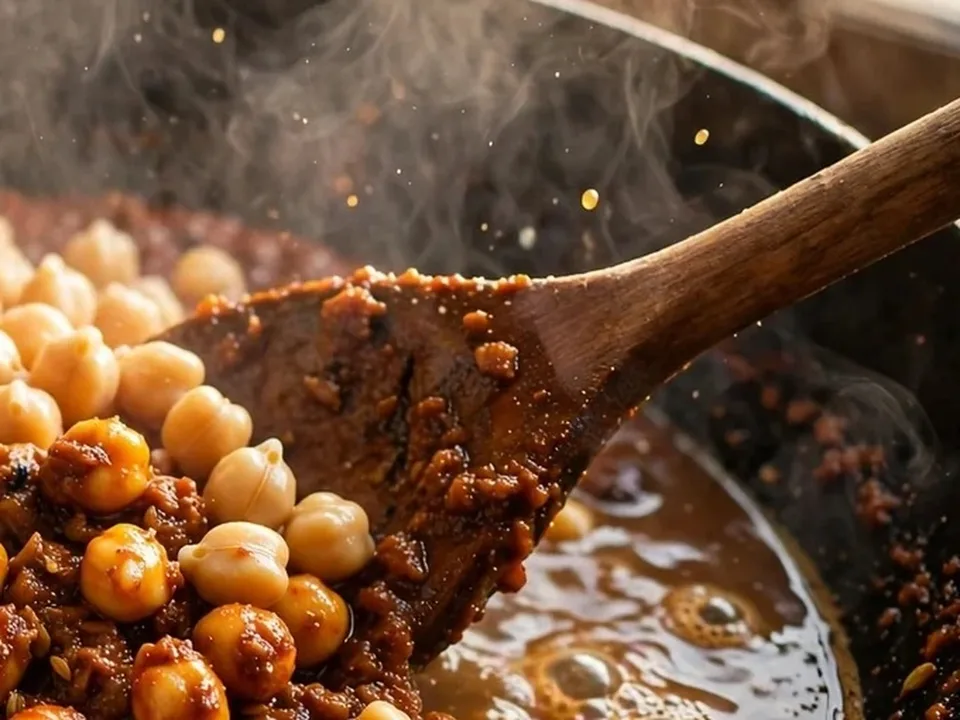
Add the cooked chickpeas to the masala and stir until well coated.
Add the cooked chickpeas to the masala and stir until well coated. Pour in about 1½ cups of the reserved chickpea liquid, bring to a gentle simmer and cook uncovered or partially covered for 15–20 minutes. Stir every few minutes. Mash about ¼ cup of chickpeas against the side of the pan and stir them back through the curry; add a little more reserved liquid only if the gravy becomes too tight before the flavours come together.
Look for
The gravy should thicken enough to cling to the chickpeas and spoon, with no watery layer separating around the solids.
Kitchen note
Mash only a small portion. The goal is to give the gravy natural body while keeping plenty of whole chickpeas; turning everything into mash loses the characteristic texture.
 Step 06
Balance the chole and let it rest
15 min
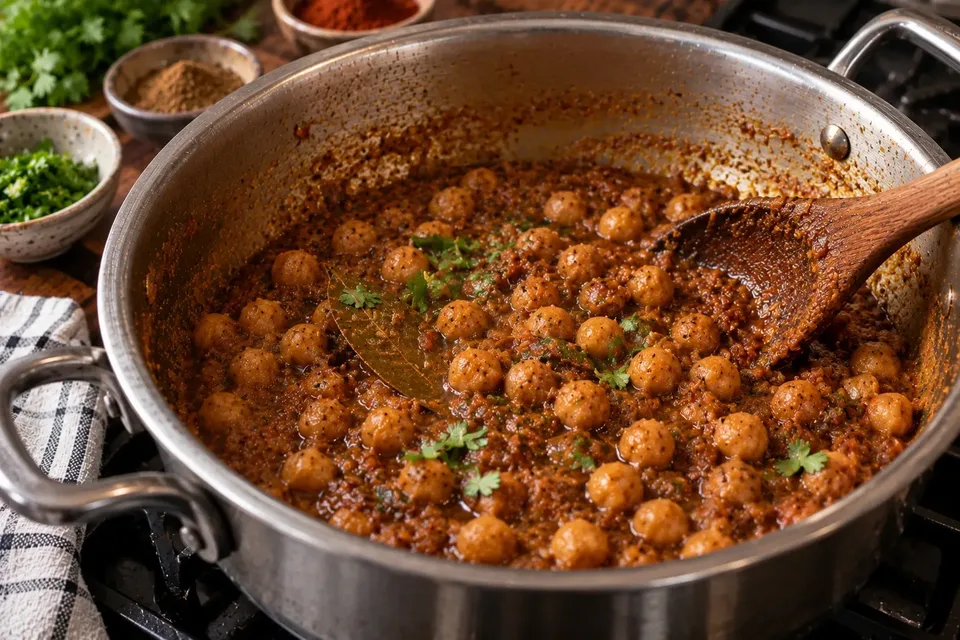
Turn off the heat and stir in the amchur and garam masala, then taste before adding more.
Turn off the heat and stir in the amchur and garam masala, then taste before adding more. Adjust salt and chole masala only if needed. If the chole still needs brightness after the amchur, add the optional lemon juice 1 teaspoon at a time, tasting between additions. Loosen with a spoonful of reserved chickpea liquid if the gravy has become pasty. Cover and rest the chole for 10–15 minutes, then rewarm gently if necessary while the bhature are fried.
Look for
The finished chole should be dark, aromatic and thick enough to coat the chickpeas, tasting savoury, earthy and tangy without becoming sharply sour or soupy.
Kitchen note
Resting lets the chickpeas absorb the masala and rounds out the spice. Keep fresh coriander, onion, pickle and lemon for the final serving so they stay bright and fresh.
 Step 07
Knead a soft bhature dough and rest it
10 min
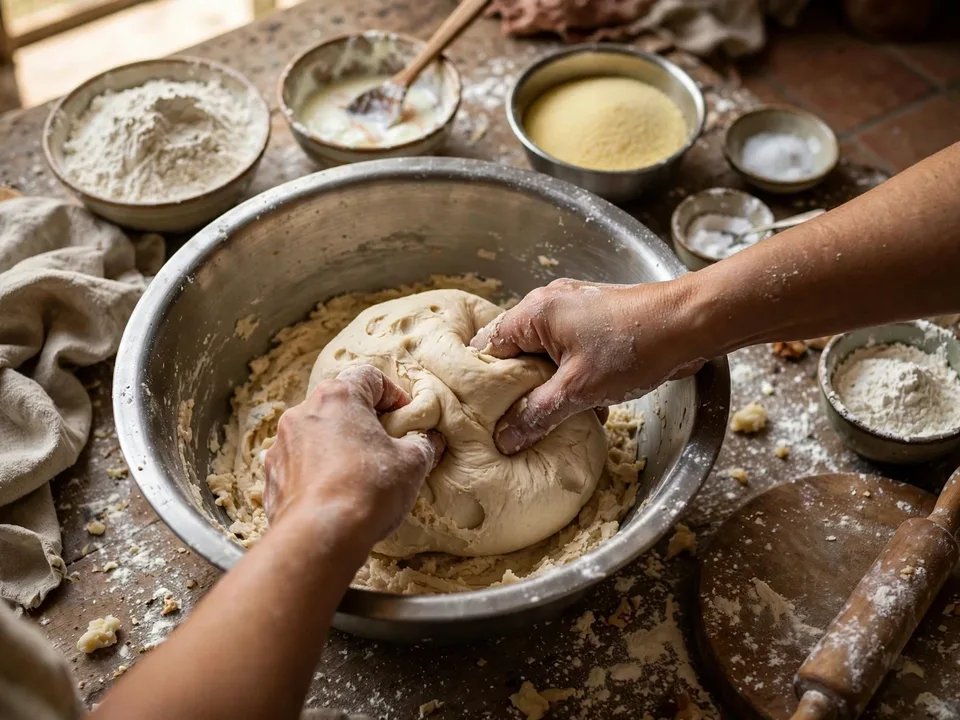
In a large bowl, combine the maida, fine semolina, baking powder, baking soda, salt and sugar.
In a large bowl, combine the maida, fine semolina, baking powder, baking soda, salt and sugar. Mix in the plain yogurt and 1 tbsp oil, then add water gradually while kneading for about 8–10 minutes until the dough is smooth, soft and supple rather than stiff. Cover with a damp cloth or lid and rest in a warm place for 1–2 hours.
Look for
The dough should have a smooth surface, feel soft and elastic, and spring back slowly when pressed rather than tearing or feeling stiff.
Kitchen note
This is Ember & Equator’s quick no-yeast bhatura version: yogurt works with the small amounts of baking powder and baking soda to help the rested dough puff cleanly in hot oil. If the dough cracks while kneading, add water a teaspoon at a time; if it becomes sticky and slack, stop adding water and knead until smooth rather than correcting with lots of dry flour.
 Step 08
Divide and roll the bhature evenly
10 min
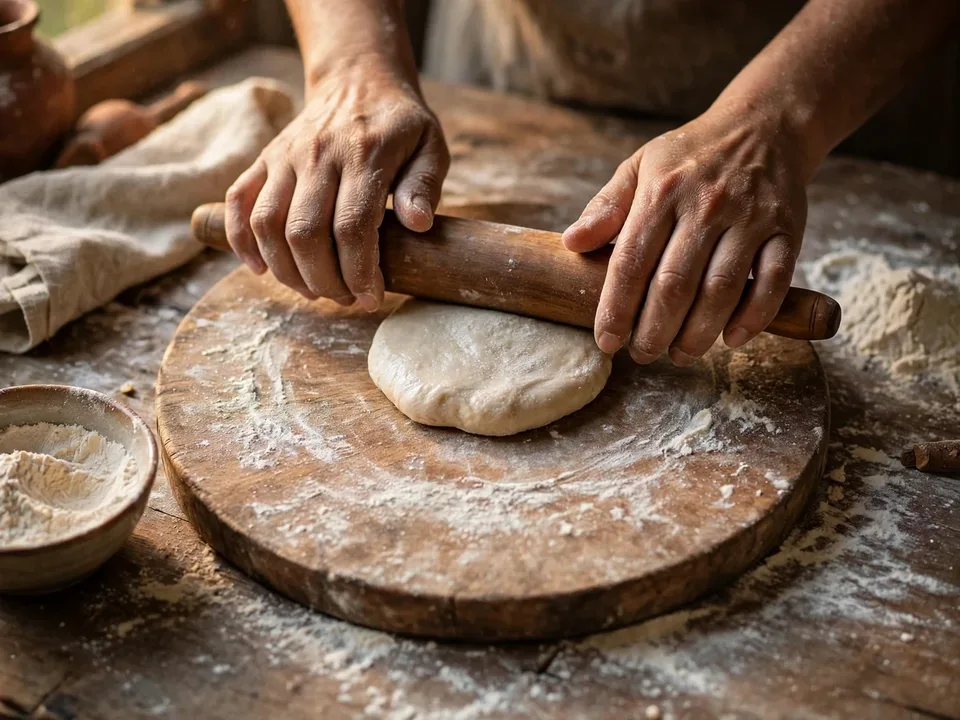
Divide the rested dough into 8–10 equal portions and roll each into a smooth ball.
Divide the rested dough into 8–10 equal portions and roll each into a smooth ball. Keep the remaining portions covered while you work. Lightly oil the work surface and rolling pin rather than dusting heavily with flour. Roll each portion into a round or oval about 13–18 cm / 5–7 in wide, keeping the centre and edges reasonably even and avoiding paper-thin spots.
Look for
The rolled dough should be even and supple, thin enough to lift easily but not translucent or tearing at the edges.
Kitchen note
Uneven rolling makes one area set before the rest can inflate. Excess dry flour also falls into the oil, burns and gives later bhature a dusty, bitter surface. If a rolled round keeps shrinking back, cover it and rest that portion for 5–10 minutes before rolling again; forcing tight dough usually creates uneven thickness.
 Step 09
Fry one bhatura at a time until fully puffed
12 min
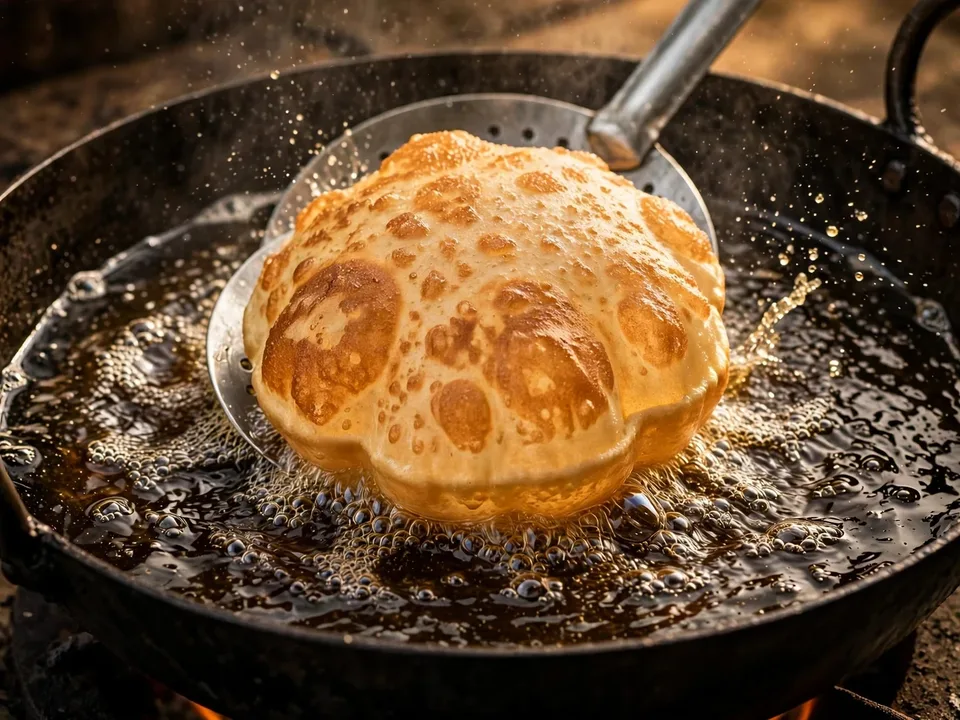
Heat 5–7 cm / 2–3 in of fresh neutral oil in a deep, wide pan to about 180–185°C / 355–365°F.
Heat 5–7 cm / 2–3 in of fresh neutral oil in a deep, wide pan to about 180–185°C / 355–365°F. If you do not have a thermometer, a tiny piece of dough should rise quickly and bubble immediately without turning dark at once. Slide one rolled bhatura carefully into the oil. As it rises, gently press the surface with a slotted spoon for a few seconds to encourage steam to inflate it. Once dramatically puffed, turn once and fry just until lightly golden, then lift out and drain briefly. Let the oil recover its temperature before frying the next one.
Look for
A successful bhatura should inflate into a large pillow with scattered pale-golden blisters, a lightly crisp shell and no dark, hard patches.
Kitchen note
Oil temperature is the critical control. Cool oil makes the bread absorb fat; excessively hot oil browns the outside before the dough has time to expand. Frying one at a time keeps the temperature more stable. If a bhatura stays flat, first check that the oil has recovered to temperature and that the next round is evenly rolled with no tears; do not keep pressing a flat bread under the oil once it has set.
 Step 10
Serve the bhature immediately with hot chole
5 min
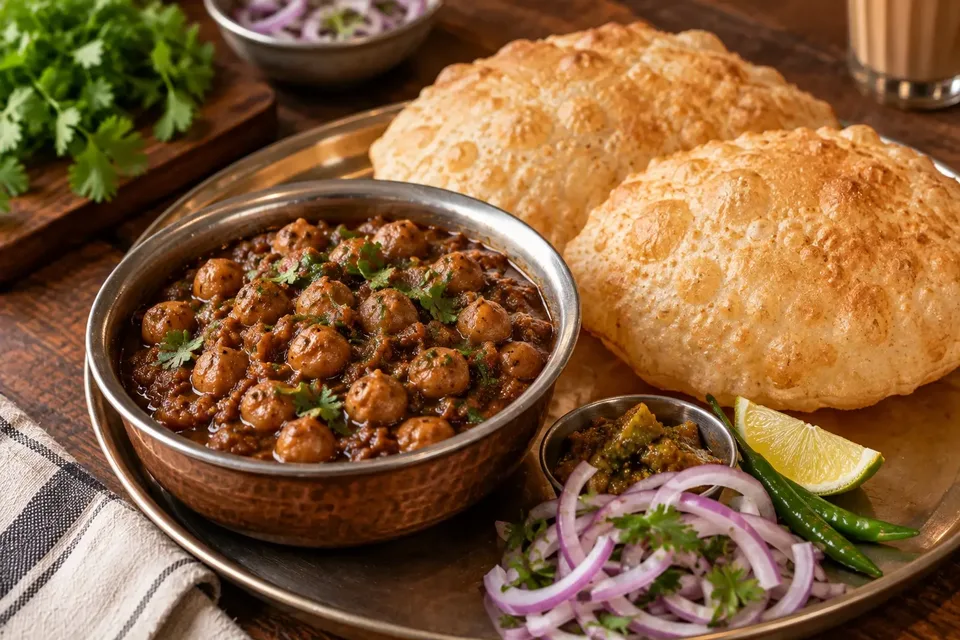
Rewarm or loosen the rested chole if needed, then finish with chopped fresh coriander and sliced green chilli if desired.
Rewarm or loosen the rested chole if needed, then finish with chopped fresh coriander and sliced green chilli if desired. Serve each portion with freshly fried bhature, sliced or pickled onion, lemon wedges and achaar. Eat the bhature immediately while they are still airy and lightly crisp. Leftover chole can be refrigerated in a covered container for about 3–4 days and reheated gently with a splash of water; bhature are best fried fresh rather than stored.
Look for
The plate should contrast thick, glossy chole with bhature that are still visibly puffed, tender inside and lightly crisp on the surface.
Kitchen note
Treat the two components differently: chole often improves after a short rest, while bhature lose their best texture quickly. Have the plates and accompaniments ready before the first bread goes into the oil.
After cooking
Explore the dish beyond the method.
Story, place and references are here for discovery, so they stay out of the way while you cook.
Culture & tradition
The story behind the dish
Origins, evolution and everyday life—read together as part of the recipe's culinary record.
Origins
Chole bhature is associated with Punjabi and wider North Indian food culture. Claims about one exact inventor or birthplace are difficult to verify, so Ember & Equator avoids presenting a single origin story as established fact.
How it evolved
Street stalls, restaurants and home kitchens developed many versions of both components: chickpeas may be darkened with tea or dried amla, acidity may come from amchur or citrus, and bhature may be yeast-fermented or made with yogurt and chemical leavening.
Its place today
It remains a popular, filling meal across North India and Indian restaurant culture, commonly served with sliced onion, pickle, green chilli and lemon.
Visual archive · plate 01
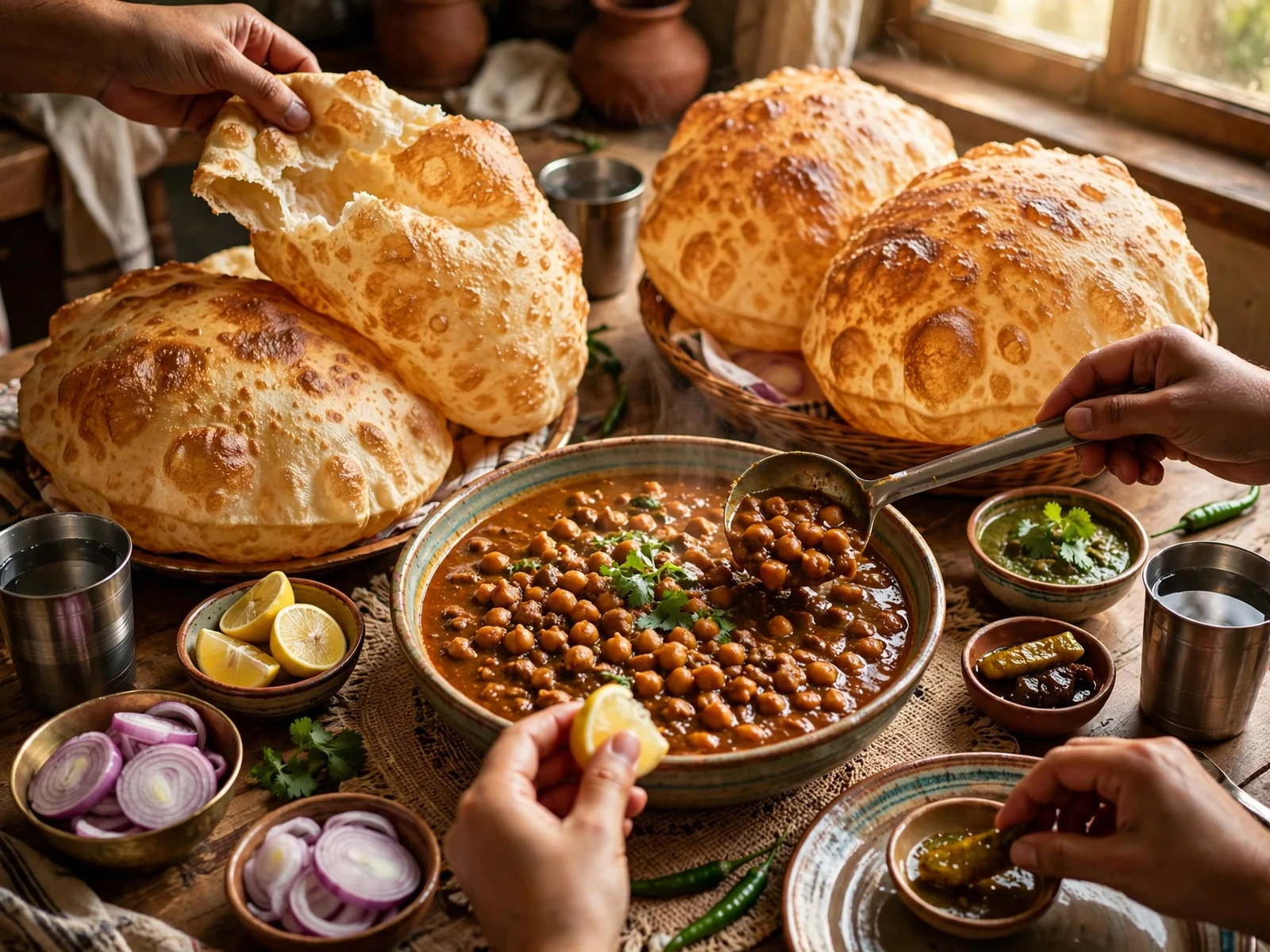
Chole Bhature
An editorial view of the finished dish, kept compact so the story continues without an oversized image break.
Primary region
Punjab and North India
Country
India
Regional influence
Chickpeas, wheat flour, dairy and warming spice mixtures are prominent across many North Indian food traditions, while deep-fried breads and robust legume dishes suit substantial breakfast and street-food formats.
Related food systems
- Punjabi cuisine
- North Indian chickpea cookery
- Indian fried breads
- Street-food culture
Culinary record
- Sub-region
- South Asia — Indian Subcontinent
- Climate
- Monsoon
- Trade-route influence
- Spice Route · Mughal exchange · British colonial trade
Sources & further reading
Follow the reference trail.
Ember & Equator links outward when an institution or primary reference helps support the culinary record.
- 01A gastronomic journey through must-try local foods in ChandigarhExternal ↗
Ministry of Tourism, Government of India · government
Supports: Punjabi and North Indian context · chole bhature as breakfast and street food · spiced chickpeas with fried bhature
Ember & Equator source review · 2026-09-12
- 02Chole Bhature RecipeExternal ↗
NDTV Food · reference
Supports: whole spices and chickpea masala · tea as an optional darkening ingredient · bhatura dough and deep-frying technique
Ember & Equator source review · 2026-09-12
- 03Chole Bhature | Chana Bhatura (Easy Punjabi Recipe)External ↗
Dassana's Veg Recipes · specialist publication
Supports: Punjabi/North Indian dish identity · overnight-soaked chickpeas and spiced chole · bhatura dough using maida, semolina, yogurt, baking powder and baking soda · dough resting, rolling and deep-frying guidance
Ember & Equator source review · 2026-09-12
Ingredient guides
Learn about the ingredients behind the dish.
These are reference guides, not a second ingredient list. Follow an ingredient when you want to understand its role, use and wider culinary context.
Ingredient
dried chickpeas
Understand what it contributes, how to use it, and the dishes that reveal it best.
Ingredient
black tea bag
Understand what it contributes, how to use it, and the dishes that reveal it best.
Ingredient
bay leaves
Understand what it contributes, how to use it, and the dishes that reveal it best.
Ingredient
whole green cardamom
Understand what it contributes, how to use it, and the dishes that reveal it best.
Ingredient
cinnamon stick
Understand what it contributes, how to use it, and the dishes that reveal it best.
Ingredient
black peppercorns
Understand what it contributes, how to use it, and the dishes that reveal it best.
Keep wandering
Where will this dish take you next?
Stay with the place, follow an ingredient or technique, or cross into another food culture. Each path begins with something already present in this dish.
Stay with the place
01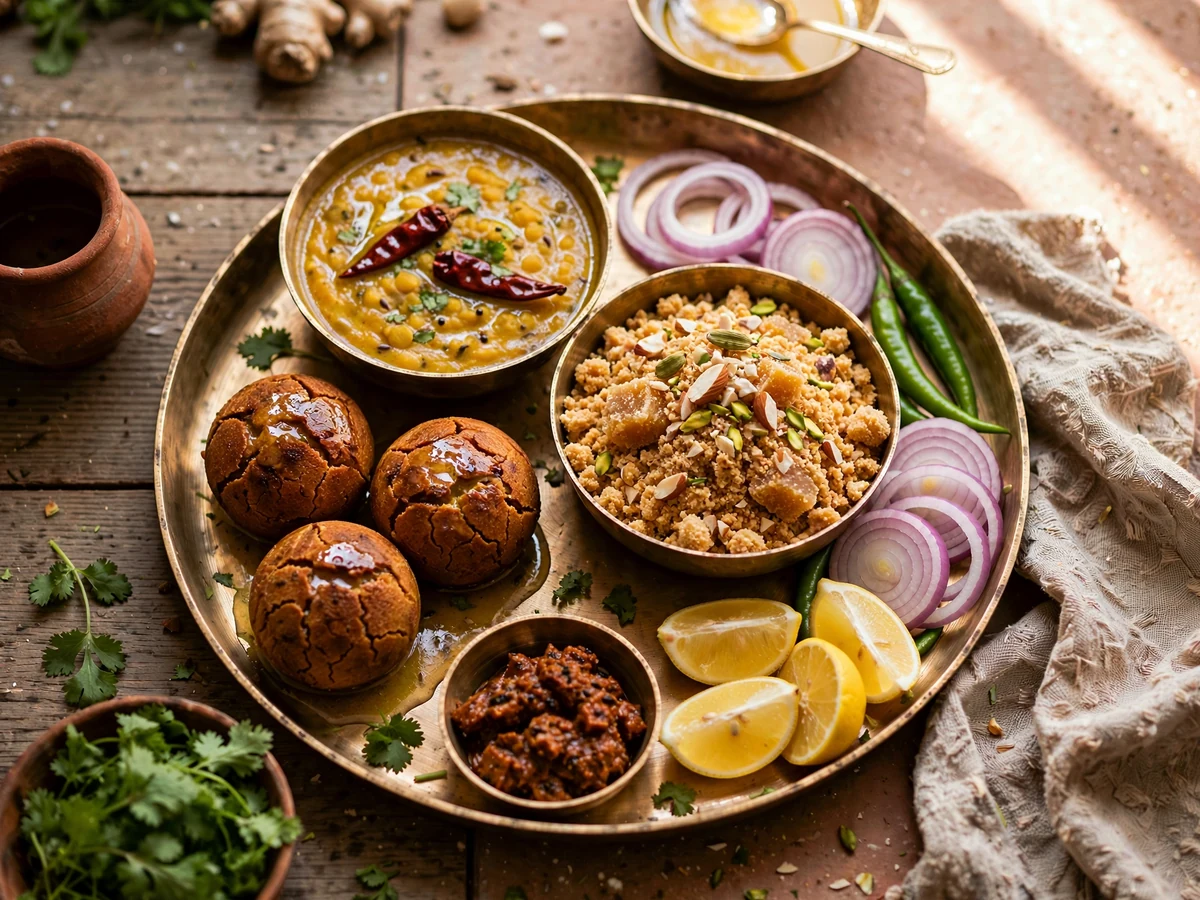
India
Dal Baati Churma
Stay in the same food culture and notice how sauté appears in another dish.
Shared thread · Sauté · Simmer · Knead dough
Follow the method or pantry
02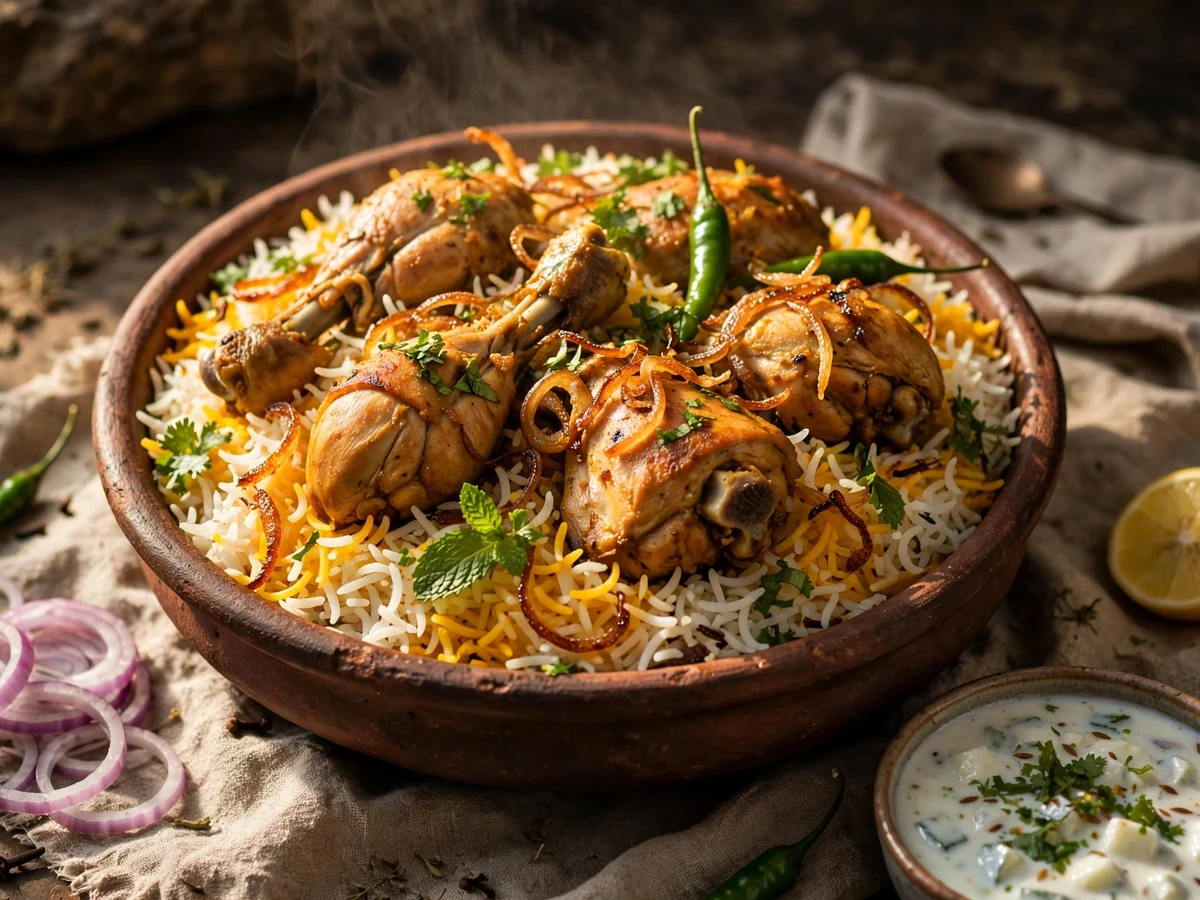
India
Hyderabadi Chicken Biryani
Follow the cooking method: both dishes connect through fry.
Shared thread · Fry · whole green cardamom · cinnamon stick
Cross a culinary border
03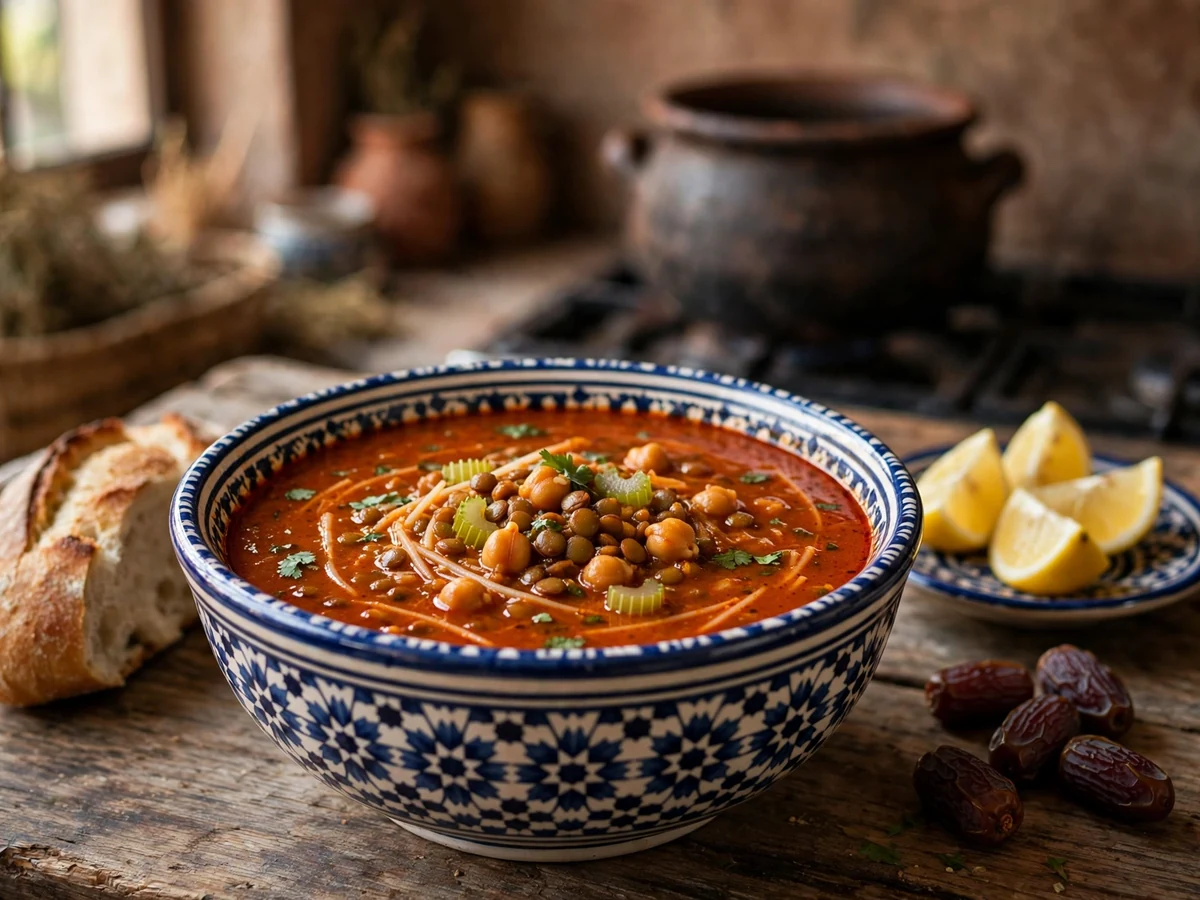
Morocco
Harira
Cross borders while keeping sauté as the common thread.
Shared thread · Sauté · Simmer · Toast spices
Go one layer deeper
One small detail can open an entirely different part of food.
Continue in Ember & Equator