
Morocco · dinner · soup · comfort-food
Harira
Morocco through one enduring dish.
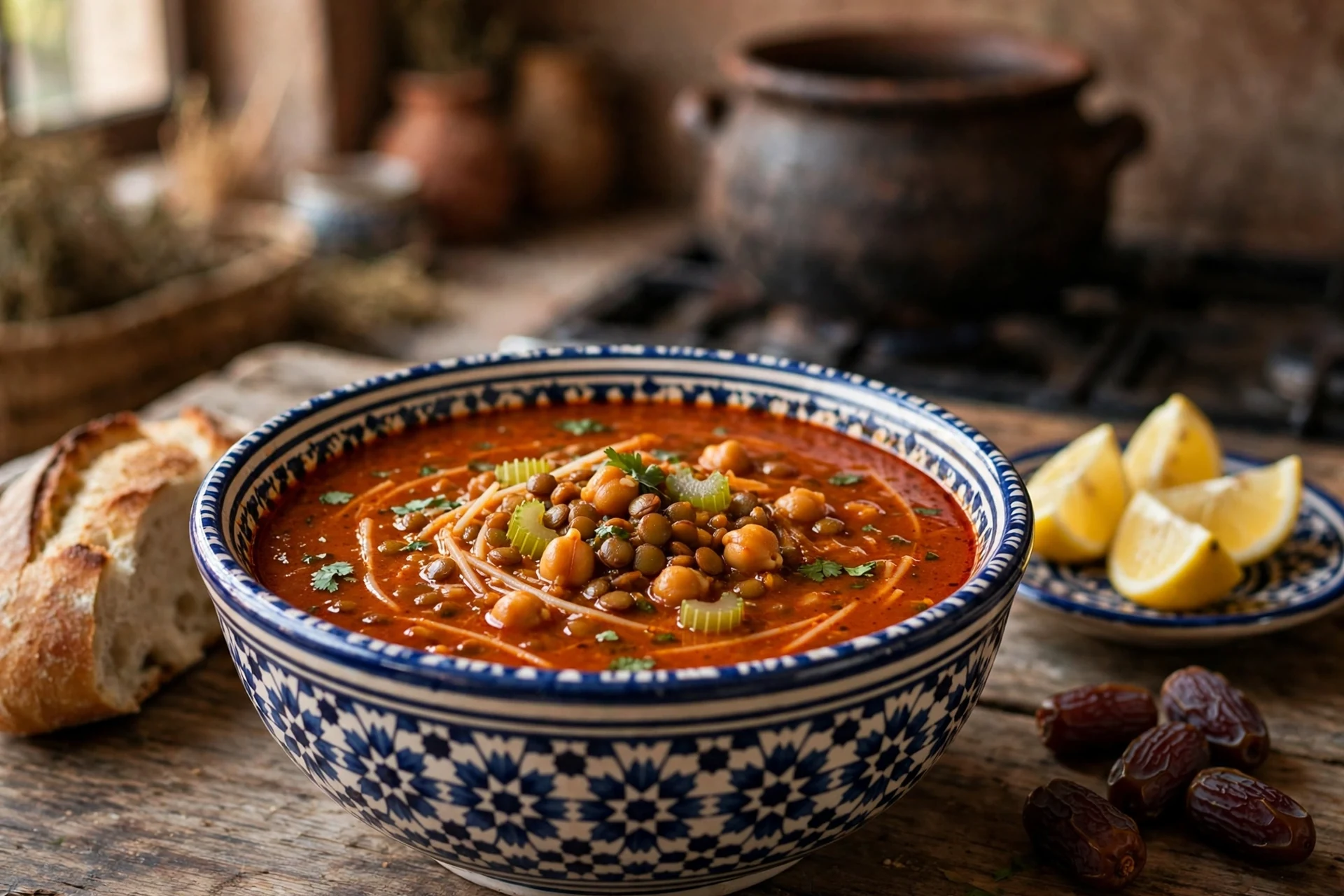
Harira is a Moroccan tomato, chickpea, lentil and herb soup with a silky, lightly thickened broth. Many household versions include lamb or beef, while others are meatless; this Ember & Equator method keeps the meat optional and focuses on the technique that matters most: building flavour in layers, cooking the pulses until tender, then controlling the flour thickener and vermicelli at the end.
- Total
- 95 min
- Difficulty
- Medium
- Serves
- 6
- Steps
- 9
The dish
Place first. Then the plate.
Harira is a widely recognized Moroccan soup and is especially associated with Ramadan, when it is commonly served to break the fast, often alongside dates and chebakia. The Moroccan National Tourist Office describes its core structure around pulses, tomatoes, pasta and flour, while household and regional versions vary in meat, legumes, herbs, spices and thickness. This recipe presents one practical version rather than claiming a single universal formula.
Explore MoroccoAt a glance
Origin
Morocco
Region
Morocco — nationwide, with household and regional variations
Meal
dinner · soup · comfort-food
Guided steps
9
Dish
Harira
Cuisine
Moroccan cuisine
Food type
Dinner · Soup · Comfort food
Technique
Sauté · Simmer · Toast spices
Cook the recipe
In the kitchen
Start with the ingredients, then follow the Method in order. Open cooking tips only when you need extra help; the story and references can wait until you are ready.
- Total
- 95 min
- Serves
- 6
- Level
- Medium
- Visual cues
- 9
Ingredients
Serves 6- 2 tbspolive oil
- 1 mediumyellow onionfinely chopped
- 2 stalkscelery stalksfinely chopped; include tender leaves if available
- 3 clovesgarlic clovesfinely minced
- 0.5 cupfresh corianderfinely chopped; reserve about 2 tbsp for finishing
- 0.5 cupflat-leaf parsleyfinely chopped; reserve about 2 tbsp for finishing
- 1 tspground ginger
- 1 tspground turmeric
- 0.5 tspground black pepperplus more to taste
- 0.5 tspground cinnamonuse lightly; it should sit in the background
- 0.5 tspground cumin
- 1 tspfine saltplus more to taste; reduce if using seasoned stock
- 4 cupscrushed or finely blended tomatoesabout 950 ml
- 2 tbsptomato paste
- 0.75 cupbrown or green lentilsabout 150 g dry; picked over and rinsed
- 1.5 cupscooked chickpeasabout 250 g; drained and rinsed
- 6 cupswater or unsalted stockabout 1.4 litres, plus extra hot liquid for consistency adjustments
- 0.33 cupplain flourabout 40 g; whisk with 3/4 cup (180 ml) cold water for the thickener; you may not need all of it
- 60 gramsvermicellibroken into short spoon-friendly lengths
Optional
- 450 gramslamb shoulder or beefcut into roughly 1–1.5 cm pieces; optional for a meat version
- 0.25 tspground cayenne pepperoptional; add for a warmer chile note
- 1–2 tbspfresh lemon juiceor lemon wedges for serving; add gradually to taste
Everything ready? Continue straight into the cooking steps.
Start methodMethod
9 steps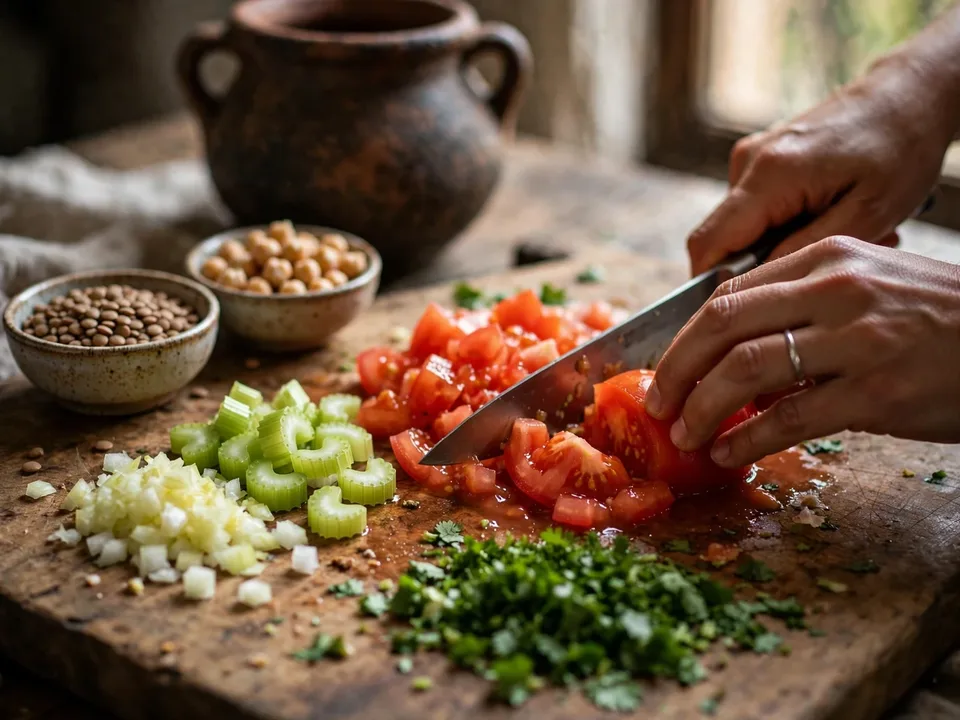 Step 01
Prepare everything before the pot gets busy
15 min
Finely chop the onion and celery, mince the garlic, and finely chop the coriander and parsley; reserve about 2 tablespoons each of coriander and parsley for the finish.
Finely chop the onion and celery, mince the garlic, and finely chop the coriander and parsley; reserve about 2 tablespoons each of coriander and parsley for the finish. Rinse the lentils until the water runs mostly clear, drain and rinse the cooked chickpeas, and break the vermicelli into short lengths. If using meat, trim excess hard fat and cut it into small 1–1.5 cm pieces so it cooks within the soup. Whisk the flour with 3/4 cup cold water until completely smooth, then set the slurry aside and whisk it again immediately before adding.
Look for
The vegetables and herbs should be finely prepared, the lentils clean, the chickpeas drained, and the flour slurry smooth with no visible dry lumps.
Kitchen note
Harira moves through several short finishing stages once the lentils are tender. Having the herbs, noodles, seasonings and smooth slurry ready prevents the soup from overcooking while you prepare the next ingredient.
 Step 02
Brown the meat first if using
7 min
If making the meat version, heat the olive oil in a heavy-bottomed pot over medium-high heat.
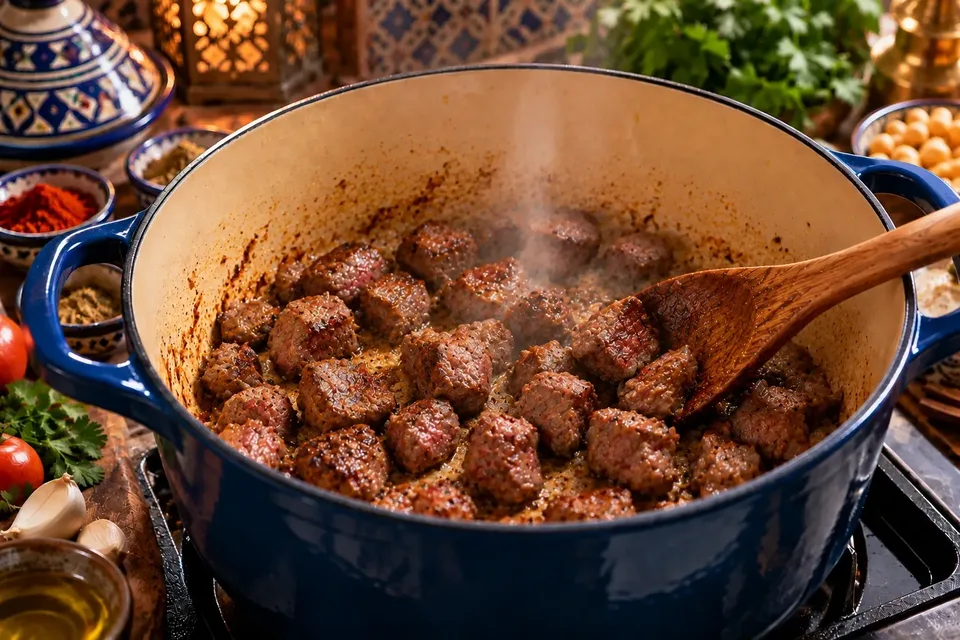
If making the meat version, heat the olive oil in a heavy-bottomed pot over medium-high heat. Add the lamb or beef in a single uncrowded layer—work in two batches if needed—and cook for about 5–7 minutes, turning the pieces so several sides take on light brown colour. Transfer the browned meat to a bowl; it does not need to be cooked through yet. If making a meatless harira, simply warm the olive oil over medium heat and continue to the aromatics.
Look for
The meat should have light browned patches on several sides while the centres remain undercooked; the pot should show savoury fond, not blackened residue.
Kitchen note
Crowding traps steam and prevents browning. Brown in batches if necessary, and stop before the fond or oil begins to scorch; the meat will finish cooking during the long simmer.
 Step 03
Soften the aromatics and bloom the spices
8 min
Reduce the heat to medium.
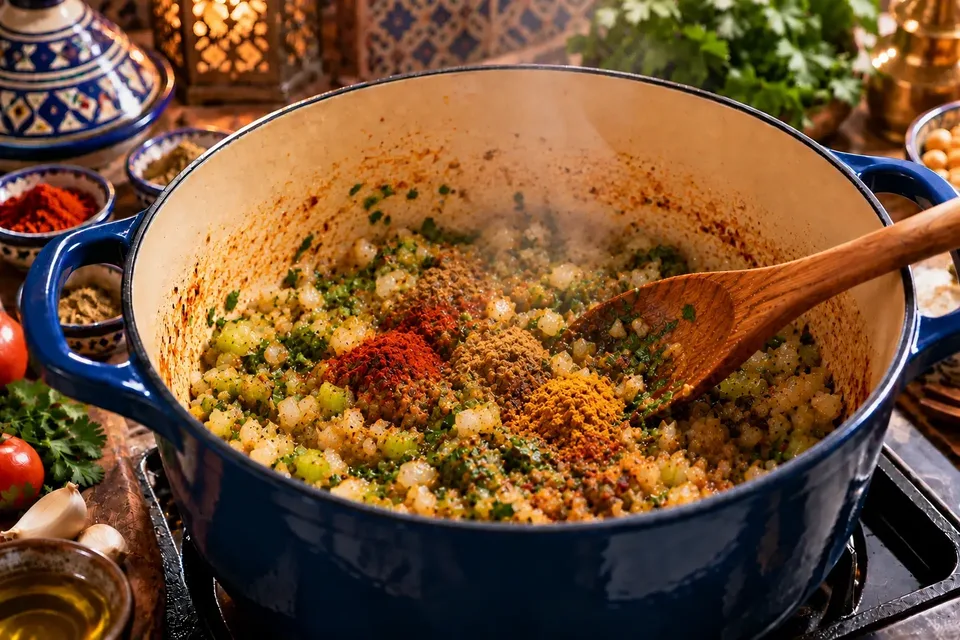
Reduce the heat to medium. Add the onion and celery to the same pot and cook for 5–7 minutes, stirring regularly and scraping up the browned fond, until softened and translucent without deep browning. Add the garlic and cook for 30–60 seconds. Stir in most of the coriander and parsley, then add the ginger, turmeric, black pepper, cinnamon, cumin and cayenne if using. Cook for another 30–60 seconds, stirring continuously, just until the herbs wilt and the spices smell fragrant.
Look for
The onion should be translucent, the celery softened, the fond loosened into the vegetables, the garlic aromatic but not brown, and the spices fragrant with no blackened flecks.
Kitchen note
The moisture from onion and celery helps lift the browned fond from a meat batch. Once the dry spices enter the pot they can scorch quickly, so keep the heat moderate and move on as soon as they become fragrant.
 Step 04
Cook the tomato paste and build the tomato base
6 min
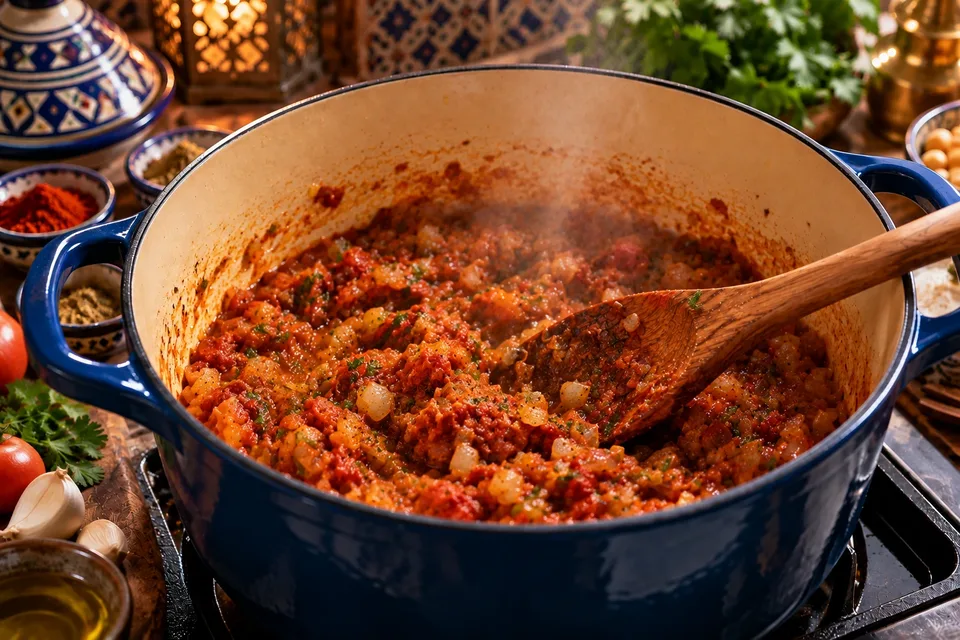
Stir in the tomato paste and cook for about 1 minute, scraping and turning it through the aromatic base until it darkens slightly and loses its raw smell.
Stir in the tomato paste and cook for about 1 minute, scraping and turning it through the aromatic base until it darkens slightly and loses its raw smell. Add the crushed or blended tomatoes and stir well, scraping the bottom of the pot. Cook for about 4–5 minutes over medium heat, stirring occasionally, until the tomato looks cohesive and slightly concentrated. If you browned meat, return it and any collected juices to the pot and stir to coat it in the tomato base.
Look for
The tomato mixture should look deeper red, glossy and cohesive rather than watery, with the tomato paste fully dispersed and no raw-paste smell.
Kitchen note
This short concentration stage removes the raw edge from the tomato paste before the pot is diluted. If the base starts sticking, lower the heat and add a spoonful of water rather than letting the tomato or spices burn.
 Step 05
Add the lentils, chickpeas and liquid
5 min
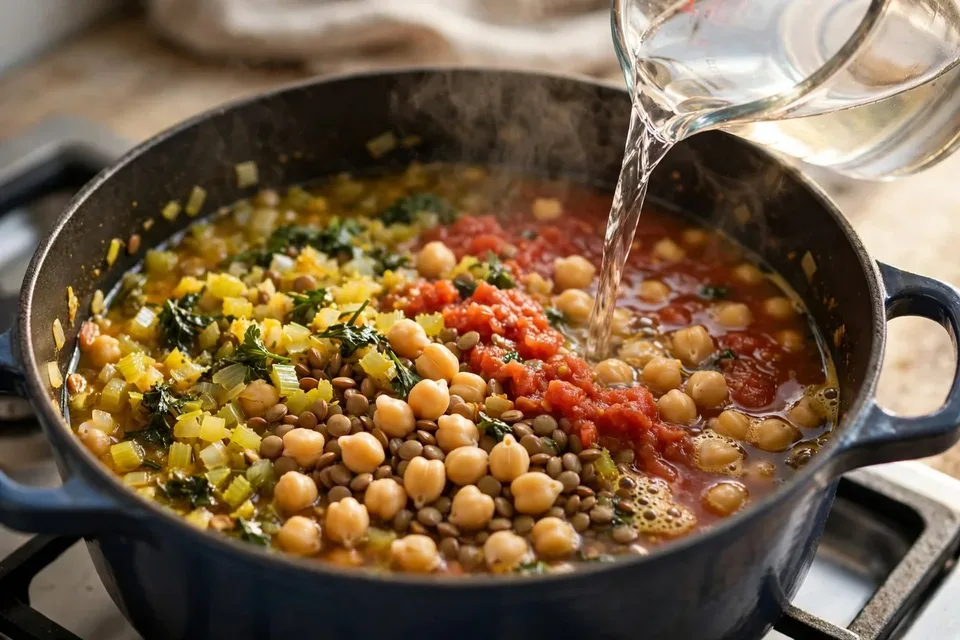
Add the rinsed lentils and cooked chickpeas, then pour in the water or unsalted stock.
Add the rinsed lentils and cooked chickpeas, then pour in the water or unsalted stock. Add the salt and stir thoroughly. Bring the soup to a boil over medium-high heat, then immediately reduce the heat to maintain a steady gentle simmer. Partially cover the pot, leaving a gap for steam to escape.
Look for
The broth should be evenly tomato-red with the pulses distributed through it, then settle into small regular bubbles rather than a hard rolling boil.
Kitchen note
This method uses already-cooked chickpeas. If you start from dried chickpeas, soak and cook them separately until nearly tender first; otherwise the lentils and later additions can overcook before the chickpeas soften.
 Step 06
Simmer until the lentils and meat are tender
35 min
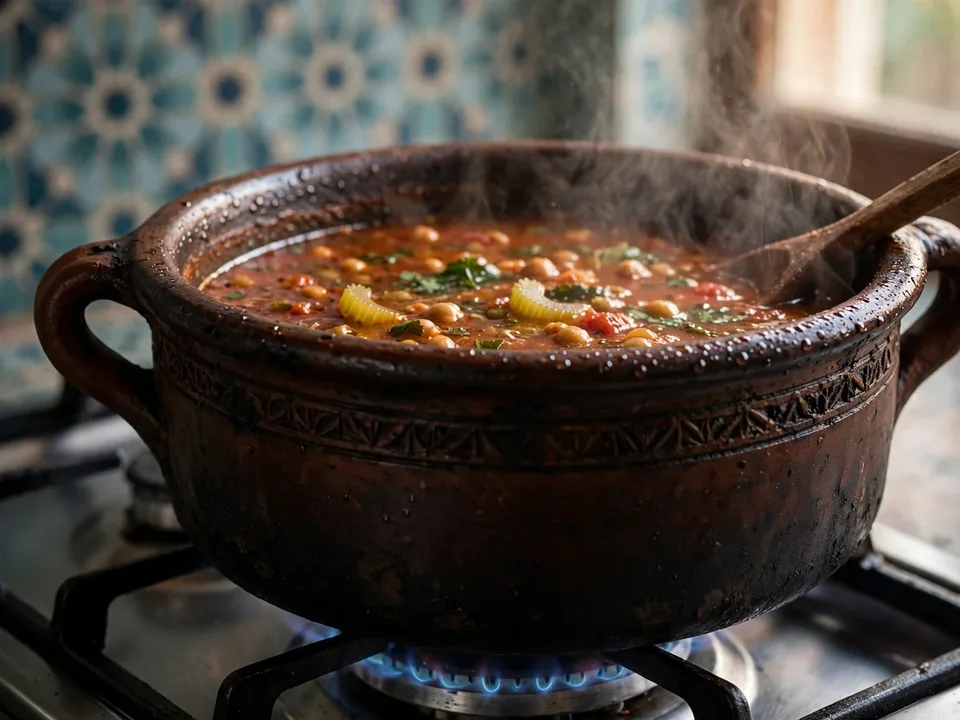
Simmer gently for 30–40 minutes, stirring from the bottom every 8–10 minutes.
Simmer gently for 30–40 minutes, stirring from the bottom every 8–10 minutes. Add a little hot water or stock if the soup thickens before the lentils are tender. Test the lentils rather than relying only on the clock: they should yield easily with no chalky centre. If using meat, also check that the pieces are tender; continue the gentle simmer as needed before moving to the quick finishing stages.
Look for
The lentils should be tender but still recognizable, the chickpeas should be soft through the centre, and any meat should yield easily when bitten.
Kitchen note
The lentils—and the meat if using—must be ready before the flour and vermicelli go in. Those final ingredients cook quickly and make the soup more prone to sticking, so they should not be used to compensate for undercooked pulses.
 Step 07
Thicken gradually and cook out the flour
8 min
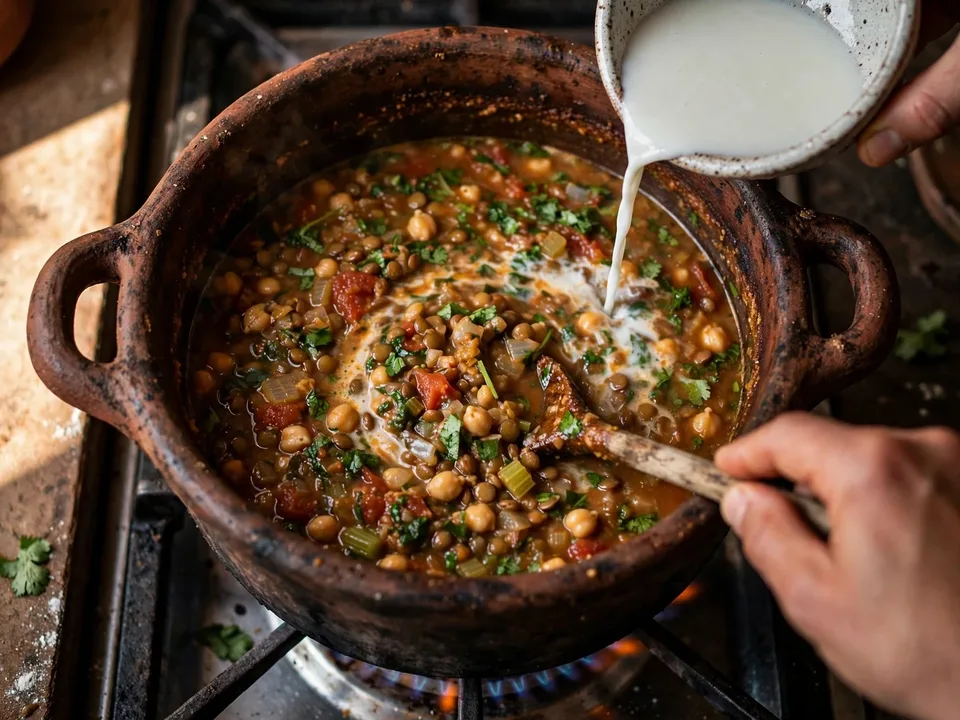
Whisk the flour slurry again until perfectly smooth.
Whisk the flour slurry again until perfectly smooth. Keep the harira at a gentle simmer and drizzle in about half the slurry in a thin stream while stirring continuously. Simmer for 2–3 minutes, then assess the texture before adding more. Continue only until the broth is silky and moderately thick, then simmer for another 5 minutes, stirring frequently and scraping the bottom so the flour cooks through without catching.
Look for
The broth should lightly coat the back of a spoon but still pour freely around the chickpeas and lentils; it should never resemble paste or porridge.
Kitchen note
Do not assume the whole slurry must go in. Harira continues to thicken as the flour cooks, as the noodles absorb broth and again while the soup rests. It is much easier to add a little more thickener than to rescue a gluey pot.
 Step 08
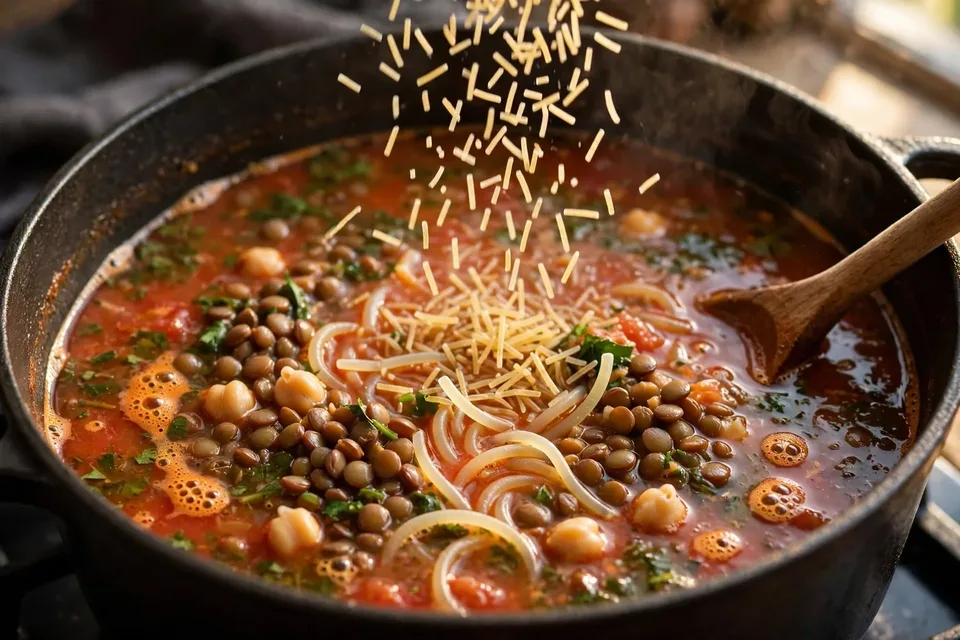
Add the vermicelli near the end
5 min
Stir in the broken vermicelli and continue at a gentle simmer for about 4–6 minutes, or according to the noodle thickness.
Stir in the broken vermicelli and continue at a gentle simmer for about 4–6 minutes, or according to the noodle thickness. Stir once or twice from the bottom so the strands do not settle and stick. Stop when the vermicelli is tender but still intact; it will continue softening and absorbing liquid as the soup rests.
Look for
The noodle pieces should bend easily and taste cooked through while remaining distinct rather than dissolving into the soup.
Kitchen note
If you are making harira ahead, consider leaving the soup slightly looser or cooking the vermicelli very cautiously. Noodles keep absorbing broth in the refrigerator, which is why leftover harira often needs hot water or stock when reheated.
 Step 09
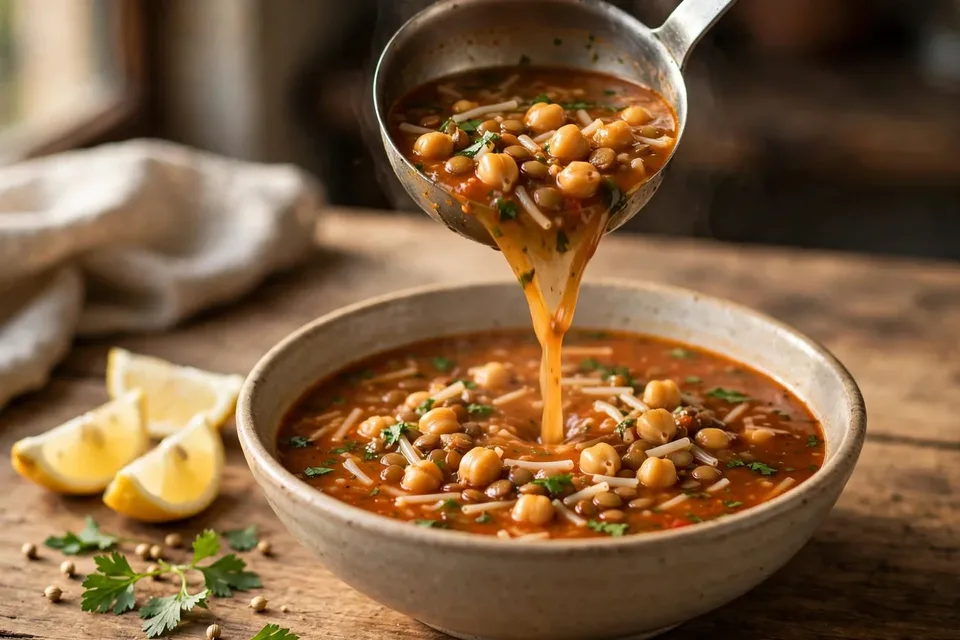
Balance, rest and serve
8 min
Stir in the reserved coriander and parsley and simmer for about 1 minute.
Stir in the reserved coriander and parsley and simmer for about 1 minute. Taste and adjust salt and black pepper. Add lemon juice gradually if you want the pot lightly brightened, or serve lemon wedges at the table so each person can season their own bowl. Turn off the heat and rest the harira for 5–10 minutes, then check the texture one final time. If it has become too thick, loosen it with hot water or stock a little at a time. Ladle into warm bowls and serve hot. For a Ramadan-style table, dates and chebakia are traditional accompaniments, though harira is also eaten throughout the year.
Look for
The finished harira should pour readily, carry pulses and noodles in each ladle, and lightly coat the spoon while remaining clearly soup-like.
Kitchen note
Resting is part of the consistency check, not dead time. The soup should finish velvety and spoonable, and the final herbs and lemon should lift the tomato, pulses and warm spices rather than make the soup taste sharply acidic.
After cooking
Explore the dish beyond the method.
Story, place and references are here for discovery, so they stay out of the way while you cook.
Culture & tradition
The story behind the dish
Origins, evolution and everyday life—read together as part of the recipe's culinary record.
Origins
Harira belongs to a wider Maghrebi family of grain- and pulse-based soups. Rather than one fixed origin story, it is better understood through its long-standing role in Moroccan household cooking and hospitality.
How it evolved
Family and regional recipes vary in the balance of chickpeas, lentils, meat, noodles or rice, herbs, tomato and thickener. Some are robust and meaty; others are lighter and pulse-forward.
Its place today
Harira is eaten throughout the year and is especially associated with the evening meal that breaks the fast during Ramadan, often appearing alongside dates and sweets such as chebakia.
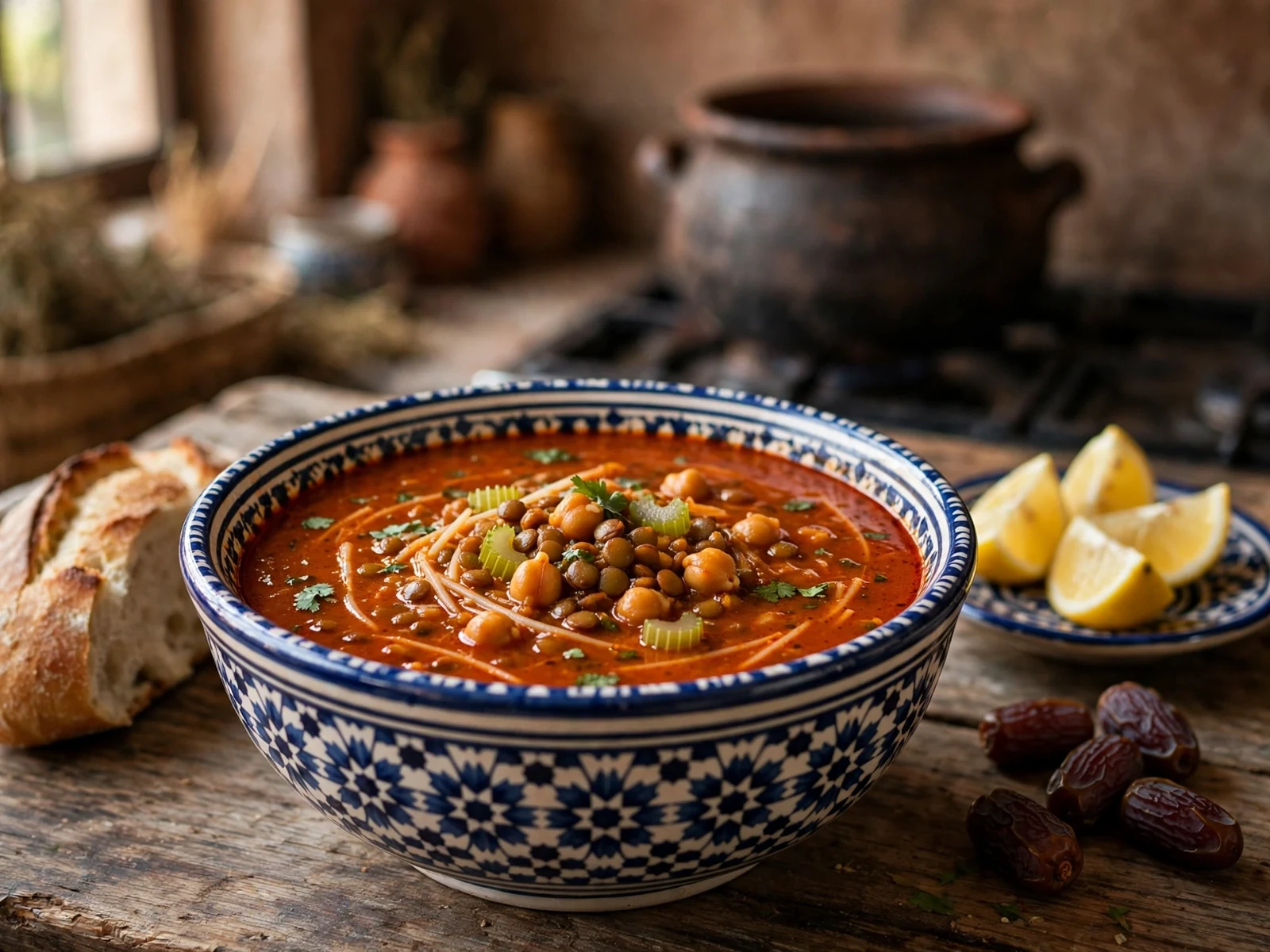
Visual archive · plate 01
Harira
An editorial view of the finished dish, kept compact so the story continues without an oversized image break.
Primary region
Morocco — nationwide, with household and regional variations
Country
Morocco
Regional influence
Shelf-stable pulses, grains, dried spices and preserved pantry staples support a substantial soup that can be finished with fresh herbs and citrus.
Related food systems
- Maghrebi soups
- Ramadan food traditions
- Moroccan pulse and grain cookery
Sources & further reading
Follow the reference trail.
Ember & Equator links outward when an institution or primary reference helps support the culinary record.
- 01Moroccan Food & DrinkExternal ↗
Moroccan National Tourist Office · government
Supports: dish identity · Ramadan context · core ingredients
Ember & Equator source review · 2026-09-01
- 02The welcoming Moroccan gastronomyExternal ↗
Moroccan National Tourist Office · government
Supports: culinary context · hospitality · Ramadan context
Ember & Equator source review · 2026-09-01
- 03The Moroccan Harira recipe by Chef Karim BenbabaExternal ↗
Royal Mansour Marrakech · reference
Supports: ingredient structure · flour thickener · vermicelli · Ramadan serving context
Ember & Equator source review · 2026-09-09
- 04Leftovers and Food SafetyExternal ↗
USDA Food Safety and Inspection Service · government
Supports: cooling and refrigeration · leftover storage · reheating safety
Ember & Equator source review · 2026-09-11
- 05Harira Recipe — Moroccan Tomato Soup with Chickpeas and LentilsExternal ↗
Taste of Maroc — Christine Benlafquih · specialist publication
Supports: traditional tomato-lentil-chickpea structure · optional meat · herbs and spices · vermicelli or rice · tedouira flour thickener · Ramadan context
Ember & Equator source review · 2026-09-16
Ingredient guides
Learn about the ingredients behind the dish.
These are reference guides, not a second ingredient list. Follow an ingredient when you want to understand its role, use and wider culinary context.
Ingredient
olive oil
Understand what it contributes, how to use it, and the dishes that reveal it best.
Ingredient
yellow onion
Understand what it contributes, how to use it, and the dishes that reveal it best.
Ingredient
celery stalks
Understand what it contributes, how to use it, and the dishes that reveal it best.
Ingredient
garlic
Understand what it contributes, how to use it, and the dishes that reveal it best.
Ingredient
fresh coriander
Understand what it contributes, how to use it, and the dishes that reveal it best.
Ingredient
flat-leaf parsley
Understand what it contributes, how to use it, and the dishes that reveal it best.
Keep wandering
Where will this dish take you next?
Stay with the place, follow an ingredient or technique, or cross into another food culture. Each path begins with something already present in this dish.
Stay with the place
01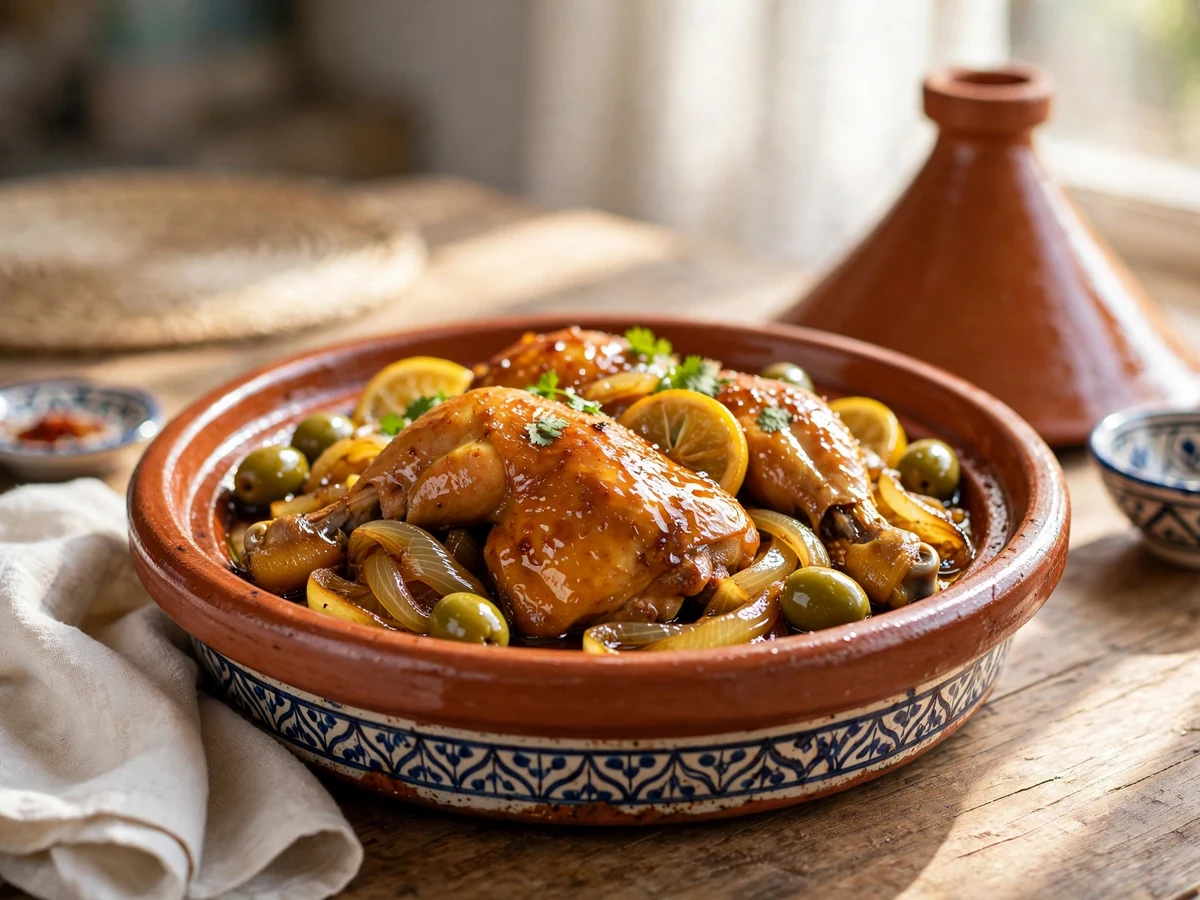
Morocco
Moroccan Chicken Tagine with Preserved Lemon and Olives
Stay in the same food culture and follow olive oil into another recipe.
Shared thread · olive oil · yellow onion · garlic
Follow the method or pantry
02
Morocco
Moroccan Couscous with Seven Vegetables
Follow the cooking method: both dishes connect through sauté.
Shared thread · Sauté · Simmer · olive oil
Cross a culinary border
03
India
Chole Bhature
Cross borders while keeping sauté as the common thread.
Shared thread · Sauté · Simmer · Toast spices
Go one layer deeper
One small detail can open an entirely different part of food.
Continue in Ember & Equator