
India · lunch · dinner · comfort-food
Dal Baati Churma
India through one enduring dish.
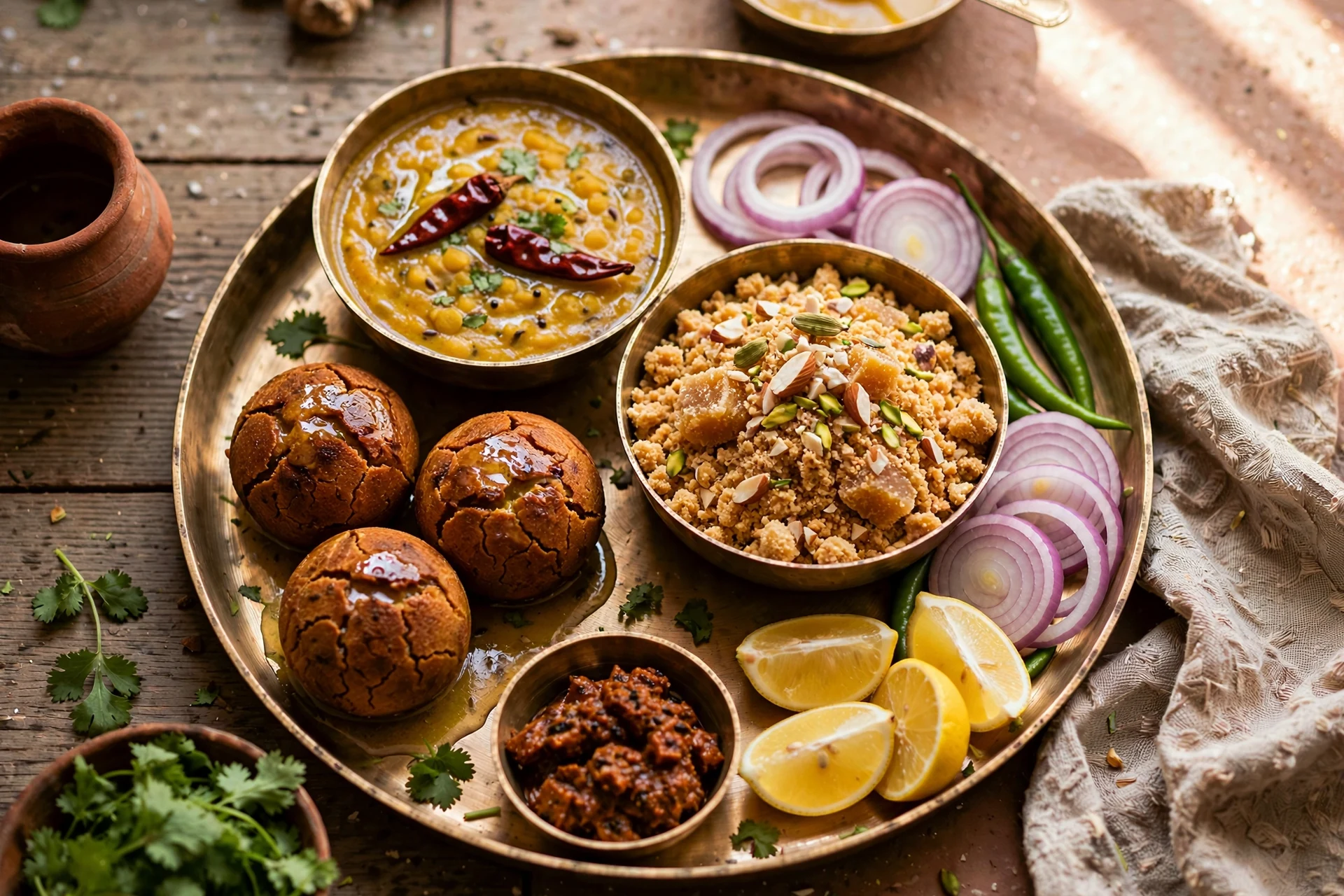
Dal baati churma is a Rajasthani trio of richly tempered mixed lentils, thick roasted whole-wheat baati enriched with ghee, and sweet coarse churma scented with cardamom and nuts. The dish works because the three parts remain texturally distinct but are eaten together.
- Total
- 105 min
- Difficulty
- Hard
- Serves
- 4
- Steps
- 10
The dish
Place first. Then the plate.
Dal baati churma is strongly associated with Rajasthan, where dal, baati and churma form an iconic meal built around lentils, wheat and ghee. Household practice varies: panchmel dal blends differ, baati may be cooked over traditional live heat or in a modern oven, and churma may be made from a separate sweet wheat base or from cooked wheat pieces crushed and enriched. Ember & Equator therefore presents one detailed home-kitchen version rather than claiming a single universal formula.
Explore IndiaAt a glance
Origin
India
Region
Rajasthan, India
Meal
lunch · dinner · comfort-food
Guided steps
10
Dish
Dal Baati Churma
Cuisine
Indian cuisine
Food type
Lunch · Dinner · Comfort food
Technique
Simmer · Toast spices · Knead dough
Cook the recipe
In the kitchen
Start with the ingredients, then follow the Method in order. Open cooking tips only when you need extra help; the story and references can wait until you are ready.
- Total
- 105 min
- Serves
- 4
- Level
- Hard
- Visual cues
- 10
Ingredients
Serves 4- ½ cuptoor dalsplit pigeon peas; rinse well
- ¼ cupyellow moong dalsplit yellow mung; rinse well
- ¼ cupsplit green moong dalsplit green mung; rinse well
- ¼ cupchana dalsplit Bengal gram; rinse well
- ¼ cupmasoor dalsplit red lentils; rinse well
- 1 tspground turmericfor cooking the dal
- to tastesaltfor the dal, baati and final seasoning
- 2 tbspgheefor the dal tadka
- 1 tspcumin seedsfor the tadka
- 1 pinchasafoetidahing; for the tadka
- 2–3 wholedried red chilliesfor the tadka
- 4–5 clovesgarlicfinely chopped
- 1 smallyellow onionfinely chopped
- 1–2 wholegreen chilliesfinely chopped or slit; adjust to taste
- 1 tspfresh gingerfinely grated
- 1 tspground corianderfor the tadka
- ½ tspred chilli powderadjust to heat preference
- ½ tspgaram masalaadd near the end
- ¼ cupfresh corianderroughly chopped; for finishing the dal
- 3 cupswhole-wheat flourfor the baati
- ½ cupsemolinasooji; for the baati
- ½ cupgheerub into the baati dough
- ½ tspajwaincarom seeds; lightly crush between your fingers
- ½–¾ cupmelted gheefor cracking, dipping or generously drizzling over hot baati, plus more at the table if desired
- 2 cupswhole-wheat flourfor the churma
- ½ cupgheerub into the churma dough; reserve a little extra for the finished crumbs if needed
- ½–¾ cuppowdered sugaradd to taste after the cooked wheat base has cooled slightly
- ½ tspground cardamomfor the churma
- 2 tbspalmondschopped
- 2 tbsppistachioschopped
Optional
- 1 tspmustard seedsoptional; for the tadka
- 1–2 tsplemon juiceadd gradually at the end, to taste
- 1 pinchsaffron threadsoptional; crush lightly before adding to the churma
Everything ready? Continue straight into the cooking steps.
Start methodMethod
10 steps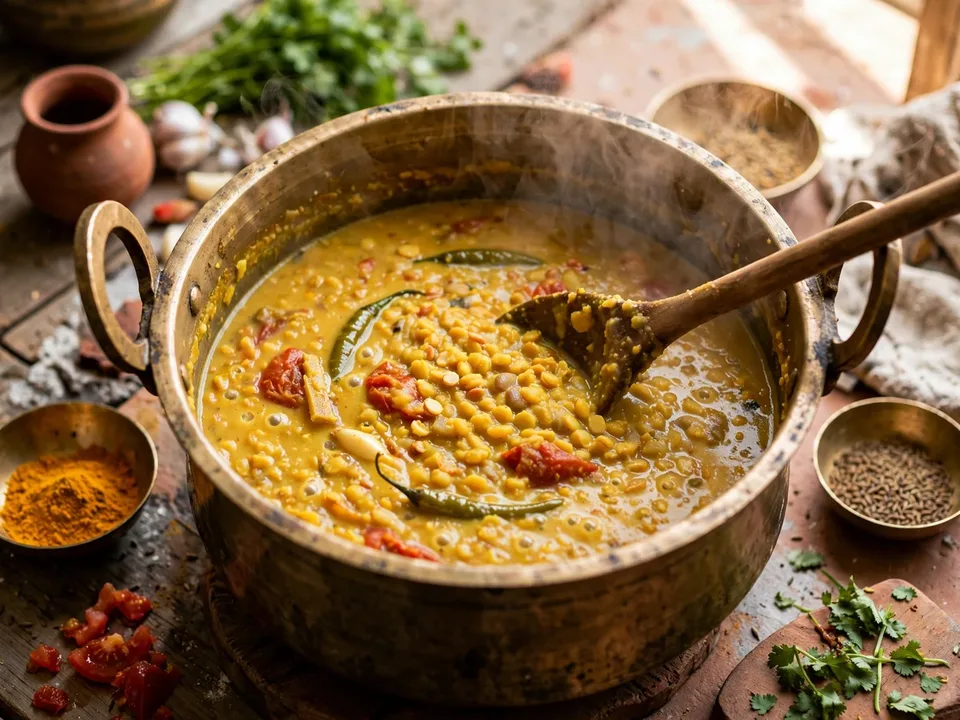 Step 01
Cook the mixed dal until completely tender
35 min
Rinse all five dals together in several changes of water until the water is noticeably less cloudy.
Rinse all five dals together in several changes of water until the water is noticeably less cloudy. Soak for 20–30 minutes if time allows, then drain. Transfer to a pressure cooker with the turmeric, about 1½ teaspoons salt and enough fresh water to cover the lentils by roughly 3–4 cm / 1½ in. Pressure-cook until every dal is completely soft; depending on the cooker, this is usually about 10–15 minutes at pressure after full pressure is reached, followed by a natural release. Stir or whisk briefly so some lentils break down while a little texture remains. If the dal is very thick, loosen with hot water until thick but spoonable.
Look for
The dal should be creamy and cohesive, with no hard lentil centres, yet still show a few soft individual pulses rather than becoming perfectly smooth purée.
Kitchen note
Mixed dals soften at different rates, so tenderness—not the timer—is the deciding cue. Do not move to the tadka while chana dal pieces still feel firm or chalky. For an easier workflow, cook the dal first; while it pressure-cooks and rests, make the baati dough, and prepare the churma component while the baati bake.
 Step 02
Build a fragrant ghee tadka and finish the dal
12 min
Heat 2 tablespoons ghee in a small heavy pan over medium heat.
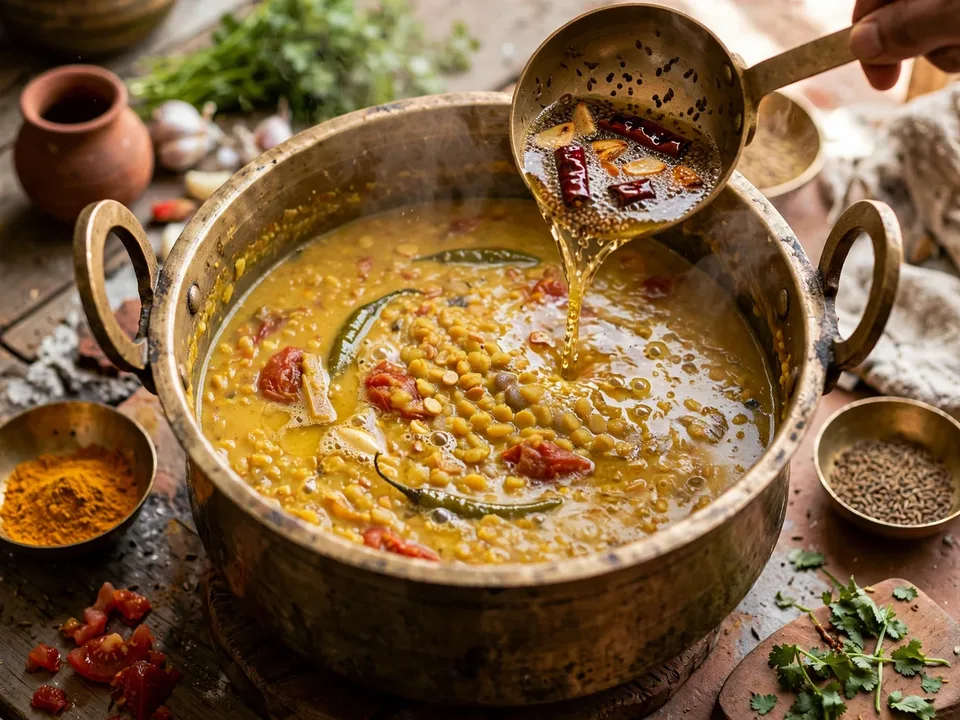
Heat 2 tablespoons ghee in a small heavy pan over medium heat. Add the cumin seeds and mustard seeds if using; let them crackle, then add the hing and dried red chillies. Add the chopped garlic and cook until lightly golden, not dark brown. Stir in the onion, green chillies and ginger and cook for 4–6 minutes until the onion is golden and aromatic. Add the ground coriander and red chilli powder and stir for 20–30 seconds. Carefully pour the hot tadka into the cooked dal, stir well and simmer together for 4–5 minutes. Turn off the heat, add garam masala and fresh coriander, then taste and add lemon juice gradually if the dal needs brightness.
Look for
The garlic should be pale golden, the spices aromatic rather than blackened, and the finished dal thick enough to coat a spoon while still flowing easily.
Kitchen note
Have the cooked dal ready before you start the tadka. Garlic and powdered spices can move from fragrant to burnt quickly, and scorched tadka will make the whole pot bitter.
 Step 03
Make a firm, ghee-rich baati dough and rest it
10 min
Combine the whole-wheat flour, semolina, ajwain and about ½ teaspoon salt.
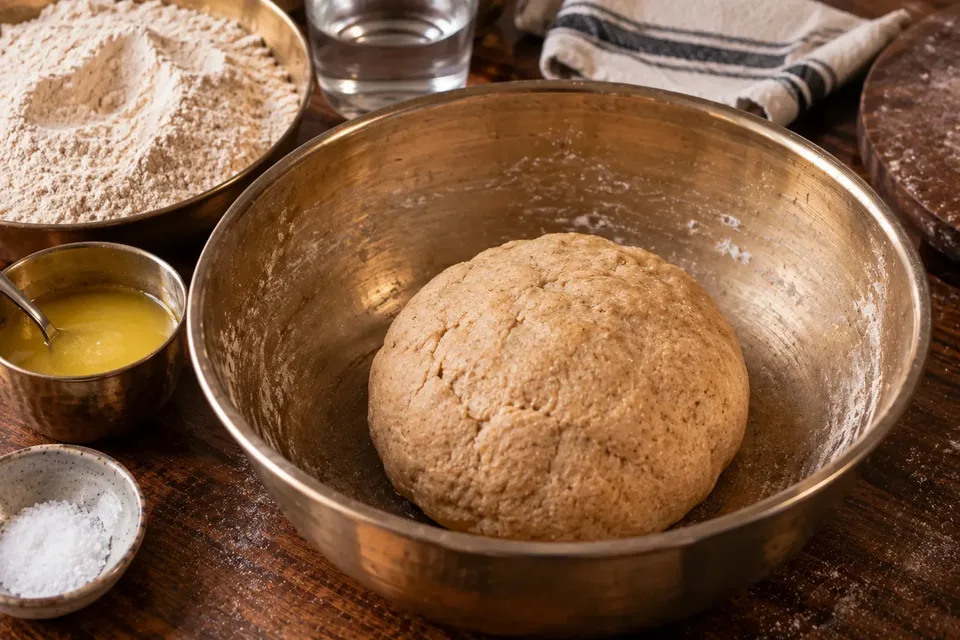
Combine the whole-wheat flour, semolina, ajwain and about ½ teaspoon salt. Add the ½ cup ghee and rub it thoroughly into the flour with your fingertips until the mixture resembles coarse crumbs and holds together briefly when squeezed. Add warm water a little at a time and bring the mixture into a firm but cohesive dough. Knead only until evenly combined and smooth enough to shape; the dough should be noticeably firmer than roti dough. Cover and rest for 20–30 minutes.
Look for
Before water, the flour should look like coarse moist crumbs; after kneading, the dough should hold firmly together without feeling sticky or soft.
Kitchen note
The rubbed-in ghee is part of the baati texture, not merely flavour. If the dough becomes soft and stretchy like roti dough, the baked baati can turn bread-like instead of dense and crumbly.
 Step 04
Shape thick baati with a small centre indentation
8 min
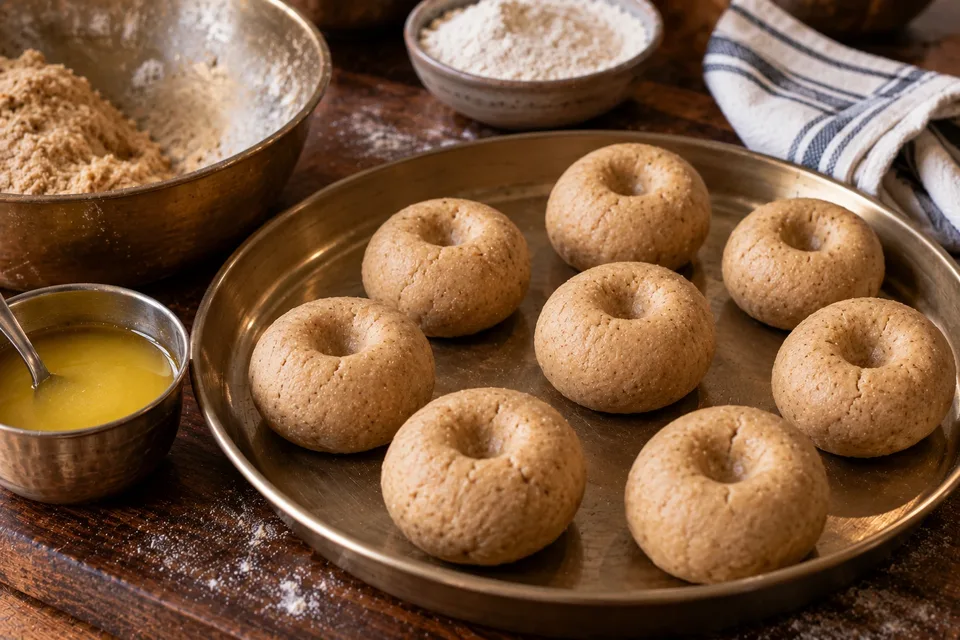
Divide the rested dough into 8 equal pieces and roll each into a compact, thick round about 5 cm across.
Divide the rested dough into 8 equal pieces and roll each into a compact, thick round about 5 cm across. Press your thumb gently into the top to make a shallow centre dimple — it should be an indentation, not a hole through the baati.
Look for
Each raw baati should look like a small, thick round with a shallow thumbprint depression on top — never a doughnut-like opening.
Kitchen note
Keep the portions thick and substantial. A few small surface cracks are normal; do not flatten them into discs or open the centre into a ring.
 Step 05
Bake the baati until deeply roasted and cooked through
30 min
Heat the oven to 200°C / 400°F.
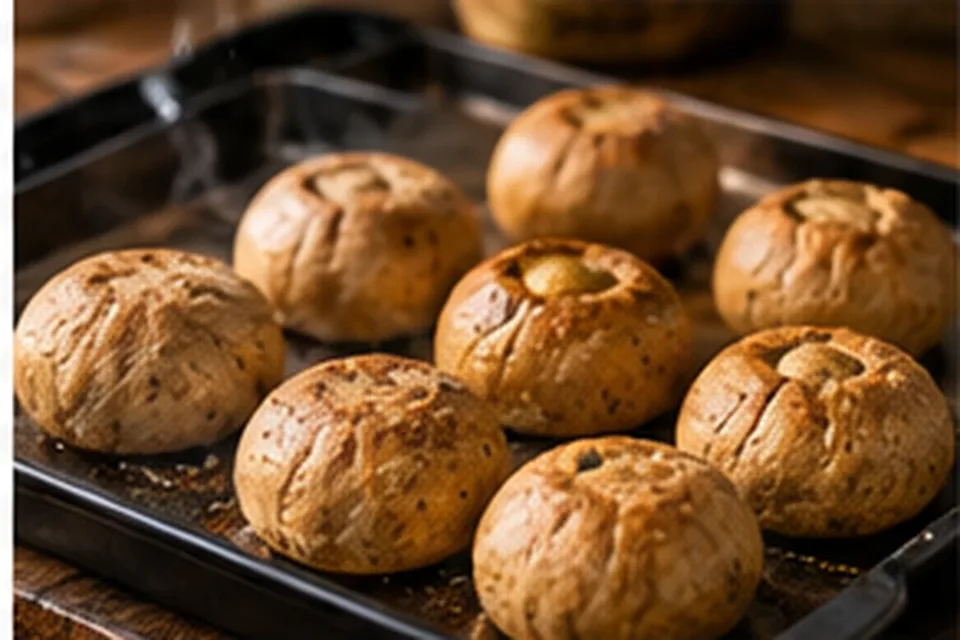
Heat the oven to 200°C / 400°F. Bake the baati for 25–35 minutes, turning once or twice so they colour evenly. They should become deeply golden to brown with a firm roasted exterior and visible surface cracks. Split one of the largest baati to check the centre: it should be cooked through and crumbly, with no wet or raw-flour core. For extra roasted character, give the fully cooked baati a brief final blast under high heat or on a dry hot pan, watching closely so they do not burn.
Look for
The exterior should be firm, cracked and deeply golden, while the split interior looks dry-cooked, tender and crumbly rather than doughy or rock-hard.
Kitchen note
Do not judge baati by the clock alone. Pale baati often taste floury, but continuing to bake after the centre is cooked can make them hard and dry; colour plus the split-centre check is more reliable.
 Step 06
Crack the hot baati and coat generously with ghee
5 min
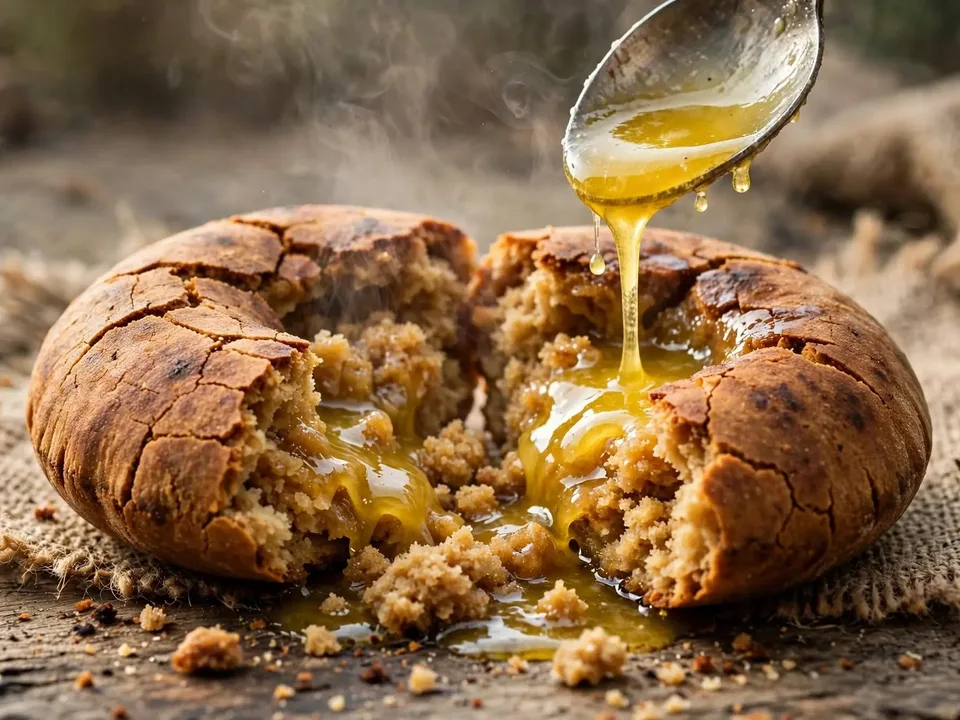
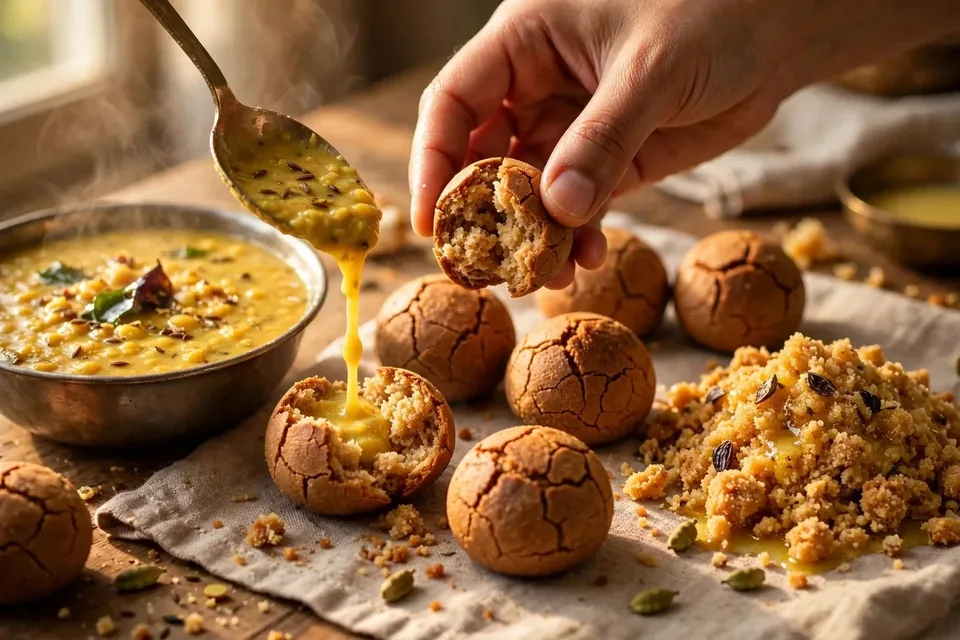
While the baati are still very hot, crack each one open slightly with your hands or a spoon so the interior can absorb ghee.
While the baati are still very hot, crack each one open slightly with your hands or a spoon so the interior can absorb ghee. Dip, spoon or drizzle the melted ghee generously over the cracked surfaces. Let the baati sit for a minute so the ghee moves into the crumb, then keep warm for serving. If you prefer a less rich portion, coat lightly at first and offer extra ghee at the table.
Look for
The outside should remain visibly roasted while the exposed crumb becomes glossy and moist with ghee without collapsing into paste.
Kitchen note
Ghee is a defining part of the dish, but the goal is absorption rather than an oily puddle. Cracking the baati while hot helps the crumb take in ghee without leaving the exterior completely soggy.
 Step 07
Make the separate churma dough
10 min
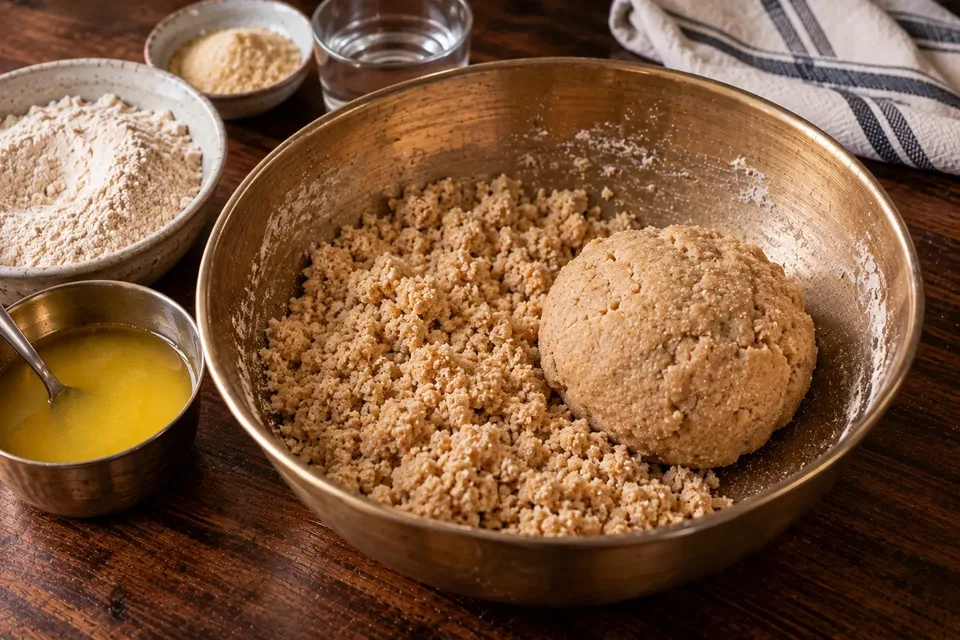
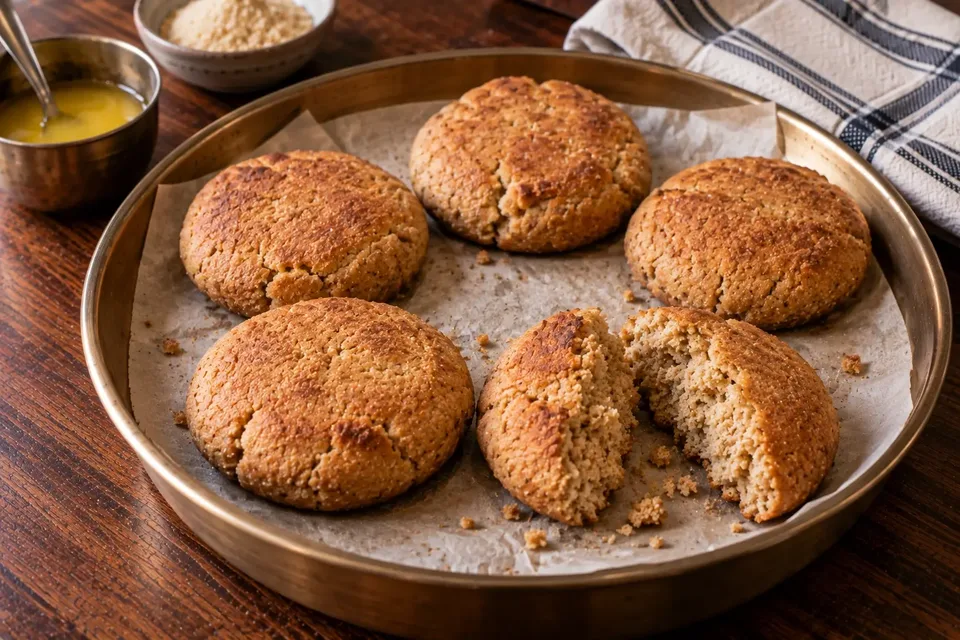
For the churma, combine the 2 cups whole-wheat flour with the ½ cup ghee and rub the fat thoroughly through the flour until the mixture forms coarse buttery crumbs.
For the churma, combine the 2 cups whole-wheat flour with the ½ cup ghee and rub the fat thoroughly through the flour until the mixture forms coarse buttery crumbs. Add warm water gradually and press together into a firm dough. Shape into 5–6 thick rough discs or flattened balls so the pieces cook through more readily than one large mass. They do not need to look as neat as the baati.
Look for
The flour should first resemble rich coarse crumbs, then form a firm dough that holds together without feeling sticky or elastic.
Kitchen note
Keep the churma dough firm and relatively low in water. Too much water creates a bread-like crumb and makes it harder to produce the dry, coarse texture needed for good churma.
 Step 08
Bake the churma base until thoroughly cooked and golden
25 min
Bake the thick churma discs at 190–200°C / 375–400°F for about 20–30 minutes, turning once, until golden-brown and completely cooked through.
Bake the thick churma discs at 190–200°C / 375–400°F for about 20–30 minutes, turning once, until golden-brown and completely cooked through. You can bake them alongside the baati if oven space and timing allow. Let them cool just until safe to handle, then break into rough pieces. The pieces should be dry enough to crumble but not scorched or rock-hard.
Look for
The pieces should be golden-brown outside and fully cooked inside, breaking into dry tender crumbs rather than stretching like bread dough.
Kitchen note
The sweetener is added later, so focus here on fully cooking and browning the wheat. If the centre is still doughy, the finished churma will taste raw no matter how much sugar, cardamom or ghee is added.
 Step 09
Crush and finish the churma while keeping it coarse
10 min
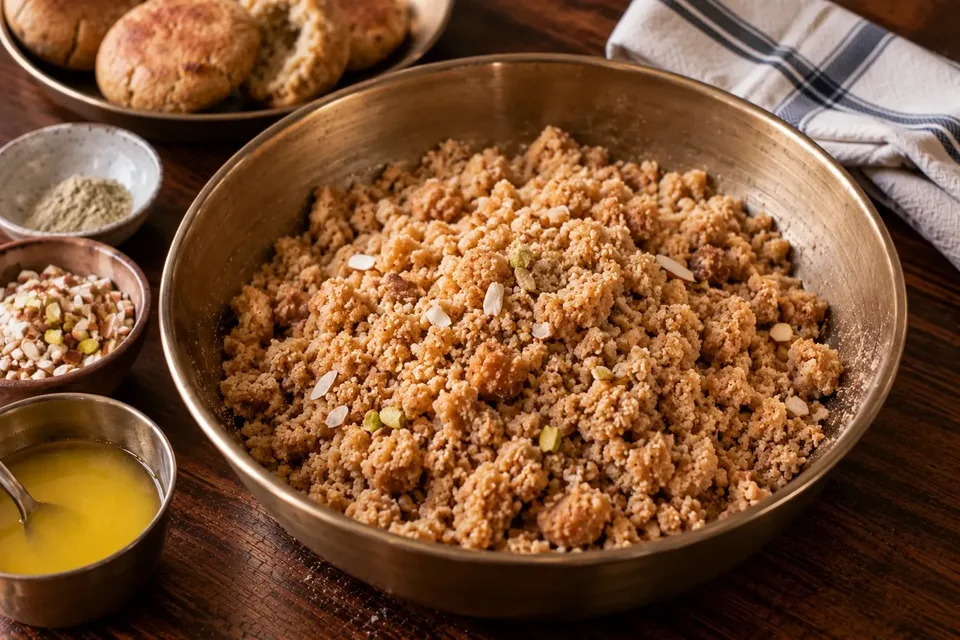
Crush or pulse the cooked wheat pieces into coarse crumbs using a food processor, mortar or sturdy bowl and pestle.
Crush or pulse the cooked wheat pieces into coarse crumbs using a food processor, mortar or sturdy bowl and pestle. Stop before they become fine flour. Let the crumbs cool until warm rather than piping hot, then mix in ½ cup powdered sugar and taste before adding more. Add the cardamom, chopped almonds, pistachios and saffron if using. Mix in a little additional melted ghee only as needed so the churma is rich and moist but still loose and crumbly.
Look for
The finished churma should show distinct coarse wheat crumbs and chopped nuts, feel rich and moist, and fall loosely from a spoon rather than holding as a paste.
Kitchen note
Adding powdered sugar to very hot crumbs can make it melt and clump. Warm crumbs take the flavour well while preserving the loose, sandy texture that distinguishes churma from halwa or cake filling.
 Step 10
Serve the dal, ghee-soaked baati and churma together
5 min
Reheat the dal gently if needed and adjust with a splash of hot water so it remains thick but spoonable.
Reheat the dal gently if needed and adjust with a splash of hot water so it remains thick but spoonable. Serve hot dal in a bowl with the ghee-coated baati and a separate mound or bowl of churma. Offer extra melted ghee, lemon, onion, green chilli, pickle or garlic chutney as desired. To eat, crack a baati, add dal and ghee, and alternate the savoury bites with churma so the contrast between earthy dal, roasted wheat and cardamom sweetness stays clear. If cooking alone, keep the finished dal covered on the lowest heat and finish the churma before the final baati ghee soak so the baati reach the table hot.
Look for
A finished serving should show three distinct textures: spoonable dal, cracked roasted baati with tender crumb, and loose coarse churma rather than one mixed mass.
Kitchen note
The components should meet at the table, not lose their identities in advance. Keep the dal fluid, the baati hot and crumbly, and the churma loose so each bite can be balanced to taste.
After cooking
Explore the dish beyond the method.
Story, place and references are here for discovery, so they stay out of the way while you cook.
Culture & tradition
The story behind the dish
Origins, evolution and everyday life—read together as part of the recipe's culinary record.
Origins
Dal baati churma is firmly associated with Rajasthan. Popular stories connect baati to older travel or military food traditions, but precise origin claims are difficult to verify and should be treated cautiously.
How it evolved
Baati may be roasted over traditional heat sources or baked in modern ovens; dal blends and temperings vary widely; churma is made by cooking wheat dough, crushing it and enriching the crumbs with ghee and a sweetener.
Its place today
The trio remains a celebratory, restaurant and home-cooked Rajasthani meal, commonly eaten by breaking hot baati, adding generous ghee and dal, and alternating with sweet churma.
Visual archive · plate 01
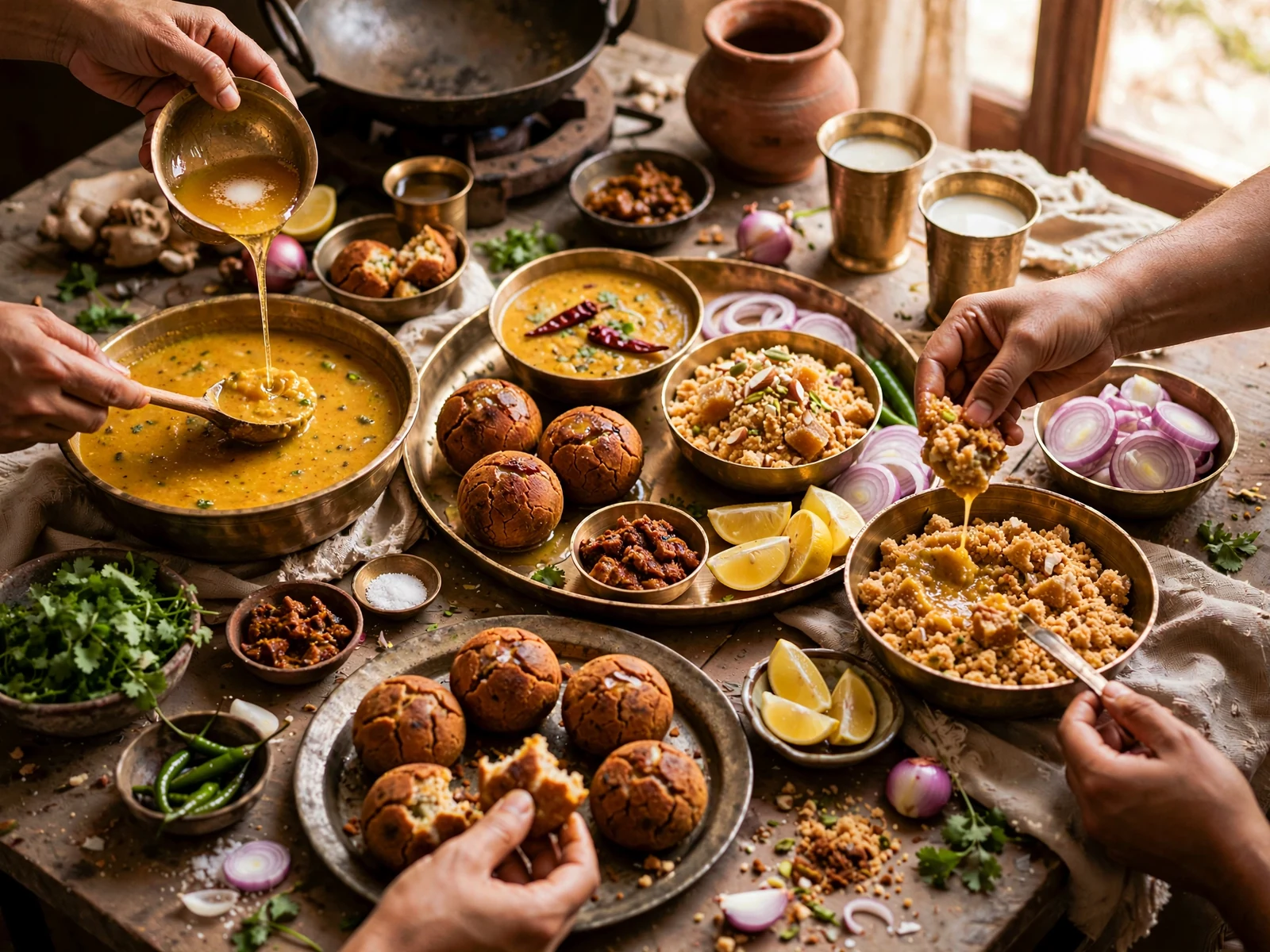
Dal Baati Churma
An editorial view of the finished dish, kept compact so the story continues without an oversized image break.
Primary region
Rajasthan, India
Country
India
Regional influence
Rajasthani food traditions make extensive use of wheat, pulses, ghee, spices and shelf-stable ingredients, while roasted breads and concentrated accompaniments suit the region’s historic cooking patterns and arid environment.
Related food systems
- Rajasthani cuisine
- Indian mixed-dal traditions
- Whole-wheat baati and roasted breads
- Ghee-rich festive meals
Culinary record
- Sub-region
- South Asia — Indian Subcontinent
- Climate
- Monsoon
- Trade-route influence
- Spice Route · Mughal exchange · British colonial trade
Sources & further reading
Follow the reference trail.
Ember & Equator links outward when an institution or primary reference helps support the culinary record.
- 01A gastronomic journey through Bharatpur’s flavoursExternal ↗
Ministry of Tourism, Government of India · government
Supports: Dal Baati Churma identity · Rajasthani context · traditional preparation
Ember & Equator source review · 2026-09-01
- 02Rajasthan — A feast fit for royaltyExternal ↗
Ministry of Tourism, Government of India · government
Supports: Dal Baati Churma as an iconic Rajasthani dish · round wheat baati · spiced dal · sweet crumbly churma
Ember & Equator source review · 2026-09-09
- 03Baati Recipe (Oven + Gas Tandoor)External ↗
Whisk Affair · specialist publication
Supports: firm whole-wheat baati dough · thumb indentation when shaping · oven/tandoor cooking · hot baati dipped in ghee
Ember & Equator source review · 2026-09-12
- 04Panchmel Dal Recipe (Rajasthani Pancharatna Dal)External ↗
Whisk Affair · specialist publication
Supports: five-lentil panchmel dal identity · household variation in dal combinations · dal served with baati
Ember & Equator source review · 2026-09-12
- 05Rajasthani Cuisine: Traditional FlavorsExternal ↗
Department of Tourism, Government of Rajasthan · government
Supports: Dal Baati Churma identity · lentil dal · wheat baati · ghee treatment · sweet churma · Rajasthani context
Ember & Equator source review · 2026-09-16
Ingredient guides
Learn about the ingredients behind the dish.
These are reference guides, not a second ingredient list. Follow an ingredient when you want to understand its role, use and wider culinary context.
Ingredient
toor dal
Understand what it contributes, how to use it, and the dishes that reveal it best.
Ingredient
moong dal
Understand what it contributes, how to use it, and the dishes that reveal it best.
Ingredient
chana dal
Understand what it contributes, how to use it, and the dishes that reveal it best.
Ingredient
ground turmeric
Understand what it contributes, how to use it, and the dishes that reveal it best.
Ingredient
salt
Understand what it contributes, how to use it, and the dishes that reveal it best.
Ingredient
ghee
Understand what it contributes, how to use it, and the dishes that reveal it best.
Keep wandering
Where will this dish take you next?
Stay with the place, follow an ingredient or technique, or cross into another food culture. Each path begins with something already present in this dish.
Stay with the place
01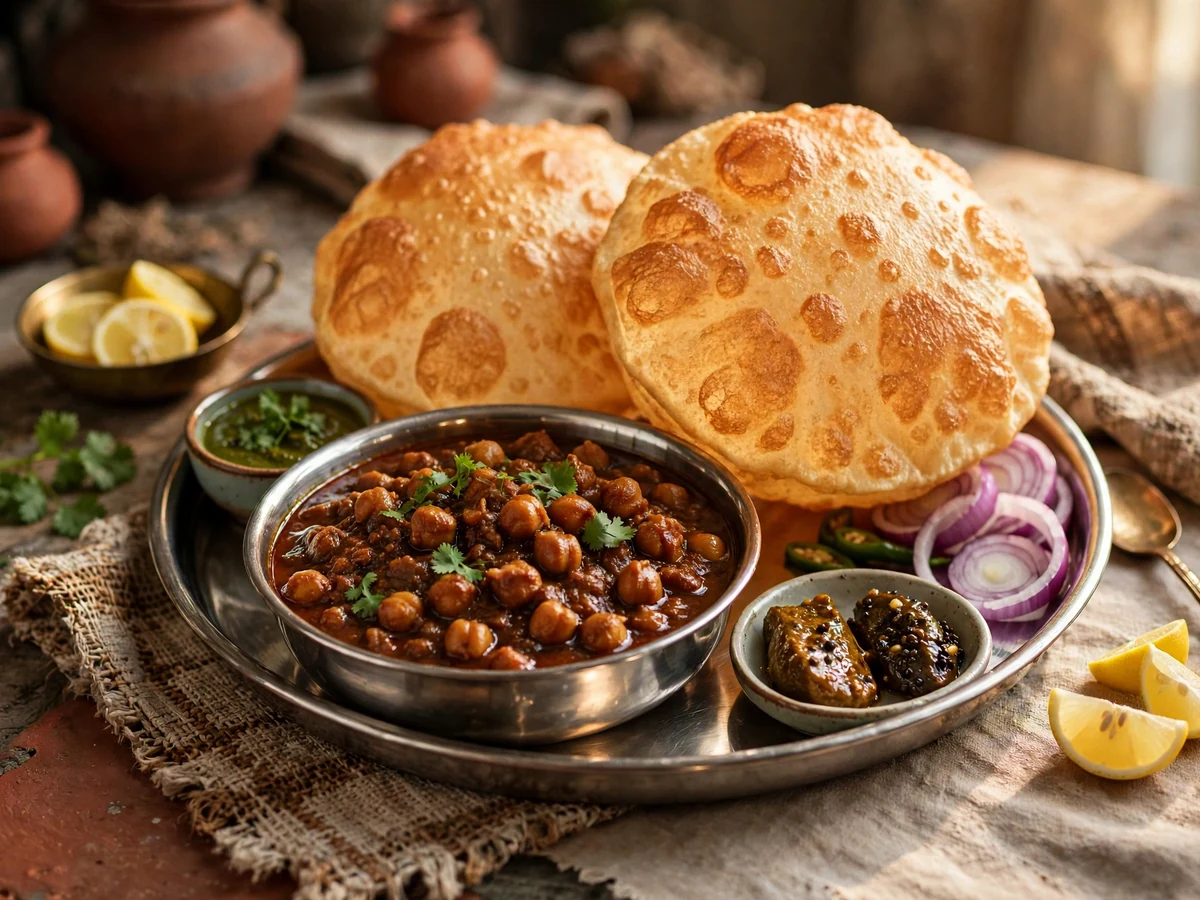
India
Chole Bhature
Stay in the same food culture and notice how simmer appears in another dish.
Shared thread · Simmer · Toast spices · Knead dough
Follow the method or pantry
02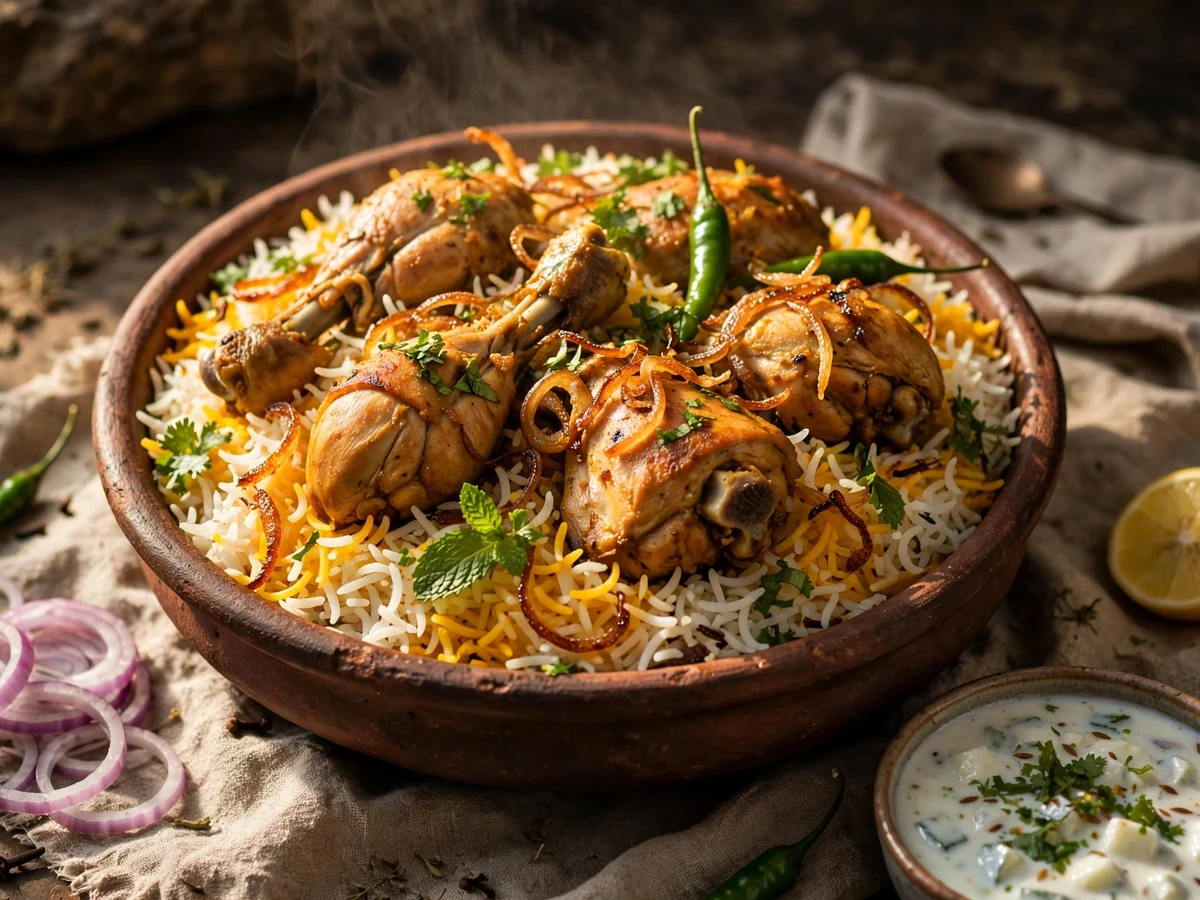
India
Hyderabadi Chicken Biryani
Follow the pantry: both dishes connect through ground turmeric.
Shared thread · ground turmeric · ghee · yellow onion
Cross a culinary border
03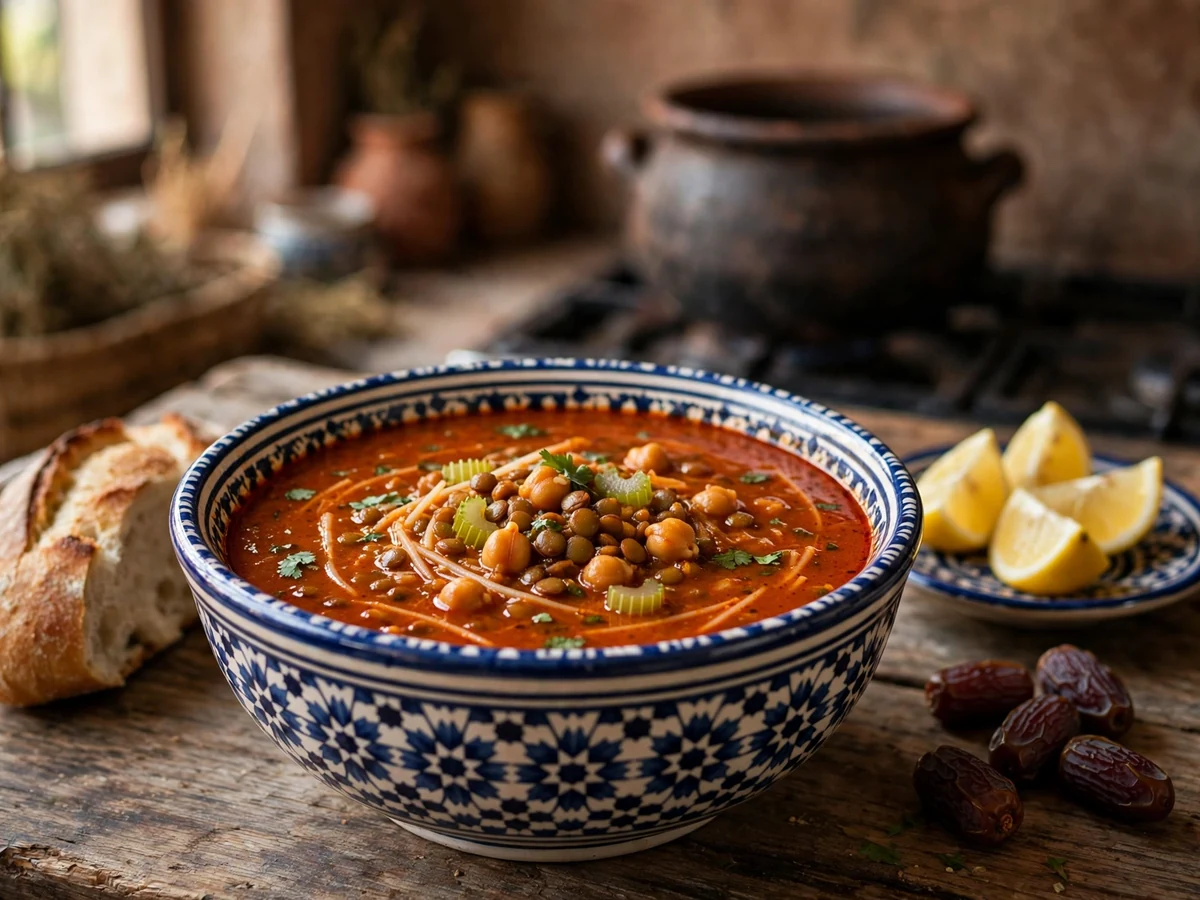
Morocco
Harira
Cross borders while keeping simmer as the common thread.
Shared thread · Simmer · Toast spices · Sauté
Go one layer deeper
One small detail can open an entirely different part of food.
Continue in Ember & Equator