
India · breakfast · snack · street-food
Indori Poha
India through one enduring dish.
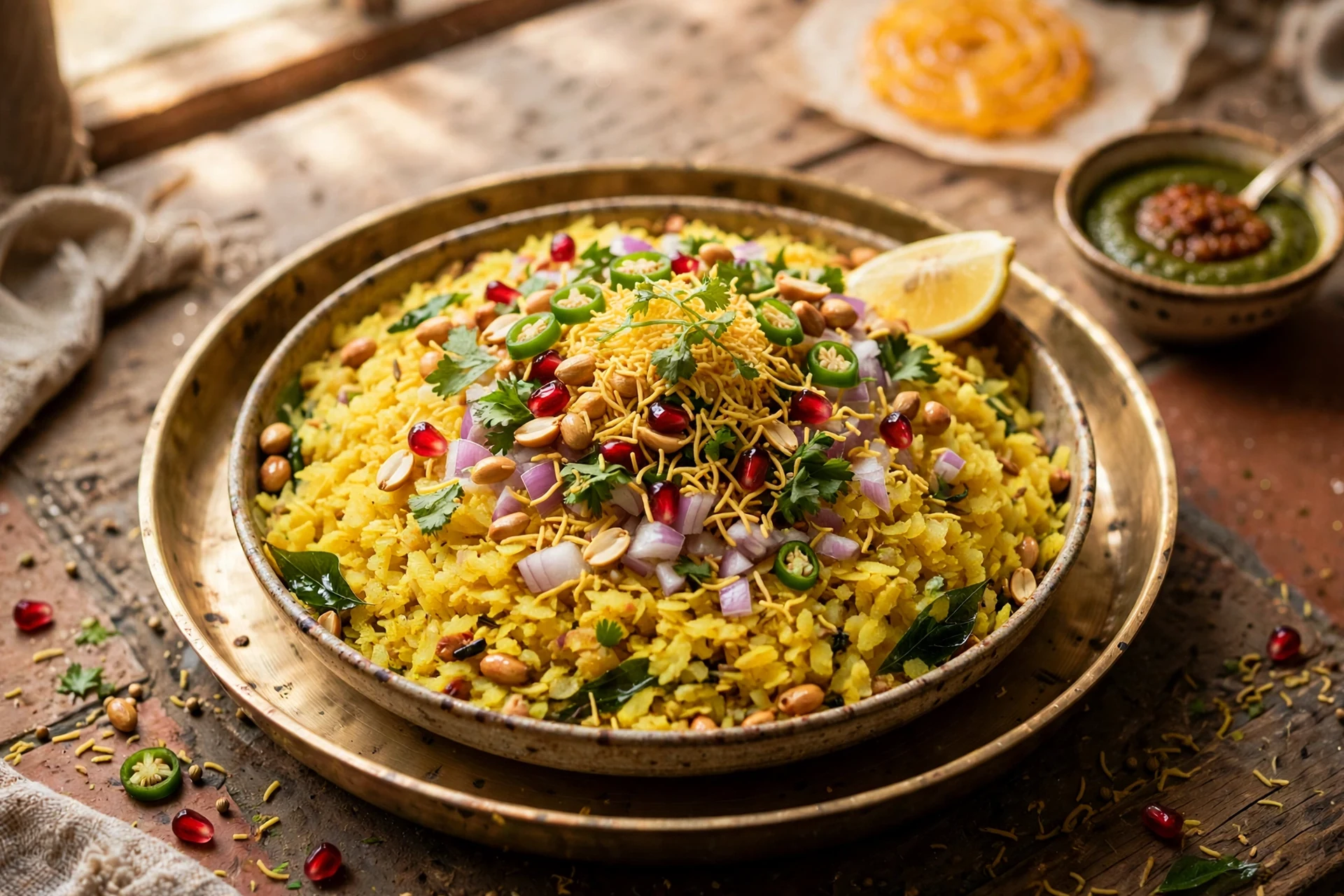
Indori poha is a light, gently steamed flattened-rice breakfast from Indore, seasoned with turmeric, sugar, mustard and fennel, then finished with raw onion, coriander, jeeravan masala, sev and lemon. The signature experience is soft, separate poha underneath a fresh, spicy, tangy and crunchy topping layer.
- Total
- 20 min
- Difficulty
- Easy
- Serves
- 4
- Steps
- 6
The dish
Place first. Then the plate.
Indore’s poha is known for being comparatively light and for gaining much of its character at the finish: sev, raw chopped onion, coriander, lime or lemon, and especially jeeravan. Street and household versions vary, and additions such as boondi, pomegranate or jalebi alongside are common rather than mandatory.
Explore IndiaAt a glance
Origin
India
Region
Indore, Madhya Pradesh
Meal
breakfast · snack · street-food
Guided steps
6
Dish
Indori Poha
Cuisine
Indian cuisine
Food type
Breakfast · Snack · Street food
Technique
Temper spices · Fold · Steam
Cook the recipe
In the kitchen
Start with the ingredients, then follow the Method in order. Open cooking tips only when you need extra help; the story and references can wait until you are ready.
- Total
- 20 min
- Serves
- 4
- Level
- Easy
- Visual cues
- 6
Ingredients
Serves 4- 300 gramsthick or medium-thick pohaflattened rice; avoid very thin poha because it turns mushy quickly
- 1/4 tspground turmericfor seasoning the softened poha
- 2-3 tspsugaradjust to taste; Indori poha is gently khatta-meetha rather than dessert-sweet
- 1 tspfine saltstart with this amount and adjust after the toppings
- 2 tbspneutral oilkeep the base relatively light rather than oily
- 1 tspmustard seedsfor the tempering
- 1 tspfennel seedssaunf; an important sweet-aromatic note in Indori-style poha
- 1 wholegreen chillifinely chopped; use more only if you want a hotter base
- 1 smallwhite onionfinely chopped and kept raw for the topping, not sautéed into the poha
- 1/4 cupcilantrofinely chopped, for finishing
- 1-2 tspjeeravan masalafor finishing; begin lightly because blends vary in heat and salt
- 1/2 cupIndori sev or Ratlami sevadd at the last moment so it remains crisp
- 1 wholelemoncut into wedges for serving
Optional
- 1/4 cupmasala boondi or nuktioptional topping for extra crunch
- 1/4 cuppomegranate arilsoptional topping; adds fresh sweet-acidic contrast
Everything ready? Continue straight into the cooking steps.
Start methodMethod
6 steps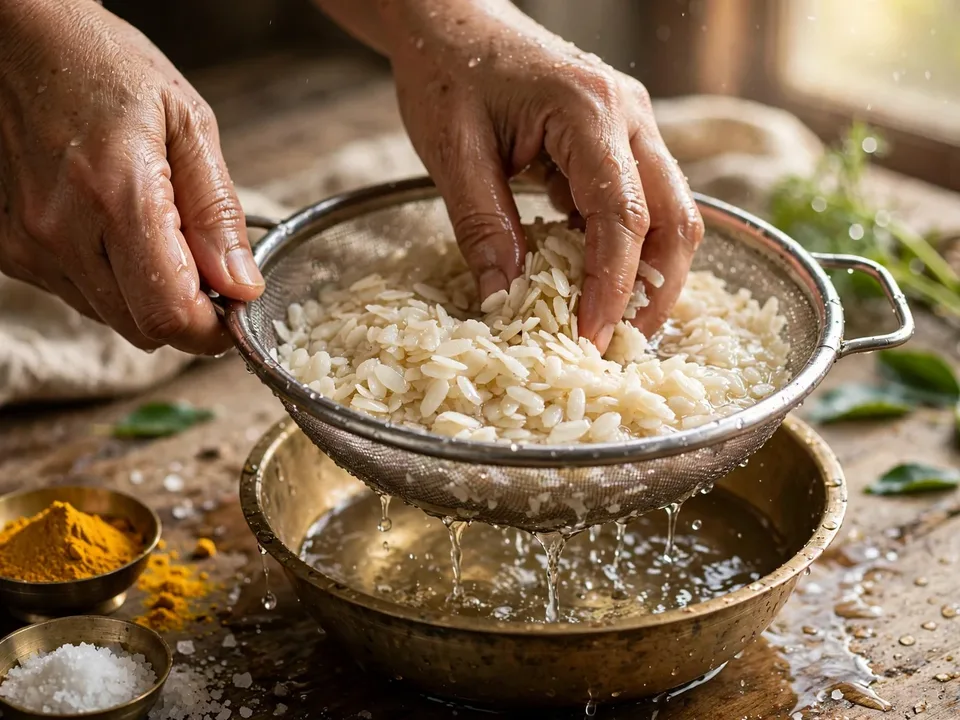 Step 01
Rinse the poha briefly and soften it
6 min
Put the thick or medium-thick poha in a wide colander.
Put the thick or medium-thick poha in a wide colander. Rinse it gently under running water just until every flake is moistened, using your fingers to turn the poha without squeezing or scrubbing it. Drain immediately and let it stand for 3–5 minutes. Do not soak it in a bowl of water. Test a flake before continuing: it should bend and break softly between your fingers while still remaining intact. If the centre is still chalky or firm, sprinkle over 1–2 tablespoons of water and rest for another minute or two rather than rinsing again.
Look for
The softened flakes should look plump and separate. A flake should bend without feeling hard, but the colander should not contain wet paste or broken mushy pieces.
Kitchen note
Poha absorbs water very quickly. Over-rinsing is much harder to correct than slightly under-hydrating, so stop as soon as the flakes are evenly damp and let resting finish the softening.
 Step 02
Season the softened poha before cooking
3 min
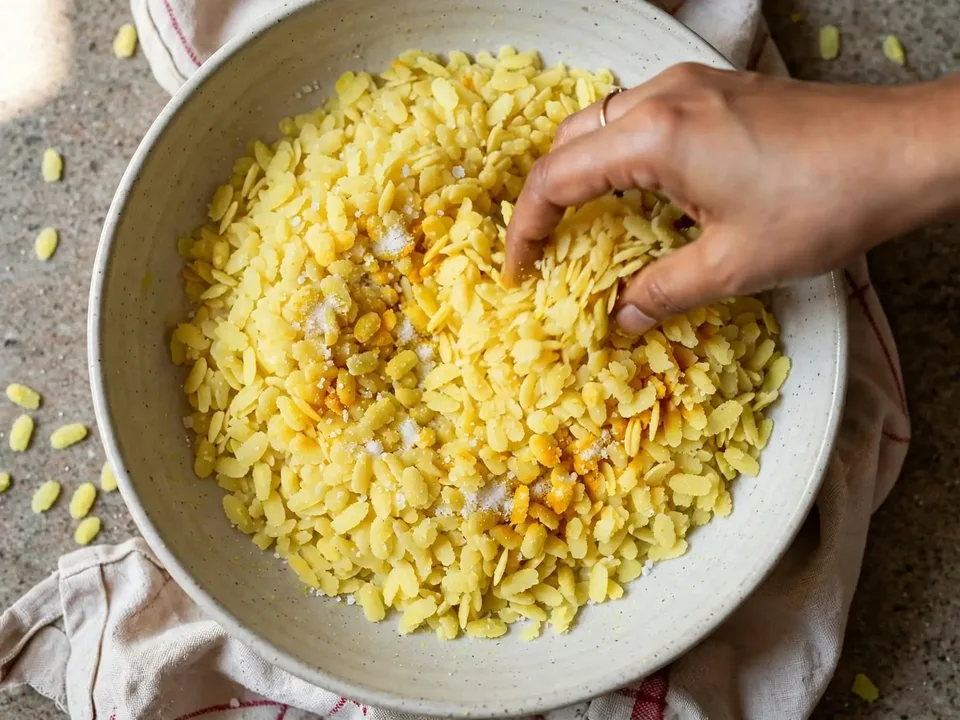
Transfer the drained poha to a wide bowl or leave it in the colander if there is room to mix gently.
Transfer the drained poha to a wide bowl or leave it in the colander if there is room to mix gently. Sprinkle over the turmeric, sugar and most of the salt. Toss very lightly with your fingers or two forks so the seasoning reaches the flakes without crushing them. Let the seasoned poha rest while you prepare the tempering; this short rest allows the remaining surface moisture to distribute evenly and helps the turmeric colour the flakes without needing a long cook.
Look for
The flakes should be evenly pale yellow with no concentrated turmeric patches, and they should still fall apart easily when lifted.
Kitchen note
Seasoning before the pan keeps the cooking stage short. The sugar should give a quiet sweetness that supports the later lemon and jeeravan rather than making the poha taste sugary.
 Step 03
Make the mustard-fennel tempering
3 min
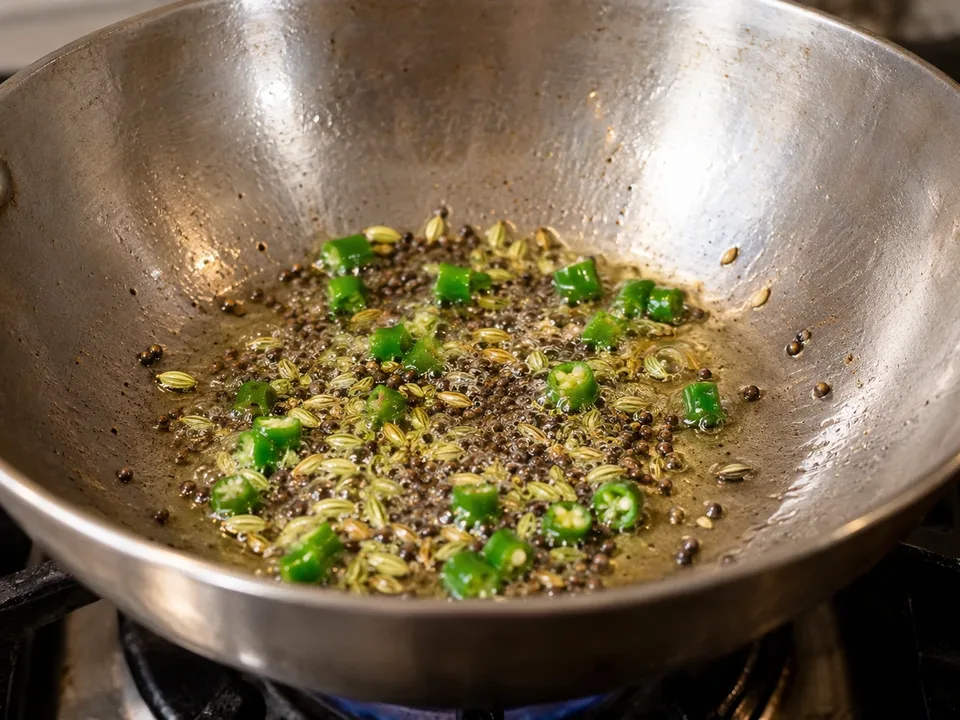
Heat the oil in a broad kadai or sauté pan over low to medium-low heat.
Heat the oil in a broad kadai or sauté pan over low to medium-low heat. Add the mustard seeds and wait until they begin to crackle. Add the fennel seeds and let them become fragrant for about 20–30 seconds, then add the chopped green chilli and stir only briefly. Keep this tempering simple and controlled: the defining raw onion belongs on top later, not browned in the pan.
Look for
You should hear gentle crackling from the mustard, smell fennel clearly, and see the chilli brighten without the seeds becoming dark or burnt.
Kitchen note
The mustard should crackle and the fennel should smell sweet and aromatic, but neither should turn black. If the seeds scorch, restart the tempering because bitterness is obvious in such a light dish.
 Step 04
Fold in the poha and steam it briefly
3 min
Reduce the heat to low and add the seasoned poha to the tempering.
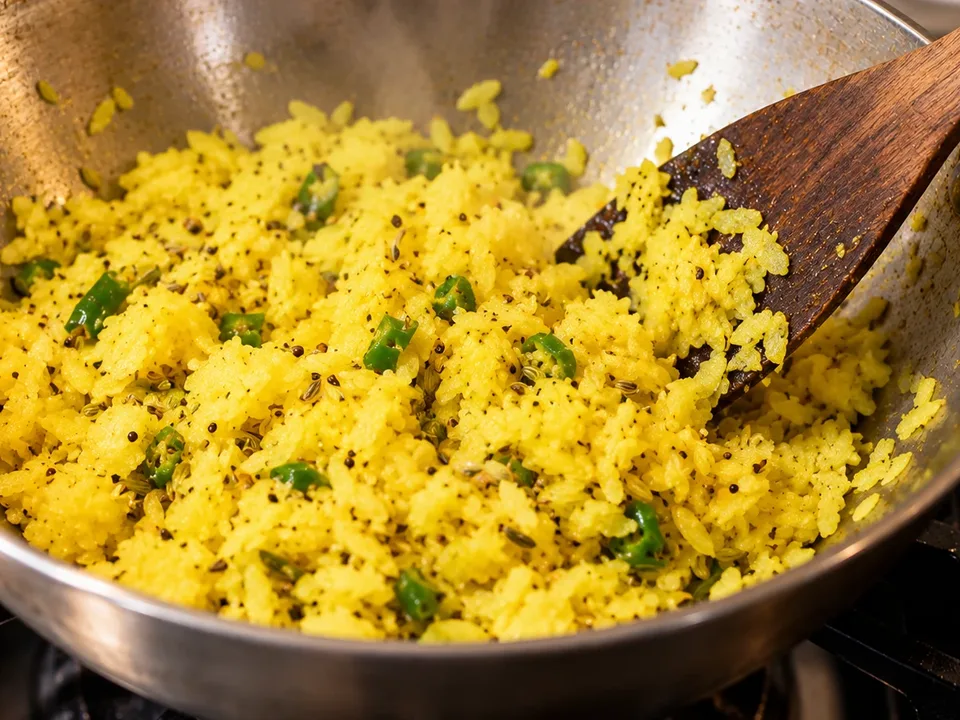
Reduce the heat to low and add the seasoned poha to the tempering. Fold from the bottom with a broad spoon or spatula until the seeds and chilli are distributed and the flakes are evenly yellow. Avoid vigorous stirring. Cover and steam on low heat for 1–2 minutes, then uncover and gently loosen the poha. If it looks dry before covering, sprinkle 1–2 tablespoons of water around the edge of the pan rather than pouring water directly over the centre.
Look for
The poha should be hot, fluffy and separate, with intact flakes that lift easily from the pan. It should not look oily, clumped or mashed.
Kitchen note
This is a brief steaming stage, not a long sauté. Extended stirring or cooking makes the flakes heavy and broken; the poha is already hydrated and only needs to become hot and tender.
 Step 05
Build the Indore-style topping layer
2 min
Move the hot poha immediately to serving plates or shallow bowls.
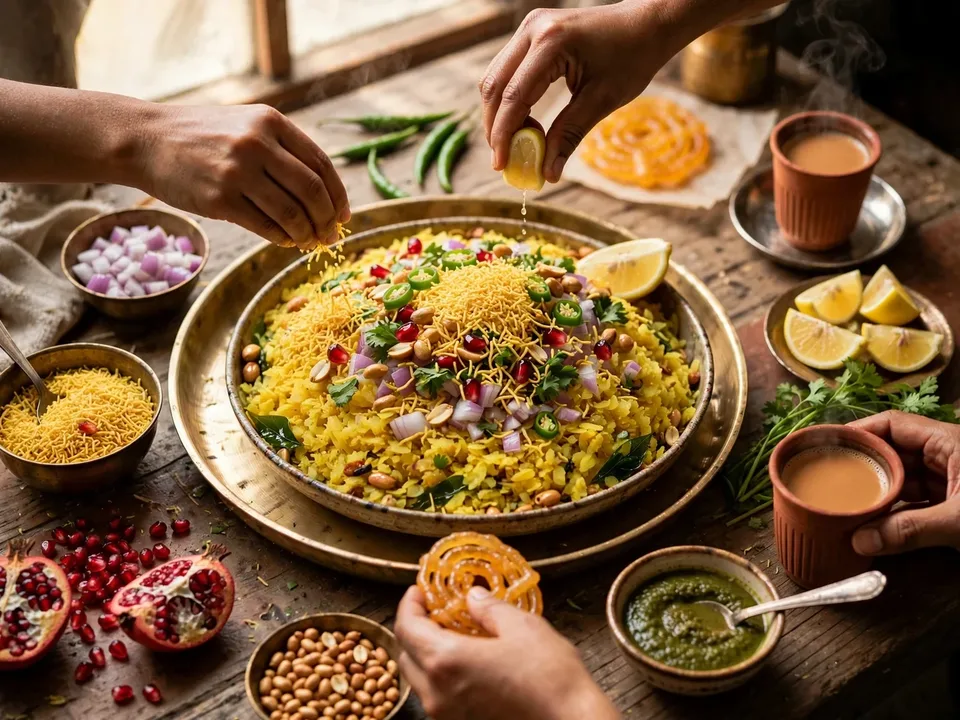
Move the hot poha immediately to serving plates or shallow bowls. Scatter over the finely chopped raw onion and coriander, then sprinkle with jeeravan masala. Add masala boondi or nukti and pomegranate arils if using. Taste a small forkful at this point before adding more salt or jeeravan, because the spice blend and sev can both contribute salt and heat.
Look for
The hot yellow poha should remain visible beneath a fresh topping layer, with raw onion and herbs distinct rather than wilted into the grains.
Kitchen note
Raw onion is a deliberate finishing texture here. Cooking the onion into the pan changes the dish toward other regional poha styles and removes the fresh crunch that distinguishes this Indore-style presentation.
 Step 06
Add sev and lemon at the last moment
1 min
Finish each plate generously but not heavily with Indori or Ratlami sev, then squeeze over lemon to taste.
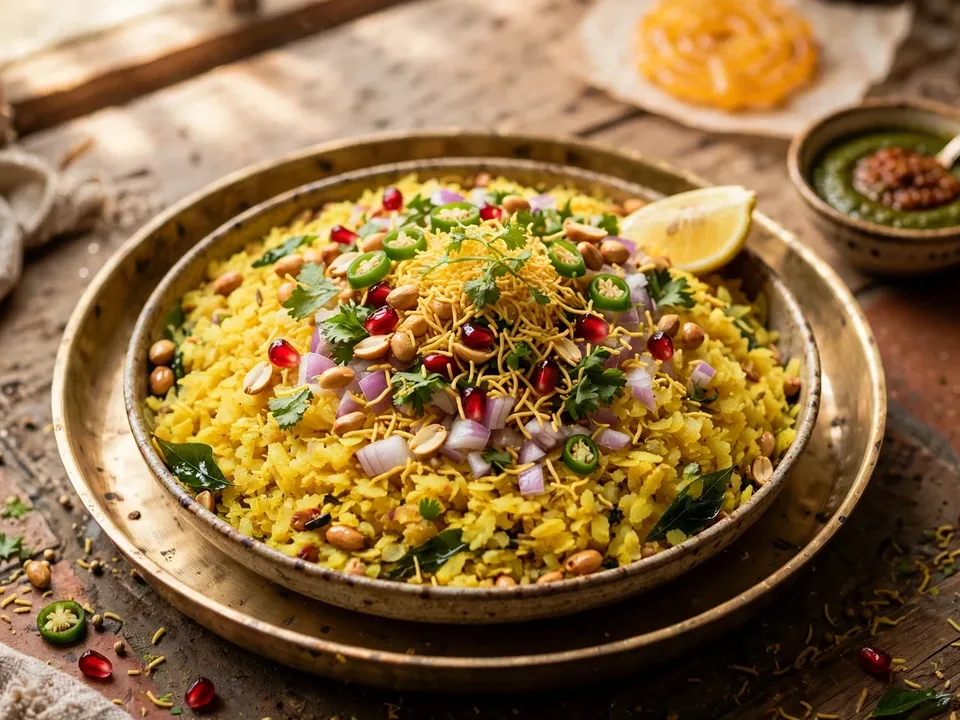
Finish each plate generously but not heavily with Indori or Ratlami sev, then squeeze over lemon to taste. Serve immediately while the poha is warm and soft and the sev, onion and optional boondi are still crisp. For the familiar Indore breakfast contrast, jalebi can be served alongside rather than mixed into the poha. If leftovers remain, cool the poha base promptly, refrigerate it separately from raw and crunchy toppings within 2 hours, and use it within 3–4 days. Reheat only the poha base until steaming hot, adding a few drops of water if needed, then finish with fresh toppings.
Look for
The finished plate should look light and fluffy, with clearly crisp sev on top and enough lemon and jeeravan to taste bright and spicy without making the poha wet.
Kitchen note
The final contrast is the point of the dish: soft poha underneath, then raw freshness, jeeravan spice, citrus and crisp sev on top. Adding the crunchy garnishes too early sacrifices that contrast.
After cooking
Explore the dish beyond the method.
Story, place and references are here for discovery, so they stay out of the way while you cook.
Culture & tradition
The story behind the dish
Origins, evolution and everyday life—read together as part of the recipe's culinary record.
Origins
Flattened rice is used in breakfast dishes across India, while Indore developed a recognisable local style shaped by Malwa breakfast and street-food culture.
How it evolved
The Indori version became associated with a lighter poha base finished with sev, raw onion, coriander, citrus and the local jeeravan spice blend; vendors and households add their own optional garnishes.
Its place today
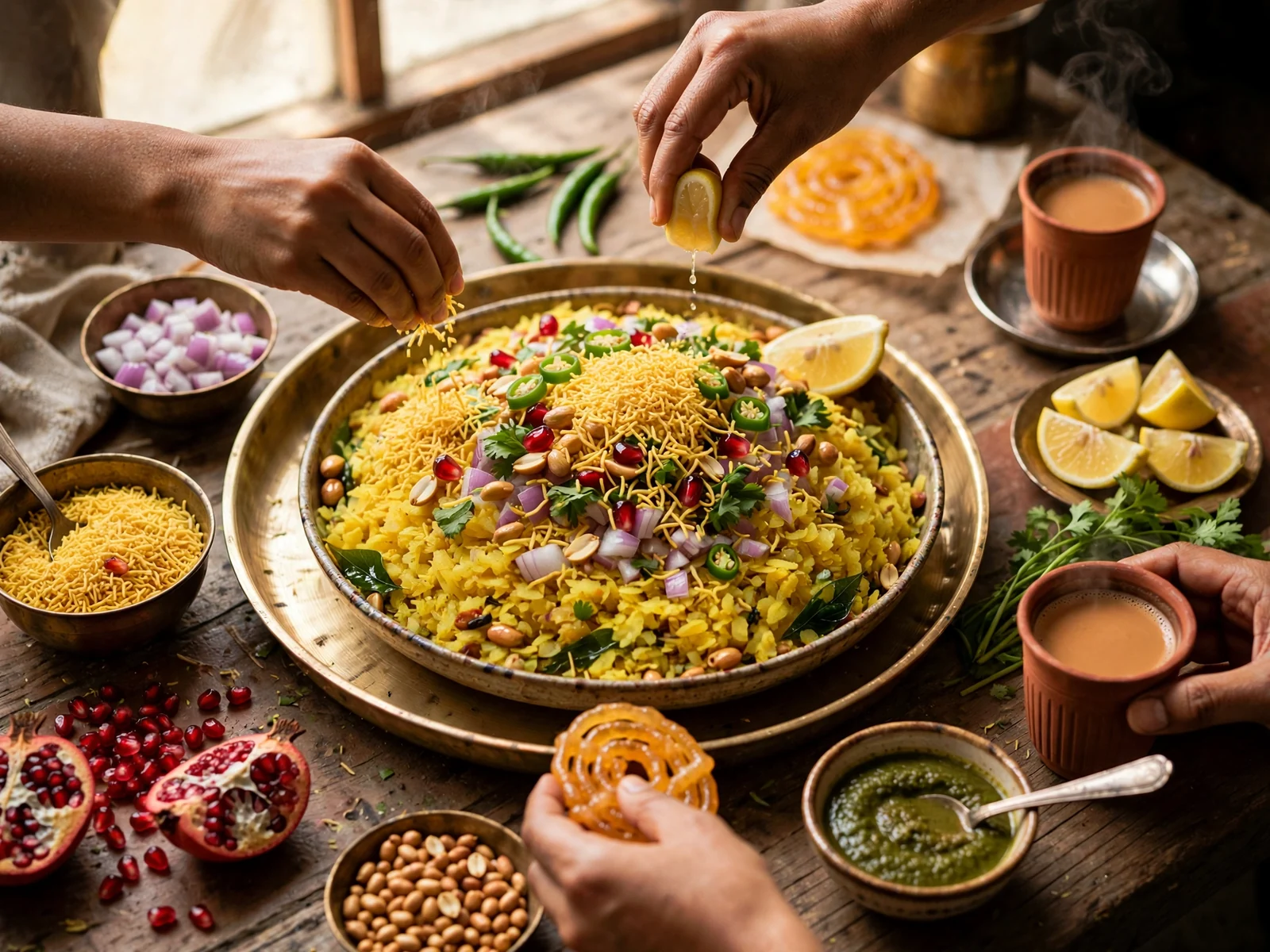
It remains a defining Indore breakfast and snack, frequently eaten fresh in the morning and often paired with jalebi for the city’s characteristic savoury-sweet breakfast contrast.
Visual archive · plate 01
Indori Poha
An editorial view of the finished dish, kept compact so the story continues without an oversized image break.
Primary region
Indore, Madhya Pradesh
Country
India
Regional influence
Flattened rice stores well and cooks quickly, making it suited to fast urban breakfast service and home kitchens.
Related food systems
- Malwa cuisine
- Indian breakfast foods
- Street-food garnish culture
Culinary record
- Sub-region
- South Asia — Indian Subcontinent
- Climate
- Monsoon
- Trade-route influence
- Spice Route · Mughal exchange · British colonial trade
Sources & further reading
Follow the reference trail.
Ember & Equator links outward when an institution or primary reference helps support the culinary record.
- 01Must-Try Street Food In IndoreExternal ↗
Incredible India, Ministry of Tourism, Government of India · government
Supports: Indori poha · Indore breakfast culture · lighter poha style · sev, raw onion, coriander and lime garnish · poha-jalebi pairing
Ember & Equator source review · 2026-09-16
- 02Malwa Cuisine of Madhya Pradesh - A tinge of rich flavours!External ↗
Incredible India, Ministry of Tourism, Government of India · government
Supports: Indori poha · sev · jeerawan seasoning · poha-jalebi breakfast culture
Ember & Equator source review · 2026-09-16
- 03Indori Poha RecipeExternal ↗
Dassana’s Veg Recipes · reference
Supports: thick or medium-thick poha · brief rinsing and draining · mustard and fennel tempering · brief covered steaming · raw onion topping · jeeravan masala · sev and optional boondi and pomegranate
Ember & Equator source review · 2026-09-16
- 04Keep Food Safe! Food Safety BasicsExternal ↗
USDA Food Safety and Inspection Service · government
Supports: refrigerating cooked leftovers within 2 hours · 3–4 day refrigerated leftover storage · reheating leftovers to 165°F / 74°C
Ember & Equator source review · 2026-09-16
- 05Malwa Cuisine of Madhya Pradesh — A Tinge of Rich FlavoursExternal ↗
Madhya Pradesh Tourism · government
Supports: Indori poha identity · sev and jeeravan finish · hint of sugar · onion not dominant · poha-jalebi breakfast context
Ember & Equator source review · 2026-09-16
Ingredient guides
Learn about the ingredients behind the dish.
These are reference guides, not a second ingredient list. Follow an ingredient when you want to understand its role, use and wider culinary context.
Ingredient
thick poha
Understand what it contributes, how to use it, and the dishes that reveal it best.
Ingredient
ground turmeric
Understand what it contributes, how to use it, and the dishes that reveal it best.
Ingredient
sugar
Understand what it contributes, how to use it, and the dishes that reveal it best.
Ingredient
fine salt
Understand what it contributes, how to use it, and the dishes that reveal it best.
Ingredient
neutral oil
Understand what it contributes, how to use it, and the dishes that reveal it best.
Ingredient
mustard seeds
Understand what it contributes, how to use it, and the dishes that reveal it best.
Keep wandering
Where will this dish take you next?
Stay with the place, follow an ingredient or technique, or cross into another food culture. Each path begins with something already present in this dish.
Stay with the place
01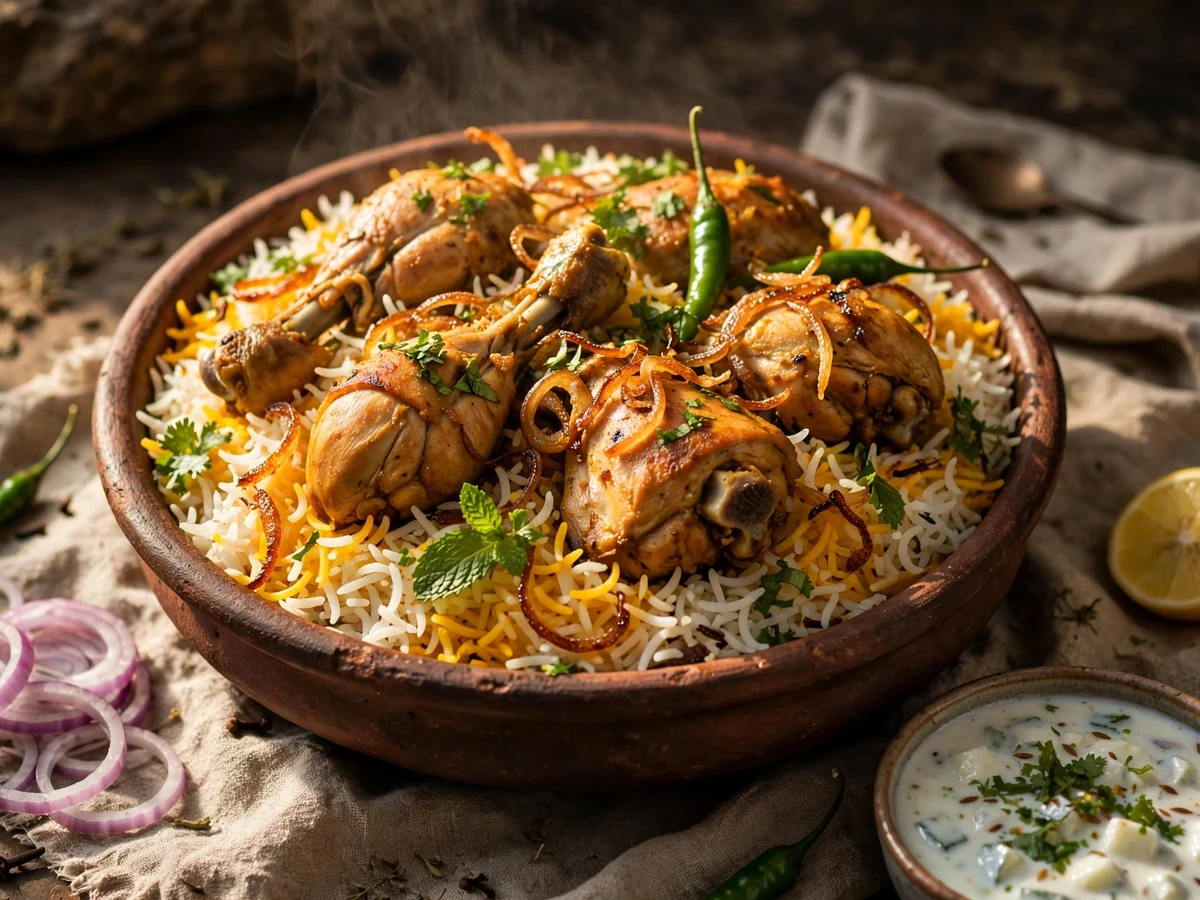
India
Hyderabadi Chicken Biryani
Stay in the same food culture and follow ground turmeric into another recipe.
Shared thread · ground turmeric · fine salt · neutral oil
Follow the method or pantry
02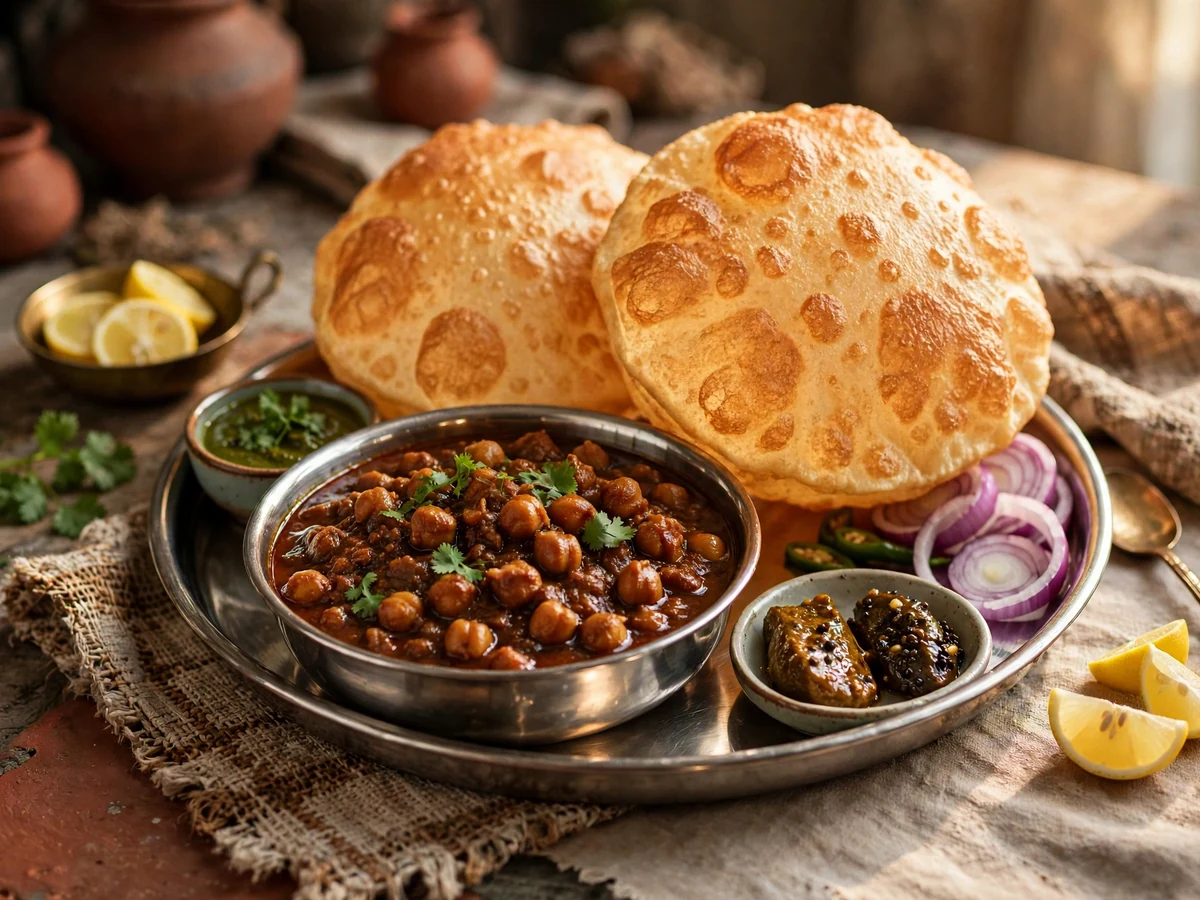
India
Chole Bhature
Follow the pantry: both dishes connect through sugar.
Shared thread · sugar · neutral oil · green chillies
Cross a culinary border
03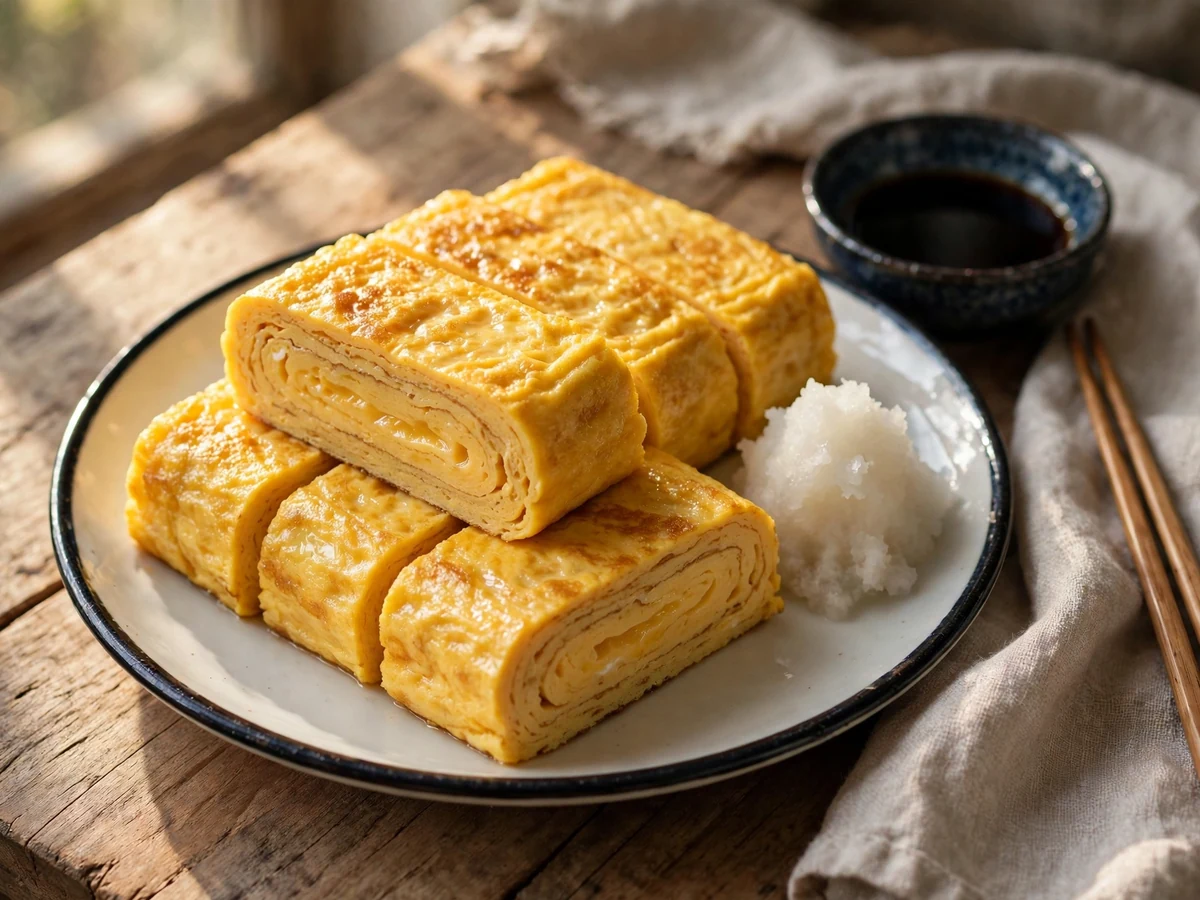
Japan
Tamagoyaki
Cross borders and see how another cuisine handles sugar.
Shared thread · sugar · fine salt · neutral oil
Continue in Ember & Equator