
Indonesia · lunch
Gado-Gado
Indonesia through one enduring dish.
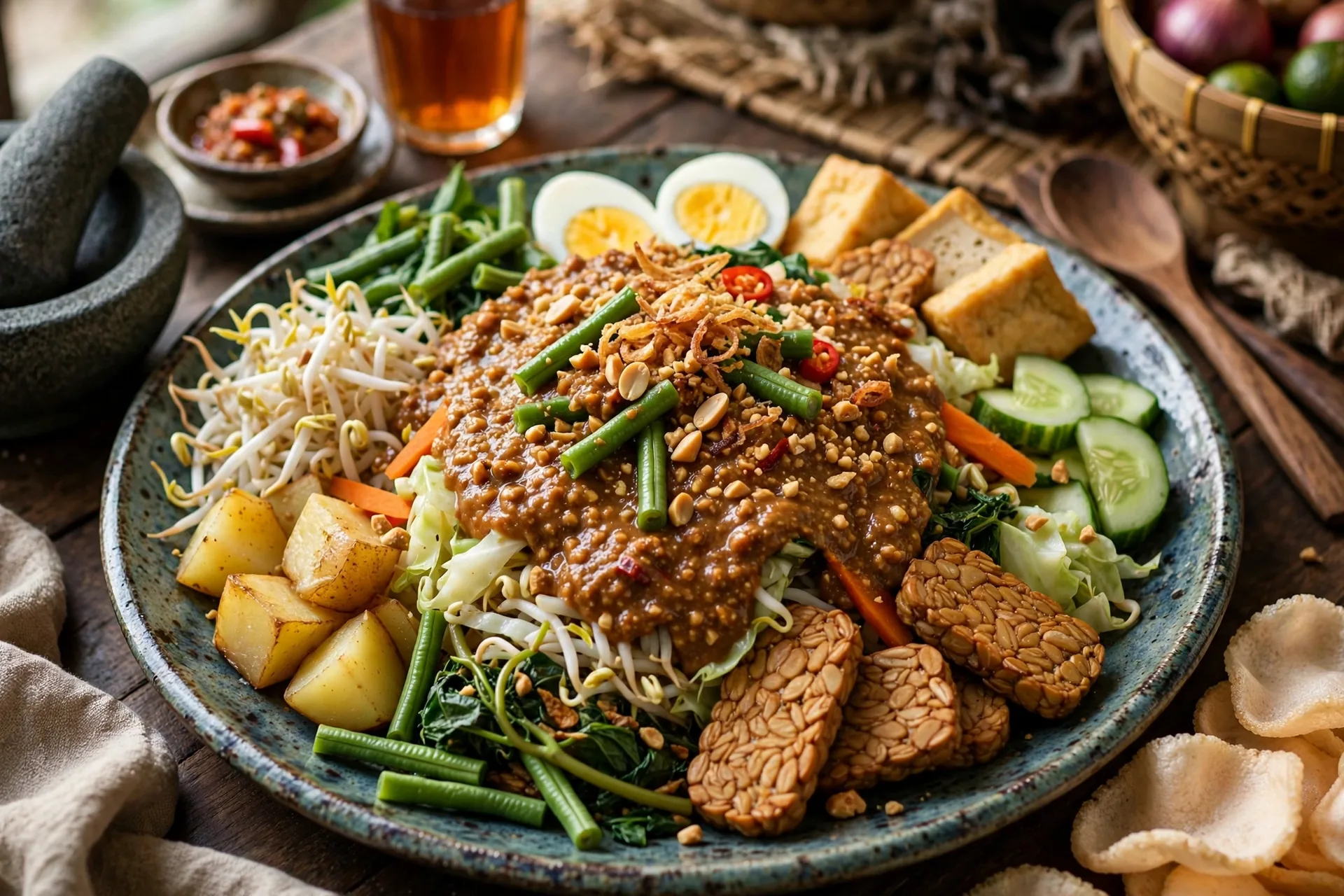
Gado-gado is an Indonesian mixed vegetable dish in which separately cooked and fresh components—often long beans, sprouts, cabbage, potato, tofu and egg—are brought together with a substantial sweet-savory peanut sauce.
- Total
- 60 min
- Difficulty
- Easy
- Serves
- 4
- Steps
- 7
The dish
Freshness is part of the method.
Gado-gado belongs to Indonesia’s broad family of vegetable dishes bound by ground-peanut sauces. Its identity comes from contrast rather than uniformity: blanched vegetables, raw cucumber, potato, fried tofu or tempeh and egg retain their own textures until the peanut dressing brings the plate together. Indonesian government culinary material likewise presents gado-gado as a combination of cooked vegetables, tofu, egg and peanut sauce, with crackers and other accompaniments varying by version.
Explore IndonesiaAt a glance
Origin
Indonesia
Region
Java / Indonesia
Meal
lunch
Guided steps
7
Dish
Gado-Gado
Cuisine
Indonesian cuisines
Food type
Vegetable dish · Street food
Technique
Simmer · Balance a sweet-sour-salty sauce
Cook the recipe
In the kitchen
Start with the ingredients, then follow the Method in order. Open cooking tips only when you need extra help; the story and references can wait until you are ready.
- Total
- 60 min
- Serves
- 4
- Level
- Easy
- Visual cues
- 7
Ingredients
Serves 4- 180 gpeanutsroasted or fried, unsalted
- 150 glong beanscut into bite-size lengths
- 150 gbean sproutstrimmed if needed
- 120 ggreen cabbageshredded
- 1cucumbersliced and kept raw
- 300 gpotatoeswhole or large chunks for boiling
- 250 gtofufirm, cut into serving pieces
- 4eggshard-boiled
- 2 clovesgarlicfor the peanut sauce
- 2red chiliesplus more to taste
- 2 tbsppalm sugarfinely shaved or grated
- 1 tbsptamarind concentratediluted as needed
- 2 tbspkecap manissweet soy sauce
- 250 mlwaterapproximately; add gradually to the sauce
- 1 tspsaltplus more to taste
- 3 tbspneutral oilfor frying tofu and optional tempeh
Optional
- 1carrotoptional; finely shredded or briefly blanched
- 150 gtempehoptional; sliced and fried until golden
- 3 tbspfried shallotsoptional garnish
- 1 handfulemping or shrimp crackersoptional crisp accompaniment
Everything ready? Continue straight into the cooking steps.
Start methodMethod
7 steps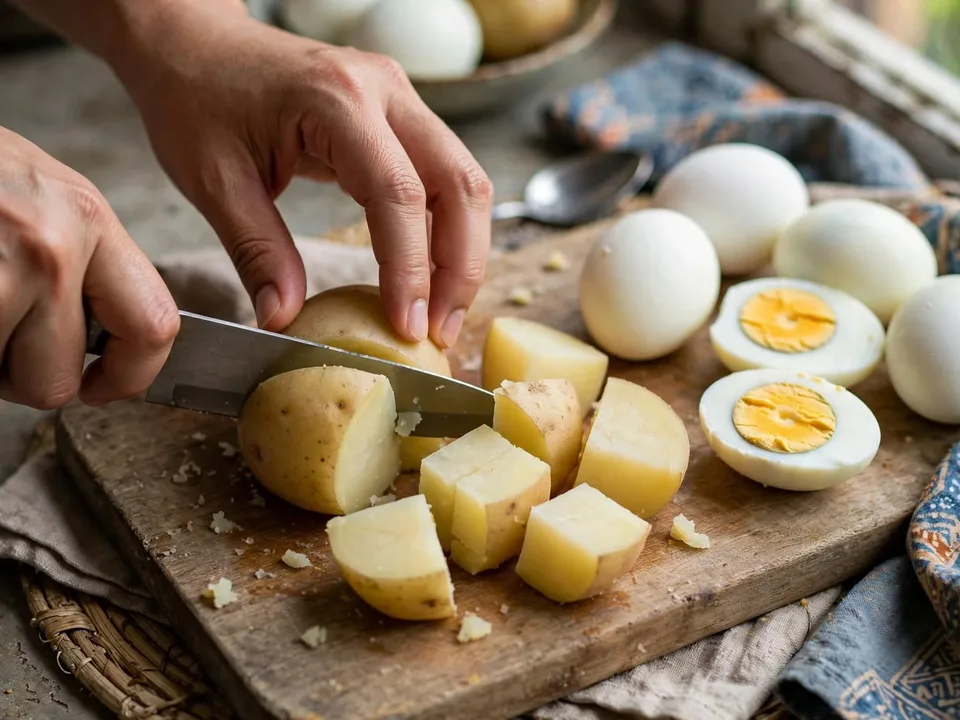 Step 01
Boil the potatoes and eggs, then cool and portion them
18 min
Cook the potatoes in gently boiling salted water until a knife enters cleanly but the pieces are still firm enough to slice.
Cook the potatoes in gently boiling salted water until a knife enters cleanly but the pieces are still firm enough to slice. Cook the eggs until hard-set. Cool both just enough to handle, then cut the potatoes into bite-size pieces and quarter or halve the eggs.
Look for
Potato pieces have clean edges and the yolks are fully set without becoming grey or chalky.
Kitchen note
Do not cook the potatoes to the point of crumbling; they need to stay distinct beneath the peanut sauce.
 Step 02
Blanch the long beans until tender-crisp
3 min
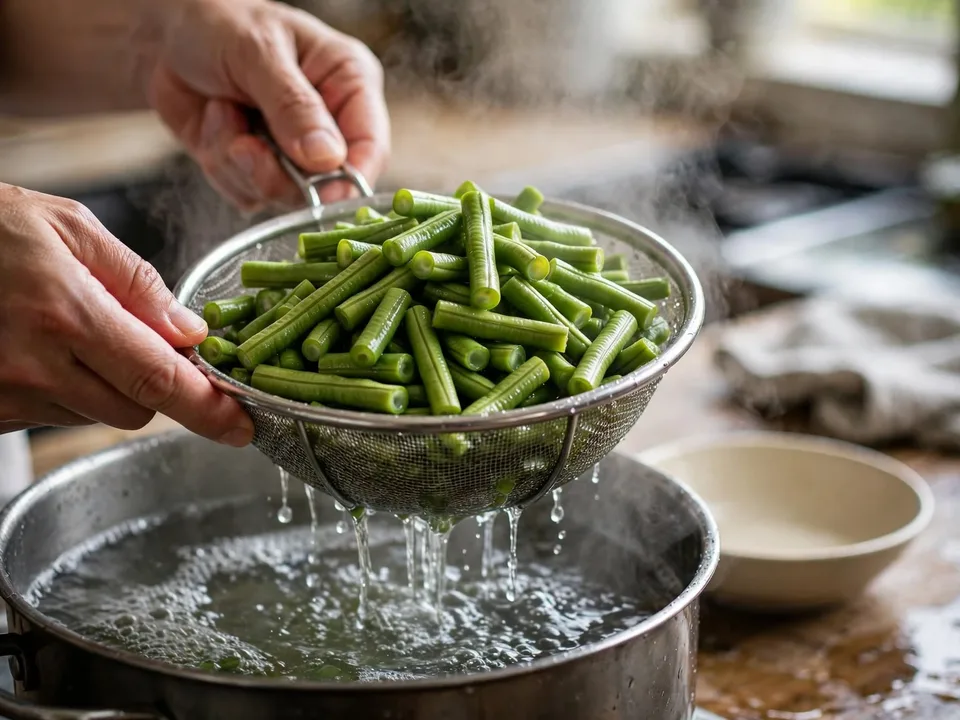
Bring a pot of water to a lively boil.
Bring a pot of water to a lively boil. Add the long beans and cook only until the raw bite is gone while the beans remain green and resilient, then lift them out and drain thoroughly.
Look for
The beans are bright green, bend without snapping raw and still retain a gentle bite.
Kitchen note
Long beans need more time than sprouts or shredded cabbage; keeping this stage separate prevents the tender vegetables from going limp.
 Step 03
Blanch the tender vegetables briefly and keep cucumber raw
2 min
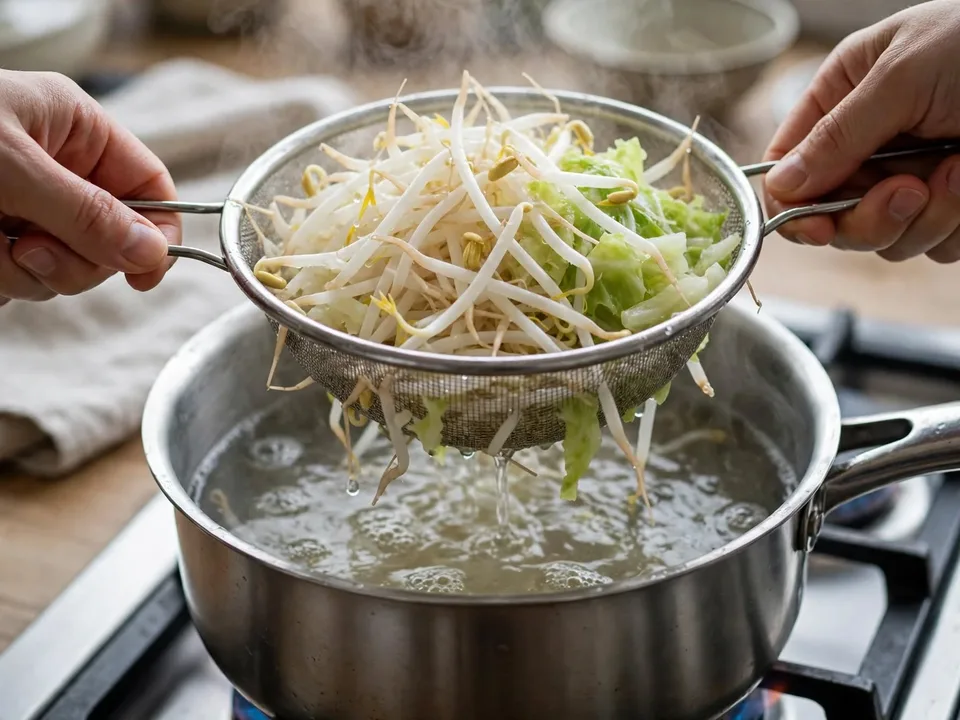
Using the same boiling water if convenient, blanch the bean sprouts and shredded cabbage very briefly, adding optional carrot only if you want it lightly softened.
Using the same boiling water if convenient, blanch the bean sprouts and shredded cabbage very briefly, adding optional carrot only if you want it lightly softened. Drain immediately and spread out so steam can escape. Keep the cucumber raw for fresh contrast.
Look for
Sprouts remain pale and crisp, cabbage is just softened and there is no puddle of cooking water around the vegetables.
Kitchen note
The government recipe boils the vegetables, but they do not all need identical timing. Pull sprouts and cabbage quickly so they stay lively rather than waterlogged.
 Step 04
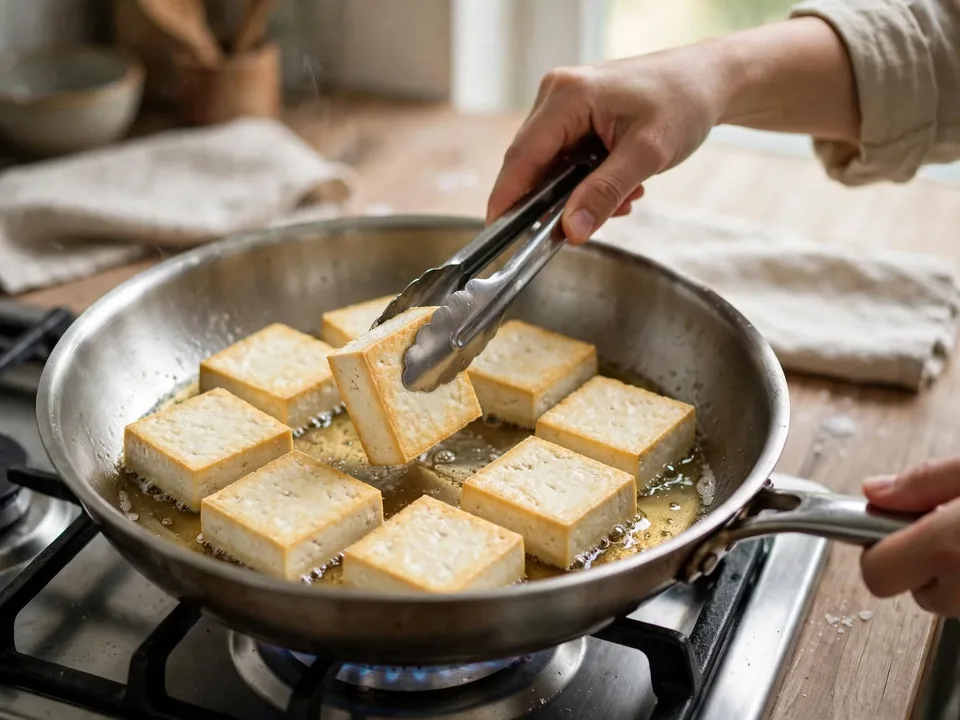
Fry the tofu and optional tempeh until golden
8 min
Pat the tofu very dry.
Pat the tofu very dry. Heat the neutral oil over medium-high heat and fry the tofu until the outside is lightly golden and resilient while the centre stays tender. If using tempeh, fry it separately until golden at the edges. Drain both well.
Look for
The tofu has a thin golden exterior and still feels tender; optional tempeh is browned at the edges without becoming brittle.
Kitchen note
Dry surfaces brown more cleanly and keep the frying oil from spitting. Do not over-fry tofu until it becomes hard and hollow.
 Step 05
Grind and cook the peanut sauce until glossy and spoonable
8 min
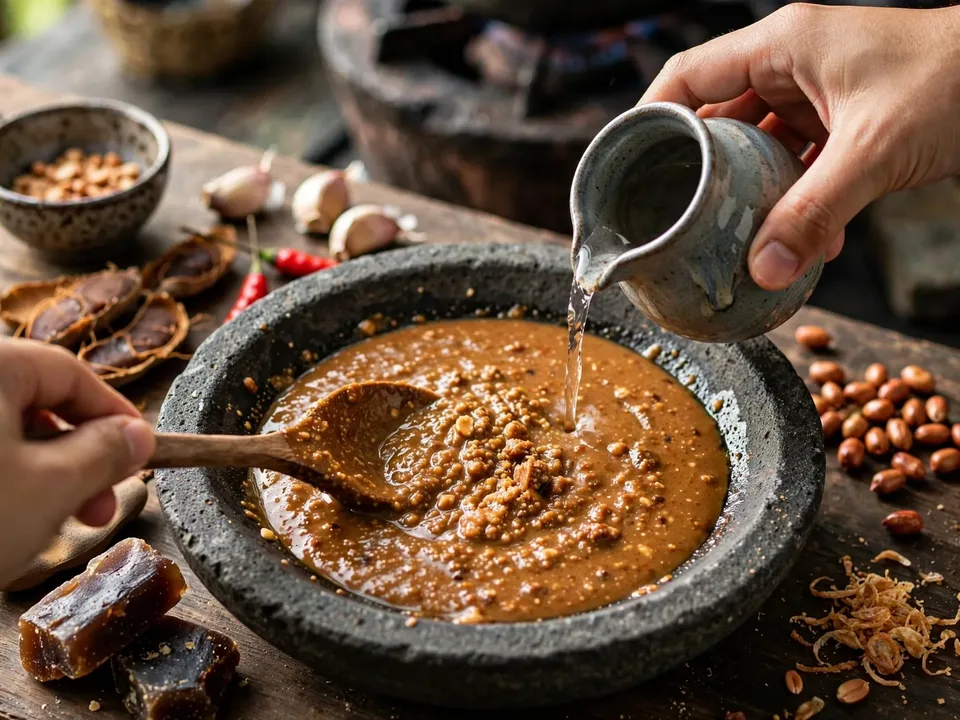
Grind the peanuts with garlic, chilli, palm sugar and salt to a coarse-smooth paste.
Grind the peanuts with garlic, chilli, palm sugar and salt to a coarse-smooth paste. Work in the tamarind and kecap manis, then add water gradually until thick but pourable. Transfer to a small pan and simmer for 3–5 minutes, stirring, until the sauce is glossy and the raw garlic edge has mellowed. Adjust sweetness, tang, salt and chilli before taking it off the heat.
Look for
The sauce falls from a spoon in a thick ribbon, tastes balanced rather than raw and leaves a clear coating on the spoon.
Kitchen note
Add water in stages. The sauce should be substantial enough to cling to vegetables; if it pours like thin soup it will flatten the dish’s texture.
 Step 06
Arrange the cooked and fresh components so their textures stay distinct
4 min
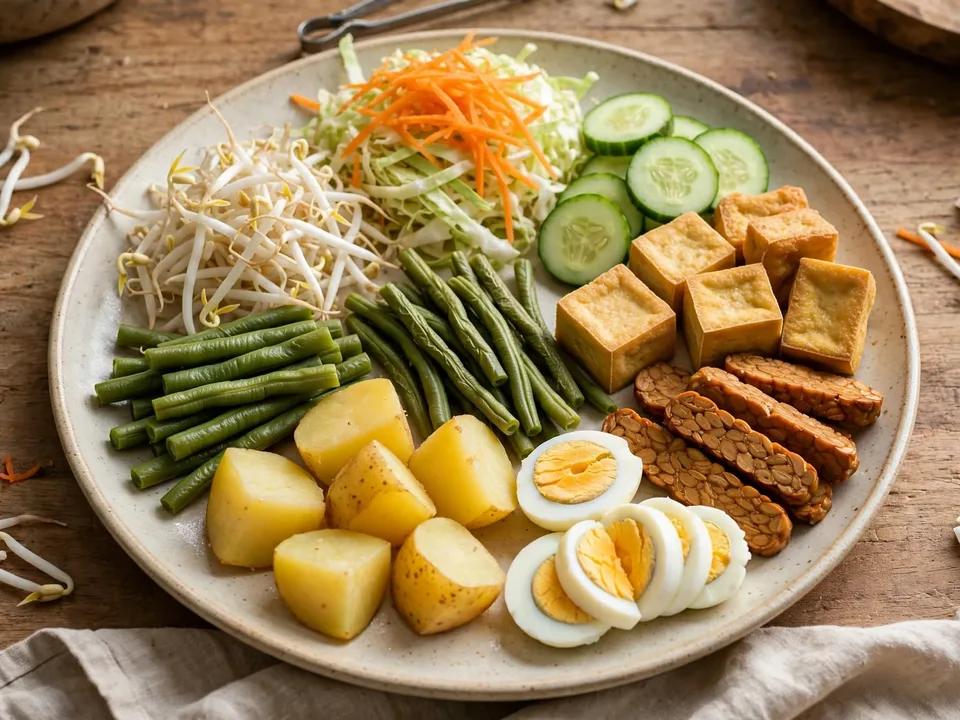
Arrange potato, long beans, sprouts, cabbage, raw cucumber, tofu and egg on a platter.
Arrange potato, long beans, sprouts, cabbage, raw cucumber, tofu and egg on a platter. Add optional carrot and tempeh if using. Keep the components recognisable rather than mashing or stirring them together in advance.
Look for
The platter shows clearly separated cooked and fresh ingredients with no excess water collecting underneath.
Kitchen note
Gado-gado is defined by contrast. Build the plate first, then sauce it close to serving so crisp, tender and creamy elements remain different from one another.
 Step 07
Spoon over peanut sauce and serve immediately
2 min
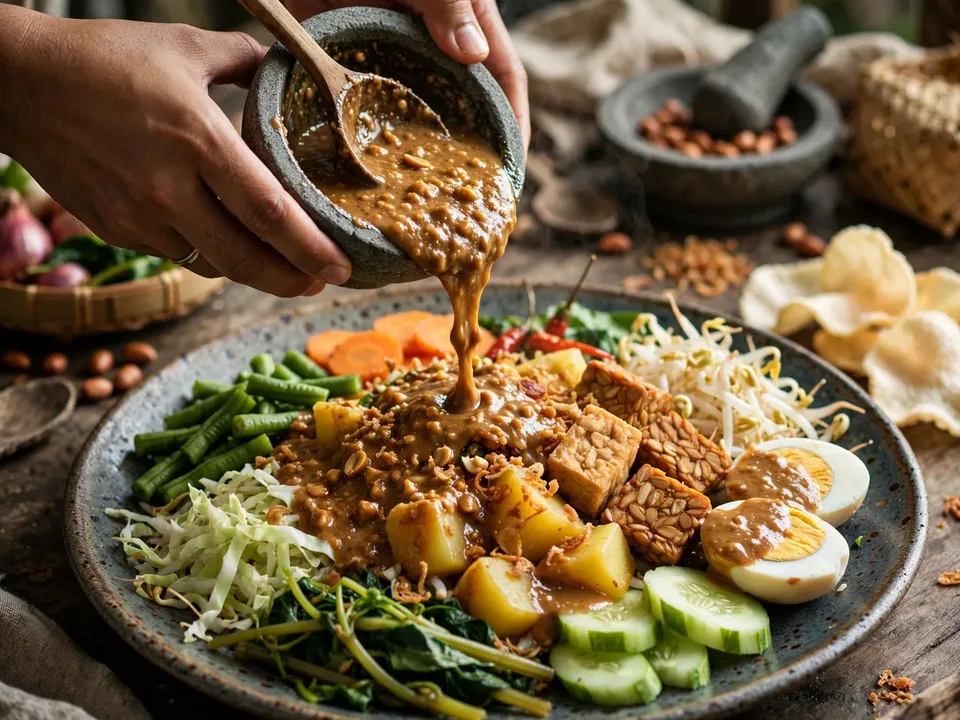
Spoon the peanut sauce generously over the assembled components just before eating.
Spoon the peanut sauce generously over the assembled components just before eating. Finish with optional fried shallots and emping or shrimp crackers. Serve extra sauce at the table rather than drowning the plate long before it is eaten.
Look for
The sauce coats the components while vegetables, tofu, potato and egg remain visually distinct and crisp garnishes stay dry.
Kitchen note
The sauce should bind the plate, not erase it. Dress shortly before serving and keep crisp garnishes dry until the last moment.
After cooking
Explore the dish beyond the method.
Story, place and references are here for discovery, so they stay out of the way while you cook.
Culture & tradition
The story behind the dish
Origins, evolution and everyday life—read together as part of the recipe's culinary record.
Origins
Gado-gado is part of Indonesia’s broad vegetable-and-peanut-sauce tradition and is widely recognized in national culinary promotion.
How it evolved
Versions change with available vegetables, tofu, tempeh, egg, crackers and the balance of the peanut sauce.
Its place today
It remains a common lunch and street-food option and a useful window into Indonesian vegetable cookery.
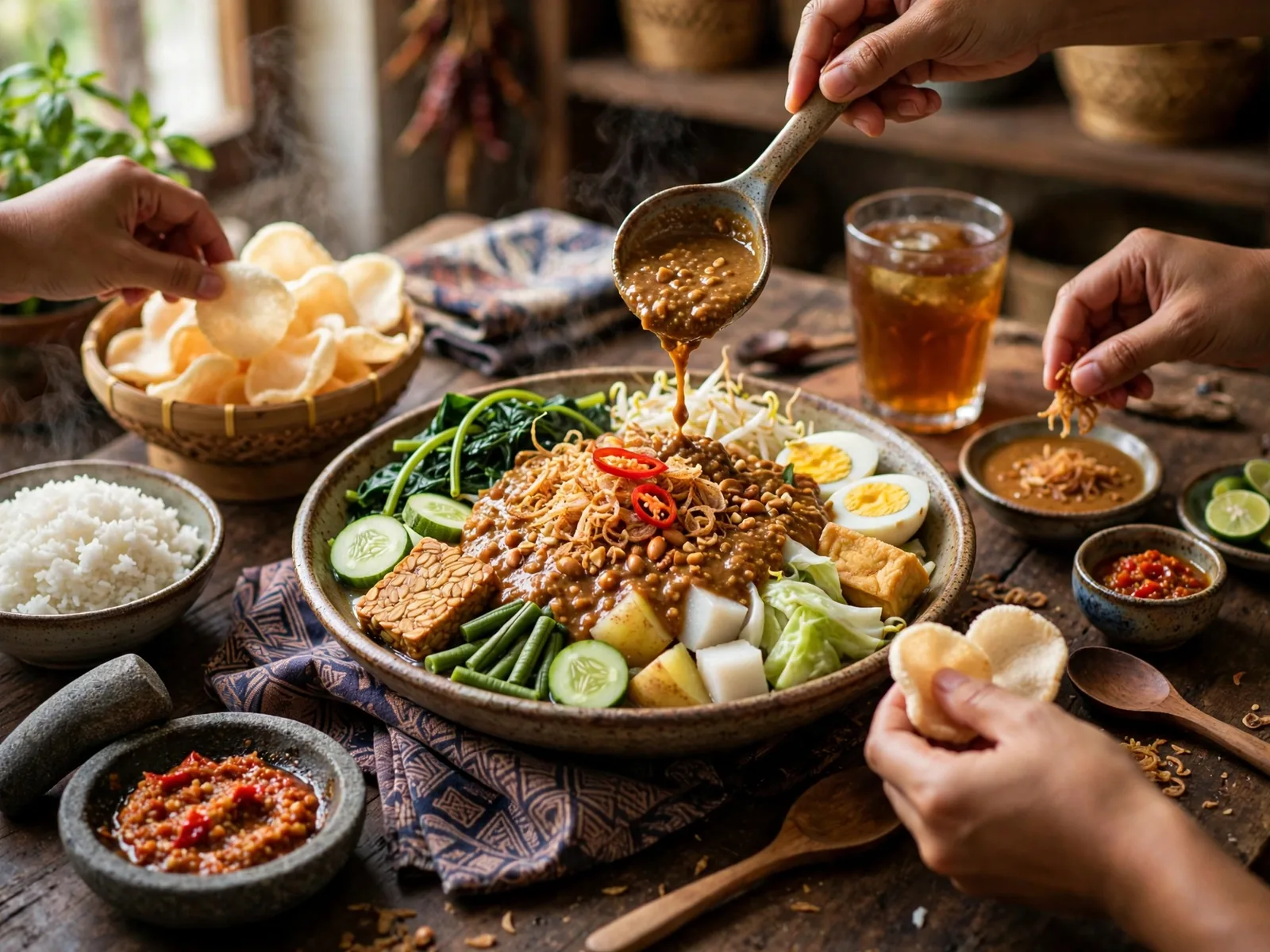
Visual archive · plate 01
Gado-Gado
An editorial view of the finished dish, kept compact so the story continues without an oversized image break.
Primary region
Java / Indonesia
Country
Indonesia
Regional influence
The dish reflects the ingredients and cooking patterns associated with Java / Indonesia, while household and regional versions vary.
Related food systems
- Java / Indonesia home cooking
- Market and street-food traditions
- Regional pantry and seasonal cooking
Sources & further reading
Follow the reference trail.
Ember & Equator links outward when an institution or primary reference helps support the culinary record.
- 01Indonesia Spice Up The World — Gado-GadoExternal ↗
Ministry of Tourism and Creative Economy, Republic of Indonesia · government
Supports: long beans, bean sprouts, cabbage, cucumber, potato, tofu and egg · peanut sauce with palm sugar, tamarind and sweet soy sauce · fried shallot and cracker service
Ember & Equator source review · 2026-09-17
- 02Indonesia’s 12 Must-Try Local Foods — Gado-GadoExternal ↗
Ministry of Tourism, Republic of Indonesia · government
Supports: gado-gado identity · steamed or blanched vegetables · tofu, tempeh, egg and peanut sauce
Ember & Equator source review · 2026-09-17
Ingredient guides
Learn about the ingredients behind the dish.
These are reference guides, not a second ingredient list. Follow an ingredient when you want to understand its role, use and wider culinary context.
Ingredient
peanuts
Understand what it contributes, how to use it, and the dishes that reveal it best.
Ingredient
long beans
Understand what it contributes, how to use it, and the dishes that reveal it best.
Ingredient
bean sprouts
Understand what it contributes, how to use it, and the dishes that reveal it best.
Ingredient
green cabbage
Understand what it contributes, how to use it, and the dishes that reveal it best.
Ingredient
cucumber
Understand what it contributes, how to use it, and the dishes that reveal it best.
Ingredient
potatoes
Understand what it contributes, how to use it, and the dishes that reveal it best.
Keep wandering
Where will this dish take you next?
Stay with the place, follow an ingredient or technique, or cross into another food culture. Each path begins with something already present in this dish.
Stay with the place
01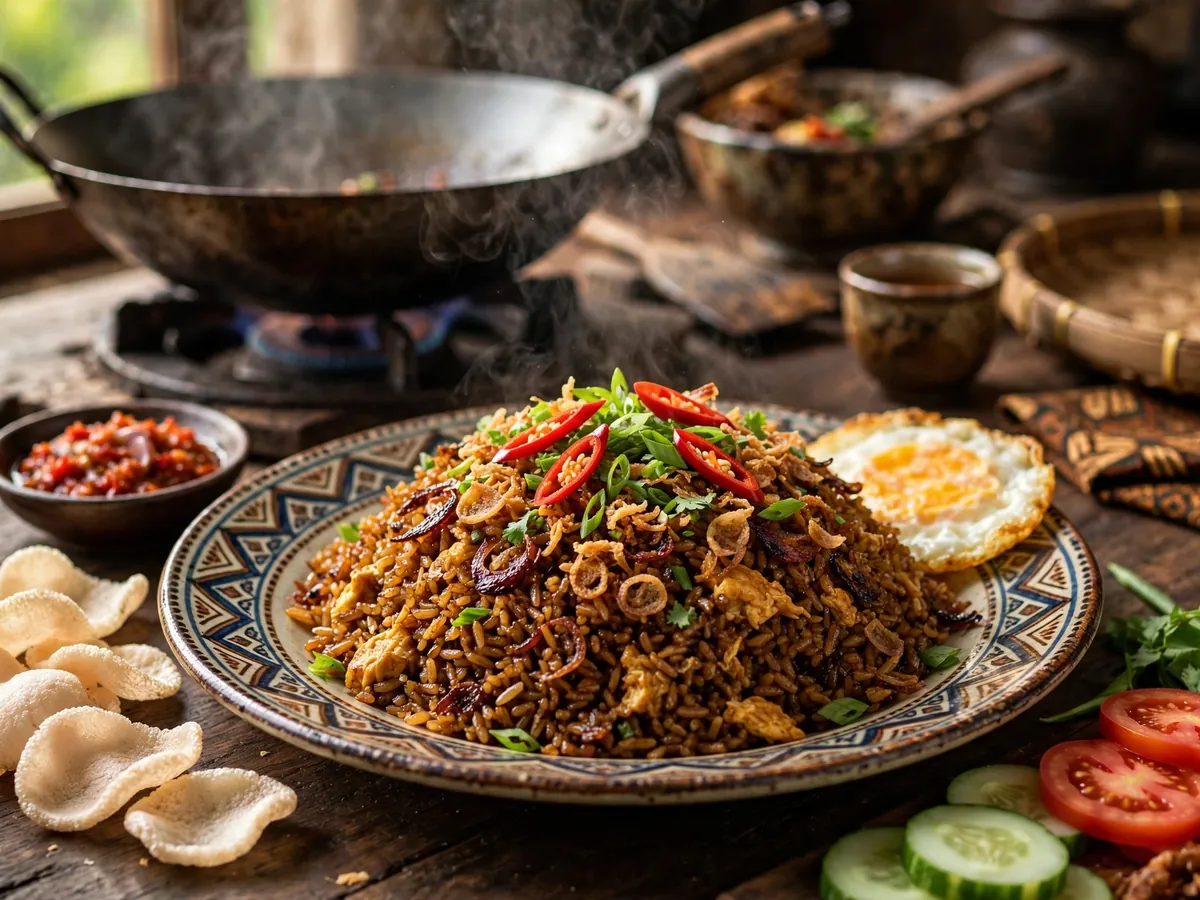
Indonesia
Nasi Goreng
Stay in the same food culture and notice how balance a sweet-sour-salty sauce appears in another dish.
Shared thread · Balance a sweet-sour-salty sauce · cucumber · egg
Follow the method or pantry
02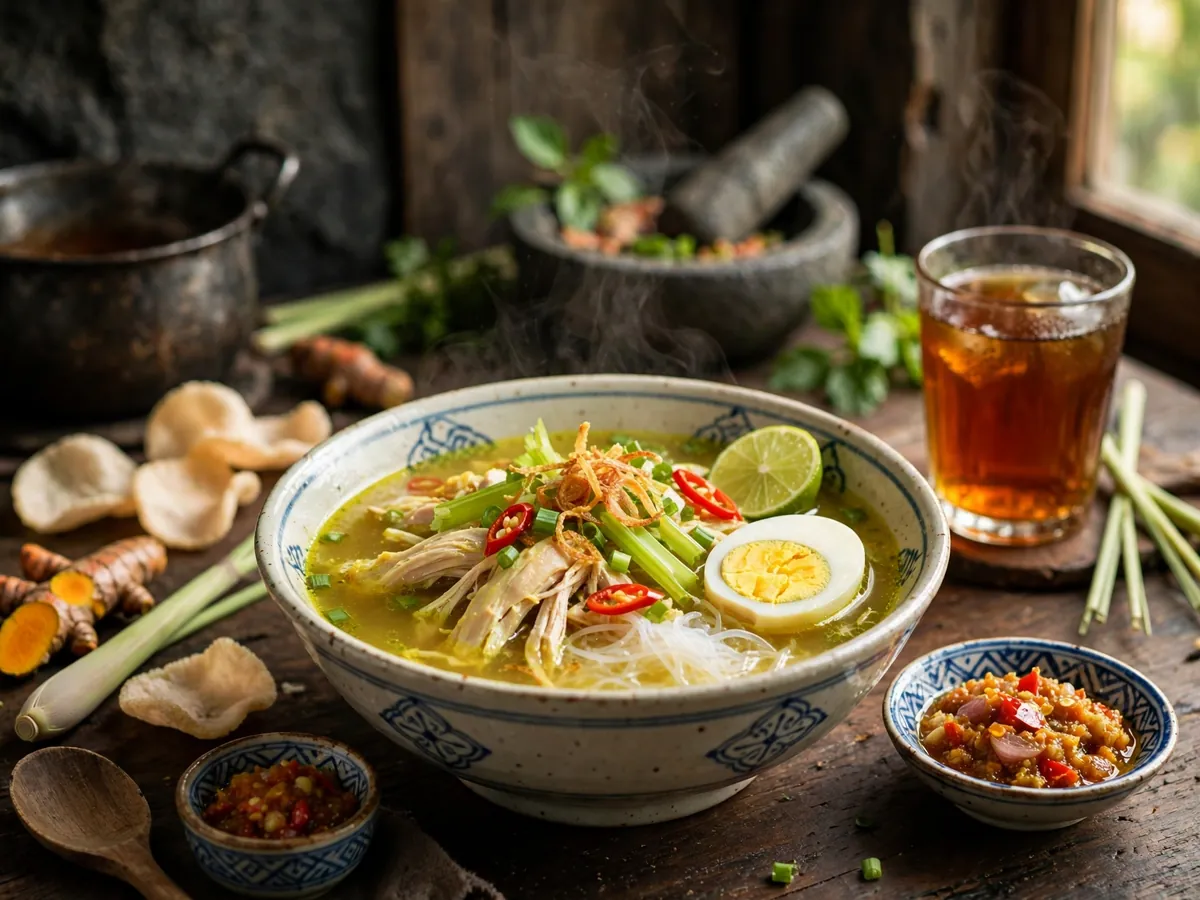
Indonesia
Soto Ayam
Follow the cooking method: both dishes connect through simmer.
Shared thread · Simmer · bean sprouts · green cabbage
Cross a culinary border
03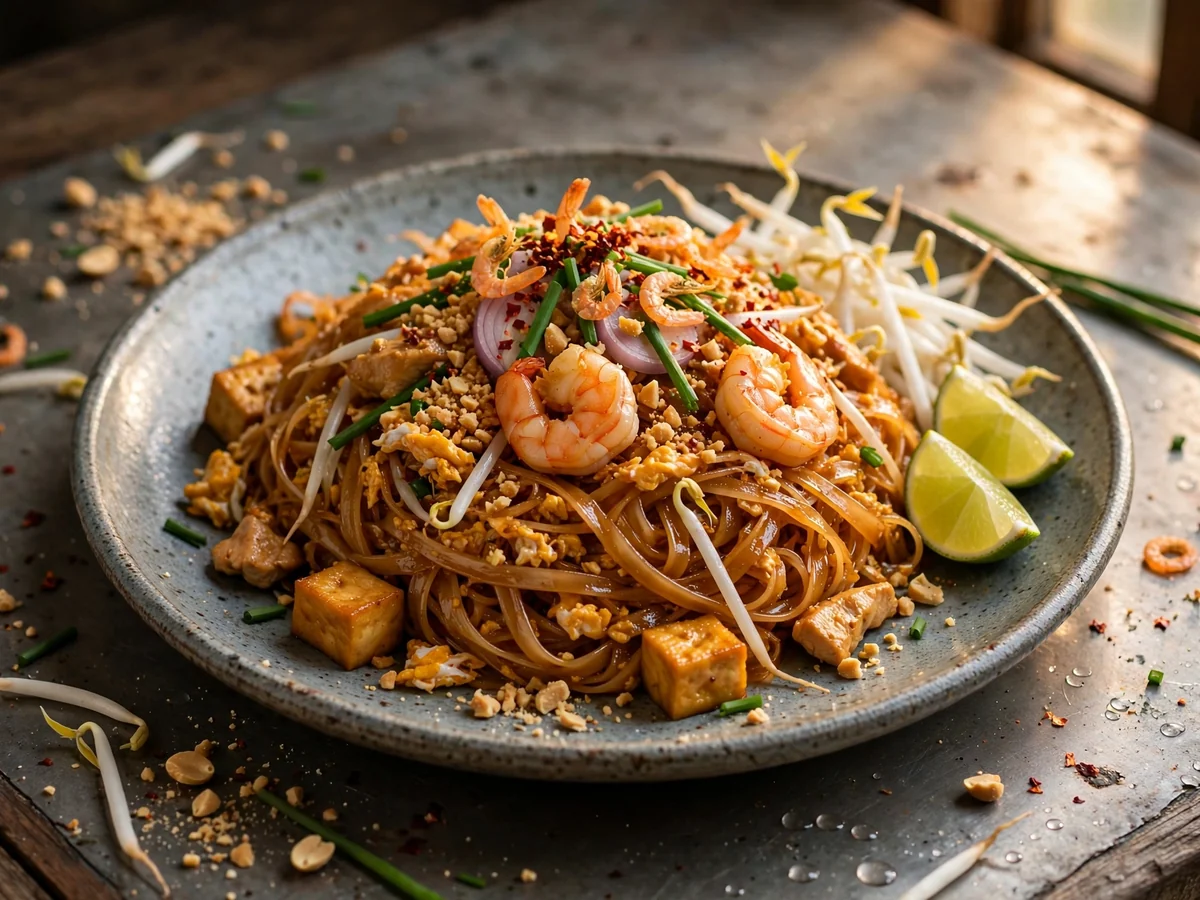
Thailand
Pad Thai
Cross borders while keeping balance a sweet-sour-salty sauce as the common thread.
Shared thread · Balance a sweet-sour-salty sauce · bean sprouts · egg
Go one layer deeper
One small detail can open an entirely different part of food.
Continue in Ember & Equator