
Indonesia · breakfast · lunch · dinner
Soto Ayam
Indonesia through one enduring dish.
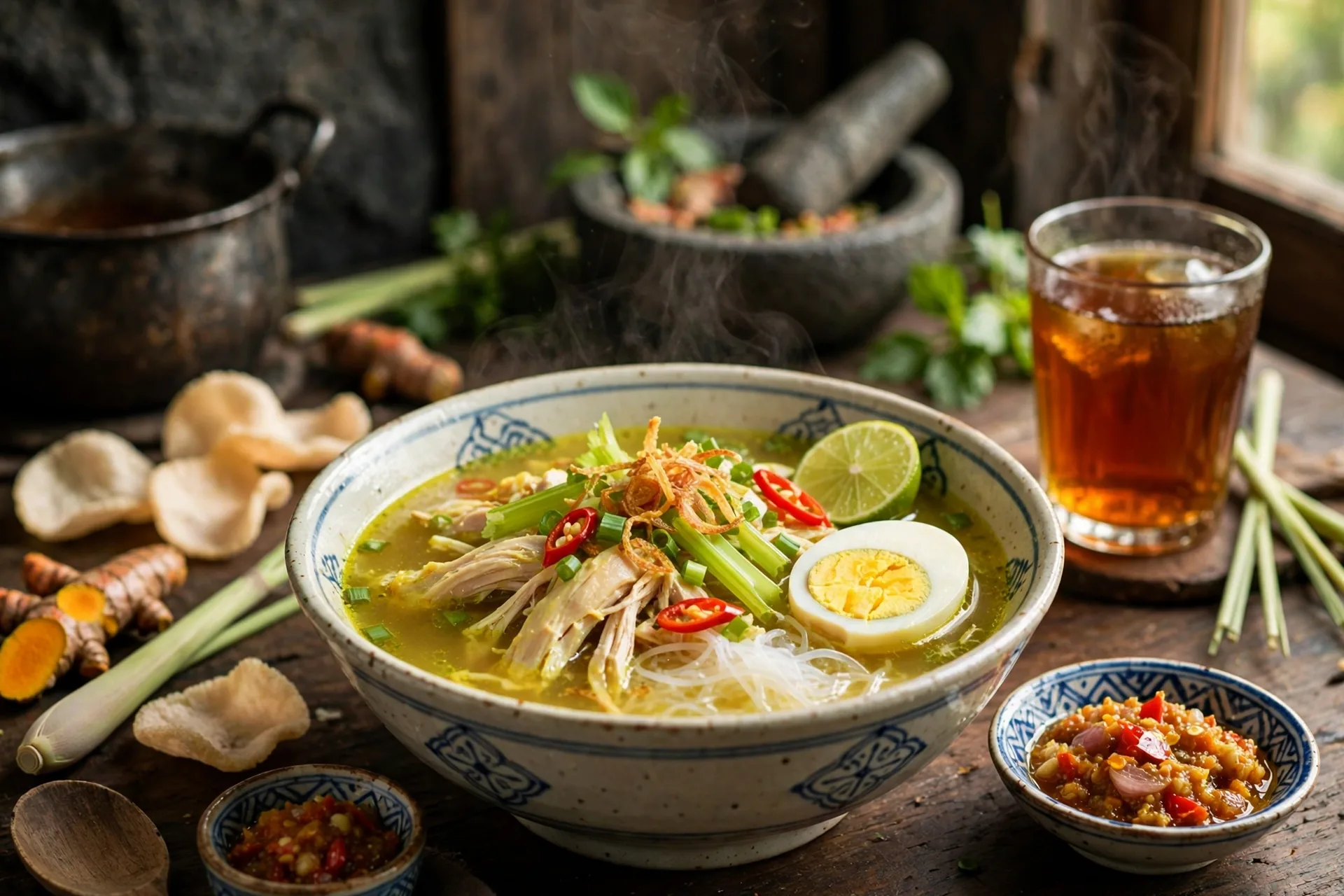
Soto ayam is an Indonesian chicken soup built around a golden turmeric broth scented with shallot, garlic and lemongrass, then assembled with shredded chicken, noodles and crisp garnishes at the last moment.
- Total
- 75 min
- Difficulty
- Easy
- Serves
- 4
- Steps
- 7
The dish
Place first. Then the plate.
Soto is an Indonesian soup family rather than one fixed national formula. Chicken versions vary by region in spice profile, richness and toppings; a clear yellow turmeric broth with lemongrass, shredded chicken, noodles, sprouts or cabbage and lime is one widely recognised expression. The broth and bowl components are best prepared separately so the final bowl stays clear and texturally lively.
Explore IndonesiaAt a glance
Origin
Indonesia
Region
Java / wider Indonesia
Meal
breakfast · lunch · dinner
Guided steps
7
Dish
Soto Ayam
Cuisine
Indonesian cuisines
Food type
Soup · Comfort food
Technique
Simmer · Reheat gently
Cook the recipe
In the kitchen
Start with the ingredients, then follow the Method in order. Open cooking tips only when you need extra help; the story and references can wait until you are ready.
- Total
- 75 min
- Serves
- 4
- Level
- Easy
- Visual cues
- 7
Ingredients
Serves 4- 700 gchicken thighsbone-in
- 6shallotspeeled
- 4 clovesgarlicpeeled
- 4 cmturmeric rootpeeled and sliced
- 3 cmfresh gingerpeeled and sliced
- 2 stalkslemongrassbruised
- 2 tbspneutral oilfor cooking the spice paste
- 1.8 Lwaterfor the chicken broth
- 1.5 tspsaltplus more to taste
- 150 grice vermicelliprepared separately
- 150 gbean sproutskept crisp
- 150 ggreen cabbagefinely shredded
- 2limecut into wedges
Optional
- 3 cmgalangalsliced
- 4 leavesmakrut lime leavestorn
- 4hard-boiled eggsoptional, halved for serving
- 3spring onionsthinly sliced for serving
- 4 tbspfried shallotsoptional garnish
Everything ready? Continue straight into the cooking steps.
Start methodMethod
7 steps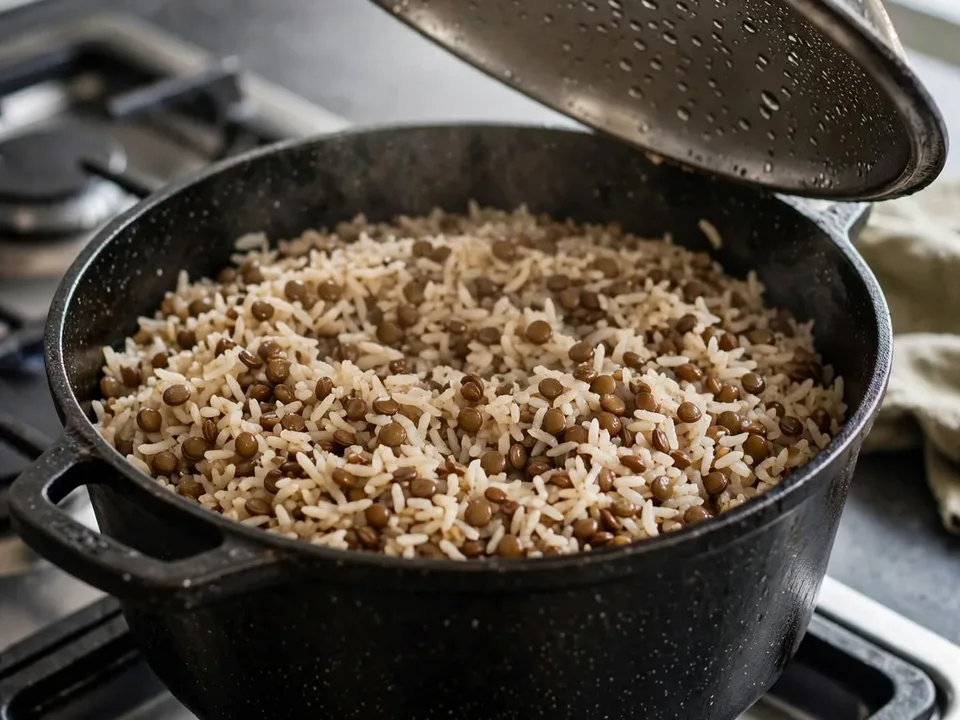 Step 01
Pound the yellow spice paste and prepare the whole aromatics
8 min
Pound or blend the shallots, garlic, turmeric and ginger with a spoonful of water only as needed to form a coarse-smooth yellow paste.
Pound or blend the shallots, garlic, turmeric and ginger with a spoonful of water only as needed to form a coarse-smooth yellow paste. Bruise the lemongrass. Keep optional galangal and torn makrut lime leaves in larger pieces so they can perfume the broth and be removed later.
Look for
The paste is vivid yellow and cohesive, while lemongrass and optional leaf aromatics remain in removable pieces.
Kitchen note
Turmeric stains and can taste dusty when undercooked; make the paste fine enough to fry evenly before the broth is added.
 Step 02
Fry the spice paste, then build the golden broth
8 min
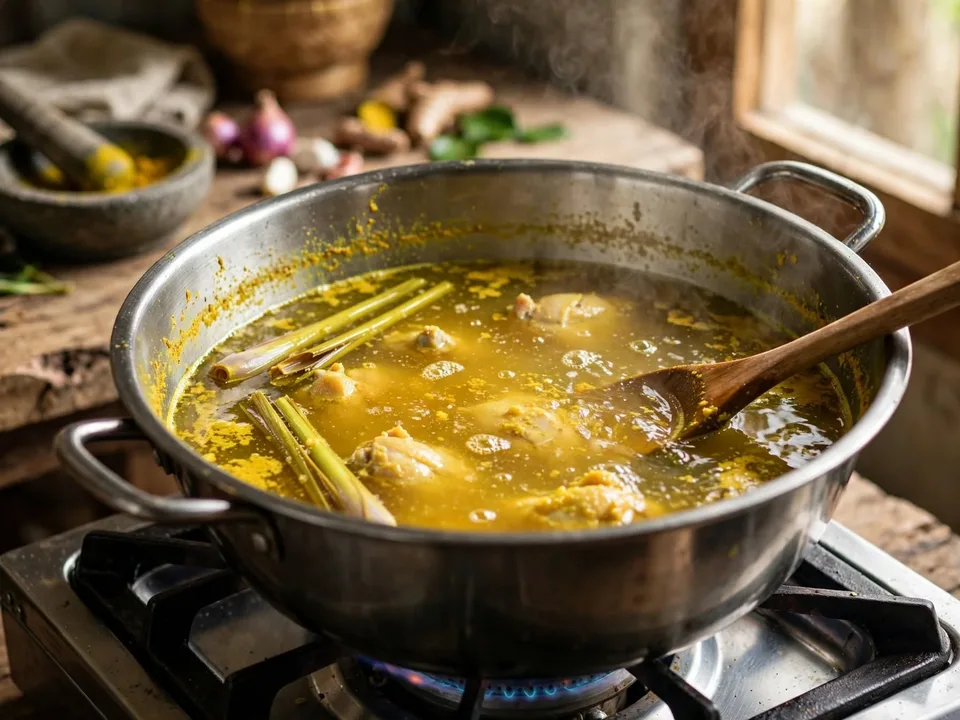
Heat the neutral oil over medium heat.
Heat the neutral oil over medium heat. Fry the spice paste for 3–4 minutes, stirring, until fragrant and no longer raw-smelling. Add the bruised lemongrass and optional galangal or makrut lime leaves, then add the chicken and water. Bring gradually to a gentle simmer and skim surface foam if needed.
Look for
The broth is bright golden, fragrant and at a calm simmer rather than a violent rolling boil.
Kitchen note
Do not rush straight from raw paste to water. Frying the bumbu first develops the turmeric and allium aromas and gives the broth a cleaner flavour.
 Step 03
Simmer the chicken gently until tender
28 min
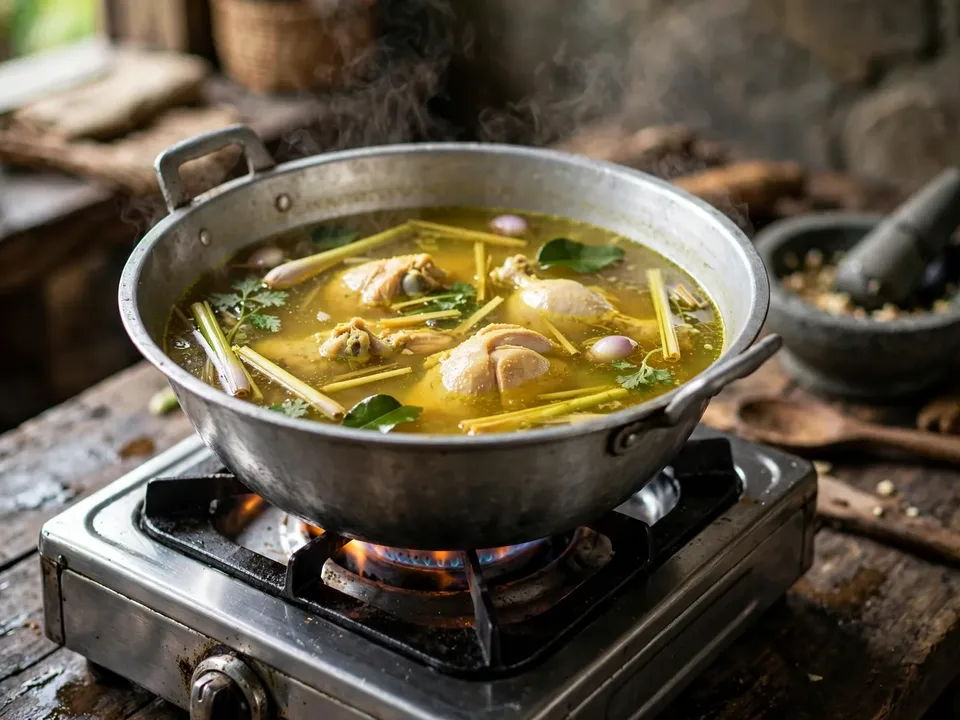
Keep the broth at a quiet simmer until the bone-in chicken thighs are fully cooked and tender, about 25–30 minutes depending on size.
Keep the broth at a quiet simmer until the bone-in chicken thighs are fully cooked and tender, about 25–30 minutes depending on size. Turn them once if they sit above the liquid. Check the thickest piece near the bone: the meat should no longer look raw and, if using a thermometer, should reach at least 74°C / 165°F. Remove the chicken as soon as it is safely cooked and pulls cleanly from the bone.
Look for
The chicken is cooked through, still moist and separates easily from the bone while the broth remains golden rather than murky.
Kitchen note
A hard boil clouds the broth and can dry the chicken. If the chicken is cooked through but not yet easy to shred, keep it at a gentle simmer for a few more minutes rather than increasing the heat.
 Step 04
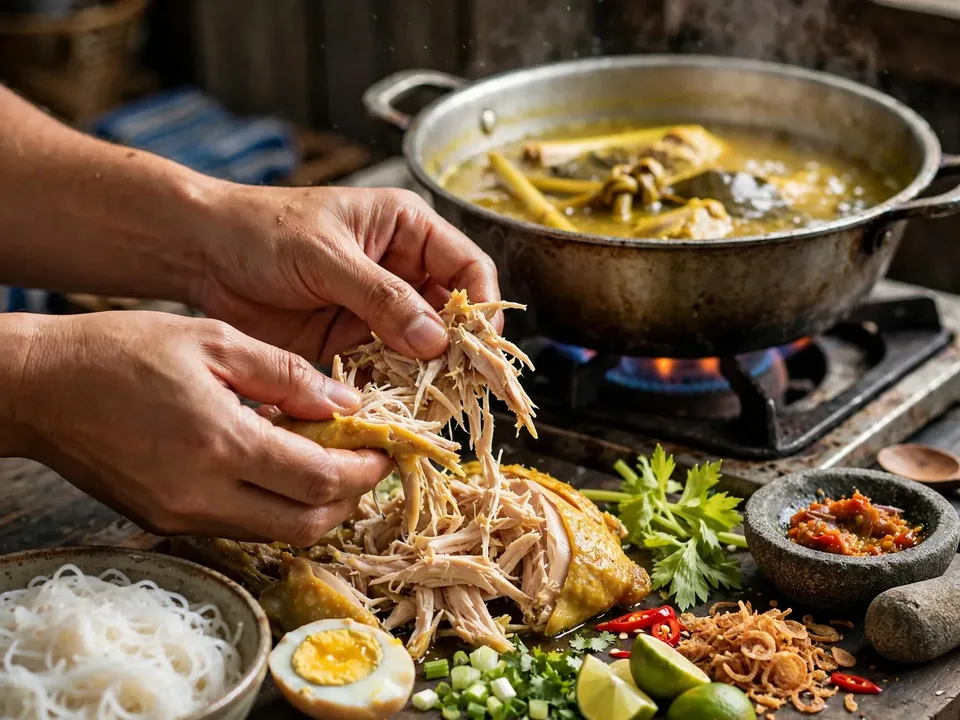
Cool briefly and shred the chicken into moist strands
5 min
Transfer the chicken to a plate and let it cool just enough to handle.
Transfer the chicken to a plate and let it cool just enough to handle. Remove bones and any skin you do not want in the bowl, then pull the meat into bite-size strands. Keep it covered so the shreds do not dry out while you finish the broth.
Look for
The chicken forms tender moist strands with no bone fragments and no dry fibrous edges.
Kitchen note
Shred while the chicken is still warm; it separates cleanly and stays juicier than meat left uncovered until cold.
 Step 05
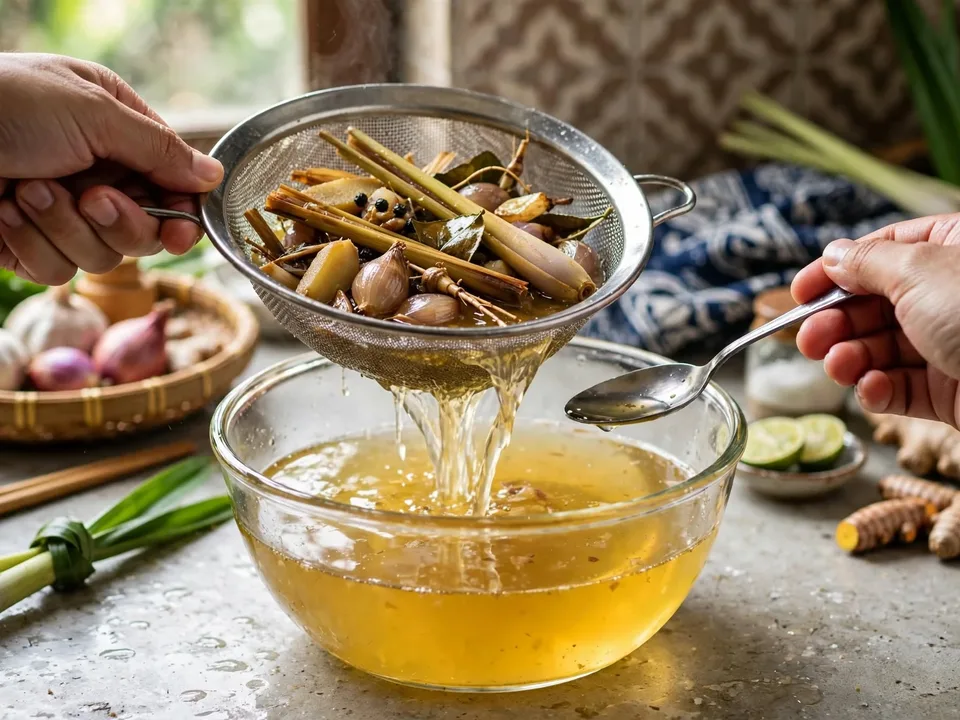
Strain or lift out the whole aromatics and season the broth
5 min
Remove the lemongrass, galangal and lime leaves, and strain the broth if the spice paste left coarse fragments.
Remove the lemongrass, galangal and lime leaves, and strain the broth if the spice paste left coarse fragments. Return the broth to the pot, season with salt and simmer for another minute. Taste it slightly stronger than you would drink alone because noodles and vegetables will dilute it in the bowl.
Look for
The broth is clean, aromatic and savoury enough to season the bowl without tasting aggressively salty.
Kitchen note
Finish seasoning before assembly. Once noodles, cabbage and sprouts are in the bowl, correcting a weak broth becomes much harder.
 Step 06
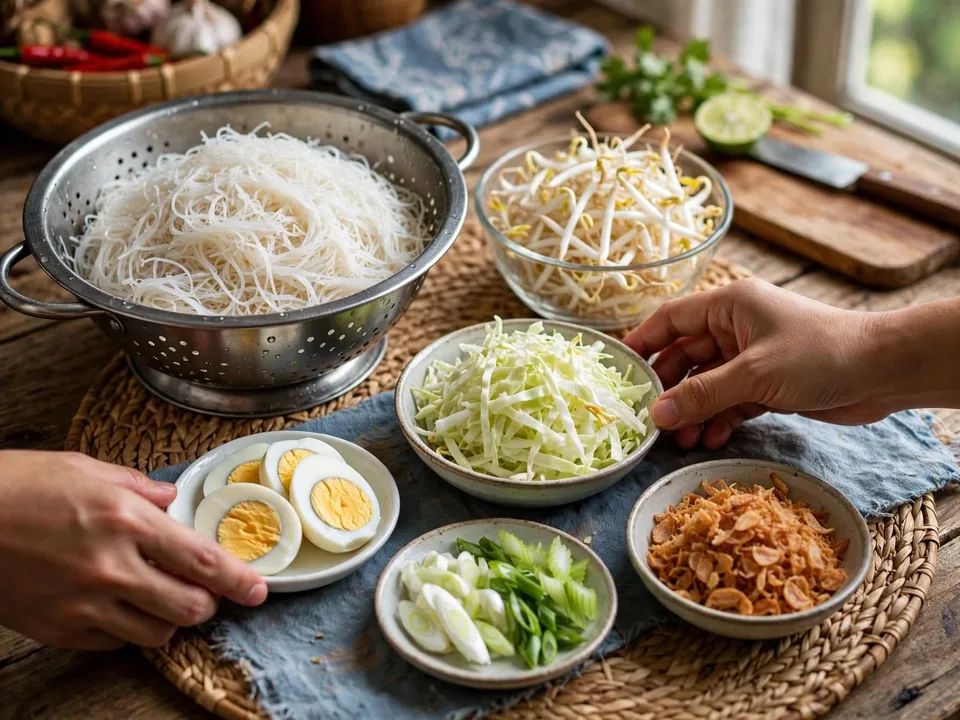
Prepare the noodles and all bowl garnishes separately
10 min
Cook or soak the rice vermicelli according to its type until just tender, then drain well.
Cook or soak the rice vermicelli according to its type until just tender, then drain well. Keep bean sprouts crisp, shred the cabbage finely, halve optional hard-boiled eggs and slice spring onions. Set out fried shallots and lime wedges so every bowl can be finished at the last second.
Look for
The noodles are separate and tender, vegetables remain crisp and every garnish is ready before the broth returns to a boil.
Kitchen note
Do not cook the noodles in the serving broth; excess starch can cloud it, and noodles waiting in hot broth become soft before the bowl reaches the table.
 Step 07
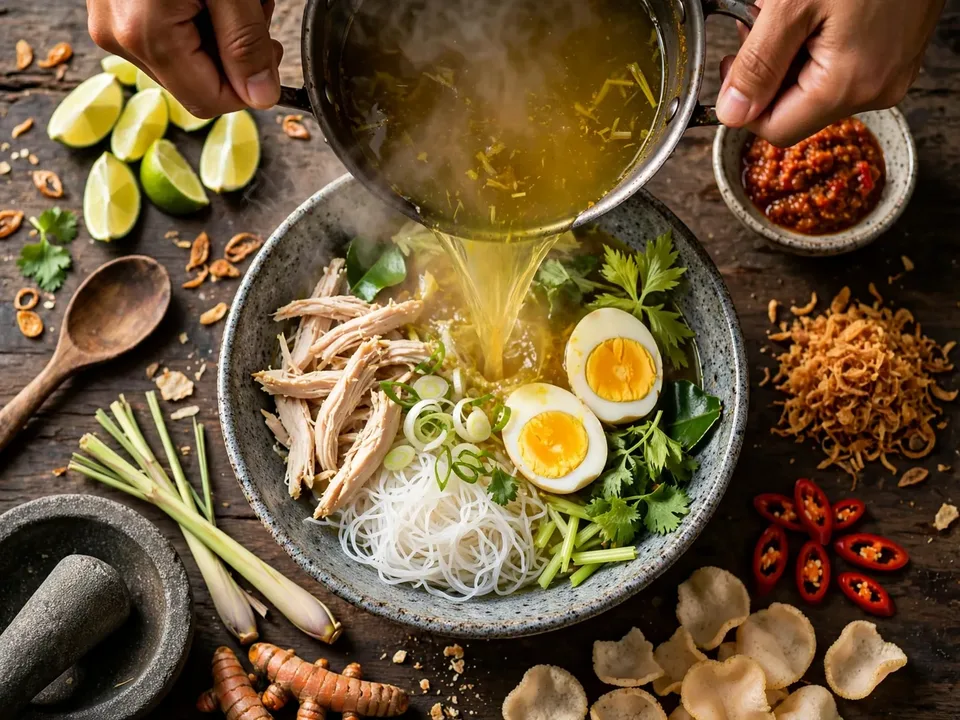
Build the bowls and pour over very hot broth
3 min
Divide vermicelli, bean sprouts, cabbage and shredded chicken among deep bowls.
Divide vermicelli, bean sprouts, cabbage and shredded chicken among deep bowls. Add optional egg and spring onion. Bring the broth back to steaming-hot, ladle it over the bowls and finish with fried shallots and lime. Serve immediately; add sambal at the table if desired.
Look for
The bowl is steaming, chicken and noodles stay distinct and the sprouts and cabbage have softened only slightly from the hot broth.
Kitchen note
Assemble only when everyone is ready to eat. The contrast between hot broth and fresh, just-softened garnishes is part of the pleasure of soto ayam.
After cooking
Explore the dish beyond the method.
Story, place and references are here for discovery, so they stay out of the way while you cook.
Culture & tradition
The story behind the dish
Origins, evolution and everyday life—read together as part of the recipe's culinary record.
Origins
Indonesian tourism sources describe soto as a soup family found across the country, with regional names and compositions.
How it evolved
Chicken versions may use clear or richer broth and are finished with noodles, sprouts, herbs, lime or other local garnishes.
Its place today
Soto ayam works as breakfast, lunch or a restorative meal and is sold in homes, warung and street settings.
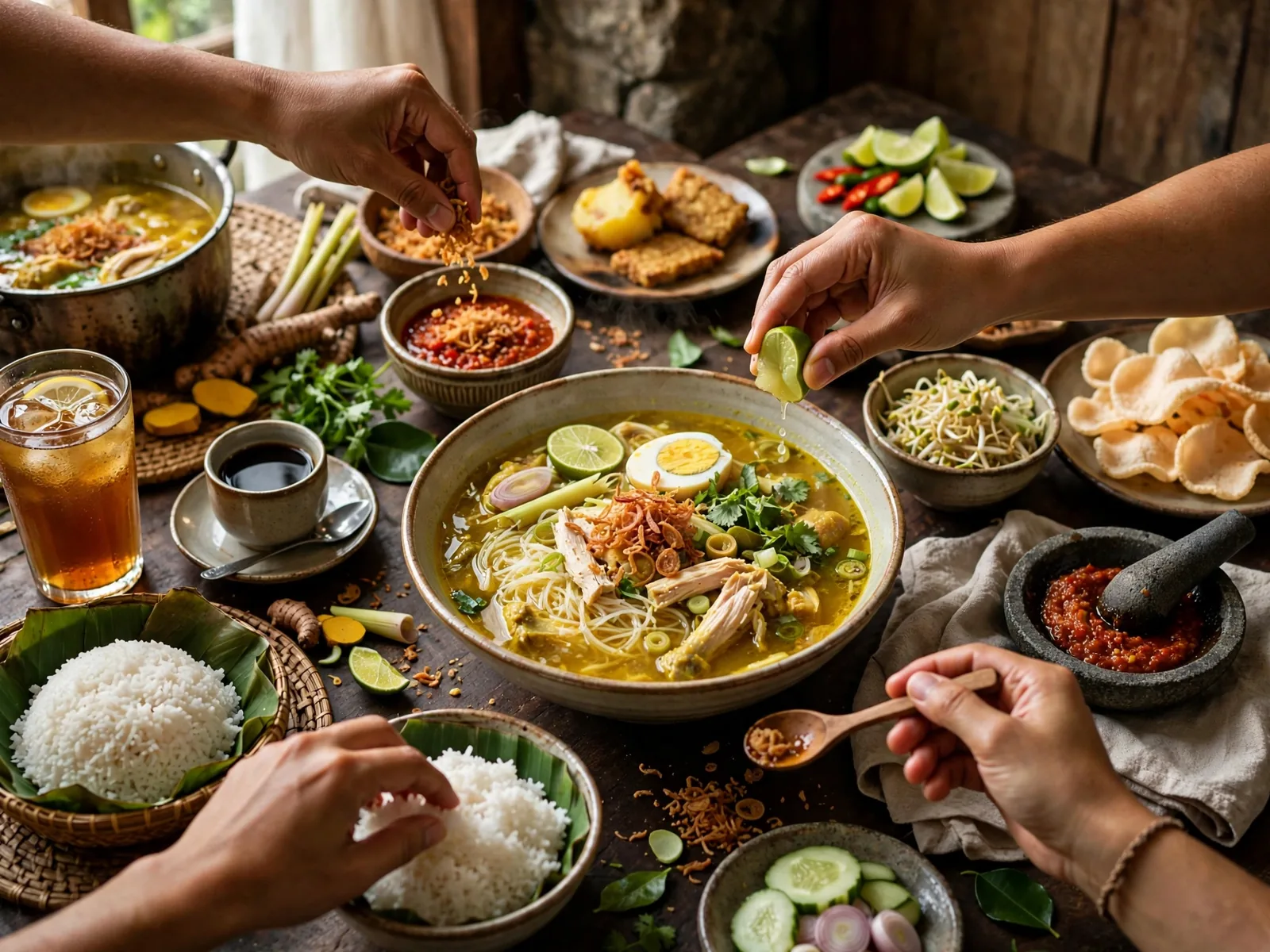
Visual archive · plate 01
Soto Ayam
An editorial view of the finished dish, kept compact so the story continues without an oversized image break.
Primary region
Java / wider Indonesia
Country
Indonesia
Regional influence
The dish reflects the ingredients and cooking patterns associated with Java / wider Indonesia, while household and regional versions vary.
Related food systems
- Java / wider Indonesia home cooking
- Market and street-food traditions
- Regional pantry and seasonal cooking
Sources & further reading
Follow the reference trail.
Ember & Equator links outward when an institution or primary reference helps support the culinary record.
- 0117 Most Popular and Delicious Indonesian Foods — SotoExternal ↗
Ministry of Tourism, Republic of Indonesia · government
Supports: soto as an Indonesian soup family · turmeric, lemongrass and garlic broth · rice vermicelli, sprouts and cabbage · regional variation
Ember & Equator source review · 2026-09-17
- 02Soto LamonganExternal ↗
Ministry of Tourism, Republic of Indonesia · government
Supports: yellow turmeric broth · lemongrass, galangal, garlic and shallot aromatics · shredded chicken, vermicelli, egg, cabbage, scallions, lime and sambal
Ember & Equator source review · 2026-09-17
Ingredient guides
Learn about the ingredients behind the dish.
These are reference guides, not a second ingredient list. Follow an ingredient when you want to understand its role, use and wider culinary context.
Ingredient
chicken thighs
Understand what it contributes, how to use it, and the dishes that reveal it best.
Ingredient
shallots
Understand what it contributes, how to use it, and the dishes that reveal it best.
Ingredient
garlic
Understand what it contributes, how to use it, and the dishes that reveal it best.
Ingredient
fresh ginger
Understand what it contributes, how to use it, and the dishes that reveal it best.
Ingredient
galangal
Understand what it contributes, how to use it, and the dishes that reveal it best.
Ingredient
lemongrass
Understand what it contributes, how to use it, and the dishes that reveal it best.
Keep wandering
Where will this dish take you next?
Stay with the place, follow an ingredient or technique, or cross into another food culture. Each path begins with something already present in this dish.
Stay with the place
01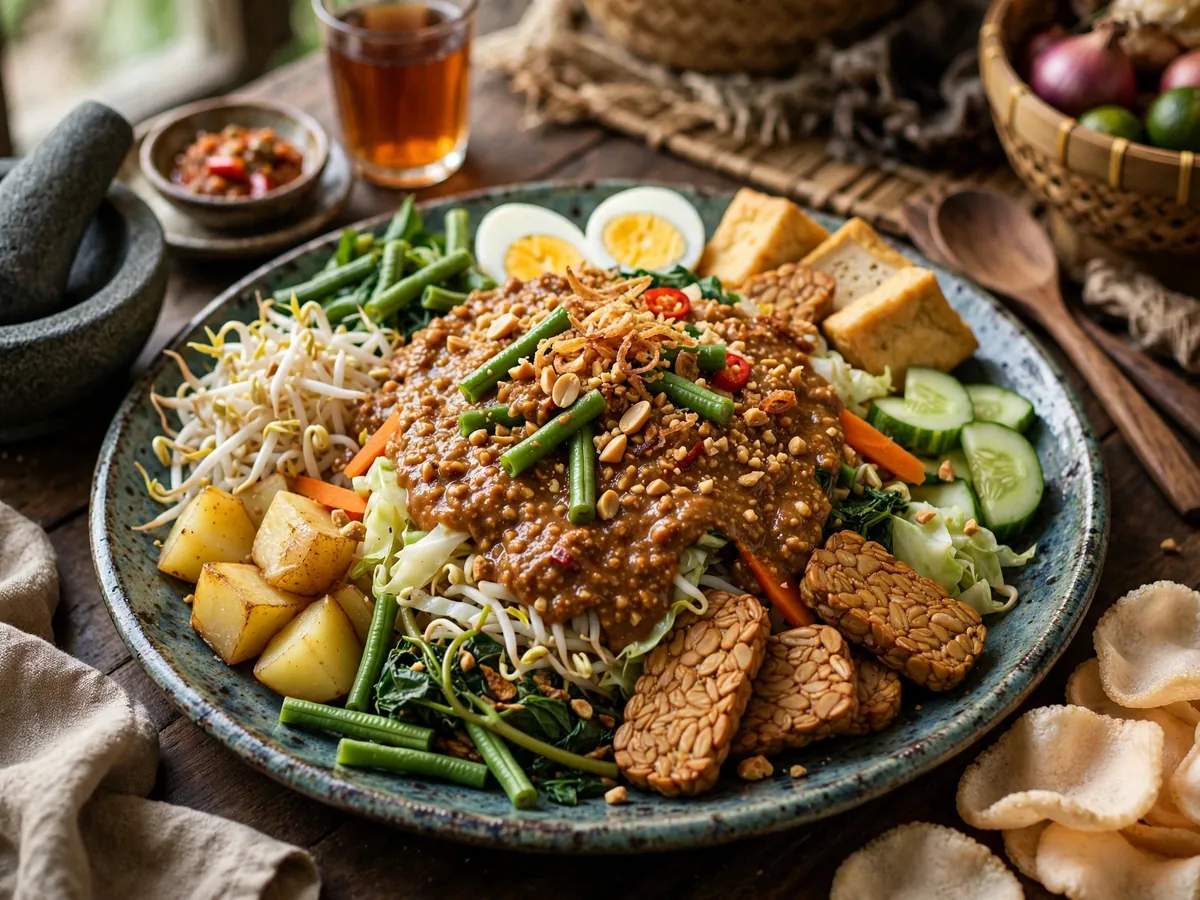
Indonesia
Gado-Gado
Stay in the same food culture and notice how simmer appears in another dish.
Shared thread · Simmer · shallots · garlic
Follow the method or pantry
02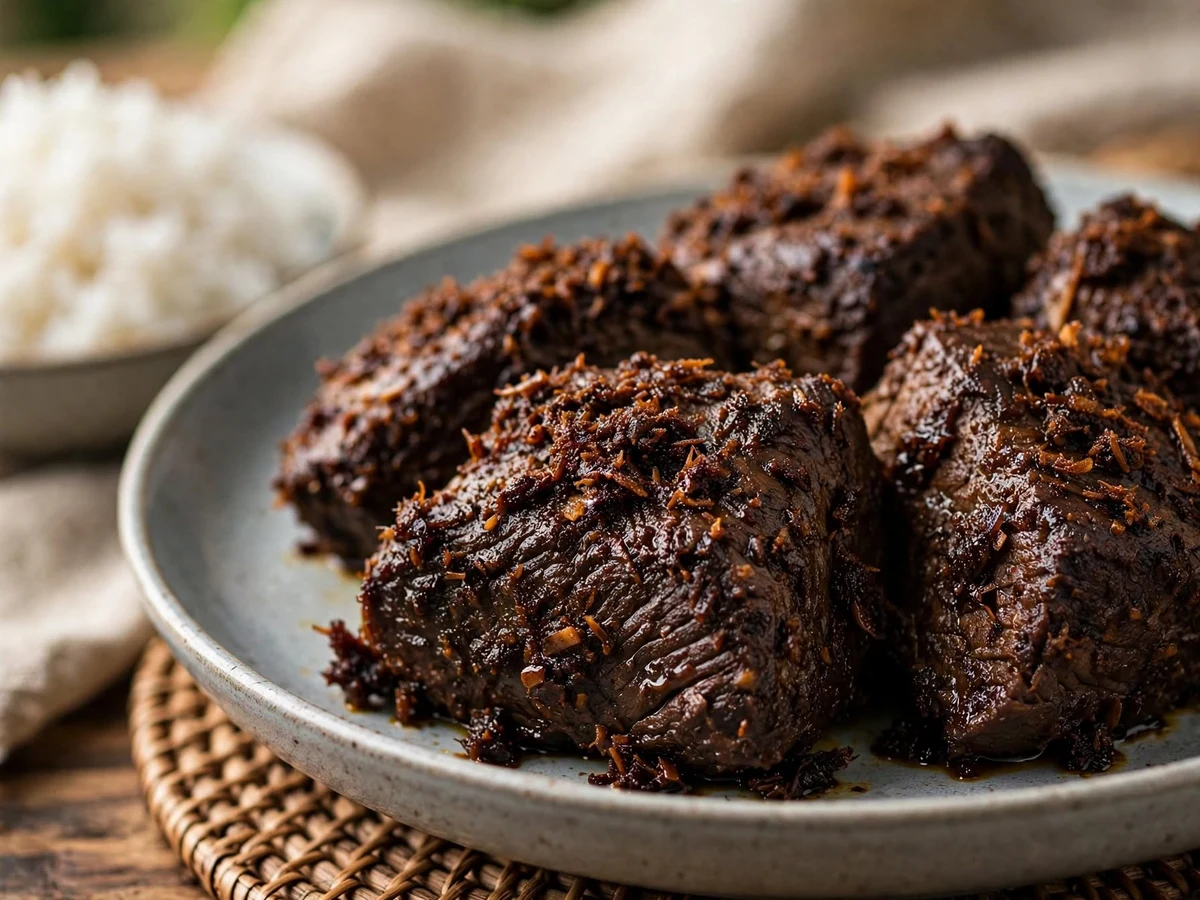
Indonesia
Rendang
Follow the cooking method: both dishes connect through simmer.
Shared thread · Simmer · shallots · garlic
Cross a culinary border
03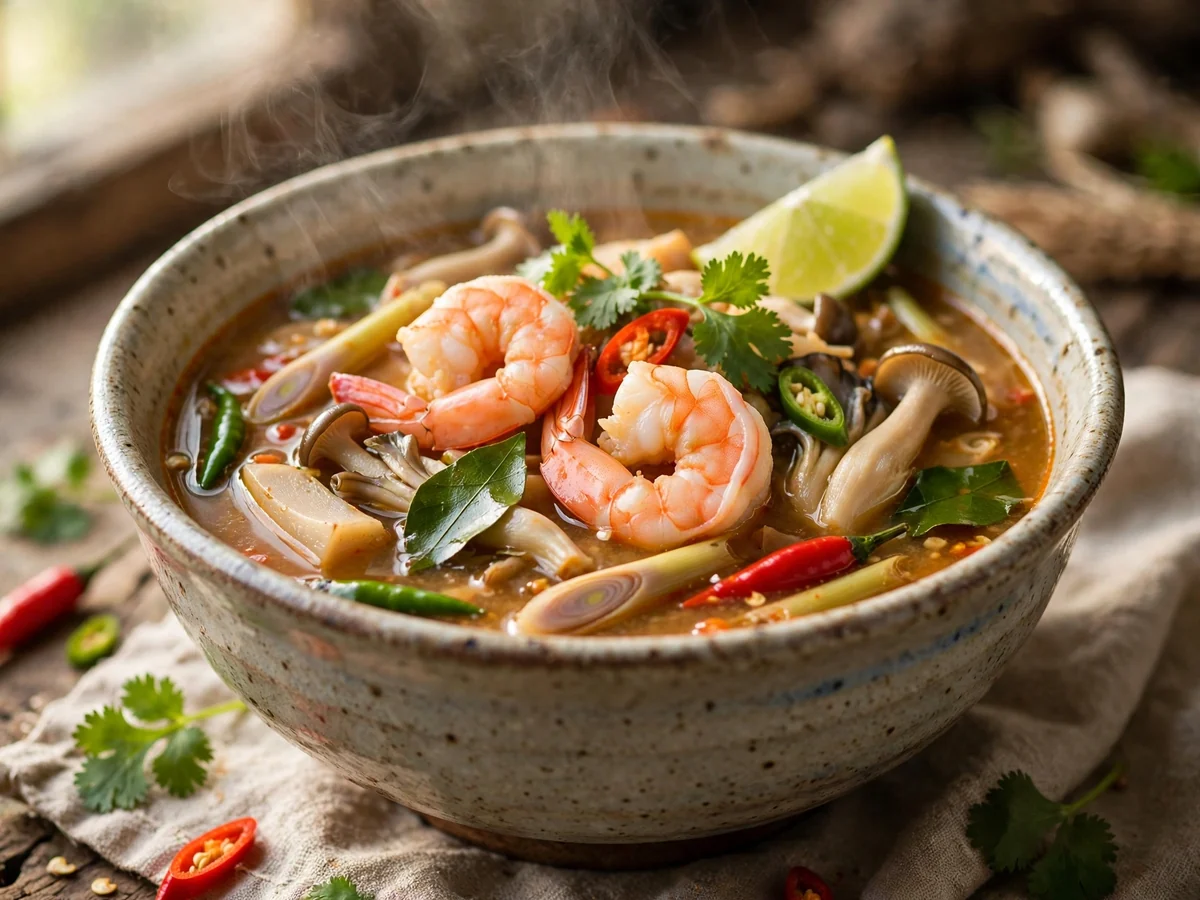
Thailand
Tom Yum Kung
Cross borders while keeping simmer as the common thread.
Shared thread · Simmer · shallots · garlic
Go one layer deeper
One small detail can open an entirely different part of food.
Continue in Ember & Equator