
Indonesia · breakfast · lunch · dinner
Nasi Goreng
Indonesia through one enduring dish.
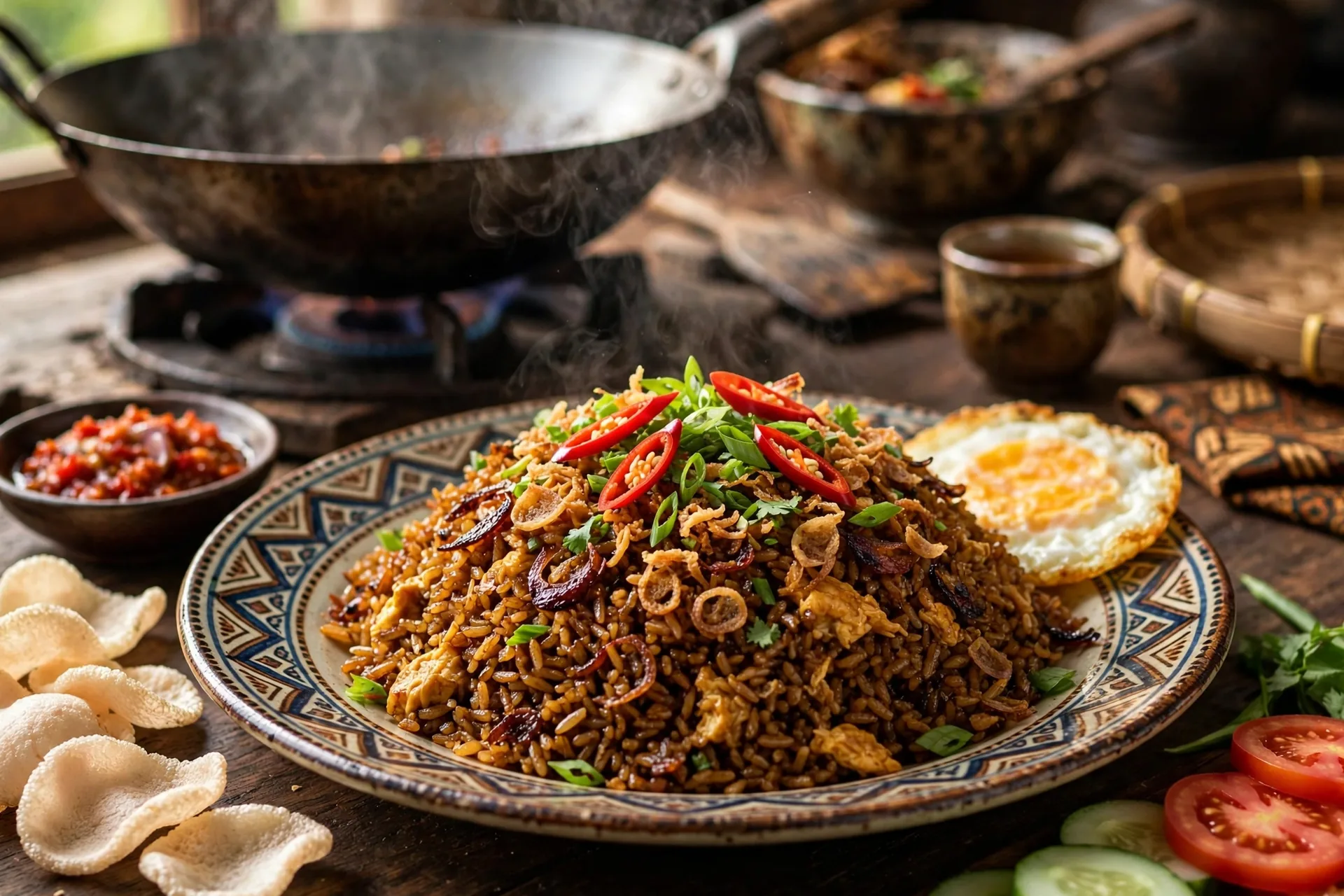
Indonesian nasi goreng is high-heat fried rice built around separated cooked rice, shallot, garlic, chilli, egg and kecap manis. Ember & Equator’s canonical version is intentionally simple and home-style, with belacan documented as an optional savoury variation rather than a universal requirement.
- Total
- 30 min
- Difficulty
- Easy
- Serves
- 4
- Steps
- 7
The dish
The grain tells part of the story.
Nasi goreng is eaten across Indonesia at breakfast, lunch and dinner and has countless household, regional and street-stall forms. Indonesia Travel identifies garlic, shallots, chilli and sweet soy sauce as common fundamentals, while shrimp paste, proteins, vegetables, crackers, pickles and fried egg are frequent additions.
Explore IndonesiaAt a glance
Origin
Indonesia
Region
Indonesia / urban and household traditions
Meal
breakfast · lunch · dinner
Guided steps
7
Dish
Nasi Goreng
Cuisine
Indonesian cuisines
Food type
Rice dish · Street food
Technique
Wok stir-fry · Balance a sweet-sour-salty sauce
Cook the recipe
In the kitchen
Start with the ingredients, then follow the Method in order. Open cooking tips only when you need extra help; the story and references can wait until you are ready.
- Total
- 30 min
- Serves
- 4
- Level
- Easy
- Visual cues
- 7
Ingredients
Serves 4- 800 gcooked ricecold, preferably cooked the day before and chilled
- 3 tbspneutral oilhigh-heat cooking oil
- 4shallotsthinly sliced
- 3 clovesgarlicfinely chopped
- 2red chiliessliced or pounded; adjust to heat preference
- 2eggsfor scrambling through the rice
- 3 tbspkecap manisIndonesian sweet soy sauce
- 0.5 tspsaltonly as needed after tasting the kecap manis
Optional
- 0.5 tspbelacanshrimp paste, toasted or fried into the aromatics; optional
- 4fried eggsoptional, one per serving
- 1cucumberoptional, sliced for serving
- 2tomatoesoptional, cut into wedges for serving
- 1 handfulkerupukoptional Indonesian crackers for serving
Everything ready? Continue straight into the cooking steps.
Start methodMethod
7 steps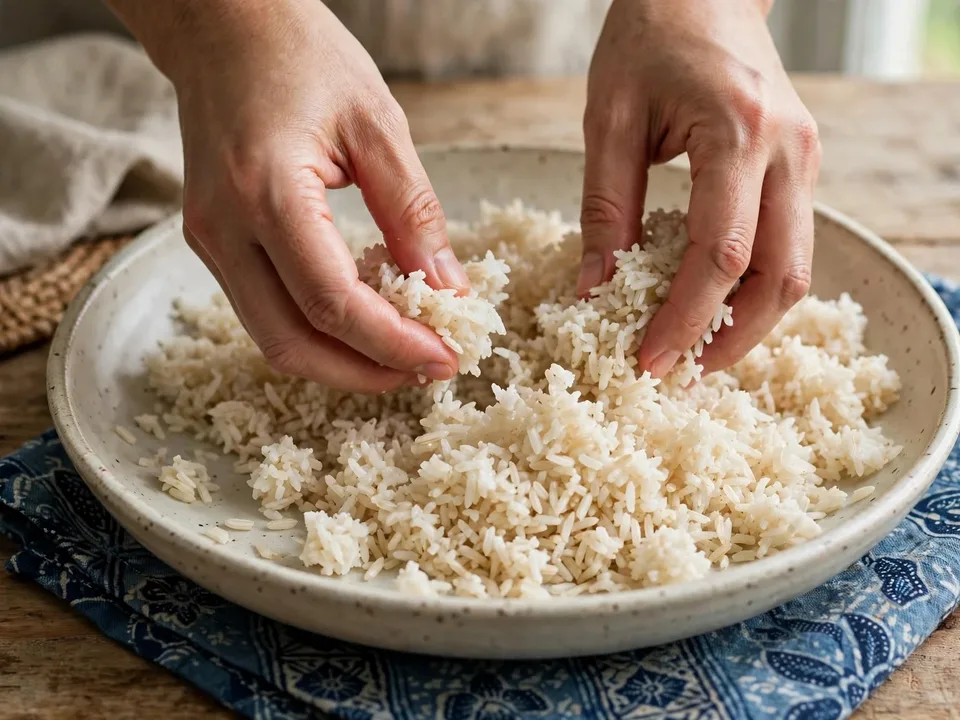 Step 01
Loosen and dry the cold rice before heating the wok
3 min
Break the chilled rice apart with your fingers or a fork so there are no refrigerator-hard clumps.
Break the chilled rice apart with your fingers or a fork so there are no refrigerator-hard clumps. If the rice feels damp, spread it on a tray for 10–15 minutes while you prepare the aromatics.
Look for
The rice falls apart into individual grains with no dense cold lumps and no visible surface moisture.
Kitchen note
Cold rice is useful because its surface is drier, but “day-old” is not magic: the real goal is loose, dry-ish grains that can fry instead of steam.
 Step 02
Prepare every aromatic, egg and optional garnish first
7 min
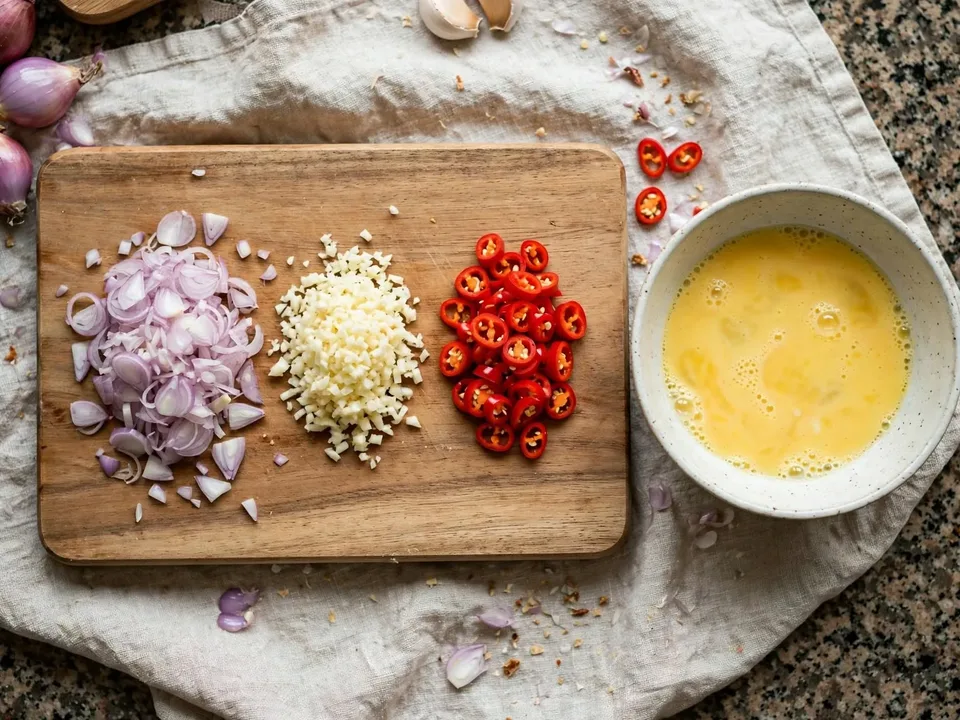
Slice the shallots and chillies, chop the garlic and crack the two wok eggs into a bowl.
Slice the shallots and chillies, chop the garlic and crack the two wok eggs into a bowl. If using belacan, crumble it finely. Have kecap manis measured and optional fried-egg, cucumber, tomato or kerupuk accompaniments ready for service.
Look for
All aromatics are evenly cut, the wok eggs are ready and the rice is loose before the pan is heated.
Kitchen note
Once the wok is hot, nasi goreng moves too quickly for mid-cook chopping. Complete mise en place protects both the garlic and the rice from overcooking.
 Step 03
Fry the shallot, garlic, chilli and optional belacan until fragrant
3 min
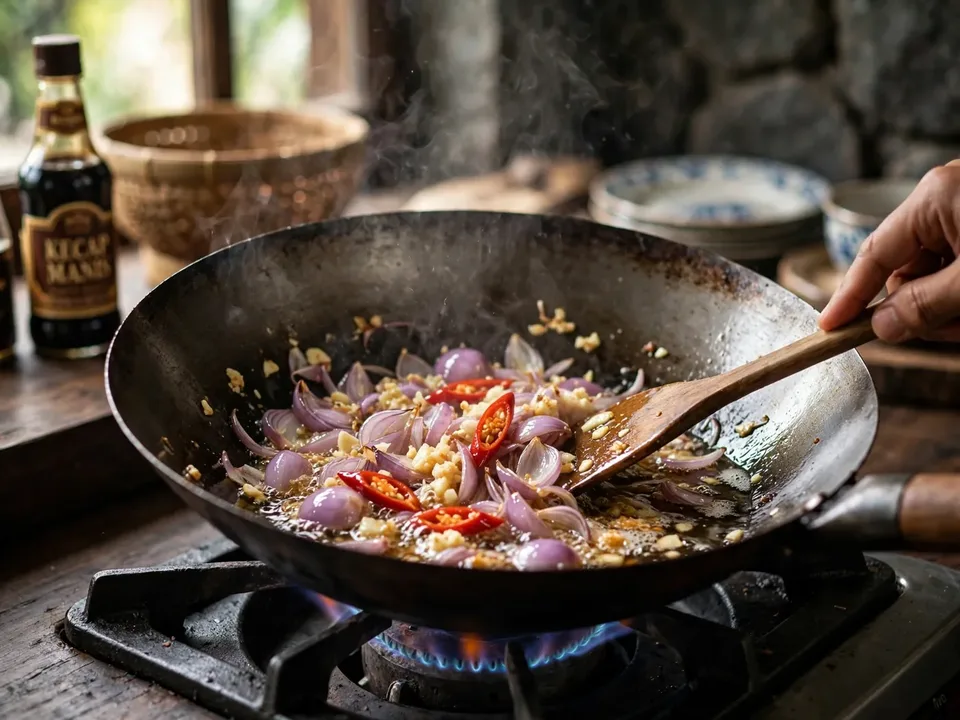
Heat a wok or wide skillet over medium-high heat.
Heat a wok or wide skillet over medium-high heat. Add the oil, then shallot and chilli. Fry for about 1 minute before adding garlic and the optional belacan. Continue only until the aromatics are fragrant and lightly golden.
Look for
The shallots have softened, garlic edges are pale golden and the wok smells deeply aromatic without burnt flecks.
Kitchen note
Belacan is powerful and salty, so a small amount is enough. Garlic goes in after the shallot so it does not burn before the other aromatics soften.
 Step 04
Scramble the eggs softly in the wok
2 min
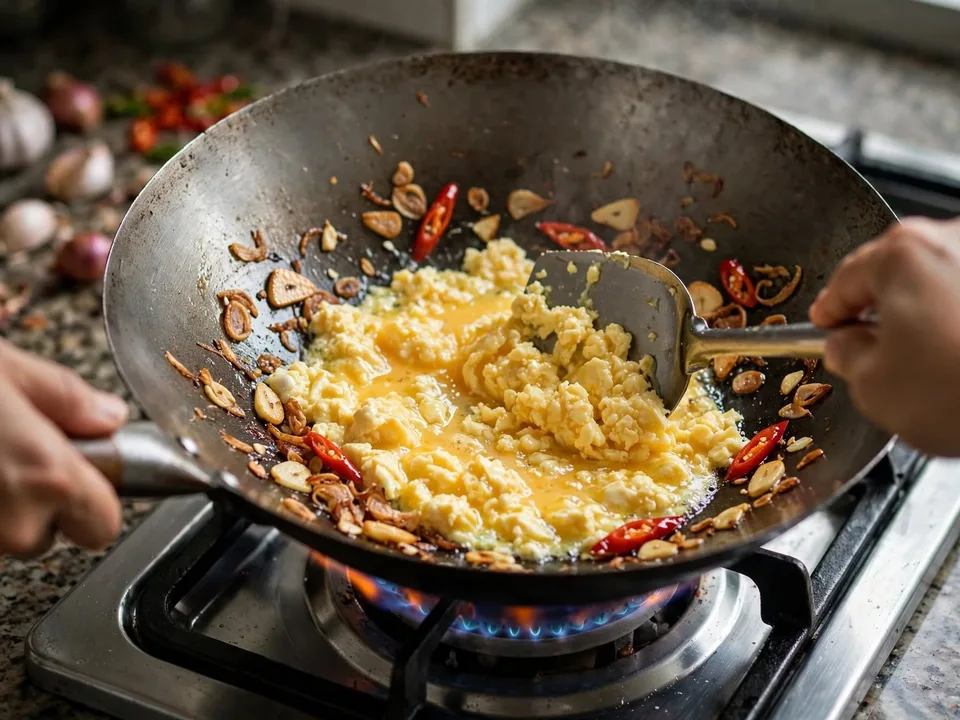
Push the aromatics to one side, add a little extra oil only if the wok is dry, then pour in the eggs.
Push the aromatics to one side, add a little extra oil only if the wok is dry, then pour in the eggs. Scramble into small soft curds and fold the aromatics back through just before the egg is fully firm.
Look for
The egg has formed small tender curds with a slight moist sheen and no raw liquid remaining.
Kitchen note
Keep the egg slightly soft at this point because it will continue cooking when the rice enters. Dry hard curds make the finished rice feel overcooked.
 Step 05
Add the rice and fry hard enough to separate and toast it
3 min
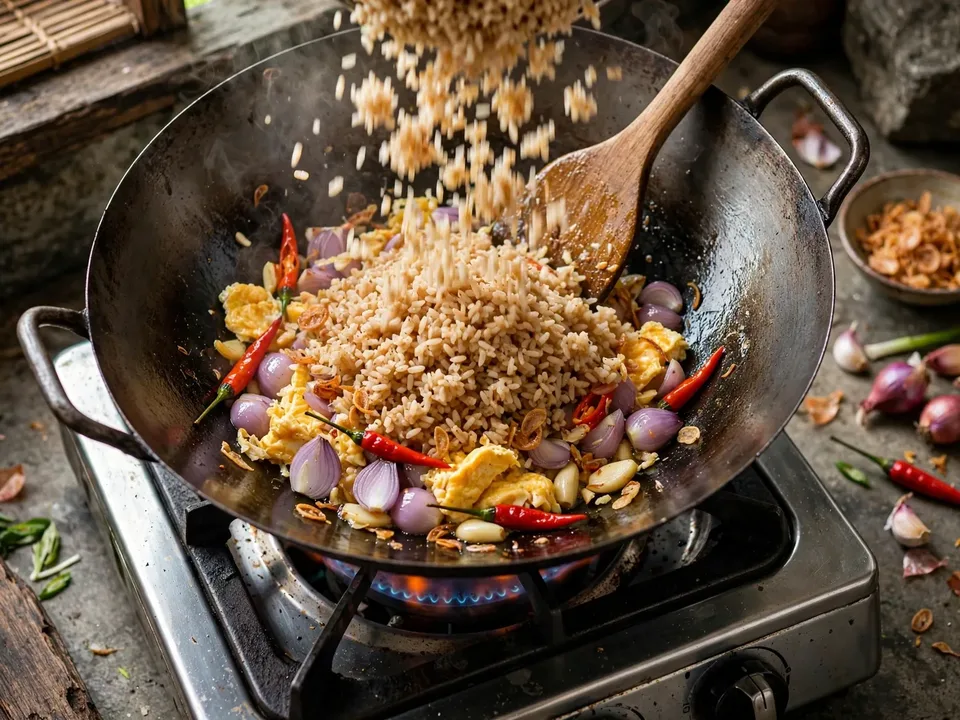
Increase the heat to high and add the loosened rice.
Increase the heat to high and add the loosened rice. Toss, scoop and press apart any remaining clumps for 2–3 minutes until every grain is hot and the rice develops a few lightly toasted patches. Work in two batches if your pan is small.
Look for
The grains are loose, steaming-hot and individually visible, with a few dry toasted edges rather than wet clumps.
Kitchen note
A crowded cool pan steams rice. Use the widest pan you have and resist adding sauce until the grains are already hot and separate.
 Step 06
Add kecap manis around the hot wok and caramelise the coating
2 min
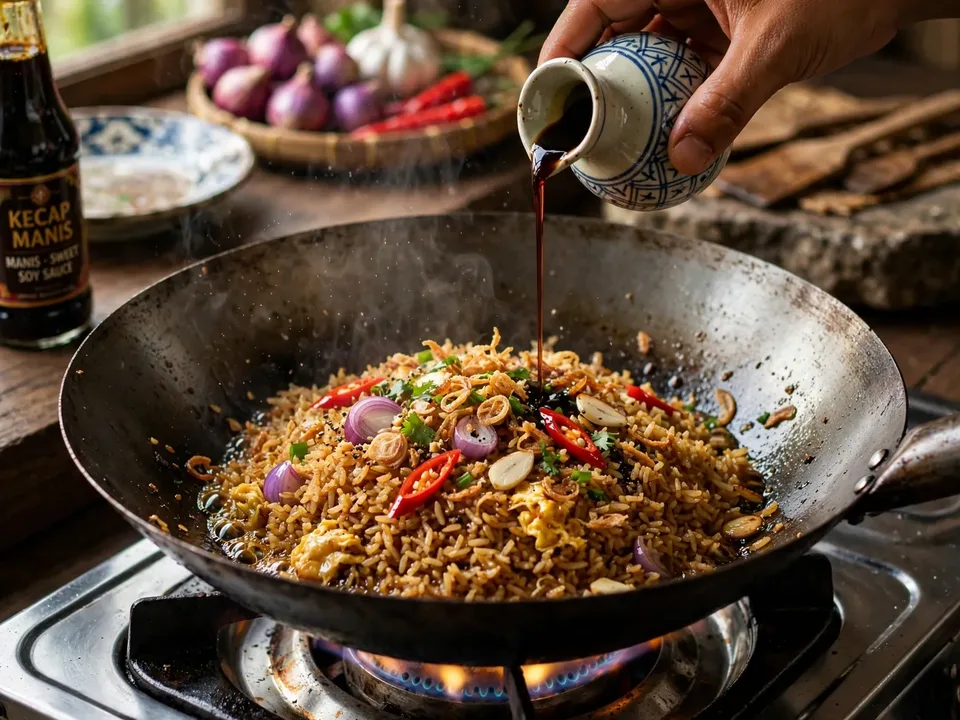
Drizzle the kecap manis around the hot inner wall of the wok rather than directly onto one mound of rice.
Drizzle the kecap manis around the hot inner wall of the wok rather than directly onto one mound of rice. Toss immediately for 1–2 minutes so it spreads in a thin layer and lightly caramelises. Taste before adding any salt.
Look for
The rice is evenly glossy brown with small caramelised patches and no pool of sweet soy at the bottom of the wok.
Kitchen note
Kecap manis is both sweet and salty. Add it gradually and let it hit hot metal briefly; pouring too much straight onto the rice makes dark wet patches.
 Step 07
Taste, final-toss and serve immediately with optional accompaniments
2 min
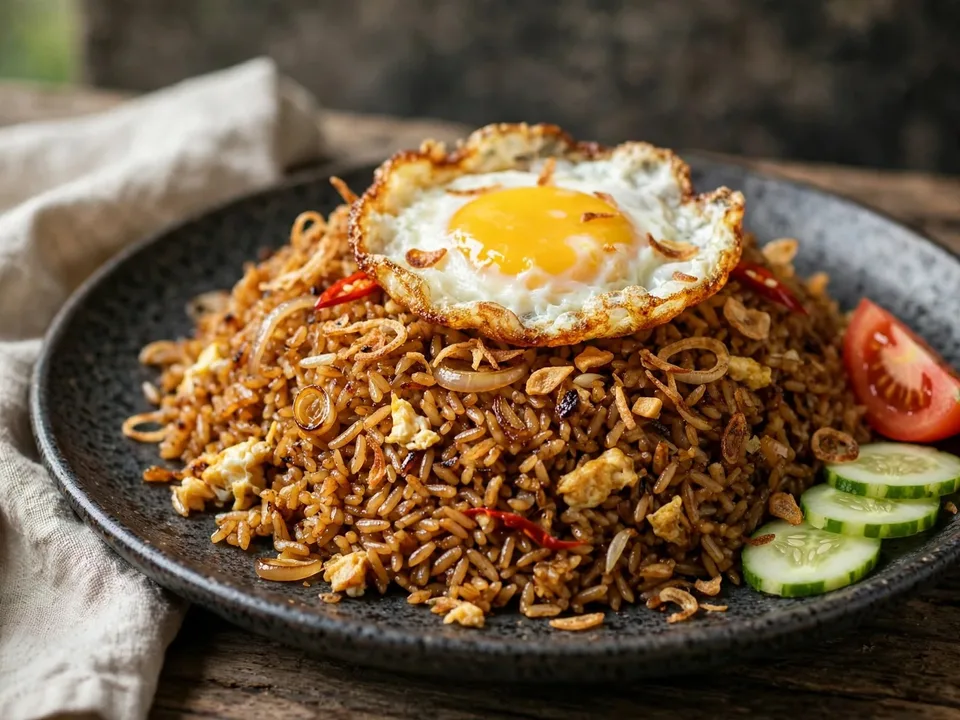
Toss until egg and aromatics are evenly distributed, taste for salt and chilli balance and take the rice off the heat while the grains are still loose.
Toss until egg and aromatics are evenly distributed, taste for salt and chilli balance and take the rice off the heat while the grains are still loose. Serve immediately. If using them, place fried egg, cucumber, tomato and kerupuk alongside or on top rather than stirring them into the wok.
Look for
The rice is hot, separate and glossy rather than wet, and any fresh or crisp accompaniments remain distinct at service.
Kitchen note
Nasi goreng is best straight from high heat. Holding it in the wok keeps drying the rice and softens any crisp toasted patches.
After cooking
Explore the dish beyond the method.
Story, place and references are here for discovery, so they stay out of the way while you cook.
Culture & tradition
The story behind the dish
Origins, evolution and everyday life—read together as part of the recipe's culinary record.
Origins
Fried-rice traditions in Indonesia developed through local rice culture and exchange with Chinese cooking traditions, then became embedded in household and street-food practice.
How it evolved
Cooks adapt nasi goreng to leftover rice, local proteins, sambal and garnishes; kecap manis is a common Indonesian marker.
Its place today
It is eaten from breakfast through late-night meals and appears in homes, street stalls and restaurants.
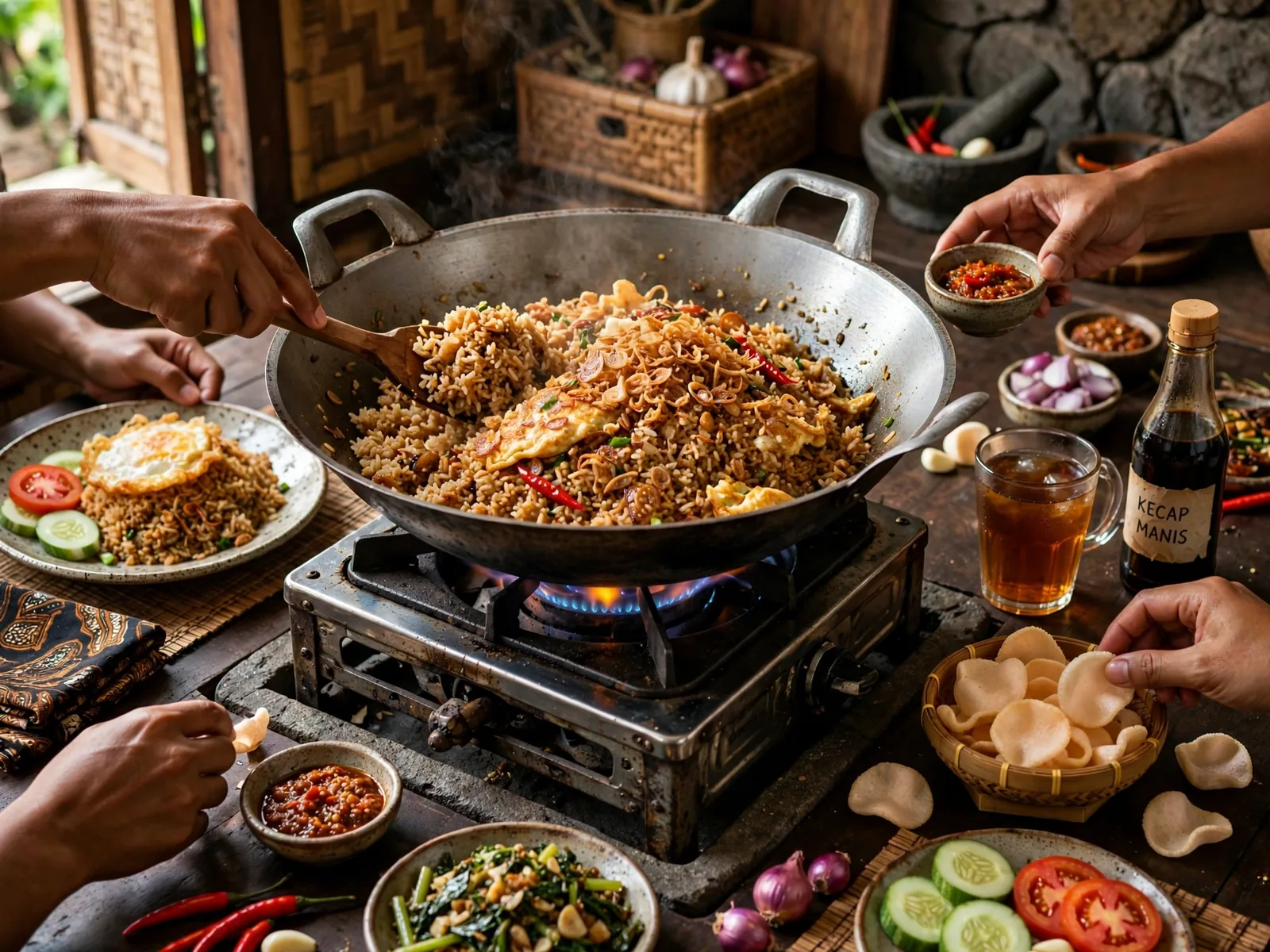
Visual archive · plate 01
Nasi Goreng
An editorial view of the finished dish, kept compact so the story continues without an oversized image break.
Primary region
Indonesia / urban and household traditions
Country
Indonesia
Regional influence
The dish reflects the ingredients and cooking patterns associated with Indonesia / urban and household traditions, while household and regional versions vary.
Related food systems
- Indonesia / urban and household traditions home cooking
- Market and street-food traditions
- Regional pantry and seasonal cooking
Sources & further reading
Follow the reference trail.
Ember & Equator links outward when an institution or primary reference helps support the culinary record.
- 015 Popular Fried Rice Varieties at Jakarta’s Food StallsExternal ↗
Ministry of Tourism, Republic of Indonesia · government
Supports: garlic shallot chilli and sweet soy fundamentals · egg and protein variations · optional shrimp paste · cracker and pickle service
Ember & Equator source review · 2026-09-17
- 0212 Traditional Indonesian Foods: A Taste of Cultural HeritageExternal ↗
Ministry of Tourism, Republic of Indonesia · government
Supports: nasi goreng · Indonesian culinary heritage · regional variation
Ember & Equator source review · 2026-09-17
Ingredient guides
Learn about the ingredients behind the dish.
These are reference guides, not a second ingredient list. Follow an ingredient when you want to understand its role, use and wider culinary context.
Ingredient
cooked rice
Understand what it contributes, how to use it, and the dishes that reveal it best.
Ingredient
neutral oil
Understand what it contributes, how to use it, and the dishes that reveal it best.
Ingredient
shallots
Understand what it contributes, how to use it, and the dishes that reveal it best.
Ingredient
garlic
Understand what it contributes, how to use it, and the dishes that reveal it best.
Ingredient
red chilies
Understand what it contributes, how to use it, and the dishes that reveal it best.
Ingredient
egg
Understand what it contributes, how to use it, and the dishes that reveal it best.
Keep wandering
Where will this dish take you next?
Stay with the place, follow an ingredient or technique, or cross into another food culture. Each path begins with something already present in this dish.
Stay with the place
01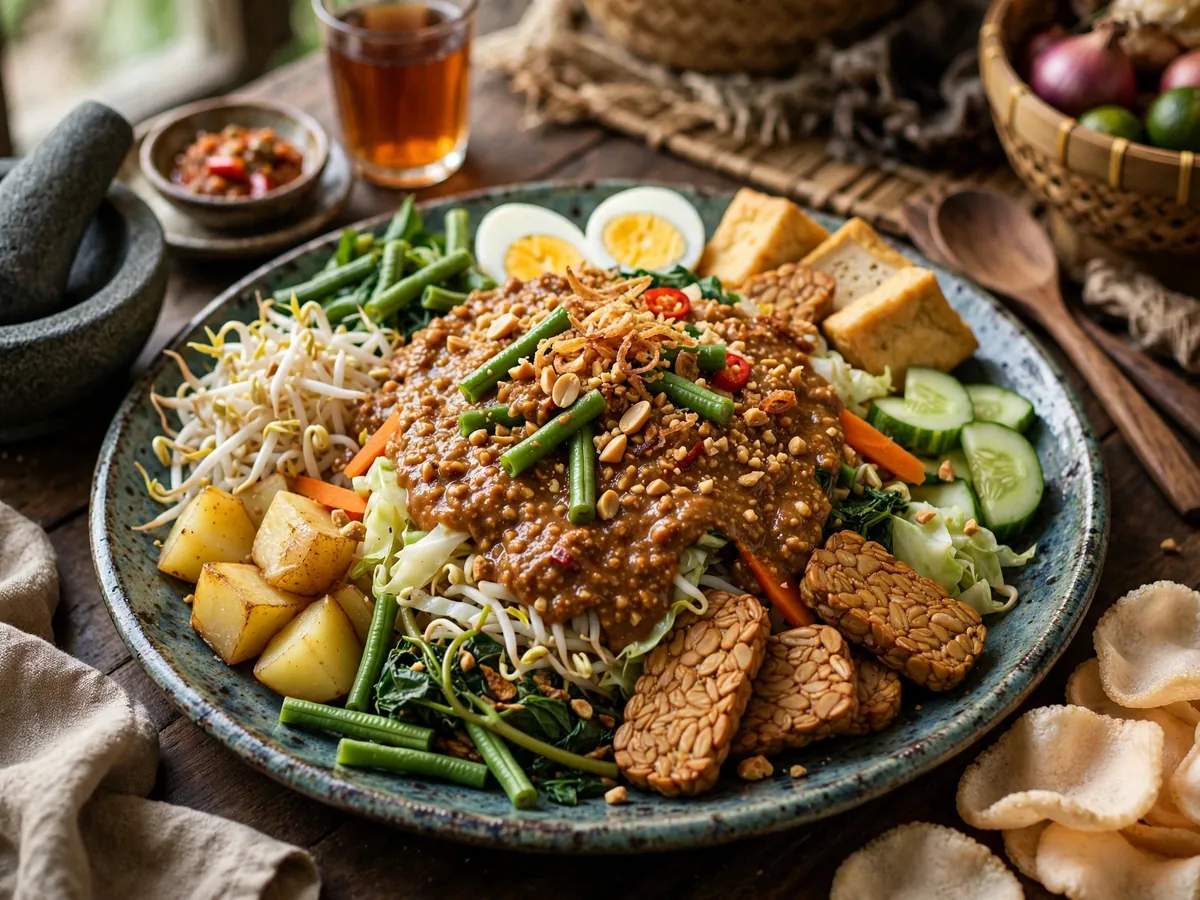
Indonesia
Gado-Gado
Stay in the same food culture and notice how balance a sweet-sour-salty sauce appears in another dish.
Shared thread · Balance a sweet-sour-salty sauce · neutral oil · shallots
Follow the method or pantry
02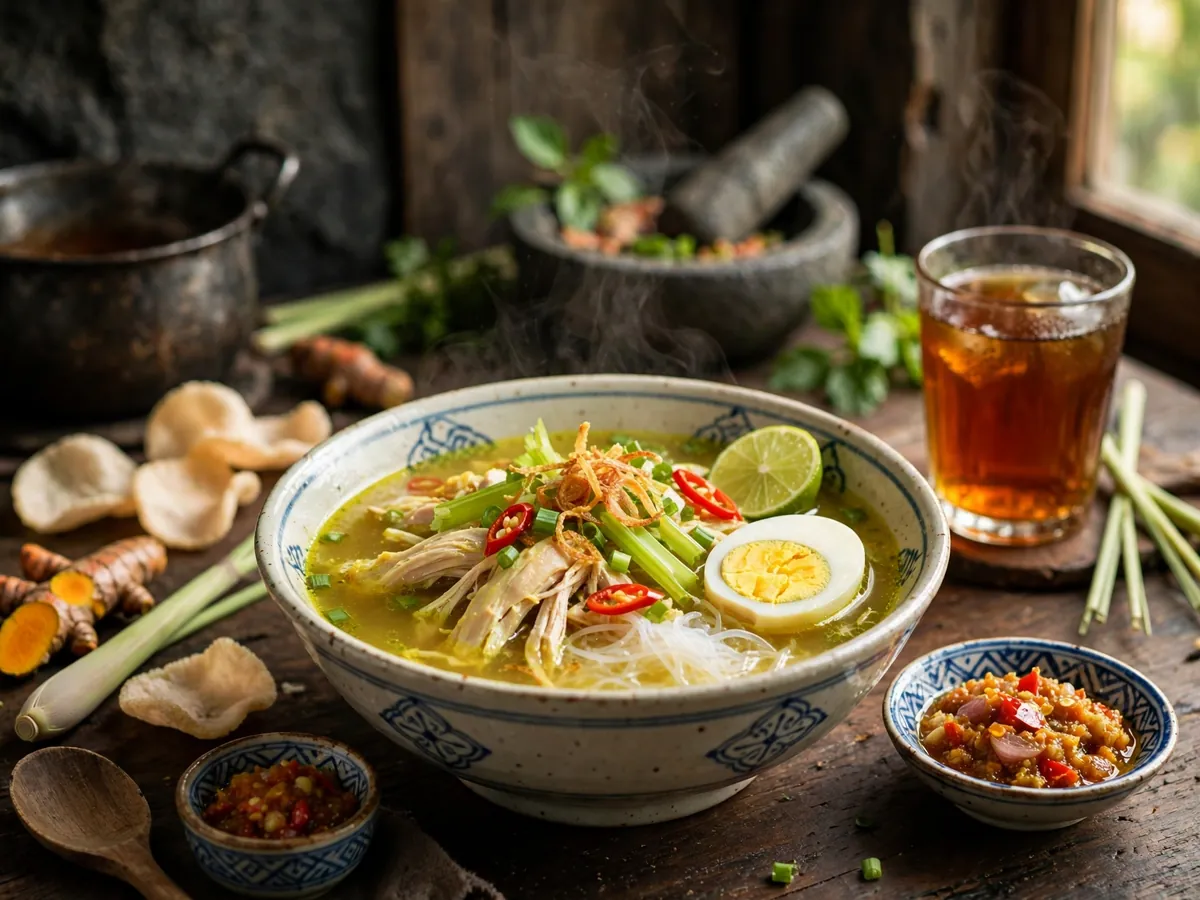
Indonesia
Soto Ayam
Follow the pantry: both dishes connect through neutral oil.
Shared thread · neutral oil · shallots · garlic
Cross a culinary border
03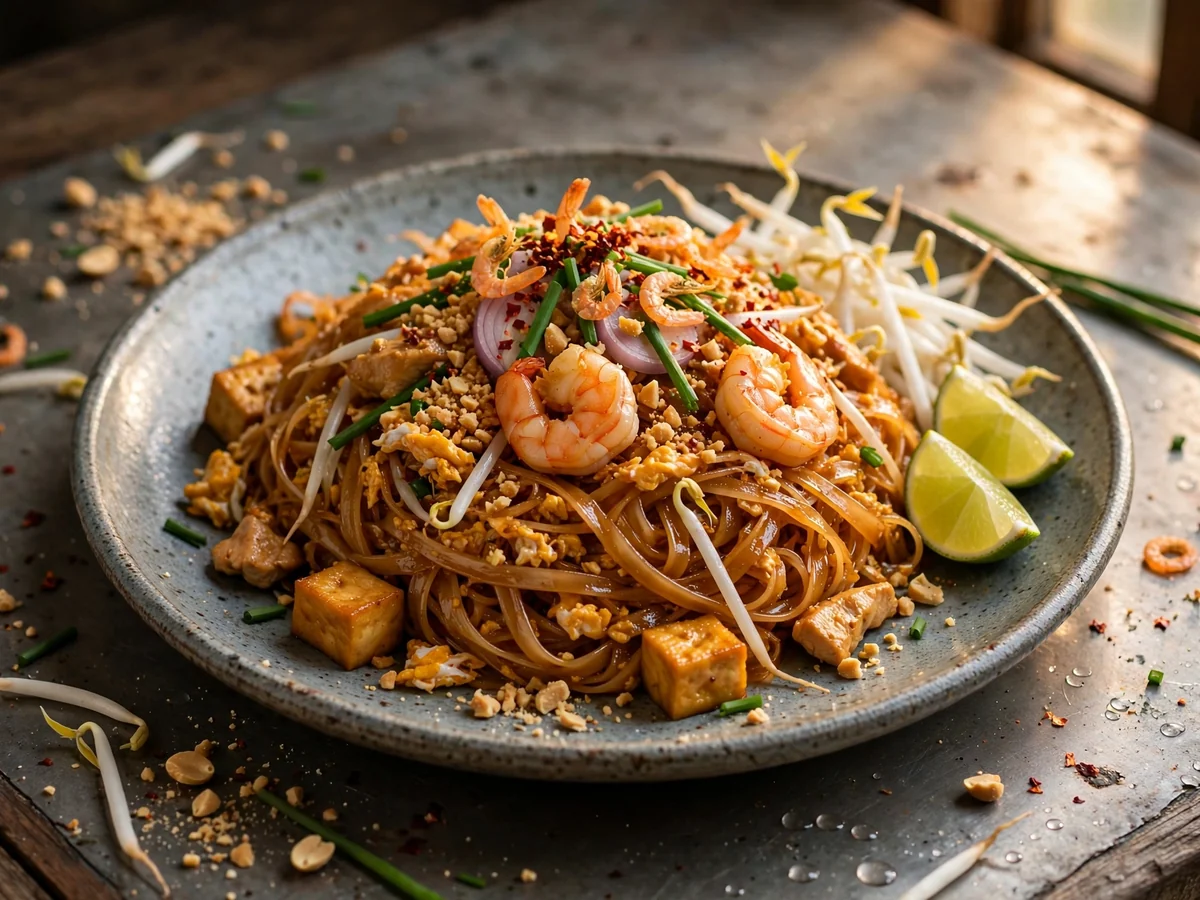
Thailand
Pad Thai
Cross borders while keeping wok stir-fry as the common thread.
Shared thread · Wok stir-fry · Balance a sweet-sour-salty sauce · neutral oil
Continue in Ember & Equator