
Thailand · lunch · dinner · soup
Tom Yum Kung
Thailand through one enduring dish.
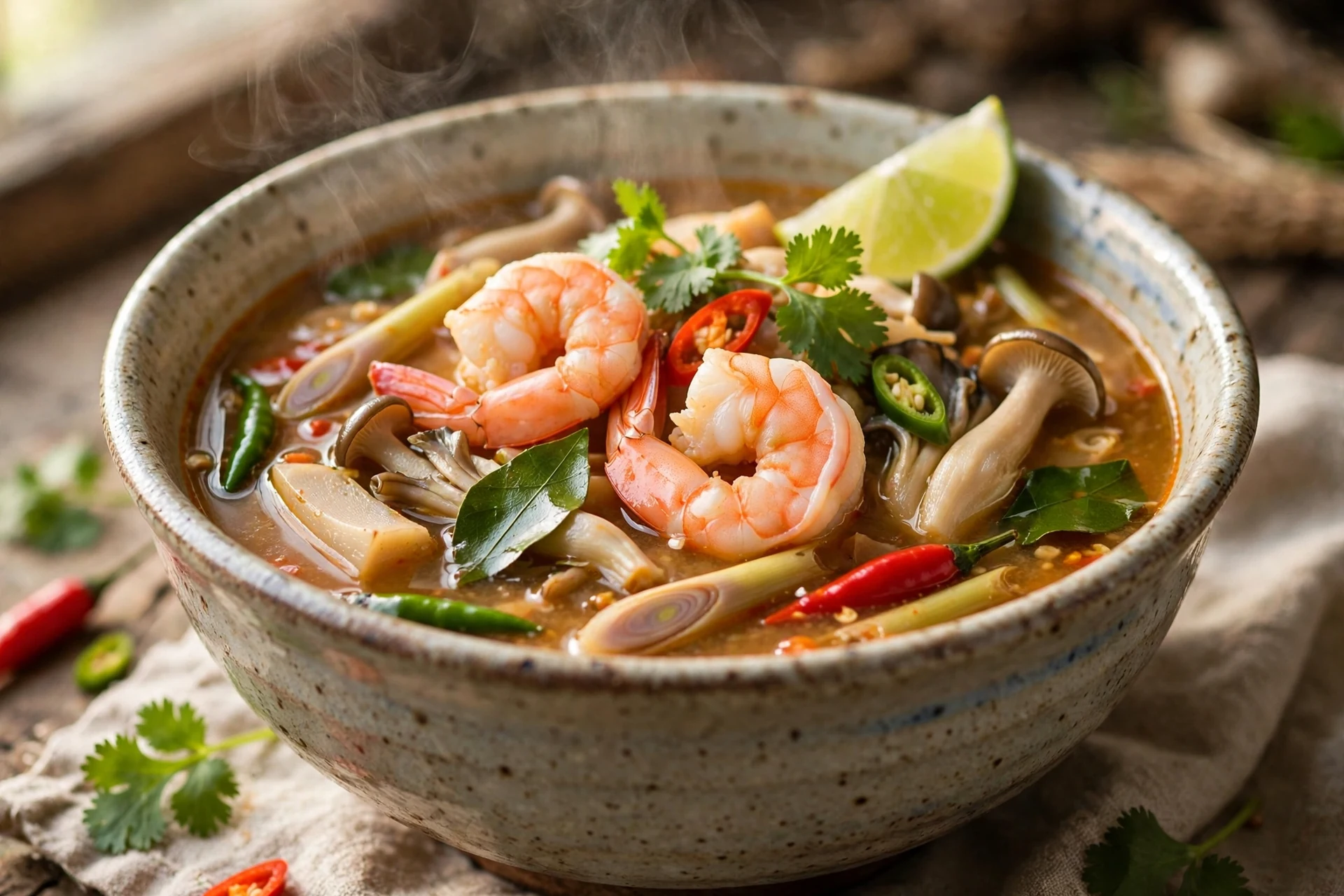
Tom Yum Kung is a Thai hot-and-sour prawn soup built around a fast, fragrant infusion of lemongrass, galangal and makrut lime leaves. This Ember & Equator version follows a clear-broth style, with prawns cooked only at the end and fresh lime added off the heat so the soup stays aromatic, bright and balanced.
- Total
- 35 min
- Difficulty
- Medium
- Serves
- 4
- Steps
- 5
The dish
Place first. Then the plate.
UNESCO describes Tomyum Kung as a traditional prawn soup connected with riverside communities in Thailand’s Central Plains and with knowledge of local herbs and freshwater resources.
Explore ThailandAt a glance
Origin
Central Plains of Thailand
Region
Central Plains of Thailand
Method
simmered
Meal
lunch · dinner · soup
Guided steps
5
Dish
Tom Yum Kung
Cuisine
Thai cuisine
Food type
Soup · Lunch · Dinner
Technique
Bruise aromatics · Simmer · Balance a sweet-sour-salty sauce
Cook the recipe
In the kitchen
Start with the ingredients, then follow the Method in order. Open cooking tips only when you need extra help; the story and references can wait until you are ready.
- Total
- 35 min
- Serves
- 4
- Level
- Medium
- Visual cues
- 5
Ingredients
Serves 4- 450 graw prawnspreferably shell-on and head-on; peel and devein, reserving shells and heads for the broth
- 1.2 litreswateror use a light unsalted prawn stock
- 2 wholelemongrass stalkstrimmed, bruised and cut into 5 cm lengths
- 30 ggalangalthinly sliced; fresh is strongly preferred
- 6 leavesmakrut lime leavestorn to release their fragrance
- 4–6 wholebird’s eye chillieslightly crushed; use fewer for a gentler soup
- 3 smallshallotspeeled and lightly crushed or halved
- 2 clovesgarliclightly smashed
- 180 gstraw mushroomshalved; oyster mushrooms are a practical substitute
- 3 tbspfish sauceplus more to balance at the end
- 3–4 tbspfresh lime juiceadd only after the heat is off
- 15 gcoriander leavesroughly torn, to finish
Optional
- 1 smallripe tomatocut into wedges; optional but common in many modern preparations
- ½ tsppalm sugaroptional; only if needed to round sharp acidity
Everything ready? Continue straight into the cooking steps.
Start methodMethod
5 steps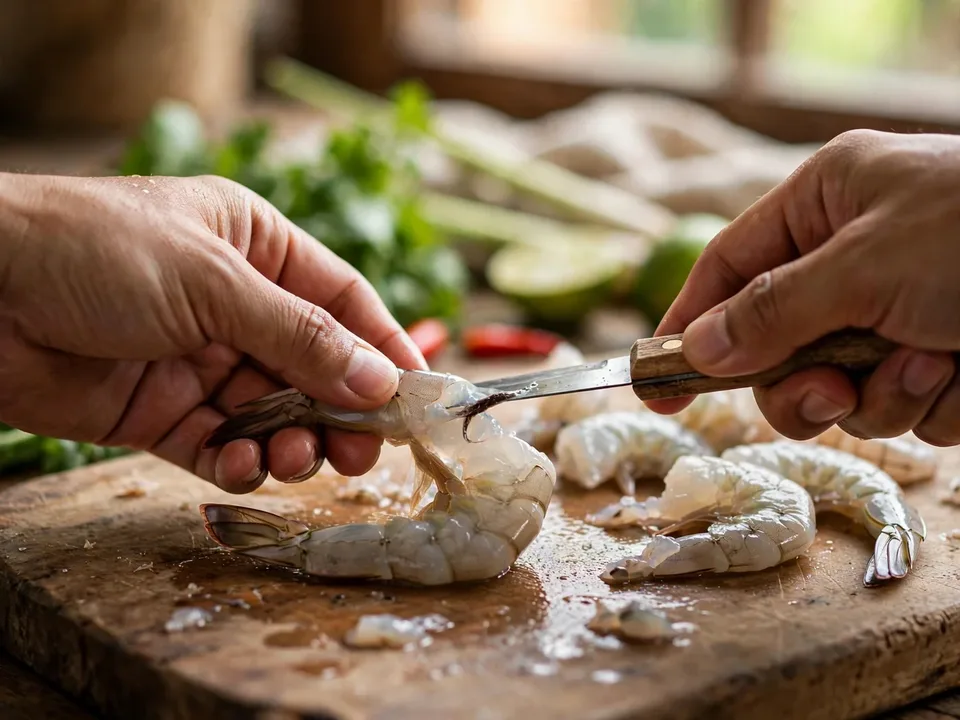 Step 01
Prepare the prawns and make a quick stock
8 min
Keep the prawns cold while you peel and devein them, leaving the tails on if you like.
Keep the prawns cold while you peel and devein them, leaving the tails on if you like. Reserve the heads and shells. Put those shells and heads in the 1.2 litres of water, bring just to a simmer and cook for 5–7 minutes, pressing the heads lightly to release their flavour. Strain immediately and discard the solids. If you are starting with a good unsalted prawn stock, simply prep the prawns and keep them chilled until the final cooking stage.
Look for
The cleaned prawns should remain cold, translucent and firm; the strained stock should smell sweetly of prawns without looking cloudy or greasy.
Kitchen note
Do not boil the shells for a long time. A short extraction gives sweetness and seafood depth; prolonged hard boiling can make a prawn-shell stock muddy or harsh.
 Step 02
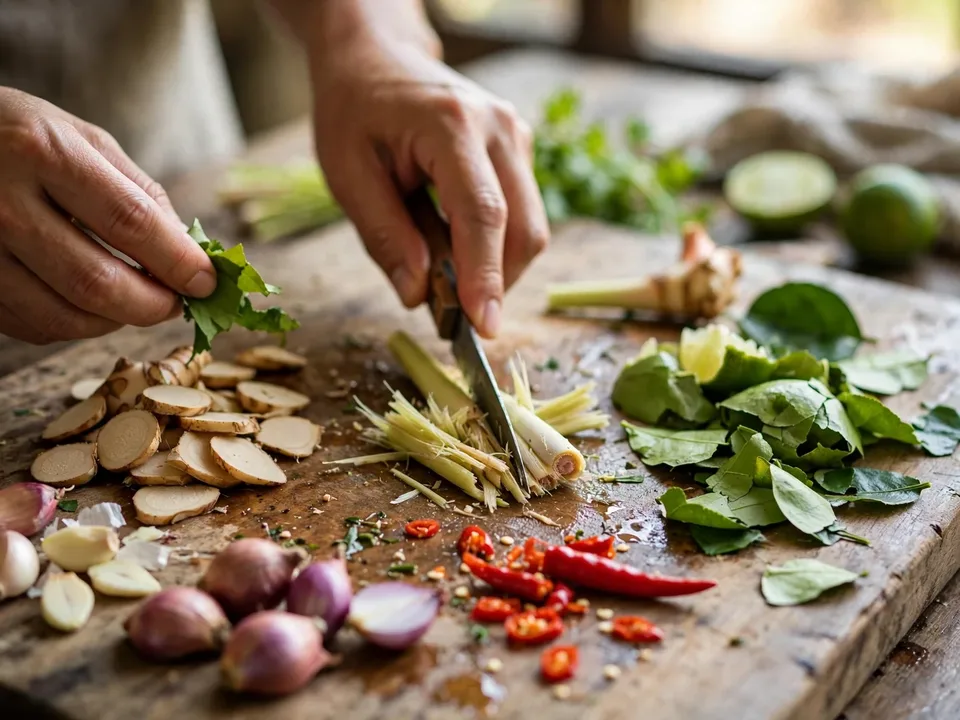
Bruise and prepare the aromatics
5 min
Trim the tough ends from the lemongrass, bruise the stalks firmly with the side of a knife and cut them into short lengths.
Trim the tough ends from the lemongrass, bruise the stalks firmly with the side of a knife and cut them into short lengths. Slice the galangal, tear the makrut lime leaves, lightly crush the bird’s eye chillies and shallots, and smash the garlic. Halve the mushrooms and cut the tomato into wedges if using. Bruising rather than finely chopping keeps the broth cleaner while exposing the aromatic oils.
Look for
The freshly bruised herbs should smell sharply citrusy, floral and peppery before they ever reach the pot.
Kitchen note
Lemongrass, galangal and makrut lime leaves are infusion ingredients. Bruise or tear them enough to release aroma, but do not mince them into small woody pieces that become unpleasant to eat.
 Step 03
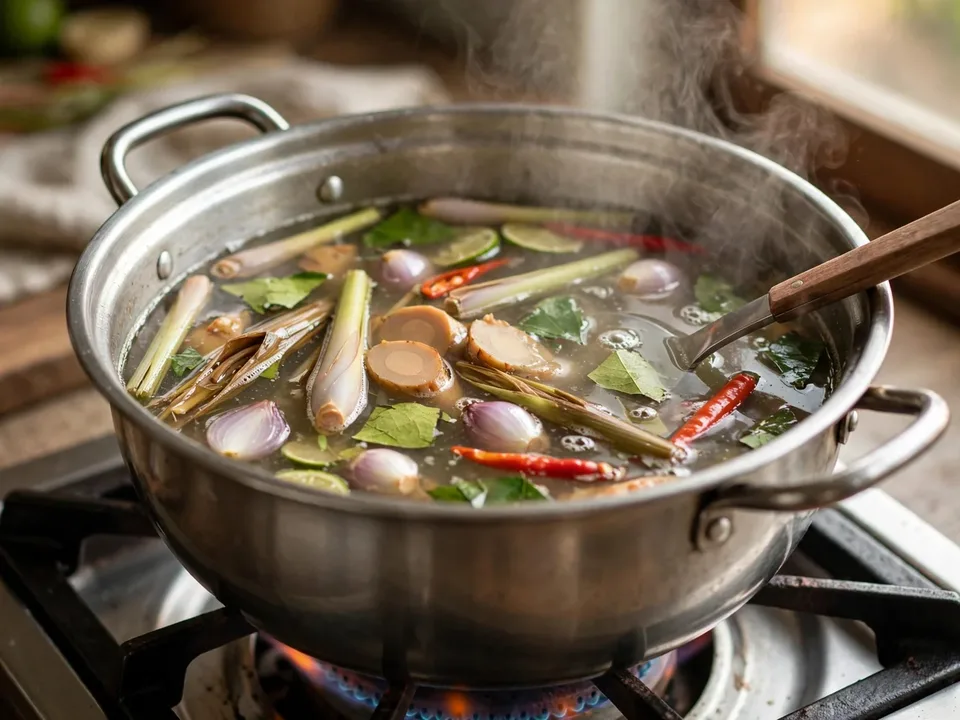
Infuse the broth and cook the mushrooms
7 min
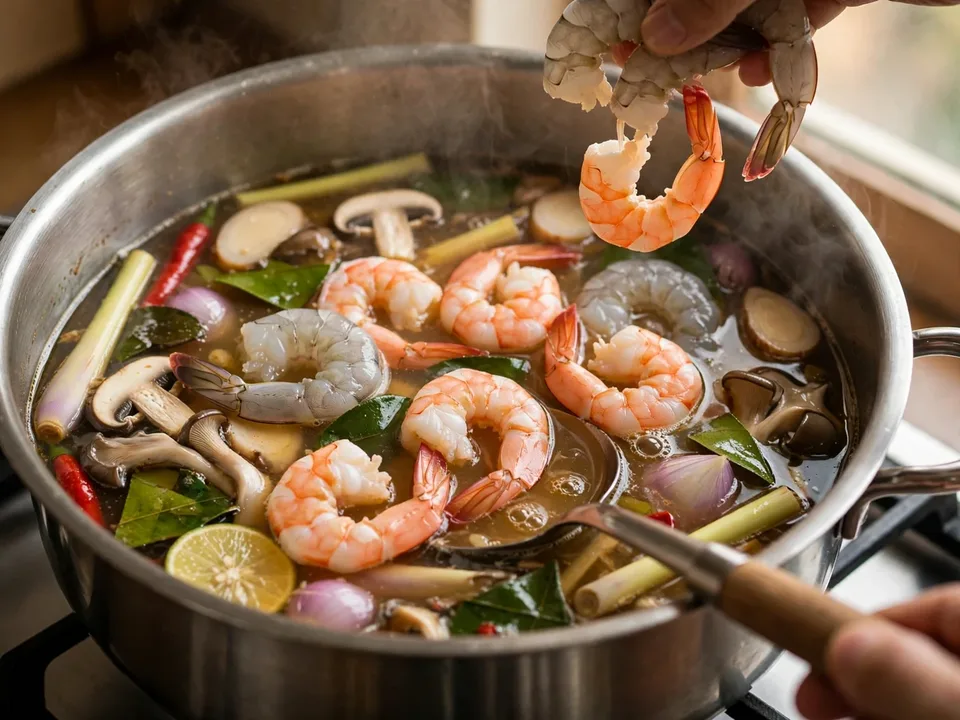
Return the strained prawn stock to a clean pot and bring it to a gentle simmer.
Return the strained prawn stock to a clean pot and bring it to a gentle simmer. Add the lemongrass, galangal, makrut lime leaves, shallots, garlic and crushed chillies. Simmer gently for 3–5 minutes, just until the broth becomes highly aromatic. Add the mushrooms and tomato, if using, and cook for another 2–3 minutes until the mushrooms are tender but still hold their shape. Keep the heat controlled rather than boiling the herbs aggressively.
Look for
The broth should remain relatively clear while smelling intensely of lemongrass, galangal and lime leaf; the mushrooms should be tender rather than collapsed.
Kitchen note
A long, hard boil does not make the soup more fragrant. The volatile aromas that define Tom Yum are best preserved by a short, lively but controlled infusion.
 Step 04
Season the broth and cook the prawns last
3 min
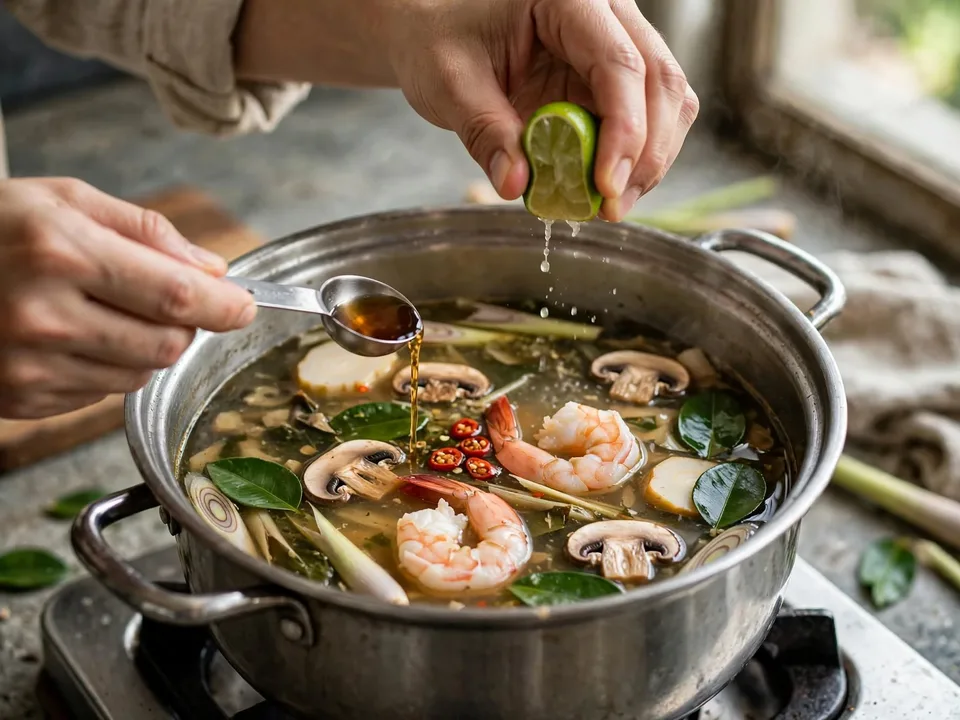
Stir the fish sauce into the aromatic broth and taste it before adding the prawns.
Stir the fish sauce into the aromatic broth and taste it before adding the prawns. It should taste savoury and slightly assertive because the lime will sharpen the final balance. Add the prepared prawns and simmer gently for about 2–3 minutes, depending on size, only until they turn opaque through the centre and curl into a loose C shape. Remove the pot from the heat immediately. Add the optional palm sugar only if the broth tastes unusually sharp; Tom Yum should not become noticeably sweet.
Look for
The prawns should be pink outside, opaque in the centre and gently curved, while the broth remains actively fragrant and fluid.
Kitchen note
Prawns are the last ingredient that needs real cooking. A loose C shape and just-opaque centre indicate tenderness; a tight O-shaped curl is a common sign that they have gone too far.
 Step 05
Finish with lime off the heat and serve immediately
2 min
With the pot off the heat, stir in 3 tablespoons of fresh lime juice and most of the coriander.
With the pot off the heat, stir in 3 tablespoons of fresh lime juice and most of the coriander. Taste a spoonful that includes broth rather than only the surface oil. Adjust with more lime for sourness, fish sauce for salinity or another crushed chilli for heat, changing one direction at a time. The goal is a vivid balance of sour, salty, spicy and prawn-rich savouriness, with the herbs still clearly aromatic. Ladle into hot bowls and serve immediately. Tom Yum Kung can be brought to the table as a shared soup and is also commonly served with jasmine rice. Leave the lemongrass, galangal and lime-leaf pieces large and visible for aroma; diners can push these woody aromatics aside.
Look for
The broth should stay clear and aromatic, the prawns tender and loosely curved, and the finished taste brightly sour, savoury and spicy without one element masking the others.
Kitchen note
Start with 3 tablespoons of lime, stir and taste before adding the rest. Correct one axis at a time: lime increases sourness, fish sauce adds salinity and umami, and crushed chilli adds heat. This keeps the final balance precise instead of chasing several changes at once.
After cooking
Explore the dish beyond the method.
Story, place and references are here for discovery, so they stay out of the way while you cook.
Culture & tradition
The story behind the dish
Origins, evolution and everyday life—read together as part of the recipe's culinary record.
Origins
The dish is associated with Central Plains riverside foodways, where prawns and aromatic herbs were readily available.
How it evolved
As it became popular nationally and internationally, restaurant and household versions developed different levels of richness, heat and added dairy or chilli paste.
Its place today
It remains an important expression of Thai aromatic soup technique and was inscribed on UNESCO’s Representative List of the Intangible Cultural Heritage of Humanity in 2024.
Visual archive · plate 01
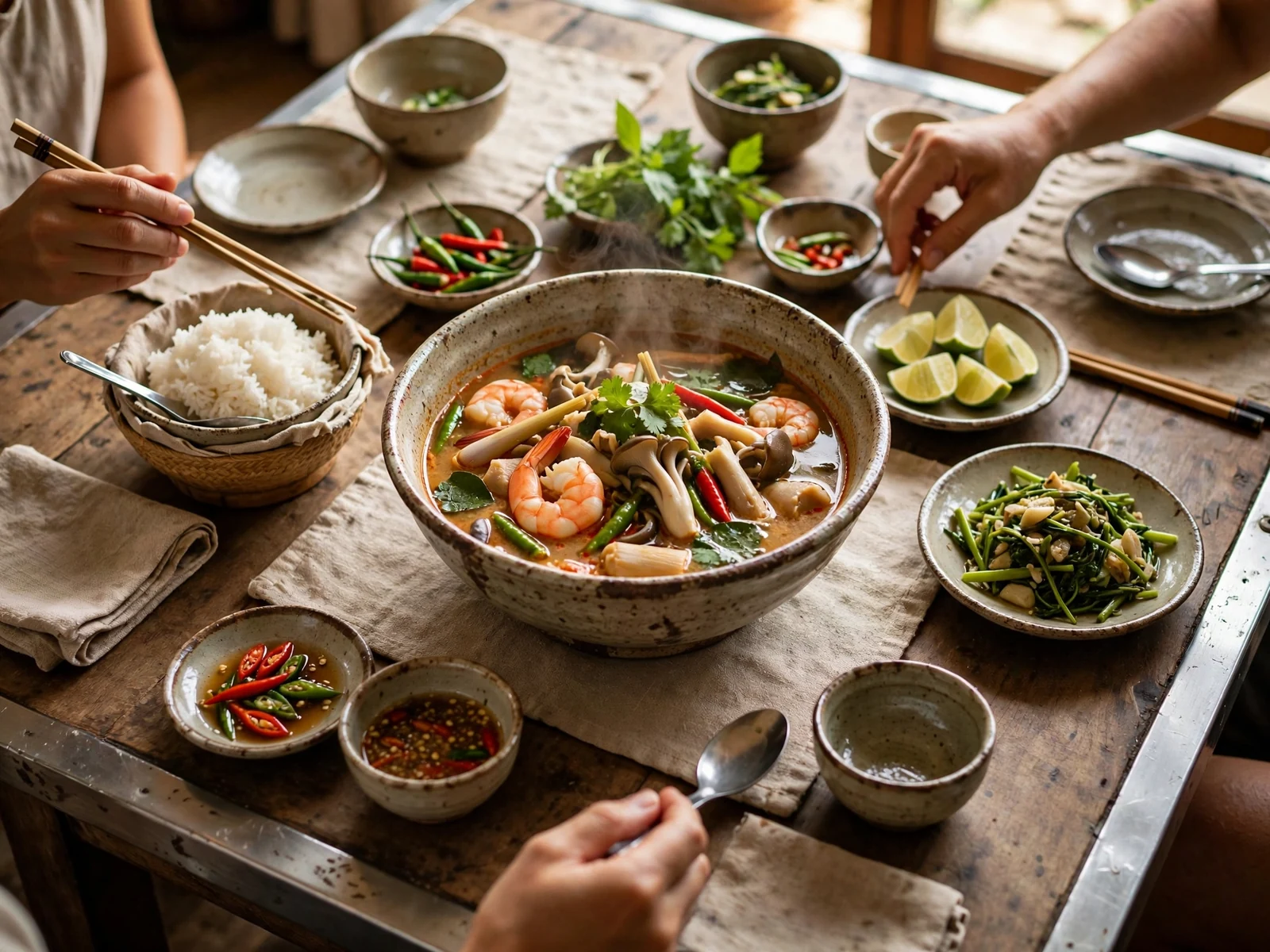
Tom Yum Kung
An editorial view of the finished dish, kept compact so the story continues without an oversized image break.
Primary region
Central Plains of Thailand
Country
Thailand
Regional influence
Freshwater prawns and a humid tropical environment rich in lemongrass, galangal, citrus leaves and chillies shape the soup’s aromatic profile.
Related food systems
- Central Thai riverside cooking
- Freshwater food systems
- Thai herbal culinary knowledge
Culinary record
- Origin
- Central Plains of Thailand
- Era
- Traditional Central Plains foodway
- Sub-region
- Southeast Asia — Mainland Southeast Asia
- Climate
- Tropical
- Cooking methods
- simmered
- Trade-route influence
- Indian Ocean trade · Chinese migration and trade · Mainland Southeast Asian exchange
Traditional & modern
The core remains a hot-and-sour prawn soup fragrant with local herbs; modern restaurant versions vary in richness and chilli paste.
Sources & further reading
Follow the reference trail.
Ember & Equator links outward when an institution or primary reference helps support the culinary record.
- 01Tomyum KungExternal ↗
UNESCO Intangible Cultural Heritage · reference
Supports: Tomyum Kung · Central Plains origins · traditional prawn soup · lemongrass, makrut lime leaves, galangal and shallots
Ember & Equator source review · 2026-09-11
- 02Tom Yum Kung: The Symbol of Thai Culinary SpiritExternal ↗
Thailand Foundation · reference
Supports: clear and creamy styles · prawn-shell broth · aromatic infusion · fish sauce seasoning · lime added last · prawn cooking sequence
Ember & Equator source review · 2026-09-11
- 03Tom Yam Koong SoupExternal ↗
Blue Elephant · reference
Supports: clear and milky versions · lime added after heat · serving with Thai jasmine rice
Ember & Equator source review · 2026-09-11
Ingredient guides
Learn about the ingredients behind the dish.
These are reference guides, not a second ingredient list. Follow an ingredient when you want to understand its role, use and wider culinary context.
Ingredient
raw prawns
Understand what it contributes, how to use it, and the dishes that reveal it best.
Ingredient
water
Understand what it contributes, how to use it, and the dishes that reveal it best.
Ingredient
lemongrass stalks
Understand what it contributes, how to use it, and the dishes that reveal it best.
Ingredient
galangal
Understand what it contributes, how to use it, and the dishes that reveal it best.
Ingredient
makrut lime leaves
Understand what it contributes, how to use it, and the dishes that reveal it best.
Ingredient
bird’s eye chillies
Understand what it contributes, how to use it, and the dishes that reveal it best.
Keep wandering
Where will this dish take you next?
Stay with the place, follow an ingredient or technique, or cross into another food culture. Each path begins with something already present in this dish.
Stay with the place
01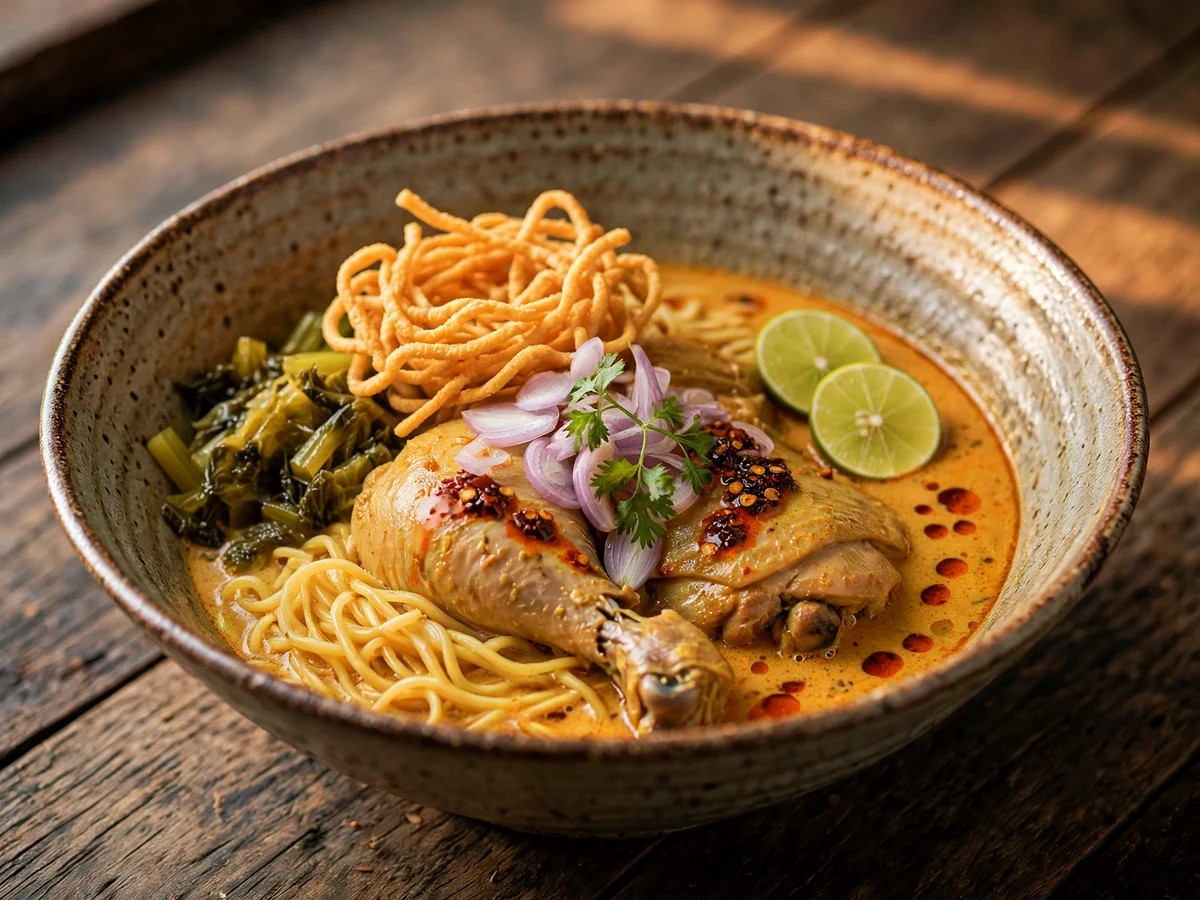
Thailand
Khao Soi
Stay in the same food culture and notice how simmer appears in another dish.
Shared thread · Simmer · Balance a sweet-sour-salty sauce · shallots
Follow the method or pantry
02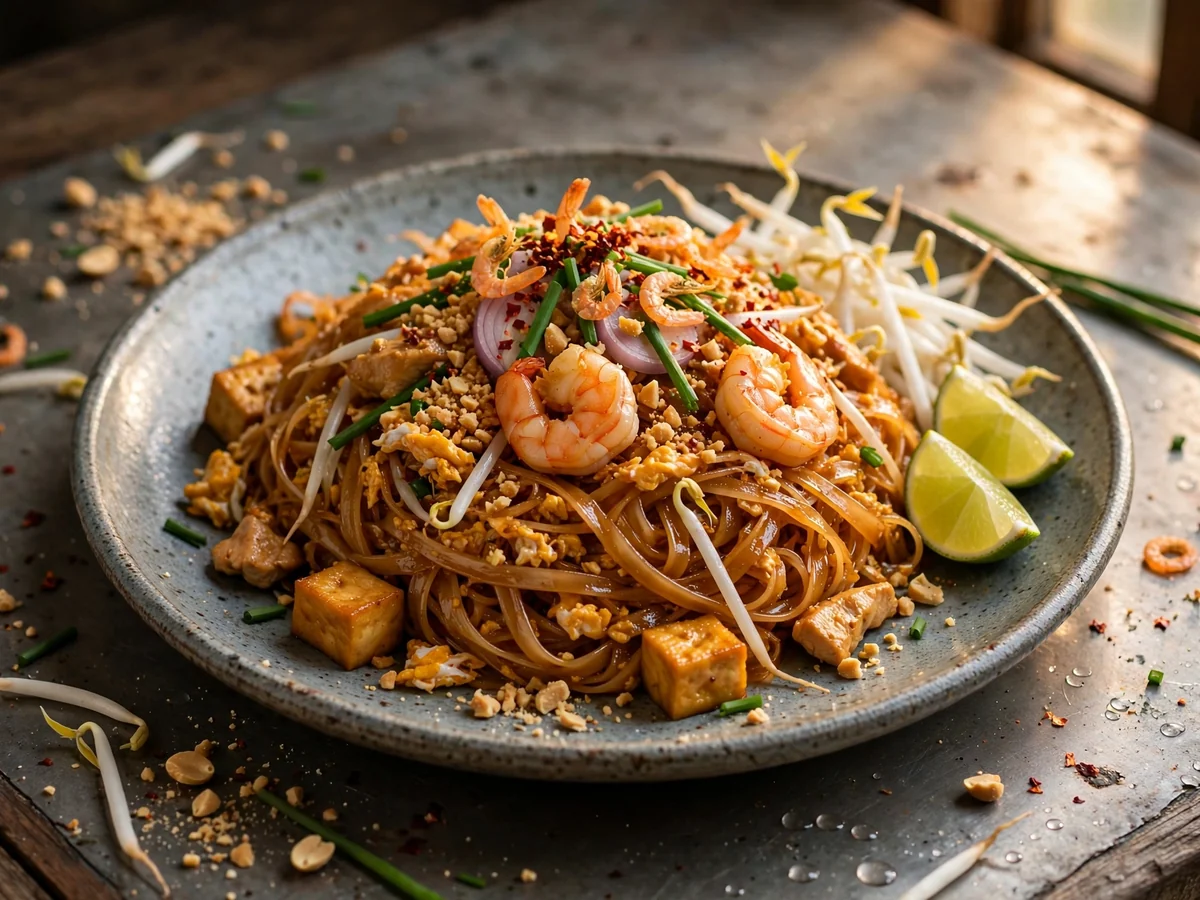
Thailand
Pad Thai
Follow the cooking method: both dishes connect through balance a sweet-sour-salty sauce.
Shared thread · Balance a sweet-sour-salty sauce · raw prawns · shallots
Cross a culinary border
03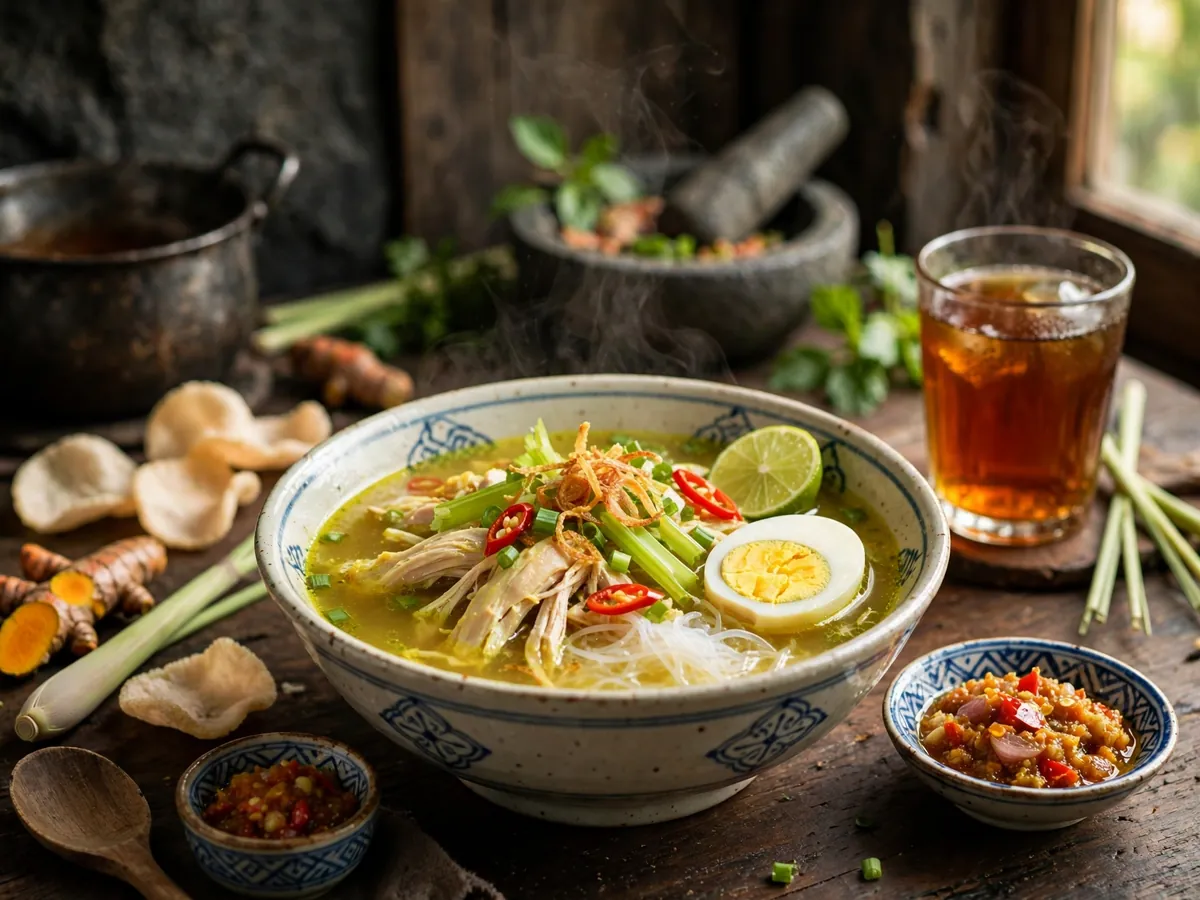
Indonesia
Soto Ayam
Cross borders while keeping simmer as the common thread.
Shared thread · Simmer · water · galangal
Go one layer deeper
One small detail can open an entirely different part of food.
Continue in Ember & Equator