
Italy · lunch · dinner · comfort-food
Cacio e Pepe
Italy through one enduring dish.
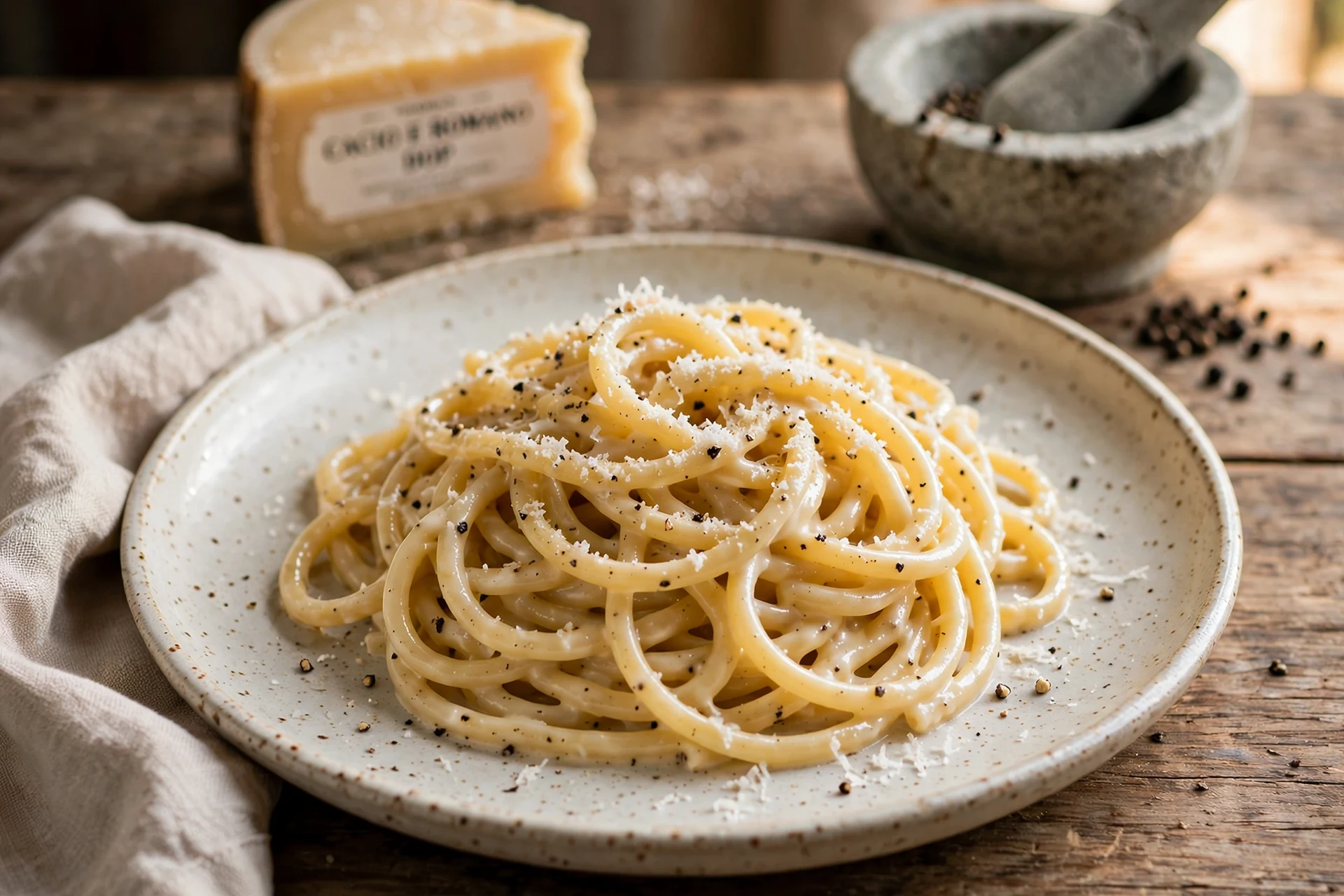
Cacio e pepe is a Roman pasta built from long pasta, Pecorino Romano, freshly cracked black pepper and starchy pasta water. The ingredient list is spare, so success depends on starch, temperature and vigorous tossing turning the cheese and water into a glossy emulsion rather than clumps.
- Total
- 20 min
- Difficulty
- Medium
- Serves
- 2
- Steps
- 8
The dish
Place first. Then the plate.
Cacio e pepe is closely associated with Rome and Lazio. Italia.it presents tonnarelli cacio e pepe with tonnarelli, Pecorino Romano, pasta cooking water and freshly ground black pepper. Roman kitchens vary in the exact emulsification sequence: some work the cheese directly with the pasta, while the Sora Lella method documented by La Cucina Italiana prepares a separate Pecorino-and-lukewarm-pasta-water emulsion before the final off-heat finish. Ember & Equator uses that controlled home-kitchen approach without adding cream, butter, garlic or oil to the sauce.
Explore ItalyAt a glance
Origin
Italy
Region
Rome and Lazio, Italy
Meal
lunch · dinner · comfort-food
Guided steps
8
Dish
Cacio e Pepe
Cuisine
Italian cuisine
Food type
Lunch · Dinner · Comfort food
Technique
Toast spices · Emulsify · Simmer
Cook the recipe
In the kitchen
Start with the ingredients, then follow the Method in order. Open cooking tips only when you need extra help; the story and references can wait until you are ready.
- Total
- 20 min
- Serves
- 2
- Level
- Medium
- Visual cues
- 8
Ingredients
Serves 2- 200 gramstonnarelli or thick spaghetti7 oz; another sturdy long pasta can work, but avoid very thin strands
- 70–80 gramsPecorino Romanofinely grated immediately before cooking; reserve a little for finishing only if desired
- 1½–2 tspblack peppercornsfreshly cracked to a coarse-medium texture; do not use stale pre-ground pepper
- as neededfine saltfor the pasta water; season more lightly than usual because Pecorino Romano is salty
Everything ready? Continue straight into the cooking steps.
Start methodMethod
8 steps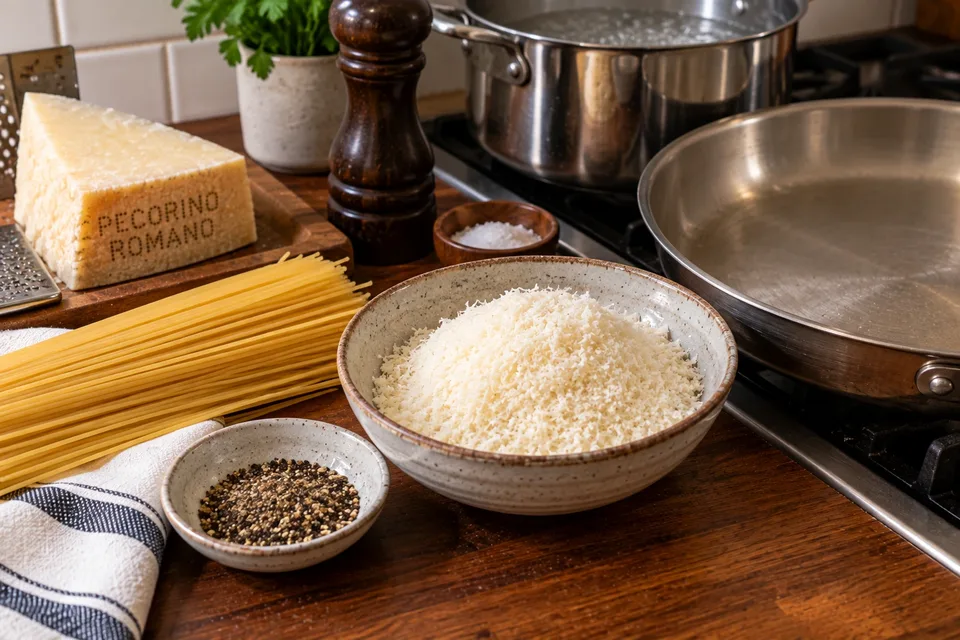 Step 01
Prepare the Pecorino, pepper and pan
5 min
Finely grate the Pecorino Romano until it is almost powdery rather than in long shreds.
Finely grate the Pecorino Romano until it is almost powdery rather than in long shreds. Crack the black pepper freshly to a coarse-medium grind. Set a wide skillet beside the pasta pot so you can transfer the pasta directly later, and bring a moderate quantity of water to the boil for the pasta.
Look for
The Pecorino should look fluffy and very fine, with no thick ribbons, and the pepper should have visible freshly cracked pieces rather than a uniform grey powder.
Kitchen note
Very fine cheese disperses much more readily into warm starchy water. Large shreds or dry pre-grated cheese are more likely to clump before a smooth emulsion can form.
 Step 02
Cook the pasta in moderately salted water
8 min
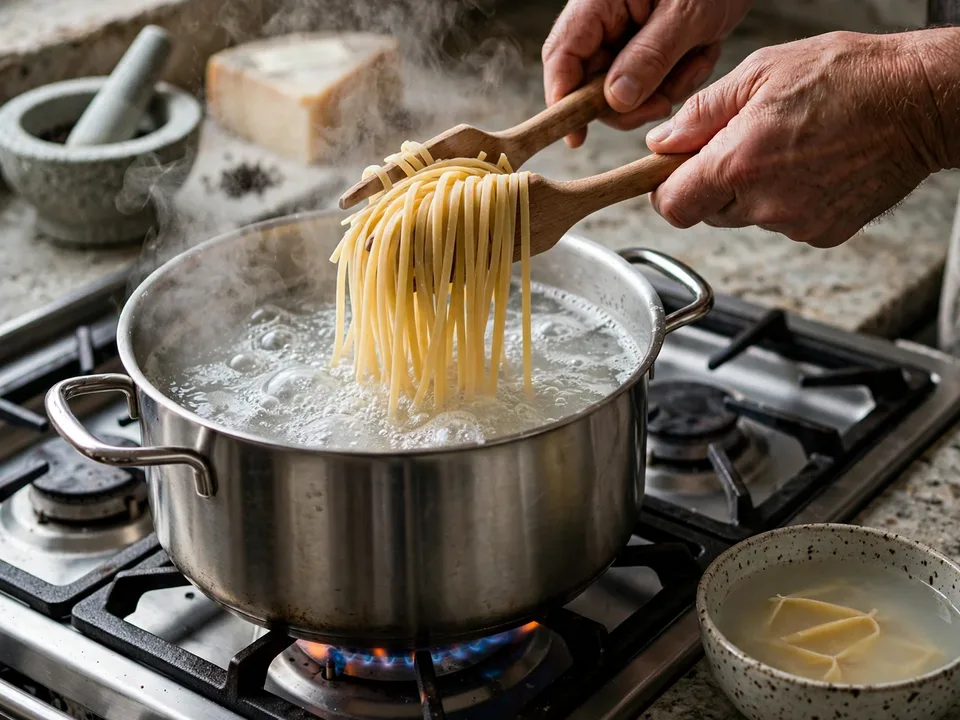
Season the boiling water moderately with salt, remembering that Pecorino Romano will add substantial salinity.
Season the boiling water moderately with salt, remembering that Pecorino Romano will add substantial salinity. Add the pasta and cook until about 1–2 minutes shy of al dente. Use enough water for the strands to move freely but not an unnecessarily huge pot, so the cooking water becomes usefully starchy. Before draining or transferring the pasta, reserve at least 1½ cups / 350 ml of the cooking water.
Look for
The pasta should bend easily but still have a firm resistant core when bitten, and the reserved cooking water should look slightly cloudy from starch.
Kitchen note
Do not judge the water as if you were making an unseasoned sauce: Pecorino is salty. A slightly concentrated cooking water gives you starch for the emulsion, but oversalted water can make the final dish impossible to balance.
 Step 03
Toast the black pepper and bloom it with pasta water
2 min
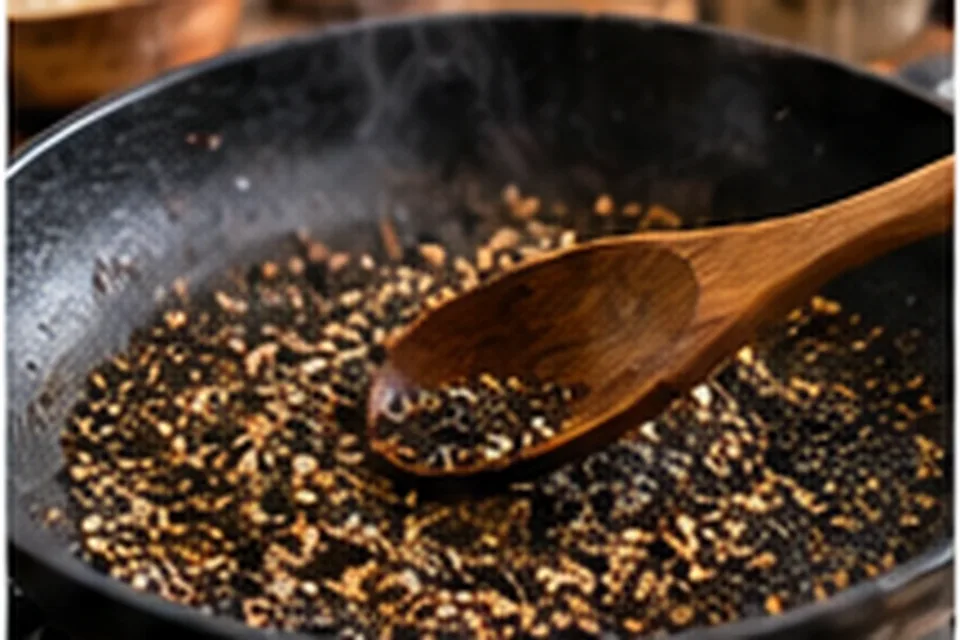
While the pasta finishes cooking, heat the wide dry skillet over medium heat.
While the pasta finishes cooking, heat the wide dry skillet over medium heat. Add the freshly cracked black pepper and toast for about 60–90 seconds, stirring or swirling frequently, until intensely fragrant. Add about ¼ cup / 60 ml of the starchy pasta water carefully; it should sizzle. Reduce the heat to low so the pepper perfumes the liquid without scorching.
Look for
The pepper should smell intensely fragrant and the water should become lightly speckled and aromatic, with no smoke or burnt pepper dust.
Kitchen note
The goal is aromatic pepper, not blackened pepper. As soon as it smells warm, floral and spicy, add the water. Burnt pepper introduces bitterness that no amount of cheese can hide.
 Step 04
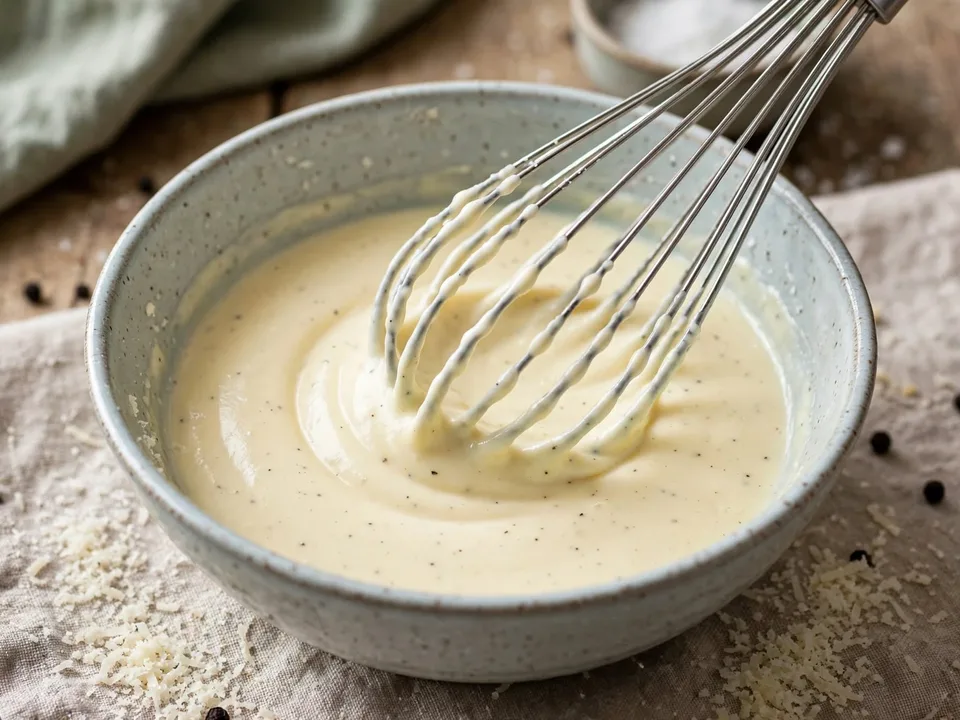
Whisk the Pecorino into a smooth cream
2 min
Put the finely grated Pecorino in a bowl.
Put the finely grated Pecorino in a bowl. Let about ⅓ cup / 80 ml of the reserved pasta water cool briefly so it is warm rather than boiling. Add the water to the cheese a tablespoon at a time while whisking or stirring vigorously. Stop when you have a smooth, thick cream that falls slowly from the spoon; keep extra pasta water nearby for final adjustment.
Look for
The Pecorino mixture should be homogeneous, glossy and thick but stirrable, with no dry cheese pockets, strings or rubbery clumps.
Kitchen note
Temperature is critical. Very hot water can tighten the cheese proteins into grainy lumps. If the water is steaming aggressively, wait a little before adding it to the Pecorino.
 Step 05
Finish the pasta in the pepper water
2 min
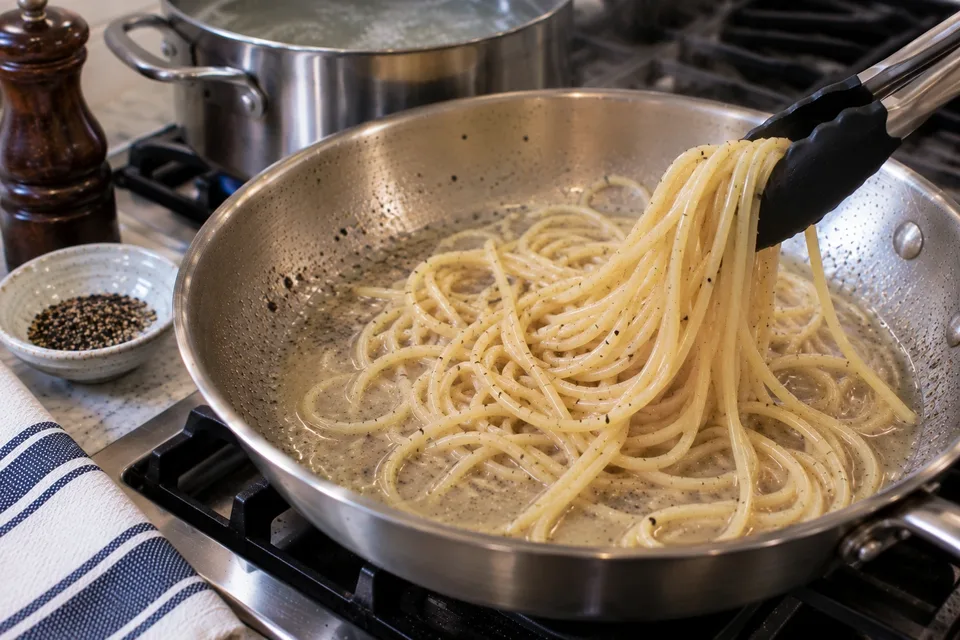
Transfer the pasta directly into the skillet with the toasted pepper and its starchy water.
Transfer the pasta directly into the skillet with the toasted pepper and its starchy water. Toss vigorously over low heat for about 1 minute, adding a small splash of pasta water only if the pan becomes dry, until the pasta reaches al dente and a thin glossy starch film coats the strands. Turn off the heat.
Look for
The pasta should be al dente and glossy with pepper-speckled starch, with very little free water pooling in the pan and no creamy cheese sauce yet.
Kitchen note
Do not add the Pecorino yet. This stage finishes the pasta and builds a starch-rich base so the cheese has something to emulsify into instead of meeting a dry, very hot pan.
 Step 06
Cool the pan briefly and add the Pecorino cream
1 min
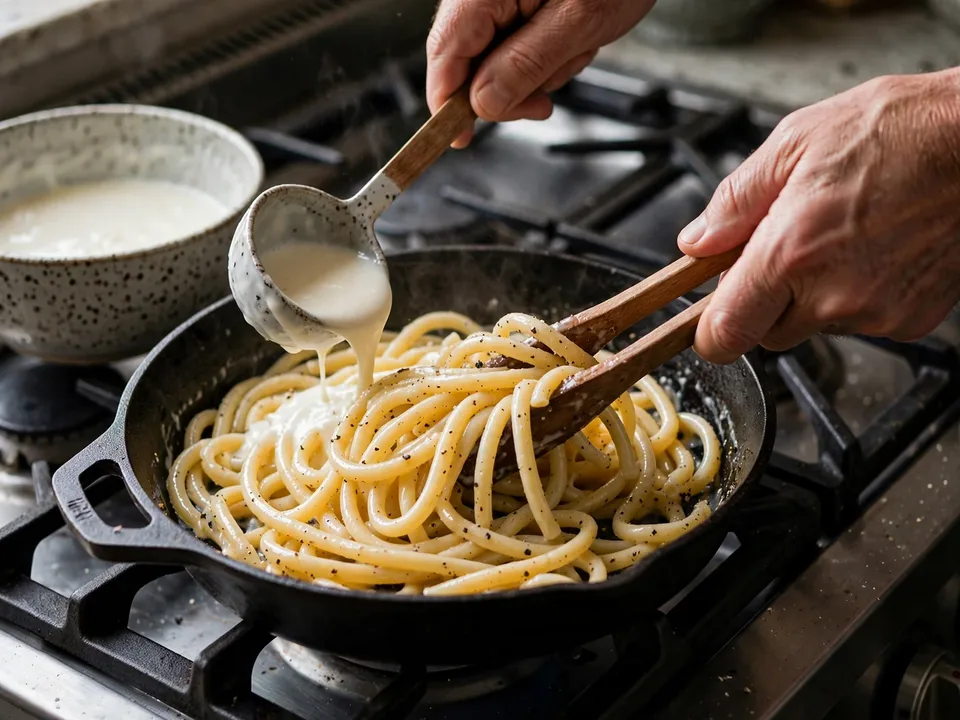
With the skillet off the heat, wait about 20–30 seconds so the hottest surface heat subsides.
With the skillet off the heat, wait about 20–30 seconds so the hottest surface heat subsides. Add the Pecorino cream in two or three additions while tossing continuously. Keep the pasta moving so the cheese disperses through the starch film rather than sitting against one hot spot in the pan.
Look for
The cheese should disappear into the pasta as you toss, without forming strings, beads or compact melted clumps on the pan.
Kitchen note
This short cooling pause is one of the best protections against seized cheese. If the pan is still fiercely hot, wait a little longer; adding more Pecorino to a clumpy sauce will usually make the problem worse. If the cheese starts forming strings or clumps, take the pan fully off the heat, add a small splash of warm—not boiling—pasta water and toss vigorously until it loosens before adding anything else.
 Step 07
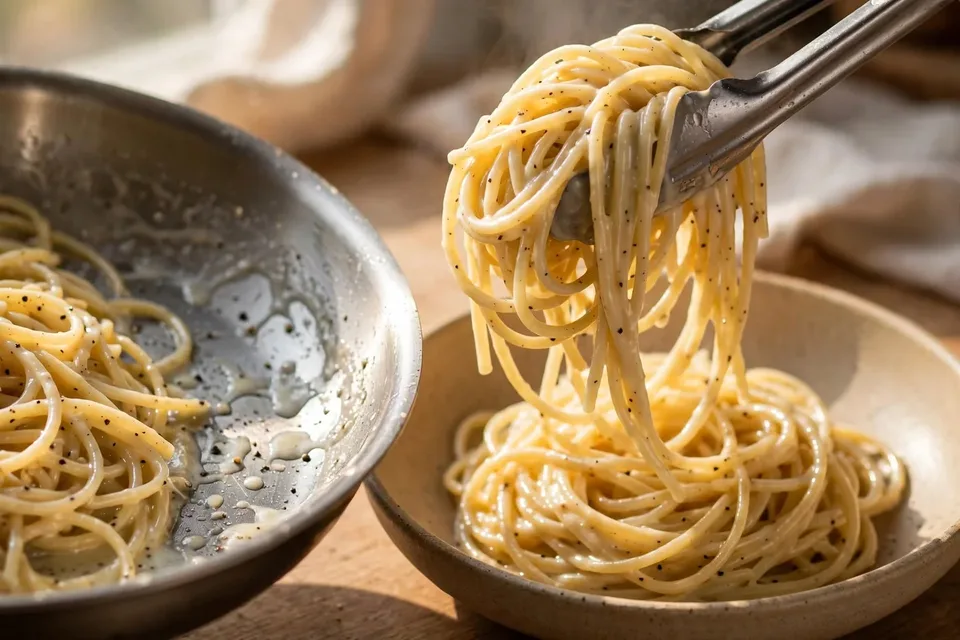
Toss into a silky Pecorino emulsion
2 min
Continue tossing vigorously off the heat.
Continue tossing vigorously off the heat. Add reserved pasta water one tablespoon at a time only as needed until the sauce turns glossy, fluid and creamy-looking and clings evenly to every strand. If it looks grainy, stop adding cheese, keep the pan off the heat and work in a spoonful of warm—not boiling—starchy water while tossing. If it becomes too loose, keep tossing for several seconds before deciding whether it actually needs adjustment.
Look for
Every strand should wear a smooth satin coating that moves with the pasta, with no oily separation, watery puddle or visible cheese granules.
Kitchen note
Think emulsion, not melted cheese. Movement, starch and controlled temperature do the work. Add water gradually because a sauce that looks slightly loose in the pan will tighten quickly on the plate. If the sauce turns grainy, stop heating it; vigorous tossing with a little warm starchy water is safer than returning it to high heat, which tightens the cheese further.
 Step 08
Plate and serve immediately
1 min
Twirl the pasta onto warm plates immediately.
Twirl the pasta onto warm plates immediately. Finish with a little more freshly cracked black pepper and, if desired, a restrained dusting of very finely grated Pecorino Romano. Serve at once while the sauce is still glossy and fluid; cacio e pepe thickens rapidly as it cools and is not a good make-ahead pasta.
Look for
The plated pasta should look glossy rather than dry, with the sauce clinging to the strands but still moving slightly when the plate is tilted or the pasta is lifted.
Kitchen note
Have the plates ready before you start the final emulsion. If the pasta tightens in the pan before serving, loosen it with a teaspoon or two of warm starchy water and toss again rather than reheating aggressively.
After cooking
Explore the dish beyond the method.
Story, place and references are here for discovery, so they stay out of the way while you cook.
Culture & tradition
The story behind the dish
Origins, evolution and everyday life—read together as part of the recipe's culinary record.
Origins
Cacio e pepe is firmly associated with Rome and Lazio. Popular shepherd-origin stories are often repeated, but Ember & Equator treats those as culinary folklore rather than a precisely documented invention story.
How it evolved
The dish became one of Rome’s defining pasta preparations, with tonnarelli especially associated with it. Modern cooks use slightly different mixing sequences, but Pecorino Romano, black pepper, pasta and starchy cooking water remain the core.
Its place today
It is both everyday Roman comfort food and a technique benchmark: a successful plate shows how cheese, starch, water, heat control and movement can create a creamy-looking sauce without cream.
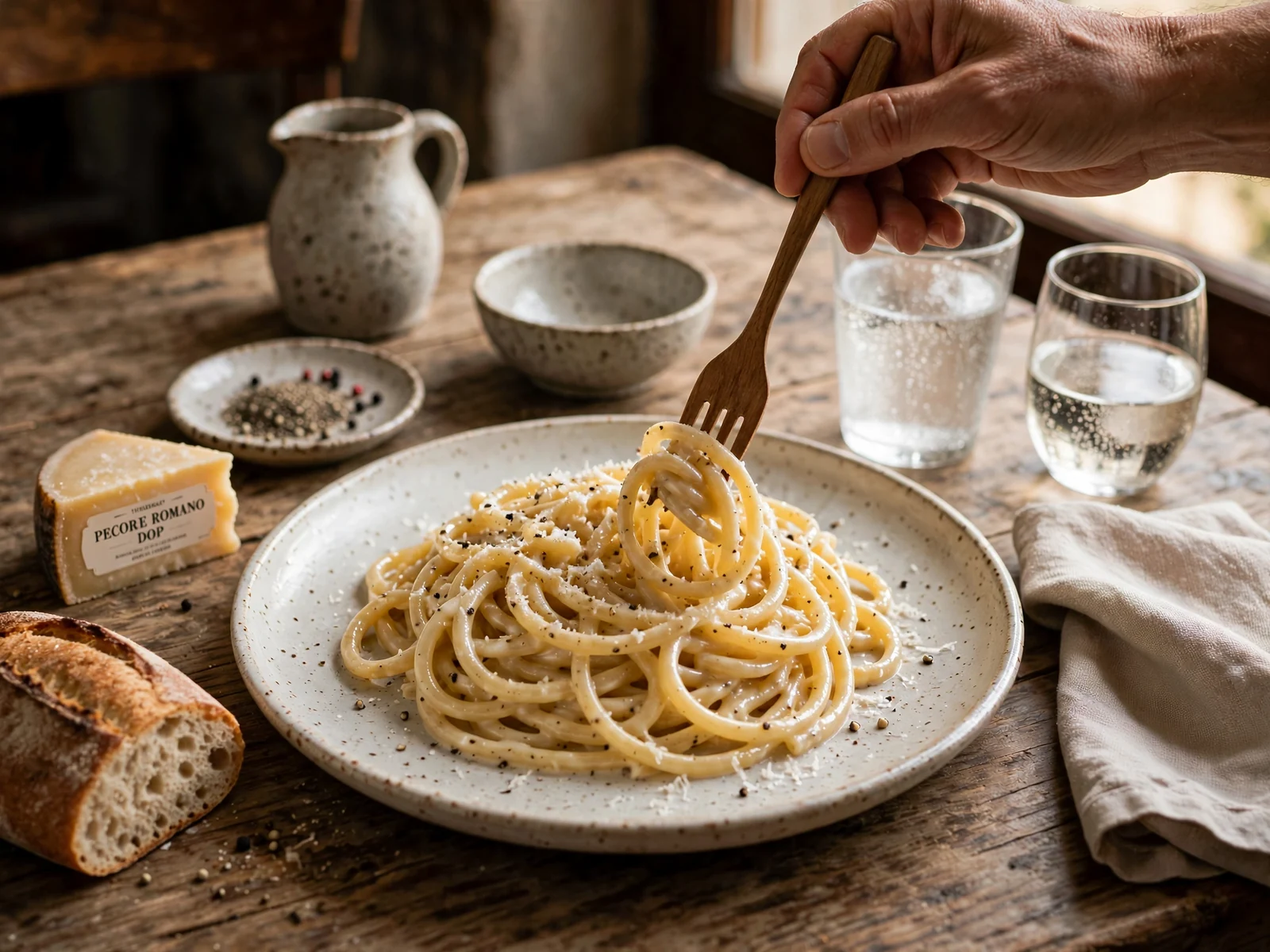
Visual archive · plate 01
Cacio e Pepe
An editorial view of the finished dish, kept compact so the story continues without an oversized image break.
Primary region
Rome and Lazio, Italy
Country
Italy
Regional influence
The dish reflects central Italy’s sheep-milk cheese tradition and the durability of dried pasta, aged Pecorino Romano and black pepper.
Related food systems
- Roman pasta tradition
- Pecorino Romano cheese culture
- Italian dry-pasta cookery
Culinary record
- Sub-region
- Southern Europe — Mediterranean
- Climate
- Mediterranean
- Trade-route influence
- Roman trade routes · Venetian spice trade · Columbian Exchange
Sources & further reading
Follow the reference trail.
Ember & Equator links outward when an institution or primary reference helps support the culinary record.
- 01Tonnarelli cacio e pepeExternal ↗
Italia.it — Official Tourism Website of Italy · government
Supports: tonnarelli cacio e pepe · Pecorino Romano · pasta cooking water · freshly ground black pepper · Lazio context
Ember & Equator source review · 2026-09-09
- 02Cacio e pepe di Sora Lella: l’autentica ricetta romanescaExternal ↗
La Cucina Italiana · specialist publication
Supports: freshly ground and toasted black pepper · lightly salted pasta water · Pecorino emulsion made separately with lukewarm pasta cooking water · final off-heat emulsification
Ember & Equator source review · 2026-09-12
- 03Cacio e Pepe SpaghettiExternal ↗
La Cucina Italiana · specialist publication
Supports: Pecorino Romano · black pepper · starchy pasta water · immediate service
Ember & Equator source review · 2026-09-16
Ingredient guides
Learn about the ingredients behind the dish.
These are reference guides, not a second ingredient list. Follow an ingredient when you want to understand its role, use and wider culinary context.
Ingredient
tonnarelli or spaghetti
Understand what it contributes, how to use it, and the dishes that reveal it best.
Ingredient
Pecorino Romano
Understand what it contributes, how to use it, and the dishes that reveal it best.
Ingredient
black peppercorns
Understand what it contributes, how to use it, and the dishes that reveal it best.
Ingredient
fine salt
Understand what it contributes, how to use it, and the dishes that reveal it best.
Keep wandering
Where will this dish take you next?
Stay with the place, follow an ingredient or technique, or cross into another food culture. Each path begins with something already present in this dish.
Stay with the place
01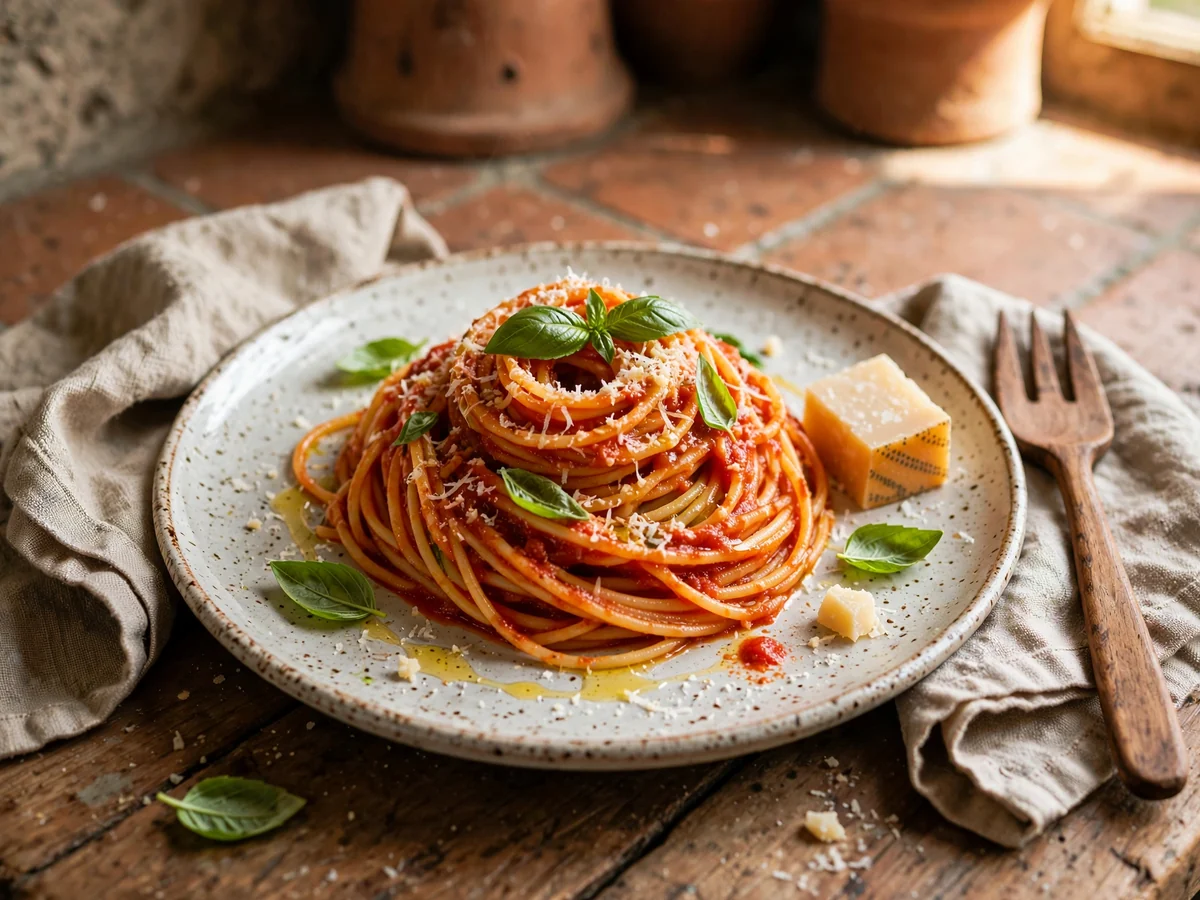
Italy
Spaghetti al Pomodoro
Stay in the same food culture and notice how emulsify appears in another dish.
Shared thread · Emulsify · Simmer · fine salt
Follow the method or pantry
02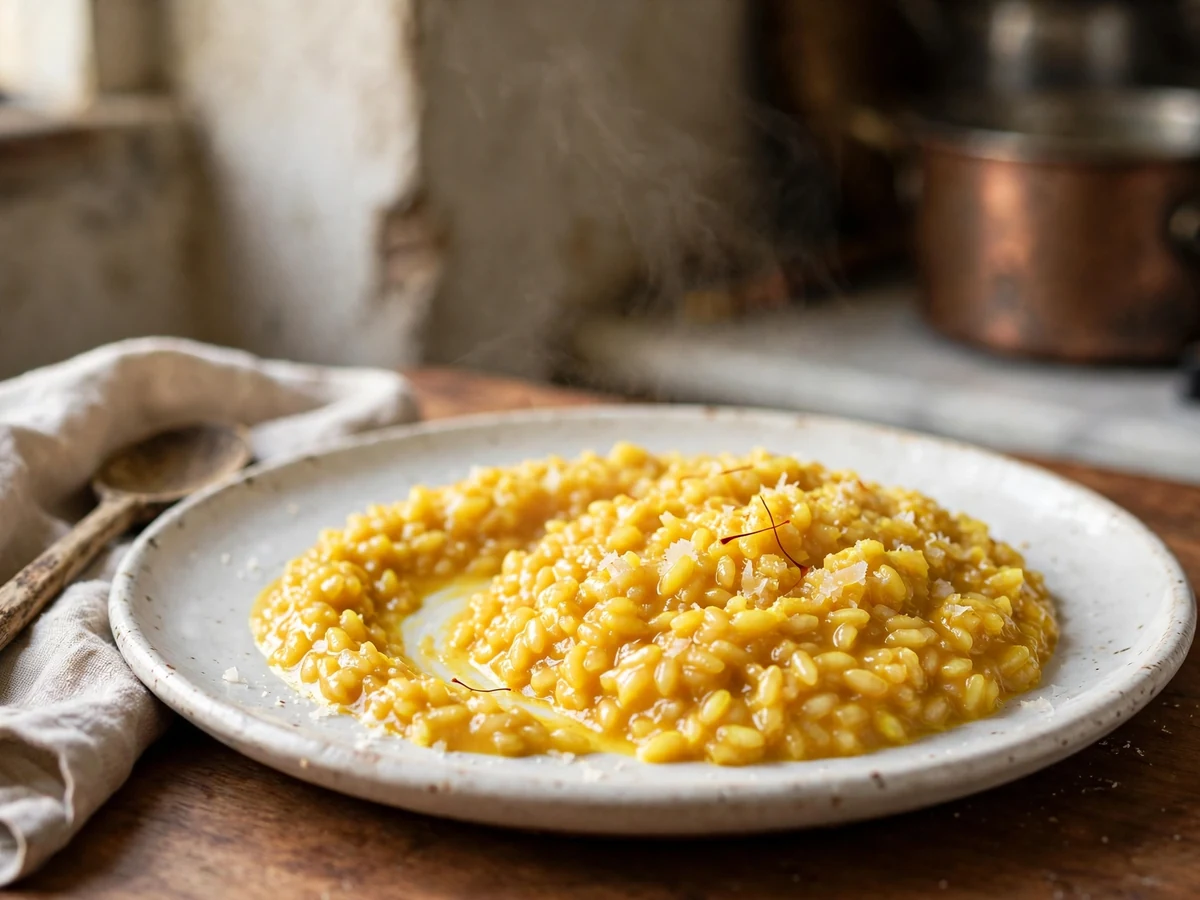
Italy
Risotto alla Milanese
Follow the cooking method: both dishes connect through emulsify.
Shared thread · Emulsify · Simmer · fine salt
Cross a culinary border
03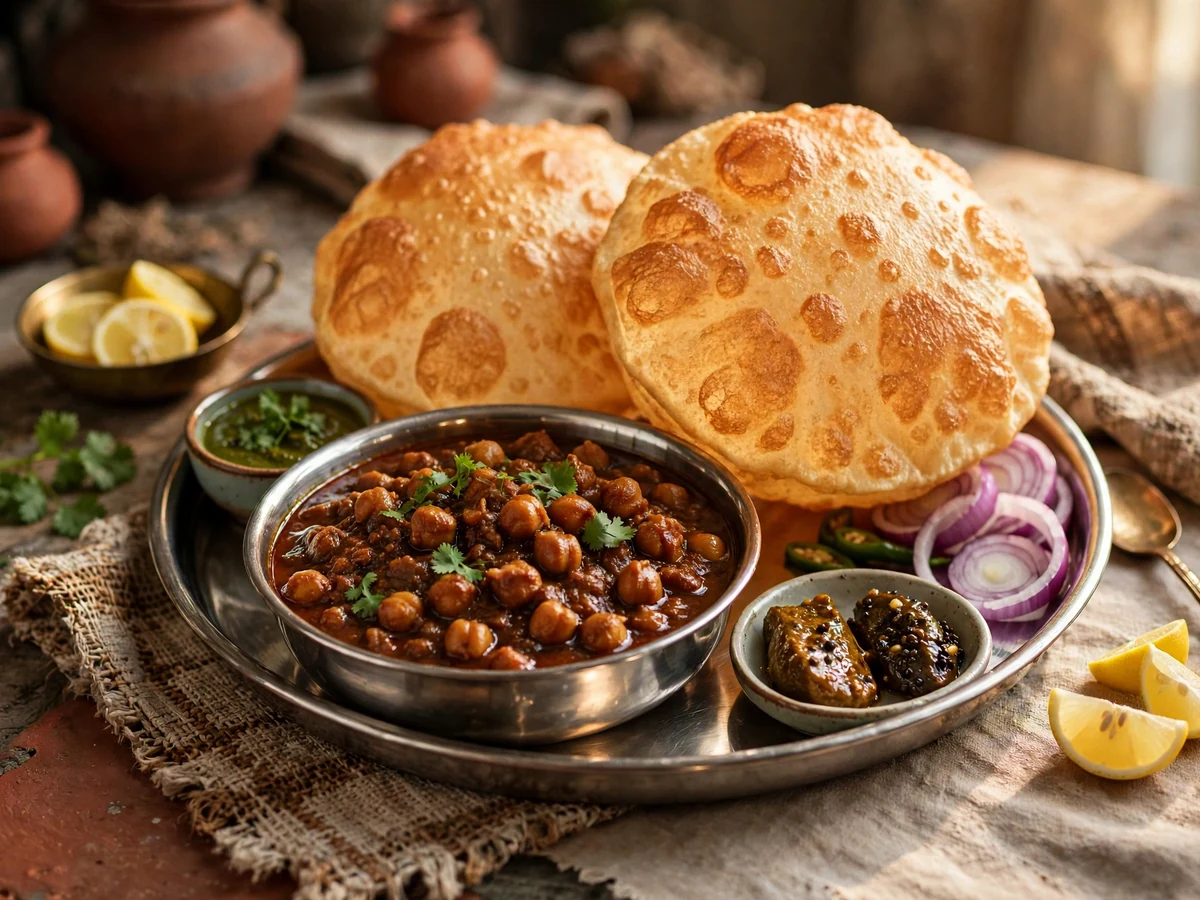
India
Chole Bhature
Cross borders while keeping toast spices as the common thread.
Shared thread · Toast spices · Simmer · black peppercorns
Go one layer deeper
One small detail can open an entirely different part of food.
Continue in Ember & Equator