
Italy · lunch · dinner
Risotto alla Milanese
Grain, technique and memory on one plate.
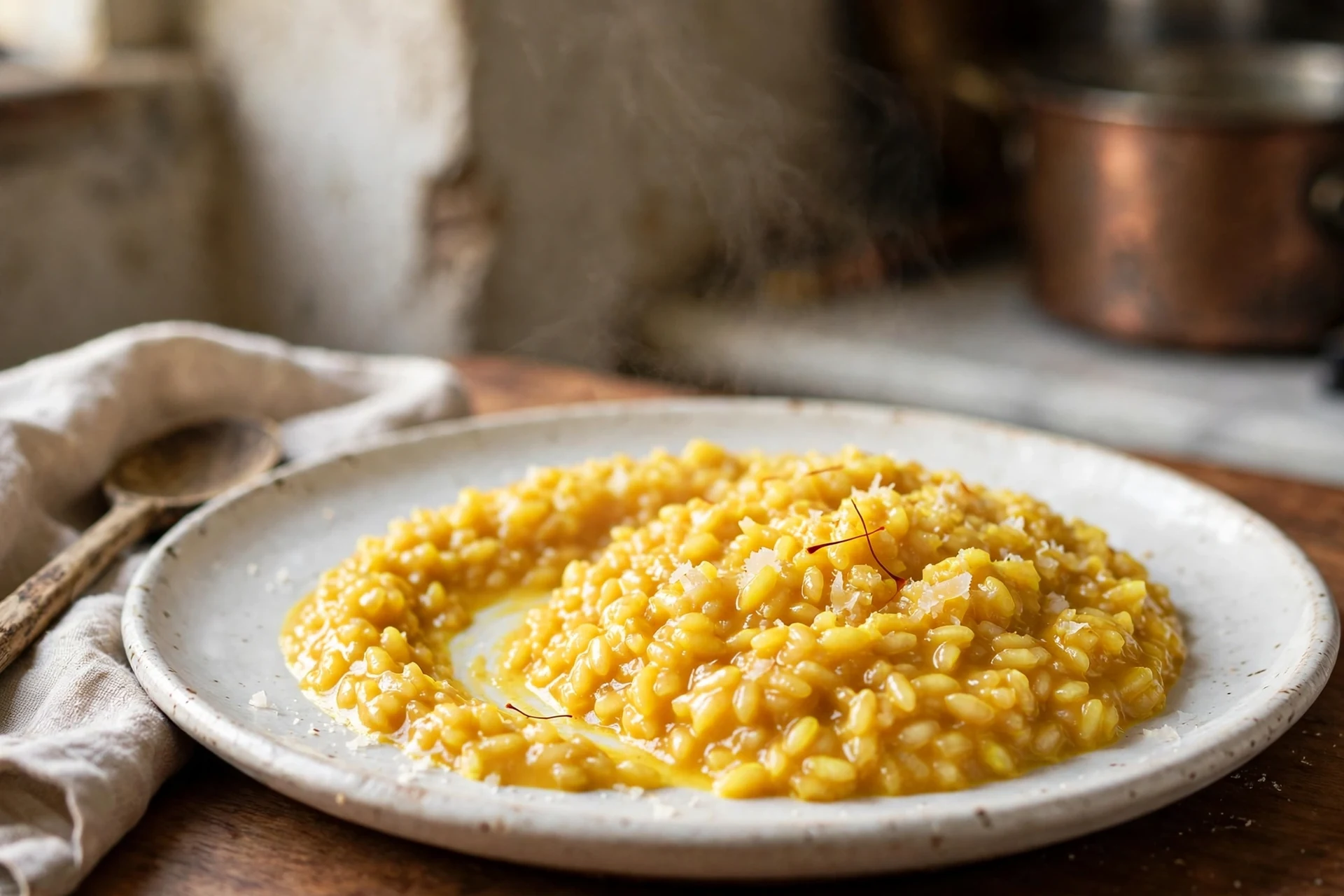
Risotto alla Milanese is Milan’s saffron-gold risotto: Carnaroli rice toasted gently, cooked gradually with hot beef stock, finished with saffron, then mantecare off the heat with cold butter and Parmigiano until glossy and flowing all’onda.
- Total
- 45 min
- Difficulty
- Medium
- Serves
- 4
- Steps
- 7
The dish
The grain tells part of the story.
Italia.it lists risotto alla Milanese among Milan’s essential dishes and highlights its saffron-infused yellow color, traditionally served alongside ossobuco. Ember & Equator presents the risotto as a standalone first course and focuses on rice texture and the finishing emulsion.
Explore ItalyAt a glance
Origin
Italy
Region
Milan, Lombardy
Meal
lunch · dinner
Guided steps
7
Dish
Risotto alla Milanese
Cuisine
Italian cuisine
Food type
Lunch · Dinner · Rice dish
Technique
Sauté · Toast rice · Deglaze
Cook the recipe
In the kitchen
Start with the ingredients, then follow the Method in order. Open cooking tips only when you need extra help; the story and references can wait until you are ready.
- Total
- 45 min
- Serves
- 4
- Level
- Medium
- Visual cues
- 7
Ingredients
Serves 4- 320 gramsCarnaroli riceArborio or Vialone Nano are acceptable alternatives
- 1.2 litresbeef stockkept hot; use good unsalted or lightly salted stock
- 40 gramsyellow onionvery finely chopped
- 80 gramsunsalted butterdivided; keep the finishing portion cold
- 80 mldry white wine
- 0.15 gramssaffron threadsa generous pinch, infused in a little hot stock
- 60 gramsParmigiano Reggianofinely grated
- 1 tspfine saltas needed, depending on the stock
Optional
- 20 gramsveal or beef bone marrowfinely chopped; optional but traditional
Everything ready? Continue straight into the cooking steps.
Start methodMethod
7 steps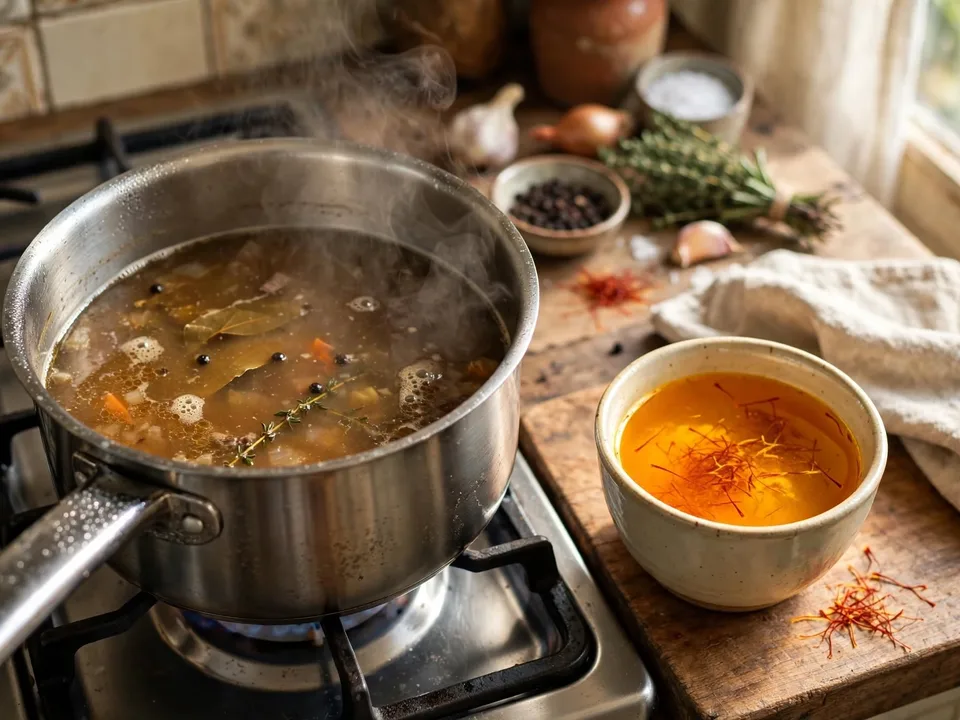 Step 01
Warm the stock and infuse the saffron
5 min
Bring the beef stock to a bare simmer in a separate saucepan and keep it hot throughout the cooking process.
Bring the beef stock to a bare simmer in a separate saucepan and keep it hot throughout the cooking process. Put the saffron threads in a small cup with about 60 ml of the hot stock and leave them to infuse for 20–30 minutes while you prepare the risotto. Keeping the stock hot prevents the rice from repeatedly dropping in temperature each time liquid is added.
Look for
The stock should stay steaming but not violently boiling, and the saffron infusion should deepen to a vivid golden-orange colour.
Kitchen note
Do not boil the saffron itself. A warm infusion extracts colour and aroma gently, while adding dry saffron straight to the pan can leave some threads under-extracted.
 Step 02
Soften the onion gently
6 min
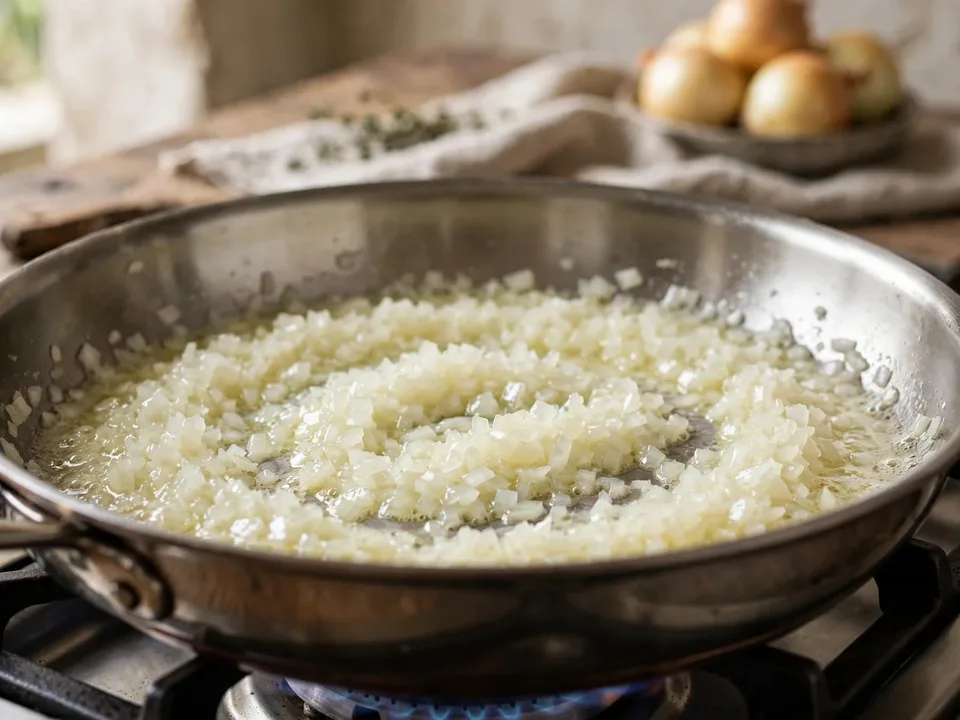
Melt about 20 g of the butter in a wide, heavy pan over low to medium-low heat.
Melt about 20 g of the butter in a wide, heavy pan over low to medium-low heat. Add the finely chopped onion and the optional chopped marrow, if using. Cook for about 5–6 minutes, stirring frequently, until the onion is completely soft and translucent. It should melt into the finished risotto rather than remain visibly chunky or browned.
Look for
The onion should look glossy and translucent with no dark brown edges; if using marrow, it should have melted into the fat.
Kitchen note
Keep this stage pale. Browning the onion changes the flavour and can muddy the clean saffron profile. If the pan looks dry before the onion is soft, lower the heat rather than adding more colour.
 Step 03
Toast the rice, then evaporate the wine
4 min
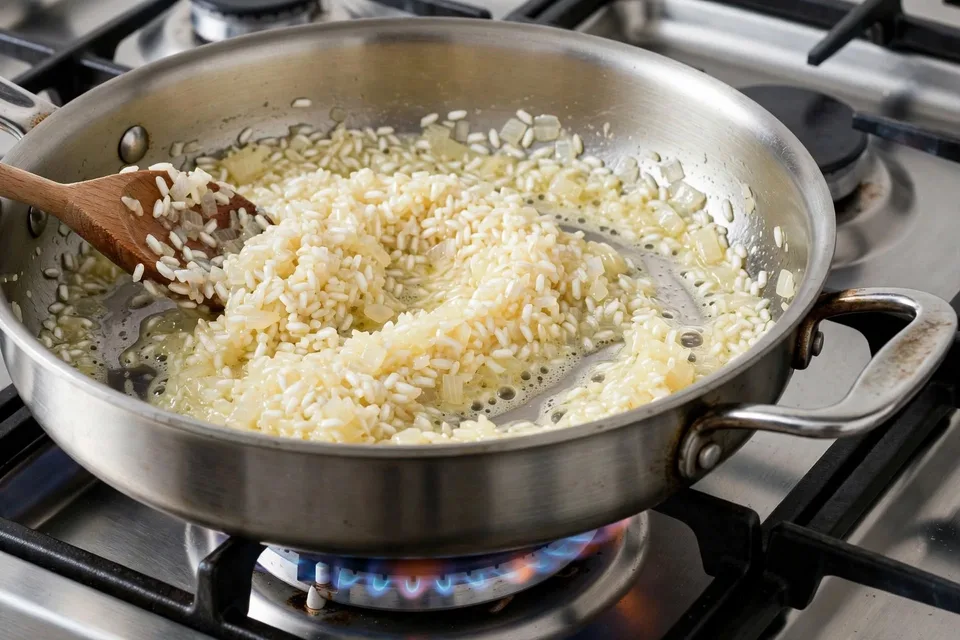
Raise the heat to medium.
Raise the heat to medium. Add the dry Carnaroli rice and stir for 1–2 minutes so every grain is coated in the butter and becomes hot. The grains should look slightly translucent around the edges while remaining opaque in the centre. Pour in the white wine and let it bubble away almost completely before beginning the stock additions.
Look for
The rice should sound faintly dry as it moves in the pan; after the wine is added, the harsh alcohol aroma should disappear before the next stage.
Kitchen note
The rice should be toasted, not browned. Let the wine lose its sharp alcoholic smell before adding stock so the acidity stays clean rather than raw.
 Step 04
Cook gradually with hot stock
14 min
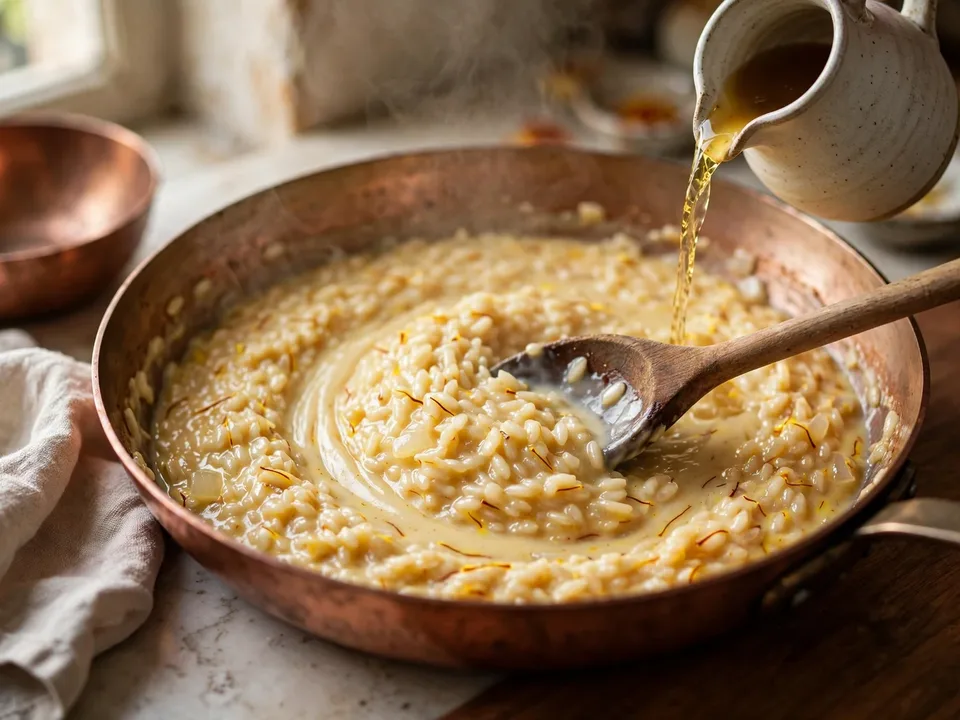
Add enough hot stock to keep the rice loose and gently bubbling.
Add enough hot stock to keep the rice loose and gently bubbling. Stir regularly, then add more stock as the previous addition is mostly absorbed. Do not let the pan become dry between ladles, and do not flood it with all the stock at once. Continue for roughly 12–14 minutes, adjusting the heat so the risotto stays at a lively but controlled simmer.
Look for
When the pan is moved, the rice should flow back in a creamy wave. Individual grains should remain clearly visible rather than breaking down into paste.
Kitchen note
Good risotto is neither abandoned nor stirred frantically. Regular movement helps release starch, but the rice should still cook as distinct grains suspended in a fluid base.
 Step 05
Add the saffron and finish the rice al dente
5 min
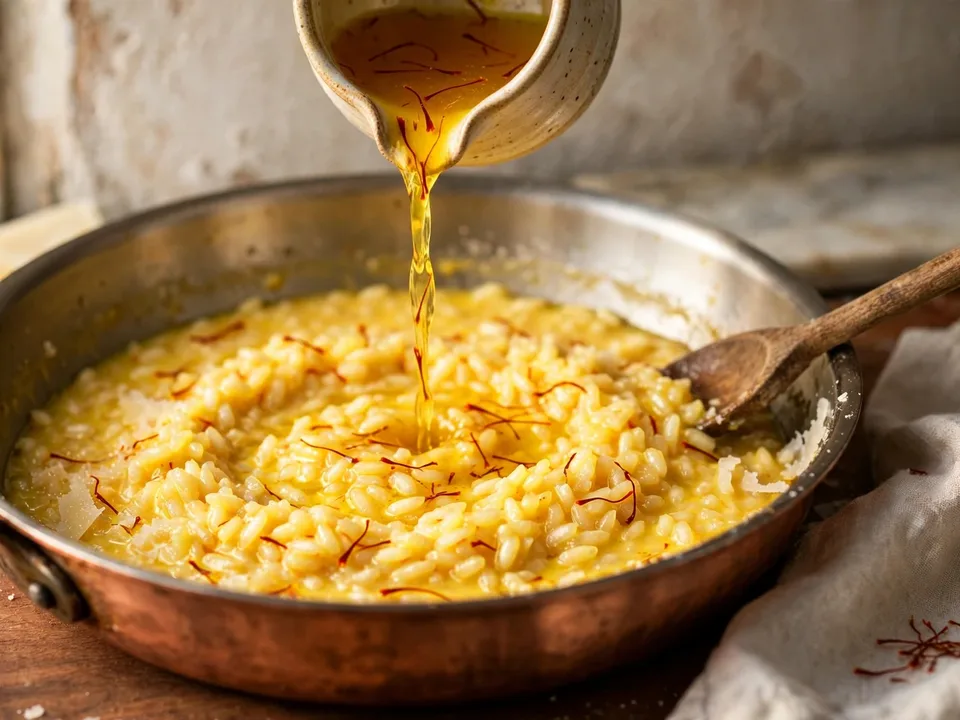
When the rice is about two-thirds cooked, stir in the saffron infusion.
When the rice is about two-thirds cooked, stir in the saffron infusion. Continue adding hot stock in small amounts until the grains are al dente: tender on the outside with a fine, pleasant resistance at the centre. Taste before adding salt because both the stock and Parmigiano contribute seasoning. The risotto should still be slightly looser than you want to serve because it will tighten during mantecatura and resting.
Look for
The risotto should become evenly golden-yellow, smell distinctly of saffron, and remain fluid while the rice still has a gentle al dente bite.
Kitchen note
Saffron should perfume the risotto rather than simply colour it. Add the infusion late enough to preserve aroma but early enough for the flavour and colour to distribute evenly.
 Step 06
Mantecare off the heat
2 min
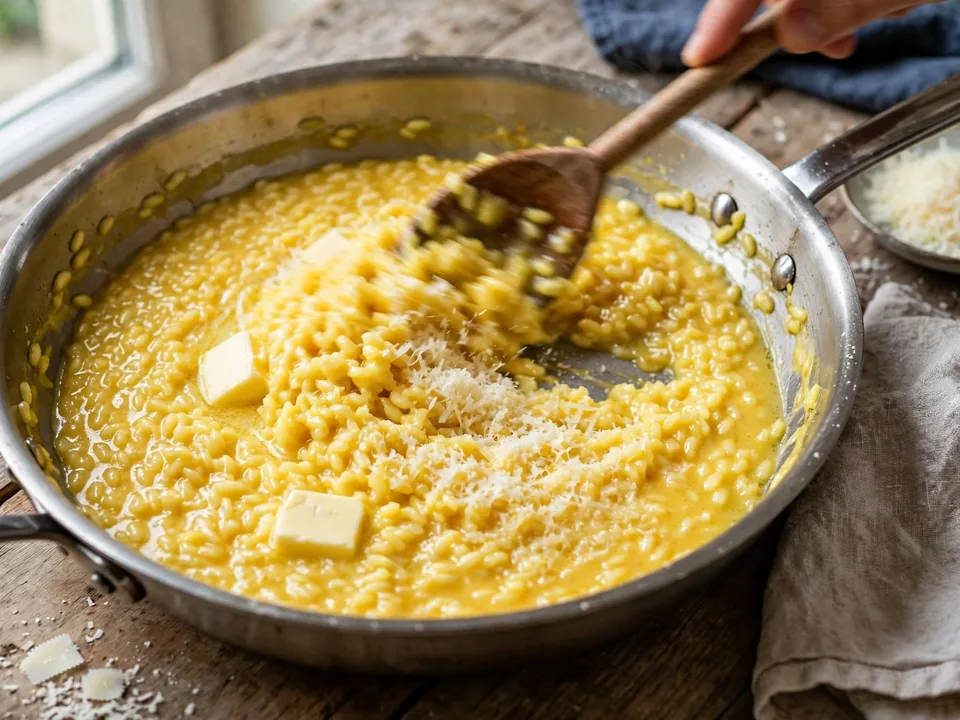
Remove the pan completely from the heat.
Remove the pan completely from the heat. Add the remaining cold butter and the finely grated Parmigiano Reggiano. Stir, beat or toss the risotto vigorously until the butter and cheese emulsify with the starchy liquid. If it becomes too thick, loosen it with a tablespoon or two of hot stock. The goal is a glossy, creamy coating created by starch, butter and cheese—not melted strings of cheese.
Look for
The risotto should look glossy and unified, with no pools of melted fat and absolutely no stretchy cheese strands.
Kitchen note
Cold butter and off-heat mixing give you much better control. If the pan is too hot, the fat can separate and the cheese can become greasy or clumpy rather than forming a smooth emulsion.
 Step 07
Rest briefly and serve all’onda
2 min
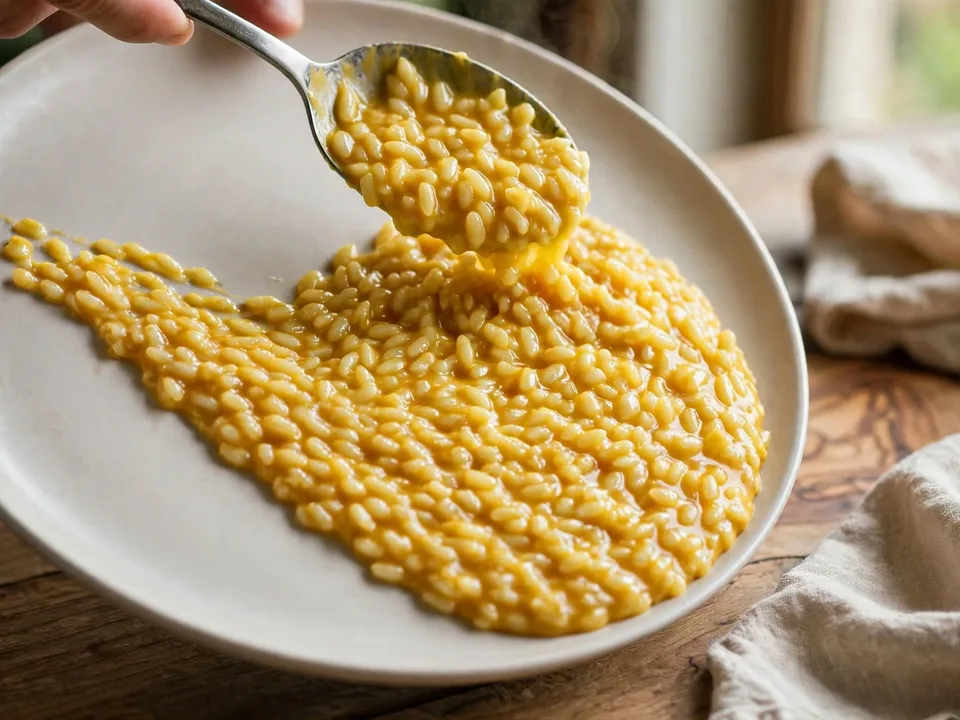
Cover the pan and rest the risotto for about 1–2 minutes, then stir once and serve immediately on warm flat plates.
Cover the pan and rest the risotto for about 1–2 minutes, then stir once and serve immediately on warm flat plates. Spoon it into the centre and gently shake or tap the plate: properly finished risotto should spread outward in a soft wave rather than sitting in a stiff mound. Add extra Parmigiano at the table only if desired.
Look for
The risotto should spread slowly under its own weight, with separate al dente grains bound by a glossy golden coating—fluid but not soupy.
Kitchen note
Do not hold the finished risotto. It continues absorbing liquid as it sits, so the ideal all’onda texture has a very short serving window.
After cooking
Explore the dish beyond the method.
Story, place and references are here for discovery, so they stay out of the way while you cook.
Culture & tradition
The story behind the dish
Origins, evolution and everyday life—read together as part of the recipe's culinary record.
Origins
Rice cultivation became important in northern Italy, particularly the Po Valley, and Milanese cooking developed distinctive saffron-seasoned risotto traditions.
How it evolved
The dish moved from festive and restaurant contexts into a canonical expression of risotto technique, with stock addition and final mantecatura central to its texture.
Its place today
It remains one of Milan’s signature foods, served on its own or with ossobuco and used as a reference point for understanding northern Italian risotto.
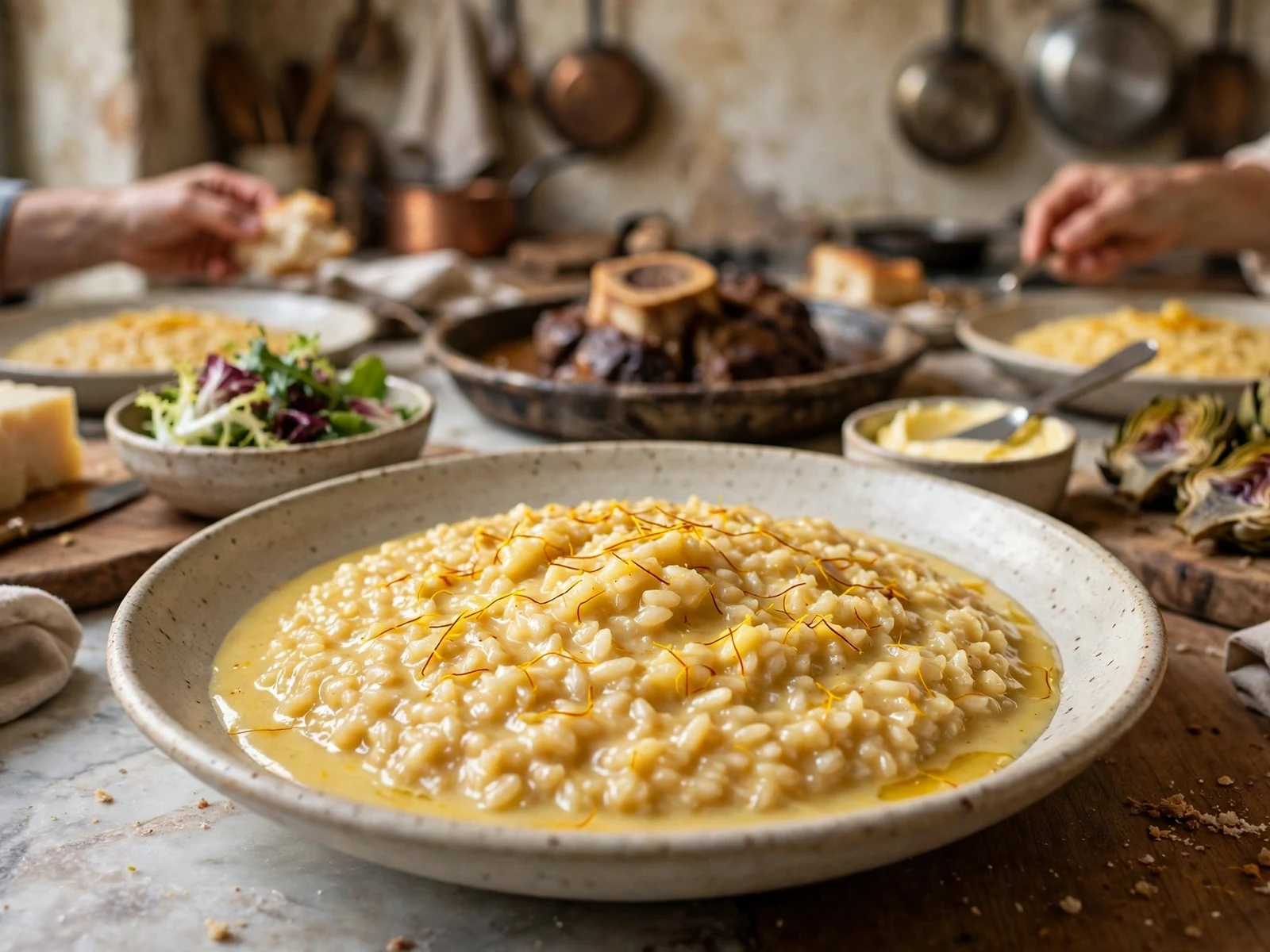
Visual archive · plate 01
Risotto alla Milanese
An editorial view of the finished dish, kept compact so the story continues without an oversized image break.
Primary region
Milan, Lombardy
Country
Italy
Regional influence
The irrigated Po Valley supports rice cultivation, while saffron and rich dairy finishing reflect Lombardy’s culinary landscape.
Related food systems
- Lombard rice cookery
- Risotto technique
- Milanese cuisine
Culinary record
- Sub-region
- Southern Europe — Mediterranean
- Climate
- Mediterranean
- Trade-route influence
- Roman trade routes · Venetian spice trade · Columbian Exchange
Sources & further reading
Follow the reference trail.
Ember & Equator links outward when an institution or primary reference helps support the culinary record.
- 01Milan, much more than the capital of fashionExternal ↗
Italia.it — Official Tourism Website of Italy · government
Supports: risotto alla milanese · saffron · Milanese food tradition
Ember & Equator source review · 2026-09-01
- 02Risotto alla MilaneseExternal ↗
YesMilano · institution
Supports: traditional Milanese risotto · bone marrow · saffron timing · all’onda texture · mantecatura · risotto al salto leftovers
Ember & Equator source review · 2026-09-11
- 03Risotto alla MilaneseExternal ↗
Accademia Italiana della Cucina · culinary institution
Supports: Milanese risotto technique · bone marrow · hot stock · al dente rice
Ember & Equator source review · 2026-09-10
Ingredient guides
Learn about the ingredients behind the dish.
These are reference guides, not a second ingredient list. Follow an ingredient when you want to understand its role, use and wider culinary context.
Ingredient
carnaroli rice
Understand what it contributes, how to use it, and the dishes that reveal it best.
Ingredient
yellow onion
Understand what it contributes, how to use it, and the dishes that reveal it best.
Ingredient
unsalted butter
Understand what it contributes, how to use it, and the dishes that reveal it best.
Ingredient
dry white wine
Understand what it contributes, how to use it, and the dishes that reveal it best.
Ingredient
saffron threads
Understand what it contributes, how to use it, and the dishes that reveal it best.
Explore ingredient →
Ingredient
Parmigiano Reggiano
Understand what it contributes, how to use it, and the dishes that reveal it best.
Keep wandering
Where will this dish take you next?
Stay with the place, follow an ingredient or technique, or cross into another food culture. Each path begins with something already present in this dish.
Stay with the place
01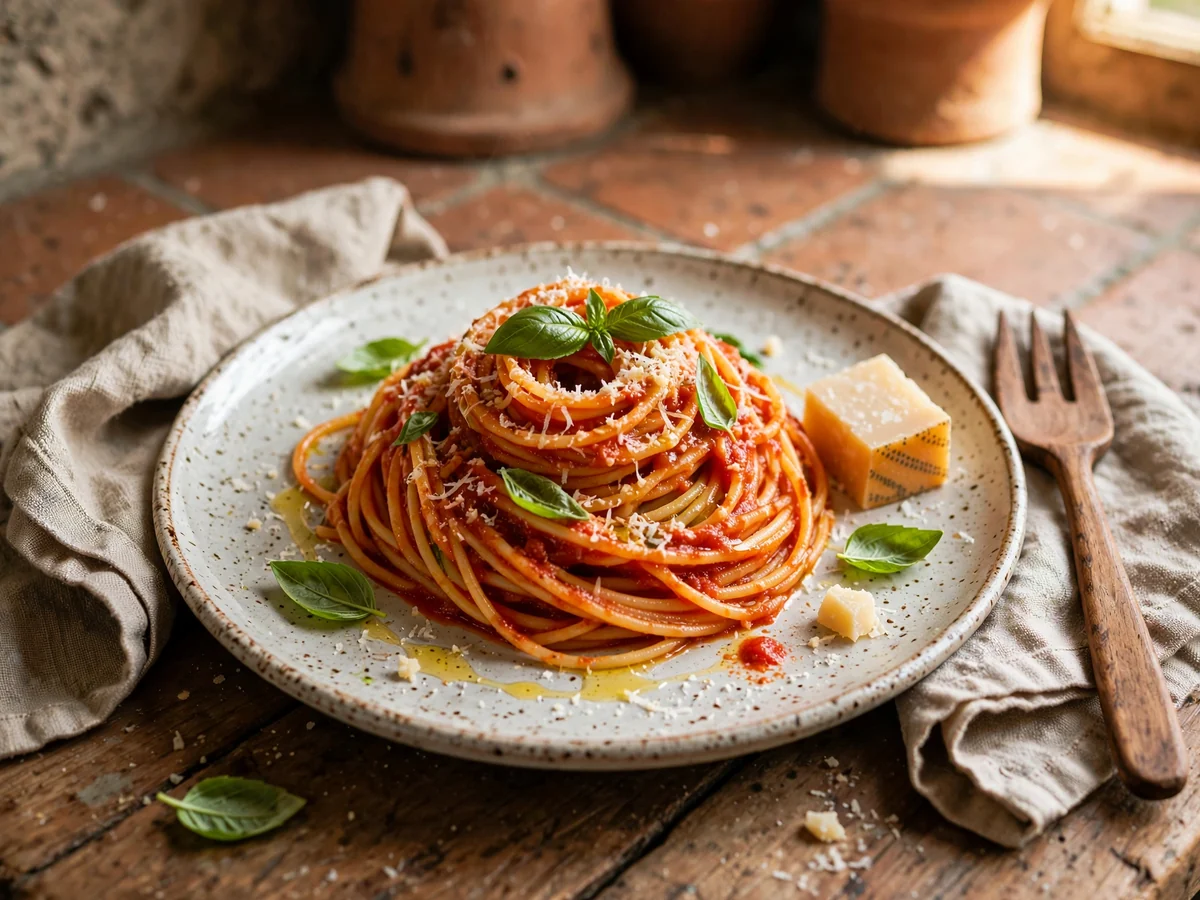
Italy
Spaghetti al Pomodoro
Stay in the same food culture and notice how sauté appears in another dish.
Shared thread · Sauté · Simmer · Emulsify
Follow the method or pantry
02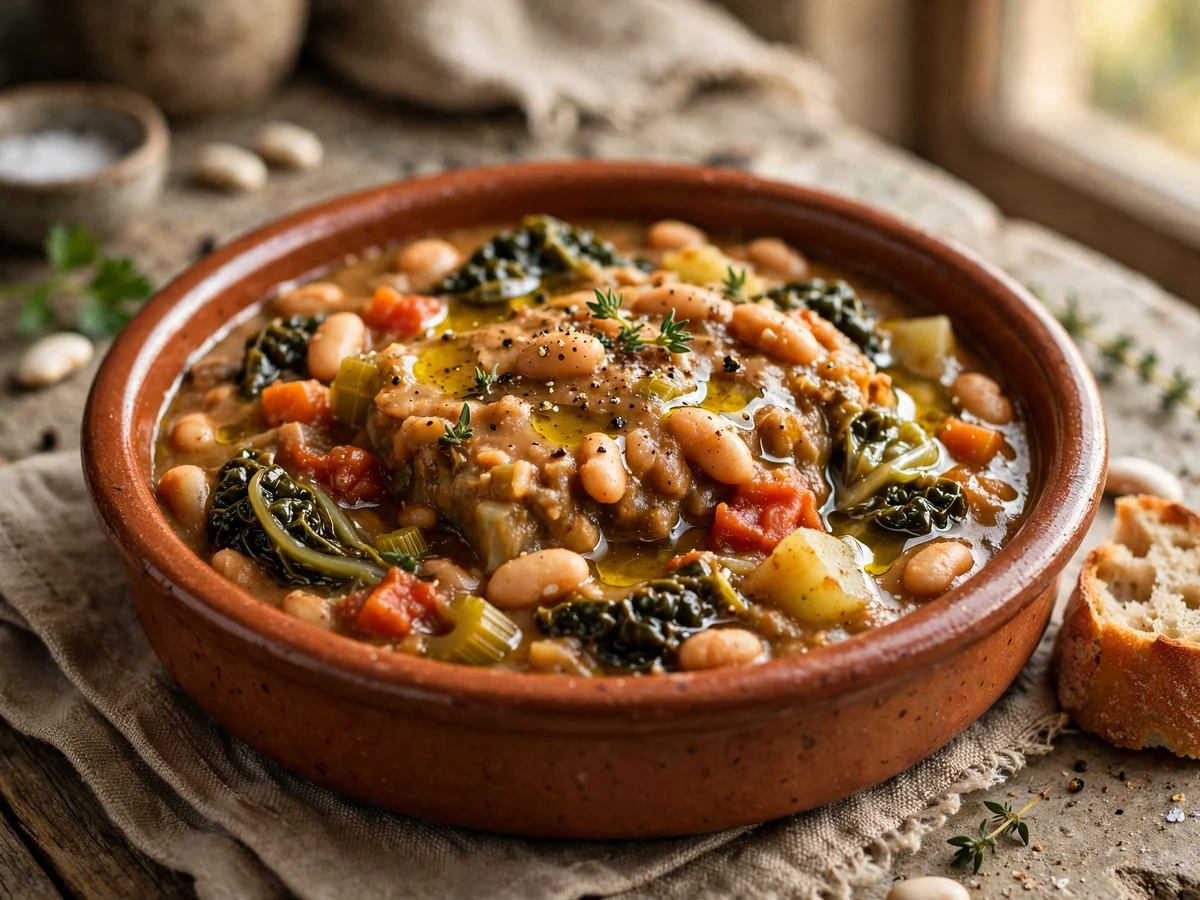
Italy
Ribollita
Follow the cooking method: both dishes connect through sauté.
Shared thread · Sauté · Simmer · yellow onion
Cross a culinary border
03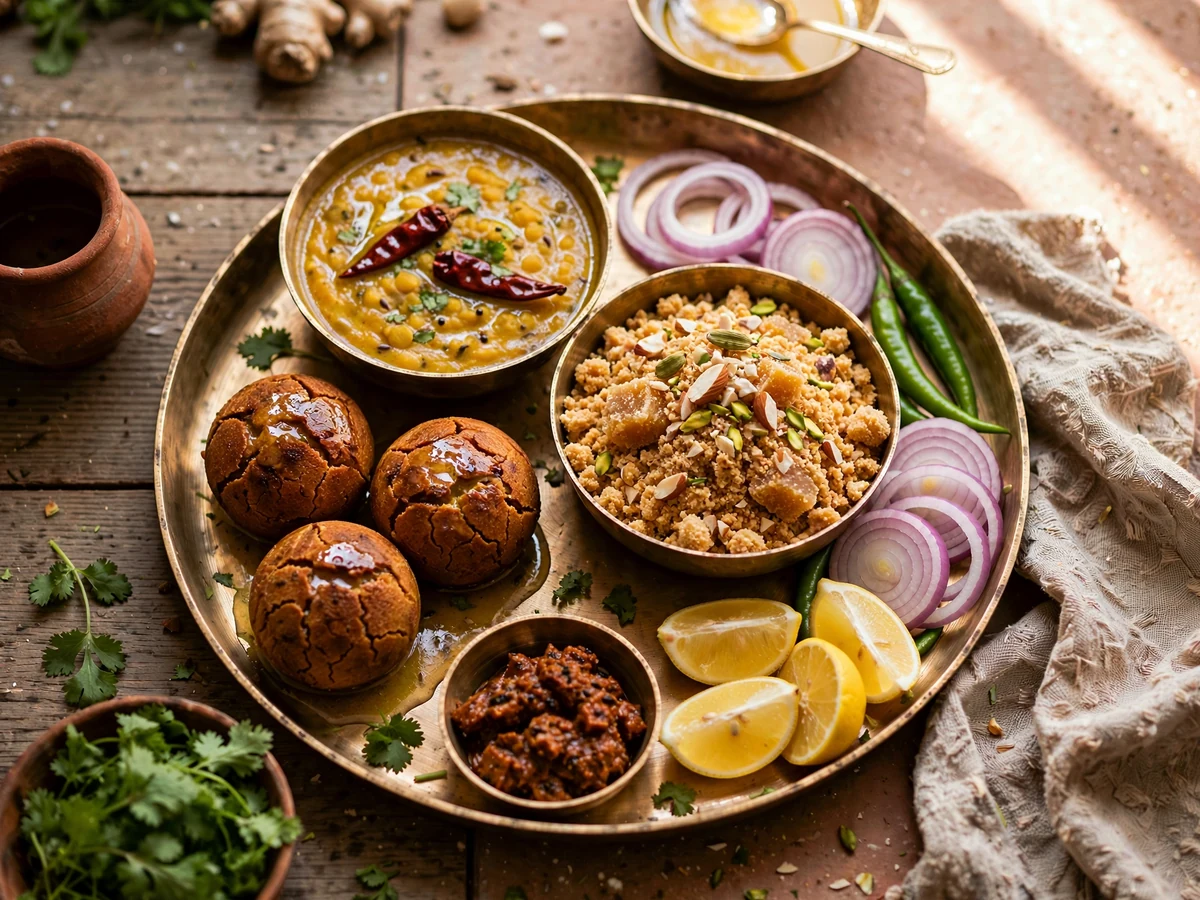
India
Dal Baati Churma
Cross borders while keeping sauté as the common thread.
Shared thread · Sauté · Simmer · yellow onion
Go one layer deeper
One small detail can open an entirely different part of food.
Continue in Ember & Equator