
Japan · lunch · snack
Onigiri
Grain, technique and memory on one plate.
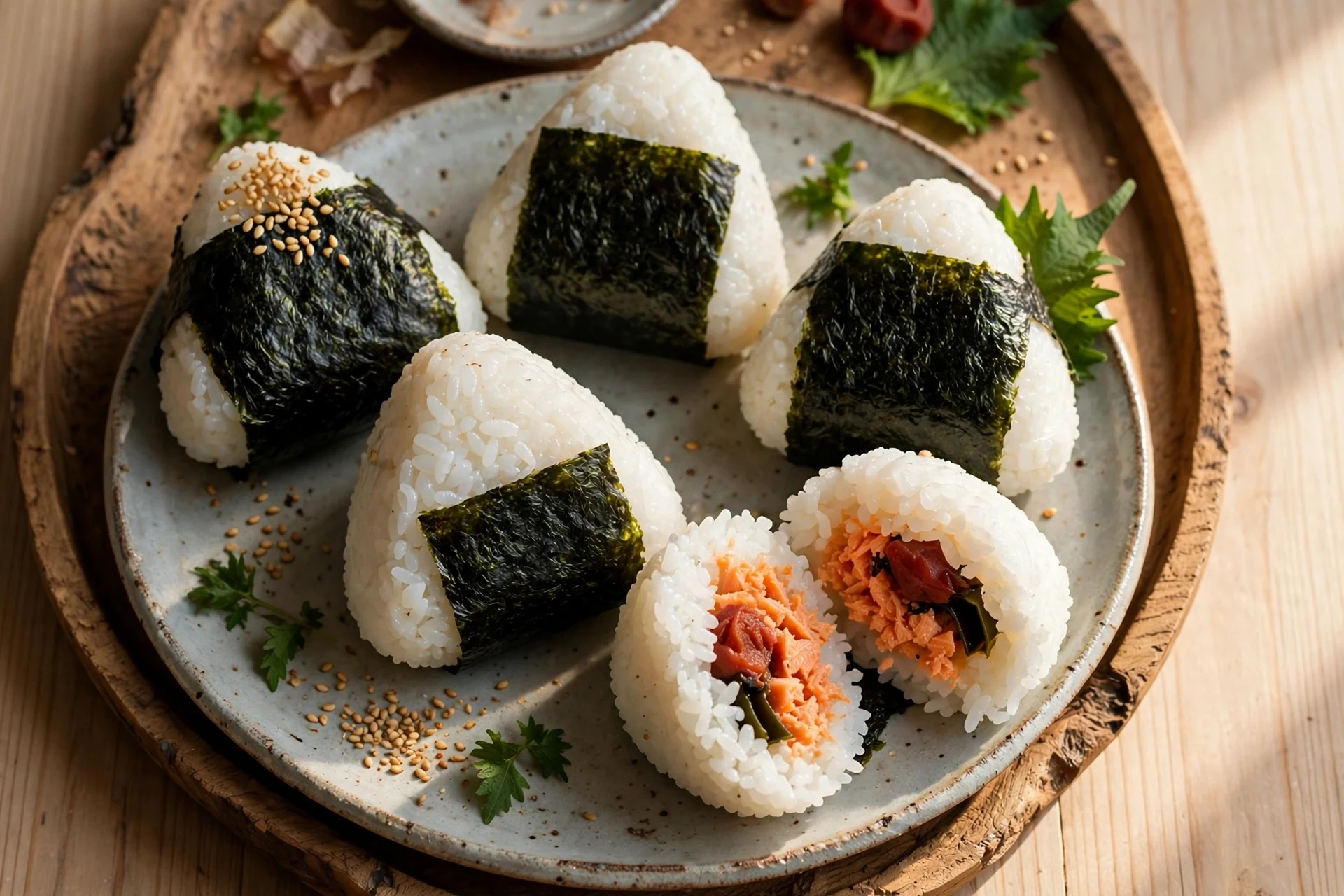
Onigiri are Japanese rice balls made with warm short-grain rice, lightly salted hands and optional fillings such as umeboshi or cooked salmon. Good onigiri hold together cleanly while the rice grains remain distinct and tender rather than compacted into a dense mass.
- Total
- 50 min
- Difficulty
- Easy
- Serves
- 4
- Steps
- 6
The dish
Place first. Then the plate.
Onigiri are an everyday Japanese food with many shapes, fillings and regional expressions. Japan’s Ministry of Agriculture describes them as a traditional rice food that can wrap or mix in a wide range of ingredients, often reflecting local products and food culture. Ember & Equator teaches the lightly salted rice-and-nori technique first, with modest fillings treated as common variations rather than requirements.
Explore JapanAt a glance
Origin
Japan
Region
Japan — nationwide, with strong regional variation
Meal
lunch · snack
Guided steps
6
Dish
Onigiri
Cuisine
Japanese cuisine
Food type
Lunch · Snack · Rice dish
Technique
Shape rice
Cook the recipe
In the kitchen
Start with the ingredients, then follow the Method in order. Open cooking tips only when you need extra help; the story and references can wait until you are ready.
- Total
- 50 min
- Serves
- 4
- Level
- Easy
- Visual cues
- 6
Ingredients
Serves 4- 1½ cupsJapanese short-grain riceabout 300 g uncooked; rinse well and cook according to the package or rice-cooker directions
- 1 tspfine saltfor seasoning damp hands while shaping; you may not need every pinch
- 2 sheetsnori sheetscut into 4 strips or halves; add just before eating if you prefer crisp nori
Optional
- 2 piecesumeboshipitted and divided into small portions; optional filling
- 80 gramscooked salmonlightly salted and flaked; optional filling
Everything ready? Continue straight into the cooking steps.
Start methodMethod
6 steps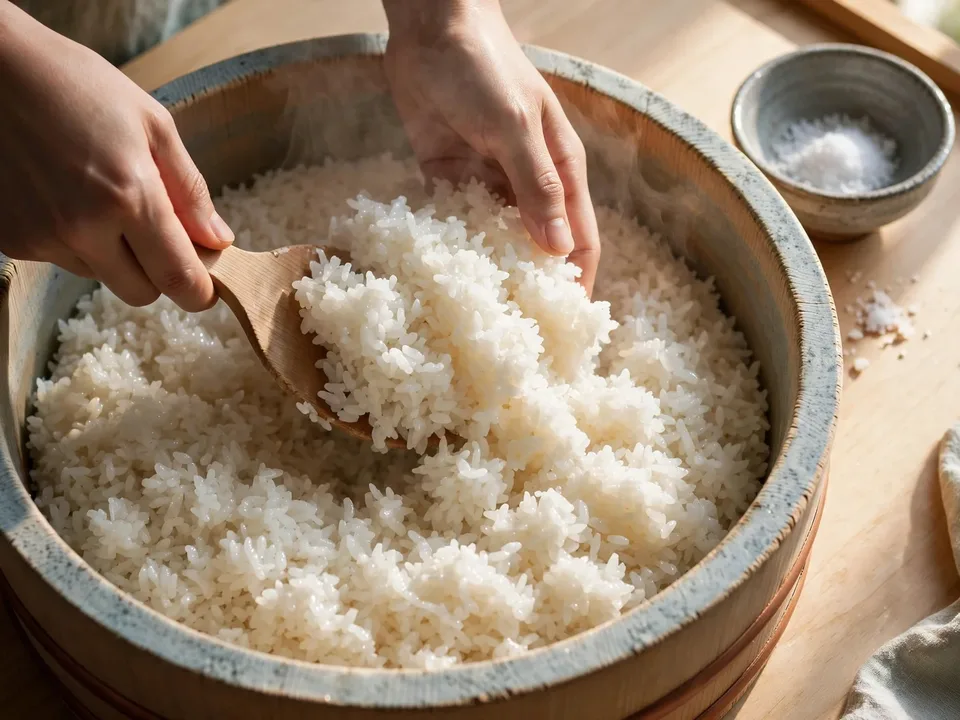 Step 01
Cook, rest and loosen the rice
35 min
Rest and loosen the freshly cooked rice while it is still warm enough to shape.
Rinse the Japanese short-grain rice in several changes of cold water until the water looks noticeably less cloudy, then drain well. Cook it according to the package or rice-cooker directions. Once cooked, let it rest covered for about 10 minutes, then fluff gently with a rice paddle or spatula so the grains separate without breaking. Keep the rice covered and let it cool only until it is comfortable to handle while still warm.
Look for
The rice should look glossy, plump and lightly sticky, with distinct tender grains and no hard core or puddled moisture.
Kitchen note
Rice texture determines whether onigiri succeed. Rice that is too wet collapses and smears; rice that has dried out will not seal cleanly. Keep it covered while it rests so the surface stays supple.
 Step 02
Prepare the filling and shaping station
5 min
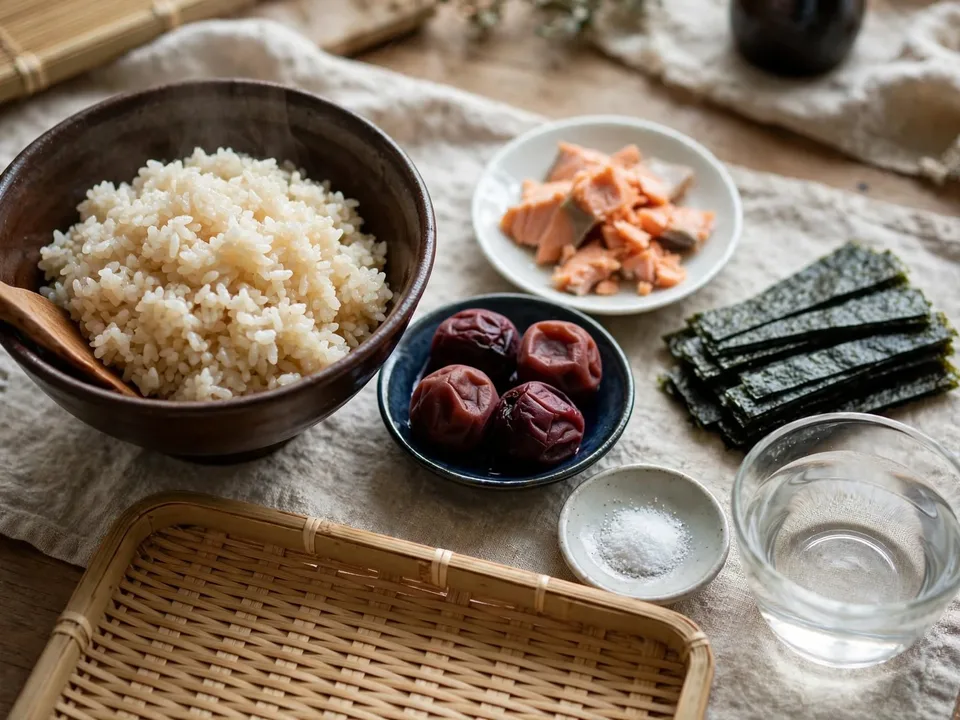
Wet your hands lightly and spread a small pinch of salt across your palms and fingers.
While the rice is resting, pit and tear the umeboshi into small portions or flake the cooked salmon into small pieces, removing any skin or bones. Cut the nori into strips or halves. Set out a small bowl of clean water, the salt, a tray or plate for the finished onigiri and the fillings within easy reach. If the rice still feels too hot, give it another minute or two; it should be warm, not painfully hot.
Look for
The filling should be portioned, the nori cut and the rice still warm enough to shape without steaming aggressively in your hands.
Kitchen note
Keep fillings modest and ready before you start shaping. Onigiri are easier to form when you are not stopping mid-process to prep more filling or search for the nori.
 Step 03
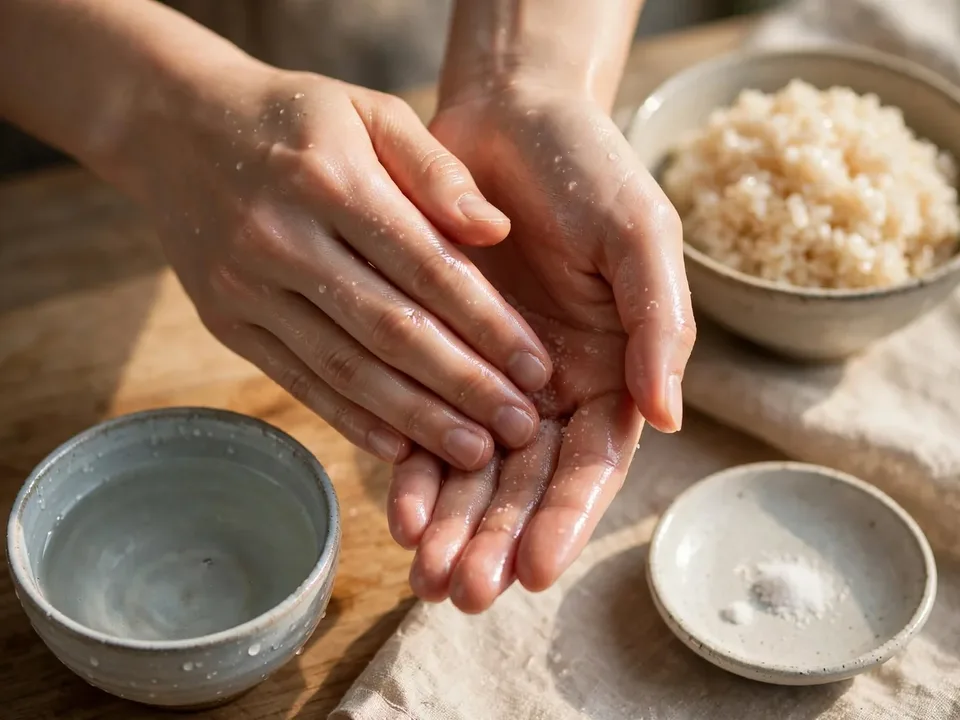
Wet and lightly salt your hands
1 min
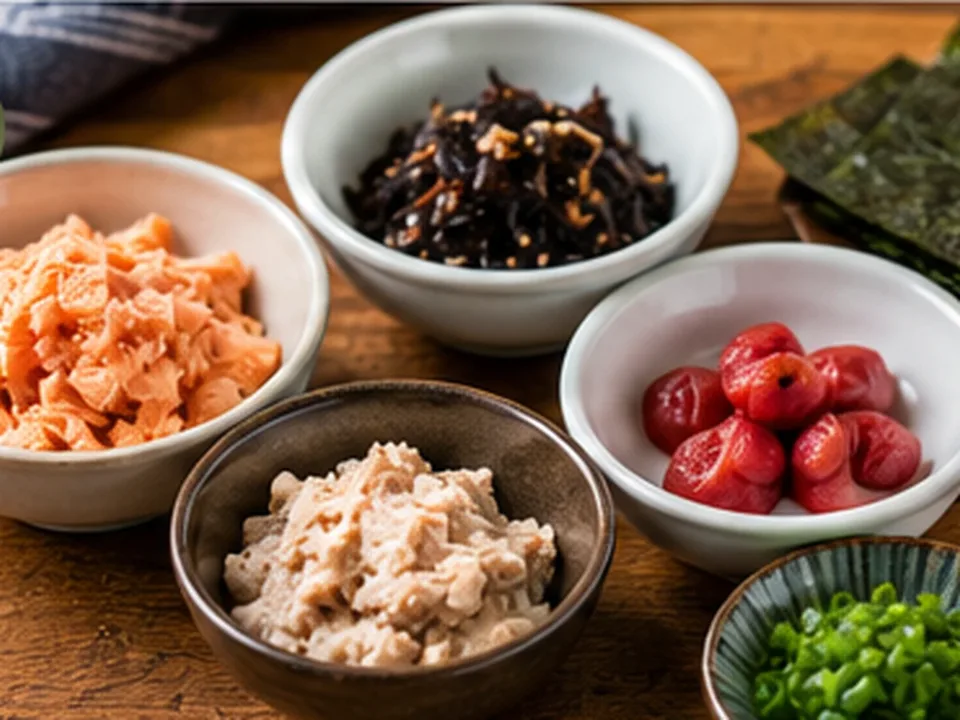
Add a modest filling if using, then press and rotate gently until the rice holds its shape.
Wash and dry your hands well, then wet both hands lightly with the bowl of water. Shake off the excess and rub a small pinch of salt evenly over your palms and fingers. Re-wet only lightly as needed while shaping; your hands should feel damp and lightly seasoned, not dripping.
Look for
Your palms should feel evenly damp and lightly salted, not wet enough to drip or coated with obvious salt crystals.
Kitchen note
Too much water makes the rice surface slippery and soggy, while too much salt can leave the outside harshly seasoned. A thin film of moisture plus a light coating of salt is enough.
 Step 04
Portion the rice and add the filling
3 min
Wrap with nori at the moment that gives you the texture you prefer, then serve or pack carefully.
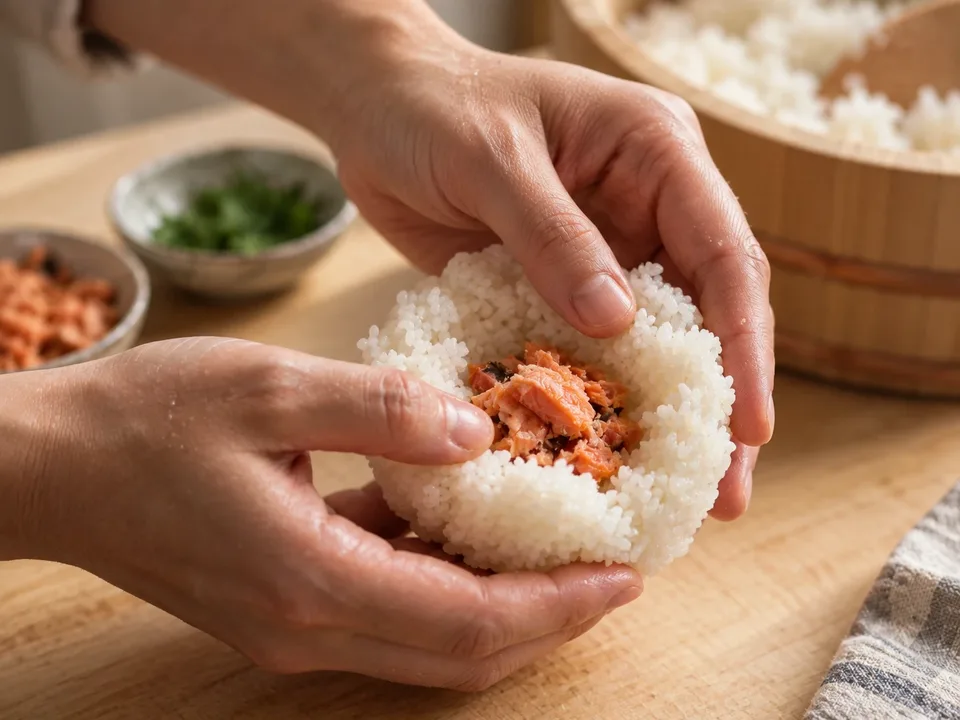
Place about 110 to 120 g of warm rice into one palm and gently spread or cup it into a thick round, leaving enough rice to close over the filling. Make a shallow indentation in the centre and add about 1 to 2 teaspoons of one filling, such as flaked salmon or a small portion of umeboshi. Keep the filling centred and away from the edges, then bring the rice up and around it so the filling is enclosed.
Look for
The filling should sit in a shallow centre pocket with a clear border of rice around it, so the rice can close over without gaps.
Kitchen note
If the rice begins sticking, lightly re-dampen your fingertips rather than soaking your whole hand again. Overfilling is the fastest way to make the rice split or leak.
 Step 05
Seal and shape gently
2 min
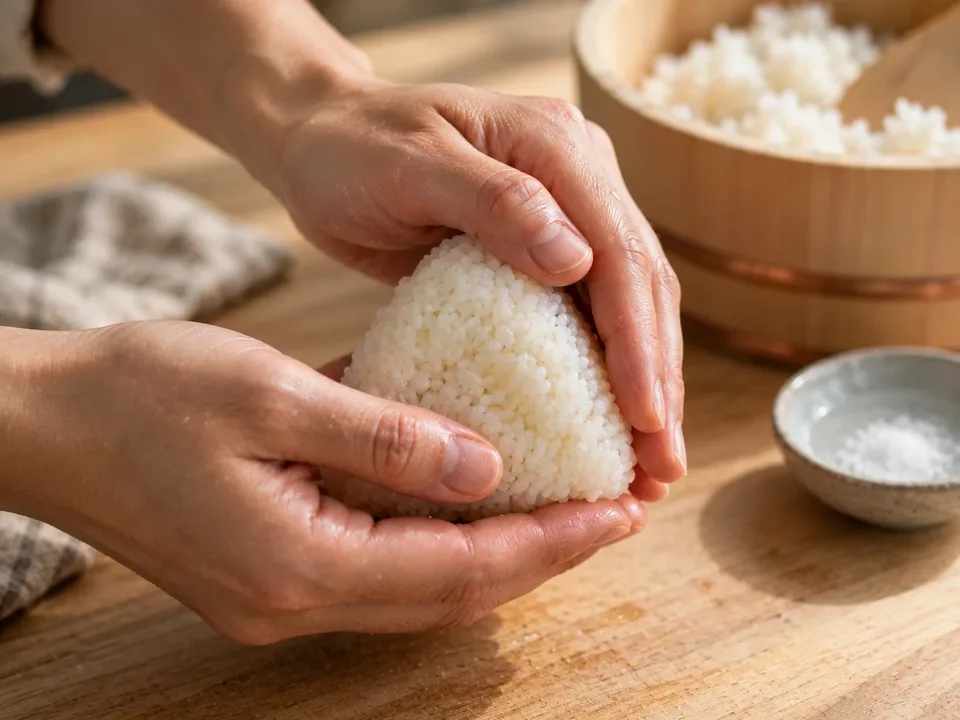
Close the rice over the filling and rotate it between your hands, pressing top, sides and base in a few gentle turns until it forms a neat triangle or round.
Close the rice over the filling and rotate it between your hands, pressing top, sides and base in a few gentle turns until it forms a neat triangle or round. Use only enough pressure for the onigiri to hold together. If a little filling peeks through or the surface cracks, patch it with a small pinch of warm rice and continue shaping gently rather than squeezing harder.
Look for
The onigiri should hold cleanly when lifted, with a defined shape and visible rice grains, but no filling spilling out or crushed paste-like sides.
Kitchen note
Think press, turn and release rather than squeeze. Compressing the rice too firmly makes the onigiri heavy and dense instead of tender and easy to bite.
 Step 06
Wrap with nori and serve or pack
1 min
Wrap each onigiri with a strip of nori around the lower half or one side.
Wrap each onigiri with a strip of nori around the lower half or one side. Add the nori just before eating if you want it crisp, or wrap while the rice is still warm if you prefer it softened by contact with the rice. Serve warm or at room temperature. If packing onigiri, let them cool before sealing the container so condensation does not collect inside.
Look for
The rice should remain intact as the nori is attached; the nori can stay crisp or soften against the rice depending on when it is wrapped.
Kitchen note
Timing controls nori texture. Crisp nori needs late wrapping; packed onigiri soften it naturally. If the onigiri will sit for an extended period, keep food-safety considerations in mind and chill them appropriately.
After cooking
Explore the dish beyond the method.
Story, place and references are here for discovery, so they stay out of the way while you cook.
Culture & tradition
The story behind the dish
Origins, evolution and everyday life—read together as part of the recipe's culinary record.
Origins
Rice shaped for portability has a long place in Japanese food culture, but there is no single recipe that defines all onigiri. Regional ingredients, household habits and convenience have produced many forms.
How it evolved
Salt, nori, pickles, fish and seasoned fillings became familiar combinations, while home kitchens, bento traditions and modern convenience stores expanded the range further. The core idea remains simple: warm rice shaped into a compact, hand-held portion.
Its place today
Onigiri remain common in homes, lunch boxes and convenience stores, functioning as a snack, light meal or portable staple.
Visual archive · plate 01
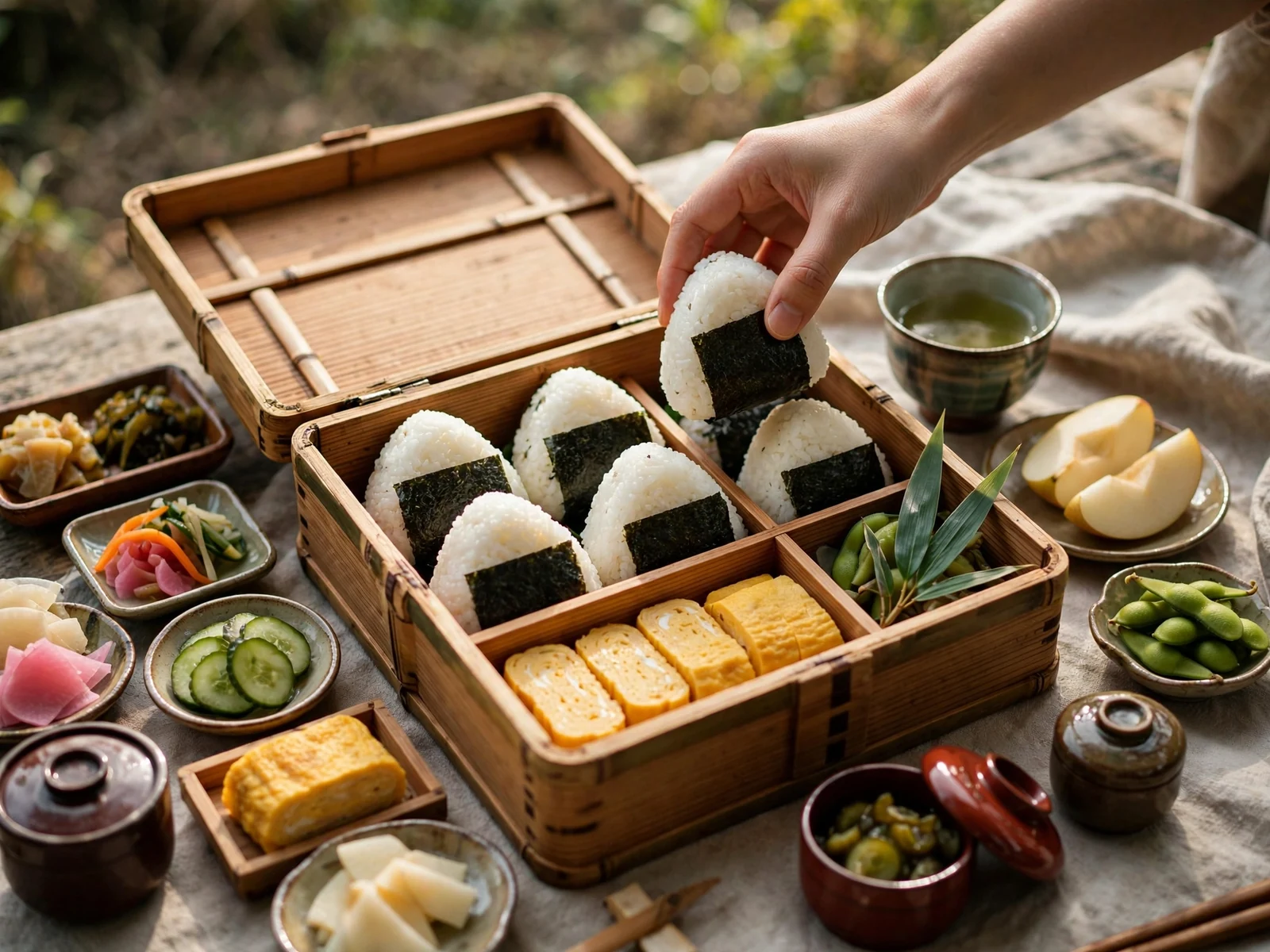
Onigiri
An editorial view of the finished dish, kept compact so the story continues without an oversized image break.
Primary region
Japan — nationwide, with strong regional variation
Country
Japan
Regional influence
Japan’s rice culture and regional preserved-food traditions contribute to wide variation in onigiri, with local seafood, pickles, vegetables and seasonings appearing as fillings or mixed into the rice.
Related food systems
- Japanese rice culture
- Bento and portable meals
- Regional preserved foods
Culinary record
- Sub-region
- East Asia — Pacific Archipelago
- Climate
- Temperate Maritime
- Trade-route influence
- Maritime Silk Road · Nanban trade (16th c. Portuguese)
Sources & further reading
Follow the reference trail.
Ember & Equator links outward when an institution or primary reference helps support the culinary record.
- 01Onigiri (Rice Balls)External ↗
Ministry of Agriculture, Forestry and Fisheries of Japan · government
Supports: dish identity · ingredients · method
Ember & Equator source review · 2026-09-01
- 02Thinking about Japan through onigiriExternal ↗
Ministry of Agriculture, Forestry and Fisheries of Japan · government
Supports: cultural context · regional variation
Ember & Equator source review · 2026-09-01
- 03Onigiri Rice Balls Recipe (Bonito Soy Sauce & Tuna Mayonnaise)External ↗
Kikkoman Corporation · reference
Supports: hand-shaping technique · salted hands · nori wrapping
Ember & Equator source review · 2026-09-09
- 04Onigiri (Japanese Rice Balls)External ↗
Just One Cookbook / Namiko Hirasawa Chen · reference
Supports: Japanese short-grain rice · warm shaping · salted damp hands · modest fillings · nori timing
Ember & Equator source review · 2026-09-16
Ingredient guides
Learn about the ingredients behind the dish.
These are reference guides, not a second ingredient list. Follow an ingredient when you want to understand its role, use and wider culinary context.
Ingredient
Japanese short-grain rice
Understand what it contributes, how to use it, and the dishes that reveal it best.
Ingredient
fine salt
Understand what it contributes, how to use it, and the dishes that reveal it best.
Ingredient
nori sheets
Understand what it contributes, how to use it, and the dishes that reveal it best.
Ingredient
umeboshi
Understand what it contributes, how to use it, and the dishes that reveal it best.
Ingredient
cooked salmon
Understand what it contributes, how to use it, and the dishes that reveal it best.
Keep wandering
Where will this dish take you next?
Stay with the place, follow an ingredient or technique, or cross into another food culture. Each path begins with something already present in this dish.
Stay with the place
01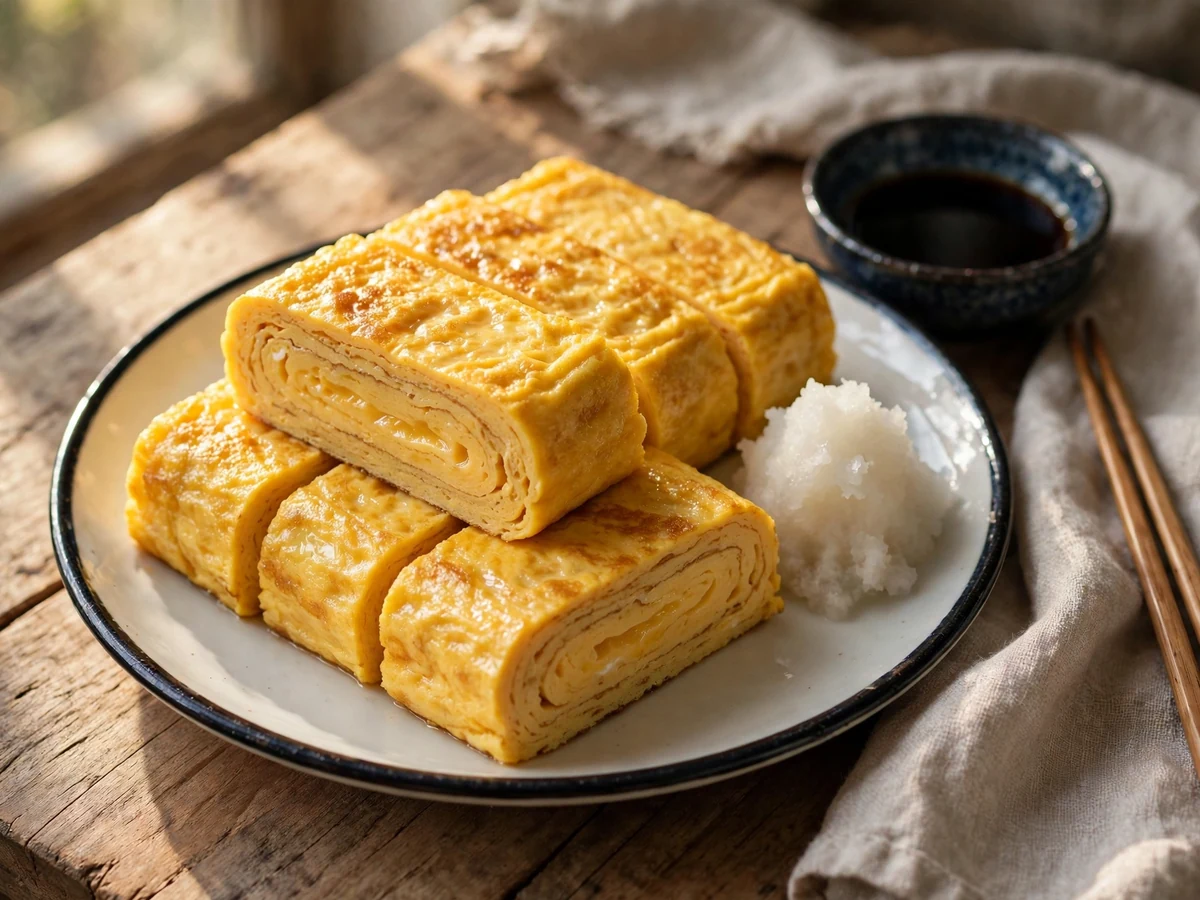
Japan
Tamagoyaki
Stay in the same food culture and follow fine salt into another recipe.
Shared thread · fine salt · Lunch · Snack
Follow the method or pantry
02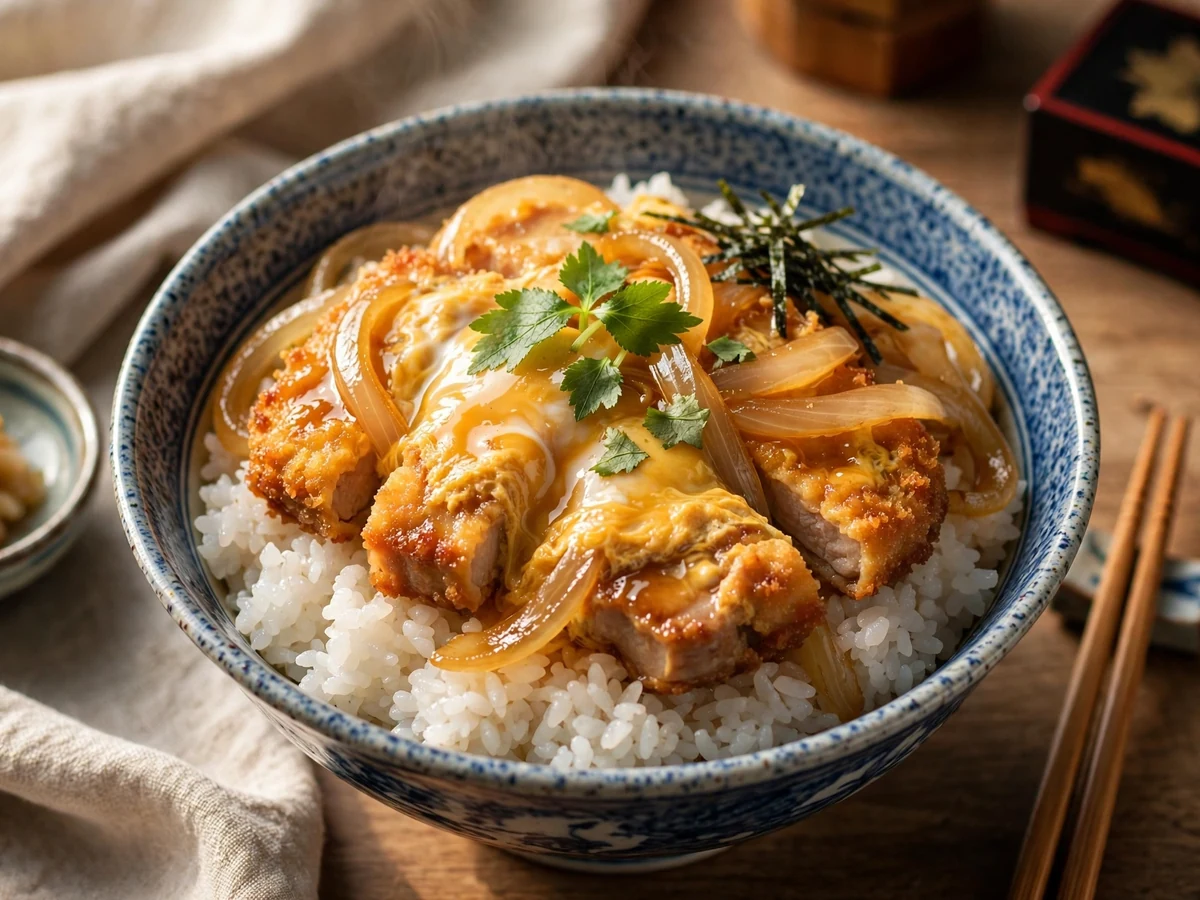
Japan
Katsudon
Follow the pantry: both dishes connect through fine salt.
Shared thread · fine salt · Lunch · Rice dish
Cross a culinary border
03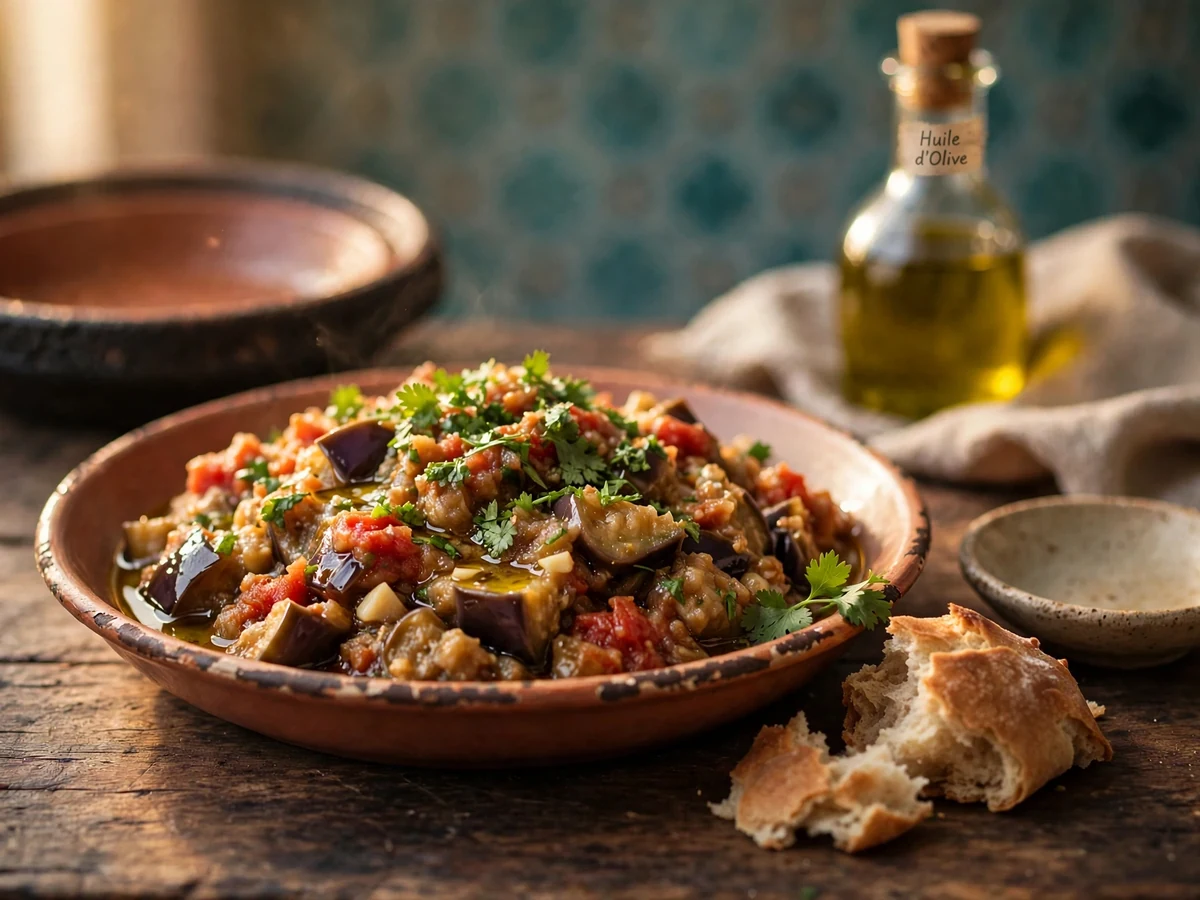
Morocco
Zaalouk
Cross borders and see how another cuisine handles fine salt.
Shared thread · fine salt · Lunch · Snack
Continue in Ember & Equator