
Lebanon · lunch · dinner
Mujadara
Lebanon through one enduring dish.
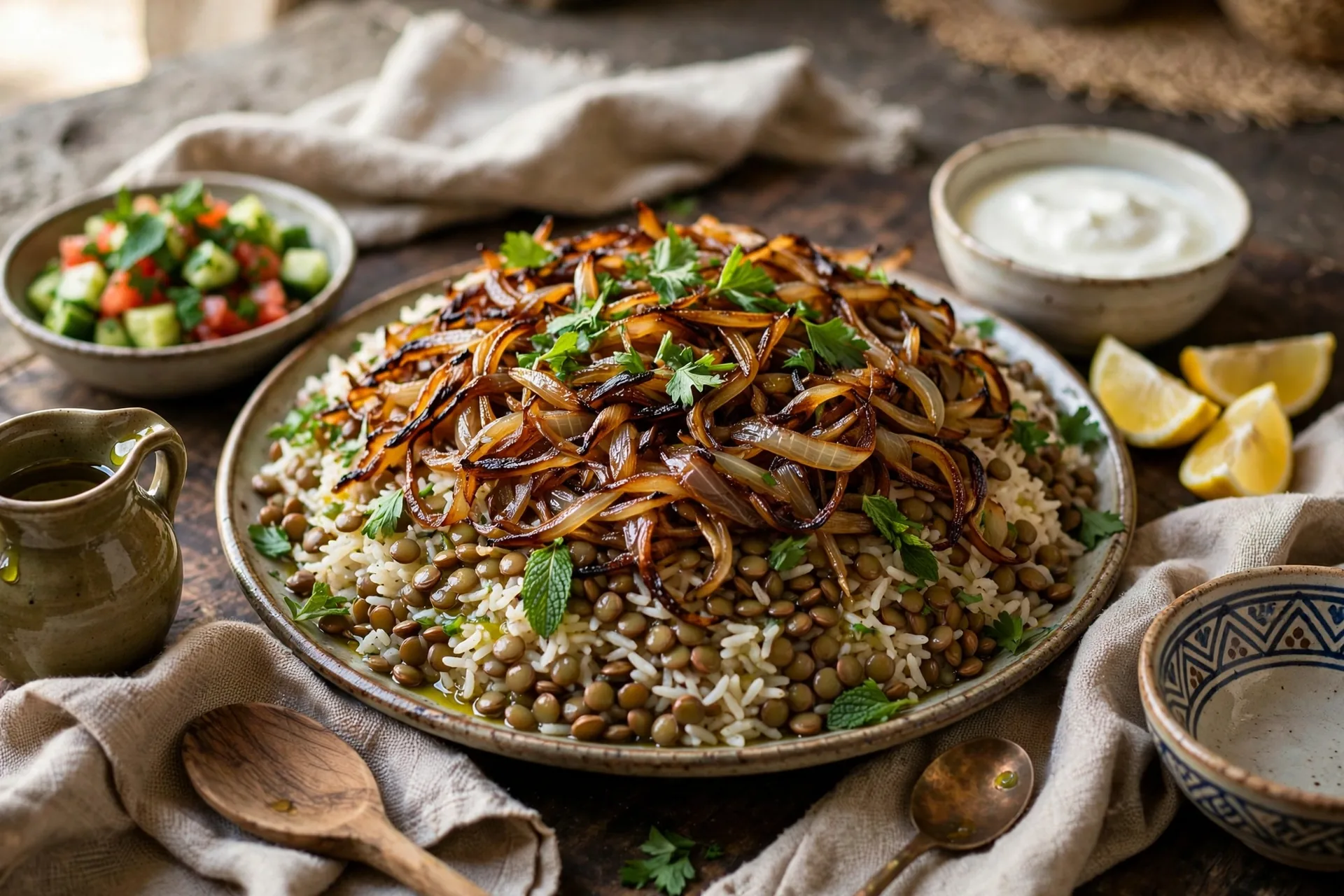
Lebanese mujadara is a humble lentil-and-rice pilaf whose depth comes from onions cooked to a very dark golden brown, then used to colour and flavour the cooking liquid while the lentils and rice finish together.
- Total
- 75 min
- Difficulty
- Easy
- Serves
- 6
- Steps
- 7
The dish
Place first. Then the plate.
Mujadara belongs to a wider Levantine family of lentil-and-grain dishes. Lebanese household versions may use rice or coarse bulgur and vary in spice, onion treatment and final texture. This Ember & Equator version is a shape-holding brown-lentil and rice pilaf with deeply caramelised onions; cumin is offered as a legitimate optional seasoning rather than a universal requirement.
Explore LebanonAt a glance
Origin
Lebanon
Region
Lebanon / Levant
Meal
lunch · dinner
Guided steps
7
Dish
Mujadara
Cuisine
Lebanese cuisine
Food type
Legume dish · Comfort food
Technique
Simmer · Sauté
Cook the recipe
In the kitchen
Start with the ingredients, then follow the Method in order. Open cooking tips only when you need extra help; the story and references can wait until you are ready.
- Total
- 75 min
- Serves
- 6
- Level
- Easy
- Visual cues
- 7
Ingredients
Serves 6- 250 gbrown lentilssmall whole brown lentils that hold their shape
- 200 glong-grain ricerinsed and drained
- 4onionslarge yellow onions, thinly sliced
- 60 mlneutral oilfor deep onion browning
- 20 mlextra virgin olive oilfor finishing
- 1.5 tspsaltplus more to taste
- 0.25 tspblack pepperor to taste
- 1 Lwaterapproximately, including lentil par-cooking and final pilaf liquid
Optional
- 1 tspground cuminoptional; a legitimate seasoning variation
Everything ready? Continue straight into the cooking steps.
Start methodMethod
7 steps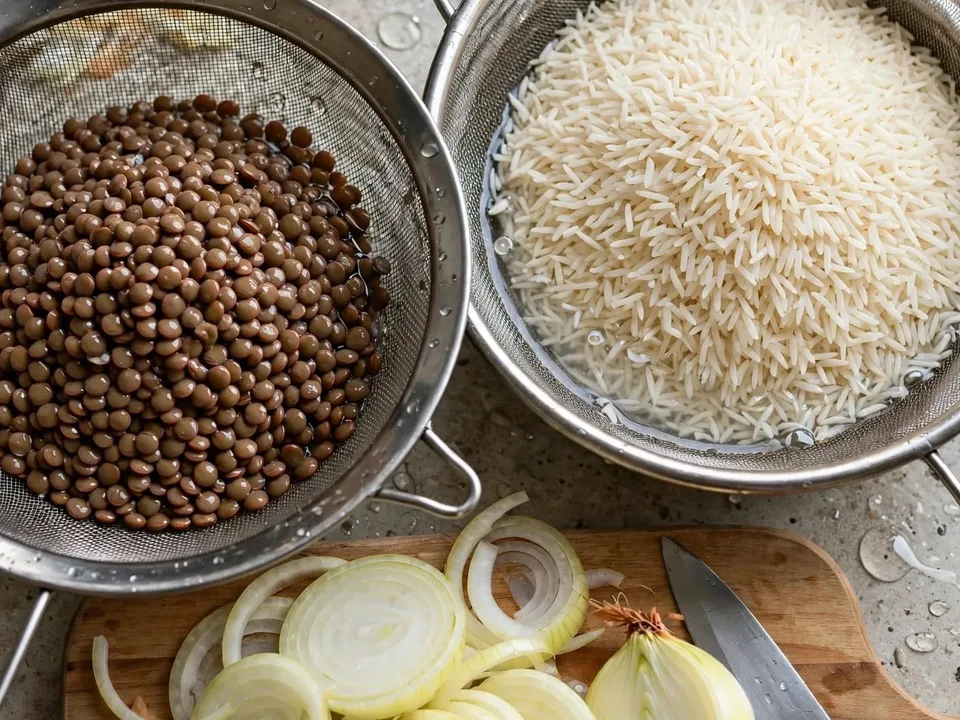 Step 01
Rinse the lentils and rice separately and slice the onions evenly
7 min
Pick through the brown lentils and rinse them well.
Pick through the brown lentils and rinse them well. Rinse the rice separately until the water is much clearer, then drain. Slice the onions evenly so thin and thick pieces do not reach different colours at the same time.
Look for
The lentils are clean, the rice is drained and the onion slices are reasonably even in thickness.
Kitchen note
Keep the lentils and rice separate at this stage because the lentils need a head start while the rice does not.
 Step 02
Par-cook the lentils until the centres are still firm
10 min
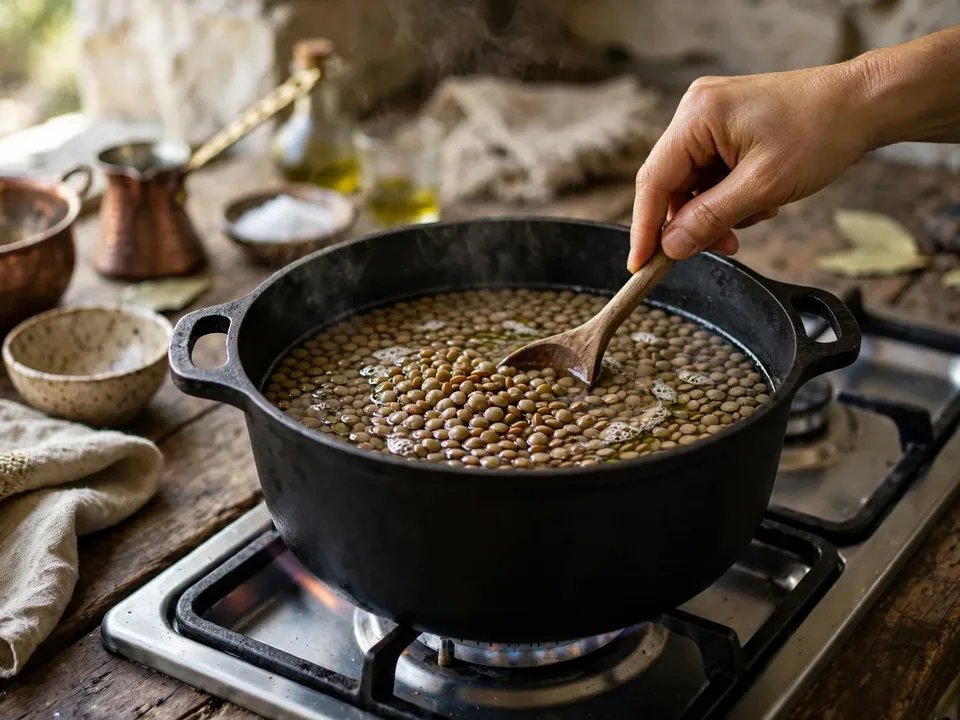
Put the lentils in a saucepan with enough of the measured water to cover generously and a pinch of salt.
Put the lentils in a saucepan with enough of the measured water to cover generously and a pinch of salt. Bring to a boil, lower to a simmer and cook for about 7–10 minutes, just until the outside has softened while the centre still offers resistance. Keep the lentils and their cooking liquid together.
Look for
The lentils are no longer raw-hard at the surface but remain distinctly firm in the centre and fully intact.
Kitchen note
Do not fully tenderise the lentils here. They still need to survive the rice-cooking stage without splitting into paste.
 Step 03
Cook the onions to a very deep golden brown and reserve some for topping
24 min
Heat the neutral oil in a wide heavy pot over medium to medium-high heat.
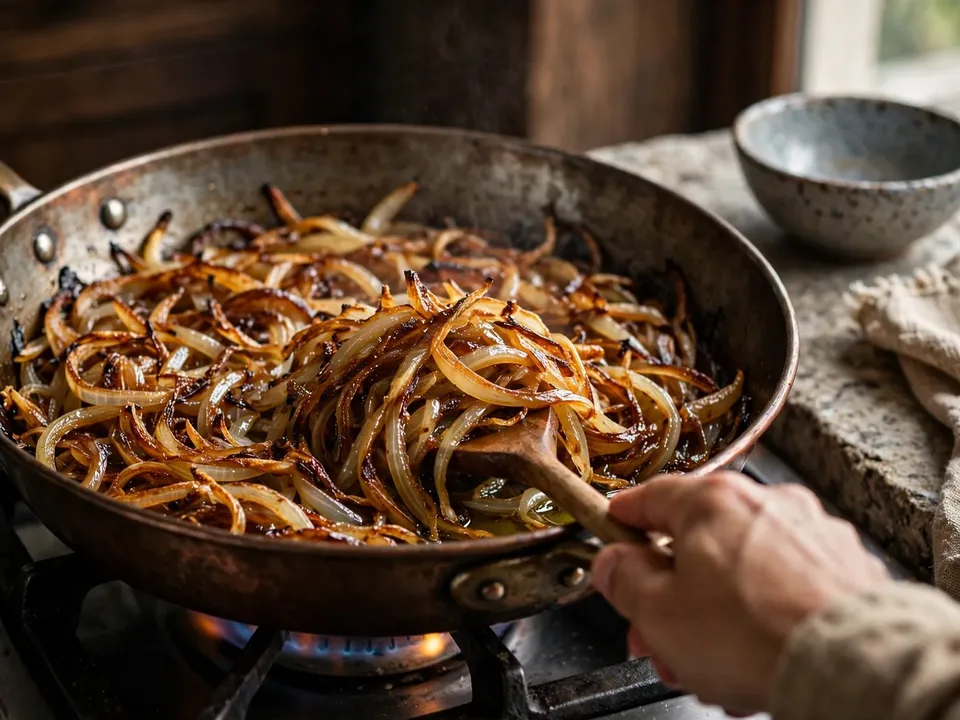
Heat the neutral oil in a wide heavy pot over medium to medium-high heat. Add the onions with a pinch of salt and cook, stirring frequently, until they pass from soft to amber to very deep golden brown, about 20–25 minutes. A few dark edges are fine, but avoid widespread black bitterness. Lift out about one-third for the final topping.
Look for
Most strands are deep mahogany-gold and sweet-smelling, with only a few darker edges and no acrid burnt aroma.
Kitchen note
Mujadara needs onions much darker than an ordinary sauté. Stay close once they begin browning because the change from deep caramelisation to burnt happens quickly.
 Step 04
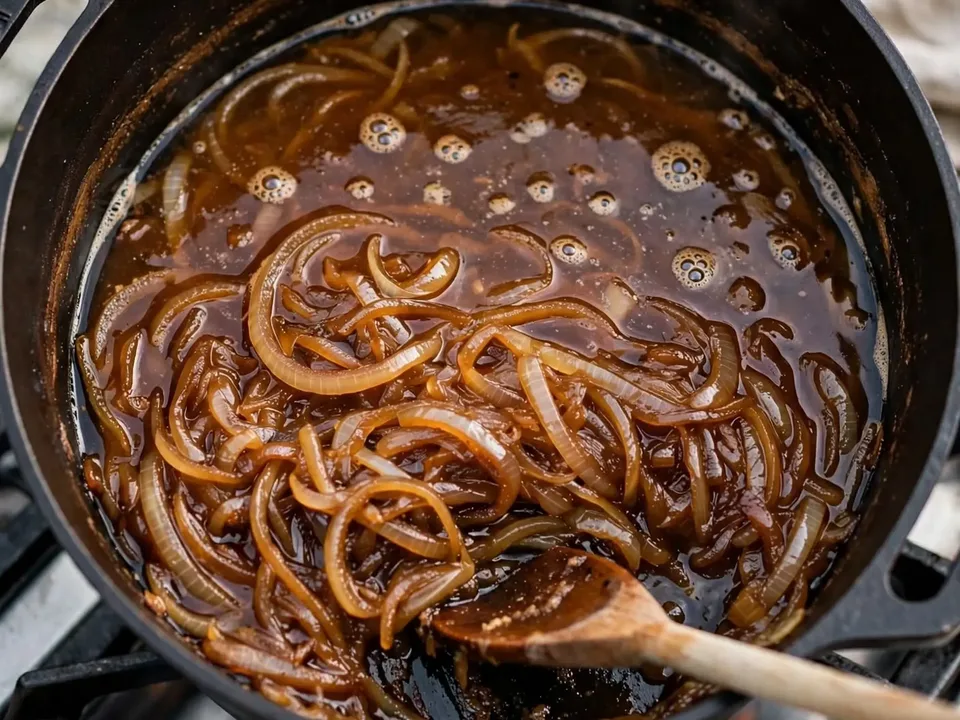
Deglaze the onions and turn the cooking liquid deep brown
6 min
Take the pot briefly off the heat and carefully add about 400 ml water to the onions remaining in the pot; it may splutter.
Take the pot briefly off the heat and carefully add about 400 ml water to the onions remaining in the pot; it may splutter. Return to the heat, scrape up the browned onion fond and simmer for about 5 minutes. The liquid should take on a deep amber-brown colour as the onions soften further.
Look for
The water is no longer clear; it is distinctly brown and onion-scented with the pan fond dissolved.
Kitchen note
This deglazing step carries the onion colour and flavour through the whole pilaf instead of leaving all the sweetness only on top.
 Step 05
Add the par-cooked lentils, rice and seasoning and bring once to a boil
5 min
Add the par-cooked lentils with their cooking liquid and the drained rice to the browned onion liquid.
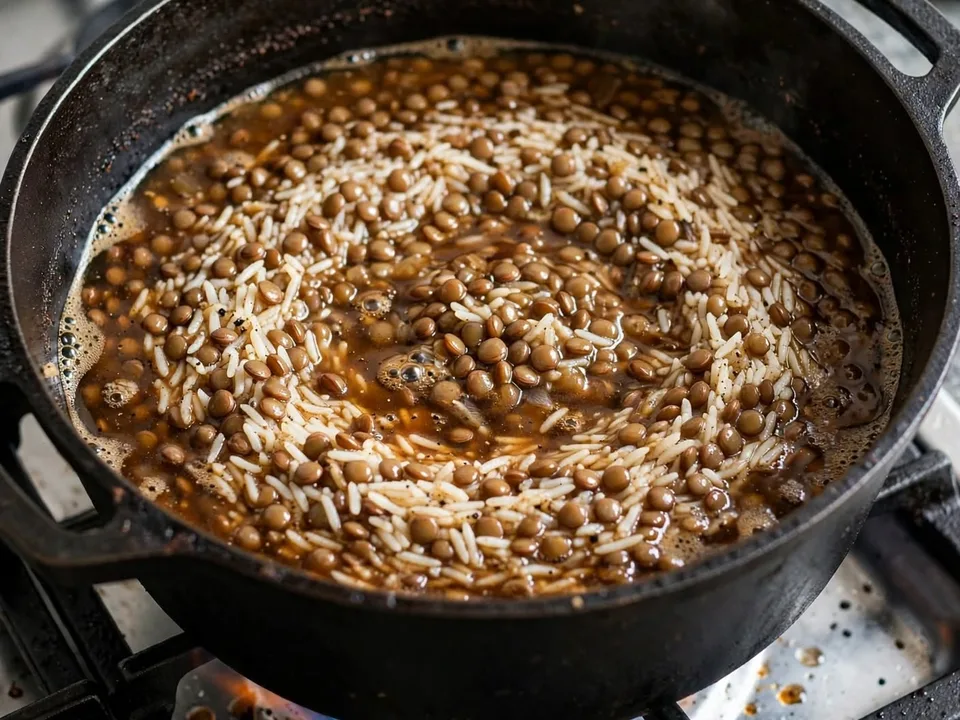
Add the par-cooked lentils with their cooking liquid and the drained rice to the browned onion liquid. Add salt, black pepper and optional cumin. Add extra water only as needed: the rice and lentils should be surrounded by enough liquid to finish cooking but should not be floating in a deep pot of water. Bring to a boil, stir once to distribute everything evenly, then immediately lower the heat.
Look for
Rice and lentils are evenly distributed in a dark simmering liquid, with no dry pockets on the surface.
Kitchen note
The 1 litre water in the ingredient list is an approximate total for par-cooking and the pilaf, not an amount to pour in all at once. Hold some back. If the covered pot later dries before the rice is tender, add hot water a few tablespoons at a time; if it looks soupy now, do not add more.
 Step 06
Cover and cook very gently until the liquid is absorbed
20 min
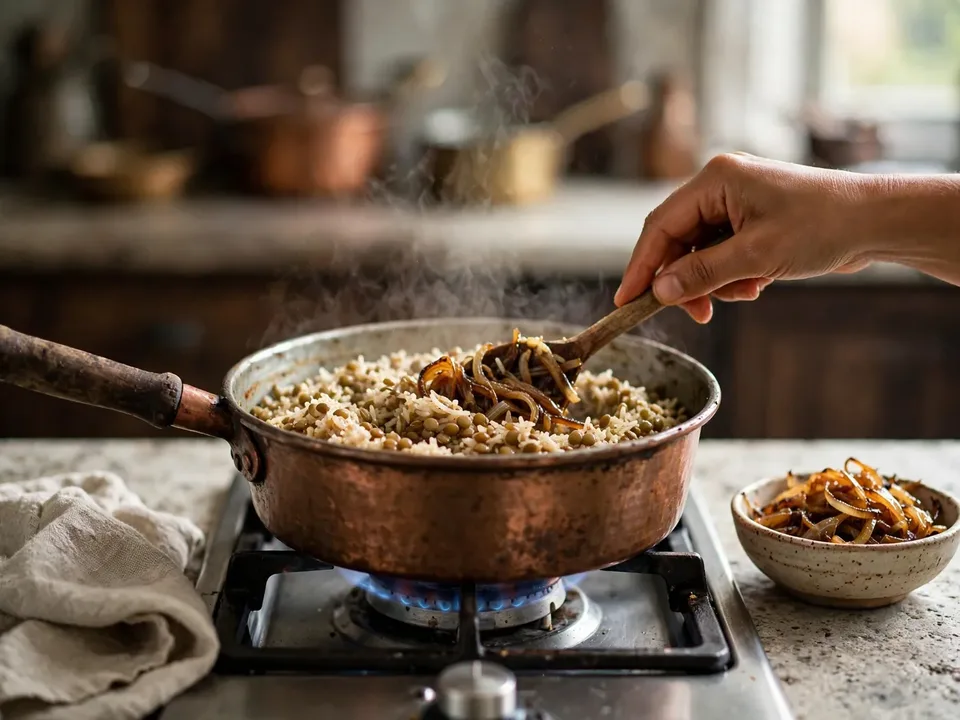
Cover tightly and cook over low heat for about 18–22 minutes, until the rice is tender, the lentils are fully cooked and the liquid has been absorbed.
Cover tightly and cook over low heat for about 18–22 minutes, until the rice is tender, the lentils are fully cooked and the liquid has been absorbed. If the grains are nearly done but the pot is dry, sprinkle in a few tablespoons of hot water rather than flooding it.
Look for
Rice grains are tender and mostly separate, lentils hold their shape and no free liquid remains at the bottom.
Kitchen note
Keep the heat low. A scorched base can develop before the rice is done if the onion-rich liquid boils too hard under the lid.
 Step 07
Rest, fluff gently and finish with the reserved onions and olive oil
12 min
Take the pot off the heat and leave it covered for 10 minutes.
Take the pot off the heat and leave it covered for 10 minutes. Uncover and fluff gently from the edges so the lentils stay intact. Drizzle with extra virgin olive oil and scatter the reserved deeply browned onions over the top. Serve hot, warm or at room temperature with salad, labneh or yogurt if desired.
Look for
The pilaf is cohesive but not mushy, individual rice grains remain visible and the dark onions sit distinctly on top.
Kitchen note
The covered rest completes the rice with residual steam and makes the pilaf easier to separate without breaking the lentils.
After cooking
Explore the dish beyond the method.
Story, place and references are here for discovery, so they stay out of the way while you cook.
Culture & tradition
The story behind the dish
Origins, evolution and everyday life—read together as part of the recipe's culinary record.
Origins
Lentils and grains are longstanding staples across the Levant, and mujadara is associated with economical home cooking rather than a single restaurant-style formula.
How it evolved
Some versions are loose and rice-based while others are softer or use bulgur; browned onions provide the dish’s defining sweet-savory depth.
Its place today
It remains a common meatless meal served with salad, yogurt or pickles.
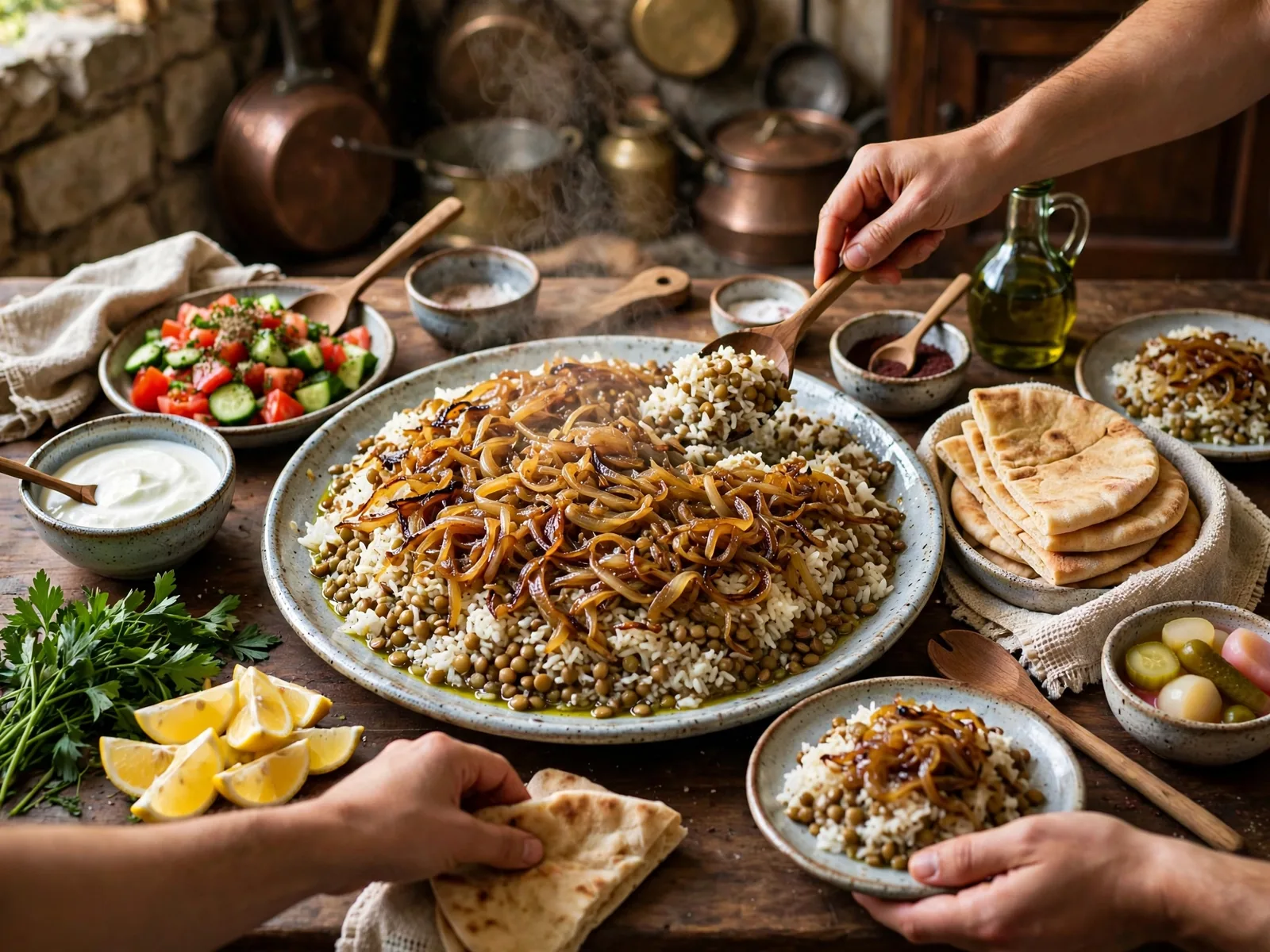
Visual archive · plate 01
Mujadara
An editorial view of the finished dish, kept compact so the story continues without an oversized image break.
Primary region
Lebanon / Levant
Country
Lebanon
Regional influence
The dish reflects the ingredients and cooking patterns associated with Lebanon / Levant, while household and regional versions vary.
Related food systems
- Lebanon / Levant home cooking
- Market and street-food traditions
- Regional pantry and seasonal cooking
Sources & further reading
Follow the reference trail.
Ember & Equator links outward when an institution or primary reference helps support the culinary record.
- 01Mujadara Recipe (Authentic Lebanese Lentils and Rice)External ↗
Maureen Abood · reference
Supports: whole brown shape-holding lentils · deeply browned onions · par-cooking lentils · deglazing onions and cooking rice/lentils together · neutral oil for browning and olive oil finish
Ember & Equator source review · 2026-09-17
Ingredient guides
Learn about the ingredients behind the dish.
These are reference guides, not a second ingredient list. Follow an ingredient when you want to understand its role, use and wider culinary context.
Ingredient
brown lentils
Understand what it contributes, how to use it, and the dishes that reveal it best.
Ingredient
long-grain rice
Understand what it contributes, how to use it, and the dishes that reveal it best.
Ingredient
onion
Understand what it contributes, how to use it, and the dishes that reveal it best.
Ingredient
neutral oil
Understand what it contributes, how to use it, and the dishes that reveal it best.
Ingredient
extra virgin olive oil
Understand what it contributes, how to use it, and the dishes that reveal it best.
Explore ingredient →
Ingredient
ground cumin
Understand what it contributes, how to use it, and the dishes that reveal it best.
Keep wandering
Where will this dish take you next?
Stay with the place, follow an ingredient or technique, or cross into another food culture. Each path begins with something already present in this dish.
Stay with the place
01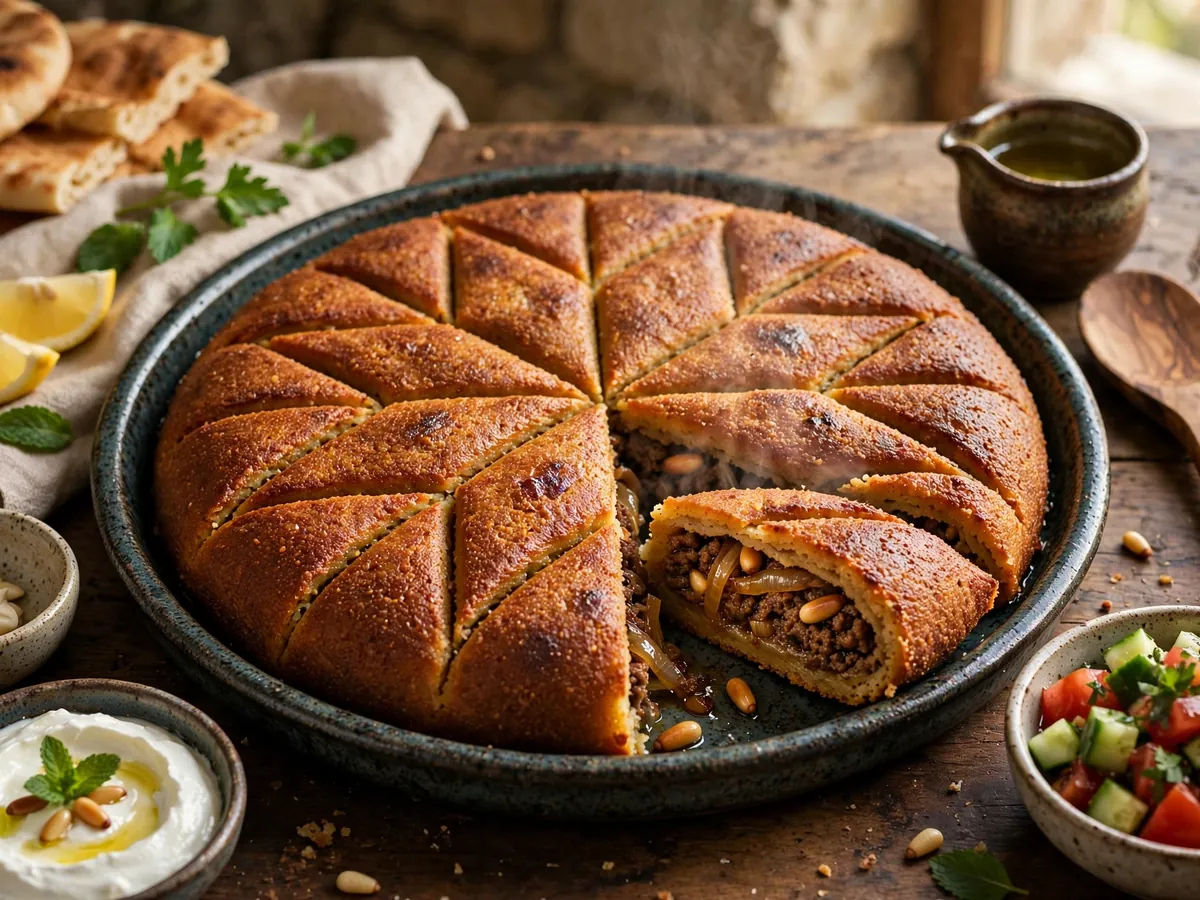
Lebanon
Kibbeh Bil Sanieh
Stay in the same food culture and notice how sauté appears in another dish.
Shared thread · Sauté · onion · extra virgin olive oil
Follow the method or pantry
02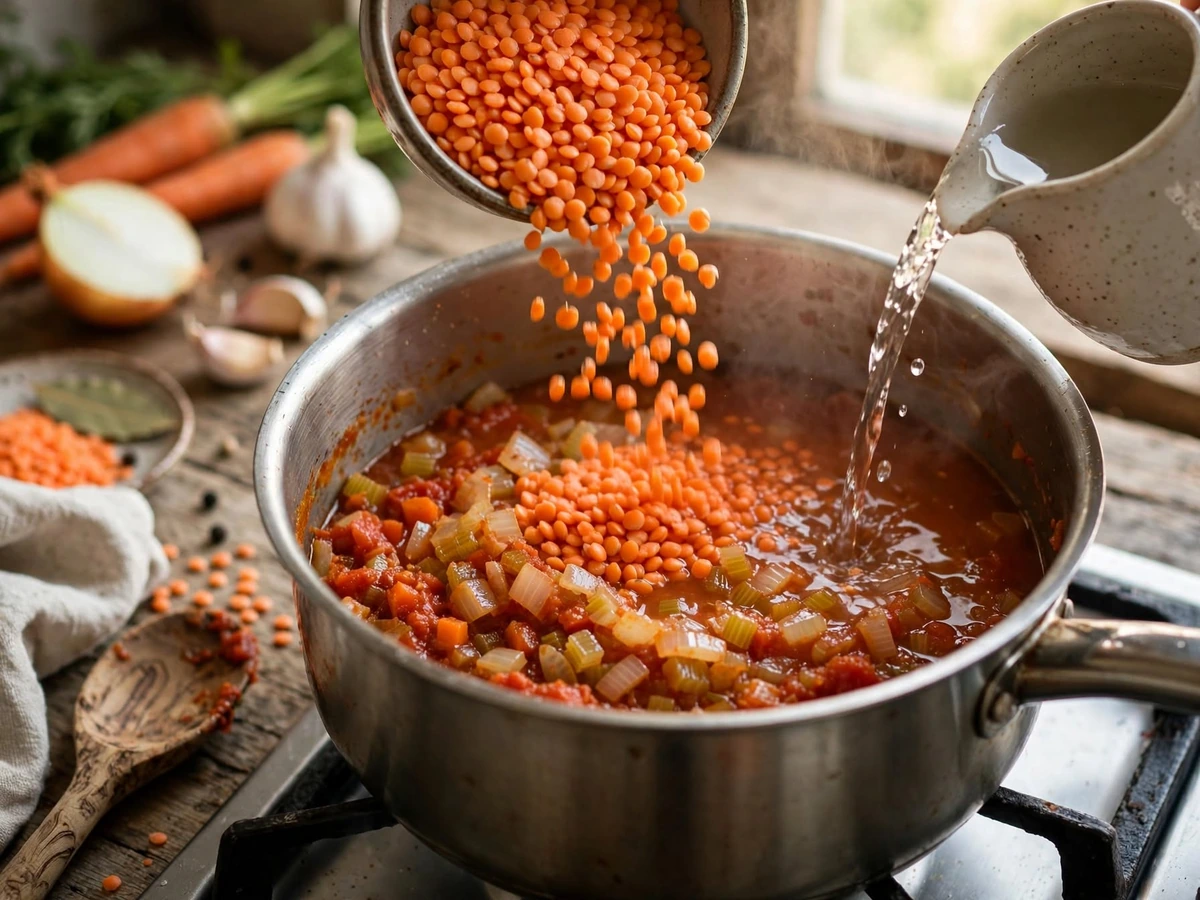
Türkiye
Mercimek Çorbası
Follow the cooking method: both dishes connect through simmer.
Shared thread · Simmer · Sauté · onion
Cross a culinary border
03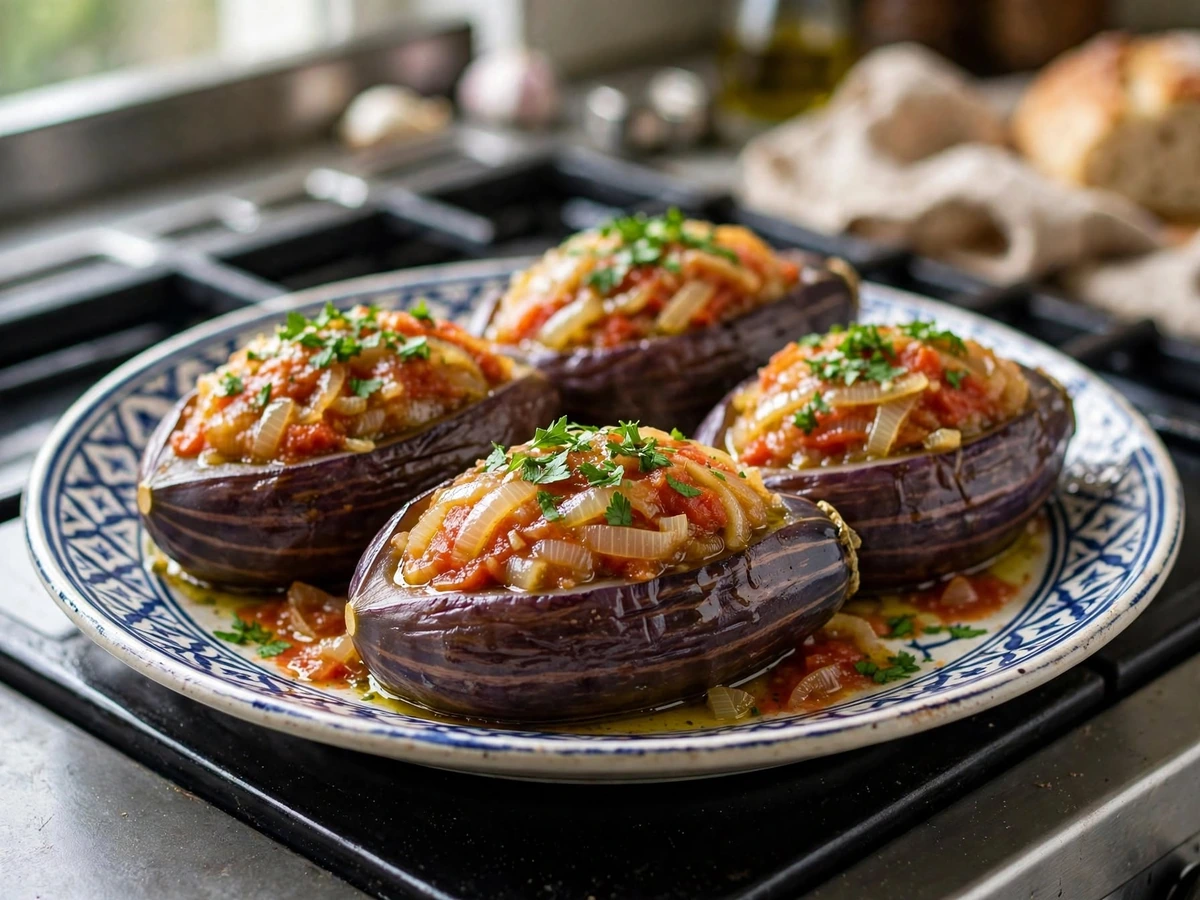
Türkiye
İmam Bayıldı
Cross borders while keeping simmer as the common thread.
Shared thread · Simmer · Sauté · onion
Go one layer deeper
One small detail can open an entirely different part of food.
Continue in Ember & Equator