Why it matters
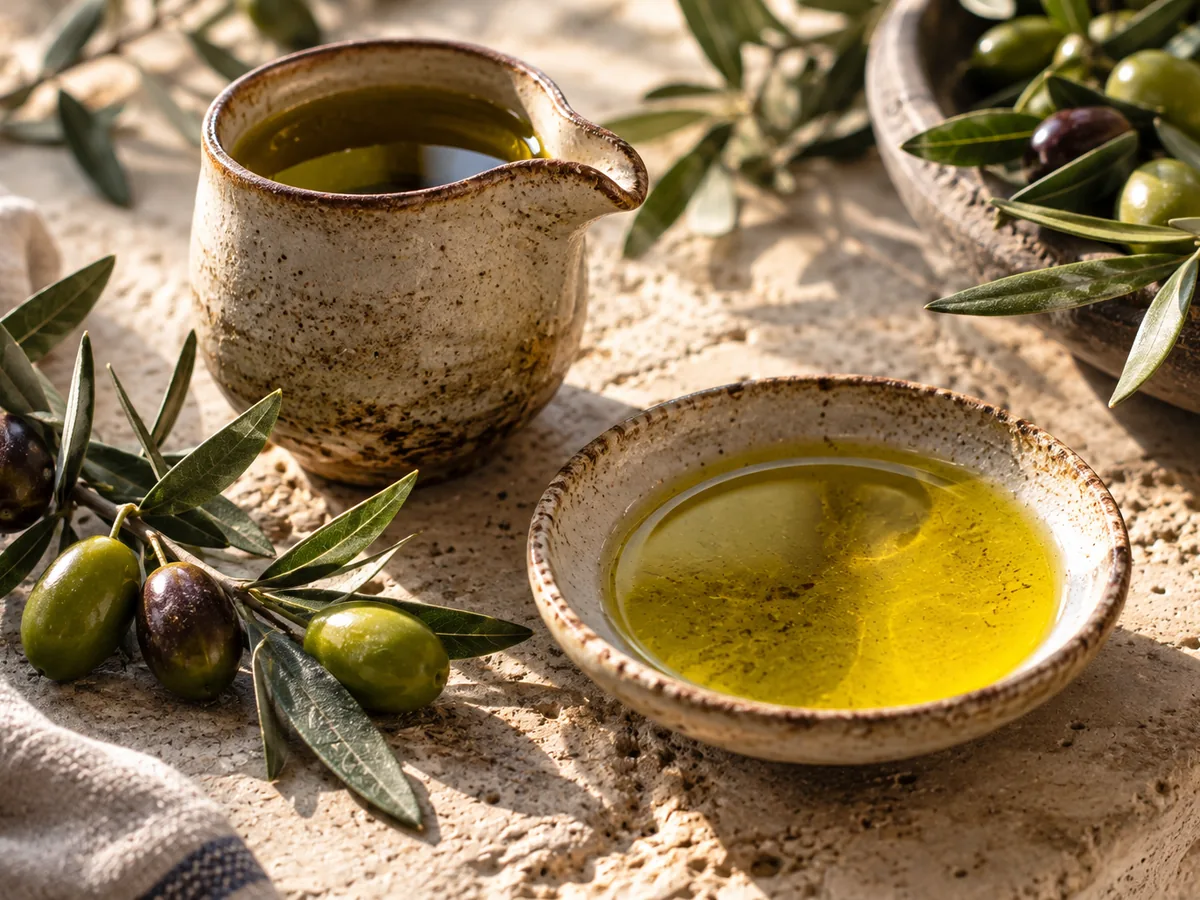
Use extra-virgin olive oil to carry aromatics, dress vegetables and legumes, enrich sauces or finish a dish. Because its flavour remains perceptible, the oil itself can materially change the result.
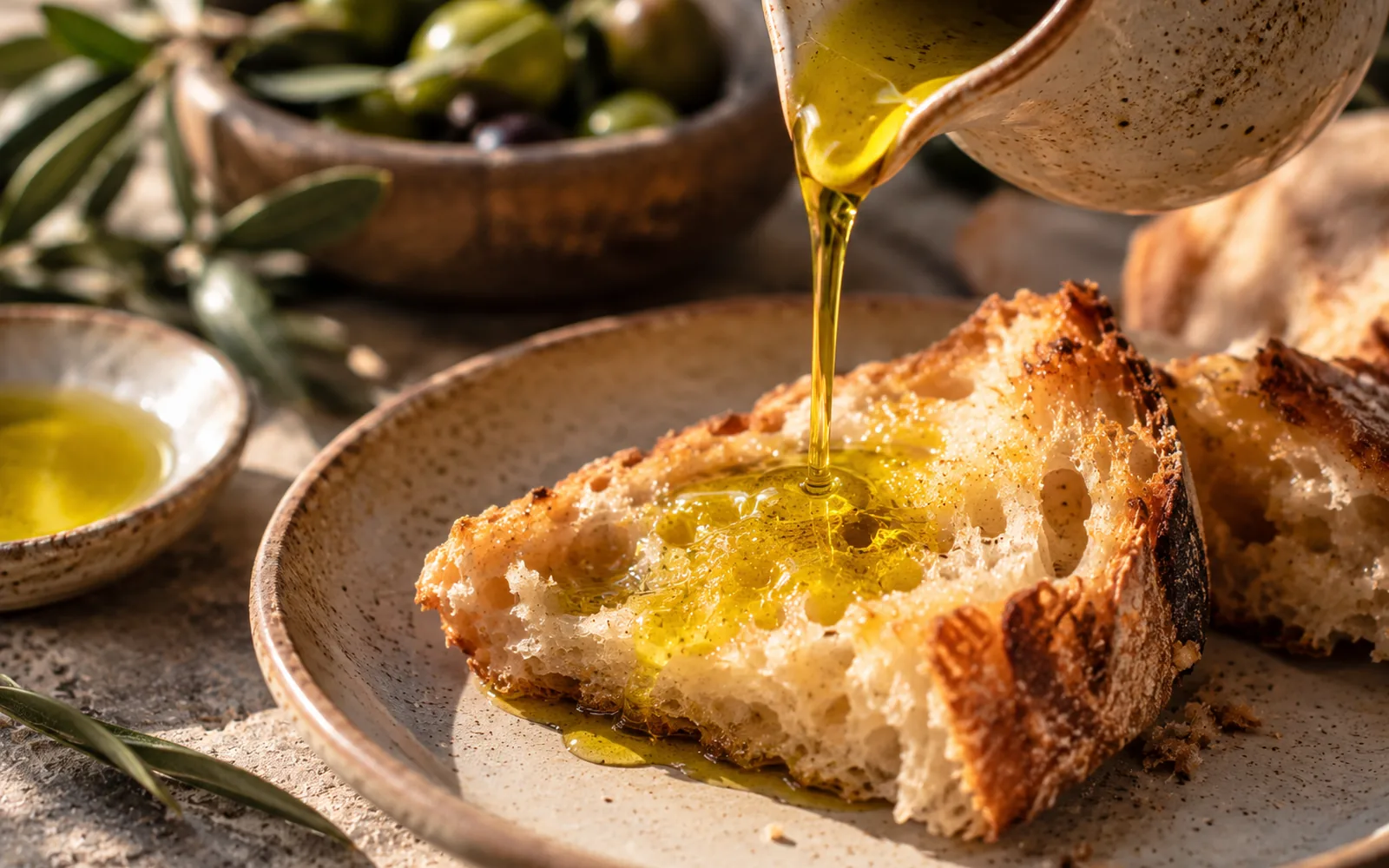
Place & tradition
Olive oil is a defining product across Mediterranean food cultures, with Greece supporting numerous protected regional olive-oil designations.The Mediterranean diet heritage shared by Greece and Italy places olive cultivation and food traditions within a broader cultural system rather than treating the oil as an isolated ingredient.
In the kitchen
Taste the oil before using it as a finishing ingredient; freshness and flavour intensity vary.
Use measured amounts when emulsifying or dressing so the oil supports rather than overwhelms acidity and other seasonings.
Store away from heat and strong light and keep the container closed between uses.