
Mexico · breakfast · comfort-food
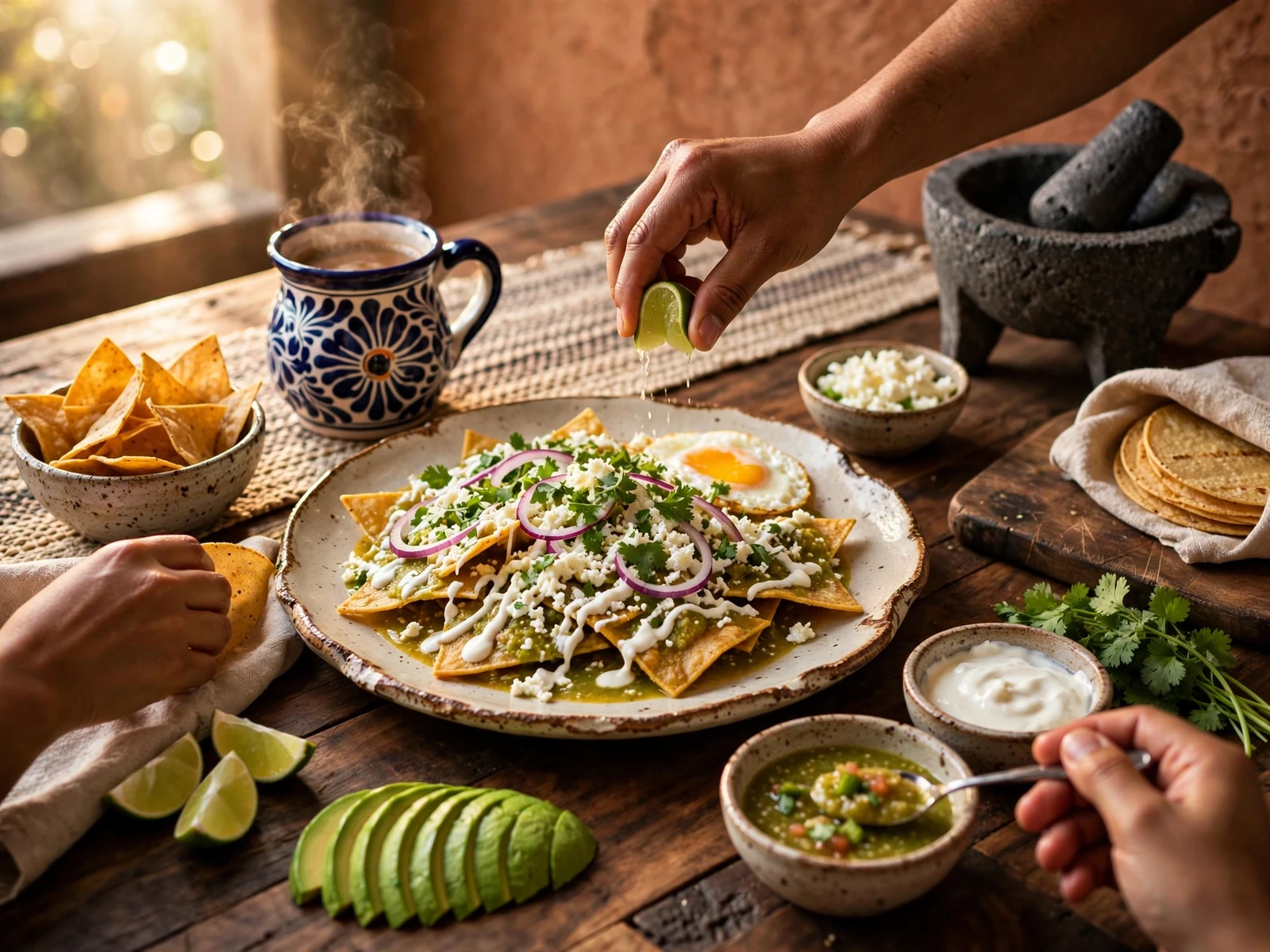
Chilaquiles Verdes
Mexico through one enduring dish.
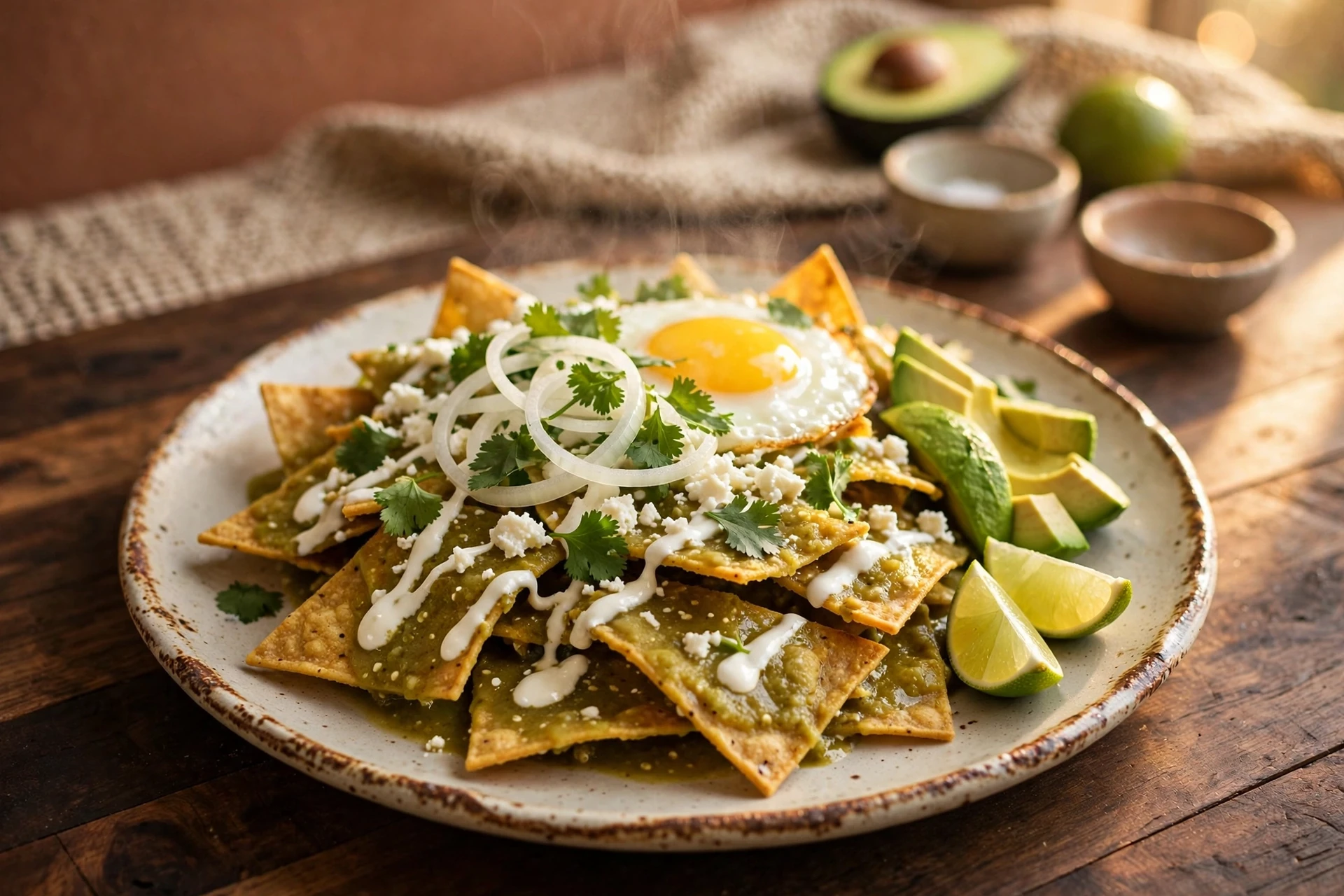
Chilaquiles verdes are fried corn-tortilla pieces briefly coated in a bright tomatillo-and-serrano salsa, then finished with crema, queso fresco, white onion and cilantro. The defining technique is timing: the chips should absorb salsa while still retaining some structure.
- Total
- 35 min
- Difficulty
- Medium
- Serves
- 3
- Steps
- 7
The dish
Place first. Then the plate.
Chilaquiles are a widely familiar Mexican breakfast built from corn tortillas and chile-based salsa, with green, red and other versions varying across homes and regions. This Ember & Equator version uses a cooked tomatillo-and-serrano salsa with crema, queso fresco, white onion and cilantro. Eggs, beans and avocado remain optional accompaniments rather than requirements, and the final tortilla texture can range from still-crisp at the edges to deliberately softer depending on household preference.
Explore MexicoAt a glance
Origin
Mexico
Region
Mexico — widespread, with regional and household variation
Meal
breakfast · comfort-food
Guided steps
7
Dish
Chilaquiles Verdes
Cuisine
Mexican cuisine
Food type
Breakfast · Comfort food
Technique
Fry · Simmer
Cook the recipe
In the kitchen
Start with the ingredients, then follow the Method in order. Open cooking tips only when you need extra help; the story and references can wait until you are ready.
- Total
- 35 min
- Serves
- 3
- Level
- Medium
- Visual cues
- 7
Ingredients
Serves 3- 8–10 smallcorn tortillaspreferably day-old; cut into 6–8 wedges each
- ½ cupneutral frying oilor enough for a shallow layer in the pan; add more only as needed
- 8–10 wholetomatilloshusks removed, sticky coating rinsed away
- 1–2 wholeserrano chilesstart with 1 for moderate heat; add more after tasting
- ½ mediumwhite oniondivided: about ¼ for salsa and ¼ thinly sliced for serving
- 1 clovegarlicpeeled
- ½ cupfresh corianderloosely packed, plus extra leaves for serving
- ½ tspsaltplus more to season the chips and adjust the salsa
Optional
- ¼–½ cupwateronly as needed to loosen the salsa to a pourable but substantial consistency
- ½ cupMexican cremafor serving
- ½ cupqueso frescocrumbled; do not melt it into the chips
- 2 wholeeggsfried separately with soft or set yolks as preferred
- ½ wholeavocadosliced, optional for serving
- 1 cuprefried beansoptional side
- 1 wholelimecut into wedges, optional for serving
Everything ready? Continue straight into the cooking steps.
Start methodMethod
7 steps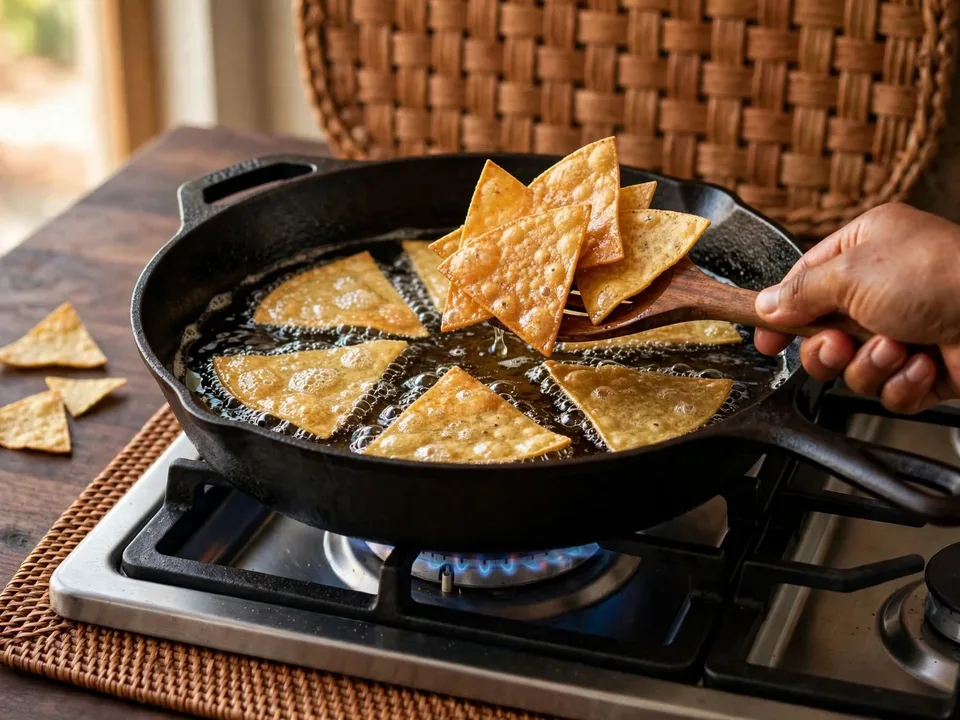 Step 01
Fry the tortilla wedges until crisp
10 min
Cut the corn tortillas into 6–8 wedges each.
Cut the corn tortillas into 6–8 wedges each. Heat about 1 cm / ⅜ inch of neutral oil in a heavy skillet over medium-high heat until a tortilla corner sizzles immediately when dipped in. Fry the wedges in small batches for about 2–3 minutes, turning once or twice, until evenly golden and crisp. Lift them out with a slotted spoon or tongs, drain on a rack or paper towels and season lightly with salt while still hot.
Look for
The chips should be golden, rigid and dry-feeling through the centre, with no pale leathery patches or greasy softness.
Kitchen note
Day-old tortillas contain less surface moisture and usually fry more evenly. Do not overcrowd the pan: a sudden temperature drop makes the tortillas absorb more oil before they become crisp.
 Step 02
Cook the tomatillos and serranos for the salsa
8 min
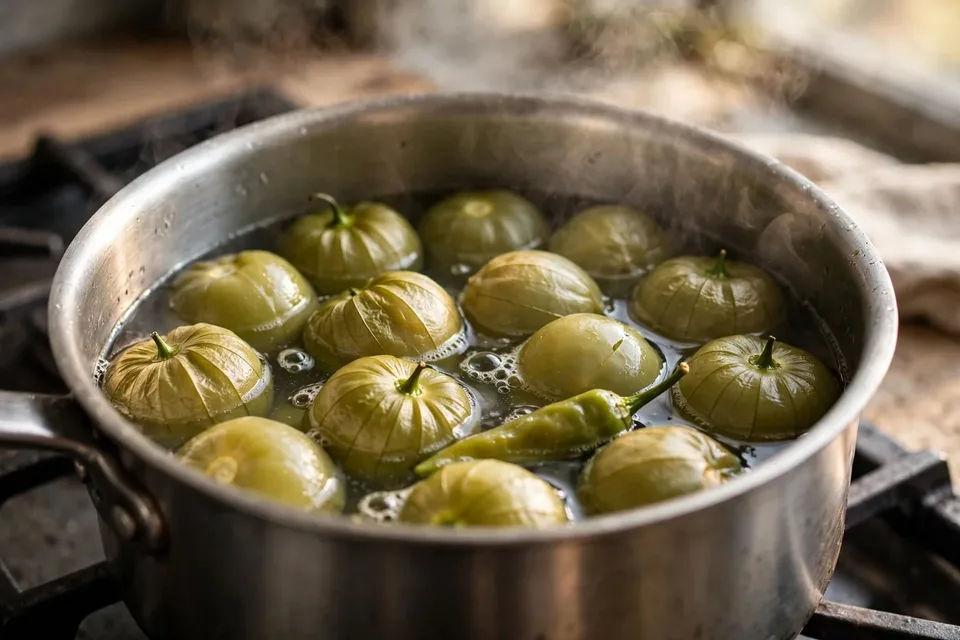
Place the husked, rinsed tomatillos and serrano chile in a saucepan and add just enough water to cover.
Place the husked, rinsed tomatillos and serrano chile in a saucepan and add just enough water to cover. Bring to a gentle simmer over medium heat and cook for about 6–8 minutes, turning once if necessary, until the tomatillos soften and shift from bright green toward olive green. Drain well. Keep the onion, garlic and cilantro raw for the blender so the salsa retains a fresh aromatic edge.
Look for
The tomatillos should be soft enough to pierce easily and slightly olive in colour, but still mostly intact rather than collapsed into the cooking water.
Kitchen note
Do not boil the tomatillos hard until they split apart. Gentle cooking softens their sharp raw edge without washing out the salsa. For a deeper, lightly charred variation, tomatillos and chile can instead be blistered on a dry comal or skillet before blending.
 Step 03
Blend a bright, substantial salsa verde
3 min
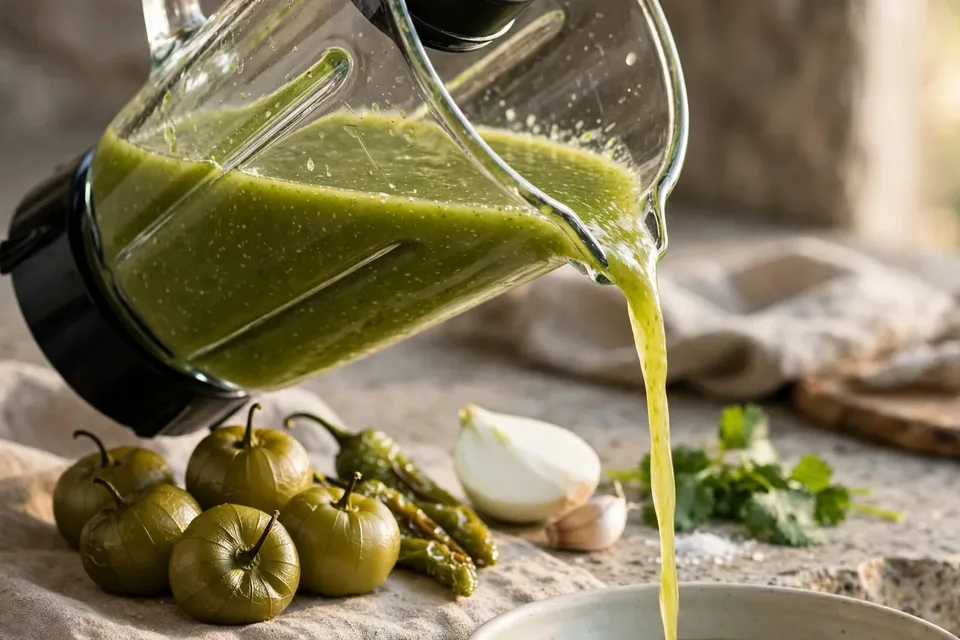
Transfer the drained tomatillos and serrano to a blender with about ¼ of the white onion, the garlic, cilantro and ½ teaspoon salt.
Transfer the drained tomatillos and serrano to a blender with about ¼ of the white onion, the garlic, cilantro and ½ teaspoon salt. Blend just until mostly smooth with a little natural texture. Add water only a tablespoon or two at a time if the blades need help or the salsa is too thick to pour. Taste before adding more chile or salt.
Look for
The salsa should pour in a thick steady stream and look vivid green with fine natural texture, not watery, pale or full of foam.
Kitchen note
Long, aggressive blending can make the salsa excessively foamy and dull the fresh cilantro character. Start with one serrano; heat is easy to increase after tasting but difficult to remove.
 Step 04
Cook and season the salsa
7 min
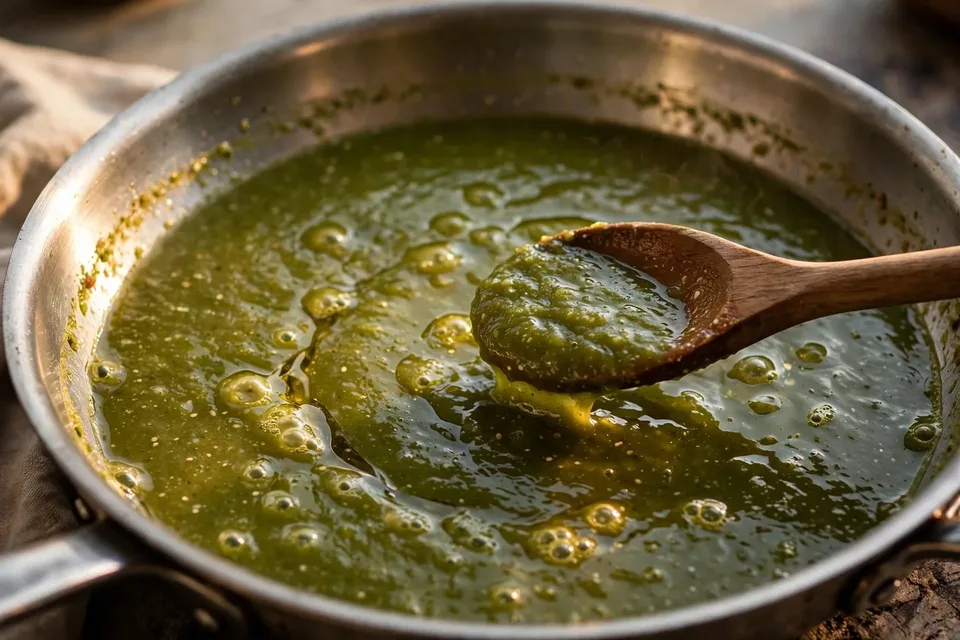
Heat about 1 teaspoon of the frying oil in a wide skillet or saucepan over medium heat.
Heat about 1 teaspoon of the frying oil in a wide skillet or saucepan over medium heat. Pour in the salsa carefully because it may splatter. Bring it to a gentle simmer and cook for 5–7 minutes, stirring occasionally, until the raw onion and garlic edge mellows and the salsa becomes slightly deeper in colour and more cohesive. Taste now and adjust salt before any tortilla chips enter the pan.
Look for
The salsa should lightly coat a spoon while still flowing back into the pan, with a fresh tomatillo aroma and no harsh raw-garlic smell.
Kitchen note
The salsa should stay bright and fluid enough to coat the chips. If it reduces into a paste, loosen it with a spoonful of water; if it tastes thin or raw, give it another minute or two before adjusting salt.
 Step 05
Prepare every topping before the chips meet the salsa
5 min
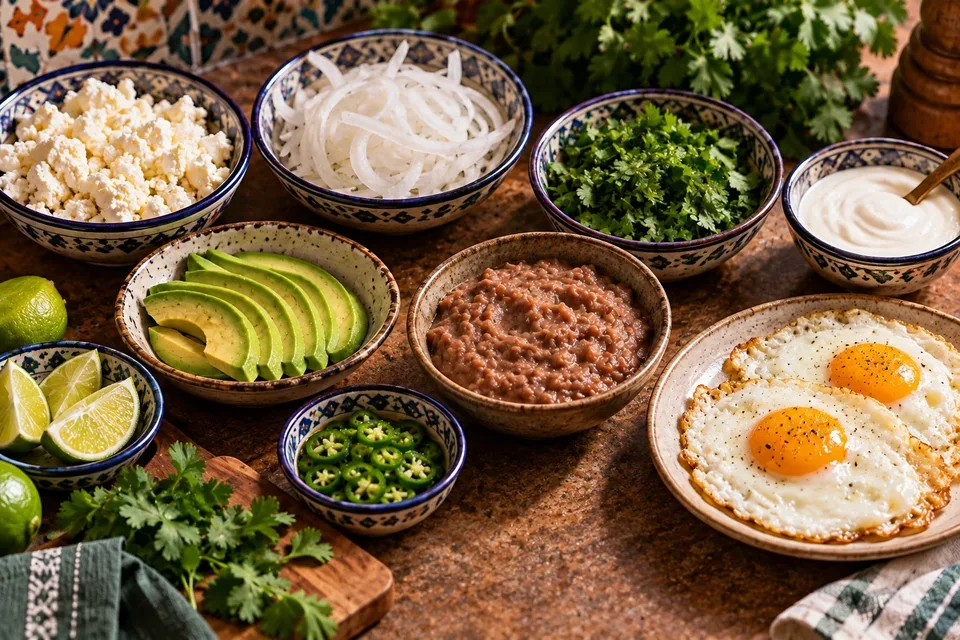
Crumble the queso fresco, thinly slice the remaining white onion and pick the extra cilantro leaves.
Crumble the queso fresco, thinly slice the remaining white onion and pick the extra cilantro leaves. Set out the crema, avocado, refried beans and lime if using. If serving eggs, fry them separately now so they are ready to place on the finished chilaquiles. Warm the serving plates if your kitchen is cool.
Look for
Every topping should be portioned and within reach, and any eggs should be cooked and ready before the tortilla chips go into the salsa.
Kitchen note
This mise en place is essential because the chips begin softening the moment they touch the salsa. Once Step 6 starts, there should be nothing left to slice, crumble or cook.
 Step 06
Coat the chips briefly — this is the defining moment
1 min
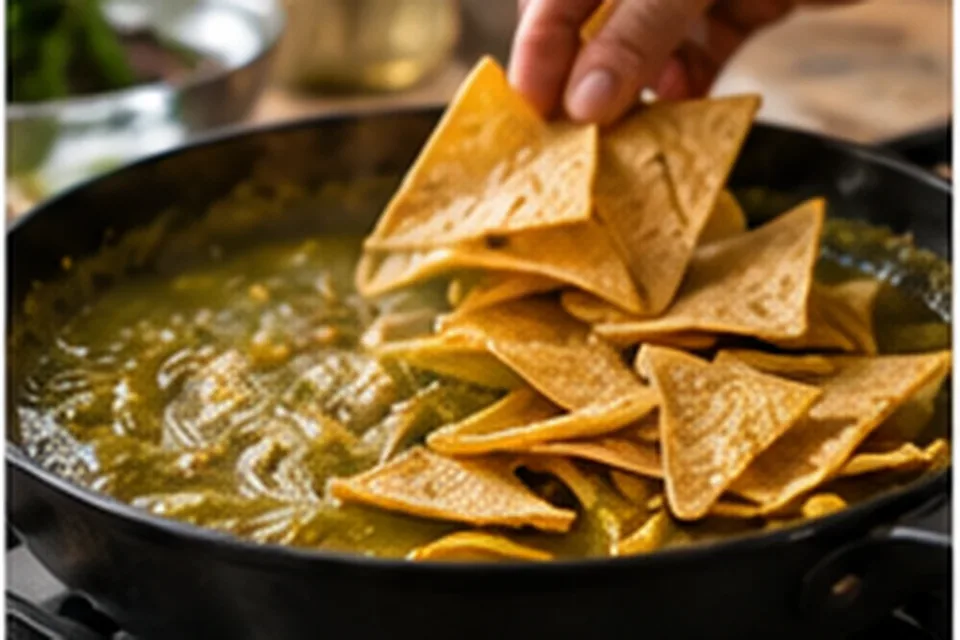
Keep the salsa at a gentle simmer over medium heat, then add the fried tortilla chips.
Keep the salsa at a gentle simmer over medium heat, then add the fried tortilla chips. Fold them through the salsa gently with a wide spatula or tongs for only about 30 seconds to 1 minute, depending on how soft you prefer them. Stop as soon as the surfaces are well coated and some edges have softened while thicker centres still retain structure. Do not simmer them for several minutes unless you intentionally want very soft chilaquiles.
Look for
The chips should be visibly salsa-coated with softened surfaces but still show some lifted, crisp-looking edges and intact triangular shapes.
Kitchen note
The best texture is a deliberate balance, not one universal endpoint. For crisper chilaquiles, coat very briefly or spoon salsa over the chips at plating. For softer chilaquiles, give them a little longer—but stop before every chip loses its shape.
 Step 07
Plate, finish and serve immediately
2 min
Transfer the chilaquiles straight to warm plates.
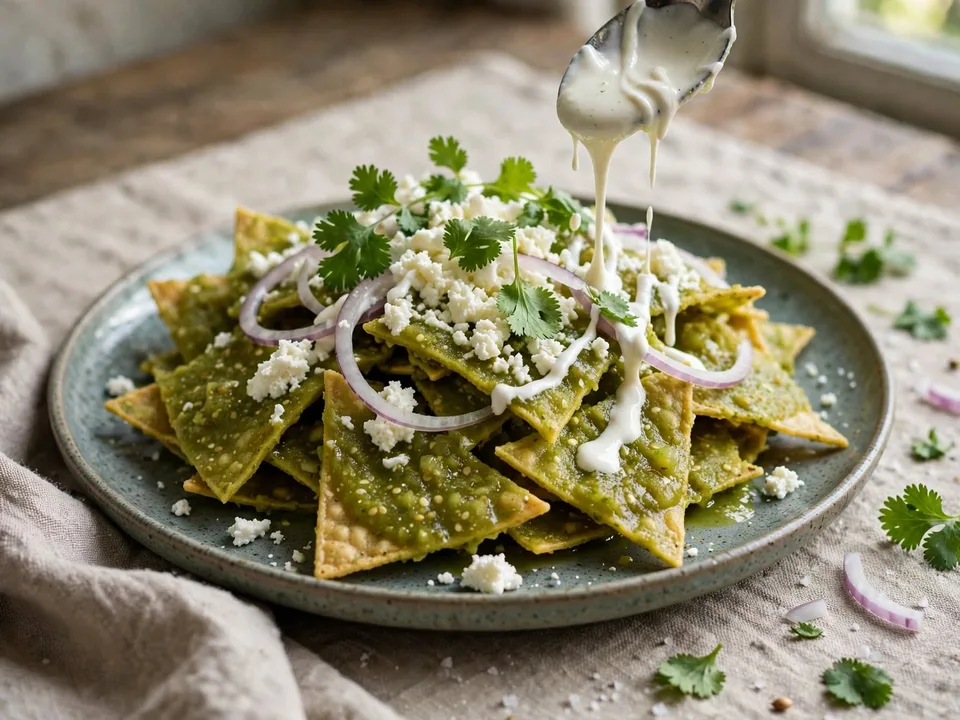
Transfer the chilaquiles straight to warm plates. Spoon or drizzle over Mexican crema, scatter with crumbled queso fresco, sliced white onion and cilantro, and add a fried egg if using. Serve avocado, refried beans and lime alongside if desired. Eat immediately while the contrast between saucy surfaces and firmer tortilla centres is still present.
Look for
The finished plate should look saucy rather than flooded, with visible tortilla structure, fresh white toppings and bright green salsa still apparent.
Kitchen note
Queso fresco should stay crumbled and fresh rather than melting into a cheese blanket. Crema adds tang and richness; use enough to balance the tomatillo salsa without hiding it.
After cooking
Explore the dish beyond the method.
Story, place and references are here for discovery, so they stay out of the way while you cook.
Culture & tradition
The story behind the dish
Origins, evolution and everyday life—read together as part of the recipe's culinary record.
Origins
The exact origin of chilaquiles is difficult to reduce to one place or date. The dish belongs to Mexico’s long tortilla-and-salsa cooking traditions and the practical use of cooked tortillas in new meals.
How it evolved
Green, red and mole-based versions coexist, and texture preferences range from very crisp to softer and more sauce-soaked. Toppings and proteins vary by household, restaurant and region.
Its place today
Chilaquiles are strongly associated with breakfast and brunch and are commonly served with crema, fresh cheese, onion and optional accompaniments such as egg, beans, avocado or chicken.
Visual archive · plate 01
Chilaquiles Verdes
An editorial view of the finished dish, kept compact so the story continues without an oversized image break.
Primary region
Mexico — widespread, with regional and household variation
Country
Mexico
Regional influence
Maize, chiles and tomatillos are part of the agricultural and culinary systems that underpin many Mexican dishes.
Related food systems
- Maize and tortilla cookery
- Mexican salsa traditions
- Breakfast and antojito culture
Culinary record
- Sub-region
- Mesoamerica
- Climate
- Subtropical
- Trade-route influence
- Manila Galleon · Columbian Exchange · Lebanese diaspora (19–20th c.)
Sources & further reading
Follow the reference trail.
Ember & Equator links outward when an institution or primary reference helps support the culinary record.
- 01Chile verde: un imprescindible en la cocina mexicanaExternal ↗
Procuraduría Federal del Consumidor, Gobierno de México · government
Supports: dish context · chile in Mexican cuisine
Ember & Equator source review · 2026-09-01
- 02Traditional Mexican cuisine — ancestral, ongoing community culture, the Michoacán paradigmExternal ↗
UNESCO Intangible Cultural Heritage · reference
Supports: Mexican culinary system · corn beans and chile · cultural context
Ember & Equator source review · 2026-09-01
- 03Las recetas de la milpa — chilaquilesExternal ↗
Secretaría de Educación Pública / Nueva Escuela Mexicana · government
Supports: green chilaquiles ingredients · tomatillo and chile salsa · fried tortillas · fresh cheese and onion service
Ember & Equator source review · 2026-09-16
- 04Chilaquiles Verdes with ChickenExternal ↗
Mexico in My Kitchen — Mely Martínez · specialist publication
Supports: day-old corn tortillas and frying · tomatillo-serrano green salsa · crema queso fresco onion and cilantro service · regional and household variation
Ember & Equator source review · 2026-09-12
Ingredient guides
Learn about the ingredients behind the dish.
These are reference guides, not a second ingredient list. Follow an ingredient when you want to understand its role, use and wider culinary context.
Ingredient
corn tortillas
Understand what it contributes, how to use it, and the dishes that reveal it best.
Ingredient
neutral frying oil
Understand what it contributes, how to use it, and the dishes that reveal it best.
Ingredient
tomatillos
Understand what it contributes, how to use it, and the dishes that reveal it best.
Ingredient
serrano chile
Understand what it contributes, how to use it, and the dishes that reveal it best.
Ingredient
white onion
Understand what it contributes, how to use it, and the dishes that reveal it best.
Ingredient
garlic
Understand what it contributes, how to use it, and the dishes that reveal it best.
Keep wandering
Where will this dish take you next?
Stay with the place, follow an ingredient or technique, or cross into another food culture. Each path begins with something already present in this dish.
Stay with the place
01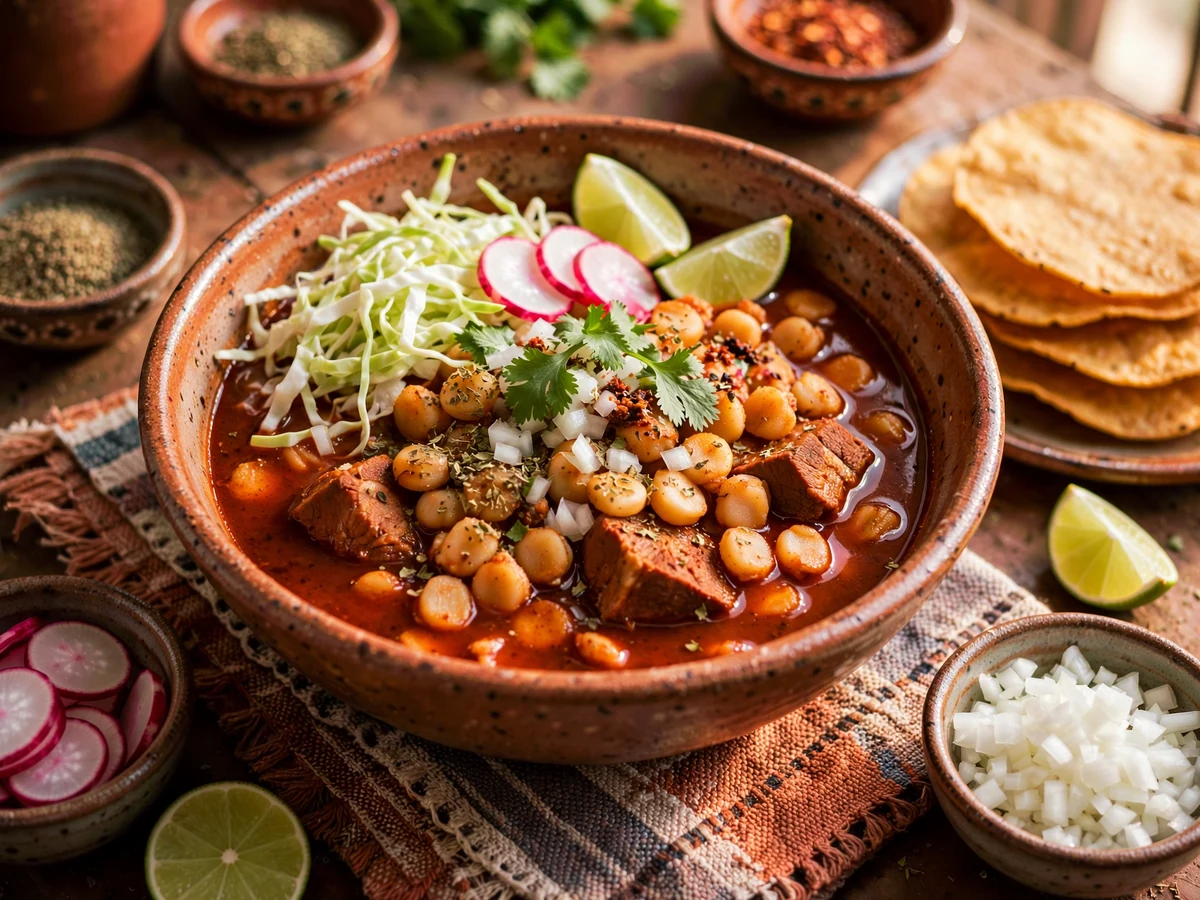
Mexico
Pozole Rojo
Stay in the same food culture and notice how simmer appears in another dish.
Shared thread · Simmer · white onion · garlic
Follow the method or pantry
02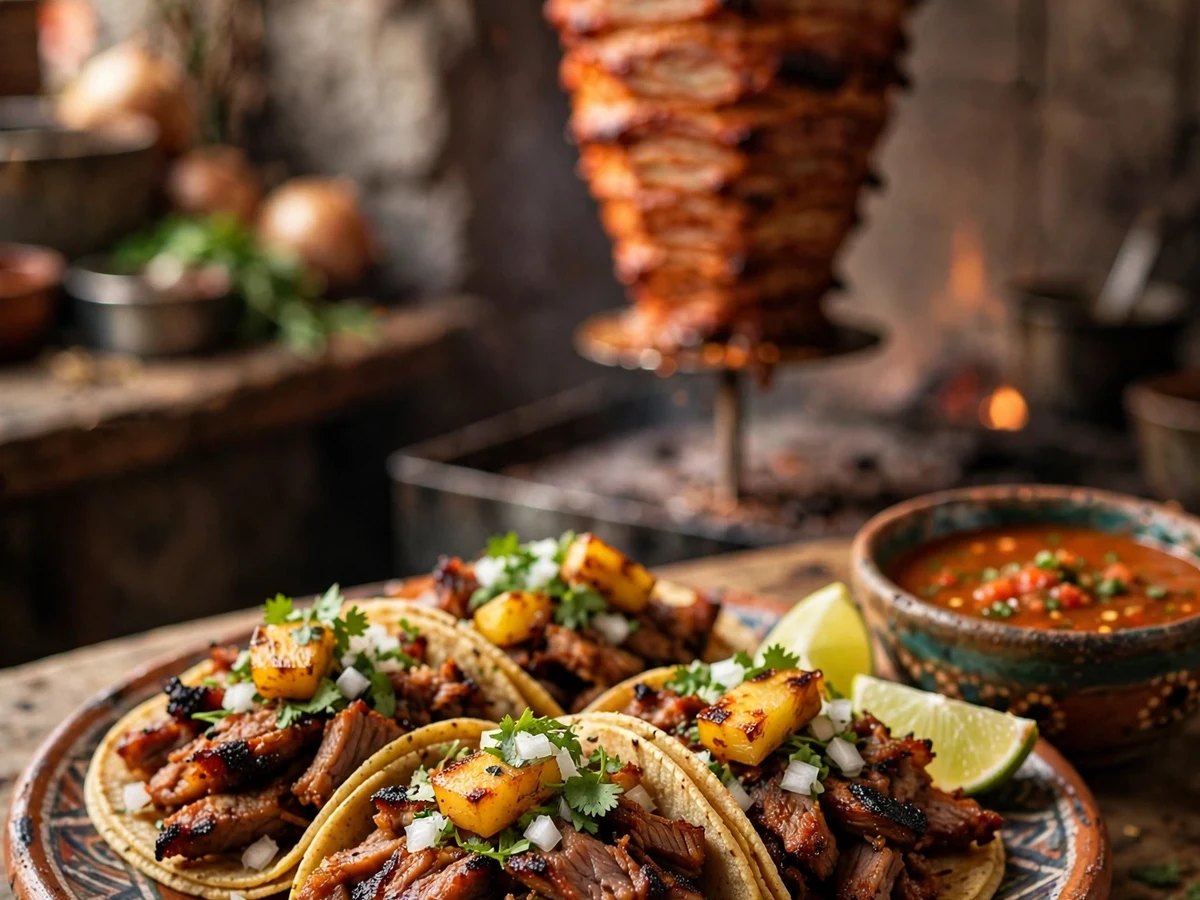
Mexico
Tacos al Pastor
Follow the pantry: both dishes connect through corn tortillas.
Shared thread · corn tortillas · white onion · garlic
Cross a culinary border
03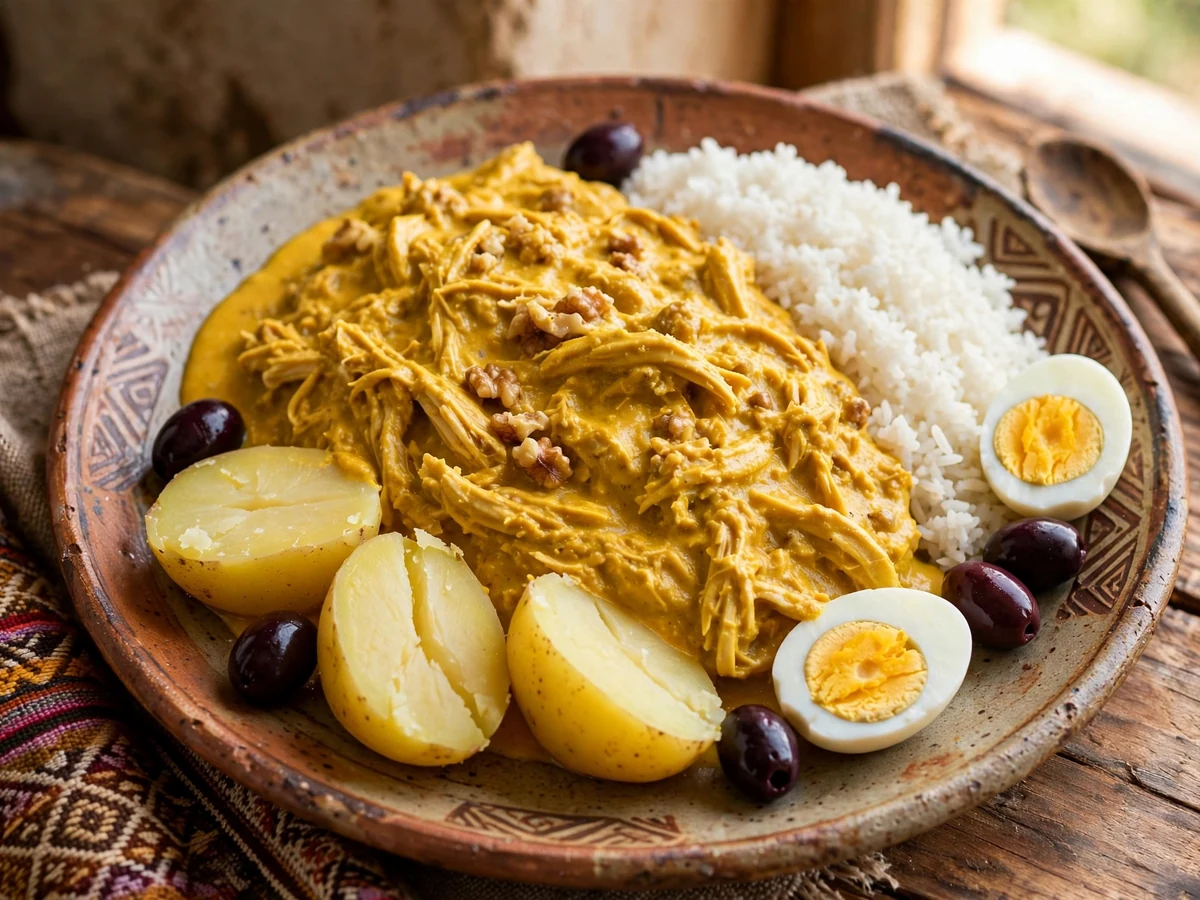
Peru
Ají de Gallina
Cross borders while keeping simmer as the common thread.
Shared thread · Simmer · white onion · garlic
Go one layer deeper
One small detail can open an entirely different part of food.
Continue in Ember & Equator