
Mexico · lunch · dinner · street-food
Tacos al Pastor
Mexico through one enduring dish.
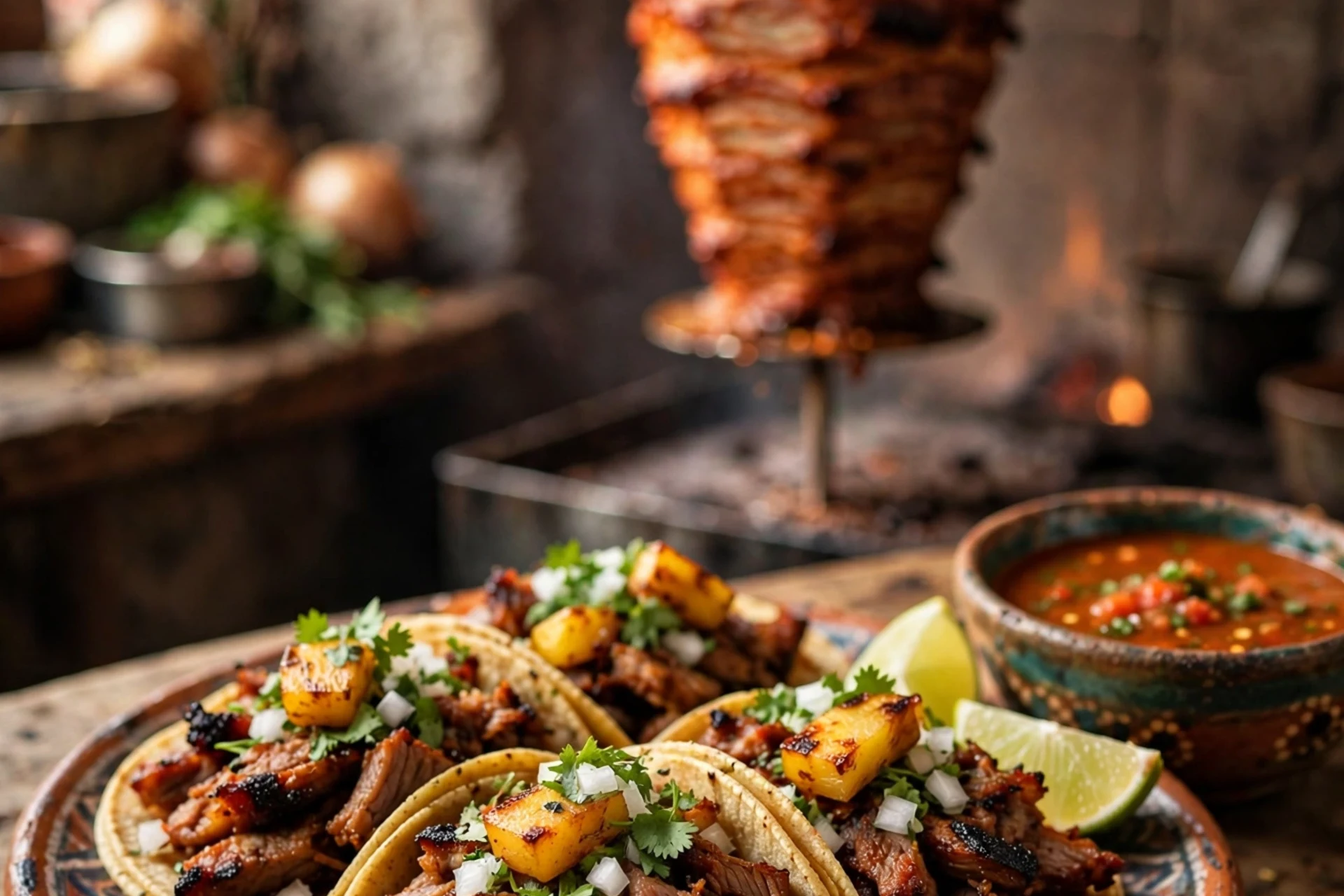
Tacos al pastor are a Mexico City taquería classic: thin slices of achiote-and-chile-marinated pork are stacked on a vertical trompo, cooked against intense heat and shaved as the exterior caramelizes. The meat is tucked into warm corn tortillas with white onion, cilantro, pineapple, lime and salsa.
- Total
- 55 min
- Difficulty
- Medium
- Serves
- 4
- Steps
- 13
The dish
Place first. Then the plate.
Tacos al pastor are strongly associated with Mexico City and its taquerías. Their defining commercial technique is the vertical trompo: thin marinated pork is stacked, roasted against a vertical heat source and shaved from the browned exterior as deeper layers continue cooking. Pineapple, onion, cilantro, lime and salsa are common accompaniments, with household and taquería variations in the adobo.
Explore MexicoAt a glance
Origin
Puebla / Mexico City
Region
Mexico City and central Mexico, with broad national popularity
Method
marinated · charred · seared
Meal
lunch · dinner · street-food
Guided steps
13
Dish
Tacos al Pastor
Cuisine
Mexican cuisine
Food type
Lunch · Dinner · Street food
Technique
Marinate · Grill or griddle
Cook the recipe
In the kitchen
Start with the ingredients, then follow the Method in order. Open cooking tips only when you need extra help; the story and references can wait until you are ready.
- Total
- 55 min
- Serves
- 4
- Level
- Medium
- Visual cues
- 13
Ingredients
Serves 4- 1000 gramsboneless pork shoulderpartially freeze 30–45 minutes if needed, then slice about 3–5 mm thick
- 100 gramsachiote paste
- 3 wholedried guajillo chilesstemmed and seeded
- 2 wholedried ancho chilesstemmed and seeded
- 1/2 cuporange juicefresh if possible
- 1/4 cupwhite vinegar
- 3 clovesgarlicpeeled
- 1 tspdried Mexican oregano
- 1 tspground cumin
- 1/2 tspground clovesuse a level measure; reduce slightly if your cloves are very strong
- 1 tspground black pepperfreshly ground
- 1 tspfine saltplus more to taste after cooking
- 2 tbspneutral oilfor the adobo and cooking as needed
- 18–24 smallcorn tortillassmall, preferably fresh
- 1 smallwhite onionfinely diced
- 1 small bunchcilantrochopped
- 1 smallpineapplepeeled; cut some into slabs for grilling and some into small pieces for serving
- 4 wholelimecut into wedges
Optional
- as neededsalsa roja or salsa verdefor serving
Everything ready? Continue straight into the cooking steps.
Start methodMethod
13 stepsMethod at a glance
 Step 01
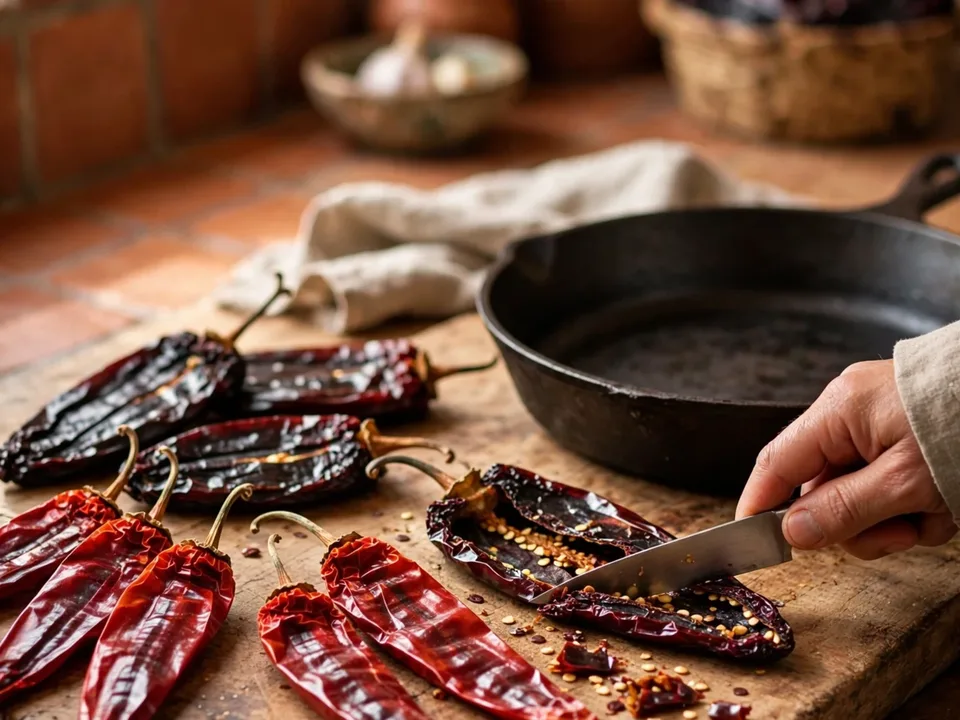
Prepare the dried chiles
5 min
Stem the guajillo and ancho chiles, split them open and remove most of the seeds and loose veins.
Stem the guajillo and ancho chiles, split them open and remove most of the seeds and loose veins. Wipe away any dust and have the remaining adobo ingredients measured before the chiles hit the pan, because they can scorch quickly.
Look for
The chiles should be pliable enough to open without crumbling, with stems removed and most seeds shaken out while the red skin remains intact.
Kitchen note
Do not wash dried chiles under running water unless necessary; excess moisture makes dry-toasting harder. Removing most seeds keeps the adobo smoother without stripping away all of the chile character.
 Step 02
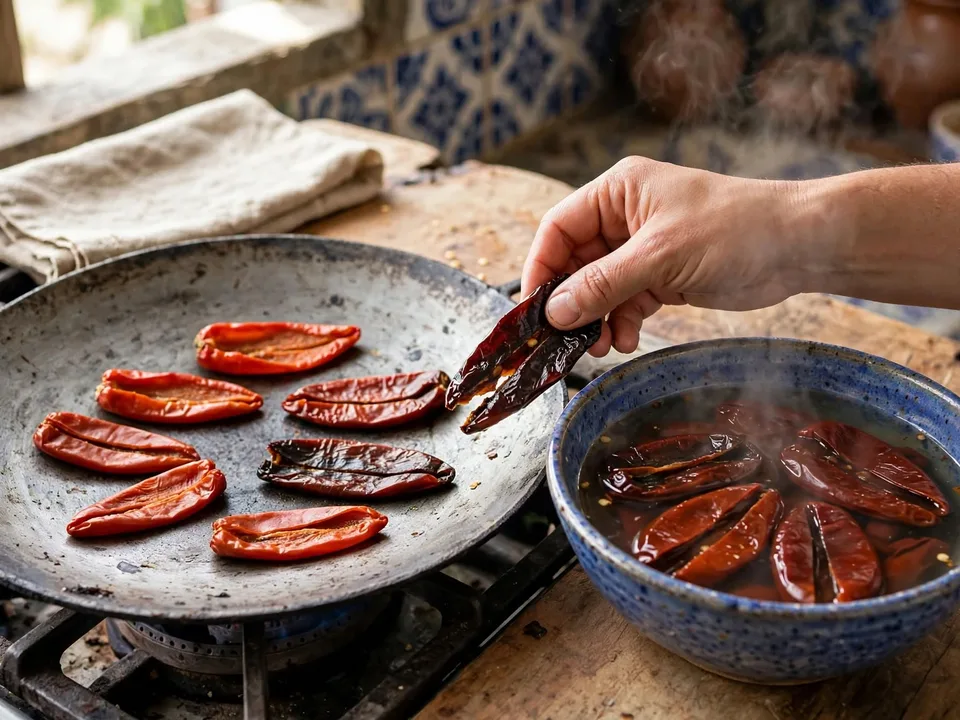
Toast and soften the chiles
15 min
Heat a dry skillet over medium heat and toast the prepared chiles briefly, pressing and turning them just until fragrant and slightly more flexible.
Heat a dry skillet over medium heat and toast the prepared chiles briefly, pressing and turning them just until fragrant and slightly more flexible. Do not blacken them. Transfer immediately to hot water and soak for about 10–15 minutes, until fully softened, then drain well.
Look for
The toasted chiles should smell warm and fruity, not burnt; after soaking they should bend easily and feel supple all the way through.
Kitchen note
Dried chiles can turn bitter very quickly when scorched. Toast for aroma, not for a dark colour. If a chile develops a burnt smell, discard it rather than blending that bitterness into the entire adobo.
 Step 03
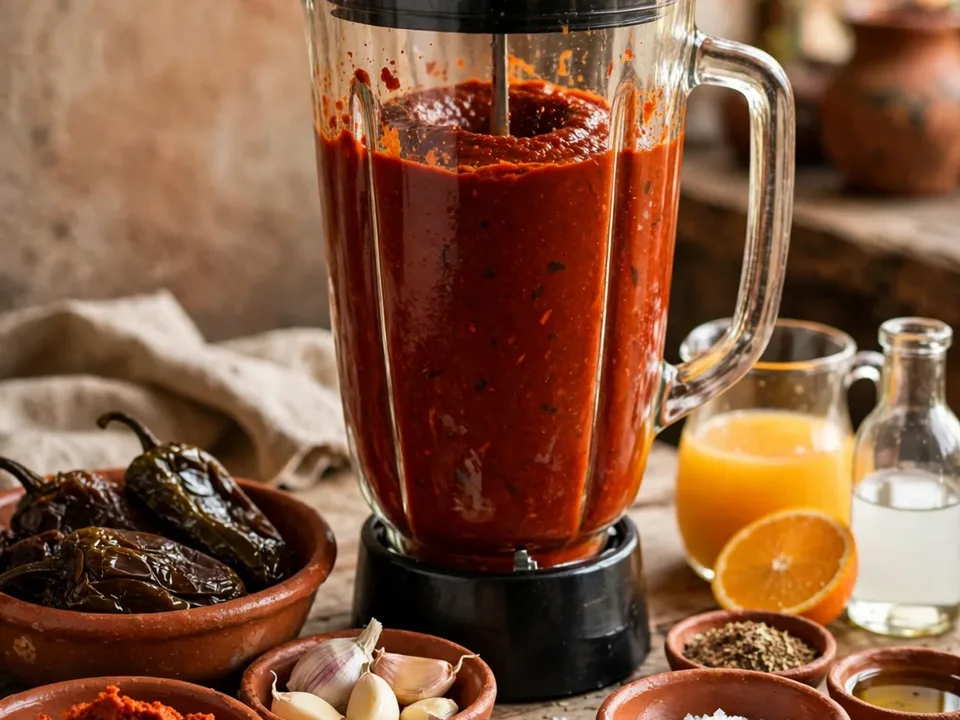
Blend a thick red adobo
5 min
Blend the softened chiles with the achiote paste, orange juice, white vinegar, garlic, Mexican oregano, cumin, cloves, black pepper, salt and oil until very smooth.
Blend the softened chiles with the achiote paste, orange juice, white vinegar, garlic, Mexican oregano, cumin, cloves, black pepper, salt and oil until very smooth. Scrape down the blender as needed. If the mixture will not circulate, add only a spoonful of chile-soaking water at a time. For an especially smooth taquería-style coating, press the adobo through a fine sieve.
Look for
The finished adobo should be deep brick-red, glossy, aromatic and thick enough to coat the back of a spoon without immediately dripping away.
Kitchen note
The marinade should cling to the pork instead of running off it. Too much water dilutes the seasoning and makes later browning more difficult.
 Step 04
Slice the pork very thinly
10 min
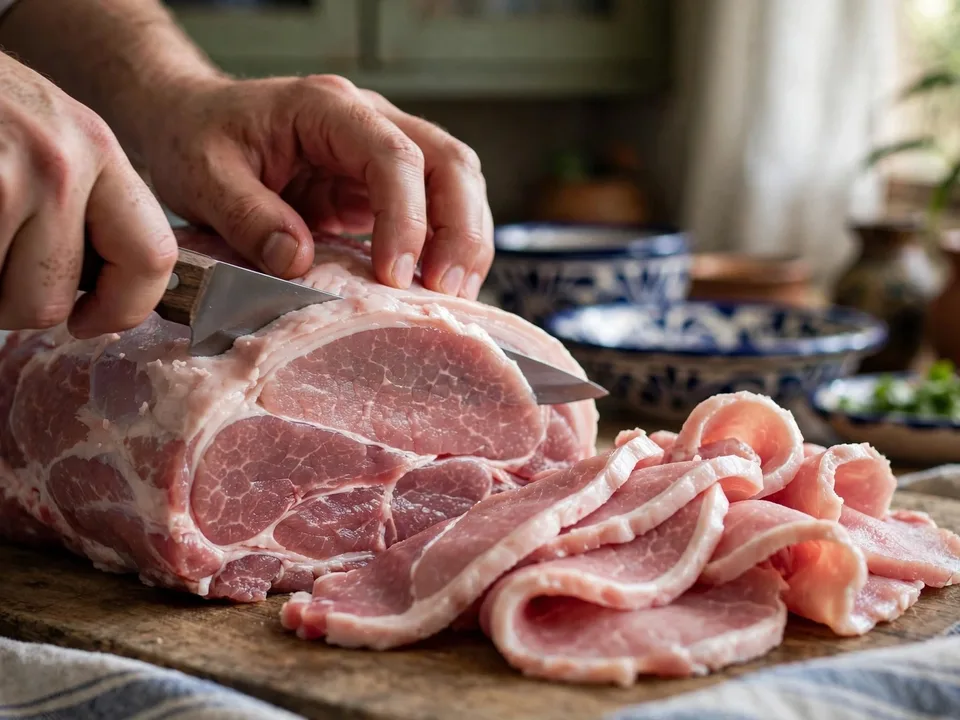
Trim only large hard pieces of exterior fat from the pork shoulder, leaving the useful marbling.
Trim only large hard pieces of exterior fat from the pork shoulder, leaving the useful marbling. Slice the meat across the grain into broad pieces about 3–5 mm (⅛–¼ inch) thick. If the shoulder is difficult to slice cleanly, chill it in the freezer for 30–45 minutes first so it firms without freezing solid.
Look for
The slices should be thin, flexible and fairly even so they stack tightly and cook through as the exterior browns.
Kitchen note
Thin slices are essential to al pastor. Thick chunks cannot reproduce the contrast between juicy inner meat and the quickly caramelized shaved exterior of a trompo.
 Step 05
Coat every slice with adobo
5 min
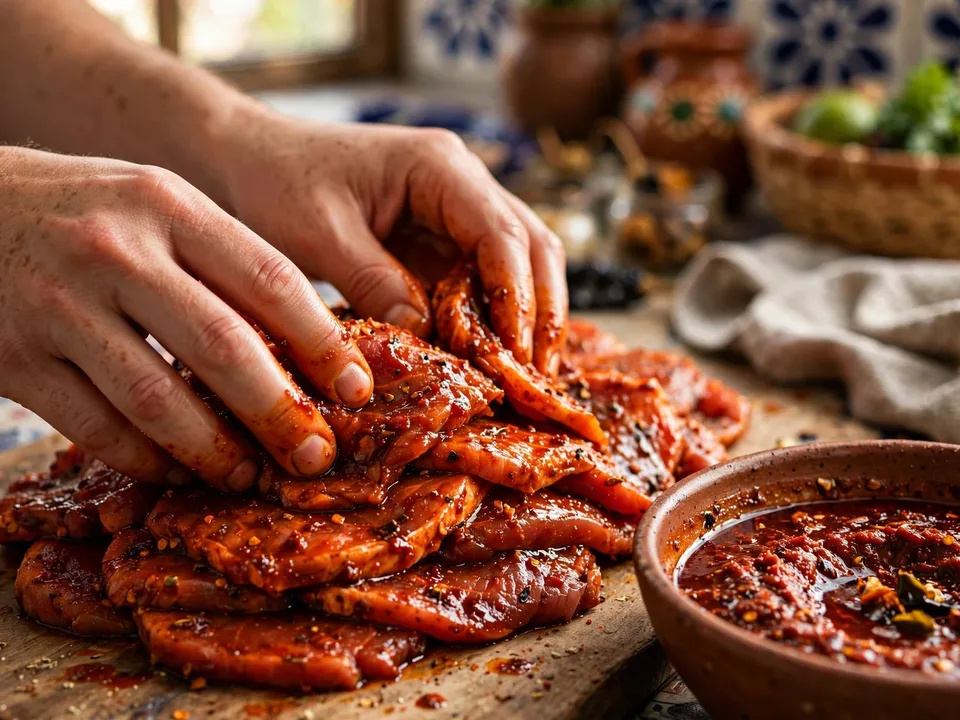
Place the pork in a non-reactive bowl or container and work the adobo through the slices with clean hands, separating them so every surface is coated.
Place the pork in a non-reactive bowl or container and work the adobo through the slices with clean hands, separating them so every surface is coated. Press the pieces together once coated so there are no dry layers hidden in the stack.
Look for
Every slice should carry an even deep-red film of marinade with no large pale unseasoned patches.
Kitchen note
Do not simply pour marinade over a compact pile of pork. Separate and coat each slice so the seasoning reaches the whole stack evenly.
 Step 06
Marinate the pork cold
240 min
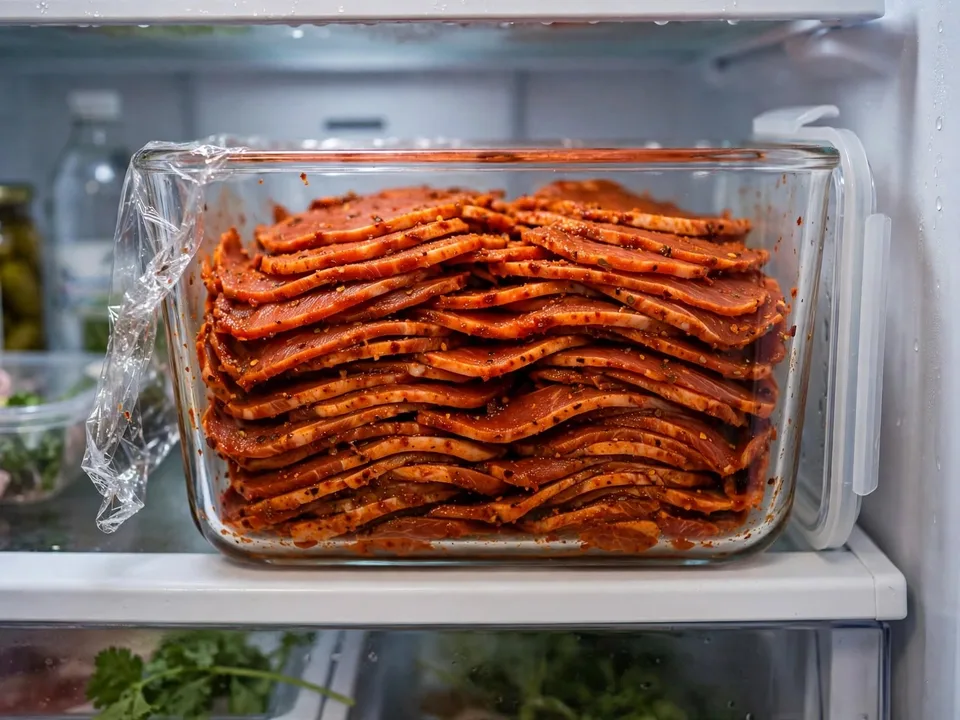
Cover the coated pork and refrigerate for at least 4 hours, preferably overnight.
Cover the coated pork and refrigerate for at least 4 hours, preferably overnight. Keep it properly chilled throughout the marinating period. About 20 minutes before stacking or cooking, take it from the refrigerator so the surface loses its deepest chill while the meat itself remains cool.
Look for
After marinating, the pork should look evenly stained a deep red-orange and the adobo should still cling rather than collect as a watery pool.
Kitchen note
Four hours gives the adobo time to season the thin slices; overnight develops a more even flavour. Do not marinate at room temperature.
 Step 07
Build the pastor stack
10 min
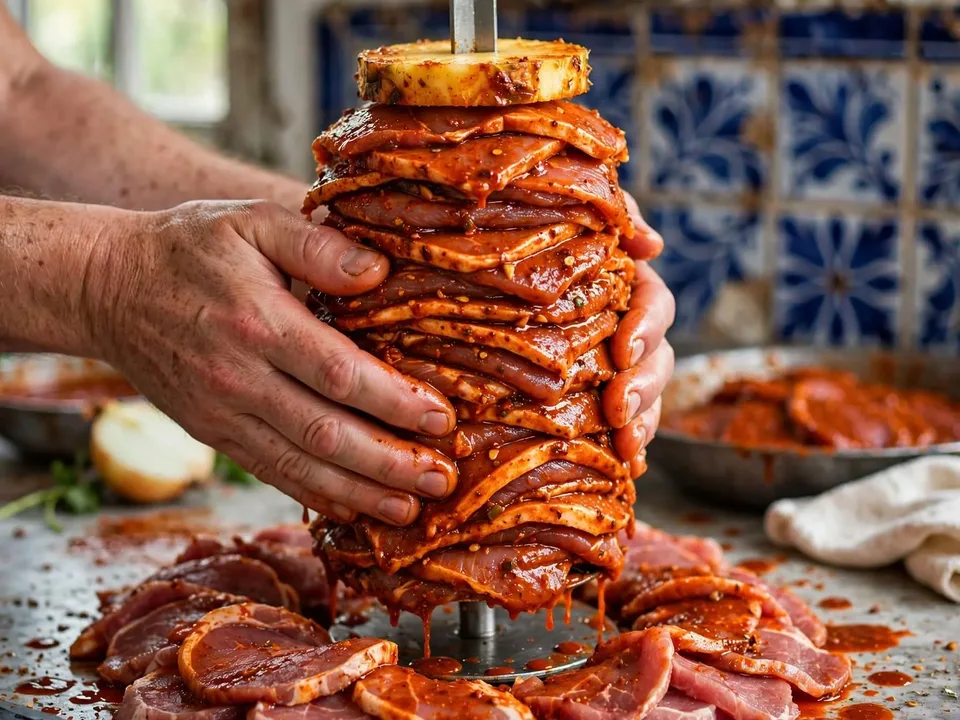
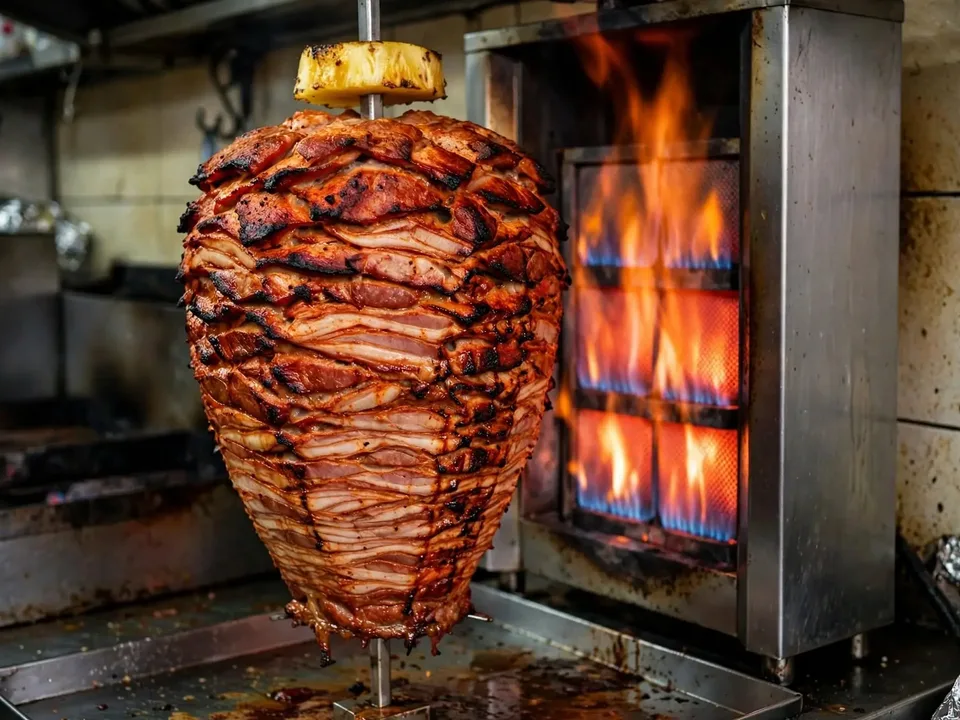
Thread the marinated pork onto a vertical trompo or sturdy upright skewer, layering the slices one over another and rotating their orientation so the stack stays balanced.
Thread the marinated pork onto a vertical trompo or sturdy upright skewer, layering the slices one over another and rotating their orientation so the stack stays balanced. Press the layers together firmly to create a compact cone. A piece of pineapple may sit at the top in the Mexico City taquería style. If you do not have a vertical spit, layer the pork tightly on a sturdy oven-safe skewer setup or use the high-heat griddle adaptation described in the kitchen note.
Look for
The stack should be tight, stable and roughly cone-shaped, with overlapping slices and no large gaps between layers.
Kitchen note
A compact stack cooks more like a trompo because the exterior browns while the interior remains protected and juicy. Loose layers dry faster and can fall away from the skewer.
 Step 08
Roast the trompo against high heat
25 min
Cook the stacked pork against strong direct heat on a vertical rotisserie, turning steadily so the exposed surface caramelizes without one side burning.
Cook the stacked pork against strong direct heat on a vertical rotisserie, turning steadily so the exposed surface caramelizes without one side burning. Let the outside develop deep reddish-brown roasted patches and slightly charred edges while the layers beneath remain juicy. For a home skillet or plancha adaptation, cook thin slices in very small batches over intense heat so they sear rather than steam.
Look for
The exterior should look deeply caramelized with dark crisp edges and glossy rendered fat, while newly exposed inner layers remain moist rather than dry.
Kitchen note
High heat creates the defining pastor character. Gentle roasting alone will cook the pork, but it will not build the same browned exterior and crisp shaved edges. For a home stacked roast, keep the pork slices thin and compactly stacked so the edges caramelise while the centre cooks through; very thick slices create a cooked exterior and underdone centre.
 Step 09
Shave the browned exterior and keep cooking
10 min
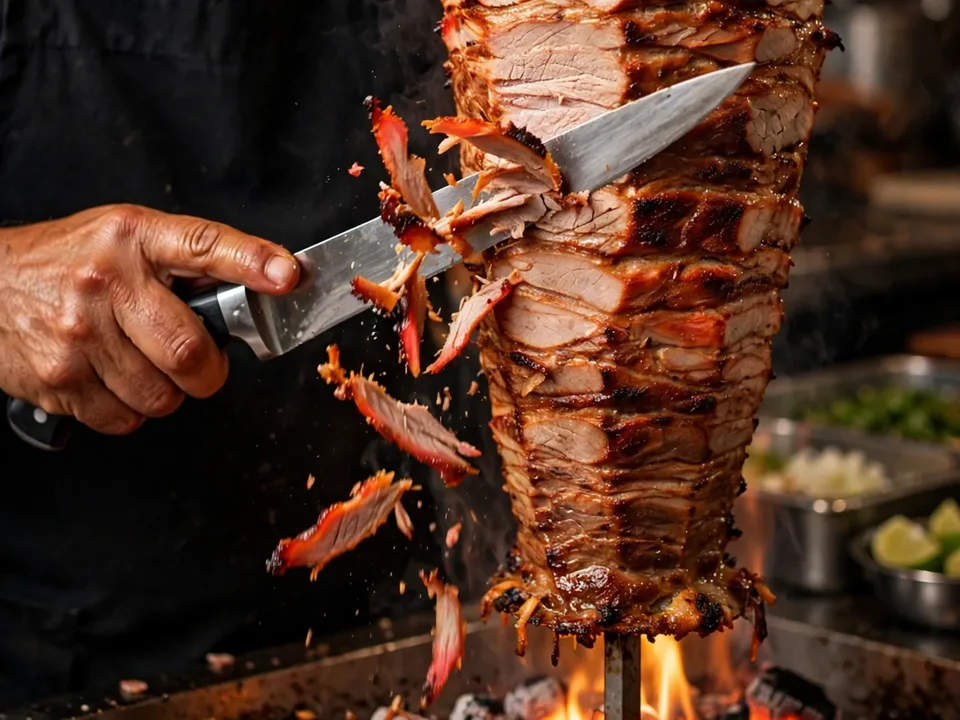
As the outer layer becomes well browned and fully cooked, shave it downward in thin slices with a sharp knife.
As the outer layer becomes well browned and fully cooked, shave it downward in thin slices with a sharp knife. Return the rotating stack to the heat so the newly exposed surface can caramelize, then shave again. Continue this cook-and-shave cycle until you have enough pork for serving and the required portion of the stack is cooked through.
Look for
The shaved pieces should show dark caramelized edges, a juicy interior and no raw centre; the newly exposed trompo surface should go back toward the heat before the next shaving.
Kitchen note
Shaving and then exposing a fresh layer to the fire is one of the defining trompo techniques. It gives you a mixture of crisp dark edges and juicy inner pieces instead of uniformly roasted meat.
 Step 10
Grill the pineapple
5 min
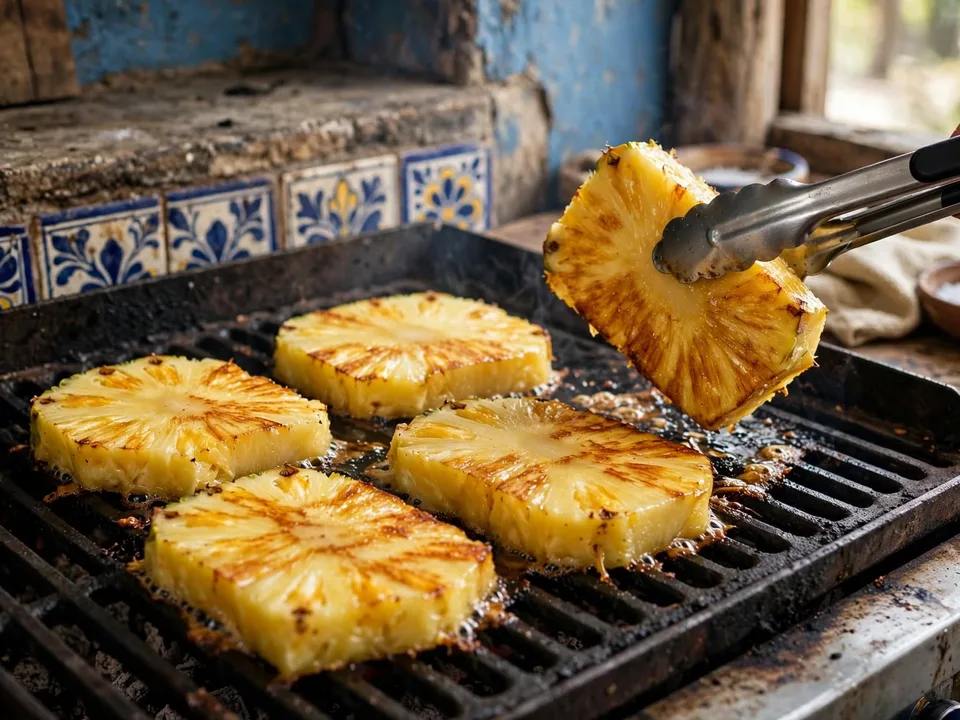
Grill fresh pineapple slabs over high heat until they are hot through and lightly caramelized on both sides.
Grill fresh pineapple slabs over high heat until they are hot through and lightly caramelized on both sides. Let them cool just enough to handle, then cut into small pieces for the tacos. Keep the quantity restrained so the fruit brightens the pork rather than dominating it.
Look for
Look for golden-brown grill marks and softened juicy flesh without blackened bitter surfaces.
Kitchen note
Pineapple is more than decoration: its sweetness and acidity cut through the chile-rich pork. Caramelizing it separately prevents excess juice from steaming the meat. Check the centre of the stack before shaving deeply. If inner meat is not cooked through, shave only the browned exterior, return the stack to the heat and continue cooking before the next shave.
 Step 11
Warm the corn tortillas on a comal
4 min
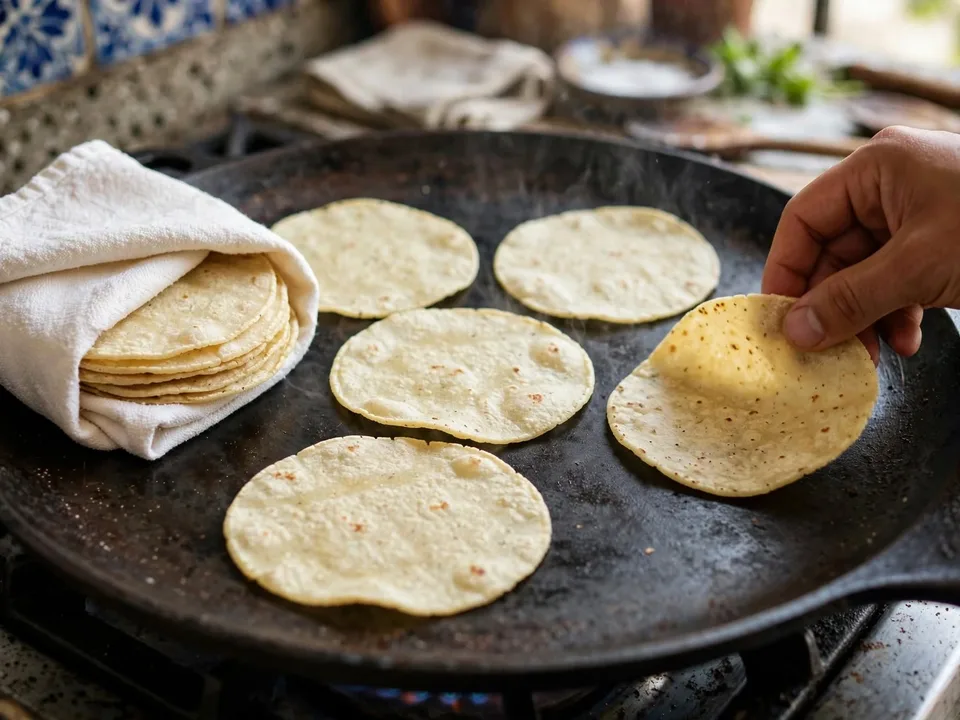
Heat the small corn tortillas on a hot dry comal or skillet for about 20–30 seconds per side, just until warm, fragrant and flexible with a few lightly toasted spots.
Heat the small corn tortillas on a hot dry comal or skillet for about 20–30 seconds per side, just until warm, fragrant and flexible with a few lightly toasted spots. Stack them in a clean kitchen towel as they come off the heat so they stay soft while you finish the tacos.
Look for
The tortillas should be hot and pliable with light toasted freckles, not stiff, brittle or dry.
Kitchen note
Do not toast them until crisp. A good taco tortilla should bend around the filling without cracking and should smell freshly warmed.
 Step 12
Assemble with freshly shaved pork
3 min
Use one warm tortilla, or two if the tortillas are especially thin.
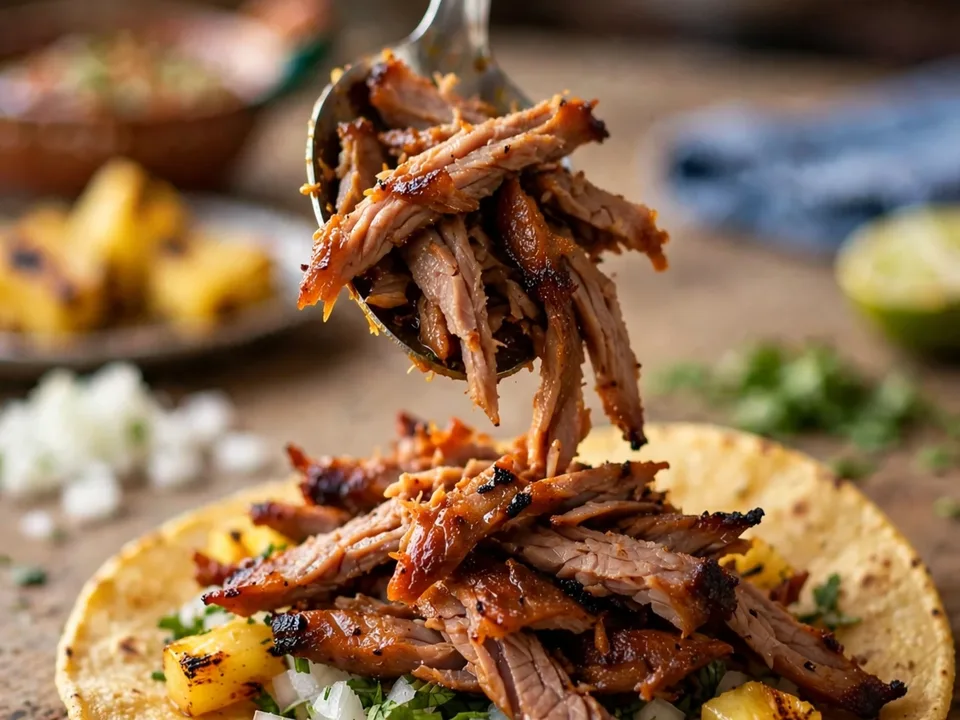
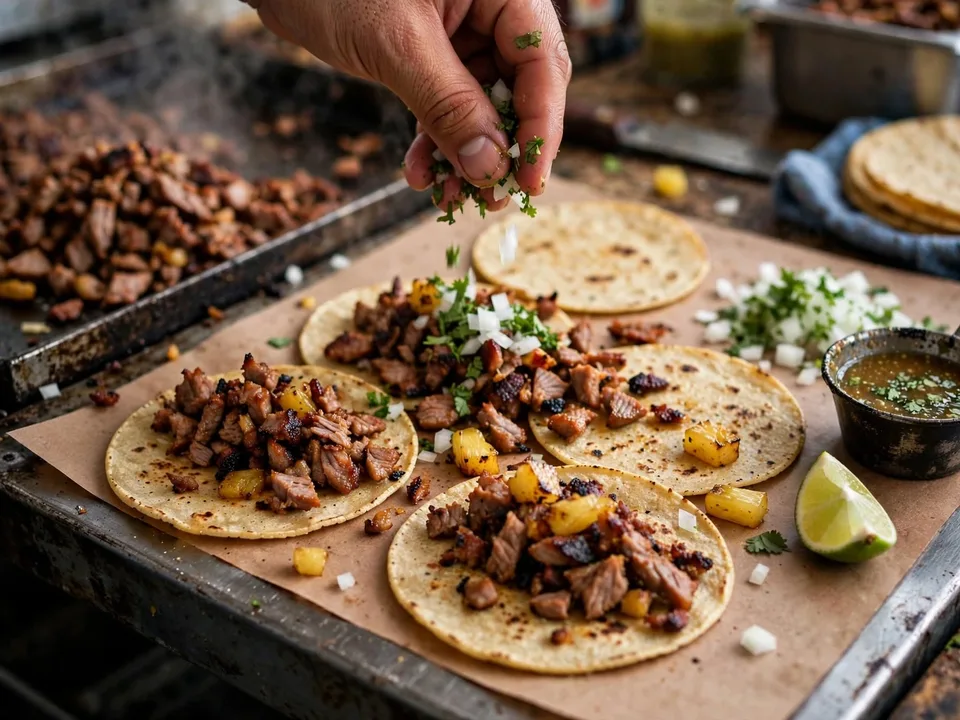
Use one warm tortilla, or two if the tortillas are especially thin. Add a modest pile of freshly shaved al pastor pork, then top with finely diced white onion, chopped cilantro and small pieces of grilled pineapple. Keep the toppings balanced so the seasoned pork remains the centre of the taco.
Look for
The taco should be generously filled but still easy to fold and eat, with visible charred pork edges and only a small bright layer of garnishes.
Kitchen note
Traditional-style pastor benefits from restraint. Pork, onion, cilantro and pineapple are enough before the final lime and salsa.
 Step 13
Finish with lime and salsa and serve
2 min
Squeeze fresh lime over the tacos and add salsa roja or salsa verde to taste.
Squeeze fresh lime over the tacos and add salsa roja or salsa verde to taste. Serve immediately while the pork is hot, the tortillas are flexible and the pineapple is still juicy. The best bite should combine smoky-spicy pork, browned edges, warm corn, fresh onion and cilantro, sweet-acidic pineapple and enough lime and salsa to sharpen everything.
Look for
The finished tacos should look juicy but not wet, with hot charred pork, pliable tortillas and fresh toppings still distinct.
Kitchen note
Add salsa for heat and brightness, not to drown the adobo. Taste one taco before deciding how much lime or salsa the batch needs.
After cooking
Explore the dish beyond the method.
Story, place and references are here for discovery, so they stay out of the way while you cook.
Culture & tradition
The story behind the dish
Origins, evolution and everyday life—read together as part of the recipe's culinary record.
Origins
Al pastor is commonly linked to vertical-spit meat traditions brought to Mexico by Lebanese and other eastern Mediterranean migrants and adapted within Mexican taco culture.
How it evolved
The preparation evolved from lamb and bread-based shawarma and taco árabe traditions toward marinated pork, corn tortillas, achiote, red chiles and the characteristic taquería trompo.
Its place today
Today tacos al pastor are one of Mexico City’s most recognizable street-food and taquería styles, prized for the contrast between juicy seasoned pork, freshly shaved charred edges and bright garnishes.
Visual archive · plate 01
Tacos al Pastor
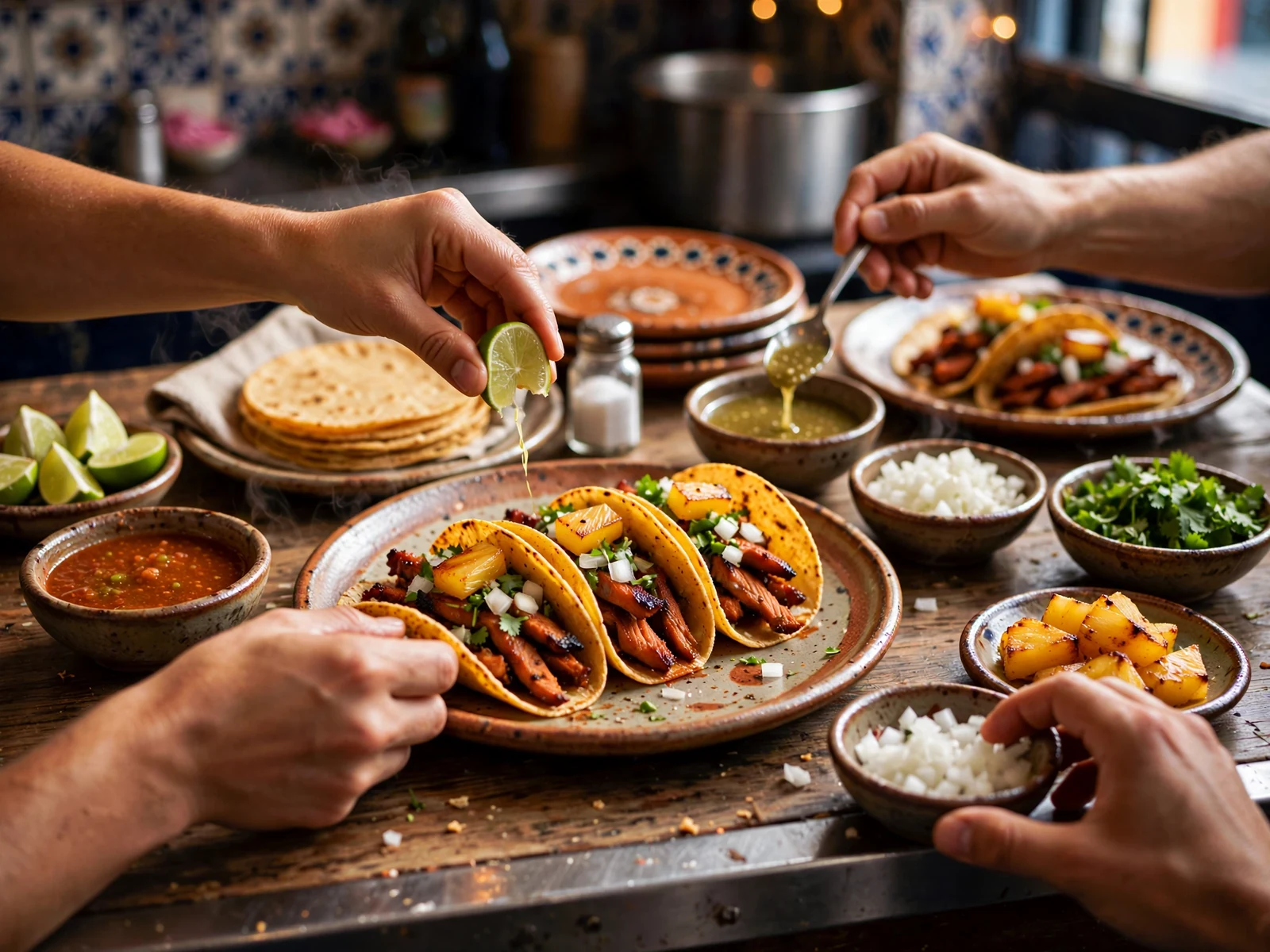
An editorial view of the finished dish, kept compact so the story continues without an oversized image break.
Primary region
Mexico City and central Mexico, with broad national popularity
Country
Mexico
Regional influence
Urban taquería culture combines preserved chiles, pork and maize tortillas with fast high-heat service.
Related food systems
- Taco culture
- Vertical-spit adaptation
- Maize tortilla tradition
Culinary record
- Origin
- Puebla / Mexico City
- Era
- 1920s–1960s
- Sub-region
- Mesoamerica
- Climate
- Subtropical
- Cooking methods
- marinated · charred · seared
- Trade-route influence
- Manila Galleon · Columbian Exchange · Lebanese diaspora (19–20th c.)
Traditional & modern
Born from Lebanese shawarma technique adapted with pork, achiote, and chiles. Modern street stalls retain the trompo spit.
Regional adaptations
- Northern Mexico — flour tortillas instead of corn
- Yucatán — closer to cochinita pibil with achiote
Sources & further reading
Follow the reference trail.
Ember & Equator links outward when an institution or primary reference helps support the culinary record.
- 01A falta de amor, ¡unos tacos al pastor!External ↗
Secretaría de Agricultura y Desarrollo Rural, Gobierno de México · government
Supports: tacos al pastor · Mexican taco culture
Ember & Equator source review · 2026-09-16
- 02How to Make Tacos al Pastor at HomeExternal ↗
Mexico in My Kitchen — Mely Martínez · specialist publication
Supports: home al pastor adobo · guajillo and achiote marinade · straining the adobo · pork shoulder · long marination · high-heat skillet adaptation
Ember & Equator source review · 2026-09-16
- 03Guía de comida callejera — Tacos al pastorExternal ↗
Secretaría de Turismo de la Ciudad de México · government
Supports: Mexico City al pastor identity · vertical trompo cooking · achiote and orange · pineapple service context
Ember & Equator source review · 2026-09-16
Ingredient guides
Learn about the ingredients behind the dish.
These are reference guides, not a second ingredient list. Follow an ingredient when you want to understand its role, use and wider culinary context.
Ingredient
boneless pork shoulder
Understand what it contributes, how to use it, and the dishes that reveal it best.
Ingredient
achiote paste
Understand what it contributes, how to use it, and the dishes that reveal it best.
Ingredient
dried guajillo chiles
Understand what it contributes, how to use it, and the dishes that reveal it best.
Ingredient
dried ancho chiles
Understand what it contributes, how to use it, and the dishes that reveal it best.
Ingredient
orange juice
Understand what it contributes, how to use it, and the dishes that reveal it best.
Ingredient
white vinegar
Understand what it contributes, how to use it, and the dishes that reveal it best.
Keep wandering
Where will this dish take you next?
Stay with the place, follow an ingredient or technique, or cross into another food culture. Each path begins with something already present in this dish.
Stay with the place
01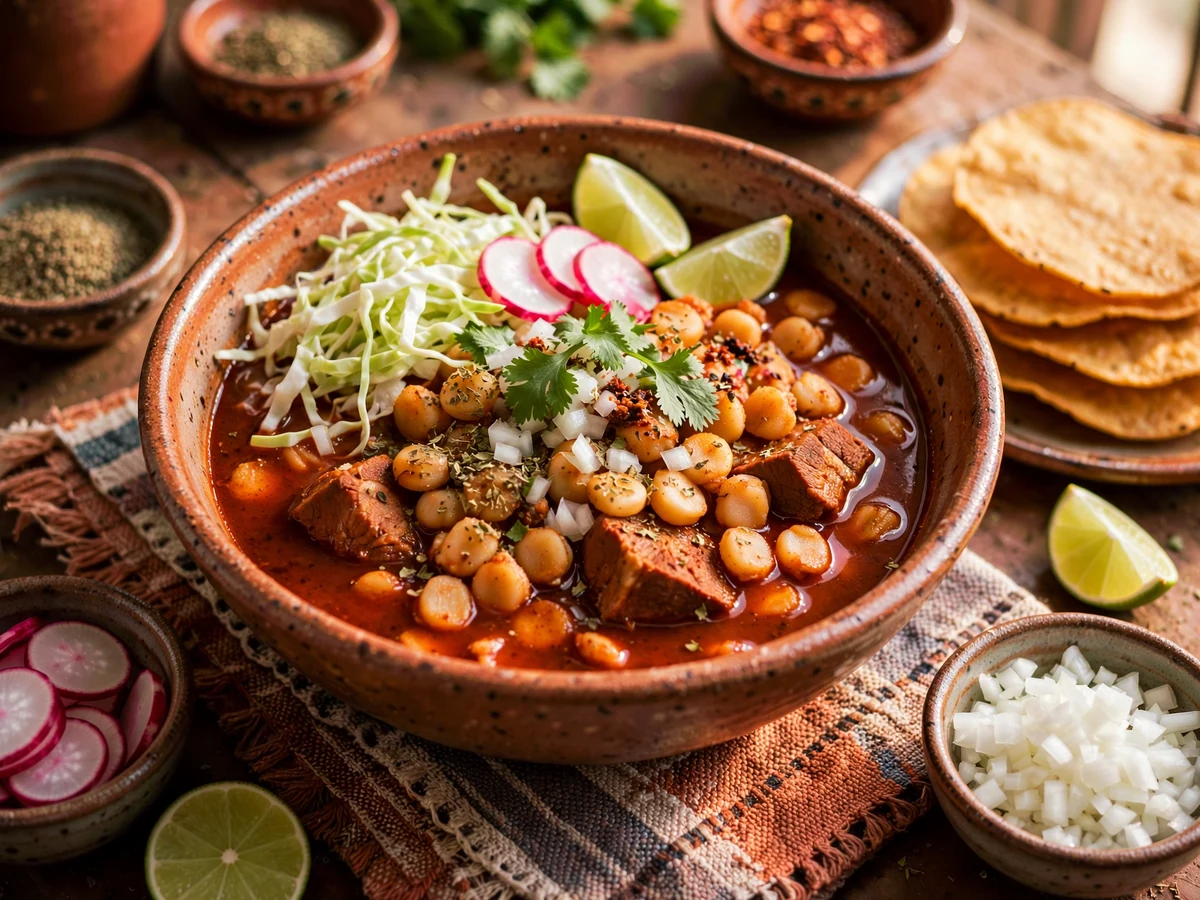
Mexico
Pozole Rojo
Stay in the same food culture and follow dried guajillo chiles into another recipe.
Shared thread · dried guajillo chiles · dried ancho chiles · garlic
Follow the method or pantry
02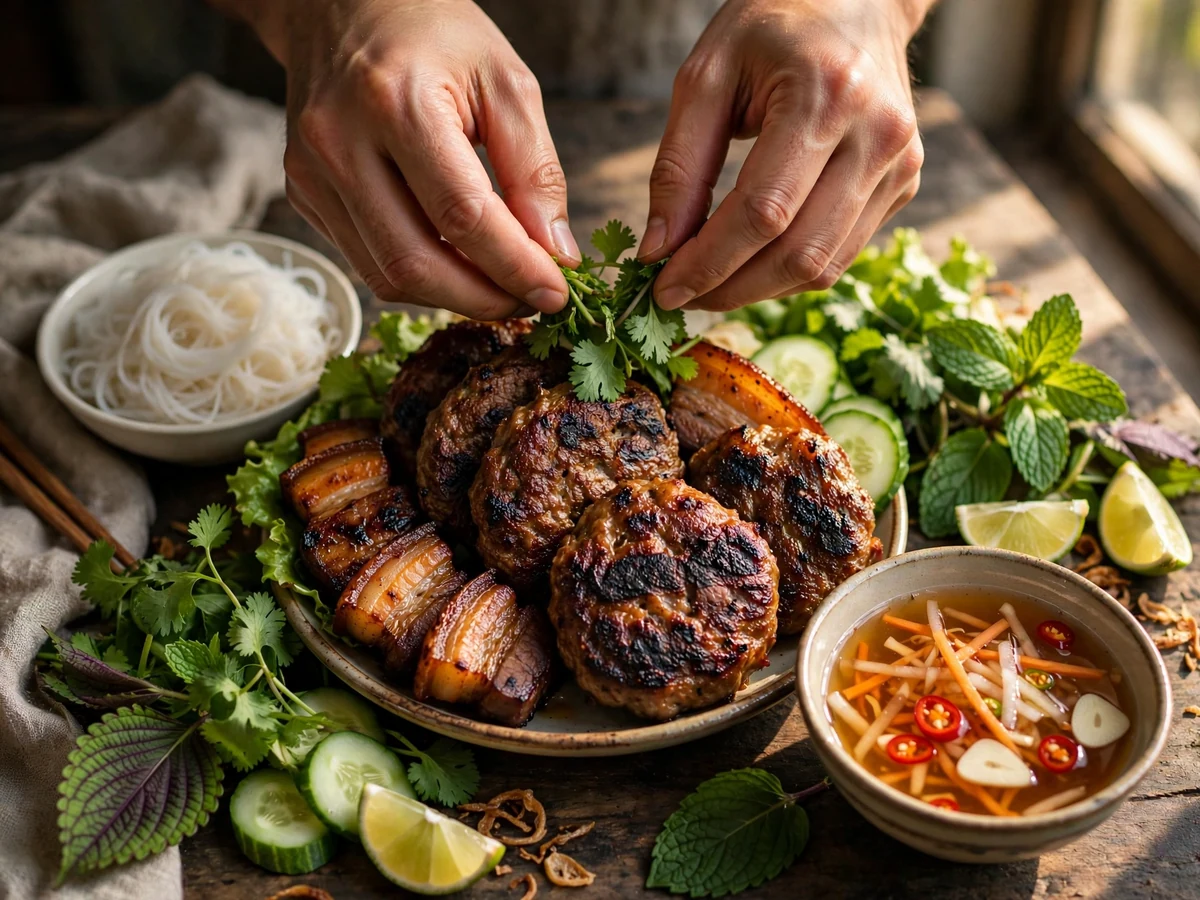
Vietnam
Bún Chả
Follow the cooking method: both dishes connect through marinate.
Shared thread · Marinate · Grill or griddle · garlic
Cross a culinary border
03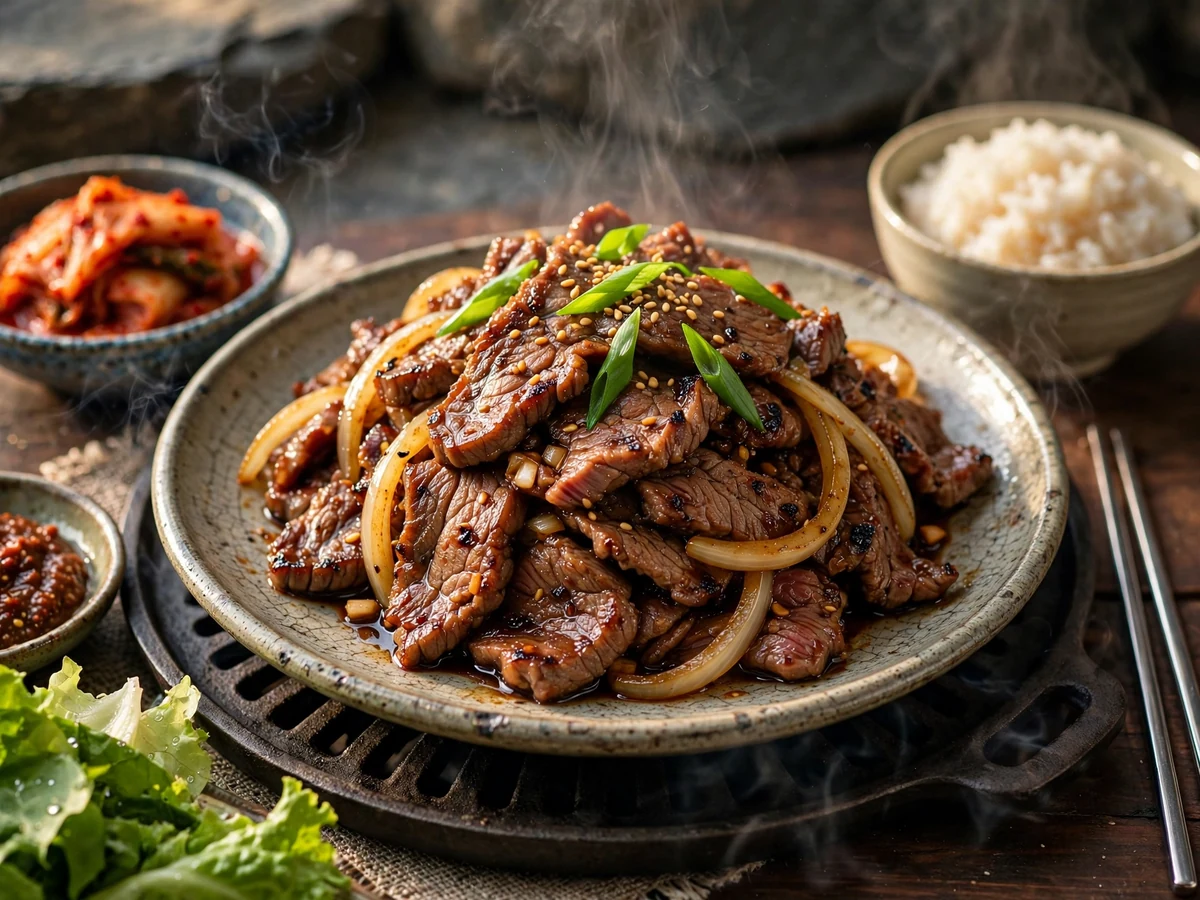
South Korea
Bulgogi
Cross borders while keeping marinate as the common thread.
Shared thread · Marinate · Grill or griddle · garlic
Go one layer deeper
One small detail can open an entirely different part of food.
Continue in Ember & Equator