
Mexico · snack · street-food
Mexican Guacamole
Mexico through one enduring dish.
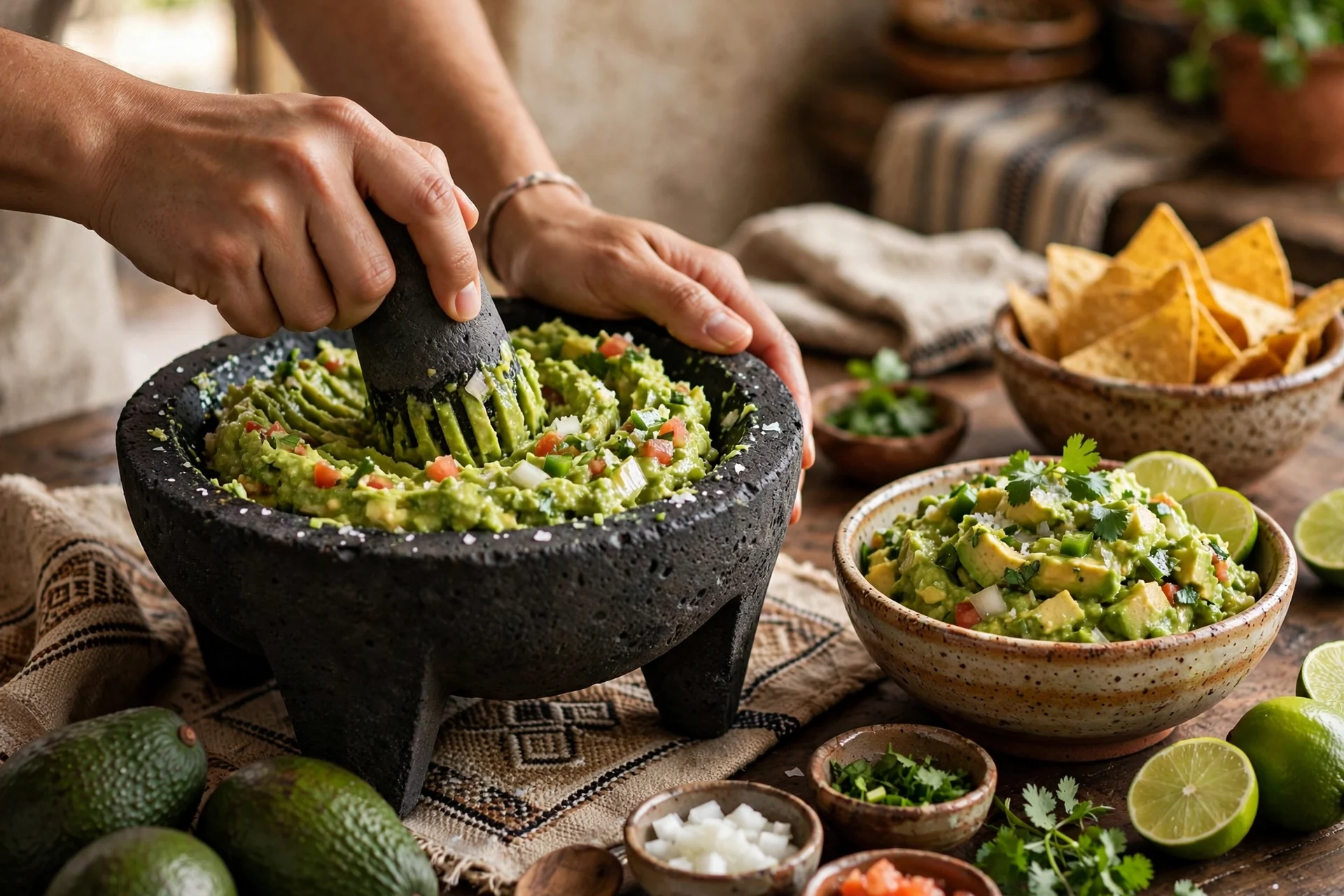
A hand-mashed Mexican guacamole built around ripe avocado, white onion, serrano chile, cilantro and salt, with tomato and lime treated as established variations rather than mandatory additions. Crushing part of the aromatics first gives the avocado a deeply integrated fresh-chile flavour while preserving a chunky texture.
- Total
- 15 min
- Difficulty
- Easy
- Serves
- 5
- Steps
- 5
The dish
Place first. Then the plate.
Guacamole is a long-established Mexican avocado preparation with substantial household and regional variation. A simple avocado-salt-chile-onion foundation is widely documented; cilantro, tomato and lime are common additions but are not universal. Ember & Equator therefore teaches the molcajete-style aromatic base and hand-mashed texture while keeping tomato and lime optional so one variation is not presented as the only authentic form.
Explore MexicoAt a glance
Origin
Mexico
Region
Central Mexico and Mesoamerica broadly
Meal
snack · street-food
Guided steps
5
Dish
Guacamole
Cuisine
Mexican cuisine
Food type
Snack · Street food
Cook the recipe
In the kitchen
Start with the ingredients, then follow the Method in order. Open cooking tips only when you need extra help; the story and references can wait until you are ready.
- Total
- 15 min
- Serves
- 5
- Level
- Easy
- Visual cues
- 5
Ingredients
Serves 5- 3 largeripe Hass avocadosfully ripe; they should yield gently to pressure without feeling mushy
- 0.25 cupwhite onionfinely diced
- 1 smallserrano chilefinely minced; remove the pale ribs and seeds for less heat; jalapeño may substitute if serrano is unavailable
- 0.25 cupfresh cilantroleaves and tender stems, finely chopped
- 0.5 tspkosher saltstart with 1/2 tsp and adjust to taste
Optional
- 1 smallRoma tomatoripe; watery seed cavity removed, then finely diced; optional but common variation
- 1–2 tbspfresh lime juicetablespoons, to taste; optional in some traditional styles—use only enough to brighten the avocado
Everything ready? Continue straight into the cooking steps.
Start methodMethod
5 steps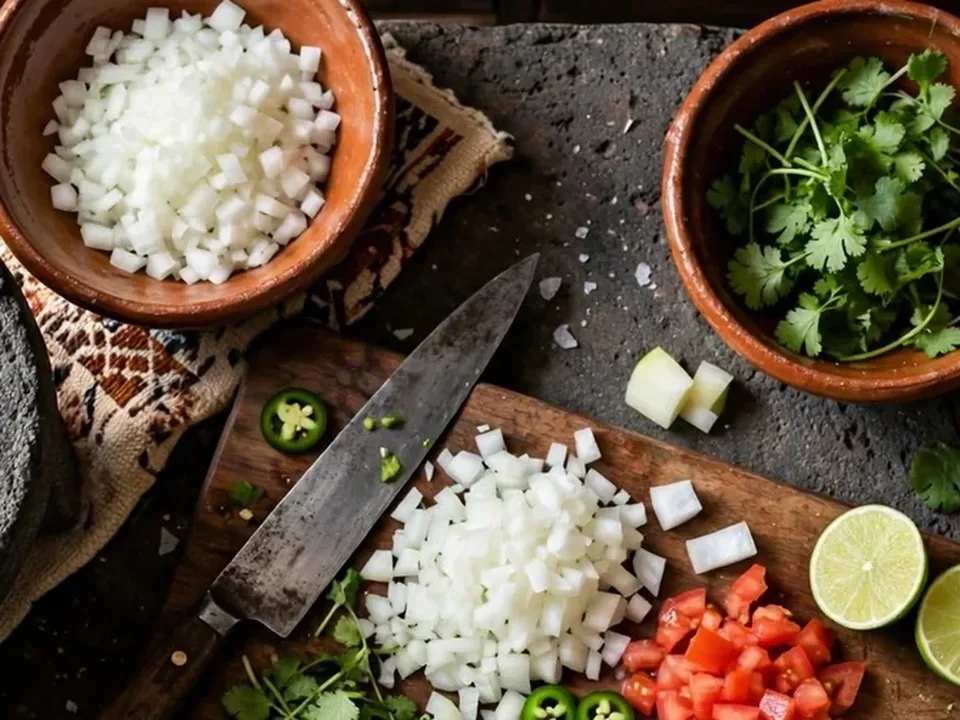 Step 01
Prepare everything before cutting the avocado
4 min
Prep the onion, tomato, cilantro, chile and lime before opening the avocados.
Finely dice the white onion. If using tomato, remove its watery seed cavity and finely dice the firm flesh. Finely chop the cilantro and serrano chile. If using lime, squeeze it now. Do all of this before opening the avocados so their flesh spends as little unnecessary time exposed to air as possible.
Look for
The onion and chile should be finely and evenly cut; any tomato should be diced from firm flesh rather than surrounded by watery seed gel.
Kitchen note
If the onion is exceptionally sharp, you can rinse the diced onion briefly under cold water, then drain and dry it very well. Do not rinse automatically: some onion bite is useful in guacamole.
 Step 02
Build the aromatic base
2 min
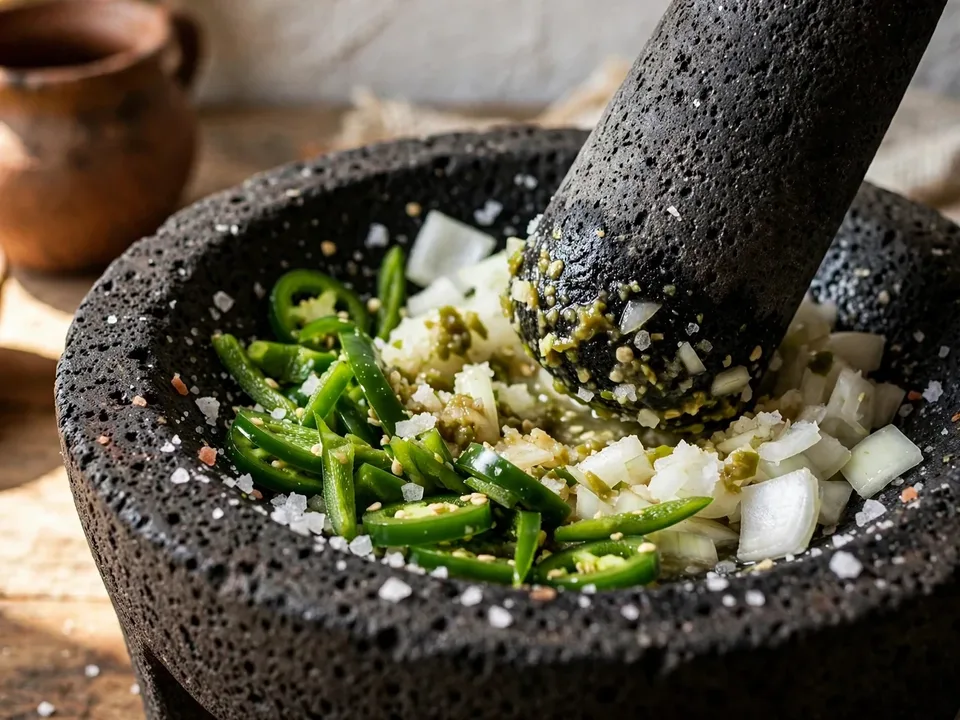
Crush the chile, some onion and cilantro with salt until moist, fragrant and still textured.
In a molcajete, combine about half of the onion, half of the cilantro, the serrano chile and the salt. Grind with the pestle until the aromatics are moist, fragrant and partly broken down but not completely smooth. If you do not have a molcajete, use a mortar and pestle, or mince the ingredients very finely and crush them firmly against the side of a wide bowl with the back of a spoon.
Look for
The mixture should look coarse, moist and aromatic, with visible flecks of chile and herbs rather than a smooth paste.
Kitchen note
Crushing the chile, onion, cilantro and salt before adding the avocado releases their aromatic juices and distributes their flavour through the avocado instead of leaving them only as separate raw pieces.
 Step 03
Add and gently mash the avocado
3 min
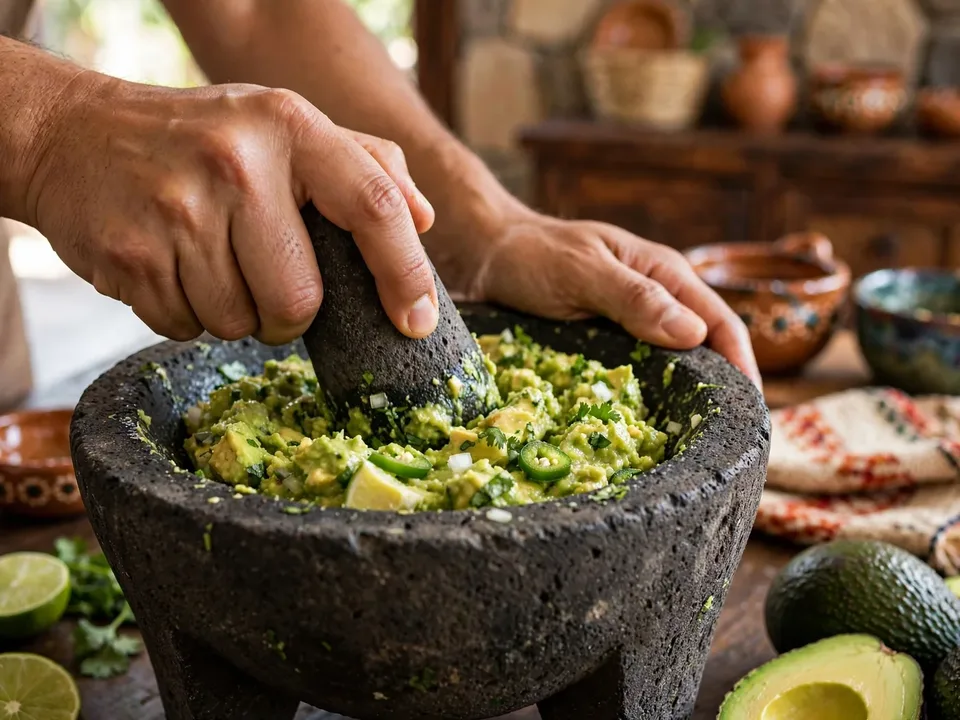
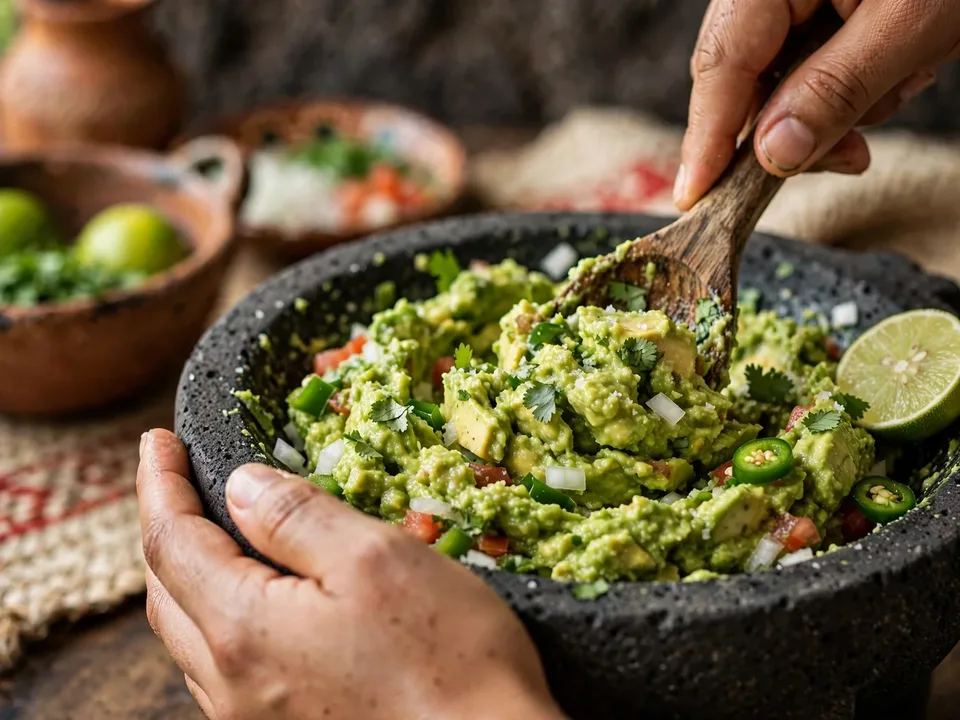
Add the avocado with a little lime and mash gently, keeping distinct small chunks.
Halve the avocados, remove the pits and scoop the flesh directly into the aromatic base. If using lime, start with about 1 tablespoon. Mash gently with the pestle or a fork, turning and pressing rather than beating, until the avocado holds together but still has visible small pieces.
Look for
The avocado should be creamy enough to scoop while retaining distinct small chunks; it should not resemble a completely smooth purée.
Kitchen note
Do not add all the lime at once. Avocados vary in size, richness and flavour, so it is easier to add more acidity after tasting than to rescue guacamole that tastes mainly of lime. If the avocado requires considerable force to mash, it is probably underripe.
 Step 04
Fold in the fresh ingredients and balance
2 min
Fold in the tomato and remaining aromatics, then taste and adjust lime, salt and chile.
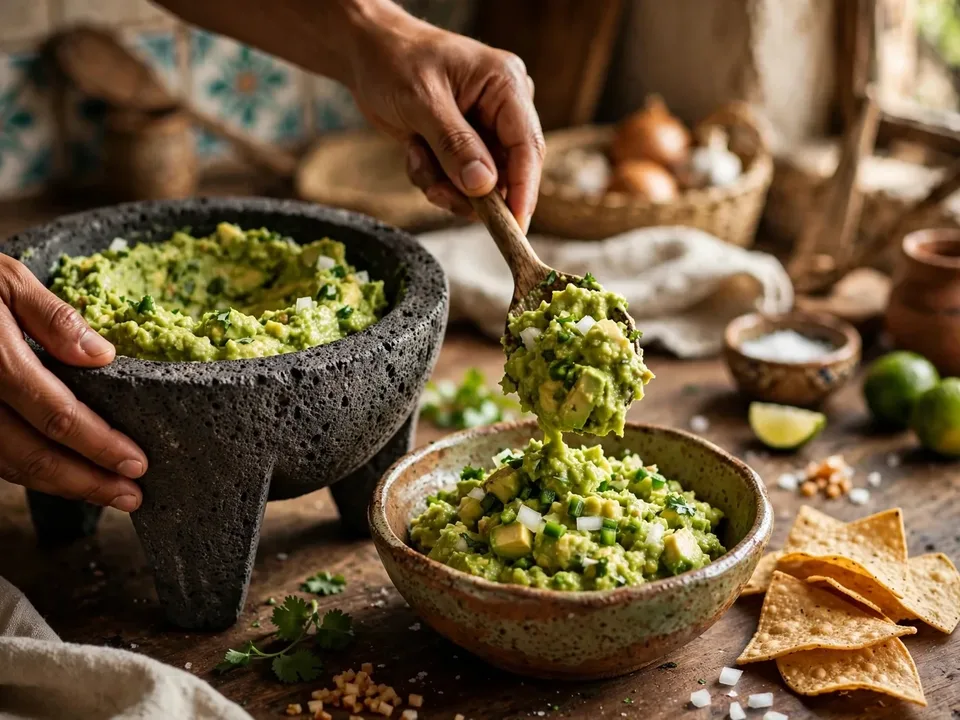
Fold in the remaining onion and cilantro plus the diced tomato, if using. Mix gently so the additions distribute without crushing the tomato or overworking the avocado. Taste, then add lime only if you want more brightness, more salt if the avocado tastes flat, or a little more finely minced serrano for additional heat.
Look for
The guacamole should look coarse and creamy with visible pieces of avocado, tomato, onion and cilantro suspended throughout rather than mashed into a uniform paste.
Kitchen note
Taste before every adjustment. The avocado should remain the dominant flavour: salt sharpens it, chile brings fresh heat, and lime—when used—should brighten rather than dominate.
 Step 05
Serve while fresh
1 min
Serve promptly, or press food wrap directly onto the surface if holding it briefly.
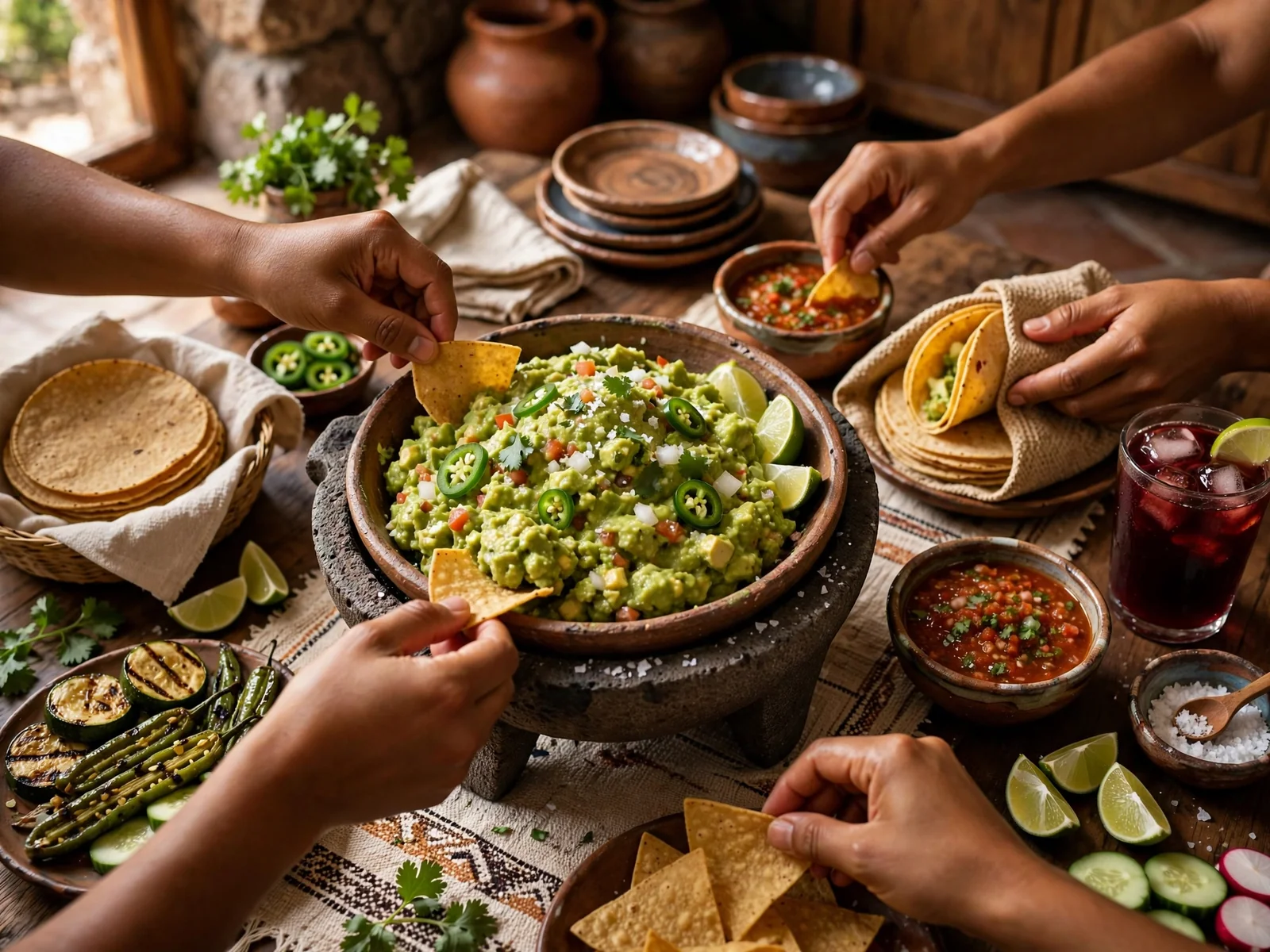
Transfer the guacamole to a serving bowl or serve directly from the molcajete. Serve as soon as possible with warm tortilla chips, tacos, quesadillas, grilled meats or warm corn tortillas. If you need to hold it briefly, press suitable food wrap directly against the entire surface so there are no air pockets, then refrigerate. Taste again before serving and make a final small salt or lime adjustment if needed.
Look for
Serve while the surface is still fresh green and the texture remains chunky and moist rather than greyed or watery.
Kitchen note
Guacamole browns because exposed avocado oxidizes. Limiting contact with air is more useful than adding excessive lime, which can throw the flavour out of balance.
After cooking
Explore the dish beyond the method.
Story, place and references are here for discovery, so they stay out of the way while you cook.
Culture & tradition
The story behind the dish
Origins, evolution and everyday life—read together as part of the recipe's culinary record.
Origins
Avocados were cultivated in Mesoamerica long before European contact. Preparations combining mashed avocado with local seasonings have deep roots, but surviving evidence does not support a single exact origin date or one unchanged historical recipe.
How it evolved
Guacamole has taken many regional and household forms in Mexico and later spread internationally as avocado cultivation and distribution expanded.
Its place today
Today guacamole is prepared in homes, restaurants and taquerías in Mexico and far beyond it. Texture and additions vary, from very simple avocado-and-salt preparations to versions with chile, onion, tomato, herbs or citrus.
Visual archive · plate 01
Mexican Guacamole
An editorial view of the finished dish, kept compact so the story continues without an oversized image break.
Primary region
Central Mexico and Mesoamerica broadly
Country
Mexico
Regional influence
Avocados have long been cultivated in parts of Mesoamerica, including highland environments in present-day Mexico. Modern avocado production is strongly associated with Michoacán, but Ember & Equator does not use contemporary production statistics to infer the historical origin of guacamole.
Related food systems
- Aztec and Maya culinary tradition
- Mesoamerican milpa agricultural system
- Mexican mesa-shared table tradition
- California-Mexican border food culture
Culinary record
- Sub-region
- Mesoamerica
- Climate
- Subtropical
- Trade-route influence
- Manila Galleon · Columbian Exchange · Lebanese diaspora (19–20th c.)
Sources & further reading
Follow the reference trail.
Ember & Equator links outward when an institution or primary reference helps support the culinary record.
- 01Traditional Mexican cuisine — ancestral, ongoing community culture, the Michoacán paradigmExternal ↗
UNESCO Intangible Cultural Heritage · reference
Supports: Mexican culinary system · corn beans and chile · cultural context
Ember & Equator source review · 2026-09-01
- 02Guacamole — adapted from Diana Kennedy, The Cuisines of MexicoExternal ↗
Los Angeles Times · reference
Supports: molcajete aromatic paste · serrano chile · hand-mashed texture · tomato and lime variation
Ember & Equator source review · 2026-09-16
Ingredient guides
Learn about the ingredients behind the dish.
These are reference guides, not a second ingredient list. Follow an ingredient when you want to understand its role, use and wider culinary context.
Ingredient
ripe Hass avocados
Understand what it contributes, how to use it, and the dishes that reveal it best.
Ingredient
white onion
Understand what it contributes, how to use it, and the dishes that reveal it best.
Ingredient
ripe tomato
Understand what it contributes, how to use it, and the dishes that reveal it best.
Ingredient
serrano chile
Understand what it contributes, how to use it, and the dishes that reveal it best.
Ingredient
fresh coriander
Understand what it contributes, how to use it, and the dishes that reveal it best.
Ingredient
lime juice
Understand what it contributes, how to use it, and the dishes that reveal it best.
Keep wandering
Where will this dish take you next?
Stay with the place, follow an ingredient or technique, or cross into another food culture. Each path begins with something already present in this dish.
Stay with the place
01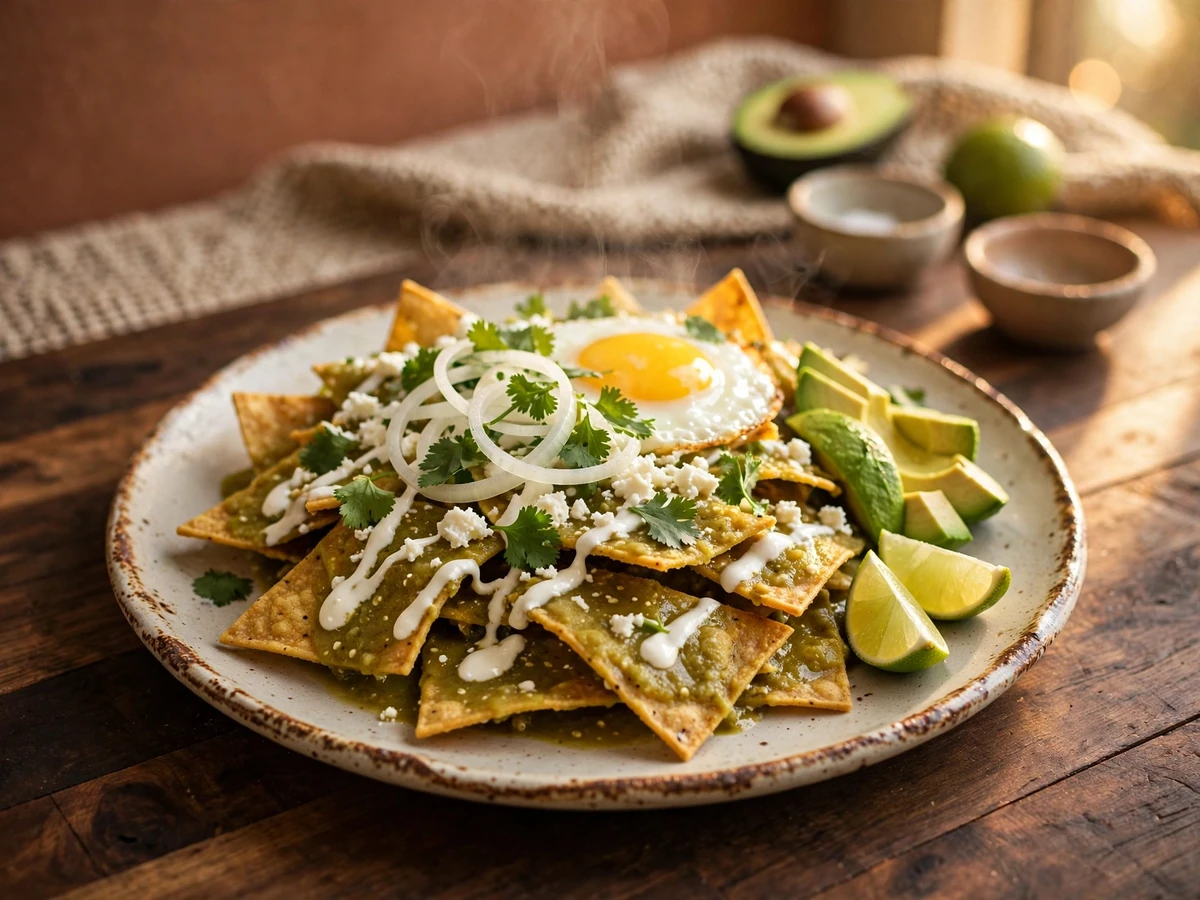
Mexico
Chilaquiles Verdes
Stay in the same food culture and follow white onion into another recipe.
Shared thread · white onion · serrano chile · fresh coriander
Follow the method or pantry
02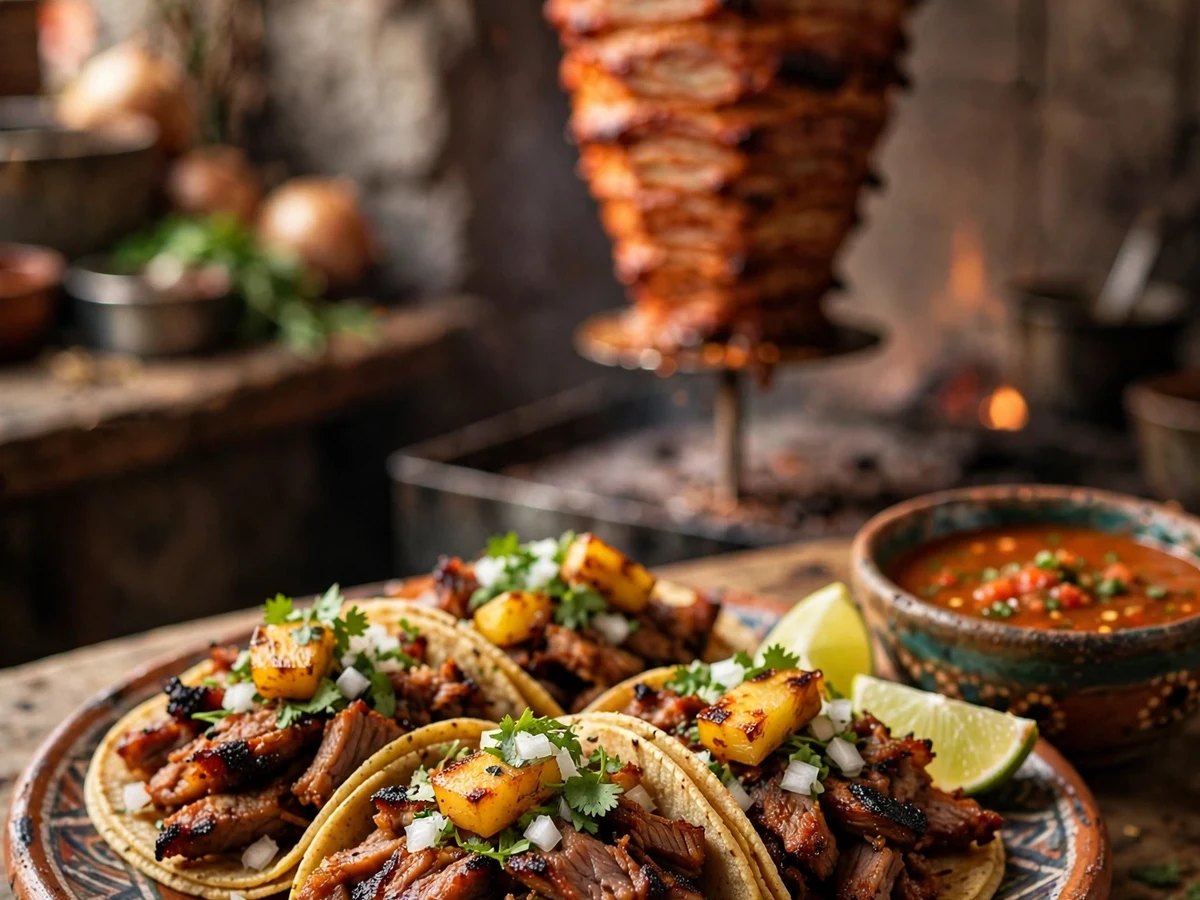
Mexico
Tacos al Pastor
Follow the pantry: both dishes connect through white onion.
Shared thread · white onion · Street food
Cross a culinary border
03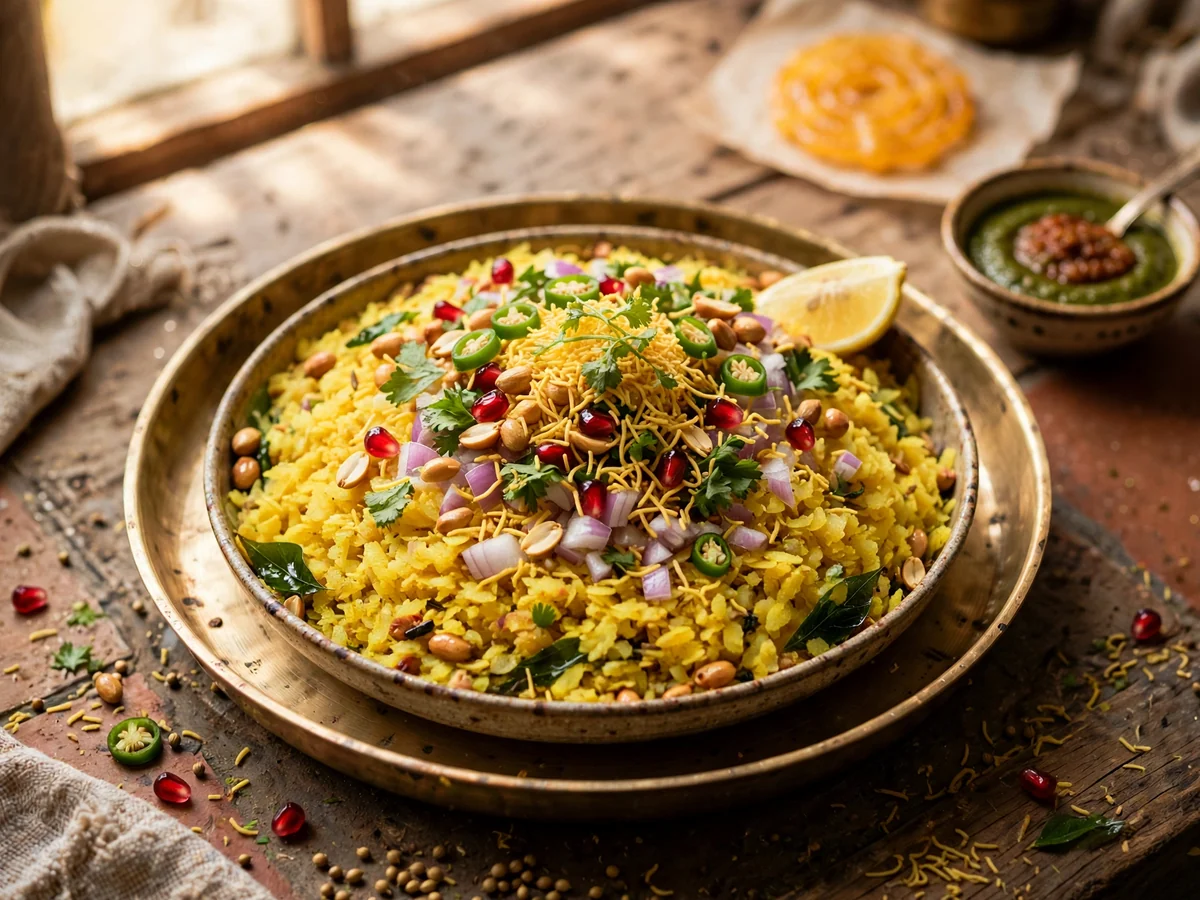
India
Indori Poha
Cross borders and see how another cuisine handles white onion.
Shared thread · white onion · Snack · Street food
Continue in Ember & Equator