
South Korea · lunch · dinner · stew · comfort-food
Kimchi Jjigae
South Korea through one enduring dish.
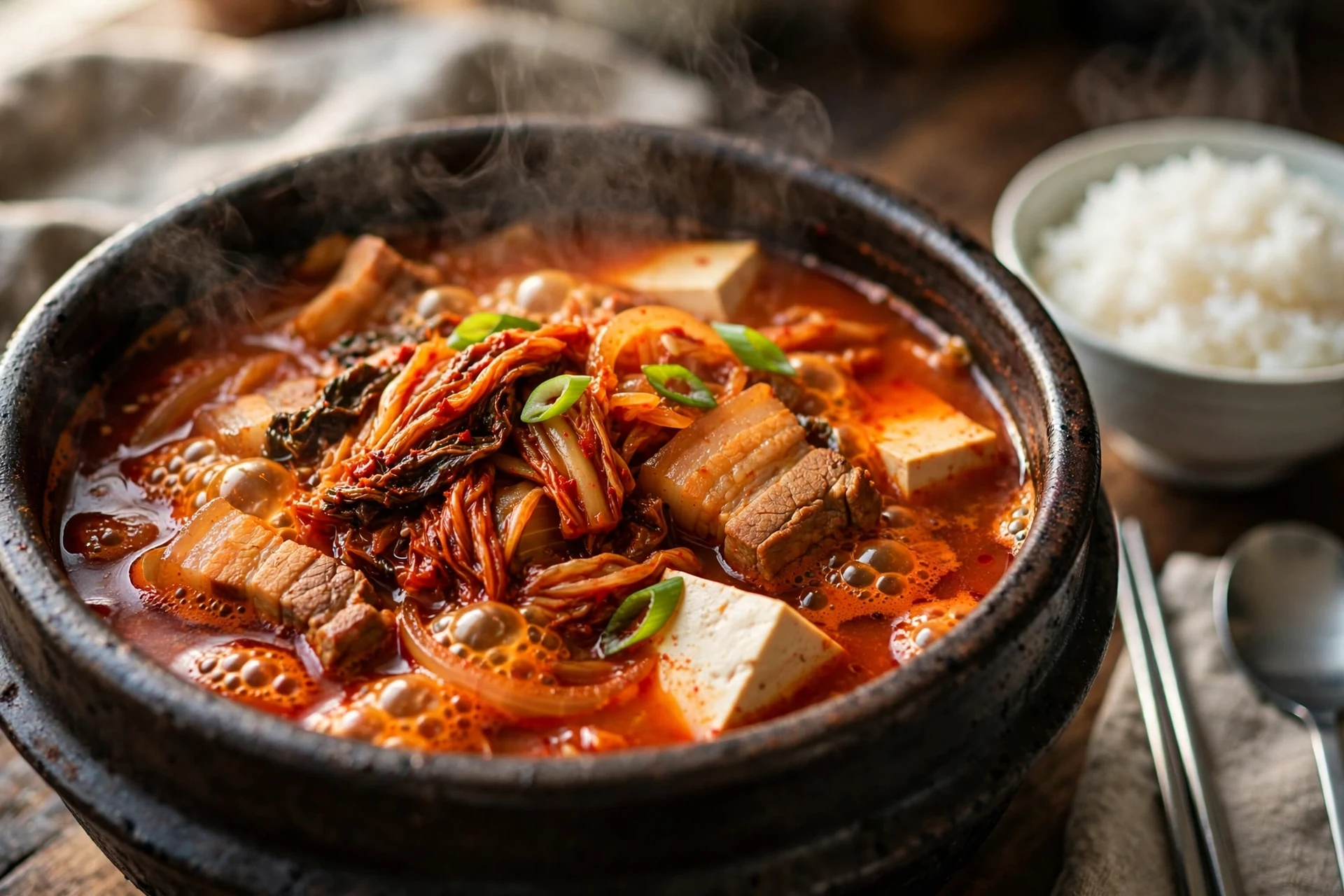
Kimchi jjigae is a deeply savoury Korean stew built around fully fermented sour kimchi, commonly cooked with fatty pork, kimchi juice and broth before tofu and spring onion are added near the end.
- Total
- 50 min
- Difficulty
- Easy
- Serves
- 4
- Steps
- 5
The dish
Place first. Then the plate.
Kimchi jjigae is everyday Korean comfort food that turns well-fermented kimchi into the main flavour of a bubbling stew. Pork is a common pairing, but tuna, beef, anchovy-broth and meatless versions are also established. This Ember & Equator version follows the sour-kimchi-and-pork family and deliberately does not require gochujang; Korean recipes vary on whether pepper paste is used.
Explore South KoreaAt a glance
Origin
South Korea
Region
Across South Korea
Meal
lunch · dinner · stew · comfort-food
Guided steps
5
Dish
Kimchi Jjigae
Cuisine
Korean cuisine
Food type
Lunch · Dinner · Stew
Technique
Sauté · Simmer
Cook the recipe
In the kitchen
Start with the ingredients, then follow the Method in order. Open cooking tips only when you need extra help; the story and references can wait until you are ready.
- Total
- 50 min
- Serves
- 4
- Level
- Easy
- Visual cues
- 5
Ingredients
Serves 4- 500 gaged napa cabbage kimchifully fermented and sour; cut bite-size and reserve about 1/2 cup kimchi juice if available
- 250 gpork shoulderor pork belly; cut into bite-size pieces with some fat attached
- 1 tbspgochugaruadjust to the heat and colour of your kimchi
- 2 clovesgarlicminced
- 1 tbspneutral oilfor sautéing; use less if the pork is very fatty
- 2.5 cupswateror anchovy broth / second-or-third rice-rinse water for more body
- 300 gtofufirm or medium-firm, sliced about 1.5 cm thick
- 2 wholespring onionssliced on the diagonal
Optional
- 0.25 tspsaltonly if needed after the stew has reduced
Everything ready? Continue straight into the cooking steps.
Start methodMethod
5 steps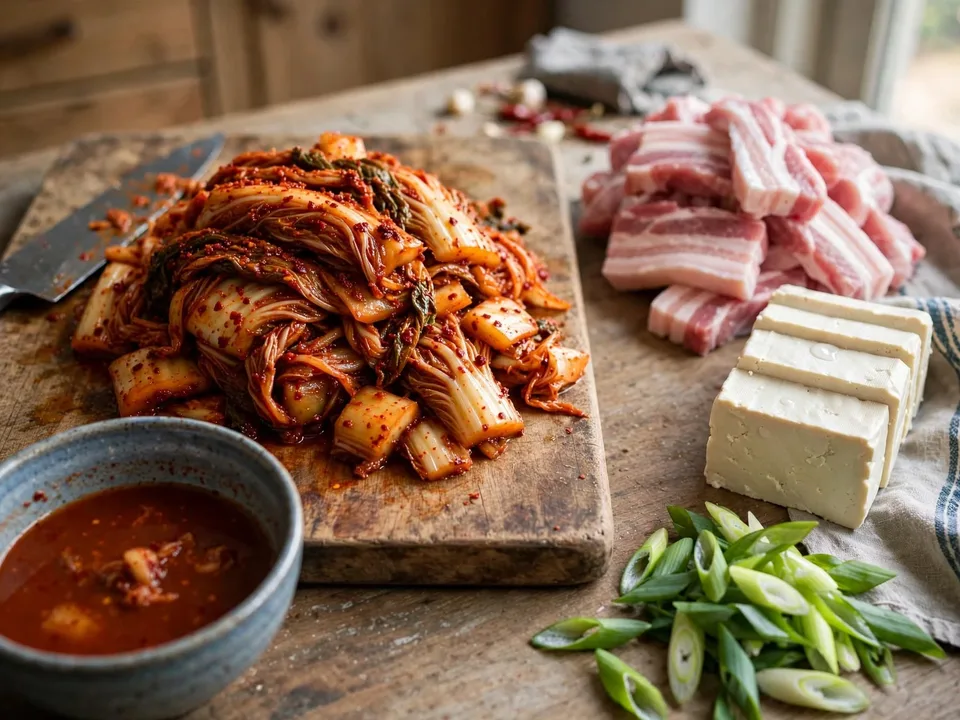 Step 01
Prepare the sour kimchi, pork, tofu and broth before heating
10 min
Cut the fully fermented kimchi into bite-size pieces and measure any kimchi juice separately.
Cut the fully fermented kimchi into bite-size pieces and measure any kimchi juice separately. Cut the pork into bite-size pieces, slice the tofu thick enough to stay intact and prepare the spring onion. Have the water, anchovy broth or rice-rinse water beside the stove so the sautéed base can move straight into the simmer.
Look for
The kimchi should smell clearly fermented and taste pleasantly sour, while the tofu is cut into sturdy slices and all additions are ready before the pot gets hot.
Kitchen note
This stew depends on mature sour kimchi. If the kimchi still tastes fresh, sweet and crunchy, the final broth will lack the fermented depth that long cooking is meant to draw out.
 Step 02
Sauté the pork and aged kimchi until the raw edge softens
7 min
Heat the oil in a small heavy pot over medium-high heat.
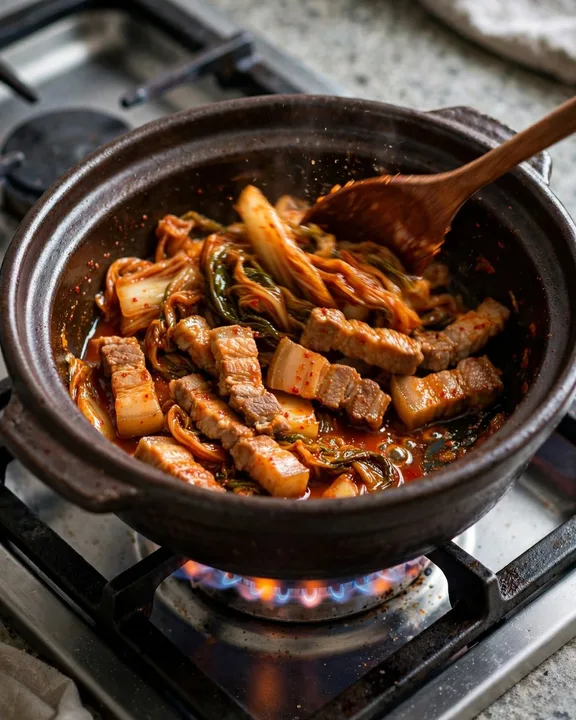
Heat the oil in a small heavy pot over medium-high heat. Add the pork, kimchi, gochugaru and garlic and cook for 5–7 minutes, stirring often, until the pork has lost its raw exterior, the kimchi softens and the pot smells deeply savoury. Let some edges catch lightly, but do not scorch the chile or garlic.
Look for
The kimchi should look slightly softened and glossy, the pork should be opaque on the outside, and the pan bottom should still be visible with little free liquid.
Kitchen note
Cooking kimchi and pork before adding liquid develops much more flavour than simply boiling everything together. Keep enough heat for active sizzling, but lower it if gochugaru begins to darken sharply.
 Step 03
Add kimchi juice and broth and simmer until the stew tastes integrated
20 min
Pour in the reserved kimchi juice and the water, anchovy broth or rice-rinse water.
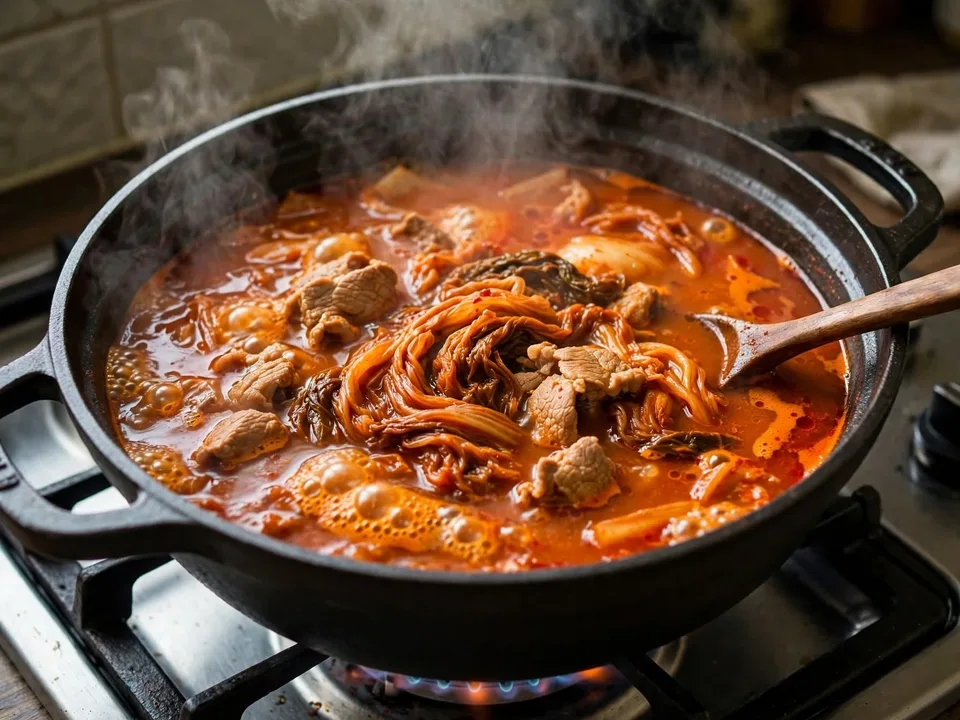
Pour in the reserved kimchi juice and the water, anchovy broth or rice-rinse water. Bring to a full boil for about 5 minutes, then reduce to a lively medium simmer, cover partially and cook for 15–20 minutes. Stir once or twice and add a splash more liquid only if the stew is reducing too aggressively.
Look for
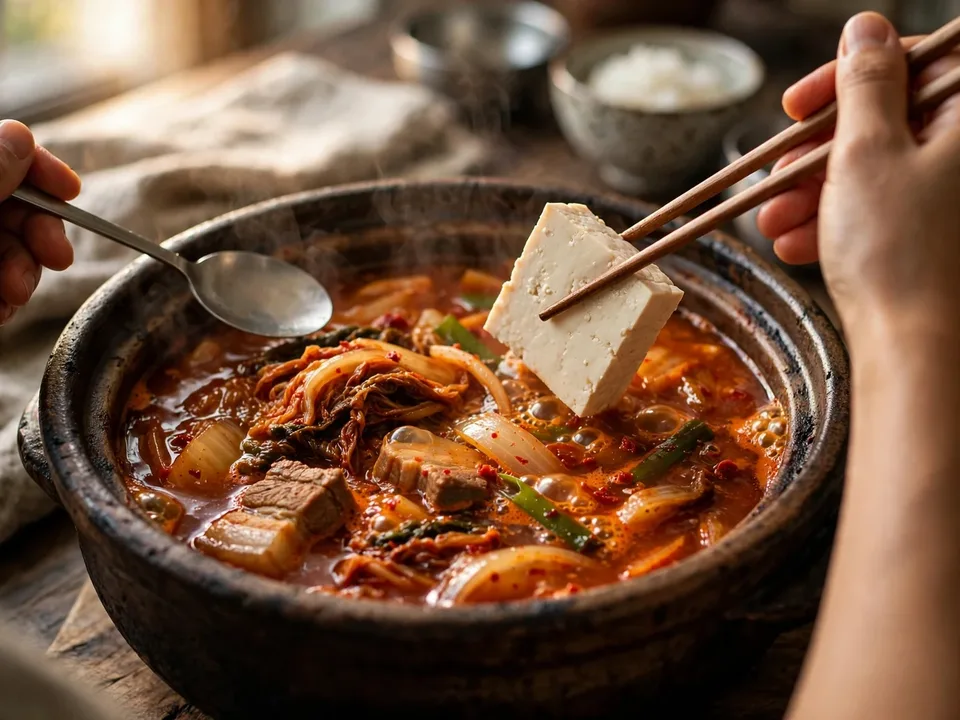
The broth should turn red-orange and slightly opaque, the kimchi should be very tender, and the pork should be cooked through with the flavours no longer tasting separate.
Kitchen note
Do not judge salt at the start of the simmer. Kimchi brine concentrates as the broth reduces, so wait until after the main simmer before deciding whether the pot needs any additional salt.
 Step 04
Add the tofu late and heat it through without breaking it
5 min
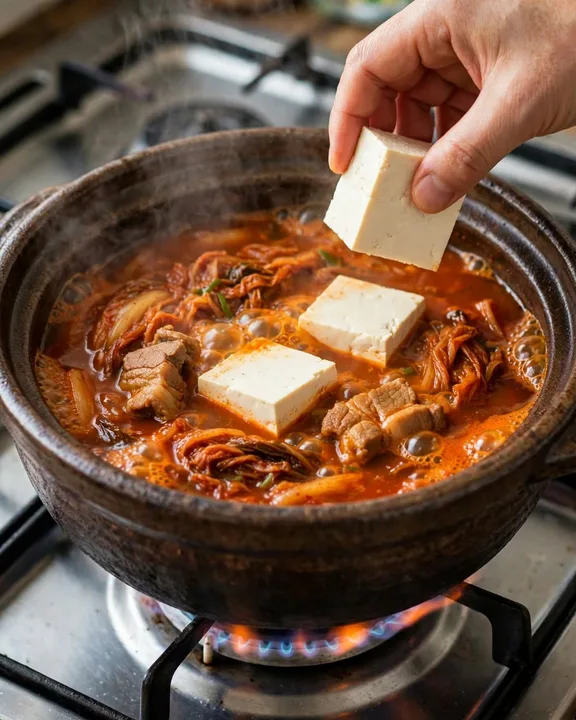
Lay the tofu slices over the simmering stew and spoon a little broth over the top rather than stirring aggressively.
Lay the tofu slices over the simmering stew and spoon a little broth over the top rather than stirring aggressively. Simmer uncovered for about 5 minutes, just until the tofu is hot and has taken on some broth flavour. Taste the liquid and add salt only if it genuinely needs it.
Look for
The tofu should remain intact, hot through and lightly stained by the broth while the stew continues to bubble around it.
Kitchen note
Tofu is already cooked; it needs warming and seasoning, not prolonged boiling. Thick slices and minimal stirring keep the pot visually clean and stop the tofu from crumbling into the broth.
 Step 05
Finish with spring onion and serve bubbling hot with rice
2 min
Scatter the spring onion over the stew, simmer for another 30–60 seconds and remove from the heat.
Scatter the spring onion over the stew, simmer for another 30–60 seconds and remove from the heat. Serve immediately while the jjigae is still actively bubbling, with hot rice alongside. Spoon kimchi, pork, tofu and broth together so each serving gets the full balance of the pot.
Look for
The finished stew should smell deeply fermented and savoury, with tender kimchi, intact tofu and a concentrated red-orange broth that lightly coats the ingredients.
Kitchen note
Kimchi jjigae should be concentrated and stew-like rather than a thin soup. If it is too strong, loosen with a small amount of hot broth; if too weak, simmer a little longer before the spring onion goes in.
After cooking
Explore the dish beyond the method.
Story, place and references are here for discovery, so they stay out of the way while you cook.
Culture & tradition
The story behind the dish
Origins, evolution and everyday life—read together as part of the recipe's culinary record.
Origins
Korean home cooking built around mature fermented kimchi and the practical use of kimchi beyond the banchan table.
How it evolved
Household recipes vary in protein, broth, chile seasoning and whether gochujang is added; the common core is fully fermented kimchi cooked until tender in a concentrated stew.
Its place today
A familiar shared or individual stew served hot with rice, especially valued as a way to use kimchi after it has become deeply sour.
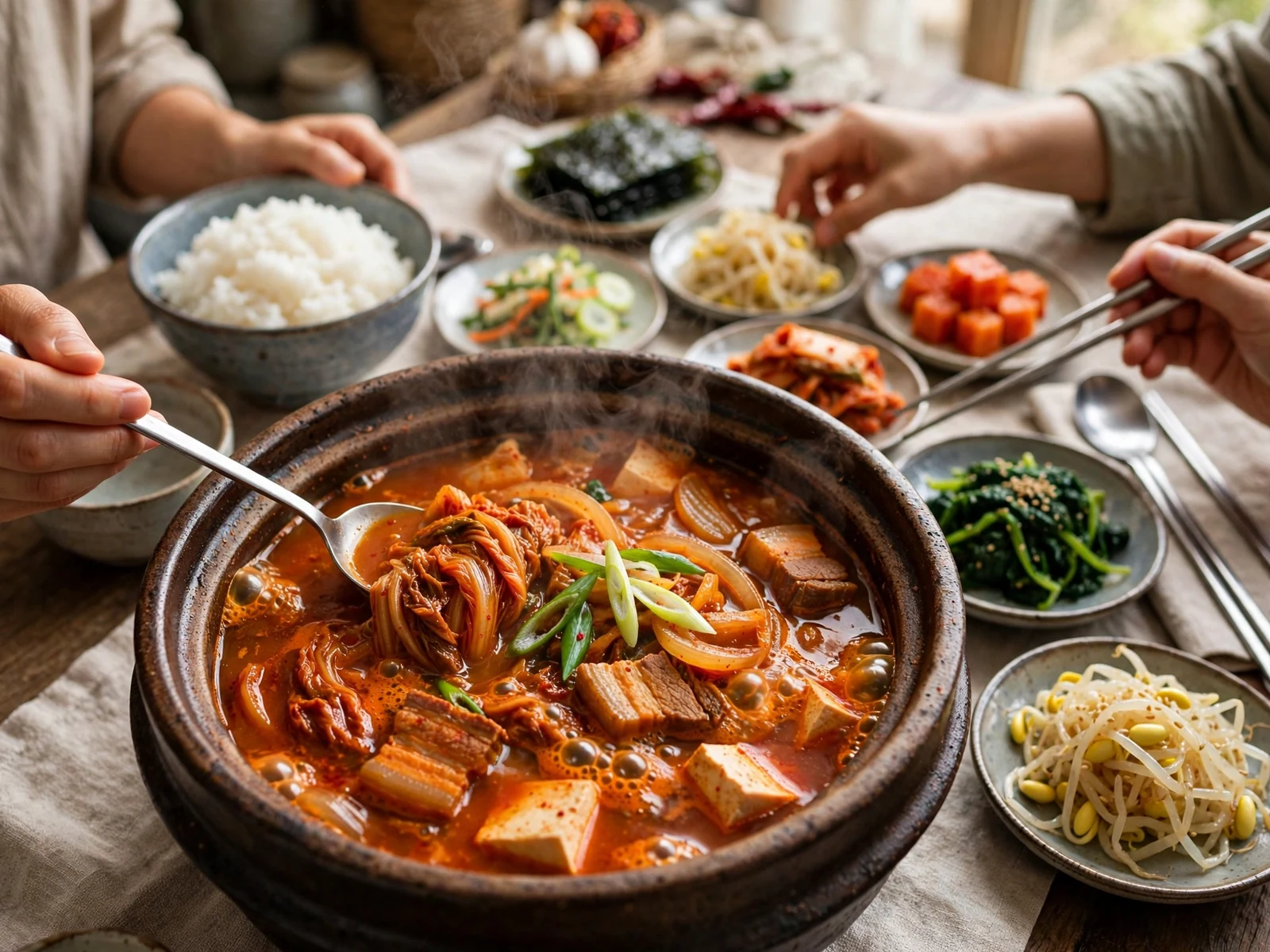
Visual archive · plate 01
Kimchi Jjigae
An editorial view of the finished dish, kept compact so the story continues without an oversized image break.
Primary region
Across South Korea
Country
South Korea
Regional influence
Kimjang preservation allows napa cabbage kimchi to mature through colder months; older sour kimchi becomes especially useful in stews where long cooking softens and concentrates it.
Related food systems
- Kimjang and kimchi fermentation
- Korean jjigae tradition
- Rice-based Korean meals
Sources & further reading
Follow the reference trail.
Ember & Equator links outward when an institution or primary reference helps support the culinary record.
- 01Korean recipes: kimchi stew (김치찌개)External ↗
Korea.net / Institute of Traditional Korean Food · government
Supports: kimchi stew identity · cabbage kimchi and pork · tofu and spring onion · garlic and broth structure
Ember & Equator source review · 2026-09-17
- 02Kimchi Jjigae (Kimchi Stew)External ↗
Korean Bapsang · specialist publication
Supports: fully fermented sour kimchi · fatty pork · sauté before liquid · kimchi juice · rice-rinse water or anchovy broth · late tofu
Ember & Equator source review · 2026-09-17
- 03Kimchi stew (Kimchi-jjigae)External ↗
Maangchi · specialist publication
Supports: kimchi brine · pork · tofu · anchovy stock · gochujang as a legitimate variation · shared-pot service
Ember & Equator source review · 2026-09-17
Ingredient guides
Learn about the ingredients behind the dish.
These are reference guides, not a second ingredient list. Follow an ingredient when you want to understand its role, use and wider culinary context.
Ingredient
aged napa cabbage kimchi
Understand what it contributes, how to use it, and the dishes that reveal it best.
Ingredient
pork shoulder
Understand what it contributes, how to use it, and the dishes that reveal it best.
Ingredient
gochugaru
Understand what it contributes, how to use it, and the dishes that reveal it best.
Ingredient
garlic
Understand what it contributes, how to use it, and the dishes that reveal it best.
Ingredient
neutral oil
Understand what it contributes, how to use it, and the dishes that reveal it best.
Ingredient
water
Understand what it contributes, how to use it, and the dishes that reveal it best.
Keep wandering
Where will this dish take you next?
Stay with the place, follow an ingredient or technique, or cross into another food culture. Each path begins with something already present in this dish.
Stay with the place
01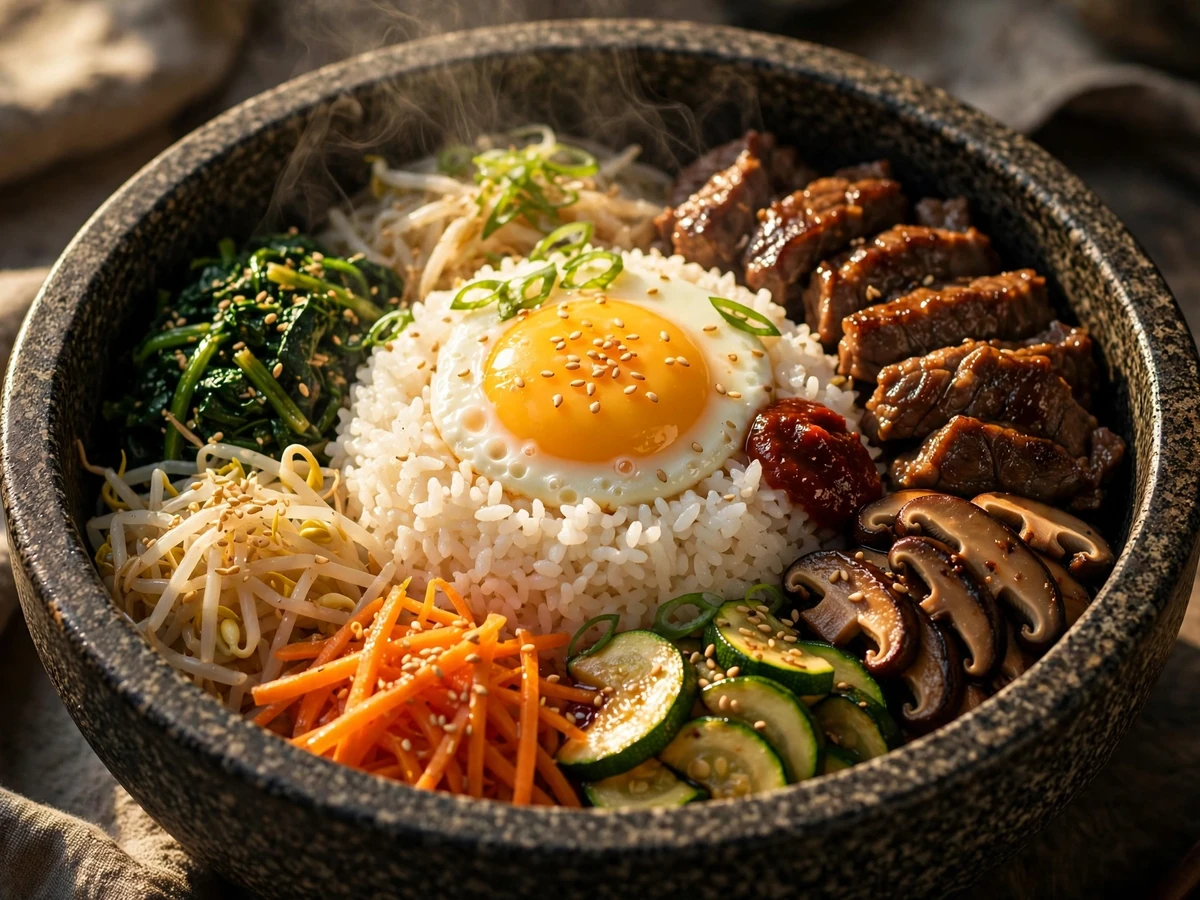
South Korea
Bibimbap
Stay in the same food culture and notice how sauté appears in another dish.
Shared thread · Sauté · garlic · neutral oil
Follow the method or pantry
02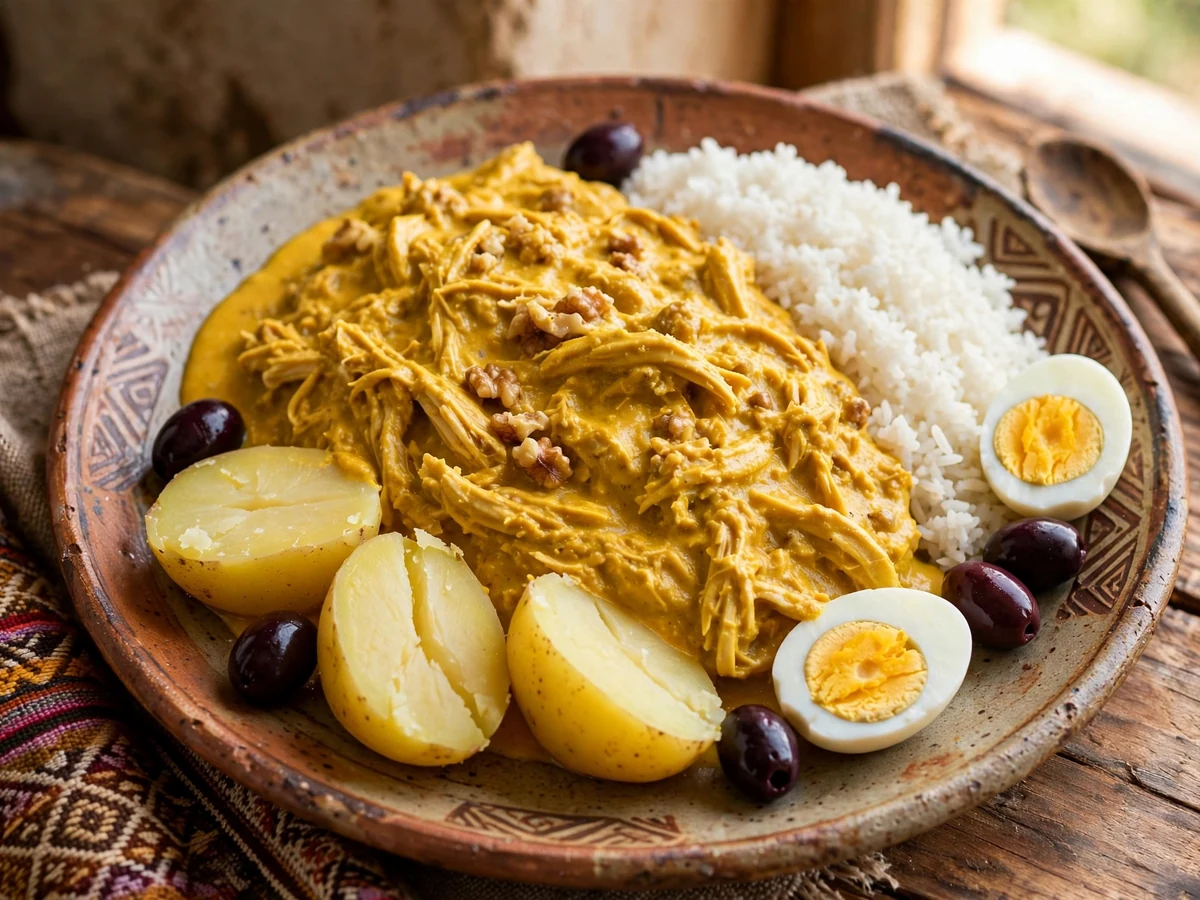
Peru
Ají de Gallina
Follow the cooking method: both dishes connect through sauté.
Shared thread · Sauté · Simmer · garlic
Cross a culinary border
03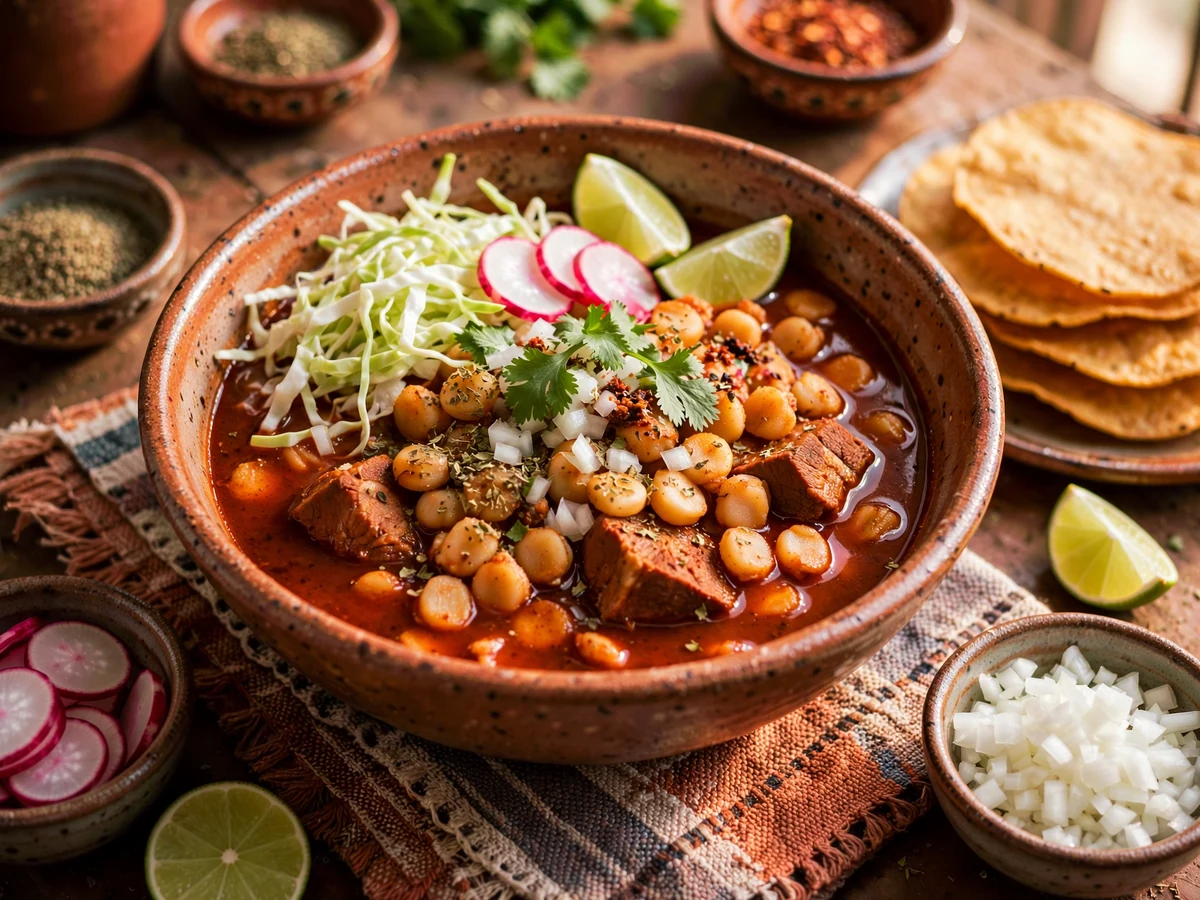
Mexico
Pozole Rojo
Cross borders while keeping simmer as the common thread.
Shared thread · Simmer · pork shoulder · garlic
Go one layer deeper
One small detail can open an entirely different part of food.
Continue in Ember & Equator