
Vietnam · lunch · street-food
Bún Chả
Vietnam through one enduring dish.
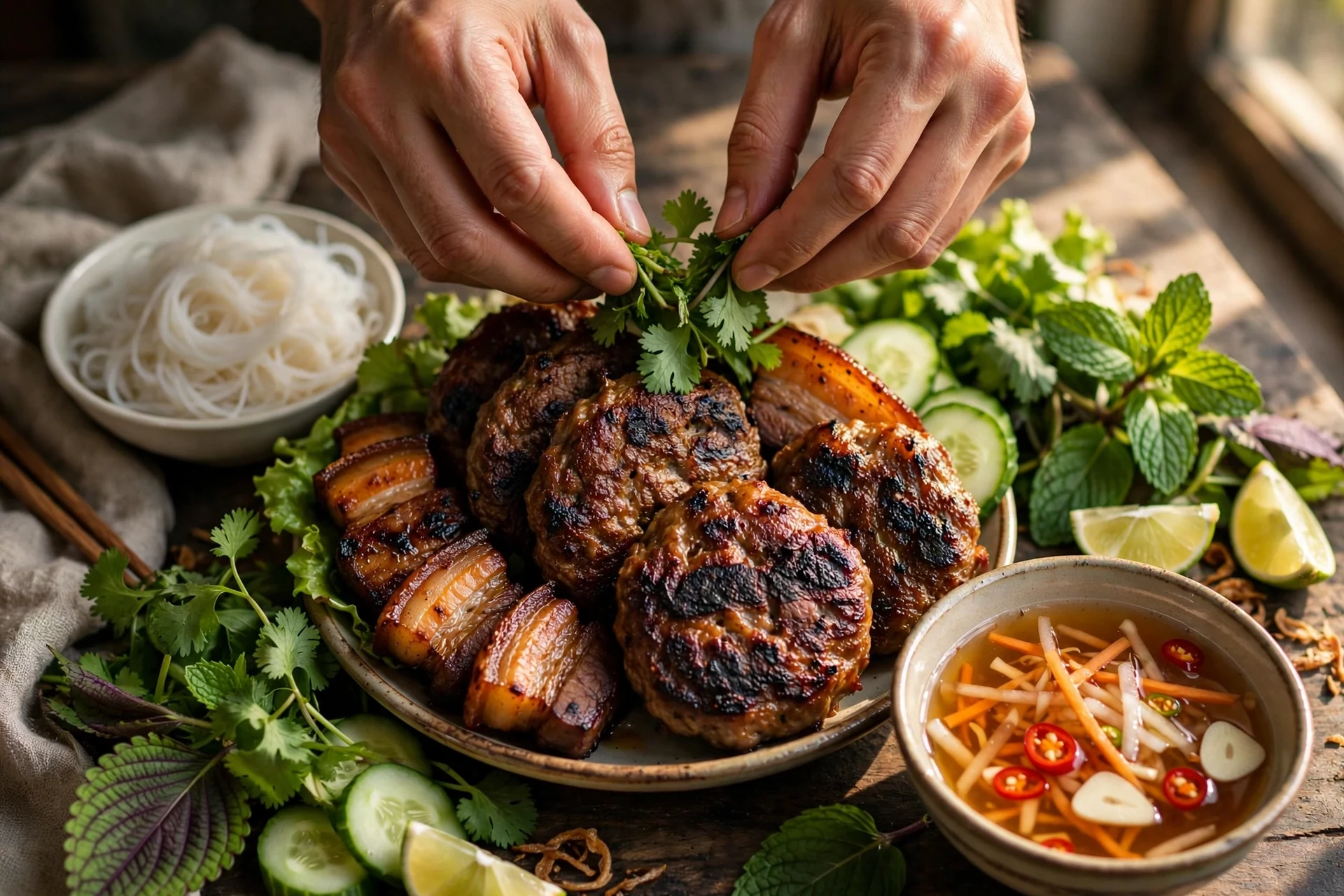
Bún Chả is Hanoi’s charcoal-grilled pork lunch: caramelised pork patties and slices of pork belly are served in a light sweet-sour fish-sauce dipping broth with cool rice vermicelli, fresh herbs and crisp pickles. The dish succeeds through contrast rather than through one heavy sauce.
- Total
- 70 min
- Difficulty
- Easy
- Serves
- 4
- Steps
- 8
The dish
Place first. Then the plate.
Vietnam Tourism identifies bún chả as a signature Hanoian lunch built from chargrilled pork belly and patties, diluted vinegar-fish-sauce broth, rice vermicelli and herbs. Hanoi versions are normally served as separate components so the diner combines noodles, herbs, pork and dipping broth bite by bite.
Explore VietnamAt a glance
Origin
Hanoi
Region
Hanoi, northern Vietnam
Method
marinated · grilled
Meal
lunch · street-food
Guided steps
8
Dish
Bún Chả
Cuisine
Vietnamese cuisine
Food type
Noodle dish · Street food · Lunch
Technique
Marinate · Grill or griddle · Balance a sweet-sour-salty sauce
Cook the recipe
In the kitchen
Start with the ingredients, then follow the Method in order. Open cooking tips only when you need extra help; the story and references can wait until you are ready.
- Total
- 70 min
- Serves
- 4
- Level
- Easy
- Visual cues
- 8
Ingredients
Serves 4- 300 gpork bellyskin removed; slice across the grain about 4–5 mm thick
- 300 gpork minceabout 20% fat gives juicier patties
- 5 tbspfish saucedivide between pork marinade and dipping broth
- 5 tbspsugardivide between pork, pickle and dipping broth
- 3 wholeshallotsfinely chopped
- 4 clovesgarlicfinely minced; divide between pork and dipping broth
- 0.5 tspground black pepper
- 1 tbspneutral oilfor shaping/grill surface if needed
- 1 smallcarrotthin matchsticks for the quick pickle
- 3 tbsprice vinegardivide between quick pickle and dipping broth
- 2 tbsplime juiceadd gradually to the dipping broth
- 500 mlwarm waterfor the light dipping broth
- 300 grice vermicellimedium round bún-style noodles if available
- 2 cupsfresh herbs and lettucemint, coriander, perilla or other Vietnamese herbs plus tender lettuce
Optional
- 120 ggreen papaya or kohlrabithin matchsticks; traditional-style pickle component; carrot alone is acceptable if unavailable
- 1–2 wholefresh chillithinly sliced; for the dipping broth/table
Everything ready? Continue straight into the cooking steps.
Start methodMethod
8 stepsMethod at a glance
 Step 01
Prepare and season the two pork components
8 min
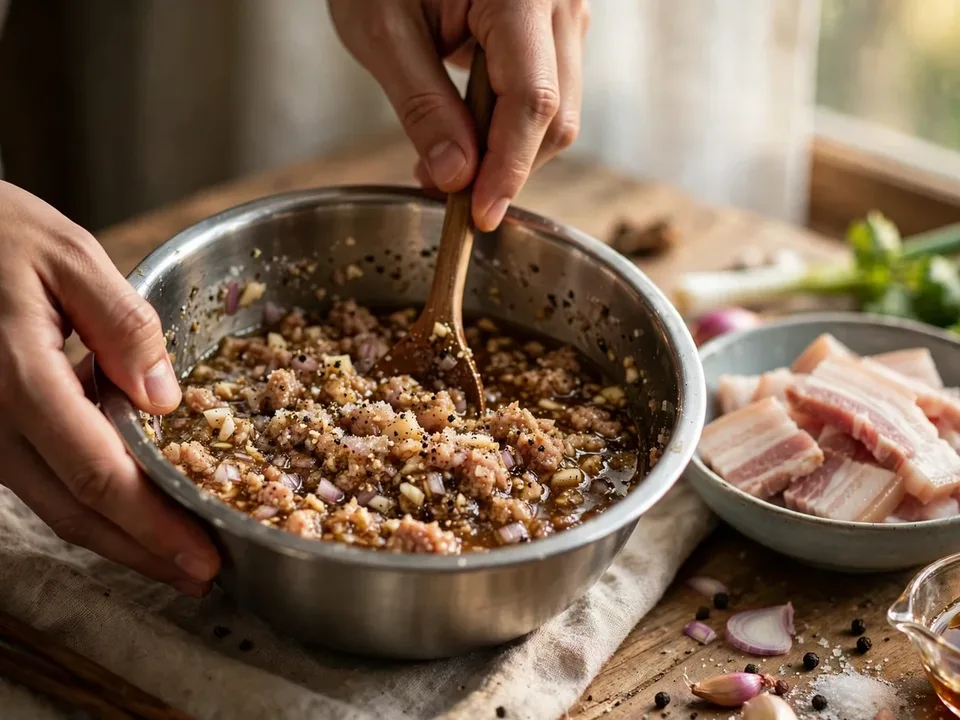
Keep the sliced pork belly and pork mince in separate bowls.
Keep the sliced pork belly and pork mince in separate bowls. Season both with fish sauce, sugar, shallot, garlic and black pepper, distributing the aromatics evenly. Mix the mince just until it becomes lightly tacky; do not knead it aggressively. Coat the belly slices on all sides so the seasoning reaches the edges that will char on the grill.
Look for
The belly slices should be individually coated and glossy; the mince should look evenly seasoned and slightly tacky without a paste-like texture.
Kitchen note
Keep the two pork preparations separate. The belly needs loose, individually coated slices while the mince needs just enough mixing to bind without becoming springy or dense. For an efficient order, make the pickle and dipping broth while the pork marinates, then prepare noodles and herbs before you start grilling; grilled pork should be the last major component to finish.
 Step 02
Marinate the pork and shape the patties
120 min
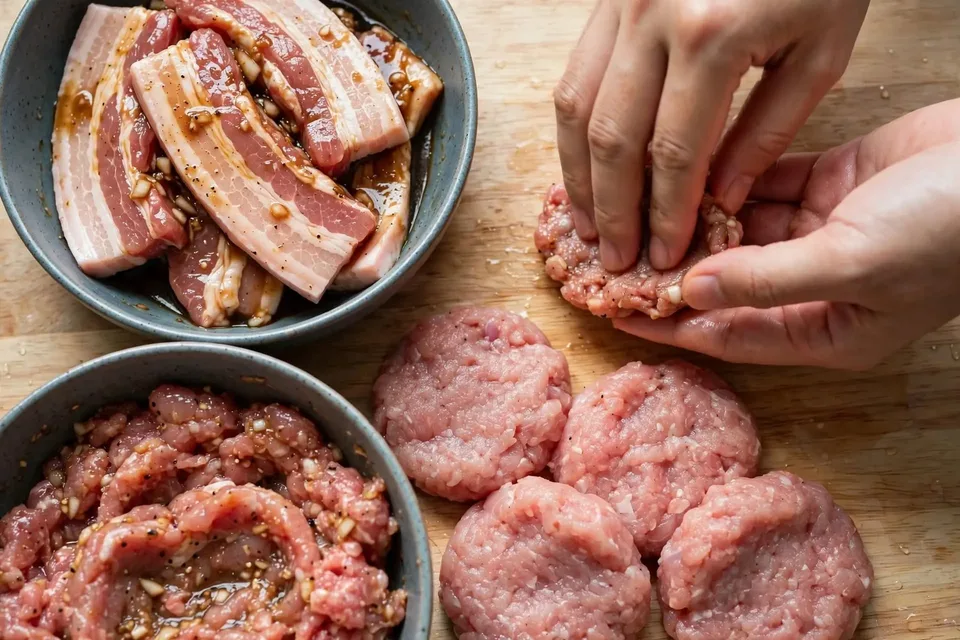
Cover both bowls and marinate in the refrigerator for at least 1 hour; 2–3 hours gives deeper seasoning.
Cover both bowls and marinate in the refrigerator for at least 1 hour; 2–3 hours gives deeper seasoning. About 20 minutes before grilling, shape the mince into small flat patties roughly 5–6 cm wide and about 1 cm thick. Lightly oil your hands if the mixture sticks. Keep the patties chilled until the grill is ready.
Look for
The patties should hold together cleanly without being compacted hard; the belly should remain flexible and well coated in marinade.
Kitchen note
Flat patties cook more evenly than thick meatballs. If the mixture feels very soft, chill it again rather than adding breadcrumbs—the classic texture should remain pork-forward and juicy.
 Step 03
Quick-pickle the carrot and green papaya
20 min
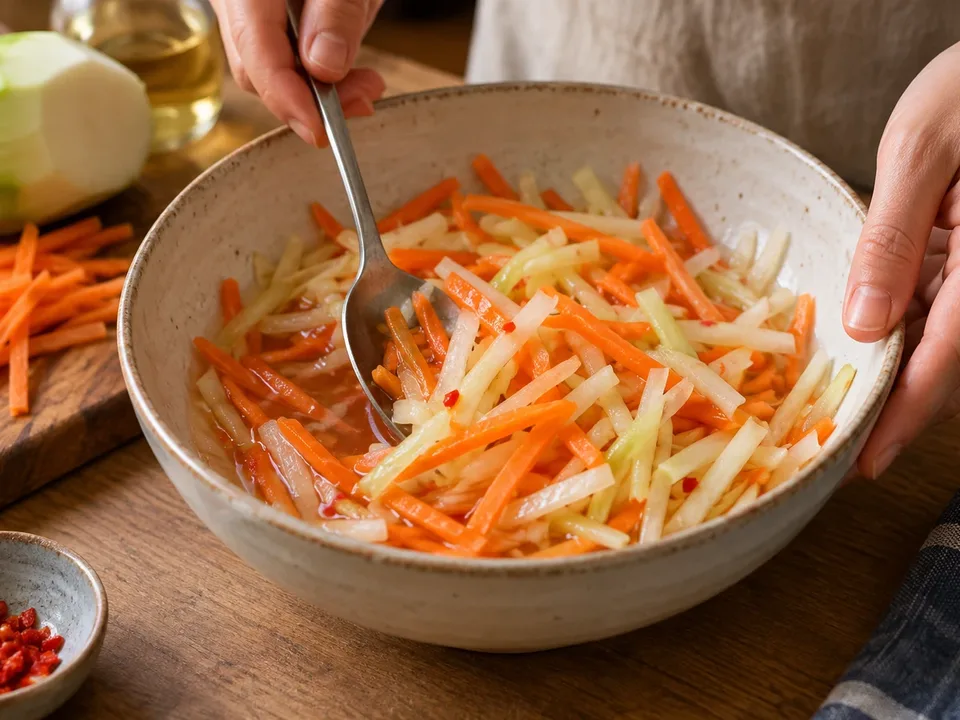
Toss the carrot and optional green papaya or kohlrabi with a small pinch of salt and 1 tablespoon of the sugar.
Toss the carrot and optional green papaya or kohlrabi with a small pinch of salt and 1 tablespoon of the sugar. Leave for 15–20 minutes, then rinse briefly and squeeze or drain well. Stir with 2 tablespoons rice vinegar and just enough water to cover lightly. Leave while you prepare the rest of the meal.
Look for
The vegetables should bend slightly yet still snap when bitten; the liquid should taste lightly sweet-sour rather than sharply acidic.
Kitchen note
The pickle should stay crisp. Do not leave thin vegetables buried in strong vinegar for hours before service or they can lose the fresh crunch that contrasts with the pork.
 Step 04
Build the light dipping broth
7 min
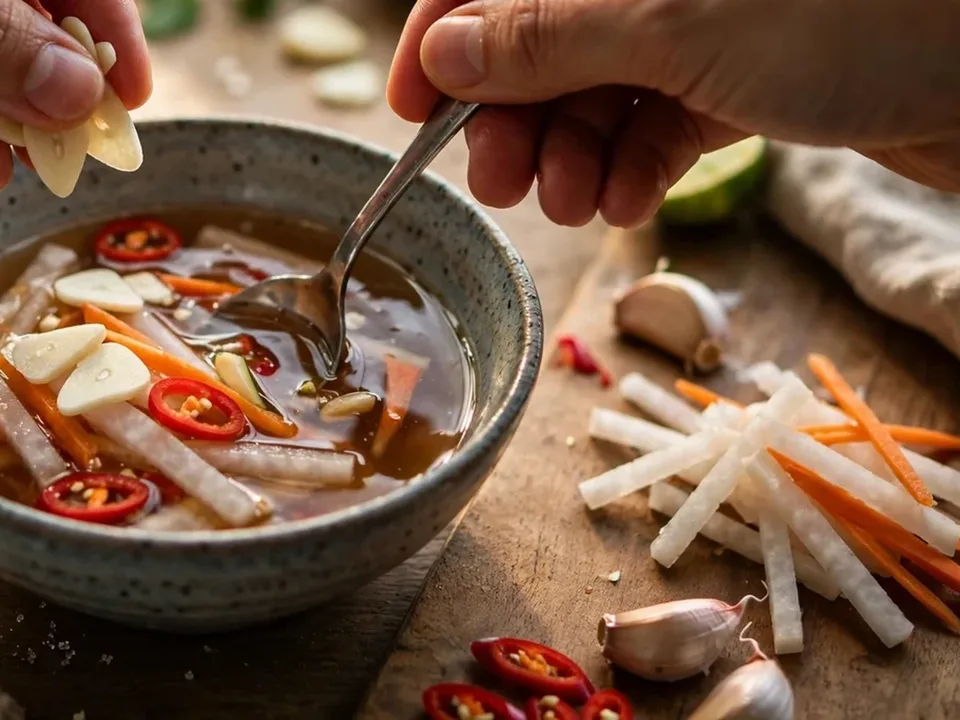
Dissolve the remaining sugar in the warm water.
Dissolve the remaining sugar in the warm water. Add the remaining fish sauce, 1 tablespoon rice vinegar and most of the lime juice. Stir in minced garlic and chilli if using. Taste only after the sugar is fully dissolved: the liquid should be deliberately lighter than a concentrated nước chấm because the pork, noodles and herbs will be dipped into it. Adjust with fish sauce, lime, sugar or water, then add some of the drained pickles shortly before serving.
Look for
The broth should be clear, light and balanced: savoury first, then gentle sweetness and acidity, with no single note dominating.
Kitchen note
Think of this as a sip-able dipping broth, not a sticky glaze. If it tastes perfect in a tiny concentrated spoonful, it may be too strong once a whole bowlful is used with noodles.
 Step 05
Cook the bún and prepare the herb platter
8 min
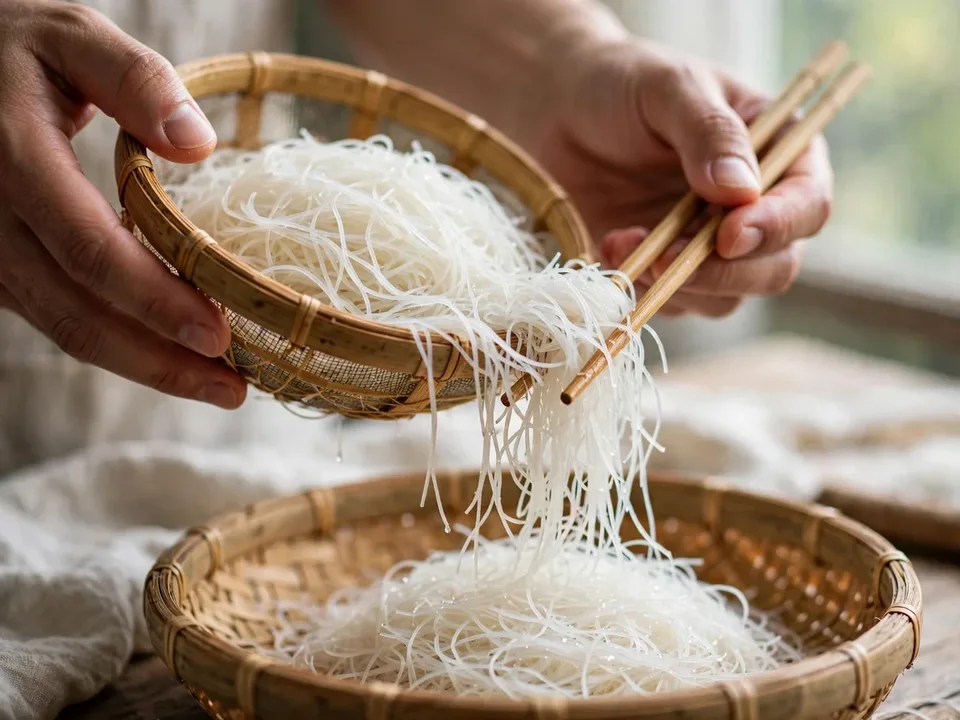
Cook the rice vermicelli according to its package until tender but not mushy.
Cook the rice vermicelli according to its package until tender but not mushy. Rinse under cool water to stop cooking, then drain very thoroughly. Wash the herbs and lettuce, spin or pat them dry, and keep them loose rather than compressed. Arrange noodles and greens separately so diners can build each bite.
Look for
The noodles should be cool, tender and separate with no puddle beneath them; herbs should look crisp and dry.
Kitchen note
Excess water on noodles or herbs dilutes the dipping broth. Give both enough draining time before they reach the table.
 Step 06
Grill the belly and patties over fierce heat
12 min
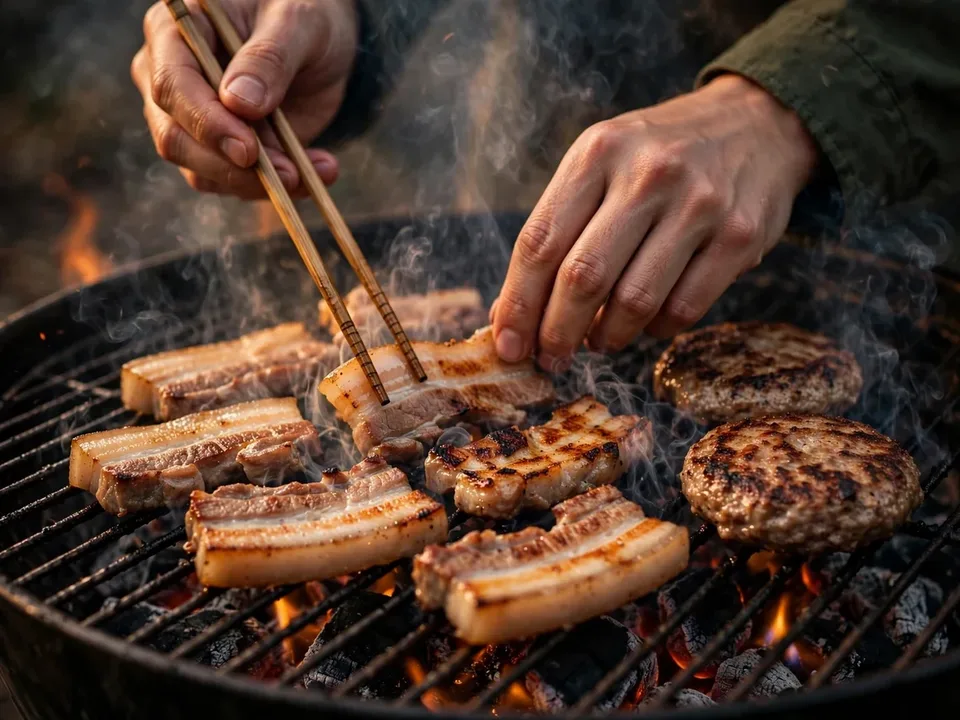
Heat a charcoal grill until the coals are glowing with strong radiant heat, or preheat a grill pan over medium-high to high heat.
Heat a charcoal grill until the coals are glowing with strong radiant heat, or preheat a grill pan over medium-high to high heat. Grill the pork belly in a single layer until caramelised with charred edges, usually 2–4 minutes per side depending on thickness. Grill the patties until browned, lightly charred and cooked through, roughly 3–5 minutes per side. Move pieces away from flare-ups rather than letting sugar burn black.
Look for
Look for lacquered brown surfaces and small charred patches; patties should be cooked through yet still springy and juicy, and belly fat should be rendered rather than rubbery.
Kitchen note
Charcoal gives the signature smoky character, but the target is caramelised pork—not burnt sugar. If using a grill pan, work in batches so released moisture does not steam the meat. Grill in batches with space between pieces. If the pork releases liquid and steams, increase the heat or reduce the batch size before continuing.
 Step 07
Set the hot pork into warm dipping bowls
3 min
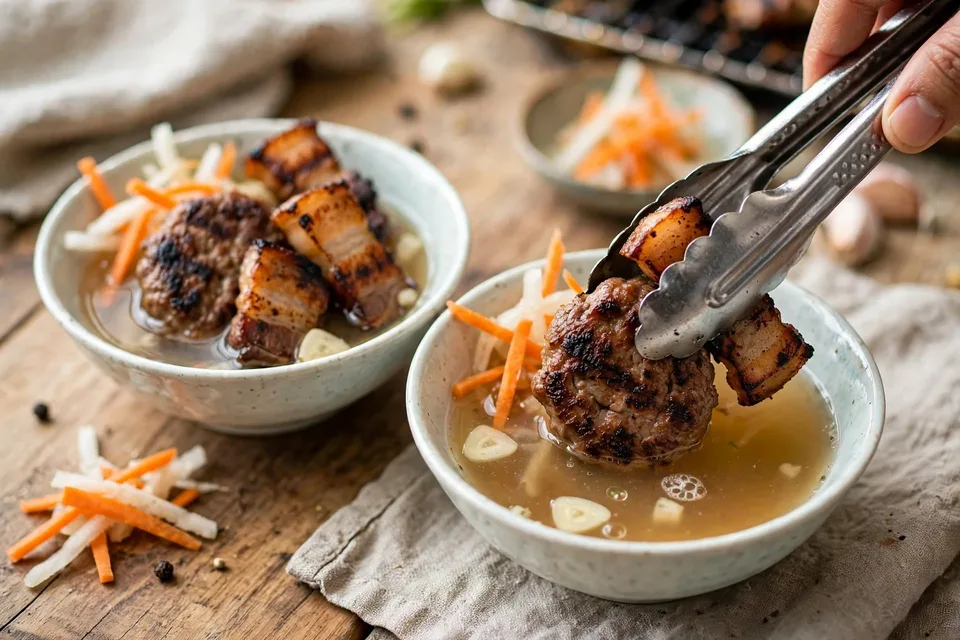
Warm the dipping broth gently if you want the classic hot-cold contrast; it should be warm, not boiled.
Warm the dipping broth gently if you want the classic hot-cold contrast; it should be warm, not boiled. Divide grilled patties and belly among individual bowls and ladle in enough dipping broth to surround the pork without burying it completely. Add a spoonful of the quick pickles to each bowl.
Look for
The pork should remain visibly grilled above the clear broth, with crisp pickle pieces floating around it rather than a thick sauce coating the meat.
Kitchen note
Do not boil the finished dipping broth—the fresh lime, garlic and fish-sauce aroma becomes harsher. Warm it only enough to contrast with the cool noodles and herbs.
 Step 08
Serve and eat Hanoi-style
2 min
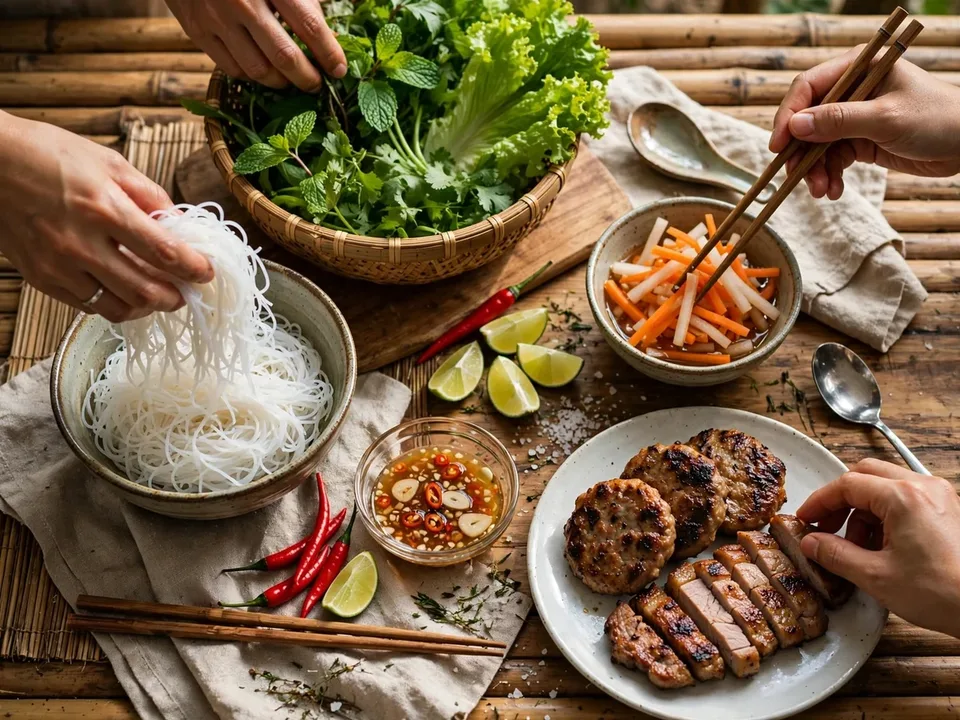
Serve each diner a pork-and-broth bowl with rice vermicelli and the herb platter alongside.
Serve each diner a pork-and-broth bowl with rice vermicelli and the herb platter alongside. Add a small portion of noodles and torn herbs to the dipping bowl, swish them through the broth, then eat with a piece of grilled pork and pickle. Repeat bite by bite rather than mixing the entire platter into one dry noodle bowl.
Look for
A good bite has smoky warm pork, cool soft noodles, crisp herbs or pickle and enough light broth to season everything without drowning it.
Kitchen note
The separate serving architecture is part of the dish. Keeping the noodles plain and the herbs fresh lets each mouthful rebalance smoke, acidity, sweetness and crunch.
After cooking
Explore the dish beyond the method.
Story, place and references are here for discovery, so they stay out of the way while you cook.
Culture & tradition
The story behind the dish
Origins, evolution and everyday life—read together as part of the recipe's culinary record.
Origins
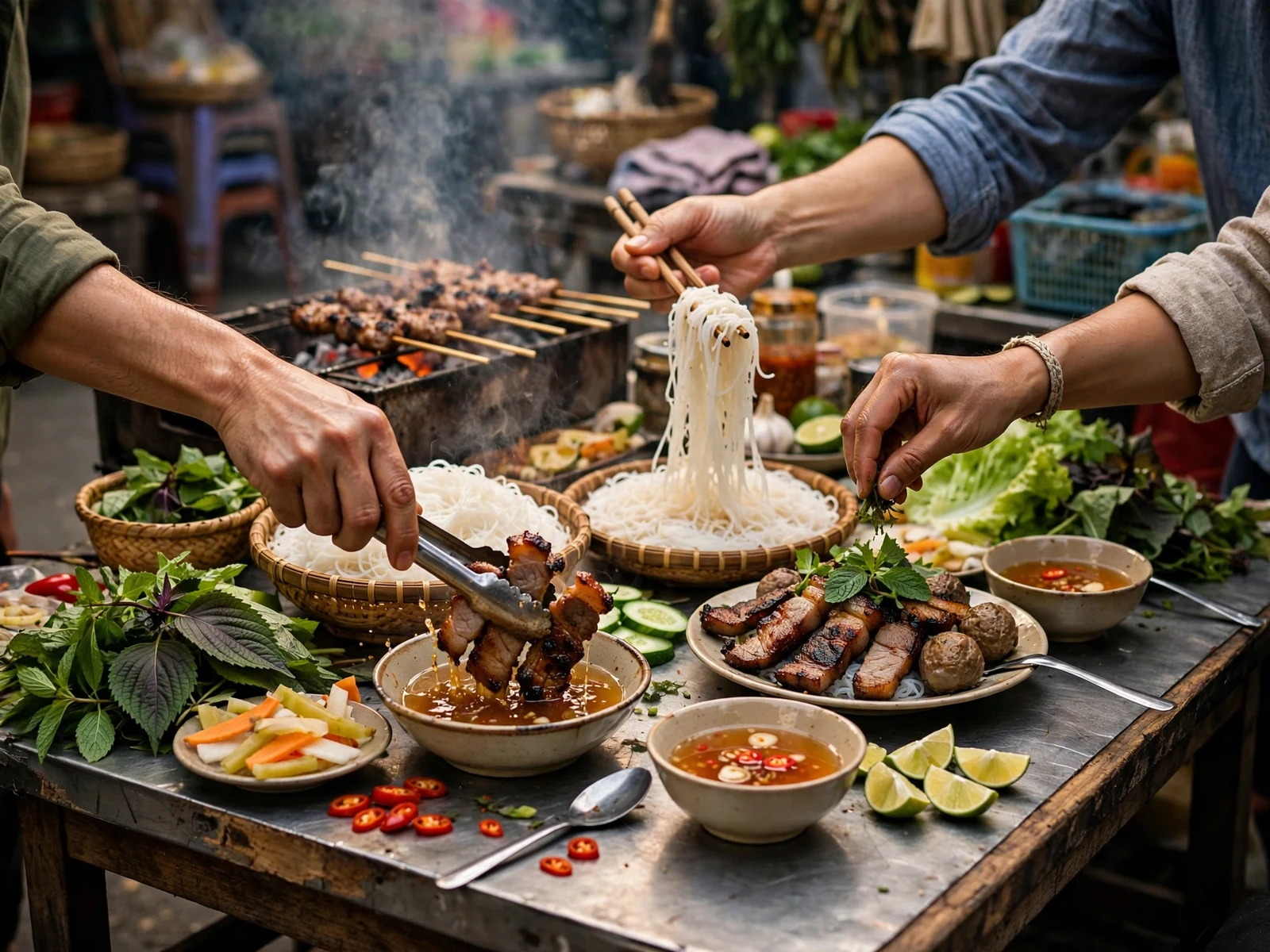
Bún Chả is closely associated with Hanoi and northern Vietnamese street-food culture, where small charcoal braziers perfume lunch streets with grilled pork smoke.
How it evolved
Recipes vary in pork seasoning, pickle choice, sweetness and whether the dipping broth is served warm or room-temperature. Pork patties are essential to the identity; thin pork belly or shoulder slices are also a common Hanoian component.
Its place today
It remains one of Hanoi’s most recognisable lunch dishes and a useful example of Vietnamese balance: smoky meat, plain noodles, herbs, pickles and a deliberately light dipping broth become complete only when eaten together.
Visual archive · plate 01
Bún Chả
An editorial view of the finished dish, kept compact so the story continues without an oversized image break.
Primary region
Hanoi, northern Vietnam
Country
Vietnam
Regional influence
Dense urban street-food culture and access to fresh herbs, rice noodles and pork make the dish especially suited to quick grilling and component-based service.
Related food systems
- Hanoi street food
- Vietnamese charcoal grilling
- Rice-vermicelli traditions
Culinary record
- Origin
- Hanoi
- Era
- Established Hanoi street-food tradition
- Sub-region
- Southeast Asia — Mainland Southeast Asia
- Climate
- Monsoon
- Cooking methods
- marinated · grilled
- Trade-route influence
- Red River trade · Mekong exchange · South China Sea routes
Traditional & modern
Grilled pork, cool rice vermicelli, herbs and a fish-sauce dipping broth remain the central components.
Sources & further reading
Follow the reference trail.
Ember & Equator links outward when an institution or primary reference helps support the culinary record.
- 0110 must-try Hanoian dishesExternal ↗
Vietnam Tourism · government
Supports: Bún Chả · chargrilled pork belly and patties · diluted vinegar fish sauce · Hanoi lunch culture
Ember & Equator source review · 2026-09-17
- 02Bún Chả · HanoiExternal ↗
Vietnam Tourism Board / SPICE VIET · government
Supports: Hanoi Bún Chả · pork patties · rice vermicelli · fresh herbs · grilling
Ember & Equator source review · 2026-09-17
- 03Northern Vietnam Vermicelli Noodles with Grilled Pork Meatballs (Bun Cha Hanoi)External ↗
Vicky Pham · specialist publication
Supports: Hanoi serving style · pork patties and optional belly · pickled papaya · light dipping broth · rice noodles and herbs
Ember & Equator source review · 2026-09-17
- 04Bún chả – Grilled pork with vermicelli and fresh greensExternal ↗
Helen’s Recipes · specialist publication
Supports: Northern Vietnamese identity · pork belly and minced pork · pickles · dipping sauce · separate service
Ember & Equator source review · 2026-09-17
Ingredient guides
Learn about the ingredients behind the dish.
These are reference guides, not a second ingredient list. Follow an ingredient when you want to understand its role, use and wider culinary context.
Ingredient
pork belly
Understand what it contributes, how to use it, and the dishes that reveal it best.
Ingredient
pork mince
Understand what it contributes, how to use it, and the dishes that reveal it best.
Ingredient
fish sauce
Understand what it contributes, how to use it, and the dishes that reveal it best.
Explore ingredient →
Ingredient
sugar
Understand what it contributes, how to use it, and the dishes that reveal it best.
Ingredient
shallots
Understand what it contributes, how to use it, and the dishes that reveal it best.
Ingredient
garlic
Understand what it contributes, how to use it, and the dishes that reveal it best.
Keep wandering
Where will this dish take you next?
Stay with the place, follow an ingredient or technique, or cross into another food culture. Each path begins with something already present in this dish.
Stay with the place
01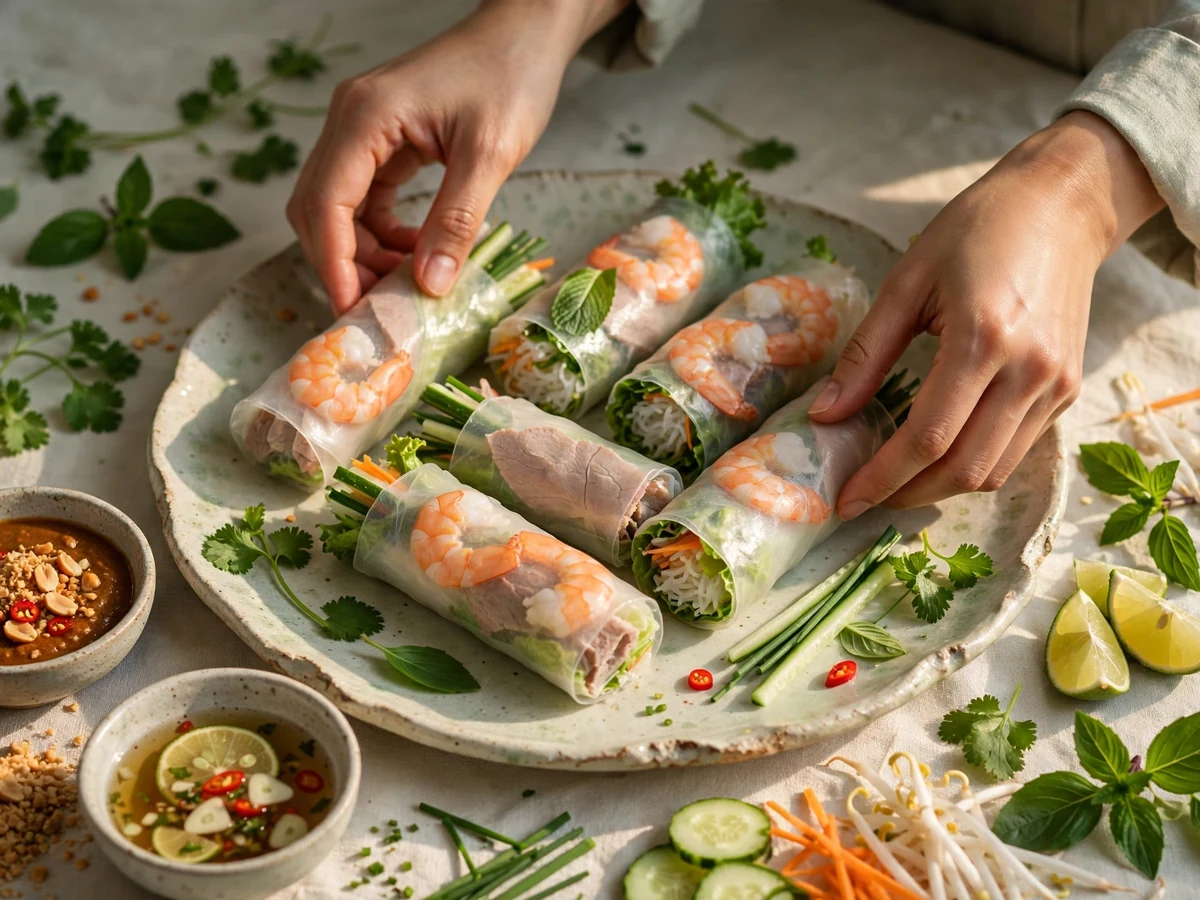
Vietnam
Gỏi Cuốn
Stay in the same food culture and notice how balance a sweet-sour-salty sauce appears in another dish.
Shared thread · Balance a sweet-sour-salty sauce · pork belly · sugar
Follow the method or pantry
02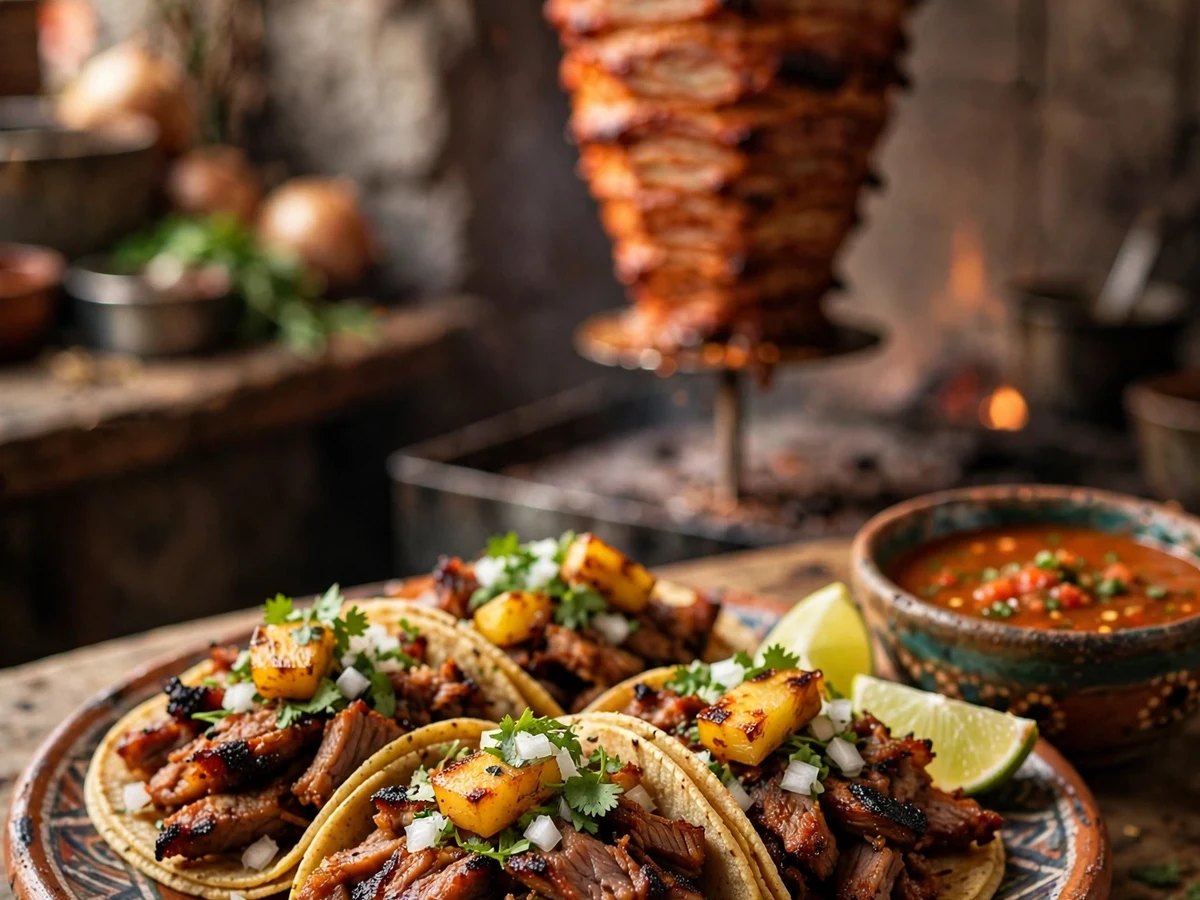
Mexico
Tacos al Pastor
Follow the cooking method: both dishes connect through marinate.
Shared thread · Marinate · Grill or griddle · garlic
Cross a culinary border
03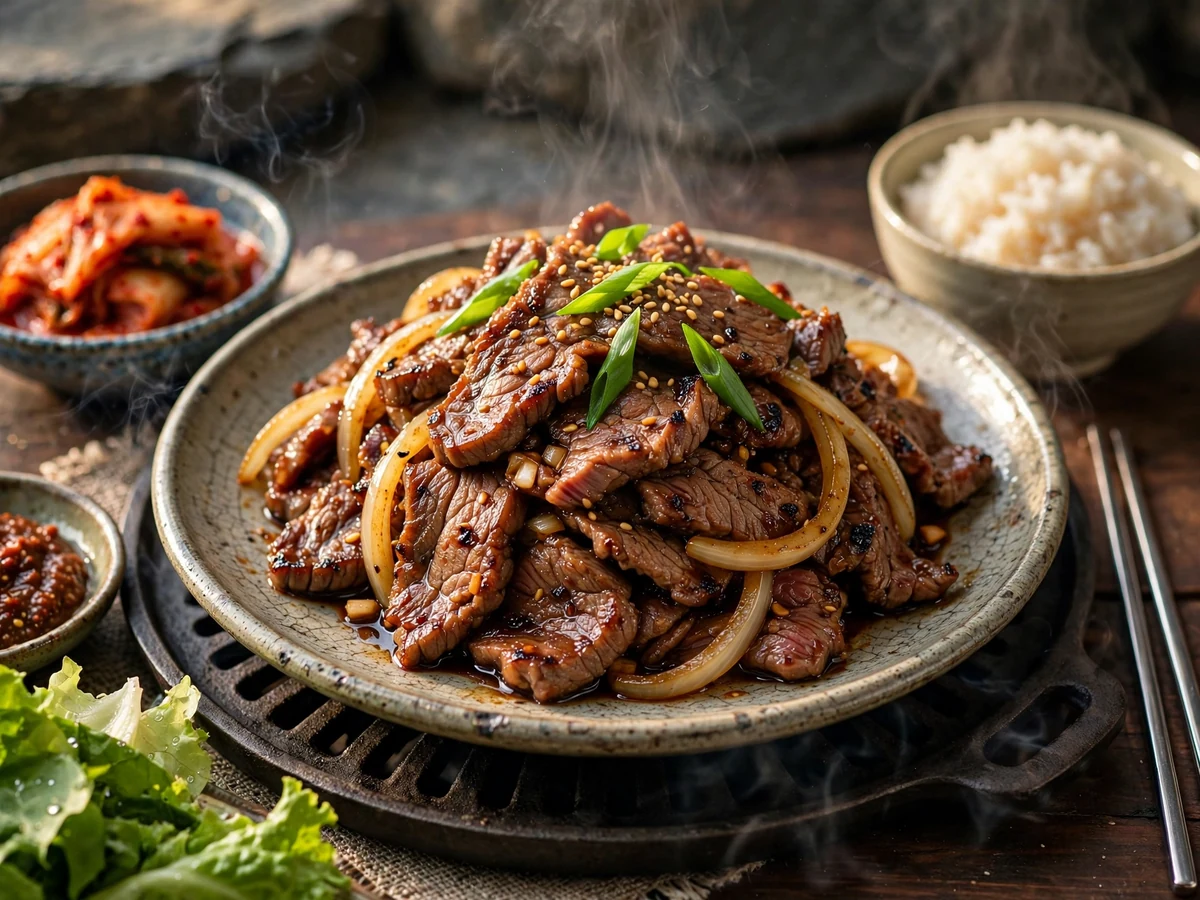
South Korea
Bulgogi
Cross borders while keeping marinate as the common thread.
Shared thread · Marinate · Grill or griddle · garlic
Go one layer deeper
One small detail can open an entirely different part of food.
Continue in Ember & Equator