
South Korea · lunch · dinner
Bulgogi
South Korea through one enduring dish.
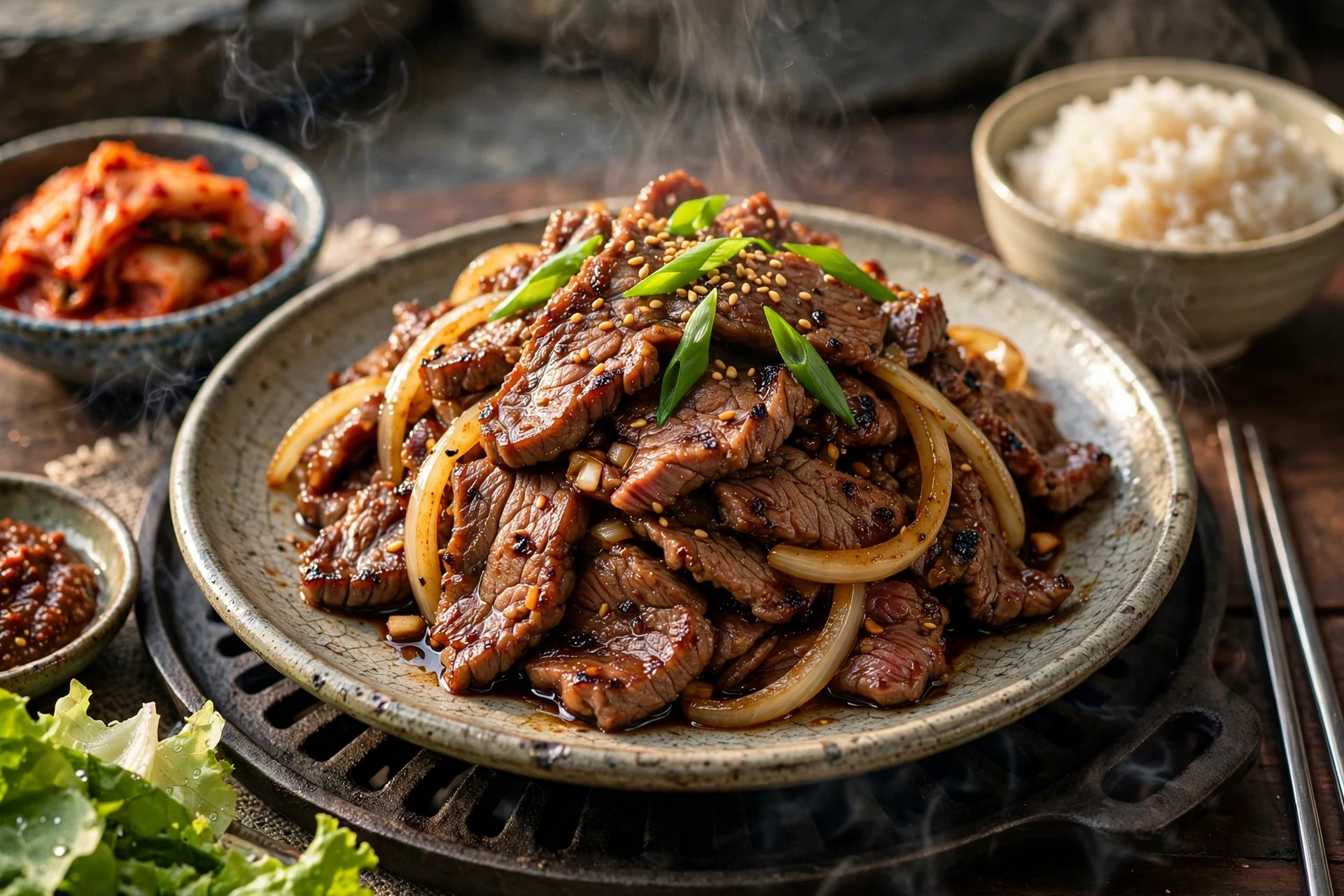
Bulgogi is Korean marinated beef sliced thinly, seasoned with soy, pear, garlic and sesame, then cooked quickly over strong heat until tender, savoury-sweet and lightly caramelized.
- Total
- 40 min
- Difficulty
- Easy
- Serves
- 4
- Steps
- 5
The dish
Place first. Then the plate.
Bulgogi literally joins the ideas of fire and meat, but Korean practice includes both charcoal-grilled and pan-cooked forms. This Ember & Equator version teaches a common beef bulgogi built on thin slicing and a soy-sesame marinade with Asian pear; regional and household versions vary in vegetables, sweetness, cooking vessel and how saucy the finished meat is.
Explore South KoreaAt a glance
Origin
South Korea
Region
Across South Korea
Meal
lunch · dinner
Guided steps
5
Dish
Bulgogi
Cuisine
Korean cuisine
Food type
Lunch · Dinner
Technique
Marinate · Grill or griddle · Sear
Cook the recipe
In the kitchen
Start with the ingredients, then follow the Method in order. Open cooking tips only when you need extra help; the story and references can wait until you are ready.
- Total
- 40 min
- Serves
- 4
- Level
- Easy
- Visual cues
- 5
Ingredients
Serves 4- 600 gbeef sirloinribeye or top sirloin; partially freeze for easier slicing
- 5 tbspsoy sauceregular Korean soy sauce or another naturally brewed soy sauce
- 0.5 wholeAsian pearpeeled and finely grated; Bosc pear or sweet apple is a practical substitute
- 1 smallyellow onionhalf grated/blended into the marinade and half thinly sliced
- 2 tbspmirinor Korean cooking rice wine
- 1.5 tbspbrown sugaradjust slightly to the sweetness of the pear
- 5 clovesgarlicfinely minced
- 1.5 tbspsesame oiltoasted sesame oil
- 0.125 tspblack pepperfreshly ground
- 3 wholespring onionscut into 5 cm / 2 in lengths; reserve some green for garnish
- 1 tbspsesame seedslightly toasted
Optional
- 0.5 wholecarrotthinly sliced; optional vegetable addition
- 1 tbspneutral oilonly as needed for a skillet or grill pan
- 4 servingscooked white ricefor serving
- 12 wholelettuce leavesfor ssam-style wrapping if desired
Everything ready? Continue straight into the cooking steps.
Start methodMethod
5 steps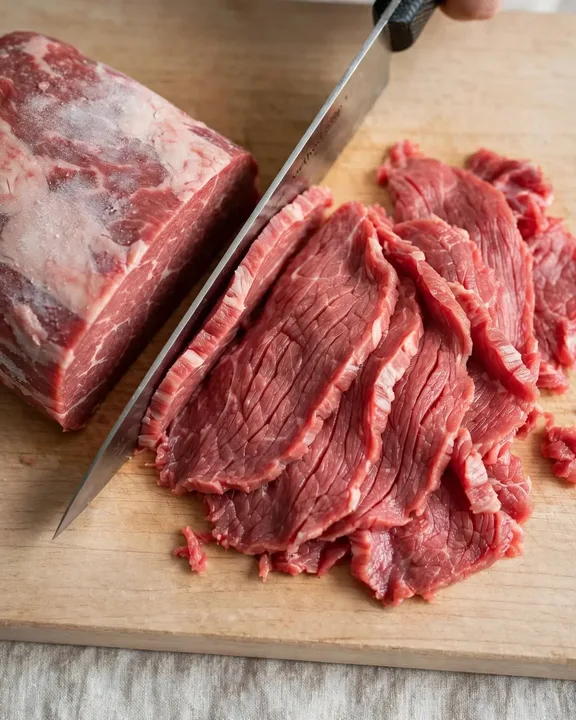 Step 01
Slice the beef thinly across the grain
10 min
Chill the beef in the freezer for 45–60 minutes until firm but not frozen solid.
Chill the beef in the freezer for 45–60 minutes until firm but not frozen solid. With a sharp knife, slice across the grain into sheets about 3 mm / 1/8 inch thick. Separate the slices and blot away excess surface moisture or blood with paper towel so the marinade can coat the meat cleanly.
Look for
The slices should be broad, flexible and nearly translucent at the edges, with the grain visibly cut across rather than running lengthwise through the strip.
Kitchen note
Thin slicing matters more than prolonged tenderizing. If the beef is difficult to slice cleanly, chill it longer rather than sawing at soft meat; uneven thick pieces cook at different rates.
 Step 02
Build the soy, pear and sesame marinade
5 min
In a large bowl, combine soy sauce, grated Asian pear, the grated half of the onion, mirin, brown sugar, garlic, sesame oil, black pepper and most of the sesame seeds.
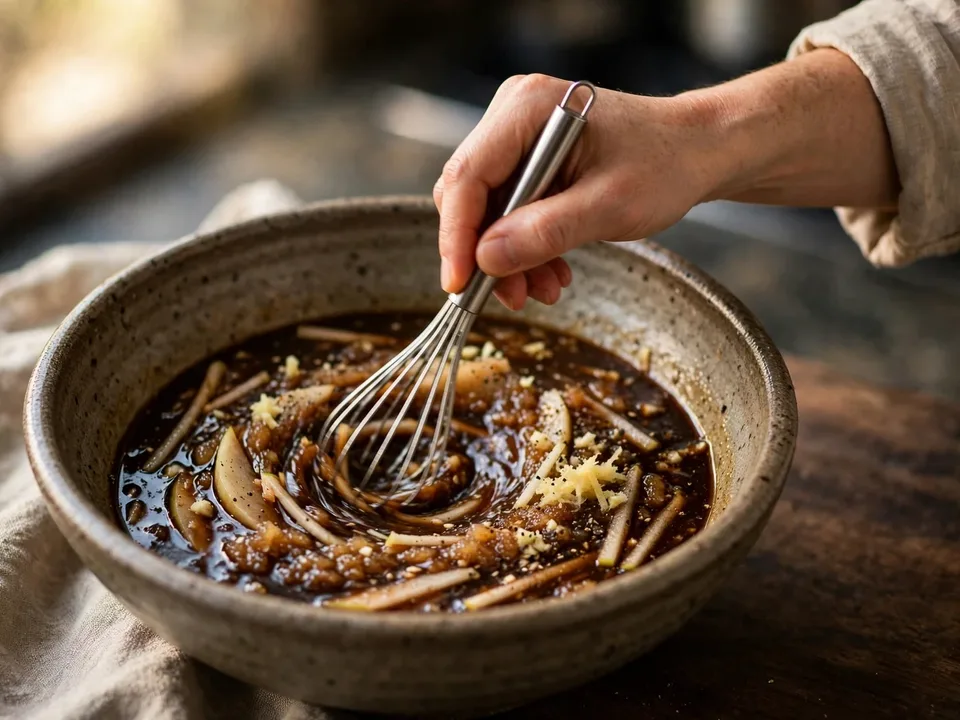
In a large bowl, combine soy sauce, grated Asian pear, the grated half of the onion, mirin, brown sugar, garlic, sesame oil, black pepper and most of the sesame seeds. Stir until the sugar dissolves and the mixture smells balanced between soy, fruit, garlic and sesame rather than sharply salty or syrupy-sweet.
Look for
The marinade should be fluid, glossy and aromatic with no mound of undissolved sugar at the bottom of the bowl.
Kitchen note
Asian pear contributes flavour and gentle tenderizing. Kiwi and pineapple are much stronger tenderizers; if substituted, use very little and shorten the marination or the beef can become mushy.
 Step 03
Coat the beef and marinate briefly
60 min
Add the sliced beef, sliced onion, spring-onion whites and optional carrot to the marinade.
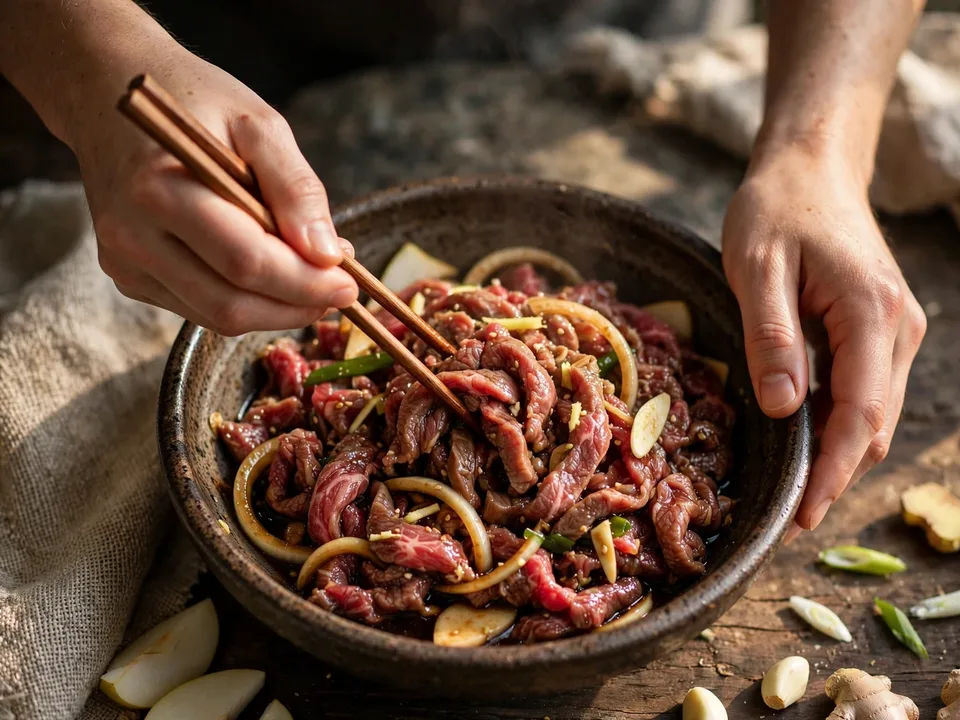
Add the sliced beef, sliced onion, spring-onion whites and optional carrot to the marinade. Toss gently with your hands or tongs until every slice is coated and separated. Cover and refrigerate for 30–60 minutes. Good thin beef can marinate longer, but there is no need to rely on an overnight soak for tenderness.
Look for
Every beef slice should look evenly glossy with marinade, while the meat still feels springy rather than softened into a paste-like texture.
Kitchen note
Do not pack the slices into a tight clump. Separating them while coating prevents pockets of unseasoned meat and makes high-heat cooking much easier later.
 Step 04
Cook quickly over strong heat without steaming the beef
10 min
Preheat a grill, grill pan or heavy skillet until very hot.
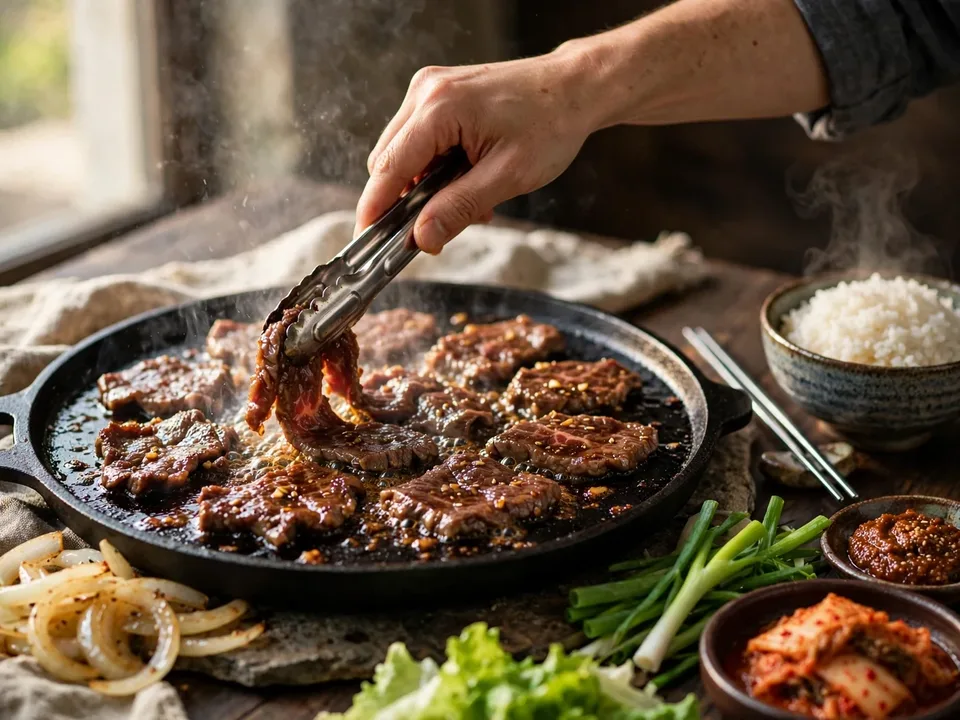
Preheat a grill, grill pan or heavy skillet until very hot. If using a skillet, add only enough neutral oil to prevent sticking. Lift the beef from excess marinade and cook in small batches for about 1–2 minutes per side, turning and tossing until the edges caramelize and no raw pink remains. Let the pan recover heat between batches.
Look for
The beef should be just cooked through, glossy and tender with browned edges; there should not be a deep pool of watery marinade steaming around the meat.
Kitchen note
Crowding a skillet drops the temperature and turns caramelized bulgogi into boiled beef. A saucier pan-cooked style is legitimate, but for this Ember & Equator version keep batches small so the beef develops browned edges.
 Step 05
Finish with sesame and serve hot
3 min
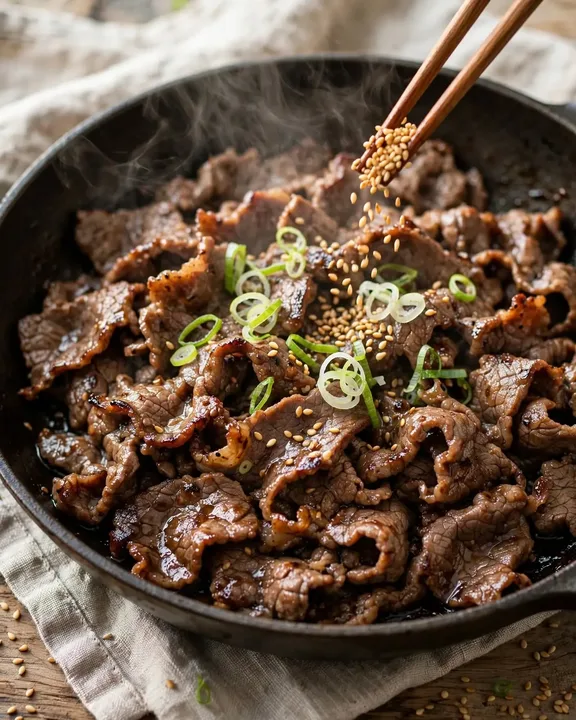
Combine the cooked batches, scatter over the reserved spring-onion greens and remaining sesame seeds and serve immediately.
Combine the cooked batches, scatter over the reserved spring-onion greens and remaining sesame seeds and serve immediately. Offer hot rice and, if desired, lettuce leaves for wrapping. Spoon any small amount of concentrated pan juice over the meat, but do not drown the caramelized slices.
Look for
The finished beef should look lacquered rather than watery, with distinct thin slices, caramelized edges and fresh sesame-scallion aroma.
Kitchen note
Bulgogi loses its best texture as it sits. Have rice, banchan and wraps ready before the final batch finishes so the meat reaches the table while the edges are still hot and lightly caramelized.
After cooking
Explore the dish beyond the method.
Story, place and references are here for discovery, so they stay out of the way while you cook.
Culture & tradition
The story behind the dish
Origins, evolution and everyday life—read together as part of the recipe's culinary record.
Origins
Korea; modern bulgogi belongs to a long Korean tradition of seasoning and grilling or pan-cooking meat, though present-day formulas vary widely.
How it evolved
Contemporary beef bulgogi is commonly made with thinly sliced tender beef and a soy-based marinade. Restaurant charcoal grilling, skillet cooking and Seoul-style saucier preparations all remain recognizable forms.
Its place today
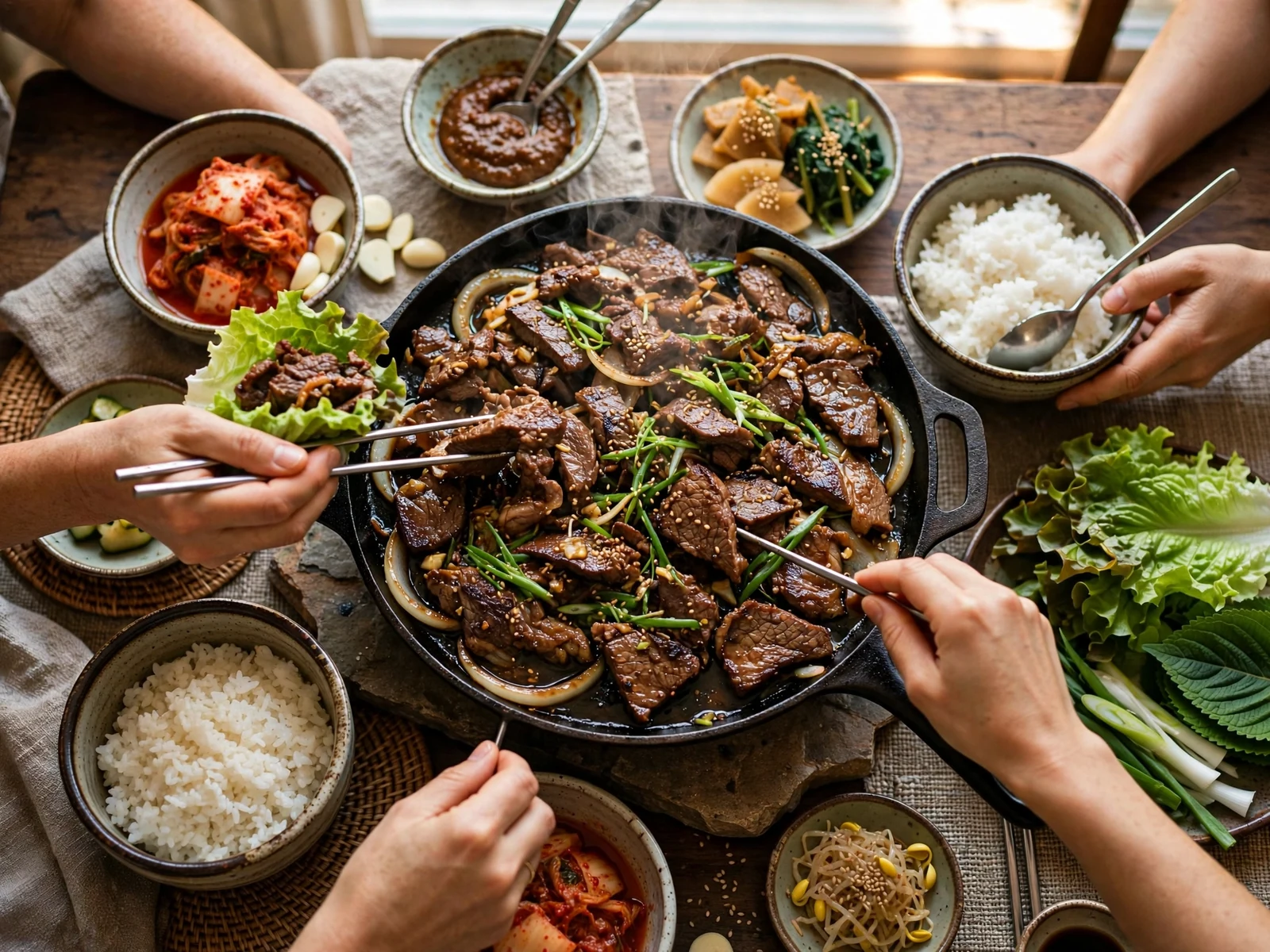
A widely loved Korean main dish served with rice, lettuce wraps and banchan, and also reused in rice bowls, gimbap and other dishes.
Visual archive · plate 01
Bulgogi
An editorial view of the finished dish, kept compact so the story continues without an oversized image break.
Primary region
Across South Korea
Country
South Korea
Regional influence
Bulgogi is less climate-bound than preservation foods; its character comes from grilling/pan heat, soy seasoning and fruit/aromatic marinades used with thin-cut beef.
Related food systems
- Korean barbecue
- Soy-based Korean marinades
- Ssam and banchan meal culture
Sources & further reading
Follow the reference trail.
Ember & Equator links outward when an institution or primary reference helps support the culinary record.
- 01Bulgogi (Korean BBQ Beef)External ↗
Korean Bapsang · specialist publication
Supports: thin sliced beef · soy rice-wine sugar sesame garlic marinade · Asian pear · 30–60 minute marination · charcoal grill and high-heat skillet methods · Seoul-style variation
Ember & Equator source review · 2026-09-17
- 02Easy bulgogi (Mak-bulgogi)External ↗
Maangchi · specialist publication
Supports: traditional pear and onion marinade context · quick beef cooking · bulgogi variation
Ember & Equator source review · 2026-09-17
- 03Modern BulgogiExternal ↗
Korea.net / Institute of Traditional Korean Food · government
Supports: pear and onion marinade tradition · soy-based seasoning · Korean bulgogi cultural context
Ember & Equator source review · 2026-09-17
Ingredient guides
Learn about the ingredients behind the dish.
These are reference guides, not a second ingredient list. Follow an ingredient when you want to understand its role, use and wider culinary context.
Ingredient
beef sirloin
Understand what it contributes, how to use it, and the dishes that reveal it best.
Ingredient
soy sauce
Understand what it contributes, how to use it, and the dishes that reveal it best.
Explore ingredient →
Ingredient
Asian pear
Understand what it contributes, how to use it, and the dishes that reveal it best.
Ingredient
yellow onion
Understand what it contributes, how to use it, and the dishes that reveal it best.
Ingredient
mirin
Understand what it contributes, how to use it, and the dishes that reveal it best.
Ingredient
brown sugar
Understand what it contributes, how to use it, and the dishes that reveal it best.
Keep wandering
Where will this dish take you next?
Stay with the place, follow an ingredient or technique, or cross into another food culture. Each path begins with something already present in this dish.
Stay with the place
01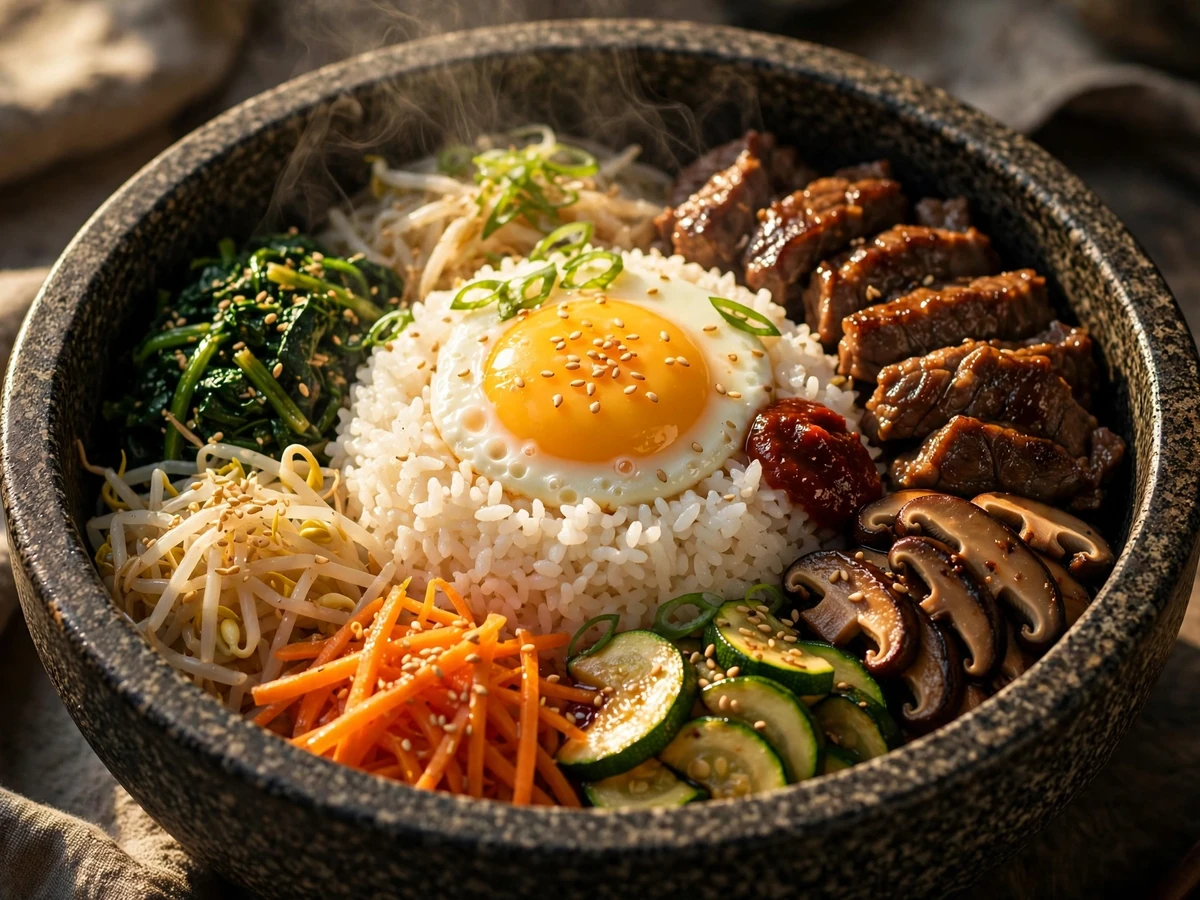
South Korea
Bibimbap
Stay in the same food culture and notice how marinate appears in another dish.
Shared thread · Marinate · Sear · beef sirloin
Follow the method or pantry
02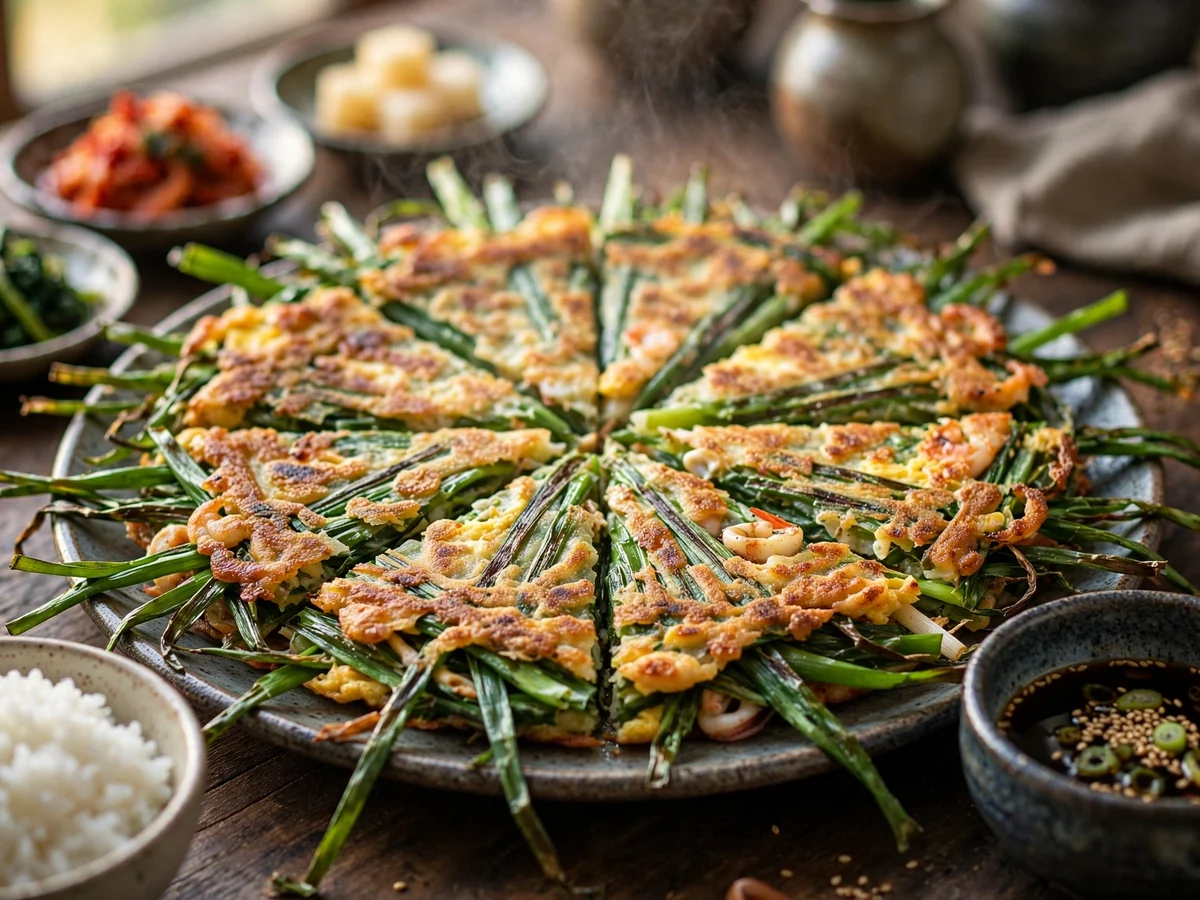
South Korea
Pajeon
Follow the pantry: both dishes connect through soy sauce.
Shared thread · soy sauce · spring onions · sesame seeds
Cross a culinary border
03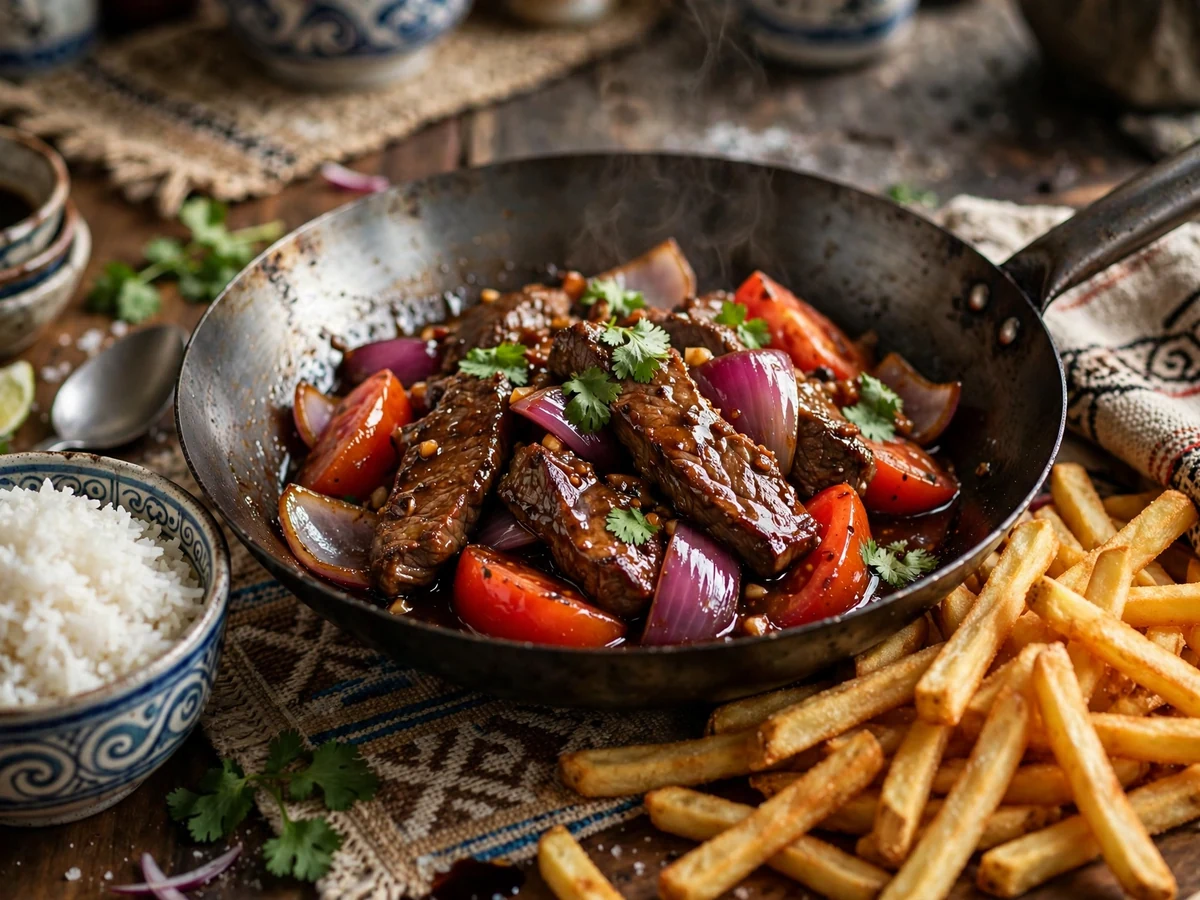
Peru
Lomo Saltado
Cross borders while keeping sear as the common thread.
Shared thread · Sear · beef sirloin · soy sauce
Go one layer deeper
One small detail can open an entirely different part of food.
Continue in Ember & Equator