
Nigeria · snack · dinner
Beef Suya
Nigeria through one enduring dish.
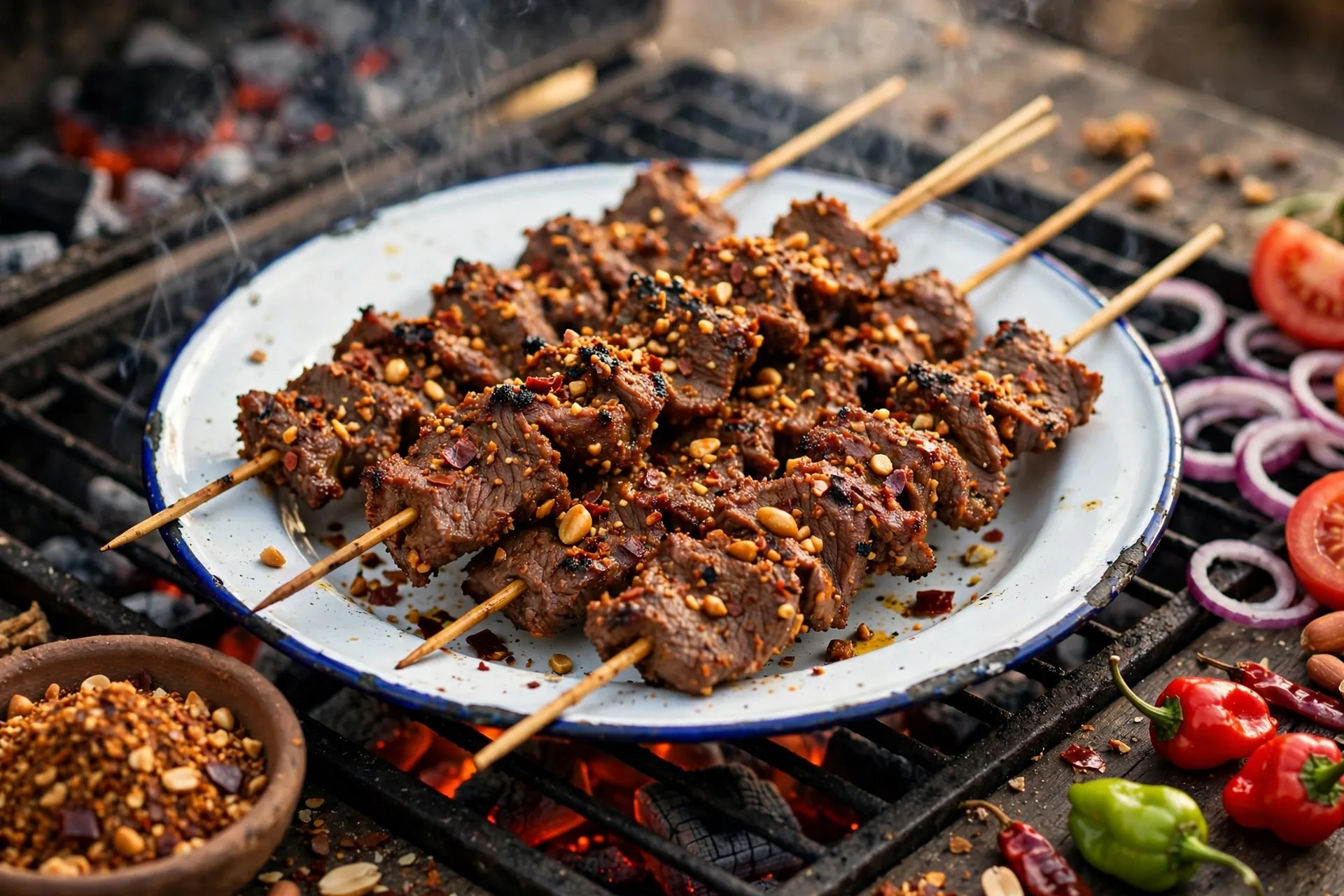
Beef suya is Nigerian street food of very thin beef threaded on skewers, brushed with groundnut oil, coated generously in peppery groundnut-based yaji and roasted over strong heat until smoky and charred at the edges.
- Total
- 47 min
- Difficulty
- Medium
- Serves
- 4
- Steps
- 8
The dish
Place first. Then the plate.
Suya is strongly associated with Hausa and northern Nigerian food traditions and is now eaten across Nigeria, especially as an evening street food. The defining combination is thinly sliced meat, skewers, high dry heat and yaji: a dry spice mixture commonly built around kuli-kuli or another defatted groundnut base, ginger and hot pepper. Individual Mai Suya guard their own blends, so no single yaji formula represents every vendor. This Ember & Equator version uses a practical home yaji while preserving the dry, nutty, spicy character and the oil-before-spice coating method documented by Nigerian cooks.
Explore NigeriaAt a glance
Origin
Nigeria
Region
Northern Nigeria / nationwide street-food culture
Meal
snack · dinner
Guided steps
8
Dish
Beef Suya
Cuisine
Nigerian cuisines
Food type
Street food · Snack
Technique
Marinate · Grill or griddle
Cook the recipe
In the kitchen
Start with the ingredients, then follow the Method in order. Open cooking tips only when you need extra help; the story and references can wait until you are ready.
- Total
- 47 min
- Serves
- 4
- Level
- Medium
- Visual cues
- 8
Ingredients
Serves 4- 700 gbeef sirloinvery lean; slice into thin fillets across the grain
- 80 gcrushed kuli-kuli or very dry roasted peanut powderkuli-kuli gives the more traditional dry groundnut base; if using roasted peanuts, grind briefly and blot excess oil
- 2 tbspground gingeryaji spice
- 1 tbspcayenne pepperor Nigerian dried chilli to taste
- 1 tspsaltdivided; adjust if using seasoning cube
- 60 mlgroundnut oilor another neutral oil for brushing the beef
- 1onionsthinly sliced for serving
- 2ripe tomatoescut into wedges for serving
Optional
- 1seasoning cubefinely crushed; optional but common in home yaji blends
- 1/2 tspground uda or grains of Selimoptional aromatic variation
- 1cucumbersliced for serving; optional
- 2 cupsgreen cabbagefinely shredded for serving; optional
Everything ready? Continue straight into the cooking steps.
Start methodMethod
8 steps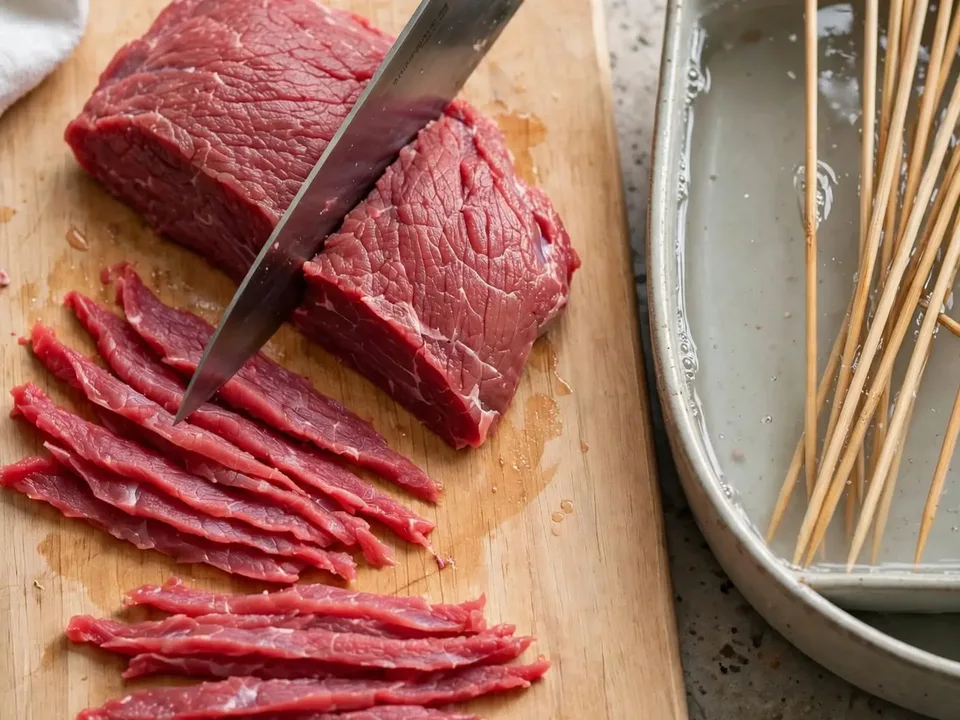 Step 01
Soak the skewers and slice the beef into very thin fillets
15 min
If using wooden skewers, soak them in cold water well ahead of cooking so the exposed ends are less likely to scorch.
If using wooden skewers, soak them in cold water well ahead of cooking so the exposed ends are less likely to scorch. Trim obvious sinew from the beef and slice across the grain into very thin, broad fillets. Cut any very long pieces shorter so they will sit flat on the sticks rather than flap over the heat.
Look for
The beef is sliced into flexible, even fillets only a few millimetres thick, with no thick folds or large sinewy pieces.
Kitchen note
Thinness matters more than perfect shape. A slightly chilled piece of beef is easier to slice at home, but do not freeze it hard; the goal is flexible fillets that can lie flat on a skewer.
 Step 02
Make a dry, aromatic yaji rather than an oily peanut paste
6 min
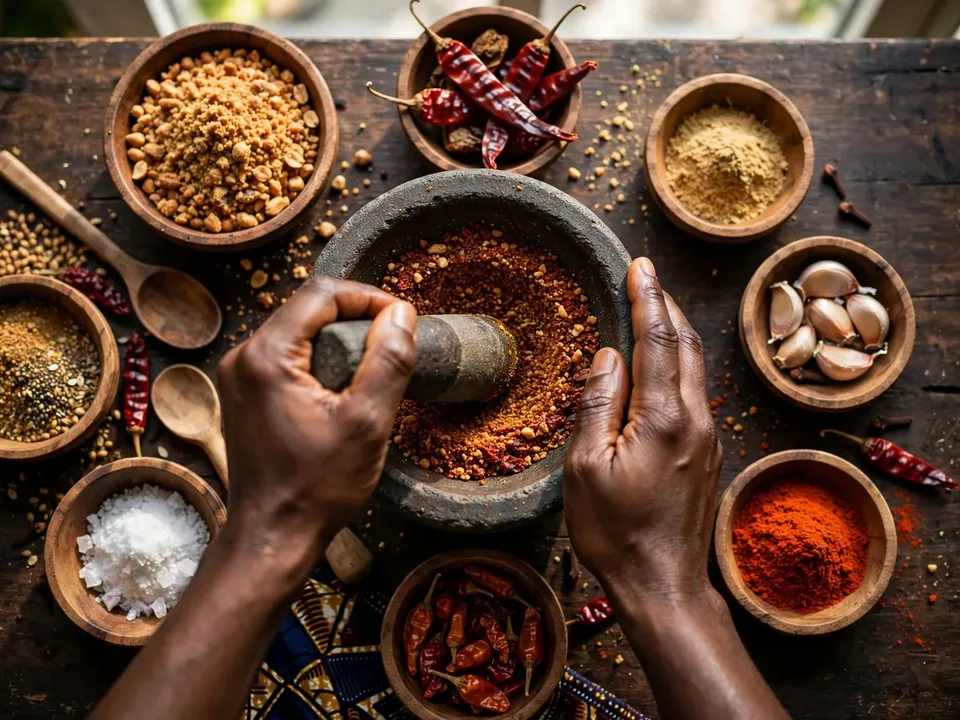
Combine the crushed kuli-kuli or very dry roasted peanut powder with the ground ginger, cayenne, optional seasoning cube, optional uda and about half the salt.
Combine the crushed kuli-kuli or very dry roasted peanut powder with the ground ginger, cayenne, optional seasoning cube, optional uda and about half the salt. Mix or pound until the blend is fine, dry and evenly reddish-brown. If a home-ground peanut substitute begins to look oily, stop grinding and blot it between absorbent paper before mixing the spices.
Look for
The yaji is loose and powdery, smells strongly of ginger and chilli, and can be pinched without clumping into peanut butter.
Kitchen note
Kuli-kuli is useful because much of its peanut oil has already been removed. Fresh peanuts can work at home, but an oily paste will smear instead of forming the dry, dusty coating associated with suya.
 Step 03
Thread the beef flat on the skewers
8 min
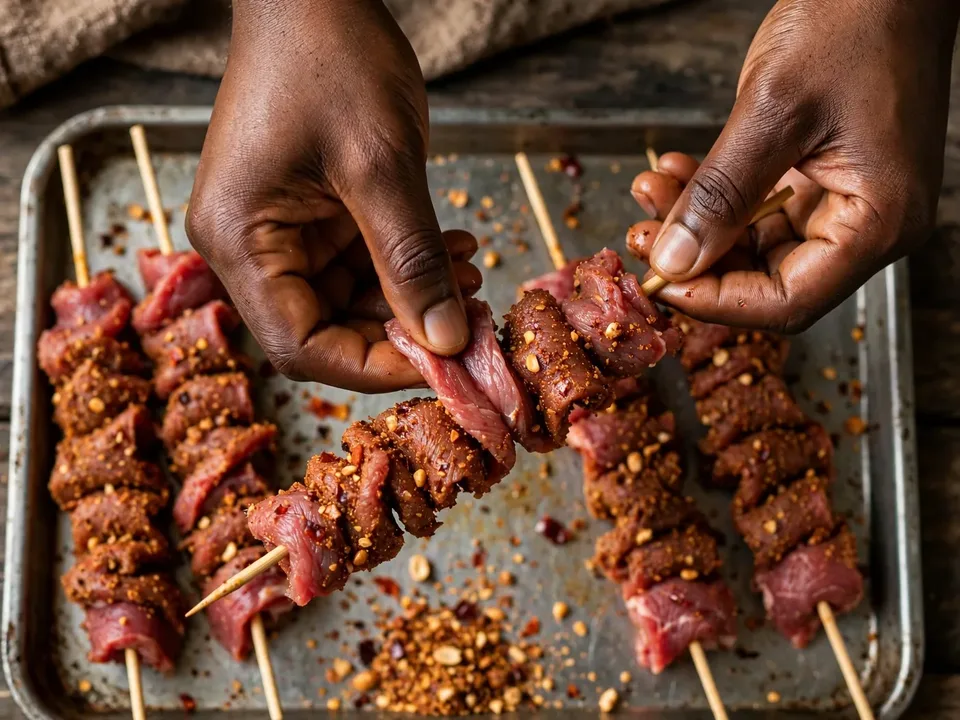
Thread the thin beef fillets onto the soaked skewers so the pieces overlap only slightly and remain mostly flat.
Thread the thin beef fillets onto the soaked skewers so the pieces overlap only slightly and remain mostly flat. Leave enough of each skewer exposed to handle safely during cooking.
Look for
The beef forms a thin, even layer along each skewer with exposed edges and no dense clumps.
Kitchen note
Do not bunch the meat into thick folds. Suya cooks by exposing a large seasoned surface to fierce heat; thick clusters steam inside before the exterior chars.
 Step 04
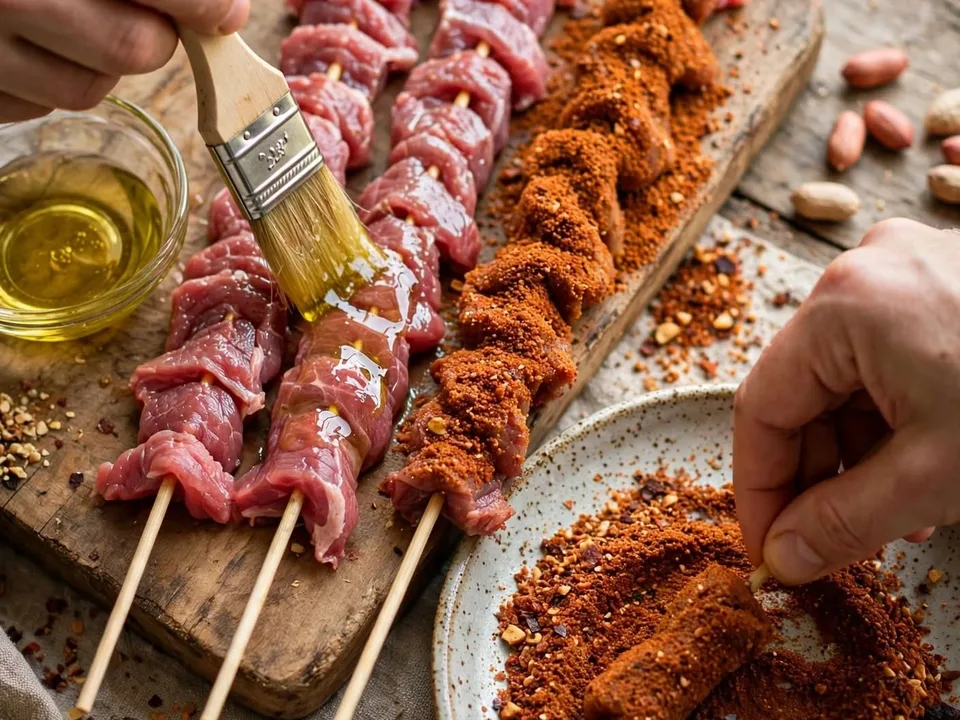
Brush with groundnut oil, then press on the yaji
7 min
Stir the remaining salt into the groundnut oil.
Stir the remaining salt into the groundnut oil. Brush a thin film over both sides of the threaded beef, making sure dry patches are coated. Spread the yaji in a wide tray and press or dust it generously over every surface of the oiled beef so the dry spice adheres.
Look for
Every fillet carries an even reddish-brown dry coating while the beef still looks clearly defined beneath the spice.
Kitchen note
The oil is an adhesive, not a marinade bath. Use only enough to make the seasoning stick; too much oil washes the spice into clumps and encourages flare-ups.
 Step 05
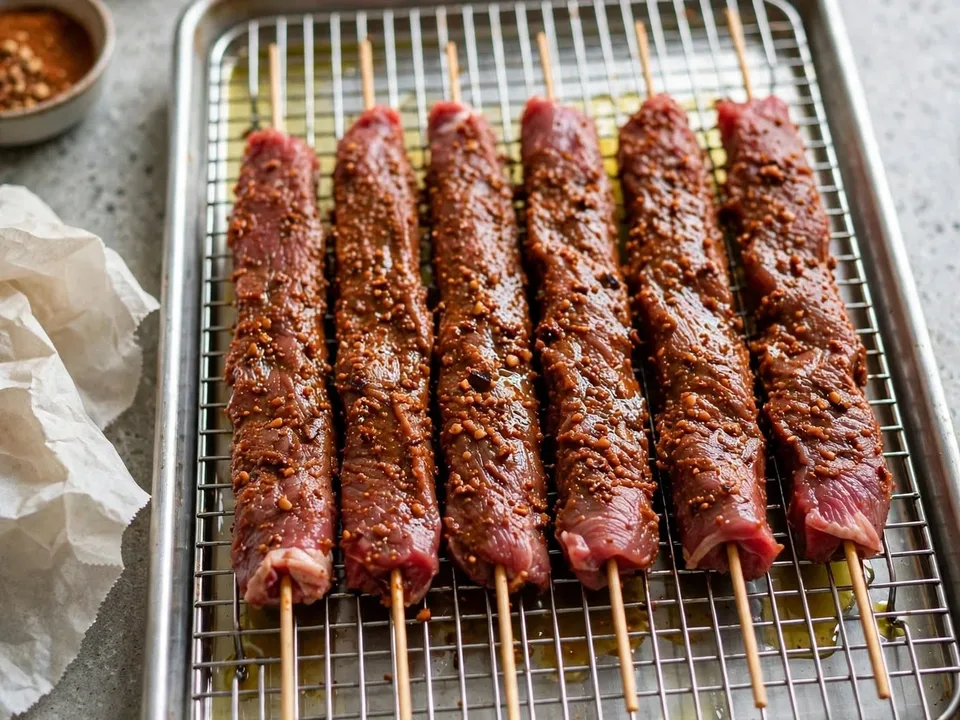
Rest the seasoned skewers so the coating settles
60 min
Lay the coated skewers in a single layer on a tray, cover and let them rest for about 45–60 minutes in the refrigerator.
Lay the coated skewers in a single layer on a tray, cover and let them rest for about 45–60 minutes in the refrigerator. Bring them out only while the grill is heating so the meat does not sit warm for an extended period.
Look for
The yaji has darkened slightly where it touches the meat and remains adhered rather than falling off in loose piles.
Kitchen note
Resting gives the dry spice time to hydrate lightly against the beef without turning it into a wet marinade. Keep food-safety control at home even though roadside vendors may use different handling routines.
 Step 06
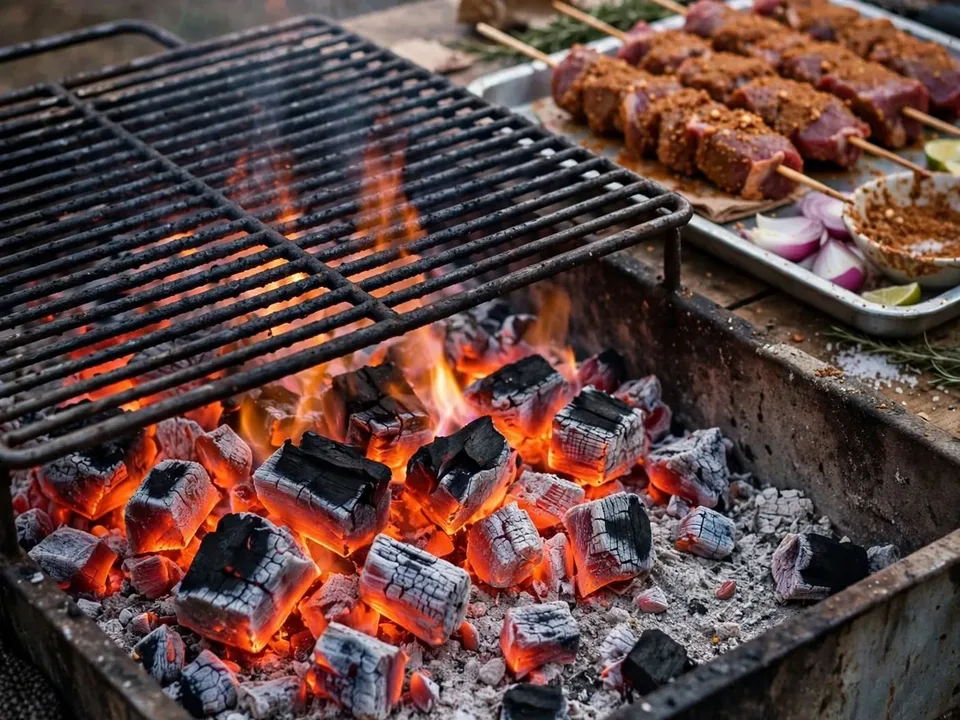
Preheat charcoal or the hottest available grill until the heat is fierce
10 min
Prepare a charcoal grill for strong direct heat, or preheat a grill/broiler or cast-iron grill pan thoroughly.
Prepare a charcoal grill for strong direct heat, or preheat a grill/broiler or cast-iron grill pan thoroughly. Clean and lightly oil the grate only if needed. Have the cooked-meat tray, tongs, extra yaji and serving vegetables ready before the skewers go on.
Look for
Charcoal is glowing with a hot clean zone or the grill surface is fully heated before any beef is added.
Kitchen note
The cooking window is short because the beef is thin. A merely warm grill dries the meat slowly; a properly heated surface chars the spice while the interior cooks quickly.
 Step 07
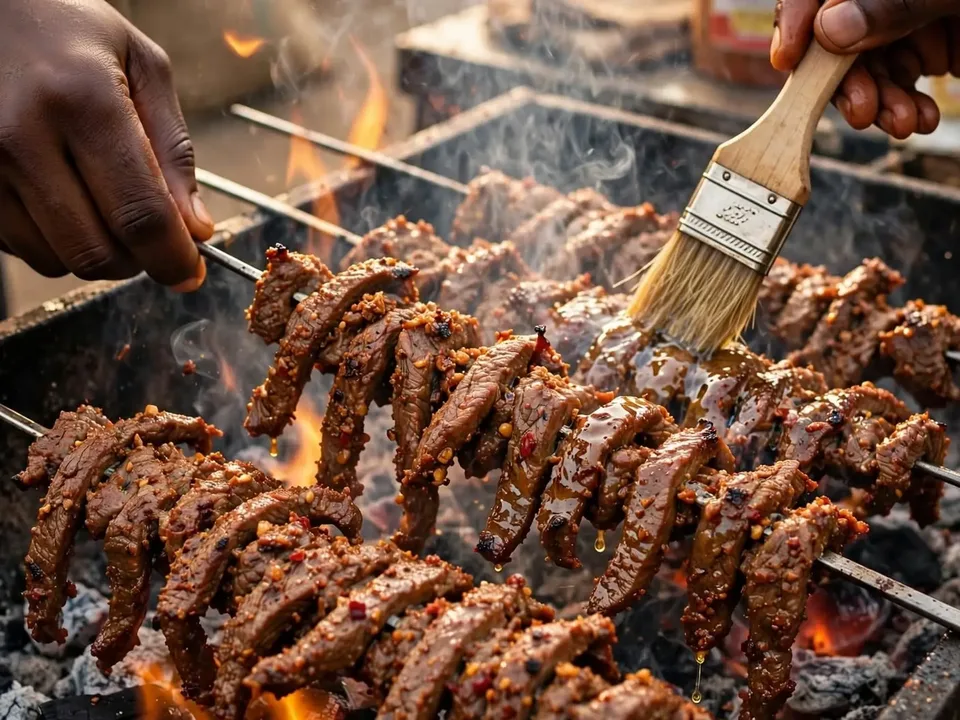
Roast quickly, turning and lightly brushing until charred at the edges
8 min
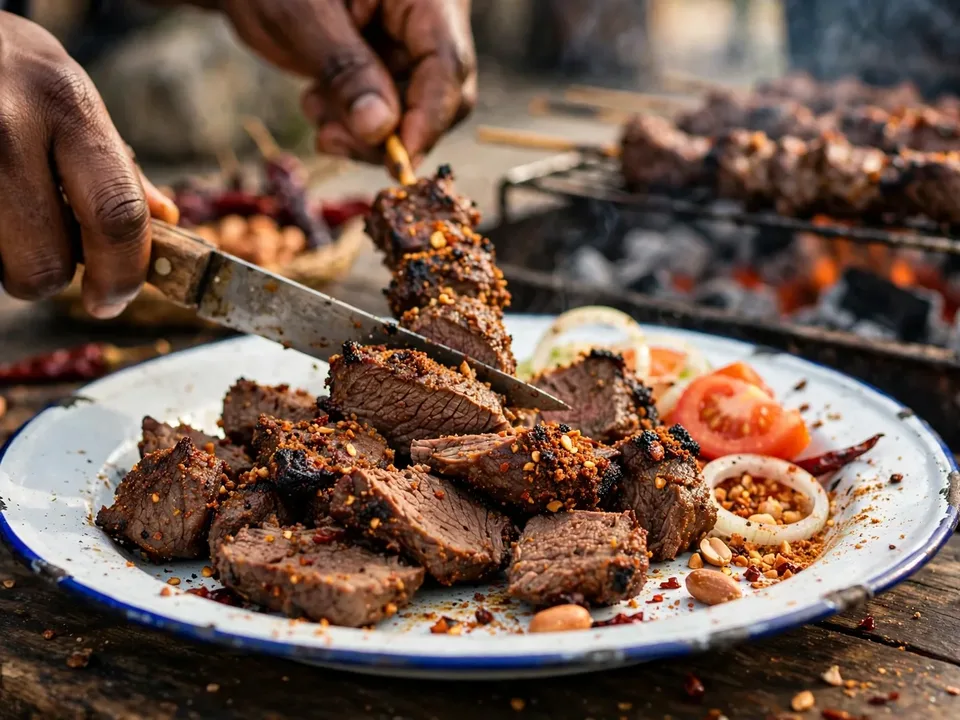
Cook the skewers over strong direct heat, turning as soon as the first side develops browned spice and small charred spots.
Cook the skewers over strong direct heat, turning as soon as the first side develops browned spice and small charred spots. Brush very lightly with groundnut oil during the final minutes if the surface looks dry. Continue only until the thin beef is cooked through and juicy, with smoky browned edges rather than a black burnt crust.
Look for
The beef is cooked through, visibly browned and smoky with scattered charred edges while the yaji remains reddish-brown rather than bitter black.
Kitchen note
Watch the yaji rather than the clock: groundnut solids and chilli can burn. Move a skewer to a slightly cooler part of the grill if the coating blackens before the meat is cooked.
 Step 08
Dust lightly with fresh yaji and serve hot with raw vegetables
3 min
Move the cooked suya to a clean platter and rest for 2–3 minutes.
Move the cooked suya to a clean platter and rest for 2–3 minutes. Add a light final dusting of reserved clean yaji if you want a stronger fresh-spice hit, then serve hot on or off the skewers with sliced onion, tomato and optional cucumber or shredded cabbage.
Look for
The suya is juicy beneath a dry smoky crust, the edges are lightly charred and the raw vegetables are crisp and fresh.
Kitchen note
Reserve any finishing yaji before raw beef touches the main spice tray. Never use seasoning that has been contaminated by raw meat as the final table dusting.
After cooking
Explore the dish beyond the method.
Story, place and references are here for discovery, so they stay out of the way while you cook.
Culture & tradition
The story behind the dish
Origins, evolution and everyday life—read together as part of the recipe's culinary record.
Origins
Nigerian federal and cultural sources list suya among important Nigerian foods, while regional records connect it especially with northern cuisines and Hausa food traditions.
How it evolved
Vendors developed distinctive yaji blends and adapted beef, ram, chicken and other meats to fast charcoal roasting on skewers.
Its place today
Suya remains a major Nigerian street food, commonly bought in the evening and served hot with raw onion, tomato, cucumber or cabbage and extra yaji.
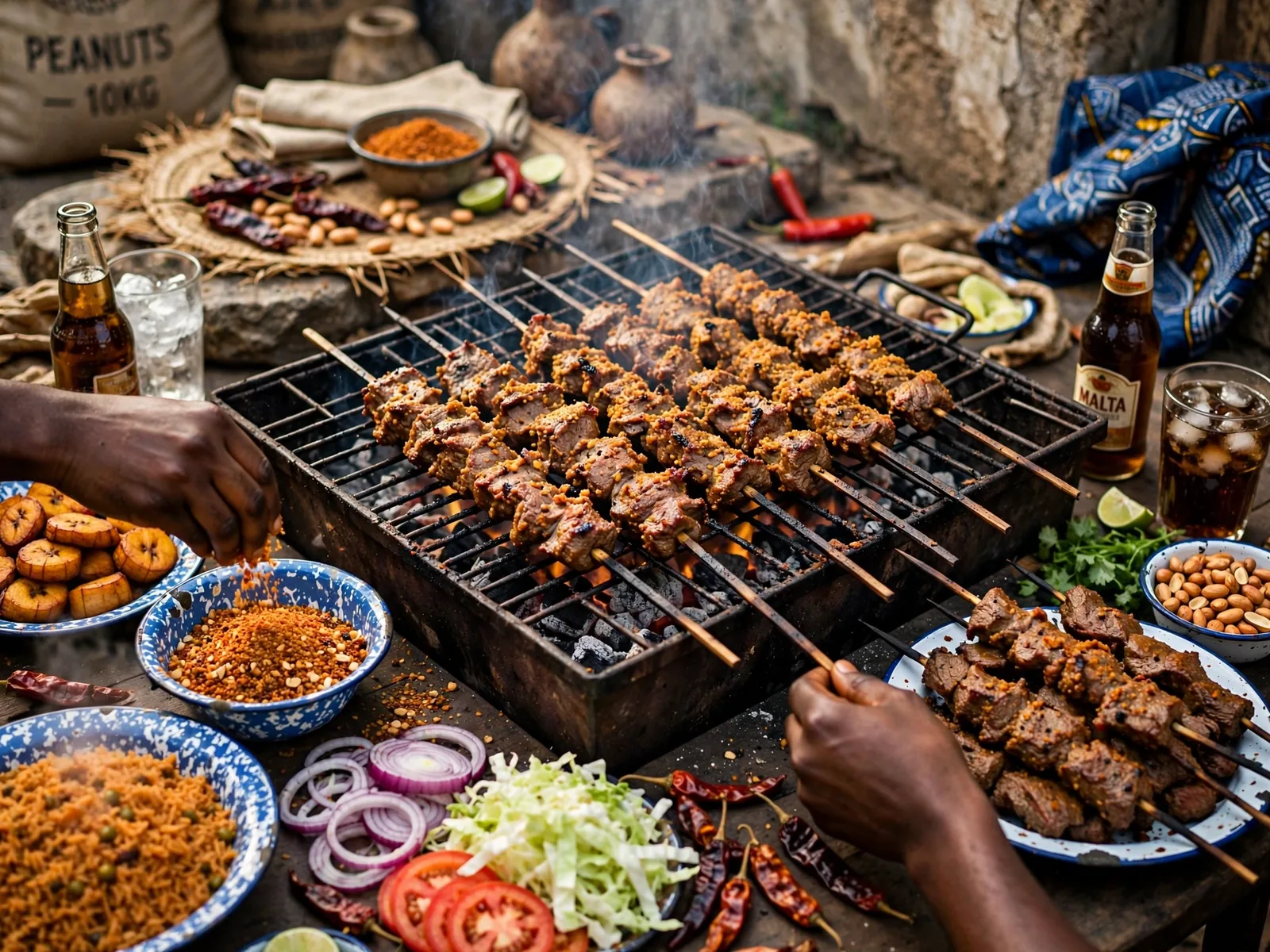
Visual archive · plate 01
Beef Suya
An editorial view of the finished dish, kept compact so the story continues without an oversized image break.
Primary region
Northern Nigeria / nationwide street-food culture
Country
Nigeria
Regional influence
The dish reflects the ingredients and cooking patterns associated with Northern Nigeria / nationwide street-food culture, while household and regional versions vary.
Related food systems
- Northern Nigeria / nationwide street-food culture home cooking
- Market and street-food traditions
- Regional pantry and seasonal cooking
Sources & further reading
Follow the reference trail.
Ember & Equator links outward when an institution or primary reference helps support the culinary record.
- 01Cuisine — Nigerian Cuisine and GastronomyExternal ↗
Federal Ministry of Information and National Orientation, Nigeria · government
Supports: suya as a Nigerian traditional food and national culinary heritage
Ember & Equator source review · 2026-09-17
- 02Cuisines in NigeriaExternal ↗
National Institute for Cultural Orientation, Nigeria · government
Supports: suya in northern Nigerian regional cuisines · suya across multiple Nigerian regions
Ember & Equator source review · 2026-09-17
- 03Nigerian Suya RecipeExternal ↗
All Nigerian Recipes · reference
Supports: thin beef fillets · skewering before coating · groundnut oil before yaji · one-hour seasoning rest · strong roasting and turning · onion, tomato, cabbage and cucumber service
Ember & Equator source review · 2026-09-17
- 04How to Make Suya Spice (Suya Pepper)External ↗
All Nigerian Recipes · reference
Supports: kuli-kuli groundnut base · ground ginger · cayenne · seasoning and salt · dry yaji texture
Ember & Equator source review · 2026-09-17
Ingredient guides
Learn about the ingredients behind the dish.
These are reference guides, not a second ingredient list. Follow an ingredient when you want to understand its role, use and wider culinary context.
Ingredient
beef sirloin
Understand what it contributes, how to use it, and the dishes that reveal it best.
Ingredient
ground ginger
Understand what it contributes, how to use it, and the dishes that reveal it best.
Ingredient
cayenne pepper
Understand what it contributes, how to use it, and the dishes that reveal it best.
Ingredient
salt
Understand what it contributes, how to use it, and the dishes that reveal it best.
Ingredient
onion
Understand what it contributes, how to use it, and the dishes that reveal it best.
Ingredient
tomatoes
Understand what it contributes, how to use it, and the dishes that reveal it best.
Keep wandering
Where will this dish take you next?
Stay with the place, follow an ingredient or technique, or cross into another food culture. Each path begins with something already present in this dish.
Stay with the place
01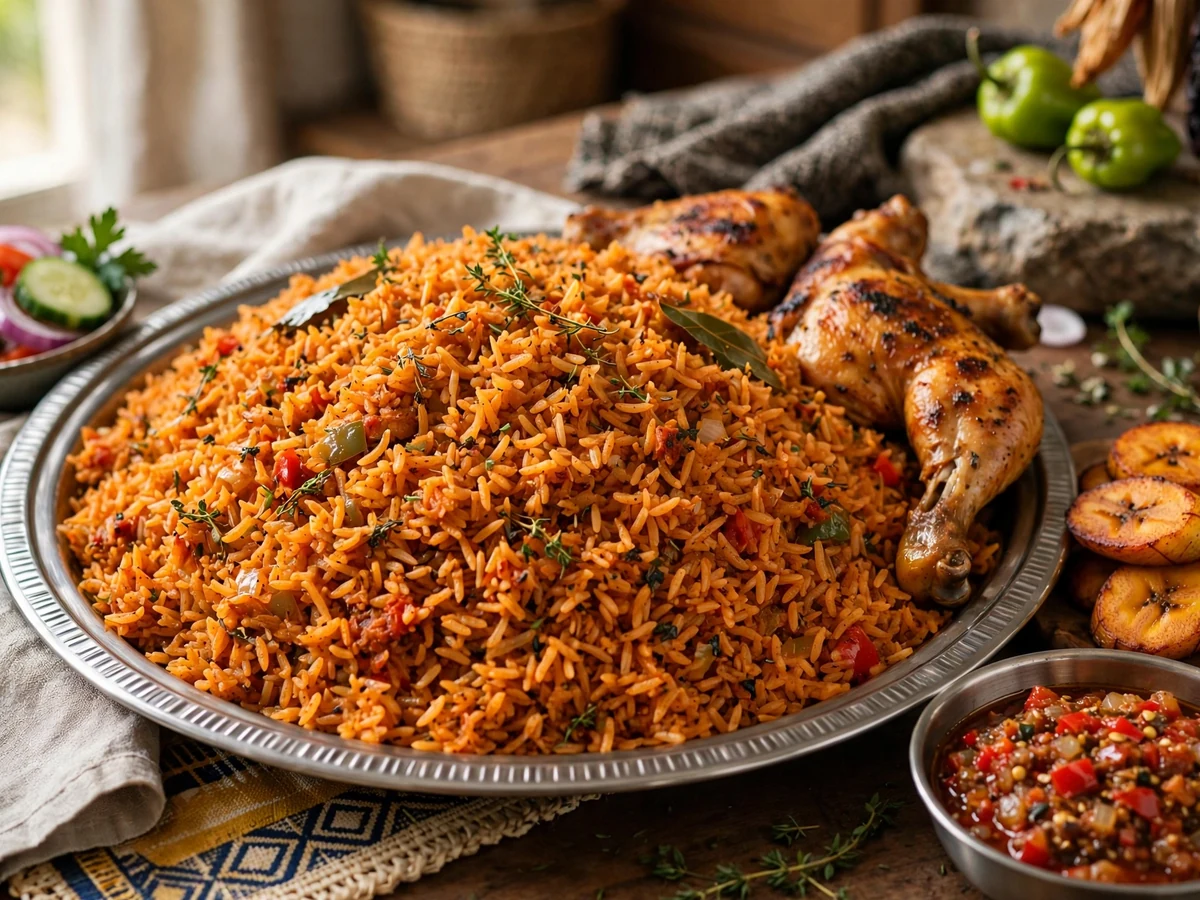
Nigeria
Nigerian Jollof Rice
Stay in the same food culture and follow salt into another recipe.
Shared thread · salt · onion · tomatoes
Follow the method or pantry
02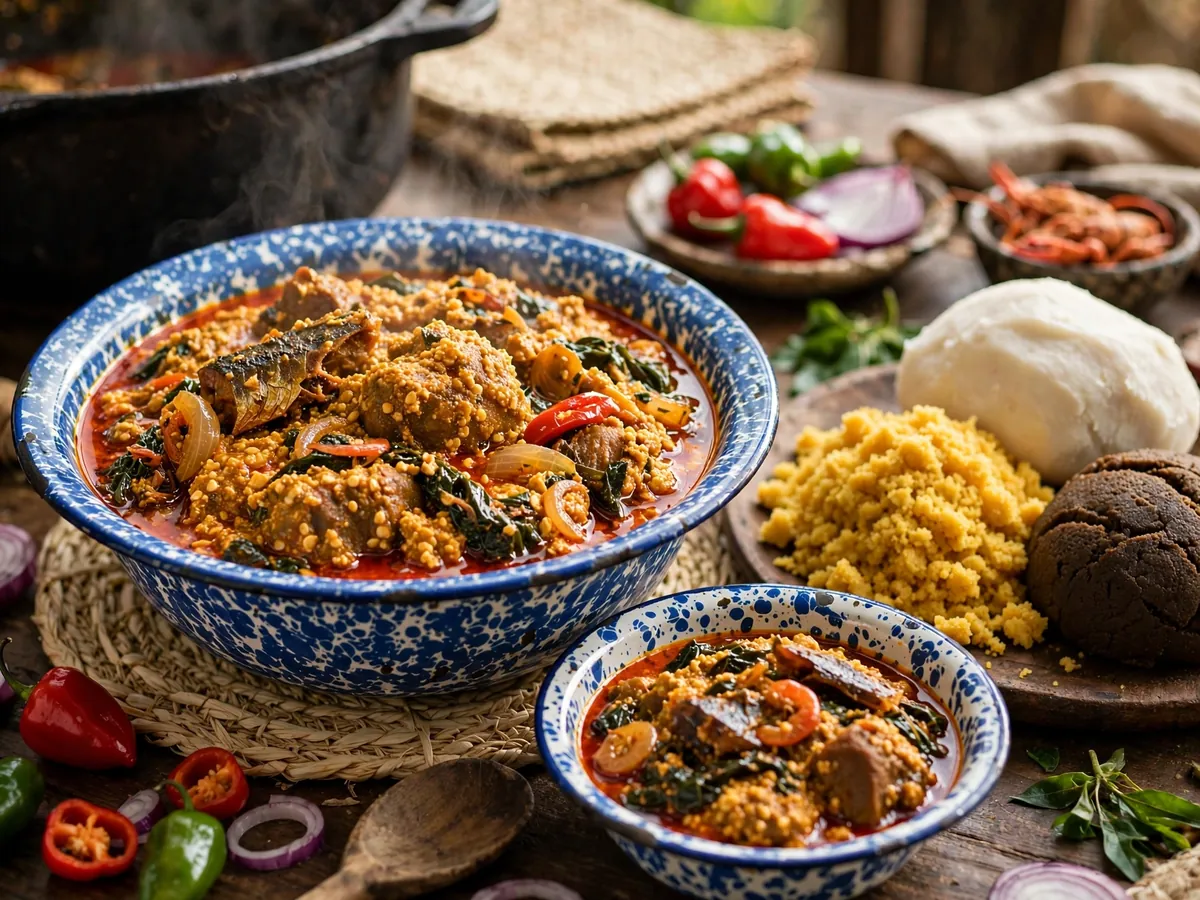
Nigeria
Egusi Soup
Follow the pantry: both dishes connect through salt.
Shared thread · salt · onion
Cross a culinary border
03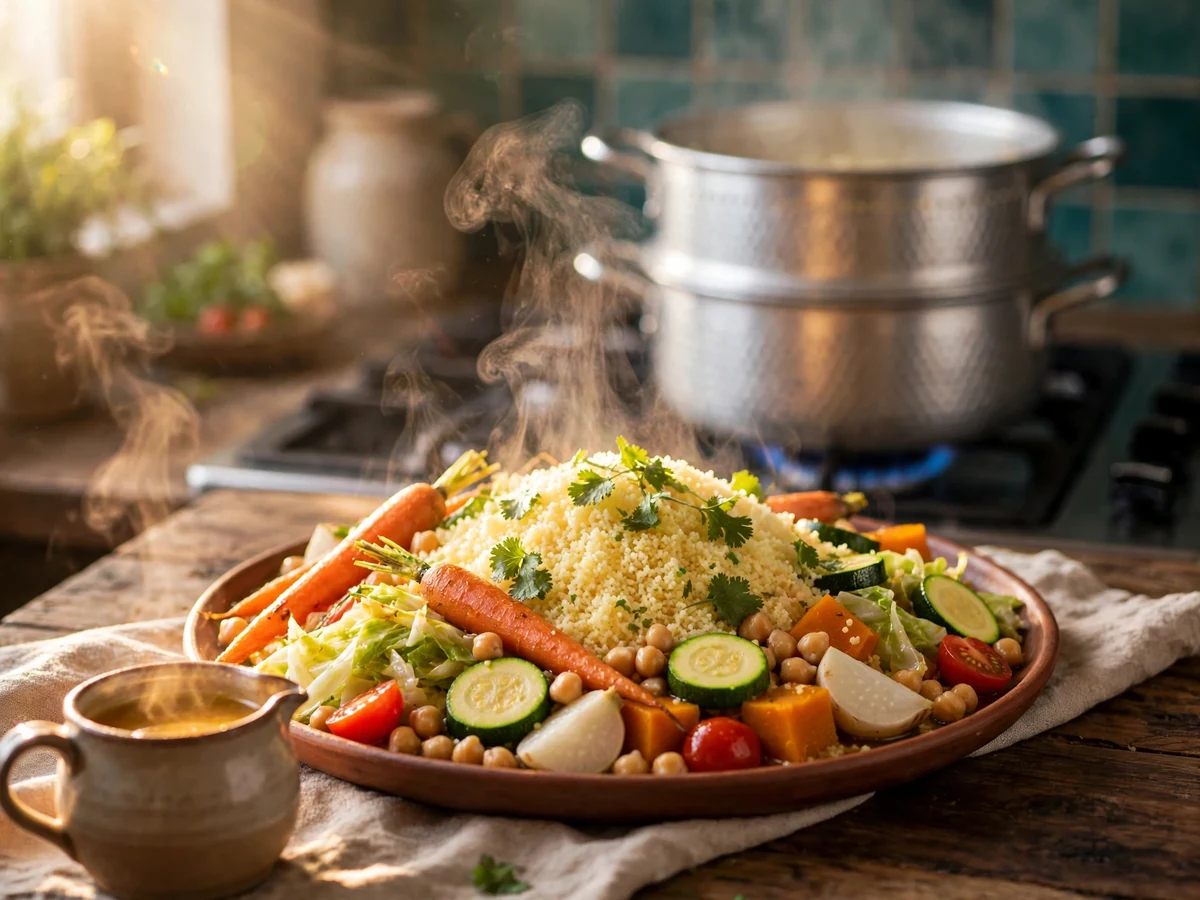
Morocco
Moroccan Couscous with Seven Vegetables
Cross borders and see how another cuisine handles ground ginger.
Shared thread · ground ginger · onion · tomatoes
Go one layer deeper
One small detail can open an entirely different part of food.
Continue in Ember & Equator