
Peru · lunch · dinner
Lomo Saltado
Peru through one enduring dish.
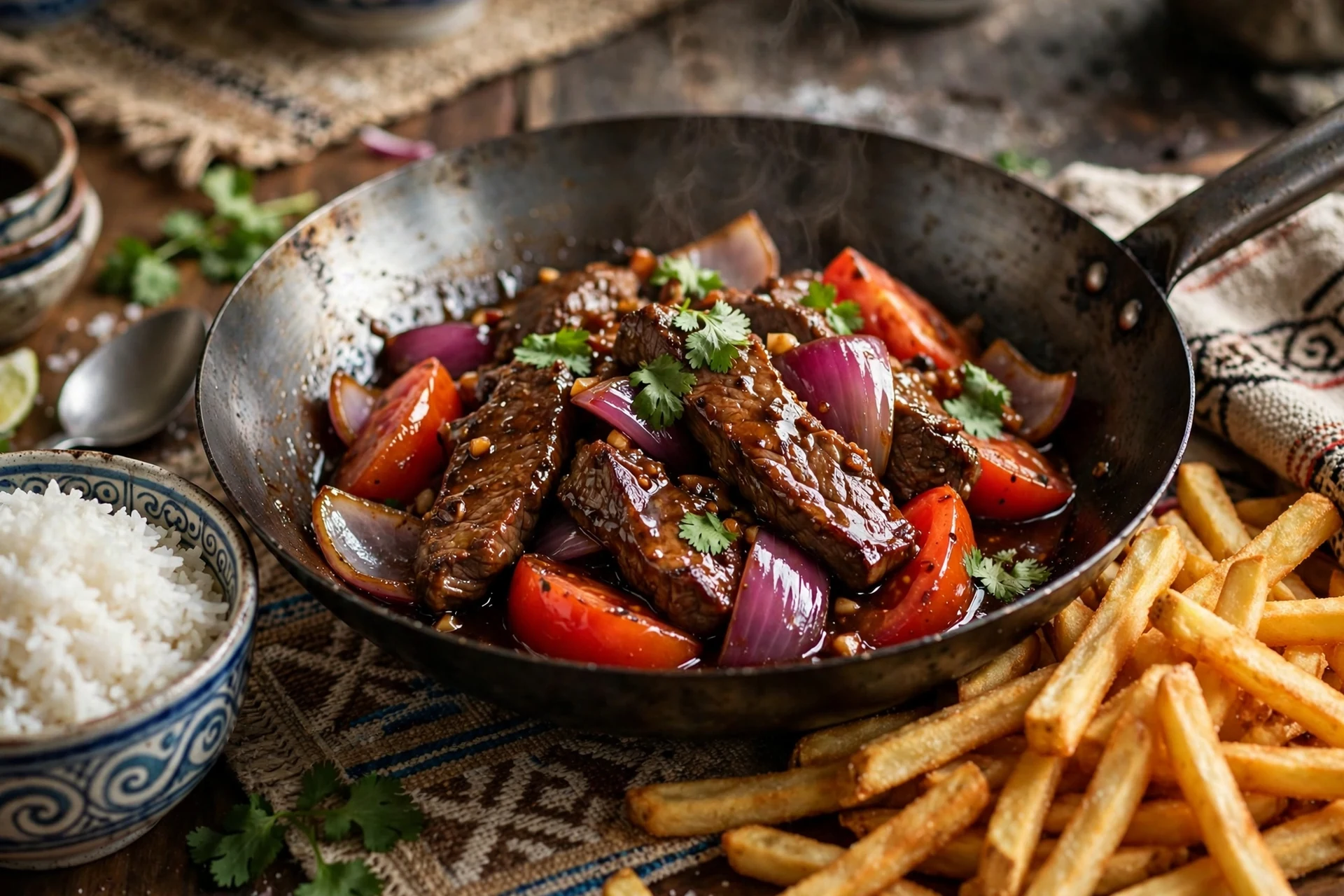
Lomo saltado is a Lima-centered chifa classic: beef is seared at high heat with onion and tomato, seasoned with soy and vinegar, then served with both rice and potatoes.
- Total
- 45 min
- Difficulty
- Medium
- Serves
- 4
- Steps
- 6
The dish
Place first. Then the plate.
Lomo saltado makes Peru’s Chinese-Peruvian chifa history visible on one plate. High-heat wok cooking and soy seasoning meet Peruvian beef, tomato, onion, potatoes and rice, creating a dish whose identity depends on that cultural exchange rather than on either tradition in isolation.
Explore PeruAt a glance
Origin
Peru
Region
Lima and coastal Peru
Meal
lunch · dinner
Guided steps
6
Dish
Lomo Saltado
Cuisine
Peruvian cuisine
Food type
Lunch · Dinner
Technique
Wok stir-fry · Sear · Fry
Cook the recipe
In the kitchen
Start with the ingredients, then follow the Method in order. Open cooking tips only when you need extra help; the story and references can wait until you are ready.
- Total
- 45 min
- Serves
- 4
- Level
- Medium
- Visual cues
- 6
Ingredients
Serves 4- 600 gbeef sirloincut across the grain into thick bite-size strips and patted dry
- 1 largered onioncut into thick wedges
- 2 largetomatoesripe but firm, cut into thick wedges
- 1 wholeají amarilloseeded and cut into thin strips; 1 tbsp paste may be used if fresh is unavailable
- 2 clovesgarlicfinely chopped
- 3 tbspsoy saucesillao
- 2 tbspred wine vinegar
- as neededneutral frying oilfor the fries and high-heat stir-fry
- 600 gpotatoescut into thick fries
- 3 cupscooked white ricehot, for serving
- 2 tbspfresh corianderroughly chopped; parsley is another common finishing herb
- 1 tspsaltto taste
- 0.5 tspblack pepperfreshly ground
Everything ready? Continue straight into the cooking steps.
Start methodMethod
6 steps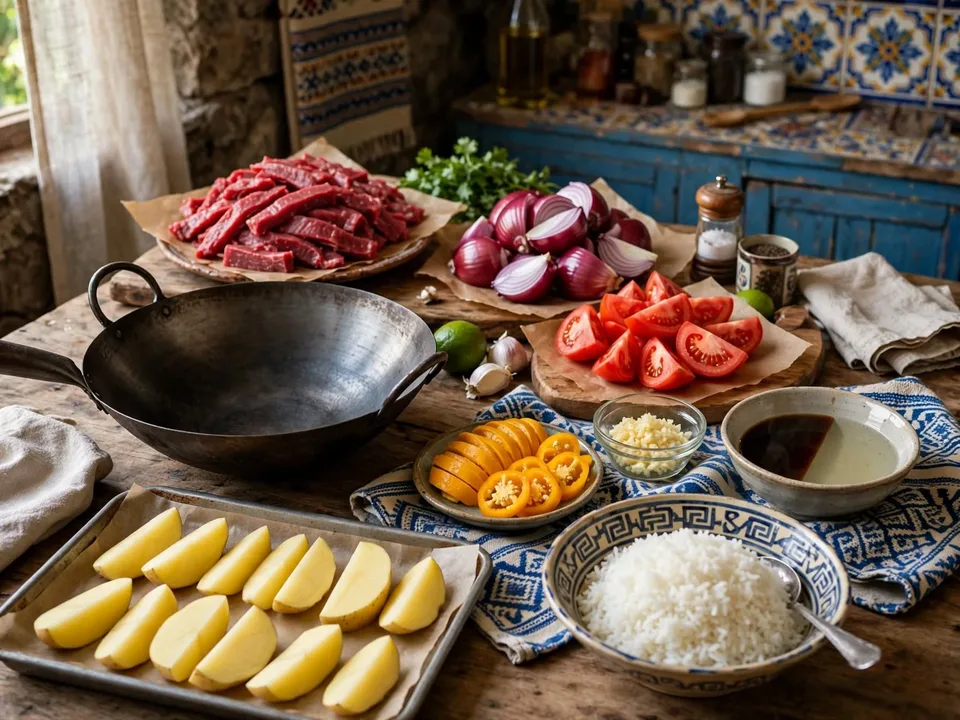 Step 01
Prep every component before the wok gets hot
10 min
Cut and dry the beef, onion, tomato and ají amarillo.
Cut and dry the beef, onion, tomato and ají amarillo. Mix the soy sauce and vinegar in a small bowl. Have the chopped garlic, hot rice, a tray for fried potatoes and all serving plates ready. Once stir-frying begins, the cooking moves too quickly to stop and chop.
Look for
The beef is dry and evenly cut, onion and tomato are thick wedges, and every sauce and garnish is within reach.
Kitchen note
Dry beef and firm tomato wedges are essential. Surface moisture makes the wok steam; over-ripe tomatoes collapse before the sauce has time to glaze.
 Step 02
Fry the potatoes until deeply golden and crisp
10 min
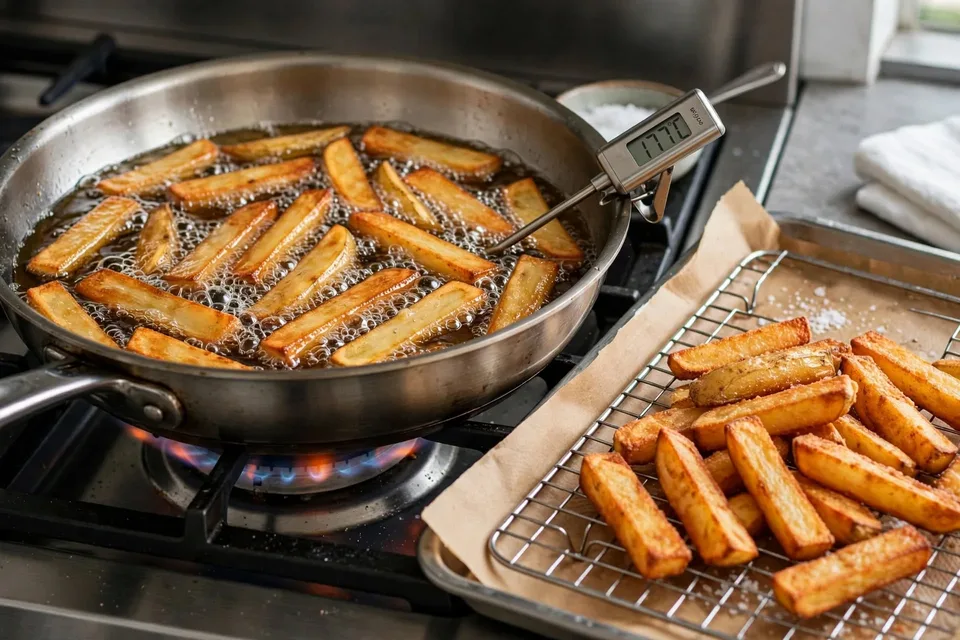
Heat the frying oil to about 175–180°C / 350–355°F.
Heat the frying oil to about 175–180°C / 350–355°F. Fry the potato batons in batches until golden, crisp at the edges and fluffy inside. Drain well and season lightly with salt. Keep them uncovered so trapped steam does not soften the crust.
Look for
The fries are deep golden with a dry crisp surface and tender centre, not pale or greasy.
Kitchen note
Do not pile fresh fries in a deep covered bowl. Steam destroys the crisp texture that should contrast with the juicy saltado.
 Step 03
Sear the beef in small batches over fierce heat
6 min
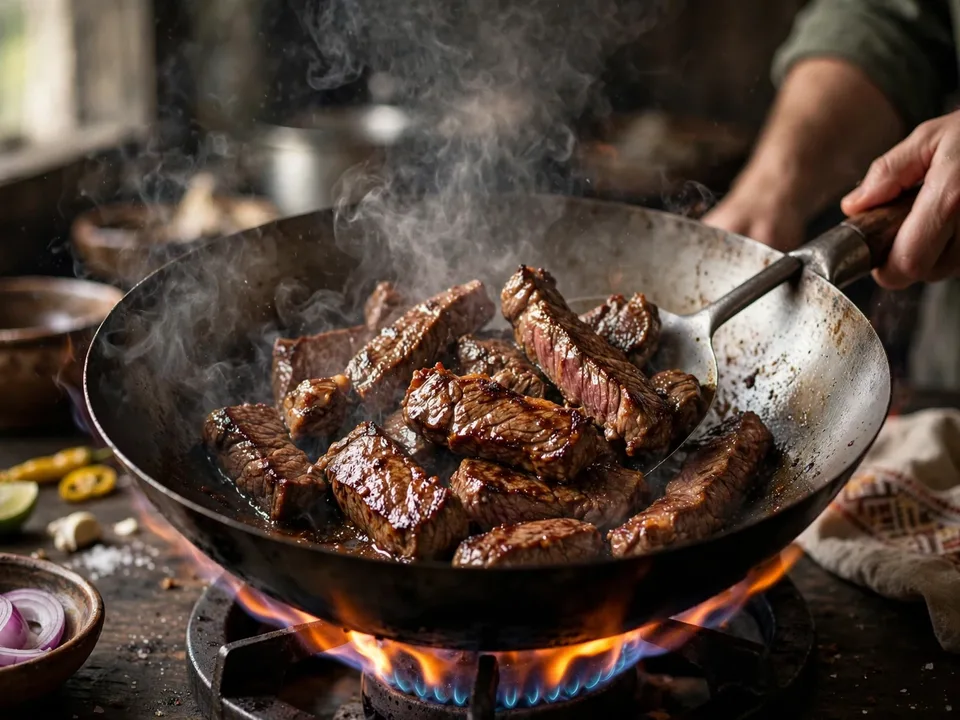
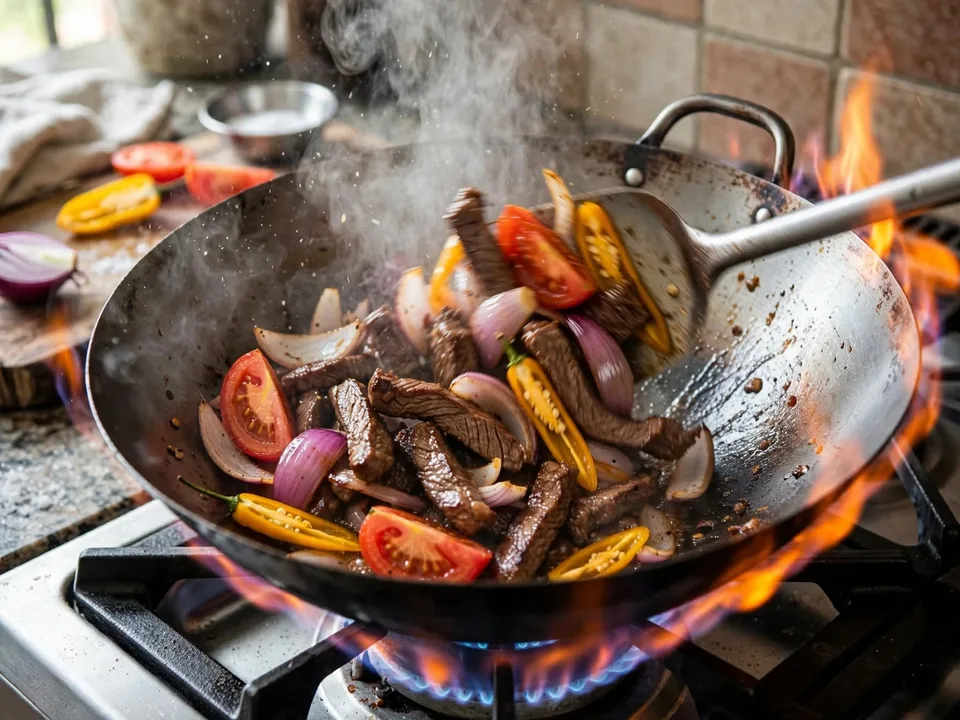
Heat a wok or wide heavy skillet until very hot, add a thin film of oil and sear the beef in two or three batches.
Heat a wok or wide heavy skillet until very hot, add a thin film of oil and sear the beef in two or three batches. Leave enough space between pieces for browning. Toss just until the surfaces are deeply browned while the centres remain juicy, then transfer to a plate.
Look for
The beef has browned edges and a little char, but the pan bottom is not flooded with grey liquid.
Kitchen note
Crowding is the fastest way to lose the saltado character. If liquid pools under the meat, remove some beef and let the pan recover its heat before continuing. If your pan is not large enough to keep the beef in a single uncrowded layer, use two or more batches and return everything only for the final glaze.
 Step 04
Flash-fry the garlic, onion, tomato and ají
2 min
Let the empty wok return to high heat.
Let the empty wok return to high heat. Add a little fresh oil, then the garlic, onion and ají amarillo. Toss for about 45–60 seconds before adding the tomato for another 30–45 seconds. The vegetables should pick up char at the edges without becoming soft stew.
Look for
The onion is charred at some edges but still crisp; the tomato is hot and glossy with intact flesh rather than collapsed pulp.
Kitchen note
Use thick wedges and keep the heat high. Tomato goes in last because it needs only enough time to blister and warm through while keeping its shape.
 Step 05
Return the beef and glaze with sillao and vinegar
1 min
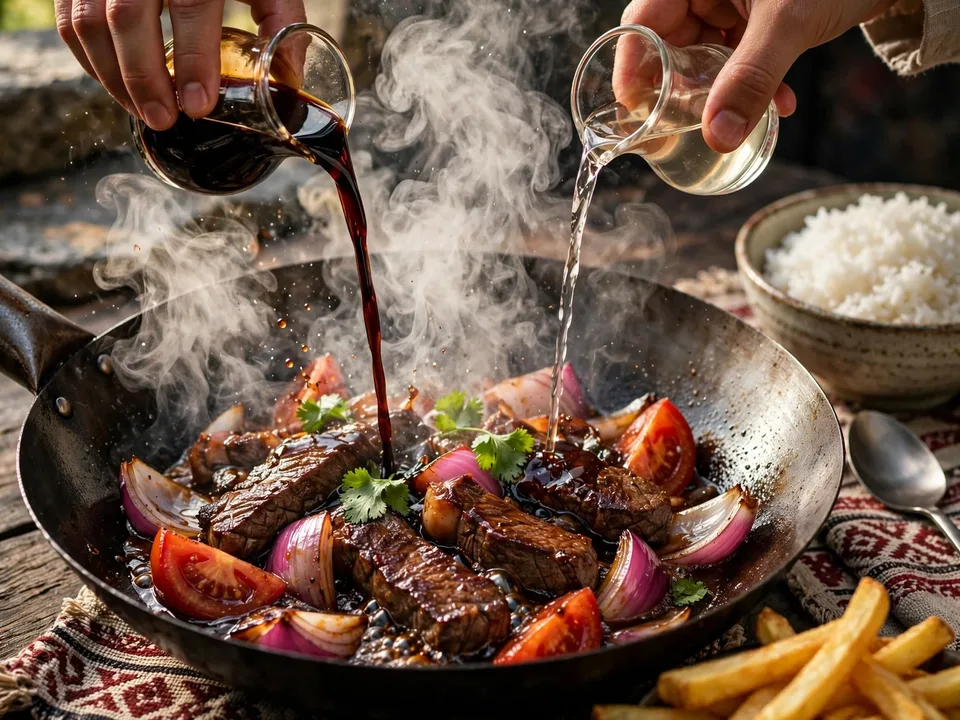
Return all the beef and any collected juices to the wok.
Return all the beef and any collected juices to the wok. Pour the soy sauce and vinegar around the hot sides rather than directly onto one spot of meat, then toss hard for 30–60 seconds. The liquid should hiss, reduce slightly and coat the beef and vegetables while remaining juicy.
Look for
The beef and vegetables are glossy with a small amount of concentrated savoury-tangy juice; onion and tomato still retain structure.
Kitchen note
The sauce should glaze, not become a braising liquid. If the wok cools and the ingredients begin to stew, stop adding liquid and let the heat recover.
 Step 06
Finish with herbs and serve immediately with fries and rice
1 min
Turn off the heat, fold in the coriander and taste for salt and pepper.
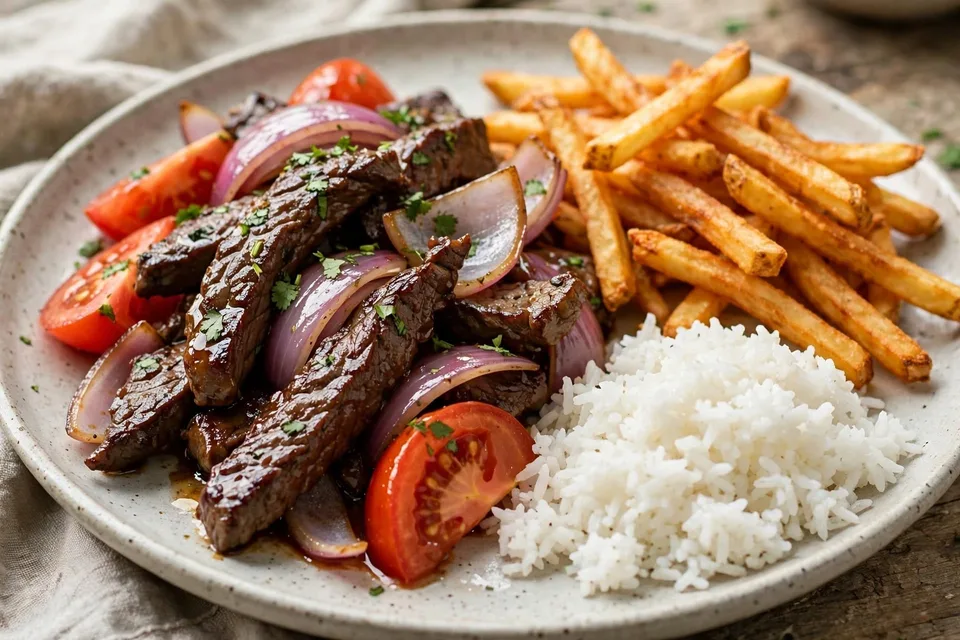
Turn off the heat, fold in the coriander and taste for salt and pepper. Serve immediately with the crisp fries and hot white rice. This Ember & Equator version keeps the fries mostly alongside so they stay crisp; some restaurants and households toss some or all of them through the wok juices, which is also a recognised style.
Look for
The finished plate shows glossy beef and structured vegetables beside golden fries and hot white rice, with a small amount of wok juice.
Kitchen note
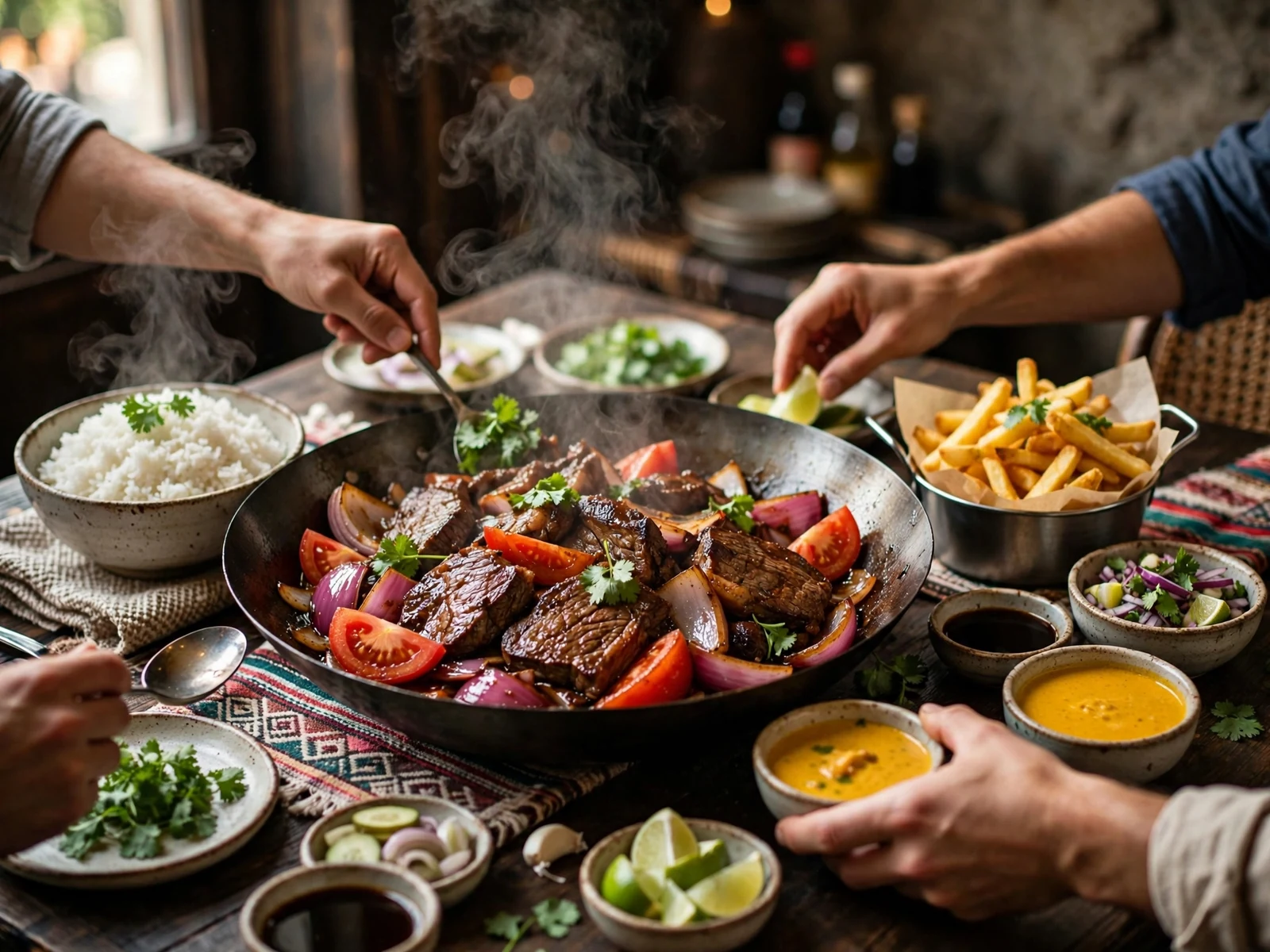
Lomo saltado loses its best contrast quickly. Bring the wok to the table while the beef is juicy, the vegetables crisp-edged and the fries still dry and crunchy.
After cooking
Explore the dish beyond the method.
Story, place and references are here for discovery, so they stay out of the way while you cook.
Culture & tradition
The story behind the dish
Origins, evolution and everyday life—read together as part of the recipe's culinary record.
Origins
Lima, within the Chinese-Peruvian chifa tradition.
How it evolved
Chinese migration to Peru in the nineteenth century helped establish chifa cooking, where Cantonese-derived techniques and pantry ingredients adapted to Peruvian produce and tastes. Lomo saltado became one of the best-known expressions of that exchange.
Its place today
A restaurant and home-cooking staple, lomo saltado remains an accessible introduction to chifa because its wok technique, soy-vinegar seasoning and rice-and-potato pairing make the fusion immediately legible.
Visual archive · plate 01
Lomo Saltado
An editorial view of the finished dish, kept compact so the story continues without an oversized image break.
Primary region
Lima and coastal Peru
Country
Peru
Regional influence
Urban coastal cooking connected local produce and potatoes with high-heat stir-fry techniques.
Related food systems
- Chinese-Peruvian chifa
- Coastal Peruvian cooking
Sources & further reading
Follow the reference trail.
Ember & Equator links outward when an institution or primary reference helps support the culinary record.
- 01Cuisine of LimaExternal ↗
Peru Travel · government
Supports: Lima cuisine · lomo saltado · ají de gallina
Ember & Equator source review · 2026-09-03
- 02Lomo SaltadoExternal ↗
Peru Travel / PROMPERÚ · government
Supports: lomo saltado identity · beef-onion-tomato wok sequence · vinegar and sillao · fries and rice service
Ember & Equator source review · 2026-09-17
- 03Lomo Saltado, Chinese Inspired Feast for the SensesExternal ↗
Peru Delights · specialist publication
Supports: high-heat batch searing · ají amarillo · structured onion and tomato · soy-vinegar glaze · fries and rice
Ember & Equator source review · 2026-09-17
Ingredient guides
Learn about the ingredients behind the dish.
These are reference guides, not a second ingredient list. Follow an ingredient when you want to understand its role, use and wider culinary context.
Ingredient
beef sirloin
Understand what it contributes, how to use it, and the dishes that reveal it best.
Ingredient
red onion
Understand what it contributes, how to use it, and the dishes that reveal it best.
Ingredient
tomatoes
Understand what it contributes, how to use it, and the dishes that reveal it best.
Ingredient
ají amarillo
Understand what it contributes, how to use it, and the dishes that reveal it best.
Ingredient
garlic
Understand what it contributes, how to use it, and the dishes that reveal it best.
Ingredient
soy sauce
Understand what it contributes, how to use it, and the dishes that reveal it best.
Explore ingredient →
Keep wandering
Where will this dish take you next?
Stay with the place, follow an ingredient or technique, or cross into another food culture. Each path begins with something already present in this dish.
Stay with the place
01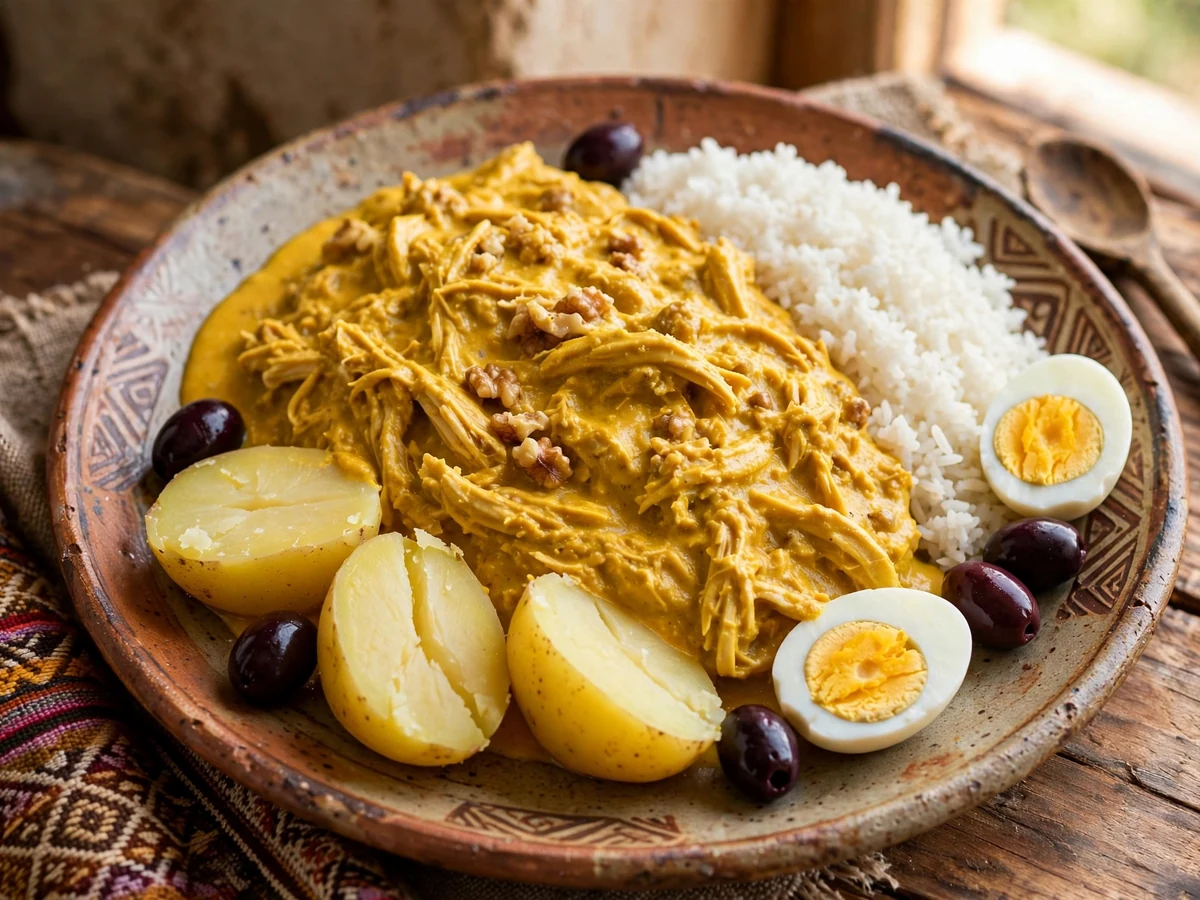
Peru
Ají de Gallina
Stay in the same food culture and follow garlic into another recipe.
Shared thread · garlic · potatoes · cooked white rice
Follow the method or pantry
02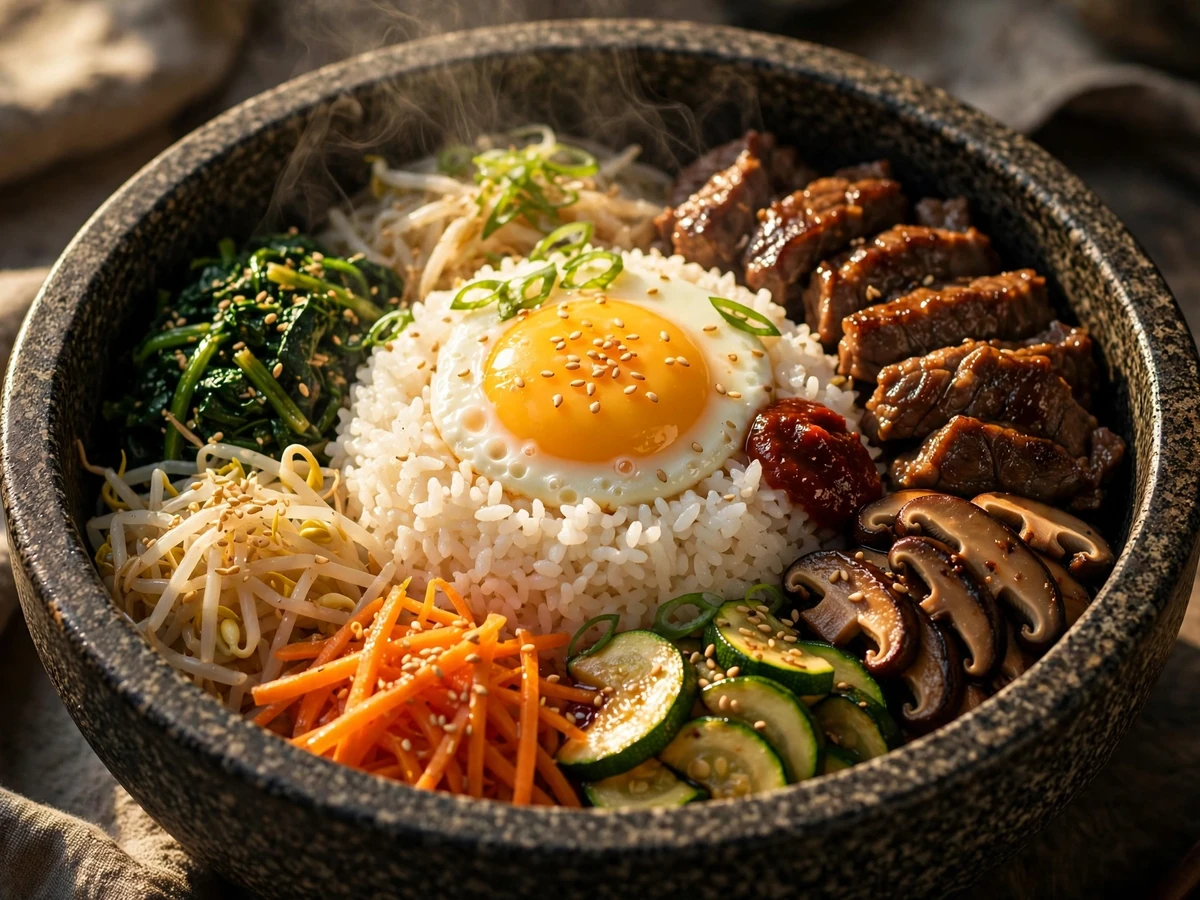
South Korea
Bibimbap
Follow the cooking method: both dishes connect through sear.
Shared thread · Sear · Fry · beef sirloin
Cross a culinary border
03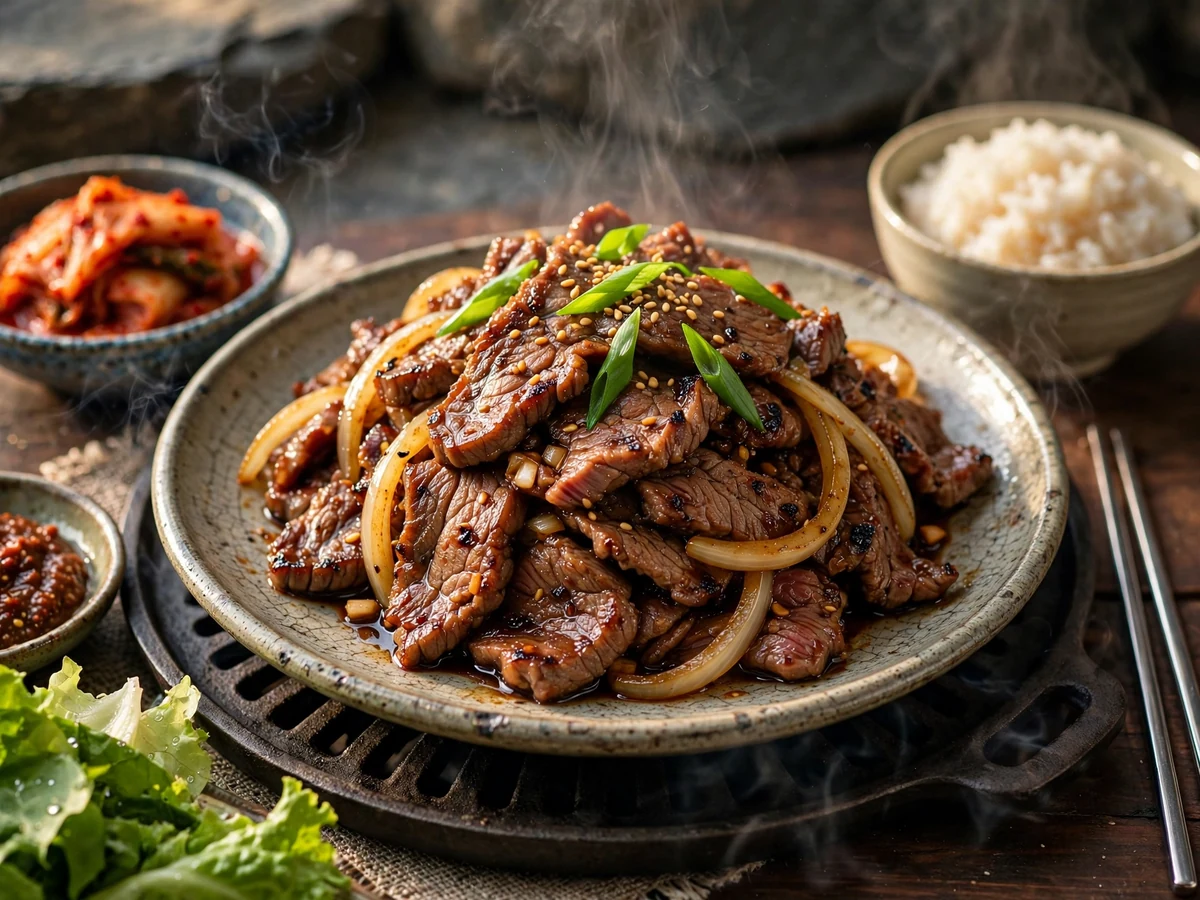
South Korea
Bulgogi
Cross borders while keeping sear as the common thread.
Shared thread · Sear · beef sirloin · garlic
Go one layer deeper
One small detail can open an entirely different part of food.
Continue in Ember & Equator