
Vietnam · snack · lunch
Gỏi Cuốn
Vietnam through one enduring dish.
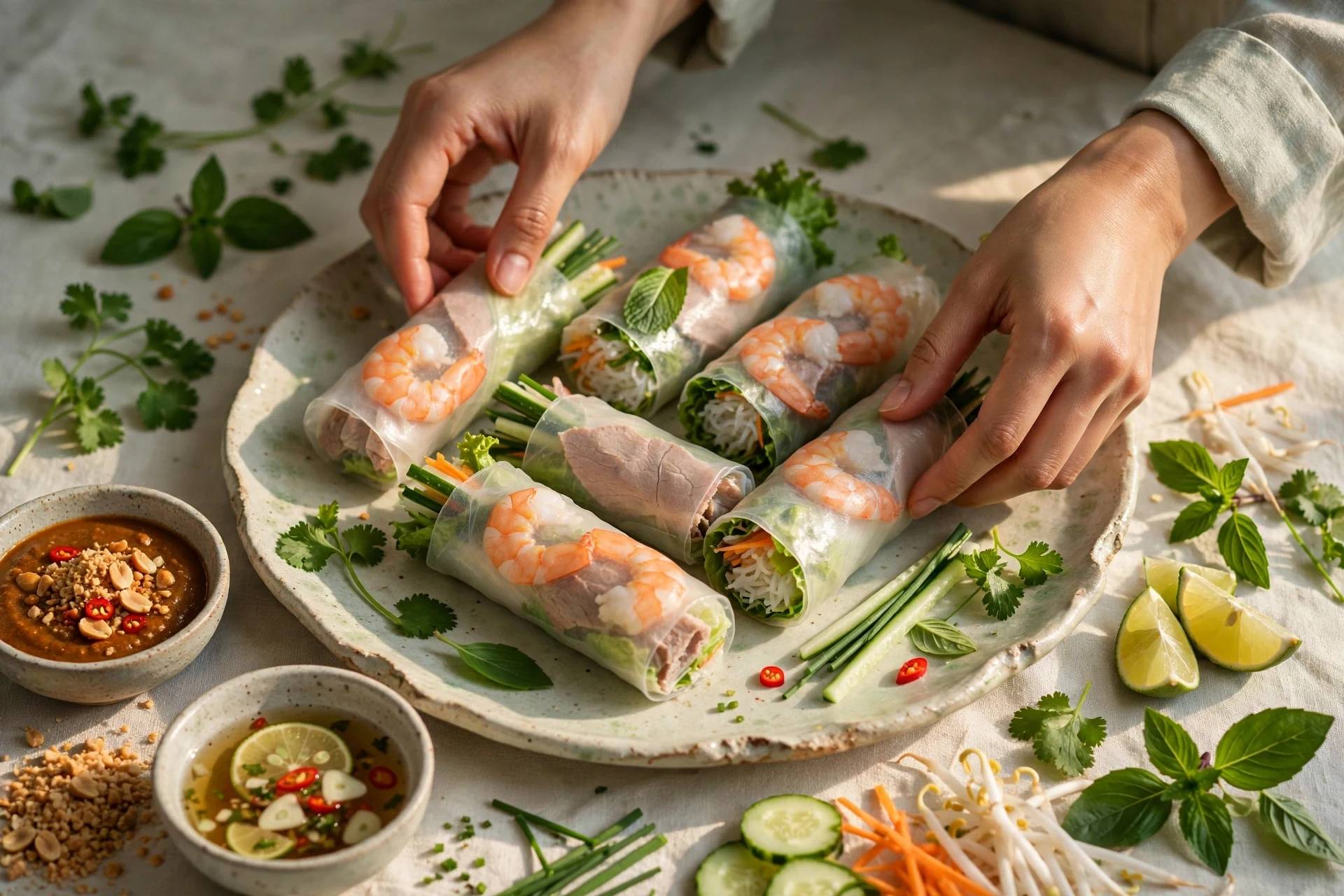
Gỏi Cuốn are fresh Vietnamese rice-paper rolls built from cool rice vermicelli, herbs and crisp vegetables with pork and prawns in this Ember & Equator version. Their quality comes from careful component preparation and controlled rice-paper hydration so the finished roll stays translucent, supple and neatly packed.
- Total
- 60 min
- Difficulty
- Easy
- Serves
- 4
- Steps
- 7
The dish
Place first. Then the plate.
Vietnam Tourism describes gỏi cuốn as a classic fresh roll of softened rice paper, noodles, greens and protein. Pork-and-prawn rolls are a widely recognised southern Vietnamese version, but fillings and dipping sauces vary by region and household.
Explore VietnamAt a glance
Origin
Southern Vietnam
Region
Southern Vietnam and national variants
Method
raw
Meal
snack · lunch
Guided steps
7
Dish
Gỏi Cuốn
Cuisine
Vietnamese cuisine
Food type
Fresh roll · Snack · Lunch
Technique
Rehydrate · Roll rice paper · Simmer
Cook the recipe
In the kitchen
Start with the ingredients, then follow the Method in order. Open cooking tips only when you need extra help; the story and references can wait until you are ready.
- Total
- 60 min
- Serves
- 4
- Level
- Easy
- Visual cues
- 7
Ingredients
Serves 4- 12 sheetsrice paper wrappersround bánh tráng for fresh rolls
- 250 gpork bellyor pork shoulder for a leaner variation
- 12 largeraw prawnspeeled and deveined after cooking if shell-on; halve lengthwise for rolling
- 150 grice vermicellithin bún-style noodles
- 12 smalllettuce leaveswashed and dried thoroughly
- 1 cupfresh mintleaves picked and dried
- 1 cupfresh corianderwashed and dried
- 1 smallcucumbercut into slim batons
- 1 tspneutral oilfor the dipping sauce
- 1 clovegarlicfinely minced for the dipping sauce
- 5 tbsphoisin sauce
- 1 tbsppeanut buttersmooth
- 5 tbsppork cooking liquid or wateradd enough for a glossy spoonable sauce
- 1 tspsugaradjust to the sweetness of the hoisin
Optional
- 12 stalksgarlic chivesoptional; can protrude from the finished roll
- 1 tsplime juiceoptional Ember & Equator brightness variation; not mandatory
Everything ready? Continue straight into the cooking steps.
Start methodMethod
7 steps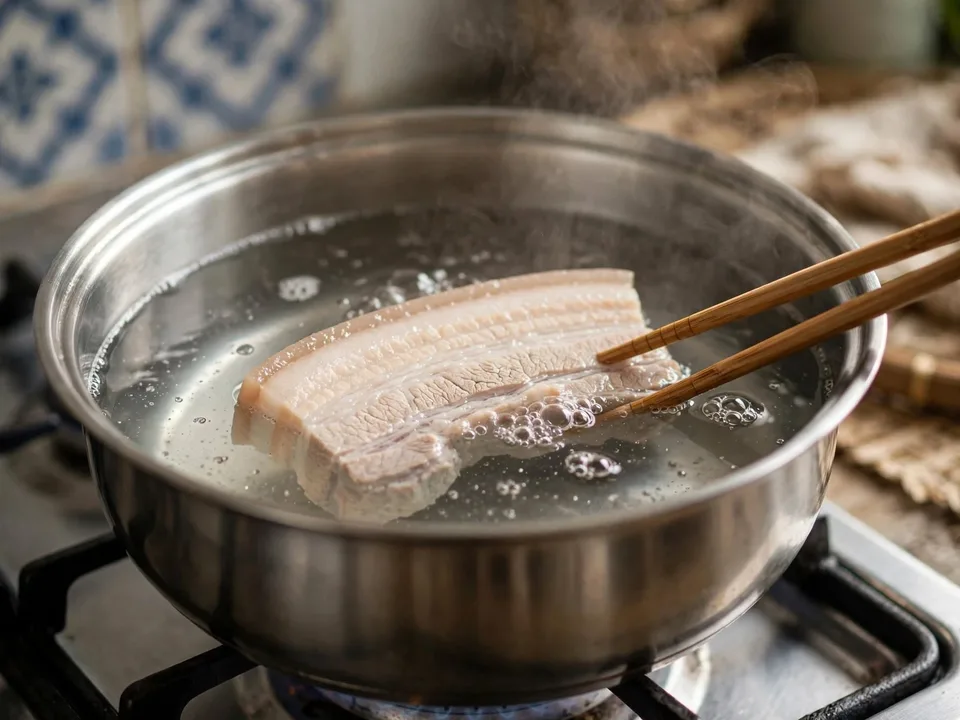 Step 01
Simmer the pork until tender
30 min
Bring enough water to cover the pork to a boil, add the pork belly and reduce immediately to a gentle simmer.
Bring enough water to cover the pork to a boil, add the pork belly and reduce immediately to a gentle simmer. Cook for about 25–30 minutes, or until a chopstick or thin skewer enters with little resistance while the meat still holds together for slicing. Transfer to cool water for a few minutes, drain, cool fully and slice thinly across the grain. Reserve some clean cooking liquid for the dipping sauce.
Look for
The pork should feel tender when pierced but remain firm enough to cut into clean thin slices without shredding.
Kitchen note
Keep the simmer calm. A hard boil can tighten the meat and cloud the cooking liquid; the target is sliceable tenderness rather than fall-apart pork.
 Step 02
Cook the prawns and slice both proteins
4 min
Cook the prawns separately because they need only a short heat exposure.
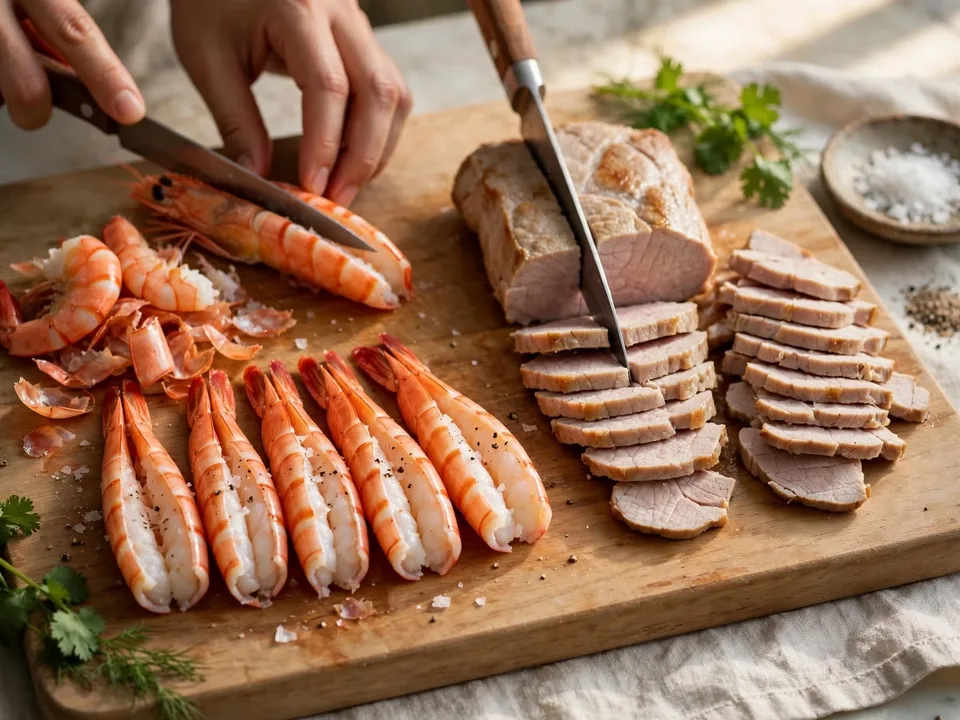
Cook the prawns separately because they need only a short heat exposure. Poach in barely simmering water or dry-fry gently for about 2–3 minutes total, turning as needed, until the centres are opaque. Cool immediately, peel if necessary, devein and halve lengthwise. Arrange the cooled prawn halves and sliced pork on separate plates.
Look for
Prawns should be opaque and springy with a loose curl; pork slices should be cool, neat and thin enough to roll without tearing rice paper.
Kitchen note
Stop cooking as soon as the prawn centres turn opaque. A tight O-shaped curl usually signals overcooking; a looser C shape stays more tender in the roll.
 Step 03
Cook the noodles and prepare every fresh filling
8 min
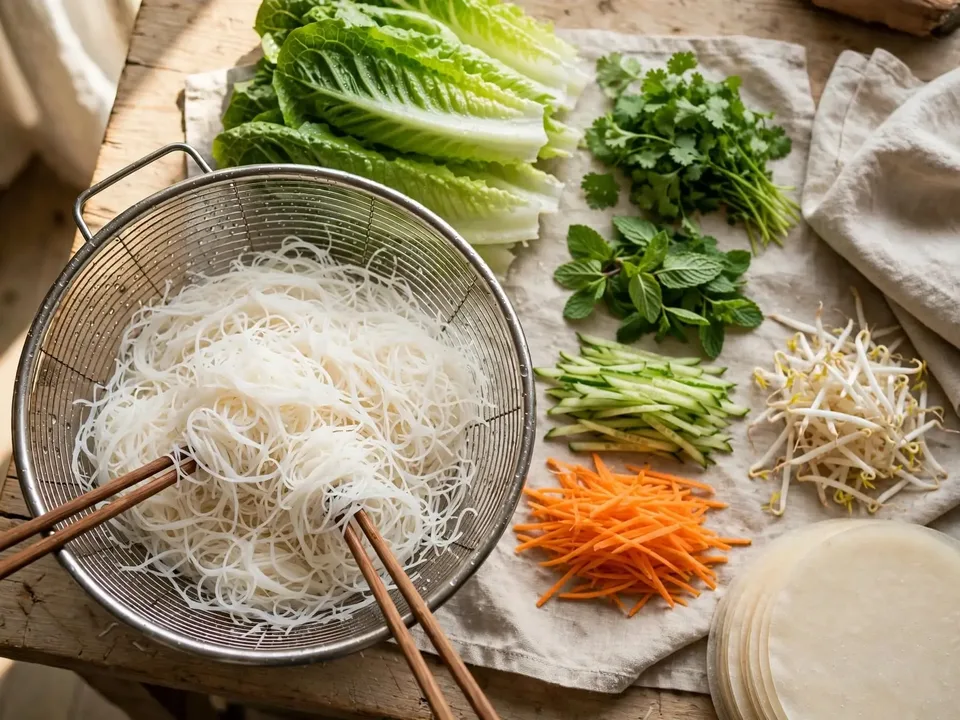
Cook the rice vermicelli according to the packet until tender, then rinse under cool water and drain extremely well.
Cook the rice vermicelli according to the packet until tender, then rinse under cool water and drain extremely well. Wash the lettuce, mint and coriander, dry them thoroughly, cut the cucumber into slim batons and trim the garlic chives if using. Set all fillings within reach before you wet the first wrapper.
Look for
Noodles should be cool, loose and free of surface water; greens should look crisp and completely dry rather than freshly dripping from rinsing.
Kitchen note
Water is the enemy of neat rolls. Cool, dry noodles and dry greens reduce slipping, wrapper tearing and watery pockets inside the roll.
 Step 04
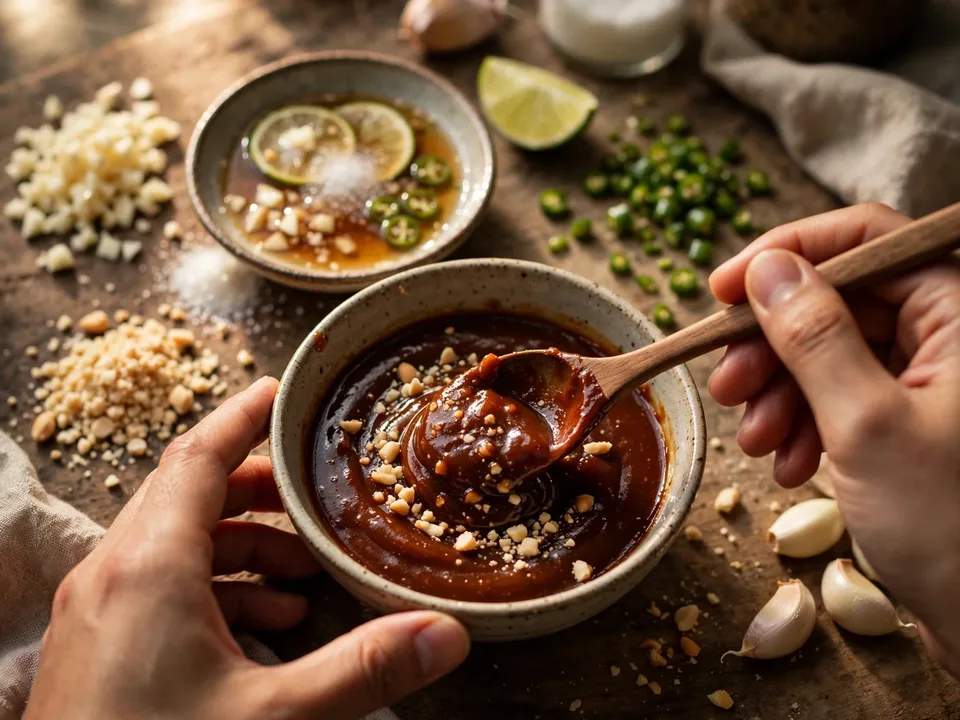
Cook the garlic-hoisin-peanut dipping sauce
4 min
Warm the oil in a small saucepan over medium heat and fry the garlic just until fragrant and pale golden.
Warm the oil in a small saucepan over medium heat and fry the garlic just until fragrant and pale golden. Add hoisin, peanut butter, reserved pork cooking liquid or water and sugar. Stir over low heat for 1–2 minutes until smooth and glossy. Add a little more liquid if it becomes pasty. Taste after it cools slightly; add the optional lime only if you want the selected Ember & Equator brightness variation.
Look for
The sauce should be smooth, glossy and thick enough to ribbon from a spoon and cling to a dipped roll without sitting as a stiff paste.
Kitchen note
Hoisin brands vary greatly in sweetness and salt. Correct consistency first, then sweetness and acidity; a sauce that is perfect while boiling may become too thick as it cools.
 Step 05
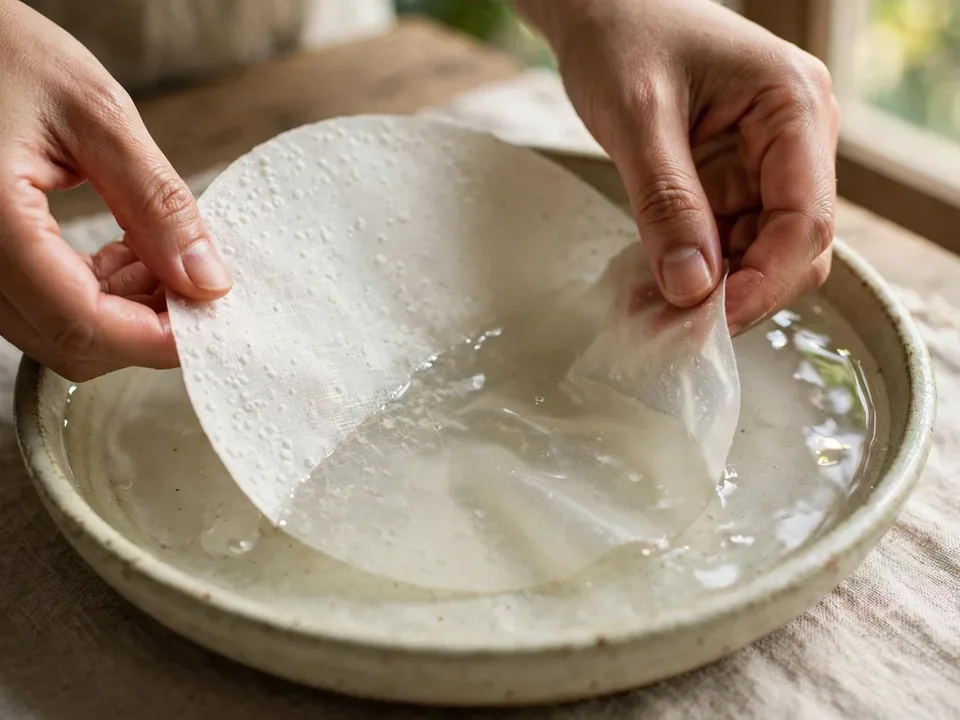
Wet one rice-paper wrapper briefly
1 min
Fill a wide shallow dish with lukewarm water.
Fill a wide shallow dish with lukewarm water. Dip one wrapper quickly—about 1–2 seconds for many commercial wrappers—then shake off excess water and lay it flat on a clean board. Do not wait for it to become fully soft in the water; it continues hydrating on the work surface.
Look for
The wrapper should become flexible and slightly tacky on the board while still having enough structure to lift and fold cleanly.
Kitchen note
Different rice-paper brands hydrate at different speeds. Under-soak deliberately on the first roll and let the board finish the softening rather than soaking until the sheet is floppy and fragile. If a wrapper becomes too soft or folds onto itself, set it aside rather than stretching it; start the next sheet with a shorter dip. If it is still stiff after filling, wait 10–20 seconds before rolling instead of re-soaking it.
 Step 06
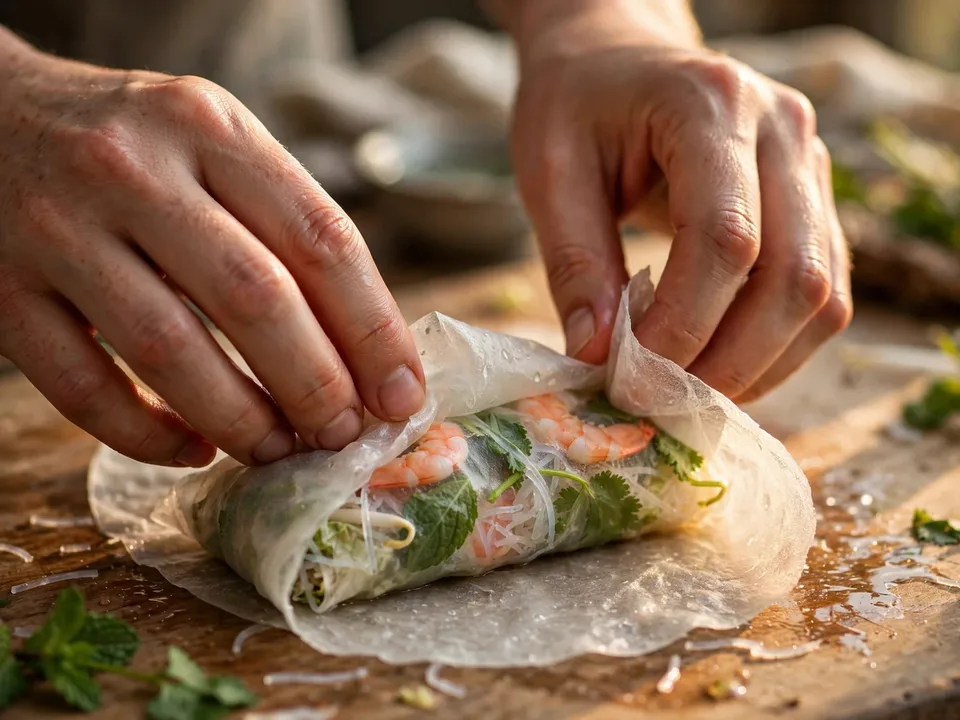
Layer, fold and roll one gỏi cuốn
2 min
Place lettuce, herbs, a restrained bundle of noodles, cucumber and pork across the lower third, leaving clear side margins.
Place lettuce, herbs, a restrained bundle of noodles, cucumber and pork across the lower third, leaving clear side margins. Put two or three prawn halves nearer the upper third with the coloured side facing the wrapper for presentation. Fold the bottom edge over the filling and roll once, fold both sides inward, add a garlic-chive stalk across the centre if using, then continue rolling with firm even pressure until sealed.
Look for
The finished roll should be a straight compact cylinder with an intact translucent wrapper, visible prawns and no bulging or leaking ends.
Kitchen note
Do not overfill. A compact roll is built by restrained noodles, dry fillings and even pressure—not by stretching the wrapper around a large mound. If a wrapper tears, use less filling on the next roll and keep hard herb stems or sharp prawn edges away from the rice paper surface.
 Step 07
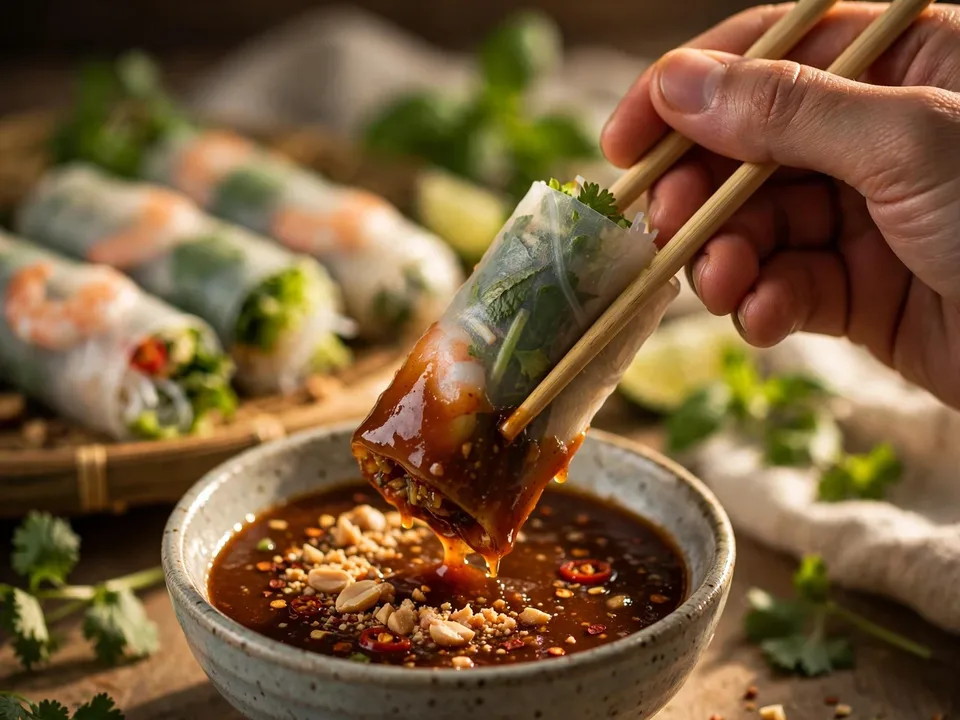
Repeat and serve while the wrappers are supple
8 min
Work one wrapper at a time until all rolls are formed.
Work one wrapper at a time until all rolls are formed. Arrange them with a little space between each so they do not stick together and serve promptly with the dipping sauce. If holding briefly, cover with a barely damp clean cloth. For longer storage, refrigerate the prepared components separately and roll close to service rather than refrigerating assembled rolls for hours.
Look for
Wrappers should remain soft, translucent and lightly springy, with crisp greens and clearly defined fillings rather than a wet compressed centre.
Kitchen note
Rice paper dries and toughens in open air but becomes sticky when piled. Short holding under a barely damp cloth is better than stacking tightly or making the whole batch far in advance.
After cooking
Explore the dish beyond the method.
Story, place and references are here for discovery, so they stay out of the way while you cook.
Culture & tradition
The story behind the dish
Origins, evolution and everyday life—read together as part of the recipe's culinary record.
Origins
Fresh rice-paper rolls belong to a broad Vietnamese hand-rolled food tradition and the pork-and-prawn gỏi cuốn familiar internationally is especially associated with southern Vietnamese eating.
How it evolved
Fillings vary widely; tofu and vegetable rolls, different herbs and fish-sauce or fermented-bean dips are all legitimate variations. The selected Ember & Equator version uses pork belly, prawns and a cooked garlic-hoisin-peanut sauce.
Its place today
Gỏi cuốn remain a common appetiser or light meal and showcase Vietnamese emphasis on fresh herbs, contrasting textures and food assembled close to the moment of eating.
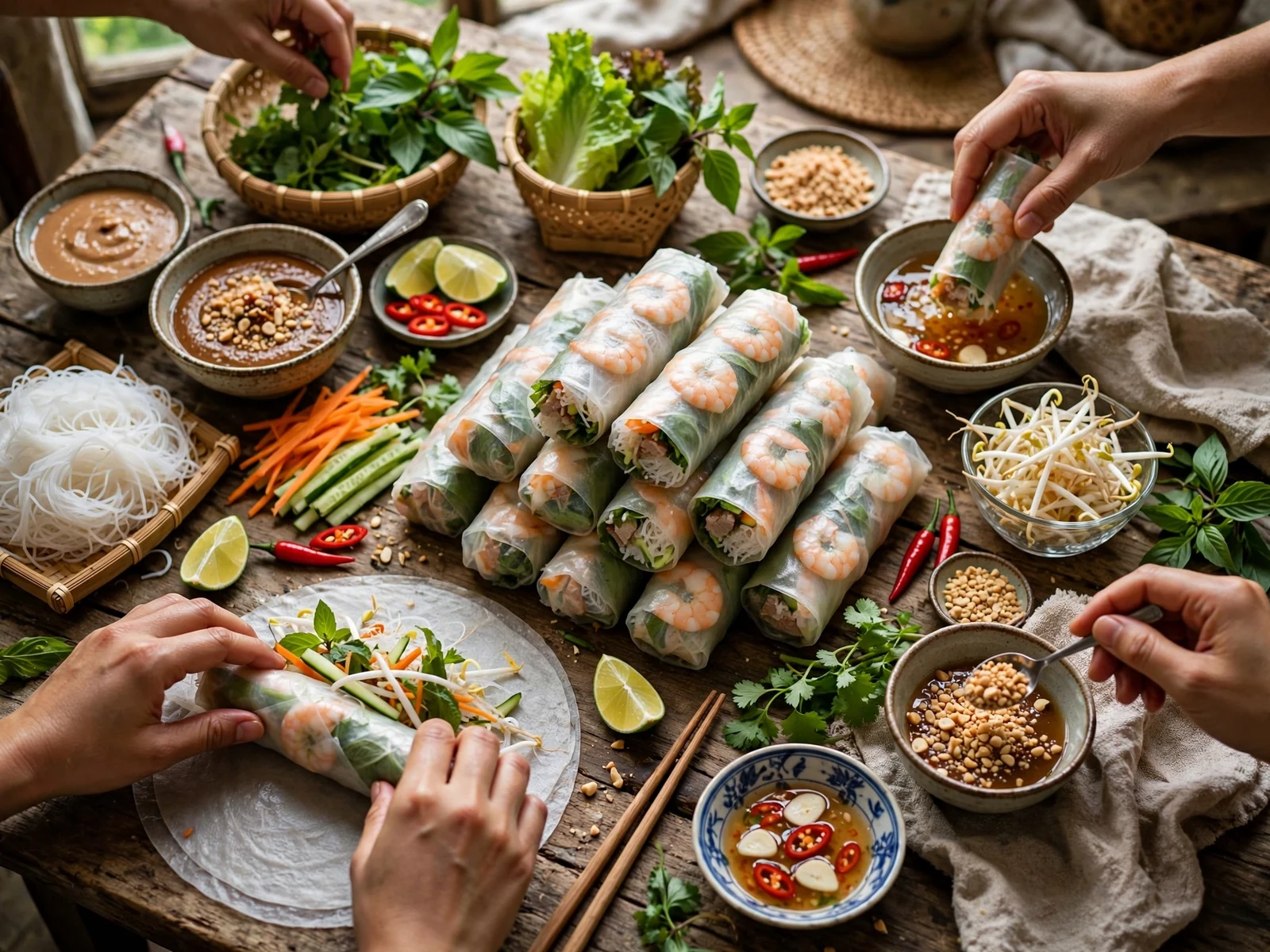
Visual archive · plate 01
Gỏi Cuốn
An editorial view of the finished dish, kept compact so the story continues without an oversized image break.
Primary region
Southern Vietnam and national variants
Country
Vietnam
Regional influence
Warm growing conditions provide abundant herbs and vegetables, while rice-paper production connects the dish to Vietnam’s wider rice-processing traditions.
Related food systems
- Vietnamese rice-paper traditions
- Fresh herb culture
- Southern Vietnamese foodways
Culinary record
- Origin
- Southern Vietnam
- Era
- Traditional fresh-roll foodway
- Sub-region
- Southeast Asia — Mainland Southeast Asia
- Climate
- Monsoon
- Cooking methods
- raw
- Trade-route influence
- Red River trade · Mekong exchange · South China Sea routes
Traditional & modern
Fillings vary widely, but softened rice paper, herbs, noodles and a dipping sauce define the format.
Regional adaptations
- Vegetarian tofu and mushroom versions
Sources & further reading
Follow the reference trail.
Ember & Equator links outward when an institution or primary reference helps support the culinary record.
- 0110 delicious Vietnamese rollsExternal ↗
Vietnam Tourism · government
Supports: Gỏi Cuốn · Vietnamese fresh-roll tradition · rice paper · pork and prawn versions
Ember & Equator source review · 2026-09-17
- 0221 must-try Vietnamese dishesExternal ↗
Vietnam Tourism · government
Supports: Gỏi Cuốn · Vietnamese food culture
Ember & Equator source review · 2026-09-17
- 03Goi cuon (fresh spring rolls)External ↗
Helen’s Recipes · specialist publication
Supports: pork belly and prawn cooking · rice vermicelli and fresh fillings · garlic-hoisin-peanut sauce · rice-paper rolling technique
Ember & Equator source review · 2026-09-17
- 04Fresh Vietnamese Spring Rolls (Gỏi Cuốn)External ↗
Vicky Pham · specialist publication
Supports: pork and shrimp fillings · rice-paper assembly · garlic chive · peanut dipping sauce
Ember & Equator source review · 2026-09-17
Ingredient guides
Learn about the ingredients behind the dish.
These are reference guides, not a second ingredient list. Follow an ingredient when you want to understand its role, use and wider culinary context.
Ingredient
rice paper wrappers
Understand what it contributes, how to use it, and the dishes that reveal it best.
Ingredient
pork belly
Understand what it contributes, how to use it, and the dishes that reveal it best.
Ingredient
raw prawns
Understand what it contributes, how to use it, and the dishes that reveal it best.
Ingredient
rice vermicelli
Understand what it contributes, how to use it, and the dishes that reveal it best.
Ingredient
lettuce leaves
Understand what it contributes, how to use it, and the dishes that reveal it best.
Ingredient
fresh mint
Understand what it contributes, how to use it, and the dishes that reveal it best.
Keep wandering
Where will this dish take you next?
Stay with the place, follow an ingredient or technique, or cross into another food culture. Each path begins with something already present in this dish.
Stay with the place
01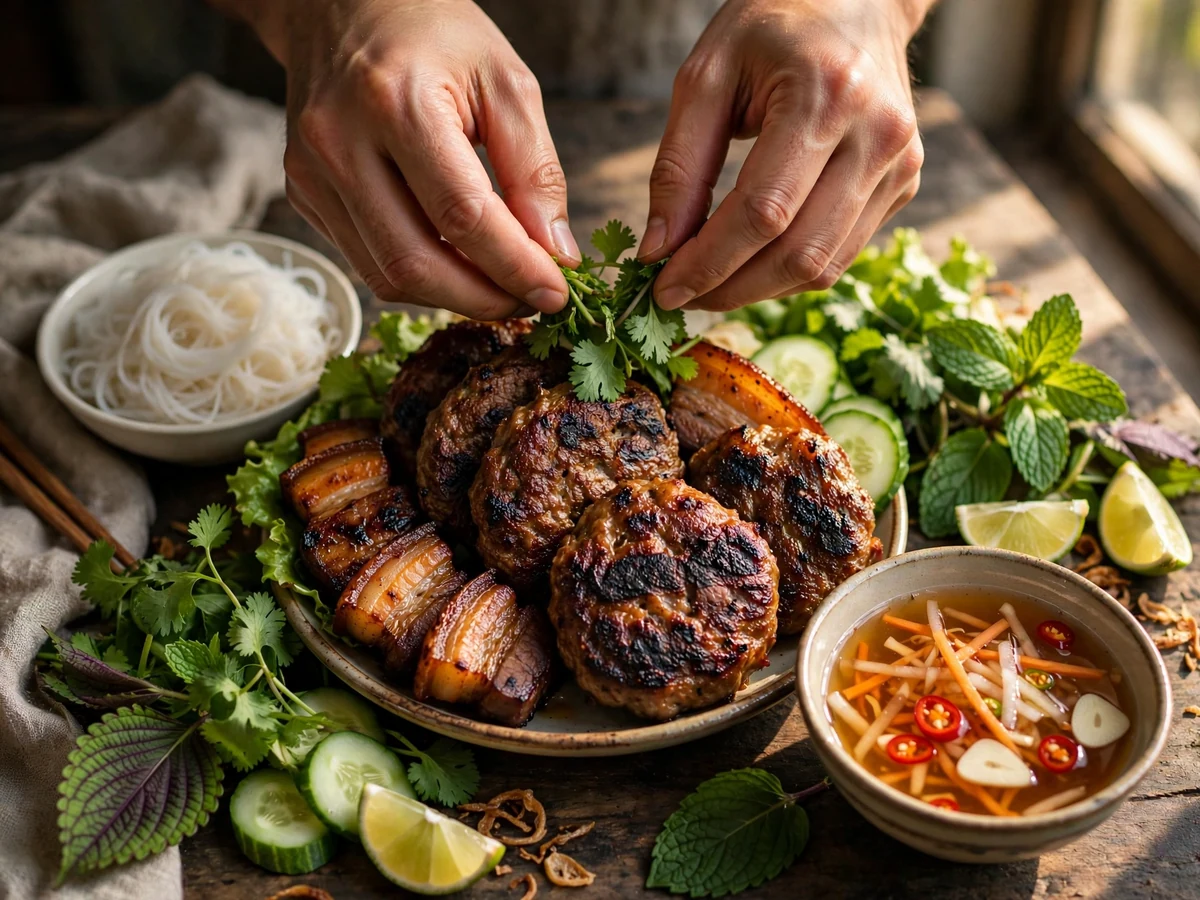
Vietnam
Bún Chả
Stay in the same food culture and notice how balance a sweet-sour-salty sauce appears in another dish.
Shared thread · Balance a sweet-sour-salty sauce · pork belly · rice vermicelli
Follow the method or pantry
02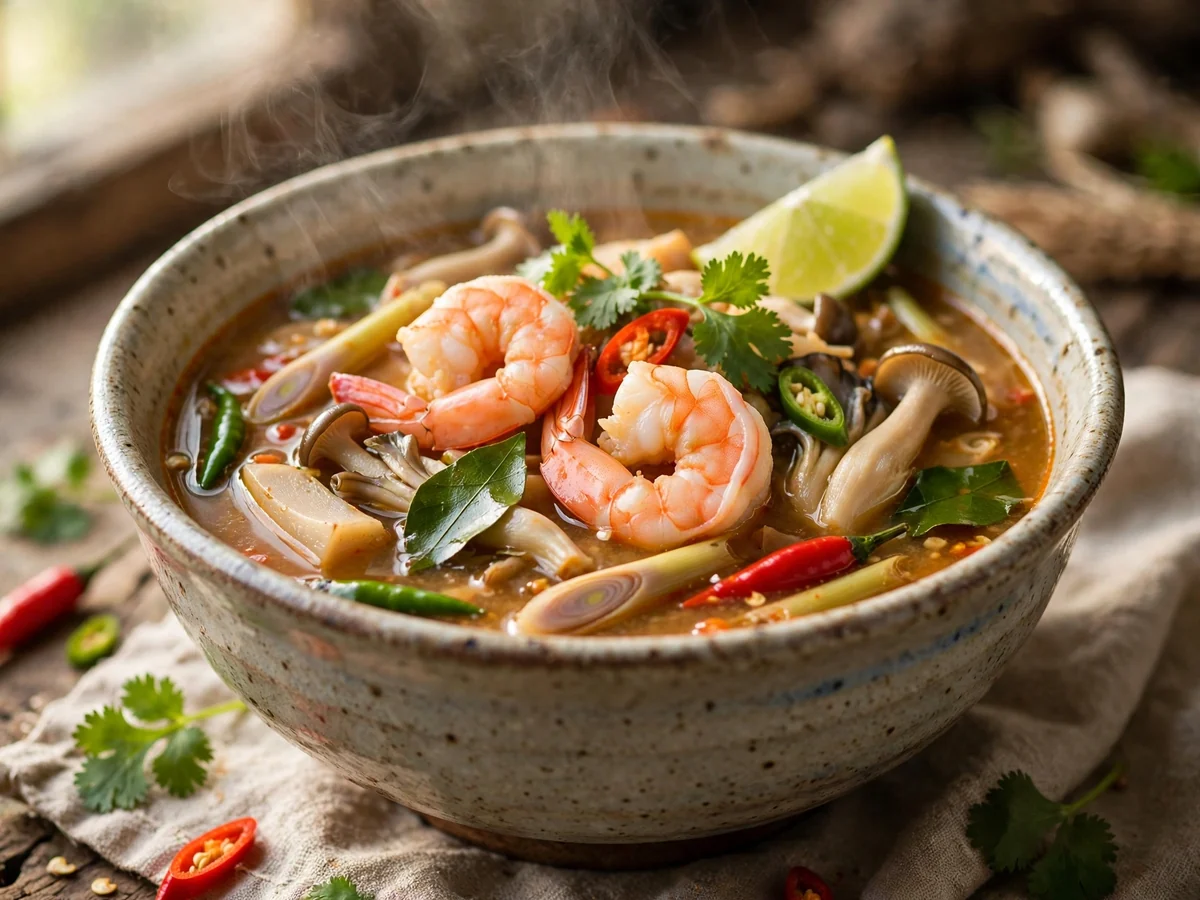
Thailand
Tom Yum Kung
Follow the cooking method: both dishes connect through simmer.
Shared thread · Simmer · Balance a sweet-sour-salty sauce · raw prawns
Cross a culinary border
03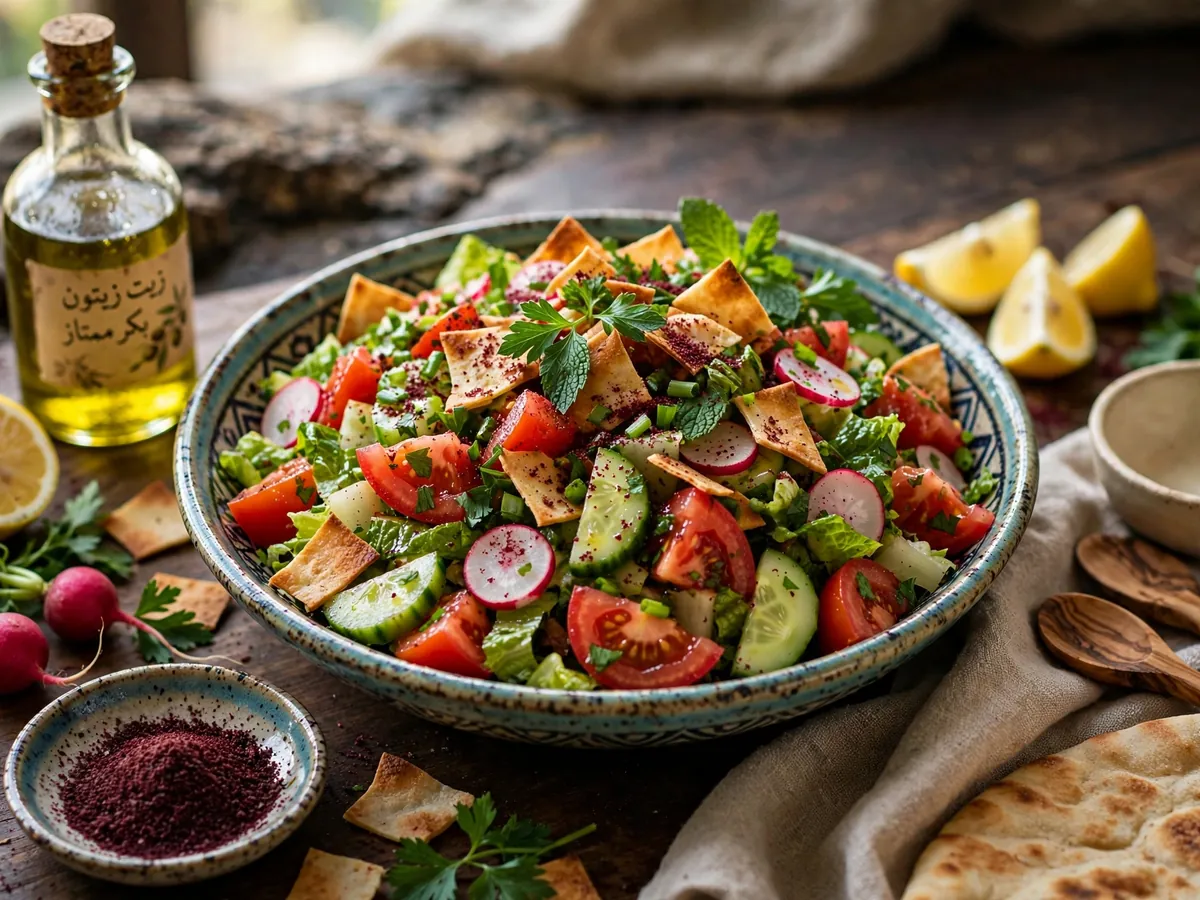
Lebanon
Fattoush
Cross borders while keeping balance a sweet-sour-salty sauce as the common thread.
Shared thread · Balance a sweet-sour-salty sauce · lettuce leaves · fresh mint
Go one layer deeper
One small detail can open an entirely different part of food.
Continue in Ember & Equator