
Lebanon · lunch · dinner
Fattoush
Lebanon through one enduring dish.
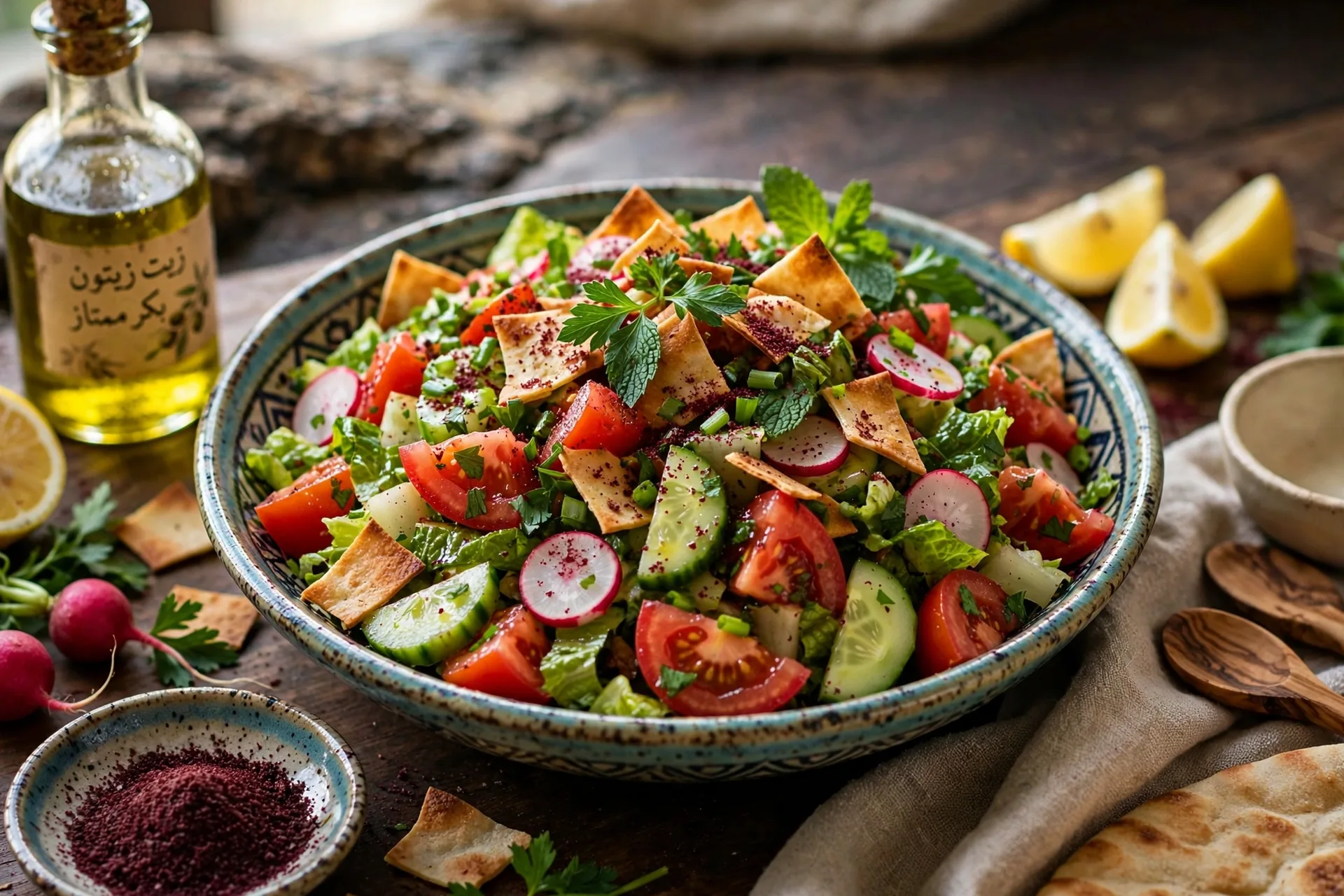
Fattoush is a Lebanese bread salad built around crisp pita, lettuce and seasonal vegetables, fresh herbs and a bright dressing sharpened with sumac, lemon and pomegranate molasses.
- Total
- 28 min
- Difficulty
- Easy
- Serves
- 6
- Steps
- 6
The dish
Freshness is part of the method.
Fattoush belongs to a Lebanese and wider Levantine tradition of making stale or toasted flatbread part of the dish rather than treating bread only as an accompaniment. Its exact vegetables shift with season and household, but crisp pita, fresh produce, herbs and a tart sumac-led dressing are central. Pomegranate molasses is strongly associated with Lebanese fattoush, while the best texture depends on dressing the vegetables and adding the bread only at the last moment.
Explore LebanonAt a glance
Origin
Lebanon
Region
Lebanon / Levant
Meal
lunch · dinner
Guided steps
6
Dish
Fattoush
Cuisine
Lebanese cuisine
Food type
Vegetable dish
Technique
Roast or bake · Prepare salad · Balance a sweet-sour-salty sauce
Cook the recipe
In the kitchen
Start with the ingredients, then follow the Method in order. Open cooking tips only when you need extra help; the story and references can wait until you are ready.
- Total
- 28 min
- Serves
- 6
- Level
- Easy
- Visual cues
- 6
Ingredients
Serves 6- 2pita breadpreferably day-old; split or torn for crisping
- 2 heartsromaine or crisp lettucechopped into bite-size pieces
- 4ripe tomatoescut into bite-size pieces
- 2cucumbercut into bite-size pieces
- 6radishesthinly sliced
- 1/2red onionthinly sliced
- 1/2 cupfresh parsleyroughly chopped
- 1/3 cupfresh mintleaves roughly torn or chopped
- 3 tbspfresh lemon juicefor the dressing
- 1 tbsppomegranate molassesuse a tart, concentrated molasses; adjust to taste
- 1 clovegarlicfinely grated or crushed
- 2 tspsumacplus a little more for finishing
- 4 tbspextra virgin olive oilfor the dressing
- 3/4 tspsaltplus more to taste
- 1/4 tspblack pepperfreshly ground
Optional
- 1 cupfresh purslaneoptional when available
- 1 tspdried mintoptional but traditional in many Lebanese dressings
- 2 tbspneutral oilonly if pan-frying the pita rather than baking
Everything ready? Continue straight into the cooking steps.
Start methodMethod
6 steps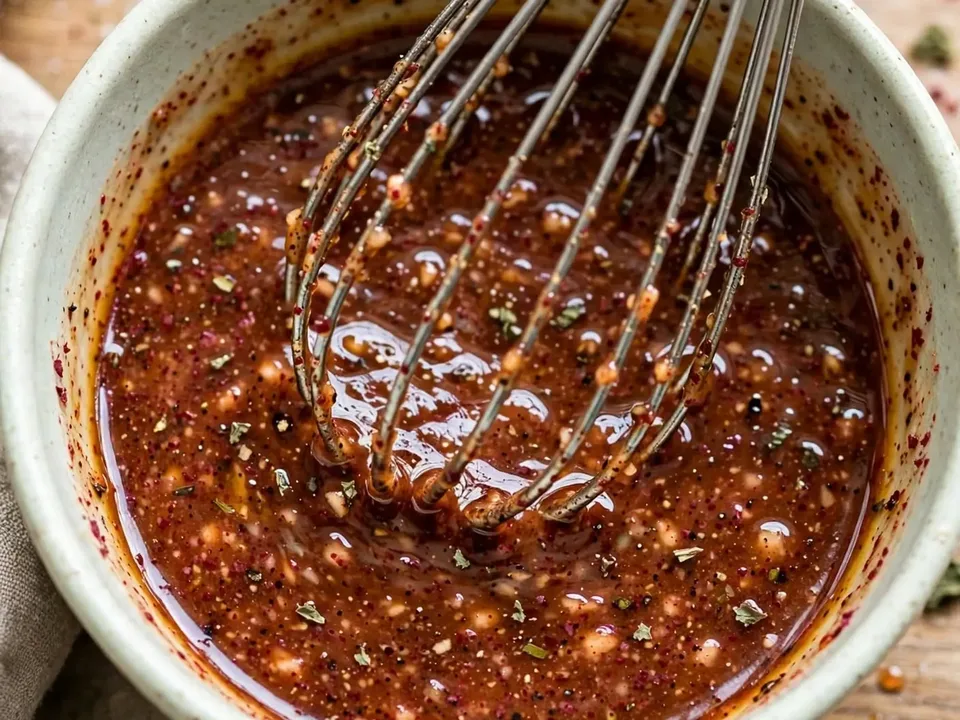 Step 01
Whisk the sumac-pomegranate dressing first
5 min
Whisk the lemon juice, pomegranate molasses, garlic, sumac, optional dried mint, salt and black pepper until the salt dissolves.
Whisk the lemon juice, pomegranate molasses, garlic, sumac, optional dried mint, salt and black pepper until the salt dissolves. Whisk in the olive oil to make a lightly emulsified dressing, then let it stand while you prepare the salad so the sumac and dried mint can hydrate.
Look for
The dressing looks evenly emulsified, the sumac is dispersed and there are no dry spice clumps floating on top.
Kitchen note
Taste the dressing on a lettuce leaf or cucumber piece, not straight from the spoon; it should taste slightly more assertive than a finished bite because it still has to season a large bowl of vegetables.
 Step 02
Crisp the pita until dry all the way through
8 min
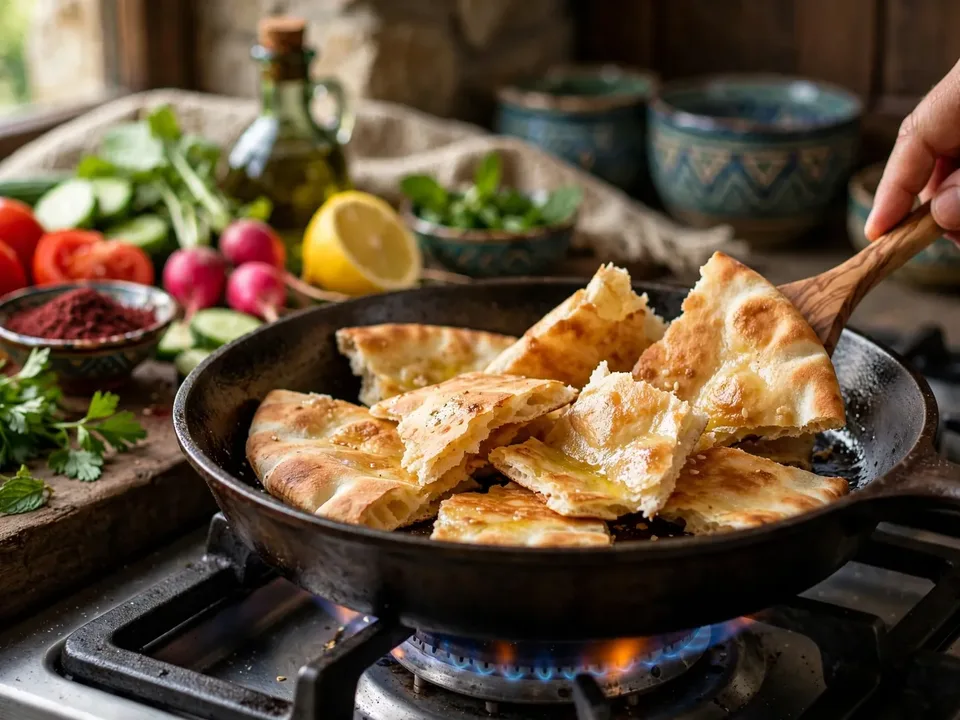
Tear or cut the pita into bite-size pieces.
Tear or cut the pita into bite-size pieces. Either bake at about 200°C / 400°F until crisp and lightly browned, or shallow-fry in a small amount of neutral oil until golden. Drain if fried and cool completely before the pita goes near the salad.
Look for
The pita is golden at the edges, dry through the centre and snaps cleanly when broken.
Kitchen note
The bread must be dry and crisp through the centre, not merely browned outside. Warm pita traps steam and softens quickly, so cool it before assembly.
 Step 03
Cut the vegetables and remove excess surface water
8 min
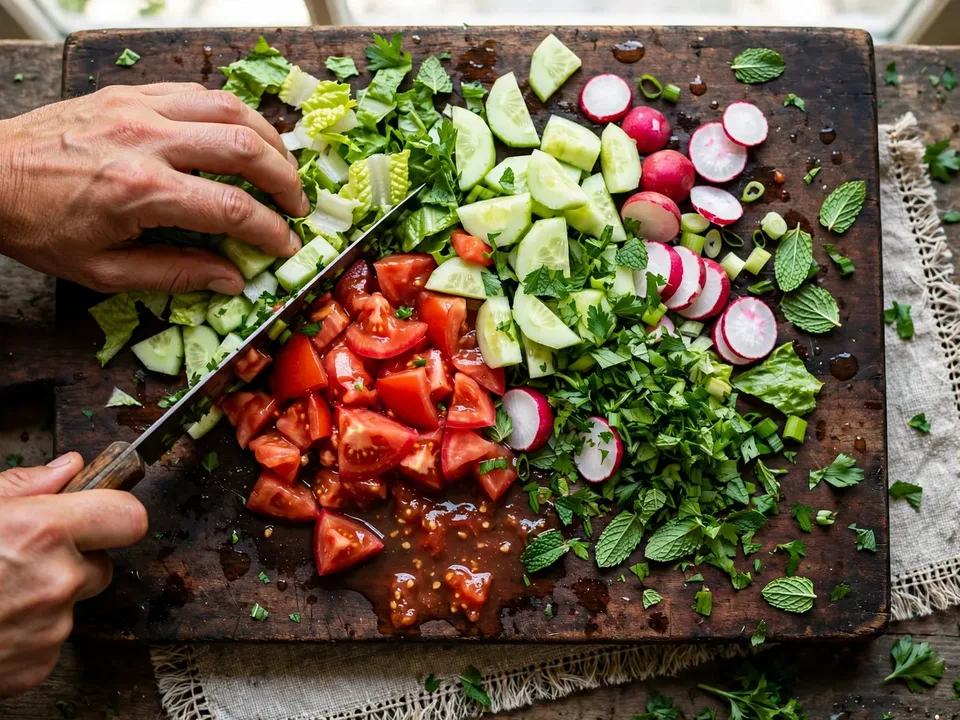
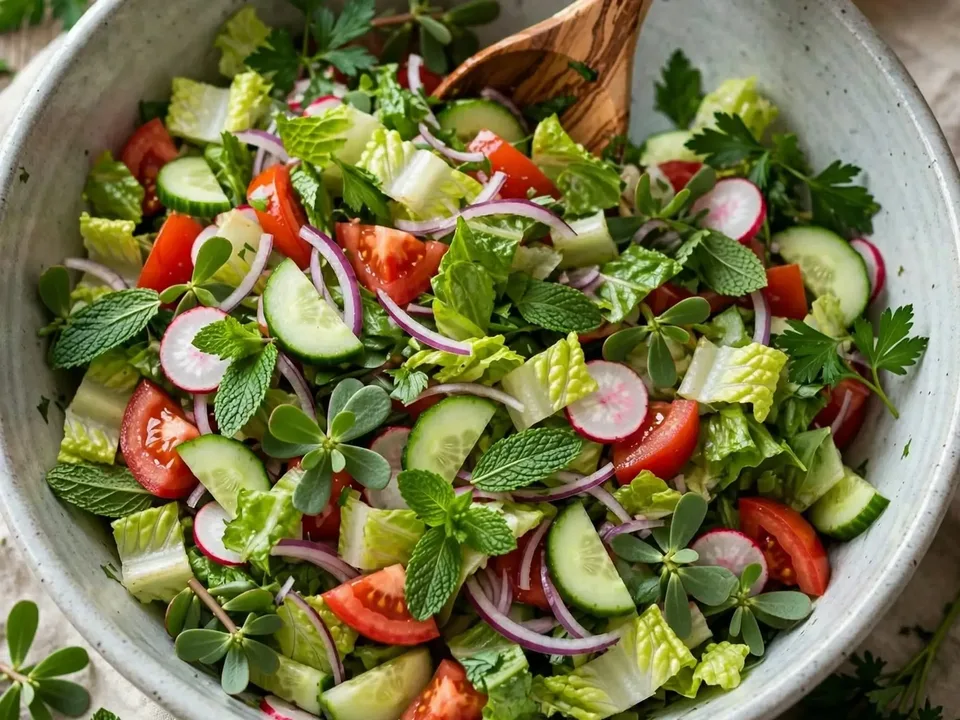
Chop the lettuce, tomatoes and cucumber into fork-friendly pieces.
Chop the lettuce, tomatoes and cucumber into fork-friendly pieces. Slice the radishes and red onion thinly. If the tomatoes or cucumber are especially watery, drain them briefly or blot excess liquid so the salad will not dilute the dressing.
Look for
The vegetables look freshly cut and crisp, with no pool of watery tomato or cucumber juice collecting on the board or in the bowl.
Kitchen note
Do not salt the chopped vegetables while they wait; early salting pulls out water and shortens the crisp window before serving.
 Step 04
Add the herbs and keep the undressed salad cold
3 min
Combine the chopped vegetables with parsley, fresh mint and optional purslane.
Combine the chopped vegetables with parsley, fresh mint and optional purslane. Toss gently so the herbs are distributed without bruising. If the salad will wait even briefly, cover and refrigerate it undressed.
Look for
The bowl looks fresh and dry, with herbs distributed throughout and lettuce leaves still crisp and unwilted.
Kitchen note
Fattoush benefits from generous herbs, but bruised mint turns dark quickly. Tear or chop it shortly before service and handle the bowl lightly.
 Step 05
Dress the vegetables only moments before serving
2 min
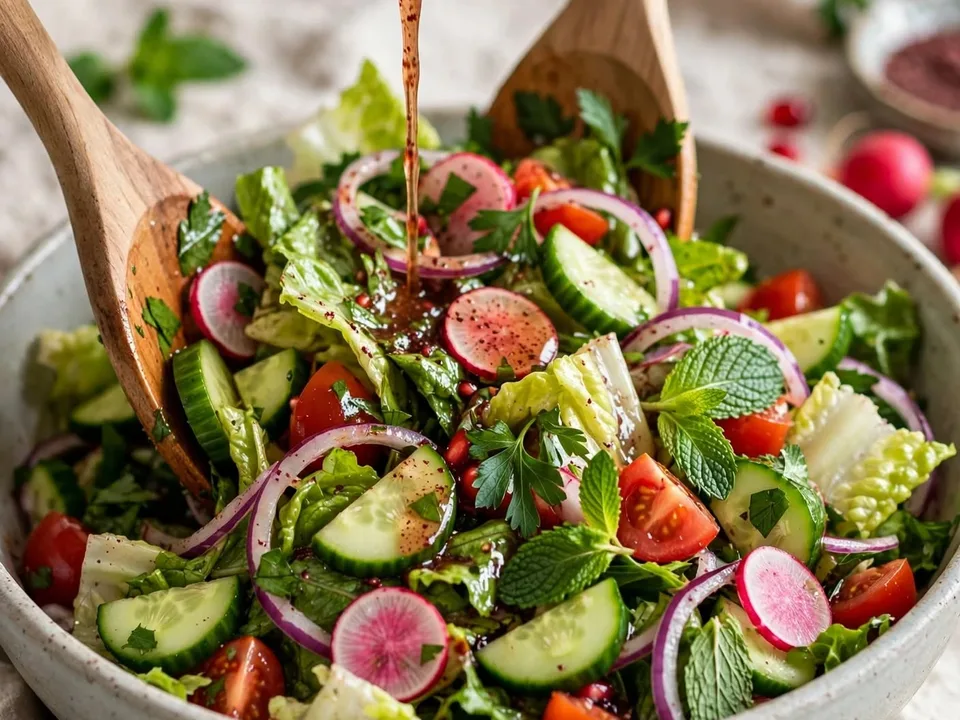
Whisk the dressing again, pour on only enough to coat the vegetables, and toss gently but thoroughly.
Whisk the dressing again, pour on only enough to coat the vegetables, and toss gently but thoroughly. Taste and adjust with a little more lemon, salt, sumac or pomegranate molasses if needed.
Look for
The vegetables are glossy and evenly seasoned but there is no puddle of dressing at the bottom of the bowl.
Kitchen note
Use restraint with pomegranate molasses; it should deepen the sour-sweet balance, not make the salad taste syrupy.
 Step 06
Fold in the pita at the last moment and serve
1 min
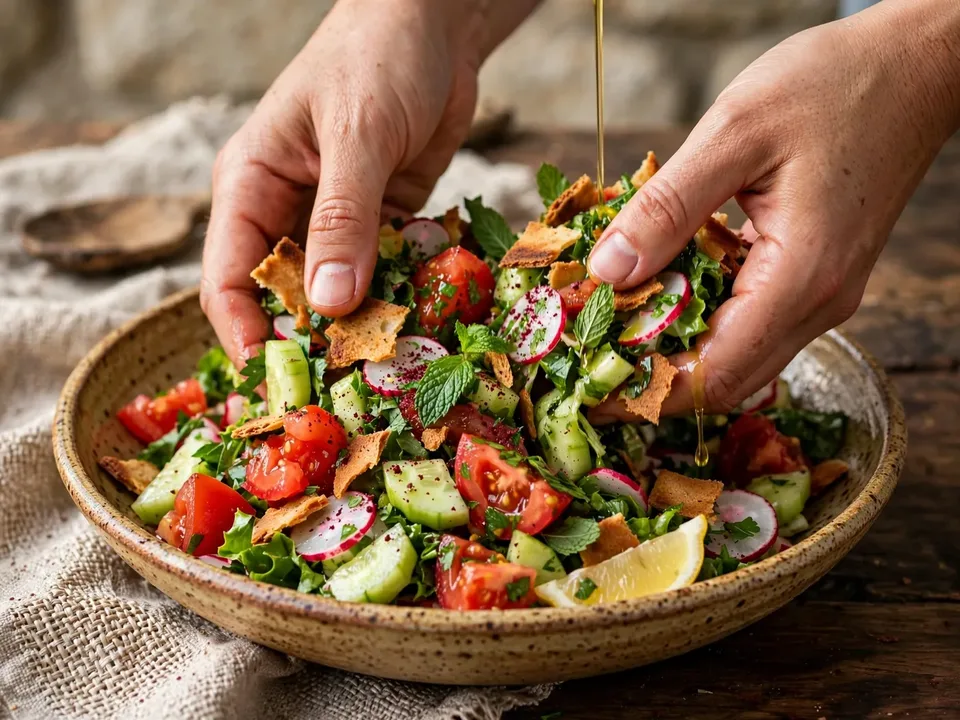
Add most of the cooled crisp pita and fold just enough to coat its edges.
Add most of the cooled crisp pita and fold just enough to coat its edges. Scatter the remaining pita over the top, finish with a small pinch of sumac and serve immediately while the bread still has a crisp centre.
Look for
The pita is coated at the edges but still visibly crisp, and the vegetables remain bright rather than collapsed or watery.
Kitchen note
The contrast between dressed edges and a crisp centre is the point. If the salad must sit, keep the pita completely separate and let diners add it themselves.
After cooking
Explore the dish beyond the method.
Story, place and references are here for discovery, so they stay out of the way while you cook.
Culture & tradition
The story behind the dish
Origins, evolution and everyday life—read together as part of the recipe's culinary record.
Origins
Fattoush is a Lebanese and Levantine bread salad associated with practical use of flatbread alongside seasonal vegetables and herbs.
How it evolved
Household versions vary in lettuce, purslane, mint, parsley, cucumber, tomato, radish and onion, while sumac and crisp bread remain strong identity markers.
Its place today
It is widely served as a mezze or salad alongside grilled foods and shared meals, with pomegranate molasses common in Lebanese dressings.
Visual archive · plate 01
Fattoush
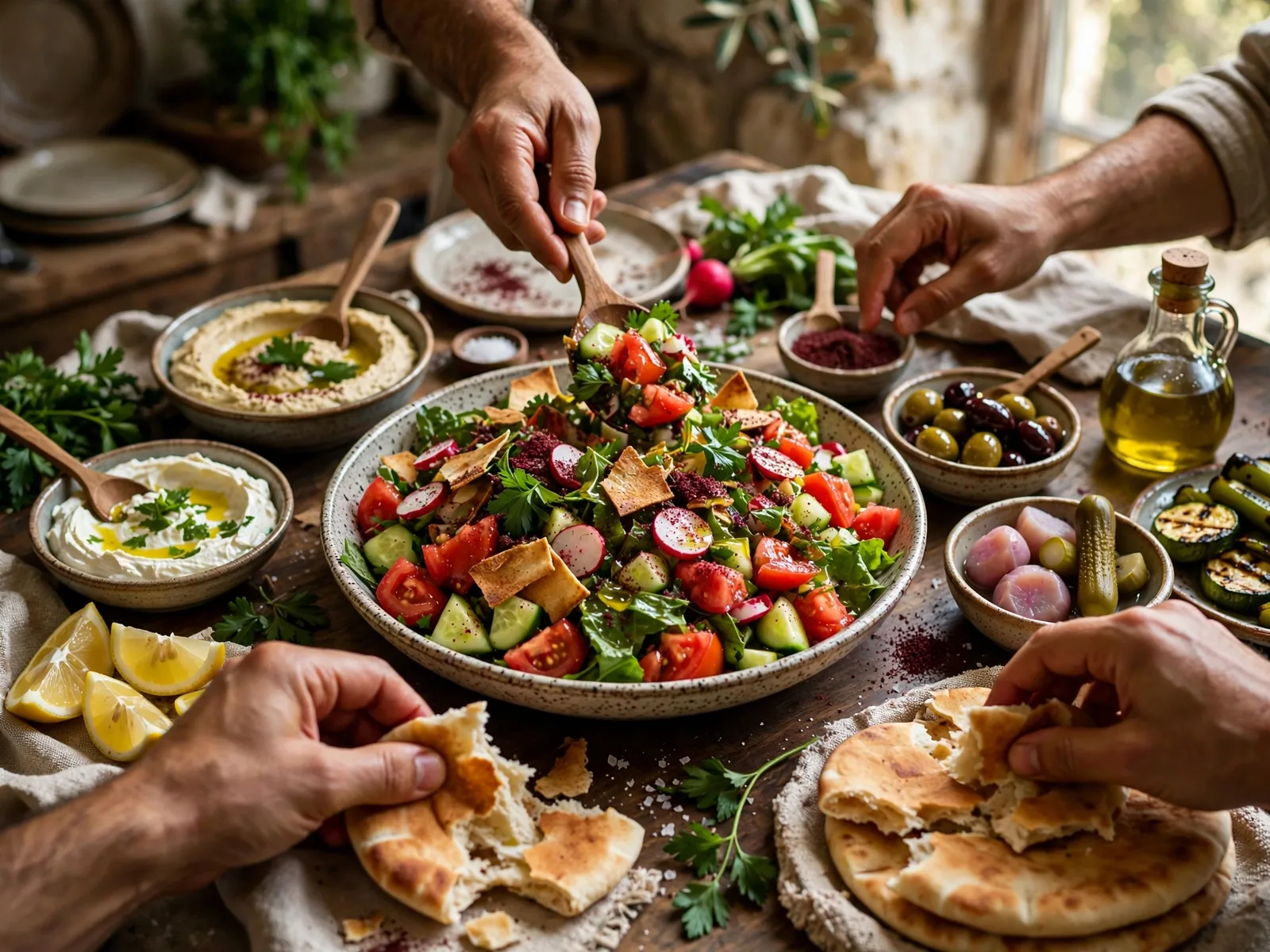
An editorial view of the finished dish, kept compact so the story continues without an oversized image break.
Primary region
Lebanon / Levant
Country
Lebanon
Regional influence
The dish reflects the ingredients and cooking patterns associated with Lebanon / Levant, while household and regional versions vary.
Related food systems
- Lebanon / Levant home cooking
- Market and street-food traditions
- Regional pantry and seasonal cooking
Sources & further reading
Follow the reference trail.
Ember & Equator links outward when an institution or primary reference helps support the culinary record.
- 01Lebanese Fattoush Salad (Authentic Recipe)External ↗
Maureen Abood · reference
Supports: lettuce and fresh vegetables · sumac, lemon and pomegranate-molasses dressing · fresh mint · crisp pita added near service
Ember & Equator source review · 2026-09-17
- 02The Sour Taste of LebanonExternal ↗
Lebanon Traveler / Food Heritage Foundation · specialist publication
Supports: sumac in fattoush seasoning · pomegranate molasses in Lebanese fattoush dressing
Ember & Equator source review · 2026-09-17
Ingredient guides
Learn about the ingredients behind the dish.
These are reference guides, not a second ingredient list. Follow an ingredient when you want to understand its role, use and wider culinary context.
Ingredient
pita bread
Understand what it contributes, how to use it, and the dishes that reveal it best.
Ingredient
lettuce leaves
Understand what it contributes, how to use it, and the dishes that reveal it best.
Ingredient
tomatoes
Understand what it contributes, how to use it, and the dishes that reveal it best.
Ingredient
cucumber
Understand what it contributes, how to use it, and the dishes that reveal it best.
Ingredient
radishes
Understand what it contributes, how to use it, and the dishes that reveal it best.
Ingredient
red onion
Understand what it contributes, how to use it, and the dishes that reveal it best.
Keep wandering
Where will this dish take you next?
Stay with the place, follow an ingredient or technique, or cross into another food culture. Each path begins with something already present in this dish.
Stay with the place
01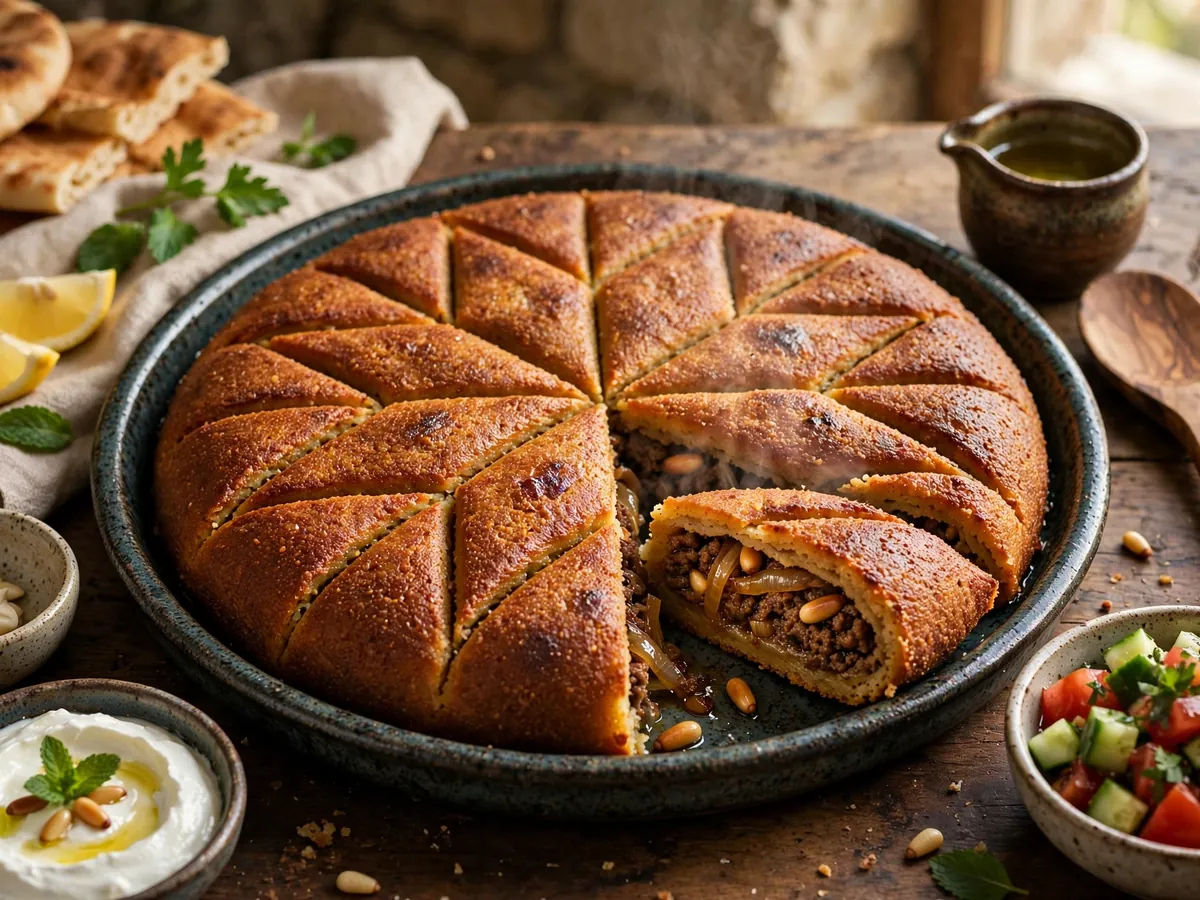
Lebanon
Kibbeh Bil Sanieh
Stay in the same food culture and notice how roast or bake appears in another dish.
Shared thread · Roast or bake · lemon juice · extra virgin olive oil
Follow the method or pantry
02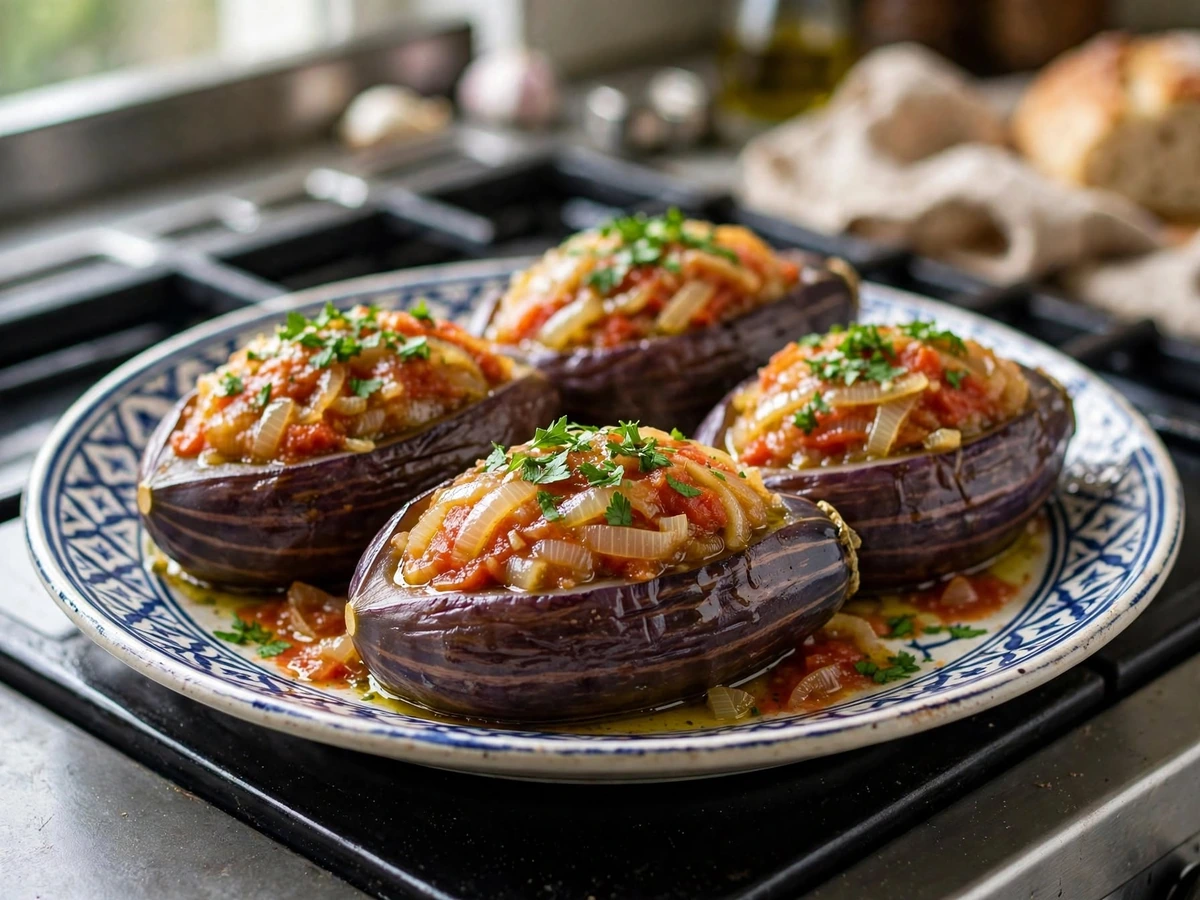
Türkiye
İmam Bayıldı
Follow the pantry: both dishes connect through parsley.
Shared thread · parsley · lemon juice · garlic
Cross a culinary border
03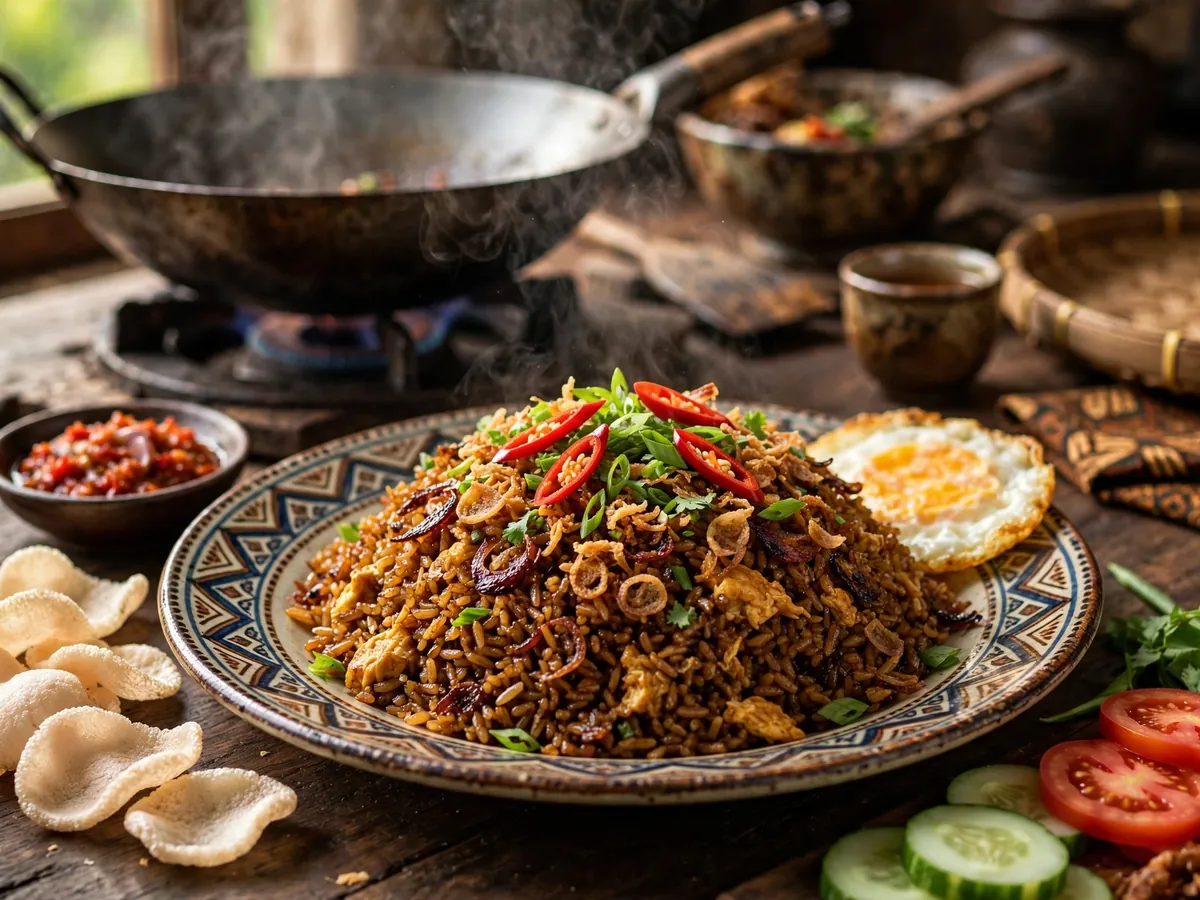
Indonesia
Nasi Goreng
Cross borders while keeping balance a sweet-sour-salty sauce as the common thread.
Shared thread · Balance a sweet-sour-salty sauce · tomatoes · cucumber
Go one layer deeper
One small detail can open an entirely different part of food.
Continue in Ember & Equator