
Greece · lunch · dinner · soup · comfort-food
Fasolada
Greece through one enduring dish.
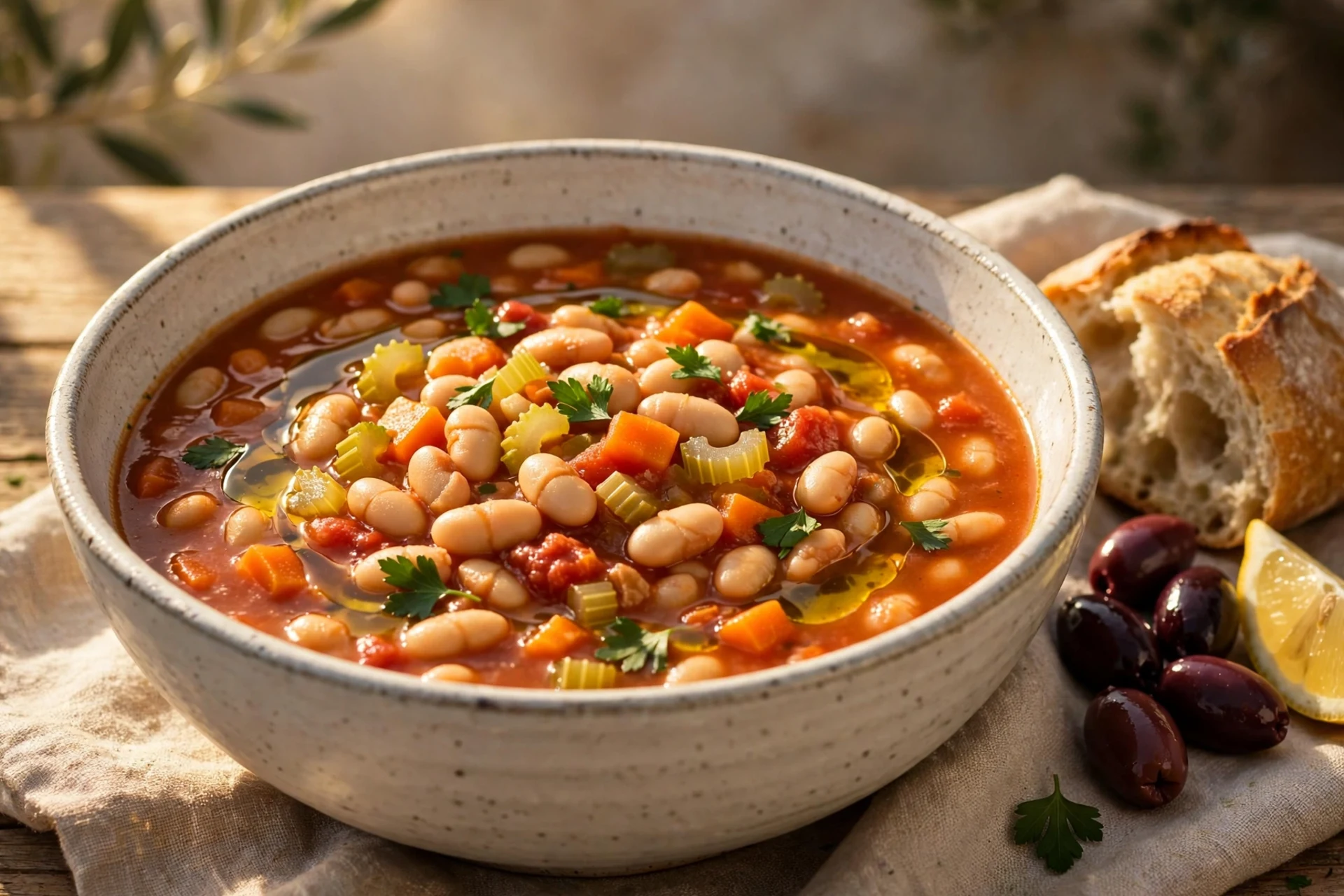
Fasolada is a Greek white-bean soup simmered with vegetables, tomato and olive oil. It is humble food with an important lesson: beans should become creamy inside while the vegetables and olive oil build body without turning the soup heavy.
- Total
- 110 min
- Difficulty
- Easy
- Serves
- 6
- Steps
- 6
The dish
Place first. Then the plate.
Visit Greece describes fasolada as one of the best-known Greek dishes, especially in winter, combining pulses, vegetables and olive oil within the Mediterranean food tradition.
Explore GreeceAt a glance
Origin
Greece
Region
Greece, with regional household variations
Method
simmered
Meal
lunch · dinner · soup · comfort-food
Guided steps
6
Dish
Fasolada
Cuisine
Greek cuisine
Food type
Soup · Legume dish · Comfort food
Technique
Simmer · Emulsify
Cook the recipe
In the kitchen
Start with the ingredients, then follow the Method in order. Open cooking tips only when you need extra help; the story and references can wait until you are ready.
- Total
- 110 min
- Serves
- 6
- Level
- Easy
- Visual cues
- 6
Ingredients
Serves 6- 400 gdried white beansmedium white beans; sort and rinse before soaking
- 1 largeyellow oniondiced
- 2 mediumcarrotssliced into 5–8 mm rounds
- 2 wholecelery stalkssliced, leaves included if tender
- 400 gcrushed tomatoesor grated ripe tomato
- 80 mlextra virgin olive oildivided; some for the pot and some for finishing
- 2 wholebay leaves
- 1 tspdried oreganoGreek oregano if available
- 1.5 litreswaterplus more, kept hot, as needed
- 1.5 tspsea saltto taste; add mainly once the beans are well on their way to tender
Optional
- 0.5 tspblack pepperfreshly ground, to taste
Everything ready? Continue straight into the cooking steps.
Start methodMethod
6 steps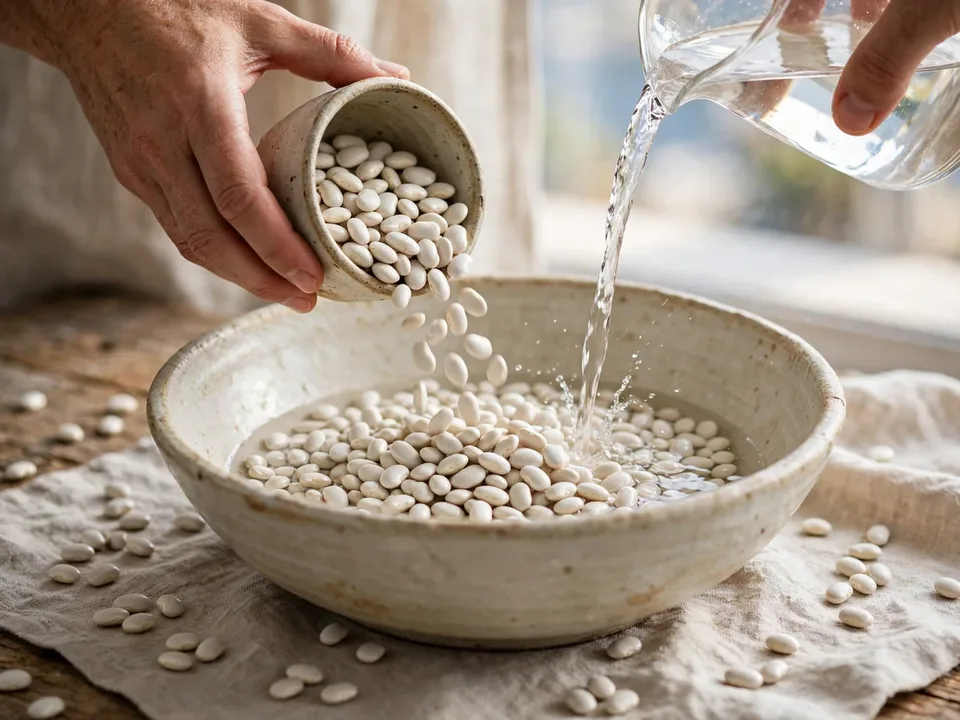 Step 01
Soak, rinse and drain the beans
480 min
Sort through the dried beans, rinse them well and cover with at least three times their volume of cool water.
Sort through the dried beans, rinse them well and cover with at least three times their volume of cool water. Soak for 8–12 hours, then drain and rinse again. If the kitchen is very warm, soak in the refrigerator rather than on the counter.
Look for
The beans are visibly plumper after soaking but still firm and intact, with no sour smell or slimy surface.
Kitchen note
Soaking improves even cooking, but bean age still matters. Very old beans can remain firm long after newer beans would be tender, so buy from a supplier with good turnover.
 Step 02
Give the beans a gentle head start
30 min
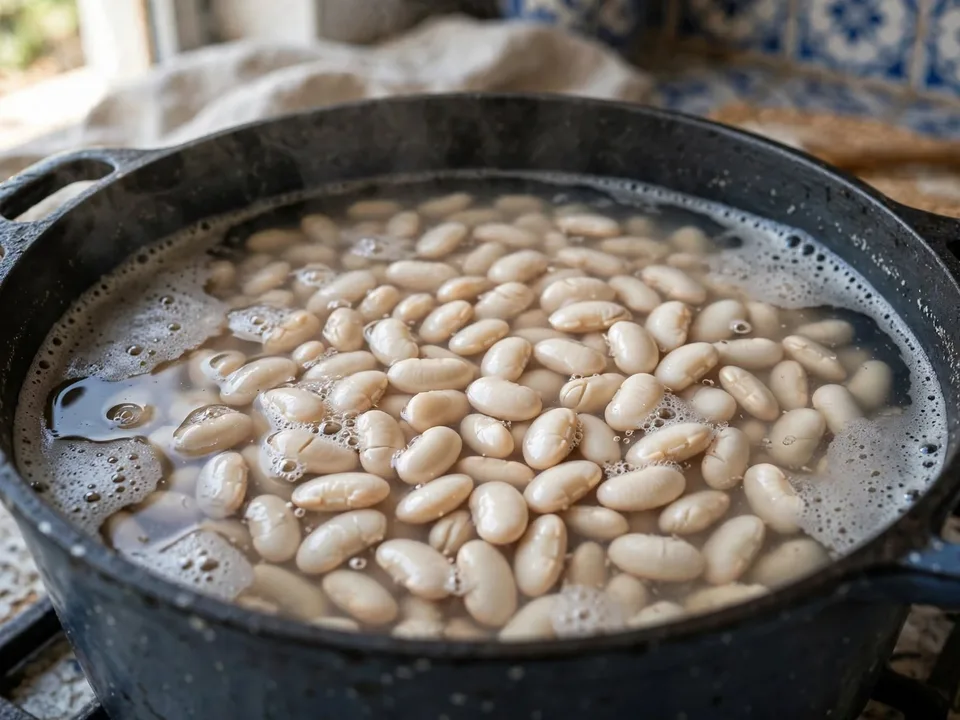
Put the drained beans in a heavy soup pot and cover with fresh water by several centimetres.
Put the drained beans in a heavy soup pot and cover with fresh water by several centimetres. Bring just to a boil, skim any grey foam if it appears, then lower to a calm simmer. Cook for 25–35 minutes before adding the acidic tomato component.
Look for
The beans have begun to tenderise around the outside but still offer clear resistance in the centre and mostly hold their skins.
Kitchen note
Keep the simmer gentle. A hard boil knocks skins loose before the centres have softened and can make the soup look broken while the beans are still undercooked.
 Step 03
Add the vegetables, tomato and aromatics
10 min
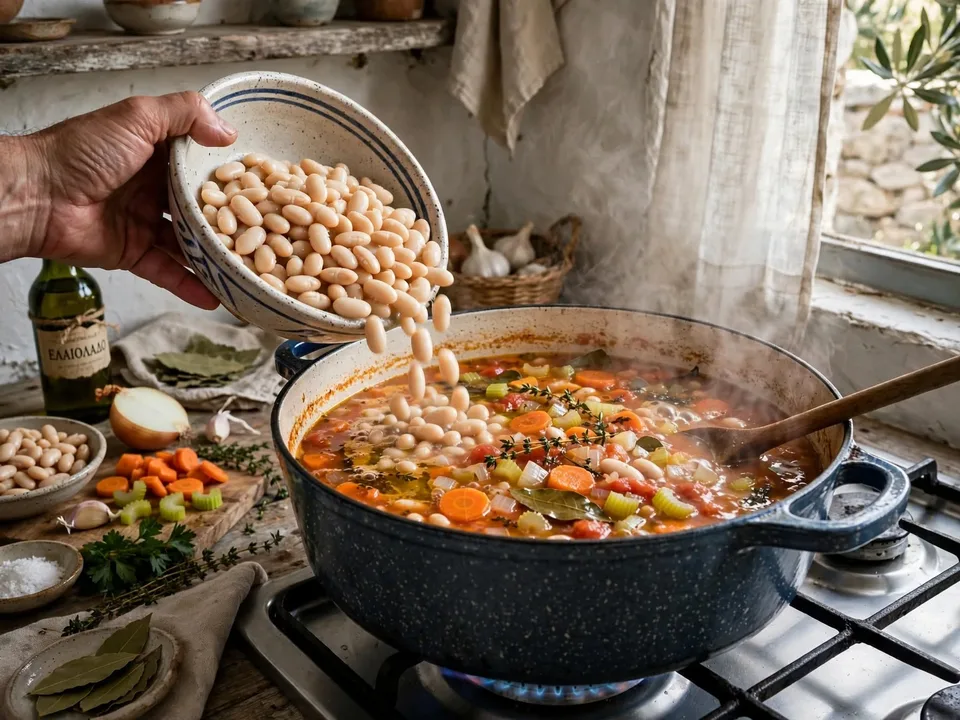
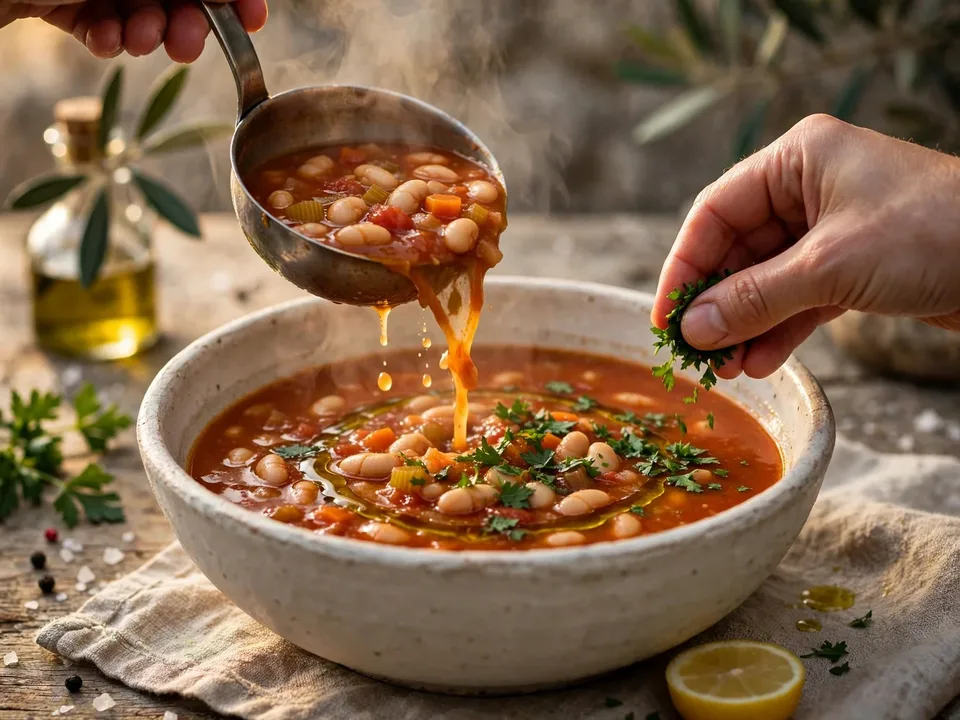
Add the onion, carrot, celery, crushed tomato, bay leaves and oregano.
Add the onion, carrot, celery, crushed tomato, bay leaves and oregano. Stir in about one third of the olive oil. Return the pot to a gentle simmer and make sure the beans and vegetables remain comfortably covered with liquid.
Look for
The broth turns brick-red and aromatic, the vegetables are evenly distributed, and the pot is simmering steadily rather than boiling hard.
Kitchen note
Adding the tomato after the beans have started softening gives you more control: acidic ingredients can slow the final tenderising of stubborn beans.
 Step 04
Simmer until the beans are creamy inside
45 min
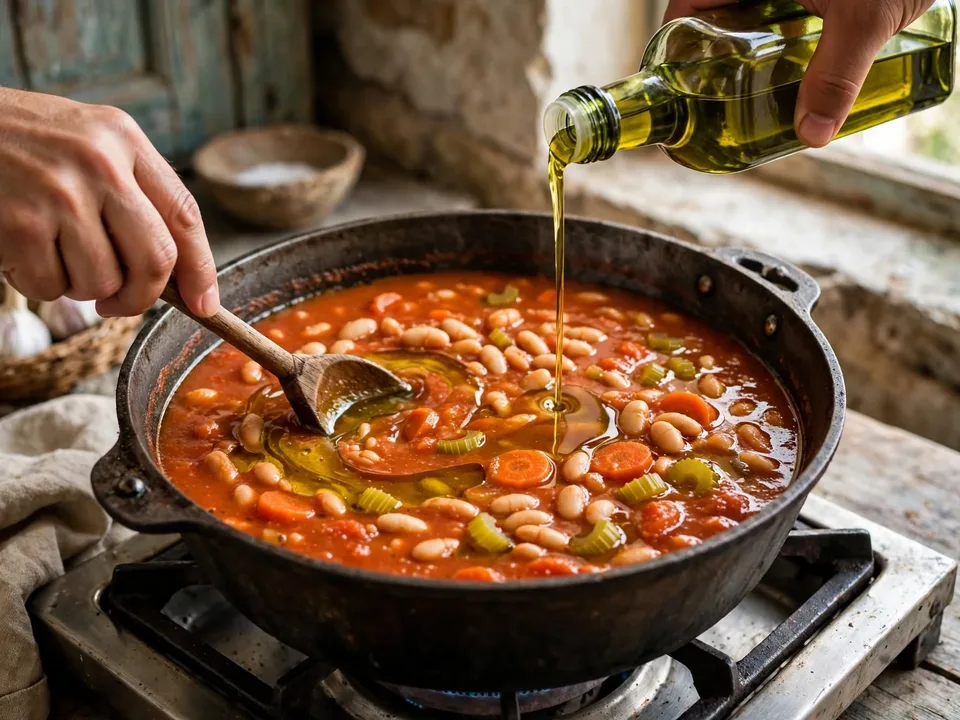
Simmer uncovered or partially covered for 35–55 minutes more, stirring occasionally.
Simmer uncovered or partially covered for 35–55 minutes more, stirring occasionally. Add only hot water when the beans rise above the liquid. Begin salting once the beans are nearly tender, then continue until the centres are creamy and the vegetables are fully soft.
Look for
A bean crushes easily between spoon and pot but still keeps a recognisable shape; the carrot is tender and the broth has gained natural body.
Kitchen note
Top up with hot rather than cold water so the pot does not repeatedly drop out of a simmer. Stir from the bottom gently because tender beans break easily near the end.
 Step 05
Finish the body with olive oil and seasoning
8 min
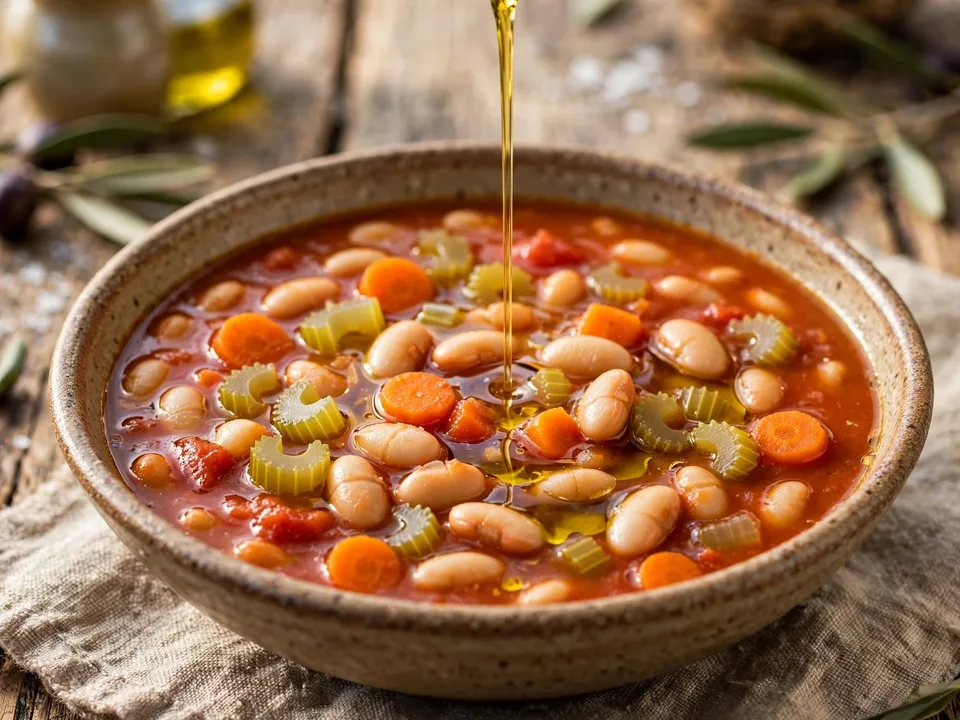
Stir in most of the remaining olive oil and the black pepper, if using.
Stir in most of the remaining olive oil and the black pepper, if using. Simmer very gently for another 5–10 minutes, then taste and adjust the salt. If the soup is too thin, simmer uncovered; if too thick, loosen with a little hot water.
Look for
The broth lightly coats a spoon, small beads of olive oil emulsify through it, and whole tender beans still remain visible.
Kitchen note
Fasolada should be brothy but cohesive, not blended into a puree. Let bean starch, soft vegetables and olive oil provide the body rather than crushing the entire pot.
 Step 06
Rest briefly and serve with a final olive-oil finish
10 min
Remove the bay leaves and take the pot off the heat for 10 minutes so the starch settles and the broth thickens slightly.
Remove the bay leaves and take the pot off the heat for 10 minutes so the starch settles and the broth thickens slightly. Ladle into warm bowls and finish with the last extra-virgin olive oil. Feta, olives, pickles or cured fish may be offered alongside, according to household preference.
Look for
The rested soup is glossy and spoonable, with tender intact beans and vegetables suspended in a cohesive red-orange broth.
Kitchen note
The soup often tastes rounder after a short rest and is excellent the next day. Reheat gently and add a splash of water if refrigeration has made it too thick.
After cooking
Explore the dish beyond the method.
Story, place and references are here for discovery, so they stay out of the way while you cook.
Culture & tradition
The story behind the dish
Origins, evolution and everyday life—read together as part of the recipe's culinary record.
Origins
Bean soups have long been part of everyday Greek pulse cookery, especially where dried legumes offered an economical, storable source of nourishment.
How it evolved
Regional and household versions differ in tomato, herbs, celery, carrots and finishing olive oil; the core remains beans cooked gently with vegetables.
Its place today
Fasolada continues to be a familiar winter dish and an accessible example of Greek legume cooking.
Visual archive · plate 01
Fasolada
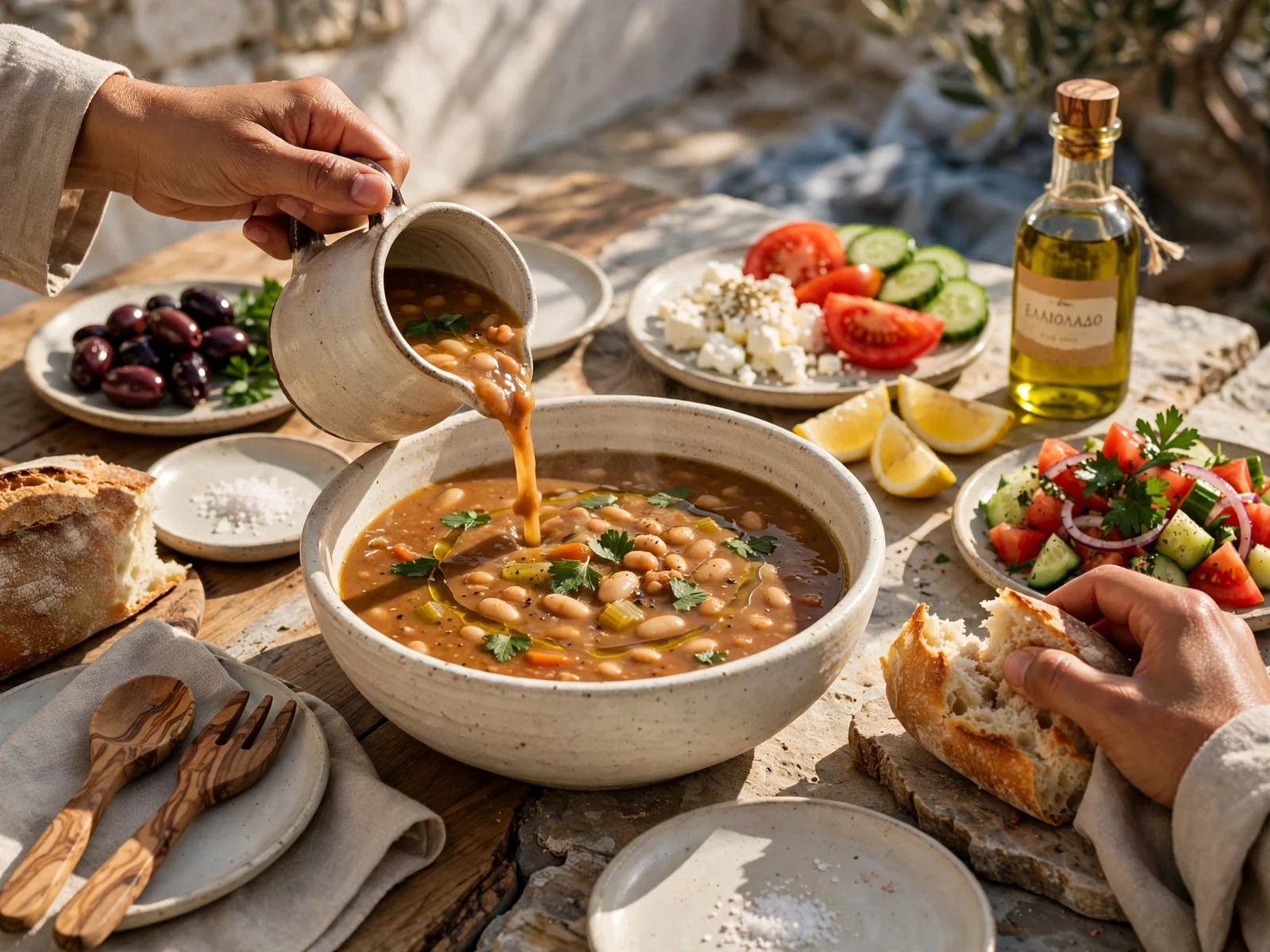
An editorial view of the finished dish, kept compact so the story continues without an oversized image break.
Primary region
Greece, with regional household variations
Country
Greece
Regional influence
Dried pulses store well through the year, while olive oil, tomatoes, celery and carrots connect the soup to Mediterranean agriculture and seasonal winter cooking.
Related food systems
- Greek pulse traditions
- Mediterranean olive-oil cookery
- Winter home cooking
Culinary record
- Origin
- Greece
- Era
- Traditional Greek pulse cookery
- Sub-region
- Southern Europe — Eastern Mediterranean
- Climate
- Mediterranean
- Cooking methods
- simmered
- Trade-route influence
- Aegean maritime trade · Eastern Mediterranean exchange · Ionian routes
Traditional & modern
Household versions vary in tomato, vegetables and herbs while retaining beans, olive oil and gentle simmering.
Sources & further reading
Follow the reference trail.
Ember & Equator links outward when an institution or primary reference helps support the culinary record.
- 01Greek pulsesExternal ↗
Visit Greece · government
Supports: Fasolada · Greek pulses and legumes
Ember & Equator source review · 2026-09-02
- 02Mediterranean dietExternal ↗
UNESCO Intangible Cultural Heritage · reference
Supports: Mediterranean foodways · Greek culinary context
Ember & Equator source review · 2026-09-02
- 03Greek white bean soup - FasoladaExternal ↗
Akis Petretzikis · specialist publication
Supports: fasolada soaking · vegetable base · long gentle simmer · hot-water top-ups · olive-oil service
Ember & Equator source review · 2026-09-17
Ingredient guides
Learn about the ingredients behind the dish.
These are reference guides, not a second ingredient list. Follow an ingredient when you want to understand its role, use and wider culinary context.
Ingredient
dried white beans
Understand what it contributes, how to use it, and the dishes that reveal it best.
Ingredient
yellow onion
Understand what it contributes, how to use it, and the dishes that reveal it best.
Ingredient
carrots
Understand what it contributes, how to use it, and the dishes that reveal it best.
Ingredient
celery stalks
Understand what it contributes, how to use it, and the dishes that reveal it best.
Ingredient
crushed tomatoes
Understand what it contributes, how to use it, and the dishes that reveal it best.
Ingredient
extra virgin olive oil
Understand what it contributes, how to use it, and the dishes that reveal it best.
Explore ingredient →
Keep wandering
Where will this dish take you next?
Stay with the place, follow an ingredient or technique, or cross into another food culture. Each path begins with something already present in this dish.
Stay with the place
01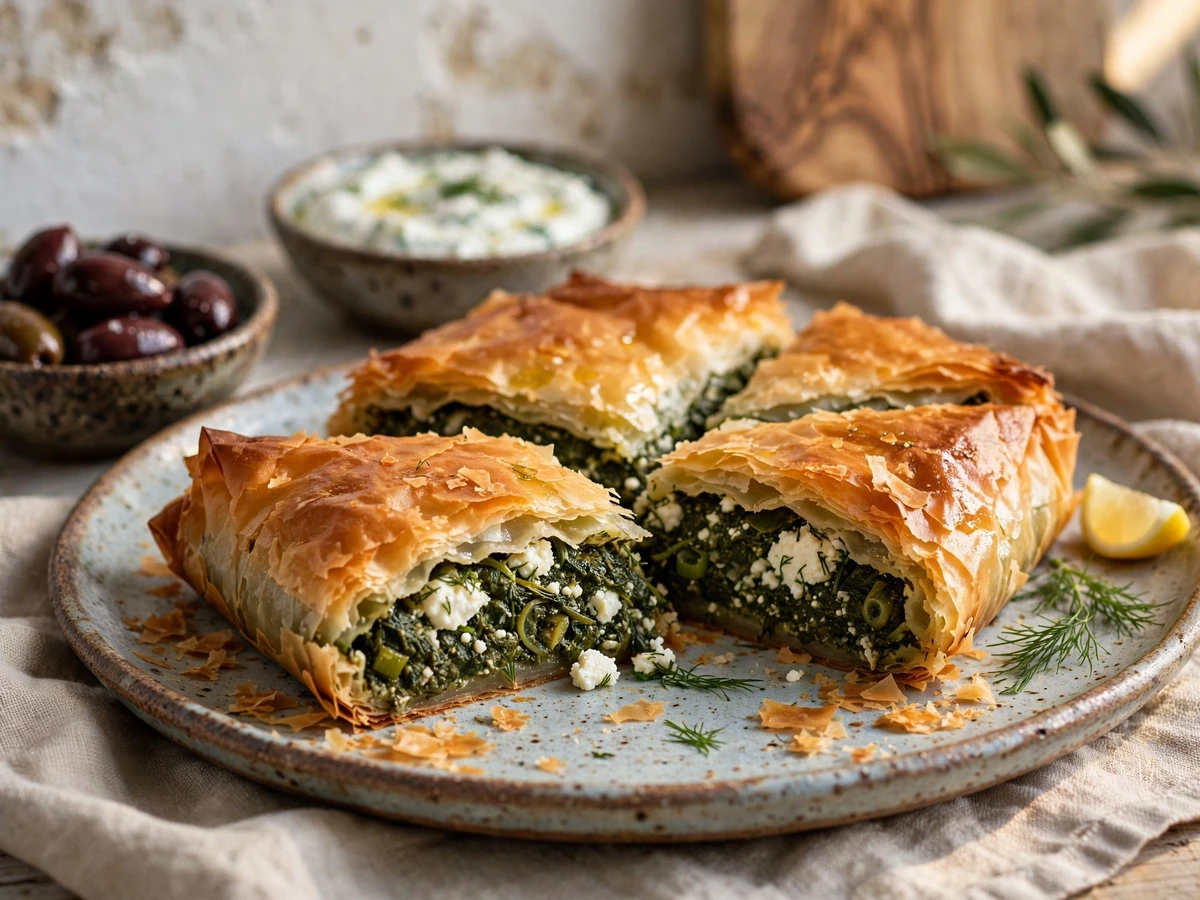
Greece
Spanakopita
Stay in the same food culture and follow yellow onion into another recipe.
Shared thread · yellow onion · extra virgin olive oil · black pepper
Follow the method or pantry
02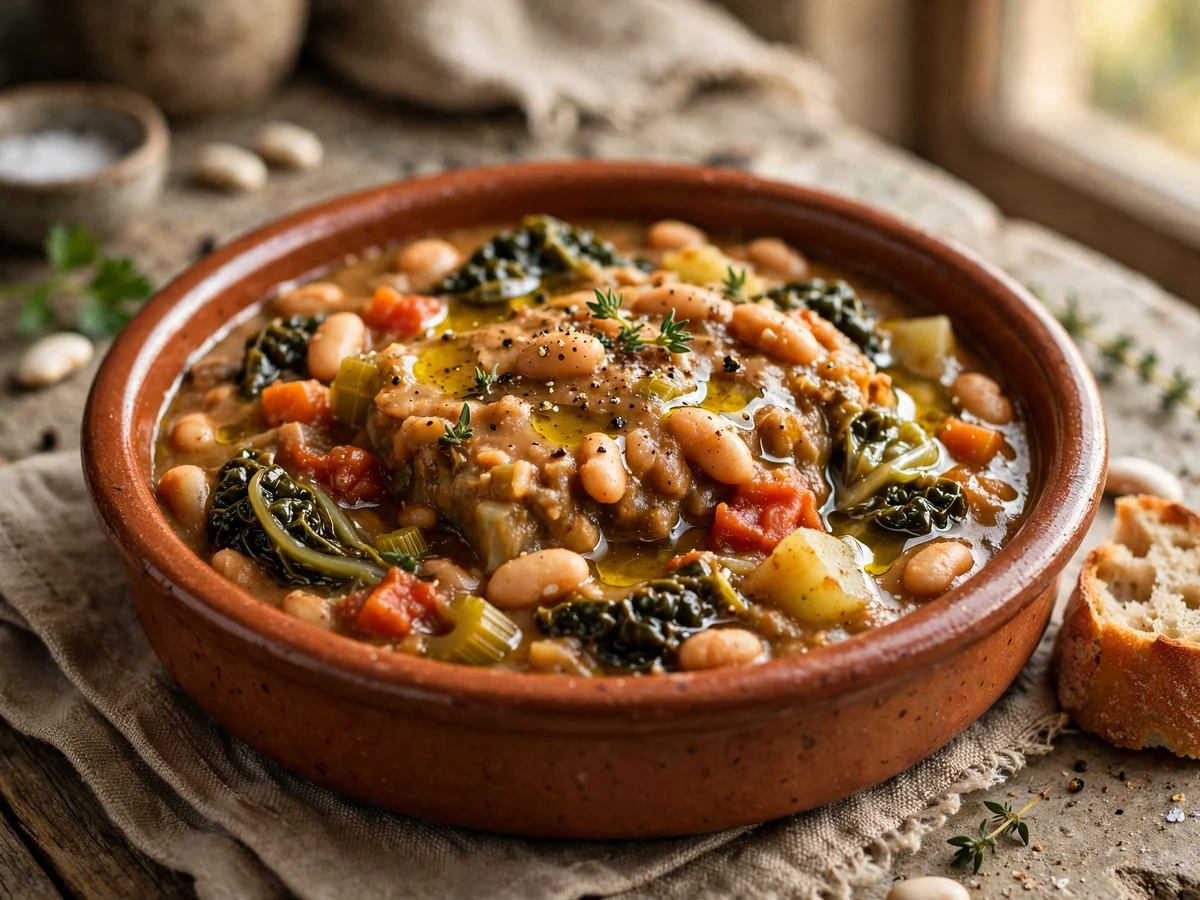
Italy
Ribollita
Follow the cooking method: both dishes connect through simmer.
Shared thread · Simmer · yellow onion · carrots
Cross a culinary border
03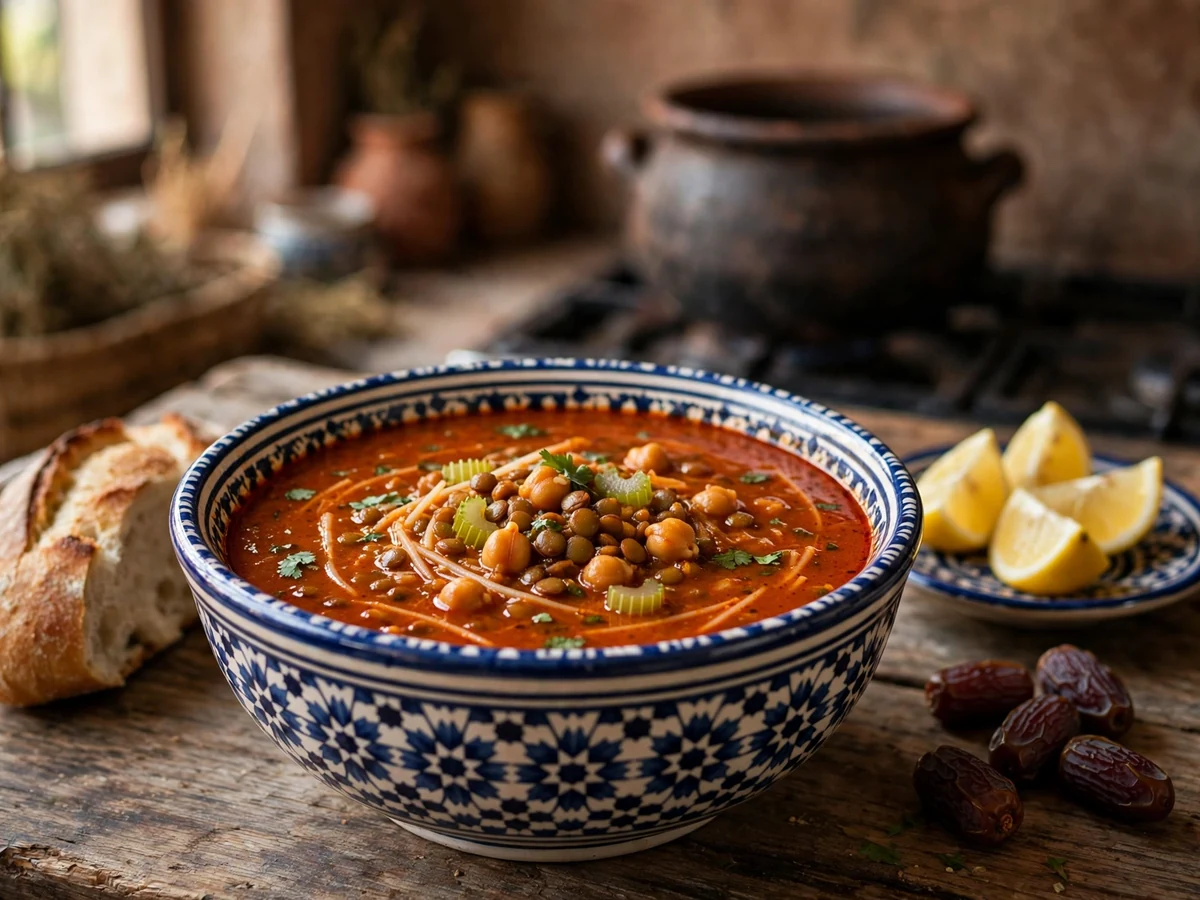
Morocco
Harira
Cross borders while keeping simmer as the common thread.
Shared thread · Simmer · yellow onion · celery stalks
Go one layer deeper
One small detail can open an entirely different part of food.
Continue in Ember & Equator