
Lebanon · breakfast · snack
Man’ouché Za’atar
Everyday food, carrying a place with it.
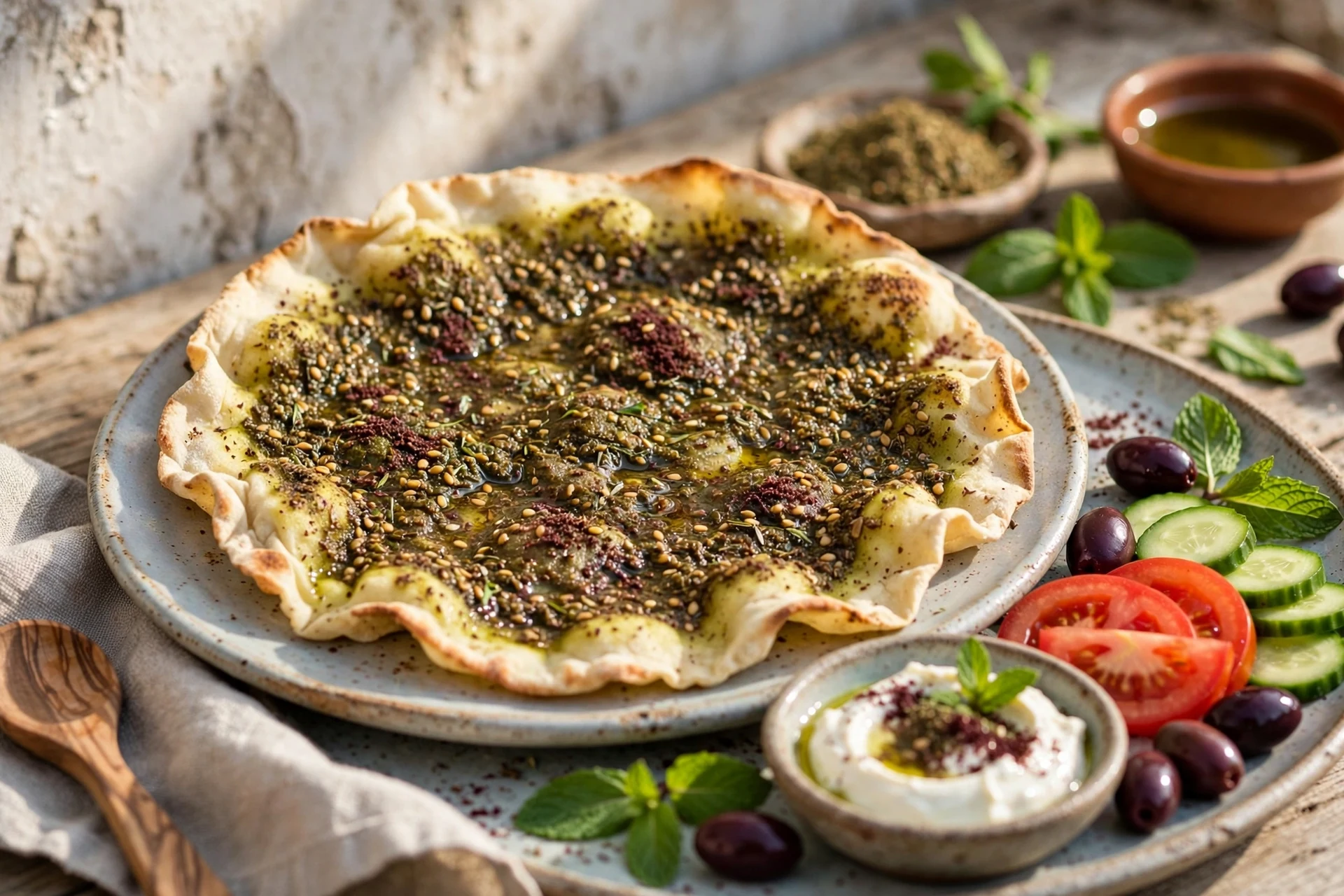
Man’ouché za’atar is a Lebanese breakfast flatbread: soft yeasted dough is pressed into rounds, coated with a loose za’atar-and-olive-oil paste and baked quickly at high heat so the base is tender, the edges spot-brown and the topping stays aromatic.
- Total
- 71 min
- Difficulty
- Medium
- Serves
- 6
- Steps
- 7
The dish
Place first. Then the plate.
UNESCO inscribed al-Man’ouché on the Representative List of the Intangible Cultural Heritage of Humanity in 2023, describing it as an emblematic Lebanese culinary practice associated with breakfast, homes, neighbourhood bakeries and morning social gatherings. The practice is broader than a single topping, but za’atar with olive oil is one of its defining everyday forms. Dough thickness, bakery ovens and za’atar blends vary, so the recipe should teach the bread’s living technique rather than claim one household formula is universal.
Explore LebanonAt a glance
Origin
Lebanon
Region
Lebanon
Meal
breakfast · snack
Guided steps
7
Dish
Man’ouché Za’atar
Cuisine
Lebanese cuisine
Food type
Breakfast · Street food
Technique
Knead dough · Roast or bake · Shape flatbread
Cook the recipe
In the kitchen
Start with the ingredients, then follow the Method in order. Open cooking tips only when you need extra help; the story and references can wait until you are ready.
- Total
- 71 min
- Serves
- 6
- Level
- Medium
- Visual cues
- 7
Ingredients
Serves 6- 500 gbread flourstrong white flour; all-purpose flour can work with slightly less water
- 7 ginstant yeastone standard sachet
- 10 gfine saltfor the dough
- 115 mlextra virgin olive oil15 ml for the dough and about 100 ml for the za’atar topping
- 80 gzaatarLebanese-style blend; taste for salt before seasoning further
- 320 mlwaterlukewarm; hold back 20 ml and add only if needed
Everything ready? Continue straight into the cooking steps.
Start methodMethod
7 steps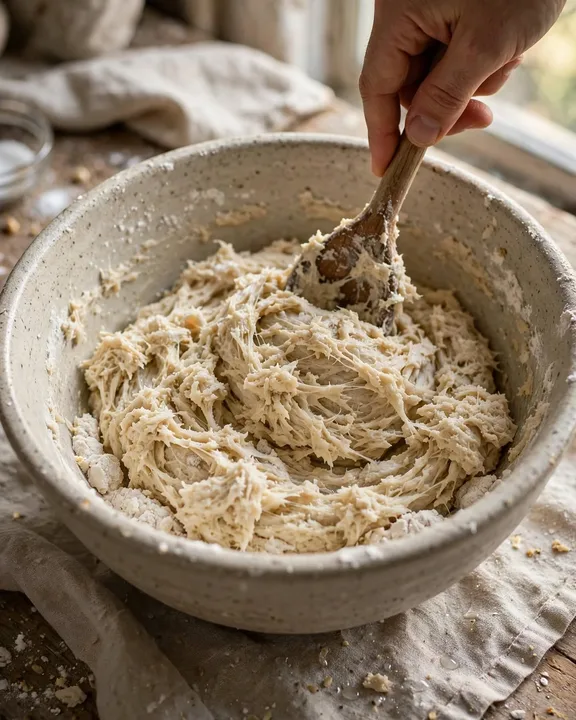 Step 01
Mix a soft dough and let the flour hydrate
12 min
Combine the bread flour, instant yeast and salt.
Combine the bread flour, instant yeast and salt. Add about 300 ml of the lukewarm water and 15 ml olive oil, mixing until no dry flour remains. Add the remaining water only if the dough feels stiff. Cover and rest for 10 minutes before kneading so the flour can hydrate.
Look for
No dry flour remains and the dough is soft, tacky and cohesive rather than runny or stiff.
Kitchen note
Man’ouché dough should be soft enough to bake tender. Resist correcting normal stickiness with large handfuls of extra flour.
 Step 02
Knead until smooth, elastic and still supple
9 min
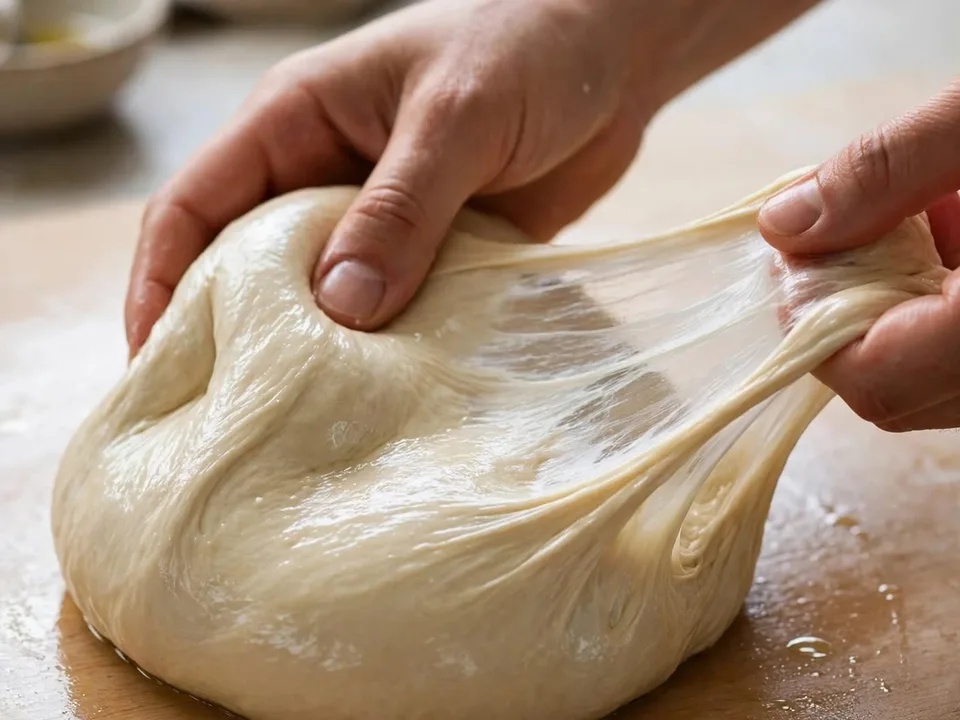
Knead by hand or mixer until the dough becomes smooth and elastic, about 7–10 minutes by hand.
Knead by hand or mixer until the dough becomes smooth and elastic, about 7–10 minutes by hand. Use lightly oiled or damp hands rather than repeatedly dusting with flour. Shape into a ball.
Look for
The surface is satiny and the dough stretches into a thin membrane before tearing.
Kitchen note
A dense dry dough produces bread that eats like a cracker. Stop adding flour once the dough can be handled with light oiling.
 Step 03
Proof until clearly expanded and aerated
75 min
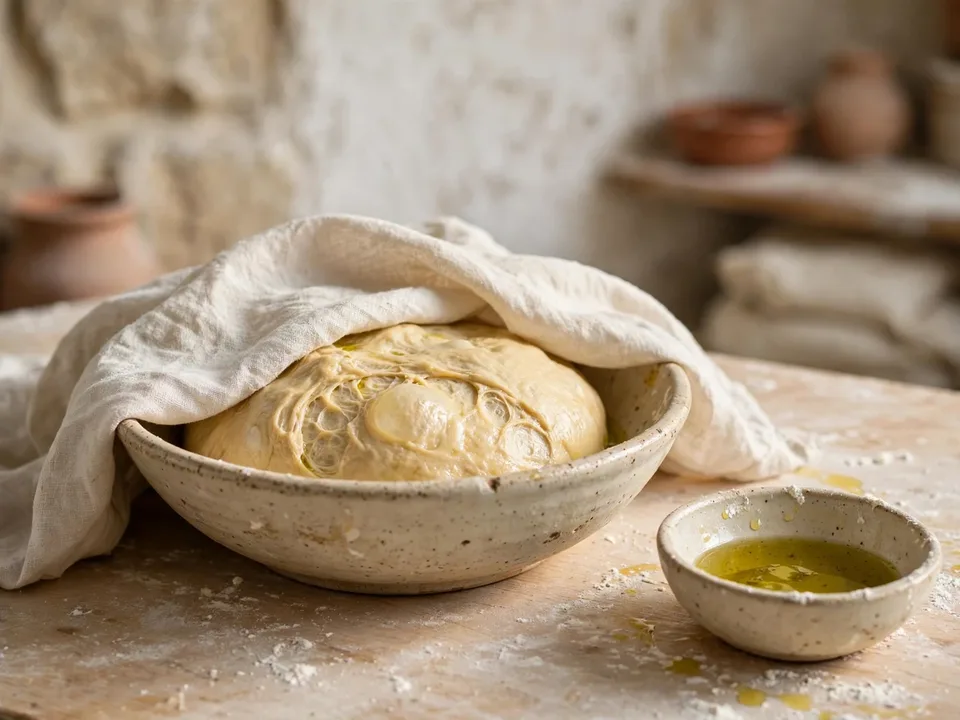
Place the dough in a lightly oiled bowl, cover and leave at comfortable room temperature until roughly doubled and visibly aerated, usually 60–90 minutes.
Place the dough in a lightly oiled bowl, cover and leave at comfortable room temperature until roughly doubled and visibly aerated, usually 60–90 minutes. Fermentation speed will change with room temperature.
Look for
The dough looks puffy, is roughly doubled and a gentle fingertip indentation returns slowly rather than snapping back.
Kitchen note
Use the dough’s volume and feel rather than a rigid timer. Under-proofed dough springs back aggressively and bakes tight.
 Step 04
Preheat the oven and baking surface very thoroughly
30 min
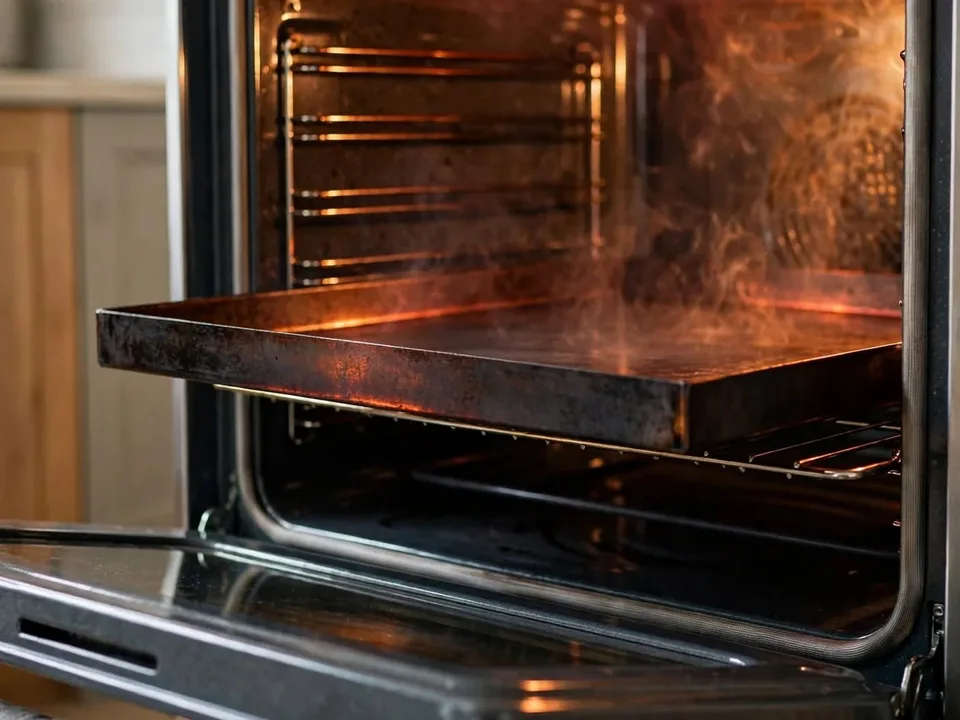
Place a baking stone, steel or heavy inverted tray in the oven and preheat as hot as practical—ideally 250–260°C / 480–500°F—for at least 30 minutes.
Place a baking stone, steel or heavy inverted tray in the oven and preheat as hot as practical—ideally 250–260°C / 480–500°F—for at least 30 minutes. Strong stored bottom heat helps the bread puff and set before the za’atar topping dries.
Look for
The oven has held its maximum baking temperature long enough for the stone, steel or tray to be thoroughly heated.
Kitchen note
The oven may read hot before the stone or tray is saturated. Give the baking surface enough time or the centre can turn pale and leathery.
 Step 05
Divide, relax and shape tender rounds with shallow dimples
14 min
Divide the dough into six pieces, round them lightly and rest for 10 minutes so the gluten relaxes.
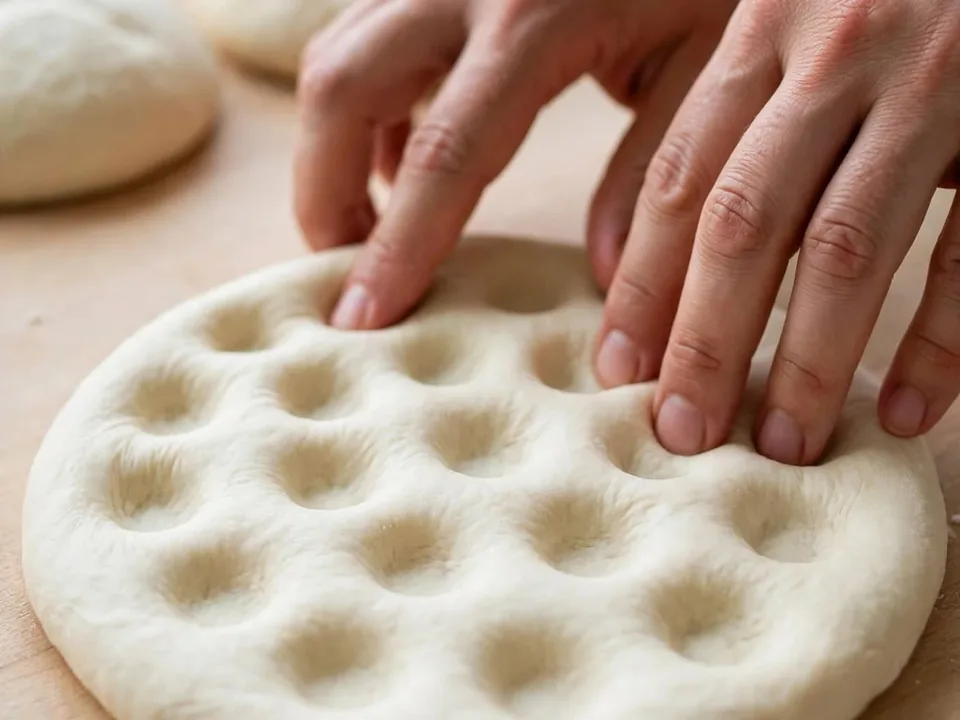
Divide the dough into six pieces, round them lightly and rest for 10 minutes so the gluten relaxes. Flatten each piece into a round about 18–20 cm wide, keeping the centre thin but not paper-thin. Press shallow fingertip dimples over the surface while leaving a modest rim.
Look for
The round is even, flexible and lightly dimpled with no holes or paper-thin patches.
Kitchen note
If a piece keeps shrinking, leave it alone for 5 minutes rather than forcing it thinner; relaxed dough shapes without tearing.
 Step 06
Mix the za’atar with olive oil and spread a thin even topping
4 min
Stir the za’atar with about 100 ml extra virgin olive oil to make a loose, spoonable paste.
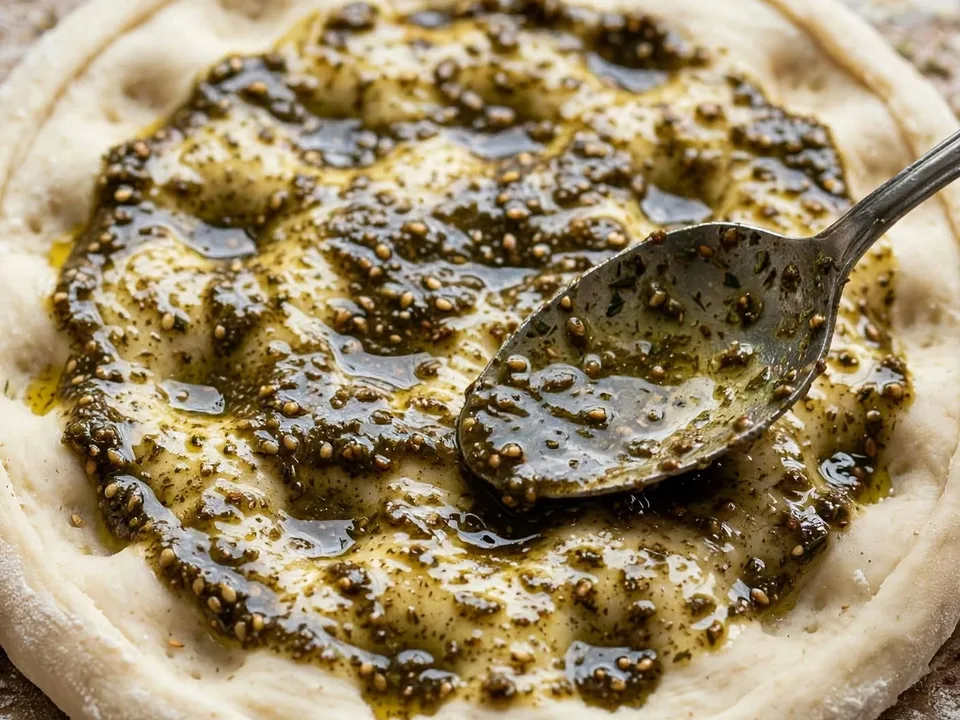
Stir the za’atar with about 100 ml extra virgin olive oil to make a loose, spoonable paste. Taste before adding any extra salt because blends vary. Spread a thin even layer over each round, reaching close to the edge without flooding the dough.
Look for
The surface is evenly speckled and glossy, with no bare flour patches and no deep pools of oil.
Kitchen note
The topping should spread easily but not pool. Too much oil can fry the centre while too little leaves dry dusty patches of za’atar.
 Step 07
Bake quickly until puffed and spot-browned, then serve warm
6 min
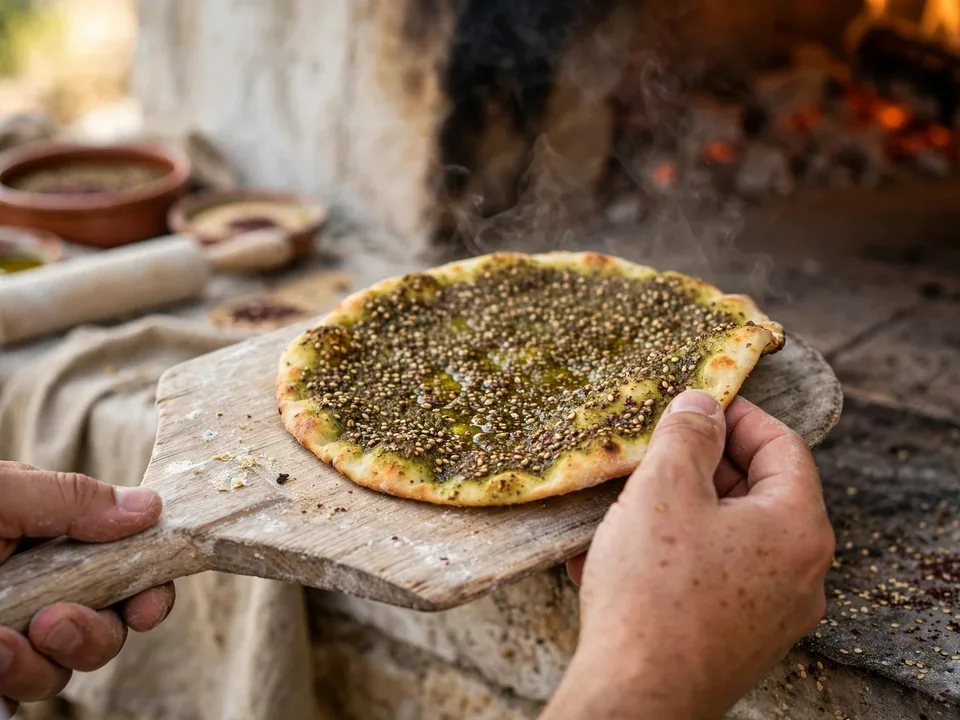
Transfer each topped round to the fully heated surface and bake until the edges puff and pick up light brown spots while the centre stays flexible, usually 5–7 minutes depending on the oven.
Transfer each topped round to the fully heated surface and bake until the edges puff and pick up light brown spots while the centre stays flexible, usually 5–7 minutes depending on the oven. Remove before the za’atar scorches. Serve warm; fold or roll with tomato, mint, pickles or labneh if desired.
Look for
The edges are puffed and spot-brown, the base is cooked through and the centre bends without cracking.
Kitchen note
High heat and a short bake are the goal. A long moderate bake dries both the crumb and the za’atar-oil topping.
After cooking
Explore the dish beyond the method.
Story, place and references are here for discovery, so they stay out of the way while you cook.
Culture & tradition
The story behind the dish
Origins, evolution and everyday life—read together as part of the recipe's culinary record.
Origins
The practice is transmitted through families and bakeries and was inscribed by UNESCO in 2023 on the Representative List of the Intangible Cultural Heritage of Humanity.
How it evolved
Toppings vary, but the za’atar version centers a thyme-sumac-sesame mixture with olive oil spread over indented dough.
Its place today
It remains a defining everyday breakfast and bakery food across Lebanon.
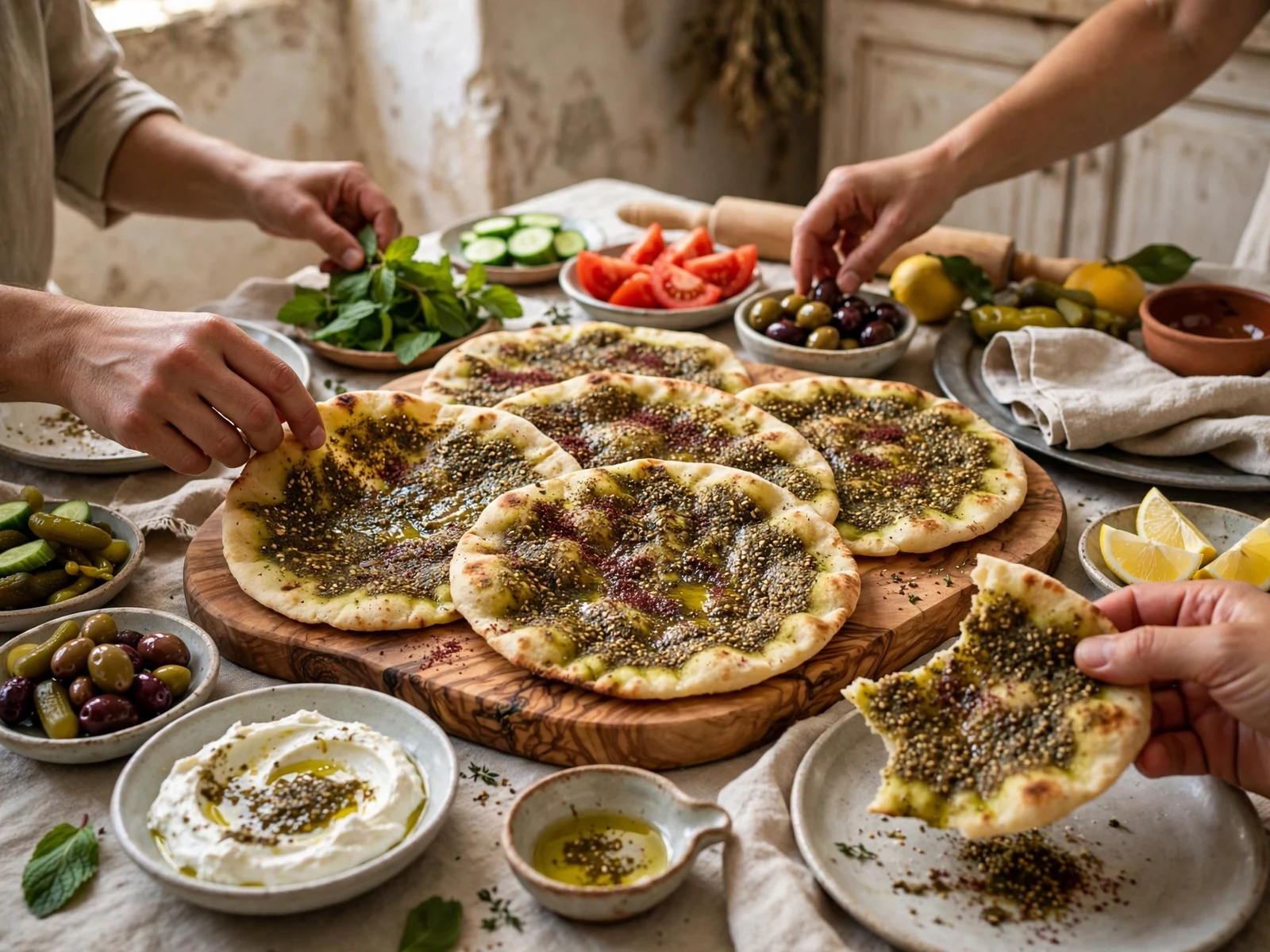
Visual archive · plate 01
Man’ouché Za’atar
An editorial view of the finished dish, kept compact so the story continues without an oversized image break.
Primary region
Lebanon
Country
Lebanon
Regional influence
The dish reflects the ingredients and cooking patterns associated with Lebanon, while household and regional versions vary.
Related food systems
- Lebanon home cooking
- Market and street-food traditions
- Regional pantry and seasonal cooking
Sources & further reading
Follow the reference trail.
Ember & Equator links outward when an institution or primary reference helps support the culinary record.
- 01Al-Man’ouché, an emblematic culinary practice in LebanonExternal ↗
UNESCO Intangible Cultural Heritage · unesco
Supports: Lebanese breakfast practice · home and bakery transmission · social and cultural role of al-Man’ouché
Ember & Equator source review · 2026-09-17
- 02Lebanese man’oushe, za’atar flatbreadExternal ↗
Maureen Abood · reference
Supports: flour, salt, yeast, water and oil dough · soft elastic kneading target · za’atar and olive-oil topping
Ember & Equator source review · 2026-09-17
Ingredient guides
Learn about the ingredients behind the dish.
These are reference guides, not a second ingredient list. Follow an ingredient when you want to understand its role, use and wider culinary context.
Ingredient
bread flour
Understand what it contributes, how to use it, and the dishes that reveal it best.
Ingredient
instant yeast
Understand what it contributes, how to use it, and the dishes that reveal it best.
Ingredient
salt
Understand what it contributes, how to use it, and the dishes that reveal it best.
Ingredient
extra virgin olive oil
Understand what it contributes, how to use it, and the dishes that reveal it best.
Explore ingredient →
Ingredient
zaatar
Understand what it contributes, how to use it, and the dishes that reveal it best.
Ingredient
water
Understand what it contributes, how to use it, and the dishes that reveal it best.
Keep wandering
Where will this dish take you next?
Stay with the place, follow an ingredient or technique, or cross into another food culture. Each path begins with something already present in this dish.
Stay with the place
01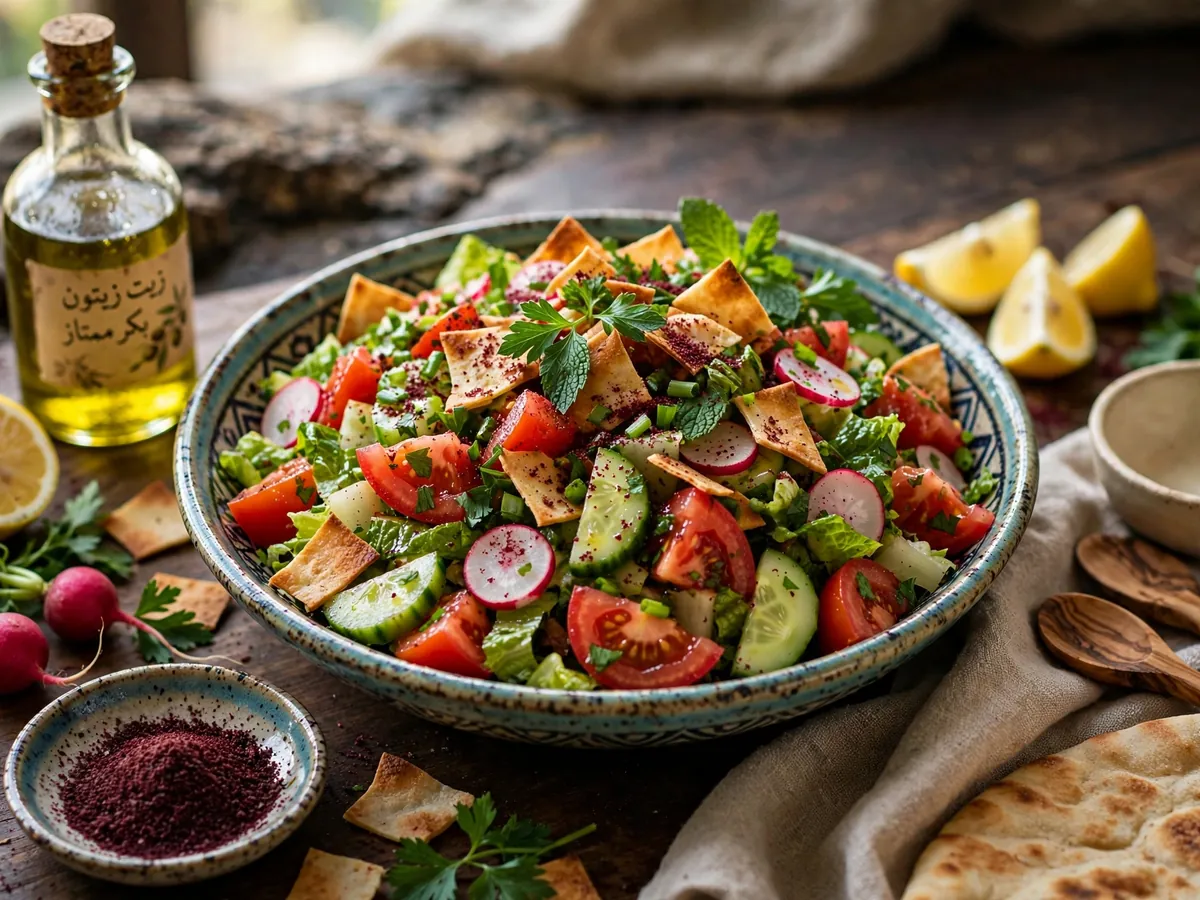
Lebanon
Fattoush
Stay in the same food culture and notice how roast or bake appears in another dish.
Shared thread · Roast or bake · salt · extra virgin olive oil
Follow the method or pantry
02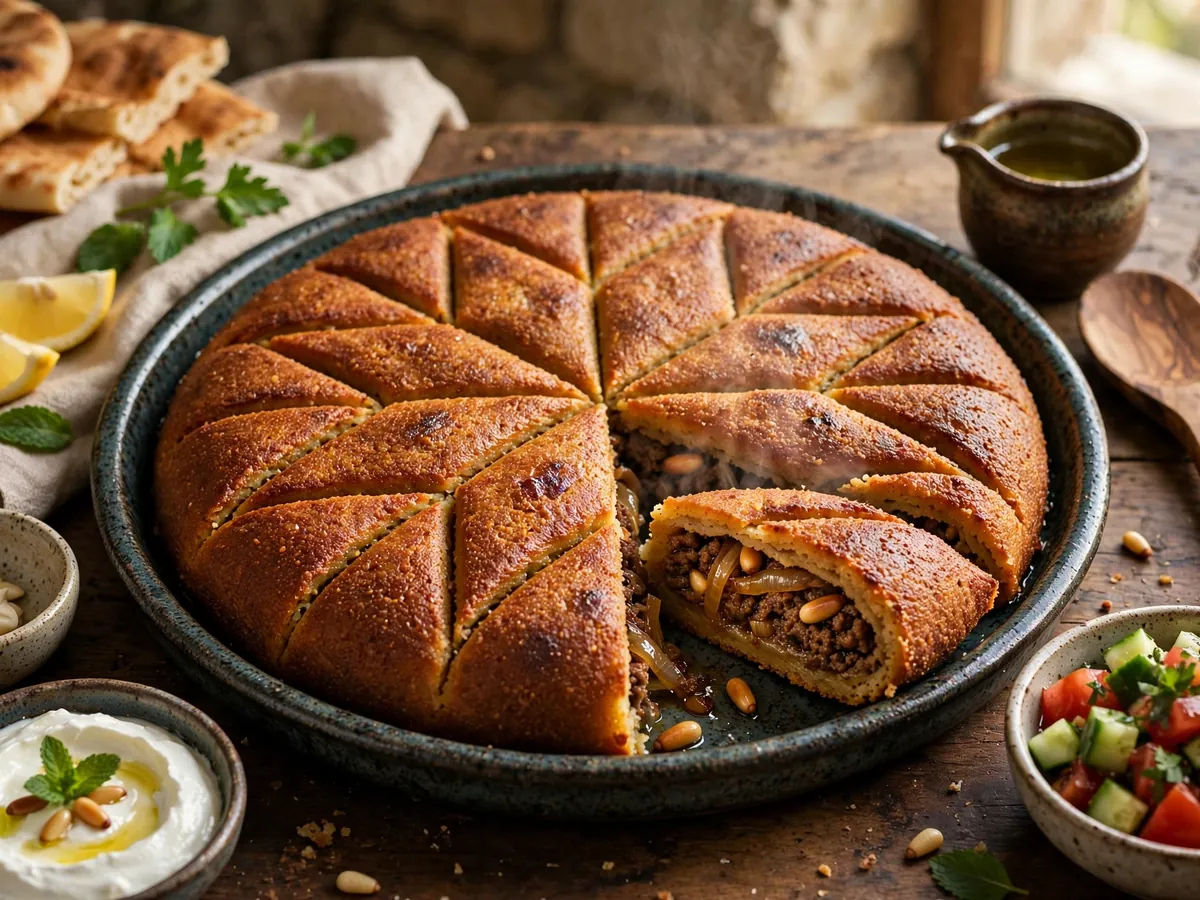
Lebanon
Kibbeh Bil Sanieh
Follow the cooking method: both dishes connect through roast or bake.
Shared thread · Roast or bake · salt · extra virgin olive oil
Cross a culinary border
03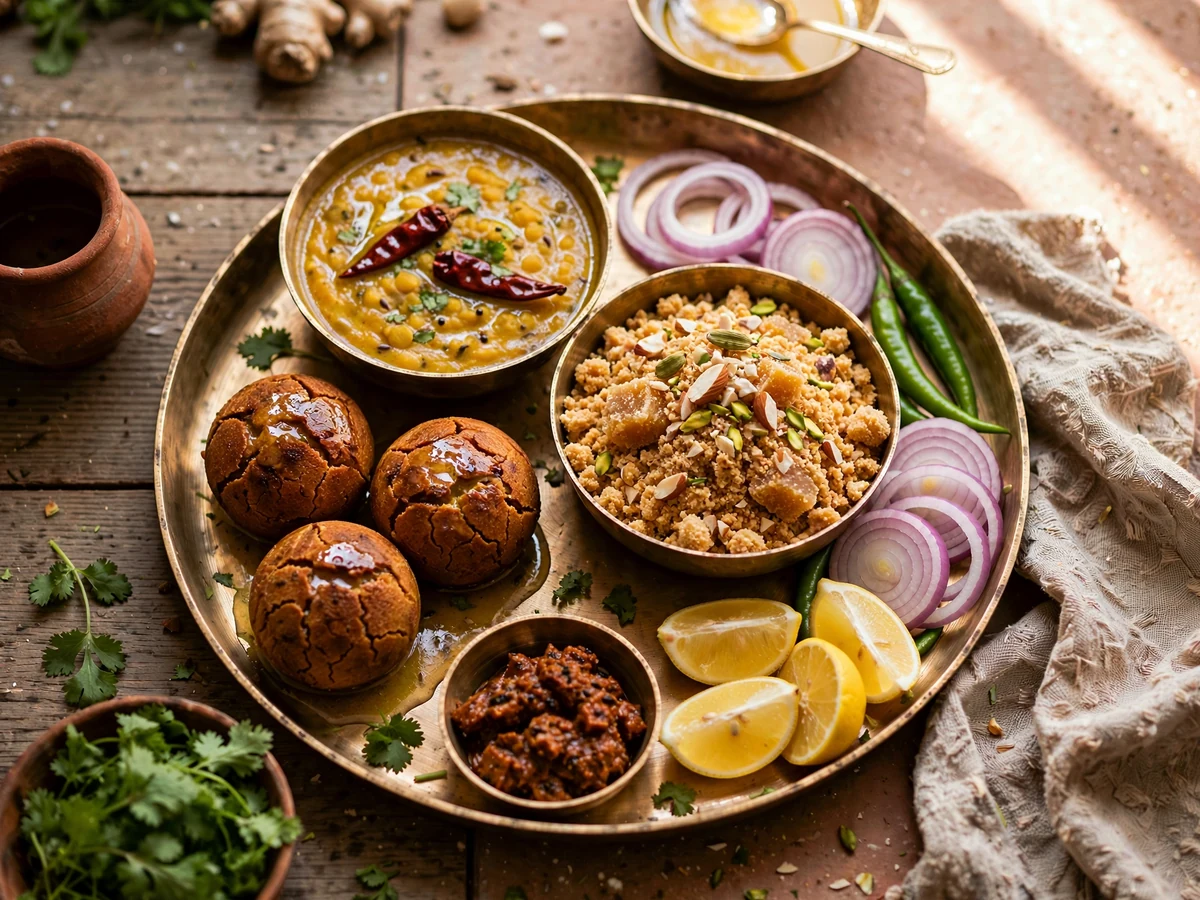
India
Dal Baati Churma
Cross borders while keeping knead dough as the common thread.
Shared thread · Knead dough · Roast or bake · salt
Go one layer deeper
One small detail can open an entirely different part of food.
Continue in Ember & Equator